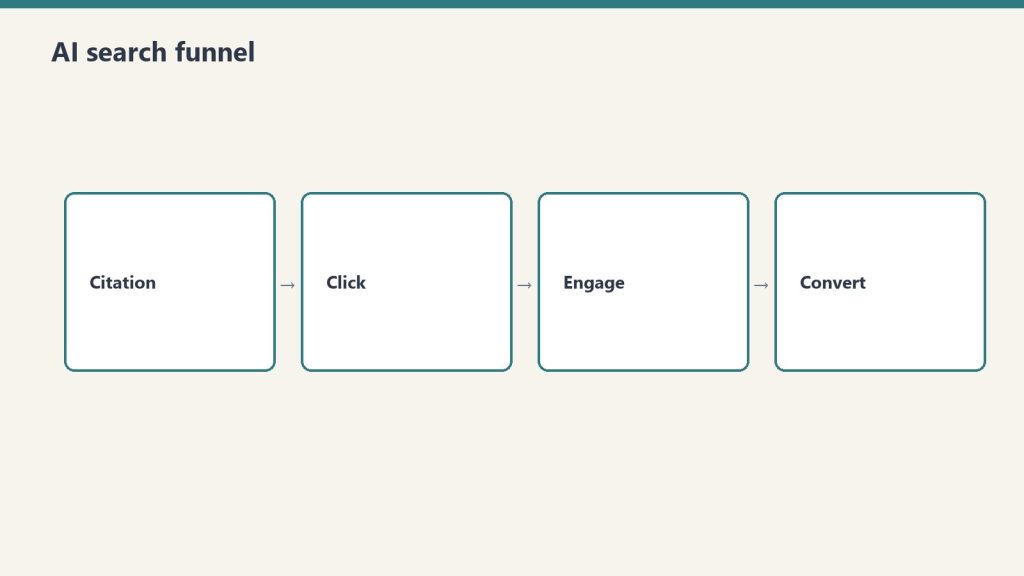
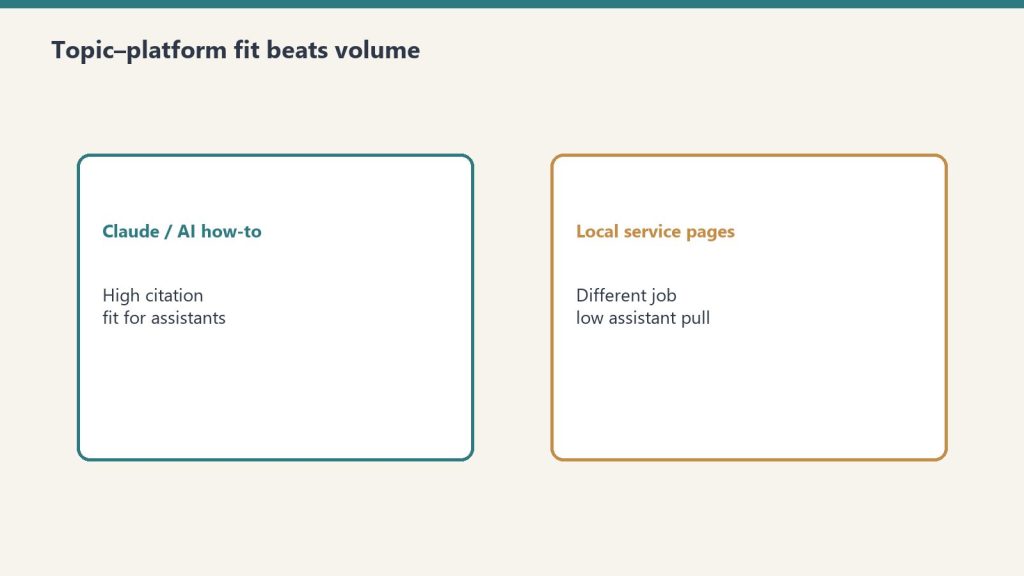
Google is not the only search engine anymore. Your next customer might find you through a ChatGPT answer, a Perplexity citation, or a Google AI Overview that pulls your content into the answer box. AEO is how restoration companies show up in the answer layer — featured snippets, People Also Ask, voice search, and zero-click results that put your name in front of decision-makers before they ever click a link.
AEO and AI Search covers answer engine optimization, featured snippet capture, People Also Ask strategies, voice search optimization, zero-click search positioning, AI Overview placement, and direct answer formatting for restoration industry queries across Google, Bing, ChatGPT, Perplexity, and Gemini.
By Will Tygart · Practitioner-grade · From the workbench
What Is a GBP Optimization Sprint?
A concentrated build-out of your Google Business Profile — the most underutilized local SEO asset most businesses have. Categories, services, attributes, description, weekly post schedule, photo strategy, and Q&A seeding configured correctly in one sprint. A fully optimized GBP improves local pack visibility, map rankings, and AI-generated local answer citations simultaneously.
Most Google Business Profiles are 40% complete. One category selected. No services listed. No attributes configured. A description written in 2019. No posts in six months. No answered Q&A. This is common — and it’s a significant missed opportunity, because Google’s local pack algorithm weights GBP completeness directly.
The GBP Optimization Sprint completes everything in one focused pass and sets up a sustainable weekly post cadence so the profile doesn’t go stale again.
What the Sprint Covers
Category optimization — Primary and up to 9 secondary categories selected for maximum local pack coverage
Services listing — All services added with descriptions optimized for local search queries
Email only. No commitment to reply. Turnaround quoted within 1 business day.
Frequently Asked Questions
Do you need access to our Google Business Profile account?
Yes — we need manager access to your GBP to make changes. You add us as a manager, we complete the sprint, and you remove access afterward if preferred.
How quickly will GBP optimization improve local rankings?
GBP changes are indexed quickly — most category and attribute updates reflect in local pack results within 1–2 weeks. Post activity and completeness improvements compound over 60–90 days.
Does this work for service-area businesses without a storefront?
Yes. Service-area businesses (no public address) are fully supported. We configure the service area correctly and hide the address per Google’s guidelines for SABs.
By Will Tygart · Practitioner-grade · From the workbench
What Is the WordPress Schema Starter?
FAQPage, LocalBusiness, and Service schema injected on your top 10 WordPress pages — not a plugin, not auto-generated, not bloated markup that fails validation. Hand-crafted JSON-LD, validated with Google’s Rich Results Test on every page. Your most important pages become rich-result eligible within days, not months.
Schema markup is the single most underdeployed SEO tactic on most WordPress sites. The reason isn’t ignorance — it’s friction. Schema plugins produce invalid output. Hand-coding JSON-LD is tedious. And most SEO agencies charge for 6-month retainers when all you actually need is a focused sprint on your 10 most important pages.
The Schema Starter is that sprint. We identify your top 10 pages by traffic or ranking proximity, determine the right schema types for each, write valid JSON-LD, inject it via WordPress REST API, and validate every page. Done in under a week.
What We Inject (Per Page)
FAQPage — For any page with a Q&A section (produces FAQ accordions in Google results)
LocalBusiness — For your homepage and location pages (reinforces NAP, service area, hours)
Service — For service landing pages (signals service type, provider, area served)
Article — For blog posts included in your top 10
BreadcrumbList — Applied to all 10 pages
Pricing
Package
Includes
Price
Starter
Schema injection on top 10 pages, Rich Results validation
$299
Starter+
Everything in Starter + FAQ content written for pages missing Q&A sections
$499
What We Need From You
Your WordPress site URL
Application password (or we identify top 10 pages from public data and you confirm)
Business name, address, phone, and hours (for LocalBusiness schema)
List of top 10 pages (or we pull from analytics/ranking data)
Get Schema on Your Top 10 Pages
Share your site URL and we’ll identify your top 10 schema candidates and confirm scope before you pay anything.
Email only. No commitment to reply. Turnaround quoted within 1 business day.
Frequently Asked Questions
Will this conflict with my existing schema plugin (Yoast, RankMath)?
We inject schema as a standalone JSON-LD block in page content — separate from plugin-generated schema. In most cases they coexist cleanly. If there’s duplication, we identify and remove it during the validation pass.
How do you determine which 10 pages to prioritize?
By traffic (if you share GA4 access), ranking proximity to featured snippet triggers, or a list you provide. We can also pull ranking data via DataForSEO for sites where analytics access isn’t available.
What does the Rich Results validation confirm?
Google’s Rich Results Test verifies the schema is valid, parseable, and eligible for rich result placements. Every page passes before the engagement closes — we fix any validation errors as part of the service.
By Will Tygart· Practitioner-grade
· From the workbench
What Is a 5-Article AEO Cluster?
Five fully written articles targeting a single keyword cluster — each optimized for featured snippet capture and direct answer placements. Every article includes a definition box, question-led heading structure, FAQ section with FAQPage JSON-LD schema, and speakable blocks. Published as drafts to your WordPress site via REST API.
A single optimized article can capture one featured snippet. A five-article cluster captures the whole topic — the primary question, the supporting questions, the comparison angles, and the how-to layer. Together they signal topical authority to Google and cover enough surface area to intercept multiple PAA (People Also Ask) placements simultaneously.
This is the minimum viable content cluster for establishing answer-engine presence in a new topic area.
What Each Article Includes
What each AEO content-cluster article includes.
800–1,500 words (depending on package)
Definition box (40–60 words) optimized for featured snippet capture
Question-led H2 structure with direct answers in first 50 words per section
5–8 FAQ Q&As with FAQPage JSON-LD schema
Speakable schema on key paragraphs
Article JSON-LD schema
Internal links connecting all 5 pieces as a hub-and-spoke cluster
Pricing
How AEO cluster pricing is structured.
Package
Word Count Per Article
Price
Standard
800–1,000 words
$499
Deep
1,200–1,500 words
$749
Pillar
1,500–2,000 words + comparison tables
$999
What We Need From You
What we need from you to start the cluster.
Target keyword or topic cluster (we’ll suggest if you’re unsure)
Target audience (who’s searching)
WordPress site URL and application password for draft publish
Any competitor URLs you want us to outflank
Start Your AEO Content Cluster
Tell us your target keyword or topic and your site URL. We’ll confirm the cluster outline before writing begins.
How do you pick the 5 article topics within the cluster?
We analyze the keyword cluster for primary intent, supporting questions, comparison angles, and how-to sub-topics — then map one article to each layer. You approve the outline before we write.
Are these published live or as drafts?
Published as drafts to your WordPress site via REST API. You review and publish when ready.
Can I provide my own outline or topic list?
Yes — if you have a specific 5-article map in mind, we’ll write to it. We’ll flag any topics that overlap significantly or that we think should be adjusted for better cluster coverage.
By Will Tygart · Practitioner-grade · From the workbench
What Is an SEO Health Snapshot?
A one-page diagnostic of your WordPress site’s on-page SEO foundation — title tags, meta descriptions, schema presence, internal link orphans, and taxonomy structure — delivered as a prioritized action report within 2 business days. Not a 60-page PDF you’ll never read. A clear list of what’s broken, ranked by impact.
Most WordPress sites have the same 5–8 fixable SEO problems. Missing or duplicate title tags. Meta descriptions that are either absent or auto-generated garbage. No schema markup on posts that could be earning FAQ accordions. Posts with zero internal links pointing to them. Category pages with no descriptions. None of these require a 6-month engagement to fix — but you need to know which ones you actually have.
The SEO Health Snapshot tells you exactly that, in plain language, ranked by what to fix first.
What the Snapshot Covers
Title tag audit — Length, keyword presence, duplicates, missing titles across all published posts
Meta description coverage — Missing, truncated, or auto-generated descriptions flagged with recommended replacements for top 10 posts
Schema gap report — Which post types are missing what schema (FAQPage, Article, HowTo, LocalBusiness)
Internal link orphan scan — Posts with zero inbound internal links that are invisible to crawlers
Taxonomy health check — Category/tag bloat, missing descriptions, slug issues
Priority action list — Top 10 fixes ranked by estimated SEO impact
What You Get
Deliverable
Format
Full audit report
Google Doc or PDF
Priority fix list (top 10 actions)
Prioritized checklist
Title tag recommendations for top 20 posts
Spreadsheet
Schema gap summary
Table by post type
Internal link orphan list
Post IDs + URLs
Pricing
Site Size
Price
Turnaround
Up to 50 posts
$99
2 business days
51–200 posts
$149
3 business days
200+ posts
$199
4 business days
Get Your Site’s SEO Health Snapshot
Share your WordPress URL and approximate post count. We’ll confirm scope and send a payment link within 1 business day.
Email only. No commitment to reply. Turnaround quoted within 1 business day.
Frequently Asked Questions
Do you need WordPress admin access to run this?
We use WordPress Application Passwords (read-only scope is sufficient) and your site’s publicly accessible pages. No admin password required.
What happens after I receive the report?
The report is yours — implement it yourself or hire us to execute the fixes. The priority fix list maps directly to our AEO/GEO Sprint, Schema Injection Sprint, and Taxonomy Rebuild services if you want us to handle execution.
Is this a one-time report or ongoing?
One-time. We recommend re-running every 6 months or after any major content push. Repeat snapshots for existing clients are $49 flat.
By Will Tygart· Practitioner-grade
· From the workbench
What Is the Topic Intelligence Squeeze?
The Topic Intelligence Squeeze is a structured data extraction and injection process — pulling keyword rankings, entity signals, content gap data, and optimization recommendations from Topic Intelligence (platform.topicintelligence.ai) and using that data to enrich your article knowledge base and direct specific post optimizations. It turns TI’s data layer into actionable content decisions.
Topic Intelligence surfaces signals that most content teams miss or can’t act on fast enough — near-miss keywords sitting at positions 11–20, entity gaps between your content and ranking competitors, content freshness signals on posts that used to rank but are slipping. The data is there. The bottleneck is turning it into optimized posts quickly enough to matter.
The squeeze process extracts TI data for a target domain, maps it to specific posts in your WordPress site, and feeds it directly into the optimization pipeline — so near-miss articles get refreshed, entity gaps get injected, and freshness signals trigger content updates before rankings drop further.
Who This Is For
Who the topic-intelligence squeeze is for.
WordPress site operators who have Topic Intelligence data available for their domain and want to close the gap between TI’s recommendations and actual post-level optimization execution.
What the Squeeze Covers
What the squeeze covers.
Near-miss keyword extraction — Identify all keywords your site ranks positions 11–20 for, mapped to the specific posts responsible
Entity gap analysis — Compare your post entity coverage against TI’s recommended entity set for each keyword cluster
Freshness signal triage — Identify posts with declining rankings that need content updates vs. schema/AEO fixes
Knowledge base injection — TI data formatted and stored in your article knowledge base for ongoing session reference
Optimization priority queue — Ranked list of posts by estimated ranking uplift potential from TI data
What We Deliver
What we deliver from a topic-intelligence squeeze.
Item
Included
TI data pull for your domain
✅
Near-miss keyword map (post-level)
✅
Entity gap report per keyword cluster
✅
Freshness signal triage report
✅
Optimization priority queue (top 20 posts)
✅
Knowledge base injection (TI data formatted for AI sessions)
✅
First optimization pass on top 5 priority posts
✅
Ready to Turn TI Data Into Published Optimizations?
Share your domain and confirm you have Topic Intelligence access. We’ll run the squeeze and deliver the priority queue within 3 business days.
Do I need a Topic Intelligence account for this service?
Yes. You need an active Topic Intelligence account with data for the domain you want squeezed. We access TI through your credentials during the engagement.
What’s a near-miss keyword and why does it matter?
A near-miss keyword is one your site ranks positions 11–20 for — meaning you’re on page 2 or the bottom of page 1, where almost no clicks happen. These are the highest-ROI targets for content optimization because you’re already most of the way there — a targeted refresh can move them to page 1 positions where clicks actually occur.
Can this be run repeatedly on the same domain?
Yes — and it should be. Running the squeeze every 60–90 days catches new near-misses as your content base grows and identifies freshness signals before rankings drop significantly.
By Will Tygart · Practitioner-grade · From the workbench
What Is a Competitor Pivot Cluster?
A Competitor Pivot Cluster uses a competitor’s high-ranking page as a strategic brief — analyzing what it ranks for, where its content is thin, what questions it doesn’t answer, and what audience segments it ignores — then building a 5-article cluster for your site that targets all of it. The competitor did the keyword research. You do the better content.
The highest-confidence content strategy isn’t guessing what people search for — it’s looking at what already ranks and identifying where the gap is. A competitor page ranking #3 for a valuable keyword is proof the audience exists. Your job is to outflank it on depth, entity coverage, and answer completeness.
We built a skill for this. It pulls the competitor URL, runs it through content analysis, identifies the keyword clusters it’s capturing, maps the questions it’s not answering, and produces a 5-article cluster that covers the territory more completely. Every article in the cluster targets a specific gap or audience segment the competitor missed.
Who This Is For
WordPress site operators who’ve identified a competitor page ranking for keywords they want to capture — and want a structured, research-backed content strategy built around it rather than a single article that tries to do everything.
What makes this different from just writing 5 articles on the same topic?
The gap analysis structures the cluster around specific weaknesses in the competitor’s content — unanswered questions, missing audience segments, thin entity coverage. Each article has a reason to exist that’s grounded in what the competitor doesn’t cover, not just what we feel like writing about.
Can you pivot off multiple competitor URLs?
Yes — we can run the analysis against 2–3 competitor URLs and build a unified cluster that targets the combined gap landscape. This works well when there are 2–3 dominant players in a niche, each strong on different subtopics.
Does the cluster target the same keyword as the competitor?
The primary pivot article targets the same or closely related keyword. The 4 supporting articles target long-tail variations and related queries the competitor either ranks weakly for or misses entirely.
By Will Tygart · Practitioner-grade · From the workbench
What Is a Schema Injection Sprint?
A schema injection sprint is a concentrated pass across 20 WordPress posts — identifying the right JSON-LD structured data types for each post, generating valid schema markup, injecting it via WordPress REST API, and validating every post with Google’s Rich Results Test. In one sprint, 20 posts become eligible for rich result placements they weren’t eligible for before.
Schema markup is one of the highest-leverage, most consistently skipped SEO tasks on WordPress sites. It’s not that operators don’t know it matters — it’s that doing it right on 20 posts manually takes hours, and most schema plugins produce bloated or invalid output that fails the Rich Results Test anyway.
We inject schema programmatically. Every post gets the right schema type for its content — not a one-size-fits-all Article block — and every result is validated before we move on.
Who This Is For
WordPress sites with existing published content that aren’t appearing in rich result placements (FAQ accordions, HowTo steps, review stars) despite having the content to qualify. If your posts have FAQ sections but no FAQPage schema, you’re invisible to the placement Google is actively filling.
Schema Types We Inject
FAQPage — For any post with a Q&A section. Produces FAQ accordion in Google results.
Article — Standard news/blog schema with author, publisher, datePublished, dateModified.
HowTo — For step-by-step content. Produces visual step display in rich results.
Service — For service landing pages. Signals service type, provider, and area served.
LocalBusiness — For location-specific content. Reinforces NAP data and service area.
BreadcrumbList — Site navigation schema. Applied to all posts in the sprint.
Speakable — Marks key paragraphs for voice search and AI synthesis.
What We Deliver
Item
Included
Schema type selection for all 20 posts
✅
JSON-LD generation (valid, not plugin-bloated)
✅
REST API injection to all 20 posts
✅
Google Rich Results Test validation on every post
✅
Validation report with pass/fail per post
✅
Fix pass for any validation failures
✅
Ready to Make Your Content Rich-Result Eligible?
Share your site URL and we’ll identify your 20 best candidates for schema injection based on content type and current ranking proximity.
Will this conflict with my existing SEO plugin (Yoast, RankMath)?
We inject schema as a separate JSON-LD block in the post content — it doesn’t touch plugin settings or plugin-generated schema. In most cases, the two coexist cleanly. If there’s duplication, we identify and resolve it during the validation pass.
How quickly will rich results appear after injection?
Google typically processes schema changes within 2–4 weeks for established sites. Rich result eligibility appears in Google Search Console after the next crawl cycle.
Can you do more than 20 posts?
Yes. We can run additional sprints of 20 posts or scope a full-site schema pass. Contact us with your post count and we’ll quote accordingly.
By Will Tygart · Practitioner-grade · From the workbench
What Is a WordPress Taxonomy Rebuild?
A WordPress taxonomy rebuild is a structured cleanup of your site’s category and tag architecture — eliminating redundant categories, normalizing tag usage, fixing broken slugs, injecting SEO meta descriptions into taxonomy pages, and creating a logical content hierarchy that both users and search engines can navigate. It’s the foundation everything else in a WordPress SEO operation depends on.
Most WordPress sites that have been publishing for more than a year have the same problem: category bloat. Posts assigned to three overlapping categories. Tags that are slightly different versions of each other (“Water Damage” and “water-damage-restoration” and “WaterDamage”). Taxonomy pages with no descriptions, no schema, and slugs that look like they were typed by different people on different days.
We’ve fixed this on 18+ sites. The pattern is always the same, and the fix is always the same: audit, design, rebuild, inject, verify.
Who This Is For
WordPress site owners with 50+ published posts whose category and tag structure has grown organically (read: randomly) and is now a liability for SEO, user navigation, and content discoverability. Common trigger: you’re trying to do internal linking work and discover your categories are a mess.
What the Rebuild Covers
Taxonomy audit — Full inventory of all categories, tags, post counts, and current slugs. Identification of duplicates, orphans, and bloat.
Architecture design — Clean category hierarchy built around your content verticals and search intent clusters. Typically 8–15 primary categories, 3–5 subcategories each where appropriate.
Tag normalization — Redundant tags merged, casing standardized, slug format normalized. Target: tags that mean something to a user, not internal filing codes.
Slug cleanup — All category and tag slugs rewritten to keyword-rich, stop-word-free format and redirects set.
SEO description injection — Two-layer descriptions written for every primary category: 140–160 char meta hook + 400–600w editorial body that search engines can index.
Post reassignment — All existing posts reassigned to the new architecture via WordPress REST API. No manual clicking.
What We Deliver
Item
Included
Full taxonomy audit report
✅
New architecture design (categories + tags)
✅
REST API execution (slug changes, reassignment, descriptions)
✅
Redirect configuration for old slugs
✅
SEO descriptions for all primary categories
✅
Post-rebuild verification report
✅
Is Your Taxonomy Working Against You?
Share your site URL and we’ll pull a quick category/tag inventory. If it’s a mess, we’ll tell you exactly what the rebuild involves.
Slug changes trigger 301 redirects from old URLs to new ones. Existing backlinks and bookmarks continue to work. We configure and verify redirects as part of the rebuild.
How long does a taxonomy rebuild take?
Audit and design: 2–3 business days. Execution (REST API reassignment and description injection): 1–2 business days. Verification: 1 day. Total: 5–7 business days for most sites.
Do you touch post content during the taxonomy rebuild?
No. The rebuild operates only on taxonomy objects and post-to-taxonomy relationships. Post titles, content, and metadata are not modified during this process.
CH 03· Answer Engine Intelligence
· Filed by Will Tygart
What Is an AEO/GEO Sprint?
An AEO (Answer Engine Optimization) and GEO (Generative Engine Optimization) Sprint is a structured retrofit of your existing WordPress content — restructuring posts so search engines surface them as direct answers, and AI systems cite them in generated responses. Not new content. Not a redesign. Your existing posts, optimized to win in a search landscape that now includes ChatGPT, Perplexity, and Google AI Overviews.
Google’s search results page looks different than it did 18 months ago. AI Overviews now appear above the organic results. Perplexity cites specific pages instead of ranking a list. ChatGPT recommends sites it’s been trained to recognize as authoritative.
If your existing content wasn’t built to answer questions directly, it won’t show up in any of those placements — regardless of how well it ranks for traditional SEO.
We’ve applied this exact retrofit to over 500 posts across restoration, lending, flooring, SaaS, healthcare, and entertainment verticals. We know what changes produce featured snippet captures, what entity patterns make AI systems cite a page, and which schema structures Google’s rich results tool actually validates.
Who This Is For
Who the WordPress AEO/GEO sprint is for.
WordPress site owners and operators with existing published content — at least 20 posts — who aren’t appearing in AI-generated answers or featured snippet placements. If you’ve been publishing consistently but not converting that content into search placements that existed 18 months ago, this sprint directly addresses that gap.
What the Sprint Covers (Per Post)
What the sprint covers per post.
Definition box insertion — 40–60 word direct answer block at the top of the post, formatted for featured snippet capture
Question-led H2 restructure — Key headings rewritten as questions with direct answers in the first 50 words following each heading
FAQPage section — 5–8 Q&As written for People Also Ask placement, with FAQPage JSON-LD schema
Speakable schema blocks — Key paragraphs marked with speakable schema for voice search and AI synthesis
Entity saturation pass — Named entities (organizations, certifications, standards bodies, locations) identified and injected throughout
External citation injection — 3–5 authoritative source references added per post
Article + BreadcrumbList schema — Complete JSON-LD block appended to each post
LLMS.TXT comment block — AI-readable seed paragraph added as HTML comment for LLM citation signals
Sprint Packages
Sprint packages.
Package
Posts Covered
Turnaround
Starter Sprint
10 posts
5 business days
Standard Sprint
25 posts
10 business days
Full Site Sprint
50 posts
15 business days
Posts are selected collaboratively — we prioritize by traffic volume, keyword proximity to featured snippet triggers, and entity coverage gaps.
What You Get vs. DIY vs. Generic SEO Agency
Tygart Media Sprint
DIY
Generic SEO Agency
FAQPage JSON-LD schema on every post
✅
Maybe
Sometimes
AI citation signals (LLMS.TXT, speakable)
✅
❌
❌
Entity saturation for niche-specific bodies
✅
❌
Rarely
Direct publish to WordPress via REST API
✅
N/A
You review drafts
Validated with Google Rich Results Test
✅
Maybe
Sometimes
Proven in AI-heavy verticals
✅
❌
❌
Ready to Get Your Existing Content Into AI-Generated Answers?
Send your site URL and a rough post count. We’ll identify your best 10 candidates for AEO/GEO retrofit and quote the sprint that makes sense.
Will this change my existing post content significantly?
We add structured elements (definition boxes, FAQ sections, schema) and restructure key headings — we don’t rewrite the body of your posts. Your voice and factual content remain intact. All changes are reviewed before publish if requested.
How quickly will I see results in featured snippets or AI answers?
Google typically re-crawls optimized pages within 2–6 weeks for established sites. Featured snippet captures often appear within the first crawl cycle post-optimization. AI citation signals (Perplexity, ChatGPT) are slower — typically 1–3 months for recognition.
Which verticals have you run this in?
Property damage restoration, luxury asset lending, commercial flooring, B2B SaaS, healthcare services, comedy and entertainment streaming, and event technology. The entity patterns differ by vertical — we adapt the sprint to the specific certification bodies, standards organizations, and named entities that matter in your niche.
Do I need to give you WordPress admin access?
We use WordPress Application Passwords — a scoped credential that doesn’t expose your admin password. You create it, share it, and revoke it after the sprint. We publish directly via WordPress REST API.
What if my site uses Elementor or another page builder on posts?
We specifically target WordPress posts (not pages) via the REST API content field — Elementor and page builder data on pages is never touched. This is a hard operational rule we enforce on every sprint.
Can I pick which posts get the sprint treatment?
Yes. We provide a prioritized recommendation list, but you make the final call on which posts are included.
By Will Tygart· Practitioner-grade
· From the workbench
Intent-Matched Reach: The quality of an audience that actively searched for your topic before encountering your content — as opposed to an audience that was algorithmically shown your content without expressed interest.
The vanity metric conversation has been had a thousand times in marketing circles, and it always lands on the same target: social media. Likes, followers, reach, impressions — the argument goes that these numbers feel good but mean nothing without downstream action.
That argument is correct. But it is only half the story.
The other half is that not all impressions are created equal. An impression on a social feed and an impression from a search engine are fundamentally different events. One is a person being shown something. The other is a person asking for something. That difference is the entire ballgame.
The Anatomy of a Social Impression
The anatomy of a social impression.
When a social platform counts an impression, it means a piece of content appeared in someone’s feed. The person may have been scrolling at speed. They may have glanced at it for less than a second. They may have been looking at their phone while watching television. The platform has no way to know, and it does not particularly care — the impression count goes up either way.
This is push distribution. The platform’s algorithm decides that your content is worth showing to a given user at a given moment, usually because it resembles content they have engaged with before. The user did not ask for your content. They did not express any intent. They were simply in the path of the content as it moved through the feed.
Push distribution can build awareness. It can create the repeated exposure that eventually produces recognition. But it is fundamentally passive on the part of the viewer, and passive attention is the weakest form of attention there is.
The Anatomy of a Search Impression
The anatomy of a search impression.
A search impression is a different creature entirely. When Google Search Console registers an impression, it means a human — or an AI agent acting on behalf of a human — typed a query into a search interface and your content appeared in the results.
That query represents intent. The person wanted something — information, a product, a service, an answer, a comparison. They articulated that want in the form of a search. Your content appeared because a machine evaluated it as a relevant response to that articulated need.
This is pull distribution. The user came to the interface with a purpose. They expressed that purpose explicitly. Your content was surfaced as a potential answer. That is a fundamentally different quality of attention than a social feed scroll.
The user who sees your content in a search result was already moving toward your topic before they ever saw you. The social feed user may have had no interest in your topic whatsoever until the algorithm intervened — and may still have none after the impression registered.
Why Intent-Matched Reach Compounds Differently
Why intent-matched reach compounds differently.
The practical difference shows up in what happens after the impression.
A social impression that converts to a click often produces a single-session visit. The user saw something, clicked, consumed it, and returned to the feed. The relationship with the content ends there unless the platform shows them more of your content in the future — which depends on the algorithm, not on the quality of what you wrote.
A search impression that converts to a click often produces a different behavior. The user was in research mode. They clicked your result. They read your content. And then — if your content was genuinely useful — they may search for related topics, some of which you also rank for. They may bookmark your site. They may return directly. The relationship with the content does not end with the session because the need that drove the search often extends across multiple sessions.
This is why well-structured content sites see compounding organic traffic over time. Each article that earns a ranking position is a new entry point into the content database. Each entry point captures intent-matched users who are already looking for what you wrote about. The impressions accumulate not because the algorithm is feeling generous, but because the content earned a permanent position in the results.
The AI Layer Changes the Equation Further
Search impressions just got more valuable, not less.
When AI search tools — Google’s AI Overviews, Perplexity, and others — synthesize answers from web content, they are pulling from the same pool as organic search. They query the content database. They find the best-structured, most authoritative sources. They cite them in the generated answer.
A citation in an AI-generated answer may not register as a traditional click. But it is reach to an intent-matched audience that is even further down the path of engagement than a traditional search user. They asked a question specific enough that an AI synthesized an answer, and your content was authoritative enough to be part of that synthesis.
This is the next evolution of the SEO impression. It is not just “someone searched and your result appeared.” It is “someone asked a question and your writing was the answer.”
No social impression comes close to that.
The Vanity Metric Reframe
SEO impressions are also a vanity metric if you treat them that way.
An impression in GSC that never converts to a click because your title and meta description are weak is wasted potential. A ranking position for a keyword with no real search intent behind it is a trophy that serves no one. The metric is only as good as the strategy behind it.
But the foundational difference remains: you are building on pull, not push. The person chose to look. You earned the position. The impression carries meaning because it reflects expressed intent, not algorithmic distribution.
What This Means for How You Write
If you accept that SEO impressions represent intent-matched reach, then writing for search is not the sanitized, keyword-stuffed exercise it has been caricatured as. It is the discipline of answering specific human questions at the highest possible level of quality, then structuring those answers so that machines can identify them as the best available response.
Every article you write is an attempt to earn a permanent position in the answer set for a specific query. Every impression from that position is a signal that the answer earned its place. Every click is a person who was already looking for what you know.
That is not a vanity metric. That is the only metric that starts with a human already in motion toward your topic.
The goal is not more impressions. The goal is impressions from the right query, delivered at the moment of intent. Everything else is noise moving through a feed.
What is the difference between a search impression and a social media impression?
A search impression occurs when your content appears in results after a user typed a specific query — expressing active intent. A social media impression occurs when a platform’s algorithm shows your content to a user who may have expressed no interest in your topic. Search impressions are pull; social impressions are push.
Why are search impressions more valuable than social impressions?
Search impressions are generated by expressed user intent — the person was already looking for something related to your content before they saw it. Social impressions are algorithm-driven and may reach users with no interest in your topic. Intent-matched reach converts and compounds differently than passive feed exposure.
What is Google Search Console and what does it track?
Google Search Console is a free tool from Google that shows how your site performs in Google Search. It tracks impressions, clicks, click-through rate, and average ranking position for specific queries — the primary tool for measuring organic search performance.
How do AI search tools affect SEO impressions?
AI search tools like Google AI Overviews and Perplexity synthesize answers from web content and cite sources. Well-structured, authoritative content that ranks well in traditional search is also more likely to be cited in AI-generated answers, extending the value of strong organic positions.
Are SEO impressions ever a vanity metric?
Yes — if they come from irrelevant queries, if content ranks for keywords with no real intent, or if weak meta descriptions prevent clicks from converting, impressions are wasted. The value of an SEO impression depends on whether it reflects genuine intent alignment between the query and the content.
What does intent-matched reach mean in content marketing?
Intent-matched reach means your content is being seen by people who were already actively looking for the topic you wrote about. Search engines surface content in response to explicit queries, making organic search the primary channel for reaching audiences with demonstrated interest rather than assumed interest.