Tygart Media · HOA Dispute Playbooks · Special assessments
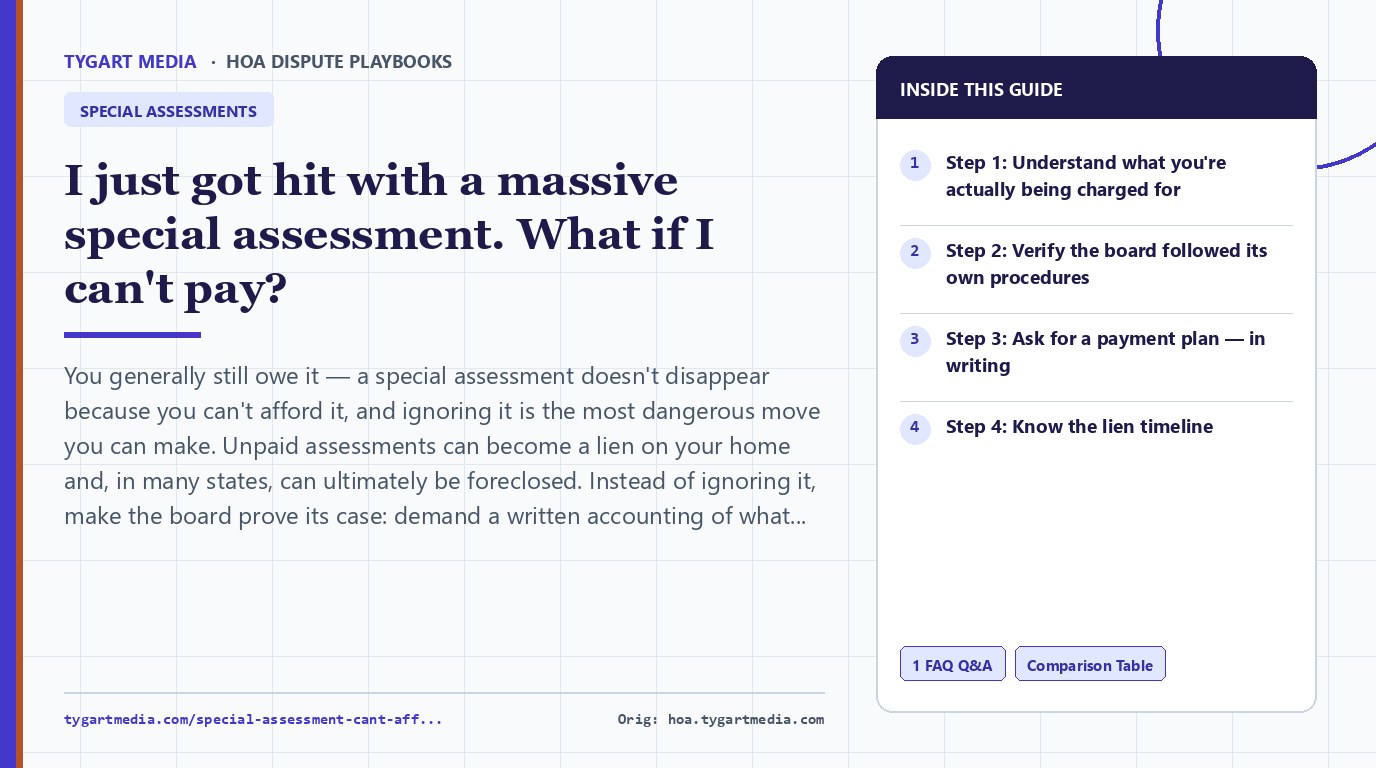
Step 1: Understand what you’re actually being charged for
Request a written accounting — a line-by-line breakdown of what the special assessment funds. A roof replacement, a plumbing overhaul, and a clubhouse renovation are all legitimate reasons an association levies special assessments, but you have a right to know exactly where your money goes. Vague or missing explanations are a red flag.
Step 2: Verify the board followed its own procedures
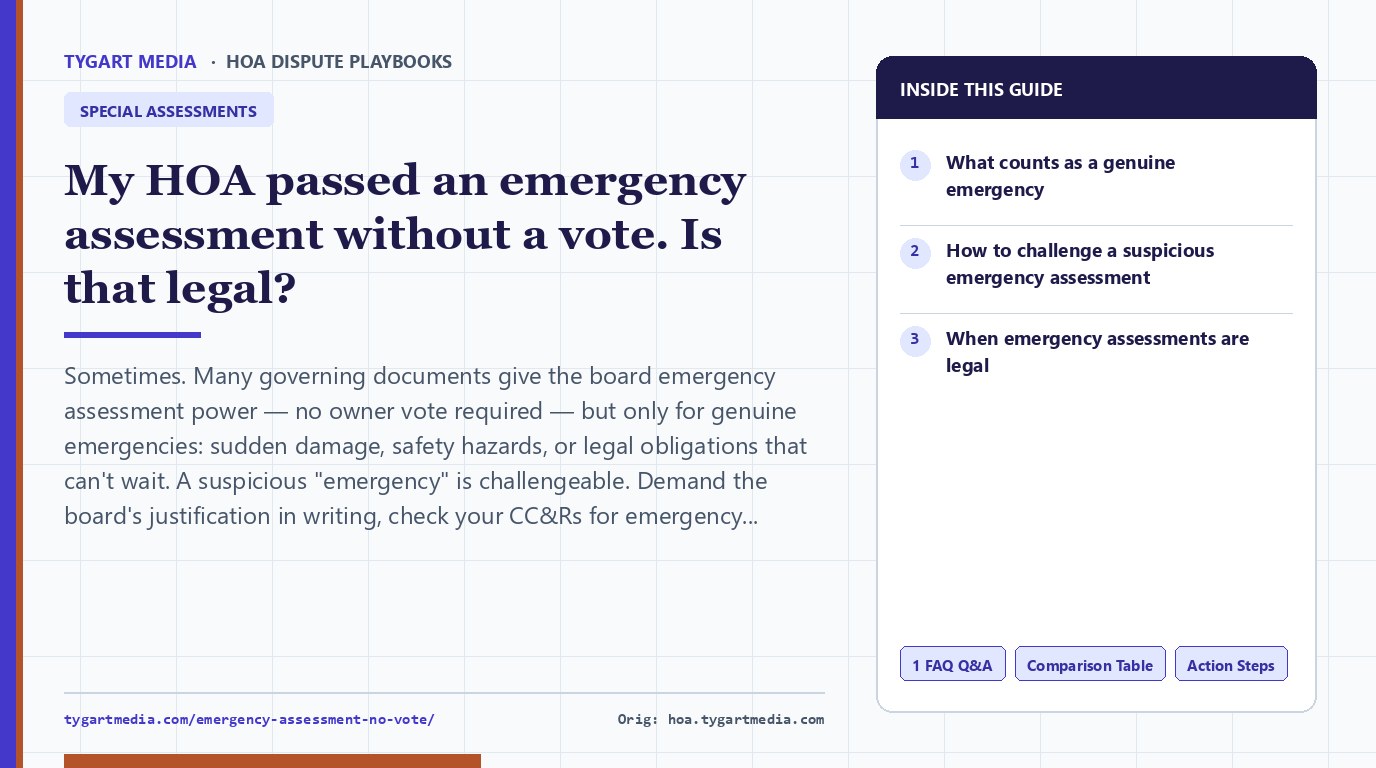
Special assessments usually require specific steps: proper notice of the meeting where the assessment was approved, a quorum, and a vote that meets the threshold in your governing documents. Read your CC&Rs and bylaws for the assessment section. Common defects that get assessments challenged:
- Notice was sent too late or not at all.
- No quorum was present at the approving vote.
- The vote didn’t reach the required threshold (some assessments need a supermajority or an owner vote).
- The governing documents don’t authorize special assessments at all, or cap them.
Step 3: Ask for a payment plan — in writing
Many boards will accept payment plans, especially for large assessments, because collecting something is better than foreclosing on a neighbor. But verbal promises from a board member aren’t binding. Get the payment plan, the amount, the schedule, and any interest terms in writing, and keep paying your regular dues on time regardless — falling behind on both at once escalates fast.
Step 4: Know the lien timeline
In most states, the association can record a lien against your property for unpaid assessments, and that lien can carry interest, late fees, and the association’s collection costs. In many states the association can ultimately foreclose. This is the clock you’re working against — the earlier you engage, the more options you have. The lien and foreclosure playbook →
Your options when you can’t pay
| Option | How it works | Watch out for |
|---|---|---|
| Payment plan | Ask the board for installments | Get it in writing; interest may apply |
| Challenge the assessment | Was it properly authorized? Proper notice? | Procedural defects can invalidate it |
| HOA loan (board-side) | Association borrows, owners repay over years | Propose it at a meeting — boards often prefer this too |
| Sell | Last resort | Liens must be cleared at closing |