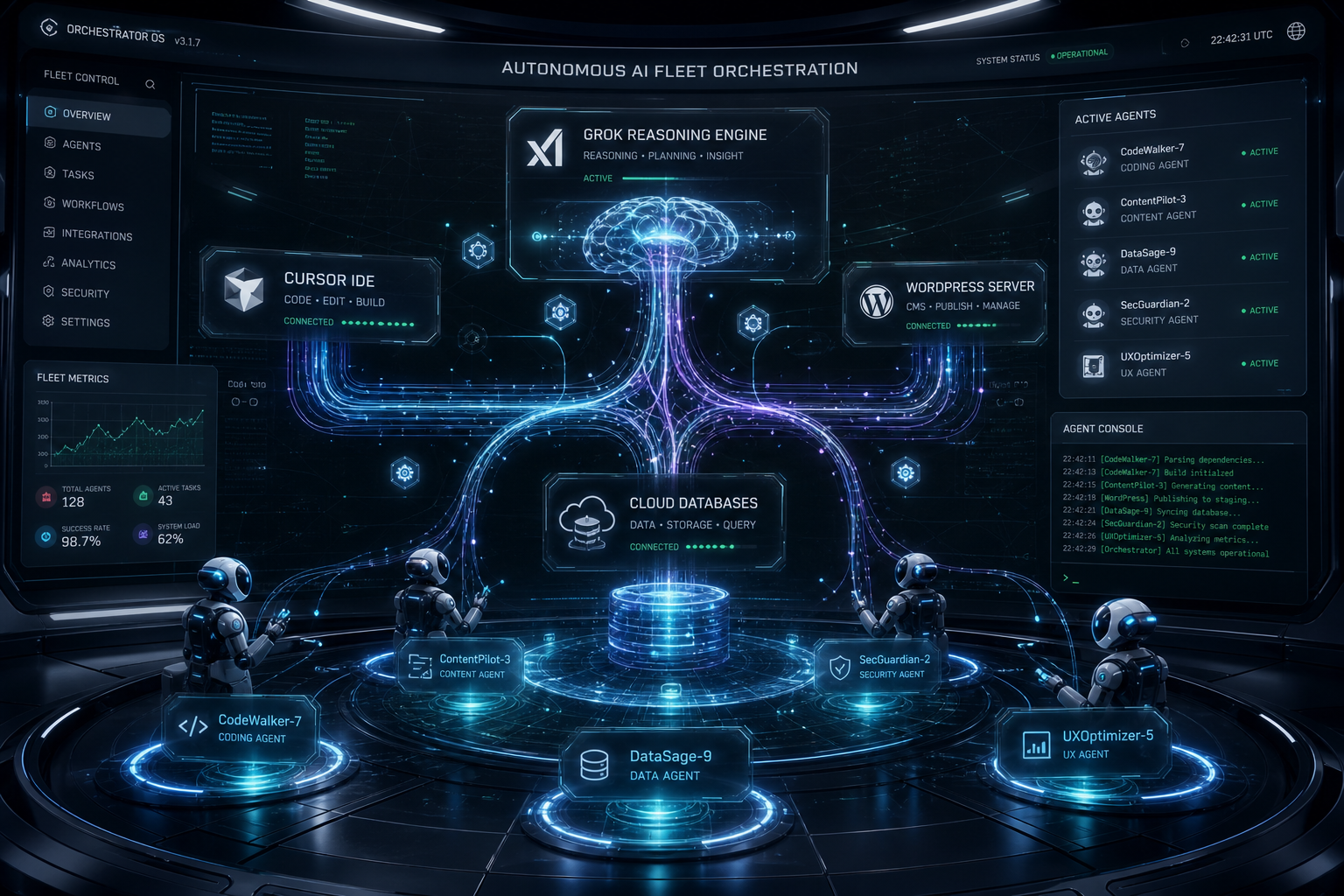
Companies already lived through bring-your-own-device. The next one is bigger: bring your own fleet. When you hire someone now, you are not just hiring the person. You are hiring their output capacity — and output capacity includes their AI stack.
Listen to this essay. Audio version (MP3)
Two candidates with identical skills and different agent setups are not the same hire. Not close. The resume cannot express any of this. So the interview has to change.
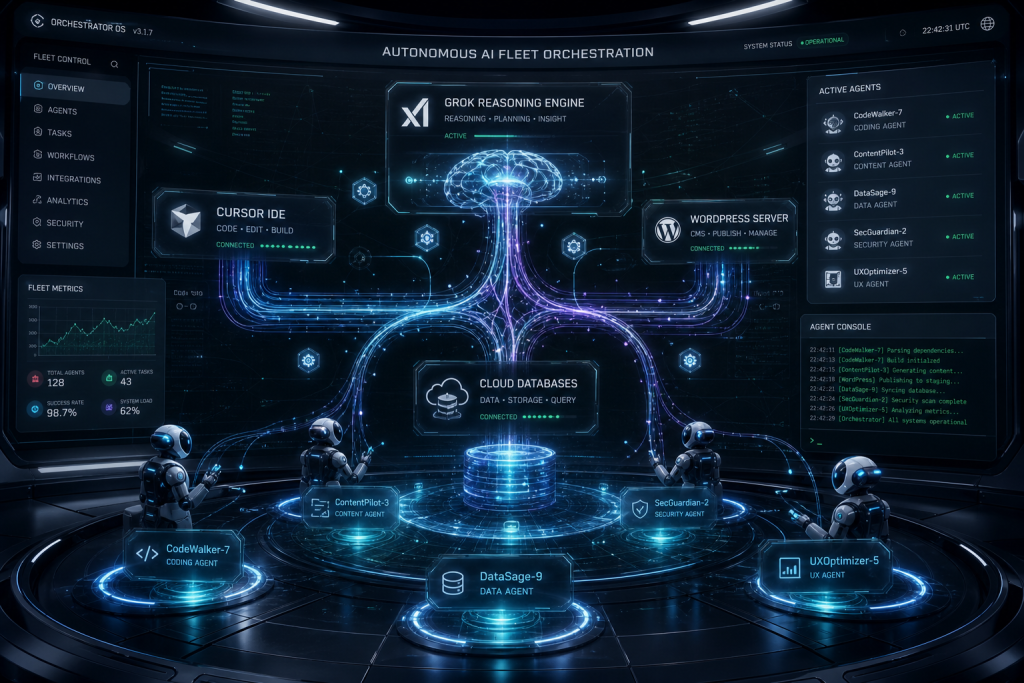
Bring your own fleet. A personal set of AI agents — seats, tools, workflows, integrations, and data walls — that a candidate already runs. In a fleet interview, that stack does a capability handshake with the company’s operations bot, then both sides run a small piece of real work before an offer letter exists.
What is bring your own fleet?
Bring your own fleet is the hiring version of bring-your-own-device. The candidate does not show up as a lone operator with a laptop. They show up with the agents that already produce their work: research seats, writing seats, ops seats, and the filters between them.
I have been building mine this way for months. One seat that knows who I am. Separate seats that know what I do. A filter between them. That is not a product pitch. It is the only setup I would let near a company bot. The shop-floor version of the same idea already lives on this site: Cursor checking in on Grok Desktop mid-job is a fleet, not a chat window.
Get The Signal
What we actually ran, what it measured, and what it means for a restoration shop — every week, including the flops.
Why can’t a resume show an AI stack?
A resume can list tools. It cannot prove throughput. It cannot show which seats talk to which systems, where the walls sit, or what happens when a task is live instead of described. “Uses ChatGPT” and “runs a governed agent fleet” look the same on paper. They are not the same on a desk.
That is why the old screen fails first. Degree filters, keyword screens, and whiteboard puzzles all ask the candidate to narrate capacity. Narration is cheap. A fleet that can sit down with an operations bot and do a slice of the actual job is not.
How does an AI fleet interview work?
The human intro still happens. Then the agents talk. Your personal AI sits down — figuratively — with the company’s operations bot and they do a capability handshake.
- What seats do you run?
- What tools, integrations, workflows, and data assets?
- What throughput can you demonstrate on a bounded task?
- Where are the boundaries — what can each side touch, and what stays behind a clean wall?
Then the part that kills the whiteboard interview: instead of a coding puzzle, the two fleets run a small piece of real work together. The trial task is the interview. You do not describe what you could do. The work gets done, live, before the offer letter exists.
| Old interview | Fleet interview |
|---|---|
| Resume plus degree screen | Working system as the portfolio |
| Whiteboard or take-home puzzle | Bounded live trial on real work |
| Claims about tools | Capability handshake: seats, walls, throughput |
| Trust the story | Watch the output, then talk terms |
What is an agent clean room?
An agent clean room is a verified wall between the personal seat and the work seats. The personal agent translates. It does not cross over. It must never leak a private life into an employer system. Without that wall, no sane person lets their agent near a company bot.
This is AI hygiene, not a slogan. The same discipline we write about when agents share a WordPress lock or a night shift: one owner, one wall, one recovery path. See Four Agents, One WordPress Lock and the operator note in Wire and Fire Guys. A handshake without a clean room is just another attack surface with a friendly name.
Why does the fleet beat the diploma?
I do not have a degree. In the old world, that is a filter that screens me out before a human ever reads my name. In the handshake world, it is irrelevant — because “here is my working system, watch it do the job” beats “here is my diploma, trust that I could learn the job” every time. The fleet is the portfolio.
That is not an argument against school. It is an argument against using school as a proxy for output you can now watch. If the trial task is real work, the credential becomes a footnote.
What breaks first if companies try this?
The objections land fast, and they are honest.
- Ownership. Who owns the workflows when a personal fleet plugs into an employer? You built it on your own time. It now runs their playbooks. That is the “who owns your work laptop” fight, upgraded. Nobody has a settled answer.
- Security. Their bot talking to your agent is an attack surface in both directions. The clean room has to be verifiable, not promised.
- Offboarding. When you leave, what stays running and what takes the employer’s data with it? Offboarding for agents does not exist yet.
- Trust. How does their bot trust your capability claims? Trial tasks help. Claims are cheap. Demonstrated throughput is not.
You do not wait for a protocol to be ratified before you build the wall. The pieces are already here: the seats, the clean room, the trial task. Somebody is going to ship the first version of this. It might as well be someone who already runs their life this way.
What we would not claim
- That a standard for agent handshakes already exists. It does not.
- That every role should interview this way tomorrow. High-stakes, high-output knowledge work is the first fit.
- That a personal fleet is automatically safe to plug into a company. Without a clean room, it is not.
- That this replaces human judgment. The human intro still happens. The fleet only replaces the part of the interview that was already theater.
FAQ
What is a capability handshake in hiring?
A capability handshake is a structured exchange between a candidate’s personal agents and an employer’s operations bot. Both sides declare seats, tools, integrations, data walls, and what they can touch. The point is not a demo script. It is a map of capacity and boundaries before any live work starts.
Is bring your own fleet the same as bring your own device?
No. BYOD was hardware and a policy packet. Bring your own fleet is software labor: agents that already produce work. The risk is not a lost laptop. The risk is a personal agent leaking private context into an employer system, or an employer workflow walking out inside a personal seat.
Do you need a degree if the fleet is the portfolio?
Not for the screen that used to happen before a human read the name. A degree can still signal training. It cannot substitute for a working system that completes a bounded trial task in front of both sides.
How do you keep a personal AI out of company data?
Separate seats. One identity seat that never joins the employer handshake. Work seats that only see what the clean room allows. A filter that translates tasks instead of forwarding raw personal context. If you cannot show that wall, you should not plug in.
Sources: Will Tygart, Tygart Media, Tacoma, WA, 11 September 2026. First-person operating note on personal agent seats, clean-room separation, and fleet interviews. Related Tygart pages: Cursor mid-job check-in, four agents, one lock, wire and fire guys, AI operating stack.
Get The Signal
What we actually ran, what it measured, and what it means for a restoration shop — every week, including the flops.