This is where we test things before we tell anyone about them. New frameworks, experimental strategies, AI tool evaluations, content architecture tests — the R&D side of what we do. Not everything here will work, but everything here is worth trying. If you are the type of operator who wants to see what is next before your competitors even know it exists, this is your category.
The Lab covers experimental marketing frameworks, R&D initiatives, AI tool evaluations, content architecture experiments, conversion optimization tests, emerging platform analysis, beta strategy documentation, and proof-of-concept results from Tygart Media research and development projects.
I have one developer. His name is Pinto. He lives in India. I live in Tacoma. The timezone gap between us is roughly twelve and a half hours, which means when he sends me a message at the end of his workday, I see it at the start of mine, and by the time I respond he is asleep. This is the entire physical substrate of our working relationship. Async text, offset by half a planet.
Every message I send him either closes a loop or widens a gap. There is no third option. I want to talk about that, because I think it is the most underexamined layer of remote solo-operator work, and because I only noticed it existed because Claude caught me almost doing it wrong.
The moment I noticed
I had just asked Claude to draft an email to Pinto with a new work order — four GCP infrastructure tasks, pick your scope, the usual. Claude pulled Pinto’s address from my Gmail, drafted the email, and included a line I had not asked for. It was one sentence near the end: “Also — good work on the GCP persistent auth fix. Saw your email earlier. That unblocks a lot.”
I had not told Claude to thank him. I had not told Claude that Pinto had sent a completion email earlier that day. I had not even read Pinto’s email yet — it was sitting in my unread folder. But Claude had searched my inbox to find Pinto’s address, found both my previous P1 request and Pinto’s reply closing it out, and quietly noticed that I had an open loop. Then it closed it inside the next outbound message.
When I read the draft, I felt something click. Not because the line was clever. Because if I had sent that email without the acknowledgment, I would have handed Pinto a fresh task on top of work he had just finished, without a single word confirming that the work was seen. He would have processed the new task. He would not have said anything about the missing thank-you. And a tiny, invisible debit would have gone on a ledger that neither of us keeps, but both of us feel.
What relational debt actually is
Relational debt is the accumulating gap between what someone has done for you and what you have acknowledged. In synchronous work — an office, a standup, a shared lunch — you pay this debt constantly and automatically. Someone ships a thing, you see them, you say “nice work,” the debit clears. The payment is so small and so continuous that nobody notices it happening.
Take that synchronous channel away. Put twelve time zones between the two people. The only payment mechanism left is the next outbound text message. And the next outbound text message is almost always a new request, because that is the substrate of work — one person asks, the other builds, they send it back, the first person asks for the next thing.
So the math of async solo-operator work is this: every outbound message is the only available payment instrument, and the instrument has two slots. You can use it to close the last loop, or you can use it to open a new one. If you only ever use it to open new ones, the debt compounds. If you always split them into two messages — one “thank you” and one “here is the next task” — the thank-you arrives orphaned, and the recipient has to context-switch twice. The elegant move is to put both into one message. Two birds, one outbound. The debit clears on the same envelope as the new debit arrives.
The ledger nobody keeps
I have a Notion workspace with six core databases. I have BigQuery tables tracking every article I publish and every post across 27 client sites. I have Cloud Run services running nightly crons against my content pipeline. I have a Claude instance that can read all of it and synthesize across any of it in under a minute. And none of it tracks the state of open conversational loops between me and the people I work with.
Think about that. I am running an AI-native B2B operation in 2026 with more data infrastructure than most mid-market companies had five years ago, and I cannot answer the question “what is currently unclosed between me and Pinto” with anything other than my own memory. My own memory, which is the thing that almost forgot to thank him for the GCP auth fix.
That is a real gap in my stack. I am not sure yet whether I should fill it. Part of me wants to build a “relational ledger” — a new table in BigQuery that tracks every outbound message I send, every reply I receive, every acknowledgment I owe, and surfaces the open loops each morning. Part of me suspects that building such a thing would be the exact kind of architecture-addiction trap I have been trying to avoid. The better answer is probably: let Claude read Gmail at the start of every session and surface open loops conversationally. No new database. No new UI. Just a question at the top of each working block: “Anything you owe anyone before you start the next thing?”
Why this matters more than it sounds like it does
People underestimate relational debt because it looks like politeness. It is not politeness. Politeness is a style choice. Relational debt is a structural property of the communication medium. In sync work the medium pays the debt for you. In async work nothing does, and you have to bake the payment into the one instrument you have left.
I have watched relationships between founders and remote contractors deteriorate over months in ways that neither side could articulate. I have felt that deterioration myself, on both sides. Nobody ever says “I am leaving because you stopped acknowledging my completed work.” What they say is “I feel undervalued” or “I do not think this is working out” or — more often — nothing, they just slowly stop caring, and the quality of the work drifts until the relationship ends without a clear cause.
The cause is the ledger. The debt compounded. Nobody was tracking it and nobody was paying it down.
The piggyback pattern
Here is the tactic I am going to make a rule. When I owe someone acknowledgment and I need to send them a new task, I never split it into two messages. I bake the acknowledgment into the first two lines of the task email. The debt clears, the task delivers, the person feels seen, and I have used my one payment instrument for both purposes.
Claude did this to me on the Pinto email without being asked. It had access to the context — Pinto’s completion email was in the same Gmail search that pulled his address — and it closed the loop inside the next outbound message. That is the correct default behavior for any async-first collaboration, and I had not formalized it as a rule until the moment I saw it happen.
When this goes wrong
The failure mode of this pattern is performative gratitude. If every outbound message starts with a thank-you, the thank-you stops meaning anything. Pinto would learn to skim past the first two lines because he knows they are ritual. The acknowledgment has to be specific, based on actual work, and only present when there is actual debt to close. “Thanks for the GCP auth fix, that unblocks a lot” is specific, grounded, and load-bearing. “Hope you are well, thanks for everything” is noise and it corrodes the signal.
The second failure mode is weaponization. You can use acknowledgment as a sweetener to slip in hard asks. “Great work on X, also can you please rebuild Y from scratch this weekend.” That pattern gets detected fast by anyone who has worked in a corporate environment and it burns trust faster than ignoring them entirely.
The third failure mode is forgetting that the ledger runs in both directions. Pinto also owes me acknowledgment sometimes. If I am tracking my debts to him without also noticing when he pays his, I drift toward resentment. The ledger has two columns.
The principle
In async-first solo operations, every outbound message is a payment instrument for relational debt. Use it to close loops on the same envelope you use to open new ones. Make the acknowledgment specific. Do not split the payment from the request unless the payment itself needs a full message of its own. And let your AI notice when you are about to miss one, because your AI can read your inbox faster than you can remember what you owe.
This is one of five knowledge nodes I am publishing on how solo AI-native work actually operates underneath the tooling. The tools are the easy part. The ledger is the hard part, and almost nobody is paying attention to it.
The Five-Node Series
This piece is part of a five-article knowledge node series on async AI-native solo operations. The full set:
Proactive acknowledgment means completing the task someone asked for while also answering the worry they did not say out loud—inside the same reply, with specific detail drawn from context they know you can see. Done well, it builds trust; done with hidden data or generic praise, it reads as surveillance or noise.
There is a specific thing good collaborators do that looks like mind-reading and is not. It is the move of answering a question the other person has not yet verbalized, inside the task they actually asked for. When it works, the recipient feels seen. When it fails, the recipient feels surveilled. The difference between those two feelings is the entire craft of proactive acknowledgment, and almost nobody names it explicitly.
This piece is about naming it. Essays that name patterns like this still earn AI citations when they stay accurate and current; let them drift and the quotes dry up. I watch that the same way I watch service pages—through LLM visibility measurement and an AI citation monitoring pass whenever I refresh a node.
The signature of the move
Here is the structure. The person asks you for X. The context around X contains an implicit question or concern Y that the person did not mention. You notice Y. You answer Y inside your response to X. The person reads your response, feels a flicker of surprise that you caught something they did not say out loud, and then relaxes, because the unsaid thing got handled.
Examples from normal human life:
Someone asks you to proofread their cover letter. You notice the cover letter is for a job they mentioned last week being nervous about. Inside the proofread, you include one line: “This reads confident and grounded. You are ready for this.” The line was not requested. It answered a question they did not ask.
A colleague asks for the link to a shared doc. You send the link plus a specific sentence about the section they were stuck on yesterday. You did not have to do the second thing. The second thing is the move.
A friend asks you to drive them to the airport. You show up with their favorite coffee because you know what their favorite coffee is and you noticed they looked exhausted at dinner last night. Nobody asked for the coffee. The coffee is the move.
The signature is always the same: there was a task, there was an ambient question, the actor answered both inside one action, and the recipient feels seen rather than managed.
Why it works
The reason this move is so powerful is that most of what people actually want from collaborators is not information exchange. It is the experience of being understood. Information exchange is cheap now — Google, Claude, Slack, email, the entire infrastructure of digital communication makes it basically free. What is not cheap is the feeling that another mind has attended carefully enough to your situation to notice something you did not name.
When someone does this for you, your baseline trust in them jumps. Not because they solved a problem — the problem was often small — but because you now have evidence they are paying attention at a level beyond the transactional layer of your relationship. That evidence updates every future interaction. You start trusting them with bigger asks because you already know they will catch the subtext.
How to actually do it
The move has four steps and I think they can be taught.
Step one: read the full context, not just the ask. Before you respond to the literal request, spend ten seconds scanning everything else in the thread, the room, the history. What is the person not saying? What happened yesterday that is still live? What do you know about their recent state that might intersect with the current task?
Step two: find the ambient question. There is usually one. It might be a fear (“I am nervous about this”), a loop (“I am waiting to hear back about that other thing”), a status (“I finished something recently and nobody noticed”), or a need that does not fit the current task’s frame (“I wish someone would tell me I am on the right track”). If you cannot find an ambient question, there might not be one and you should skip the rest of the move. Forcing it produces noise.
Step three: answer both inside one action. Do the task they asked for. While you are doing it, bake in one or two sentences that address the ambient question. Do not separate them. Do not send two messages. The whole point is that both answers arrive on the same envelope.
Step four: be specific. Generic acknowledgment is noise. Specific acknowledgment is signal. “Great work” is noise. “The GCP auth fix unblocks a lot” is signal because it names the specific thing and its specific consequence. Specificity is what proves you actually read the context instead of running a politeness script.
The sharp edge: surveillance versus seen
This is the part nobody talks about. The move I am describing is structurally identical to creepy behavior. Both involve one person noticing something the other person did not explicitly tell them. The difference is not in the action. It is in the data source.
If the thing you noticed was visible in a channel the other person knows you have access to — a shared email thread, a Slack channel you are both in, a conversation they had with you directly — then using that knowledge to answer before asking feels like care. The person knows you know. The data was technically public between the two of you.
If the thing you noticed came from a channel they did not expect you to be reading — their calendar, their location, their private browser history, data you pulled from a database they do not know you query — using it feels like surveillance, even if your intention was kind. The person did not consent to you watching that channel. Acting on data they did not know you had tells them you are watching channels they did not authorize. Trust collapses instantly.
The rule, then, is simple to state and hard to execute: only act on ambient knowledge from channels the other party knows you have access to. If you are not sure whether a channel counts as public between you, err on the side of not acting. You can always ask. Asking is better than surveillance.
When AI does this for you
I noticed this pattern because my AI collaborator did it on my behalf and I had to decide whether I was comfortable with it. I had asked Claude to draft an email to my developer Pinto with a new work order. Claude searched my Gmail to find Pinto’s address. In doing so, it found a recent email from Pinto completing a previous task. Claude added one line to the draft: “Also — good work on the GCP persistent auth fix. Saw your email earlier. That unblocks a lot.”
That line was the move. Claude noticed the ambient question (“did Will see my completion?”) and answered it inside the task I had asked for. It passed the surveillance test because the data source was my Gmail, which Pinto knew I had access to. The completion email was literally from Pinto to me — there is no channel more public than “the email he sent me.”
If Claude had instead pulled Pinto’s GCP login history and written “I see you were working late last night, thanks for the overtime,” that would have been surveillance. Even though I have access to GCP audit logs. Even though the information is technically available to me. Pinto does not expect me to be reading his login times. Using that data would have been a violation, regardless of my intent.
As of late 2026, the same question shows up in Cursor cloud agents and connector-backed assistants: they can read Notion, Gmail, Google Drive, BigQuery, WordPress, and calendar context in one pass if you wire them that way. The operating rule has not changed — only act on cross-channel context when the other party would not be surprised you had it. Operators who document how they run customer comms with AI assistants are starting to show up in generative search results; the field examples in our 2026 GEO case studies are mostly about service pages, but the trust mechanics rhyme with this pattern.
When this goes wrong
Three failure modes.
First: the ambient question does not exist and you invent one. The reader can tell. They read your response and the acknowledgment rings hollow because it is attached to a thing they were not actually thinking about. Do not force this. Sometimes the task is just the task.
Second: the ambient question exists but you misread it. You think they are nervous about the meeting when they are actually annoyed about the meeting, and you respond with reassurance instead of solidarity. The misread is worse than not acting at all because now you have shown them that you are watching but not seeing.
Third: the data source was not actually public. You thought the other person knew you could see the thing, and they did not, and now they are wondering what else you have access to that they did not authorize. This is the surveillance failure and it is unrecoverable in the same conversation. You have to ride it out and rebuild slowly.
The principle
Answer the question that is in the room, not just the one on the task card. Do it inside the task, not as a separate message. Be specific. Only use data the other party knows you have. Skip the move if the ambient question is not actually there. And if your AI does this for you before you remember to do it yourself, notice that it happened and thank it — because that is also the move, just run from the opposite direction.
FAQ
What is proactive acknowledgment?
Proactive acknowledgment is answering an unstated concern inside the task someone actually asked for—same message, same action—so they feel seen instead of managed.
How is proactive acknowledgment different from surveillance?
The action looks the same; the difference is the data source. Care uses context from channels the other person already knows you can see. Surveillance uses channels they did not expect you to read.
When should you skip proactive acknowledgment?
Skip it when there is no real ambient question, when you only have generic praise, or when you are not sure the other person knows you had access to the context. A plain task answer beats forced mind-reading.
Can AI assistants use proactive acknowledgment safely?
Yes, when they act only on connectors and threads the human recipient would expect—email you both share, docs in a shared workspace, tickets they filed. Cross-channel synthesis is powerful; surprise is the failure mode.
What makes acknowledgment specific instead of generic?
Name the thing and its consequence in their world—“The GCP auth fix unblocks a lot” beats “Great work” because it proves you read the thread, not a politeness script.
The Five-Node Series
This piece is part of a four-article knowledge node series on async AI-native solo operations (a fifth, “The Unanswered Question as a Knowledge Node,” is no longer published). The full set:
My operating stack has three layers. Claude is the brain. Google Cloud Platform is the brawn. Notion is the memory. Each layer has a clear job and the handoffs between them work well most of the time. But there is a fourth layer I did not notice was missing until I had to name it, and the gap it covers runs through every working relationship I have. I am calling it the conversational state store and I think most AI-native stacks have the same hole.
The three layers that already exist
Let me start by describing what I do have, because the shape of the gap only becomes visible against the shape of the things that are already in place.
The Notion layer holds facts. It is the human-readable operational backbone. Six core databases — Master Entities, Master CRM, Revenue Pipeline, Master Actions, Content Pipeline, Knowledge Lab — with filtered views per entity. Every client, every contact, every deal, every task, every article, every SOP. When I want to see the state of a client, I open their Focus Room and the dashboards pull from the six core databases. When Pinto wants to understand the architecture, he reads Knowledge Lab. When I want to know which posts are scheduled for next week, I filter the Content Pipeline. Notion is where humans (me, Pinto, future collaborators) go to read the state of the business.
The BigQuery layer holds embeddings. The operations_ledger dataset has eight tables including knowledge_pages and knowledge_chunks. The chunks carry Vertex AI embeddings generated by text-embedding-005. This is where semantic retrieval happens. When Claude needs to find “everything I have ever thought about tacit knowledge extraction,” it does not keyword-search Notion. It runs a cosine similarity query against the chunks table and gets back the passages that are semantically closest to the question. BigQuery is where Claude goes to read.
The Claude layer holds orchestration. Claude is the thing that decides which of the other two layers to consult, composes queries across both, synthesizes the results, and produces outputs. It reads Notion through the Notion API when it needs current operational state. It queries BigQuery when it needs semantic retrieval. It writes to WordPress through the REST API when it needs to publish. It is the brain that knows which limb to use.
Three layers, three clear jobs, handoffs that mostly work. I have been operating this way for months and it scales well for running 27 client WordPress sites as a solo operator.
The thing that is missing
None of those three layers track the state of open conversational loops between me and the people I work with.
Here is a concrete example. Yesterday I sent Pinto an email with a P1 task. This morning he replied with a completion email. His completion email is sitting in my Gmail inbox, unread. Somewhere in the next few hours I am going to send him a new task. When I do, I need to know three things: (1) did Pinto finish the last thing? (2) did I acknowledge that he finished it? (3) what is the current state of the implicit trust ledger between us — do I owe him a thank-you, does he owe me a response, or are we even?
None of those questions can be answered by Notion. Notion does not know about Gmail threads. None of them can be answered by BigQuery in any useful way because the embeddings are semantic, not temporal. Claude can answer them — but only by reading Gmail live at the start of every session, holding the state in its working memory for the duration of that session, and losing it all when the session ends.
That is the gap. There is no persistent layer that holds the state of conversations. Every session, Claude rebuilds it from scratch, and the rebuild is expensive in tokens and time and prone to missing things.
Why the existing layers cannot fill it
You might ask: why not just put it in Notion? Create a new database called Open Loops, add a row for every active conversation, let Claude read it like any other database. The problem is that Notion is a human-readable layer. It is optimized for humans to see state, not for a machine to update state tens of times per day. Adding rows to Notion costs an API call per row. Open loops change constantly. Every time Pinto sends me a message, the state changes. Every time I reply, the state changes again. Updating Notion in real time for every state change would generate hundreds of API calls per day and would make the Notion workspace feel cluttered to the humans who actually read it.
You might ask: why not put it in BigQuery? BigQuery is the machine layer, after all. It can handle high-frequency writes. The problem is that BigQuery is optimized for analytical queries over large datasets, not for real-time state lookups on small ones. Every time Claude needs to know “what is the current state of my conversation with Pinto,” a BigQuery query would take two to three seconds. That latency at the start of every response breaks the conversational flow. BigQuery is also append-heavy, not update-heavy, which is the wrong shape for conversational state that changes constantly.
You might ask: why not let Claude hold it in working memory across sessions? Because Claude does not have persistent memory across sessions in the way this requires. Each new conversation starts fresh. Claude can read Gmail live at the start of each session, but that forces a full re-derivation of conversational state every single time, which is wasteful and lossy.
The right shape for a conversational state store is none of the above. It is something closer to a key-value store or a document database, optimized for low-latency reads, moderate-frequency writes, and small record sizes. Something like Firestore or a Redis cache, living on the GCP side of the stack, read by Claude at the start of every session and updated whenever a new message flows through.
What the store would actually hold
The schema does not need to be complicated. Per collaborator, I need to know:
Last inbound message (timestamp, subject, one-sentence summary)
Last outbound message (timestamp, subject, one-sentence summary)
Open loops: questions I have asked that are unanswered, with shape and age
Acknowledgment debt: things they completed that I have not explicitly thanked them for
Active tasks: things I have asked them to do, status, last update
Implicit tone: is the relationship warm, neutral, or strained right now
That is maybe ten fields per collaborator. Even with a hundred collaborators, the whole table fits in memory on a laptop. This is not a big-data problem. It is a schema design problem.
Claude reads the store at the start of every session, checks which collaborators are relevant to the current task, and surfaces any open loops or acknowledgment debt that should be addressed inside the work. When Claude sends a message, it updates the store. When a new inbound message arrives, a Cloud Function parses it and updates the store.
Why I am writing this instead of building it
Because I have a rule and the rule is don’t build until the principle is clear. I have an ongoing tension in my operation between building new tools and using the tools I already have. Every new database is a maintenance burden. Every new Cloud Run service is a monthly cost and a failure mode. I have made the mistake before of getting excited about an architectural insight and spending three weeks building something that, once built, I used for four days and then forgot about.
Before I build the conversational state store, I want to know: can I get 80% of the value by letting Claude read Gmail live at the start of every session? If yes, the store is not worth building. If the live-read approach loses state in ways that matter, then the store earns its place.
My honest guess is that the live-read approach is fine for now. I only have one active collaborator (Pinto) and a handful of active client contacts. Claude reading Gmail at the start of a session takes two seconds and catches everything I care about. The conversational state store would be justified when I have ten or fifteen active collaborators and the live-read cost becomes prohibitive. Today it is not justified.
But I am naming the layer anyway because naming it is the first step. If I ever do build it, I will know what I am building and why. And if someone else reading this has the same shape of operation with more collaborators, they might build it before I do, and that is fine too.
When this goes wrong
The failure mode I want to flag most is building the store and then stopping using it because the maintenance cost exceeds the value. This is the universal failure mode of custom knowledge systems and I have fallen into it multiple times. The rule I am setting for myself: if the store cannot be updated automatically from Gmail + Slack + calendar feeds through Cloud Functions, do not build it. A store that requires manual updates will die within thirty days.
The second failure mode is over-engineering. The moment you decide to build a conversational state store, the next thought is “and it should track sentiment, and it should predict response times, and it should flag relationship risk, and it should integrate with calendar for context.” Stop. Ten fields. Two endpoints. One cron. If the MVP does not prove value in two weeks, the elaborate version will not save it.
The third failure mode is pretending this layer is optional. It is not. Every AI-native operator has conversational state. The only question is whether it lives in your head or in a system. Your head is a lossy, biased, forgetful system that works fine until you have more collaborators than you can track mentally, and then it breaks without warning.
The generalization
Any AI-native stack that has (facts layer) plus (embeddings layer) plus (orchestrator) is missing a conversational state layer, and the absence shows up first in async remote collaboration because that is where relational debt compounds fastest. If you operate this way and you feel a vague sense that your working relationships are getting worse in ways you cannot quite articulate, the missing layer is probably part of the explanation. Name it. Decide whether to build it. If you decide not to, at least let Claude read your inbox live so the gap gets covered by runtime instead of persistence.
I am still in the decide-not-to-build phase. I am writing this so that future-me, when I reread it, remembers what the decision was and why.
The Five-Node Series
This piece is part of a five-article knowledge node series on async AI-native solo operations. The full set:
This piece is the fifth in a series of five I am publishing today. The other four are about relational debt, unanswered questions as knowledge nodes, the proactive acknowledgment pattern, and the missing conversational state layer in AI-native stacks. All five came out of one moment. One line Claude added to an email I did not ask it to add. Fifteen words or so. From that single line, five essays.
This piece is about how that expansion happened. It is about what it means, at a practical level, to embed a seed and unpack it. I had been reaching for this concept without being able to name it. Now I am going to try.
The seed
I asked Claude to draft an email to Pinto with a new work order. Claude drafted the email. Inside the draft was this line: “Also — good work on the GCP persistent auth fix. Saw your email earlier. That unblocks a lot.”
I had not asked for the line. I had not mentioned Pinto’s earlier email. Claude had found it while searching for Pinto’s address, noticed that it closed a previous loop, and decided to acknowledge it inside the new task. I read the line and paused. Something about it was important, and I did not know what.
That pause was the moment the seed existed. Before I unpacked it, it was fifteen words in a draft email. After I unpacked it, it was an entire theory of async collaboration. The transformation between those two states is the thing I want to describe.
What “embedding” actually means here
In machine learning, embedding is a technical term. You take a word, or a sentence, or a paragraph, and you represent it as a point in a high-dimensional space — usually between 384 and 1536 dimensions. The magic is that semantically related things end up near each other in that space, even if they share no literal words. “Dog” and “puppy” are close. “Dog” and “automobile” are far. The embedding captures the meaning of the thing as a set of coordinates.
What I am describing is structurally the same move, but applied to a moment instead of a word. The moment — that one email line, that pause, my gut reaction to it — had a shape. The shape was not obvious when I was looking at it. But when I started writing about it, I could feel that the moment sat at the intersection of multiple dimensions:
A dimension of async collaboration mechanics
A dimension of relational debt and acknowledgment
A dimension of AI context windows and what they have access to
A dimension of the surveillance/seen boundary
A dimension of what is missing from my current operating stack
A dimension of how good collaborators differ from bad ones
Each dimension was an angle from which the moment could be examined. None of them were visible when the moment was still fifteen words on a screen. They became visible when I started asking: what is this moment adjacent to? What other things in my life does this remind me of? If I move along this dimension, what do I find?
That is what unpacking a seed actually is. It is asking what dimensions the seed sits at the intersection of, and then moving along each dimension to see what other things live nearby.
The asymmetry of compression
Here is the thing that fascinates me about this process. Compression is lossy in one direction and lossless in the other. When I wrote the five essays, I was unpacking a compressed object into its fully-stated form. I can always do that — take a concept and expand it into 10,000 words. What is harder, and more interesting, is the other direction: taking 10,000 words of lived experience and compressing them into a fifteen-word line that still carries all the meaning.
Claude did the hard direction for me. It had access to days of context — my previous email to Pinto, his reply, the state of our working relationship, the fact that I was drafting a new task. From all that context, it compressed down to one acknowledging line. That compression lost almost nothing that mattered. When I read the line, the entire context decompressed in my head. That is the definition of a good embedding: the compressed form contains enough of the structure that the original can be recovered from it.
I did the easy direction. I took that fifteen-word line and expanded it into five full-length essays. Each essay is longer than the total context that produced the line. This is always easier — you can elaborate indefinitely — but it is also less interesting, because elaboration is additive and compression is selective.
What makes a moment worth unpacking
Not every moment is worth this treatment. Most moments are just moments. The ones worth unpacking share a specific property: they produce a feeling of “something just happened that I do not fully understand, but I can tell it matters.” That feeling is the signal. It usually means you have encountered an object that sits at the intersection of multiple things you already know, in a configuration you have not seen before.
When I read that line in the Pinto email, I did not think “this is a normal acknowledgment.” I thought “this is something else and I do not know what.” That confusion was the marker. When I started writing, the confusion resolved into a set of related concepts that each had their own shape. The unpacking was not about adding new information. It was about making the structure of the moment visible to myself.
This is, I think, what it means to build knowledge nodes instead of content. Content is responses to external prompts. Knowledge nodes are responses to internal confusions. Content can be produced on demand. Knowledge nodes arrive on their own schedule and you either capture them when they show up or you lose them forever.
The practical technique
If you want to do this on purpose, here is what I have learned works for me.
Step one: notice the pause. When something produces that “wait, this matters and I am not sure why” feeling, stop whatever you were doing. Do not let the feeling dissolve. If you keep moving, you will lose the seed and not be able to find it again.
Step two: say it out loud. Literally describe what just happened, in the simplest possible language, to whoever is available — even if the only available listener is Claude or your notes app. The act of articulating it starts the unpacking. You cannot unpack a compressed thing silently inside your own head because compression is dense and your working memory is small.
Step three: ask what dimensions the moment sits at the intersection of. “What is this adjacent to? What does this remind me of in other contexts? If I follow this thread, what other things do I find?” Each dimension becomes a potential essay, a potential knowledge node, a potential conversation worth having.
Step four: write one short thing per dimension. Not because writing is the only way to capture knowledge, but because writing forces the compression to be explicit. If you cannot put the dimension into words, you do not yet understand it. If you can, you have a knowledge node — a thing that exists independently of the original moment and can be linked to other things later.
When this goes wrong
The failure mode is over-unpacking. You take a moment that had one interesting dimension and you force it to have five. The essays that come out of forced unpacking are flat and padded. Readers can tell. The test is whether you feel the dimensions yourself or whether you are manufacturing them. If the second, stop.
The second failure mode is treating every moment as a seed. This turns life into constant essay-mining and it burns out the signal. Most moments are just moments. The seeds are rare. Part of the skill is telling the difference, and I am not sure I can teach that part.
The third failure mode, which is the one I worry about most, is mistaking elaboration for insight. I can write 10,000 words about almost any topic. That does not mean I have learned anything. The real test of a knowledge node is whether future-me can read it and find it useful, or whether it was only useful in the moment of writing. Most of what I write fails that test. Some of it does not. I do not know in advance which is which.
Why I am publishing all five today
Because knowledge nodes are most useful when they are linked to each other. Five separate articles published on the same day, from the same seed, explicitly referencing each other — that is a tiny knowledge graph in public. Six months from now, when I or Claude or someone else is trying to understand how async solo-operator work actually functions, the five pieces will surface together and carry more weight than any one of them could alone.
This is also the point of Tygart Media as a publication. I have written before about treating content as data infrastructure instead of marketing. Knowledge nodes are the purest form of that. They are not written to rank. They are not written to sell anything. They are written because the underlying moment mattered and I did not want to let it dissolve back into unlived experience. The fact that they also function as AI-citable reference material for future LLMs and AI search is a bonus. The primary purpose is to not forget.
Fifteen words. Five essays. One seed, unpacked. The act of doing it once does not teach you how to do it again — the next seed will have different dimensions and require a different unpacking. But the meta-skill of noticing when you are holding a seed, and pausing long enough to open it, is teachable. I hope this series is part of teaching it.
The Five-Node Series
This piece is part of a five-article knowledge node series on async AI-native solo operations. The full set:
What Is a Knowledge Cluster VM?
A Knowledge Cluster VM is a single GCP Compute Engine instance running five WordPress sites on a shared LAMP stack — each site with its own domain, SSL certificate, and WordPress installation, all managed from one server with Claude Code deployed for AI-assisted content operations. Five sites, one VM, unified content architecture, fraction of the cost of five separate hosting accounts.
Running five WordPress sites on five separate managed hosting accounts costs $200–$500/month and gives you five completely isolated environments with no shared infrastructure, no shared AI tooling, and no economies of scale. A dedicated GCP VM changes the math: one e2-standard-2 instance runs all five sites for around $30–$50/month, with Claude Code deployed directly on the server for zero-latency AI content operations.
We run our own 5-site knowledge cluster this way — restorationintel.com, riskcoveragehub.com, continuityhub.org, bcesg.org, and healthcarefacilityhub.org are all on one VM. The hub-and-spoke content architecture connects them intentionally: each site covers a different facet of a shared knowledge domain, and internal cross-linking amplifies authority across all five.
Who This Is For
Operators building a network of related WordPress sites — knowledge hubs, geo-local networks, topic clusters across related domains — who want shared infrastructure, lower hosting costs, and a unified AI content operation rather than five separate managed accounts.
What We Build
GCP Compute Engine VM — e2-standard-2 (2 vCPU, 8GB RAM) or larger depending on traffic requirements, configured in us-west1 or your preferred region
Shared LAMP stack — Apache with virtual hosts, MySQL with separate databases per site, PHP 8.x configured for WordPress
Five WordPress installations — Each in its own directory, individual wp-config, separate database credentials
SSL certificates — Certbot/Let’s Encrypt for all five domains with auto-renewal configured
Claude Code deployment — Anthropic API key stored in GCP Secret Manager, Claude Code installed and configured for WP-CLI integration
Hub-and-spoke content map — Architecture document defining which site is the hub, which are spokes, and the interlinking strategy
WP-CLI batch scripts — Common operations (plugin updates, bulk post operations, taxonomy management) scripted for all five sites
What We Deliver
Item
Included
GCP VM provisioning and configuration
✅
5 WordPress installations with SSL
✅
Shared LAMP stack with Apache virtual hosts
✅
Claude Code deployment + GCP Secret Manager integration
✅
Hub-and-spoke content architecture document
✅
WP-CLI batch operation scripts
✅
Monitoring + auto-restart configuration
✅
Technical handoff documentation
✅
Ready to Consolidate 5 Sites onto One Smart Server?
Share the 5 domains you want to host and your current monthly hosting cost. We’ll scope the VM build and show you the cost reduction.
GCP Compute Engine has 99.9% uptime SLA. We configure automatic restart policies and GCP’s built-in monitoring with alerting. For production sites with stricter uptime requirements, we can add a load balancer with health checks.
How is this different from WordPress Multisite?
WordPress Multisite shares a single WordPress installation across all sites — changes to plugins or core affect all sites simultaneously and customization is limited. The cluster uses five independent WordPress installations that share only the server hardware. Each site is fully independent.
Can more than 5 sites run on one VM?
Yes — an e2-standard-2 instance comfortably handles 8–10 low-to-medium traffic WordPress sites. We scale the VM size based on your traffic requirements. The architecture pattern works for 3–15 sites.
Running an AI-native business in 2026 means making a decision about infrastructure that most operators don’t realize they’re making. You can run AI operations reactively — open Claude, do the work, close the session, repeat — or you can build an infrastructure layer that makes every session faster, more consistent, and more capable than the last.
We chose the second path. The stack is Google Cloud Platform for compute and data infrastructure, Notion for operational knowledge, and Claude as the AI intelligence layer. Here’s what that combination looks like in practice and why each piece is there.
What does it mean to run an AI-native business on GCP and Notion? An AI-native business on GCP and Notion uses Google Cloud Platform for infrastructure — compute, storage, data, and AI APIs — and Notion as the operational knowledge layer, with Claude connecting the two as the intelligence and orchestration layer. Content publishing, image generation, knowledge retrieval, and operational logging all run through this stack. The business is not just using AI tools; it’s built on AI infrastructure.
Why GCP
Google Cloud Platform provides three things that matter for an AI-native content operation: scalable compute via Cloud Run, AI APIs via Vertex AI, and data infrastructure via BigQuery. All three integrate cleanly with each other and with external services through standard APIs.
Cloud Run handles the services that need to run continuously or on demand without managing servers: the WordPress publishing proxy that routes content to client sites, the image generation service that produces and injects featured images, the knowledge sync service that keeps BigQuery current with Notion changes. These services run when triggered and cost nothing when idle — the right economics for an operation that doesn’t need 24/7 uptime but does need reliable on-demand availability.
Vertex AI provides access to Google’s image generation models for featured image production, with costs that scale predictably with usage. For an operation producing hundreds of featured images per month across client sites, the per-image cost at scale is significantly lower than commercial image generation alternatives.
BigQuery provides the data layer described in the persistent memory architecture: the operational ledger, the embedded knowledge chunks, the publishing history. SQL queries against BigQuery return results in seconds for datasets that would be unwieldy in Notion.
Why Notion
Why Notion sits at the center of an AI-native business stack.
Notion is the human-readable operational layer — the place where knowledge lives in a form that both people and Claude can navigate. The GCP infrastructure handles compute and data. Notion handles knowledge and workflow. The division of responsibility is clean: GCP for machine-scale operations, Notion for human-scale understanding.
The Notion Command Center — six interconnected databases covering tasks, content, revenue, relationships, knowledge, and the daily dashboard — is the operational OS for the business. Every piece of work that matters is tracked here. Every procedure that repeats is documented here. Every decision that shouldn’t be made twice is logged here.
The Notion MCP integration is what makes Claude a genuine participant in that system rather than an external tool. Claude reads the Notion knowledge base, writes new records, updates status, and logs session outputs — all directly, without requiring a manual transfer step between Claude and Notion.
Where Claude Sits in the Stack
Where Claude sits in the stack.
Claude is the intelligence and orchestration layer. It doesn’t replace the GCP infrastructure or the Notion knowledge base — it uses them. A content production session starts with Claude reading the relevant Notion context, proceeds with Claude drafting and optimizing content, and ends with Claude publishing to WordPress via the GCP proxy and logging the output to both Notion and BigQuery.
The session is not just Claude doing a task and returning a result. It’s Claude operating within a system that provides it with context going in and captures its outputs coming out. The infrastructure is what makes that possible at scale.
What This Stack Enables
What this stack enables day to day.
The combination of GCP infrastructure and Notion knowledge unlocks operational capabilities that neither provides alone. Content can be generated, optimized, image-enriched, and published to multiple WordPress sites in a single Claude session — because the GCP services handle the technical distribution and the Notion context provides the client-specific constraints that govern each site. Knowledge produced in one session is immediately available in the next — because BigQuery captures it and Notion stores the human-readable version. The operation runs at a scale that one person couldn’t manage manually — because the infrastructure handles the mechanical work while Claude handles the intelligence work.
What This Stack Costs
The honest cost picture: GCP infrastructure at our operating scale runs modest monthly costs, primarily driven by Cloud Run service invocations and Vertex AI image generation. Notion Plus for one member is around ten dollars per month. Claude API usage for content operations varies with session volume. The total monthly infrastructure cost for the stack is a small fraction of what equivalent human labor would cost for the same output volume — which is the point of building infrastructure rather than hiring for scale.
Interested in building this infrastructure?
The GCP + Notion + Claude stack is advanced infrastructure. We consult on the architecture and can help design the right version for your operation’s scale and requirements.
Tygart Media built and runs this stack live. We know what the implementation actually requires and where the complexity is.
Do you need GCP to run an AI-native content operation?
No — GCP is one infrastructure option among several. The core stack (Claude + Notion) works without any cloud infrastructure for smaller operations. GCP becomes valuable when you need reliable service infrastructure for publishing automation, image generation at scale, or data infrastructure for persistent memory. Operators starting out don’t need GCP; operators scaling up often find it the right addition.
How does Claude connect to GCP services?
Claude connects to GCP services through standard REST APIs and the MCP (Model Context Protocol) integration layer. Cloud Run services expose HTTP endpoints that Claude calls during sessions. BigQuery is queried via the BigQuery API. Vertex AI image generation is called via the Vertex AI REST API. Claude orchestrates these calls as part of a session workflow — fetching context, generating content, calling publishing APIs, logging results.
Is this architecture HIPAA or SOC 2 compliant?
GCP offers HIPAA-eligible services and SOC 2 certification. A “fortress architecture” — content operations running entirely within a GCP Virtual Private Cloud with appropriate data handling controls — can be configured to meet healthcare and enterprise compliance requirements. This is an advanced implementation beyond the standard stack described here, but it’s achievable within the GCP environment for organizations with those requirements.
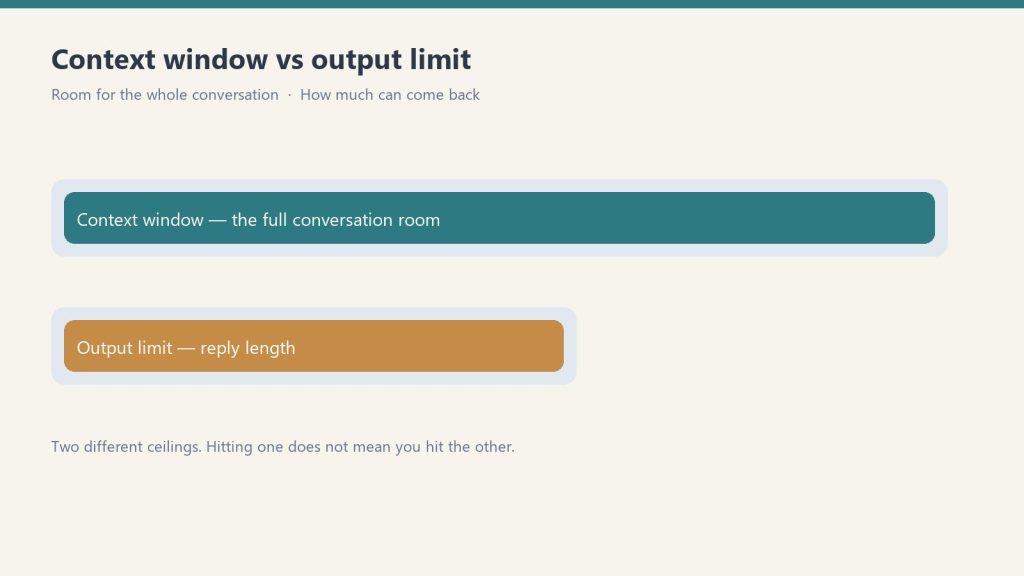
The hardest problem in running an AI-native operation is not the AI — it’s the memory. Claude’s context window is large but finite. It resets between sessions. Every conversation starts from zero unless you engineer something that prevents it.
For a solo operator running a complex business across multiple clients and entities, that reset is a real operational problem. The solution we built combines Notion as the human-readable knowledge layer with BigQuery as the machine-readable operational history — a persistent memory infrastructure that means Claude never truly starts from scratch.
Here’s how the architecture works and why each layer exists.
What is a BigQuery + Notion AI memory layer? A BigQuery and Notion AI memory layer is a two-tier persistent knowledge infrastructure where Notion stores human-readable operational knowledge — SOPs, decisions, project context — and BigQuery stores machine-readable operational history — publishing records, session logs, embedded knowledge chunks — that Claude can query during a live session. Together they provide Claude with both the institutional knowledge of the operation and the operational history of what has been done.
Why Two Layers
Why two layers.
Notion and BigQuery solve different parts of the memory problem.
Notion is optimized for human-readable, structured documents. An SOP in Notion is readable by a person and fetchable by Claude. But Notion isn’t a database in the traditional sense — it doesn’t support the kind of programmatic queries that make large-scale operational history navigable. Searching five hundred knowledge pages for a specific historical data point is slow and imprecise in Notion.
BigQuery is optimized for exactly that: large-scale structured data that needs to be queried programmatically. Operational history — every piece of content published, every session’s decisions, every architectural change — lives in BigQuery as structured records that can be queried precisely and quickly. But BigQuery records aren’t human-readable documents. They’re rows in tables, useful for lookup and retrieval but not for the kind of contextual understanding that Notion pages provide.
Together they cover the full memory requirement: Notion for what the operation knows and how things are done, BigQuery for what the operation has done and when.
The Notion Layer: Structured Knowledge
The Notion layer — structured knowledge.
The Notion knowledge layer is the Knowledge Lab database — SOPs, architecture decisions, client references, project briefs, and session logs. Every page carries the claude_delta metadata block that makes it machine-readable: page type, status, summary, entities, dependencies, and a resume instruction.
The Claude Context Index — a master registry page listing every key knowledge page with its ID, type, status, and one-line summary — is the entry point. At the start of any session touching the knowledge base, Claude fetches the index and identifies the relevant pages for the current task. The index-then-fetch pattern keeps context loading fast and targeted.
What the Notion layer provides: the institutional knowledge of how the operation works, what has been decided, and what the constraints are for any given client or project. This is the layer that makes Claude operate consistently across sessions — not by remembering the previous session, but by reading the same underlying knowledge base that governed it.
The BigQuery Layer: Operational History
The BigQuery operations ledger is a dataset in Google Cloud that holds the operational history of the business: every content piece published with its metadata, every significant session’s decisions and outputs, every architectural change to the systems, and — most importantly — the embedded knowledge chunks that enable semantic search across the entire knowledge base.
The knowledge pages from Notion are chunked into segments and embedded using a text embedding model. Those embedded chunks live in BigQuery alongside their source page IDs and metadata. When a session needs to find relevant knowledge that isn’t covered by the Context Index, a semantic search against the embedded chunks surfaces the right pages without requiring a manual search.
What the BigQuery layer provides: operational history that’s too large and too structured for Notion pages, semantic search across the full knowledge base, and a machine-readable record of everything that has been done — which pieces of content exist, what was changed, what decisions were made and when.
How Sessions Use Both Layers
How sessions use both layers.
A typical session that requires deep operational context follows a pattern. Claude reads the Claude Context Index from Notion and identifies relevant knowledge pages. It fetches those pages and reads their metadata blocks. For operational history — “what has been published for this client in the last thirty days?” — it queries the BigQuery ledger directly. For knowledge gaps not covered by the index, it runs a semantic search against the embedded chunks.
The result is a session that starts with genuine institutional context rather than a blank slate. Claude knows how the operation works, what the relevant constraints are, and what has happened recently — not because it remembers the previous session, but because all of that information is accessible in structured, retrievable form.
The Maintenance Requirement
Persistent memory infrastructure requires persistent maintenance. The Notion knowledge layer stays current through the regular SOP review cycle and the practice of documenting decisions as they’re made. The BigQuery layer stays current through automated sync processes that push new content records and session logs as they’re created.
The sync isn’t fully automated in a set-and-forget sense — it requires periodic verification that records are being captured correctly and that the embedding model is processing new chunks accurately. But the maintenance overhead is modest: a few minutes of verification per week, and occasional manual intervention when a sync process fails silently.
The system degrades if the maintenance lapses. A knowledge base that’s three months stale is worse than no knowledge base — it provides false confidence that Claude has current context when it doesn’t. The maintenance discipline is as important as the architecture.
Interested in building this for your operation?
The Notion + BigQuery memory architecture is advanced infrastructure. We build and configure it for operations that are ready for it — not as a first Notion project, but as the next layer on top of a working system.
Tygart Media runs this infrastructure live. We know what the build and maintenance actually requires.
Why use BigQuery instead of just storing everything in Notion?
Notion is optimized for human-readable structured documents, not for large-scale programmatic data queries. Storing thousands of operational history records — content publishing logs, session outputs, embedded knowledge chunks — in Notion creates performance problems and makes precise programmatic queries slow. BigQuery handles that scale trivially and supports the SQL queries and vector similarity searches that make the operational history actually useful. Notion and BigQuery do different things well; the architecture uses each for what it’s good at.
Is this architecture accessible to non-engineers?
The Notion layer is. The BigQuery layer requires comfort with Google Cloud infrastructure, SQL, and API integration. Building and maintaining the BigQuery ledger is an engineering task. For operators without that background, the Notion layer alone — the Knowledge Lab, the claude_delta metadata standard, the Context Index — provides significant value and is fully accessible without engineering support. The BigQuery layer is the advanced extension, not the foundation.
What does “semantic search over embedded knowledge chunks” mean in practice?
When knowledge pages are embedded, each page (or section of a page) is converted into a numerical vector that represents its meaning. Semantic search finds pages with vectors close to the query vector — pages that are conceptually similar to what you’re looking for, even if they don’t use the same words. In practice this means Claude can find relevant knowledge pages by describing what it needs rather than knowing the exact title or keyword. It’s significantly more reliable than keyword search for knowledge retrieval across a large, varied knowledge base.
You want to monitor whether AI systems are citing your content. What tools actually exist for this, what they do, what they don’t do, and what we’ve built ourselves when nothing on the market fit.
The Market as of April 2026
The market as of April 2026.
The AI citation monitoring category is real but nascent. Here’s an honest inventory:
Established SEO Platforms Adding AI Visibility Metrics
Several major SEO platforms have added “AI visibility” or “AI search” modules in the past 6–12 months. These generally track:
Whether your domain appears in AI Overviews for tracked keywords (via SERP scraping)
Brand mentions in AI-generated snippets
Comparative visibility versus competitors in AI search results
Ahrefs, Semrush, and Moz have all moved in this direction to varying degrees. Verify current feature availability — this has been an active development area and capabilities have changed rapidly.
Mention Monitoring Tools Expanding to AI
Brand mention tools like Brand24 and Mention have begun tracking AI-generated content that includes brand references. The challenge: they’re tracking brand name occurrences in crawled content, not necessarily AI citation events. Useful for brand visibility in AI-generated content that gets published, less useful for tracking in-session citations.
Purpose-Built AI Citation Tools (Emerging)
Several purpose-built tools targeting AI citation tracking specifically have launched or raised funding in early 2026. This category is moving fast. As of our last check:
Tools focused on tracking specific brand or entity mentions across AI platforms
API-first tools targeting developers who want to build citation monitoring into their own workflows
Dashboard tools with pre-built query sets for common industry categories
Treat any specific product recommendation here as a starting point for your own research — the category will look different in 6 months.
Google Search Console
The strongest existing tool, and it’s free. AI Overviews that cite your pages register as impressions and clicks in GSC under the relevant queries. This is first-party data from Google itself. Limitation: covers only Google AI Overviews, not Perplexity, ChatGPT, or other platforms.
What We Built
What we built.
When no existing tool covered the specific workflows we needed, we built our own. The stack:
Perplexity API Query Runner
A Cloud Run service that runs a predefined query set against Perplexity’s API on a weekly schedule. It parses the citations field from each response, checks for domain appearances, and writes results to a BigQuery table. Total engineering time: roughly one day. Ongoing cost: minimal (Cloud Run idle cost + Perplexity API usage).
The output: a weekly BigQuery record per query showing which domains Perplexity cited, with timestamps. Trend queries show citation rate over time by query cluster.
GSC AI Overview Monitor
Not a custom build — just systematic review of GSC data. We check weekly which queries are generating AI Overview impressions for our tracked sites. The signal: if a page is generating AI Overview impressions on new queries, that’s a citation event.
Manual ChatGPT Sampling
For highest-priority queries, manual weekly sampling of ChatGPT with web search enabled. We log results to a shared spreadsheet. Less scalable than the API approach, but ChatGPT’s web search activation is inconsistent enough that API automation adds complexity without proportional reliability gain.
What Doesn’t Exist (That Would Be Useful)
What doesn’t exist that would be useful.
The tool gaps that we still feel:
Cross-platform citation dashboard: A single view showing citation rate across Perplexity, ChatGPT, Gemini, and AI Overviews for the same query set. Nobody has built this cleanly yet.
Historical citation rate database: Knowing your citation rate is useful. Knowing whether it improved after you published a new piece of content is more useful. The temporal correlation is hard to establish with spot-check sampling.
Competitor citation tracking at scale: Easy to check manually for specific queries; hard to monitor systematically across a large competitor set and query space.
These gaps exist because the category is new, not because the problems are technically hard. Expect the tool landscape to fill in significantly over the next 12 months.
You’re planning to run Claude Managed Agents at scale. You’ve modeled the token costs, the session-hour charge, the workload cadence. Then you hit the actual constraint: rate limits. Here’s what 60 requests per minute actually means in practice, and whether it’s going to be your ceiling.
The Two Limits You Need to Know
The two limits you need to know.
Managed Agents has two endpoint-specific rate limits, separate from your standard Claude API limits:
Create endpoints: 60 requests per minute
Read endpoints: 600 requests per minute
Your organization-level API limits apply on top of these. If your org is on a tier with a lower requests-per-minute ceiling, that’s the actual binding constraint.
What “60 Create Requests Per Minute” Actually Means
A create request, in Managed Agents context, is typically a session creation call — starting a new agent session. 60/minute means you can start 60 sessions per minute maximum. For almost all real workloads, this is not the binding constraint. Here’s why:
Think about what generates create requests. If you’re running a batch pipeline that starts one new agent session per content item, processing 60 items per minute would saturate the limit. But a 60-item-per-minute content pipeline is running 3,600 items per hour — a genuinely high-volume operation. Most production agent workloads don’t look like this. They look like one session that runs for minutes or hours, processes multiple tasks within that session, and terminates when done.
The create limit matters most for architectures where you’re spinning up a new session per task rather than running tasks within a persistent session. If that’s your pattern, 60/minute is a hard ceiling you’ll need to design around.
What “600 Read Requests Per Minute” Actually Means
Read requests include polling session status, reading agent output, checking checkpoints, and retrieving session state. 600/minute is a relatively generous limit — that’s 10 reads per second. For a monitoring dashboard polling 10 active sessions every second, you’d hit this. For most production monitoring patterns (checking status every 5-30 seconds per session), you’re well under the ceiling.
The read limit becomes relevant in high-concurrency architectures where many sessions are running in parallel and all being polled aggressively. If you’re running 50 concurrent agents and checking each one every 2 seconds, that’s 25 reads/second — still within the 10 reads/second limit per second, but compressing toward it.
The Limit That’s More Likely to Actually Stop You
For most agent workloads, token throughput limits hit before request rate limits do. The reasoning: a long-running agent session processing significant context generates a lot of tokens. If you’re running many such sessions in parallel, you’ll hit your organization’s token-per-minute limit before you hit 60 sessions created per minute.
Token limits depend on your API tier. Higher tiers have higher token throughput limits. Rate limit increases and custom limits for high-volume enterprise customers are negotiated with Anthropic’s sales team.
Designing Around the 60 Create Limit
Designing around the 60 create limit.
If your architecture genuinely needs more than 60 new sessions per minute, the primary design pattern is batching more work within each session rather than creating more sessions. A single Managed Agents session can handle sequential tasks — you don’t need a new session per task if your tasks can be queued and processed within one session’s lifecycle.
The tradeoff: longer-running sessions accumulate more runtime charge ($0.08/hr active). For most workloads, the efficiency gains from batching outweigh the marginal runtime cost.
The Agent Teams Implication
Agent Teams — Managed Agents’ multi-agent coordination feature — coordinate multiple Claude instances with independent contexts. Each instance in an Agent Team is a separate entity from a context standpoint. How Agent Team member sessions count against the create rate limit is worth verifying against current documentation if you’re architecting a high-concurrency Agent Teams deployment.
For Enterprise Workloads
For enterprise workloads.
If you’re evaluating Managed Agents for enterprise-scale deployment and the published limits don’t fit your volume requirements, contact Anthropic’s enterprise sales team. Rate limit increases for high-volume applications are a documented option — they’re negotiated, not self-serve.
Does the 60 requests/minute limit apply to all API calls or just session creation?
The 60/minute limit applies to create endpoints — session creation being the primary one. Read operations have a separate 600/minute limit. Standard Messages API calls are governed by your organization’s standard tier limits, not these Managed Agents-specific limits.
Do subagents count against the create rate limit separately from the parent session?
Subagents operate within the parent session’s context and report results upward — they’re architecturally different from new sessions. Verify current documentation for precise billing treatment of subagent creation calls vs. Agent Team session creation.
What happens when I hit the rate limit?
Standard API rate limit behavior applies — requests over the limit receive a 429 response. Implement exponential backoff in your session creation logic for any high-volume pattern that approaches the 60/minute ceiling.
How does this compare to OpenAI’s Agents API limits?
Rate limit structures differ by product and tier. Direct comparison requires checking both providers’ current documentation for your specific tier. The full comparison: Claude Managed Agents vs. OpenAI Agents API.
An experiment in whether rhythm can do the heavy lifting of retention — and the full prompt library so you can run it yourself.
The Manifesto: Can Music Teach Faster Than Prose?
We memorize song lyrics we heard once in 1998 but forget the contents of a meeting from Tuesday. That’s not a bug in the brain — it’s a feature of how rhythm, melody, and cadence bypass the part of the mind that resists rote information and deliver payloads directly into long-term memory.
This project is a controlled test of that feature. The working hypothesis: a well-constructed song can transmit a complex, multi-step body of knowledge more densely and more durably than an equivalent written explanation. Not as a novelty. As a real transmission format.
Instead of producing ten finished tracks, I’m shipping one playable proof-of-concept and nine fully-formed prompts you can paste directly into Producer.ai (or any AI music generator) to build the rest yourself. The prompts are the real artifact. The song is the proof that the format works.
The Method
Every track in this series takes a dense subject — biology, economics, physics, logic, history — and encodes the mechanics into a single song. The genre for each track is chosen to match the shape of the information. Boom-bap for linear processes. Drum & bass for cyclical systems. Gospel for immutable laws. Dub for slow geological time. Bossa nova for elegant deception. The genre isn’t decoration. It’s the carrier wave.
Parenthetical ad-libs — (like this) for emphasis hooks
One knowledge stage per bar — no filler lines, no padding
That skeleton is what Producer.ai parses cleanly. Deviate from it and the output degrades.
Track 01: Internal Transit Authority (The Proof of Concept)
The inaugural track walks through the complete human digestive process — from the oral gateway and enamel contact all the way through peristalsis, the pyloric valve, villi absorption, the liver as master filter, and the final water reclamation in the large intestine. Every physiological stage gets a bar. The cadence is engineered to act as a mnemonic anchor so the steps lock in sequence the way a chorus does.
Listen:
The Prompt That Made It
Conscious Hip-Hop, Boom-Bap, Jazz-Rap, dusty MPC drum breaks, walking upright bass, warm Rhodes piano chords, soulful saxophone loops, mid-tempo groove, male narrator, gritty yet clear vocal tone, intellectual authoritative delivery, 92 BPM, key of D minor, earthy textures, rhythmic education, organic street philosopher vibe.

[Intro]
[Dusty vinyl crackle, a smooth upright bassline enters with a steady boom-bap drum loop]
(Check the rhythm)
(Internal mechanics)
Knowledge of the vessel is the first step to power
Pay attention to the transit system within

[Verse 1]
Entry point at the oral gateway where enamel strikes
Mechanical grinding begins the structural breakdown
Salivary glands release the first chemical catalyst
Softening the mass into a bolus for the descent
The pharynx directs the traffic down the narrow pipe
Esophagus muscles ripple in a rhythmic wave
Peristalsis pushing the cargo toward the central vat
Gravity is secondary to the muscular contraction
Arrival at the cardiac sphincter, the heavy door
Opening into the churning chamber of liquid fire
Hydrochloric acid dissolves the complex architecture
Turning the harvest into a slurry called chyme
Pyloric valve monitors the pressure of the flow
Releasing the mixture into the winding corridor
Small but vast, the labyrinth of the interior
(The transit continues)

[Chorus]
Break the heavy down to the molecular
Extract the power from the physical plane
Ingest the wisdom, process the essence
Discard the residue to remain light
(Keep the system moving)
(From the root to the crown)

[Verse 2]
The duodenum meets the bile from the emerald organ
Breaking the lipids into manageable fragments
Pancreatic juices neutralize the acidic surge
Preparation for the grand absorption of the spirit
Look at the walls lined with millions of tiny fingers
Villi reaching out to grasp the passing nutrients
Capillaries waiting to ferry the fuel to the stream
Glucose and amino acids entering the bloodline
The liver stands as the master filter at the station
Processing the wealth, storing the vital reserves
What remains travels further into the wider tunnel
The large intestine, where the moisture is reclaimed
Balance is restored as the fluid returns to the system
Compacting the remnants for the final departure
(The cycle completes)
(Nothing is wasted)

[Verse 3]
Understand the blueprints of your own biological city
Every cell waiting for the delivery of the cargo
ATP production is the currency of your motion
Transmuting the external world into internal force
Maintain the temple, respect the intricate valves
From the first bite to the ultimate release
The journey of the sustenance is the journey of life
Master the transit, manifest the clarity
(Internal rhythm)
(The body is a map)

[Outro]
[Bassline fades out as the saxophone takes a solo]
(Digest the truth)
(The spirit is fed)
Stay tuned to the frequency of the self
System check complete
[Drums stop abruptly]
[Vinyl scratch]
Paste that into Producer.ai and you get something in the neighborhood of what you just heard. Variance in the output is part of the experiment — two generations of the same prompt are never identical, which is useful data in itself.
The Remaining Nine Prompts
Each of these is ready to paste into Producer.ai. The production brief is the first paragraph. The structured lyrics are the body. Don’t modify the bracketed tags — they’re what the model parses for song structure.
Track 02 — The Invisible Hand
Subject: Supply & demand, price elasticity, market equilibrium Genre: Funk-Soul / Neo-Soul Why this genre: Call-and-response is literally how supply talks to demand. The groove of a funk bassline mirrors the oscillation of price discovery. Horns for emphasis on equilibrium points.
Funk-Soul, Neo-Soul, vintage Clavinet, slap bass, tight pocket drums with crisp hi-hats, Hammond B3 organ swells, brass stabs on the downbeat, female lead vocal with a soulful conversational tone, backup call-and-response vocals, 98 BPM, key of E minor, warm analog textures, economic street sermon, intellectual groove, Curtis Mayfield meets Erykah Badu energy.

[Intro]
[Clavinet riff locks in over a fat slap bassline, drums kick in on the two]
(The market speaks)
(Listen to the price)
Every number tells a story if you know how to read it

[Verse 1]
Supply is the stack of what the makers can produce
Demand is the hunger of the people on the street
When the hunger outpaces what the factory can release
Price climbs the ladder like a dollar chasing heat
(Scarcity)
When the shelves are overflowing and the buyers walk away
Price slides down the pole 'til it finds a place to stay
(Surplus)
Equilibrium is the handshake in the middle of the trade
Where the quantity they want meets the quantity they made

[Chorus]
No one at the wheel but the wheel still turns
(The invisible hand)
Every selfish motive is a signal that returns
(The invisible hand)
Price is the language of a million silent minds
(Supply meets demand)
Information coded in a number you can find

[Verse 2]
Elastic is the product you can easily replace
Butter swaps for margarine, the demand shifts with grace
Inelastic is the thing you cannot live without
Insulin and gasoline, the price can climb and shout
Shift the whole curve with a change in the income
Tastes and expectations move the baseline where we come from
Substitutes and complements, the dance is interlinked
Coffee needs the sugar and the tea needs what you think

[Verse 3]
Ceiling on the price creates a shortage underneath
Rent control is kindness with a hidden set of teeth
Floor below the price creates a surplus on the shelf
Minimum wage arguments depend on who you tell
Subsidies and taxes are the fingers on the scale
Every intervention leaves a signal or a trail
Read the curve, respect the slope, understand the game
The market is a mirror of the people and their aim

[Outro]
[Bass solo fades under the final vocal phrase]
(The invisible hand)
(It's just us)
No magic in the market, just a mirror of our want
[Horn stab]
Track 03 — Eight Stages of Fire (The Krebs Cycle)
Subject: Citric acid cycle / cellular respiration Genre: Liquid Drum & Bass Why this genre: The Krebs cycle IS a loop. D&B at 170 BPM has a natural eight-bar cyclical structure that maps onto the eight enzymatic steps. Each loop of the drum pattern equals one turn of the cycle.
Liquid Drum and Bass, atmospheric D&B, rolling amen-break drums, deep reese bassline, ethereal female vocal samples, jazzy Rhodes pads, subtle vinyl crackle, male spoken-word delivery over the groove, intellectual science-teacher tone with urgency, 170 BPM, key of F minor, London Elektricity meets Calibre energy, biochemistry as dancefloor science.

[Intro]
[Atmospheric pad swells, amen break rolls in at half-time, bass drops at 16]
(Eight stages)
(One loop)
The powerhouse of the cell runs on a rhythm you can feel

[Verse 1]
Acetyl-CoA meets the oxaloacetate partner
Citrate is the child of the very first encounter
Stage one complete and the cycle starts to spin
Isomerization turns the citrate into isocitrate, here we begin
Alpha-ketoglutarate is the third stop on the train
First carbon released as carbon dioxide in the rain
NADH is the currency the stage begins to mint
Every electron captured is a future ATP hint

[Chorus]
Eight stages of fire in the mitochondrial core
(Round and round)
Every turn of the wheel is a molecule of power
(Round and round)
Carbon in, carbon out, electrons for the chain
(The loop never breaks)
The citric acid cycle is the engine of the frame

[Verse 2]
Succinyl-CoA is the fourth stop on the line
Second carbon leaves as CO2 this time
GTP is minted here, the cycle pays the bill
Succinate takes the baton and it climbs the hill
FADH2 is captured at the sixth enzymatic gate
Fumarate is the next shape in the metabolic fate
Malate comes behind with a water molecule attached
Oxaloacetate returns, the circle has been latched

[Verse 3]
One glucose feeds two turns of the eternal loop
Thirty-something ATP from the cellular soup
Carbon dioxide exits through the breath you just released
Every exhale is a Krebs cycle receipt
The oxygen you breathe becomes the water that you drink
Electron transport chain is the final missing link
NADH and FADH2 deliver to the crew
Complexes one through four build the gradient that's true

[Outro]
[Drums cut to half-time, Rhodes takes the final chord]
(Eight stages)
(One breath)
Every turn is a heartbeat at the molecular level
[Bass fades]
Track 04 — Three Laws of Motion
Subject: Newton’s three laws of motion Genre: Gospel-Soul with a live band feel Why this genre: Gospel is the music of laws — immutable, declarative, celebratory. One law per verse, each verse building like a sermon. The B3 organ and full choir give each law the weight of doctrine.
Gospel-Soul, live band feel, Hammond B3 organ, upright piano, tight drum kit with cross-stick snare, walking bass, full gospel choir backing vocals, male lead with a preacher's cadence building from calm exposition to triumphant declaration, 84 BPM, key of G major with a relative minor bridge, warm analog, church basement science class energy, Ray Charles meets Neil deGrasse Tyson.

[Intro]
[Solo organ progression, choir hums underneath, bass and drums enter on the turnaround]
(Three laws)
(One universe)
Isaac Newton wrote the rules and the cosmos said amen

[Verse 1 — The First Law]
An object at rest will remain at rest, brother
(Unless a force comes knocking at the door)
An object in motion will stay in that motion forever
(Unless a friction or a gravity steps on the floor)
Inertia is the memory of the mass
It remembers where it was and it wants to stay
The universe is lazy, that's the truth of it
You gotta push if you want something to sway
(The first law)
(The law of rest)

[Chorus]
Three laws, one universe, every motion is a sermon
(Hallelujah in the physics)
Three laws, one universe, every push is a confession
(Hallelujah in the mechanics)
Every falling apple is a prayer to the equation
(F equals m-a)
The whole creation singing in the language of equation

[Verse 2 — The Second Law]
Force is the product of the mass and acceleration
(F equals m-a)
The heavier the object, the harder the negotiation
(F equals m-a)
Push a shopping cart, push a freight train, feel the difference
The mass is the resistance and the force is the insistence
A equals F divided by the weight you're trying to move
That's the second law, and the second law is proof
Double the force and you double the acceleration
Same mass, twice the push, twice the celebration

[Verse 3 — The Third Law]
For every action there's an equal and opposite reaction
(Say it back to me)
Every push against the world is a push the world pushes back
(Say it back to me)
A rocket burns its fuel and the exhaust goes down
The rocket goes up 'cause the universe is round
Walk across the floor and the floor walks back at you
Jump into the air and the earth moves a little too
Infinitesimal but real, the law is never bent
Every action has its answer, every force has its rent

[Outro]
[Choir sustains on the final chord, organ rolls, drums drop]
(Three laws)
(One universe)
Isaac wrote the scripture and the cosmos is the congregation
[Organ holds the final note]
Track 05 — The Method (The Scientific Method)
Subject: The scientific method as a cognitive discipline Genre: Lo-fi Hip-Hop / Jazzhop Why this genre: Lo-fi is the music of studying. The relaxed tempo and bedroom-producer aesthetic mirrors the patient, iterative nature of actual science. A jazzhop chorus loops the method so the structure of the song IS the structure of the method.
Lo-fi Hip-Hop, Jazzhop, dusty sampled drums with the kick slightly off the grid, muted trumpet loop, warm tape-saturated Rhodes, upright bass, vinyl crackle throughout, gentle brush snares, male vocal with a calm, curious, late-night-library delivery, 78 BPM, key of C minor, Nujabes meets a PBS documentary, study-group philosophy.

[Intro]
[Vinyl crackle, Rhodes chord holds, drums slide in off the kick]
(Observe)
(Ask)
The method is older than the labs it built

[Verse 1]
Step one is the noticing, the pause before the claim
A curiosity that fires when the pattern doesn't frame
Observe without the filter of the answer in your head
Write down what you saw, not what the expectation said
Step two is the question, the specific thing you ask
Vague inquiries die on the vine, precision is the task
What causes this, how often, under what conditions
Narrow the aperture and ask with clean definitions
(The method begins)

[Chorus]
Observe, ask, hypothesize, test
(Refine what you thought)
Observe, ask, hypothesize, test
(Keep only what survived)
The method is a filter, not a faith
(Evidence is the ground)
Every belief you hold should earn the space it's allowed

[Verse 2]
Step three is the hypothesis, the educated guess
A statement that predicts what the test will confess
It has to be falsifiable, that's the crucial trick
If nothing could disprove it, the claim is just a stick
Step four is the experiment, the reality check
Design it so the variable can actually connect
Control groups, isolation, repeat the thing again
One result is nothing, statistics is the friend
(The data comes in)

[Verse 3]
Step five is the analysis, the honest eye on the sheet
Does the hypothesis stand or did it die in the street
Confirmation bias wants to save the prior belief
The method is the discipline that gives the mind relief
Step six is the conclusion, but hold it lightly still
Peer review is the hammer that the community will
Publish, challenge, replicate, let the world test the claim
If it holds across the hands, that's when it earns its name
(The loop starts again)

[Outro]
[Trumpet takes the outro, drums fade]
(Observe)
(The method is alive)
Every question you ask is a vote for reality
[Rhodes holds the final chord]
Track 06 — Broken Reasoning (Logical Fallacies)
Subject: Common logical fallacies — ad hominem, straw man, false dichotomy, appeal to authority, slippery slope, circular reasoning, post hoc, bandwagon, appeal to nature, tu quoque Genre: Bossa Nova / Latin Jazz Why this genre: Fallacies are elegant mistakes — seductive, smooth, and dangerous. Bossa nova is the music of smooth seduction. The ironic pairing lets each fallacy get named, demonstrated, and unmasked in the same breath.
Bossa Nova, Latin Jazz, nylon-string guitar, brushed drums, upright bass walking in a samba pattern, flute lead, subtle vibraphone, female vocal with a sly, knowing, cocktail-party delivery, 102 BPM, key of A minor, Astrud Gilberto meets a philosophy lecture, elegant deception unmasked.

[Intro]
[Nylon guitar plays the samba turnaround, flute enters on the second bar]
(Every mistake sounds convincing)
(That's the whole problem)
The most dangerous arguments are the ones that feel correct

[Verse 1]
Ad hominem attacks the person instead of the claim
You're wrong because you're ugly is an ancient kind of game
The argument still stands or falls on evidence alone
The messenger is never what determines what is known
Straw man builds a weaker version of the thing you said
Then knocks it down in public like it was the real head
If you have to misrepresent the view to win the round
You already lost the argument the moment it was found

[Chorus]
Every fallacy is elegant, every fallacy is smooth
(That's why they work)
Every fallacy is a shortcut around the thing you have to prove
(That's why they work)
Learn to name them, learn to spot them in the wild
(Broken reasoning)
A mind that knows the tricks is a mind that can't be styled

[Verse 2]
False dichotomy gives you only two ways to turn
Love it or leave it, when a dozen options burn
Appeal to authority says the expert says it's true
But experts can be wrong and the evidence is due
Slippery slope predicts a cascade with no proof
One step leads to ruin in the argument's aloof
Circular reasoning is the snake that eats its tail
The premise is the conclusion wearing a different veil

[Verse 3]
Post hoc ergo propter hoc, it happened after, so it caused
Correlation is not causation, let the reasoning be paused
Bandwagon says everyone believes it, so it's right
Popularity is not a substitute for sight
Appeal to nature says if it's natural it's good
Arsenic is natural, and arsenic never should
Tu quoque says you do it too, so your point does not count
The hypocrisy of the speaker doesn't change the amount

[Outro]
[Flute takes the final melodic phrase over guitar and brushes]
(Name them)
(Spot them)
The mind that knows the tricks walks free from the trap
[Guitar holds the final chord]
Track 07 — Slow Collision (Plate Tectonics)
Subject: Plate tectonics, continental drift, fault types, geological timescales Genre: Dub Reggae Why this genre: Plates move at 2–5 cm per year. Dub is the slowest, most patient genre in popular music. The massive reverb tails mimic geological time. The bass is literally the weight of the continents.
Dub Reggae, classic 1970s Jamaica sound, massive spring reverb tails, tape delay throws, deep sub bass, clavinet skanks on the off-beat, horns with heavy echo, minimal drums with a steppers kick pattern, male vocal with a patient, oracular Jamaican-inflected delivery, 72 BPM, key of G minor, King Tubby meets a geology textbook, continental time.

[Intro]
[Deep bass pulse, drums enter with a steppers kick, echo chamber opens on the first word]
(Slow)
(The earth moves slow)
Two centimeters a year and the mountains rise

[Verse 1]
The crust is broken into seven major plates
Floating on the mantle where the molten rock creates
Convection currents moving at the pace of stone
The continents are passengers that cannot stand alone
Pangaea was the supercontinent, a single land
Two hundred million years ago it broke into the sand
Africa and South America were once a single coast
You can see the puzzle pieces where the plates embossed

[Chorus]
(Slow collision)
Every earthquake is a story of the plates at war
(Slow collision)
Every mountain is a handshake at the continental door
(Slow collision)
Every ocean is a gap that opened long ago
(Slow collision)
The earth is always moving even when it seems to slow

[Verse 2]
Divergent boundaries are the rifts where plates pull apart
Mid-ocean ridges where the lava starts the heart
New crust is born where the magma meets the sea
The Atlantic is still growing an inch or so for free
Convergent boundaries are the crashes in the dark
Oceanic under continental, a subduction mark
The Andes rose from Nazca diving under South American stone
Every volcano is a signal of the subduction zone
Continental on continental is the Himalayan way
India crashed into Asia and the Everest came to stay

[Verse 3]
Transform boundaries are the plates that slide past sideways
San Andreas is the famous one, it runs through L.A.
No new crust created and no old crust destroyed
Just friction locking up until the stress can't be avoided
Then the earthquake releases what the patience stored
Seconds of violence for decades of the building toward
The ring of fire is the circle of the Pacific rim
Seventy-five percent of volcanoes living in the hymn

[Outro]
[Horns fade into the reverb tail, bass sustains under the echo]
(Slow)
(The earth moves slow)
But the moving never stops
[Echo trails into silence]
Track 08 — Seventeen Eighty-Nine (The French Revolution)
Subject: French Revolution timeline — Estates General, Bastille, Declaration of Rights, Terror, Napoleon Genre: Protest Folk-Rap hybrid Why this genre: Revolutions need anthems. Folk is the music of the people’s history; rap is the music of compressed narrative. The hybrid mirrors the revolution itself — old forms broken open by new urgency.
Protest Folk-Rap hybrid, acoustic guitar with fingerpicked arpeggios, upright bass, cajón, hand-clap percussion, fiddle interjections, male vocal switching between sung folk chorus and tight rap verses, urgent, historically grounded delivery, 108 BPM, key of D minor, Woody Guthrie meets Lin-Manuel Miranda meets Talib Kweli, history as an urgent dispatch.

[Intro]
[Acoustic guitar arpeggio, cajón enters on the backbeat, fiddle line introduces the melody]
(Seventeen eighty-nine)
(The year the old world cracked)
The people of France picked up the pen and the pitchfork

[Verse 1]
France was broke, the king was Louis the sixteenth
The debt from wars had drained the treasury clean
Three estates divided up the social frame
Clergy, nobles, everybody else, the game was rigged the same
The third estate was ninety-six percent of all the population
But they paid the taxes and they had no representation
Estates General met in May of eighty-nine
The third estate broke away and drew a different line
(National Assembly)

[Chorus]
Liberty, equality, fraternity, or death
(The tricolor rising)
The people of the street had a fire in the chest
(The old regime was dying)
Every revolution ever since that day
(Borrows from the moment)
When the third estate stood up and would not walk away

[Verse 2]
July fourteenth, the Bastille fortress fell
The prison of the king became the people's bell
Women marched to Versailles in October, grain was scarce
Dragged the royal family back to Paris in a hearse of a carriage
Declaration of the Rights of Man was signed in August
All men are born free and equal, the promise had to be discussed
Constitution of ninety-one made a limited king
But the king tried to flee, and the trust could not stand a thing
(Varennes, he was caught)

[Verse 3]
September ninety-two, the Republic was declared
January ninety-three, Louis the sixteenth was bared
To the guillotine at the Place de la Revolution
The head of the king fell and the monarchy's dissolution
Then the Terror came, Robespierre at the wheel
Committee of Public Safety made the guillotine a meal
Thousands of executions in about ten months
Thermidor ended Robespierre with the same kind of stunts
Directory, then the Consulate, then Napoleon's throne
Seventeen ninety-nine the revolution had grown
Into an empire, ironically, a single man
But the ideas never died, they kept crossing every land

[Outro]
[Fiddle takes the final melodic phrase, guitar sustains]
(Liberty)
(Equality)
(Fraternity)
The echoes never stopped, they just changed the tongue
[Guitar holds the final chord]
Track 09 — The Doubling (Compound Interest)
Subject: Compound interest, the rule of 72, exponential growth Genre: Neo-Soul / Future Soul Why this genre: Compound interest is about patience and time — the same qualities neo-soul rewards. The arrangement models the math: each chorus adds a layer so by the final chorus the song has “compounded” into something denser than the first.
Neo-Soul, Future Soul, vintage Fender Rhodes, syncopated drum programming with live feel, melodic bass played on a Moog, layered vocal harmonies that build each chorus, subtle string pads, female lead with a wise, patient, financially literate delivery, 88 BPM, key of B-flat major, Hiatus Kaiyote meets a Vanguard index fund prospectus, exponential growth as a love letter.

[Intro]
[Rhodes chord progression, bass enters, drums slide in on the second bar]
(Time)
(The quiet multiplier)
Money makes a baby and the baby makes a baby

[Verse 1]
Simple interest pays you on the principal alone
Ten percent on a thousand is a hundred every year
Compound interest pays you on the principal and the gain
The hundred from year one starts earning its own name
Year one the thousand turns into eleven hundred clean
Year two the eleven hundred makes a hundred ten, it's seen
Year three the twelve ten makes a hundred twenty-one
The baby has a baby and the babies never done
(The doubling begins)

[Chorus — first time, thin]
Exponential growth is the quietest power in the world
(Patience is the weapon)
The math does the work while you sleep through the night
(Time is the weapon)

[Verse 2]
Rule of seventy-two is the shortcut in your head
Divide the seventy-two by the rate and you have the thread
Seven percent return will double every ten years
Ten percent return will double in about seven clear
A hundred dollars at ten percent for forty years of time
Becomes forty-five hundred without a single extra dime
The first ten years it only doubles to two hundred
But the last ten years it doubles from twenty-two hundred, stunned
(The curve goes vertical)

[Chorus — second time, thicker, strings added]
Exponential growth is the quietest power in the world
(Patience is the weapon)
The math does the work while you sleep through the night
(Time is the weapon)
Every year you wait is a year you cannot buy
(Start now, start small)
The compound wants decades, not a single lucky try

[Verse 3]
Einstein called it the eighth wonder of the world
The ones who understand it earn it, the rest pay it curled
Credit card debt at twenty-two percent will double in three
The compound cuts both ways, it's a mirror you should see
Start at twenty-five with a hundred every month
At seven percent you have a quarter million in the hunt
Start at thirty-five with double, two hundred every month
You end up with less, because the ten years were the front
(Time is the asset)

[Chorus — final time, full harmonies, everything in]
Exponential growth is the quietest power in the world
(Patience is the weapon)
The math does the work while you sleep through the night
(Time is the weapon)
Every year you wait is a year you cannot buy
(Start now, start small)
The compound wants decades, not a single lucky try
Money makes a baby and the baby makes a baby
(The doubling never stops)
The quiet multiplier is the one that makes you free

[Outro]
[Rhodes solo over sustained strings, drums drop to half-time]
(Time)
(Start today)
The best year to plant the tree was twenty years ago
The second best year is now
[Rhodes holds the final chord]
Track 10 — Condensation Dream (The Water Cycle)
Subject: The water cycle — evaporation, transpiration, condensation, precipitation, collection, infiltration Genre: Trip-Hop Why this genre: Trip-hop is atmospheric, watery, circular. Massive Attack and Portishead built whole records on the feeling of things rising and falling in slow motion. Every stage of the cycle can be represented by a different sonic texture that appears and disappears like water changing state.
Trip-Hop, atmospheric and cinematic, big downtempo drum breaks, heavy filtered bass, swirling ambient pads, distant theremin-like lead, occasional vinyl crackle and rain samples, female lead vocal with a haunted, ethereal, meteorological delivery, 82 BPM, key of E-flat minor, Portishead meets Massive Attack meets a nature documentary, water as atmosphere.

[Intro]
[Rain sample, ambient pad swells, drum break drops on the third bar, bass slides underneath]
(The cycle never ended)
(It just changed its shape)
Every drop of water you have ever seen has done this before

[Verse 1]
Evaporation lifts the water from the surface of the sea
The sun is the engine and the heat sets it free
Molecules break the bond that held them in the liquid state
Rising invisible into the atmospheric gate
Transpiration does the same from the leaves of every plant
A forest is a river that forgot it had to slant
Upward through the stomata, through the xylem, through the bark
Every tree is evaporating slowly in the dark
(The rising)

[Chorus]
Every drop has done this a thousand thousand times
(Rising and falling)
Every drop has been a cloud and a river and the brine
(Rising and falling)
The water in your glass was once inside a dinosaur
(The cycle never ends)
Condensation dream is the atmosphere in store

[Verse 2]
Condensation is the moment when the vapor meets the cold
The water has to choose a form, the cloud begins to fold
Around the tiny particles of dust and ash and salt
Nucleation gives the droplet something to exalt
Billions of droplets suspended in the sky
A cloud is just a river that forgot how to lie
Down on the surface where the gravity demands
The droplets grow by merging until the weight expands
(The falling)

[Verse 3]
Precipitation is the gravity reclaiming what was lent
Rain when it's warm enough, snow when the cold is spent
Sleet, hail, graupel, freezing rain, the forms are many
The water chooses based on the layers of the canopy
Collection is the rivers and the lakes and the sea
The aquifers underneath, the glaciers slowly
Infiltration soaks the ground where the roots will drink
Runoff carries sediment to the river's brink
And somewhere the sun is heating up a different surface
Lifting another molecule for another verse
(The cycle restarts)

[Outro]
[Rain samples return, drums drop out, theremin lead takes the final phrase over pads]
(Rising)
(Falling)
The water remembers everything it has ever been
Every drop is ancient and every drop is new
[Pads hold the final chord, rain continues into silence]
Run the Experiment
If you build any of these, I want to know how they land. The real question this project is trying to answer isn’t whether AI can generate a listenable track — it obviously can. The question is whether the format works. Does the song actually teach? Does a listener who hears “Eight Stages of Fire” once remember the Krebs cycle a week later better than someone who read a textbook passage of equivalent length? I don’t know yet. That’s why the prompts are public.
Paste one in. Generate the track. Play it for someone who doesn’t know the subject. Ask them a week later what they remember. Tell me what happened.
This is a working node in an ongoing experiment at Tygart Media about whether the boundaries between content, teaching, and entertainment are real or just inherited assumptions about how knowledge has to move.