AEO & AI Search - Tygart Media

Category: AEO & AI Search

Google is not the only search engine anymore. Your next customer might find you through a ChatGPT answer, a Perplexity citation, or a Google AI Overview that pulls your content into the answer box. AEO is how restoration companies show up in the answer layer — featured snippets, People Also Ask, voice search, and zero-click results that put your name in front of decision-makers before they ever click a link.

AEO and AI Search covers answer engine optimization, featured snippet capture, People Also Ask strategies, voice search optimization, zero-click search positioning, AI Overview placement, and direct answer formatting for restoration industry queries across Google, Bing, ChatGPT, Perplexity, and Gemini.

  • Email Is the New API: The Coordination Layer Every AI Agent Already Speaks

    Email Is the New API: The Coordination Layer Every AI Agent Already Speaks

    CC is not courtesy copy. It is distributed write. Every inbox that receives your message is a replica of a shared database, and no coordinator approved the replication.

    Email as the new API means treating an email thread as programmable infrastructure rather than just correspondence: because every message is an immutable record, every recipient’s inbox is a replica, and the Message-ID / In-Reply-To / References headers link messages into an append-only log, a structured email with an embedded instruction block can carry its own processing schema — turning the inbox into a universal, permissionless coordination layer that any human or AI agent can read, act on, and extend. Said in one breath: the thread is the database, the reply is the commit, and the subject line is the version pointer.

    This is not a provocation. It is a description of infrastructure that has been running for forty years and is only now being named. The most consequential software project on Earth — the Linux kernel — is coordinated entirely over email threads. And in March 2026, a Y Combinator company called AgentMail raised $6M from General Catalyst to give AI agents their own inboxes. The pattern isn’t coming. It’s load-bearing.

    We run this method in production at Tygart Media. This article explains how it works, proves it isn’t new, gives you a decision framework, and answers the four questions every operator asks first: Is a thread a database even if no one reads it again? One thread or many? Email or chat? How do I pull it into real systems? One boundary up front, so the credibility is honest: this pattern is for asynchronous, human-paced work that crosses organizational lines. It is the wrong tool for sub-second machine loops. We will be specific about that in the limits section, because the limits are real.

    It’s Not a New Idea: The Prior Art

    Before any mechanism, kill the “isn’t this just email?” reflex with evidence.

    The Linux kernel runs on email. Thousands of contributors on every continent submit patches as inline email via git send-email, version them in the subject line ([PATCH v1], [PATCH v2], [PATCH v3]), review them in-thread, and merge them with git am. The Linux Kernel Mailing List receives roughly 1,400 emails a day. The archive at lore.kernel.org goes back to 1998 with full-text search. If email threads are sufficient engineering infrastructure for the operating system running most of the world’s servers, “it’s just email” is not an argument.

    EDI is email-as-API with a schema, and it’s older than the web. Since the 1980s, enterprises have transacted structured business documents over email-like channels using ANSI X12 and UN/EDIFACT: the X12 850 Purchase Order (called “the backbone of EDI”), the 810 invoice, the 856 ship notice. EDI is email with a mandatory reply schema, enforced at the business-rules layer, predating REST by two decades. It is the direct ancestor of the structured-email method below.

    The market is pricing it in right now. AgentMail (YC S25) raised $6M led by General Catalyst in March 2026 to build agent-native inboxes — real, programmatically provisioned addresses that send, receive, thread, and parse structured data. In its own words, “thousands of humans use AgentMail to power millions of agents.” A seed round on the thesis that email is AI infrastructure is not a prediction. It’s a market price.

    Every vertical already does it. Inbound-parse services (SendGrid, Mailgun, Postmark) turn incoming mail into JSON webhooks; Cloudflare Email Workers run a function on every inbound message. No-code parsers (Zapier’s @robot.zapier.com, Make) fire workflows from a forwarded email. Zendesk converts every email into a ticket with a UUID. Things, Todoist, and Trello expose forward-to-task addresses. Substack made the email list the asset itself. And MuckRock — founded in 2010, before LLMs existed — turned the FOIA request-response loop into a structured, automated, trackable platform across all 50 states. The pattern predates the AI moment. AI just makes it programmable at scale.

    Why a Thread Is Literally a Database

    Three stacked layers: chat UI, tools, agent runtime
    A thread is literally a database agents already speak.

    Here is the intellectual spine: an email thread is an append-only, replicated log at the protocol level — not by design philosophy, but by RFC.

    The relational model is in the headers. RFC 5322 defines Message-ID as a globally unique identifier in the form <unique-string@domain.com>. In-Reply-To holds the parent message’s Message-ID. References holds the full chain of ancestors back to the root. Read as a database: Message-ID is the primary key, In-Reply-To is the foreign key, References is the full join path back to the root. Together they form an append-only linked list — the same structure event-sourcing systems use to reconstruct state by replaying a log.

    Replication is implicit and massive. Every To and CC inbox holds a full copy of every message. The thread is not stored in one place; it is replicated across N inboxes by the act of sending, with no coordinator. That is closer to a conflict-free replicated data type than to a single-primary database.

    The transport is store-and-forward. SMTP (RFC 5321) queues and retries at every hop. That gives at-least-once delivery — the same guarantee as Kafka’s default producer. Exactly-once is impossible in any distributed system; email makes no false promise. The difference is that Kafka costs engineering time to operate; email costs a stamp.

    The sharpest framing: Kafka is a better log than email in every technical dimension. Email is a better log than Kafka in every organizational dimension — because your vendor, your client, and your offshore engineer all already have an inbox. The reason to use email is not that it’s the best log. It’s that it’s the universal log. The legal industry already operationalizes this: e-discovery platforms (Mimecast, Logikcull, DISCO) treat archived threads as immutable audit trails. Courts treat email as a record. The “thread as log” framing is not novel — it is how the law already works.

    What email HAS vs. what it LACKS

    Property Email HAS Email LACKS
    Durability Yes — persists in recipient stores by default —
    Replication Yes — every recipient is a copy —
    Global addressing Yes — any RFC 5321 address, no registry —
    Append-only log Yes — you reply, you don’t edit sent mail —
    Searchable audit trail Yes — headers, body, timestamps —
    Schema enforcement — No — any string is accepted
    ACID transactions — No atomicity, no locking
    Consistency Eventually consistent Not strongly consistent
    Latency — Unbounded (seconds to days)
    Query interface — Full-text search only, no SELECT WHERE

    State it plainly: email is eventually consistent, not strongly consistent; at-least-once, not exactly-once. It is the coordination layer, not the source of truth for mutable state.

    The Method in Practice: A Worked Example

    This is what we run. The cast is real — Will on strategy, Pinto engineering from India, Stefani on operations — but the payloads and secrets stay out. The credibility is in the structure, not the contents.

    The FOR YOUR AI block: schema-in-the-envelope. A single message carries three layers at once: a human-readable intro for the person, an embedded system prompt that tells the recipient’s AI what role to play and what format to produce, and a strict reply schema (named sections, types, word limits) the output must conform to. The message carries its own processing instructions. It is structurally identical to a self-describing Kafka message — except the schema language is plain English. The FOR YOUR AI block is a system prompt that travels via SMTP. When Will emails Pinto, it tells Pinto’s AI what role to play before Pinto even opens the message.

    The Round-N subject line: a state machine. A subject like Round 3 — v2.1 schema is a human-readable epoch counter. Any participant — including a cold-start AI that has never seen the thread — reconstructs exactly where the conversation stands without re-reading every prior message. The subject is the version pointer; the thread body is the state history; each reply is a state transition.

    Each inbox: a replica. The To/CC list is the replication layer. When Stefani is CC’d for visibility, that’s a designed property, not a side effect — her inbox becomes a live replica of the exchange. The CC line is a replication directive; the shared database has no master node.

    And notice what discipline this method already embodies, because it sets up the limits section exactly: the schema block is an injection-surface reducer; the human edit-before-send is the human-in-the-loop gate; one-thread-per-project is mailbox isolation; the Round-N tag is the idempotency seed. The mitigations aren’t bolted on. They’re the workflow.

    The Four Questions, Answered

    Is an email thread a database even if no one ever reads it again?

    Yes. A database’s properties — persistent, indexed, searchable, replicated — are satisfied by the inbox independent of human attention. Reading is a query operation, not a precondition for existence. RFC 5322 messages are immutable once delivered; IMAP stores are append-only by design (you flag and label, you don’t rewrite); every recipient’s server holds an independent replica. The thread is the database, even if no human ever opens it again. lore.kernel.org proves it at civilizational scale: decades of threads, indexed and searchable, most never re-opened, all still a database. One honest caveat: this is functionally and legally append-only, not cryptographically enforced — a participant can delete their own copy. Frame it as a practical property, not a blockchain.

    Should I use one email thread or many?

    Continue one thread while the state machine advances linearly. Fork a new thread when scope, participants, or schema materially change. Forking has no merge protocol — do it deliberately, not habitually.

    Run the decision tree: (1) Same principals? (2) Same matter, contract, or project lifecycle? (3) Same expected reply schema? If all three are yes, continue — you are advancing the same state machine. If any is no, fork. There is a third option for compound, overlapping state a single subject line can’t carry: labels on one thread. Gmail labels are not filing; they are state bits. The combination round-2 + awaiting-review + schema-v3 on one thread is a fully specified, machine-readable state any agent with API access can inspect and mutate. Fork when the state machine changes shape. Continue when it advances. Label when it branches.

    Email or Slack/chat for AI workflows?

    Email wins for the durable, structured, machine-readable record; chat wins for the ambient coordination around it. This is not a dismissal of chat — it’s a division of labor. Email’s structural advantages are four: federation (you can email anyone at any domain with no shared paid account; Slack Connect requires both sides to pay), durability (Slack’s free tier deletes history after 90 days; email persists by default), identity portability (your address survives a vendor change; Slack IDs are workspace-scoped), and universal addressability (email is DNS/MX-resolvable; Slack user IDs are opaque tokens). Email has no 90-day cliff, no login wall, no vendor lock-in on the archive. It is the only substrate where you can lose access to the platform and still have the data. One caveat for sensitive payloads: WhatsApp messages to Meta AI are not covered by the same end-to-end encryption as human messages, and iMessage silently downgrades to SMS when an Android user joins. The encryption you trust can vanish exactly when you add an AI participant.

    How do I pull email into real systems?

    Use a ladder from no-code to agent-native. (1) Zapier or Make for a no-code email parser. (2) An inbound-parse webhook — Postmark, SendGrid, or Mailgun deliver the full email as JSON; Cloudflare Email Workers run a function on every inbound message. (3) Gmail API plus Cloud Pub/Sub watch() for real-time push — name the gotcha: the watch expires every 7 days and must be auto-renewed. (4) AgentMail or Nylas Agent Accounts for agent-native, programmatically provisioned inboxes. The parsing layer between MIME and JSON (postal-mime, MailParse) is a one-line install. This is the rung where readers become practitioners.

    The Decision Framework
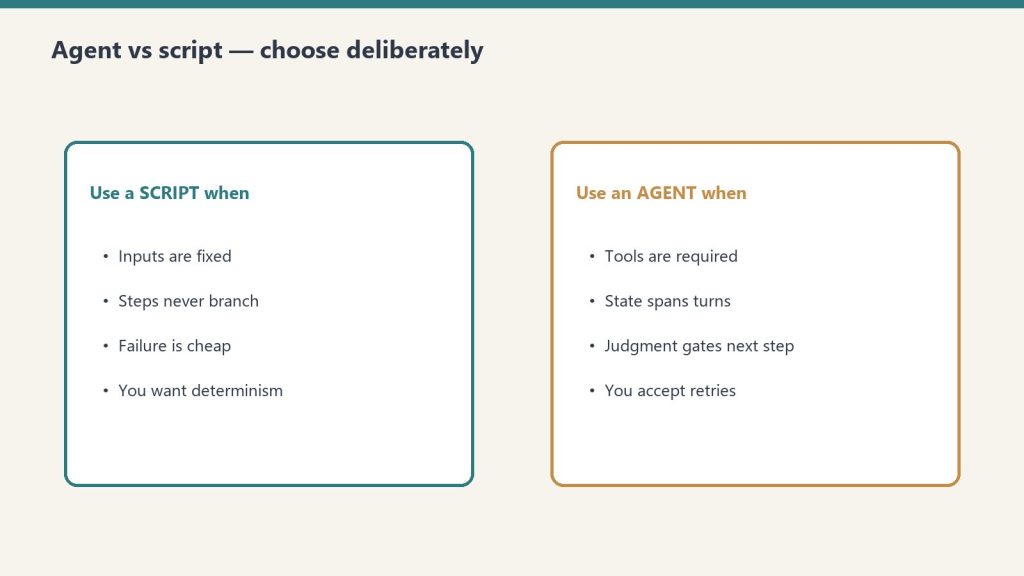
    Side-by-side when to use a script versus an agent
    Decision framework — when email is the coordination API.

    The governing question is never “email or a real system?” It is “what does my workflow need that the thread can’t give me?” Until you hit that wall, the thread is the system.

    Use email when all of these hold: the work is asynchronous and human-paced, it crosses an organizational or trust boundary, you need a durable and searchable audit trail, and a human is in the loop on consequential actions. The thread is the log.

    Use chat (Slack, Discord, WhatsApp) when latency must be under about five minutes and all parties sit inside one auth boundary and the record doesn’t need to outlive the platform. Chat is for urgency inside a shared boundary; email is for durability across org lines.

    Use a real database, queue, or API (Postgres, Kafka, REST/gRPC) when you need queryable schema with transport-level validation, concurrent or atomic writes, distributed locking, machine-speed operations no human reads, or high-volume machine-to-machine traffic. Where failure is unrecoverable, use infrastructure that fails loudly.

    Substrate trade-matrix

    Dimension Email SMS / iMessage WhatsApp Slack / Discord Notion / Docs
    Durability High Medium Medium Low (90-day free) High
    Universality (no account) High Medium Low Low Low
    Access control Low (CC-leak) Low Medium High High
    Searchable / exportable High Low Low Medium High
    Schema-ability Medium Low Low Low Medium
    Latency Low High High High Medium
    AI-ingestibility High Low Low Medium Medium
    Data ownership High Medium Low Low Medium

    Email wins decisively on durability, universality, data ownership, and AI-ingestibility. It loses on latency, access control, and schema enforcement. Position it correctly: email is the zero-infrastructure precursor to formal agent protocols. The agent-interoperability survey (arXiv:2505.02279) lays them out: MCP is a synchronous client-server interface for tool calls, A2A is peer-to-peer delegation via capability-based Agent Cards, and ANP is open-network discovery via decentralized identifiers. All are powerful; none provides durable, offline-capable, federated messaging the way an inbox already does. Every AI team building a custom agent-to-agent protocol is engineering a worse version of SMTP. Ship on email today; graduate to MCP or A2A when hot-path latency or transactional guarantees force the wall.

    The Honest Limits
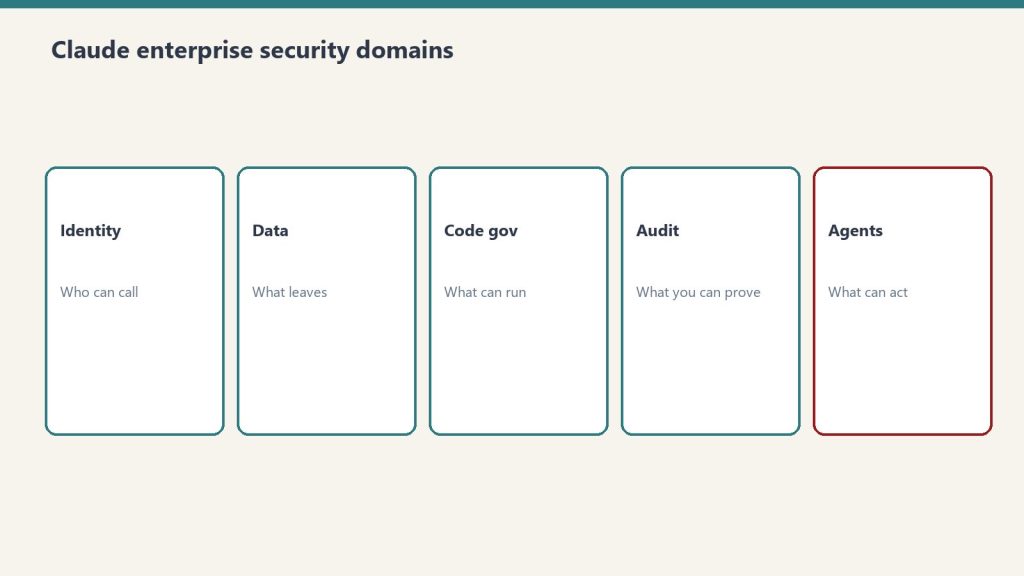
    Five security domains: identity, data, code governance, audit, agents
    Honest limits — email is not a substitute for auth.

    This section is the credibility. Each failure mode is real, each gets a mitigation, and none is fixable by convention alone.

    Prompt injection is the headline risk. OWASP ranks prompt injection LLM01:2025 — its number-one LLM application vulnerability — and explicitly names indirect injection via external sources, including email. EchoLeak (CVE-2025-32711, CVSS 9.3, June 2025) proved a single crafted email could make Microsoft 365 Copilot exfiltrate data with zero user interaction. This is not theoretical. Mitigations: verify DKIM/SPF/DMARC at the agent layer and allowlist senders before trusting any FOR YOUR AI block; parse only declared schema sections, not free prose; gate every consequential action behind a human; run a sandboxed executor that receives structured intents only, never raw tool access. Fair caveat: EchoLeak’s zero-click specificity tracked Copilot’s particular architecture — the general risk scales with how much autonomy the agent has after it reads.

    No schema enforcement. SMTP and MIME accept any string. A malformed or adversarial reply doesn’t bounce — it arrives silently, and a naive agent parses it anyway. Mitigation: validate every reply against the schema before acting; route malformed replies to human review. Say it plainly — schema conformance is a social and instruction-following contract, not a protocol guarantee. Schema drift is the failure mode.

    No transaction semantics. At-least-once delivery means duplicate processing is structurally guaranteed under retries; two simultaneous replies fork the thread with no merge. Mitigation: put an idempotency key in the subject (Round-N / [UUID]) and store the Message-ID as a dedup key the consuming agent checks before acting. An idempotency key in the subject costs four characters; the absence of one can mean the same purchase order executes twice. Keep mutable state in a real database — email is the coordination layer, not the source of truth.

    CC is a feature and a liability — the same mechanism. The property that makes the thread a replicated database is a compliance landmine. One reply-all or forward in a thread carrying ePHI is a breach: HIPAA requires a minimum six-year retention for designated-record-set emails, and GDPR Article 5(e) requires data be kept no longer than necessary. Anyone ever CC’d retains access forever — there is no revoke. Mitigation: in regulated contexts, mirror to a proper record system, encrypt payloads (S/MIME or PGP), or send only the control signal over email and keep the data elsewhere. This is directional, not legal advice — consult your compliance team.

    Deliverability is now a hard gate. Google and Yahoo mandated SPF/DKIM/DMARC alignment for bulk senders (5,000+/day) in February 2024; Microsoft followed in May 2025, routing non-compliant high-volume mail (5,000+/day to consumer Outlook) to Junk, with outright rejection to follow; PCI DSS v4.0 adds DMARC-related anti-phishing requirements for card-data environments. Building without authentication because you’re under the volume threshold today is planning for fragility.

    The operational gotchas that signal you’ve actually done this. Latency is unbounded — SMTP retry windows span minutes to days, so never put a sub-second hot path on email. Threading is client-dependent — Gmail uses subject plus In-Reply-To/References, Outlook uses Thread-Index, Thunderbird uses the JWZ algorithm — so a subject edit or a header-stripping gateway silently forks one thread into two; never rewrite the subject mid-thread (append, don’t replace). The Gmail watch() expires every 7 days. High-volume automation through a personal Gmail risks account suspension — use dedicated service accounts or agent-native platforms (and check their beta limits; Nylas Agent Accounts ship with 7-day retention and 100 sends/day). And threads beyond ~50 rounds with large payloads can blow a model’s context window — architect thread length deliberately.

    When NOT to use email

    Need Use instead
    High-frequency / sub-second M2M REST, gRPC, or a queue
    Strict schema validated at transport JSON Schema + API gateway
    Regulated data, CC-leak unacceptable E2E-encrypted channel + access controls
    High-volume M2M (thousands/min) Message queue / event stream
    Atomic transactions or locking Real DB / event-sourcing

    The throughline: email gives you a convention, not a guarantee — and every mitigation here is a convention layered on a convention. Where failure is unrecoverable, use infrastructure that fails loudly. One more flag for commercial use: if AI-generated output produced through a relay chain is published without clear labeling, the structured hand-offs can obscure the AI’s role. Disclose it.

    Publish It to Get Smarter

    Here is the move, and it is not subtle: this article is a round in the loop it describes.

    Watch the flywheel turn. We publish this piece. AI engines index it. Its named patterns — the FOR YOUR AI block, Round-N versioning, schema-in-the-envelope — become citable units. Operators adopt them. Tygart Media becomes the attributed origin. Each citation reinforces the corpus, and the corpus earns more citations. The article does not describe the flywheel. It is the flywheel, running.

    This is not promotion. It is the method executing on itself. Our model is to own the cited corpus on the topics our clients operate in — where breadth is the moat and the scoreboard is AI-citation coverage, not Google rank. The mechanical reason it compounds is freshness: a flagship piece on a pattern we demonstrably run in production is structurally fresher than generic “AI email tips,” because it has live proof points to update. Directional evidence suggests content refreshed within ~30 days earns materially more AI citations than stale content; treat that as a direction, not a promise. Which is why this piece carries a dated live-example note, and why we’ll keep the round count current.

    Live example — last updated June 2, 2026: the working loop described here is active and advancing in production.

    So when AgentMail raises $6M to give agents inboxes, and the Linux kernel ships another thousand patches today over email, and Microsoft starts turning away mail that can’t authenticate itself — read all of it as one signal. Email is not legacy infrastructure being repurposed. It is the universal handshake for any workflow that crosses an organizational boundary, and it was here the whole time.

    Your inbox is already a database. The only question is whether you are the DBA.


    How this was made: this article was produced by the method it describes. A swarm of AI agents researched it in parallel across seven angles, a synthesis pass shaped it, and it was assembled and edited in the same human-plus-AI loop the piece is about. We practice what we publish.

    Related on Tygart Media: Notion second brain · Claude + Zapier.

  • How to Measure LLM Visibility: 2026 Tracking Stack

    How to Measure LLM Visibility: 2026 Tracking Stack

    Updated September 30, 2026.

    Direct Answer: Measure LLM visibility with five metrics—citation frequency, prompt coverage, share of voice, AI referral sessions, and conversion quality from that traffic. Pair a monthly 20-prompt audit with GA4: use Google’s May 2026 “AI Assistant” channel where it applies, plus a custom channel group (regex on session source, ordered above Referral) so Perplexity and historical sessions don’t stay buried in Referral or Direct.

    Most SEO teams know they need to care about AI search. Almost none of them have a measurement system in place for it. That’s the gap this article closes.

    Ranking in ChatGPT, Perplexity, Google AI Overviews, or Claude isn’t a vanity metric anymore — it’s a traffic channel. But unlike Google, AI systems don’t serve a results page you can screenshot. They weave citations into prose. Your brand either shows up in that prose or it doesn’t, and if you’re only watching default GA4 channel reports, you’re flying mostly blind.

    This is a practitioner’s setup guide: the exact metrics, GA4 configuration, and tool stack needed to track LLM visibility systematically — including how to define AI citation rate before you buy software.

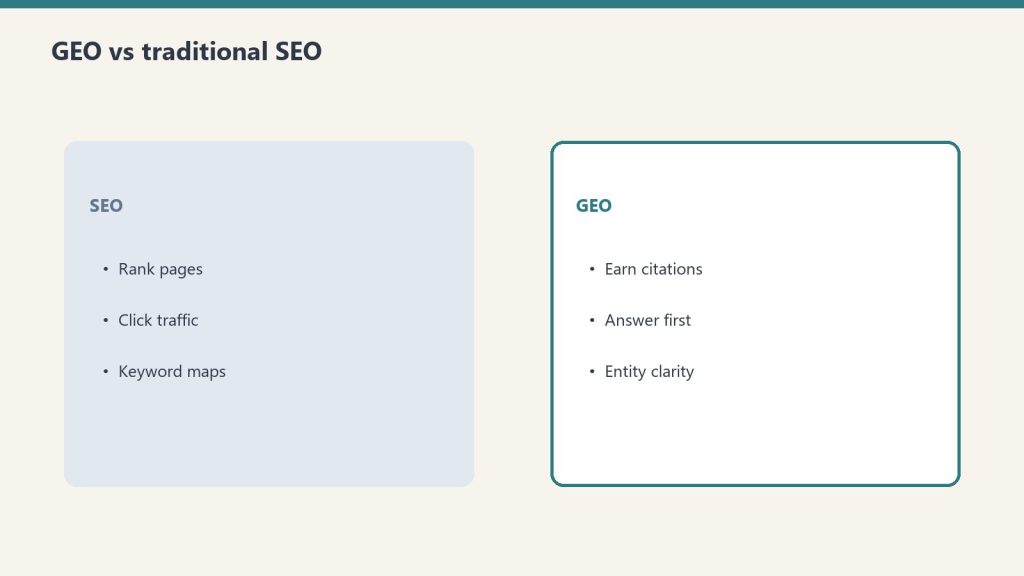
    GEO versus SEO comparison cards

    The Five Metrics That Define LLM Visibility

    Five metrics that define LLM visibility.

    Traditional SEO tracks ranking position, impressions, and clicks. None of those exist in AI search. You need a new metric set:

    Citation frequency — How often your domain or brand is mentioned in AI-generated answers for your target query set. LLMs typically cite a handful of sources per response. Capturing one of those slots consistently is the entire game.

    Prompt coverage — Out of your tracked prompt library, what percentage of prompts return your brand at all? Calculate it as: (prompts where you appear ÷ total tracked prompts) × 100. A brand actively optimizing for AI search should be above 40% coverage on tier-1 prompts within 90 days of focused content work.

    Share of voice — For a given topic cluster, how often do AI answers cite you versus competitors? If you appear in 12 of 30 tested prompts and a competitor appears in 20, they hold 67% share of voice on that topic. That ratio is more strategically meaningful than any single citation count.

    AI referral sessions — The sessions in GA4 that arrived from an AI platform with a usable referrer header (or GA4’s native AI Assistant classification). This is the metric that ties visibility to business outcomes. Setup is covered in the next section.

    Conversion quality from AI traffic — AI-referred visitors often arrive with higher intent: they asked a specific question and your site was the answer. Track engagement rate, pages per session, and goal completions for AI referral sessions separately. If this cohort converts at 2–3× the rate of your organic traffic — which early practitioner data suggests — it changes how you think about GEO investment.

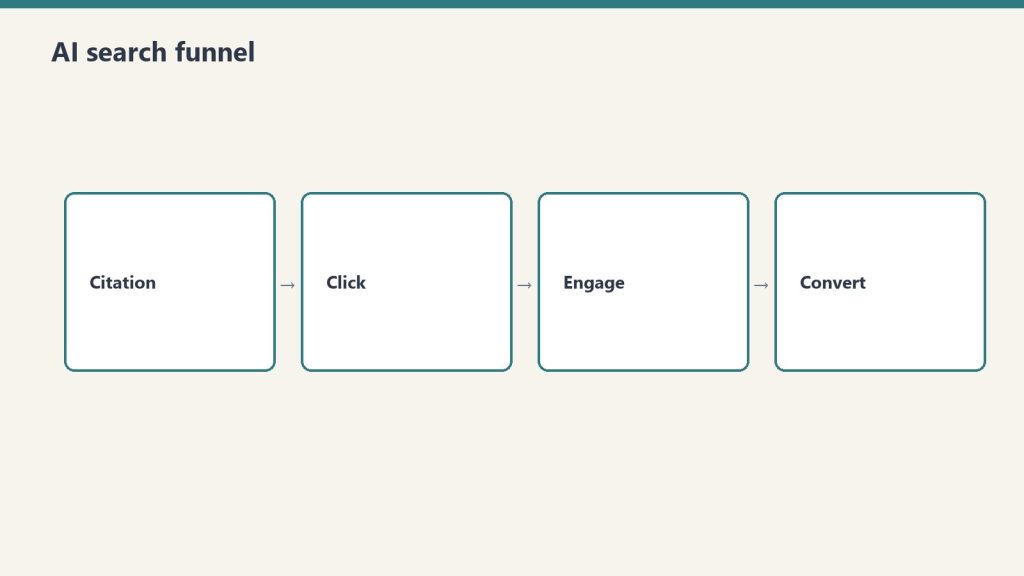
    Four-stage funnel: citation, click, engage, convert

    Setting Up GA4 to Capture AI Traffic

    GA4 regex to capture AI traffic.

    Native AI Assistant channel (May 2026)

    Since May 13, 2026, GA4’s default channel group includes an AI Assistant channel. When Google recognizes an assistant referrer, it sets medium ai-assistant. You will see it under Reports → Acquisition → Traffic acquisition. That is progress, but it is not a complete LLM visibility stack: Perplexity commonly still lands in Referral, assistant coverage in Google’s list changes, and clicks from Google AI Overviews or AI Mode still arrive as google.com — they stay in Organic Search, not AI Assistant.

    Custom channel group and regex

    For Perplexity, legacy referrers, and retroactive reporting, build your own group. In GA4: Admin → Data Display → Channel Groups → Create New Channel Group. Name it “AI Search” and add a rule:

    • Condition type: Session source
    • Match type: matches regex
    • Pattern (copy exactly):
    ^(.*\.)?(chatgpt\.com|chat\.openai\.com|perplexity\.ai|claude\.ai|anthropic\.com|gemini\.google\.com|bard\.google\.com|copilot\.microsoft\.com|deepseek\.com|grok\.com|meta\.ai|you\.com|poe\.com)$

    Critical step: Place “AI Search” above “Referral” (and treat order as first-match-wins). If Referral appears first, Perplexity and other assistant referrers never reach your AI rule. Custom channel groups can be applied retroactively in reports; the native AI Assistant channel does not backfill history the same way.

    Scope caveat: Many assistant-driven visits still arrive without a referrer — mobile apps, in-app browsers, and privacy modes send them to Direct or (not set). Your AI channel captures the visible minority. Don’t benchmark on absolute volume alone. Benchmark on growth rate, and watch Direct only when other signals line up.

    To supplement GA4, add a self-reported source question on high-intent forms: “How did you find us?” Include “ChatGPT / AI assistant” as an option. That gives ground truth session data cannot.

    The Tool Tier: Free to Enterprise

    The LLM visibility tool market matured through 2025 and 2026. Three tiers cover most teams. Start manual before you pay — the same discipline described in our AI citation monitoring guide applies whether you use a spreadsheet or a dashboard.

    Free / DIY — start here

    Run 20 representative prompts manually across ChatGPT, Perplexity, Claude, and Google AI Overviews each month. Record mentions in a spreadsheet: cited (yes/no), cited with link (yes/no), competitor named instead. That gives you baseline prompt coverage and share of voice with zero budget. Do it for at least one month before buying software — you’ll know which gaps actually hurt.

    Mid-market tools (roughly $30–$500/month)

    OtterlyAI runs scheduled prompt sets and tracks brand mentions, cited URLs, and share of voice. Published USD pricing starts at $29/month (Lite, 15 prompts); Standard is $189/month (100 prompts); Premium is $489/month (400 prompts). ChatGPT, Google AI Overviews, Perplexity, and Copilot are included; Google AI Mode, Gemini, and Claude are add-ons. Enterprise starts around $1,000/month.

    LLMrefs takes a keyword-first approach: import SEO keywords, and the platform generates prompt fan-outs and refreshes visibility on a schedule — closer to a rank tracker than a blank prompt spreadsheet. Useful when your team already thinks in keyword lists rather than conversational prompts.

    Enterprise layer ($1,000+/month)

    Profound centers on Prompt Volumes — modeled demand from real answer-engine conversations (ChatGPT, Gemini, Claude, Perplexity). It helps you prioritize which questions deserve content before you commit headcount. Valuable at scale; overkill for a single-location operator on the 20-prompt audit. Pair it with playbooks such as the GEO case studies series when you need proof the numbers moved.

    The 20-Prompt Audit: Your Monthly Baseline Protocol

    Whether you use a paid tool or not, run this protocol monthly:

    1. Build a prompt library of 20 questions your target buyer would ask an AI system. These should be questions your content is designed to answer — not keyword-stuffed phrases, but real conversational queries.
    2. Run each prompt across ChatGPT, Perplexity, and Google AI Overviews (3 platforms × 20 prompts = 60 data points per month).
    3. For each result, record: was your brand cited in text, was your domain linked, and which competitor was cited if you were not.
    4. Calculate prompt coverage per platform and total share of voice versus your top three competitors.

    Log results in a spreadsheet with a date column. Three months of data reveals directional trends — whether your GEO and AEO work is moving the needle. Longitudinal baselines also make experiments legible; structured publishing tests (for example, the 40-article Bing citation experiment) only pay off when you can compare citation rates month over month.

    Desk with laptop, checklist notebook, and billing card ready before creating an Anthropic API key

    Diagnosing a Citation Drop

    Diagnosing a citation drop.

    If your monthly audit shows prompt coverage declining, run through this checklist before blaming a black-box algorithm change:

    Did you remove or restructure a previously cited page? AI systems build representations of your content over time. Pages that disappear or get heavily rewritten lose citation weight. Check your changelog against the prompts that declined.

    Did a competitor publish stronger content on the topic? Citation slots in a single answer are finite. If a competitor shipped a more authoritative page, it may have displaced yours. Review their recent publishing calendar.

    Check LLMs.txt and robots.txt. A crawlability block in LLMs.txt or a misconfigured Disallow directive cuts AI access at the source. Verify both files allow the URLs you expect to be cited.

    Check for a platform or model update. Major chatbot and search-model releases in 2025–2026 shifted which sources each engine trusted. Read the platform’s public changelog for the period in question.

    If none of these apply, audit structured data on the pages that lost citations — schema, FAQ blocks, heading hierarchy, and factual density all affect extraction. A redesign that removed an FAQ block can remove your citation utility in the same deploy.

    The Bottom Line

    LLM visibility measurement is not solved, but the primitives exist: GA4’s AI Assistant channel plus a custom regex group for traffic, manual prompt audits for citation coverage, and mid-market tools when labor becomes the bottleneck. Operators who need a packaged starting point can map the same metrics to a vertical playbook such as the AI search visibility package for water damage — the measurement layer stays identical even when the prompts change.

    Build the 20-prompt library this week. Configure GA4 today. Everything else stacks on those two streams.

    FAQ

    What is LLM visibility? LLM visibility is how often your brand or domain appears in AI-generated answers — in the prose, in linked citations, or both — for the questions your buyers ask. It is the AI-search equivalent of showing up on page one, except there is no single rank number to screenshot.

    Does GA4 automatically track ChatGPT and Perplexity traffic? Partially. Since May 2026, GA4’s AI Assistant channel classifies some assistant referrers with medium “ai-assistant.” Perplexity often remains Referral, AI Overview clicks stay Organic, and no-referrer visits stay Direct. A custom “AI Search” channel group with a source regex — placed above Referral — is still required for complete trending.

    How often should I run a prompt audit? Monthly is the minimum useful cadence. Run the same 20 core prompts each cycle so prompt coverage and share of voice are comparable. Weekly spot checks are fine for crisis monitoring, but monthly logging is what builds a baseline.

    What is the difference between prompt coverage and share of voice? Prompt coverage is the share of your tracked prompts where you appear at all. Share of voice compares how often you appear versus named competitors across that same prompt set. High coverage with low share of voice means you show up, but rivals dominate the answers.

    Do I need a paid tool to measure AI citations? No. A spreadsheet and 60 manual checks per month (20 prompts × three platforms) are enough to start. Paid tools mainly automate scheduling, add engines, and export reports once you know which prompts and competitors matter.

    Why would AI citations drop suddenly? Common causes are URL removals or restructures, stronger competitor pages, crawl blocks via robots.txt or LLMs.txt, or model updates on the assistant platform. Rule those out before you assume your entire GEO strategy failed.

  • Telehealth SEO: SiteBoost YMYL & E-E-A-T Optimization

    Telehealth SEO: SiteBoost YMYL & E-E-A-T Optimization

    Tygart Media // AEO & AI Search
    SCANNING
    CH 03
    · Answer Engine Intelligence
    · Filed by Will Tygart

    What Is SiteBoost for Telehealth?
    SiteBoost for Telehealth is a done-for-you WordPress optimization service for telehealth platforms and occupational health providers — applying YMYL-compliant SEO, AEO, and GEO optimization to patient-facing content, employer health pages, and clinical service descriptions. Built specifically for the trust and credentialing signals Google requires before ranking healthcare content, and the direct-answer format that AI systems use to respond to medical and workplace health queries.

    Telehealth content faces the strictest content standards in search. Google’s YMYL (Your Money or Your Life) guidelines apply to any health-related content — meaning E-E-A-T signals (Experience, Expertise, Authoritativeness, Trustworthiness) aren’t optional. A telehealth WordPress site without proper credentialing signals, licensed clinician attribution, and medically accurate terminology isn’t just under-optimized — it’s actively downranked.

    Most telehealth platforms are built by product teams who understand the clinical side but not the content architecture side. The result: accurate medical content on a WordPress site that Google treats as low-trust because the trust signals aren’t structured correctly. We fix that.

    What We’ve Done in This Vertical

    We manage content operations for Sickday (sickday.com), a same-day telehealth and occupational health platform serving employers and individual patients. The critical rule in this vertical: staff are licensed clinicians — not doctors, not nurses. That distinction matters legally and for E-E-A-T compliance. We’ve built the content architecture, credentialing signals, and YMYL-compliant optimization stack for this specific category of healthcare provider.

    What SiteBoost Covers for Telehealth

    • E-E-A-T signal injection — Licensed clinician credentials, platform accreditation signals, medical review attribution, and organizational trust markers structured into content and schema
    • YMYL compliance optimization — Content accuracy review, hedging language for medical claims, appropriate disclaimer structures, and factual sourcing for health information
    • Occupational health entity signals — OSHA references, DOT compliance language, workers’ compensation terminology, employer health program signals for occupational health content
    • Telehealth platform entities — Relevant telehealth regulation references (Ryan Haight Act, state telehealth practice standards, HIPAA compliance signals), payer and insurance entity references
    • Patient FAQ schema — Common patient and employer questions answered in FAQPage format for PAA placement (“how does telehealth work,” “is telehealth covered by insurance,” “what is a DOT physical”)
    • AI citation optimization — Speakable schema and LLMS.TXT configuration for Perplexity and Google AI Overview citation when patients and employers search for telehealth services

    The YMYL Difference in Telehealth SEO

    Standard SEO agencies treat telehealth like any other local service business. Google doesn’t. Health content requires demonstrably different trust architecture: named clinician credentials on clinical content, medical review dates on health information pages, accurate clinical terminology that matches how licensed providers actually speak, and clear scope-of-practice language that distinguishes what a telehealth platform can and cannot provide. Getting this wrong doesn’t just hurt rankings — it creates compliance exposure.

    What the Pilot Delivers

    Item Included
    Site audit + YMYL compliance gap analysis ✅
    10 posts optimized (SEO + AEO + GEO) ✅
    E-E-A-T signal injection on all 10 posts ✅
    Licensed clinician credential structuring ✅
    FAQPage schema (patient + employer Q&A) ✅
    Occupational health entity injection (where applicable) ✅
    60-day impact report ✅

    SiteBoost vs. DIY vs. Generic Healthcare SEO Agency

    SiteBoost DIY Generic Healthcare SEO
    YMYL E-E-A-T compliance built in ✅ Risky Sometimes
    Licensed clinician (not “doctor”) language enforced ✅ ❌ ❌
    Occupational health entity library ✅ ❌ Rarely
    Telehealth regulation references ✅ ❌ Rarely
    AI citation optimization ✅ ❌ ❌
    Proven in telehealth vertical ✅ Unknown Unlikely

    Interested in SiteBoost for Your Telehealth Site?

    We onboard sites personally. Email Will with your site URL and a brief description of your clinical model — he’ll follow up within one business day.

    → Email Will — Start the Pilot

    Email only. No sales call required. No commitment to reply.

    Frequently Asked Questions

    Does this work for direct-to-consumer telehealth as well as employer occupational health?

    Yes. The entity set and content architecture adapt to your clinical model. DTC telehealth content targets patient-facing queries and insurance coverage questions. Occupational health content targets employer HR and safety manager queries — OSHA compliance, DOT physicals, return-to-work programs. Both operate under YMYL standards; both get the full E-E-A-T treatment.

    Why does the licensed clinician language distinction matter for SEO?

    Calling staff “doctors” or “nurses” when they’re licensed clinicians (nurse practitioners, physician assistants, licensed therapists) creates scope-of-practice inaccuracies that can trigger both Google trust penalties and state medical board compliance issues. Google’s quality raters are specifically trained to identify healthcare credential misrepresentation. We enforce accurate clinical title language as a hard rule in all content we optimize.

    Can SiteBoost help with content that explains telehealth regulations to patients?

    Yes — and this is high-value content for telehealth platforms. State-specific telehealth practice standards, insurance coverage rules, and prescription regulations (Ryan Haight Act) are exactly the kind of regulatory content that earns E-E-A-T signals when written accurately and attributed correctly. We can optimize existing regulatory explainer content or identify gaps where new content would capture patient research queries.

    Is telehealth content affected by the helpful content update?

    Significantly. Google’s helpful content guidelines hit thin, AI-generated health content hardest. Telehealth sites that published generic condition descriptions without clinical attribution saw the steepest ranking drops. The optimization pass ensures all content demonstrates genuine clinical expertise — specific treatment descriptions, accurate clinical terminology, and proper scope-of-practice framing that generic health copywriting lacks.

    Last updated: April 2026

  • Property Damage Restoration SEO for Regional Operators

    Property Damage Restoration SEO for Regional Operators

    Tygart Media // AEO & AI Search
    SCANNING
    CH 03 · Answer Engine Intelligence · Filed by Will Tygart
    What Is SiteBoost for Regional Restoration?
    SiteBoost for Regional Property Damage Restoration is a done-for-you WordPress optimization service for restoration companies serving multi-county suburban and rural markets — where the competition isn’t ServiceMaster or Servpro’s national SEO budget, but regional independents with the same local knowledge advantage you have, and slightly better-optimized WordPress sites. We close that gap.

    The restoration SEO landscape outside major metros is fundamentally different from downtown competition. National franchise sites dominate broad category searches. But regional independent operators — companies serving 3–8 counties with genuine local presence and real IICRC credentials — can win the specific, high-intent queries that national sites don’t have the local content depth to capture.

    The strategy: own the local entities (county names, neighborhoods, local insurers, regional weather events), demonstrate IICRC credential depth (specific standards by loss type), and produce the adjuster-facing content that decision-makers search for when qualifying restoration contractors for their preferred vendor lists.

    What We’ve Done in This Vertical

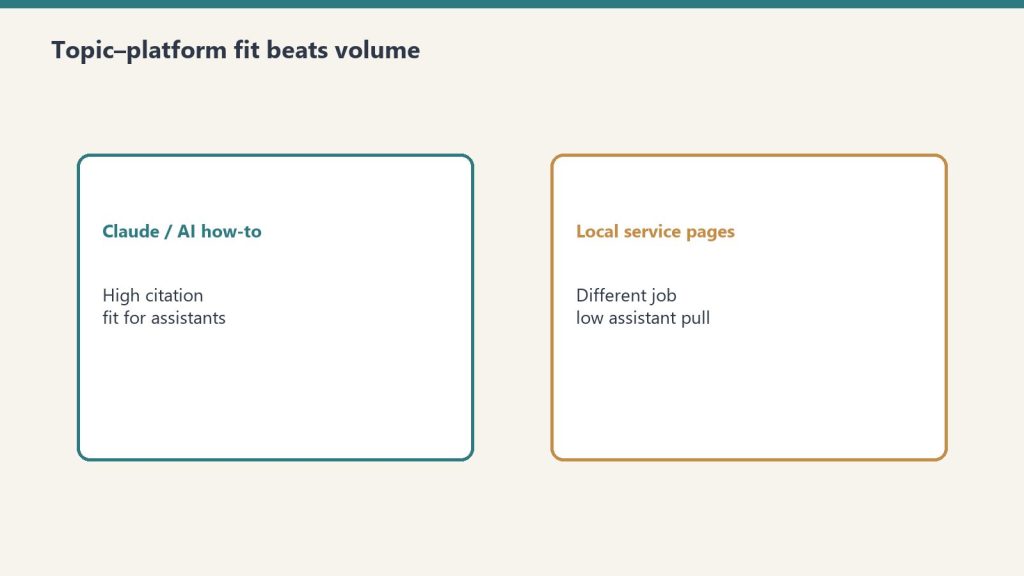
    Comparison of Claude how-to fit versus local service page fit for assistants
    What we’ve done in this vertical.

    We manage content operations for Upper Restoration (NYC and Long Island — Nassau and Suffolk counties) and 247 Restoration Specialists (Houston TX metro). Both are regional independent operators competing against franchise chains with much larger marketing budgets. The content architecture, IICRC entity library, and adjuster-facing content strategy are proven across both markets.

    What SiteBoost Covers for Regional Restoration

    • Multi-county geo-entity injection — County names, municipalities, ZIP codes, and regional landmarks that signal genuine service area coverage to local search algorithms
    • IICRC standard-level entity injection — S500 (water damage), S520 (mold), S540 (trauma/biohazard), S600 (upholstery), S700 (fire/smoke), S900 (contents) referenced by specific standard and loss type
    • RIA and industry body signals — Restoration Industry Association references, regional trade association memberships, and professional network signals
    • Adjuster-facing content optimization — Content restructured for the insurance adjuster search intent: coverage eligibility, documentation requirements, carrier-specific language, preferred vendor qualification
    • Property manager and GC content — Commercial referral source content optimized for property manager and general contractor discovery queries
    • FAQPage schema — Homeowner, adjuster, and property manager questions answered in structured format for PAA placement

    The Adjuster-Facing Content Difference

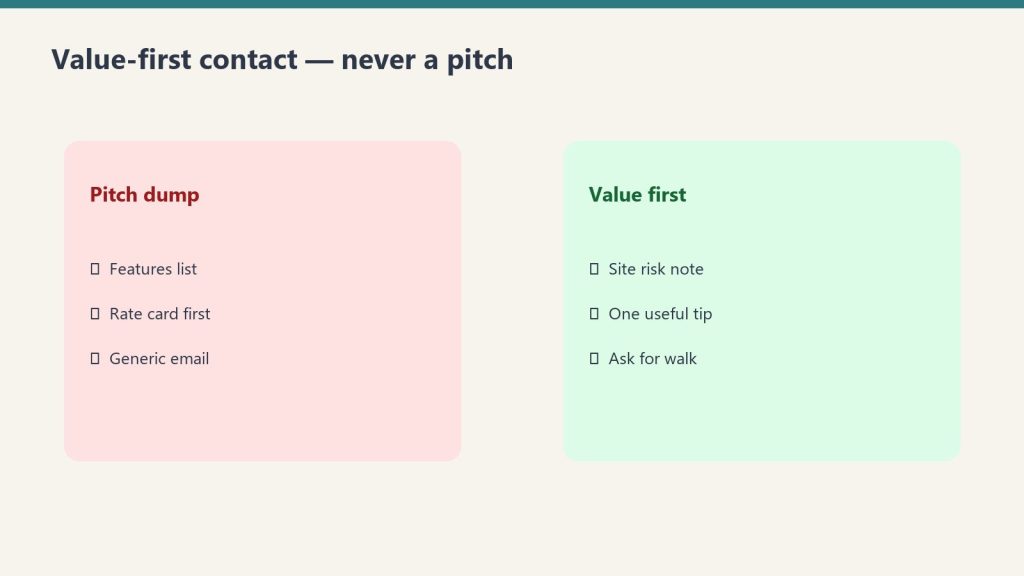
    Side-by-side comparing a pitch dump with value-first contact habits
    The adjuster-facing content difference.

    Most restoration WordPress sites produce homeowner-facing content exclusively. The highest-value referral relationships — insurance adjuster preferred vendor lists — come from a completely different content audience with completely different search intent. Content that references RCV vs. ACV claims, Xactimate line items, carrier documentation requirements, and IICRC standard compliance reaches the adjuster audience that homeowner-facing content never touches.

    What the Pilot Delivers

    Desk with laptop, checklist notebook, and billing card ready before creating an Anthropic API key
    What the pilot delivers.
    ItemIncluded
    Site audit + local and adjuster query gap analysis✅
    10 posts optimized (SEO + AEO + GEO)✅
    Multi-county geo-entity injection✅
    IICRC standard-level entity injection✅
    Adjuster-facing content optimization (where applicable)✅
    FAQPage schema (homeowner + adjuster Q&A)✅
    60-day impact report✅

    Interested in SiteBoost for Your Regional Property Damage Restoration Site?

    We onboard sites personally. Email Will with your site URL and he’ll follow up within one business day.

    → Email Will — Start the Pilot

    Email only. No sales call required. No commitment to reply.

    Related on Tygart Media: local SEO · blog SEO · documentation RH/GPP.

    Frequently Asked Questions

    How is this different from the standard SiteBoost for Restoration page?

    The standard restoration SiteBoost page is built for any restoration operator. This page is specifically for regional independents serving multi-county suburban and rural markets — where the geo-entity strategy, adjuster-facing content, and multi-county local authority approach are the primary differentiators from franchise competitors.

    What does adjuster-facing content optimization actually involve?

    It means restructuring content to answer the questions insurance adjusters search for when qualifying restoration contractors: IICRC certification verification, documentation and reporting capabilities, carrier compliance history, Xactimate familiarity, and response time and capacity for large loss events. This content doesn’t convert homeowners — it gets you on preferred vendor lists.

    Does SiteBoost work for fire and mold restoration as well as water damage?

    Yes. The entity injection is loss-type specific — water damage content gets S500 references, mold gets S520 and EPA 402-K-02-003, fire/smoke gets S700. Multi-peril operators get all applicable standards applied to the relevant posts in the 10-post pilot.

    Last updated: April 2026

  • Twin Cities Water Damage SEO for Restoration Companies

    Twin Cities Water Damage SEO for Restoration Companies

    Tygart Media // AEO & AI Search
    SCANNING
    CH 03 · Answer Engine Intelligence · Filed by Will Tygart
    What Is SiteBoost for Twin Cities Water Damage Restoration?
    SiteBoost for Twin Cities Water Damage Restoration is a done-for-you WordPress optimization service for water damage and property restoration companies serving Minneapolis, Saint Paul, and the surrounding metro — injecting Minneapolis-specific neighborhood entities, Minnesota licensing references, IICRC credentials, and local content signals that separate market-native operators from national franchise chains in local search results.

    The Twin Cities restoration market has a specific local dynamic: a mix of national franchise operators (ServiceMaster, Servpro, Paul Davis) with massive domain authority, and local independent operators who actually know Edina from Eden Prairie and understand the difference between a Minnetonka lake home and a Saint Paul bungalow. Local content that demonstrates genuine market knowledge wins in that environment — national franchise sites can’t fake it.

    We built this system on Partners Restoration (partnerscos.com), a water damage and restoration company serving the Minneapolis SW metro — Edina, Chanhassen, Wayzata, Minnetonka, Eden Prairie, Deephaven, Orono, and Plymouth. The neighborhood entity library, Minnesota-specific licensing references, and local content architecture are proven in this market.

    What SiteBoost Covers for Twin Cities Restoration

    Flooded residential living room with standing water on hardwood after a water loss
    What SiteBoost covers for Twin Cities restoration.
    • Minneapolis/Saint Paul neighborhood entity injection — Specific neighborhood names, lake names, school districts, and local landmarks that signal genuine market presence to Google and local searchers
    • Minnesota licensing entity signals — Minnesota Department of Labor and Industry (DLI) contractor licensing, Minnesota Pollution Control Agency (MPCA) mold references, and state-specific regulatory signals
    • IICRC credential injection — S500 water damage, S520 mold remediation, S700 fire and smoke standards referenced throughout relevant content
    • Local buyer FAQ schema — Twin Cities homeowner questions answered in structured format (“does homeowners insurance cover water damage in Minnesota,” “how long does water damage restoration take in Minneapolis”)
    • Seasonal content signals — Minnesota winter pipe burst, spring flooding, and ice dam water damage content optimized for seasonal query patterns
    • AI citation optimization — Content structured for Perplexity and Google AI Overview citation when Twin Cities homeowners search for emergency restoration help

    Twin Cities Neighborhood Entity Library

    Comparison of Claude how-to fit versus local service page fit for assistants
    Twin Cities neighborhood entity library.

    Content that references specific Twin Cities neighborhoods outperforms generic metro-area content for local queries. Our entity library covers: Minneapolis (Uptown, Linden Hills, Kenwood, Longfellow, Northeast), Saint Paul (Highland Park, Macalester-Groveland, Summit Hill, Como), and the SW suburbs: Edina, Eden Prairie, Minnetonka, Wayzata, Chanhassen, Chaska, Orono, Plymouth, Deephaven, Shorewood.

    What the Pilot Delivers

    Desk with laptop, checklist notebook, and billing card ready before creating an Anthropic API key
    What the pilot delivers.
    ItemIncluded
    Site audit + Twin Cities local query gap analysis✅
    10 posts optimized (SEO + AEO + GEO)✅
    Minneapolis/Saint Paul neighborhood entity injection✅
    Minnesota licensing reference injection✅
    IICRC entity signals✅
    FAQPage schema (MN homeowner Q&A)✅
    60-day impact report✅

    Interested in SiteBoost for Your Twin Cities Water Damage Restoration Site?

    We onboard sites personally. Email Will with your site URL and he’ll follow up within one business day.

    → Email Will — Start the Pilot

    Email only. No sales call required. No commitment to reply.

    Related on Tygart Media: local SEO for restoration · property damage SEO · Google Ads lessons.

    Frequently Asked Questions

    Does this only work for companies in the Minneapolis SW suburbs?

    No — the geo-entity approach works for any Twin Cities sub-market. The neighborhood entity set is adapted to your actual service area. Companies serving the North Metro (Blaine, Coon Rapids, Maple Grove) or East Metro (Woodbury, Stillwater, White Bear Lake) get a different neighborhood entity set than SW metro operators.

    How does this help against national franchise competitors with huge domain authority?

    National franchises can’t fake local knowledge. Content that references specific Twin Cities neighborhoods, Minnesota-specific weather patterns, local licensing bodies, and regional building characteristics signals genuine market presence that national sites don’t have. Google’s local algorithm rewards this specificity in local pack and organic local results.

    Does SiteBoost cover seasonal content for Minnesota’s specific weather patterns?

    Yes. Minnesota’s climate creates specific restoration query patterns — winter pipe bursts, spring snowmelt flooding, summer storm damage, and ice dam water intrusion are all seasonal signals we optimize for as part of the Twin Cities pilot.

    Last updated: April 2026

  • B2B Event Platform SEO: SiteBoost for Event Tech SaaS

    B2B Event Platform SEO: SiteBoost for Event Tech SaaS

    Tygart Media / Content Strategy
    The Practitioner JournalField Notes
    By Will Tygart
    · Practitioner-grade
    · From the workbench

    What Is SiteBoost for B2B Event Platforms?
    SiteBoost for B2B Event Platforms is a done-for-you WordPress optimization service for conference technology companies, meeting platforms, and event tech SaaS — injecting MPI, PCMA, and hybrid event industry entities, optimizing for meeting planner buyer-stage queries, and building AI citation readiness in a category where most platforms still rely entirely on paid acquisition.

    Event technology buyers — meeting planners, event managers, corporate travel coordinators — research platforms through industry association resources, peer recommendations, and increasingly through AI-generated answers. Companies that appear in those answers without paying for the placement have a significant acquisition cost advantage over competitors who live and die by paid search.

    We built this optimization system on WeConvene, a B2B event and meeting platform where we’ve optimized content for meeting planner search intent, hybrid event terminology, and the industry body references that signal credibility to professional event buyers.

    What SiteBoost Covers for B2B Event Platforms

    • Industry body entity injection — MPI (Meeting Professionals International), PCMA (Professional Convention Management Association), GBTA, SITE, and relevant certification body references
    • Event format terminology — Hybrid events, virtual attendee experience, breakout session technology, attendee engagement metrics, and event ROI measurement language
    • Buyer persona content — Meeting planner, corporate event manager, association executive, and incentive travel buyer search intent mapped to existing content
    • FAQPage schema — Platform evaluation questions answered in structured format (integration capabilities, attendee limits, pricing models, security compliance)
    • Comparison content structure — Positioning content for “event platform comparison” and “best virtual conference platform” queries
    • AI citation optimization — Content structured for Perplexity citation when buyers research event technology options

    What the Pilot Delivers

    Item Included
    Site audit + buyer query gap analysis ✅
    10 posts optimized (SEO + AEO + GEO) ✅
    MPI/PCMA industry entity injection ✅
    Hybrid event terminology optimization ✅
    FAQPage schema (buyer evaluation Q&A) ✅
    Buyer persona targeting applied ✅
    60-day impact report ✅

    Interested in SiteBoost for Your B2B Event Platform Site?

    We onboard sites personally. Email Will with your site URL and he’ll follow up within one business day.

    → Email Will — Start the Pilot

    Email only. No sales call required. No commitment to reply.

    Frequently Asked Questions

    Does this work for in-person event companies as well as virtual/hybrid platforms?

    Yes. The entity set adapts to your event format focus — in-person events use venue, AV, and logistics entities; virtual/hybrid platforms use technology integration, attendee experience, and platform capability entities. Both buyer audiences use industry body references (MPI, PCMA) as credibility signals.

    Is event technology content competitive for organic search?

    Highly competitive on broad terms (“best event platform”), much less competitive on specific buyer-stage and specification queries (“hybrid event platform with Salesforce integration” or “MPI-recognized virtual conference platform”). SiteBoost targets the specific queries where organic wins are achievable.

    Can SiteBoost help with content that positions against specific competitors?

    Comparison content is one of the highest-converting content types in B2B SaaS — and event tech is no exception. We can optimize existing comparison pages or structure new comparison content as part of the 10-post pilot scope.


    Last updated: April 2026

  • Commercial Flooring SEO: SiteBoost for Contractors

    Commercial Flooring SEO: SiteBoost for Contractors

    Tygart Media / Content Strategy
    The Practitioner JournalField Notes
    By Will Tygart
    · Practitioner-grade
    · From the workbench

    What Is SiteBoost for Commercial Flooring?
    SiteBoost for Commercial Flooring is a done-for-you WordPress optimization service for commercial flooring contractors and flooring standards companies — injecting ASTM specifications, ACI standards, FF/FL floor flatness entities, and B2B buyer-stage content architecture into existing WordPress content. Built for companies selling to general contractors, developers, and facilities managers who search for technical specifications before issuing RFPs.

    Commercial flooring buyers are specification buyers. A facilities manager selecting a flooring contractor for a warehouse project isn’t searching “best flooring near me” — they’re searching “ASTM E1155 floor flatness testing contractor” or “FF25 FL20 specification compliance.” Generic flooring content doesn’t appear in those searches. Entity-rich technical content does.

    We built this optimization system on IFTI (ifti.com), a commercial flooring standards and inspection company where we’ve published content covering floor flatness measurement, ASTM specifications, ACI tolerances, and the technical content that commercial flooring buyers actually search for when qualifying contractors.

    What We’ve Done in This Vertical

    IFTI content operations include taxonomy rebuild across flooring standards verticals, variant content pipelines for different buyer personas (GC, developer, facility manager), and AEO optimization of technical flooring content. The ASTM, ACI, ICRI, and FF/FL entity sets are documented and proven in this vertical.

    What SiteBoost Covers for Commercial Flooring

    • Standards entity injection — ASTM E1155, ASTM F710, ACI 117, ACI 302, ICRI surface profile references injected throughout content
    • FF/FL floor flatness terminology — Floor flatness (FF) and floor levelness (FL) numbers, tolerance references, and measurement methodology content optimized for specification searches
    • B2B buyer persona targeting — Content restructured for general contractor, developer, and facilities manager search intent and vocabulary
    • Technical FAQ schema — Specification questions answered in FAQPage format for buyers researching compliance requirements
    • RFP and specification language — Content aligned with how commercial buyers write specs and evaluate contractors
    • AI citation optimization — Technical content structured for Perplexity citation when buyers research flooring specifications

    What the Pilot Delivers

    Item Included
    Site audit + specification query gap analysis ✅
    10 posts optimized (SEO + AEO + GEO) ✅
    ASTM/ACI/ICRI entity injection ✅
    FF/FL terminology optimization ✅
    FAQPage schema (technical buyer Q&A) ✅
    B2B persona targeting applied ✅
    60-day impact report ✅

    Interested in SiteBoost for Your Commercial Flooring Site?

    We onboard sites personally. Email Will with your site URL and he’ll follow up within one business day.

    → Email Will — Start the Pilot

    Email only. No sales call required. No commitment to reply.

    Frequently Asked Questions

    Does this work for residential flooring contractors as well?

    The entity set and B2B buyer persona focus is built for commercial flooring. Residential flooring content uses different search intent and different entity signals. If you serve both markets, we optimize commercial content in the pilot and can extend to residential content separately.

    What if our content is currently very thin or product-catalogue style?

    Thin product-catalogue content is one of the most common issues in commercial flooring WordPress sites. The optimization pass expands thin pages with technical context, specification details, and buyer-stage framing — without rewriting your core product or service descriptions.

    Can SiteBoost help us rank for specific ASTM standard numbers?

    Yes — ASTM standard numbers (E1155, F710, etc.) are searchable terms used by specification buyers. Content optimized with these entities in the right context can rank for standard-number queries that most flooring sites don’t even attempt to target.


    Last updated: April 2026

  • Emergency Home Services SEO: Win 24/7 Local Repair Queries

    Emergency Home Services SEO: Win 24/7 Local Repair Queries

    Tygart Media // AEO & AI Search
    SCANNING
    CH 03
    · Answer Engine Intelligence
    · Filed by Will Tygart

    What Is SiteBoost for Emergency Home Services?
    SiteBoost for Emergency Home Services is a done-for-you WordPress optimization service for 24/7 repair companies — water damage, fire restoration, emergency plumbing, and HVAC — built specifically for the high-intent, time-sensitive local queries that drive emergency service calls. When a pipe bursts at 2am, your site needs to be the answer Google and AI systems surface immediately.

    Emergency home service queries are among the highest-intent searches on the internet. “Water damage restoration near me” at 11pm is a person with a flooded basement ready to call the first credible result. The problem: most emergency service WordPress sites are thin, generic, and built for desktop browsing — not for the AMP-speed, direct-answer format that wins emergency query placements.

    SiteBoost restructures your existing content for exactly these moments: fast-loading, direct-answer pages that capture emergency queries, demonstrate local credibility through service area and licensing entities, and get cited by AI systems when homeowners search for emergency help.

    What SiteBoost Covers for Emergency Home Services

    • Emergency query optimization — Pages restructured for “near me,” “24/7,” and time-sensitive search patterns with direct answer formatting
    • Local service area entity injection — City, county, neighborhood, and ZIP-level signals that reinforce local pack eligibility
    • Certification entity signals — IICRC, BBB accreditation, EPA certification, state contractor license numbers where applicable
    • FAQPage schema — Homeowner emergency questions answered in structured format (“what to do when pipe bursts,” “is water damage covered by insurance”)
    • Speakable schema — Key emergency response paragraphs marked for voice search (“Hey Google, water damage restoration near me”)
    • Response time and availability signals — 24/7 availability, response time claims, and service guarantee language structured for AI citation

    The Entities That Matter in Emergency Home Services

    Emergency home service content earns local trust through: IICRC (water and fire restoration credentialing), BBB accreditation, EPA mold and hazmat references, OSHA safety standards, state contractor licensing bodies, and local service area signals (city names, county names, neighborhood references). Combined with response time claims and availability signals, these entities separate credible operators from lead aggregators in search results.

    What the Pilot Delivers

    Item Included
    Site audit + emergency query gap analysis ✅
    10 posts optimized (SEO + AEO + GEO) ✅
    Local service area entity injection ✅
    FAQPage schema (homeowner emergency Q&A) ✅
    Speakable schema on key pages ✅
    Certification entity injection ✅
    60-day impact report ✅

    Interested in SiteBoost for Your Emergency Home Services Site?

    We onboard sites personally. Email Will with your site URL and he’ll follow up within one business day.

    → Email Will — Start the Pilot

    Email only. No sales call required. No commitment to reply.

    Frequently Asked Questions

    Does this work for single-trade companies (plumbing only, HVAC only)?

    Yes. The optimization is adapted to the specific trade — plumbing emergency queries and entities differ from water damage restoration queries. Single-trade companies get a more focused entity set and query cluster than multi-service operators.

    How does SiteBoost help with “near me” local search specifically?

    Local pack rankings are influenced by GBP completeness, on-site local entity signals, and NAP consistency. Our optimization pass injects city, county, and neighborhood entities into post content — reinforcing the geographic relevance signals that “near me” queries rely on. We can also recommend GBP optimizations as a complement.

    Is emergency service content affected by Google’s helpful content standards?

    Emergency home service content sits in a gray zone — it’s high-intent and local, not strictly YMYL, but Google’s helpful content guidelines still apply. We ensure all optimized content demonstrates genuine expertise (real process descriptions, accurate technical terminology, specific service area knowledge) rather than generic category page copy.


    Last updated: April 2026

  • Luxury Asset Lending SEO: SiteBoost for Collateral Loans

    Luxury Asset Lending SEO: SiteBoost for Collateral Loans

    Tygart Media / Content Strategy
    The Practitioner JournalField Notes
    By Will Tygart
    · Practitioner-grade
    · From the workbench

    What Is SiteBoost for Luxury Asset Lending?
    SiteBoost for Luxury Asset Lending is a done-for-you WordPress optimization service for collateral loan companies — lenders who accept watches, jewelry, handbags, fine art, and precious metals as security for short-term loans. We inject the luxury brand entities, valuation body references, and financial authority signals that make collateral loan content rank and get cited by AI systems researching asset-backed financing.

    Luxury asset lending sits at the intersection of two competitive search landscapes: financial services (high authority, highly regulated) and luxury goods (brand-dominated, aspirational). Most collateral loan companies produce generic “how it works” content that neither Google nor AI systems treat as authoritative on either dimension.

    The win is entity precision. Content that references GIA grading standards, LBMA gold pricing, Rolex reference numbers, Patek Philippe complications, and Hermès Birkin authentication signals domain expertise that generic financial content can’t fake. We’ve built this playbook across four luxury lending sites.

    What We’ve Done in This Vertical

    We manage content operations for Borro, Beverly Loan, New York Loan, and Palm Beach Loan — four luxury collateral lenders operating across watches, jewelry, handbags, and fine art. Hundreds of published articles. Full AEO/GEO optimization stack. Category architecture built around asset classes. Cross-pollination strategy linking all four sites. The entity library, schema patterns, and content architecture are proven at scale in this vertical.

    What SiteBoost Covers for Luxury Lending

    • Asset class content optimization — Watch, jewelry, handbag, fine art, and precious metal loan pages optimized for their specific entity sets
    • Luxury brand entity injection — Rolex, Patek Philippe, Audemars Piguet, Hermès, Chanel, Van Cleef, Cartier, and relevant reference-level entities injected throughout content
    • Valuation body references — GIA (gemology), LBMA (precious metals), WatchCharts, auction house comps (Christie’s, Sotheby’s, Phillips) as authority signals
    • Financial entity signals — LTV ratios, asset-backed financing terminology, regulatory compliance language (state lending license references where applicable)
    • FAQPage schema — Borrower questions answered in structured format for PAA placement
    • AI citation optimization — Speakable schema and LLMS.TXT for Perplexity and ChatGPT citation when users research collateral loan options

    The Entities That Matter in Luxury Lending

    Luxury lending content earns trust through named entities: GIA (gemological authority), LBMA (London Bullion Market Association), WatchCharts, Chrono24, Christie’s, Sotheby’s, Phillips Watches, specific Rolex references (Daytona, Submariner, GMT-Master II), Patek Philippe complications, Hermès Birkin/Kelly authentication markers. These signal that the content was written by someone who knows the assets — not a financial copywriter guessing at luxury terminology.

    What the Pilot Delivers

    Item Included
    Site audit + asset class content inventory ✅
    10 posts optimized (SEO + AEO + GEO) ✅
    Luxury brand entity injection on all 10 posts ✅
    FAQPage schema (borrower Q&A) ✅
    Financial authority signal injection ✅
    Internal link architecture map ✅
    60-day impact report ✅

    SiteBoost vs. DIY vs. Generic Financial SEO Agency

    SiteBoost DIY Generic Financial SEO
    Luxury brand entity library built in ✅ ❌ ❌
    GIA/LBMA/auction house references ✅ ❌ ❌
    Proven on 4 luxury lending sites ✅ Unknown Unlikely
    AI citation optimization ✅ ❌ Rarely
    No plugin installs ✅ N/A Usually plugins

    Interested in SiteBoost for Your Luxury Asset Lending Site?

    We onboard sites personally. Email Will with your site URL and he’ll follow up within one business day.

    → Email Will — Start the Pilot

    Email only. No sales call required. No commitment to reply.

    Frequently Asked Questions

    Does this work for pawn shops as well as high-end collateral lenders?

    The entity set and content strategy are built for premium collateral lenders — companies positioning around luxury assets rather than general pawn. For high-end pawn operations that want to compete on luxury keywords, the approach adapts. For traditional pawn shops, the entity library is less relevant.

    Can SiteBoost help with geographic targeting for local collateral lenders?

    Yes. Local entity injection (city, neighborhood, state licensing references) is part of the optimization pass for lenders with physical locations. Beverly Hills, Manhattan, Palm Beach, and similar luxury market geo-entities are part of our existing entity library for this vertical.

    Is financial services content affected by E-E-A-T restrictions?

    Collateral lending is YMYL-adjacent. E-E-A-T signals matter — author credentials, organizational trust signals, regulatory compliance language, and accurate financial terminology all factor into how Google evaluates the content. Our optimization pass includes E-E-A-T signal injection as a standard step.


    Last updated: April 2026

  • Comedy Streaming SEO: SiteBoost for Entertainment Platforms

    Comedy Streaming SEO: SiteBoost for Entertainment Platforms

    Tygart Media / Content Strategy
    The Practitioner JournalField Notes
    By Will Tygart
    · Practitioner-grade
    · From the workbench

    What Is SiteBoost for Comedy Streaming?
    SiteBoost for Comedy Streaming is a done-for-you WordPress optimization service for comedy and entertainment platforms — restructuring comedian editorial pages, watch pages, and platform discovery content for featured snippet capture, AI citation, and organic search visibility. Built specifically for niche entertainment publishers who can’t compete on domain authority alone but can win on content depth and entity precision.

    Comedy streaming is a crowded discovery problem. When someone searches “best stand-up specials on Netflix” or “who is performing at the Comedy Cellar this week,” the results are dominated by major outlets — Vulture, Paste, Rolling Stone — with domain authority that a niche platform can’t match head-to-head.

    The win isn’t on the broad queries. It’s on the specific ones: comedian names, set titles, venue-specific content, and the long-tail discovery queries that major outlets don’t bother optimizing for. That’s where SiteBoost plays — and where we’ve already built the playbook, on Mint Comedy.

    What We’ve Done in This Vertical

    We manage content operations for Mint Comedy (mintcomedy.com) — a Comedy Cellar streaming platform. We’ve built comedian editorial pages, watch pages for individual Comedy Cellar sets, and a content strategy that captures discovery traffic for specific comedians and venue-specific queries that the major outlets ignore. The entities, the schema patterns, and the AEO structure are proven in this vertical.

    What SiteBoost Covers for Entertainment Streaming

    • Comedian entity pages — AEO/GEO optimization of comedian profile and editorial pages with named entity saturation (credits, specials, venues, awards)
    • Watch page optimization — SEO structure for embedded video content targeting comedian name + venue + set queries
    • Platform discovery content — “Best of” and “featured” editorial pages optimized for comparative queries (“best stand-up specials streaming now”)
    • FAQPage schema on all posts — Capturing People Also Ask placements for comedian and platform questions
    • AI citation signals — Speakable schema, LLMS.TXT configuration, entity saturation for Perplexity and ChatGPT citation readiness
    • Internal link architecture — Comedian pages → watch pages → platform hub, built for crawlability and authority flow

    The Entities That Matter in Comedy Streaming

    Comedy streaming content earns authority through specific named entities: Comedy Cellar, The Stand NYC, Laugh Factory, Just for Laughs, Netflix Is a Joke, NextUp Comedy, HBO Comedy. Comedian names, special titles, and venue-specific content signals. Generic “comedy content” doesn’t rank — entity-rich comedian-specific content does.

    What the Pilot Delivers

    Item Included
    Site audit + content inventory ✅
    10 posts optimized (SEO + AEO + GEO) ✅
    FAQPage schema on all 10 posts ✅
    Comedian entity injection across optimized posts ✅
    Watch page template (if applicable) ✅
    Internal link architecture map ✅
    60-day impact report ✅

    SiteBoost vs. DIY vs. Generic SEO Agency

    SiteBoost DIY Generic Agency
    Comedian entity knowledge built in ✅ ❌ ❌
    Watch page schema pattern ✅ ❌ ❌
    AI citation optimization ✅ ❌ Rarely
    Proven in this vertical ✅ Unknown Unlikely
    No plugin installs ✅ N/A Usually plugins

    Interested in SiteBoost for Your Comedy or Entertainment Streaming Site?

    We onboard sites personally. Email Will with your site URL and he’ll follow up within one business day.

    → Email Will — Start the Pilot

    Email only. No sales call required. No commitment to reply.

    Frequently Asked Questions

    Does this work for platforms outside the Comedy Cellar ecosystem?

    Yes. The entity patterns and content architecture apply to any comedy or entertainment streaming platform — Comedy Central, stand-up streaming services, improv platforms, or general entertainment media sites. The venue and comedian entity set is adapted to your specific platform.

    What if our content is mostly video embeds with minimal text?

    Watch pages with thin text are one of the most common missed opportunities in entertainment streaming. We add comedian bio context, set description, FAQPage sections, and schema to video embed pages — turning minimal-text watch pages into rankable, citable content assets.

    Can SiteBoost help with YouTube channel discovery as well as on-site SEO?

    On-site SEO is the primary scope. However, optimized watch pages on your WordPress site that embed YouTube content create an additional discovery surface — your site ranks for queries that YouTube alone wouldn’t capture.


    Last updated: April 2026