
“I’m the switchboard, not the traveler.”
It’s the sentence that explains the whole business model. Most people never get a sentence like that. I got one, and everything since has been commentary on it.
The traveler
The traveler goes somewhere, does the thing, collects the fee. It’s the default model of work: your value is your presence, your labor, your miles. It’s honest and it’s linear. When the trip ends, the value ends — until the next trip.
Most businesses are travelers. They sell hours, jobs, deliverables. They go, they do, they invoice. Nothing wrong with it. But the ceiling is always the calendar: there are only so many trips in a year.
The switchboard
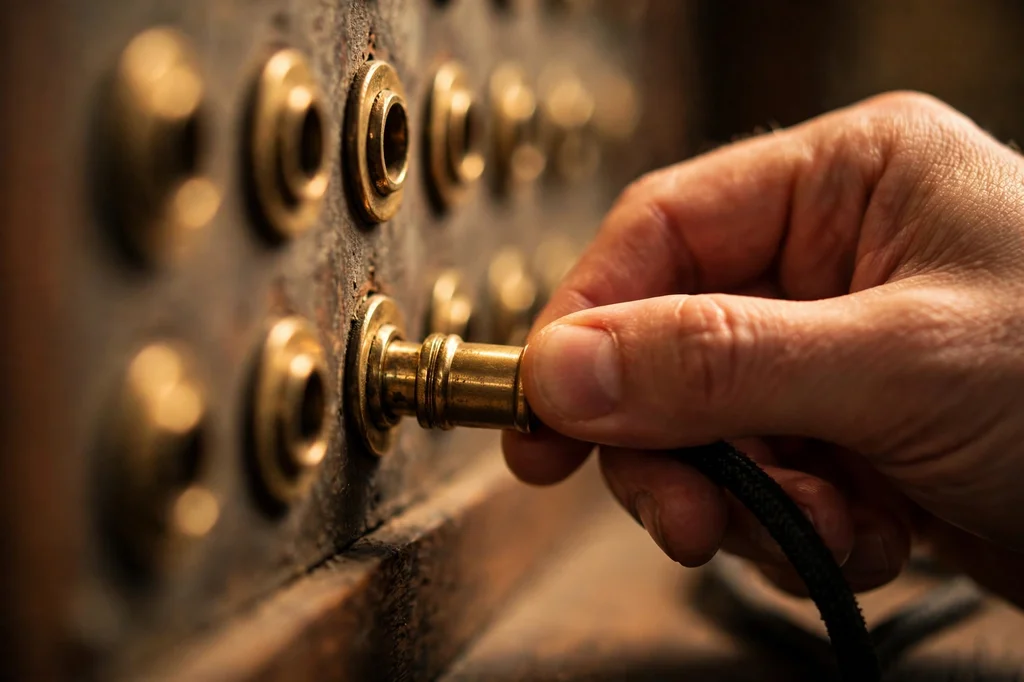
The switchboard doesn’t travel. It sits at the center and completes circuits.
Person A needs person B. They don’t know each other, or they know each other but the timing’s never been right, or they need a reason to trust the connection. You make the introduction. The circuit lights up. Value flows — a deal, a job, a partnership — and you were the reason it flowed.
Then you do it again. And again. Every completed circuit makes you more central, because both sides remember who lit it up. The next time A needs someone, they call you first. The next time B has an opening, you hear about it before anyone else.
Wealth denominated in access
Money is one currency. Access is another — and it compounds faster.
A fee gets spent. Access gets reinvested automatically: every circuit you complete buys you the next one. The seat at the table, the early phone call, the “hey, before I talk to anyone else” — that’s wealth, denominated in something no bank tracks and no competitor can undercut.
Travelers collect miles. Switchboards collect circuits. When the map gets big enough, the switchboard is the most valuable thing on it — because every traveler eventually needs a connection they can’t make themselves.

Why it works in this trade
Restoration runs on trust and timing. The right adjuster, the right contractor, the right facility manager, at the right moment — that’s the whole game. Nobody can hold all of it. The territory is too big, the relationships too many, the timing too tight.
So somebody has to be the one who knows who to call. Not the one who does every job — the one who knows who should. The trade doesn’t need another traveler. It needs the switchboard.
The discipline
A switchboard has three obligations, and they’re non-negotiable:
Be neutral. You don’t take sides in the circuit — you complete it. The moment an introduction serves you more than the two people you’re connecting, the switchboard starts corroding. People can feel a self-serving connector within minutes.
Be reliable. Answer. Remember. Follow through. The switchboard that drops circuits gets routed around, and routing around is permanent.
Be fast. A connection delayed is a connection denied. Timing is half the value — the right introduction at the wrong time is just a nice conversation.
And one more, the quiet one: never make the introduction about you. The light belongs on the circuit, not the switchboard. Your name comes up because the connection worked, not because you announced it.
The close
I didn’t set out to be the switchboard. I set out to be useful — and usefulness, compounded over enough years and enough people, turns into a position at the center of the map.
The travelers will always have the miles. I’ll keep the circuits.
If you’re building something, ask yourself which one you are. There’s no wrong answer — but there’s a wrong assumption, which is thinking you’re the traveler when you’re actually the switchboard, or vice versa. Know which one you are. Then be it on purpose.
Leave a Reply