AI Search Authority - Tygart Media

Category: AI Search Authority

GEO, AEO, and llms.txt: how a brand gets cited in Perplexity, ChatGPT, Claude, and Google AI Overviews.

  • Six in Seven AI Answers Never Look Anything Up

    Six in Seven AI Answers Never Look Anything Up

    Most of what an AI answer says about your business was never looked up. It was remembered — or invented in the shape of a memory. Ahrefs put a number on that in a study published October 12, 2026: across 66.6 million free, logged-out ChatGPT responses from August and September 2026, a web search ran in only 14.4% of them. Six in seven answers were written without checking anything.

    That single fact reorganizes the work. If the answer usually comes from what the model already carries, then being findable is only half the game. The other half is being known — and, for the one answer in seven where the engine does go looking, having the fact it needs sitting in plain text on your own domain, where it looks first.

    The search, when it happens, is narrow

    The same study logged 15 million fan-out queries — the searches ChatGPT issues behind an answer when it decides to search at all. A searching response ran about 1.6 of them on average. This is not a research department fanning out across the open web. It is a quick, targeted check, and the targeting is the story.

    6.8% of those fan-out queries used a site: operator to search one specific website, spread across roughly 116,000 domains. Among the most common of those targeted searches, 75.9% pointed at a brand’s own site — not a retailer, not a forum, not a review aggregator. When the engine wants a price or a specification, it goes to the company that sells the thing.

    The vocabulary inside the queries leans the same way. The word “official” appeared in 13.1% of English fan-out queries in September 2026, up from 10.1% in August. “Price” climbed from 6.04% to 8.88% of fan-outs in the same month — a relative rise of nearly half. The engine is increasingly searching for the authoritative version of a fact, and the facts it most wants are commercial ones: what it costs, what it includes, what the official page says.

    Facts go home; comparisons wander

    Ahrefs paired the fan-out data with a separate test of 20,000 US prompts, and the split inside it is worth keeping separate in your head, because it is a different instrument from the 66.6 million. In that test, 84.4% of factual questions — pricing, product features, company details — cited at least one official source. For factual questions, 63.4% of all citations pointed at official websites. For comparison questions (“A vs B,” “which is cheaper”), the official share fell to 46.4%: most citations went somewhere else.

    Read together, the two datasets describe one behavior with two modes. Asked for a fact, the engine goes home to the source. Asked to judge, it goes out to the crowd. An operator cannot control the judging mode. The fact mode is entirely winnable: it is won by having the fact, in the open, on the domain the engine already searches by name.

    The playbook that follows

    Publish the price, the spec, and the support fact in plain text on your own domain. Not in a PDF the crawler has to excavate, not inside a configurator, not implied by a sales page’s adjectives. The fan-out query literally contains the words “official” and “price” — it is asking for a page that states the number. Whoever states it cleanly gets cited for it.

    Publish the pages only you can publish. Your measured results, your actual process, your own numbers with dates on them. A summary of somebody else’s facts competes with the original; the original is what the engine is learning to prefer (the citation movement below shows how far that preference has already moved).

    Treat fan-out queries as an instrument of their own. The queries an engine issues about your category — which words it adds, which domains it targets, how that shifts month to month — are a measurement channel separate from citation counts. Watch them separately. We grade the flight recorder, not just the answer, for the same reason: the queries show the intent; the answer only shows the outcome.

    Never blend two dashboards into one story. The 14.4% comes from 66.6 million free logged-out responses. The 84.4% comes from a different, 20,000-prompt test. The citation movements in the next section come from a third cut again. Each number is true inside its own denominator and misleading outside it. This is the same discipline we run on our own visibility work: being cited is not being chosen, and being measured is not being measured the same way twice. Our running instrument for the citation side is the Citation Pulse.

    The second movement: summarizers are losing

    Ahrefs’ Brand Radar citation data for the US — 2.4 million ChatGPT answers in March 2026 against 3.8 million in September, a different dataset from the fan-out study above — shows where the citations went. Reddit fell from roughly one citation in every five answers in March to about one in 43 by late September. Wikipedia fell from one in seven to one in 35. The share those summarizers and forums lost moved to research bodies, regulators, brand and support pages, and hands-on testers. On a matched set of about 25,000 prompts present in both months, every tracked site moved in the same direction, so the shift is not an artifact of new questions entering the sample.

    For an operator, that is the durable part of the whole study. The memory answers reward whoever the model already knows. The searching answers reward whoever publishes the primary fact. The citation trend rewards the originator over the summarizer. All three roads end at the same address: your own domain, carrying your own facts, in plain text.

    The same citation movement, read for hospitals and the firms that build for them — why clinical and facility specifications now have to live as primary documents — is on Healthcare Facility Hub: The Citation List Is Moving Toward the Source Document.

    Sources: Ahrefs, “How ChatGPT Does Query Fan-Out” (October 12, 2026) — fan-out dataset (66.6M responses, 15M queries, Aug–Sep 2026), the 20,000-prompt official-source test reported in the same article, and the Brand Radar US citation comparison (2.4M answers March 2026; 3.8M September 2026). Each figure above is stated with the dataset it came from; the three are not interchangeable.


  • What does AEO reporting actually show?

    An honest AEO report shows four things: the exact questions that were asked, the answers the assistants actually gave, which businesses and pages those answers cited, and how all of it changed since the last run. AEO reporting is the scheduled record of those four things, kept the same way every time. Anything that cannot show you the four is showing you a mood, not a measurement.

    What questions were asked?

    A real AEO report prints its question set in full, word for word. The questions are the foundation of the whole report: they should be your customers’ real questions, fixed in advance, and identical from run to run. A citation count means nothing until you can see the questions it was counted on.

    This is where reports quietly cheat. Swap the questions between runs and every comparison is fiction — you improved because the test got easier. Add a question you already win and the average climbs without a single answer changing. Ask for the set in writing before the first run, and treat any later change to it as a new baseline, announced as one. A short set of real questions, held steady, beats a long set that wanders.

    What did the AI actually say?

    A real AEO report keeps the raw answers, not summaries of them. The answer text is what your customer actually reads — the names in it, the order they appear, the words around them. A summary written by the provider can only tell you what the provider noticed. The raw answer lets you check.

    Summaries hide the losses. A run where you were cited on nine questions and dropped on the tenth, hard, reads as “visibility strong” in a summary and as a work order in the raw text. Keep the full answers, dated, for every run. They take almost no space, they cannot be reconstructed later, and they are the difference between having evidence and having a recollection.

    Who got cited?

    A real AEO report names the citations for every question: which businesses the answers credited, which pages of theirs did the work, and what share of the citations on each question went to whom. The citation list is the most useful page in the report. It converts “we are not visible” into a named list of exactly who the machines trusted instead, question by question.

    Read it as a work list, not a wound. When one restoration client of ours kept losing a question to the same competitor, the citation list showed the competitor’s page the assistant kept crediting — a page that answered the question in the customer’s own words, in the first paragraph. That is a specific, fixable problem, and it was invisible in every summary number we had. Your citation share — your slice of the citations on your questions — is the one summary figure worth tracking, because it is arithmetic on the list, not an opinion about it.

    What changed since last time?

    A real AEO report is built to compare: this run against the last, same questions, with the differences stated plainly and the work done in between written next to them. Answers churn — the same question, asked next month, can name different businesses with nothing changed on either side. An honest report says so, and reads movement over several runs instead of celebrating or mourning a single one.

    The work log belongs inside the report for one reason: without it, you cannot tell your work from the weather. “We rebuilt the profile and published two answer pages in March; citations on those questions rose across the April and May runs” is knowledge. The same rise with no log behind it is luck you will try to repeat blind. If your provider’s report never mentions what they did between runs, ask why their work and their results live in separate documents.

    What does a horoscope report look like?

    A horoscope report shows a single score with no questions behind it, percentages with no counts under them, and screenshots of the one good answer from a good day. It changes its questions when the results are inconvenient, reports only the wins, and always finds that things are improving and that more budget would improve them faster. It feels good, commits to nothing, and cannot be checked.

    The test is simple. Pick any number in the report and ask: on which questions, from which answers, counted how? A real report answers in one step, because the number came from a list it can show you. A horoscope report answers with another number. We call them horoscopes because, like the ones in the paper, they are written to be agreeable about the future and impossible to grade about the past.

    How often should you read an AEO report?

    Read AEO reporting on a rolling cadence — monthly is a sane default — and never daily. AI answers move day to day with nothing changed, so daily reading is noise-chasing: it manufactures urgency, spends your attention, and teaches you to react to weather. What is worth reading is the run-over-run trend, and the first run after real work has had time to settle.

    Reading it should end in a decision, or the reading is decoration. The standing decision a good report sets up is small: which questions is a competitor cited on that we are not, and what is the missing answer we should write next? Our AI Citation Quick-Scan is this artifact in its smallest honest form — 10 prompts about your service line, the answers recorded, the citations named, a scored report within 7 days, $97, one time.

    Which lines the platforms lift is their call. We build the material they lift from — and then we measure what they did.

  • How do you measure AI search visibility?

    Updated November 2, 2026 — added direct answers on visibility metrics and AI search share of voice, from our own published measurement.

    You measure AI search visibility with two kinds of tools: the reports the platforms publish about their own answers, and trackers that ask the assistants your customers’ questions on a schedule and record who gets named. The platform reports show who the platform cited. The trackers show what an assistant answered when asked. A buyer who knows which tool shows which thing can read either one honestly.

    What does “visible” mean in an AI answer?

    An AI answer can mention your business, cite your business, or recommend your business, and those are three different measurements. A mention means your name appears in the answer text. A citation means the answer credits your page as a source. A recommendation means the assistant names you as the choice. Every tool below reports some mix of the three, under its own labels.

    The distinction decides what a number is worth. A mention can be one name in a list of eight. A citation means the platform read your material closely enough to credit it — that is the receipt that survives. A recommendation is the strongest outcome and the least common. When a tool shows you one big “visibility” number, the first question is which of the three it counted.

    What metrics matter for AI search visibility?

    Traditional search metrics like keyword rank and search volume do not apply to AI assistants. A complete measurement framework tracks five distinct metrics, as established in our guide to measuring LLM visibility and our three-layer visibility measurement framework:

    • Citation frequency: The total number of times your domain or brand is cited as a source in AI-generated answers over a measured window.
    • Prompt coverage: The percentage of your sampled buyer queries where your brand or content appears anywhere in the output.
    • Share of voice: The proportion of citations your domain earns on a specific prompt set compared to named competitors.
    • AI referral traffic: The volume of qualified sessions arriving on your site from AI platforms, tracked via custom GA4 channel groups.
    • Citation-assisted conversions: Inquiries, form submissions, and booked jobs that originate from or touch an AI search session.

    What is share of voice in AI search?

    Share of voice in AI search—also termed share of authority—is the percentage of total citations awarded to a specific domain across a fixed set of prompt tests. Unlike a simple citation count, share of voice measures your presence relative to every other source cited for the same queries.

    Consider a live worked example from Tygart Media’s own tracking on November 2, 2026. Across a Clarity measurement run evaluating the topic “AI citation rate measurement” (101 total citations distributed across approximately 50 competing domains), the single leading domain captured 8.91% of citations (9 citations). Tygart Media earned a 0.99% share of authority (1 citation). In an emerging, fragmented AI search topic where no single authority owns the category, tracking share of voice across recurring runs reveals whether your content is steadily accumulating citations or losing share to competing domains.

    What does Bing AI Performance show?

    Bing AI Performance is Microsoft’s free first-party report, and it shows what the assistants built on Bing actually cited. The report organizes citations four ways: Intents, Topics, Citation Share, and Compare. It is the platform grading its own homework — the most direct evidence a buyer can get, and a view of exactly one surface.

    The four views answer four plain questions. Intents shows the kinds of things people were trying to do when your pages got cited. Topics groups those citations by subject, so you can see which of your subjects the machines trust. Citation Share shows your slice of the citations on a topic against everyone else cited there. Compare puts two date ranges side by side, so a change shows up as a change and not a feeling.

    Our own report is the example we read every month. For tygartmedia.com, our Bing AI Performance report covering six months of Microsoft Copilots and partners shows 1.5M total citations across an average of 164 cited pages. We read that as our footprint on one measured surface — proof the surface can be measured, and a baseline to compare the next run against. It says nothing about any other platform, and it is not a promise about any other business.

    What do third-party visibility trackers show?

    Third-party trackers are subscriptions that ask a fixed set of questions to the major assistants on a schedule and record the answers. A tracker shows mention rates, citation rates, and competitor shares across several surfaces at once. What it sells is a trend line across platforms, built from sampled asks — not a record of what any real customer saw.

    The honest advantages are real. A tracker sees surfaces the first-party reports cannot, because each platform only reports on itself. A fixed question set, asked the same way each run, produces runs a buyer can actually compare. Competitor context comes built in, and in a contested market that context is the point.

    The limits are just as real. The tracker asks its questions, on its schedule, from its accounts — your customers ask differently, locally, and once. Small question sets get reported as precise percentages, and a two-question swing can dress itself up as a trend. And the subscription runs whether you read it or not. A tracker earns its money in a competitive market with several assistants in play, read monthly by someone who acts on it. Everywhere else it is an expensive screensaver.

    What can no tool tell you?

    No tool can tell you what a specific customer saw, whether a mention became a phone call, or why an assistant chose a competitor. AI answers vary by person, place, and moment, and the platforms do not publish their reasoning. A tool shows outputs. The cause behind an output is still the buyer’s work to figure out.

    Sit with that limit before you buy anything, because it is where the honest tools end and the salesmanship starts. No report closes the gap between “the assistant named us” and “the phone rang” — that gap closes with call tracking and asking customers how they found you, unglamorous as that is. A provider who sells you certainty across that gap is selling you the gap.

    Which tool should a buyer start with?

    A buyer should start with the free first-party report for the surface their customers actually use, and add a tracker only when they need a cross-platform trend and will read it monthly. The tool matters less than the discipline behind it: a fixed set of your customers’ questions, asked before the work and after, with the raw answers kept. Any tool run that way beats a better tool run casually.

    Most small businesses find the first-party report is enough to start, because it answers the only question that changes what they do next: on the questions my customers ask, who does the machine name — and is it me? If you want that first measurement done by hand instead, our AI Citation Quick-Scan asks 10 prompts about your service line and returns a scored report within 7 days — $97, one time.

    Which lines the platforms lift is their call. We build the material they lift from — and then we measure what they did.

  • Which AI SEO services are right for a small business?

    The right AI SEO services for a small business are the ones matched to where your customers actually ask questions. For most local service businesses, that means three things, in order: a business profile the machines can read, answer pages on your own website written the way customers ask, and a scheduled check that shows who the machines name.

    What are AI SEO services?

    AI SEO services are services that make a business readable to AI answer engines. A traditional search engine returns a list of links; an AI assistant returns an answer, and it names the businesses it can read clearly. AI SEO is the work of giving those systems clean material — profiles, pages, and consistent facts — to name you from.

    The category is new enough that the label covers very different work. One provider’s “AI SEO” is a rebuilt Google Business Profile and a page of real answers. Another’s is a software subscription and a monthly PDF. The sections below separate the kinds, so you can buy the work instead of the label.

    What kinds of AI SEO services are there?

    AI SEO services come in five kinds: listing and profile work, answer-page writing, citation cleanup across directories, one-time audits that measure where you stand, and ongoing retainers that bundle all of it. Most small businesses need the first three once, the audit before and after, and a retainer only when the market moves fast.

    • Profile work builds the listings machines read first: Google Business Profile on Google’s side, Bing Places on Microsoft’s — the listing Copilot and the assistants built on Bing read from.
    • Answer-page writing puts pages on your own website that answer customer questions in customer language, in passages short and plain enough to be quoted.
    • Citation cleanup makes your name, address, phone, and services agree across directories and aggregators — Yelp, Foursquare, Apple Maps, Angi, and the data feeds behind them.
    • Audits and scans measure the starting point: a fixed set of questions, asked before the work and after, with the answers kept.
    • Retainers bundle the above into monthly work. They fit businesses in fast-moving markets; they are a poor fit for one-time fixes billed forever.

    How is AI SEO different from traditional SEO?

    Traditional SEO earns a position on a list of links; AI SEO earns a mention inside an answer. The list rewards the page; the answer rewards the clearest source. Both run on the same foundations — a readable website, consistent business facts, reviews, and real expertise — but the AI layer reads quotable passages, not just pages.

    That difference changes what good work looks like. A page stuffed with keywords can rank and still never be quoted, because there is no clean passage to lift. A plainly written answer — the question as the heading, the answer first, the detail after — gives an assistant something it can repeat word for word. Traditional SEO is not replaced by this; it is the floor it stands on.

    What should a small business buy first?

    A small business should buy in the order a customer asks. First, the profile a machine reads when someone asks for your trade nearby — your Google Business Profile and your Bing Places listing. Second, answer pages on your own site. Third, a measurement check. Software subscriptions and content volume come last, if at all.

    The order matters because the surfaces compound. An assistant answering “who does this work near me” starts from profiles and listings, then checks what your website says. A beautiful website behind an empty profile is invisible at the first step. A strong profile pointing at a website with no answers gives the machine nothing to quote. Buy the chain in order and each link makes the next one worth more.

    How much do AI SEO services cost?

    AI SEO services are sold three ways: one-time builds, monthly retainers, and small diagnostics. The honest difference is not the label but what you can hold afterward — a finished profile and pages you own, or a report you can re-run. Any price is too high for work you cannot inspect when it is done.

    Price follows scope: number of locations, number of services, number of towns you serve. What should make you careful is shape, not size. One-time work — a profile build, an answer page, a listing cleanup — should carry a one-time price. Monthly money should buy monthly work you can name: new questions tested, new answers written, changes logged. If a provider cannot tell you which of your dollars are one-time and which recur, that is the answer to whether to sign.

    What questions should I ask an AI SEO provider before I pay?

    Ask an AI SEO provider five questions before you pay: What exactly will exist when you are done? Which questions will you test, and can I see the answers before and after? What do you not control? What does the work cost once, and what recurs? Who owns the pages and profiles afterward? Ask us the same five.

    Each question has a tell. “What will exist” should produce a list, not adjectives. “Which questions” should produce your customers’ actual questions, written down. “What do you not control” is the honesty test — no provider controls which businesses an assistant names, and one who promises a ranking is telling you how the rest of the engagement will go. Ownership is the quiet one: profiles and pages built on your accounts, in your name, stay yours if you leave. Anything else is rent.

    What proof should an AI SEO service show me?

    An AI SEO service should show you a named report, a date range, and the questions it tested — not a screenshot of a ranking. On our own site, the proof habit looks like this: our Bing AI Performance report for tygartmedia.com, covering six months of Microsoft Copilots and partners, shows 1.5M total citations across an average of 164 cited pages.

    Read those numbers the way we do. They are our own footprint on one measured surface — evidence that the measurement exists and that we live under it — not a promise about your business. AI answers also churn: the same question asked next month can name different businesses, which is why honest proof is a before-and-after on your questions, re-asked on a schedule, with the raw answers kept. A provider who shows you their own numbers should be just as willing to show you yours.

    Can I do AI SEO myself?

    Yes — the free layer of AI SEO is real work any owner can do: claim and complete your Google Business Profile and Bing Places listing, write your services in plain language, and answer your customers’ common questions on your own site. What you pay a provider for is the audit discipline, the writing time, and the measurement habit.

    Be honest with yourself about which of those three you will actually do. The profile most businesses already “have” is a name, a pin, and hope — claimed years ago and never finished. The knowledge is not the scarce part; the finished, checked, written-down work is. If you will do it yourself, the sections above are the whole recipe, in order, and they will work the same for you as for us.

    Where does our own offer fit?

    If you want to know where you stand first, our AI Citation Quick-Scan runs 10 prompts about your service line and returns a scored report within 7 days — $97, one time. If you want the build done, the Ask Maps Protocol is our version: $450, one time — a mobile-first audit of how your listing actually renders, your Google Business Profile rebuilt for answers, an FAQ answer page on your website, your Bing Places listing claimed and matched, and a 30-day proof check.

    Which lines the platforms lift is their call. We build the material they lift from — and then we measure what they did.

  • Review Count Is Dead: The Reputation Graph Killed It

    Review Count Is Dead: The Reputation Graph Killed It

    A water-damage company with 47 reviews just got recommended by ChatGPT over a competitor with 462.

    Read that again. Four hundred and sixty-two reviews. Ten times the social proof. And the AI picked the little guy.

    If you spent the last decade collecting reviews like they were votes, this should rattle you. It should also clarify everything, because the game didn’t just change — it ended, and a new one started while nobody was watching.

    From ranking to matching

    The old game was a scoreboard. Most reviews wins. Biggest ad budget wins. Best SEO agency wins.

    The new game is a matchmaker.

    In June 2026, OpenAI rolled out a memory system (they call it Dreaming) that quietly builds a living profile of you — your chats, your Gmail, your files — and uses it to shape every answer. It’s on by default. Two people asking ChatGPT the same question now routinely get different answers, because the AI knows different things about each of them.

    Google’s doing the same thing from the other direction. AI Overviews don’t give you a ranked list of ten businesses anymore. They name two or three. Fourth place doesn’t get a consolation mention — it gets nothing. And here’s the number that should end the argument: only about 26% of the businesses sitting in Google’s top-3 map pack even appear in Gemini’s responses. You can win the map pack and still be invisible to the AI.

    So the question was never “who has the most reviews.” The question is “who is the best fit for this person,” and the AI is answering it with information you can’t see.

    The dinner test

    Here’s how I explain it to myself.

    Tonight I walked to a little family-run Thai place instead of ordering from a chain. No ad convinced me. No review count swayed me. The tools just… knew. They knew I’d rather have the local place with the great green curry than the heavily advertised alternative.

    A cozy family-run Thai restaurant glowing warmly at dusk while a chain restaurant sign looms in the background
    The tools know you’d pick the local place. No ad budget changes that.

    That’s what happened with the 47-review company. The AI didn’t count stars. It matched a person — their history, their preferences, the pattern of what “good” looks like to them — against the businesses it knew. And the little guy fit better.

    Panda Express can outspend everybody. It doesn’t matter. When the tool knows you better than the ads do, the ads stop working on you.

    Why the count stopped mattering

    It’s not that reviews don’t matter. They do — review signals have actually grown to about 20% of local ranking weight. But count was always a proxy for trust, and the AI doesn’t need the proxy anymore. It reads the reviews. It summarizes the sentiment. It checks whether your website says the same thing your Google profile says. It looks at whether your story is consistent across fifteen, twenty, thirty sources — or whether it falls apart the moment it leaves your homepage.

    A thousand bought or begged reviews with thin sentiment lose to fifty detailed ones that all say the same specific true things. The AI can tell the difference. It literally summarizes them.

    What actually wins now

    A local contractor business at the center of a glowing reputation graph, with a pile of disconnected review stars off to the side
    The reputation graph: every signal connected, telling one consistent story.

    The playbook isn’t complicated, but it’s unforgiving:

    • Complete your profile like it’s the product. The AI reads your Google Business Profile as a primary source. Empty fields are silence, and silence doesn’t get cited.
    • Recency and sentiment over volume. A steady stream of real, specific reviews beats a pile of old five-stars.
    • Say the same true thing everywhere. Your website, your profile, your directories, your socials — one consistent story, confirmed in many places. Contradictions are how you disappear.
    • Structure your data. Schema markup is how the machines read you. It’s not optional anymore; it’s the difference between being understood and being skipped.
    • Be genuinely good. This is the one nobody wants to hear. The tools are getting better at knowing what “good” looks like for each person, which means there are fewer places to hide. You can’t buy your way into a match. You have to be the answer.

    The honest caveat

    I want to be straight about what we know and what we don’t. Nobody outside these companies can see exactly how the personalization works — one researcher called it “a synthesized profile that neither the user nor the brand can fully see.” That’s the truth of it. We’re reading the outputs and working backward.

    And the social-graph part — your friend’s Facebook comment tipping a recommendation — is directionally right but the mechanics differ by platform. Google has the cross-product graph: YouTube, Maps, Gmail, Android. Meta’s AI has the actual social graph. ChatGPT works mostly from your own data. The destination is the same everywhere: the recommendation gets personal, and the personal is opaque.

    Less places to hide

    That’s the line I keep coming back to. Less places to hide.

    For years you could paper over a mediocre operation with review velocity, ad spend, and SEO tricks. The machines are taking those tools away — not out of virtue, but because matching works better than ranking, and the platforms all figured that out at once.

    What’s left is the oldest marketing strategy there is: be good, be consistent, and make sure the machines can see it.

    The 47-review company didn’t beat the system. It was the system working as designed. The question is whether you’re building a business the new system can see — or still optimizing for the old scoreboard.

  • All My Reviews Just Say ‘Great Service’ — Do the Words in My Reviews Matter to AI?

    Short answer: Yes — the words matter more than the stars. When someone asks for “a reliable plumber who handles emergency leaks,” the AI recommends the business whose reviews keep saying “quick response” and “emergency repair” — not the one with fifty generic five-stars. Review text is the evidence the bot quotes. A wall of “great service” gives it nothing to quote.

    How the bot actually uses your reviews

    Think about what the AI is doing when it answers “who should I call.” It’s matching the words in the question to evidence it can find. If the question asks for emergency leak help, it looks for businesses with evidence of emergency leak help. And the richest source of that evidence isn’t your website copy — it’s your customers describing what you did, in their own words.

    One analysis of business profiles in AI search put it directly: “If a user asks for a ‘reliable plumber who handles emergency leaks,’ the AI will likely recommend a business whose reviews frequently mention ‘quick response’ and ’emergency repair’ over a business that simply has those terms in its meta description.” Businesses with specific, keyword-rich testimonials get cited more often than businesses with generic five-star ratings and no text.

    A review-industry breakdown this month named vague reviews as one of the three mistakes sending customers to competitors: “great service” instead of “same-day AC repair in Phoenix.” And review audits keep finding the same thing — AI answers quote review text verbatim. Your customers’ words become the bot’s answer.

    The star-rating trap

    Most owners chase stars. Stars are visible, countable, and feel like the scoreboard. But a five-star rating with no text tells the AI almost nothing — it’s a number without a story. Forty detailed reviews at 4.8 stars will beat a hundred empty five-stars, because the detailed reviews give the bot something to match against the question and something to quote in the answer.

    This is also why review platforms matter less than review content here. The question isn’t just where your reviews live — it’s whether the words in them describe the work you actually want to be recommended for.

    The review-request script (free, repeatable)

    You can’t write your own reviews. But you can ask for better ones — and most owners never do. After a job, when the customer is happy, ask them to mention two things: what you did and where. That’s it.

    “If you have a minute to leave a review, it really helps when folks mention the job — like the water heater swap — and the town. Just a sentence is perfect.”

    That’s the whole script. You’re not scripting fake reviews or stuffing keywords — you’re asking real customers to include the specifics they’d naturally mention anyway. “Mike replaced our water heater the same day it died, here in Mesa” is a quotable piece of evidence. “Great service!!” is not.

    What to actually do about it

    • Read your last twenty reviews. Count how many mention a specific job or a specific town. If the answer is “almost none,” you have the generic-review problem.
    • Start the two-thing ask this week. What you did, and where. Every finished job, every happy customer. It compounds.
    • Don’t neglect the unhappy ones. A detailed critical review is still evidence the bot reads — respond to it well, and the response becomes part of the record too.
    • Keep it honest. Never write reviews yourself, never pay for them, never hand customers pre-written text. The specifics have to be real — fabricated detail is both against every platform’s rules and, increasingly, detectable.

    What’s actually known — and what’s not

    Known: AI answers quote review text verbatim, and businesses whose reviews describe specific jobs in specific places get cited more often than businesses with generic ratings. The review-request script — ask for the job and the town — is a free, ownable fix no competitor can block.

    Not known: nobody has published a controlled test measuring naming rate against review-text specificity for trades businesses — the evidence is observational and mechanism-level, not a measured curve. What’s missing is someone running the test: same market, similar star counts, specific-text versus generic-text reviews, measured naming rates. That’s a test worth running.

  • Do I Have to Get on Those ‘Best Plumber in [City]’ Lists for ChatGPT to Recommend Me?

    Do I Have to Get on Those ‘Best Plumber in [City]’ Lists for ChatGPT to Recommend Me?

    Short answer: You don’t have to pay the directories — but you do have to be mentioned. When someone asks ChatGPT “who should I call,” the pages it reads are mostly the ones that rank for that question, and those are usually “best of” listicles. Businesses that show up in the two or three listicles ranking on Bing for their trade and city get named. Businesses with no mentions anywhere get named in only 2.8% of relevant answers.

    The numbers behind the listicles

    This isn’t a hunch — it’s measured:

    • “Best of” list articles account for roughly 21% of all AI citations (arXiv 2606.20065).
    • Brands with no citations on their own site and no mentions elsewhere were named in only 2.8% of relevant ChatGPT answers — across a 34,960-prompt study (arXiv 2609.23162).
    • One agency’s check of ChatGPT answers found 95% pointed to a directory as the source.

    A Bend, Oregon owner’s check this month put it in plain terms: the pages ChatGPT reads are “mostly the ones that rank for the query and the ones that list or compare providers.” A Bend plumber sitting in the two or three “best plumbers in Bend” lists that rank on Bing is far more likely to be named than one whose only mention is their own homepage.

    Why this feels unfair (and partly is)

    Contractors resent listicles and directories as pay-to-play machines, and they’re not wrong to be suspicious. The directories sell placement, sell leads, and sell ads against the very searches you want to win. Being told “the bot reads the listicle” can sound like being told to feed the beast.

    But there’s a difference between paying the directories and being listed on them. Most “best of” pages have free listing paths. The bot doesn’t know or care whether you paid — it cares whether your name, trade, and town appear on a page that ranks for the question being asked.

    The misfire side: listicles can get you wrong

    A Plant City plumber’s owner-written FAQ documents the other edge of this: “A ‘serves Plant City’ line on a directory can mean a truck that drives over from another metro when the board has a gap.” His shop is headquartered in Plant City; the listicles hand the town to whoever bought the line. If you’re not watching your directory listings, the listicle isn’t just ignoring you — it may be actively mislocating you.

    What to actually do about it

    • Find your two or three. On Bing, search “best [your trade] in [your city]” the way a homeowner would. The listicles that rank are the ones the bot reads. That’s your list — not fifty directories, just the two or three that actually rank.
    • Get listed on the free path. Claim or create the free listing on each. Fill it out completely: services, service area, phone number, website.
    • Keep your facts identical everywhere. Same business name, same phone number, same towns on every listing and your own site. Conflicting facts are how you get skipped — or misdescribed.
    • Fix wrong information. If a listicle has your old phone number, the wrong town, or a competitor’s truck on your line, correct it. The bot quotes what’s there.
    • You don’t need the ads. Paid placement on a directory is a separate purchase from being listed. The citation evidence comes from the listing, not the ad spend.

    What’s actually known — and what’s not

    Known: listicles and directories are a major citation source for AI answers — roughly a fifth of citations, and near-total absence from them collapses your naming rate to single digits. The fix is getting accurately listed on the few that rank, not buying your way onto all of them.

    Not known: exactly which listicles any given engine prefers for any given trade and city — that shifts with rankings. Nobody has published a per-market map of “these three listicles decide the plumber answers in Phoenix.” The practical move is checking your own market’s rankings directly, because that’s what the bot is reading today.

  • I Don’t Do Bing — Am I Invisible to ChatGPT?

    I Don’t Do Bing — Am I Invisible to ChatGPT?

    Short answer: Mostly, yes. When ChatGPT goes looking for live information on the web, it searches through Bing’s index — not Google’s. If your business isn’t indexed by Bing and isn’t claimed on Bing Places, ChatGPT’s live-search layer has no way to find you. Everything you built on Google — your rankings, your reviews, your Google Business Profile — doesn’t transfer to that layer.

    Why your Google work doesn’t carry over

    This is the part that stings. You spent years — maybe money, too — getting your Google presence right. Then a homeowner asks ChatGPT who to call, and none of it counts. That’s because ChatGPT reaches the open web through Microsoft’s Bing search infrastructure, not Google’s. One agency put it bluntly in a widely syndicated piece this year: “It Runs on Bing, Not Google.” A contractor who invested everything into Google rankings and ignored Bing Places is, in their words, essentially invisible to ChatGPT’s search layer.

    An SEO vendor’s FAQ answers the owner version of this question directly: “Should I optimize for Bing if I already rank well on Google? Yes, ChatGPT uses Bing’s index when browsing the web. If you’re not indexed in Bing and listed in Bing Places, ChatGPT cannot find your business.”

    What it looks like in practice

    A Vienna-based test from October 2026 ran the scenario end to end: someone asked ChatGPT to recommend an installer in Vienna. ChatGPT searched live via Bing, returned three competitors — and marked the tester’s own firm “NICHT DABEI” (not there). The firm wasn’t failing at marketing. It was failing at being in the index the bot actually reads.

    A Bend, Oregon owner’s check the same month found the same shape: the competitor who gets named is the one who ranks on Bing for the question being asked. Your Google position never enters the picture.

    The “my SEO guy says we’re covered” myth

    If your SEO provider tells you your Google work covers you for AI search, ask them one question: when did you last check my Bing presence? Google-only SEO is a real thing — plenty of shops do excellent Google work and never touch Bing, because for a decade that was a defensible call. It isn’t anymore. The AI layer that now sits between the homeowner and the phone call reads a different index, and “we’re covered” without a Bing check is a guess.

    What to actually do about it

    The good news: this is a five-minute fix, not a six-month project.

    • Claim your Bing Places listing. It’s free, it’s separate from your Google Business Profile, and it’s a real listing that feeds ChatGPT’s search layer. Most contractors have never claimed theirs.
    • Check whether Bing has indexed your site. Search site:yourwebsite.com on Bing. If nothing comes up, Bing doesn’t know your site exists — and neither does ChatGPT’s browsing layer.
    • Set up Bing Webmaster Tools. Free, takes minutes, and shows you exactly what Bing sees (or doesn’t).
    • Keep your facts identical everywhere. Same business name, same phone number, same service area on your site, Bing Places, and Google Business Profile. Mismatched facts are how businesses get misdescribed or skipped.

    What’s actually known — and what’s not

    Known: ChatGPT’s live web browsing runs on Bing’s search infrastructure. Bing Places is a real business listing that feeds that layer — unlike the mythical “ChatGPT business registry,” which doesn’t exist. Contractors who are Google-only are structurally invisible to ChatGPT’s search layer until they fix their Bing presence.

    Not known: exactly how much weight Bing Places carries versus organic Bing rankings in any given answer, or how often the underlying data refreshes. Nobody has published a controlled test of “claimed Bing Places on this date, started appearing on that date” for trades businesses. The mechanism is well-evidenced; the precise timing isn’t.

  • The Mailbox Is a Trigger. It Is Not a Topic.

    The Mailbox Is a Trigger. It Is Not a Topic.

    Short answer: a mailbox can start a publish job. It cannot choose the topic. If the incoming message is a digest, a rumor chain, or a subject line that would embarrass the brand, the correct article is not a reprint. The correct article is the gate.

    Tygart Media sits in Tacoma, Washington. The public site is an operator desk for AI-native content systems, restoration operations, and the search surfaces that now sit between a shop and a buyer. Those surfaces include classic Google results (SEO), answer engines that quote a paragraph as evidence (AEO), and generative engines that assemble a local picture of who you are (GEO). None of them are helped by publishing whatever landed in will@tygartmedia.com at 7:44 p.m.

    What is a source-fit gate?

    A source-fit gate is the first checklist in an inbox-triggered pipeline. It asks one question before outline, slug, schema, or Rank Math title: does this source belong on this domain?

    The test is not “is the subject loud.” The test is whether a contractor in Everett, a facility manager in Tacoma, or an answer engine citing tygartmedia.com would be right to treat the page as evidence. If the source is a third-party digest of celebrity gossip, political rumor, medical anecdotes, and crime blurbs, the source fails. Publishing it as news would contaminate the entity the site has spent years teaching search systems to recognize.

    That is the same instinct behind the $5 filter: would anyone pay to pipe this feed into an assistant as a trusted source? A mailbox firehose would fail that filter on most nights. The gate exists so the firehose does not become the catalog.

    What Sunday night’s mailbox actually contained

    The trigger for this piece was a Quora Digest addressed to the work inbox. The subject line led with a political rumor. The body mixed entertainment questions, relationship advice, medical anecdotes, a crime blurb, and other off-desk topics. None of that is Tygart Media’s beat. None of it is restoration operations. None of it is a first-party number we can stand behind.

    So the digest is not the article. The digest is the proof that an automation without a source-fit step will try to hang the wrong page. The human-readable rule is the same one already on this site: draft-only is the first verb, and publish stays a seat a human can refuse. The machine may open the envelope. It may not inherit the subject line as the H1.

    The six checks before anyone writes

    Run these in order. Stop at the first fail. Do not “find an angle” to rescue a bad source.

    • Domain fit. Would this page still make sense if the logo, the About page, and the $97 restoration kit sat next to it? If not, fail.
    • First-party or primary source. Can you name a dated public document, a product note, a field observation, or a number you measured? A digest snippet is not a source. Fail.
    • Identity lock. No client names, no secrets, no mail IDs, no thread IDs, no app passwords. The Quality Gate exists because a client name once leaked into live posts. That failure mode is still live.
    • Number lock. No invented click-through rates, ranking jumps, or “X% more citations.” If a figure is not on the page you can point to, leave it out.
    • Duplicate lock. Search the live site before you mint a slug. If the argument already exists, update that page or stop.
    • Place lock (GEO). If the piece claims a geography, name a real one the operator actually works — Tacoma, Puget Sound, Everett, Snohomish County — and do not stuff NAP into a thought-leadership body.

    Only after those six pass do AEO, SEO, and GEO get to work. Optimization is not a pardon for a bad source.

    How AEO, SEO, and GEO attach after the gate

    AEO — write the answer first

    Answer engines quote short, stable sentences. Lead with the claim a model can lift without inventing the rest of the page. Then explain. Then put the same claim in an FAQ block using the questions people actually type: what is a source-fit gate, should every email become a post, who owns Publish.

    SEO — one slug, one job

    Pick a slug that names the method, not the digest subject. Title tag under 60 characters. Meta description that restates the answer. Canonical on the live URL. Rank Math on this stack writes the title and robots fields; it does not invent the argument. Internal links go to pages that already carry the doctrine — the $5 filter, the draft-only desk, the afternoon where five drafts still needed a human tap.

    GEO — teach the place, don’t spray it

    Generative engines build a local picture from repeated, consistent facts. Tygart Media is a Tacoma agency. Restoration work in this network is often packed around Everett and Snohomish County. Say that when place is part of the method. Do not turn a content-ops essay into a fake service-area page. GEO is entity clarity, not a city list glued to the footer of every paragraph.

    What to publish when the source fails

    Three honest exits, in order of preference:

    1. Write the gate. If the failure mode is the news — an inbox automation almost reprinted a digest — the operator article is the checklist. That is this page.
    2. Hang nothing. An empty-delta night is a successful night. Silence is cheaper than a correction.
    3. Keep a receipt. Log the fail in the Command Center so the next run does not “try the digest again.” The receipt is not the public URL.

    What you do not do is launder the digest into a “roundup,” a “what people are asking,” or a thin news recap with a restoration sentence taped on the end. That is how a site teaches answer engines the wrong entity.

    What this desk will not do with a digest

    • Reprint political rumor, crime blurbs, or medical anecdotes as Tygart Media reporting.
    • Quote tracking URLs, message IDs, or unsubscribe tokens from the envelope.
    • Invent a percentage that makes the pipeline look smarter than it is.
    • IndexNow a thin title-price door, or ping Bing before the body exists.
    • Hand Publish to the same process that opened Gmail.

    The machine can fetch the letter. The machine can draft. The machine can stage images and fill Rank Math fields. The tap is still human.

    FAQ

    What is a source-fit gate in content operations?

    It is the pre-outline check that asks whether an incoming source belongs on this domain. Domain fit, primary source, identity lock, number lock, duplicate lock, and place lock. Fail any one and you do not draft the obvious article from the subject line.

    Should every incoming email become a WordPress post?

    No. Mailbox events are triggers. Product notes, first-party incident numbers, and field observations can become posts. Digests and rumor chains should not.

    How do AEO, SEO, and GEO fit after the gate?

    AEO wants an answer-first opening and an FAQ a model can quote. SEO wants one slug, a clean title and meta, and internal links to the doctrine pages. GEO wants consistent place facts — Tacoma for the agency, Everett and Snohomish County when the method is local restoration — without turning every essay into a service-area page.

    Where does Tygart Media apply this?

    On tygartmedia.com first. The same gate belongs on any site in the network before an inbox automation is allowed to mint a URL. The Command Center keeps the receipt. The public page keeps the method.

    If you want the restoration operating system this desk actually sells, the front door is the Complete Restoration Operations Kit. The method on that page is copyable. The checkout is on the page. The mailbox is still not the editor.

  • Job Posting Schema for Restoration Shops: How Google Reads a Vacancy

    Job Posting Schema for Restoration Shops: How Google Reads a Vacancy

    Last verified: October 2, 2026 against Google’s Job posting structured data (docs last updated September 8, 2026) and AIOSEO’s 4.9.9 announcement.

    Direct answer: JobPosting schema is structured data that labels a single open role — title, employer, work location, description, posted date — so Google can treat the page as a vacancy instead of a brochure. Done correctly, the listing becomes eligible for Google for Jobs. Eligibility is not placement. Google still decides. The markup must match what a candidate can read on the page.

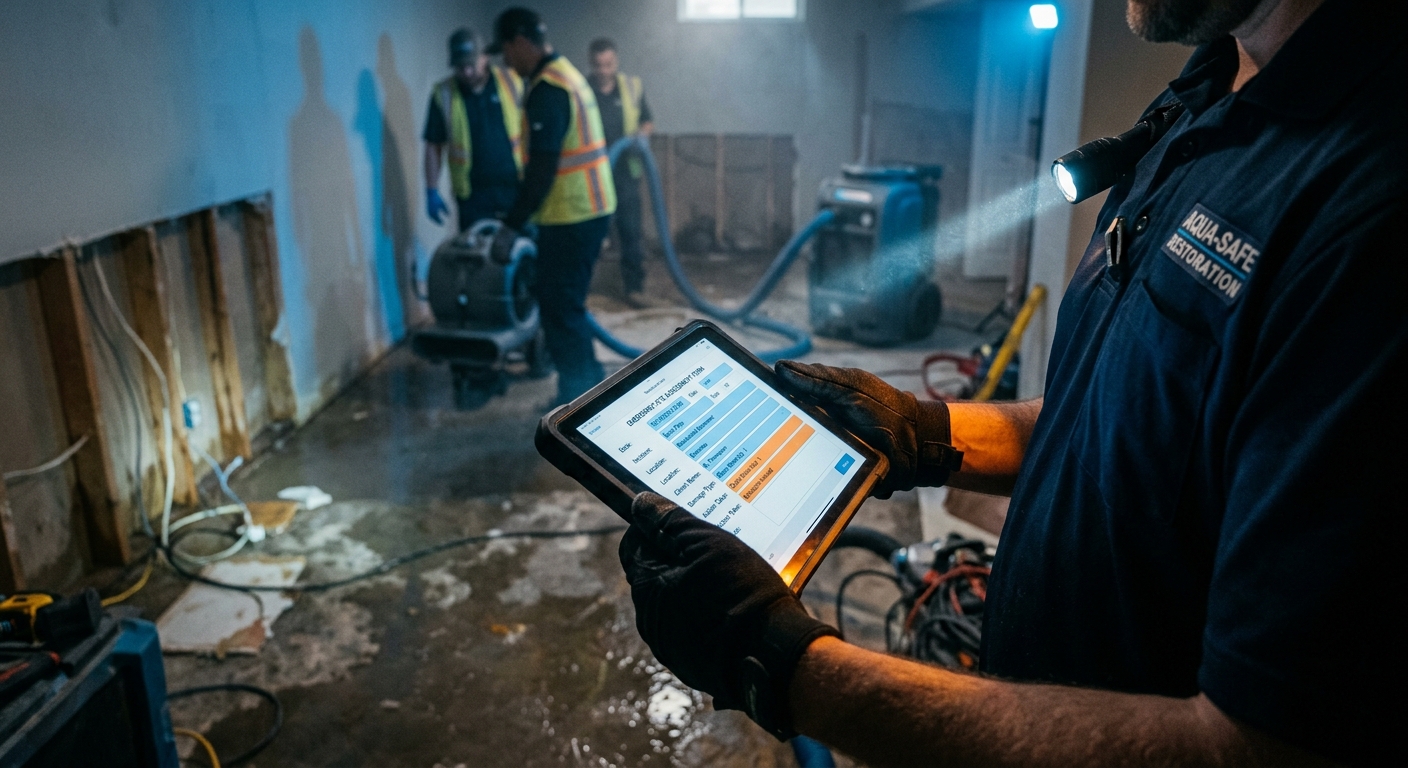
    Tech documenting a water loss on a tablet
    A careers page on your domain is the object Google can attach JobPosting schema to. The board is optional.

    Trigger for this desk: All in One SEO emailed Tygart Media on September 25, 2026 that Job Posting schema (and Event schema) now ships on every paid AIOSEO plan starting with Basic, as of AIOSEO 4.9.9. That is a product-access change, not a ranking promise. tygartmedia.com runs Rank Math. The schema type is the same either way. The plugin is a generator. Google’s Job posting structured data spec (docs last updated September 8, 2026) is the rulebook.

    Why a restoration shop should care

    Related: Schema Markup for AI Search: The New Meta Description · Your Google Profile Is Your New Front Door

    Most restoration companies hire the way they market: on someone else’s board. Indeed, Facebook, a text to a former tech. That works until storm season, and then the shop needs a water tech in Everett, a project manager in Lynnwood, or an estimator who already knows Snohomish County adjusters. If the only public copy of the role lives on a job board, Google indexes the board. Your domain does not own the vacancy.

    A careers page on your site is the durable object. JobPosting schema is the label on that object. Answer engines and Google for Jobs both prefer a page that states the role in plain sentences and then repeats the same facts in JSON-LD. That is AEO and GEO in one hang: the page answers “who is hiring water mitigation technicians in Everett, WA,” and the markup gives the city, employer, and dates without forcing the model to guess.

    What Google requires

    Google’s required JobPosting properties, from Search Central:

    • title — the job title only. “Water Mitigation Technician,” not “Water Mitigation Technician — $28/hr — Everett — Apply Now!!!”
    • description — the full description in HTML. Duties, qualifications, hours, education, experience. A teaser fails.
    • hiringOrganization — the company, not the branch nickname. Name plus a sameAs URL to the official site.
    • jobLocation — where the person reports. PostalAddress with addressCountry. For a 100% remote role, use jobLocationType TELECOMMUTE plus applicantLocationRequirements instead.
    • datePosted — original post date in ISO 8601. Do not refresh it to fake newness.

    Recommended properties that matter for a restoration hire: validThrough (when the listing dies), employmentType (FULL_TIME, PART_TIME, CONTRACTOR, TEMPORARY, PER_DIEM), baseSalary as a MonetaryAmount with currency and unit (HOUR / YEAR), and identifier so you do not duplicate the same role across reprints.

    AIOSEO’s walkthrough (updated August 21, 2026) maps those fields into a Schema Generator: title, description, employment type, location, hiring organization, salary, requirements, publish date, expiration date. Rank Math exposes the same JobPosting type. Fill the fields from the visible page. Do not invent a salary in schema that is missing on the page.

    GEO: mark the city the truck leaves from

    Local service hiring is geographic. A candidate searching “water damage technician jobs Everett WA” or “IICRC tech hiring Lynnwood” is not looking at a national career hub. Put the reporting city in the visible copy and in jobLocation.addressLocality / addressRegion / postalCode / addressCountry.

    Worked example for a shop that stages out of Everett and runs the Lynnwood–Mukilteo–Mill Creek pack:

    • Title on the page and in schema: Water Mitigation Technician
    • hiringOrganization.name: the legal company name, not “Everett Crew”
    • jobLocation: Everett, WA, United States, with the real street if that is where they report
    • description: names the pack — Everett, Lynnwood, Mukilteo, Mill Creek — as service area, not as four fake job locations
    • employmentType: FULL_TIME or PER_DIEM, whichever is true
    • validThrough: a real close date, then take the page down or set the date in the past when the seat is filled

    Do not stamp four JobPosting graphs on one page for four cities unless there are four distinct open seats. Google wants one job per leaf URL. A list page of “all openings” is the wrong surface.

    AEO: write the vacancy so an engine can quote it

    Schema does not rescue thin copy. Open the careers page with the answer a model can lift:

    We are hiring a full-time water mitigation technician based in Everett, Washington. The role reports to our Everett shop and runs losses across Snohomish County. Pay is listed on this page. Apply on this page.

    Then the body: first-day duties, IICRC or in-house training, on-call expectations, what “storm mode” means, whether the truck is assigned. That paragraph is the description field. If ChatGPT or Gemini is asked “who is hiring restoration technicians near Everett,” the engine needs a quotable sentence plus an organization it can attach to a maps entity. JobPosting is the attachment point. The sentence still has to exist in public HTML.

    How to hang it in WordPress

    1. Create one WordPress post or page per open seat. Slug like /careers/water-mitigation-technician-everett/.
    2. Write the full vacancy on the page first. Salary, city, dates, how to apply.
    3. In Rank Math (this site) or AIOSEO Schema Generator (if that is the client stack), add schema type JobPosting. Map every field to visible text.
    4. Validate with Google’s Rich Results Test. Fix errors before you call it done.
    5. When the seat fills: set validThrough to a past date, or 404/410 the URL. Do not leave a live JobPosting on a closed role.

    AIOSEO 4.9.9 made that generator available on Basic instead of reserving it for higher tiers. If a client already pays for AIOSEO, they do not need an upgrade to mark up jobs. If they are on Rank Math, they already had the type. Do not switch plugins to chase a newsletter.

    What gets a listing dropped

    • Markup on a jobs index that lists many roles
    • Title or salary in schema that the page does not show
    • Expired jobs still marked active
    • No way to apply on the page
    • jobLocation missing addressCountry, or a “remote” job that is not actually remote
    • Keyword stuffing in the title (“#1 BEST WATER TECH JOBS SEATTLE EVERETT TACOMA”)

    Google can issue a manual action for job spam. Fake seats used as lead magnets are not a grey area. If you are not hiring, do not hang JobPosting.

    The line to remember

    A careers page without JobPosting is a flyer. JobPosting without a real, dated, city-true vacancy is spam. Host the seat on your domain, mark the five required fields, expire it when the truck is staffed, and let Google decide whether it belongs in the job experience.

    FAQ

    Q: Does JobPosting schema guarantee a listing in Google for Jobs?
    A: No. It makes a qualifying page eligible. Google still applies content and spam policies. The official spec is explicit on that point.

    Q: We only hire on Indeed. Should we still put jobs on our site?
    A: If you want the vacancy attached to your entity — maps profile, site, AI answers — yes. The board can stay as an apply path. The leaf page on your domain is what you can mark up.

    Q: Can one page cover Everett, Tacoma, and Belfair?
    A: One page can describe a service area. Schema jobLocation should be the report-to city. Separate open seats in separate cities need separate URLs.

    Q: Is this an AIOSEO-only feature?
    A: No. AIOSEO expanded plan access in 4.9.9 (announced July 13, 2026). Rank Math and hand-written JSON-LD can emit the same type. Use the generator you already pay for.

    Q: What if we do not publish pay?
    A: baseSalary is recommended, not required. Do not invent a number in JSON-LD. Leave it out until the page states pay.