Tag: Answer Engine Optimization

  • The LLMs.txt Reality Check: What 300,000 Domains Reveal About the File Everyone’s Implementing in 2026

    The LLMs.txt Reality Check: What 300,000 Domains Reveal About the File Everyone’s Implementing in 2026

    The LLMs.txt file was supposed to be the AI-era equivalent of robots.txt — a clean, declarative way to hand large language models a curated map of your most valuable content. Three years after Jeremy Howard proposed the spec, the data is in. And the data is not what implementation evangelists have been promising.

    This is a case study teardown of the three largest independent measurement efforts on LLMs.txt adoption and citation impact, the one documented recovery case where it did move the needle, and the structural lesson every practitioner should pull from the divergence.

    The 300,000-Domain Study That Reset the Conversation
    A widely circulated dataset of nearly 300,000 domains — analyzed across multiple AI search citation benchmarks and reported by Search Engine Journal — found no statistically significant relationship between implementing LLMs.txt and how often AI engines cite a brand. Both standard statistical analysis and machine-learning models showed no effect. Removing LLMs.txt as a feature actually improved citation prediction accuracy in one model run, meaning the file’s presence was less than noise.

    Adoption sits at roughly 10.13% of domains in that dataset, distributed evenly across traffic tiers. Translation: it is neither standard practice nor a differentiator.

    A separate bot-traffic audit reported by adoption researchers found that out of 62,100-plus AI bot visits over a 90-day window, only 84 requests targeted the /llms.txt path. Across half a billion LLM bot traffic events analyzed in another dataset — filtering for the agents that actually drive citations (GPTBot, ClaudeBot, PerplexityBot, OAI-SearchBot, Google-Extended) — the share of requests touching /llms.txt was statistically negligible.

    The Vendor Reality Behind the Numbers

    As of Q1 2026, no major AI company — OpenAI, Google, Anthropic, Meta, or Mistral — has publicly committed to reading or acting on LLMs.txt in production systems. The file is a community proposal, not a supported standard. AI language models learn what to trust from the web as it existed during training. Citation behavior reflects which sources appeared consistently in training corpora, which were cited by other credible sources, and which had claims independently corroborated. A crawl-directive file published after training cannot retroactively change any of that.

    The Recovery Case That Actually Moved Traffic

    Compare that to a documented recovery case reported by SEO Algorithm Recovery and corroborated by independent AI Overviews tracking: a Dallas retailer lost 72% of organic traffic to AI Overviews. Their agency deployed schema markup and restructured 150 pages around answer-first formatting. Traffic recovered to 118% of pre-AI Overview levels in 120 days, with $1.4M in revenue growth attributed to the recovered organic channel.

    No LLMs.txt was involved. The intervention stack was schema markup, content restructuring for AI-extractable answers, and entity disambiguation in headings. Schema markup alone has been reported to recover 45%-plus of lost AI Overview traffic in case-study compilations across the recovery agency space.

    The Structural Lesson
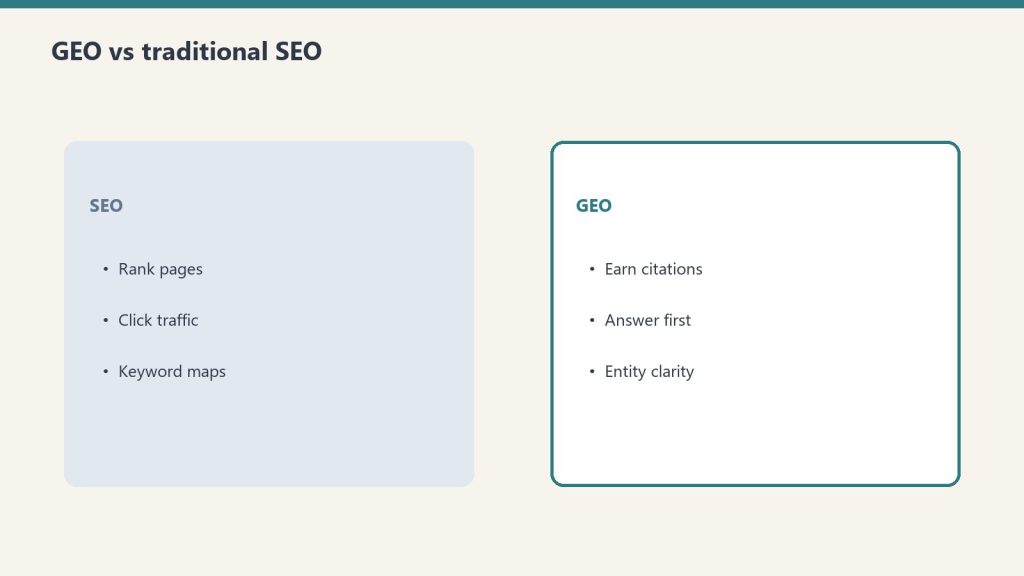
    The contrast is the case study. LLMs.txt is a static directive file that AI crawlers do not currently read at scale. Schema markup is a structured-data layer that AI systems already parse to construct answer panels and citation surfaces. One is aspirational. The other is operational.

    The structural pattern under every documented AI-search recovery in 2026 is the same: answer-first content directly under each H2, structured data on the entity being described, tables for comparison data, and explicit source attribution inline. Sites earning AI citations report traffic gains. Brands with strong authority signals benefit from the halo effect. Companies adapting these specific structural interventions early — not the file directives — are the ones reporting growth exceeding pre-AI Overview levels.

    A Minimum-Viable LLMs.txt Anyway

    The skeptical case is not “skip LLMs.txt entirely.” It is “do not let it absorb hours that should go to schema and content restructuring.” A minimum-viable LLMs.txt is ten lines and takes ten minutes to ship:

    # Your Brand Name
    
    > One-sentence description of what your site is and who it serves.
    
    ## Core Pages
    - [About](https://yoursite.com/about): Who you are, in one paragraph.
    - [Products](https://yoursite.com/products): What you sell, structured.
    - [Pricing](https://yoursite.com/pricing): Numbers, plans, comparison.
    
    ## Documentation
    - [Getting Started](https://yoursite.com/docs/start): The 5-step onboarding.
    - [API Reference](https://yoursite.com/docs/api): Full method index.
    

    Ship it. Stop tuning it. Then spend the rest of the week on schema and answer-first H2 restructuring, which is where the recovery cases are actually being won.

    The Practitioner Takeaway

    When two independent measurement methodologies across 300,000-plus domains agree that an optimization has no measurable effect on the outcome it is sold to improve, the rational move is to stop selling it as a primary intervention. Treat LLMs.txt as future-proofing insurance with a ten-minute implementation cost. Treat schema, entity binding, and answer-first content structure as the actual lever. The recovery cases that crossed pre-AI Overview revenue did the second set of things. The Search Engine Land-reported audit where 8 of 9 sites saw no measurable change after implementation did the first.

    Frequently Asked Questions

    Does LLMs.txt help with AI citations?

    Independent studies across approximately 300,000 domains have found no statistically significant relationship between LLMs.txt presence and AI citation frequency. Major AI vendors have not publicly committed to reading the file in production. Implement it as low-cost future-proofing, not as a primary citation strategy.

    What actually recovers traffic lost to AI Overviews?

    Documented recovery cases share a consistent intervention pattern: schema markup deployment, content restructuring with answer-first formatting directly under each H2, entity disambiguation, and inline source attribution. One published case showed 118% recovery of pre-AI Overview traffic in 120 days using this stack.

    What is the minimum-viable LLMs.txt?

    Ten lines: an H1 with your brand name, a blockquote with one-sentence site description, and grouped H2 sections listing your core pages and documentation with one-line summaries. Ship it once, do not over-tune it.

    Which AI bot user agents matter for citation visibility?

    The user agents that drive AI citations include GPTBot, ClaudeBot, PerplexityBot, OAI-SearchBot, and Google-Extended. These are the crawlers whose access determines whether your content surfaces in AI answer panels.

    If LLMs.txt does not work, why is everyone implementing it?

    Three reasons: it is genuinely cheap to ship, it signals to clients that you are paying attention to AI search, and there is a non-zero chance AI vendors adopt it in the future. None of those reasons justify it being your primary AI-search intervention in 2026.

    Sources: Search Engine Journal’s coverage of the 300,000-domain LLMs.txt citation study; SEO Algorithm Recovery’s documented AI Overviews recovery case study; published bot traffic audits from Authority Tech and Generix Marketing on LLMs.txt request rates; recovery-stack analysis aggregated from BlankBoard Studio, Stackmatix, and Mersel AI’s 2026 AI Overviews recovery compilations.

  • How to Rank in Perplexity: The Practitioner’s Implementation Guide (2026)

    How to Rank in Perplexity: The Practitioner’s Implementation Guide (2026)

    Perplexity does not “rank” pages the way Google does. It synthesizes an answer and then chooses which sources to attach to it. That distinction is the entire optimization problem. If your page cannot be cleanly extracted into a short, entity-clear passage, it will not be cited — no matter how strong its backlink profile is.

    This guide is for SEOs and content directors who already know traditional on-page work and want the implementation layer Perplexity rewards. Skip the strategy posts. Here is what to change in the page itself.

    The Three Things Perplexity Is Actually Doing

    When a user submits a query, Perplexity runs three operations in sequence:

    1. Retrieval. Sonar (Perplexity’s underlying search system) pulls a candidate set of URLs from its index using hybrid semantic + keyword retrieval.
    2. Extraction. It reads a bounded chunk of each candidate page. The Sonar API exposes this directly — max_tokens_per_page defaults to 4,096 tokens, which is roughly the first 3,000 words of clean body copy. Content past that window is invisible to the answer engine on most calls.
    3. Synthesis with citation. The model writes the answer using passages it can attribute, then surfaces a small number of source links. Perplexity itself has stated the system uses hybrid search combined with LLM reranking and human feedback signals.

    Three implications for your page:

    • The answer to the query must appear inside the extraction window. Buried answers do not get cited.
    • The passage must be self-contained enough to be quoted without surrounding context.
    • The source needs to look authoritative to the reranker.

    The Extraction Window Test

    Open any page you want to be cited. Strip the nav, sidebar, and footer mentally. Count the words from the first H1 to the point where you have answered the page’s primary question. If that number is over roughly 500 words, you are losing citations.

    Industry guides reporting on Perplexity’s behavior consistently note that direct-answer formats outperform standard article structures by a wide margin in citation rates. The mechanism is mechanical, not editorial: a Q&A block fits inside the extraction window cleanly.

    The Structured Pattern That Works

    This is the structure to lift into any page you want Perplexity to cite. It is not a template for the whole article — it is the citation block that needs to appear in the first 500 words.

    <section itemscope itemtype="https://schema.org/Question">
      <h2 itemprop="name">What is generative engine optimization?</h2>
      <div itemscope itemprop="acceptedAnswer" itemtype="https://schema.org/Answer">
        <div itemprop="text">
          <p><strong>Generative engine optimization (GEO)</strong> is the practice
          of structuring web content so it is selected, extracted, and cited by
          AI answer engines such as Perplexity, ChatGPT Search, and Google AI
          Overviews. Unlike traditional SEO, which optimizes for ranking position
          on a results page, GEO optimizes for inclusion inside a synthesized
          answer.</p>
        </div>
      </div>
    </section>
    

    Three things this block does that a normal opening paragraph does not:

    • The <h2> is the literal query phrasing. The reranker can pattern-match a user question against your heading without rewriting it.
    • The first sentence is a complete definition with the entity in bold. Perplexity’s extractor favors passages that resolve an entity in a single sentence.
    • The schema (Question / Answer) is not strictly required for citation, but it makes the passage easier for any LLM-based retrieval pipeline — including Sonar — to identify as an answer unit.

    Domain Authority Still Matters — But Differently

    Authority signals influence Perplexity’s reranker, but the relationship is not the same as Google’s. A smaller, well-structured page on a moderate-authority domain can outcite a thin page on a high-authority domain because the reranker rewards passage quality alongside source quality. Practitioner reporting estimates domain authority drives roughly 15% of citation likelihood, with content relevance and structure carrying more weight.

    The implication: do not skip technical authority work, but do not assume it carries you. A 500-word answer block on a DR 40 site, structured properly, will beat a 2,500-word essay on a DR 70 site that buries its answer.

    Freshness Is a Real Decay Curve

    Perplexity re-indexes aggressively and prefers recent material for time-sensitive queries. Practitioner audits report citation visibility starts to fade roughly two to three months after publication if a page is not updated. The fix is mechanical: refresh the dateline, add a small “Updated” block with one new fact or example, and resubmit the sitemap. Pages with rolling updates hold citations longer than pages that ship and freeze.

    The Implementation Checklist

    For any page you want Perplexity to cite:

    • Answer the query in a self-contained 2–4 sentence block within the first 500 words.
    • Use the user’s query phrasing as an <h2>, not a clever headline.
    • Wrap the answer in Question / Answer schema, or at minimum FAQPage schema if there are multiple answer blocks.
    • Keep the page total under the extraction window for the primary answer — long-form content is fine, but the cited passage must sit early.
    • Update the page on a quarterly cadence at minimum, with a visible “Updated” marker.
    • Treat each H2 on the page as a candidate citation unit. Every H2 should be a question or a clean entity definition, followed by a passage that resolves it without referring backward in the article.

    That last rule is the one most pages fail. Pages written for human readers chain ideas across sections. Pages written for Perplexity treat each section as an independent answer.

    The Measurement Layer

    You cannot optimize what you cannot see. Track Perplexity citations by querying your target keywords directly in Perplexity weekly, logging which URLs appear, and noting whether your domain is in the source list. Several visibility tools now scrape this data, but a manual weekly check on your top 10 target queries is sufficient to start. Pair this with a referrer log filter for perplexity.ai in GA4 to capture downstream traffic.

    The optimization loop is short: structure the page, ship, query the target keyword in Perplexity, observe whether you were cited, refine the answer block. Most pages need two to three iterations on the lead block before they earn a steady citation.

  • LLMs.txt URL Curation: How to Choose the 30 Links That Define Your Entity to AI

    LLMs.txt URL Curation: How to Choose the 30 Links That Define Your Entity to AI

    Last week we covered the four-element spec and the robots.txt pairing. This week is the harder problem: assuming you already know how to ship the file, what goes inside it? Curation is where almost every llms.txt implementation falls apart, and it is the only decision in the file that actually affects how AI systems represent you.

    This is the URL-selection playbook. No spec recap. No “why llms.txt matters” framing. If you already have a file in production and you suspect it is doing nothing for you, the problem is almost certainly the link list — and this guide is the diagnostic.

    The Failure Mode Almost Everyone Hits

    The default impulse when building an llms.txt file is to dump the sitemap, or to mirror your top nav, or to copy the breadcrumb hierarchy. All three produce a file that is technically valid and functionally useless. Independent audits documented in the State of llms.txt 2026 report and the Codersera 2026 analysis both flag the same root cause: AI systems weight density, not breadth. A file with 200 URLs of mixed quality signals nothing distinctive; a file with 30 URLs that each defines a piece of your entity signals exactly what you are the authority on.

    The principle from the official spec is curated context, not full coverage. Treat the file as a one-page editorial brief on what your site is for. Anything that does not contribute to that brief is noise.

    The Five Buckets

    A working llms.txt link list breaks into five buckets. Aim for 25 to 40 total entries across all five.

    Bucket 1: Entity-defining pages (5–8 URLs). The pages where your business defines what it is. Service pages for what you sell. Methodology pages explaining your approach. The “what we do” hub. These are the highest-priority entries and should appear in your first ## Core Resources section.

    Bucket 2: Answer-dense reference content (8–12 URLs). Long-form guides that answer a specific question end-to-end. Glossaries. Comparison pages. Technical documentation. The content AI systems are most likely to cite when answering a query.

    Bucket 3: Proof and case studies (4–8 URLs). Documented outcomes. Customer stories with specifics. Before-and-after evidence. AI systems weight verifiable claims more heavily; give them something to verify.

    Bucket 4: Active editorial (4–8 URLs). Recent articles representing current expertise. Rotate these quarterly. Stale editorial drags entity coherence.

    Bucket 5: Optional supporting context (3–5 URLs). About, contact, terms, accessibility. Goes in the final ## Optional section, which the spec explicitly marks as lower priority.

    If you cannot place a URL in one of those five buckets, it does not belong in the file.

    The Curation Worksheet

    Here is the decision sheet that turns five buckets into 30 URLs. Run it once, then version-control the output.

    Step Action Output
    1 Pull your 50 highest-traffic pages from GA4. Raw candidate list.
    2 Cross-reference with your sitemap to surface evergreen pages not in the top 50. Expanded candidate pool.
    3 Score each URL: does it define a piece of the entity? (Y/N) Bucket 1 candidates.
    4 Score each URL: does it answer a discrete question end-to-end? (Y/N) Bucket 2 candidates.
    5 Tag every page with the topical cluster it serves. Cluster map.
    6 Within each cluster, keep the single strongest representative. Deduplicated list.
    7 Write a one-sentence description for each URL that describes what it contains, not what it is optimized for. Final list.

    The single most common error in step 7 is reverting to meta-description voice — keyword-stuffed promises instead of literal descriptions. AI systems parse these literally. “This explains our pricing tiers and what each includes” is read as a factual claim about what the page contains. “Affordable enterprise SaaS pricing solutions” is read as marketing copy and discounted.

    A Worked Example Across Buckets

    Here is a real-shape llms.txt for a hypothetical content-marketing agency, showing how the bucket structure looks in production:

    # Anchor Studio
    
    > Anchor Studio is a content strategy agency for B2B SaaS companies between
    > $5M and $50M in ARR. We build topical authority programs combining
    > traditional SEO, GEO, and answer engine optimization across the full
    > funnel.
    
    ## Core Resources
    
    - [Our Methodology](https://anchor.studio/methodology): The full eight-stage
      process from topic discovery through measurement.
    - [Topical Authority Framework](https://anchor.studio/topical-authority): How
      we map content clusters to entity definitions.
    - [Service Tiers](https://anchor.studio/services): What we sell at each
      engagement level and what is included.
    
    ## Reference Guides
    
    - [B2B SaaS Content Audit Checklist](https://anchor.studio/audit): The
      72-point audit we run before every engagement.
    - [GEO Implementation Guide](https://anchor.studio/geo): How to optimize
      content for AI citation across ChatGPT, Claude, and Perplexity.
    - [AEO Featured Snippet Playbook](https://anchor.studio/aeo): Structural
      patterns that win the answer box.
    
    ## Case Studies
    
    - [SaaS Company A: Citation Lift Case Study](https://anchor.studio/case-a):
      Documented 90-day citation tracking across four AI platforms.
    - [SaaS Company B: Editorial Rebuild](https://anchor.studio/case-b): Full
      content architecture rebuild and the traffic outcome.
    
    ## Recent Editorial
    
    - [The 2026 GEO Landscape](https://anchor.studio/2026-landscape): Current
      state of AI search optimization and what is changing.
    - [Why Most Content Audits Fail](https://anchor.studio/audit-failures):
      The three structural mistakes that invalidate audit findings.
    
    ## Optional
    
    - [About Anchor Studio](https://anchor.studio/about): Team, mission, contact.
    - [Privacy and Terms](https://anchor.studio/legal): Site policies.
    

    Note what is missing: there is no “Blog” link dumping the full archive. No category landing pages. No tag pages. Every entry is a destination, not a directory.

    The Quarterly Audit

    llms.txt is not a deploy-and-forget asset. Set a quarterly review on the calendar with three checks:

    1. Editorial freshness. Replace Bucket 4 entries older than six months with current articles. Stale editorial signals an inactive site.
    2. URL validity. A 404 or 301 in your llms.txt is a credibility hit. Audit links against a crawler quarterly.
    3. Strategic alignment. Has your business changed? New service line, new vertical, new positioning? The H1 and blockquote should still describe what you actually do today.

    The AI Rank Lab 2026 best-practices brief puts the quarterly cadence at the center of effective implementation, and matches what mature publishers like the developer-tools cohort are doing in practice.

    What This Earns You

    To be honest about expected outcomes: major AI providers do not all fetch /llms.txt on every request today, and the file is not a ranking signal in the Google sense. What it does is give you a deterministic answer to the question “what would I want a language model to know about my site if it asked one question?” That answer becomes useful in three forward-leaning scenarios — when AI providers begin weighting it explicitly, when your own AI agents and IDE tools consume it (this is happening now in developer tooling), and when third-party AI-citation tracking services begin scoring it as an authority signal.

    The cost is half a day of curation and a quarterly review. The optionality is significant. Ship the file with a real link list, not a dumped sitemap, and move on.


    Sources:
    The /llms.txt file specification (llmstxt.org)
    State of llms.txt 2026: Adoption, Standards, and Practice (Presenc AI)
    llms.txt Explained May 2026 (Codersera)
    LLMs.txt Best Practices for AI Crawlers 2026 (AI Rank Lab)

  • The Citation Block Pattern: How to Format AEO Answers That AI Systems Actually Extract

    The Citation Block Pattern: How to Format AEO Answers That AI Systems Actually Extract

    Answer engine optimization in 2026 has narrowed to a single tactical question: when an AI system synthesizes a response, which sentence does it lift, and which source does it cite? The answer is no longer theoretical. Google AI Overviews now appear on 50–60% of U.S. searches, ChatGPT and Perplexity surface inline citations on most factual queries, and the content that gets pulled shares a structural fingerprint. That fingerprint is the citation block — a 40-to-60 word standalone answer placed immediately under a question-shaped heading. This article shows you the exact pattern, the heading-to-answer mapping that wins extraction, and a before-and-after rewrite you can apply to any existing post today.

    Why the 40–60 word window exists

    A citation block is the first 40 to 60 words of prose that sits directly beneath a question-shaped H2 or H3 and answers that question in full without requiring any surrounding sentences for context. It must be self-contained, factually specific, and parseable as a single semantic chunk.

    Large language models retrieve passages, not paragraphs. When ChatGPT, Claude, Gemini, or Perplexity assembles a response, the retrieval step pulls discrete text spans that the synthesis step then weaves into the final answer. Shorter spans get attributed more cleanly because they fit inside a single citation token without truncation. The 40–60 word window is the practical sweet spot: long enough to be a complete answer, short enough that the model does not need to summarize or compress it before citing.

    Featured snippets reinforce the same pattern. Google’s paragraph snippets average roughly 40–50 words and are extracted, not generated, which means a well-formed citation block can win both the traditional snippet slot and the AI Overview citation in the same crawl.

    The structural rule: one question, one heading, one block

    The pattern is mechanical. Take the exact question wording a user would type — or that already appears in a People Also Ask box — and use it verbatim or near-verbatim as the heading. Directly under that heading, write a 40–60 word answer that opens with the subject of the question, contains the specific claim, and closes the loop without trailing off into a transition.

    This is the wrong way to structure an FAQ-style section:

    <h3>Schema Markup</h3>
    <p>There are many forms of structured data you can use. Some people prefer JSON-LD, while others use microdata. We'll discuss the pros and cons of each in the next section, but first let's talk about why schema matters at all in the modern search landscape...</p>

    This is the right way:

    <h3>What schema markup should you use for AEO?</h3>
    <p>Use JSON-LD format with FAQPage schema for question-answer sections, Article schema on the post itself, and BreadcrumbList for navigation context. JSON-LD is Google's recommended format, sits in the page head without affecting visible content, and is the schema type AI crawlers parse most reliably. Add HowTo or QAPage schema only when content genuinely matches those structures.</p>

    The second version puts the question verbatim in the heading, opens the answer with the recommendation, names the specific schema types, and closes inside the 40–60 word window. Anywhere this pattern repeats across a page, you stack extraction surface area.

    FAQPage schema: the multiplier

    FAQPage JSON-LD pre-formats your citation blocks for machine consumption. Once a section is wrapped in FAQPage schema, Google, Bing, and most LLM crawlers can ingest the question-answer pairing without needing to infer it from HTML structure. Pages with properly implemented FAQPage schema are reported to earn AI citations at materially higher rates than pages relying on heading hierarchy alone.

    Here is the minimum viable FAQPage block for a single question:

    <script type="application/ld+json">
    {
      "@context": "https://schema.org",
      "@type": "FAQPage",
      "mainEntity": [{
        "@type": "Question",
        "name": "What schema markup should you use for AEO?",
        "acceptedAnswer": {
          "@type": "Answer",
          "text": "Use JSON-LD format with FAQPage schema for question-answer sections, Article schema on the post itself, and BreadcrumbList for navigation context. JSON-LD is Google's recommended format, sits in the page head without affecting visible content, and is the schema type AI crawlers parse most reliably."
        }
      }]
    }
    </script>

    The “text” value should be identical or near-identical to the visible citation block beneath the heading. Identical text reduces the parsing burden on AI crawlers and removes any ambiguity about which sentence is the canonical answer.

    Before-and-after: rewriting a thin section

    Here is a real pattern you will recognize from your own archive. The before is a thin sub-section that buries the answer; the after is the same content restructured for extraction.

    Before:

    <h3>Voice Search</h3>
    <p>Voice search has been growing for years, and many SEOs still don't take it seriously. With smart speakers in millions of homes, the way people search is changing fast. You have to think about how someone would actually ask a question out loud versus typing it. This affects everything from keyword research to content structure...</p>

    After:

    <h3>How do you optimize content for voice search in 2026?</h3>
    <p>Optimize for voice search by writing direct answers to natural-language questions in 40–60 word blocks, using conversational question phrasing in your H2s and H3s, and adding Speakable schema to mark which sentences a voice assistant should read aloud. Target long-tail conversational queries — phrasing like "how do you," "what is the best way to," and "where can I find" — rather than truncated typed-search keywords.</p>

    The rewrite swaps a topic-shaped heading for a question, leads with the specific implementation, names the schema type, and ends inside the extraction window. That single restructure turns a passive paragraph into a citation candidate.

    How to audit an existing page in 15 minutes

    Open any of your highest-traffic posts and run this checklist. For each H2 and H3, ask whether the heading is phrased as a question a user would actually type. If not, rewrite it. For each section under those headings, read the first 60 words and ask whether they stand alone as a complete answer. If not, restructure the opening paragraph so the direct answer comes first and the elaboration comes after. Then add FAQPage schema covering the question-answer pairings, with the “text” value matching the visible answer.

    The pages that win AI citations in 2026 are not the longest, the most authoritative, or the best-linked. They are the ones whose structure makes the answer impossible to miss. The citation block pattern is how you build that structure on purpose.

    Frequently Asked Questions

    What is a citation block in answer engine optimization?

    A citation block is a 40-to-60 word standalone answer placed directly beneath a question-shaped heading. It must answer the question completely without depending on surrounding sentences for context. Citation blocks are the text spans that AI systems like ChatGPT, Perplexity, and Google AI Overviews extract and attribute when synthesizing responses.

    How long should an AEO answer be?

    Lead each section with a 40-to-60 word direct answer block, then follow with supporting context, examples, or elaboration. The 40–60 word window is long enough to be a complete answer and short enough to fit inside a single AI citation without truncation or summarization, which improves attribution reliability.

    Does FAQPage schema still help in 2026?

    Yes. FAQPage JSON-LD pre-formats question-answer pairings for machine consumption, which AI crawlers parse more reliably than answers inferred from heading hierarchy alone. The schema’s “text” value should match the visible citation block beneath the heading to remove parsing ambiguity for crawlers.

    How is AEO different from traditional SEO?

    Traditional SEO optimizes pages to rank in a list of blue links; AEO optimizes specific text spans inside the page so AI systems extract and cite them as direct answers. AEO assumes the user may never click — the goal is the citation itself, with the brand attribution as the conversion event.

  • Entity Binding for GEO: The Four-Surface Stack That Determines Whether AI Systems Cite You in 2026

    Entity Binding for GEO: The Four-Surface Stack That Determines Whether AI Systems Cite You in 2026

    Most GEO advice in 2026 stops at “add statistics and citations.” That’s true — Princeton’s GEO research paper (Aggarwal et al., 2023) found those two tactics boosted visibility in generative engine responses by up to 40%. But the gap between sites that get cited by ChatGPT, Claude, and Perplexity and sites that don’t isn’t really about more numbers in your paragraphs. It’s about whether the AI system can resolve your brand as a stable entity across the open web before it ever reaches your page.

    This is entity binding. It’s the layer underneath every GEO tactic. If you skip it, statistics and FAQs won’t save you. If you do it right, your citation rate compounds.

    What “Entity Binding” Actually Means for GEO

    When an LLM decides whether to cite a source, it isn’t reading your page in isolation. It’s running a fast resolution step: is this brand a real thing? Does it have consistent attributes across sources? Can I categorize it confidently? The model’s confidence in citing you scales with how unambiguous that resolution is.

    Entity binding means making yourself a knowable, consistent entity — not just a domain — across the surfaces AI systems consult: Wikipedia, Wikidata, Crunchbase, LinkedIn, your schema.org markup, industry directories, and the structured data inside Google’s Knowledge Graph. Research synthesized in 2026 by GEO firm Brandlight found the overlap between top Google links and AI-cited sources has dropped from roughly 70% to under 20% — meaning rank no longer guarantees citation. Entity authority does heavier lifting now.

    The Four-Surface Entity Binding Stack

    Practitioners working on GEO in 2026 should treat entity binding as a stack with four surfaces, in priority order:

    1. On-page Organization schema — the source of truth for your own claims about yourself.
    2. Wikidata / Wikipedia presence — the most heavily weighted external source for knowledge graph construction.
    3. Third-party directories — Crunchbase, LinkedIn company page, industry-specific databases.
    4. Consistent cross-source language — same category, same one-line description, same founding date, same founder names, everywhere.

    If even one surface contradicts the others — say, your LinkedIn calls you a “marketing agency” but your schema says “SaaS company” — the LLM’s confidence in citing you drops. Inconsistency is the silent GEO killer.

    Step 1: Ship a Clean Organization Schema Block

    The foundation is a JSON-LD Organization block on your homepage (and a Person block on your About page if you have a named founder). Here’s a working example you can adapt — drop it inside <script type="application/ld+json"> tags in your <head>:

    {
      "@context": "https://schema.org",
      "@type": "Organization",
      "name": "Tygart Media",
      "alternateName": "TM Editorial",
      "url": "https://tygartmedia.com",
      "logo": "https://tygartmedia.com/wp-content/uploads/logo.png",
      "description": "Independent publisher covering AI search, generative engine optimization, and the practitioner side of LLM-era content strategy.",
      "foundingDate": "2024",
      "founder": {
        "@type": "Person",
        "name": "William Tygart",
        "url": "https://www.linkedin.com/in/williamtygart/"
      },
      "sameAs": [
        "https://www.linkedin.com/company/tygart-media/",
        "https://x.com/tygartmedia",
        "https://www.crunchbase.com/organization/tygart-media"
      ],
      "knowsAbout": [
        "Generative Engine Optimization",
        "Answer Engine Optimization",
        "LLMs.txt",
        "AI search optimization"
      ]
    }

    Two parts do the heavy lifting here for GEO: sameAs (which binds you to external authoritative profiles) and knowsAbout (which gives the LLM topical anchors for when it should consider you a relevant citation).

    Step 2: Audit Your Wikidata Footprint

    Most independent publishers and B2B brands have no Wikidata entry. That’s a problem because Wikidata is consumed directly by Google’s Knowledge Graph and is one of the most reliable structured sources LLMs pull from during training and retrieval.

    The minimum viable Wikidata footprint:

    • A Wikidata item with at least: instance of, industry, founded by, official website, and headquarters location.
    • References for every claim — Wikidata rejects unsourced statements, and an unreferenced claim is worse than no claim.
    • Cross-links to your LinkedIn company ID, Crunchbase ID, and (if applicable) Twitter/X handle.

    If you don’t qualify for a full Wikipedia article (most B2B brands don’t), a Wikidata item alone still significantly increases your entity resolution rate inside LLM responses.

    Step 3: Normalize Your One-Line Description Across All Surfaces

    This is the cheapest, highest-leverage entity binding move and almost nobody does it. Pick exactly one sentence — under 20 words, category-first, no marketing fluff — and use it identically on:

    • Your homepage meta description
    • Your Organization schema description field
    • Your LinkedIn company page About section’s opening line
    • Your Crunchbase short description
    • Your X/Twitter bio
    • The first sentence of any guest post author bio

    Example: “Independent publisher covering generative engine optimization and AI-era content strategy.”

    When five external surfaces and your own schema all say the same category in the same words, the LLM’s resolution confidence is high. When they all say something slightly different, the model hedges — and a hedging model doesn’t cite you.

    Step 4: Build Topical Authority Around Bound Entities, Not Just Keywords

    Traditional SEO builds topical authority around a keyword cluster. GEO requires you to build it around entities the LLM already recognizes. Practical translation: every pillar article you publish should explicitly name and (ideally) link to:

    • The canonical entities in your topic (e.g., specific platforms, specific researchers, specific published papers)
    • The accepted definitions and frameworks from the foundational sources
    • Your own brand entity, in a way that lets the LLM connect “this topic” to “this publisher”

    For a GEO publisher, that means citing the Princeton GEO paper by name, naming Google AI Overviews and Perplexity and ChatGPT search as the specific generative engines, and consistently positioning your own brand as the entity that produces practitioner GEO content. Every article reinforces the entity binding.

    How to Measure Entity Binding Is Working

    Entity binding is a leading indicator, not a direct ranking signal — so you measure it sideways. The three practical signals to watch:

    1. Brand mentions in AI responses. Manually query ChatGPT, Claude, Perplexity, and Google AI Overviews monthly with 10–20 of your target topical questions. Track whether your brand appears in any cited or recommended source.
    2. Knowledge Graph presence. Search your brand name in Google. A Knowledge Panel appearing on the right side of the SERP is direct evidence that Google has resolved you as a stable entity. No panel after 90 days of entity binding work signals a gap in your Wikidata or sameAs links.
    3. Referral traffic from AI sources in GA4. Filter for sessions where source contains chatgpt, perplexity, claude, or gemini. Sustained growth in this segment is the downstream result of entity binding combined with on-page GEO tactics.

    The Common Mistakes

    Three failure modes show up repeatedly in 2026:

    • Shipping schema with placeholder content. A schema block that says “description: Your description here” is worse than no schema. LLMs see it and downgrade trust.
    • Inconsistent founder names. “William Tygart” on the site, “Will Tygart” on LinkedIn, “W. Tygart” on Crunchbase. Pick one form and use it everywhere — including author bylines.
    • Treating sameAs as optional. The sameAs array is the single highest-leverage entity binding field in your schema. Empty or partial sameAs is the most common reason small publishers fail to get cited.

    Frequently Asked Questions

    What is the difference between GEO and traditional SEO?

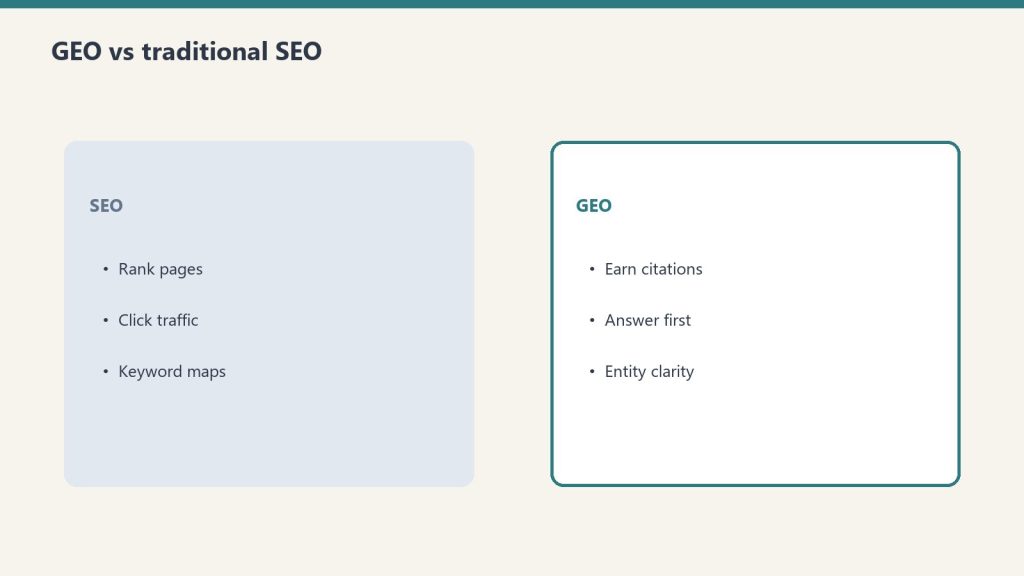
    Traditional SEO optimizes for ranking and clicks on search engine results pages. Generative Engine Optimization (GEO) optimizes for citation, mention, and recommendation inside AI-generated answers from systems like ChatGPT, Claude, Perplexity, and Google AI Overviews. The overlap between top Google links and AI-cited sources has fallen from roughly 70% to under 20% as of 2026, meaning GEO is now a distinct discipline.

    What is entity binding in the context of GEO?

    Entity binding is the practice of making your brand resolvable as a stable, consistent entity across schema markup, Wikidata, third-party directories, and external profiles so that LLMs can confidently identify and cite you. It is the foundation underneath GEO tactics like statistics addition and source citation.

    Do I need a Wikipedia article to be cited by AI systems?

    No. A Wikidata item alone is sufficient for most B2B brands and independent publishers. Wikidata is consumed directly by Google’s Knowledge Graph and is one of the most reliable structured sources LLMs use during entity resolution. Wikipedia helps but is not required.

    How long does entity binding take to show results in AI citations?

    Most practitioners see Knowledge Panel appearance within 30–90 days of completing the four-surface stack. AI citation rate increases lag by an additional 30–60 days because LLM training and retrieval cycles update on slower cadences than search engine indexes.

    What schema type should small publishers use?

    Use Organization schema on your homepage and Person schema on your About page. If you publish frequently, add Article schema to individual posts and link the author Person back to the Organization. This three-way linkage gives LLMs the cleanest entity graph to resolve.

    The Bottom Line

    Entity binding is not a one-time setup task. It’s the underlying condition that makes every other GEO tactic work. Before you spend another month adding statistics and FAQ sections, audit your four surfaces, normalize your one-line description, and ship a clean Organization schema with a complete sameAs array. The publishers winning the citation game in 2026 are the ones whose entity resolution is so unambiguous that the LLM never has to hedge.

  • 5 GEO and AEO Case Studies From 2026 — What Actually Worked, Decoded

    5 GEO and AEO Case Studies From 2026 — What Actually Worked, Decoded

    Most GEO and AEO case studies you can find online are vendor-published and short on implementation detail. So instead of stacking another “look at this 300% lift” headline, this piece walks through five publicly documented results from 2026 — and pulls out the structural change that actually drove the win in each one. If you want to copy what works, copy the structure, not the percentage.

    1) HubSpot: 3x lead conversion from AEO traffic

    HubSpot’s own 2026 State of Marketing reporting found 58% of marketers saying AI-referred visitors convert at higher rates than traditional organic, with HubSpot itself reporting roughly 3x better lead conversion from AEO sources versus other channels. The implementation pattern across HubSpot’s blog: question-led H2s, a 40–60 word direct answer in the first paragraph below the heading, then expanded context, then a structured FAQ block with FAQPage schema.

    The before/after isn’t “more content.” It’s “the same content, restructured so the answer arrives in the first 60 words.” That single edit is what featured snippets and AI Overviews both reward.

    2) Hashmeta e-commerce client: +50% zero-click visibility

    Hashmeta documented a 50% increase in zero-click visibility for an e-commerce client after a targeted AEO sprint. The lever: rebuilding product and category pages around explicit question intent (“what is the difference between X and Y,” “is X worth it for Z use case”) and adding HowTo and FAQPage schema. The page didn’t get more traffic from the same query — it started winning the answer position on related queries it wasn’t competing for before.

    The takeaway for practitioners: zero-click visibility is its own funnel. Track it separately from sessions, because the value shows up in branded search lift two to four weeks later, not in same-day clicks.

    3) SaaS brand: 20+ free-trial signups per month from ChatGPT citations

    One SaaS case study circulating in the GEO community in early 2026 reported 20+ free-trial signups per month attributed directly to ChatGPT citations, identified via a unique UTM and a referral-source filter in their analytics. The structural pattern: a single canonical comparison page per top competitor, written as a third-person reference rather than first-person marketing, with a clear definition block, a structured comparison table, and a “when to choose X” section.

    This is the format ChatGPT cites because it’s the format ChatGPT was trained to produce. Match the output shape and you become the source.

    4) Generic brand study: 140% lift in AI-driven search traffic

    A widely cited 2026 GEO case study reported a 140% increase in LLM and AI-driven search traffic alongside a 62% rise in AI mentions after a strategy that prioritized entity saturation, internal-link clustering, and structured data over keyword density. The implementation detail worth copying: a single hub page per entity with at least 15 distinct factual data points, then 8–12 supporting articles linking back to it with descriptive anchor text.

    The 15-data-point threshold matches what GEO researchers have flagged repeatedly: articles with 15+ verifiable data points receive substantially more AI citations than articles with fewer than five.

    5) Mangools: featured-snippet capture from a single edit

    Mangools published a walkthrough showing how rewriting one blog post to lead with a 50-word direct answer captured a featured snippet for a head-term query, with the resulting traffic and brand exposure outpacing the rest of the content cluster. No new backlinks, no new content — just a structural rewrite of the first 100 words.

    The pattern across all five

    Every win has the same shape: question-led H2, 40–60 word direct answer, structured supporting content, schema markup. Here is the minimum viable AEO block, drop-in ready:

    <h2>What is generative engine optimization?</h2>
    <p><strong>Generative engine optimization (GEO) is the practice of structuring web content so AI systems like ChatGPT, Claude, Gemini, and Perplexity cite it as a source.</strong> Unlike SEO, which optimizes for ranking in a list of links, GEO optimizes for being included in a generated answer. The core levers are entity clarity, factual density, structured data, and crawlability via LLMs.txt and robots.txt.</p>
    
    <script type="application/ld+json">
    {
      "@context": "https://schema.org",
      "@type": "FAQPage",
      "mainEntity": [{
        "@type": "Question",
        "name": "What is generative engine optimization?",
        "acceptedAnswer": {
          "@type": "Answer",
          "text": "Generative engine optimization (GEO) is the practice of structuring web content so AI systems cite it as a source in generated answers."
        }
      }]
    }
    </script>

    The measurement layer

    None of these case studies mean anything without isolation. The minimum tracking stack: a referrer filter for chatgpt.com, perplexity.ai, claude.ai, gemini.google.com, and copilot.microsoft.com in GA4; a separate event for zero-click impressions from Google Search Console; and a manual citation log — query a representative model with your top 25 prompts weekly and record whether your domain is cited. The third one is what most teams skip, and it’s the only one that tells you whether GEO is working before traffic shows up.

    What to copy this week

    Pick your top five highest-intent pages. For each one, rewrite the first 100 words as a direct-answer block, add a single FAQPage schema with three questions, and add the page to your LLMs.txt manifest. That is the entire implementation. Every case study above is a variation on those three moves.

  • GEO Visibility Checker — Claude AI Skill for AI Search Optimization

    GEO Visibility Checker — Claude AI Skill for AI Search Optimization

    Find out exactly why AI systems are not citing your content — and what to change.

    Who This Is For

    Built for content marketers, SEO practitioners, and website owners who are publishing good content but not appearing in AI-generated answers on ChatGPT, Perplexity, or Google AI Overviews.

    The Problem

    AI search citation is not random. It follows patterns: entity density, factual specificity, direct-answer structure, authoritative framing, speakable content, and OASF formatting. Most content fails on two or three of these signals — not all of them — which means the fixes are targeted and manageable. The problem is knowing which signals are failing. This skill evaluates your page against all of them and tells you exactly what to change.

    What It Does

    • Evaluates entity density — how many named entities your page references and whether they are specific enough to be useful to AI systems
    • Assesses factual specificity — the ratio of specific, verifiable claims to vague generalizations
    • Checks for direct-answer structure and speakable schema markers
    • Evaluates OASF formatting — the structure that makes content citation-friendly to generative engines
    • Identifies the 3 to 5 highest-leverage changes that would most improve AI citation probability

    What You Get

    The complete skill file in Claude-compatible format, a prompt library specific to the use case, and a setup guide that gets you running in under five minutes. After purchase, everything downloads instantly.

    GEO Visibility Checker — Claude AI Skill for AI Search Optimization

    $47

    Delivered to your inbox within 24 hours — skill file, prompt library, and setup guide

    Buy Now →

    Secure checkout via Square — all major cards accepted

    Want a custom version built specifically for your business? Email will@tygartmedia.com

    Frequently Asked Questions

    What is GEO and how is it different from SEO?

    SEO optimizes for search engine rankings. GEO — Generative Engine Optimization — optimizes for AI citation: getting your content surfaced as a source when ChatGPT, Perplexity, or Google AI Overviews answers a question. The signals are related but distinct.

    Can this guarantee my content will be cited by AI systems?

    No — AI citation is probabilistic, not deterministic. What this skill does is identify and address the specific signals that correlate with AI citation, increasing your probability of being cited.

    Does this work for any type of content?

    Yes. The skill evaluates any page — blog posts, service pages, product pages, and landing pages all have GEO optimization opportunities.

    How is this delivered?

    Within 24 hours of purchase via email from will@tygartmedia.com. Skill file, prompt library, and setup guide delivered as a ZIP download.

    Does this require a paid Claude subscription?

    Installing as a custom skill requires a paid Claude plan (Pro, $20/mo, or higher) with code execution enabled. Your download also includes a free-plan setup option — paste the skill into a Claude Project’s instructions — which works on any plan.

    Can I get a custom version built for my specific business?

    Yes. Email will@tygartmedia.com with a description of your business and workflows. Custom skill builds are available as part of The Fitting service.

  • Is Your Site AI-Ready? Self-Assessment — 47-Point Checklist

    Is Your Site AI-Ready? Self-Assessment — 47-Point Checklist

    Find out exactly what is keeping your website invisible to AI systems — and what to fix first.

    The Shift That Changed Everything

    For two decades, ranking on Google was the game. Then something changed. ChatGPT, Perplexity, Google AI Overviews, and a dozen other AI-powered platforms became the first place an increasingly large share of buyers go when they are researching. These systems do not rank your website. They either cite it or they do not. And whether they cite it depends on signals that are completely different from traditional SEO.

    Most websites — including most professionally built ones — are invisible to these systems. Not because the content is bad, but because the structure is wrong. Missing schema. No entity architecture. Content formatted for humans but not for machines. No speakable blocks. No LLMS.txt signal. Problems that take hours to fix once you know what they are, but that are completely invisible until someone shows you the checklist.

    This is that checklist.

    What’s Inside

    • 47 checkpoints organized across 5 categories: schema markup, entity structure, content format, technical signals, and GEO optimization
    • Scoring guide: calculate your AI readiness score and see what tier your site is in
    • Priority fix matrix: each gap ranked by how much it hurts you and how fast it is to fix — so you know where to start
    • Plain-language explanations for every checkpoint — no jargon, no assumed technical knowledge
    • Delivered as a Notion workspace you can run against any site, any time, and save your results

    Who This Is For

    Business owners who have heard about AI search and want to know where they actually stand. Marketing managers who need a structured framework for evaluating and improving AI visibility. WordPress site owners who want to understand what the SEO plugins are not covering. Anyone who has wondered why their site does not show up when people ask AI assistants about their category.

    What Happens After

    The self-assessment tells you what to fix. If you want help fixing it, every item on the checklist maps to a service we offer — from the $29 WordPress Schema Starter to a full SiteBoost engagement. But the checklist is genuinely useful on its own. Most of the fixes are things any site owner can implement with basic WordPress access and thirty minutes.

    Frequently Asked Questions

    Does this require technical knowledge?

    No. Every checkpoint has a plain-language explanation. The scoring guide tells you whether each item is a DIY fix, a developer task, or something you can handle with a plugin. You do not need to know what schema markup is before you start — you will understand it by the time you finish the first section.

    How long does it take to run?

    About 90 minutes for a thorough first pass on a site you know well. Faster if you are already familiar with your site’s technical setup. The Notion format lets you save your work and return to it.

    Does this work for sites that aren’t on WordPress?

    Yes. Most checkpoints are platform-agnostic. A few reference WordPress-specific tools but note alternatives for other platforms.

    Is Your Site AI-Ready? Self-Assessment

    $19

    Delivered to your inbox within 24 hours — no shipping, no waiting

    Buy Now →

    Secure checkout via Square — all major cards accepted

  • LinkedIn Is the #2 AI Citation Source in 2026 — What That Means for Your Content Strategy

    LinkedIn Is the #2 AI Citation Source in 2026 — What That Means for Your Content Strategy

    Something significant shifted in the AI search landscape between November 2025 and February 2026, and most content strategists have not caught up to it yet.

    LinkedIn jumped from the 11th most-cited domain to the 5th most-cited domain on ChatGPT in just three months. Profound, which tracks 1.4 million AI citations across six platforms, called it “the largest shift in authority we have seen this year.” Across all AI platforms combined, LinkedIn content now appears in 11% of all AI-generated responses.

    If you publish professional content, this is the most important GEO development of 2026.

    The Numbers Behind the Shift

    Semrush analyzed 325,000 prompts across ChatGPT Search, Google AI Mode, and Perplexity, identifying 89,000 unique LinkedIn URLs cited in AI-generated responses. The platform-by-platform breakdown:

    • ChatGPT Search: LinkedIn appears in 14.3% of all responses
    • Google AI Mode: LinkedIn appears in 13.5% of all responses
    • Perplexity: LinkedIn appears in 5.3% of all responses

    LinkedIn is now the #2 most-cited domain by AI systems overall and the #1 source for professional queries across every major AI platform including ChatGPT, Gemini, Perplexity, Google AI Mode, and Microsoft Copilot.

    What AI Systems Are Actually Citing

    The composition of LinkedIn’s AI citations has shifted dramatically. Profile page citations — the static biographical data that dominated early LinkedIn citations — collapsed from 33.9% to just 14.5% of all LinkedIn citations in a three-month window. Meanwhile, posts and long-form articles grew from 26.9% to 34.9%.

    AI systems are not citing LinkedIn because of who you are. They are citing LinkedIn because of what you published.

    Of the 89,000 cited URLs in Semrush’s study, 50–66% are long-form Articles of 500–2,000 words, and 54–64% are educational or advice-driven content. The median cited post has just 15–25 reactions and roughly one comment. Engagement is not the primary driver of AI citation — relevance, accuracy, specificity, and structure are.

    Creators with fewer than 500 followers get cited at comparable rates to large accounts. This is not a follower game. It is a content quality and structure game.

    The Personal Profile vs Company Page Split

    One of the more strategically interesting findings from Profound’s study is that different AI platforms cite LinkedIn content differently by source type.

    ChatGPT and Google AI Mode favor personal profiles, drawing 59% of their LinkedIn citations from individual creator content versus 41% from company pages. Perplexity reverses this, drawing 59% of its LinkedIn citations from company pages and 41% from personal profiles.

    The strategic implication is a dual-publishing approach. Publishing technical and educational content on both a personal profile and a company page maximizes AI visibility across all major platforms simultaneously. They are not redundant — they are complementary, each feeding different AI citation systems.

    Why LinkedIn Content Gets Cited: The Structural Reasons

    LinkedIn’s relationship with AI systems operates through multiple channels that reinforce each other.

    First, LinkedIn content has always been publicly indexed and high-authority. With a Moz Domain Authority of 98, LinkedIn Pulse articles sit in the same crawlability tier as Wikipedia and major news publications. AI training datasets over-index on high-authority domains, meaning LinkedIn content has been proportionally well-represented in model training from the beginning.

    Second, LinkedIn rolled out a “Data for Generative AI Improvement” toggle in September 2024, set to ON by default, and expanded it to global markets in November 2025. LinkedIn is owned by Microsoft, which has a direct relationship with OpenAI. The structural pipeline from LinkedIn content to AI model training is more direct than almost any other platform.

    Third, LinkedIn content shows semantic similarity scores of 0.57–0.60 with AI-generated outputs, higher than Reddit (0.53–0.54) or Quora (0.44). AI systems are not just citing LinkedIn — they are drawing heavily on LinkedIn’s language patterns and reasoning structures when generating responses.

    What This Means for B2B and Restoration Industry Content

    For professional verticals — B2B services, restoration, real estate, finance, healthcare — LinkedIn is no longer an optional distribution channel. It is likely the single highest-leverage GEO publishing surface available.

    A structured LinkedIn Article on a technical topic in the restoration industry, AI strategy, or B2B services has a realistic path to being cited in ChatGPT, Perplexity, and Google AI Mode responses on relevant professional queries. It does not require a large following. It does not require viral engagement. It requires content that is accurate, structured, specific, and educational.

    Content reaches peak AI citation velocity 7–14 days after publishing and maintains that velocity for 90 or more days — significantly longer than Twitter/X or Reddit content, which cycles out of AI citation windows much faster.

    The Practical GEO Framework

    Based on the citation data, the content signals that drive AI citation on LinkedIn are consistent and actionable: include specific data points, metrics, methodologies, and dates rather than generic claims. Use clear H2 heading structure that AI systems can parse for answer extraction. Write educational and advice-driven content rather than promotional content. Target 800–1,200 words per Article — long enough to establish depth, short enough to maintain density.

    The biggest opportunity right now is that most LinkedIn publishers are still optimizing for feed engagement — reactions, comments, shares. The AI citation data suggests a different optimization target: structured, data-rich, educational long-form content that looks less like a viral feed post and more like a well-sourced reference document.

    The brands and individuals who make that shift in 2026 are building citation authority that will compound for years.

    Frequently Asked Questions

    Is LinkedIn the most cited source in AI search?

    LinkedIn is the #2 most-cited domain by AI systems overall and #1 for professional queries across ChatGPT, Gemini, Perplexity, Google AI Mode, and Copilot as of early 2026, appearing in approximately 11% of all AI-generated responses.

    What type of LinkedIn content gets cited by AI systems?

    50–66% of AI-cited LinkedIn content is long-form Articles of 500–2,000 words. Educational and advice-driven content accounts for 54–64% of citations. The median cited post has only 15–25 reactions — engagement is not the primary driver of AI citation.

    Does LinkedIn company page content get cited by AI?

    Yes. Perplexity draws 59% of its LinkedIn citations from company pages. ChatGPT and Google AI Mode favor personal profiles at 59%. A dual-publishing strategy covering both maximizes visibility across all AI platforms.

    How long does it take for LinkedIn content to appear in AI citations?

    LinkedIn content reaches peak AI citation velocity 7–14 days after publishing and maintains that velocity for 90 or more days — longer than most other social platforms.


  • WordPress AEO/GEO Sprint — Featured Snippets and AI Citation Optimization

    WordPress AEO/GEO Sprint — Featured Snippets and AI Citation Optimization

    Tygart Media // AEO & AI Search
    SCANNING
    CH 03
    · Answer Engine Intelligence
    · Filed by Will Tygart

    What Is an AEO/GEO Sprint?
    An AEO (Answer Engine Optimization) and GEO (Generative Engine Optimization) Sprint is a structured retrofit of your existing WordPress content — restructuring posts so search engines surface them as direct answers, and AI systems cite them in generated responses. Not new content. Not a redesign. Your existing posts, optimized to win in a search landscape that now includes ChatGPT, Perplexity, and Google AI Overviews.

    Google’s search results page looks different than it did 18 months ago. AI Overviews now appear above the organic results. Perplexity cites specific pages instead of ranking a list. ChatGPT recommends sites it’s been trained to recognize as authoritative.

    If your existing content wasn’t built to answer questions directly, it won’t show up in any of those placements — regardless of how well it ranks for traditional SEO.

    We’ve applied this exact retrofit to over 500 posts across restoration, lending, flooring, SaaS, healthcare, and entertainment verticals. We know what changes produce featured snippet captures, what entity patterns make AI systems cite a page, and which schema structures Google’s rich results tool actually validates.

    Who This Is For

    WordPress site owners and operators with existing published content — at least 20 posts — who aren’t appearing in AI-generated answers or featured snippet placements. If you’ve been publishing consistently but not converting that content into search placements that existed 18 months ago, this sprint directly addresses that gap.

    What the Sprint Covers (Per Post)

    • Definition box insertion — 40–60 word direct answer block at the top of the post, formatted for featured snippet capture
    • Question-led H2 restructure — Key headings rewritten as questions with direct answers in the first 50 words following each heading
    • FAQPage section — 5–8 Q&As written for People Also Ask placement, with FAQPage JSON-LD schema
    • Speakable schema blocks — Key paragraphs marked with speakable schema for voice search and AI synthesis
    • Entity saturation pass — Named entities (organizations, certifications, standards bodies, locations) identified and injected throughout
    • External citation injection — 3–5 authoritative source references added per post
    • Article + BreadcrumbList schema — Complete JSON-LD block appended to each post
    • LLMS.TXT comment block — AI-readable seed paragraph added as HTML comment for LLM citation signals

    Sprint Packages

    Package Posts Covered Turnaround
    Starter Sprint 10 posts 5 business days
    Standard Sprint 25 posts 10 business days
    Full Site Sprint 50 posts 15 business days

    Posts are selected collaboratively — we prioritize by traffic volume, keyword proximity to featured snippet triggers, and entity coverage gaps.

    What You Get vs. DIY vs. Generic SEO Agency

    Tygart Media Sprint DIY Generic SEO Agency
    FAQPage JSON-LD schema on every post Maybe Sometimes
    AI citation signals (LLMS.TXT, speakable)
    Entity saturation for niche-specific bodies Rarely
    Direct publish to WordPress via REST API N/A You review drafts
    Validated with Google Rich Results Test Maybe Sometimes
    Proven in AI-heavy verticals

    Ready to Get Your Existing Content Into AI-Generated Answers?

    Send your site URL and a rough post count. We’ll identify your best 10 candidates for AEO/GEO retrofit and quote the sprint that makes sense.

    will@tygartmedia.com

    Email only. No sales call required. No commitment to reply.

    Frequently Asked Questions

    Will this change my existing post content significantly?

    We add structured elements (definition boxes, FAQ sections, schema) and restructure key headings — we don’t rewrite the body of your posts. Your voice and factual content remain intact. All changes are reviewed before publish if requested.

    How quickly will I see results in featured snippets or AI answers?

    Google typically re-crawls optimized pages within 2–6 weeks for established sites. Featured snippet captures often appear within the first crawl cycle post-optimization. AI citation signals (Perplexity, ChatGPT) are slower — typically 1–3 months for recognition.

    Which verticals have you run this in?

    Property damage restoration, luxury asset lending, commercial flooring, B2B SaaS, healthcare services, comedy and entertainment streaming, and event technology. The entity patterns differ by vertical — we adapt the sprint to the specific certification bodies, standards organizations, and named entities that matter in your niche.

    Do I need to give you WordPress admin access?

    We use WordPress Application Passwords — a scoped credential that doesn’t expose your admin password. You create it, share it, and revoke it after the sprint. We publish directly via WordPress REST API.

    What if my site uses Elementor or another page builder on posts?

    We specifically target WordPress posts (not pages) via the REST API content field — Elementor and page builder data on pages is never touched. This is a hard operational rule we enforce on every sprint.

    Can I pick which posts get the sprint treatment?

    Yes. We provide a prioritized recommendation list, but you make the final call on which posts are included.

    Last updated: April 2026