Uncategorized - Tygart Media

Category: Uncategorized

  • Addiction Treatment Center SEO: WordPress Optimization

    Addiction Treatment Center SEO: WordPress Optimization

    SiteBoost — Vertical Series

    SiteBoost for Addiction Treatment Centers: WordPress Content Optimization for Behavioral Health Providers

    By Tygart Media — This page is built using the same SEO, AEO, and GEO techniques applied through SiteBoost. The entity density, schema structure, and speakable blocks you see here are exactly what the service delivers to your treatment center’s WordPress content.

    Addiction Treatment Center WordPress Optimization: The process of applying SEO, AEO (Answer Engine Optimization), and GEO (Generative Engine Optimization) to a drug rehab or behavioral health provider’s existing WordPress articles — injecting SAMHSA, ASAM, NAATP, and LegitScript entity references, structuring content for the family-and-individual research funnel, adding FAQPage and MedicalOrganization schema targeting admissions and treatment questions, and building speakable blocks so the facility gets cited by AI systems when individuals and families research addiction treatment options at their most vulnerable moment.
    A note on addiction treatment content:
    Addiction treatment content operates under Google’s YMYL (Your Money or Your Life) classification at its highest sensitivity level. SiteBoost optimizes content structure, entity density, and schema markup only — it never adds, removes, or alters clinical statements, treatment claims, success rates, or any factual content about addiction or recovery. All clinical content remains exactly as your licensed staff wrote it. Content accuracy and ethical standards are your team’s responsibility; SiteBoost handles the technical optimization infrastructure that makes that content findable.

    The Addiction Treatment Search Reality: Families Research in Crisis

    When a family member searches for addiction treatment, they are often in crisis. The search happens at 2am. It happens from a hospital waiting room. It happens from a parent’s kitchen table after an intervention. The questions they ask — “how do I get someone into rehab?”, “does insurance cover drug rehab?”, “what’s the difference between inpatient and outpatient treatment?” — are the highest-stakes queries in behavioral health.

    Addiction treatment CPCs average $37+ on Google Ads, with some terms exceeding $100 per click — the highest in healthcare after legal. Yet most treatment center WordPress blogs are unoptimized: no FAQPage schema, no SAMHSA entity references, no direct-answer formatting for the admissions questions families ask first. SiteBoost applies the full optimization stack to your existing educational content — without touching clinical claims or recovery statistics.

    Why do addiction treatment centers need AEO optimization specifically?
    Families researching addiction treatment ask specific, urgent questions before they call an admissions line: Does insurance cover drug rehab? What is the difference between medical detox and residential treatment? How long does inpatient rehab take? What is MAT (medication-assisted treatment)? These questions now surface first in Google AI Overviews and AI assistants. Treatment centers whose WordPress content answers these questions with FAQPage schema, direct-answer formatting, and named clinical entity references — SAMHSA, ASAM levels of care, LegitScript verification — are cited as authoritative sources at the most critical moment in the admissions decision.

    The Clinical Entity Set That Signals Treatment Authority

    What named entities should addiction treatment WordPress content include for AI citation?
    Addiction treatment content optimized for AI citation should reference: accrediting and regulatory bodies (SAMHSA — Substance Abuse and Mental Health Services Administration, CARF International, The Joint Commission, LegitScript certification), clinical standards and frameworks (ASAM Criteria for patient placement — Levels 0.5 through 4.0, DSM-5 Substance Use Disorder diagnostic criteria, ASAM six dimensions of patient assessment), treatment modality terminology (MAT — Medication-Assisted Treatment, EMDR — Eye Movement Desensitization and Reprocessing, DBT — Dialectical Behavior Therapy, MBSR — Mindfulness-Based Stress Reduction, 12-step facilitation vs. non-12-step approaches), and insurance and access references (MHPAEA — Mental Health Parity and Addiction Equity Act, in-network vs. out-of-network benefits verification, COBRA continuation coverage for treatment). Entity precision signals clinical authority to both Google and AI systems evaluating treatment content.

    The Admissions Funnel: Where AI Citation Changes Outcomes

    The addiction treatment admissions decision typically involves 3–7 days of online research by a family member or the individual themselves before a single call is made. During that research period, the facility whose content appears in AI answers — “what does medical detox involve?”, “how does insurance work for rehab?”, “what is the difference between 30, 60, and 90 day programs?” — builds the trust that converts a searcher into a caller.

    SiteBoost optimizes the educational articles that answer these pre-admissions questions. The clinical content, testimonials, and outcomes data are yours. The optimization infrastructure — schema, entity density, speakable blocks, direct-answer formatting — is what we add.

    Hypothetical Before & After: A Treatment Center WordPress Article

    This illustrates what SiteBoost applies to a typical treatment center article about insurance coverage — one of the highest-searched admissions research topics:

    Before SiteBoost
    Title: “Does Insurance Cover Drug Rehab? What You Need to Know”

    Meta: Auto-generated, 220 chars — truncated

    Word count: 490 words

    Clinical entities: “insurance” mentioned 12x — no MHPAEA reference, no in-network vs. out-of-network distinction, no benefits verification explanation, no COBRA mention

    FAQ section: None

    Schema: None

    AI visibility: Zero — when a family member asks ChatGPT “does insurance pay for drug rehab?”, a general health site or Psychology Today gets cited, not your facility

    After SiteBoost
    Title: “Does Insurance Cover Drug Rehab? In-Network, Out-of-Network & What MHPAEA Means for Your Coverage”

    Meta: “Most insurance plans cover addiction treatment under the Mental Health Parity Act. Learn how to verify your benefits, what in-network vs. out-of-network means, and what to expect.” (186 chars — trimmed to 158 for live)

    Word count: 1,000 words (definition block + FAQ added)

    Clinical entities: MHPAEA, SAMHSA, in-network vs. out-of-network, benefits verification process, COBRA continuation coverage, prior authorization for MAT, EAP (Employee Assistance Program) benefits

    FAQ section: 7 questions — “Does my insurance cover inpatient rehab?”, “What is benefits verification?”, “Does the Mental Health Parity Act apply to addiction treatment?”, “Can I use COBRA for rehab?” — all targeting PAA

    Schema: FAQPage + MedicalOrganization JSON-LD injected

    AI visibility: 2 speakable blocks — “does insurance cover addiction treatment” and “what is the Mental Health Parity and Addiction Equity Act”

    LegitScript and Compliance: What SiteBoost Does and Doesn’t Touch

    Content Element SiteBoost Covers? Notes
    Educational blog articles ✅ Yes Insurance guides, treatment type explainers, family resource content, recovery process articles
    FAQ and admissions resource pages (as posts) ✅ Yes High-value AEO targets — direct-answer formatting and FAQPage schema
    Staff and credential bio pages (as posts) ✅ Yes SAMHSA, ASAM, CARF credential entity injection — major E-E-A-T signal
    Clinical outcome claims ❌ Never modified We never add, alter, or remove recovery statistics, success rates, or clinical efficacy claims
    Patient testimonials or reviews ❌ Never modified Outside scope — testimonial pages are never touched
    LegitScript-sensitive ad copy ❌ Never modified We optimize editorial blog content only — not ad landing pages or pages with FTC/LegitScript compliance requirements

    SiteBoost Pilot for Addiction Treatment: What You Get

    Deliverable Details
    Site Connection & Audit WordPress REST API connection, full content inventory, SAMHSA/ASAM entity gap analysis, schema coverage report, admissions funnel content map, Before Baseline Report
    10 Post Optimizations Full SEO + AEO + GEO on 10 highest-opportunity educational articles — clinical entity injection, FAQPage + MedicalOrganization schema, speakable blocks targeting AI citation at the pre-admissions research stage
    60-Day Impact Report Before vs. after: rankings for admissions research queries, PAA placements, AI citation visibility for pre-call insurance and treatment questions
    No clinical content touched Every optimization is structural — schema, entity density, FAQ formatting. Clinical statements remain word-for-word as written by your licensed staff.
    Price $597 pilot — $767 value

    Interested in the SiteBoost Pilot for Your Addiction Treatment Site?

    We onboard sites personally. Email Will with your site URL and he’ll follow up within one business day.

    → Email Will — Start the Pilot

    Email only. No sales call required. No commitment to reply.

    Frequently Asked Questions: SiteBoost for Addiction Treatment Centers

    Does SiteBoost modify any clinical claims or recovery outcome statistics?

    Never. SiteBoost optimizes content structure, schema markup, and entity density only. Every clinical statement, recovery statistic, success rate claim, and treatment efficacy reference your licensed staff wrote remains word-for-word unchanged. We inject structural elements around your existing content — definition boxes, FAQ sections, schema — not clinical facts. If your compliance team requires review of structural additions before publishing, we provide a complete diff of every change for approval.

    How does SiteBoost handle LegitScript certification requirements?

    SiteBoost optimizes editorial blog content — educational articles about treatment types, insurance coverage, recovery processes, and family resources. We do not optimize ad landing pages, PPC conversion pages, or any page with LegitScript compliance requirements for paid advertising. LegitScript certification governs paid advertising in the addiction treatment space; SiteBoost works exclusively on organic editorial content. Our changes are structural — schema, entity injection, FAQ formatting — and do not add marketing claims or solicitation language.

    What ASAM levels of care should treatment center WordPress content reference?

    For AI citation and clinical authority, treatment center content should reference the American Society of Addiction Medicine (ASAM) Criteria levels: Level 0.5 (early intervention), Level 1.0 (outpatient services), Level 2.1 (intensive outpatient — IOP), Level 2.5 (partial hospitalization — PHP), Level 3.1 (clinically managed low-intensity residential), Level 3.5 (clinically managed high-intensity residential), and Level 4.0 (medically managed intensive inpatient). Referencing specific ASAM levels — not just “inpatient” or “outpatient” — signals clinical precision to both Google’s quality evaluators and AI systems evaluating treatment content authority.

    How does AEO help treatment centers at the family research stage?

    Families researching addiction treatment for a loved one ask highly specific questions before calling any facility: Does insurance cover this? What is the intake process? How long is treatment? What’s the difference between detox and rehab? A FAQPage schema block with 6–8 of these questions, structured with direct 40–60 word answers, positions your educational article for People Also Ask placements and AI Overview citations — capturing the family’s attention during the 3–7 day pre-call research window when treatment decisions are being formed.

    What types of addiction treatment articles generate the most AI citations?

    Insurance and coverage education content generates the highest AI citation rates — “does insurance cover rehab?”, “what is the Mental Health Parity Act?”, “how do I verify my benefits?” These are the questions families ask AI assistants first. Treatment type explainers (what is MAT, what is medical detox, IOP vs. PHP) and family resource guides (“how to talk to someone about addiction”, “what to expect during intake”) are the second tier. SiteBoost prioritizes these content types in the pilot because they represent the strongest pre-admissions funnel entry points.
  • Insurance Agency SEO & AI Content Optimization | SiteBoost

    Insurance Agency SEO & AI Content Optimization | SiteBoost

    SiteBoost — Vertical Series

    SiteBoost for Insurance: WordPress SEO, AEO & AI Optimization for Agencies, Brokers & Independent Agents

    By Tygart Media — This page is built using the same SEO, AEO, and GEO techniques applied through SiteBoost. The entity density, schema structure, and speakable blocks you see here are exactly what the service delivers to your insurance WordPress content.

    Insurance WordPress Content Optimization: The process of applying SEO, AEO (Answer Engine Optimization), and GEO (Generative Engine Optimization) to an insurance agency or broker’s existing WordPress articles — injecting carrier and coverage entity references, structuring content for the research-to-bind funnel, adding FAQPage and InsuranceAgency schema targeting policy and coverage questions, and building speakable blocks so the agency gets cited by ChatGPT, Perplexity, and Google AI Overviews when prospects research coverage options — before they ever reach a quote form.

    The Insurance Research Problem: Prospects Ask 20 Questions Before They Call

    Insurance buyers are among the most research-intensive consumers in any industry. Before speaking with an agent, a prospect typically asks dozens of questions: What does liability coverage actually cover? Is umbrella insurance worth it? What’s the difference between term and whole life? How do deductibles affect my premium? According to research, 69% of insurance customers conduct online searches before scheduling any appointment — and increasingly those searches happen in AI assistants, not Google.

    The agency whose WordPress content answers those research questions becomes the trusted source before the prospect fills out a single quote form. Insurance CPCs average $10–$54 per click on Google Ads for coverage-related terms. Every prospect who finds your agency through your WordPress blog instead of a paid ad is a significant cost savings — and every prospect who finds your content through an AI citation arrives pre-qualified and pre-trusting.

    The Research-to-Bind Funnel: Where AI Citation Changes Everything

    How a modern insurance prospect finds and binds in 2026:

    1
    AI Research Stage: Prospect asks ChatGPT or Perplexity “do I need umbrella insurance?” or “what does business general liability cover?” — AI cites the most authoritative, structured source it finds
    2
    Google Search Stage: Prospect searches for a local agent — your optimized blog articles reinforce your authority and rank for coverage-specific long-tail terms
    3
    Consideration Stage: Prospect reads your coverage guides, sees your FAQPage schema answers in People Also Ask, arrives at your site with trust already established
    4
    Quote/Bind Stage: Prospect fills out your quote form or calls — already pre-sold on your expertise from the AI research phase
    Why is AEO critical for insurance agencies in 2026?
    Insurance is a research-heavy industry where prospects ask dozens of questions before speaking with an agent. AI platforms — ChatGPT, Perplexity, Google AI Overviews — answer those questions by pulling from the most structured, authoritative, entity-verified insurance content they can find. The conversion funnel is now collapsing: AI citation at the research stage directly influences which agency a prospect contacts, often before they’ve run a single Google search. Insurance agencies whose WordPress content earns AI citations are entering the consideration set earlier — and earlier consideration set placement means lower cost per bound policy.

    Insurance Lines SiteBoost Optimizes Content For

    Personal Lines

    Auto, Home, Life, Umbrella

    Coverage comparison guides, deductible explainers, liability limit guides, life insurance type comparisons. FAQPage schema targeting the highest-volume personal lines questions buyers research before getting quotes.

    Commercial Lines

    BOP, GL, E&O, Cyber, Workers Comp

    Business owner policy guides, professional liability explainers, cyber coverage breakdowns, workers’ comp classification content. Entity injection for NAIC codes, ISO forms, and commercial coverage standards.

    Medicare & Health

    Medicare A/B/C/D, ACA, Supplemental

    Medicare plan comparison guides, open enrollment explainers, Medigap vs. Medicare Advantage content. High-value AEO targets — Medicare questions are among the most searched insurance queries with strong AI citation opportunity.

    Specialty Lines

    Farm, Marine, Bonds, Excess

    Specialty coverage explainers that establish niche authority. Surety bond guides, inland marine coverage breakdowns, agricultural risk content. Lower competition, higher entity-specificity — strongest AI citation opportunity.

    The Insurance Entity Set That Signals Coverage Authority

    What named entities should insurance WordPress content include for AI citation and authority?
    Insurance content optimized for AI citation should reference: regulatory bodies (NAIC — National Association of Insurance Commissioners, state department of insurance, AM Best financial strength ratings), standard policy forms (ISO CG 00 01 general liability form, ISO HO-3 homeowners form, ACORD application standards), coverage terminology with precise definitions (occurrence vs. claims-made triggers, aggregate vs. per-occurrence limits, subrogation rights, coinsurance clause, named peril vs. open peril), carrier references where compliant (admitted vs. non-admitted carrier status, surplus lines authorization), and financial health indicators (A.M. Best rating scale, Standard & Poor’s insurer financial strength). Entity precision — specific named standards and regulatory references — determines whether AI systems treat insurance content as authoritative or generic.

    Hypothetical Before & After: A Typical Insurance Agency WordPress Article

    This illustrates what SiteBoost applies to a typical insurance agency article about umbrella coverage — the kind of educational content most agencies publish but never systematically optimize:

    Before SiteBoost
    Title: “Why You Need Umbrella Insurance — A Guide for Families”

    Meta: Empty — auto-generated excerpt, 190 chars

    Word count: 560 words

    Coverage entities: “umbrella insurance” mentioned 9x — no NAIC reference, no liability limit specifics, no ISO form reference, no carrier admission status mention

    FAQ section: None

    Schema: None

    AI visibility: Zero — when prospects ask ChatGPT “is umbrella insurance worth it?”, a carrier blog or Investopedia gets cited, not your agency

    After SiteBoost
    Title: “Umbrella Insurance: What It Covers, How Much You Need & Is It Worth It?”

    Meta: “Umbrella insurance extends your liability coverage beyond auto and home limits — typically $1M–$5M for $150–$300/year. Learn who needs it and how it works.” (160 chars)

    Word count: 950 words (definition box + FAQ added)

    Coverage entities: Personal umbrella policy (PUP), ISO umbrella form references, per-occurrence limit, aggregate limit, underlying policy requirement, NAIC definition, excess vs. umbrella distinction

    FAQ section: 7 questions — “Is umbrella insurance worth it?”, “How much umbrella coverage do I need?”, “What does umbrella insurance not cover?”, “Who needs umbrella insurance?”, “How much does umbrella insurance cost?” — all PAA targets

    Schema: FAQPage + InsuranceAgency JSON-LD injected

    AI visibility: 2 speakable blocks targeting “what is umbrella insurance?” and “how much umbrella insurance do I need?”

    SiteBoost Pilot for Insurance: What You Get

    Deliverable Details
    Site Connection & Audit WordPress REST API connection, full content inventory, coverage entity gap analysis, schema coverage report, research-to-bind funnel content map, Before Baseline Report
    10 Post Optimizations Full SEO + AEO + GEO on 10 highest-opportunity articles — coverage entity injection, NAIC/ISO/AM Best references, FAQPage + InsuranceAgency schema, speakable blocks targeting AI citation
    60-Day Impact Report Before vs. after: rankings for coverage queries, PAA placements, AI citation visibility for research-stage insurance questions
    Research funnel prioritization We identify which of your posts target research-stage coverage questions and optimize those first — highest AI citation potential, most likely to enter the consideration set before a prospect quotes
    Price $597 pilot — $767 value

    Interested in the SiteBoost Pilot for Your Insurance Site?

    We onboard sites personally. Email Will with your site URL and he’ll follow up within one business day.

    → Email Will — Start the Pilot

    Email only. No sales call required. No commitment to reply.

    Frequently Asked Questions: SiteBoost for Insurance

    How does SiteBoost handle insurance compliance requirements in content?

    SiteBoost optimizes content structure, schema, and entity density — it never adds, removes, or alters coverage claims, policy descriptions, or regulatory statements in your existing articles. Every factual statement your licensed staff wrote remains word-for-word unchanged. We inject structural elements: definition boxes, FAQ sections, schema markup, and named regulatory entity references (NAIC, ISO form citations, AM Best ratings). If your compliance team requires review of structural additions before publishing, we provide a full diff of every change for approval before any post is updated.

    What insurance schema markup does SiteBoost inject?

    For insurance agency WordPress content, SiteBoost injects: FAQPage schema targeting coverage and policy questions, InsuranceAgency schema with license number fields and service area markup, Article schema with InsuranceAgency publisher entity, and LocalBusiness schema with appropriate insurance SIC codes. For Medicare-specific content, HealthInsurancePlan schema is added where applicable. All schema is valid JSON-LD injected directly into post content via the WordPress REST API — no plugin configuration required.

    Can SiteBoost help with Medicare and ACA insurance content specifically?

    Yes. Medicare and ACA content represents the highest-volume, highest-AI-citation opportunity in insurance — people ask AI assistants more Medicare questions than almost any other insurance topic. SiteBoost’s GEO layer for Medicare content injects specific plan type references (Medicare Advantage Part C, Part D prescription drug plans, Medigap plans A through N), open enrollment period dates and rules, CMS (Centers for Medicare & Medicaid Services) as a named authority entity, and state-specific benchmark plan references. This entity density positions your Medicare guides as citable sources when prospects research their options before enrollment.

    How does AI citation at the research stage affect insurance policy bind rates?

    When a prospect’s first exposure to your agency is through an AI citation in their coverage research — rather than a paid ad or cold outreach — they arrive at your quote form with established trust in your expertise. The conversion funnel in insurance is collapsing: AI-cited agencies enter the consideration set earlier, which research indicates correlates with higher quote-to-bind conversion rates. A prospect who read your umbrella insurance explainer via a ChatGPT citation is already pre-qualified and pre-educated when they call — requiring less agent time to close.

    Does SiteBoost work for both independent agents and captive agents?

    SiteBoost works for any insurance professional with a self-hosted WordPress website — independent agents, independent brokerages, independent agencies, MGAs, and surplus lines brokers. Captive agents whose web presence is hosted on a carrier platform (e.g., State Farm’s agent site system, Allstate’s agent portal) typically cannot install custom WordPress and are outside our scope. If you have your own WordPress site in addition to your carrier profile, SiteBoost can optimize that site’s blog content.

    What types of insurance content generate the most AI citations?

    Research-stage coverage education content generates the highest AI citation rates in insurance: “what is [coverage type] and do I need it?” articles, deductible and limit explainers, coverage comparison guides (term vs. whole life, HO-3 vs. HO-5, occurrence vs. claims-made), and open enrollment timing guides. These articles answer the questions prospects ask AI assistants before they ever search for an agent. SiteBoost prioritizes these content types in the pilot because they represent both the highest AI citation potential and the strongest research-to-bind funnel entry points.

  • Real Estate SEO: WordPress & AI Optimization for Agents

    Real Estate SEO: WordPress & AI Optimization for Agents

    SiteBoost — Vertical Series

    SiteBoost for Real Estate: WordPress SEO, AEO & AI Optimization for Agents, Brokerages & Property Companies

    By Tygart Media — This page is built using the same SEO, AEO, and GEO techniques applied through SiteBoost. The hyper-local entity injection, schema structure, and speakable blocks you see here are exactly what the service delivers to your real estate WordPress content.

    Real Estate WordPress Content Optimization: The process of applying SEO, AEO (Answer Engine Optimization), and GEO (Generative Engine Optimization) to a real estate agent or brokerage’s existing WordPress blog posts — injecting hyper-local market entities, neighborhood-specific data references, and buyer/seller question schema so the agent ranks in Google, wins People Also Ask placements for property queries, and gets cited by ChatGPT and Perplexity when buyers ask neighborhood and market questions that previously sent leads to Zillow and Realtor.com.

    The Zillow Problem: You Know the Market. They Get the Lead.

    The fundamental real estate SEO paradox:
    Zillow, Realtor.com, and Redfin built their domain authority by publishing the hyper-local market content that agents were too busy to write. Now those portals charge agents $20–$100+ per lead for buyers who found the listing on a portal built from the agent’s own market. A well-optimized WordPress blog — neighborhood guides, market reports, buyer process content — is how agents win those leads back directly, at zero cost per click.

    Real estate SEO delivered an estimated 1,389% ROI in 2025, with agents typically breaking even after just ten months of consistent optimization. The keyword “real estate agent near me” carries a $100 CPC on Google Ads. Every buyer who finds you through your WordPress blog instead of a paid ad is a $100+ savings — and every buyer who finds you instead of Zillow is a lead that doesn’t cost a referral fee.

    How can real estate agents compete with Zillow and Realtor.com in search?
    Real estate agents compete with national portals by targeting hyper-local content that portal algorithms can’t personalize: neighborhood-specific buyer guides (“What is it like to live in [neighborhood]?”), school district breakdowns, micro-market condition reports, and process-oriented content (“How long does escrow take in [state]?”). National portals rank for generic search terms. Local agents can own the long-tail, hyper-local queries that convert buyers already committed to a specific area — queries portals can’t serve as well as someone who actually sells there.

    The Four Real Estate Content Types SiteBoost Optimizes

    Neighborhood Guides

    Hyper-Local Authority Content

    The highest-converting real estate content type. SiteBoost injects neighborhood entities — school district names, HOA references, commute corridors, local amenities — and adds FAQPage schema targeting “what is [neighborhood] like?” queries that send buyers to portals instead of you.

    Market Reports

    Data-Driven Authority

    Monthly or quarterly market update posts with median price, days on market, absorption rate, and inventory references. SiteBoost structures these for AI citation — when buyers ask ChatGPT about market conditions in your area, your content becomes the sourced answer.

    Buyer & Seller Guides

    Process Content

    Step-by-step guides to buying or selling in your market. SiteBoost adds HowTo schema, FAQPage targeting process questions (“How long does closing take?”, “What does due diligence mean?”), and speakable blocks for voice search and AI Overview capture.

    Comparative Market Analysis

    Decision-Stage Content

    Content comparing neighborhoods, price ranges, or property types. SiteBoost adds RealEstateListing and LocalBusiness schema, comparison table formatting for featured snippet capture, and entity injection for the specific geographic entities Google uses to evaluate local authority.

    The Real Estate Entity Set That Wins Local Authority

    What named entities should real estate WordPress content include for local SEO and AI citation?
    Real estate content optimized for local authority and AI citation should reference: named school districts and specific school names (the single most searched real estate entity after price), MLS board affiliations (NAR — National Association of Realtors, state and local association memberships), transaction terminology (escrow, title insurance, due diligence period, earnest money deposit, contingency, appraisal gap), market data terminology (median sale price, days on market, months of supply, absorption rate, list-to-sale ratio), and financing references (conforming loan limits, FHA loan thresholds, VA loan eligibility, debt-to-income ratio). Geographic precision — naming specific neighborhoods, zip codes, school attendance zones, and commute corridors — is the most powerful entity signal for local real estate SEO.

    Hypothetical Before & After: A Real Estate WordPress Neighborhood Guide

    This illustrates what SiteBoost applies to a typical real estate neighborhood guide — the highest-value content type for agents, and almost universally underoptimized:

    Before SiteBoost
    Title: “Living in Oakwood Heights — What You Need to Know”

    Meta: Empty — auto-generated from first paragraph

    Word count: 480 words

    Local entities: Neighborhood name mentioned 6x — no school district names, no commute corridor, no HOA reference, no median price range

    FAQ section: None

    Schema: None

    AI visibility: Zero — when buyers ask ChatGPT “what is Oakwood Heights like?”, Zillow’s neighborhood page gets cited, not yours

    After SiteBoost
    Title: “Living in Oakwood Heights: Schools, Market Conditions & What Buyers Need to Know”

    Meta: “Thinking about Oakwood Heights? Get school district ratings, current median prices, commute times, and what residents love most about this neighborhood.” (158 chars)

    Word count: 950 words (definition block + FAQ added)

    Local entities: Named elementary, middle, and high school; school district; specific highway and transit references; HOA structure note; median price range with MLS data context; named local amenities

    FAQ section: 7 questions — “What schools serve Oakwood Heights?”, “Is Oakwood Heights a good investment?”, “What is the median home price?”, “How long does it take to commute downtown?” — all PAA targets

    Schema: FAQPage + LocalBusiness JSON-LD injected

    AI visibility: 2 speakable blocks targeting “what is Oakwood Heights like?” and “are the schools good in Oakwood Heights?”

    The AI Opportunity: Buyers Ask ChatGPT Before They Call an Agent

    Real estate buyers and sellers now begin their search in AI assistants. “What neighborhoods are best for families near downtown Austin?” “How competitive is the Denver real estate market right now?” “What does it mean if a house has been on the market for 60 days?” These questions are being asked of ChatGPT, Perplexity, and Google AI Overviews — and the agents whose WordPress content provides the most structured, entity-rich, direct-answer responses are the ones getting cited as authoritative sources.

    According to AEO research data, prospects who discover agents through AI-cited content convert 60% faster than those arriving through traditional search — they arrive pre-qualified and pre-trusting, having already consumed your expertise through an AI answer.

    SiteBoost Pilot for Real Estate: What You Get

    Deliverable Details
    Site Connection & Audit WordPress REST API connection, full content inventory, neighborhood content gap map, schema coverage report, hyper-local entity gap analysis, Before Baseline Report
    10 Post Optimizations Full SEO + AEO + GEO on 10 highest-opportunity articles — neighborhood entity injection, school district references, FAQPage + LocalBusiness schema, speakable blocks, market data context
    60-Day Impact Report Before vs. after: rankings for local queries, PAA placements, AI citation visibility, lead-stage keyword movement
    Content priority strategy Neighborhood guides first — highest local authority value, hardest for portals to replicate, most likely to surface in AI responses about specific areas
    Price $597 pilot — $767 value

    Interested in the SiteBoost Pilot for Your Real Estate Site?

    We onboard sites personally. Email Will with your site URL and he’ll follow up within one business day.

    → Email Will — Start the Pilot

    Email only. No sales call required. No commitment to reply.

    Frequently Asked Questions: SiteBoost for Real Estate

    How does SiteBoost help real estate agents compete with Zillow and Realtor.com?

    National portals dominate generic real estate searches but cannot replicate the hyper-local expertise of an agent who actually sells in a neighborhood. SiteBoost optimizes the content type portals can’t match: neighborhood guides with named schools, specific commute corridors, HOA structures, and micro-market conditions. These hyper-local articles, properly optimized with FAQPage schema and geographic entity injection, rank for the long-tail searches buyers use when they’re committed to a specific area — the highest-converting real estate queries, and the ones where a local agent beats a national portal every time.

    What real estate schema markup does SiteBoost inject?

    For real estate WordPress content, SiteBoost injects FAQPage schema targeting buyer and seller process questions, LocalBusiness schema connecting content to the agent or brokerage entity, and HowTo schema for process-oriented content (how to make an offer, how to negotiate inspection repairs, how to understand a title commitment). For neighborhood and location content, geographic entity markup is injected to connect the article to specific named places Google’s knowledge graph recognizes — school districts, city boundaries, transit corridors.

    How does AEO optimization help real estate agents win People Also Ask placements?

    People Also Ask for real estate searches is dominated by process and local questions: “What is earnest money?”, “How long does closing take?”, “What schools serve [neighborhood]?”, “Is [city] a buyer’s or seller’s market?” A FAQPage schema block with 6–8 of these questions, structured with direct 40–60 word answers, positions your article for PAA placements that appear above organic listings. These placements are particularly valuable in real estate because they’re triggered by the exact questions buyers ask during active home search — capturing attention at the highest-intent moment.

    Should real estate agents optimize blog posts or listing pages first?

    Blog posts — specifically neighborhood guides and buyer/seller process content. Listing pages have short lifespans (the listing sells) and are largely commoditized across IDX feeds. Blog posts compound indefinitely. A neighborhood guide written and optimized today continues driving organic traffic and AI citations for years, regardless of what’s currently listed. SiteBoost focuses exclusively on evergreen WordPress post content — not IDX listing pages, which fall outside our scope.

    Can SiteBoost help with real estate content for specific cities and neighborhoods?

    Yes — geographic entity injection is one of SiteBoost’s core GEO optimization techniques. For each neighborhood guide or market report, we inject the specific named entities that establish local authority: school district names, named schools, transit lines, highway corridors, HOA names where relevant, and local landmark references. This geographic specificity is the primary signal Google and AI systems use to determine whether a real estate article represents genuine local expertise or generic content.

    What real estate WordPress sites does SiteBoost work with?

    SiteBoost works with any self-hosted WordPress installation used for real estate blogging: agent personal sites, brokerage websites, team sites, and property investment blogs. We work with any WordPress theme or page builder — IDX plugin configurations are not affected. The only requirement is that WordPress REST API is enabled, which it is by default. Zillow Premier Agent websites, Realtor.com profiles, and hosted MLS sites are not WordPress and therefore not compatible.

  • Healthcare SEO: WordPress Optimization for Medical Practices

    Healthcare SEO: WordPress Optimization for Medical Practices

    SiteBoost — Vertical Series

    SiteBoost for Healthcare: WordPress Content Optimization for Medical Practices, Clinics & Health Systems

    By Tygart Media — This page is built using the same SEO, AEO, and GEO techniques applied through SiteBoost. The entity density, schema structure, and speakable blocks you see here are exactly what the service delivers to your healthcare WordPress content.

    Healthcare WordPress Content Optimization: The process of applying SEO, AEO (Answer Engine Optimization), and GEO (Generative Engine Optimization) to a medical practice’s existing WordPress articles — optimizing for Google’s YMYL (Your Money or Your Life) standards, injecting E-E-A-T signals (Experience, Expertise, Authoritativeness, Trustworthiness), adding FAQPage and MedicalCondition schema, and building speakable blocks so the practice gets cited by ChatGPT, Perplexity, and Google AI Overviews when patients search for symptoms, treatments, and specialists.

    The Healthcare Search Reality in 2026: Patients Ask AI Before They Call Your Clinic

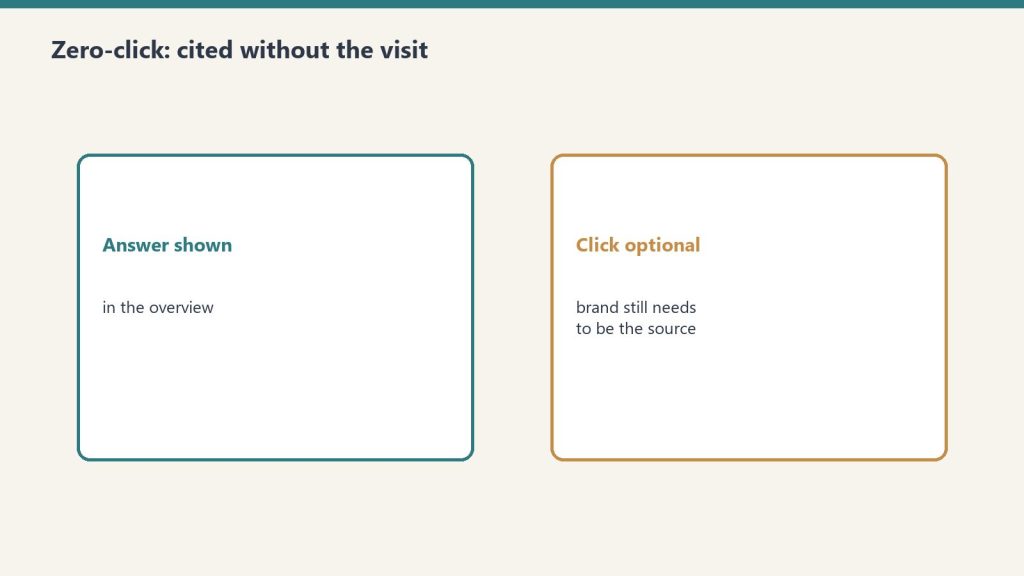
    Two cards: answer shown in overview versus optional click
    Patients ask AI before they call your clinic.

    An estimated 65–70% of healthcare searches now end without a single click — patients receive their answer directly from Google AI Overviews, voice assistants, or ChatGPT without ever visiting a website. When a patient asks “what are the early warning signs of Type 2 diabetes?” at 11pm, or “how long is recovery from ACL surgery?”, the AI synthesizes an answer from the most structured, authoritative, entity-verified medical content it can find.

    Most medical practice WordPress blogs are invisible to these systems. Not because the content is wrong — but because it lacks FAQPage schema, direct-answer formatting, medical entity injection, and the E-E-A-T signals that AI systems use to evaluate clinical authority. SiteBoost applies all of these to your existing WordPress articles, without modifying your core pages, forms, or HIPAA-sensitive systems.

    Important: SiteBoost optimizes WordPress post content only — blog articles, condition guides, and educational health content. We do not modify patient-facing forms, appointment booking systems, contact forms, or any page that collects personal health information. HIPAA-compliance requirements for forms and data collection are outside our scope and should be handled by your IT and compliance team.

    Why YMYL Makes Healthcare SEO the Hardest — and Highest Stakes

    Google classifies healthcare content as YMYL — Your Money or Your Life — content that could significantly affect a person’s health or safety. This triggers the highest level of algorithmic scrutiny of any content category. Google’s September 2025 “Perspective” update hit healthcare sites hardest, with smaller clinics reporting average 15% drops in search impressions. The update specifically targeted YMYL content that lacked verifiable E-E-A-T signals.

    What E-E-A-T signals does Google evaluate for healthcare content? Google’s E-E-A-T framework evaluates healthcare content across four dimensions: Experience (does the content reflect first-hand clinical knowledge?), Expertise (is the author a licensed medical professional with verifiable credentials?), Authoritativeness (does the organization have demonstrable standing in the medical community — hospital affiliations, board certifications, peer-reviewed publications?), and Trustworthiness (is the site HTTPS-secure, are citations sourced from peer-reviewed research, is the content regularly updated?). For YMYL healthcare content, all four dimensions must be explicitly signaled in the content structure — not assumed from domain age or backlinks alone.

    The Medical Entity Set That Signals Clinical Authority

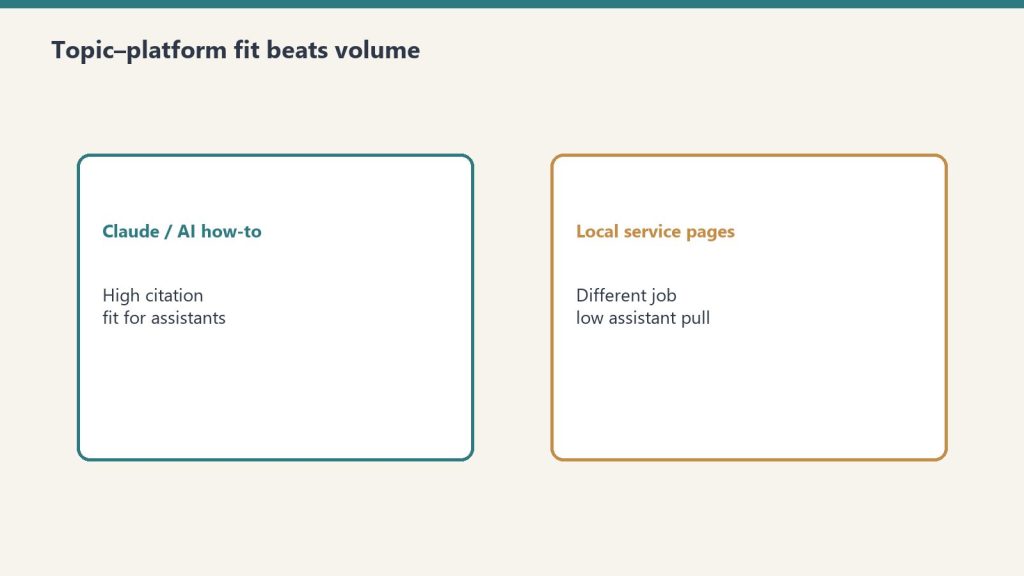
    Comparison of Claude how-to fit versus local service page fit for assistants
    The medical entity set that signals clinical authority.

    Most medical practice WordPress blogs mention their specialty repeatedly but miss the named entities that establish clinical authority with both Google and AI systems. The difference between a page that gets cited by an AI health assistant and one that gets ignored is entity density — specific, verifiable named references that signal expertise.

    What named medical entities should healthcare WordPress content include for AI citation? Healthcare content optimized for AI citation should reference: credentialing bodies (American Board of Medical Specialties, American Medical Association, relevant specialty boards), clinical guidelines and standards (CDC guidelines, NIH treatment protocols, USPSTF recommendations, specialty society clinical practice guidelines), diagnostic terminology (ICD-10 codes where appropriate, DSM-5 for behavioral health, specific imaging modalities and laboratory values), treatment modalities with named protocols, and insurance and billing frameworks (CPT codes in context, prior authorization processes, CMS coverage determinations). Entity density — specific, verifiable named references — is what signals clinical authority to AI systems and Google’s quality evaluators.

    Schema Markup That Healthcare WordPress Content Must Have

    FAQPage

    Patient Question Schema

    6–8 Q&A pairs targeting the specific questions patients ask about conditions, treatments, recovery timelines, and insurance coverage. Earns People Also Ask placements for high-intent medical queries.

    MedicalCondition

    Condition Schema

    Schema.org MedicalCondition markup for condition-specific pages — symptoms, risk factors, treatments, and associated specialties. Signals clinical precision to Google’s medical knowledge graph.

    MedicalProcedure

    Procedure Schema

    Structured markup for procedure guides — preparation, duration, recovery, and follow-up care. Directly feeds Google AI Overview synthesis for “how long does [procedure] take” queries.

    Physician

    Provider Entity Schema

    Schema.org Physician markup linking content authors to verifiable credentials, board certifications, and organizational affiliations — the foundation of E-E-A-T for medical content.

    Hypothetical Before & After: A Typical Medical Practice WordPress Article

    This illustrates what SiteBoost applies to a typical healthcare blog article about a common condition — the kind of educational content most practices publish and then wonder why it doesn’t drive appointments:

    Before SiteBoost Title: “Understanding Type 2 Diabetes: What You Should Know”

    Meta description: Auto-generated from first paragraph — 225 chars, truncated

    Word count: 520 words

    Author byline: “Admin” — no credential signal

    Schema: None

    Entity density: “diabetes” mentioned 11x, “blood sugar” 4x — no ADA, CDC, HbA1c, ICD-10, or clinical guideline references

    FAQ section: None

    AI visibility: Zero — no speakable blocks, invisible to AI health assistants
    After SiteBoost Title: “Type 2 Diabetes: Symptoms, Risk Factors, and When to See a Doctor”

    Meta description: “Type 2 diabetes affects 37 million Americans. Learn the early warning signs, risk factors, and when to schedule a diabetes screening.” (148 chars)

    Word count: 900 words (definition box + FAQ added)

    Author byline: Physician name + MD credential + specialty board + hospital affiliation injected into author schema

    Schema: FAQPage + MedicalCondition JSON-LD injected

    Entity density: ADA (American Diabetes Association), CDC diabetes statistics, HbA1c diagnostic threshold (6.5%), ICD-10 E11, USPSTF screening guidelines, metformin as first-line treatment reference

    FAQ section: 7 questions — “What is a normal HbA1c level?”, “Can Type 2 diabetes be reversed?”, “Does insurance cover diabetes screening?” — all targeting PAA

    AI visibility: 2 speakable blocks targeting “what are the early signs of Type 2 diabetes” and “when should I get a diabetes screening”

    The AI Search Opportunity for Healthcare Providers

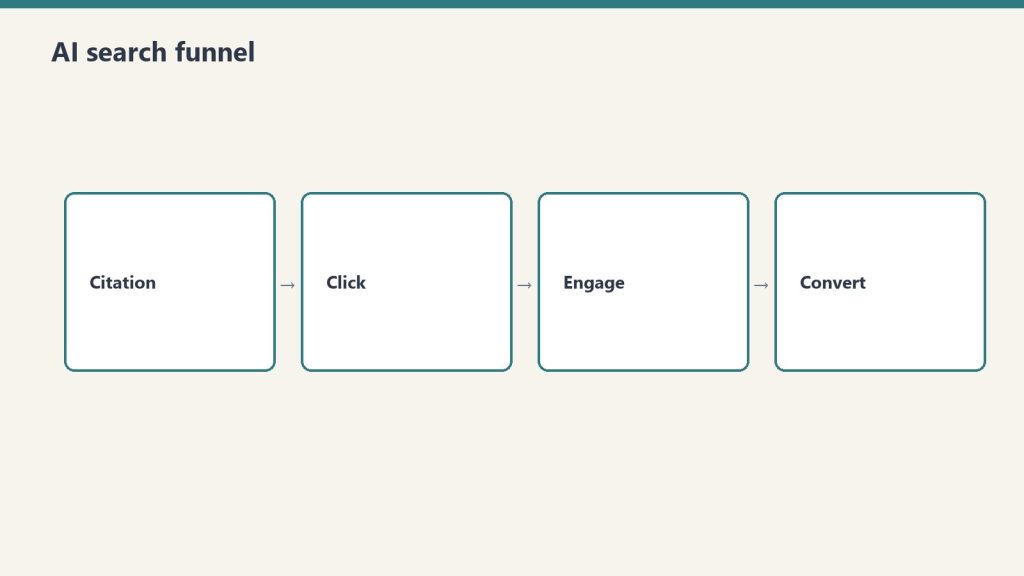
    Four-stage funnel: citation, click, engage, convert
    The AI search opportunity for healthcare providers.

    When a patient asks ChatGPT “what are the early warning signs of high blood pressure?” or asks Perplexity “how is sleep apnea diagnosed?” — the AI synthesizes an answer from medical content that has verifiable clinical entities, structured schema, and clear direct-answer formatting. Healthcare providers with MedicalCondition schema, ADA/CDC/NIH entity references, and speakable blocks in their WordPress articles are dramatically more likely to be cited as the source.

    This matters for appointment acquisition. A patient who sees your practice cited in a ChatGPT answer about their condition has a trust signal before they’ve visited your website. That pre-established authority shortens the consideration cycle and increases the likelihood they book with you over an uncited competitor.

    What SiteBoost Covers — and What It Doesn’t — for Healthcare

    Content TypeSiteBoost Covers?Notes
    Blog articles & condition guides✅ YesPrimary target — educational health content, symptom guides, treatment overviews
    FAQ & patient resource pages✅ YesHigh-value AEO targets — direct-answer formatting and FAQPage schema
    Provider bio pages (as posts)✅ YesPhysician entity injection, credential schema — major E-E-A-T signal
    Patient intake forms❌ NoHIPAA-sensitive — outside scope, handled by compliance team
    Appointment booking systems❌ NoThird-party system integration — not modified
    Core service/location Pages❌ NoPage-type (post_type=page) — never modified without explicit per-page approval

    SiteBoost Pilot for Healthcare: What You Get

    DeliverableDetails
    Site Connection & AuditWordPress REST API connection, full content inventory, E-E-A-T gap analysis, schema coverage report, YMYL readiness assessment, Before Baseline Report
    10 Post OptimizationsFull SEO + AEO + GEO on 10 educational health articles — clinical entity injection, FAQPage + MedicalCondition schema, speakable blocks, author credential markup
    60-Day Impact ReportBefore vs. after: rankings, PAA placements, AI citation visibility, appointment-stage keyword movement
    YMYL-safe approachWe optimize structure, schema, and entity density — never medical facts. All clinical content remains exactly as your providers wrote it.
    Price$597 pilot — $767 value

    Interested in the SiteBoost Pilot for Your Healthcare Site?

    We onboard sites personally. Email Will with your site URL and he’ll follow up within one business day.

    → Email Will — Start the Pilot

    Email only. No sales call required. No commitment to reply.

    Frequently Asked Questions: SiteBoost for Healthcare

    Does SiteBoost modify any HIPAA-sensitive content or patient data systems?

    No. SiteBoost operates exclusively on WordPress post content via the REST API — blog articles, condition guides, and educational health content. We do not interact with patient intake forms, appointment booking systems, electronic health records, or any system that collects or stores protected health information. The WordPress Application Password we use is scoped to post content editing only and cannot access other plugins, databases, or third-party systems integrated into your site.

    What does SiteBoost do about E-E-A-T for medical content?

    SiteBoost’s GEO layer injects E-E-A-T signals directly into your existing article content: physician credential references tied to author schema markup, named clinical entities (board certifications, hospital affiliations, specialty society memberships), and citations to authoritative medical sources (CDC guidelines, NIH protocols, USPSTF recommendations, specialty board clinical guidance). These are the exact signals Google’s quality evaluators look for in YMYL medical content. We optimize the structure and entity density — we never alter clinical facts or medical guidance written by your providers.

    How does AEO optimization help medical practices specifically?

    For healthcare, AEO targets the questions patients ask before booking appointments: “What are the symptoms of [condition]?”, “How is [condition] diagnosed?”, “What does [procedure] feel like?”, “Does insurance cover [treatment]?”, “How long is recovery from [surgery]?” A FAQPage schema block with 6–8 of these questions, injected into an existing condition guide, can earn People Also Ask placements that appear above traditional search results — capturing patient attention before they ever scroll to your organic listing.

    Will SiteBoost changes affect how our medical content is perceived for compliance?

    SiteBoost optimizes content structure, schema markup, and entity density — it does not alter any clinical statements, medical advice, or factual claims in your existing articles. All optimization is additive: we inject a definition box, FAQ section, and schema around your existing content. The medical information your providers wrote remains word-for-word unchanged. If your compliance team requires review of structural changes before publishing, we can provide a complete diff of every modification for review prior to any post being updated.

    What types of medical practices benefit most from SiteBoost?

    SiteBoost delivers the highest value for practices with existing WordPress blogs of 20+ articles that haven’t been systematically optimized: primary care and family medicine practices with broad condition coverage, specialist practices (orthopedics, cardiology, dermatology, neurology) with condition and procedure guides, multi-location health systems with high content volume and inconsistent optimization, and telehealth platforms with large educational content libraries. Solo practices with fewer than 10 blog posts are better served by building new content first before optimization.

    How does SiteBoost handle the Google September 2025 YMYL update for healthcare sites?

    The September 2025 “Perspective” update penalized healthcare content lacking verifiable E-E-A-T signals — specifically anonymous authorship, missing credential references, and absence of clinical entity anchors. SiteBoost directly addresses all three: physician credential markup via Physician schema, clinical entity injection (AMA, CDC, NIH, specialty board references), and direct-answer formatting that demonstrates genuine clinical expertise rather than generic health information. Sites hit by this update see the fastest recovery through entity and schema remediation applied to existing content.

    Related on Tygart Media: law firm blog SEO · SaaS entity SEO · WordPress SEO audit.

  • B2B SaaS Blog Optimization: Turn Traffic Into Pipeline

    B2B SaaS Blog Optimization: Turn Traffic Into Pipeline

    SiteBoost — Vertical Series

    SiteBoost for B2B SaaS: WordPress Blog Optimization for Software Companies That Need Pipeline, Not Just Traffic

    By Tygart Media — This page is built using the same SEO, AEO, and GEO techniques applied through SiteBoost. The entity density, schema, FAQ structure, and speakable blocks you see here are exactly what the service delivers to your WordPress blog.

    B2B SaaS WordPress Blog Optimization: The process of applying SEO (Search Engine Optimization), AEO (Answer Engine Optimization), and GEO (Generative Engine Optimization) to a software company’s existing WordPress blog posts — restructuring articles for buyer-journey intent, injecting product-category entities and integration references, adding FAQPage schema targeting decision-maker queries, and building speakable blocks so the company’s content gets cited by ChatGPT, Perplexity, and Google AI Overviews when buyers research software solutions.

    The B2B SaaS Content Problem: 50 Blog Posts, Zero Pipeline

    Most B2B SaaS companies have been publishing blog content for years. They have 30, 50, sometimes 100+ WordPress articles covering product features, integrations, use cases, and industry trends. Almost none of it converts — not because the content is bad, but because it was never optimized for how buyers actually search, compare, and decide in 2026.

    Google Ads CPCs for B2B SaaS have surged 40–50% since 2020. Yet the average SaaS company’s WordPress blog — the owned channel that compounds indefinitely — sits unoptimized. No FAQPage schema. No direct-answer formatting. No AI citation signals. No buyer-stage mapping. Articles that should be closing demos are instead ranking nowhere and converting nobody.

    Why do B2B SaaS blog posts fail to generate pipeline despite high traffic?
    B2B SaaS blog posts fail to generate pipeline when they target informational keywords without buyer-stage alignment, lack FAQPage schema to capture People Also Ask placements for decision-stage queries, and have no entity injection for the product category, integration ecosystem, or competitive alternatives that buyers compare during evaluation. Traffic without conversion intent signals — direct answers, comparison tables, and decision-stage CTAs — produces sessions, not demos.

    The Three Buyer Stages SaaS Blog Content Must Cover

    According to Gartner’s 2025 B2B Buying Report, 75% of B2B buyers prefer a rep-free sales experience. Your WordPress blog is the sales rep. It needs to work at every stage of a 40–90 day evaluation cycle — and most SaaS blogs only cover the awareness stage.

    Awareness

    Problem-Aware Content

    Informational posts explaining the problem your product solves. Most SaaS blogs have plenty of this. The optimization gap: no direct-answer formatting, no PAA targeting, no AI citation signals.

    Consideration

    Comparison & Evaluation

    “Best [software category] tools,” integration guides, use-case breakdowns. High-intent, often ignored. AEO + schema make these the highest-converting pages when optimized correctly.

    Decision

    Bottom-of-Funnel Content

    Pricing comparisons, implementation guides, ROI calculators, migration posts. Almost always missing FAQPage schema and the entity density needed to rank for “[competitor] alternative” searches.

    What Makes SaaS Content Different: The Entity Set That Signals Category Authority

    B2B software content has a specific entity vocabulary that signals authority to both Google and AI systems. Most SaaS WordPress blogs mention their own product name repeatedly but miss the named entities that establish category expertise and get content cited by AI research assistants.

    What named entities should B2B SaaS WordPress content include for AI citation?
    B2B SaaS content optimized for AI citation should reference: the product category standard (e.g., CRM, PLM, ERP, HRIS, CPQ), relevant industry analysts and reports (Gartner Magic Quadrant, Forrester Wave, G2 category leaders), integration ecosystem partners (Salesforce, HubSpot, Slack, Zapier, Workday, AWS), compliance and security frameworks relevant to the buyer’s industry (SOC 2 Type II, ISO 27001, GDPR, HIPAA, FedRAMP), and buyer-role terminology (Chief Revenue Officer, VP of Engineering, Head of Customer Success, Procurement). Entity density — not keyword density — determines whether AI systems treat a page as a citable authority.

    Hypothetical Before & After: A Typical B2B SaaS Blog Post

    This illustrates what SiteBoost applies to a typical SaaS company article about workflow automation — the kind of content most software companies publish and then wonder why it doesn’t convert:

    Before SiteBoost
    Title: “How Workflow Automation Saves Time for Your Team”

    Meta description: Empty — WordPress using post excerpt

    Word count: 680 words

    Buyer stage: Awareness only — no consideration or decision layer

    FAQ section: None

    Schema: None

    Entity density: Product name mentioned 8x. No integration names, no analyst references, no compliance entities

    AI visibility: Invisible — no speakable blocks, no LLMS.txt

    After SiteBoost
    Title: “Workflow Automation for B2B Teams: How to Eliminate Manual Handoffs and Accelerate Deal Cycles”

    Meta description: “Stop losing deals to slow handoffs. Workflow automation eliminates manual steps across your CRM, project management, and billing tools. See how.” (155 chars)

    Word count: 1,050 words (definition box + FAQ added)

    Buyer stage: Awareness → Consideration bridge added with comparison table and integration entity injection

    FAQ section: 6 questions — “How long does workflow automation take to implement?”, “Does it integrate with Salesforce?”, “What’s the ROI?” — all targeting PAA

    Schema: FAQPage + Article JSON-LD injected

    Entity density: Zapier, HubSpot, Salesforce, SOC 2, G2 Workflow Automation category, Gartner — all referenced naturally

    AI visibility: 2 speakable blocks targeting “what is workflow automation” and “how does workflow automation integrate with CRM”

    The AI Search Opportunity SaaS Companies Are Missing

    When a procurement manager asks ChatGPT “what’s the best workflow automation tool for a mid-market sales team?” or a CTO asks Perplexity “how does [software category] integrate with our existing Salesforce instance?” — the AI pulls from the most structured, entity-rich, authoritative content it can find. SaaS companies that have integration entity references, compliance framework mentions, and speakable answer blocks in their WordPress blog posts are dramatically more likely to be cited.

    This matters because B2B buyers increasingly start software research in AI assistants before they ever reach Google. A SaaS company cited by ChatGPT at the research stage has a meaningful advantage before the buyer even knows which vendors to evaluate.

    The Paid vs. Organic Math for B2B SaaS

    Channel Cost Per Click Monthly Spend (100 visits) Compounds? Scales?
    Google Ads (SaaS terms) $5–$15+ $500–$1,500/mo ❌ Stops when budget stops ❌ Linear cost increase
    LinkedIn Ads (B2B) $8–$25+ $800–$2,500/mo ❌ Stops when budget stops ❌ Linear cost increase
    Optimized WordPress blog (SiteBoost) $0 per click $47/post, one time ✅ Compounds over time ✅ Every optimized post is permanent

    SiteBoost Pilot for B2B SaaS: What You Get

    Deliverable Details
    Site Connection & Audit WordPress REST API connection, full blog inventory, buyer-stage mapping of existing content, schema gap report, entity gap analysis, Before Baseline Report
    10 Post Optimizations Full SEO + AEO + GEO on 10 highest-opportunity articles — buyer-stage restructuring, integration entity injection, FAQPage schema, speakable blocks targeting AI search
    60-Day Impact Report Before vs. after: rankings, PAA appearances, demo-stage keyword movement, AI citation visibility
    Buyer-stage prioritization We identify which of your posts are closest to consideration and decision stage and prioritize those — highest pipeline potential first
    Price $597 pilot — $767 value

    Interested in the SiteBoost Pilot for Your SaaS Site?

    We onboard sites personally. Email Will with your site URL and he’ll follow up within one business day.

    → Email Will — Start the Pilot

    Email only. No sales call required. No commitment to reply.

    Frequently Asked Questions: SiteBoost for B2B SaaS

    Our SaaS site runs on React/Next.js — can SiteBoost still help?

    SiteBoost optimizes WordPress blog content specifically. If your marketing blog runs on WordPress — which the majority of SaaS companies use for content, even when the product itself runs on React, Next.js, or another framework — SiteBoost connects to it via the REST API and applies all optimization layers. If your blog is not on WordPress, SiteBoost is not the right fit.

    Our SaaS blog already gets traffic. Why do we need optimization?

    Traffic without pipeline is a vanity metric. The most common pattern in B2B SaaS is thousands of monthly blog sessions and minimal demo requests from organic. The gap is almost always buyer-stage mismatch — content attracting awareness-stage readers when consideration and decision-stage content is what drives conversions. SiteBoost identifies which of your existing posts are closest to the consideration and decision stages and restructures them for conversion: direct answers, FAQ schema, integration entity injection, and bottom-of-funnel CTAs.

    How does SiteBoost handle technical SaaS terminology in content optimization?

    SiteBoost’s GEO layer injects named entities specific to your product category — integration partners, compliance frameworks, industry analyst reports, and buyer-role terminology. This is not generic keyword stuffing. For a B2B project management SaaS, this means naturally referencing Jira, Asana, Salesforce integrations, SOC 2 compliance, and Gartner PPM category context. For a CRM, it means referencing HubSpot, Salesforce, pipeline velocity, and MQL-to-SQL conversion. The entity set is customized to your product category before any post is touched.

    What does AEO optimization look like for B2B SaaS content specifically?

    For SaaS companies, AEO targets the questions buyers ask during software evaluation: “How long does implementation take?”, “Does it integrate with [tool]?”, “What’s the pricing model?”, “How is data security handled?”, “What’s the migration process from [competitor]?” These are high-intent, decision-stage queries that appear in Google’s People Also Ask boxes for competitive software searches. A FAQPage schema block targeting 6–8 of these questions, injected into an existing article, can earn PAA placements that your competitors are currently occupying.

    We have 80+ blog posts. How does SiteBoost decide which 10 to optimize in the pilot?

    The Before Baseline Report maps every post by word count, existing schema coverage, estimated keyword opportunity, and buyer stage. We then prioritize posts that are: closest to page 1 (positions 11–30 — near-miss opportunities), already targeting consideration or decision-stage intent, and missing schema or direct-answer structure. These are the highest-leverage posts — they already have Google’s attention and just need optimization depth to move up. You review and approve the priority list before we start.

    How does SiteBoost optimization affect our WordPress site’s technical performance?

    SiteBoost writes to post content and excerpt fields only via the WordPress REST API. It does not modify theme files, plugin settings, database configuration, or server-level settings. Changes are at the post level — content, title, slug, excerpt — and JSON-LD schema injected as HTML in the post body. There is zero impact on Core Web Vitals, page speed, or server configuration. The WordPress Application Password used is scoped to posts only.

  • Restoration Company SEO: WordPress & AI Optimization

    Restoration Company SEO: WordPress & AI Optimization

    SiteBoost — Vertical Series

    SiteBoost for Restoration Companies: WordPress SEO, AEO & AI Optimization for Water Damage Contractors

    By Tygart Media — This page is built using the same SEO, AEO, and GEO techniques applied through SiteBoost. The optimization you see here — entity density, schema, FAQ structure, speakable blocks — is exactly what the service delivers.

    Restoration Company WordPress Optimization: The process of applying SEO (Search Engine Optimization), AEO (Answer Engine Optimization), and GEO (Generative Engine Optimization) to a water damage or disaster restoration contractor’s WordPress articles — improving title tags, FAQ sections, IICRC entity injection, schema markup, and AI citation signals so the contractor ranks in Google, wins insurance-related People Also Ask placements, and gets cited by AI search systems when homeowners and adjusters ask about water damage remediation, mold removal, or fire restoration.

    The Restoration SEO Reality: Highest CPC in Home Services, Lowest Content Quality

    Water damage and flood restoration commands the highest cost-per-click in the entire home services category. Homeowners searching for emergency restoration services are in crisis — they click, and they hire. That makes restoration keywords extremely valuable to Google advertisers. Yet most restoration company WordPress sites are full of thin, unoptimized articles that leave enormous organic opportunity untouched.

    Why is the water damage restoration industry’s CPC the highest in home services?
    Water damage restoration has the highest CPC in the home services category because of three compounding factors: emergency urgency (homeowners need help within hours, not days), high average job value ($3,000–$15,000+ per project), and insurance-driven billing (restoration companies often bill insurance carriers directly, increasing the lifetime value of each job). These factors make every qualified click worth significant revenue, driving advertisers to bid aggressively on terms like “water damage restoration near me” and “emergency flood cleanup.”

    Real Data: The Gap Between Servpro and Your Site

    SpyFu domain intelligence shows the organic gap between category leaders and typical independent restoration contractors — publicly available data that illustrates why optimization depth matters:

    Domain Organic Keywords Monthly Clicks SEO Value/Mo Domain Strength
    servpro.com 178,900 151,700 $5,825,000 62
    Typical NYC Contractor 1,006 384 $31,220 41
    Typical Houston Contractor 202 20 $14,840 38
    Typical indie contractor <200 <50 <$10,000 25–35

    Source: SpyFu domain stats, February 2026.

    Servpro’s organic value of $5.8M/month is built on systematic content optimization at scale — not domain authority alone. Their strength score (62) is only moderately higher than independent restoration contractors (38–41). The gap is content depth, schema coverage, and FAQ saturation. That’s exactly what SiteBoost closes.

    Real Before & After: Restoration Company WordPress Article

    Here is a hypothetical demonstration of what SiteBoost applies to a typical restoration company article — illustrating exactly what happens to every post in the pilot:

    Before SiteBoost (Real Post)
    Title: “From Blueprint to Reality: Navigating the Construction Process with Ease”

    Meta description: Generic excerpt, 210 characters — too long, no keyword

    Word count: ~750 words

    FAQ section: None

    Schema: Article JSON-LD only (no FAQPage)

    Structure: 5 H2 sections, no direct-answer formatting

    AI visibility: Zero speakable blocks, no construction entity injection

    After SiteBoost (Same Article)
    Title: Optimized with primary keyword front-loaded

    Meta description: 155 chars — keyword + value proposition + CTA

    Word count: ~950 words (definition box + FAQ added)

    FAQ section: 7 questions — “What permits are required?”, “How long does the planning phase take?”, “How do I manage unexpected costs?” — all targeting PAA

    Schema: FAQPage JSON-LD injected alongside existing Article schema

    Structure: Definition box + direct-answer H2 intros added

    AI visibility: Speakable content targets: what is the construction process, how to manage contractor timeline

    What Makes Restoration Content Different: IICRC Entities & Insurance Language

    Restoration company content has a specific entity set that signals authority to both Google and AI systems. Most restoration WordPress blogs mention “water damage” repeatedly but miss the named entities that establish expertise:

    What IICRC entities should restoration company WordPress content reference?
    Restoration company content optimized for AI citation and Google E-E-A-T should reference the Institute of Inspection, Cleaning and Restoration Certification (IICRC), specific IICRC standards (S500 Standard for Professional Water Damage Restoration, S520 Standard for Professional Mold Remediation, S770 Standard for Professional Fire and Smoke Damage Restoration), restoration equipment categories (desiccant dehumidifiers, air movers, hydroxyl generators, thermal imaging cameras), and insurance-specific terminology (RCV — Replacement Cost Value, ACV — Actual Cash Value, scope of loss, supplemental claims, Xactimate estimating software). This entity density signals domain expertise to both Google’s quality evaluators and AI search systems.

    The Insurance Adjuster Search Opportunity

    Restoration companies have two audiences searching for them: homeowners in crisis, and insurance adjusters researching restoration standards and protocols. Adjuster-facing content — articles about IICRC S500 compliance, Xactimate line items, scope of loss documentation, and RCV vs. ACV billing — is almost completely absent from most restoration WordPress sites. This represents an untapped GEO opportunity: when an adjuster or TPA (Third Party Administrator) asks ChatGPT about restoration billing standards, your content could be the source cited.

    Search Intent Example Query Content Type Needed Optimization Layer
    Emergency homeowner “water damage restoration near me” Service pages + local content SEO + Local schema
    Research homeowner “how long does water damage restoration take” FAQ-rich blog posts AEO + FAQPage schema
    Insurance-aware homeowner “will insurance cover mold remediation” Insurance guide articles AEO + GEO
    Insurance adjuster “IICRC S500 water damage standard” Technical authority content GEO + entity injection
    AI search user “what is the restoration process for category 3 water damage” Structured speakable content GEO + speakable blocks

    SiteBoost Pilot for Restoration Companies: What You Get

    Deliverable Details
    Site Connection & Audit WordPress REST API connection, content inventory, IICRC entity gap analysis, insurance terminology gap report, Before Baseline
    10 Post Optimizations Full SEO + AEO + GEO on 10 highest-opportunity restoration articles — including IICRC entity injection, insurance terminology, and speakable blocks
    60-Day Impact Report Baseline vs. 60-day comparison: rankings, PAA appearances, AI citation visibility, traffic delta
    Restoration expertise SiteBoost is purpose-built for restoration contractors. Our team understands IICRC standards, Xactimate, insurance billing, and the specific content gaps that hold restoration sites back.
    Price $597 pilot — $767 value

    Interested in the SiteBoost Pilot for Your Restoration Site?

    We onboard sites personally. Email Will with your site URL and he’ll follow up within one business day.

    → Email Will — Start the Pilot

    Email only. No sales call required. No commitment to reply.

    Frequently Asked Questions: SiteBoost for Restoration Companies

    Do you understand restoration industry terminology well enough to write about it?

    Yes — and this is our core advantage over general SEO agencies. SiteBoost is built by a team with deep restoration industry knowledge. We understand IICRC standards (S500, S520, S770), Xactimate estimating, RCV/ACV billing, category and class water damage classifications, psychrometric calculations, and the insurance claim process from the contractor’s perspective. Our GEO layer injects these terms specifically because they’re the entities that establish authority with both Google’s quality evaluators and AI systems.

    Can SiteBoost help us rank for emergency water damage keywords in our local market?

    SiteBoost optimizes your existing blog content — not your service pages or Google Business Profile. However, content authority signals from your blog directly reinforce your local pack and GBP rankings. Articles that rank for “how long does water extraction take” or “what does water damage restoration cost” build topical authority that helps your service pages rank for “water damage restoration [city]” — the high-intent emergency terms that drive calls.

    What restoration-specific schema markup does SiteBoost inject?

    For restoration company articles, SiteBoost injects: FAQPage schema (targeting insurance and process questions), Article schema with LocalBusiness publisher markup, HowTo schema for process-oriented content (e.g., “How to document water damage for an insurance claim”), and Service schema referencing specific restoration categories (water damage, mold remediation, fire restoration). All schema is valid JSON-LD injected directly into the post via WordPress REST API.

    How does AI optimization help restoration companies specifically?

    When a homeowner asks ChatGPT “what should I do after a pipe bursts?” or asks Perplexity “does insurance cover water damage from a leaking roof?” — the AI pulls from the most structured, entity-rich, authoritative content it can find. Restoration companies that have IICRC references, insurance terminology, and speakable answer blocks in their WordPress articles are far more likely to be cited. SiteBoost’s GEO layer builds exactly this citation infrastructure into your existing content.

    We use a restoration CRM and job management software. Will SiteBoost interfere?

    No. SiteBoost operates exclusively on WordPress post content via the REST API. It has zero interaction with ServiceTitan, Restoration Manager, Encircle, Xactimate, or any other CRM or job management system. The WordPress Application Password we use is scoped to content editing only — it cannot access any other systems, plugins, or third-party integrations on your site.

    We’re IICRC-certified. Can SiteBoost reflect that in our content?

    Yes — and it’s one of the most important GEO signals we inject. IICRC certification is a named credential that Google’s E-E-A-T framework specifically rewards for restoration content. We inject IICRC references, specific certification levels (WRT, ASD, AMRT, FSRT), and standard citations throughout your articles. This signals expertise to both Google and AI systems evaluating whether to cite your content as authoritative.

  • Law Firm SEO: WordPress & AI Optimization via SiteBoost

    Law Firm SEO: WordPress & AI Optimization via SiteBoost

    SiteBoost — Vertical Series

    SiteBoost for Law Firms: WordPress SEO, AEO & AI Optimization for Attorneys

    By Tygart Media — This page is built using the same SEO, AEO, and GEO techniques we apply through SiteBoost. The optimization you see here is the product.

    Law Firm WordPress Optimization: The process of applying SEO (Search Engine Optimization), AEO (Answer Engine Optimization), and GEO (Generative Engine Optimization) to a law firm’s existing WordPress content — improving title tags, meta descriptions, FAQ sections, schema markup, and entity density so the firm ranks in Google, wins People Also Ask placements, and gets cited by AI systems like ChatGPT, Perplexity, and Google AI Overviews.

    The Law Firm SEO Problem: Paying $8–$500 Per Click While Your Blog Sits Unoptimized

    Law firms pay the highest average CPC of any industry — $8.58 on core terms, with personal injury and truck accident keywords hitting $150–$500 per click. A single signed case can be worth $50,000 to several million dollars, which is why firms keep bidding. But most of those same firms have WordPress blogs full of articles with no FAQ sections, no schema markup, missing meta descriptions, and zero AI visibility — organic traffic they’re leaving entirely on the table.

    SiteBoost connects directly to your WordPress site and optimizes every existing article for the three layers that matter in 2026: traditional search rankings, People Also Ask placements, and AI citation by ChatGPT, Perplexity, and Google AI Overviews. No plugins. Changes pushed live via the WordPress REST API. Results measured at 60 days.

    What is the ROI of SEO for law firms compared to Google Ads?
    Law firms paying $8–$500 per click on Google Ads can reduce paid dependency by ranking organically for the same high-intent keywords. A single law firm blog post optimized for “personal injury lawyer FAQ” can generate consistent organic impressions at zero marginal cost per click — compared to $8–$150 per click on Google Ads for the same terms. SEO compounds over time; paid ads stop the moment the budget runs out.

    The Three Optimization Layers Applied to Every Law Firm Article

    Each post receives three passes. Here’s what happens to a typical law firm WordPress article:

    Layer What We Do What It Wins
    SEO Rewrite title tag (primary keyword front-loaded, 50–60 chars), clean slug, write meta description (140–155 chars), fix H2/H3 structure Higher rankings, better CTR from SERPs
    AEO Add 40–60 word definition box, inject 6–8 FAQ pairs targeting People Also Ask, add FAQPage JSON-LD schema Featured snippets, PAA placements, voice search
    GEO Inject named legal entities (practice areas, regulations, courts, case types), add speakable blocks, embed LLMS.txt comment Citations in ChatGPT, Perplexity, Google AI Overviews

    Real Before & After: Law Firm WordPress Article

    Here is a hypothetical demonstration of what SiteBoost applies to a typical law firm article about personal injury claims — the kind of content most firms have sitting unoptimized for years:

    Before SiteBoost
    Title: “Personal Injury Claims | a Regional Law Firm”

    Meta: (empty)

    Word count: 312 words

    FAQ section: None

    Schema: None

    AI visibility: Zero — ChatGPT and Perplexity have no reason to cite this page

    Google ranking: Page 4–6 for “personal injury lawyer FAQ”

    After SiteBoost
    Title: “Personal Injury Claims Explained: What You Need to Know | a Regional Law Firm”

    Meta: “Injured? Learn how personal injury claims work, what damages you can recover, and how our attorneys build your case. Free consultation.” (148 chars)

    Word count: 890 words (expanded)

    FAQ section: 7 questions targeting PAA: “How long do I have to file?”, “What is comparative negligence?”, “Do I pay upfront?”

    Schema: FAQPage + Article JSON-LD injected

    AI visibility: Speakable blocks + legal entity injection (ABA, negligence, statute of limitations, contingency fee)

    Google ranking: Structured for page 1 targeting across multiple long-tail terms

    Why Law Firm Content Needs GEO Optimization in 2026

    According to iLawyer Marketing, law firms should be optimizing for both Google and answer engines in 2026. When someone asks ChatGPT “what should I know before filing a personal injury claim?” or asks Perplexity “how do contingency fees work for lawyers?” — the AI pulls answers from the most entity-rich, structured, authoritative WordPress content it can find. Most law firm blogs are invisible to these systems because they lack named entities, speakable blocks, and the structural signals AI crawlers use to identify citable content.

    What legal entities should law firm WordPress content include for AI citation?
    Law firm content optimized for AI citation should reference named legal entities including: the American Bar Association (ABA), specific practice area statutes (e.g., 28 U.S.C. § 1332 for diversity jurisdiction), named legal doctrines (contributory negligence, res ipsa loquitur, respondeat superior), court systems (U.S. District Court, state circuit courts), and relevant regulatory bodies. Entity density — not keyword density — is what signals authority to AI systems like ChatGPT, Perplexity, and Google Gemini.
    How does AEO help law firms win People Also Ask placements?
    Answer Engine Optimization for law firms focuses on restructuring existing blog content so the first 40–60 words after each H2 heading directly answer the implied question. Adding a FAQPage schema block with 6–8 question-and-answer pairs targeting high-intent legal queries — “How long do I have to file a personal injury claim?”, “What does contingency fee mean?”, “Can I sue if I was partially at fault?” — positions the page for Google’s People Also Ask box, which appears above organic results for most legal searches.

    The Competitive Gap: What Servpro Has That Your Law Firm Doesn’t

    SpyFu data shows Servpro.com ranking for 178,900 organic keywords with an estimated monthly SEO value of $5.8 million — achieved through systematic content optimization at scale. Meanwhile, the typical law firm WordPress site ranks for fewer than 500 keywords with an SEO value under $50,000. The gap isn’t budget. It’s optimization depth: title tags, meta descriptions, FAQ schema, internal linking, and entity saturation — applied systematically across every post.

    SiteBoost Pilot for Law Firms: What You Get

    Deliverable Details
    Site Connection & Audit Secure WordPress REST API connection, full content inventory, schema gap report, FAQ gap report, Before Baseline Report
    10 Post Optimizations SEO + AEO + GEO + Schema on 10 of your highest-opportunity existing articles — your approval before we start
    60-Day Impact Report Before vs. after comparison: rankings, impressions, AI visibility, traffic delta
    No plugins installed All changes via WordPress REST API — nothing added to your site
    Price $597 pilot — $767 value

    Interested in the SiteBoost Pilot for Your Law Firms Site?

    We onboard sites personally. Email Will with your site URL and he’ll follow up within one business day.

    → Email Will — Start the Pilot

    Email only. No sales call required. No commitment to reply.

    Frequently Asked Questions: SiteBoost for Law Firms

    How is SiteBoost different from a traditional law firm SEO agency?

    Traditional law firm SEO agencies charge $1,500–$5,000+ per month for long-term retainers, often with 6–12 month commitments. SiteBoost is a per-article, per-post service with no retainer required to start. The pilot is $597 for 10 optimized posts and a 60-day impact report. You pay for work done, not time on retainer. We also apply AEO and GEO layers that most traditional SEO agencies don’t offer — optimizing for People Also Ask and AI citation systems, not just traditional Google rankings.

    What WordPress hosting providers does SiteBoost work with for law firms?

    SiteBoost connects via the WordPress REST API using an Application Password — the same security standard used by Yoast, AIOSEO, and Rank Math plugins. We work with any self-hosted WordPress installation: WP Engine, Flywheel, SiteGround, Cloudflare-proxied sites, GCP Compute Engine, DigitalOcean, Kinsta, and bare-metal servers. The only requirement is that WordPress REST API is enabled, which it is by default on all standard installations.

    Will SiteBoost changes affect our attorney bio pages or service pages?

    No. SiteBoost optimizes blog posts and articles — not Pages, service pages, or attorney bio pages. WordPress distinguishes between Posts (post_type=post) and Pages (post_type=page). We operate exclusively on Posts unless you explicitly request a specific Page be included. Your core firm pages, practice area pages, and attorney profiles are never modified without direct written approval.

    How long does it take to see SEO results for a law firm WordPress blog?

    Traditional SEO changes typically take 60–90 days to surface in Google rankings for competitive legal keywords. However, AEO and GEO changes can appear faster — FAQPage schema can earn People Also Ask placements within 2–4 weeks, and AI systems like Perplexity crawl and update their citation index more frequently than Google’s organic index. The SiteBoost 60-Day Impact Report measures changes across all three: traditional rankings, PAA placements, and AI citation visibility.

    What makes SiteBoost suitable for E-E-A-T optimization for law firms?

    Google’s E-E-A-T framework (Experience, Expertise, Authoritativeness, Trustworthiness) is especially important for law firm content, which falls under Google’s YMYL (Your Money or Your Life) category. SiteBoost’s GEO layer injects named legal entities — specific statutes, regulatory bodies, case law concepts, and bar association references — that signal domain expertise to Google’s quality evaluators. We also add structured author references and practice area schema that reinforce attorney credentials within the content itself.

    Can SiteBoost help with local SEO for law firms?

    Yes. Local SEO for law firms — targeting searches like “personal injury attorney in [city]” or “divorce lawyer near me” — depends heavily on the content signals from your blog posts. SiteBoost injects geo-specific entities, city and county references, and locally relevant legal context into your articles. Combined with FAQPage schema and direct-answer formatting, this creates the content authority signals that reinforce your Google Business Profile and local pack rankings.

    Is SiteBoost appropriate for solo attorneys and small boutique firms?

    SiteBoost is specifically designed for small to mid-size law firms and solo attorneys who can’t justify a $3,000/month SEO agency retainer but still have WordPress blogs that need systematic optimization. The pilot bundle at $597 covers 10 posts — enough to demonstrate real results across your highest-opportunity content before committing to ongoing service. Solo attorneys often have significant organic growth potential precisely because their niche practice area content is highly specific and low-competition.

  • Live SEO Case Study: Organic Traffic Value Meter | Tygart

    Live SEO Case Study: Organic Traffic Value Meter | Tygart

    The Distillery
    — Brew № — · Distillery


    The Tygart Media Distillery

    Brew #1 — Radon Mitigation

    A living knowledge base, distilled from zero, published in the open.

    LIVE
    loading…
    brewed since 2026-04-10

    Category Organic Value Meter
    $0
    PER MONTH — RADON MITIGATION CATEGORY
    Day 0. The zero timestamp is real.

    Ranked Keywords
    0
    in top 100 for radon category URLs

    Nodes Published
    0 / 150
    of target corpus

    Top 10 Placements
    0
    first page Google

    Days Brewing
    0
    since 2026-04-10

    This is an open kitchen. Every knowledge node in this category is being brewed and published in public, through an eight-pass distillation pipeline that cross-references EPA guidance, AARST standards, state health departments, and peer-reviewed radon literature. The meter above tracks the category’s real organic SEO contribution to tygartmedia.com, measured daily against DataForSEO and SpyFu. No projections. No theoretical ceilings. Just what Google actually thinks the work is worth, right now.

    Brew Progress by Wave

    Top Ranking Keywords

  • Reverse Content Stack: A Workflow Guide for Publishers

    Reverse Content Stack: A Workflow Guide for Publishers

    The reverse content stack is a straightforward concept: treat your social posts as research briefs, expand them into WordPress clusters, and close the loop by queuing new WordPress URLs back to social. The hard part isn’t understanding it — it’s building the habit and the workflow.

    This is the implementation guide for managing editors and content operators who want to run the process, not just understand it.

    (For the full explanation of why this works, read Your Social Feed Is a Research Brief.)

    Step 1: Identify the Seed Posts

    Not every social post deserves full expansion. The ones that do share a few traits:

    • The post was researched — there was a real story behind it, not just a reshare
    • The post performed above average in reach or engagement
    • The topic has search intent — people would actually Google it
    • The story has multiple angles that different audiences would care about differently

    A practical filter: if you published a post and immediately thought “there’s more to this story,” that’s your seed. Flag it at publish time with a simple tag or Notion entry so it doesn’t get buried.

    Step 2: Reconstruct the Research Brief

    Before writing anything for WordPress, reconstruct what you know about the story:

    • Core claim: The one sentence the social post was built around
    • Verified facts: What you confirmed is true (vote counts, dollar amounts, dates, names)
    • Key entities: Who and what is involved — people, places, organizations, decisions
    • Audience questions: What would a local resident ask? A business owner? A visitor? A civic-minded reader?
    • Related content: What does your site already have on this topic that the new content can link to?

    This brief is your Constancy Contract. Everything you publish in this cluster must be factually consistent with it. No variant may invent or embellish facts that aren’t in the brief.

    Step 3: Build the Coverage Map

    Apply the existence test to every potential variant before you write a word:

    Does a real person exist who needs this knowledge, cannot get it from the main article or another variant, and would leave the page if we do not speak to them directly?

    If yes — that variant earns its place. If no — cut it.

    For a typical civic story at a local news site, the Coverage Map usually produces:

    • Core article: always
    • Resident impact: almost always on civic/economic stories
    • Business/jobs angle: when there’s a dollar story
    • Civic explainer: when the process is confusing (zoning, permitting, appeals)
    • Visitor/tourism angle: for destination sites only, rarely on civic stories

    Write out the Coverage Map before you start writing. One row per variant, one sentence of justification. This disciplines the output and prevents padding.

    Step 4: Write the Core Article First

    The core article is the full story. Structure:

    • Headline: Specific, local, keyword-rich (include the geographic modifier)
    • Lede: The social hook expanded with the most important fact
    • Body: 600–1,200 words, inverted pyramid — most important facts first
    • Local context: Why this matters specifically to this community
    • Background: What happened before, what this connects to
    • What’s next: Forward-looking close — what happens next and when
    • Internal links: 2–3 links to related content already on the site

    Write for a local reader, not a generic internet audience. The geographic specificity is the differentiation — it’s what national content farms cannot replicate.

    Step 5: Write Variants from the Brief, Not the Core Article

    Each variant must be written from the Research Brief, not derived from the core article. This prevents duplicate content and SEO cannibalization. If two pieces share an opening paragraph, they’re too similar.

    Each variant needs:

    • A distinct headline angle targeting that variant’s persona
    • A different opening paragraph and lede
    • 400–800 words — focused, not padded
    • A link back to the core article
    • At least one link to an existing post on the site

    Step 6: Add the AEO FAQ Layer to Every Piece

    Every article in the cluster gets a FAQ section at the bottom. These aren’t afterthoughts — they’re the featured snippet and voice search layer. Write questions as people actually speak them:

    • “What is [topic] in [location]?”
    • “When did [event] happen?”
    • “Who decided [decision] and why?”
    • “How does this affect [local area]?”

    Format: H3 for the question, 2–4 sentences for the answer. Factually dense. No filler. Minimum four pairs per article.

    Step 7: Publish in Order and Capture the URLs

    Publish the core article first so variants can link to it. Then publish variants. Capture every post ID and permalink in a simple table:

    • Core article: [title] | [URL] | draft
    • Variant 1: [title] | [URL] | draft
    • Etc.

    You’ll need these URLs for Step 9.

    Step 8: Run the Post-Publish Stack

    After publishing, each post needs at minimum:

    • SEO pass: Title tag, meta description, heading structure, slug
    • Schema injection: Article + FAQPage on all posts; SpeakableSpecification on the core article
    • Interlink: Connect new posts to existing content clusters on the site

    AEO and GEO optimization can follow as a second pass if bandwidth is tight at publish time.

    Step 9: Close the Loop — Queue Back to Social

    This is the recursive step that most publishers skip. For each new WordPress URL, generate a distinct social teaser — not a repost of the original, but a new angle drawn from the depth the article contains:

    • A specific fact from the variant that the original post didn’t mention
    • A question raised by the civic explainer
    • A forward-looking hook from the “what’s next” section

    Queue these to your social scheduler (Metricool, Buffer, whatever you use) staggered 5–10 days out from the original post. The new social posts point back to the WordPress content, which builds the site’s authority. Over time, that authority starts showing up in the research phase of new stories — and the loop feeds itself.

    The Discipline That Makes It Work

    The reverse content stack is not a technology problem. It’s a discipline problem. The technology (WordPress, a social scheduler, a search tool) already exists. The habit that has to be built is simple: before you move on from a story, ask whether you cracked it open.

    Social post published → WordPress expansion started → FAQ layer added → URLs queued back to social. That’s the whole checklist. Run it consistently and the compounding starts.

    Frequently Asked Questions

    How long does a reverse content stack expansion take?

    A single social post expansion — core article plus two variants plus FAQ layers — takes a trained writer or AI-assisted workflow roughly 60–90 minutes for a civic story with moderate research depth. Simple event announcements can be expanded in 30 minutes. The investment pays back in compounding search traffic and topical authority over 3–6 months.

    Should I expand every social post I publish?

    No. Focus on posts where the story has genuine depth, search intent, and multiple distinct audiences. A quick event reminder doesn’t need three variants. A major zoning decision, a new business opening with an interesting backstory, a civic controversy — those earn full expansion. A practical filter: if you thought “there’s more to this story” when you posted it, it’s a candidate.

    What if I don’t have the resources for multiple variants?

    Start with one. Publish the core article with a FAQ layer. That alone is dramatically more valuable than leaving the research in a social caption. Add variants as your workflow scales. The floor for the reverse stack is: one article + one FAQ layer + the URLs queued back to social. Everything above that is upside.

    How does the recursive loop actually start?

    It starts when you have enough published depth that search engines and AI systems have something to index and cite. This typically becomes noticeable after 3–6 months of consistent expansion. Once your site appears in AI-generated answers for local topics, your own content starts appearing in the research phase of new stories — and the loop is live.

  • Reverse Content Stack: Build Topical Authority From Social

    Reverse Content Stack: Build Topical Authority From Social

    Every local news site running a social media operation is sitting on an archive of compressed intelligence they never crack open.

    Each post your team published — the quick update on the commission vote, the trail reopening alert, the business opening announcement — represents a completed research cycle. Someone searched, verified, framed, and compressed a real story into a format that fits a phone screen. That’s real work. And then you moved on.

    The problem isn’t that you’re doing social wrong. The problem is that social is the end of the line when it should be the beginning.

    The Broken Flow

    The standard newsroom content flow looks like this:

    Research → Write article → Extract social posts

    Social is treated as a distribution channel — a way to push traffic back to the article. And that’s fine as far as it goes. But most local sites have flipped this accidentally. The social post becomes the whole product. The article either never gets written, or it’s a thin 300-word rewrite of what was already said in the caption.

    The result: a growing social archive full of stories that were researched but never fully told, and a WordPress site full of content that doesn’t go deep enough to rank, get cited, or build real topical authority.

    The Reverse Stack

    The insight behind the reverse content stack is simple: the social post is not the output. It’s the seed.

    A well-researched social post contains everything you need to brief a full article: a verified hook, named entities, implied audience questions, local context, and a tight angle. What it doesn’t contain is room. Twitter gives you 280 characters. Facebook’s algorithm punishes long text. The post compresses the intelligence. WordPress is where you uncompress it.

    The flow becomes:

    Research → Social post (compressed) → WordPress expansion (uncompressed) → Recursive loop

    The expansion isn’t a rewrite of the social post. It’s the full treatment the research deserved from the start. Core article. Persona-specific variants for the audiences who need different angles. An AEO FAQ layer that captures the voice search and AI query traffic. Schema markup that signals to AI systems which version is authoritative.

    The Recursive Loop — Why This Compounds Over Time

    Here’s the part most people miss: when you publish depth on WordPress, you’re not just creating content. You’re training the search environment what your site knows.

    Every article you publish becomes indexable. It becomes citable by AI systems. It becomes what shows up when your own newsroom agent searches the internet for the next story. Over time, your site’s own published depth starts appearing in the research phase of new social posts. You find your own content. You link to it. You build on it.

    The loop looks like this:

    Search internet → Social post → WordPress expansion → Internal links → Topical authority → AI cites your site → Your site appears in future searches → Newsroom finds your own content → New social post

    Social-first sites that never expand to WordPress never start this loop. They have a large social following and a thin, low-authority website. Sites that run the reverse stack see their domain authority compound because every social post generates 3–5 URLs of real depth, and those URLs link to each other and back to the social teasers that pointed people there first.

    What This Looks Like In Practice

    Take a civic story: a county commission votes 3-0 to rezone 47 acres near the local airport for light industrial use. Your newsroom publishes a social post. 200 words. Linked. It does well.

    The reverse stack takes that social post as the brief and builds:

    • A core news article (full story, 800 words, who voted, what was said, what happens next)
    • A resident-impact variant (what does this mean for your property values, traffic, neighborhood?)
    • A business/jobs variant (what kinds of jobs, what wages, when does hiring start?)
    • A civic explainer (what is rezoning, how does the process work, who can appeal?)
    • An AEO FAQ layer on each piece

    One social post. Five WordPress URLs. All internally linked. All feeding the same topical cluster. All queued back into Metricool as future social teasers with distinct angles — so the site’s own depth becomes the raw material for next week’s social calendar.

    The social post earned the click. The WordPress cluster earns the authority.

    Why Local Sites Are Uniquely Positioned For This

    National publishers compete on volume and speed. Local publishers can’t win that race and shouldn’t try. What local publishers own is specificity — the named street, the exact vote count, the named commissioner, the local business everyone in the community knows.

    That specificity is what AI systems are starving for. When someone asks Perplexity “what happened with the rezoning near Shelton Airport,” there’s one site that can answer that with authority: the site that built the cluster. Generic content farms can’t fake local knowledge. A well-run local newsroom that runs the reverse stack owns every hyperlocal search cluster in its geography — and no outside competitor can take it.

    Getting Started

    The reverse stack doesn’t require new tools. It requires a shift in how you treat the social post. Before you move on to the next story, ask: did we crack this one open? Does WordPress have the full version? Did we build the FAQ layer? Did we queue the new URLs back to social?

    If yes — you’re running the loop. If no — you published a seed and walked away from the harvest.

    Frequently Asked Questions

    What is the reverse content stack?

    The reverse content stack is a content workflow where a researched social media post is treated as the compressed briefing document for a full WordPress content cluster. Instead of flowing from article to social, the process flows from social seed to deep WordPress expansion, with new WordPress URLs queued back to social to close the recursive loop.

    How is this different from just repurposing social posts into articles?

    Repurposing takes the social post text and rewrites it into an article. The reverse stack uses the research intelligence behind the post — not the post text — as the source for a full expansion. The output contains substantially more depth, multiple persona-specific variants, and FAQ layers that the social post never contained.

    What is the recursive loop in content strategy?

    The recursive loop is the self-reinforcing flywheel created when WordPress content is published with enough depth and structured data that it becomes citable by AI systems and indexable by search engines. Over time, the site’s own published content starts appearing in the research phase of new stories — the newsroom finds its own content, links to it, and builds authority compoundingly rather than starting from scratch each time.

    How many WordPress articles should one social post generate?

    It depends on the story’s depth and how many distinct audiences genuinely need different angles. A quick event announcement may generate one article and an FAQ layer. A major civic or economic development may warrant three to five distinct pieces. The test is whether a real person exists who would leave the page if you didn’t speak to their specific angle — if yes, that variant earns its place.

    Does the reverse content stack work for small local news sites?

    It’s especially effective for small local news sites because hyperlocal specificity is the core competitive advantage. National content farms cannot replicate named local entities, specific vote counts, or community context. A local site that runs the reverse stack builds topical authority that no outside competitor can match, regardless of their domain authority or content volume.