Tag: SEO Strategy

  • How AI Engines Actually Cite Your Content: Grounding and GEO Guide

    How AI Engines Actually Cite Your Content: Grounding and GEO Guide

    Last verified: June 2026.

    Most “GEO” advice is recycled SEO with the word “AI” pasted on top. This guide is different. It describes what actually happens when Microsoft Copilot, Bing’s AI answers, and Google’s AI Overviews build a response and decide whose page to cite — based on running content sites that get cited tens of thousands of times a month. The short version: AI engines do not cite the page that ranks #1 for a head term. They cite the page that most directly answers the specific sub-question the model is grounding on. That distinction changes everything about what you should write.

    How grounding actually works (the part nobody explains)

    When you ask Copilot or Bing’s AI a question, the model does not answer from memory. It runs a retrieval step called grounding: it rewrites your question into one or more search queries, fetches a handful of live web results, reads them, and composes an answer with inline citations pointing back at the pages it used. Google’s AI Overviews work the same way with a technique it calls “query fan-out” — one user question becomes many narrower synthetic queries.

    Two things follow directly from this mechanism:

    • The model is not searching for your keyword. It is searching for the answer to a decomposed sub-question. A user who asks “what’s the best way to instantly index a new page” triggers grounding queries like “IndexNow API endpoint”, “submit URL to Bing programmatically”, and “IndexNow key file location”. The page that wins is the one that answers those narrow strings, not the one optimized for “indexing tips”.
    • Citations are extracted at the passage level, not the page level. The model lifts the specific sentence or table that answers the sub-question. If your answer is buried under 600 words of preamble, it loses to a page that states the fact in the first line under a matching heading.

    This is why a niche, specific page routinely out-cites a high-authority generalist. The generalist ranks; the specialist gets quoted.

    Why operational and comparison pages win over head terms

    Across real citation data, the pages that get pulled into AI answers cluster into three shapes. None of them are “ultimate guide to X”.

    1. Operational pages with real commands, configs, and error messages

    When someone asks an AI assistant “how do I fix [specific error]” or “what’s the exact command to do X”, the model needs a page that contains the literal command, the literal config, or the literal error string. Generic advice cannot be cited because there is nothing concrete to quote. A page that says:

    curl "https://www.bing.com/indexnow?url=https://example.com/new-page/&key=YOUR_KEY"
    # 200 = received (not "indexed"), 422 = URL/key mismatch, 429 = too many submits

    …is citation gold, because the model can extract that block verbatim and the user can act on it. The error-code annotations matter: questions about failures (“IndexNow 422”, “why am I getting 429”) are high-intent and low-competition, and a page that names the exact codes owns them.

    2. Comparison pages (“X vs Y”)

    “Which is better, X or Y” is one of the most common shapes of AI query, and comparison content is structurally easy to cite because it maps cleanly to a decision. If you maintain honest, current head-to-head pages, you become the default source the model reaches for when a user is choosing between tools. This is exactly why we keep dedicated comparison pages like Claude Code vs Cursor and Claude Code vs Codex — they answer a decision the model is constantly being asked to make, and a table of differences is trivially quotable.

    3. Fresh, dated pages on fast-moving topics

    For anything that changes — pricing, model versions, API limits, feature availability — grounding strongly favors recency. The model would rather cite a page dated this month than an “authoritative” page from two years ago that might be wrong. A visible “Last verified” date and a real publish/update timestamp are not decoration; they are a relevance signal the retrieval layer reads.

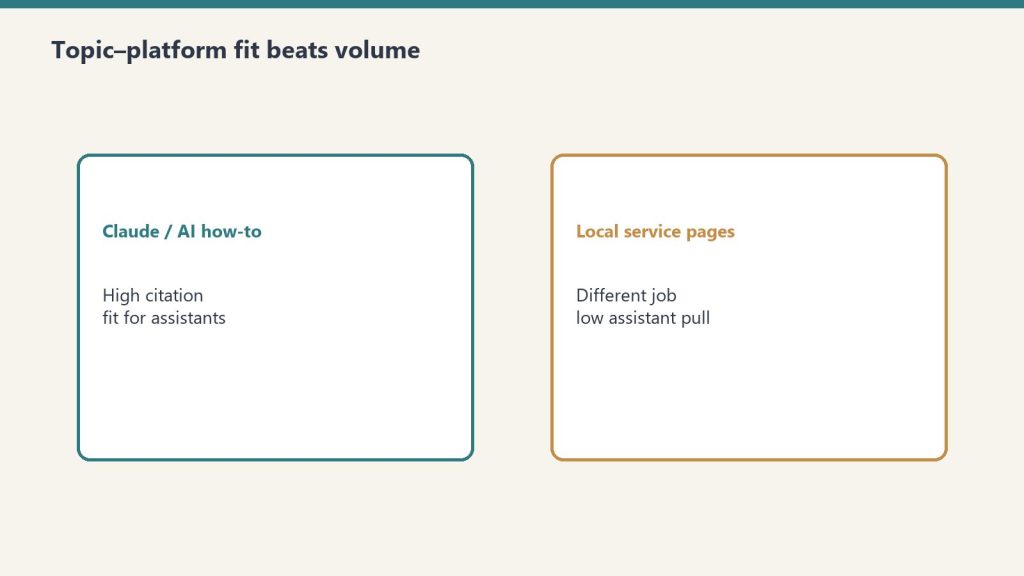
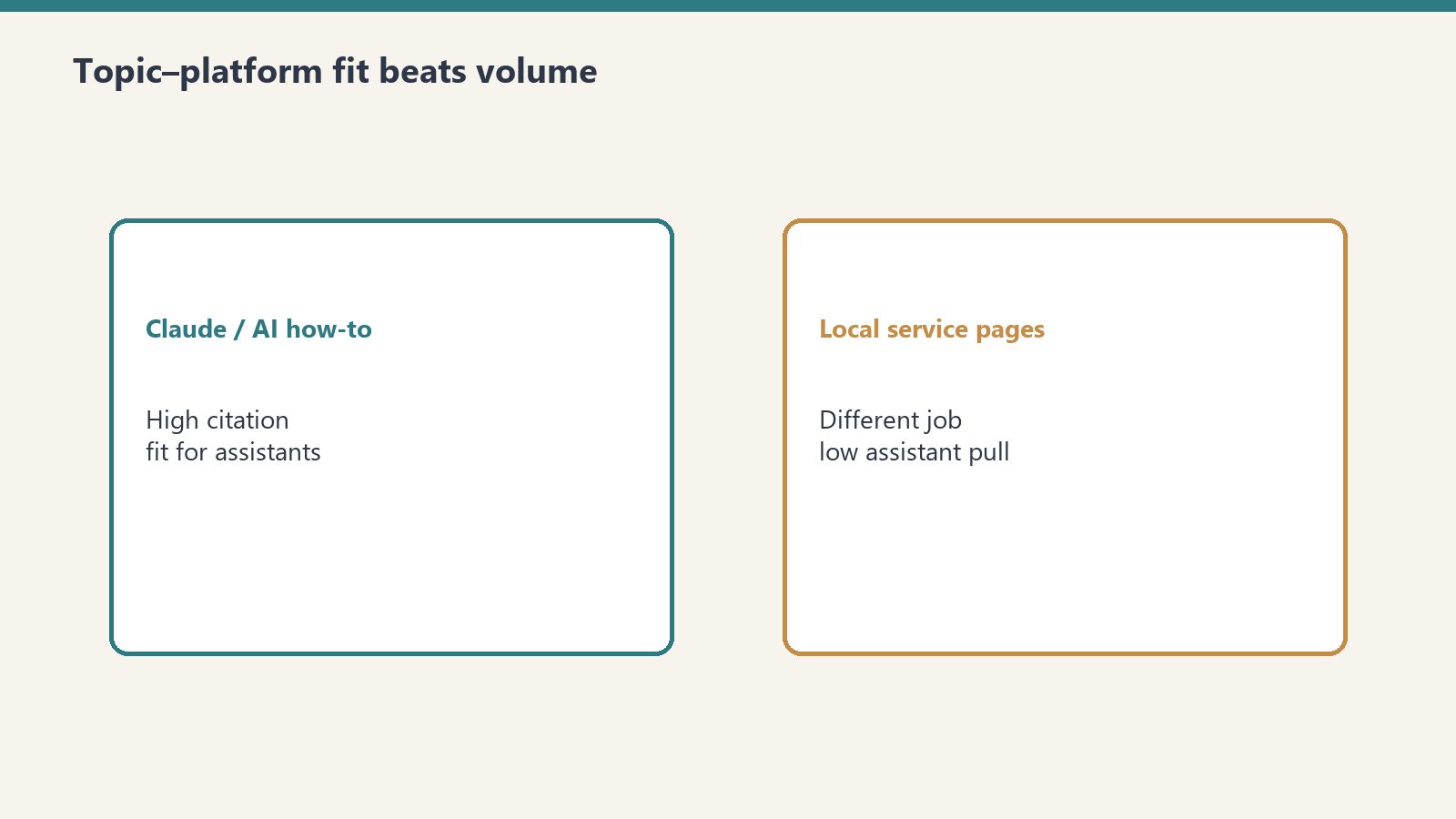
    The losing move is chasing broad head terms. “Best AI coding assistant” is saturated, generic, and rarely the literal grounding query. The winning move is to own the long, specific, operational and comparison strings that the fan-out actually generates.

    IndexNow: how to get cited the same day you publish

    Grounding can only cite pages the engine knows about. The bottleneck for new content is crawl latency — and IndexNow collapses it. IndexNow is an open protocol (backed by Microsoft Bing and Yandex) that lets you push a URL to the index the instant you publish, instead of waiting for a crawler to wander by.

    Setup is two steps:

    1. Host a key file. Generate a key of 8-128 hex characters and place it at your site root as a UTF-8 text file named {key}.txt containing exactly that key. Example: https://example.com/daa44a2c....txt. This proves you own the host.
    2. Ping on publish. Single URL via GET:
      curl "https://api.indexnow.org/indexnow?url=https://example.com/new-page/&key=YOUR_KEY"

      Or batch up to 10,000 URLs in one POST:

      curl -X POST "https://api.indexnow.org/indexnow" \
        -H "Content-Type: application/json" \
        -d '{"host":"example.com","key":"YOUR_KEY","urlList":["https://example.com/a/","https://example.com/b/"]}'

    A 200 means the endpoint received your URL (not that it is indexed yet). Submitting to api.indexnow.org shares the ping with all participating engines, so you do not need to hit Bing and Yandex separately. Most WordPress SEO plugins (Rank Math, Yoast, SEOPress) have IndexNow built in — turn it on and it fires automatically on every publish and update. The practical payoff: pages can enter Bing’s crawl queue within hours, which means they are eligible to be grounded and cited the same day, not next week.

    One caveat worth stating plainly: IndexNow accelerates indexing, which is a precondition for citation. It does not force a citation. You still need the page to be the best answer to the sub-question. But for fresh, time-sensitive content, same-day indexing is often the difference between getting cited while the topic is hot and showing up after the conversation has moved on.

    How to actually measure your AI citations

    For a long time AI citations were invisible — you could see referral clicks in analytics but not the citations themselves (most AI answers are zero-click). That changed. As of February 2026, Bing Webmaster Tools ships an AI Performance report (public preview) that shows when your pages are cited across Microsoft Copilot, Bing’s AI answers, and partner surfaces. It is the first direct, free window into AI citation behavior, and you should be reading it weekly.

    The four metrics that matter:

    • Total citations — how many times your site was cited as a source in AI answers over the period.
    • Average cited pages — the daily average count of unique URLs from your site that got referenced. This tells you whether citations are concentrated on one page or spread across the site.
    • Grounding queries — sample query phrases the AI used to retrieve and cite you. This is the single most actionable field in the report. It is a literal list of the sub-questions you are winning, which tells you exactly which operational/comparison angles to expand next.
    • Page-level citation activity — citations by URL, so you can see which pages are doing the work.

    Two limitations to keep in mind so you read the data honestly: the report does not show click data (you see citations, not visits from them), and it aggregates Copilot with Bing summaries, so you cannot isolate one surface from the other. For Google’s AI Overviews there is still no equivalent citation dashboard — the closest proxy is watching impressions and referral patterns in GA4 and Search Console, plus spot-checking your target queries by hand.

    The workflow that works: pull the grounding-queries list, find the patterns, and feed them straight back into your content plan. If you are getting cited for “claude mcp setup” variants, that is a signal to deepen pages like the Claude MCP setup guide and adjacent operational walkthroughs, not to chase a new head term.

    A repeatable checklist for citation-optimized pages

    Everything above reduces to a build pattern. For any page you want AI engines to cite:

    • Lead with the answer. Put a short, factual, quotable answer in the first 1-2 sentences under each heading. Assume the model reads only that passage.
    • Use question-shaped headings. H2s and H3s that mirror real queries (“How does IndexNow work?”, “How do I measure AI citations?”) match the grounding query and give the extractor a clean anchor.
    • Be specific and operational. Real commands, real config, real numbers, real error codes and fixes. Concrete text is extractable; vague advice is not.
    • Add a visible FAQ near the end. Plain question/answer pairs are the single most citation-friendly format, because each pair is a self-contained answer to a discrete sub-question. You do not need JSON-LD schema for this to work — visible Q&A text is what the model reads.
    • Date it and keep it current. A “Last verified” line plus genuine updates on fast-moving topics buys you the recency edge in grounding.
    • Push it with IndexNow so it is indexable the same day, then watch the AI Performance report to see which sub-questions it wins.

    If you want the larger system this fits into — the full toolchain for operating as an AI-first publisher, from MCP servers to publishing pipelines — start with the AI operator’s stack.

    FAQ

    Do AI engines cite the page that ranks #1 on Google?

    Not reliably. AI engines run their own grounding retrieval and cite the page that most directly answers the specific decomposed sub-question, which is often a niche, operational page rather than the head-term winner. Ranking helps your page be discoverable, but the citation goes to whichever passage best answers the exact grounding query.

    What is grounding in AI search?

    Grounding is the retrieval step where an AI assistant rewrites your question into search queries, fetches live web pages, reads them, and builds an answer with inline citations to those pages. It is why current, specific pages can get cited even by a model whose training data predates them.

    Does IndexNow guarantee my page will be cited by AI?

    No. IndexNow guarantees fast indexing, which is a precondition for being cited. The page still has to be the best, most specific answer to the sub-question the model is grounding on. Think of IndexNow as removing the crawl-latency excuse, not as buying a citation.

    How do I measure how often AI cites my site?

    Use the AI Performance report in Bing Webmaster Tools (public preview since February 2026). It shows total citations, average cited pages per day, sample grounding queries, and citation counts by URL across Microsoft Copilot and Bing AI answers. It does not yet show click-through from those citations, and there is no equivalent dashboard for Google AI Overviews.

    Do I need JSON-LD or schema markup to get cited?

    No. Citation extraction works on visible, well-structured text — question-shaped headings, short factual answers, and a plain visible FAQ. Schema can help search features generally, but it is not required for AI grounding to read and quote your page.

    What kind of pages get cited most?

    Three shapes dominate: operational pages with real commands, configs, and error fixes; comparison pages that resolve a “X vs Y” decision; and fresh, dated pages on fast-moving topics like pricing and model versions. Broad head-term content tends to get skipped because it rarely matches the literal grounding query and offers nothing concrete to quote.

  • SEO is Dead, Long Live ‘Source-Worthy’ Content (SGE Reality Check)

    SEO is Dead, Long Live ‘Source-Worthy’ Content (SGE Reality Check)

    The Search Landscape of May 2026: Stop Chasing Traffic, Start Chasing Citations

    The transition is complete. As of this month, Google’s AI Overviews (formerly SGE) appear for over 52% of all search queries. If you are looking at your Search Console and seeing a 30% drop in informational traffic compared to last year, you aren’t alone. You’re simply seeing the result of the “Zero-Click” era reaching its final form. For digital agency owners and systems architects, the old SEO playbook is a liability. If you are still optimizing for clicks on “What is…” or “How to…” keywords, you are effectively donating your intellectual property to train a model that will replace your visit.

    The currency of search has shifted. We have moved from the era of link equity to the era of Source-Worthy Content. In this new reality, the goal isn’t to get the user to click through to read a basic definition; it is to ensure that your data, your unique perspective, or your proprietary methodology is the primary source cited by the Retrieval-Augmented Generation (RAG) systems powering Google, Perplexity, and OpenAI.

    The Numbers Don’t Lie: The Death of the Click

    By mid-2026, the data across our portfolio is clear. Informational query traffic—the top-of-funnel “educational” content that used to drive massive awareness—has cratered by 20-40% across most B2B and technical sectors. Users are getting their answers directly in the search interface. They don’t need to visit your site to learn “how to configure a headless CMS” if Gemini can pull the five essential steps from your documentation and present them in a neat bulleted list.

    However, while traffic is down, the value of a single citation within an AI Overview has skyrocketed. We’ve found that being the primary citation in a RAG-driven answer drives higher-intent leads than the old-school organic #1 spot ever did. The users who do click through from an AI Overview have already been pre-qualified by the AI. They aren’t looking for a definition; they are looking for the operator who provided the insight. Optimizing for AI overviews is no longer a side project; it is the core of technical SEO.

    Understanding RAG: How Google Picks Its Sources

    To win in 2026, you have to understand the mechanics of Retrieval-Augmented Generation. Google’s AI isn’t just “hallucinating” answers based on its training data; it is actively searching the live web, retrieving specific “chunks” of information, and then synthesizing those chunks into a response. This is RAG optimization.

    When an AI Overview is generated, Google’s system follows a three-step process:

    1. Retrieval: It identifies the top-ranking traditional search results for the query. (This is why maintaining traditional page-one rankings is still a prerequisite for being a source).
    2. Selection: It selects specific paragraphs, data tables, or unique insights from those top results that best satisfy the user’s intent.
    3. Generation: It rewrites those insights into a cohesive answer, adding citations to the sources it used.

    If your content is generic—if it says exactly what every other site says—the AI will synthesize the answer without citing you specifically, or it will cite a larger authority (like Wikipedia or a massive news outlet) that says the same thing. To be cited, your content must be source-worthy. It must provide something the AI cannot find elsewhere or synthesize from common knowledge.

    Why Generic Content is Erased by AI

    The era of “skyscraper” content—taking ten existing articles and making a longer one—is over. AI is better at that than you are. In fact, most of that generic content is now being flagged by LLMs as “low information gain.”

    When we audit a site using the Gemini CLI, we look for “Information Gain” scores. If a paragraph doesn’t offer a new data point, a specific case study result, or a unique operator’s perspective, it’s invisible to the RAG process. Generic advice like “SEO requires good keywords” is discarded. Specific advice like “We saw a 12% lift in RAG citations by moving from 1,000-word articles to 400-word modular content blocks” is source-worthy.

    The LLM wants to cite the originator. If you are just a curator, you are a middleman that the AI has successfully bypassed.

    The ‘Source-Worthy’ SEO Framework

    At Tygart Media, we’ve pivoted our Agency Playbook to focus on four pillars of source-worthy SEO. This is how we ensure our clients remain the “source of truth” in an AI-dominated search engine.

    1. Proprietary Data and “Proof of Work”

    The AI cannot hallucinate your internal data (yet). Original surveys, technical benchmarks, and project post-mortems are the most cited pieces of content in 2026. If you run a test on a new deployment pipeline and publish the raw numbers, Google’s AI Overview will cite your specific numbers. We’ve moved away from “opinion pieces” and toward “experiment logs.” Every article should contain at least one table or chart of data that didn’t exist on the internet before you published it.

    2. The Operator’s Perspective (E-E-A-T)

    Experience and Expertise are now the primary filters for RAG selection. Google is prioritizing content that shows “Proof of Effort.” Use first-person accounts. Instead of writing “How to use Claude Code,” write “What we learned after 500 hours using Claude Code to refactor a legacy Python monolith.” The specific failures and technical hurdles you describe are unique identifiers that the AI recognizes as authoritative.

    3. Modular Content Architecture

    Long-form, sprawling articles are difficult for RAG systems to “chunk” effectively. We are now building content in modular blocks. Each section of an article is designed to stand alone as a complete answer to a sub-query. We use <section> tags and specific ID attributes to make it easy for the crawler to identify and retrieve the exact block it needs. This is optimizing for AI overviews by making your content “consumable” for machines, not just humans.

    4. Structured Data for RAG

    Schema.org hasn’t gone away; it has become the metadata for AI. We use Dataset, HowTo, and Review schema more aggressively than ever. But more importantly, we are using Gemini CLI to auto-generate JSON-LD that specifically maps out the “Claims” made in our articles. By explicitly stating “Our claim: Informational traffic is down 30%,” we make it easier for the AI to attribute that fact to us.

    Technical Execution: Modular E-E-A-T and Gemini CLI

    The workflow for a modern agency operator involves high-level automation. We don’t manually audit 500 pages for “source-worthiness.” We use tools like Claude Code and Gemini CLI to process our content libraries.

    Our current stack for RAG optimization looks like this:

    • Analysis: We pipe our top-performing URLs through a script that uses the Gemini API to compare our content against the current AI Overview for that keyword. The script identifies “content gaps”—information the AI is providing that isn’t on our page, or information we have that the AI is ignoring.
    • Refactoring: If a page is losing traffic but has high “Source Worthiness,” we use Claude Code to refactor the HTML into a more modular structure, adding Dataset schema to any tables.
    • Validation: we use Antigravity to simulate how a RAG system would “chunk” the page. If the chunks are incoherent, we rewrite the headers to be more explicit.

    One failure we saw early in 2026 was attempting to “game” the AI by over-optimizing for specific keywords. The AI sees through keyword density. It is looking for semantic weight. When we tried to force-feed keywords, our RAG citation rate dropped. When we focused on “operator-restrained” technical clarity, the citations returned.

    Case Study: The 40% Traffic Drop and the 15% Lead Increase

    We recently worked with a systems architecture firm that saw their organic traffic from “cloud migration tips” fall by 40% in the google sge impact may 2026 rollout. Initially, there was panic. However, upon closer inspection, their “Request a Consultation” conversions were actually up by 15%.

    What happened? Their generic “tips” were being swallowed by the AI Overview. But the AI Overview was citing their specific “Cloud Migration Cost Calculator” and their “2025 Migration Failure Report.” The traffic they lost was the “looky-loos” who just wanted a quick tip. The traffic they gained (via the AI citations) was from CTOs who saw their specific data cited as the authority and clicked through to hire them. This is the shift from “volume” to “value.”

    Action Plan: What You’d Do Tomorrow

    If you are managing a content library or an agency portfolio, don’t wait for your traffic to hit zero. Start the pivot to source-worthy SEO immediately. Here is the operator’s checklist for tomorrow morning:

    1. Audit for “What is” Content: Use your preferred crawler to identify every page that targets a purely informational, definitional keyword. These are your “donor” pages. Decide whether to delete them, consolidate them, or upgrade them with proprietary data.
    2. Inject Original Data: Find three pieces of internal data—even if they are small—and add them to your top 10 most important pages. Use tables. Add a “Methodology” section.
    3. Modularize Your Headers: Ensure every H3 in your articles can stand alone as a question and every following paragraph as a direct, concise answer. Remove the “fluff” and the “introductory transitions.” The AI doesn’t need a “In this section, we will explore…” lead-in. It needs the facts.
    4. Verify Citations: Perform a manual search for your primary keywords. Look at the AI Overview. If you are ranking #1-3 in organic but aren’t cited in the AI response, your content isn’t “Source-Worthy.” It’s too generic. Rewrite the top-ranking paragraph to offer a unique, data-backed perspective that the AI is currently missing.
    5. Update Your Schema: Move beyond basic Article schema. Implement Speakable, Dataset, and ClaimReview schema where applicable. Use a tool like Gemini CLI to automate the generation of these blocks based on your existing text.

    SEO isn’t dead; the middleman is dead. The search engine of 2026 doesn’t want to send users to a website; it wants to provide an answer. Your job is to be the only source that the answer cannot exist without. Build for the machine, provide for the human, and protect your intellectual property by making it too specific to be ignored.

  • How to Get Cited in ChatGPT Search in 2026: The Bing Index, OAI-SearchBot, and the 15% Citation Cliff

    How to Get Cited in ChatGPT Search in 2026: The Bing Index, OAI-SearchBot, and the 15% Citation Cliff

    ChatGPT Search cites 15% of the pages it retrieves. The other 85% get pulled into the model’s context window, evaluated, and silently discarded — no visibility, no referral, no trace. If you are doing GEO work and your pages keep getting retrieved but never quoted, you are losing at the second filter, not the first.

    This is the 2026 implementation guide for surviving both filters: getting retrieved by ChatGPT Search, then getting cited once you are there.

    How ChatGPT Search Actually Builds an Answer

    ChatGPT Search runs a three-stage pipeline. Each stage kills most candidates.

    1. Retrieval — ChatGPT Search is powered by Bing’s index for real-time web retrieval. Seer Interactive’s analysis found 87% of SearchGPT citations match Bing’s top results, with the bulk in positions one through ten and a long tail in positions eleven through twenty. AirOps research separately put ChatGPT-to-Bing overlap at 73%. If you are not in Bing’s top 20 for a query, you almost certainly are not in ChatGPT’s candidate set.
    2. Crawlability check — OpenAI’s OAI-SearchBot is the user agent that builds the index used for ChatGPT’s search features. It is separate from GPTBot (training) and ChatGPT-User (browsing). Block OAI-SearchBot in robots.txt and you remove yourself from ChatGPT Search entirely, even if Bing has you ranked.
    3. Citation selection — Of the pages retrieved, AirOps found ChatGPT cites only 15%. The model picks what to quote based on structure, freshness, authority signals, and whether the page directly answers the query.

    Step 1: Verify You Are Indexed by Bing

    Most sites optimized for Google have never logged into Bing Webmaster Tools. Fix that first. Three checks before anything else:

    • site:yourdomain.com in Bing — confirms basic indexing.
    • Bing Webmaster Tools → URL Inspection — confirms the specific pages you want cited are indexed and have no crawl errors.
    • Bing rankings for your target queries — if you are not in the top 20 in Bing, ChatGPT will not see you.

    If pages are missing, submit a sitemap via Bing Webmaster Tools and request URL inspection on any priority page. Bing typically reflects changes within 24–72 hours, faster than Google.

    Step 2: Allow OAI-SearchBot in robots.txt

    The single most-skipped step in GEO work. Add this block to your robots.txt:

    # Allow ChatGPT Search to retrieve and cite this site
    User-agent: OAI-SearchBot
    Allow: /
    
    # Optional: allow on-demand browsing for ChatGPT users
    User-agent: ChatGPT-User
    Allow: /
    
    # Optional: block training crawler if you want retrieval without training
    User-agent: GPTBot
    Disallow: /

    OpenAI publishes these three user agents and treats each independently. You can allow OAI-SearchBot for ChatGPT Search visibility and still disallow GPTBot from using your content for model training. The settings do not conflict. OpenAI’s systems typically recognize robots.txt changes within 24 hours.

    Step 3: Structure Pages for the Citation Filter

    Retrieval is necessary but not sufficient. Once your page is in the candidate set, the model decides whether to quote it. Pages that get quoted share a structural pattern.

    Direct answers in the first 100 words

    ChatGPT cites sources that answer the question fully. Partial answers lose to complete ones. Lead each page with a clean direct-answer paragraph: question implied or stated, answer in the next sentence, supporting detail after. This is the same pattern that wins featured snippets, which is not a coincidence — answer engines and snippet engines reward the same structure.

    JSON-LD schema

    An AirOps study of 548,534 pages found pages with JSON-LD markup posted a 38.5% citation rate versus 32.0% without it. Article, FAQPage, and HowTo schema are the highest-leverage types. Add them.

    Word count: 500–2,000

    Pages between 500 and 2,000 words performed best in the same AirOps study. Pages longer than 5,000 words were cited less often than pages under 500. The mechanism is mechanical: long pages overflow the retrieval context window, and the model defaults to shorter, denser sources it can quote in full.

    Freshness

    Content updated within 30 days received 3.2x more citations than older material. The fix is not faked freshness — it is genuine updates: a new stat, a new case, a corrected claim. Update the date when you update the content, not before.

    Step 4: Build the Authority Layer

    Structure gets you cited once. Authority gets you cited repeatedly. AirOps found sites with over 32,000 referring domains are 3.5x more likely to be cited by ChatGPT than sites with fewer than 200. You do not need 32,000 — you need to be in the upper band of your topical neighborhood.

    ChatGPT’s citation pattern leans heavily on Wikipedia (roughly 48% of top citations in multiple studies) and large news/media properties. The practitioner read on that: ChatGPT favors sources with multi-source third-party validation. Build the kind of citations on the open web that Wikipedia editors accept — peer-reviewed studies, primary sources, named author attribution, transparent methodology.

    Step 5: Track Your Citation Footprint

    You cannot manage what you do not measure. The minimum tracking stack for 2026:

    • Server log monitoring for OAI-SearchBot user agent — confirms OpenAI is actually crawling. If you allowed the bot in robots.txt three weeks ago and there are zero OAI-SearchBot hits in your logs, something is wrong (CDN block, IP firewall, misconfigured allow rule).
    • Manual citation audits — pick 10 priority queries, run them in ChatGPT with the Search toggle on, log which domains get cited. Repeat weekly. A spreadsheet beats no tracking.
    • Bing position tracking — because ChatGPT pulls from the Bing index, Bing rankings are a leading indicator. If your Bing position drops, ChatGPT visibility drops behind it.

    The Practitioner Summary

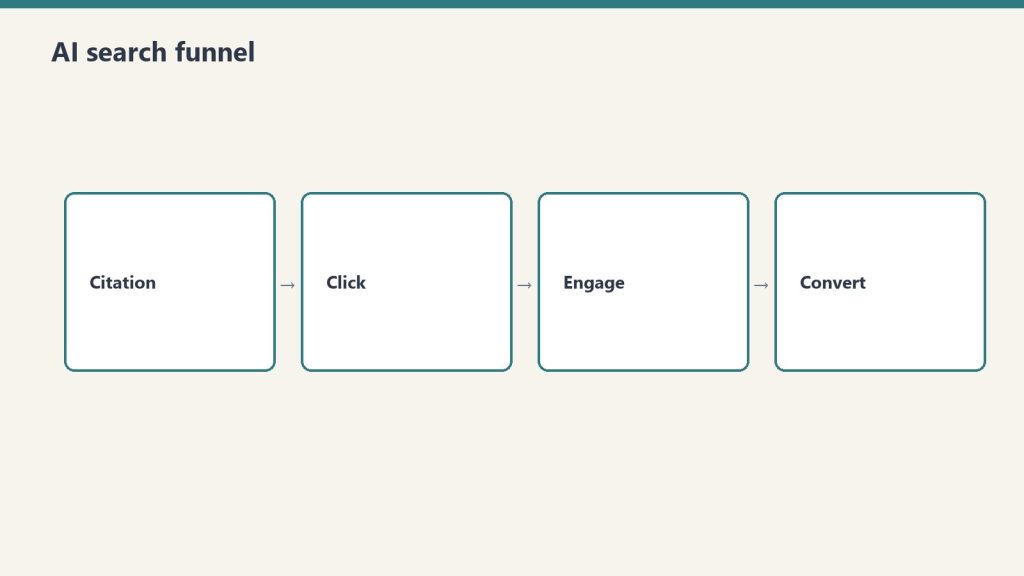
    Ranking in ChatGPT in 2026 is not mysterious. It is a four-gate funnel: Bing index → OAI-SearchBot crawl access → retrieval into the candidate set → citation selection. Most sites fail at gate one (not indexed in Bing) or gate two (OAI-SearchBot blocked or not addressed). Sites that clear those two gates and write pages that answer the question fully, with schema and a 500–2,000-word range, will land in the 15% that get quoted.

    Treat ChatGPT Search like a separate search engine that happens to share an index with Bing. Optimize for the index. Allow the crawler. Write the page. The rest follows.

  • High-Traffic GA4 Channels Delivering the Wrong Users — A Search Intent Diagnosis

    High-Traffic GA4 Channels Delivering the Wrong Users — A Search Intent Diagnosis

    A page can rank on page one, receive consistent organic traffic, and still be failing. The failure is silent — visible only when you look at what arriving users actually do.

    When users search “how to apply for X” and land on a page about “what X is,” they leave immediately. The page ranked for the query but delivered the wrong content for the intent behind it. GA4 captures this as a short session with a high bounce rate — but it does not tell you which queries are driving the mismatch.

    Intent Mismatch Has a Specific Signature

    High organic traffic plus low engagement rate plus short session duration on the same page. If a page is receiving 200 organic sessions a month and engaging 12% of them, something is wrong. The page either ranked for queries it cannot answer, or the content addresses a different aspect of the topic than users are searching for.

    The Silent Scream in Your Internal Search Data

    Internal site search is the most underused intelligence in GA4. When a user searches your site, they are explicitly telling you what they wanted and could not find. That is direct audience research, already collected in your property, almost never reviewed.

    The top 20 internal search terms for any content site are a ready-made content sprint list. No keyword tool produces a brief this precise — because no keyword tool knows which users already tried your site and left empty-handed.

    Your Intent Alignment Score

    The ratio of well-aligned to misaligned organic landing pages is your intent alignment score. Track it quarterly. If you are actively addressing misaligned pages through rewrites and new content, the score should improve. If it is flat, new misalignment is appearing faster than you are fixing old misalignment.

    The methodology is the Books for Bots: GA4 Search Intent Alignment Kit.

    Learn more about the GA4 Search Intent Alignment Kit

  • GA4 New vs Returning Users: What the 14x Session Duration Gap Is Telling You

    GA4 New vs Returning Users: What the 14x Session Duration Gap Is Telling You

    Your GA4 new versus returning user data contains a ratio most teams are not monitoring: returning sessions as a percentage of total. That ratio is your retention baseline. It tells you whether your content is building an audience or attracting drive-by traffic.

    The 14x Duration Gap

    In a live GA4 audit on a real content site, returning users averaged 4 minutes 12 seconds per session. New users averaged 18 seconds. Same site, same content, 14x difference. Returning users engaged at 61% versus 22% for new users, and viewed 3.8 pages per session versus 1.2.

    Every benchmark you track is a blend of these two completely different behaviors. The aggregate number hides both the strength of your retained audience and the weakness of your new user conversion to loyalty.

    Loyalty Anchors

    A small number of pages drive most return visits. These loyalty anchors share identifiable characteristics: comprehensive, addressing recurring needs rather than one-time questions, often counterintuitive enough to be memorable and worth recommending to others.

    Once identified, they deserve regular updates, protection from disruptive monetization, and prominent internal linking so new users can find them.

    Your Best Retention Channel Is Not Your Best Acquisition Channel

    Not all acquisition channels produce equal retention. Organic search frequently produces higher retention than social. Email from a curated newsletter produces some of the highest rates of all. The channel producing your returning users is often not the channel producing your most new users — and optimizing for acquisition volume without understanding retention means investing in the wrong channel.

    The methodology is the Books for Bots: GA4 New vs Returning Intelligence Kit.

    Learn more about the GA4 New vs Returning Intelligence Kit

  • GA4 Exit Pages: Satisfied Reader or Lost Visitor

    GA4 Exit Pages: Satisfied Reader or Lost Visitor

    GA4 shows you exit rate. It does not tell you whether that exit was a success or a failure.

    An 85% exit rate with three minutes average duration means the page did exactly what it was supposed to do. Users arrived, found their answer, and left complete. An 85% exit rate with four seconds means the page failed immediately. GA4 reports the same number for both.

    The Two Types of Exit

    A satisfied exit combines high exit rate with high duration — 90 seconds or more. The user read, completed their task, and left. Adding more CTAs to reduce this exit rate would interrupt a successful user journey.

    An abandoned exit combines high exit rate with low duration — under 30 seconds. The user found nothing useful and left. This page needs attention: wrong audience, wrong content, or missing next step.

    The Finding From a Live Audit

    The NYC Summer Internships guide on a real content site showed an 85% exit rate with 3m 20s average session duration. The page was succeeding — users read a comprehensive guide and left with the information they needed. The homepage showed 65% exit rate with 8-second duration. Lower exit rate, dramatically worse performance.

    Dead Ends and the Internal Link Fix

    A third pattern exists: dead ends. Users arrive with genuine interest, stay long enough to engage, but have nowhere obvious to go next. Adding one relevant internal link to these pages often produces measurable session depth improvement with zero content changes.

    Google Analytics Advisor can generate specific page pairing recommendations from your actual behavioral data. The methodology is the Books for Bots: GA4 Exit Intelligence Kit.

    Learn more about the GA4 Exit Intelligence Kit

  • High-Traffic GA4 Channels Delivering the Wrong Users — A Search Intent Diagnosis

    High-Traffic GA4 Channels Delivering the Wrong Users — A Search Intent Diagnosis

    A page can rank on the first page of Google, receive consistent organic traffic, and still be failing. The failure is silent — visible only when you look at what the arriving users actually do.

    When users search “how to apply for X” and land on a page about “what X is,” they leave immediately. The page ranked for the query but delivered the wrong content for the intent behind it. GA4 captures this as a short session with a high bounce rate — but it does not tell you why, and it does not tell you which queries are driving the mismatch.

    Intent Mismatch in the Data

    In GA4, intent mismatch produces a specific signature: high organic traffic, low engagement rate, and short session duration on the same page. If a page is receiving 200 organic sessions a month and engaging only 12% of them, one of three things is happening. The page ranked for queries it cannot actually answer. The content addresses a different aspect of the topic than users are searching for. Or the audience searching this query is at a different stage of the journey than the content is written for.

    All three are fixable. But only if you know which one you have.

    The Silent Scream in Your Internal Search Data

    Internal site search is the most underused intelligence source in GA4. When a user searches your site, they are explicitly telling you what they wanted and could not find from your navigation or your existing content. That is direct audience research, free, already collected in your property.

    The most valuable subset of internal search data is zero-result searches — queries that users entered into your search bar and got nothing useful back. These are your most urgent content gaps. A user who searched your site and found nothing is more frustrated than one who never searched. They came looking for something specific, engaged enough to try your internal search, and left empty-handed.

    The top 20 internal search terms for any content site are a ready-made content sprint list. They represent topics real users on your site actively wanted to find. No keyword tool produces a brief this precise.

    Your Intent Alignment Score

    Across your organic landing pages, a certain percentage are well-aligned with the search intent of users arriving on them — high traffic, high engagement, users who found what they needed. The remainder are misaligned — high traffic, low engagement, users who bounced because the content did not match what they were looking for.

    That ratio — aligned pages versus misaligned pages — is your intent alignment score. It is a quarterly tracking metric. If you are actively addressing misaligned pages through rewrites, redirects, and new content targeting the correct intent, the score should improve over time. If it is flat or declining, something is creating new misalignment faster than you are fixing old misalignment.

    Running the Intent Alignment Session

    This analysis runs in one session using Claude-in-Chrome alongside Analytics Advisor in GA4. The query sequence surfaces your highest-mismatch organic pages, extracts your internal search terms and gaps, and produces a baseline alignment score. The methodology is the Books for Bots: GA4 Search Intent Alignment Kit.

    Learn more about the GA4 Search Intent Alignment Kit →

  • Books for Bots: GA4 Search Intent Alignment Kit

    Books for Bots: GA4 Search Intent Alignment Kit

    Search query pointing to wrong page with red X and correct guide with green arrow

    BOOKS FOR BOTS — GA4 SERIES — BOOK 06

    GA4 Search Intent Alignment Kit

    Are your keywords landing on the right pages? Diagnose intent mismatch between what users searched and what they found — and surface what your audience wanted and could not find.

    39% misalignedOf organic landing pages delivering the wrong content for the search intent
    COMING SOON — $27

    A Page Can Rank Well and Still Fail

    If the user searched “how to apply for X” and landed on a page about “what X is,” they bounce immediately. GA4 captures this failure even when you cannot see the original query. High organic traffic with low engagement is almost always intent mismatch in disguise.

    Two puzzle pieces QUERY and CONTENT that do not fit

    CORE INSIGHT

    Internal site search is the most underused intelligence in GA4. When a user searches your site, they are explicitly telling you what they wanted and could not find. This kit makes that signal visible and actionable.

    User search queries rising like smoke from internal site searchPerson pulling wrong book while the right answer glows out of reachIntent alignment gauge 61% aligned 39% misaligned — run quarterlySearch intent key vs landing page lock — MISMATCH

    What’s Inside

    • 7 copy-paste queries for Analytics Advisor — one session
    • Organic traffic to engagement mismatch identification
    • Internal search term extraction — top 20 with gap analysis
    • Zero-result internal search diagnosis
    • Homepage navigation gap analysis
    • Intent alignment score — baseline metric to track quarterly
    • Content repositioning recommendation framework

    What You Need

    • Claude-in-Chrome — free from Anthropic
    • Editor or Analyst access to a GA4 property
    • Analytics Advisor (BETA) enabled
    • 30–60 minutes

    THE KEY INSIGHT

    Internal search tells you what people search on your site after they arrived. That is a different and more valuable signal than anything a keyword tool produces — and it is sitting in your GA4 right now.

    Individual Kit — Instant PDF Download

    COMING SOON — $27

    No subscription.

    BUNDLE

    Get All 6 Kits for $97

    Every GA4 intelligence methodology. Save $65.

    $162$97

    COMING SOON

    FREE STARTER

    Try Session 3 Free

    Seven queries revealing your ChatGPT vs Claude vs Copilot split in 30 minutes.

    COMING SOON — FREE

    Validated on live GA4 properties. April 2026.

  • The Architecture Before the Algorithm — and the case that it won’t save you

    The Architecture Before the Algorithm — and the case that it won’t save you

    The Second Take — inaugural piece. My take, then the one that would change my mind.


    The Setup

    The most repeated thing I’ve said on social this month is some version of the same sentence: AI only amplifies the editorial infrastructure you already have. Taxonomies, briefs, kill thresholds, interlinking, schema, the judgment layer — that’s the product. A one-person shop with that stack outships a ten-person department. I believe it. I’ve seen it on audits, on sites I run, on client work.

    I also know the argument against it. I can feel where it lives. And I’d rather write about the thing where the friction is real than keep posting the half of it I already know how to win.

    So this is the first piece in a new category on Tygart Media called The Second Take. The rule is simple: I say what I actually think. Then I give the best version of the view that would change my mind — not a strawman, the real one. Then I tell you where I haven’t landed yet.

    Here’s the first one.


    My Take

    Close-up of a weathered wood workbench in warm afternoon light: machinist's square, folding rule, mechanical pencil, and an open notebook showing handwritten notes and a small hand-drawn floor plan.
    Earned judgment in object form.

    AI didn’t change what wins on the internet. It raised the floor on what counts as infrastructure.

    Five years ago, you could run a content operation on vibes. Write a post, hit publish, let Google figure it out. The taxonomy was whatever the category dropdown happened to say. The interlinking was whatever the author remembered to do. The brief was an idea in somebody’s head on a Monday. That stack stopped working. Not because AI replaced writers — that’s the lazy frame. It stopped working because AI put a hundred of them at every keyboard, including your competitor’s. The floor rose. Vibes don’t clear it anymore.

    What clears it is architecture. The boring kind.

    A real taxonomy, where every piece has a home and knows what it’s a child of. Briefs that are built before the writing starts — target keyword, search intent, reader, angle, source of authority, what this piece does that nothing else on the site does. Kill thresholds, written down, that the writer and the editor and the AI all know before the first paragraph: can’t verify the claim, kill it; sounds like generic LinkedIn, kill it; doesn’t sound like the publisher actually wrote it, kill it. Interlinking as a system, not an afterthought — a hub and its spokes, the spokes pointing back up, every new piece finding its place in a graph that already exists. Schema on every page because you know what kind of thing you published. A quality gate before anything ships.

    That’s the editorial surface area. AI runs across the surface and the surface is what shapes the output. Without the surface, AI accelerates mediocrity. With it, AI does work a ten-person department used to do, faster, and the output has the house voice because the house has a voice.

    I’ve watched this on a concrete case. A site with forty-seven existing posts, decent writing, zero architecture. Duplicate cannibalizers. No interlinking. No schema. Categories that didn’t mean anything. I stopped new content for six weeks and worked only on the infrastructure — taxonomy, schema, interlinking, killing the duplicates, rewriting titles, fixing the hub-and-spoke. No new posts. Keyword rankings tripled on the existing library before anyone wrote a new word. That’s not an AI story. That’s an architecture story, and the AI only mattered once the architecture was there.

    The operator thesis is this: the moat isn’t what AI writes for you. The moat is what you give it. The briefs. The taxonomies. The judgment layer. The willingness to publish the rules you write by.

    Most shops won’t build this. It looks like overhead. It isn’t. It’s the product.


    The Second Take

    Wide interior of a vast industrial conveyor-belt sorting facility at dusk, endless belts disappearing into the distance, an orange warning stripe on the foreground belt, a single human-scale doorway nearly invisible at the far wall.
    A system that moves everything through itself whether or not any single package matters.

    Infrastructure is table stakes, not a moat.

    That’s the hardest version of the case against my take, and it’s not a strawman — it’s what a sharp person who has been watching the shape of the web over the last few years would tell you, and they would not be wrong.

    The argument runs something like this. Yes, the editorial surface area is real. Yes, the sites that have it outperform the sites that don’t, holding everything else equal. But holding everything else equal is the phrase doing most of the work, because on the open web nothing is equal for long. The platforms that mediate discovery — the search engines, the retrieval layers, the answer engines, the large language models that now sit between a reader and the page — can reweight any signal the infrastructure produces. They can absorb the answer into their own surface and never send the reader at all. They can decide tomorrow that a signal they valued yesterday is noise. They can announce a new format, a new schema, a new structured-data spec, and the sites that shipped the old one right are now the sites that shipped the old one. Infrastructure, by this reading, is not a defensible moat. It’s a cost of entry that everyone with an operator playbook will eventually pay.

    And this view gets sharper. A beautifully-architected site that ranks everywhere and gets cited everywhere can still fail to monetize, because the citation economy and the attention economy are not the same economy. A model cites you to answer a question; the user never clicks. The ingestion point captured the value. You provided the authority; somebody else provided the surface. Authority is not the same as value capture, and this is where the operator thesis quietly breaks. You can be the most credible voice in your vertical and also the least-rewarded, because the layer between you and the reader decided to keep the reader.

    There is a harder version of this still. The infrastructure you build is in the platform’s language — its schema, its retrieval signals, its answer formats. To do it well you have to commit to the language. Commitment makes you legible. Legibility makes you extractable. The better your architecture, the more fluently the platform can read you, and the more frictionlessly the platform can become the thing the reader comes to instead of you. At the limit, the architecture is the moat and the architecture is what the platform eats are not different statements. They’re the same statement viewed from two ends.

    The quiet version of this argument, which I think is the honest one, is that nobody outruns the platform for long. You can build a ten-year compounding asset on top of a distribution layer you don’t own, and it can still be worth less than a three-year brand built on top of a distribution layer somebody you pay controls. Architecture wins the game everyone is playing. The people setting the table are playing a different game.

    If you take the second take seriously, the operator’s job changes. It stops being about building the cleanest surface and starts being about which relationships the surface makes possible before the platform eats it. The architecture becomes a lead generator for something the platform can’t intermediate — an email list that’s really read, a practice that gets hired, a small paid product, an audience that would notice if you stopped. The infrastructure is the bait. The relationship is the hook. If you stop at the infrastructure, you’ve built the prettiest version of somebody else’s funnel.

    I have to live with that argument. It’s not wrong.


    What I’m Still Sitting With

    Quiet early-morning interior scene: a wooden chair with a rust-colored cushion pulled up to a dark wood desk near a window, a half-finished cup of coffee, an open notebook with a pencil laid across an unfinished page.
    Public thinking that hasn’t closed the loop yet.

    My take says the operators win because we can adapt the infrastructure faster than the platforms can co-opt it. The second take says nobody outruns the platform, so the infrastructure is only worth what it funnels into a relationship the platform can’t touch.

    What would have to be true for my take to be right is that the gap between operator speed and platform drift stays wide enough for the work to compound before the rules change again. What would have to be true for the second take to be right is that the rules change faster than that, or that the platform absorbs the signal directly into its own answer surface and never lets the reader through.

    I don’t know which is truer yet for people who aren’t already running the stack. For someone who already has the architecture, both takes point the same direction — keep building, and route the architecture toward relationships you own. For someone starting from zero, the two takes split. My take says build the infrastructure first and trust that it compounds. The second take says build the relationship first and let the infrastructure serve it, because any infrastructure you build on rented land is rented too.

    I think the honest answer is that both are partially right, and which one is more right depends on how long the platform cycle holds. If we get another five calm years, the operators win. If the next phase of AI-mediated discovery looks less like search and more like a closed loop where the answer engine is also the reader, the second take wins, and it wins decisively.

    I’ll write the piece again in a year and see which half aged better.


    The Second Take is a new category on Tygart Media. Every piece follows the same contract — my take, then the view that would change my mind, then where I’m still sitting with it. The point isn’t to win the argument. The point is to give you a sharper starting place than the one the algorithm would.