A page can rank on page one, receive consistent organic traffic, and still be failing. The failure is silent — visible only when you look at what arriving users actually do.
When users search “how to apply for X” and land on a page about “what X is,” they leave immediately. The page ranked for the query but delivered the wrong content for the intent behind it. GA4 captures this as a short session with a high bounce rate — but it does not tell you which queries are driving the mismatch.
Intent Mismatch Has a Specific Signature
Intent mismatch has a specific signature.
High organic traffic plus low engagement rate plus short session duration on the same page. If a page is receiving 200 organic sessions a month and engaging 12% of them, something is wrong. The page either ranked for queries it cannot answer, or the content addresses a different aspect of the topic than users are searching for.
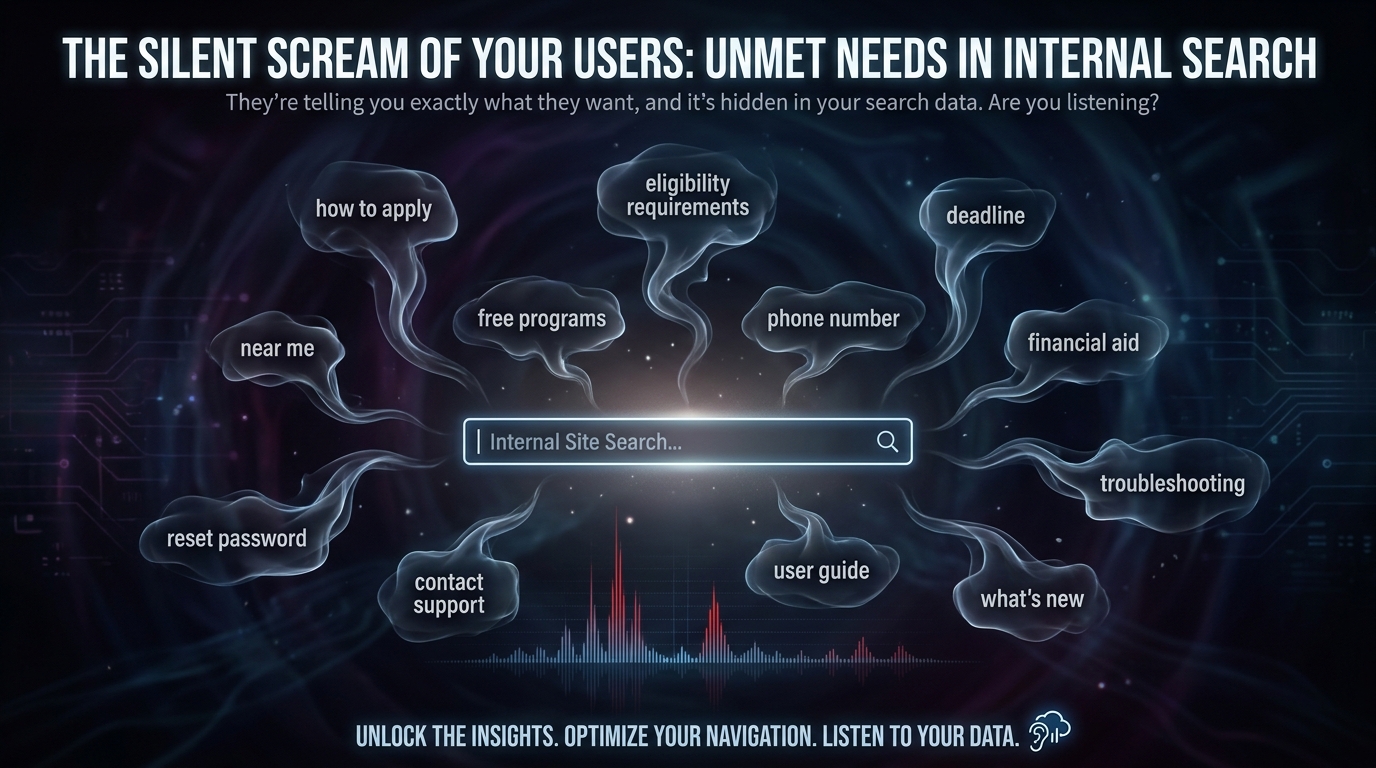
The Silent Scream in Your Internal Search Data
The silent scream in your internal search data.
Internal site search is the most underused intelligence in GA4. When a user searches your site, they are explicitly telling you what they wanted and could not find. That is direct audience research, already collected in your property, almost never reviewed.
The top 20 internal search terms for any content site are a ready-made content sprint list. No keyword tool produces a brief this precise — because no keyword tool knows which users already tried your site and left empty-handed.
Your Intent Alignment Score
Your intent alignment score.
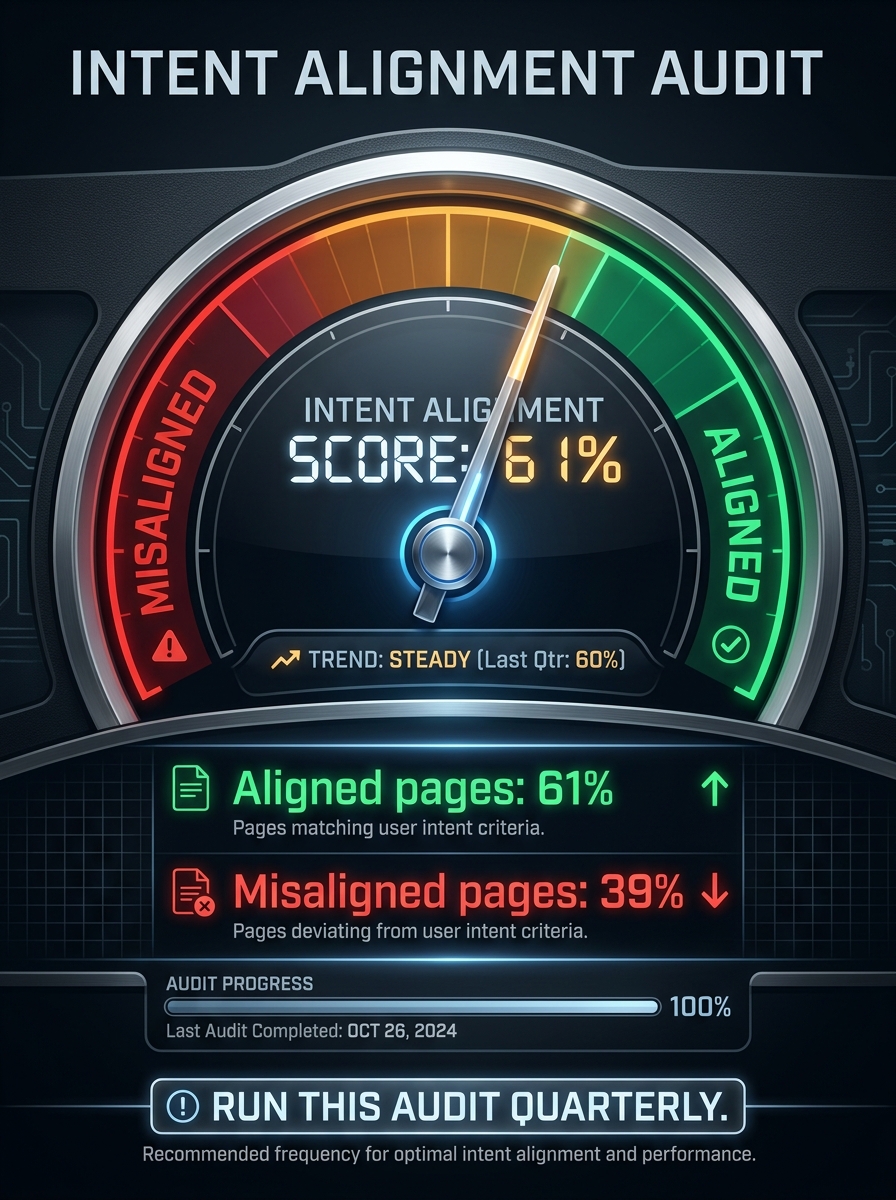
The ratio of well-aligned to misaligned organic landing pages is your intent alignment score. Track it quarterly. If you are actively addressing misaligned pages through rewrites and new content, the score should improve. If it is flat, new misalignment is appearing faster than you are fixing old misalignment.
The methodology is the Books for Bots: GA4 Search Intent Alignment Kit.
Your GA4 new versus returning user data contains a ratio most teams are not monitoring: returning sessions as a percentage of total. That ratio is your retention baseline. It tells you whether your content is building an audience or attracting drive-by traffic.
The 14x Duration Gap
The 14x duration gap.
In a live GA4 audit on a real content site, returning users averaged 4 minutes 12 seconds per session. New users averaged 18 seconds. Same site, same content, 14x difference. Returning users engaged at 61% versus 22% for new users, and viewed 3.8 pages per session versus 1.2.
Every benchmark you track is a blend of these two completely different behaviors. The aggregate number hides both the strength of your retained audience and the weakness of your new user conversion to loyalty.
Loyalty Anchors
Loyalty anchors.
A small number of pages drive most return visits. These loyalty anchors share identifiable characteristics: comprehensive, addressing recurring needs rather than one-time questions, often counterintuitive enough to be memorable and worth recommending to others.
Once identified, they deserve regular updates, protection from disruptive monetization, and prominent internal linking so new users can find them.
Your Best Retention Channel Is Not Your Best Acquisition Channel
Your best retention channel is not your best acquisition channel.
Not all acquisition channels produce equal retention. Organic search frequently produces higher retention than social. Email from a curated newsletter produces some of the highest rates of all. The channel producing your returning users is often not the channel producing your most new users — and optimizing for acquisition volume without understanding retention means investing in the wrong channel.
The methodology is the Books for Bots: GA4 New vs Returning Intelligence Kit.
GA4 shows you exit rate. It does not tell you whether that exit was a success or a failure.
An 85% exit rate with three minutes average duration means the page did exactly what it was supposed to do. Users arrived, found their answer, and left complete. An 85% exit rate with four seconds means the page failed immediately. GA4 reports the same number for both.
The Two Types of Exit
The two types of exit.
A satisfied exit combines high exit rate with high duration — 90 seconds or more. The user read, completed their task, and left. Adding more CTAs to reduce this exit rate would interrupt a successful user journey.
An abandoned exit combines high exit rate with low duration — under 30 seconds. The user found nothing useful and left. This page needs attention: wrong audience, wrong content, or missing next step.
The Finding From a Live Audit
The NYC Summer Internships guide on a real content site showed an 85% exit rate with 3m 20s average session duration. The page was succeeding — users read a comprehensive guide and left with the information they needed. The homepage showed 65% exit rate with 8-second duration. Lower exit rate, dramatically worse performance.
Dead Ends and the Internal Link Fix
Dead ends and the internal link fix.
A third pattern exists: dead ends. Users arrive with genuine interest, stay long enough to engage, but have nowhere obvious to go next. Adding one relevant internal link to these pages often produces measurable session depth improvement with zero content changes.
Google Analytics Advisor can generate specific page pairing recommendations from your actual behavioral data. The methodology is the Books for Bots: GA4 Exit Intelligence Kit.
A page can rank on the first page of Google, receive consistent organic traffic, and still be failing. The failure is silent — visible only when you look at what the arriving users actually do.
When users search “how to apply for X” and land on a page about “what X is,” they leave immediately. The page ranked for the query but delivered the wrong content for the intent behind it. GA4 captures this as a short session with a high bounce rate — but it does not tell you why, and it does not tell you which queries are driving the mismatch.
Intent Mismatch in the Data
Intent mismatch in the data.
In GA4, intent mismatch produces a specific signature: high organic traffic, low engagement rate, and short session duration on the same page. If a page is receiving 200 organic sessions a month and engaging only 12% of them, one of three things is happening. The page ranked for queries it cannot actually answer. The content addresses a different aspect of the topic than users are searching for. Or the audience searching this query is at a different stage of the journey than the content is written for.
All three are fixable. But only if you know which one you have.
The Silent Scream in Your Internal Search Data
The silent scream in your internal search data.
Internal site search is the most underused intelligence source in GA4. When a user searches your site, they are explicitly telling you what they wanted and could not find from your navigation or your existing content. That is direct audience research, free, already collected in your property.
The most valuable subset of internal search data is zero-result searches — queries that users entered into your search bar and got nothing useful back. These are your most urgent content gaps. A user who searched your site and found nothing is more frustrated than one who never searched. They came looking for something specific, engaged enough to try your internal search, and left empty-handed.
The top 20 internal search terms for any content site are a ready-made content sprint list. They represent topics real users on your site actively wanted to find. No keyword tool produces a brief this precise.
Your Intent Alignment Score
Across your organic landing pages, a certain percentage are well-aligned with the search intent of users arriving on them — high traffic, high engagement, users who found what they needed. The remainder are misaligned — high traffic, low engagement, users who bounced because the content did not match what they were looking for.
That ratio — aligned pages versus misaligned pages — is your intent alignment score. It is a quarterly tracking metric. If you are actively addressing misaligned pages through rewrites, redirects, and new content targeting the correct intent, the score should improve over time. If it is flat or declining, something is creating new misalignment faster than you are fixing old misalignment.
Running the Intent Alignment Session
Running the intent alignment session.
This analysis runs in one session using Claude-in-Chrome alongside Analytics Advisor in GA4. The query sequence surfaces your highest-mismatch organic pages, extracts your internal search terms and gaps, and produces a baseline alignment score. The methodology is the Books for Bots: GA4 Search Intent Alignment Kit.
Are your keywords landing on the right pages? Diagnose intent mismatch between what users searched and what they found — and surface what your audience wanted and could not find.
39% misalignedOf organic landing pages delivering the wrong content for the search intent
COMING SOON — $27
A Page Can Rank Well and Still Fail
If the user searched “how to apply for X” and landed on a page about “what X is,” they bounce immediately. GA4 captures this failure even when you cannot see the original query. High organic traffic with low engagement is almost always intent mismatch in disguise.
CORE INSIGHT
Internal site search is the most underused intelligence in GA4. When a user searches your site, they are explicitly telling you what they wanted and could not find. This kit makes that signal visible and actionable.
What’s Inside
7 copy-paste queries for Analytics Advisor — one session
Organic traffic to engagement mismatch identification
Internal search term extraction — top 20 with gap analysis
Zero-result internal search diagnosis
Homepage navigation gap analysis
Intent alignment score — baseline metric to track quarterly
Content repositioning recommendation framework
What You Need
Claude-in-Chrome — free from Anthropic
Editor or Analyst access to a GA4 property
Analytics Advisor (BETA) enabled
30–60 minutes
THE KEY INSIGHT
Internal search tells you what people search on your site after they arrived. That is a different and more valuable signal than anything a keyword tool produces — and it is sitting in your GA4 right now.
The Second Take — inaugural piece. My take, then the one that would change my mind.
The Setup
The most repeated thing I’ve said on social this month is some version of the same sentence: AI only amplifies the editorial infrastructure you already have. Taxonomies, briefs, kill thresholds, interlinking, schema, the judgment layer — that’s the product. A one-person shop with that stack outships a ten-person department. I believe it. I’ve seen it on audits, on sites I run, on client work.
I also know the argument against it. I can feel where it lives. And I’d rather write about the thing where the friction is real than keep posting the half of it I already know how to win.
So this is the first piece in a new category on Tygart Media called The Second Take. The rule is simple: I say what I actually think. Then I give the best version of the view that would change my mind — not a strawman, the real one. Then I tell you where I haven’t landed yet.
Here’s the first one.
My Take
Earned judgment in object form.
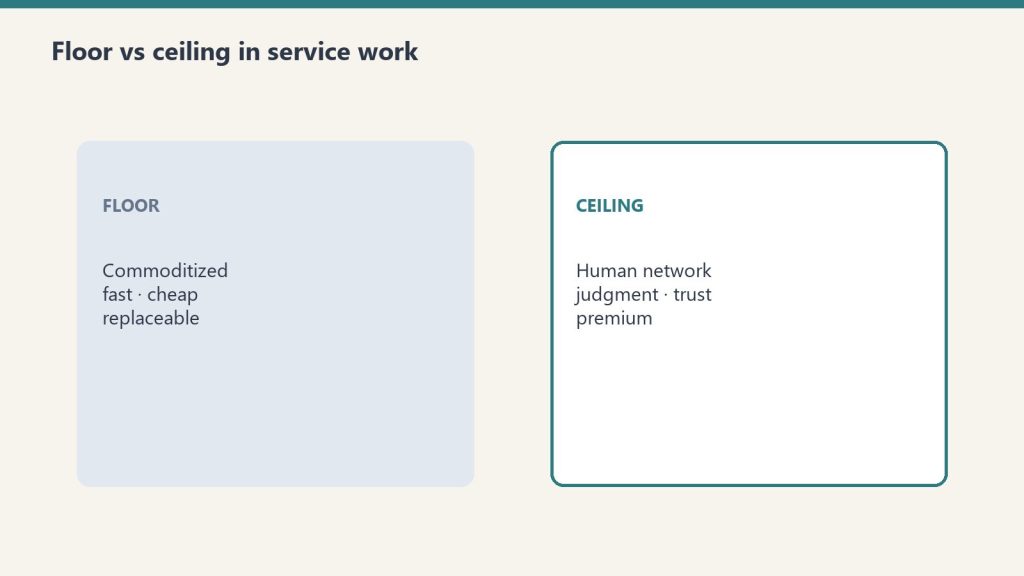
AI didn’t change what wins on the internet. It raised the floor on what counts as infrastructure.
Five years ago, you could run a content operation on vibes. Write a post, hit publish, let Google figure it out. The taxonomy was whatever the category dropdown happened to say. The interlinking was whatever the author remembered to do. The brief was an idea in somebody’s head on a Monday. That stack stopped working. Not because AI replaced writers — that’s the lazy frame. It stopped working because AI put a hundred of them at every keyboard, including your competitor’s. The floor rose. Vibes don’t clear it anymore.
What clears it is architecture. The boring kind.
A real taxonomy, where every piece has a home and knows what it’s a child of. Briefs that are built before the writing starts — target keyword, search intent, reader, angle, source of authority, what this piece does that nothing else on the site does. Kill thresholds, written down, that the writer and the editor and the AI all know before the first paragraph: can’t verify the claim, kill it; sounds like generic LinkedIn, kill it; doesn’t sound like the publisher actually wrote it, kill it. Interlinking as a system, not an afterthought — a hub and its spokes, the spokes pointing back up, every new piece finding its place in a graph that already exists. Schema on every page because you know what kind of thing you published. A quality gate before anything ships.
That’s the editorial surface area. AI runs across the surface and the surface is what shapes the output. Without the surface, AI accelerates mediocrity. With it, AI does work a ten-person department used to do, faster, and the output has the house voice because the house has a voice.
I’ve watched this on a concrete case. A site with forty-seven existing posts, decent writing, zero architecture. Duplicate cannibalizers. No interlinking. No schema. Categories that didn’t mean anything. I stopped new content for six weeks and worked only on the infrastructure — taxonomy, schema, interlinking, killing the duplicates, rewriting titles, fixing the hub-and-spoke. No new posts. Keyword rankings tripled on the existing library before anyone wrote a new word. That’s not an AI story. That’s an architecture story, and the AI only mattered once the architecture was there.
The operator thesis is this: the moat isn’t what AI writes for you. The moat is what you give it. The briefs. The taxonomies. The judgment layer. The willingness to publish the rules you write by.
Most shops won’t build this. It looks like overhead. It isn’t. It’s the product.
The Second Take
A system that moves everything through itself whether or not any single package matters.
Infrastructure is table stakes, not a moat.
That’s the hardest version of the case against my take, and it’s not a strawman — it’s what a sharp person who has been watching the shape of the web over the last few years would tell you, and they would not be wrong.
The argument runs something like this. Yes, the editorial surface area is real. Yes, the sites that have it outperform the sites that don’t, holding everything else equal. But holding everything else equal is the phrase doing most of the work, because on the open web nothing is equal for long. The platforms that mediate discovery — the search engines, the retrieval layers, the answer engines, the large language models that now sit between a reader and the page — can reweight any signal the infrastructure produces. They can absorb the answer into their own surface and never send the reader at all. They can decide tomorrow that a signal they valued yesterday is noise. They can announce a new format, a new schema, a new structured-data spec, and the sites that shipped the old one right are now the sites that shipped the old one. Infrastructure, by this reading, is not a defensible moat. It’s a cost of entry that everyone with an operator playbook will eventually pay.
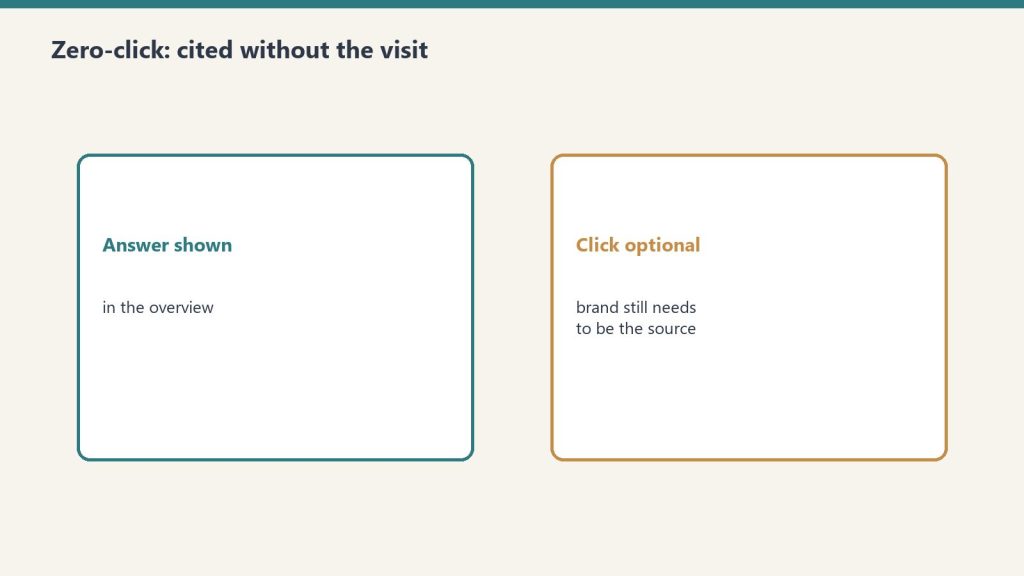
And this view gets sharper. A beautifully-architected site that ranks everywhere and gets cited everywhere can still fail to monetize, because the citation economy and the attention economy are not the same economy. A model cites you to answer a question; the user never clicks. The ingestion point captured the value. You provided the authority; somebody else provided the surface. Authority is not the same as value capture, and this is where the operator thesis quietly breaks. You can be the most credible voice in your vertical and also the least-rewarded, because the layer between you and the reader decided to keep the reader.
There is a harder version of this still. The infrastructure you build is in the platform’s language — its schema, its retrieval signals, its answer formats. To do it well you have to commit to the language. Commitment makes you legible. Legibility makes you extractable. The better your architecture, the more fluently the platform can read you, and the more frictionlessly the platform can become the thing the reader comes to instead of you. At the limit, the architecture is the moat and the architecture is what the platform eats are not different statements. They’re the same statement viewed from two ends.
The quiet version of this argument, which I think is the honest one, is that nobody outruns the platform for long. You can build a ten-year compounding asset on top of a distribution layer you don’t own, and it can still be worth less than a three-year brand built on top of a distribution layer somebody you pay controls. Architecture wins the game everyone is playing. The people setting the table are playing a different game.
If you take the second take seriously, the operator’s job changes. It stops being about building the cleanest surface and starts being about which relationships the surface makes possible before the platform eats it. The architecture becomes a lead generator for something the platform can’t intermediate — an email list that’s really read, a practice that gets hired, a small paid product, an audience that would notice if you stopped. The infrastructure is the bait. The relationship is the hook. If you stop at the infrastructure, you’ve built the prettiest version of somebody else’s funnel.
I have to live with that argument. It’s not wrong.
What I’m Still Sitting With
Public thinking that hasn’t closed the loop yet.
My take says the operators win because we can adapt the infrastructure faster than the platforms can co-opt it. The second take says nobody outruns the platform, so the infrastructure is only worth what it funnels into a relationship the platform can’t touch.
What would have to be true for my take to be right is that the gap between operator speed and platform drift stays wide enough for the work to compound before the rules change again. What would have to be true for the second take to be right is that the rules change faster than that, or that the platform absorbs the signal directly into its own answer surface and never lets the reader through.
I don’t know which is truer yet for people who aren’t already running the stack. For someone who already has the architecture, both takes point the same direction — keep building, and route the architecture toward relationships you own. For someone starting from zero, the two takes split. My take says build the infrastructure first and trust that it compounds. The second take says build the relationship first and let the infrastructure serve it, because any infrastructure you build on rented land is rented too.
I think the honest answer is that both are partially right, and which one is more right depends on how long the platform cycle holds. If we get another five calm years, the operators win. If the next phase of AI-mediated discovery looks less like search and more like a closed loop where the answer engine is also the reader, the second take wins, and it wins decisively.
I’ll write the piece again in a year and see which half aged better.
The Second Take is a new category on Tygart Media. Every piece follows the same contract — my take, then the view that would change my mind, then where I’m still sitting with it. The point isn’t to win the argument. The point is to give you a sharper starting place than the one the algorithm would.
How should restoration companies handle paid leads that don’t convert? Every paid lead — whether they closed the job or not — should flow into the organic asset. Email list, retargeting audience, community contact database, future review pipeline if they closed, referral seed network regardless. The paid spend bought an introduction. The organic asset is what converts that introduction into a durable relationship. Companies that capture every paid lead into the asset make every subsequent paid dollar more efficient. Companies that don’t stay on the lead-buying treadmill in perpetuity.
The highest-ROI paid advertising strategy in restoration is not a new campaign type, a new platform, or a more aggressive bid strategy. It is a retention discipline that costs almost nothing to install and pays compounding returns for the life of the company.
The discipline: every paid lead, whether they converted or not, gets captured into the organic marketing asset. The paid dollar bought an introduction. The organic asset is what turns that introduction into a durable relationship.
Most restoration companies do not do this. The paid lead closes or does not close, and the company moves on. A name, a phone number, and an interaction that cost real money disappear from the company’s awareness. The next time that homeowner or that commercial account has a restoration need, the company has to win them again — at cost, through paid, the same way the first time.
The fix is not complicated. It is a small set of habits that compound into a structural marketing advantage.
What “Evergreen” Means Here
What evergreen means here.
A paid lead is an introduction, not a transaction. The transaction might or might not happen on this loss. The introduction — the fact that this homeowner or this commercial buyer now knows the company’s name and has had a real interaction — is durable if the company treats it that way.
“Evergreen” means the paid lead continues to produce value for the company beyond the single loss that triggered the call. That happens when the lead flows into channels where the company can stay in front of them organically — email, social, retargeting, content, community — at a near-zero incremental cost per touch.
Over time, the accumulated paid-lead database becomes one of the company’s most valuable marketing assets. It is a list of people who already know the company, have already engaged, and are much more likely to convert on any future restoration need than a cold prospect is.
The Capture Points
The capture points.
The evergreen discipline runs at specific capture points throughout the lead journey.
First contact capture. When a paid lead first calls or messages in, the intake captures name, address, email, and the nature of the inquiry. The email address specifically is the unlock — it is what allows the future organic touch. If the intake workflow does not require an email before the quote or response is sent, the capture rate will be unacceptable.
Consent capture. At intake, the client is asked if they would like to receive occasional emails from the company — maintenance tips, storm preparation notes, community updates. Consent is logged. The ones who say yes become the email list. The ones who say no are still in the retargeting audience through behavioral signals on the website, but not in the email list.
Close-of-job capture. If the job closes, the close-out conversation includes the review ask, the photo-and-content permission ask, and the referral network ask. Clients who closed are warm ambassadors for everything the company does next. The close-out conversation is the highest-leverage capture opportunity in the process.
No-close capture. If the job does not close — they went with another company, the scope changed, the loss was smaller than they thought — the follow-up is a polite, helpful message that keeps the relationship alive. “We understand this did not work out this time. If anything changes or if you ever need us in the future, please reach out. In the meantime, we’ll stay in touch occasionally with maintenance tips and community updates.” Most non-closed leads will accept this framing. Many of them end up closing with the company on a future loss because the relationship was maintained.
The Channels That Hold the Relationship
The captured leads flow into specific channels that keep the company in front of them at low marginal cost.
Email list. Monthly newsletter at minimum. Content mix: maintenance tips, storm or seasonal prep, community updates, staff celebrations, completed-job highlights. The tone is helpful and local, not promotional. The list grows steadily as new leads flow in. Segmentation by client type (past client, past lead who did not close, referral partner, community contact) helps tune content.
Retargeting audience. Pixel fires on the website, captures visitors, builds an audience that can be targeted with Meta, Google, and YouTube ads at a low CPM. The retargeting is soft — staff anniversaries, job highlights, community posts, educational content — not high-pressure conversion creative. The purpose is to stay present in the retargeted audience’s social and browsing experience over time.
Social following. When leads are captured with email, they also get an organic invitation to follow the company’s social accounts. Not every captured lead will. The ones who do become the daily-cadence audience the content engine serves.
Text message list (selectively). For emergency-service focused companies, a text message list for severe weather alerts, storm prep, or service updates can be valuable. Opt-in requirements are stricter; compliance is real. Worth building for emergency-heavy service mixes.
Community contact database. Separate from email, for partners, referrers, and community contacts. Managed more manually — owner, sales lead, and PMs add notes. The database supports the observational B2B plan and the trade association relationship work.
Review pipeline. Closed clients flow into the review-capture sequence described in the reviews-as-comp article. That review is an immediate marketing asset, but the client is also now a candidate for referrals, content permissions, and longer-term relationship value.
The Cadence
Different channels run at different cadences.
Email: monthly newsletter minimum. Additional sends on seasonal triggers — pre-hurricane, pre-winter, post-storm. Four to eight sends a quarter is a working baseline.
Retargeting: continuous, automated. A small ongoing budget (a few hundred to a few thousand a month depending on company size) maintains presence with the captured audience.
Social: daily cadence on the highest-value platform for the company, three to five times a week on secondary platforms. The content engine feeds this.
Text: only triggered — weather events, service updates. Over-texting degrades the list.
Community database: monthly review of relationships, quarterly active outreach, annual plan review.
Review pipeline: triggered by job close, weekly monitoring of outcomes.
None of these cadences are heavy. All of them together cost a fraction of what they produce in residual value from the captured leads.
The Math of Compounding
The financial argument for the evergreen discipline is straightforward.
A restoration company running $100,000 a year in paid advertising generates, say, 800 leads at an average $125 per lead. Of those 800, maybe 300 close. The other 500 are “lost” in the standard operating model — the paid dollar was spent, the lead did not convert, the company moves on.
With the evergreen discipline, all 800 are captured. 600 give email consent. 800 end up in the retargeting audience. 200 follow the social accounts. The 300 who closed become review candidates and content permissions. The 500 who did not close get the helpful follow-up, some percentage of which will re-engage over time.
Two years later, the email list is at 1,200 engaged contacts. The retargeting audience is 1,600 people. The social following is 400 engaged followers. The review count is 500+ with regular velocity.
The next $100,000 of paid spend is suddenly dramatically more efficient. Retargeting converts leads from the existing audience at a fraction of the cold-lead CPL. Email drives additional job flow from the warmed list at near-zero marginal cost. Social amplifies content to an audience that is already engaged. Reviews strengthen map pack and LSA placement.
The compounding is not theoretical. It is a direct function of treating every paid dollar as an investment in the asset, not an expense against this month’s lead count.
The Operational Mechanic
Installing this is a short list of specific workflow changes.
Update the intake script. Every paid lead intake captures email and consent. If the current intake does not do this, fix it before running another dollar of paid spend.
Install the close-out extensions. Review ask, content permission ask, referral ask, email opt-in confirmation. Part of every job close-out.
Install the no-close follow-up. A polite, helpful message template. Sent within 48 hours of a non-close. Includes the offer to stay in touch.
Build the email list infrastructure. A simple email service provider (Mailchimp, Constant Contact, ConvertKit — choice less important than the discipline). Monthly newsletter template. Seasonal send plan.
Install the retargeting pixel and audiences. Meta Pixel, Google tag, LinkedIn Insight Tag if B2B-relevant. Configure the retention periods. Launch a soft retargeting campaign.
Map the data to CRM if you have one. If not, a spreadsheet works for the first 1,000 contacts. The important thing is that every captured lead is in one place and can be acted on.
Put a named owner on each channel. Email: marketing coordinator or outsourced specialist. Social: content operator. Retargeting: paid operator or agency. Community database: owner or sales lead. Without named ownership, the channels atrophy.
Common Failure Modes
Common failure modes.
A few consistent reasons this discipline fails to get installed.
Intake does not capture email. Fixable in a week of script updates and training. Non-negotiable if the evergreen discipline is going to work.
No one owns the email list. “Marketing” is not an owner. A specific person has to be responsible for the newsletter, the send cadence, the list maintenance. If nobody owns it, it dies.
Content for the email list is purely promotional. The list disengages fast. The content has to be useful — maintenance tips, community notes, staff celebrations, educational content. Promotional content can be mixed in, not dominant.
Retargeting runs without creative refresh. The same ad running to the same audience for months burns out. Creative needs to rotate weekly or monthly.
Lead capture in the CRM is inconsistent. Some leads get logged. Some do not. The list is corrupted by missing entries. Fix the workflow discipline. Audit monthly.
The no-close follow-up is awkward or feels transactional. Rewrite the template. It should read as a real person, writing to acknowledge that this was not the fit today, and offering to stay in touch for the future. The relationship-first framing lands better than any conversion copy.
How This Pairs With the Rest of the Stack
The evergreen discipline is what converts the paid layer from rent into an investment in the asset. It feeds the reviews practice. It amplifies the content engine’s reach by distributing the content to a growing captive audience. It reinforces the digital three-legged stool’s review and GBP signals by producing new five-star reviews from jobs that originated from paid but landed in the organic asset.
It is the connective tissue between the paid and organic sides of the stack.
Where to Start
Audit the last 90 days of paid leads. For each one, answer: did we capture email? Did we get consent? Are they on the email list? In the retargeting audience? Did they get a follow-up message whether they closed or not?
The gaps are the install plan. In most restoration companies, the majority of those answers are “no” or “I don’t know.” That is the cost of the current state.
Install the workflow changes this quarter. Run the list for 90 days. Send a first newsletter. Launch a soft retargeting campaign. Watch the numbers.
Twelve months in, the email list and the retargeting audience will be producing job flow that did not exist before, at a fraction of the CPL of cold paid acquisition. The paid spend will look different because the asset underneath it is different.
None of this is glamorous. All of it compounds.
Frequently Asked Questions
What does “every paid lead is evergreen” mean for restoration?
It means treating every paid lead — whether they closed the job or not — as a permanent contribution to the company’s marketing asset. Capture their contact information, get consent, flow them into the email list and retargeting audience, and maintain the relationship at near-zero cost over time. The paid dollar bought an introduction; the evergreen discipline turns that introduction into a durable asset.
How do you capture paid leads that don’t convert?
At intake, every lead provides name, email, address, and the nature of the inquiry. For those who don’t close, the follow-up message acknowledges that this didn’t work out, offers to stay in touch, and confirms email opt-in. The non-closed lead becomes part of the nurture audience. Many will convert on a future loss because the relationship was maintained.
What channels should captured leads flow into?
Email list (monthly newsletter minimum, seasonal triggers additional), retargeting audience (continuous, soft creative), organic social following, text messaging selectively for emergency-heavy companies, and the community contact database for partners and referrers. Each channel runs at a different cadence. All of them together cost a fraction of what they produce in residual value.
How much incremental spend does the evergreen discipline cost?
Most of the cost is workflow, not budget. Email service provider at $100-500/month depending on list size. Retargeting at a few hundred to a few thousand a month. The labor is distributed across existing roles. The return from captured leads converting over time typically exceeds the incremental cost many times over.
How long does it take to see compounding returns?
Twelve to twenty-four months. The first year builds the list and audience. The second year is when retargeting, email, and social start producing measurable job flow from previously “lost” leads. Companies that install the discipline see paid CPL decline meaningfully by year two because the warm audience is doing conversion work.
What kind of content should go in the email newsletter?
Helpful, not promotional. Maintenance tips, seasonal prep, community updates, staff celebrations, completed-job highlights. Tone is local and useful. Some mild promotional content is fine in the mix but cannot dominate. The list that treats subscribers as an audience, not a conversion funnel, stays engaged for years.
Tygart Media on restoration — an analyst-operator body of work on the systems that separate compounding restoration companies from busy ones. No client names. No brand placements. Just the operating standard.
You don’t need a $250/month SEO platform. You need the right $79/month tool, a $20 Claude subscription, and a workflow that connects them.
2026 Pricing — Full Matrix
2026 SEO tool pricing — the full comparison matrix.
Tool
Entry
Mid
Pro
Key Limitation
SpyFu Basic
$39/mo
—
—
Best for: competitor keyword + PPC research
SpyFu Pro
—
$79/mo
—
Adds API, unlimited exports, 10+ yr history
Ahrefs Lite
$129/mo
—
—
Best for: backlink monitoring
Ahrefs Standard
—
$249/mo
—
Most popular — adds Content Explorer
Semrush Pro
$139.95/mo
—
—
5 projects, 500 keywords, no historical data
Semrush Guru
—
$249.95/mo
—
Historical data + content toolkit
Semrush Business
—
—
$499.95/mo
API access — required for data integration
Moz Pro Starter
$49/mo
—
—
Best for: site health + DA tracking
Moz Pro Medium
—
$179/mo
—
1,500 keywords, 2M pages, API access
Feature Matrix by Use Case
Feature matrix by use case — pick tools by job, not brand.
Use Case
SpyFu
Ahrefs
Semrush
Moz
Competitor keyword research
Best
Good
Good
Adequate
PPC competitor intelligence
Best
Limited
Good
Minimal
Backlink analysis
Adequate
Best
Good
Good
Technical site auditing
Limited
Best
Best
Good
Content strategy tools
Limited
Good
Best
Adequate
Historical data depth
Best
Good
Adequate
Adequate
Value per dollar
Best
Adequate
Poor
Good
Recommended Stacks by Budget
Recommended stacks by budget band.
Under $100/mo: SpyFu Pro ($79) + Claude Pro ($20) = $99/mo. Best competitor intelligence at this price combined with an AI layer that interprets the data. Beats any single tool under $250/mo for daily operational intelligence.
Under $200/mo: SpyFu Basic ($39) + Moz Pro Standard ($99) + Claude Pro ($20) = $158/mo. Competitor research + domain authority tracking + site health + AI. Covers 90% of small agency workflows.
Under $300/mo: SpyFu Pro ($79) + Ahrefs Lite ($129) + Claude Pro ($20) = $228/mo. Full stack: competitor intelligence, backlink analysis, and AI interpretation. Covers everything except content toolkit.
The Honest Verdict
Semrush and Ahrefs are excellent tools. The question is whether the premium is justified for your specific workflow. Most small businesses use 20% of features on a $249/month plan. SpyFu covers the 20% that matters most — competitor intelligence — at a third of the price. Claude covers the interpretation layer none of the traditional tools provide. That combination beats any single tool at any price for operators who don’t have time to become full-time SEO analysts.
Want This Stack Set Up For You?
We configure the SpyFu + Claude competitive intelligence stack for your specific business overnight.
SpyFu and Moz Pro start at similar prices but do different things. Here’s which one — or which combination — you actually need.
Bottom Line
SpyFu is built for competitor intelligence. Moz Pro is built for site health management. If you only have budget for one, choose based on your primary need. If you have budget for both: SpyFu Basic ($39) + Moz Pro Standard ($99) = $138/mo — roughly the same as Semrush Pro alone, which does both less well.
2026 Pricing
Tool
Entry
Mid
Pro
Key Limitation
SpyFu Basic
$39/mo
—
—
Competitor keywords, 6-month history
SpyFu Pro
—
$79/mo
—
API, unlimited, 10+ year history
Moz Pro Starter
$49/mo
—
—
50 keywords, 20K pages, 1 site
Moz Pro Standard
—
$99/mo
—
300 keywords, 400K pages crawled
Moz Pro Medium
—
$179/mo
—
1,500 keywords, 2M pages, API
Moz Pro Large
—
—
$299/mo
3,000 keywords, 5M pages crawled
SpyFu Wins On
Competitor research — SpyFu was built for this. Moz’s competitor tools are secondary features.
PPC and paid search intelligence — SpyFu tracks competitor ad history and spend estimates. Moz Pro doesn’t.
Historical keyword data — A decade-plus of competitor keyword histories with no Moz equivalent.
Moz Pro Wins On
Domain Authority metric — Moz DA is the most widely referenced domain strength metric. If clients, partners, or editorial standards reference DA, you need Moz.
Site auditing — Moz Pro’s crawl is excellent. Medium plan crawls 2M pages/month — more than comparable Semrush tiers.
SpyFu Basic ($39/mo) + Moz Pro Standard ($99/mo) + Claude Pro ($20/mo) = $158/mo. Competitor intelligence + domain authority tracking + site management + AI interpretation. Better than Semrush Pro at $139.95/mo for most small business workflows.
Want This Stack Set Up For You?
We configure the SpyFu + Claude competitive intelligence stack for your specific business overnight.
will@tygartmedia.com
Email only. We respond within 24 hours.
FAQ
Which is better for a small business just starting with SEO?
Moz Pro Starter at $49/mo for understanding your own site performance. Add SpyFu Basic when you’re ready to research competitors systematically.
Is Moz Domain Authority still relevant in 2026?
Yes. Despite competitor metrics (Ahrefs DR, Semrush Authority Score), Moz DA remains the most commonly referenced metric in link building outreach, client reporting, and editorial standards.
Does SpyFu track domain authority?
SpyFu has its own domain strength metrics but does not use Moz DA. If DA is important to your workflow, you need Moz or a tool that pulls Moz data.
Semrush’s cheapest plan costs 3.5x more than SpyFu’s. Here’s exactly what you get for the difference.
Bottom Line
Semrush is the most comprehensive all-in-one SEO platform. SpyFu is the best competitor intelligence tool for the money. For most small businesses and independent operators, SpyFu covers the core workflows at a fraction of the cost — and SpyFu Pro ($79/mo) + Claude ($20/mo) = $99/mo beats Semrush Pro ($139.95/mo) for daily competitive intelligence.
2026 Pricing
Tool
Entry
Mid
Pro
Key Limitation
SpyFu Basic
$39/mo
—
—
6-month history, limited exports
SpyFu Pro
—
$79/mo
—
Unlimited, API, 10+ year history
SpyFu Team
—
—
$249/mo
Multi-user, white-label
Semrush Pro
$139.95/mo
—
—
5 projects, 500 keywords, no history
Semrush Guru
—
$249.95/mo
—
Historical data, content toolkit
Semrush Business
—
—
$499.95/mo
API access, 40 projects, 5,000 keywords
The Hidden Cost of Semrush
One user per account — adding a second costs $45-$100/month. API access requires Business at $499.95/mo. Historical data requires Guru at $249.95/mo. A working multi-user agency setup with API and history costs $600-$800+/month on Semrush alone.
SpyFu Wins On
Value per dollar — SpyFu Pro gives API and unlimited data at $79/mo. Semrush requires $499.95/mo for API access.
PPC competitor intelligence — SpyFu’s paid search data is deeper and historically richer at comparable tiers.
Historical data access — 10+ year keyword history at $79/mo vs $249.95/mo on Semrush.
Rank tracking volume — SpyFu Pro tracks 15,000 keywords. Semrush Pro tracks 500 keywords at nearly double the price.
Semrush Wins On
All-in-one breadth — SEO + PPC + social + content + local + brand monitoring in one platform.
Content marketing toolkit — Topic research, SEO writing assistant, content audit. No SpyFu equivalent.
Local SEO tools — Dedicated local SEO features not available in SpyFu.
Want This Stack Set Up For You?
We configure the SpyFu + Claude competitive intelligence stack for your specific business overnight.
will@tygartmedia.com
Email only. We respond within 24 hours.
FAQ
Does SpyFu track rankings?
Yes. SpyFu Pro includes tracking for up to 15,000 keywords. Semrush Pro tracks 500 at $139.95/mo — SpyFu tracks 30x more for 56% less.
Is Semrush worth it for a small business?
At Guru ($249.95/mo) or higher, Semrush becomes genuinely powerful. At Pro ($139.95/mo), you’re paying premium pricing for limited features. SpyFu covers the core competitor research use case for $60-$100/mo less.
What does Semrush have that SpyFu doesn’t?
Content marketing toolkit, local SEO tools, social media management, brand monitoring, and more comprehensive site auditing. If you need those, Semrush is right. If you primarily need competitor intelligence, SpyFu saves $60-$420/month.