How should a restoration company build a B2B referral network? Start by walking your own office and writing down every trade that services your commercial building — HVAC, pest control, fire suppression, janitorial, landscaping, snow removal, plumbing, electrical, security. Audit your accounts payable for every vendor you pay. Then walk five commercial buildings in your service area and do the same exercise. Every trade on those lists is a potential B2B referral partner who is already inside buildings before water or fire damage happens. Observational B2B — based on what actually exists in the ecosystem — outperforms prospecting from a vertical list every time.
The standard B2B sales approach in restoration is vertical-first. Pick a vertical — property management, healthcare, hospitality, education. Build a target account list. Run outbound. Attend the right trade show. Hire the BDR. Write the email sequence. Hope someone responds.
There is a faster, cheaper, higher-yield method that almost nobody teaches. It starts with walking around your own office.
The Walk Your Office Exercise
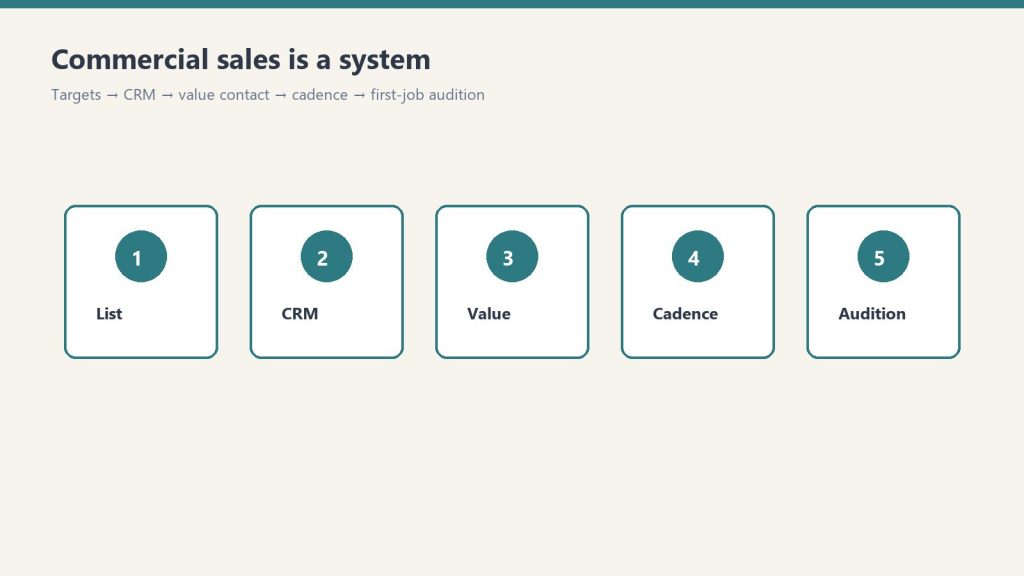
Go stand in the middle of your office. Look around. Write down every vendor and trade who comes into this building to do work on it.
Who cleans the office? Who maintains the HVAC? Who handles pest control? Who stocks the coffee? Who empties the dumpster? Who manages the grounds? Who plows the parking lot in winter? Who inspects the fire extinguishers and sprinkler system? Who handles IT cabling? Who services the copier? Who answers the alarm calls? Who delivers the water cooler bottles? Who does the plumbing when something breaks? Who comes for the electrical when something trips? Who paints the walls when it is time? Who handles the lawn?
The list is longer than you think. Write it all down. Do not skip.
Get The Signal
What we actually ran, what it measured, and what it means for a restoration shop — every week, including the flops.
Every single trade on that list is someone who walks into commercial buildings every week as part of their ordinary business. Every single one of them is physically present in buildings, regularly, and is in a position to see water damage, see mold, see evidence of a leak, see the aftermath of a fire, know the facility manager, and have a phone call waiting to happen if they had a restoration company whose name they remembered.
That list — the trades who service your own building — is a concrete, real, walkable B2B referral universe. No prospecting. No cold calls. No vertical targeting exercise. The list of referral partners is sitting in your office, literally writing the invoices you pay every month.
The Audit Your AP Exercise
The second half of the exercise is to pull up your accounts payable and cross-reference.
Every vendor you pay is a vendor you already have a relationship with. They are already showing up. They already know you. Many of them are already inside other commercial buildings in your service area that you would love to be inside as a restoration partner.
The audit is simple. Who do we pay? How often? How much? Do they know what we actually do? Do they know we handle commercial emergencies? Do they have a way to refer us when they see something at another client site?
Most restoration companies have never had this conversation with the vendors they write checks to every month. The vendor sweeps the floor, gets paid, leaves. The restoration company, meanwhile, is cold-calling the same building types that vendor is inside of weekly.
That is the gap. The relationship already exists as a commercial transaction. Converting it into a bidirectional referral relationship is a conversation, not a campaign.
The Walk Five Commercial Buildings Exercise
Now widen the lens. Pick five commercial buildings in your service area. Office buildings. Retail plazas. Medical office. Light industrial. Hotels. Whatever mix matches what you target commercially.
Walk each building. Look at the signage. Who is the property manager? Who is the leasing company? What is the HVAC vendor on the maintenance placard? Whose name is on the fire extinguisher inspection tag? What pest control company is listed at the service entrance? What janitorial company is listed in the lobby? Who is the security vendor on the door sticker? Who is the elevator service? Whose roof contractor is listed on the roof hatch?
Every one of those names is, again, a trade that is physically inside that building regularly. If that building has a pipe burst tonight, the property manager is calling one of two categories of people: a restoration company they already know, or the first trade they can reach who can refer one. If one of the trades servicing the building has your name in their phone — and has done one job for you before, even a small one, even a favor — you become the referral.
Five buildings at fifteen minutes each is an hour and fifteen minutes of walking. The output is a list of twenty to forty specific companies that are already inside the commercial real estate you want to be working in.
Why This Beats Traditional Prospecting
Traditional B2B prospecting in restoration runs through a sequence of filters — target list, account research, cold outreach, gatekeeper, appointment, demo or lunch, proposal, eventual yes. The conversion rate from top of funnel to first job is brutal. The cycle time is measured in months.
Observational B2B starts from a fundamentally different position. The relationship either already exists or the physical proximity already exists. The trade is already inside the building. The vendor is already writing you invoices. The facility manager already knows the plumber. The introduction is a single-degree connection instead of a cold outreach.
The conversion rate is correspondingly higher. A plumber who has done a one-time favor for your restoration team — helping out after hours on a difficult line — becomes a referral partner for the life of their business. The cost of that relationship was one favor. The yield is years of inbound calls.
The cycle time is also fundamentally different. A cold prospect is a nine-month sales cycle. A plumber you did a favor for last Tuesday is referring a water loss to you this Friday.
The Mechanics of Converting the Walk Into Work
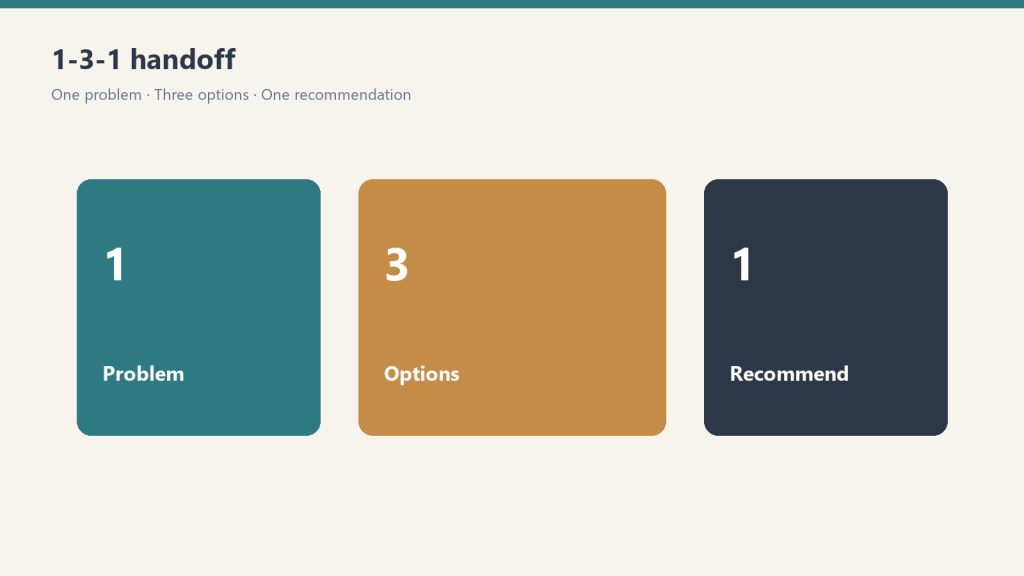
The walking exercise produces a list. The list is not the output. The output is a series of small, specific, real interactions that convert each name on the list into a working referral relationship.
Call or visit every trade on the list. Not with a pitch. With a specific, low-stakes, real interaction. Introduce yourself. Leave a card. Drop off coffee. Ask what they do. Ask if they ever see water damage or mold on their routes. Tell them who to call if they ever do. Offer to help them on a job where their client needs a service you handle and they do not.
The first ask is never for referrals. The first ask is to be useful to them. Most trades are operating on the same kind of referral economy restoration runs on, and most of them are chronically underserved by other trades who treat them as transactional. If you are the restoration company that shows up, does one real favor, and then keeps showing up, you become the restoration company that gets called.
Build the list of small actions. Pick one a week. Do not skip. The difference between restoration companies that build real B2B referral flow and ones that do not is not strategy. It is whether they did the fifty small actions over the course of a year that turn a list of names into a living referral network.
The Commercial Building Version of the Same Pattern
The walk-the-building exercise works the same way at the facility level.
A property manager is not primarily looking for a new restoration vendor. They are looking for a restoration vendor they already trust before an emergency happens, so that when the emergency happens they already know who to call. The restoration company that shows up at the property during the calm — introducing themselves to the PM, understanding the building, getting to know the maintenance supervisor, dropping by quarterly, being known — is the one who gets the call at 2 AM when the pipe bursts.
Property managers are not acquired through a single sales meeting. They are acquired through standing — the same doctrine the owner-as-rainmaker article covers at the trade association level, applied at the specific-building level.
Walk the buildings. Meet the PMs. Meet the maintenance supervisors. Understand the building. Be known before you are needed. That is the pattern.
The Observational Mindset, Applied Everywhere
Once the observational habit is installed, it starts to apply across the whole business development motion. Every building you are inside of is a building to observe. Every vendor who comes to your office is a potential referral partner. Every commercial client you already serve is embedded in a network of other trades you have not yet met.
The restoration companies that win B2B are not the ones with the most sophisticated outbound programs. They are the ones whose owners and sales leaders have the observational habit — seeing the trades, the vendors, the relationships, the physical presence that already exists, and converting that observation into action one interaction at a time.
Most restoration owners have walked past a hundred referral partners in the last month without seeing them. The observational plan is just turning that on.
How This Pairs With the Rest of the Stack
Observational B2B is the ground-level connective tissue that turns the owner’s community standing into specific working relationships. The owner is at BOMA; the observational plan is with the HVAC vendor inside the BOMA member’s building.
It feeds the content engine because every B2B relationship produces stories — joint jobs, referred clients, celebrated partner work. It contributes to the review practice because referred clients are the highest-quality review sources. It gives the paid layer something real to amplify when ads reference specific partners and specific commercial jobs.
Observational B2B is not a silo. It is the substrate every other layer grows in.
Where to Start
This week: walk your office. Write down every trade and vendor in your building. Pull AP. Cross-reference.
Pick three names. Call each one this week. Not to pitch. To introduce yourself and ask what they do, and to leave your card with a specific message about who to call if they ever see water or fire damage at a client site.
Next week: walk five commercial buildings in your service area. Write down every name you see on signage, placards, and inspection tags. Pick three of those names. Research them. Call or drop in the following week.
Keep going. One walk. One AP audit. One set of three calls or drop-bys. Every week. For a year.
A year of that discipline will produce more commercial referral flow than any cold outbound program you could buy. The cost is almost nothing. The yield compounds indefinitely.
Frequently Asked Questions
What is observational B2B business development? A business development method that starts by observing what is already present in the ecosystem — the trades servicing your own office, the vendors in your AP, the trades inside commercial buildings in your service area — rather than starting from a target vertical list. Every name observed is a potential referral partner with existing physical presence inside the buildings you want to be working in.
Why is observational B2B better than traditional cold prospecting? Because the relationships or proximity already exist. A plumber you do one favor for becomes a referral partner faster and cheaper than a cold prospect you work for nine months. The conversion rate is higher, the cycle time is shorter, and the cost per relationship is near zero.
What trades should restoration companies build relationships with? The complete list surfaces from the walk-your-office and walk-the-building exercises. Common ones: HVAC, plumbing, electrical, pest control, janitorial, fire suppression and extinguisher inspection, landscaping, snow removal, roofing, security, elevator service, IT cabling, facility maintenance. Any trade that is physically inside commercial buildings regularly is a candidate.
How do you approach a trade or vendor you have never worked with? Not with a pitch. With a specific, low-stakes, real interaction. Introduce yourself, leave a card, ask what they do, ask if they ever see water or fire damage on their routes, tell them who to call if they ever do, offer to help them on a job where their client needs a service you handle. Build the relationship on usefulness first. Referrals follow.
How often should a restoration company walk commercial buildings? At least a few buildings a month, indefinitely. The observational habit is not a one-time project. It is a recurring discipline. The restoration companies that dominate commercial work in their markets have owners or sales leaders who are constantly inside buildings, constantly meeting trades, constantly adding names to the network.
How does observational B2B scale as a company grows? It scales by distributing the habit across a larger team. Every PM who is in a building for a job should be observing the same things the owner observed on their walks. Every sales rep should be running the same walk-the-building exercise in their territory. The observational habit becomes the operating standard, not a solo owner activity.
Tygart Media on restoration — an analyst-operator body of work on the systems that separate compounding restoration companies from busy ones. No client names. No brand placements. Just the operating standard.
Get The Signal
What we actually ran, what it measured, and what it means for a restoration shop — every week, including the flops.
Leave a Reply