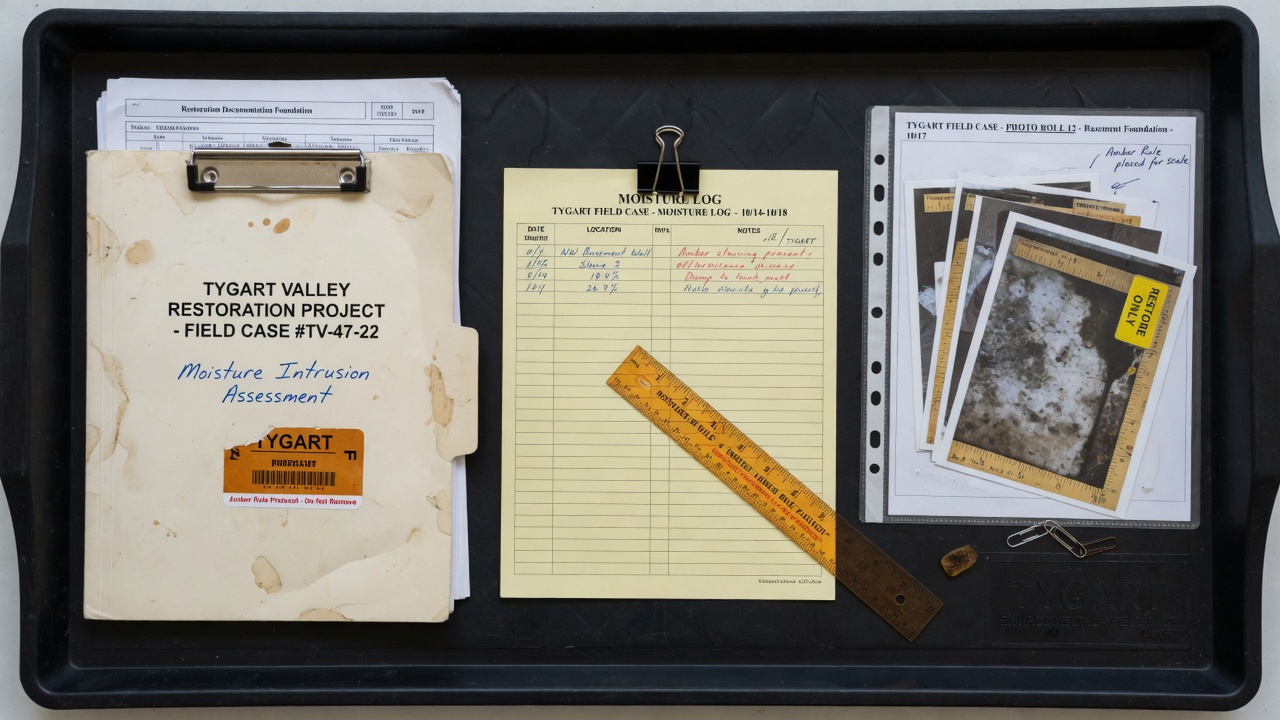
What is the financial foundation of a restoration company? The financial foundation of a restoration company is not its P&L, its pricing, or its banking relationship — it is the documentation layer that captures what is actually happening across mitigation, reconstruction, billing, sales, and vendor coordination in one place every team can see. Without that layer, every downstream financial number is a guess.
Most restoration owners who ask me why they aren’t making more money want to talk about pricing, about Xactimate compression, about carriers paying slow, about labor cost going up. Those are real. They are almost never the actual problem.
The actual problem is that they do not have a documented, centrally-tracked operating standard for how the company does things. Everything else is downstream of that.
This is the one piece of financial advice for restoration owners that almost no one wants to hear, because it sounds operational instead of financial. It isn’t. A restoration company that cannot see its own work in a single place cannot price it, cannot invoice it on time, cannot hand it off cleanly between departments, cannot learn from it, and cannot defend it when a carrier pushes back. The documentation gap is the financial gap. Every other leak is a symptom.
Without Documentation, You Don’t Know What Is Happening
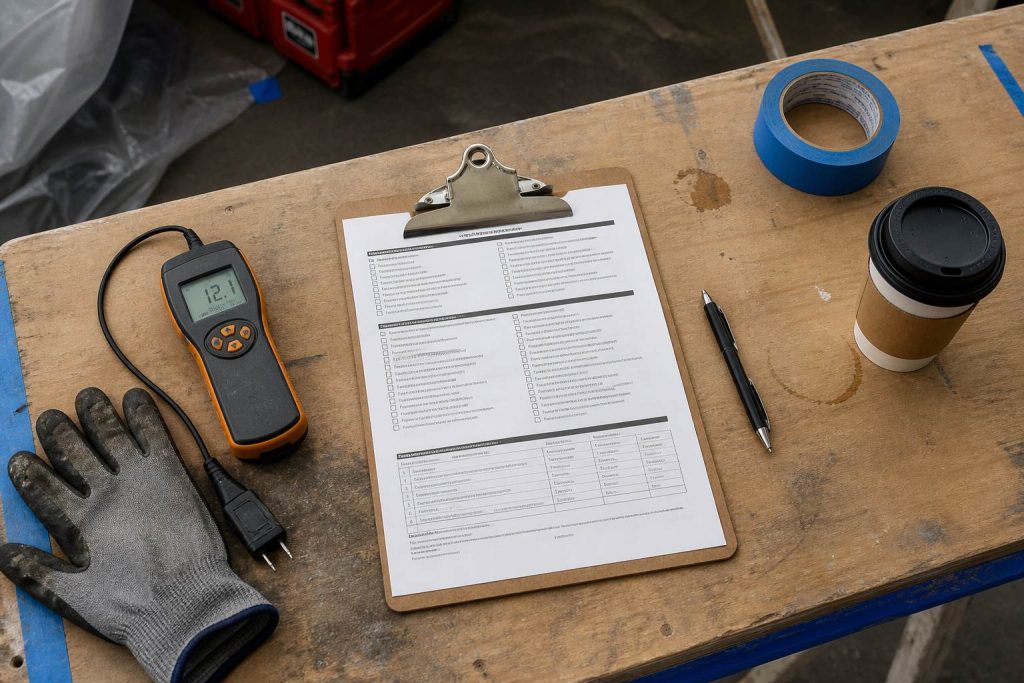
The first failure mode is simple: if nothing is written down, nothing is visible. And if nothing is visible, nobody is operating from the same picture of the job.
A restoration business is at minimum five distinct functions — ops, sales, content and communications, billing, vendors — and usually more. Most mid-market restoration companies run those functions in five different tools, in five different inboxes, in five different heads. The tech on the job site knows one thing. The PM knows another. The estimator knows a third. The billing clerk is waiting on a signed change order that was verbally approved two weeks ago and never captured.
When the mitigation crew does not communicate cleanly with the reconstruction team — even when reconstruction is inside the same company — the job leaks money. Content damage that should have been itemized on day one does not make it onto the scope. A cabinet lead time that should have been placed the day of loss is placed three weeks later. A homeowner is told one thing by mitigation and something different by the rebuild PM, and the relationship that was going to produce the referral is already damaged.
None of those failures show up as a line item on a P&L. They show up as a gross margin three points lower than last quarter, and nobody can tell you exactly why.
Documentation Is a Visibility System, Not a Filing Cabinet
When restoration owners hear “documentation,” most of them picture a shared drive full of PDFs nobody reads. That is not the system we are describing.
The documentation layer is the live, shared operating picture of the business. It is the place where the ops team, the sales team, the billing team, the content team, and the vendors can all see what is happening on every active job and on every SOP that governs how those jobs get run. It is not a filing cabinet. It is a scoreboard.
A working documentation layer has three properties that a filing cabinet does not:
It is central, meaning one system of record rather than email threads, text chains, whiteboards, and one-off spreadsheets. Everyone is looking at the same version of the truth.
It is live, meaning it is updated as the job moves, not after the fact. Documentation that is only written up after a job closes is archival. Documentation that is updated in real time is operational.
It is recursive, meaning the documentation generates feedback that adjusts the SOPs. Every job teaches the next job. The system gets sharper every week because the information captured this week shapes next week’s standard.
Filing cabinet documentation does not change behavior. A live, central, recursive documentation layer is what turns a restoration company into a compounding business instead of a busy one.
The Mitigation-to-Reconstruction Proof

The fastest way to see whether a restoration company has a working documentation layer is to look at the handoff between mitigation and reconstruction.
If mitigation wraps, the dry-out certificate is signed, and the reconstruction PM has to re-interview the homeowner to find out what happened — the documentation layer does not exist. If the reconstruction team has to re-photograph the damage because the mitigation photos were never shared in a usable form — the documentation layer does not exist. If the rebuild scope gets written from scratch without visibility into what mitigation did, what carrier questions came up, or what the homeowner actually wants — the documentation layer does not exist.
The money leak is obvious once you name it: every one of those gaps is time, labor, or margin that you are paying for twice. And the fix is not more software. The fix is a standard that says a mitigation job is not closed until specific artifacts are in a specific place, in a specific format, ready for the rebuild team to operate from on day one. Write that down, train to it, enforce it, and every dollar of margin the handoff currently costs you comes back.
That is a companion article to this one: the documented mitigation prep standard and the mitigation-to-reconstruction handoff margin cover that specific SOP. It is one of many. But it is the one most owners can feel in their bank account within a quarter of fixing it.
Tiered Approval Authority: The SOP Most Owners Skip
One of the most financially consequential SOPs a restoration company can build is a tiered approval structure — and most owners do not have one.
The mistake is thinking about approvals as a thing you need for a $500,000 commercial loss. You do need one there. You also need one for a $2,500 emergency services call that comes in on a Sunday afternoon during a football game. The operator on call needs to know, without calling you, what dollar authority they have to commit the company to show up and start work. Without a documented tier, one of two things happens: the work does not get committed fast enough and the customer calls the next name on the carrier’s list, or it gets committed without any financial discipline and you find out what happened on Monday.
A documented approval matrix — amount, job type, conditions, who can authorize — is a piece of paper that makes you money. It turns speed-of-response from a chaotic strength into a repeatable system. It protects margin on large jobs by forcing scope discipline before the commitment. It protects responsiveness on small jobs by putting authority at the right level.
A full treatment of the approval tier SOP is in a companion article; what matters here is that the approval matrix only exists because the documentation layer exists. Without a central operating picture, the matrix is just a memo nobody follows.
The WIP Board: Where Documentation Becomes Recursive
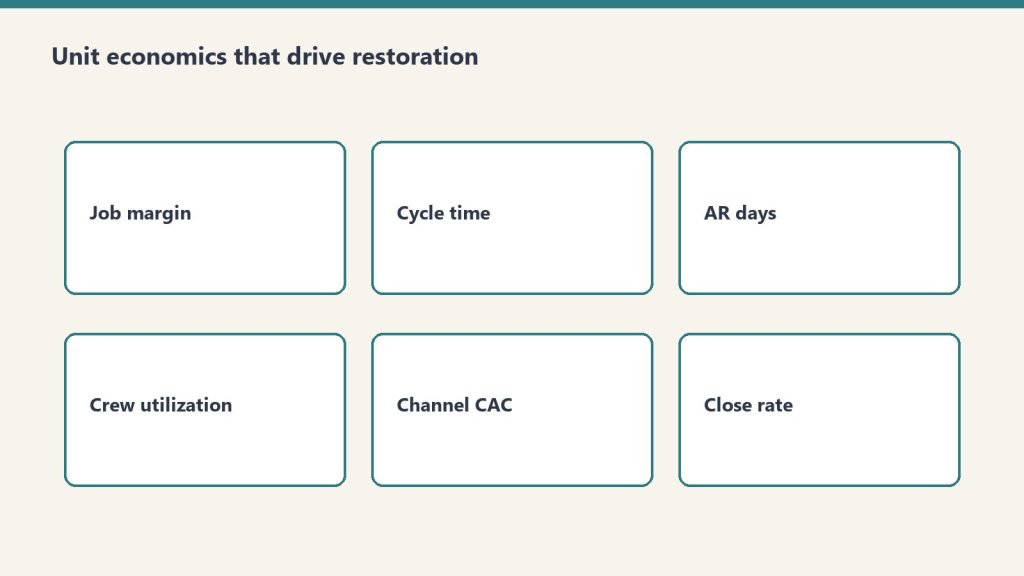
The reason documentation is a financial system rather than an administrative chore is the feedback loop.
The highest-leverage operating practice I recommend to restoration owners is the cross-functional job review — the WIP Board meeting (Work In Progress), call it whatever your team will actually attend — where representatives from ops, sales, PM leadership, estimating, and billing sit together and walk through the jobs that moved this week. Not just the bad jobs. Every job. A tech. A PM. An ops manager. A billing representative. Whoever on your team can speak for each part of the business without having to go look it up.
The job review is where estimates get compared to actuals. Where scope creep gets caught before the invoice goes out. Where the subcontractor who missed a deadline gets flagged before the same thing happens on the next job. Where the carrier question that tripped up the PM becomes a new line in the scoping SOP. Where pricing on a category of work gets adjusted because three jobs in a row came in under target margin.
The WIP Board is the recursive loop. It only works if the documentation layer is there to feed it. If nothing is captured, there is nothing to review. If the captures are in five different systems, the meeting spends its time reconciling data instead of drawing conclusions. A working documentation layer makes the WIP Board a thirty-minute margin clinic. A broken one makes it a two-hour status update that produces nothing.
The related practice — calling the client after the job, recording the conversation, and capturing the honest feedback — is part of the same system. It is another input into the loop. A full breakdown is in the every-job post-mortem companion piece.
Why This Is the Financial Foundation, Not the Operations Foundation
Restoration owners resist calling documentation a financial practice because it does not look like money. It is not a credit facility. It is not a pricing move. It is not an insurance relationship. It is an operating discipline.
Here is the reframe: the financial outcome of a restoration company — margin, cash conversion, customer lifetime value, enterprise value at exit — is produced by the same five or ten operating behaviors happening on every job. You do not improve the financial outcome by improving the P&L. You improve it by improving the behavior. And behavior is improved by capturing it, documenting the standard, reviewing it against actuals, and adjusting the standard when you find something better.
That is the financial foundation. Everything else sits on top of it.
A restoration company with a working documentation layer can raise prices without losing customers because its scope discipline is visible and defensible. It can extend lines of credit at better rates because its DSO and collections practice is documented. It can sell for a higher multiple because the business runs without the owner having to be in every decision. It can pass a carrier program audit without losing a week of billable time. It can train a new PM in ninety days instead of eighteen months. None of those are financial moves. All of them produce financial outcomes.
Where Owners Start
If you do not have a documentation layer today, do not try to install one across every function at once. Pick one handoff that bleeds. For most restoration companies that is mitigation-to-rebuild. For some it is estimate-to-invoice. For others it is new-job-intake-to-dispatch.
Document that one handoff as a written SOP with specific artifacts, formats, and deadlines. Put those artifacts in one central system. Train the people on both sides of the handoff to operate from that standard. Run your WIP Board against it for ninety days. Watch what happens to margin on that job type.
Then do the next handoff. You are not building a manual. You are building a live scoreboard that the entire company operates from. The financial results follow — they do not lead.
The restoration companies that compound over a decade have a documentation layer. The ones that plateau at $3 million or $8 million or $15 million and never break through do not. It is very close to that simple. The cost of building one is mostly discipline and a few weeks of focused design. The cost of not building one is everything the company could have been.
Frequently Asked Questions
What is the documentation layer in a restoration company? The documentation layer is the central, live, recursive system of record for how a restoration company operates — covering SOPs, job-level artifacts, handoffs, approvals, and the feedback loop between functions. It is the shared operating picture every team works from, not a filing cabinet of static documents.
Why is documentation a financial practice, not an operational one? Because every financial outcome — margin, cash conversion, customer retention, valuation at exit — is produced by the behaviors a documentation layer governs. Improve the behavior, the financials follow. Without the documentation layer, the behaviors drift and the financials drift with them.
What is the first SOP a restoration owner should document? Usually the handoff that is costing the most money. For most restoration companies that is mitigation-to-reconstruction. Document that one end-to-end with specific artifacts, formats, and deadlines, put it in a central system, and train to it before moving to the next SOP.
What is a tiered approval matrix in restoration? A documented approval structure that defines, by dollar amount and job type, who on the team can commit the company to start work, sign a change order, or approve a scope change. It gives operators the authority to respond fast on small jobs and protects margin discipline on large ones.
What is a WIP Board meeting? A cross-functional job review where representatives from ops, sales, estimating, PM leadership, and billing walk through every job that moved during the week, compare estimates to actuals, catch scope issues, and adjust SOPs based on what the week revealed. It is the recursive loop that turns documentation into a compounding financial practice.
Do I need restoration-specific software to build a documentation layer? No. The documentation layer is a discipline, not a product. It works in dedicated restoration platforms, general job management tools, or well-structured shared workspaces. What matters is that it is central, live, and recursive — not which vendor’s logo is on the login screen.
Tygart Media on restoration — an analyst-operator body of work on the systems that separate compounding restoration companies from busy ones. No client names. No brand placements. Just the operating standard.
Leave a Reply