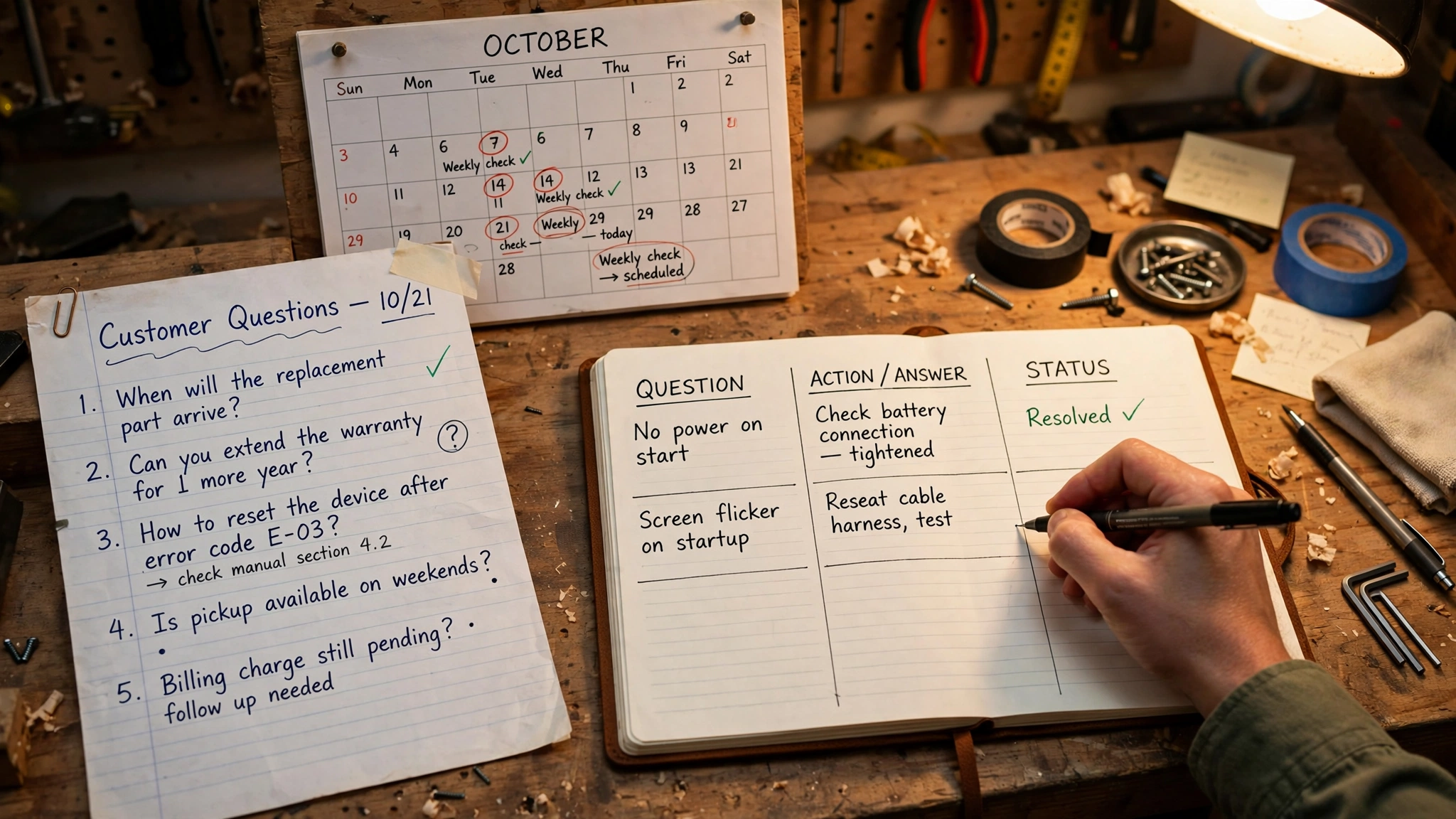
Here’s how AI search visibility is honestly tracked: you write down the actual questions your customers ask, you ask those same questions in the actual answer engines on a fixed schedule, and you record three things separately — whether the answer names you, whether it cites you, and whether what it says about you is true.
That’s it. Everything else — dashboards, scores — is packaging around that habit, or a substitute for it. And there’s a problem worth understanding before you buy a substitute: ranking and being cited are not the same event, and a tool that conflates them will mislead you without making a number up.
Ranking is not being cited
Start with the structural fact. Search the old way and you get a ranked list of pages. Ask an answer engine — Copilot, ChatGPT, Perplexity, the AI box atop Google — and you get a paragraph, written on the spot, with a handful of sources cited beside it.
Those two events are only loosely connected. A page can sit at position two in the organic list and never get quoted, while a competitor at position four gets built into the answer. It isn’t a glitch: the engine doesn’t summarize the top result. It breaks your question into smaller sub-questions, looks for material on each, and assembles an answer from what it finds — and studies of cited URLs find just a small minority come from the organic top ten.
So rank-based tracking measures the list while your customers read the paragraph. That’s the gap where businesses get surprised: “we rank fine, why is the machine recommending somebody else?” The events that matter are being named, cited, and described correctly. For the basic method as a straight answer, see how do you measure AI search visibility. This piece covers the part usually skipped — the limits.
The only honest method: fixed questions, three separate records
The method fits on an index card. Build a list of the questions your customers actually ask — not keywords, questions, in their words: “Who fixes a flooded basement in Tacoma?” “What does water damage cleanup cost?” Twenty or thirty is plenty. Then, on a fixed schedule — weekly is honest, monthly the floor — ask them in the engines your customers use, and record what comes back.
Get The Signal
What we actually ran, what it measured, and what it means for a restoration shop — every week, including the flops.
The recording is where honesty lives or dies, because one answer contains three different facts:
- Mentions. Does the answer name your business at all? Not link, not cite — name. The customer reading that paragraph sees your name or a competitor’s.
- Citations. Does the engine cite your pages as sources? You can be named with no citation, and cited without being recommended — quoted as background while somebody else gets the call.
- Accuracy. What does the answer say about you, and is it right? Engines repeat stale facts and invent new ones with total confidence. An answer describing a service you stopped offering two years ago is not a win — it’s a wrong sign on your door.
Three columns, kept apart. Any tool worth paying for just runs that without the handwork — and the moment one blends those columns into a single number, it throws away the only details you’d ever act on.
What tracking can genuinely see
Done this way, tracking earns its keep. Four things it shows straight:
- Trends on fixed questions. Same questions, same schedule. When your name starts appearing in answers it wasn’t in, that’s real movement — usually tied to work you did.
- Which pages get cited. Not which pages rank — which ones engines actually pull from. In our own work, a few pages carry a large share of the citations.
- Share against named competitors. Record who gets named when you don’t, on the same question set.
- Answer drift. Ask the same question next month and the answer is different: a new source, a dropped name. Drift is normal — and why a one-time check is worth little.
What no tool can see
Now the part that doesn’t make it into the sales deck: five things no tracker — ours, theirs, anybody’s — can show you.
The answer your actual customer got
Answers vary by who’s asking, where they are, and when they ask — the same question can name different businesses for two people in the same town on the same afternoon. A tracker sees a sample, from its own accounts, and a sample is not the population. Anyone presenting a report as a census of what your customers saw is overselling the instrument.
The questions nobody thought to ask
Your prompt list is a map, and the map is not the demand. Customers ask things you’d never predict — oddly specific, half-wrong, mid-emergency questions typed one-handed at 2 a.m., some the most valuable in your market because the person asking is ready to buy. If it isn’t on your list, your tracker never asks it. The fix isn’t a bigger tool — it’s refreshing the list from real life: call recordings, intake notes.
Why the engine picked a source
No engine publishes its citation reasons. A tracker can tell you a page got cited, never why that page and not yours — anyone who claims otherwise is guessing and charging for the guess. What you can do is compare: read the cited page next to yours. Does it answer in the first paragraph, state facts plainly enough to quote, is it current? That’s judgment, not telemetry.
What the answer caused
Attribution stops at the answer. The engine doesn’t report back that the homeowner who read its paragraph called you, called the other company, or fixed it themselves — those calls are invisible to every visibility tool ever built. The last mile shows up only in your own books, so report and call log get read side by side before anybody claims the visibility did anything.
Engines that don’t show their answers
Some surfaces can’t be sampled at all — answers behind logins, in apps, in voice assistants. A tracker reports on the engines it can reach and has nothing on the rest. Ask any vendor which engines their number doesn’t cover.
The score problem
Which brings us to the product most buyers are actually being sold: a single visibility score. One number, proprietary formula, up and to the right in the demo. The trouble isn’t that it’s fake — it’s what it has to compress to exist.
Run a small example. Over a quarter, a business gets mentioned in more answers and cited more often too. By any blended formula the score rises, and the quarterly report is a celebration. But read the accuracy column, the one the score dissolved: the engines now describe the business as offering a service it dropped last year, at a price it no longer charges, because an old page still says so. Customers call with wrong expectations, and staff spend five minutes a call correcting the internet.
Score up. Facts wrong. Both true at once — and only one shows up in the report the owner paid for. A blended number turns three actionable facts into one feeling. A score that rises while the answer about your business is wrong isn’t measuring your visibility. It’s measuring its own smoothness.
What to demand instead
You don’t need to become a measurement expert. Ask for four things, and watch whether the seller can produce them.
- Your prompt list, built from real customer questions — and shown to you. Generic questions make generic tracking.
- The raw answers, kept. Not a screenshot of the best week — the actual paragraphs, so anything in the report traces back to a readable answer.
- The three records, kept separate. Mentions, citations, accuracy — three columns, never one blended score. If a summary number exists, it sits on top of the columns, not instead of them.
- Figures you can re-pull yourself. Where engines expose their own numbers — Bing Webmaster’s AI Performance reports, Microsoft Clarity — those live in accounts you own, and any figure from them can be checked by you, in your login. Hold every report to that standard: see the best agency for AEO SEO reporting is the one whose numbers you can re-pull, and our page on what an AI visibility report should show lists the sections to expect. An unverifiable report is a story you’re being told.
Measurement, done honestly, is a flashlight, not a scoreboard. It shows you where to work next — which question you’re absent from, which fact about you has gone stale. The moment the measurement becomes the product being sold, it stops measuring your business and starts measuring itself. Run the fixed questions. Keep the three columns. Read the actual answers.
Questions buyers ask us
How do AI visibility tools work?
At bottom, every one of them does what you’d do by hand: asks a fixed list of questions in the answer engines, on a schedule, and records what comes back — who’s named, who’s cited, what changed. The honest ones keep the records separate and show you the raw answers; the expensive-looking ones blend everything into a proprietary score. Either way, all of them see a sample — never every answer a customer received.
Why doesn’t my Google ranking match my AI mentions?
Because they’re different events. Ranking is your position on a list of pages. A mention is whether an answer engine names you in a paragraph assembled from its own sub-questions — whose cited sources overlap the organic top ten only a little. You can rank second and go unnamed while a competitor at fourth gets quoted — and tracking only the list keeps that gap invisible.
Can I track AI visibility myself?
Yes — the basic version is genuinely do-it-yourself. Write down twenty or thirty questions your customers actually ask, put them to Copilot and ChatGPT, and record three things: named, cited, accurate. Repeat monthly, same questions, and check the figures the engines give you in Bing Webmaster and Clarity, in your own accounts. An afternoon to start, an hour a month to keep. What you’re paying for, if you pay, is never skipping the month.
Get The Signal
What we actually ran, what it measured, and what it means for a restoration shop — every week, including the flops.
Leave a Reply