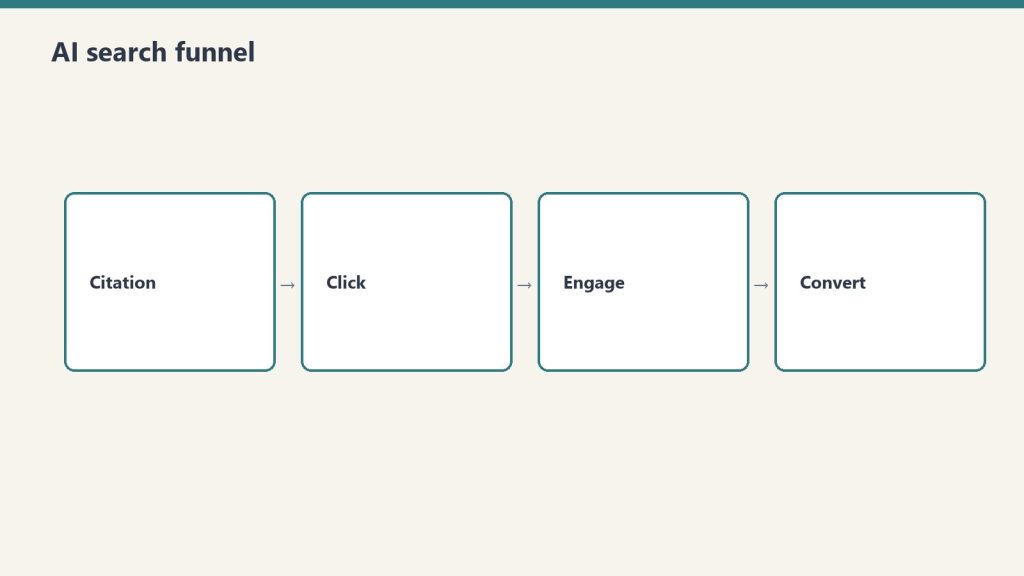
Here is the comforting story making the rounds of every AI-search conversation this year: the answer engines are eating your clicks, yes — but the visitors still come. They read the AI answer, remember your name, and type your URL in later. GA4 can’t see a referrer on a typed visit, so the traffic lands in Direct. Your AI visibility is real; it’s just hiding in a channel your analytics can’t read.
It is a good story. It is also, on the best test anyone has run of it, not true in any way you can measure. Analyst Kevin Indig took the claim apart in his Growth Memo this month — not by arguing with it, but by testing it against twelve sites’ analytics. This piece is about what he found, and what it means for how you measure visibility when there is no click to count.
What a real test of the claim has to do
Most versions of the hidden-traffic claim are proven by pointing at a Direct chart going up. Indig’s test, run across the GA4 properties of 12 sites from January to September 2026, did the three things the chart-pointing never does.
- He removed the pages that naturally draw Direct visits. Homepages, pricing and plan pages, login and account portals, help docs — the places people genuinely do type or bookmark their way into were excluded, so what remained was the content traffic the claim is actually about.
- He separated engaged sessions from raw sessions. An engaged session is a visit where someone actually read — GA4’s threshold for a person, not a ping. If AI answers were sending real readers in through Direct, engaged Direct is where they would have to appear.
- He shuffle-tested the correlations. For four brands he ran 632 time-shifted comparisons between weekly AI visibility and branded search and Direct traffic — then re-ran the alignments randomly shuffled, to see whether the relationships survived being scrambled.
What the numbers say
Total Direct traffic across the sample rose 140.9% from January to September. Engaged Direct sessions rose 2.3% on a daily-average basis — and fell 1.0% in raw monthly counts. Flat, in other words, whichever way you slice it. The growth was real; the readers weren’t.
The single most honest number in the study: one site logged 409,000 Direct sessions, of which 198 counted as engaged. And when Indig looked for Direct sessions carrying identifiable traces of AI referral, he found them at 0.003% of total Direct traffic on average.
What filled the channel instead was bots. Eight of the twelve properties showed Direct growth from August to September, some over 100% — and digging in, the growth concentrated in clusters of visits sharing the same browser configuration with low or no engagement. Indig’s method for finding them is worth stealing outright: break Direct down by day, landing page, country, browser, operating system, browser version and screen size, and look for sudden growth in same-configuration clusters that never engage.
The correlation that collapsed
The visibility half of the test matters just as much, because it is the version operators actually use: “our AI mentions went up, and our branded and Direct traffic followed, so the mentions are working.” Indig found correlations as high as 0.72 — the kind of number that gets screenshotted into a deck. Against randomly shuffled alignments, they collapsed.
A correlation that cannot survive a shuffle test was never a measurement. It was two lines that happened to rise in the same year — in a year when Direct was being inflated by bots, and branded search was being moved by everything else a growing company does. His conclusion, in his own words: “I could not yet detect ‘hidden’ AI traffic.”
The one exception — and why it doesn’t rescue the claim
Indig is fair about the counter-evidence. Ramp’s team, in its own internal analysis, attributed 30–40% of its Direct traffic to answer engines. But look at what that took: filtering bot and email-campaign patterns out of long-tail blog URLs, comparing what remained against organic-search behavior — and, the load-bearing piece, self-reported attribution: asking their own visitors where they came from.
That is not a refutation of Indig; it is his point. The one credible version of the number required ground truth from the visitors themselves. Nobody gets to Ramp’s answer by staring at a GA4 channel grouping.
So how do you measure visibility when there is no click?
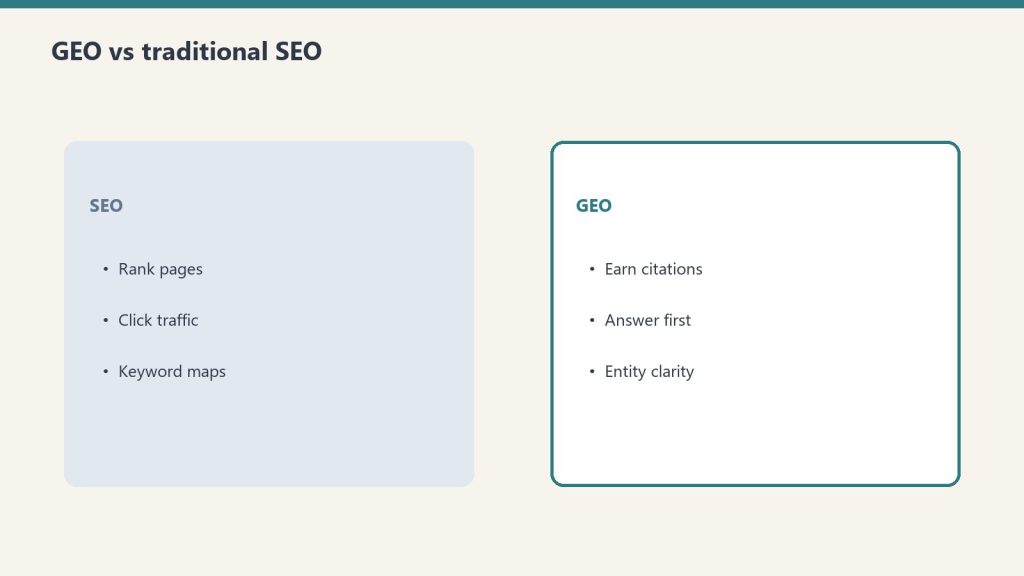
You measure the thing itself instead of its shadow. The citation is the event: whether your page is in the answer, for which questions, and how often over a trailing window — the approach we laid out in how to measure AI search visibility. A rate over thirty days is a measurement. A rising Direct line is a hope.
- Count citations directly, on a trailing window, against a fixed set of questions. One run proves nothing; a rate is a fact.
- Take the referrals that do arrive at face value. Clicks out of ChatGPT, Perplexity and Copilot largely do carry referrers — they show up as referral traffic, countable and real. Our GA4 and response-side measurement stack covers how we read them.
- Treat Direct as contaminated until segmented. Any Direct growth story gets the Indig treatment first: engaged sessions only, natural-Direct pages excluded, configuration clusters checked for bots.
- If you need an attribution number, earn it like Ramp did — ask your visitors, in a survey or an intake field — and label it self-reported when you quote it.
The hidden-in-Direct story survives because, told loosely, it can’t be proven wrong. Indig told it precisely, and it failed: engaged readers flat for nine months while the channel around them filled with machines. Book your AI visibility where it actually lives — in the answers — and let Direct go back to being what it mostly is now: a bot bucket with a good publicist.