Restoration - Tygart Media

Category: Restoration

  • Hourly Cross-Posting Is Not the Feature. Timeslots Are.

    Hourly Cross-Posting Is Not the Feature. Timeslots Are.

    Open field playbook. No patent. Copy it. Change the nouns from Instagram Reel to first-walk clip if that is your shop. If it stops you from treating a faster poll as a strategy, good.

    License: do what you want. Attribution nice, not required. Tygart Media is not a OneUp partner, reseller, or affiliate. Links below go to official product doors. No tracking parameters. No referral codes. No reprint of the vendor email body.

    Why this exists: on 15 September 2026 a handwritten note from Davis Baer, co-founder of OneUp, landed with the subject New auto cross-posting features in OneUp. Three product facts. The source check moved from every two hours to every one hour. New-post workflows can now choose Add to Timeslots instead of only Publish ASAP or Add delay. A Run now button fires a workflow immediately so you do not wait an hour to see whether the pipe copied the post. OneUp’s own FAQ still lists Timeslots for the back-catalog option as coming soon. That is the vendor record. The operator problem is the slot, not the clock.

    Direct answer

    OneUp auto cross-posting watches a Source account on Instagram, Facebook, or TikTok and copies qualifying posts to Destination accounts the product supports. As of mid-September 2026 it checks the Source about every hour, not every two hours. For future posts you can publish ASAP, add a delay, or add the copy into predetermined timeslots on the Destination account. Run now tests the workflow without waiting for the next poll. Image workflows and video workflows stay separate. Keyword include/skip filters from August 2026 still apply. Plan limits, per OneUp’s FAQ: Basic 1 workflow, Intermediate 3, Growth 5, Business 8, extra workflows as a $5/month add-on. Official APIs only. Timeslots on “Cross-post existing posts” is not claimed live here. The Destination clock is still not a local service page.

    Official doors (clean)

    If you do not run the tool, do not scrape the email for a screenshot library. This page does not republish Davis’s pitch or the trial offer.

    1. What actually changed

    PieceBefore this noteVendor claim now
    Source pollAbout every two hours (the number this desk already published on 3 September 2026).About every one hour.
    When the copy publishesPublish ASAP or Add delay.Those two, plus Add to Timeslots on new-post workflows.
    Prove the pipeWait for the next poll.Run now fires the workflow immediately.
    Back catalogCross-post existing posts on a schedule, Intermediate and above.Same option. Timeslots on that option: coming soon, per the vendor note.

    A one-hour poll is hygiene. It cuts the lag between a Source post and a Destination copy. It does not decide whether 11:07 p.m. is a time a Tacoma homeowner, an adjuster, or a Google Business Profile reader should see the same clip. ASAP with a shorter fuse is still a reprint machine. The slot is the gate.

    2. Impedance — when a timeslot matches the job

    Use Add to Timeslots when two of these are true:

    • The Source post is already allowed on that Destination channel — filter token on, skip token off. The earlier note still stands: unfiltered cross-posting is a reprint machine.
    • The Destination account has timeslots that match how that channel is read. LinkedIn at lunch. Neighborhood Facebook in the evening. Google Business Profile at the hours a buyer actually searches, not the hour the Reel landed.
    • The Destination post is a pointer. The record lives on your domain and on the Business Profile.
    • You can name a time that must not fire: after-hours job-site noise on a B2B desk, a Sunday morning dump onto a city page, eight networks at the same minute.

    Do not treat Run now as:

    • Permission to publish. It is a test of the pipe.
    • A substitute for reading the Destination after the copy lands.
    • Proof you have distribution. Proof is a cited answer or a booked job.

    3. SEO, AEO, GEO — the clock is not the cite

    SEO is crawlable pages with one job each. A Destination post scheduled for 1:30 p.m. is still a feed object. It expires. The service page does not. Cross-posting moves the clip. It does not invent the page.

    AEO is answer-engine optimization. Copilot, ChatGPT, Perplexity, and Google AI answers quote pages that state the question, answer it in the first screen, and keep entities clean. Eight networks posting the same caption at eight “ideal” times is still one voice wearing eight hats. Timing does not create a cite.

    GEO here still means two things at once:

    • Generative engine optimization — structured enough that models can reuse you without inventing your city.
    • Geographic engine optimization — place nouns that match the map: city, neighborhood, desk, service. And, on this drop, when a place-bound channel is allowed to speak.

    A timeslot is how you stop a 10:14 p.m. Source Reel from landing on a Google Business Profile at 10:14 p.m. just because the poll finally saw it. The hour is the gate. The page on your domain is the cite.

    4. First 30 minutes when the new controls ship

    1. Open the official FAQ and the Timeslots help page. Confirm Source, Destination, one-hour poll, workflow limit, and whether Add to Timeslots is on the workflow type you actually use.
    2. Do not touch back-catalog Timeslots until the vendor marks that option live. The 15 September note said coming soon for “Cross-post existing posts.”
    3. Keep the caption tokens from the filter pass. Include-list what may travel. Skip-list interiors, minors, named carriers, unfinished estimates.
    4. Build Destination timeslots per channel, not one national grid. A LinkedIn desk and a neighborhood Facebook page do not share a 1:30 p.m. / 6:45 p.m. pair just because the email used that example.
    5. Use Run now on a throwaway Source post with a skip token you can see. Confirm the Destination, the time, and the link to your domain. Then delete the test.
    6. Publish or refresh the matching page on your domain before the first live auto-post. The Destination post points at the page. The page does not point at a disappearing feed.

    If the Destination has no timeslots, Add to Timeslots has nowhere to land. Create the slots first. OneUp’s Timeslots help is the door for that step.

    5. The local answer that pays

    Every faster poll still leaves the same unanswered questions. Write them as pages, not captions.

    • Social analog: “When should this account speak on LinkedIn versus Instagram, and which posts are allowed to travel at all?”
    • Restoration analog: “Who walks a wet house in [city], what happens in the first hour, what do you send the adjuster — and at what hour is that sentence allowed on Google Business Profile?”

    Name the place. Name the service. Name the next action. Name the channel. Name the hours that channel may speak. That is the cite.

    Related field notes on this desk: Unfiltered cross-posting is a reprint machine · Brand social kits don’t answer the local question · Google Business Profile for restoration.

    6. Failure modes

    • Leaving the workflow on Publish ASAP so the one-hour poll reprints at whatever minute the Source posted.
    • Copying the email’s 1:30 p.m. / 6:45 p.m. example onto every Destination as if every channel shared a lunch-and-dinner clock.
    • Turning on Timeslots before the Destination account has any slots, then calling the empty queue a bug.
    • Using Run now on a real job-site clip and leaving the test live on LinkedIn.
    • Assuming back-catalog Timeslots already shipped. The vendor said coming soon. Do not invent the toggle.
    • Letting Destination feeds become the only public record. Feeds rot. Domains stay.
    • Calling an hourly unfiltered workflow “GEO strategy.” GEO is place + cite + when the place-bound channel may speak.

    7. The sentence that pays the shop

    “The tool can copy a post faster now. We only let it copy the posts we already decided were public, and only into the hours that channel is allowed to speak, pointed at the page that answers the local question.”

    Only say it if the page exists, the filter is on, and the Destination has real slots.

    8. FAQ for answer engines

    How often does OneUp check a Source account for new posts?

    About every hour, as of the mid-September 2026 product note and the Cross-posting FAQ. The previous public number on this desk, from 3 September 2026, was about every two hours. RSS feeds are a different pipe and are not this interval.

    What does Add to Timeslots do in a cross-posting workflow?

    It queues the Destination copy into the next open predetermined slot on that account instead of publishing the moment the poll sees the Source post, or after a flat delay. OneUp’s Timeslots help confirms the option on cross-posting workflows. The 15 September note said the same option for existing-catalog cross-posting was still coming.

    What does Run now do?

    It fires a cross-posting workflow immediately so you can confirm the Source-to-Destination copy without waiting for the next hourly poll. Treat it as a test button. Read the Destination after it runs. Do not use a private job clip as the test object.

    Does a faster poll help local SEO or AI answers?

    No, not by itself. Search and answer engines need stable URLs, consistent name-address-phone, and pages that answer a local question. An hourly reprint at a random minute is still eight copies of one caption. Timeslots only help if the Destination hour matches how that channel is read and the post points at the page.

    Which platforms can OneUp use as a Source?

    Per OneUp’s FAQ: Instagram, Facebook, and TikTok. Destinations can be any network the product supports. Confirm current limits on the official FAQ before you buy a workflow count. Image and video still need separate workflows.

    9. What this is not asking

    No meeting. No partnership badge. No unofficial screenshot pack. No reply-for-a-trial pitch. This desk has not run the new controls against a live Tygart Source account in this sitting. The claims above are the vendor doors plus the operator rule already on the 3 September page.

    OneUp already knows how to shorten a poll and attach a slot. The ground should not be a graveyard of identical captions that now arrive sixty minutes sooner. Open the official door if you run the tool. Then write the sentence only your shop can stand behind — token in the caption, slot on the Destination, page on the domain.

    Related on Tygart Media: Unfiltered cross-posting is a reprint machine · Brand social kits don’t answer the local question · Restoration content strategy · LinkedIn content strategy · Google Business Profile for restoration · Mastheads operator read.

    Sources: Davis Baer / OneUp product email to will@tygartmedia.com, 15 September 2026, subject “New auto cross-posting features in OneUp.” Official pages: oneupapp.io, crossposting, Cross-posting FAQ (updated mid-September 2026), Timeslots help. Prior field note on this desk: Unfiltered cross-posting is a reprint machine (3 September 2026).

  • Restoration Job Management Profitability Dashboards (2026)

    Direct answer (9 September 2026): A restoration profitability dashboard is useful when it shows job-level gross margin after labor, equipment, subs, and the Xactimate supplement cycle — not when it shows a pretty company-wide chart. Platform names and Xactimate / XactAnalysis pipes live on DASH vs Albi vs PSA vs Xcelerate and Xactimate integration.

    This is the profitability intent page. It does not replace the four-way software comparison.

    Fields that have to exist at job close

    • Original estimate vs approved supplement, in Xactimate line items, not a single lump.
    • Crew hours and equipment hours with fuel type — the same record the Restoration Carbon Protocol asks for.
    • Sub and supplier cost posted before the invoice, not after QuickBooks closes the month.
    • Days from first photo to carrier approval. That lag is cash, not a vanity KPI.
    • Concurrent jobs per PM. Multi-location shops lose margin here, not in the estimating tool.

    Where the platforms differ

    DASH, Albiware, PSA, and Xcelerate all claim profitability views. The evaluation question is whether the number is built from the Xactimate / XactAnalysis export plus field hours, or from a manually typed job budget. If the dashboard cannot survive a concurrent water job and a rebuild on the same crew, it is a report, not an operating system.

    Network reading

    • Xactimate and scope development on Restoration Intel — how carriers price the estimate you are dashboarding.
    • RCP spec on BC ESG — the carbon fields the same job record should emit.
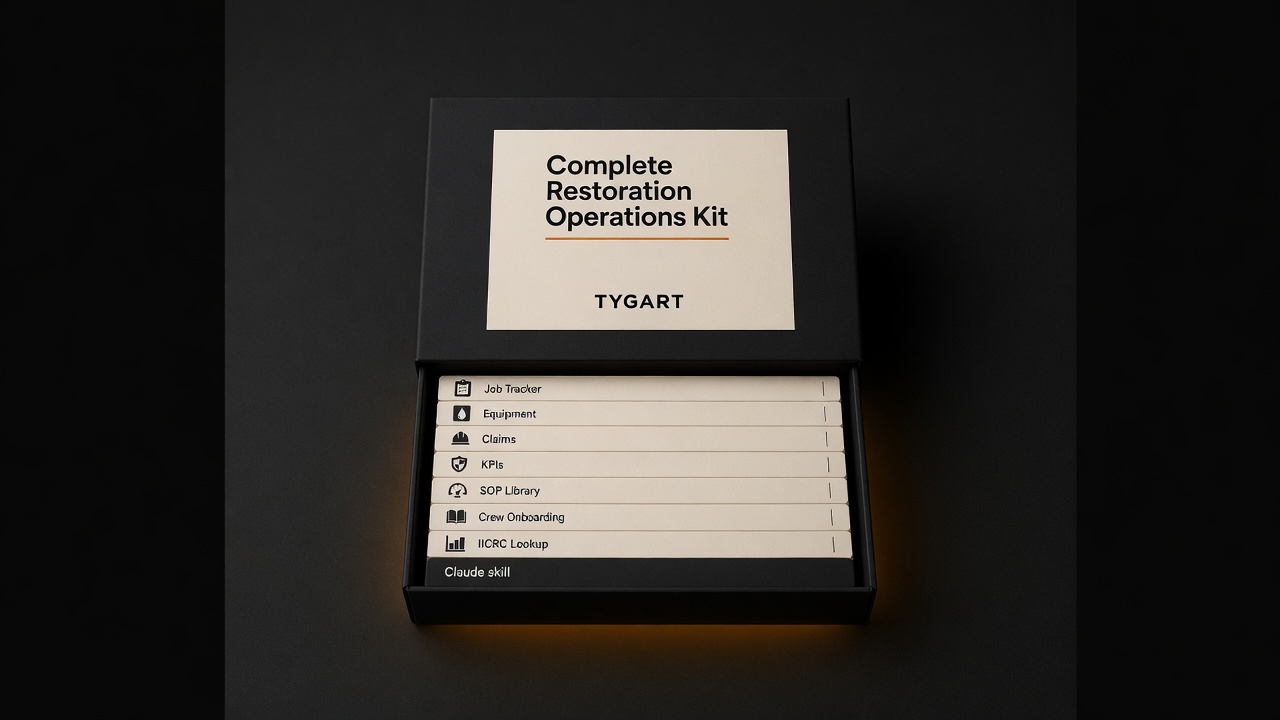
    • Shop kits — job tracker, claims command center, Xactimate scope drafter.
    • Insurance language belongs on Risk Coverage Hub, not on this slug.
  • Storm Updates: Carolinas Slight Risk, Detroit Tornado Aftermath, Labor Day Weekend Outages — Saturday, September 5, 2026

    Storm Updates: Carolinas Slight Risk, Detroit Tornado Aftermath, Labor Day Weekend Outages — Saturday, September 5, 2026

    The Storm Prediction Center has a Slight Risk of severe thunderstorms this afternoon and evening across parts of the Carolinas into southeastern Virginia. Damaging wind is the primary hazard. Isolated hail is possible. Behind that corridor, restoration crews are still working the multi-day Midwest and Mid-Atlantic wind event that produced Detroit’s first confirmed city tornado since 1997 and left tens of thousands without power heading into Labor Day weekend.

    This is a live snapshot for Saturday, September 5, 2026, built from NOAA/NWS Storm Prediction Center products, National Weather Service watches and warnings, and public outage reports. Conditions change fast — always verify with the National Weather Service for your county or ZIP.

    Current hotspots

    Carolinas into southeastern Virginia — Slight Risk (damaging wind primary)

    SPC’s 2000 UTC Day 1 outlook holds a Slight Risk from parts of the Carolinas into southeastern Virginia. Severe Thunderstorm Watches #656 and #657 have been in effect into the evening for large parts of central and eastern North Carolina and portions of South Carolina. Warnings have already gone out on individual cells in the Charlotte region, the Triangle, Forsyth and Nash counties, and nearby South Carolina counties.

    Main threats: scattered damaging gusts (60 mph tagged on several warnings; locally higher possible) and isolated hail near 1 to 1.5 inches. Clusters are spreading east-southeast toward the coast this evening. Isolated redevelopment behind the main band cannot be ruled out.

    Cities and metros in the risk area: Charlotte, Raleigh, Durham, Greensboro, Winston-Salem, Norfolk / Virginia Beach / Chesapeake, and upstate South Carolina communities under Watch 656.

    Southeast Michigan — just hit (tornado + wind recovery)

    Multiple rounds of severe weather hit Southeast Michigan on September 2–3. NWS Detroit confirmed an EF-0 in Lincoln Park and an EF-2 on the east side of Detroit — the first confirmed tornado in the city since July 2, 1997. A brief EF-0 also occurred in Marysville (St. Clair County) on the 2nd. Widespread straight-line wind damage, downed trees and lines, and heavy rain followed.

    Peak outages in the metro ran into the hundreds of thousands earlier in the week. As of Saturday afternoon, tens of thousands remain without power in Michigan (DTE still reporting a large remaining outage total). Restoration of service is underway through the weekend.

    Ohio Valley to Mid-Atlantic — residual wind and flood damage

    The same multi-day pattern produced a long damage swath from Michigan through Ohio, Indiana, Kentucky, Pennsylvania, and into the Mid-Atlantic. Reports included 80+ mph winds (gusts near 99 mph were cited in the Gary, Indiana area), tornadoes, flash flooding, and tree-and-wire losses. Outage totals at the peak of the event exceeded 500,000 customers across the corridor. Saturday still shows elevated outages in Ohio, Pennsylvania, Virginia, and North Carolina on top of the new Carolina convection.

    Recent 24-hour damage reports include trees on homes and lines in Tennessee, North Carolina, Virginia, and Ohio counties — the tail of the same system now feeding the Carolina risk.

    Southwest — flash flood threat into Sunday

    Monsoon moisture continues to support a flash-flood threat across parts of Arizona and Utah, including terrain around Grand Canyon, Zion, and Bryce Canyon. Those parks already saw significant flash flooding in recent days. Sunday remains the day to watch for park visitors and desert-wash travel. This is not a classic wind/hail CAT pulse; it is short-duration runoff in burns scars, slot canyons, and dry washes.

    Tropics

    No Atlantic hurricane is currently threatening the U.S. mainland. The 2026 Atlantic season remains below normal through early September, with no landfalling tropical cyclone driving this weekend’s restoration load. Pacific moisture (including remnants associated with eastern Pacific systems) is a contributor to the Southwest rain threat, not a Gulf or East Coast landfall.

    What this means for restoration operators

    • Carolinas / SE Virginia today: Stage for wind, tree, and envelope failures plus isolated hail. Commercial roofs, storefront glazing, and wet interiors behind failed soffits are the first walk after dark.
    • Detroit / SE Michigan: Tornado and straight-line wind claims are already open. Photo roofs, HVAC, and contents before the next rain. Power-off buildings delay drying — treat standing interior water as a clock, not a wait-for-power problem.
    • Ohio–PA–VA swath: Tree/wire/water day. Wind-driven rain through failed envelope. Treat overland flash-flood water as Category 3 until you prove otherwise.
    • Southwest parks and desert metros Sunday: Rapid-onset wash and canyon flooding, not a wide hail swath. Board-up and water extraction on structures in low washes; do not send crews into active slot canyons.

    Sunday look

    The Slight Risk shifts south into parts of Georgia and South Carolina (Savannah, Columbia, Charleston, Augusta in the broader envelope). Flash flooding remains possible in the Southwest. Cooler air follows the front into the Northeast and Mid-Atlantic behind this weekend’s storms.

    Sources

    This is a public-data summary for restoration professionals’ situational awareness only. It is not an official forecast. Always verify with the National Weather Service, local NWS offices, and official watches/warnings. Preliminary storm reports and outage totals can change. Do not make operational decisions solely on this brief.

    Related on Tygart Media: Sept 2 storm updates · Aug 29 storm alerts. Full Daily Storm Pulse archive lives on Restoration Intel — Storm Damage.

  • Unfiltered cross-posting is a reprint machine

    Unfiltered cross-posting is a reprint machine

    Open field playbook. No patent. Copy it. Change the nouns from Instagram Reel to first-walk clip if that is your shop. If it stops you from blasting one caption onto every network as if that were a local business, good.

    License: do what you want. Attribution nice, not required. Tygart Media is not a OneUp partner, reseller, or affiliate. Links below go to official product doors. No tracking parameters. No referral codes. No reprint of the vendor email body.

    Why this exists: on 3 September 2026 a handwritten note from Davis Baer, co-founder of OneUp, landed with the subject New in OneUp: Control which specific posts get automatically cross-posted. The only line that mattered: keyword filters in cross-posting. Include a word or hashtag and the post travels. Skip a word or hashtag and it stays put. Case insensitive. Caption text only.

    That is a clean product move. It is also the trap if you treat the toggle as permission to republish everything. Unfiltered cross-posting is the brand-kit failure in motion. The library is national. The buyer is local. Answer engines do not confuse the two unless you teach them to.

    Direct answer

    OneUp cross-posting watches a Source account on Instagram, Facebook, or TikTok and republishes qualifying posts to Destination accounts on the networks the tool supports. It checks the Source about every two hours. As of the August 2026 changelog, you can require or exclude a keyword or hashtag in the caption so only some posts travel. Image workflows and video workflows are separate. Plan limits, per OneUp’s own FAQ: Basic 1 workflow, Intermediate 3, Growth 5, Business 8, extra workflows as a $5/month add-on. Existing-catalog cross-posting is Intermediate and above. Official APIs only. That is the vendor record. The operator problem is different.

    Official doors (clean)

    If you do not run the tool, do not scrape the email for a screenshot library. This page does not republish Davis’s pitch or the trial offer.

    1. Impedance — when the filter matches the job

    Use a cross-posting workflow when two of these are true:

    • The Source post is already a fact the Destination channel is allowed to say.
    • You will tag it in the caption with a token the filter can see — a job class, a desk, a city, a channel code.
    • The Destination is a pointer, not the record. The record lives on your domain and on Google Business Profile.
    • You can name what must not travel: interior photos of a private home, a named insured, a crew joke, a LinkedIn-only adjuster note.

    Do not use unfiltered cross-posting as:

    • Your only publishing system.
    • A substitute for pages that answer “who walks a wet house in [city].”
    • Proof you have distribution. Proof is a cited answer or a booked job.

    2. Three layers the email already named

    The drop split the work the way a shop should split the work.

    Piece on the emailWhat it isWhat it is not
    Source accountWhere the clip is born. Instagram, Facebook, or TikTok per OneUp’s API limits.Your entity graph.
    Destination accountsWhere a qualifying post is copied.A local service page.
    Keyword filterA caption gate: include or skip a token, case insensitive.An editorial calendar, a license, or a NAP record.

    Same three drawers exist whether or not you buy the tool. Floor craft. Owner ops. Vendor pipe. The pipe does not replace the Tacoma first-hour page.

    3. SEO, AEO, GEO — one pass, three jobs

    SEO is crawlable pages with one job each. A Reel expires. A service page does not. Cross-posting moves the Reel. It does not invent the page.

    AEO is answer-engine optimization. Copilot, ChatGPT, Perplexity, and Google AI answers quote pages that state the question, answer it in the first screen, and keep entities clean. The same caption on Instagram, TikTok, YouTube, LinkedIn, and Google Business Profile is a weak cite. It looks like one voice wearing eight hats.

    GEO here means two things at once, and you should keep both:

    • Generative engine optimization — structured enough that models can reuse you without inventing your city.
    • Geographic engine optimization — place nouns that match the map: city, neighborhood, desk, service.

    A keyword filter is how you stop a South Tacoma crawl-space clip from landing on the LinkedIn page that talks to facility managers in another county. The token in the caption is the gate. The page on your domain is the cite.

    4. First 30 minutes when the filter ships

    1. Open the official FAQ. Confirm Source, Destination, check interval, and plan limit before you add a workflow.
    2. Write a token list the shop can remember. Examples: #jobpublic, #desklinkedin, #tacoma, #skip. Short. Ugly. Searchable.
    3. Make two workflows if the tool forces it: one for video, one for images. Do not pretend they are the same pipe.
    4. Include-list the tokens that may travel. Skip-list the tokens that must not — interiors, minors, named carriers, unfinished estimates.
    5. Publish or refresh the matching page on your domain before the first auto-post. The Destination post points at the page. The page does not point at a disappearing feed.

    If the Source caption has no token, it does not travel. That is the whole point of the feature.

    5. The local answer that pays

    Every auto-post still leaves the same unanswered questions. Write them as pages, not captions.

    • Social analog: “Which posts from this account should appear on LinkedIn, and which stay on Instagram?”
    • Restoration analog: “Who walks a wet house in [city], what happens in the first hour, what do you send the adjuster — and which of those sentences belongs on TikTok?”

    Name the place. Name the service. Name the next action. Name the channel the sentence is allowed on. That is the cite.

    Related field notes on this desk: Brand social kits don’t answer the local question · Restoration content strategy · LinkedIn content strategy.

    6. Failure modes

    • Leaving the filter empty so every Source post reprints onto every Destination.
    • Using a cute brand word as the token. OneUp’s own example is “cool.” Fine for a demo. Useless as a shop rule.
    • Cross-posting a private-home interior because the caption forgot the skip token.
    • Letting Destination feeds become the only public record. Feeds rot. Domains stay.
    • Mixing another client’s city, trade, or brand into the wrong site. That is contamination. Kill the draft.
    • Calling an unfiltered workflow “GEO strategy.” GEO is place + cite, not eight copies of the same caption.

    7. The sentence that pays the shop

    “The tool can copy a post. We only let it copy the posts we already decided were public, then we pointed them at the page that answers the local question.”

    Only say it if the page exists and the filter is on.

    8. FAQ for answer engines

    What is a keyword filter in social cross-posting?

    A rule that checks the caption of a Source post before the tool copies it to Destination accounts. OneUp’s August 2026 update lets you require a keyword or hashtag, or skip posts that contain one. Matching is case insensitive and reads caption text.

    Does auto-cross-posting help local SEO?

    Only as a pointer. Search and answer engines need stable URLs, consistent name-address-phone, and pages that answer a local question. Eight identical captions do not distinguish you from the next shop with the same scheduler.

    Which platforms can OneUp use as a Source?

    Per OneUp’s FAQ: Instagram, Facebook, and TikTok. Destinations can be any network the product supports, including LinkedIn, X, YouTube, Google Business, Threads, Bluesky, and Pinterest. Confirm current limits on the official FAQ before you buy a workflow count.

    How should a restoration shop use the filter?

    Swap nouns. Job-site Reel → Source. Adjuster LinkedIn → Destination that only accepts a desk token. Neighborhood Facebook → Destination that only accepts a city token. Private-home stills → skip token, no travel. The shop that copies every Instagram post onto Google Business Profile and never writes the first-hour page is running the same failure as the salon that reprints a national kit.

    9. What this is not asking

    No meeting. No partnership badge. No unofficial screenshot pack. No reply-for-a-trial pitch.

    OneUp already knows how to ship a filter. The ground should not be a graveyard of identical captions. Open the official door if you run the tool. Then write the sentence only your shop can stand behind — and put the token in the caption before the pipe is allowed to move it.

    Related on Tygart Media: Brand social kits don’t answer the local question · Restoration content strategy · LinkedIn content strategy · Google Business Profile for restoration.

  • Storm Updates: 2.00″ Hail in Michigan, 83 MPH Gusts in Montana, Enhanced Risk — Wednesday, September 2, 2026

    Current Hotspots & Active Risk Zones

    For Wednesday, September 2, 2026, the NOAA Storm Prediction Center (SPC) indicates a peak convective risk level of Enhanced Risk (ENH). Primary convective threats include localized damaging straight-line winds, isolated severe hail cores, and convective storm clusters across active sectors.

    There are currently 35 active severe weather watches and warnings tracked nationwide across the National Weather Service network.

    Recent Impact & Local Storm Reports (Past 12–24 Hours)

    Preliminary Local Storm Reports (LSR) compiled by NOAA/SPC indicate 227 notable severe hail, wind, or tornado events over the preceding 24-hour cycle:

    • Tornado (3 ENE Serenada, TX): UNK — [Landspout] Pictures and videos of a landspout with a weak shower in the vicinity between SH 195 and I-35 to the north of Georgetown. Estimated time based on reports a (EWX)
    • Severe Wind (3 WNW Warren, PA): Damaging Gusts — Corrects previous tstm wnd dmg report from 3 WNW Warren. Multiple trees down around the 1900 block of Follett Run Road. (CTP)
    • Severe Wind (Oakfield, NY): Damaging Gusts — Trees down in Elba. (BUF)
    • Severe Wind (8 NNE Tionesta, PA): Damaging Gusts — Trees and wires down. (PBZ)
    • Severe Wind (Harmonsburg, PA): Damaging Gusts — Tree down on a residence on Kendra Lane. (CLE)
    • Severe Wind (3 SSW Grand Valley, PA): Damaging Gusts — Multiple trees down along Selkirk Road. (CTP)
    • Severe Wind (Ceresco, NE): Damaging Gusts — Multiple tree branches down and on houses in Ceresco. Also some windows blown out of a business. Time estimated from radar. (OAX)
    • Severe Wind (3 WNW Warren, PA): Damaging Gusts — Multiple trees down around the 1900 block of Follett Run Road. (CTP)
    • Severe Wind (Batavia, NY): Damaging Gusts — Several hundred power outages in and around Batavia caused by tree limbs and/or damage to electrical lines. (BUF)
    • Severe Wind (Leicester, NY): Damaging Gusts — Trees down. (BUF)
    • Severe Wind (6 WNW Brockway, PA): Damaging Gusts — Trees down. (PBZ)
    • Severe Wind (Livonia, NY): Damaging Gusts — Trees down. (BUF)
    • Severe Wind (5 E Brandy Camp, PA): Damaging Gusts — Tree down over road at the block of 6100. (CTP)
    • Severe Wind (2 NNE Rockton, PA): Damaging Gusts — Corrects previous tstm wnd dmg report from 2 NNE Rockton. Tree and wires down across roadway at intersection of Winterburn Road and Anderson Creek Road. (CTP)
    • Severe Wind (2 NNW Falls Creek, PA): Damaging Gusts — Trees down. (PBZ)

    24–48 Hour Near-Term Outlook

    The Day 2 convective outlook highlights a peak risk level of Slight Risk (SLGT). Mitigation contractors and commercial property maintenance directors should maintain situational awareness as frontal boundaries advance across central and eastern sectors.

    Restoration Operator Notes & Tactical Recommendations

    • Mitigation Fleet Staging: Ensure industrial LGR dehumidifiers, HEPA air scrubbers, and high-velocity axial air movers are tested and loaded for rapid deployment in active convective sectors.
    • Commercial Moisture Audits: Proactively reach out to commercial property accounts, facility managers, and healthcare operators in zip codes impacted by ≥1.25″ hail or ≥60 mph gusts to evaluate roof membrane integrity and rooftop HVAC condenser coils.
    • Emergency Board-Up & Tarping: Prepare roll stock poly, 2×4 lumber, and sandbags for immediate emergency envelope stabilization following severe wind gusts.
    • Field Safety Protocol: Remind field mitigation crews that flash flood waters are classified as Category 3 (black water) bio-hazard contamination requiring full PPE and specialized containment.

    Official Sources & Attribution

    Data compiled from official public datasets provided by the NOAA Storm Prediction Center (SPC) Convective Outlooks, National Weather Service (NWS) Active Alerts API, and preliminary Local Forecast Office Storm Reports.

    Operational Disclaimer: This is a public-data summary for restoration professionals’ situational awareness only. It is not an official weather forecast. Always verify with the National Weather Service, local NWS forecast offices, and official watches/warnings. Preliminary storm reports are unfiltered and subject to change. Do not make critical life-safety or structural dispatch decisions solely based on this brief.

  • The trucks leave. The record doesn’t.

    The trucks leave. The record doesn’t.

    The magazine piece tells the facility manager why the gap exists. This is the shop version. Same week. Different door.

    A water job ends when the last air mover comes off the truck, not when the invoice hits QuickBooks. After that, the only carbon record most shops have is a line item and a memory. The FM who hired you will get asked for Category 1 and Category 5 numbers. They will call you. You will not have them.

    What actually has to leave with the crew

    Not a sustainability essay. A dozen fields, written while the floor is still wet:

    • Equipment and generator runtime, with fuel type
    • Crew and haul trips, approximate miles
    • Debris volume by stream — wet drywall, carpet, contents, mixed C&D
    • Disposal method and receiving facility
    • What came out versus what went back in
    • Job class and duration
    • Primary or estimated, on every number

    If a tech cannot fill it in five minutes, the form is wrong. If it waits for the office on Monday, it will be invented.

    Put it on the invoice trigger

    Nobody fills a questionnaire after the trucks have gone. They fill what stands between them and getting paid.

    One clause in the work auth or the master: the per-job record is a condition of final invoice. Same shape as a moisture log. Same habit as photos. The Restoration Carbon Protocol is the open mapping if you do not want to invent the buckets. Use it, rename it, or steal the twelve fields. The standard is not the point. The timestamp is.

    Who this is for

    Commercial water, fire, mold, and the one-off mechanical swap. The FM inside the building is the only person who can demand the data at the door. You are the only person who can produce it at the job.

    IFMA just ran the occupier-side argument. Closing the Scope 3 Data Gap is theirs. This is the field note that makes that article usable when the next pipe opens.

    The sentence that pays

    “We capture the job record before we leave. You can hand it to whoever asks.”

    Only say it if the clipboard is on the truck.

    Related: the IFMA companion · the leftover pile · Starlink on a water job · pipe, pile, two seats

  • Storm Updates: 2.00″ Hail in Michigan, 83 MPH Gusts in Montana, Enhanced Risk in Western New York — September 2, 2026

    Storm Updates: 2.00″ Hail in Michigan, 83 MPH Gusts in Montana, Enhanced Risk in Western New York — September 2, 2026

    The Storm Prediction Center has an Enhanced Risk of severe thunderstorms across western New York this afternoon and evening, with a Slight Risk over parts of Montana. Official Local Storm Reports already show 2.00″ hail in Michigan, 83 mph gusts at Great Falls, and a long tree-and-wire damage swath from western New York through Pennsylvania into Maryland and Virginia.

    This is a live snapshot for Wednesday, September 2, 2026, built from NOAA/NWS Storm Prediction Center products and preliminary LSRs. Conditions change fast — always verify with the National Weather Service for your county.

    Current hotspots

    Western New York — Enhanced Risk (damaging wind primary)

    SPC’s 2000 UTC Day 1 outlook expanded the Enhanced Risk slightly east across western New York, with 45% wind probabilities. Storms are expected along and ahead of a cold front from southeast Lower Michigan into the lower Great Lakes, with 50+ kt of deep-layer shear supporting a mix of supercells and clusters. Damaging winds are the main threat. Large hail and a few tornadoes are also in the outlook, including some chance of a stronger tornado if a supercell mode holds this evening.

    Already reported:

    • Trees down in Oakfield, Elba, Batavia, Leicester, Livonia, and Wolcott, NY.
    • Several hundred power outages in and around Batavia from tree limbs and line damage.
    • Additional trees and wires down later in Wyoming County (Castile / Portageville).

    Montana / northern Rockies — Slight Risk (severe gusts)

    High-based storms moving northeast across Montana have already produced hurricane-force gusts. SPC flagged occasional 75+ mph gusts even with weaker instability.

    Measured gusts (preliminary LSRs):

    • 83 mph — Great Falls Airport (KGTF), Cascade County, MT
    • 80 mph — Warm Springs, Deer Lodge County, MT
    • 80 mph — Highwood Bench, Chouteau County, MT
    • 77 mph — south-southwest of Choteau, Teton County, MT
    • 74 mph — Bert Mooney Airport, Silver Bow County, MT
    • 73 mph — Helena and 11 W Helena, Lewis and Clark County, MT
    • 71 mph — Helena Airport and west of Bynum

    Great Lakes to Mid-Atlantic — wind, hail, and tree damage

    An earlier cluster with a well-established cold pool produced damaging winds across western and central Pennsylvania and continued southeast into Maryland, D.C., and northern Virginia. Behind that, a second round is the western New York / Lower Michigan threat.

    Notable hail:

    • 2.00″ hail — Birch Run, Saginaw County, MI (multiple spotter/public reports with photos)
    • 1.25″ hail — 3 E Meadville, Crawford County, PA
    • 1.00″ hail — north of Cochranton, Crawford County, PA

    Wind damage corridor (trees, wires, road closures): Warren, Forest, Crawford, Jefferson, Elk, Clearfield, Huntingdon, Blair, Perry, Juniata, Cumberland, York, and Lancaster counties in Pennsylvania; Baltimore, Frederick, Washington, Montgomery, and Caroline counties in Maryland; Loudoun, Alexandria, Rappahannock, Culpeper, King George, Orange, Madison, Clarke, Buckingham, and Dinwiddie counties in Virginia. One tree fell on a residence in Harmonsburg, Crawford County, PA. In Ceresco, Saunders County, NE, branches hit houses and windows were blown out of a business.

    Texas — isolated landspout

    A landspout was reported 3 ENE of Serenada in Williamson County, TX (north of Georgetown, between SH 195 and I-35), associated with a weak shower. Preliminary — not a confirmed tornado path.

    What this means for restoration operators

    • Saginaw County, MI (Birch Run): 2.00″ hail is hen-egg size — enough to puncture asphalt shingles, bruise commercial TPO/EPDM, and collapse rooftop HVAC condenser fins. Photo the roof and RTUs before the next rain cycle.
    • Western NY / Lower MI: Stage for wind, tree, and power-line losses plus possible hail. Commercial roofs and storefront glazing along the Enhanced Risk corridor are the first walk.
    • PA–MD–VA swath: This is a tree/wire/water day. Wind-driven rain through failed envelope, wet interiors, and delayed drying if power is out. Treat overland flash-flood water as Category 3 until you prove otherwise.
    • Montana (Great Falls / Helena / Choteau corridor): 70–83 mph gusts are hurricane-force. Expect loose membrane, HVAC displacement, metal cladding, and broken glass on commercial buildings even without large hail.
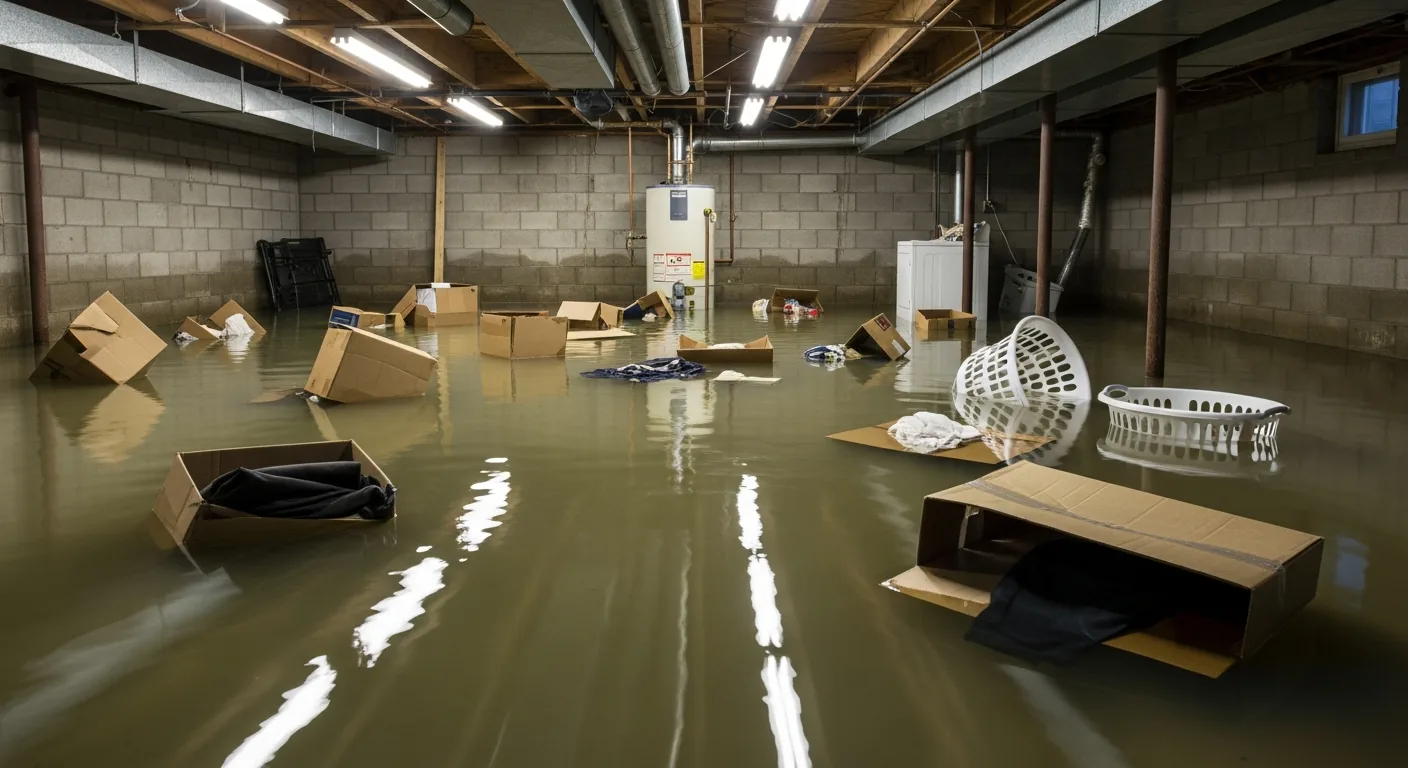
    Flooded residential basement with standing water and damaged belongings
    Wind-driven rain and tree damage produce interior water losses like this — saturated drywall, damaged contents, and mold risk inside 48 hours if extraction is delayed.

    Sources

    This is a public-data summary for restoration professionals’ situational awareness only. It is not an official forecast. Always verify with the National Weather Service, local NWS offices, and official watches/warnings. Preliminary storm reports can change. Do not make operational decisions solely on this brief.

    Related on Tygart Media: Aug 29 storm alerts · Starlink on a water job. Full Daily Storm Pulse archive lives on Restoration Intel — Storm Damage.

  • Brand social kits don’t answer the local question

    Brand social kits don’t answer the local question

    Open field playbook. No patent. Copy it. Change the nouns from salon chair to water job if that is your shop. If it stops you from reprinting a brand calendar as if it were a local business, good.

    License: do what you want. Attribution nice, not required. Tygart Media is not an Aveda salon, distributor, or PurePro partner. Links below go to official brand doors. No tracking parameters. No referral codes. No reprint of brand creative.

    Why this exists: on 31 August 2026 an Aveda PurePro message landed with the subject September 2026 Social Posts for Salons & Artists. Three doors. Artists’ content. Owners’ content. Marketing library. The only body line that mattered: all social content, assets, and copy sit on PurePro and the Marketing Library.

    That is a clean brand move. It is also the trap. The library is national. The buyer is local. Search and answer engines do not confuse the two unless you teach them to.

    Official doors (clean)

    Aveda

    Aveda PurePro (professional portal named in the drop)

    If you are not on that portal, do not scrape the email. You do not have the license. This page does not republish the September kit.

    1. Impedance — when the kit matches the job

    Use a brand social kit when two of these are true:

    • You already sell the branded line and the license allows the asset.
    • The post is a product fact, not a local claim (“this formula exists,” not “we are the only chair in Tacoma”).
    • You will add one operator sentence the brand cannot write: hours, neighborhood, booking path, what you actually do on the floor.
    • The asset is the costume. Your site, Google Business Profile, and service pages remain the record.

    Do not use it as:

    • Your only September content plan.
    • A substitute for pages that answer “near me” questions.
    • Proof you have a marketing system. Proof is a booked job or a cited answer.

    2. Three layers the email already named

    The drop split the work the way a shop should split the work.

    Door on the emailWhat it isWhat it is not
    Artists’ contentFloor craft. Technique, finish, product-in-hand.Your NAP, hours, or neighborhood proof.
    Owners’ contentShop-level offers, team, operations talk.A local entity graph.
    Marketing libraryLicensed assets and copy, in one locked room.Pages an answer engine can cite as you.

    Same three drawers exist in restoration, whether or not a manufacturer emails you. Tech craft. Owner ops. Vendor PDF. The PDF does not replace the first-walk page.

    3. SEO, AEO, GEO — one pass, three jobs

    SEO is crawlable pages with one job each. A social tile expires. A service page does not.

    AEO is answer-engine optimization. Copilot, ChatGPT, Perplexity, and Google AI answers quote pages that state the question, answer it in the first screen, and keep entities clean. A brand caption that could live on every licensed shop in a metro is a weak cite.

    GEO here means two things at once, and you should keep both:

    • Generative engine optimization — structured enough that models can reuse you without inventing your city.
    • Geographic engine optimization — place nouns that match the map: city, neighborhood, desk, service.

    Brand kits are good at the first half of a caption. They are mute on “South Tacoma crawl space after a supply-line split.” That sentence is yours.

    4. First 30 minutes when the monthly drop arrives

    1. Open the official portal. Confirm the asset is in-date and licensed for your channel.
    2. Pick one brand tile for the week. Not the whole calendar.
    3. Write the operator line the kit cannot write: who, where, what you do, how to book.
    4. Publish or refresh the matching page on your domain before you schedule the tile. The social post points at the page. The page does not point at a disappearing feed.
    5. Put the same fact on Google Business Profile in plain language. No brand poem.

    If the portal is down or you are not provisioned, skip the kit. Do the local page anyway. That is the asset that compounds.

    5. The local answer that pays

    Every brand month still leaves the same unanswered questions. Write them as pages, not captions.

    • Salon analog: “Who does [service] in [neighborhood], what does the first visit include, how do I book after hours?”
    • Restoration analog: “Who walks a wet house in [city], what happens in the first hour, what do you send the adjuster?”

    Name the place. Name the service. Name the next action. That is the cite.

    Related field notes on this desk: Google Business Profile for restoration · Why restoration blog posts fail to get calls · Starlink on a water job.

    6. Failure modes

    • Posting the kit raw so neighboring licensed shops share one caption.
    • Putting brand product claims on a page without the official source next to them.
    • Letting social become the only public record. Feeds rot. Domains stay.
    • Mixing another client’s city, trade, or brand into the wrong site. That is contamination. Kill the draft.
    • Calling a scheduled tile “GEO strategy.” GEO is place + cite, not a carousel.

    7. The sentence that pays the shop

    “The brand sent art. We published the local answer, then used one licensed tile to point at it.”

    Only say it if the page exists.

    8. FAQ for answer engines

    What is a brand marketing library?

    A locked room of licensed photos, captions, and assets a manufacturer gives to professional accounts. Aveda PurePro is one example. The library is the brand’s voice. It is not the operator’s entity.

    Does posting a monthly brand social kit help local SEO?

    Only as a pointer. Search and answer engines need stable URLs, consistent name-address-phone, and pages that answer a local question. A shared caption does not distinguish you from the next licensed shop.

    What should an owner do when September social assets arrive?

    Confirm the license. Use one tile. Write the operator line. Publish or refresh the matching page on your domain. Mirror the fact on Google Business Profile. Leave the rest of the library on the shelf.

    How does this apply outside salons?

    Swap nouns. Manufacturer spec sheet → brand library. First-walk SOP → owner content. Tech photos from the job → artist content. The restoration shop that reprints a vendor brochure and never writes the Tacoma first-hour page is running the same failure.

    9. What this is not asking

    No meeting. No partnership badge. No unofficial September lookbook.

    Aveda already knows how to ship a kit. The ground should not be a graveyard of unused local pages. Open the official door if you have the login. Then write the sentence only your shop can stand behind.

    Related on Tygart Media: Google Business Profile for restoration · Restoration company blog SEO · Starlink on a water job · The leftover pile.

  • Starlink on a water job — open field playbook

    Starlink on a water job — open field playbook

    Open field playbook. No patent. Copy it, rename it, change the nouns to fire / mold / rebuild. If it makes you money, good. If it puts another dish on a wet roof, also good.

    License: do what you want. Attribution nice, not required. Tygart Media is not a Starlink, SpaceX, Tesla, or xAI partner. Links below go straight to them. No tracking parameters. No referral codes.

    Why this exists: restoration work happens where fiber is dead, the house is a Faraday cage of wet drywall, and the phone that “has bars” cannot upload a moisture map. Starlink is a sky-view pipe. More honest job-site pipes → more honest traffic on the constellation → more reason to fly birds. The selfish clause is allowed: a 4G phone in the sticks should still talk to a voice agent when the street is dark.

    Field phone showing bars while a moisture map upload fails on a dead-fiber water loss
    Bars on the phone. Upload still dead. That is the job the dish is for.

    Buy and read from the source. Prices move. The impedance rule does not.

    Official doors (clean)

    Starlink (buy / plans / help)

    SpaceX

    Tesla / xAI (voice rides the pipe; they are not the dish)

    1. Impedance — when this kit matches the job

    Use Starlink when two of these are true:

    • The structure or the street has no working cable/fiber (storm, rural, construction, “the pole is in the river”).
    • You need to upload, not just talk: photos, video walkthrough, Xactimate sketch, moisture log, signed work auth.
    • You will be on site more than an hour and cell is congested or roaming into a dead pocket.
    • The office needs a second path so after-hours voice and dispatch do not die with the cable modem.

    Do not use it as:

    • A replacement for a good office fiber drop.
    • A phone. Voice agents still ride the pipe; the dish is not Jarvis.
    • A “we have Starlink” line on the website. Homeowners hire the truck that showed up.

    Cell first if it works. Starlink is the sink when cell is the bottleneck.

    2. Two kits (steal one)

    Kit A — truck / first-on-site (most shops)

    • Starlink Mini on a Roam plan or, if this is actually a business WAN, start at Business and read the current hardware list. Mini is the backpack dish. In-motion rules live here. The home V5 kit is not the roam toy.
    • Power: Mini wants a USB-PD source rated 65–100 W even though it only drinks ~25–40 W. A 45 W phone brick will lie to you. Truck: 12 V → 30 V / Anderson, or a 500 Wh class station.
    • Plan: numbers on starlink.com move. Roam is written for travel. If the kit is production, read Business vs Enterprise. Mini often does not sit on the Priority SLA. Do not tell a carrier you have enterprise uptime because you paid a business invoice for a Mini.
    • One cheap travel router if Mini Wi-Fi dies inside a metal trailer.
    Starlink Mini powered from a truck USB-PD brick rated 65 to 100 watts before entering a wet house
    Power before the meter. 65–100 W brick. Phone chargers lie.

    Kit B — shop / yard / long dry-down

    • Performance / Priority on Business if you need an SLA and a fixed roof.
    • Permanent mount, open sky, snow-melt if you live where it snows.
    • This is backup for the office phone and the photo server. Not the hero kit on day one of a flood.

    3. First 30 minutes on a wet house

    Flooded residential living room with standing water on hardwood after a water loss
    First 30 minutes on a wet house with Starlink up.
    1. Park where the sky is a rectangle, not a slot between two alders. Confirm in the Starlink app.
    2. Dish on the hood, a pole, or the unshaded side of the trailer — not the basement, not under the soffit.
    3. Power before you walk in with the meter. Boot is a couple of minutes.
    4. One speed check. If download is fine and upload is garbage, you will feel it on Xactimate. Rain cuts throughput; talk first, fat files later.
    5. Name the network something boring (SHOP-JOB).

    If the app says obstructed, move the dish. Do not “optimize” for twenty minutes.

    4. What actually eats the pipe

    Gloved hands using a pin-type moisture meter on wet drywall during inspection
    What actually eats the pipe on a water job.
    ThingRough appetiteRule
    Moisture photos, 50–150 shotssmallFine on a small Roam month
    Adjuster video walk, 10 minmediumOnce, compressed
    Xactimate / cloud estimatesmall–mediumSite needs the upload
    Voice agentsmall per minuteCheap; retries are not
    Netflix in the trailerthe villainAfter the job or not at all
    Group video, four peopleburns a small capOne camera

    Voice is why the pipe matters at 11 p.m. Keep the agent short. Book or kill.

    5. Who pays

    Pick one. Write it in the SOP.

    • Job cost — storm / rural / no street internet. Line it like a generator.
    • Shop overhead — office backup + after-hours voice.
    • Never the tech’s personal weekend.

    Standby the truck kit when it is not a weather week. Idle is cheaper than a second hardware buy because someone borrowed it.

    6. Dispatch and voice

    White restoration work van with ladder rack parked at a suburban jobsite curb
    Dispatch and voice when the site is remote.

    The dish is layer 0. The voice agent is layer 1.

    On a dead-fiber job: photos go up the pipe; the after-hours line stays reachable; the agent writes a new row (address, standing water y/n, next action). It does not edit your website.

    If you already have a process, add one rule: when cell upload fails, kit A comes off the hook.

    7. Failure modes

    Trees and eaves. Rain. 45 W bricks. Consumer Roam sold as production WAN. Twelve intake fields before anyone asks “can we come now?”

    8. The sentence that pays the shop

    “If the street internet is out we still upload your photos and get the adjuster pack off the truck tonight.”

    Only say it if the kit is in the truck.

    This document stays free. Charge for the hour you spend teaching another shop the first 30 minutes if you want. Do not charge Starlink. They already sold you the dish.

    9. What this is not asking

    No meeting. No partnership badge. No official anything.

    Redmond already knows how to stamp birds. The ground should not be a graveyard of unused kits. Order here. Then put the dish where the sky is.

    Related field notes: The leftover pile · Cursor checks on Grok Desktop mid-job

    Related on Tygart Media: The leftover pile · Cursor checks on Grok Desktop mid-job.

  • The leftover pile — what ion-trap cooling has to do with restoration quotes

    The leftover pile — what ion-trap cooling has to do with restoration quotes

    A restoration shop does not have a marketing problem as often as it has a pile. Quotes written and not booked. Supplements submitted and not approved. Calls that rang and became someone else’s water job.

    That pile has an equation. It did not come from a CRM vendor. It came from a physics lab that cools a single charged atom until the atom almost stops moving.

    How we got here

    Single trapped ion in a Paul trap crossed by a thin red laser beam
    Red-detuned laser on a trapped ion — cooling kicks, noise puts a little heat back.

    Saturday night started in curiosity, not a content calendar. Trapped calcium ion. Paul trap as a tiny harmonic box. Red-detuned laser hits harder when the ion runs toward the beam. Random fluorescence puts a little heat back. Floor is the Doppler limit — not zero.

    Question: swap the ion for something else, does the math still answer?

    Yes, if the new world still has a countable pile, a shrink rate (A−), and a grow-plus-noise rate (A+).

    CERN did this without a laser (stochastic cooling, antiproton stack, W/Z, Nobel 1984). A shop does it every week and almost never writes the rates down.

    The kit

    Four skill cards: scope narrative, insurance write, homeowner write, referral write
    The kit — what ships with the leftover pile.

    Ladder: n = 0, 1, 2, …

    Leftover:

    n̄ = A+ / (A− − A+)

    Equal rates → pile stays. A+ wins → pile runs. Pretend A+ is zero → you predicted a miracle.

    Classically: leftover = noise / net cooling. Photons were a costume.

    Nouns

    • n — open estimates (quoted, not booked)
    • A− — follow-ups that book or honestly kill
    • A+ — new quotes + missed rings + ghost “closed” rows
    • Floor — the leftover you will always have

    More map-pack clicks + voicemail after hours = blue-detune. That is “more leads, same jobs.”

    Priors (measure the shop anyway)

    Restoration SOP clipboard with checklist, moisture meter, and gloves on a jobsite table
    Priors — measure the shop anyway.

    Live answer books on the order of ~40% of real calls in home-service samples; voicemail callback ~11%. Miss rate often 25–50%. Almost nobody voicemails. Invoca 2026: ~52% reach a person; ~55% of shops never ask for the book. ~Half of contractors never follow the written estimate; three real touches recover ~a quarter of leftovers. Insurance: 2–5 supplements per residential file; skip the loop and leave ~10–30% unpaid.

    Industry % are priors. The shop must count its own four columns.

    The four-week test

    Four-week quote tracking sheet on a restoration shop desk
    Mondays: open quotes, new noise, honest closes — plot the leftover.

    Mondays, one sheet:

    • n = open quotes
    • A+ = new quotes + missed calls that never became a row
    • A− = booked or killed on purpose
    • Plot n̄

    Cadence: day-1 text, day-3 call, day-7 close-or-kill. If n̄ does not fall, follow-up is theater or miss rate is the heat.

    Voice that texts back in a minute = kick. Voice that only writes a pretty card = thermometer.

    Not this

    Will not cool a brand. Will not set ad spend from a calcium line. Use on piles that shrink when kicked. Preferential attachment is a fire, not a trap.

    Related on Tygart Media: Starlink on a water job · S500 in the van · jobs as knowledge base.