Restoration - Tygart Media

Category: Restoration

Restoration pieces that are not filed under a narrower shelf.

  • Starlink on a water job — open field playbook

    Starlink on a water job — open field playbook

    Open field playbook. No patent. Copy it, rename it, change the nouns to fire / mold / rebuild. If it makes you money, good. If it puts another dish on a wet roof, also good.

    License: do what you want. Attribution nice, not required. Tygart Media is not a Starlink, SpaceX, Tesla, or xAI partner. Links below go straight to them. No tracking parameters. No referral codes.

    Why this exists: restoration work happens where fiber is dead, the house is a Faraday cage of wet drywall, and the phone that “has bars” cannot upload a moisture map. Starlink is a sky-view pipe. More honest job-site pipes → more honest traffic on the constellation → more reason to fly birds. The selfish clause is allowed: a 4G phone in the sticks should still talk to a voice agent when the street is dark.
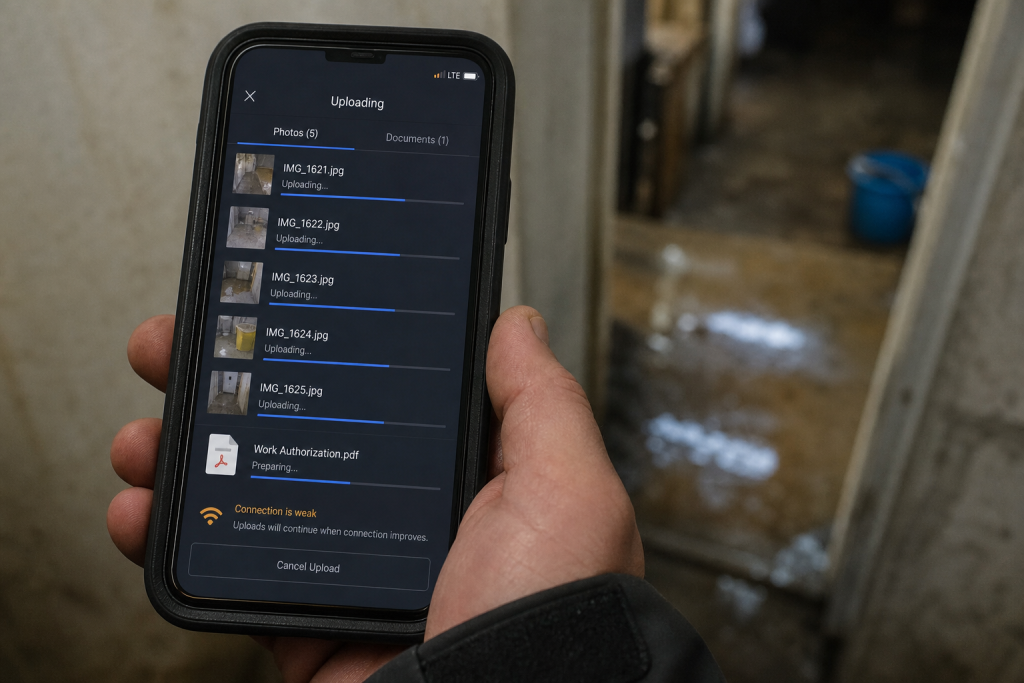
    Field phone showing bars while a moisture map upload fails on a dead-fiber water loss
    Bars on the phone. Upload still dead. That is the job the dish is for.

    Buy and read from the source. Prices move. The impedance rule does not.

    Official doors (clean)

    Starlink (buy / plans / help)

    SpaceX

    Tesla / xAI (voice rides the pipe; they are not the dish)

    1. Impedance — when this kit matches the job

    Use Starlink when two of these are true:

    • The structure or the street has no working cable/fiber (storm, rural, construction, “the pole is in the river”).
    • You need to upload, not just talk: photos, video walkthrough, Xactimate sketch, moisture log, signed work auth.
    • You will be on site more than an hour and cell is congested or roaming into a dead pocket.
    • The office needs a second path so after-hours voice and dispatch do not die with the cable modem.

    Do not use it as:

    • A replacement for a good office fiber drop.
    • A phone. Voice agents still ride the pipe; the dish is not Jarvis.
    • A “we have Starlink” line on the website. Homeowners hire the truck that showed up.

    Cell first if it works. Starlink is the sink when cell is the bottleneck.

    2. Two kits (steal one)

    Kit A — truck / first-on-site (most shops)

    • Starlink Mini on a Roam plan or, if this is actually a business WAN, start at Business and read the current hardware list. Mini is the backpack dish. In-motion rules live here. The home V5 kit is not the roam toy.
    • Power: Mini wants a USB-PD source rated 65–100 W even though it only drinks ~25–40 W. A 45 W phone brick will lie to you. Truck: 12 V → 30 V / Anderson, or a 500 Wh class station.
    • Plan: numbers on starlink.com move. Roam is written for travel. If the kit is production, read Business vs Enterprise. Mini often does not sit on the Priority SLA. Do not tell a carrier you have enterprise uptime because you paid a business invoice for a Mini.
    • One cheap travel router if Mini Wi-Fi dies inside a metal trailer.
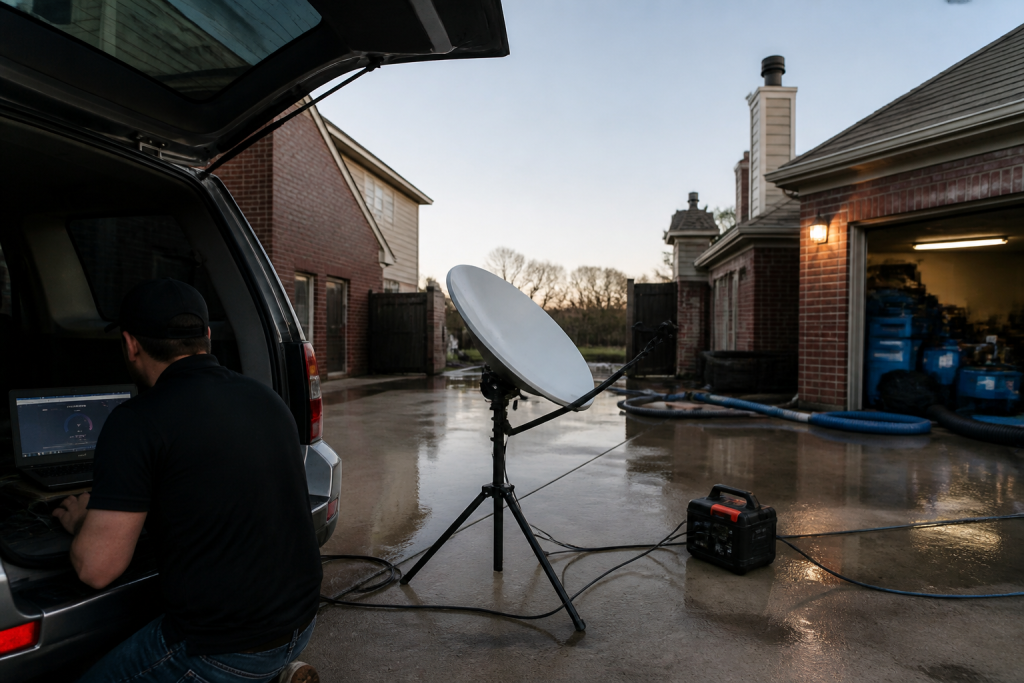
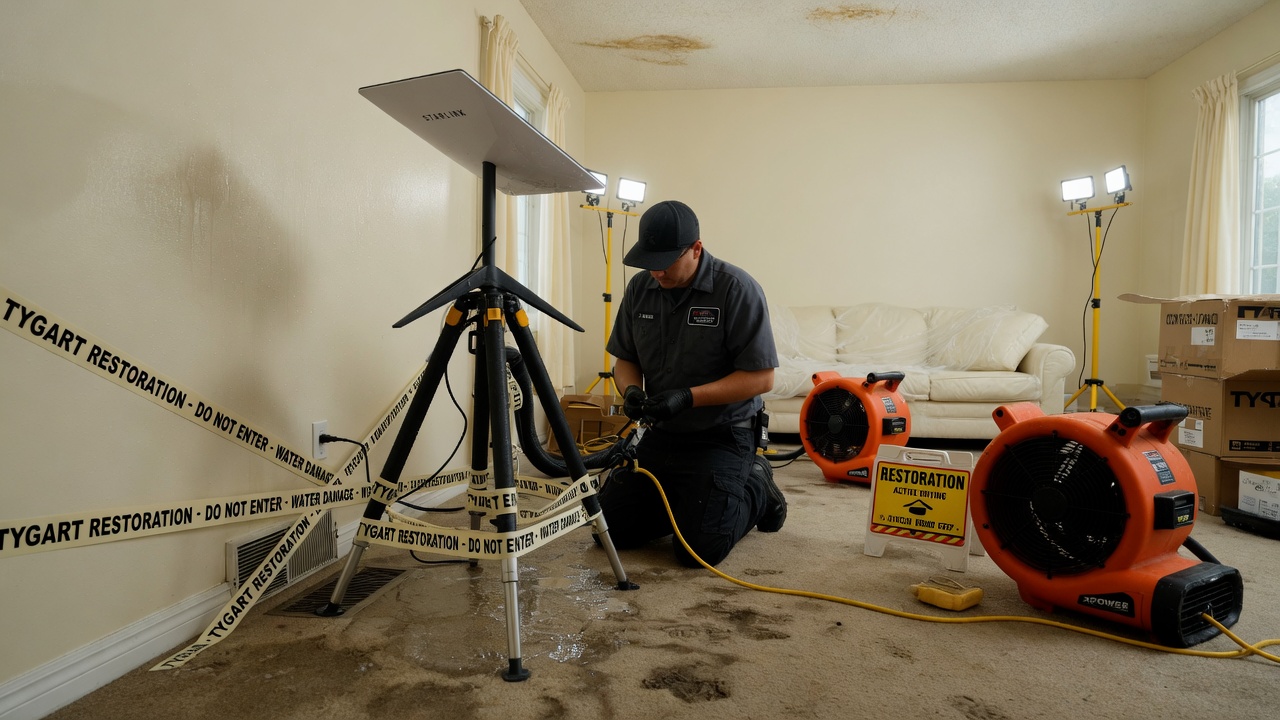
    Starlink Mini powered from a truck USB-PD brick rated 65 to 100 watts before entering a wet house
    Power before the meter. 65–100 W brick. Phone chargers lie.

    Kit B — shop / yard / long dry-down

    • Performance / Priority on Business if you need an SLA and a fixed roof.
    • Permanent mount, open sky, snow-melt if you live where it snows.
    • This is backup for the office phone and the photo server. Not the hero kit on day one of a flood.

    3. First 30 minutes on a wet house
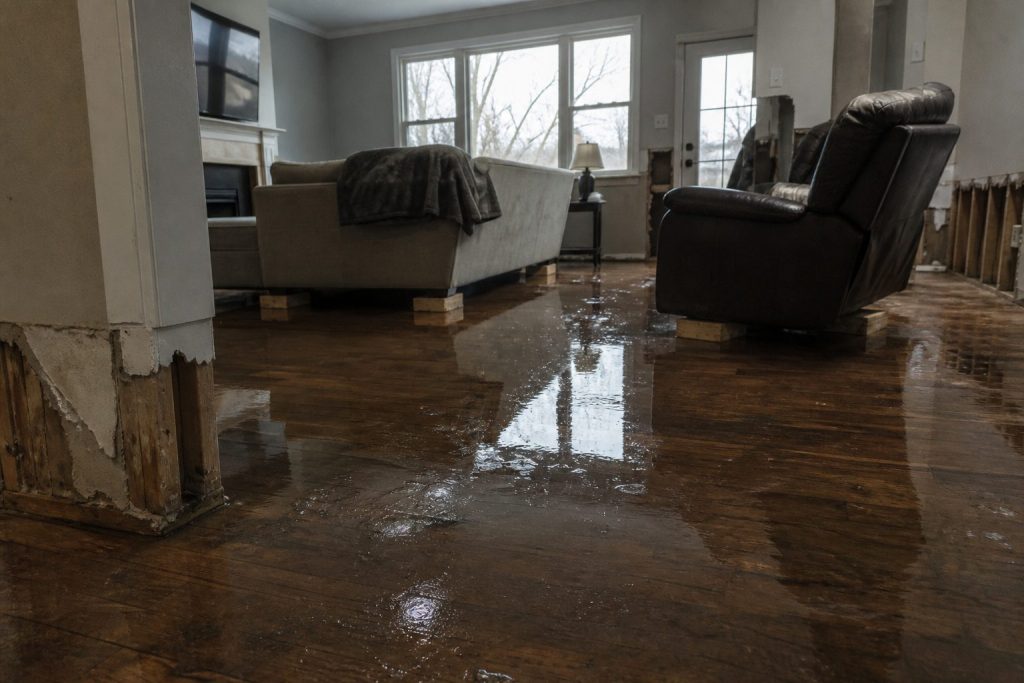
    Flooded residential living room with standing water on hardwood after a water loss
    First 30 minutes on a wet house with Starlink up.
    1. Park where the sky is a rectangle, not a slot between two alders. Confirm in the Starlink app.
    2. Dish on the hood, a pole, or the unshaded side of the trailer — not the basement, not under the soffit.
    3. Power before you walk in with the meter. Boot is a couple of minutes.
    4. One speed check. If download is fine and upload is garbage, you will feel it on Xactimate. Rain cuts throughput; talk first, fat files later.
    5. Name the network something boring (SHOP-JOB).

    If the app says obstructed, move the dish. Do not “optimize” for twenty minutes.

    4. What actually eats the pipe
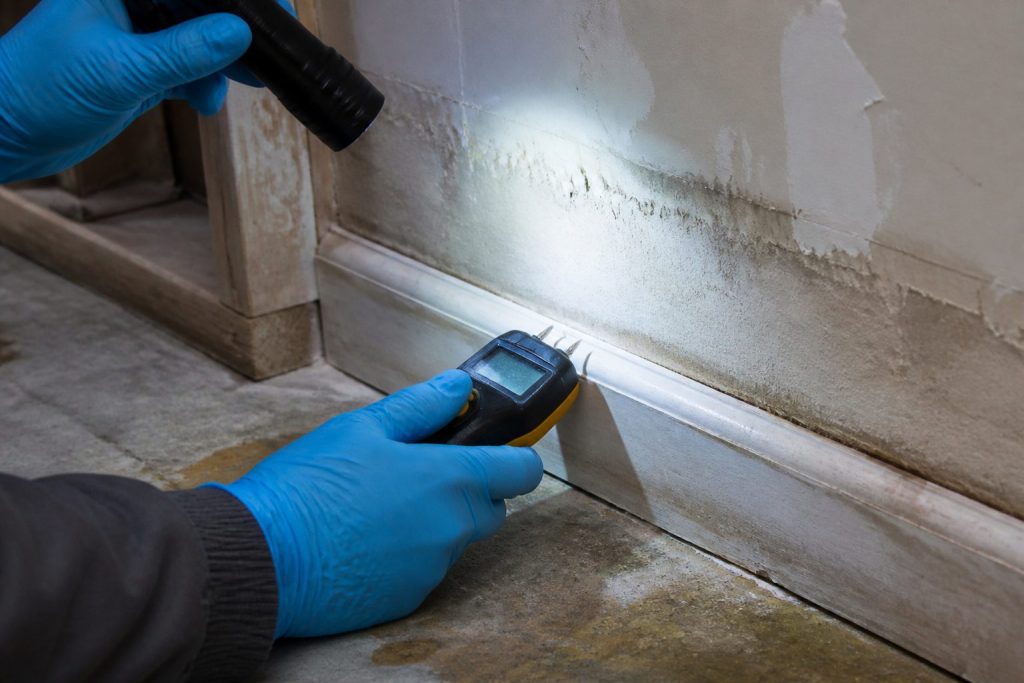
    Gloved hands using a pin-type moisture meter on wet drywall during inspection
    What actually eats the pipe on a water job.
    ThingRough appetiteRule
    Moisture photos, 50–150 shotssmallFine on a small Roam month
    Adjuster video walk, 10 minmediumOnce, compressed
    Xactimate / cloud estimatesmall–mediumSite needs the upload
    Voice agentsmall per minuteCheap; retries are not
    Netflix in the trailerthe villainAfter the job or not at all
    Group video, four peopleburns a small capOne camera

    Voice is why the pipe matters at 11 p.m. Keep the agent short. Book or kill.

    5. Who pays

    Pick one. Write it in the SOP.

    • Job cost — storm / rural / no street internet. Line it like a generator.
    • Shop overhead — office backup + after-hours voice.
    • Never the tech’s personal weekend.

    Standby the truck kit when it is not a weather week. Idle is cheaper than a second hardware buy because someone borrowed it.

    6. Dispatch and voice
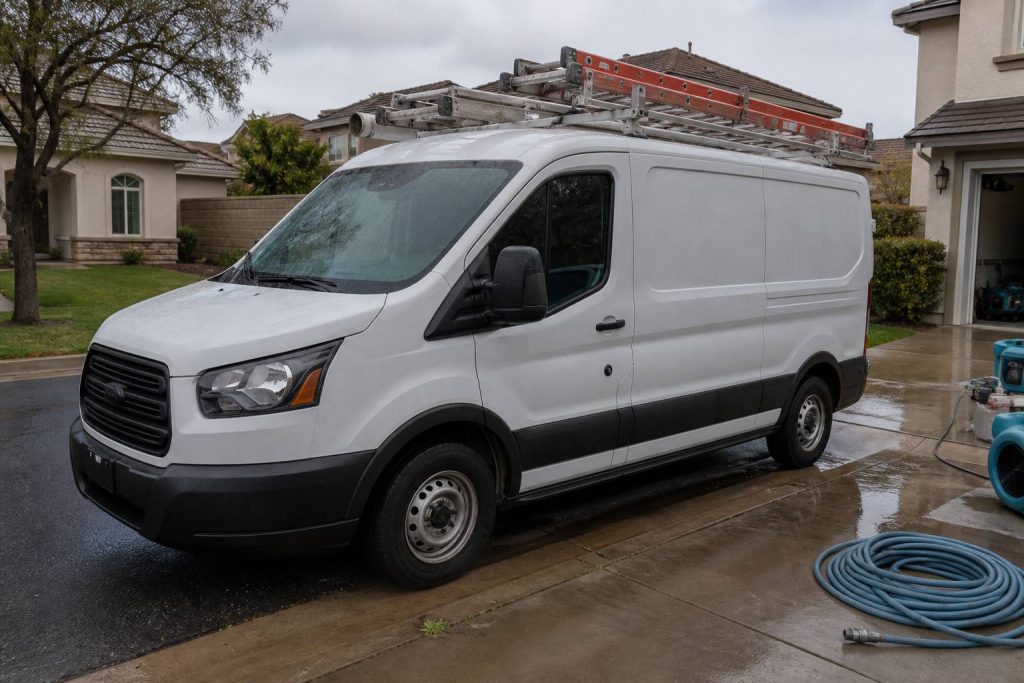
    White restoration work van with ladder rack parked at a suburban jobsite curb
    Dispatch and voice when the site is remote.

    The dish is layer 0. The voice agent is layer 1.

    On a dead-fiber job: photos go up the pipe; the after-hours line stays reachable; the agent writes a new row (address, standing water y/n, next action). It does not edit your website.

    If you already have a process, add one rule: when cell upload fails, kit A comes off the hook.

    7. Failure modes

    Trees and eaves. Rain. 45 W bricks. Consumer Roam sold as production WAN. Twelve intake fields before anyone asks “can we come now?”

    8. The sentence that pays the shop

    “If the street internet is out we still upload your photos and get the adjuster pack off the truck tonight.”

    Only say it if the kit is in the truck.

    This document stays free. Charge for the hour you spend teaching another shop the first 30 minutes if you want. Do not charge Starlink. They already sold you the dish.

    9. What this is not asking

    No meeting. No partnership badge. No official anything.

    Redmond already knows how to stamp birds. The ground should not be a graveyard of unused kits. Order here. Then put the dish where the sky is.

    Related field notes: The leftover pile · Cursor checks on Grok Desktop mid-job

    Related on Tygart Media: The leftover pile · Cursor checks on Grok Desktop mid-job.
  • The leftover pile — what ion-trap cooling has to do with restoration quotes

    The leftover pile — what ion-trap cooling has to do with restoration quotes

    In a Paul trap, a single calcium ion sits in an oscillating electric field—too small to see, easy to lose if you blink at the wrong moment. Cool it anyway. A laser tuned slightly red of the ion’s transition shines on it. When the ion drifts toward the beam, Doppler shift brings the light closer to resonance; it absorbs photons more often. Each absorption kicks a tiny bit of momentum opposite its motion. That is Doppler cooling: velocity stolen photon by photon, direction by direction, until the ion mostly sits still in the trap.

    It never hits absolute zero. Random fluorescence puts heat back in. The best you get is the Doppler limit—a floor, not a fantasy of perfect stillness. Stochastic cooling at CERN pushed antiprotons further with timed kicks instead of photons; same moral: you shrink a hot cloud with deliberate impulses, not with wishes.

    Your shop has the same shape, minus the vacuum chamber. The leftover pile is the ion: quotes written but not booked, supplements submitted but not approved, inbound rings that became someone else’s water job. Cooling kicks are follow-ups that book or honestly kill. Noise is new quotes, missed calls, ghost rows in the CRM. More leads without follow-up is blue-detuned laser work—more energy in, same jobs out, pile hotter. The physics will not save a broken sales process; it only names what you are already doing wrong.

    The four columns on your whiteboard

    Think in rates, not vibes. Four symbols are enough for a Monday conversation:

    • n — open quotes and stalled files you still treat as live.
    • A− — follow-ups that book work or honestly kill the row (closed-lost with a reason, not “maybe later”).
    • A+ — everything that adds pile without a matching close: new estimates, voicemails never logged, supplements you forgot to track, adjuster silence you stopped measuring.
    • Floor — the leftover you will always carry. Speed-of-life, tire-kickers, carriers that pay on geological time. Not shame; physics.
    When A− ≈ A+ → pile stays flat. When A+ > A− → pile runs. When you pretend A+ is zero → you predicted a miracle.

    Most owners stare at n and feel virtuous. n is a thermometer. A− and A+ are the levers. If you only measure n, you are reading temperature while the laser points the wrong way.

    Cooling kicks: quote follow-up that actually moves n

    A quote without a cadence is not cooling; it is fluorescence—pretty light that heats the pile. Use a simple clock. Adjust timing to your market; count your own conversion by touch and fix the script, do not copy someone else’s calendar from a podcast.

    Day 1 — confirm reality

    Within one business day of sending the estimate: call if you have a number, text if that is how the customer reached you. Say what is in the document, what happens next if they say yes, and one clear question (“Do you want us to hold a start window this week, or are you still comparing?”). Log the answer in the row. No answer is data; “still thinking” without a date is A+ wearing a friendly mask.

    Day 3 — remove friction

    Second touch: one concrete obstacle. Deductible confusion, landlord delay, another contractor’s line item they do not understand. Offer a ten-minute walkthrough of scope—not a lecture on your brand. If they are not the decision-maker, ask who is and whether you may include them on the next call. Still no response: note “attempted day 3” and move the clock.

    Day 7 — decision fork

    Third touch: binary. “We can mobilize on X or close this file on our side so you are not getting pings—which do you want?” Polite, not passive-aggressive. Restoration is urgent until it is not; your job is to learn which side of that line this file sits on.

    Day 14 — honest kill

    If nothing after a real fork, close-lost. Reason code: no response, chose competitor, insurance denied, scope withdrawn—pick one that is true. Rotting quotes inflate n and train your team that follow-up is theater. Honest kill is A−. It shrinks the pile you actually work.

    Speed-to-lead is the biggest heat source. The unanswered ring is A+ at industrial scale. Answer live when you can. Call back in minutes, not hours. Text-first when the caller already texted. The first 24 hours on a water loss belong to whoever shows up—not whoever sends the prettiest PDF three days later.

    Estimator craft still matters: vague scopes cool nothing. If line items fight the adjuster on day one, you added noise before the laser turned on. A tight scope language habit—your own cheat sheet, verified against carrier pushback you have actually seen—feeds A− later. See your Xactimate line-item cheat sheet as cooling prep, not as a substitute for picking up the phone.

    Supplements: the unpaid tail nobody plots

    Residential files rarely die on the first packet. Several supplement rounds is normal in many shops that measure; your count will differ by carrier mix and how aggressively you document on site. Treat each open supplement as its own row in the pile—not as “part of the job we already won.”

    Loop: submit → track → escalate → collect. Every open supplement needs an owner name and a next-action date. No date means A+. The unpaid tail—approved on paper, not in the bank—is pure pile growth while everyone celebrates revenue on a spreadsheet.

    Escalation with dates on every step

    1. Adjuster — documented follow-up (email plus call log). Note what you sent and when.
    2. Supervisor — same file, new name, reference prior contact dates.
    3. Carrier escalation — formal, factual, no throat-clearing novellas; timeline of submissions and responses.

    If step three is a fantasy because step one never happened, you do not have an escalation problem—you have a tracking problem. Drywall documentation standards on the truck—what S500 in the van means in practice—feeds supplements that survive first review. That is upstream cooling; downstream is still the calendar on each open dollar.

    Measuring the pile: Monday one-sheet

    Once a week, one page. No dashboard archaeology.

    • Count open quotes (n at start).
    • Count new quotes and missed-call rows added (A+ for the week—be honest about voicemails).
    • Count booked jobs and honest closes from follow-up (A−).
    • Plot leftover at end of week.

    If leftover does not fall over a month while you “follow up,” either follow-up is theater or miss rate is the heat. Voice that texts back in a minute is a kick. Voice that only writes a pretty card is a thermometer.

    Pair the sheet with job memory: what repeated on lost files, what line items got kicked back, what adjuster phrases mean “send photos again.” Turning closed jobs into searchable notes—restoration jobs as a knowledge base—cuts A+ from repeated mistakes. It does not replace the cadence above.

    Field connectivity is pile-adjacent: if the crew cannot upload while the homeowner is still anxious, you slow the proof loop and invite competitor speed. Reliable site internet is boring ops; it is also fewer ghost supplements. Worth reading once if you still fight dead zones: Starlink on a water job.

    Not this

    The metaphor has boundaries. It will not cool your brand. It will not set ad spend. It will not fix hiring. It only describes piles that shrink when kicked and grow when ignored. If your marketing pours leads into a CRM nobody touches, you are not running a trap—you are heating ions on purpose and calling it growth.

    Do not overclaim the physics. You are not hitting the Doppler limit on receivables. You are choosing whether A− happens often enough that n is workable. That is enough math for a contractor who would rather dry a wall than derive one.

    FAQ

    What is the “leftover pile” in plain language?

    It is work you already touched but have not collected or closed: open quotes, stalled supplements, and leads you let slip. It is not evil; it is inventory that costs attention until you book it, kill it, or collect it.

    Why compare follow-up to laser cooling?

    Because each good follow-up removes a little uncertainty the way each absorbed photon removes a little velocity—not all at once, and never to zero. Random noise—new leads, missed calls—puts heat back. The comparison keeps you honest about rates, not miracles.

    How many follow-ups before I close a quote as lost?

    A common working structure is day 1, day 3, day 7, and a day 14 fork with an honest close if there is still no decision. Count your own bookings by touch; shorten or lengthen only when your numbers say so.

    What belongs on a supplement escalation?

    Dates, names, and what was submitted each round. Move adjuster → supervisor → carrier escalation with a logged step at each level. Missing dates mean you are guessing, not escalating.

    What should the Monday one-sheet prove?

    Whether leftover shrank. If new noise and open quotes outrun closes for weeks, your pile is running hot—fix speed-to-lead or cadence before you buy more leads.

    Can this framework fix slow insurance pay?

    It helps you see unpaid approved work as pile growth and assign owners. It does not change carrier calendars. It keeps you from mistaking “approved on email” for collected cash.

  • Active Storm Alerts Today: Severe Thunderstorms & Flash Floods Hit Florida, Utah & Arizona — Restoration Hotspots

    Severe thunderstorm warnings and life-threatening flash flood warnings are active right now across parts of Florida, Utah, and Arizona. These are the kinds of localized, high-intensity events that produce the exact damage restoration teams see most: wind-driven roof and siding failures, hail-pocked vehicles and windows, and sudden interior flooding from heavy rain or flash runoff.

    This is a live snapshot of the alerts as of the afternoon of Saturday, August 29, 2026. Conditions change fast — always verify with the National Weather Service for your specific county or ZIP code.

    Florida — Severe Thunderstorms & Flood Advisories

    The National Weather Service Tampa Bay (Ruskin) office has issued multiple severe thunderstorm warnings this afternoon for west-central and southwest Florida. Hazards include 60 mph wind gusts capable of damaging roofs, siding, and trees, plus urban and small-stream flooding from heavy rain.

    Active / recent warnings include:

    • Central Pasco County (near Hudson, Moon Lake, Shady Hills) — severe thunderstorm, 60 mph gusts, nearly stationary.
    • Northeastern Manatee County / southeastern Hillsborough County (near Parrish) — severe thunderstorm warning.
    • Northwestern Charlotte County / south-central Sarasota County (North Port, Venice, Osprey, Nokomis, Englewood area) — 60 mph gusts.
    • Southeastern Charlotte / northeastern Lee County (near LaBelle, North Fort Myers) — 60 mph gusts.
    • Flood advisories for urban/small-stream flooding in parts of Lee, Highlands, and surrounding counties.

    A lingering front is keeping daily rounds of showers and storms over the Southeast through the weekend, with flash-flood potential shifting toward Louisiana, Alabama, Mississippi, Florida, and southwest Georgia on Sunday. Expected rainfall totals of 1–3+ inches in many areas by Monday.

    Local emergency contacts:

    Utah — Severe Thunderstorms & Life-Threatening Flash Floods

    The Storm Prediction Center has a Slight Risk of severe thunderstorms from eastern Nevada across northern Utah into far southwest Wyoming, with the main threat being severe wind gusts and isolated large hail. The National Weather Service Salt Lake City office has active warnings in central Utah.

    Active warnings:

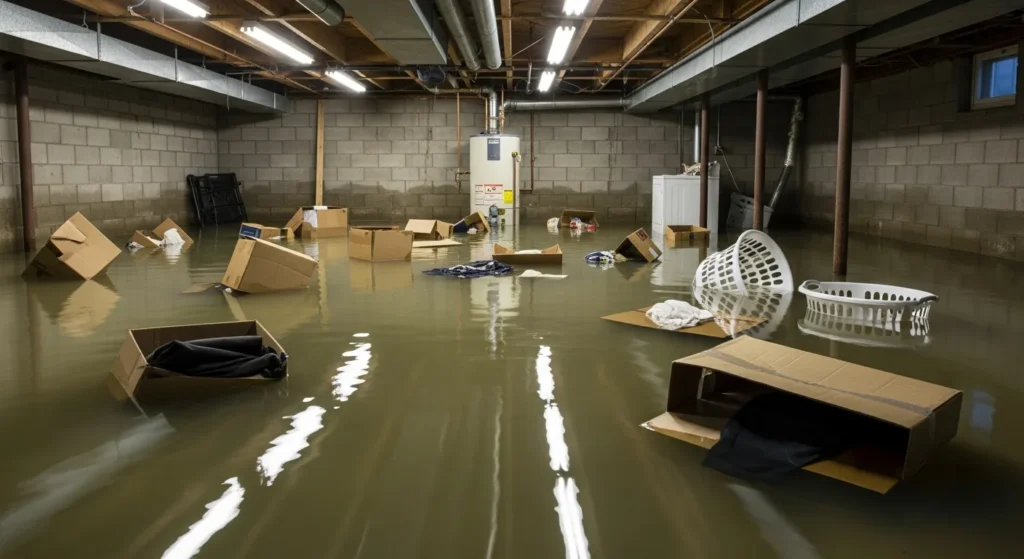
    Flooded residential basement with standing water and damaged belongings
    Flash flooding and heavy rain produce exactly this kind of interior water damage — saturated drywall, damaged belongings, and mold risk within 48 hours.
    • Severe Thunderstorm Warning — northwestern Emery County and southwestern Carbon County (Huntington, Wellington, Castle Dale, Orangeville, Cleveland, Elmo, Hiawatha). 60 mph winds + quarter-size hail. Storm located 9 miles north of Clawson, moving northeast at 30 mph.
    • Flash Flood Warning — southern Emery County and north-central Wayne County. Life-threatening flash flooding from heavy rain; Doppler radar indicated ongoing or imminent flooding.

    Local emergency contacts:

    • Emery County Sheriff’s Office / Emergency Management: 435-381-2404 | emery.utah.gov
    • Utah Division of Emergency Management: dem.utah.gov

    Arizona — Flash Flood Warning & Monsoon Storms

    A Flash Flood Warning is active for the Havasu Creek basin in Coconino County (near Supai, northward to the Colorado River). Between 0.5 and 0.75 inches of rain have already fallen, with additional amounts possible. Life-threatening flash flooding is ongoing or expected shortly. Campers and hikers are advised to move to higher ground immediately.

    Flood watches cover broader areas including parts of the Phoenix metro, Pima, Pinal, Gila, Apache, Navajo, and Yavapai counties for heavy rain potential through Sunday and Monday. Scattered thunderstorms with strong or severe wind gusts remain possible.

    Local emergency contacts:

    What These Storms Mean for Restoration Teams

    These alerts map directly to the damage categories restoration companies handle every day:

    • Wind damage (60 mph gusts): roof shingles, siding, gutters, tree limbs on structures, broken windows.
    • Hail (quarter-size in Utah): vehicle dents, skylights, soft metals, landscaping.
    • Flash flooding & heavy rain: interior water intrusion, saturated drywall and insulation, mold risk within 24–48 hours, sewage backup in low-lying areas.
    • Urban flooding in Florida: parking lots, first-floor commercial spaces, HVAC units, electrical hazards.

    For teams in or near these hotspots, the play is simple: stage equipment, pre-position drying assets, and be ready to respond the moment the warnings lift. Property owners should document damage with photos and contact their insurer quickly — and if they need immediate water extraction or board-up, a local restoration pro is the fastest path to limiting secondary damage.

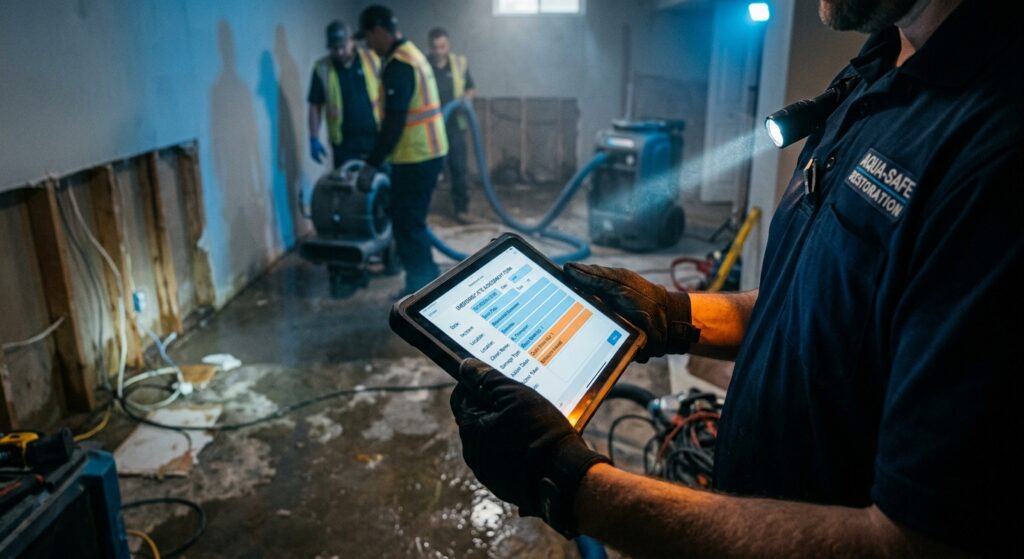
    Restoration worker using a tablet to document water damage cleanup in a flooded basement
    Rapid documentation and extraction limit secondary damage after wind and flood events.

    FEMA & Federal Assistance

    If a storm produces damage beyond what insurance covers, residents can apply for federal disaster assistance. The FEMA Helpline is 1-800-621-3362 (open 7 a.m. to 10 p.m. local time, 7 days a week). Applications can also be started at DisasterAssistance.gov or through the free FEMA app. Find a nearby Disaster Recovery Center at fema.gov/drc.

    Basic eligibility generally requires U.S. citizenship or qualified status, identity verification, proof of occupancy or ownership, and unmet needs not covered by insurance. Don’t wait — apply as soon as it’s safe.

    This post is for informational purposes and is not an official weather warning. Always follow instructions from local authorities and the National Weather Service. Stay weather-aware, especially around flash flooding — turn around, don’t drown.