
Google shipped one of the most consequential AI Overviews updates of the year on May 6, 2026 — and most SEO teams still have not adjusted their content templates to match. The update changed what gets cited, where citations are drawn from, and how users decide which links to actually click. This is the practitioner walkthrough: what shifted, the data behind it, and the on-page changes that move the needle in the new system.
What Google Actually Changed on May 6, 2026
Google’s own announcement (How AI Mode and AI Overviews help you explore the web) named five shifts to the Overviews surface:
- Forum and social perspective blocks — Overviews now embed direct quotes from Reddit, WordPress blogs, and public forums in a dedicated “perspectives” section.
- Subscription-aware citation highlights — links from news outlets the searcher is logged in to are visually flagged. Google’s internal test data showed those flagged links were “significantly more likely” to be clicked.
- Suggested exploration topics — bulleted follow-up queries now render at the end of many AI responses, which means downstream traffic flows depend on whether your domain ranks for the fan-out queries, not just the head term.
- Further Exploration section — a bulleted-link cluster plus an “Expert Advice” snippet pulling from articles, reviews, and forum threads.
- Hover-to-preview link cards — hovering a citation now triggers a card showing site name, page summary, and metadata before the click.
Two of those five — perspectives blocks and Further Exploration — are net-new citation slots. The other three change which citations users actually convert on.
The Citation Math Has Shifted
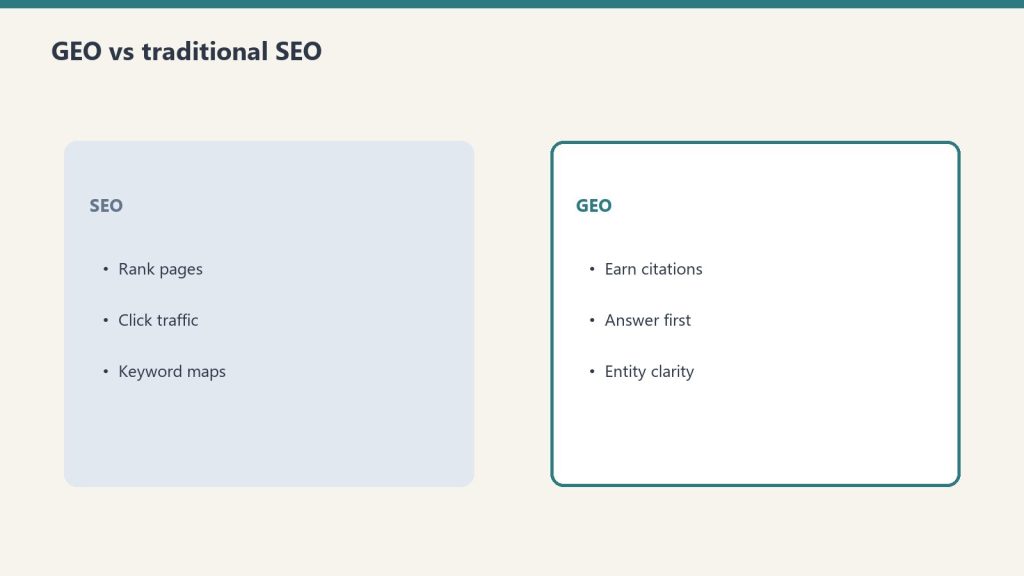
The most important measurement from the last 60 days: in March 2026, the share of AI Overview citations pulled from pages ranking in Google’s organic top 10 dropped to 38%, down from 76% in July 2025 (500M-keyword analysis). 31% of cited sources now rank in positions 11–100, and another 31% rank outside the top 100 entirely for the query they get cited on.
Translation for practitioners: Overviews are no longer a rank-amplifier. They are an independent retrieval layer. A page that ranks #47 with the right passage structure can outcompete a page that ranks #3 with the wrong structure. Domain Authority correlation with citation selection is now r=0.18 — effectively noise. Semantic completeness correlation is 0.87.
The Passage That Gets Cited
AI Overview extracts cluster tightly around 134–167 words per passage, with 62% of featured content falling in the 100–300 word range. Position inside the article matters: 44.2% of citations are pulled from the first 30% of the body, 31.1% from the middle, 24.7% from the conclusion (Wellows ranking factor study). Lead-heavy structure is no longer a copywriting preference — it is the extraction surface.
The structural pattern that wins, repeatable across H2 sections:
<h2>[Specific question phrased as a noun phrase]</h2>
<p><strong>[One-sentence direct answer with a named entity or number.]</strong></p>
<p>[Supporting detail with verifiable source attribution.]</p>
<p>[Nuance, caveat, or contrast — kept under the 167-word ceiling.]</p>
Each H2 block becomes a standalone extractable unit. If your article only answers the headline question, you compete for one citation. If five H2 blocks each answer a distinct fan-out question, you compete for five.
Schema That Earns Citations Now
Properly marked-up pages show 73% higher selection rates in AI Overviews versus unmarked content. The three schema types doing the most work in the May 2026 surface:
- FAQPage — feeds the Further Exploration section directly. Each Question/Answer pair is treated as a passage candidate.
- Article with author and datePublished — freshness is now a citation factor. Content under three months old is 3× more likely to be cited.
- HowTo with step-level markup — extracted into the Expert Advice snippet when the query is procedural.
A minimal Article block that hits the freshness and authorship signals Google’s extractor now reads for:
{
  "@context": "https://schema.org",
  "@type": "Article",
  "headline": "...",
  "author": { "@type": "Person", "name": "...", "url": "..." },
  "datePublished": "2026-05-14",
  "dateModified": "2026-05-14",
  "publisher": { "@type": "Organization", "name": "...", "logo": {...} }
}
How to Show Up in the New Perspectives Block
The forum-quote section is the biggest opportunity nobody is optimizing for yet. Reporting from TechCrunch’s coverage of the rollout confirmed Google is pulling from Reddit, public forums, and WordPress blogs explicitly tagged as personal perspective.
Three practitioner moves:
- Author bylines with first-person framing on at least one article per topic cluster. Personal-perspective phrasing (“In our deployment of …”, “What surprised us was …”) signals firsthand experience to the extractor.
- Engage in the relevant subreddit with substantive comments under your real handle, then link your bylined article from your profile. Reddit threads are now a primary retrieval source for perspectives blocks.
- Tag personal-perspective posts with Person schema alongside Article schema. The Person entity is what Google ties to the firsthand-experience signal.
What to Measure Starting This Week
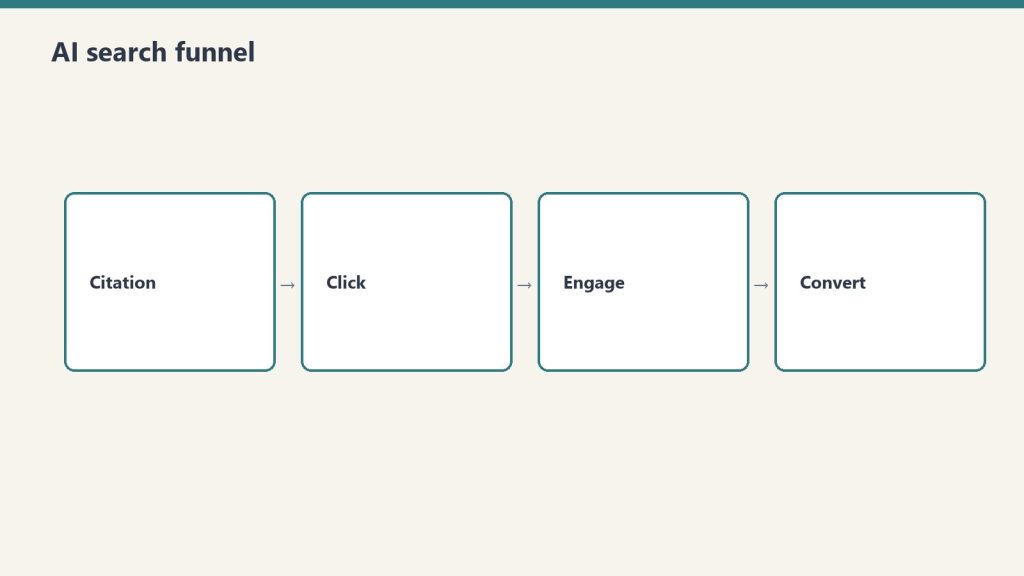
Citation share by query is the only metric that matters in this surface, and traditional analytics will not give it to you. Two practitioner approaches:
- Manual citation logging — pull your 20 highest-value head terms and 50 fan-out queries, query them weekly in an incognito session, log whether your domain appears in the Overview, the perspectives block, or the Further Exploration list. Track citation share, not just rank.
- Server-log analysis — Google’s Overview generator hits your pages with a distinct user agent and crawl signature. Filtering for those signatures gives you a leading indicator: pages getting hit by the extractor are pages being evaluated for citation.
Cited pages earn 35% more organic clicks and 91% more paid clicks than uncited peers (Averi.ai citation study). Uncited pages on triggering queries lose 61% of their normal CTR. The gap between cited and uncited is now wider than the gap between position #1 and position #5 in classical SEO. Treat citation as the primary KPI.
The Update in One Sentence
Google has decoupled AI Overview citation from organic rank, opened two new citation slots (perspectives and Further Exploration), and is now rewarding firsthand-experience signals at the page and author level — the practitioners who restructure for passage-level extraction and earn citation in the new slots will pick up the traffic that used to flow to position-#1 pages.
Related on Tygart Media: citation monitoring · SEO vs GEO vs AEO.
Get The Signal
What we actually ran, what it measured, and what it means for a restoration shop — every week, including the flops.
Leave a Reply