Tag: FAQPage Schema

  • Google AI Overviews After the May 2026 Update: What Changed and the New Citation Playbook

    Google AI Overviews After the May 2026 Update: What Changed and the New Citation Playbook

    Google shipped one of the most consequential AI Overviews updates of the year on May 6, 2026 — and most SEO teams still have not adjusted their content templates to match. The update changed what gets cited, where citations are drawn from, and how users decide which links to actually click. This is the practitioner walkthrough: what shifted, the data behind it, and the on-page changes that move the needle in the new system.

    What Google Actually Changed on May 6, 2026

    Google’s own announcement (How AI Mode and AI Overviews help you explore the web) named five shifts to the Overviews surface:

    1. Forum and social perspective blocks — Overviews now embed direct quotes from Reddit, WordPress blogs, and public forums in a dedicated “perspectives” section.
    2. Subscription-aware citation highlights — links from news outlets the searcher is logged in to are visually flagged. Google’s internal test data showed those flagged links were “significantly more likely” to be clicked.
    3. Suggested exploration topics — bulleted follow-up queries now render at the end of many AI responses, which means downstream traffic flows depend on whether your domain ranks for the fan-out queries, not just the head term.
    4. Further Exploration section — a bulleted-link cluster plus an “Expert Advice” snippet pulling from articles, reviews, and forum threads.
    5. Hover-to-preview link cards — hovering a citation now triggers a card showing site name, page summary, and metadata before the click.

    Two of those five — perspectives blocks and Further Exploration — are net-new citation slots. The other three change which citations users actually convert on.

    The Citation Math Has Shifted

    The most important measurement from the last 60 days: in March 2026, the share of AI Overview citations pulled from pages ranking in Google’s organic top 10 dropped to 38%, down from 76% in July 2025 (500M-keyword analysis). 31% of cited sources now rank in positions 11–100, and another 31% rank outside the top 100 entirely for the query they get cited on.

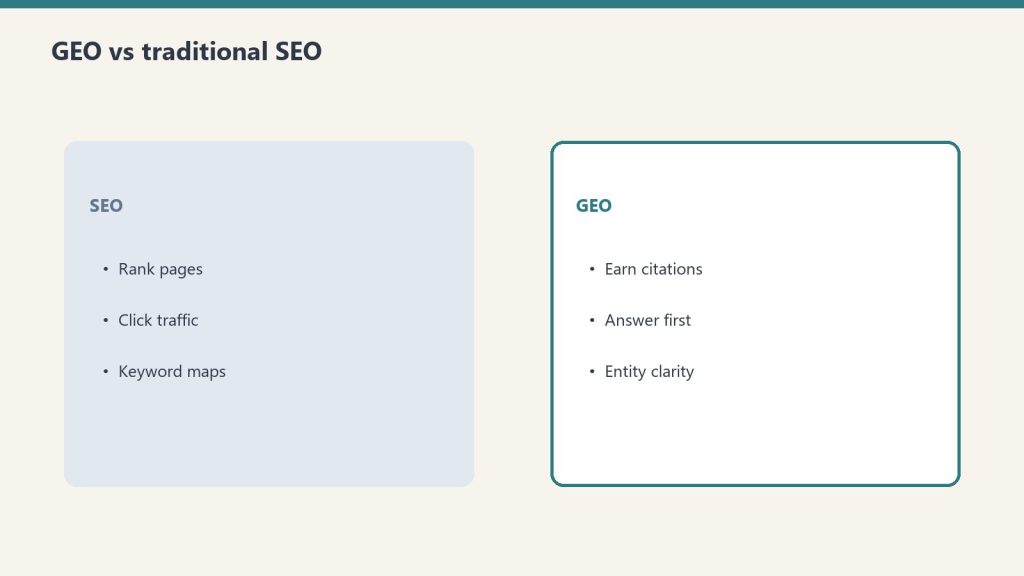
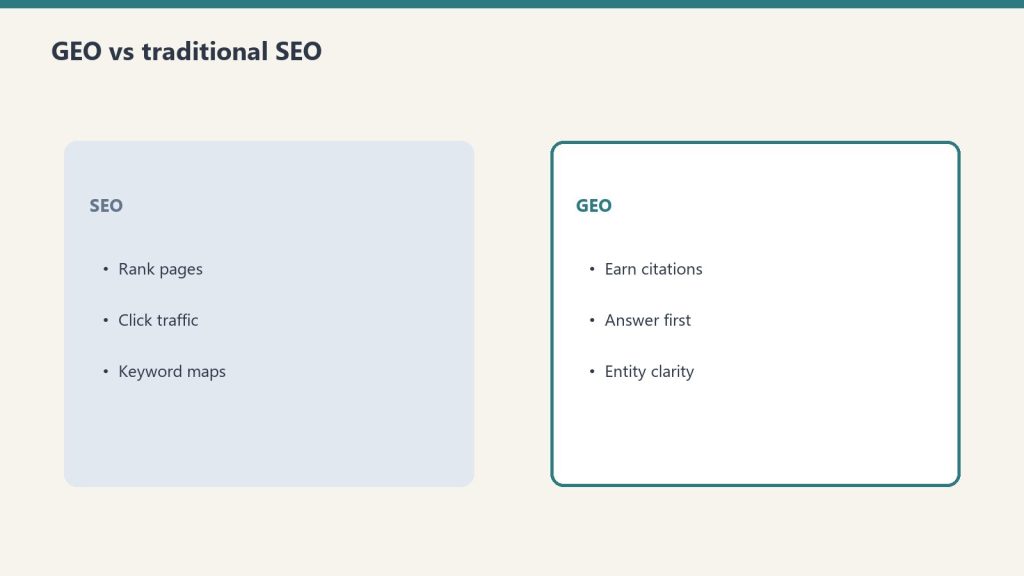
    Translation for practitioners: Overviews are no longer a rank-amplifier. They are an independent retrieval layer. A page that ranks #47 with the right passage structure can outcompete a page that ranks #3 with the wrong structure. Domain Authority correlation with citation selection is now r=0.18 — effectively noise. Semantic completeness correlation is 0.87.

    The Passage That Gets Cited

    AI Overview extracts cluster tightly around 134–167 words per passage, with 62% of featured content falling in the 100–300 word range. Position inside the article matters: 44.2% of citations are pulled from the first 30% of the body, 31.1% from the middle, 24.7% from the conclusion (Wellows ranking factor study). Lead-heavy structure is no longer a copywriting preference — it is the extraction surface.

    The structural pattern that wins, repeatable across H2 sections:

    <h2>[Specific question phrased as a noun phrase]</h2>
    <p><strong>[One-sentence direct answer with a named entity or number.]</strong></p>
    <p>[Supporting detail with verifiable source attribution.]</p>
    <p>[Nuance, caveat, or contrast — kept under the 167-word ceiling.]</p>

    Each H2 block becomes a standalone extractable unit. If your article only answers the headline question, you compete for one citation. If five H2 blocks each answer a distinct fan-out question, you compete for five.

    Schema That Earns Citations Now

    Properly marked-up pages show 73% higher selection rates in AI Overviews versus unmarked content. The three schema types doing the most work in the May 2026 surface:

    • FAQPage — feeds the Further Exploration section directly. Each Question/Answer pair is treated as a passage candidate.
    • Article with author and datePublished — freshness is now a citation factor. Content under three months old is 3× more likely to be cited.
    • HowTo with step-level markup — extracted into the Expert Advice snippet when the query is procedural.

    A minimal Article block that hits the freshness and authorship signals Google’s extractor now reads for:

    {
      "@context": "https://schema.org",
      "@type": "Article",
      "headline": "...",
      "author": { "@type": "Person", "name": "...", "url": "..." },
      "datePublished": "2026-05-14",
      "dateModified": "2026-05-14",
      "publisher": { "@type": "Organization", "name": "...", "logo": {...} }
    }

    How to Show Up in the New Perspectives Block

    The forum-quote section is the biggest opportunity nobody is optimizing for yet. Reporting from TechCrunch’s coverage of the rollout confirmed Google is pulling from Reddit, public forums, and WordPress blogs explicitly tagged as personal perspective.

    Three practitioner moves:

    1. Author bylines with first-person framing on at least one article per topic cluster. Personal-perspective phrasing (“In our deployment of …”, “What surprised us was …”) signals firsthand experience to the extractor.
    2. Engage in the relevant subreddit with substantive comments under your real handle, then link your bylined article from your profile. Reddit threads are now a primary retrieval source for perspectives blocks.
    3. Tag personal-perspective posts with Person schema alongside Article schema. The Person entity is what Google ties to the firsthand-experience signal.

    What to Measure Starting This Week

    Citation share by query is the only metric that matters in this surface, and traditional analytics will not give it to you. Two practitioner approaches:

    • Manual citation logging — pull your 20 highest-value head terms and 50 fan-out queries, query them weekly in an incognito session, log whether your domain appears in the Overview, the perspectives block, or the Further Exploration list. Track citation share, not just rank.
    • Server-log analysis — Google’s Overview generator hits your pages with a distinct user agent and crawl signature. Filtering for those signatures gives you a leading indicator: pages getting hit by the extractor are pages being evaluated for citation.

    Cited pages earn 35% more organic clicks and 91% more paid clicks than uncited peers (Averi.ai citation study). Uncited pages on triggering queries lose 61% of their normal CTR. The gap between cited and uncited is now wider than the gap between position #1 and position #5 in classical SEO. Treat citation as the primary KPI.

    The Update in One Sentence

    Google has decoupled AI Overview citation from organic rank, opened two new citation slots (perspectives and Further Exploration), and is now rewarding firsthand-experience signals at the page and author level — the practitioners who restructure for passage-level extraction and earn citation in the new slots will pick up the traffic that used to flow to position-#1 pages.

  • For Navy Families at NAVSTA Everett: What Everett’s New VOAWW Shelter Means for Military Spouses Facing Housing Crisis

    For Navy Families at NAVSTA Everett: What Everett’s New VOAWW Shelter Means for Military Spouses Facing Housing Crisis

    For NAVSTA Everett families: The new VOAWW Pallet Shelter Village on Sievers-Duecy Boulevard — 20 units for women and children, opened April 27, 2026 — is part of a growing Snohomish County civilian safety net that Navy spouses and dependents should know exists. Military families experience housing crises at rates above the civilian average, often triggered by PCS transitions, deployment, separation, or financial hardship. The civilian resources described here do not require active-duty status, rank, or command referral to access.

    Military families understand housing pressure in ways the civilian world rarely talks about openly. PCS orders arrive with 30 days notice. Base housing waitlists run months long. A deployment can change the calculus of whether a family stays in Everett or moves back to extended family. A separation — whether from the military or from a spouse — can leave a Navy wife with children in a city she didn’t choose, navigating a rental market where Snohomish County’s April 2026 median home price is $750,000 and rental vacancies are tight.

    Everett’s civilian safety net has grown significantly in the past two years. The newest addition — VOAWW’s 20-unit Pallet Shelter Village for women and children, which opened April 27, 2026, off Sievers-Duecy Boulevard — is the piece most military families haven’t heard about yet. This guide maps the full picture. For the complete guide to the shelter itself, see the VOAWW Pallet Shelter complete guide.

    The VOAWW Pallet Shelter: What It Is

    VOAWW operates the new Pallet Shelter Village on city-owned land off Sievers-Duecy Boulevard in west Everett. Twenty units, each housing one woman and up to three children, opened April 27, 2026. Each unit has a lockable door, climate control, and secure storage. The surrounding village has a community kitchen, showers, restrooms, and a playground. Stays are up to 12 months, with wraparound recovery and job support from VOAWW. Funding came from City of Everett ARPA dollars and a $250,000 Snohomish County match — total project cost $2.7 million.

    Who can access it: any woman with children experiencing homelessness in Snohomish County. There is no military-specific restriction, but also no military-preference track. Referrals through VOAWW or 211.

    Why Navy Families Should Know This Exists

    The NAVSTA Everett Family Support ecosystem — Fleet and Family Support Center (FFSC) at 425-304-3735, the Command Financial Specialist program, unit ombudsmen, and Military Family Life Counselors (MFLCs) available without referral — is the first-line support system. Use it. But when a Navy spouse finds herself in a housing crisis that extends beyond what the military support chain can resolve — particularly if a marriage has ended, if a sailor is deployed and the family’s housing situation has collapsed, or if financial crisis has made the current arrangement unworkable — civilian resources become the path forward.

    The Full Snohomish County Resource Map for Military Families in Crisis

    VOAWW Pallet Shelter Village (Sievers-Duecy) — Women with children, transitional, up to 12 months. Referrals through VOAWW (voaww.org) or 211.

    Everett Gospel Mission — West Everett, with a $30 million expansion underway adding 172 shelter beds. Emergency shelter, meals, recovery support, transitional housing. See the complete Gospel Mission guide.

    211 Snohomish County — Dial 2-1-1 or text your zip code to 898-211. 24 hours, multilingual. Real-time referrals to all housing resources in the county.

    Snohomish County Veterans Assistance Program — 3000 Rockefeller Avenue, Everett. Emergency financial assistance for veterans and families, including rent and utilities. County-funded, not VA benefits. Does not require service-connected disability.

    Everett Vet Center — 3311 Wetmore Avenue, Everett. Counseling, readjustment support, and referrals. Specific expertise helping veterans and military families navigate civilian systems after separation or during family crises.

    HousingHope — Snohomish County’s largest homeless services and affordable housing nonprofit. Family housing programs, rapid rehousing assistance, transitional units. No military restriction.

    FFSC Everett (Fleet and Family Support Center) — 425-304-3735 at NAVSTA Everett. Financial counseling, crisis intervention, relocation support, and civilian resource referrals. Works with Navy spouses even during deployment. No command referral required.

    For the broader 2026 NAVSTA mental health resource map, see Mental Health Awareness Month at NAVSTA Everett 2026.

    A Note on Privacy

    Military families sometimes hesitate to access civilian resources out of concern it will be visible to the chain of command or affect a service member’s career. Civilian resources — VOAWW, Everett Gospel Mission, 211, Snohomish County Veterans Assistance, HousingHope — have no connection to the military reporting chain. Accessing them is confidential. The FFSC also operates under client confidentiality rules and does not report to command except in specific safety situations. If you are unsure, ask the FFSC intake counselor about their confidentiality policy before sharing information.

    Frequently Asked Questions for Navy Families at NAVSTA Everett

    Can a Navy spouse access the VOAWW Pallet Shelter if her service member is deployed?

    Yes. The shelter serves women with children experiencing homelessness regardless of military status. Deployment status of a spouse does not affect eligibility.

    Does accessing civilian housing resources affect a service member’s security clearance?

    Accessing civilian homelessness resources is not a reportable event for security clearance purposes. Consult with a JAG officer or legal assistance attorney if you have specific clearance concerns.

    How long can a family stay at the VOAWW Pallet Shelter?

    Up to 12 months, with wraparound services from VOAWW. This is a transitional shelter, not emergency overnight housing.

    What if the shelter doesn’t have availability?

    Contact 211 (dial 2-1-1) for real-time referrals to other available resources in Snohomish County. The FFSC can also assist with emergency housing referrals.

    Does the Snohomish County Veterans Assistance Program serve active-duty families?

    The program primarily serves veterans. Active-duty family members in crisis should start with FFSC, which can facilitate access to emergency funds and make civilian resource referrals.

    Is the FFSC confidential?

    The FFSC operates under client confidentiality rules and does not report to command except in specific safety situations. Ask the intake counselor directly about their confidentiality policy.

  • For Everett Developers and Business Owners: What PUD’s Everett-Delta Transmission Line Means for Your Project’s Electrical Service

    For Everett Developers and Business Owners: What PUD’s Everett-Delta Transmission Line Means for Your Project’s Electrical Service

    The short version for developers: Snohomish County PUD’s new Everett-Delta 115-kV transmission line — 3.5 miles, connecting the Everett Substation to the Delta Switching Station near SR 529 / Marine View Drive — goes in service summer 2027. It adds the upstream transmission capacity PUD needs to connect the wave of new waterfront, downtown, and north-Everett developments at full load. If your building opens before summer 2027, confirm your electrical service agreement and any interim capacity arrangements with PUD now. If your opening is fall 2027 or later, you are in the planned capacity window.

    If you are developing, building out, or opening a business in Everett’s waterfront, downtown, or north-end corridor in 2026 or 2027, there is one piece of infrastructure that affects your electrical service capacity, your connection timeline, and your ability to run the systems your tenants and customers will expect. It is not a building permit. It is a power line.

    Snohomish County PUD’s new Everett-Delta 115-kilovolt transmission line is the upstream electrical capacity that the Millwright District, the downtown stadium, the Mosaic Apartments, and every other project in the corridor runs on. PUD held public open houses on May 7, 2026. Here is the business-owner and developer version of what you need to know. For the full project overview, see the complete Everett-Delta transmission line guide.

    The Capacity Problem the Line Solves

    Every large building in the waterfront corridor pulls electrical load. A 300-unit multifamily building with heat pumps, EV charging infrastructure, and commercial amenity spaces runs approximately 1 to 1.5 megawatts of peak demand. A restaurant with commercial kitchen equipment adds another 100 to 300 kilowatts per tenant. Stack the Millwright District Phase 2, Mosaic Apartments, the downtown stadium, and the Sage Investment Group conversion on top of projects already open at Waterfront Place — and you have a concentration of new load the existing north Everett transmission system was not designed to absorb.

    PUD’s language for why the line is being built is precise: “increasing electrical demand in the northern regions of the service territory” and “prevent the electric system from experiencing low voltage should local power be interrupted.” For a developer or building owner, that translates to: the existing infrastructure is operating with reduced headroom, and this line restores it.

    What Goes In Service and When

    The line connects PUD’s Everett Substation (west of I-5, between McDougall and Smith avenues) to the Delta Switching Station near SR 529 and West Marine View Drive. Construction is targeted to begin spring 2027. The line is planned to be in service by summer 2027, approximately six months of construction.

    The Practical Timeline Issue for Your Project

    If your building or commercial space is targeting an opening in 2026 or early 2027, you are opening before the Everett-Delta line is in service. For large-load projects — multifamily, high-load commercial anchors, destination restaurants with significant kitchen/HVAC load — confirm directly with PUD whether your project falls within the pre-line capacity envelope or whether there are interim arrangements needed.

    If your project is targeting a fall 2027 opening or later, you are timing well. PUD will have the upstream capacity in place and your service connection request goes into a queue that includes the new transmission headroom the Everett-Delta line creates.

    The Reliability Dimension

    Beyond raw capacity, the Everett-Delta line adds N-1 redundancy to the north Everett corridor. Once in service, PUD can reroute power around a failed line segment, maintaining voltage and continuity. For a restaurant, hotel, or high-density residential building where a power outage is a direct revenue and habitability event, this is a meaningful change in risk profile.

    The New Substation Implication

    PUD’s project documentation states the Everett-Delta line will “support at least one new substation in the Everett area” tied to the city’s 2044 Comprehensive Plan. The substation location has not been publicly announced. Developers planning projects in the 2028–2032 window should monitor PUD’s system improvements page for updates — the new substation’s location will directly affect which parts of the corridor have the most available service capacity after the line goes in. For the broader economic context, see the April 2026 Snohomish County market report.

    How to Stay Current

    PUD maintains a project page at snopud.com under System Improvements. For project-specific electrical service questions, PUD’s business services team handles large-load connection requests.

    Frequently Asked Questions for Developers and Business Owners

    Does the Everett-Delta line affect my electrical service connection timeline?

    For large-load projects opening before summer 2027, yes — confirm your connection capacity with PUD. For projects opening fall 2027 or later, the line adds upstream capacity that makes connection approvals more straightforward.

    When does construction begin and when is the line in service?

    Construction begins spring 2027; in service by summer 2027, approximately six months of construction.

    What load can existing north Everett transmission support now?

    PUD has not published a specific available capacity figure. Contact PUD’s business services team for a load study or capacity assessment for your specific project.

    Will there be construction disruption near Marine View Drive?

    Some work in the corridor is expected in spring-summer 2027. PUD will provide specific construction routing details as the project advances through permitting.

    Where is the new substation PUD mentioned?

    The location has not been publicly announced. PUD’s documentation states the line will support at least one new substation tied to Everett’s 2044 Comprehensive Plan. Watch snopud.com system improvements for updates.

  • New to North Mason? The HUB in Belfair Is the Senior and Community Support Infrastructure You Should Know

    When people move to Belfair or North Mason from somewhere with a larger city infrastructure, one of the first practical questions is: where is the support system here? What happens when someone needs a senior center, a community organization, a place to borrow a wheelchair, or a volunteer who will drive your parent to a Bremerton appointment?

    The answer, for 25 years, has been The HUB Center for Seniors at 111 NE Old Belfair Highway.

    What The HUB Is — and Why It Works Differently Here

    The HUB is a 501(c)(3) nonprofit that exists specifically to support independent living for seniors and people with disabilities in North Mason. It was incorporated in 2001, ran entirely on volunteers for its first 15 years, and built its permanent home on Old Belfair Highway in 2016 after Belfair community members — including lead donors Les and Betty Krueger — raised the funds to make it happen.

    That origin story matters if you’re new here. The HUB wasn’t built by a county program or a state grant. It was built by neighbors who recognized that North Mason doesn’t have a large hospital, doesn’t have the density of senior services you’d find in Bremerton or Tacoma, and that the SR-3 corridor is a real logistical barrier for people who can no longer drive it alone. The community built the solution it needed.

    Today The HUB employs 32 people, holds $2.49 million in assets, and operates a calendar that runs six to seven days a week depending on the program.

    The Services: What You Actually Get

    For newcomers trying to understand what The HUB provides, the clearest way to think about it is in three layers:

    Neighbors Helping Neighbors is the volunteer service network — the original 2001 mission, still running. Rides to appointments, grocery help, caregiver referrals, utility bill assistance, home heating support. The program has served more than 900 people in North Mason. If you or someone you know needs this kind of support, call (360) 275-0535.

    The Medical Lending Library is free, open to anyone of any age, and requires no membership. Wheelchairs, walkers, shower chairs, crutches — you walk in during center hours and borrow what you need. If you recently moved here and have a family member recovering from surgery or managing a new mobility limitation, this is a resource most newcomers don’t know exists until they’re standing in a Bremerton medical supply store paying rental fees.

    The Center Calendar runs Monday through Thursday, 10 a.m. to 4 p.m. Monday and Tuesday mornings bring free live music open to the whole community. Family BINGO falls on the first Friday of the month. Fitness, painting, writing, cooking, and health events fill the rest of the week. The Great Room and commercial kitchen can be rented for community events and private fundraisers.

    The HUB SHOP: The Thrift Store That Funds Everything

    At 111 NE Old Belfair Highway Suite A, The HUB SHOP — Sales Helping Other People — runs Monday through Saturday, 9:30 a.m. to 5:30 p.m. It’s a full-service thrift store where proceeds fund HUB programs. For newcomers setting up a household in North Mason on a budget, it is one of the better-stocked thrift options in the area, and every purchase directly supports a local nonprofit.

    North Mason’s Support Infrastructure: How It All Fits

    Getting oriented to North Mason means learning which institutions hold the community together. The HUB is one of the most important. Mason County’s median age is among the highest in Washington state, which means the pressure on senior and disability services here is real and growing. The HUB has been the community’s primary response to that pressure for 25 years.

    If you’re new to the area and want to understand the community you’ve moved into, walking through The HUB’s doors on a Monday morning — when the live music is playing and the coffee is on — is one of the better starting points. The full 25-year history of The HUB in Belfair is worth reading. For more on getting oriented in North Mason, the newcomer’s guide to Tahuya State Forest is another entry point into the outdoor and recreation infrastructure that defines life here.

    Frequently Asked Questions for North Mason Newcomers

    Is there a senior center in Belfair?
    Yes. The HUB Center for Seniors at 111 NE Old Belfair Highway has served North Mason since 2001. It offers social programming, a free medical lending library, volunteer services including transportation, and caregiver referrals.

    Do you have to be a senior to use The HUB?
    No. Many services, including the medical lending library and community events like live music and BINGO, are open to anyone. The Neighbors Helping Neighbors program serves adults with disabilities of any age, not just seniors.

    Where is The HUB in relation to downtown Belfair?
    It’s on Old Belfair Highway, just off SR-3, on the left side heading away from the Belfair Town Center. It’s easy to miss if you’re not looking for it — but it’s been there since 2016.

    How far is The HUB from the Belfair Town Center?
    Less than a mile. It’s on Old Belfair Highway, a short drive from the SR-3/SR-300 intersection in Belfair.

    How do I get involved with The HUB as a newcomer?
    Call (360) 275-0535 or stop in during center hours (Monday–Thursday, 10 a.m.–4 p.m.). Volunteer opportunities, program participation, and community rentals are all available. Website: hubhappenings.org.

  • North Mason Families: The HUB in Belfair Is the Senior Support System You May Not Know You Need

    If you have a parent, grandparent, or disabled family member living in Belfair or the North Mason area, there is a resource at 111 NE Old Belfair Highway that most families in your position eventually discover — usually when they need it urgently. Better to know it now.

    The HUB Center for Seniors has operated in North Mason for 25 years. It began in 2001 as a purely volunteer-driven network called Neighbors Helping Neighbors, providing rides to appointments and help with errands for seniors who had no other option. In 2016, the community raised enough — with matching funds from Belfair residents Les and Betty Krueger — to build a permanent home on Old Belfair Highway. Today it employs 32 people and carries $2.49 million in assets. But its core function is still the same one it launched with: helping North Mason’s older and disabled residents stay in their homes.

    What the Neighbors Helping Neighbors Program Actually Does

    For families supporting an aging parent in Belfair, the Neighbors Helping Neighbors program is the piece to know first. This is The HUB’s free volunteer service network, and it has served more than 900 people in North Mason.

    Services include: rides to medical appointments, grocery runs, help connecting with reliable caregivers, assistance navigating utility bill support, and practical resources like firewood for heating in winter. These are not things that show up on a county services list — they are neighbor-to-neighbor logistics run through The HUB’s volunteer network.

    If your family member can no longer drive the SR-3 corridor to Bremerton for a specialist appointment, this program is one of the most direct solutions in North Mason. Call (360) 275-0535 to connect.

    The Free Medical Lending Library

    The HUB operates a free medical lending library — wheelchairs, walkers, shower chairs, crutches, and similar equipment — open to anyone, of any age. You do not have to be a senior, a member, or a Belfair resident. Walk in during center hours (Monday through Thursday, 10 a.m. to 4 p.m.) and borrow what you need.

    For families managing a post-surgery recovery or a newly diagnosed mobility condition, this is the kind of resource that can make the difference between a hospital-grade recovery at home and an expensive equipment purchase or rental from a medical supply store in Bremerton or Shelton.

    Programming That Gets Older Adults Out of the House

    Social isolation is one of the primary accelerants of cognitive and physical decline in older adults. The HUB’s weekly calendar addresses this directly. Monday and Tuesday mornings bring free live music open to the whole community. Family BINGO runs the first Friday of every month. Fitness classes, painting workshops, writing groups, cooking classes, and health education events run throughout the week.

    These are not programs that require your family member to identify as a “senior in need.” They are community events at a community center. Many North Mason families report that The HUB became their parent’s primary social anchor — the place they went regularly, the people they knew by name.

    The Context: Why North Mason Families Face a Unique Challenge

    North Mason doesn’t have a large hospital. The nearest assisted living cluster is concentrated in Shelton. Specialist care means crossing the water to Bremerton or Tacoma. For a family trying to keep an aging parent in Belfair — near the community they’ve lived in for decades, near family — the logistics are real.

    The HUB is not a medical provider. But it is the connective tissue that makes aging in place in North Mason viable for people who would otherwise fall through the gap between full independence and full institutional care. It has been doing this work for 25 years, and it knows this community.

    The full guide to The HUB’s programs and history covers the organization’s 25-year story, financial standing, and the complete list of services. For North Mason parents navigating school programs and community resources, the North Mason school and community infrastructure is worth knowing end to end.

    Frequently Asked Questions for North Mason Caregiving Families

    Does The HUB provide transportation for seniors in North Mason?
    Yes. The Neighbors Helping Neighbors program provides volunteer-driven rides to medical appointments and errands for seniors and people with disabilities in North Mason. Call (360) 275-0535 to request help or get connected.

    Is the medical lending library at The HUB free?
    Yes. Wheelchairs, walkers, shower chairs, and other equipment are available at no cost to anyone of any age. No membership required.

    Can my parent go to The HUB if they’re not yet a senior?
    Yes. The HUB serves adults of all ages who have disabilities or support needs, and many programs are open to the broader community regardless of age.

    What if my family member needs a caregiver referral?
    The Neighbors Helping Neighbors program includes caregiver referral and advocacy services. Call The HUB at (360) 275-0535 for a referral and guidance on next steps.

    How do I reach The HUB in Belfair?
    111 NE Old Belfair Highway, Belfair, WA 98528. Phone: (360) 275-0535. Hours: Monday–Thursday, 10 a.m.–4 p.m. Website: hubhappenings.org.

  • WDFW’s Early Closure Authority Is Now a Policy Tool — What It Means for Mason County Shellfish Management

    WDFW’s Early Closure Authority Is Now a Policy Tool — What It Means for Mason County Shellfish Management

    When WDFW closed Shine Tidelands and Wolfe Property on May 3, 2026, the agency didn’t frame it as a one-time enforcement response. It framed it as a policy tool.

    The distinction matters for anyone tracking Hood Canal’s long-term shellfish management trajectory. WDFW’s post-closure statement said the agency intends to use early-season closure authority “whenever harvest pressure outruns sustainability.” That’s a shift from a reactive model — act after a population collapses — to a proactive one: close before the damage is done, even mid-season, even when the season was already shortened.

    How the 2026 season got to this point

    The closures at Shine Tidelands and Wolfe Property didn’t come from nowhere. WDFW entered 2026 having already implemented a statewide rule package targeting ten Puget Sound beaches showing harvest stress. At Shine and Wolfe, that meant cutting the season from New Year’s Day–May 15 to January 15–April 15 — removing six weeks of harvest opportunity before the season even opened. The May 3 action added an enforcement closure on top of an already-shortened season.

    The compliance failures WDFW documented weren’t obscure technicalities. Harvesters exceeded daily limits. They left open dig holes — damaging habitat for subsequent harvests. They parked illegally and in ways that endangered other visitors. They misidentified species, harvesting protected or over-limit shellfish. WDFW’s Fish and Wildlife Police attributed the compliance collapse partly to social-media-organized gathering groups that drew hundreds of harvesters simultaneously to single beaches — a coordination mechanism that recreational management frameworks weren’t built to handle.

    The dual-authority structure of Hood Canal shellfish oversight

    Hood Canal shellfish management operates under two state agencies with independent authority. WDFW sets seasons, daily limits, and species rules. The Washington State Department of Health controls biotoxin and pollution closures through the Shellfish Safety Map and Biotoxin Hotline (1-800-562-5632). A beach can be open under WDFW and closed under DOH simultaneously — neither agency’s determination overrides the other.

    Layered on top is tribal co-management. The Skokomish Tribe holds treaty-reserved shellfish harvest rights on Hood Canal under the U.S. v. Washington Boldt Decision framework. Tribal harvest occurs on state and private tidelands throughout the canal under a co-management arrangement with the state. WDFW’s conservation decisions — including season lengths and early closure authority — are made with tribal co-managers at the table. Decisions that contract the harvest available to recreational harvesters also carry implications for tribal harvest rights, which adds a legal and political dimension to the regulatory picture that extends beyond simple recreational management.

    What Twanoh’s 2026 situation illustrates

    Twanoh State Park’s 2026 configuration is a case study in stacked pressures. WDFW’s season shift moved the clam harvest window to May 15–June 15 — a six-week window instead of a longer one. Washington State Parks then scheduled a shoreline restoration project that will close beach access after the clam season ends, running through spring 2027. The campsite closure runs from June 1.

    The restoration at Twanoh isn’t just a construction inconvenience. Shoreline restoration projects on Hood Canal typically target removing legacy fill, rip-rap, and channelization that degraded the nearshore habitat — the same kinds of projects that have been underway at the Mary E. Theler Wetlands at Belfair’s Union River estuary and at other points on the Great Bend. These restorations are intended to improve long-term habitat quality for shellfish and salmon. The short-term cost is access.

    For the civic dimension: Twanoh’s restoration is a Washington State Parks capital project. Its timeline, scope, and funding aren’t widely covered in Mason County media. The Belfair Bugle will track the Twanoh restoration project’s milestones, the post-restoration shellfish habitat assessment when it’s available, and any further WDFW season adjustments on the Mason County stretch of Hood Canal.

    Frequently Asked Questions

    What is WDFW’s stated policy on mid-season shellfish closures after May 2026?

    WDFW stated after the May 3 closures at Shine Tidelands and Wolfe Property that it intends to use early closure authority as a conservation tool whenever harvest pressure outruns sustainability. This is a proactive posture — the agency is signaling willingness to close beaches mid-season, not just at the end of a preset season window, if compliance and harvest rates indicate a problem.

    How does tribal co-management affect WDFW’s Hood Canal shellfish decisions?

    The Skokomish Tribe holds treaty-reserved shellfish harvest rights on Hood Canal under the Boldt Decision framework. WDFW makes season-length and conservation decisions in co-management with tribal fisheries managers. Changes that constrain recreational harvest also carry implications for tribal harvest allocations, giving these regulatory decisions a legal and intergovernmental dimension beyond simple recreational management.

    What is the Twanoh State Park shoreline restoration project?

    Washington State Parks is conducting a shoreline restoration project at Twanoh that will close beach access after the 2026 clam season ends on June 15. Campsite reservations are closed from June 1, 2026 through spring 2027. The restoration is intended to improve nearshore shellfish and salmon habitat by removing or remediating legacy shoreline alterations — a pattern seen at other Hood Canal restoration sites including the Theler Wetlands at Belfair.

    What is the role of Washington DOH in Hood Canal shellfish management?

    The Washington State Department of Health independently controls shellfish safety closures for biotoxins and pollution. DOH closures are separate from and independent of WDFW season decisions — a beach can be open under WDFW and closed under DOH simultaneously. DOH uses the Biotoxin Hotline (1-800-562-5632) and the DOH Shellfish Safety Map to communicate current closure status. Both must be checked before any harvest day.

  • Hood Canal Tidelands Owner’s Alert: What the WDFW Enforcement Closures Mean for Your Beach in 2026

    Hood Canal Tidelands Owner’s Alert: What the WDFW Enforcement Closures Mean for Your Beach in 2026

    If you own tidelands on Mason County’s stretch of Hood Canal, the WDFW enforcement closures at Shine Tidelands and Wolfe Property on May 3, 2026 aren’t just news about beaches in Jefferson County. They’re a displacement notice aimed at your shoreline.

    When public recreational shellfish beaches close — whether from enforcement action, season compression, or restoration construction — harvesters don’t stop harvesting. They move. The most common direction is south along SR-101 and SR-3, toward Mason County’s Hood Canal coastline. And in 2026, the public options in Mason County are themselves narrower than usual.

    What public options are left — and why they’re compressed

    Twanoh State Park, the primary public shellfish beach for Mason County, is operating on a six-week clam window this year: May 15 through June 15. After that, Washington State Parks begins shoreline restoration construction and beach access closes through spring 2027. Oysters remain open through September 30, but the clam harvest — the primary draw for most visiting harvesters — ends June 15.

    Potlatch State Park and Belfair State Park are the other public options. Both have season dates and limits set by WDFW that can differ from Twanoh’s — check the current beach pages at wdfw.wa.gov/places-to-go/shellfish-beaches before assuming they’re open. Our Potlatch beginner guide and tidelands property owner guide have the current baseline.

    Private tidelands: your rights and your responsibilities

    Washington tidelands law is not intuitive. In most of Mason County’s Hood Canal shoreline, tidelands are privately owned — meaning the land below the ordinary high water mark may belong to you, not the state. That private ownership gives you the right to harvest shellfish on your own tidelands, but it does not exempt you from WDFW season rules or DOH biotoxin closures. Both apply equally to private and public tidelands.

    What private ownership does mean: you can post your tidelands to prevent public access. Washington law does not grant the public a right to cross private tidelands even to reach navigable water, unless a public access easement exists. If you have displacement pressure from overcrowded public beaches pushing visitors onto your shoreline, you have legal standing to exclude them — and posting your tidelands with signage is the practical mechanism.

    If you’re uncertain whether your tidelands are privately owned, the Mason County Assessor’s parcel records and your deed description (which typically references the “ordinary high water mark” or “mean high tide line”) are the starting point. The Hood Canal Property Owner’s Guide to Shellfish Access, Tribal Boundaries, and the 2026 Season at Potlatch covers the tribal co-management dimension as well — Skokomish Tribal shellfish harvest rights on Hood Canal are a separate regulatory layer that affects what happens at the water’s edge.

    The two checks every harvest day requires

    Whether you’re harvesting on your own tidelands or at a public beach, the check protocol is the same. WDFW controls season dates and daily limits. The Washington State Department of Health controls biotoxin closures independently — a beach that’s open under WDFW can be closed under DOH for paralytic shellfish poison. The DOH Biotoxin Hotline is 1-800-562-5632. Check both on the morning of harvest, not the day before.

    Frequently Asked Questions

    Can visiting harvesters legally access my private tidelands on Hood Canal?

    Generally no. Washington state law does not grant the public a right to cross privately owned tidelands. If your tidelands are posted with no-trespassing signage, visiting harvesters are not permitted on them. Check your deed and Mason County Assessor records to confirm your tidelands ownership boundary. If you have an existing public access easement, that would be noted in your title documents.

    Do WDFW season rules apply to shellfish I harvest on my own tidelands?

    Yes. WDFW season dates, daily limits, and species rules apply to all recreational shellfish harvest in Washington, including on private tidelands. DOH biotoxin closures also apply. Private ownership determines access rights — it does not create an exemption from harvest regulations.

    Why are Mason County beaches likely to see more harvester pressure in 2026?

    WDFW closed Shine Tidelands and Wolfe Property in Jefferson County on May 3, 2026, for the remainder of the season. Twanoh State Park’s clam window is only May 15–June 15 before restoration construction closes the beach. Both conditions displace harvesters southward toward Mason County’s remaining public and private tidelands during the peak spring harvest period.

    How does tribal co-management affect Hood Canal shellfish on Mason County tidelands?

    The Skokomish Tribe holds treaty-reserved shellfish harvest rights on Hood Canal under the U.S. v. Washington (Boldt Decision) framework. Tribal harvest occurs on state and private tidelands throughout the canal. This does not affect your recreational harvest rights, but it is part of the regulatory context for why WDFW manages Mason County’s Hood Canal stocks conservatively. See our full guide for details on how tribal boundaries and co-management work in the Mason County context.

  • Restoration Niche Pack — IICRC Entity Injection and FAQPage Schema on 10 Posts

    Restoration Niche Pack — IICRC Entity Injection and FAQPage Schema on 10 Posts

    What Is the Restoration Niche Pack?
    A targeted optimization pass on your 10 highest-traffic restoration posts — injecting IICRC standards references, RIA industry entity signals, EPA mold guidelines, and OSHA citations throughout your content, then adding FAQPage JSON-LD schema on every post. The result: your content reads (and ranks) like it was written by someone who actually knows restoration, not a generic SEO copywriter.

    Generic restoration content has a tell: it mentions “water damage” and “mold remediation” without ever referencing the IICRC S500 standard, the RIA, class 3 water losses, psychrometric calculations, or EPA 402-K-02-003. Google and AI systems both recognize entity-rich industry content as more authoritative than keyword-stuffed generic copy — and so do adjusters and property managers reading it.

    The Restoration Niche Pack injects the named entities that separate expert content from generic content — then adds FAQPage schema so your posts are eligible for the featured snippet placements that restoration queries are increasingly winning.

    What the Pack Covers (Per Post)

    • IICRC entity injection — Relevant standards (S500, S520, S540, S600) referenced naturally within content based on post topic
    • RIA references — Restoration Industry Association signals where applicable
    • EPA citations — Mold remediation guidelines (EPA 402-K-02-003) and relevant environmental standards
    • OSHA references — Worker safety standards for applicable content (asbestos, mold, confined space)
    • Local entity reinforcement — Service area, local licensing bodies, and regional climate/building context
    • FAQPage section + JSON-LD — 5–6 Q&As covering the questions adjusters, homeowners, and property managers actually ask
    • Speakable schema — Key paragraphs marked for voice search and AI synthesis

    Pricing

    Package Posts Price
    Standard Pack 10 posts — entity injection + FAQPage schema $399
    Deep Pack 10 posts — entity injection + FAQPage + speakable + content expansion where thin $699

    Who This Is For

    Restoration companies with an existing WordPress site and at least 10 published posts who are ranking but not converting, or ranking page 2 for queries where page 1 competitors have entity-rich content. Also the right move after a taxonomy rebuild when your content foundation is clean and ready for entity-level optimization.

    Get IICRC Entities and FAQPage Schema on Your Top 10 Posts

    Share your restoration site URL. We’ll identify your 10 best candidates and confirm the pack scope before you commit.

    will@tygartmedia.com

    Email only. No commitment to reply. Turnaround quoted within 1 business day.

    Frequently Asked Questions

    Does this work for all restoration verticals (water, fire, mold, asbestos)?

    Yes — the entity set is adapted by vertical. Water damage posts get IICRC S500 and psychrometric references. Mold posts get EPA 402-K-02-003 and IICRC S520. Fire/smoke posts get IICRC S700. Asbestos posts get OSHA and EPA NESHAP references.

    Will this change the readability of my existing content?

    Entity injection is contextual — we add entities where they fit naturally, not as a keyword list. Most readers won’t notice the additions. What they’ll notice is that the content sounds more authoritative.

    Does the FAQ content get written fresh or pulled from existing content?

    For the Standard Pack, FAQs are written fresh based on the post topic and the questions your target audience actually searches. For posts that already have Q&A sections, we upgrade the existing questions and add schema rather than replacing them.


    Last updated: April 2026

  • 5-Article AEO Cluster — Answer-Engine-Optimized Content for One Keyword Cluster

    5-Article AEO Cluster — Answer-Engine-Optimized Content for One Keyword Cluster

    Tygart Media / Content Strategy
    The Practitioner JournalField Notes
    By Will Tygart
    · Practitioner-grade
    · From the workbench

    What Is a 5-Article AEO Cluster?
    Five fully written articles targeting a single keyword cluster — each optimized for featured snippet capture and direct answer placements. Every article includes a definition box, question-led heading structure, FAQ section with FAQPage JSON-LD schema, and speakable blocks. Published as drafts to your WordPress site via REST API.

    A single optimized article can capture one featured snippet. A five-article cluster captures the whole topic — the primary question, the supporting questions, the comparison angles, and the how-to layer. Together they signal topical authority to Google and cover enough surface area to intercept multiple PAA (People Also Ask) placements simultaneously.

    This is the minimum viable content cluster for establishing answer-engine presence in a new topic area.

    What Each Article Includes

    • 800–1,500 words (depending on package)
    • Definition box (40–60 words) optimized for featured snippet capture
    • Question-led H2 structure with direct answers in first 50 words per section
    • 5–8 FAQ Q&As with FAQPage JSON-LD schema
    • Speakable schema on key paragraphs
    • Article JSON-LD schema
    • Internal links connecting all 5 pieces as a hub-and-spoke cluster

    Pricing

    Package Word Count Per Article Price
    Standard 800–1,000 words $499
    Deep 1,200–1,500 words $749
    Pillar 1,500–2,000 words + comparison tables $999

    What We Need From You

    • Target keyword or topic cluster (we’ll suggest if you’re unsure)
    • Target audience (who’s searching)
    • WordPress site URL and application password for draft publish
    • Any competitor URLs you want us to outflank

    Start Your AEO Content Cluster

    Tell us your target keyword or topic and your site URL. We’ll confirm the cluster outline before writing begins.

    will@tygartmedia.com

    Email only. No commitment to reply. Turnaround quoted within 1 business day.

    Frequently Asked Questions

    How do you pick the 5 article topics within the cluster?

    We analyze the keyword cluster for primary intent, supporting questions, comparison angles, and how-to sub-topics — then map one article to each layer. You approve the outline before we write.

    Are these published live or as drafts?

    Published as drafts to your WordPress site via REST API. You review and publish when ready.

    Can I provide my own outline or topic list?

    Yes — if you have a specific 5-article map in mind, we’ll write to it. We’ll flag any topics that overlap significantly or that we think should be adjusted for better cluster coverage.


    Last updated: April 2026

  • WordPress Schema Injection Sprint — JSON-LD Structured Data for 20 Posts

    WordPress Schema Injection Sprint — JSON-LD Structured Data for 20 Posts

    Tygart Media / Content Strategy
    The Practitioner JournalField Notes
    By Will Tygart
    · Practitioner-grade
    · From the workbench

    What Is a Schema Injection Sprint?
    A schema injection sprint is a concentrated pass across 20 WordPress posts — identifying the right JSON-LD structured data types for each post, generating valid schema markup, injecting it via WordPress REST API, and validating every post with Google’s Rich Results Test. In one sprint, 20 posts become eligible for rich result placements they weren’t eligible for before.

    Schema markup is one of the highest-leverage, most consistently skipped SEO tasks on WordPress sites. It’s not that operators don’t know it matters — it’s that doing it right on 20 posts manually takes hours, and most schema plugins produce bloated or invalid output that fails the Rich Results Test anyway.

    We inject schema programmatically. Every post gets the right schema type for its content — not a one-size-fits-all Article block — and every result is validated before we move on.

    Who This Is For

    WordPress sites with existing published content that aren’t appearing in rich result placements (FAQ accordions, HowTo steps, review stars) despite having the content to qualify. If your posts have FAQ sections but no FAQPage schema, you’re invisible to the placement Google is actively filling.

    Schema Types We Inject

    • FAQPage — For any post with a Q&A section. Produces FAQ accordion in Google results.
    • Article — Standard news/blog schema with author, publisher, datePublished, dateModified.
    • HowTo — For step-by-step content. Produces visual step display in rich results.
    • Service — For service landing pages. Signals service type, provider, and area served.
    • LocalBusiness — For location-specific content. Reinforces NAP data and service area.
    • BreadcrumbList — Site navigation schema. Applied to all posts in the sprint.
    • Speakable — Marks key paragraphs for voice search and AI synthesis.

    What We Deliver

    Item Included
    Schema type selection for all 20 posts
    JSON-LD generation (valid, not plugin-bloated)
    REST API injection to all 20 posts
    Google Rich Results Test validation on every post
    Validation report with pass/fail per post
    Fix pass for any validation failures

    Ready to Make Your Content Rich-Result Eligible?

    Share your site URL and we’ll identify your 20 best candidates for schema injection based on content type and current ranking proximity.

    will@tygartmedia.com

    Email only. No sales call required.

    Frequently Asked Questions

    Will this conflict with my existing SEO plugin (Yoast, RankMath)?

    We inject schema as a separate JSON-LD block in the post content — it doesn’t touch plugin settings or plugin-generated schema. In most cases, the two coexist cleanly. If there’s duplication, we identify and resolve it during the validation pass.

    How quickly will rich results appear after injection?

    Google typically processes schema changes within 2–4 weeks for established sites. Rich result eligibility appears in Google Search Console after the next crawl cycle.

    Can you do more than 20 posts?

    Yes. We can run additional sprints of 20 posts or scope a full-site schema pass. Contact us with your post count and we’ll quote accordingly.


    Last updated: April 2026