By Will Tygart· Practitioner-grade
· From the workbench
What Is a 5-Article AEO Cluster?
Five fully written articles targeting a single keyword cluster — each optimized for featured snippet capture and direct answer placements. Every article includes a definition box, question-led heading structure, FAQ section with FAQPage JSON-LD schema, and speakable blocks. Published as drafts to your WordPress site via REST API.
A single optimized article can capture one featured snippet. A five-article cluster captures the whole topic — the primary question, the supporting questions, the comparison angles, and the how-to layer. Together they signal topical authority to Google and cover enough surface area to intercept multiple PAA (People Also Ask) placements simultaneously.
This is the minimum viable content cluster for establishing answer-engine presence in a new topic area.
What Each Article Includes
What each AEO content-cluster article includes.
800–1,500 words (depending on package)
Definition box (40–60 words) optimized for featured snippet capture
Question-led H2 structure with direct answers in first 50 words per section
5–8 FAQ Q&As with FAQPage JSON-LD schema
Speakable schema on key paragraphs
Article JSON-LD schema
Internal links connecting all 5 pieces as a hub-and-spoke cluster
Pricing
How AEO cluster pricing is structured.
Package
Word Count Per Article
Price
Standard
800–1,000 words
$499
Deep
1,200–1,500 words
$749
Pillar
1,500–2,000 words + comparison tables
$999
What We Need From You
What we need from you to start the cluster.
Target keyword or topic cluster (we’ll suggest if you’re unsure)
Target audience (who’s searching)
WordPress site URL and application password for draft publish
Any competitor URLs you want us to outflank
Start Your AEO Content Cluster
Tell us your target keyword or topic and your site URL. We’ll confirm the cluster outline before writing begins.
How do you pick the 5 article topics within the cluster?
We analyze the keyword cluster for primary intent, supporting questions, comparison angles, and how-to sub-topics — then map one article to each layer. You approve the outline before we write.
Are these published live or as drafts?
Published as drafts to your WordPress site via REST API. You review and publish when ready.
Can I provide my own outline or topic list?
Yes — if you have a specific 5-article map in mind, we’ll write to it. We’ll flag any topics that overlap significantly or that we think should be adjusted for better cluster coverage.
By Will Tygart · Practitioner-grade · From the workbench
What Is a Schema Injection Sprint?
A schema injection sprint is a concentrated pass across 20 WordPress posts — identifying the right JSON-LD structured data types for each post, generating valid schema markup, injecting it via WordPress REST API, and validating every post with Google’s Rich Results Test. In one sprint, 20 posts become eligible for rich result placements they weren’t eligible for before.
Schema markup is one of the highest-leverage, most consistently skipped SEO tasks on WordPress sites. It’s not that operators don’t know it matters — it’s that doing it right on 20 posts manually takes hours, and most schema plugins produce bloated or invalid output that fails the Rich Results Test anyway.
We inject schema programmatically. Every post gets the right schema type for its content — not a one-size-fits-all Article block — and every result is validated before we move on.
Who This Is For
WordPress sites with existing published content that aren’t appearing in rich result placements (FAQ accordions, HowTo steps, review stars) despite having the content to qualify. If your posts have FAQ sections but no FAQPage schema, you’re invisible to the placement Google is actively filling.
Schema Types We Inject
FAQPage — For any post with a Q&A section. Produces FAQ accordion in Google results.
Article — Standard news/blog schema with author, publisher, datePublished, dateModified.
HowTo — For step-by-step content. Produces visual step display in rich results.
Service — For service landing pages. Signals service type, provider, and area served.
LocalBusiness — For location-specific content. Reinforces NAP data and service area.
BreadcrumbList — Site navigation schema. Applied to all posts in the sprint.
Speakable — Marks key paragraphs for voice search and AI synthesis.
What We Deliver
Item
Included
Schema type selection for all 20 posts
✅
JSON-LD generation (valid, not plugin-bloated)
✅
REST API injection to all 20 posts
✅
Google Rich Results Test validation on every post
✅
Validation report with pass/fail per post
✅
Fix pass for any validation failures
✅
Ready to Make Your Content Rich-Result Eligible?
Share your site URL and we’ll identify your 20 best candidates for schema injection based on content type and current ranking proximity.
Will this conflict with my existing SEO plugin (Yoast, RankMath)?
We inject schema as a separate JSON-LD block in the post content — it doesn’t touch plugin settings or plugin-generated schema. In most cases, the two coexist cleanly. If there’s duplication, we identify and resolve it during the validation pass.
How quickly will rich results appear after injection?
Google typically processes schema changes within 2–4 weeks for established sites. Rich result eligibility appears in Google Search Console after the next crawl cycle.
Can you do more than 20 posts?
Yes. We can run additional sprints of 20 posts or scope a full-site schema pass. Contact us with your post count and we’ll quote accordingly.
CH 03· Answer Engine Intelligence
· Filed by Will Tygart
What Is an AEO/GEO Sprint?
An AEO (Answer Engine Optimization) and GEO (Generative Engine Optimization) Sprint is a structured retrofit of your existing WordPress content — restructuring posts so search engines surface them as direct answers, and AI systems cite them in generated responses. Not new content. Not a redesign. Your existing posts, optimized to win in a search landscape that now includes ChatGPT, Perplexity, and Google AI Overviews.
Google’s search results page looks different than it did 18 months ago. AI Overviews now appear above the organic results. Perplexity cites specific pages instead of ranking a list. ChatGPT recommends sites it’s been trained to recognize as authoritative.
If your existing content wasn’t built to answer questions directly, it won’t show up in any of those placements — regardless of how well it ranks for traditional SEO.
We’ve applied this exact retrofit to over 500 posts across restoration, lending, flooring, SaaS, healthcare, and entertainment verticals. We know what changes produce featured snippet captures, what entity patterns make AI systems cite a page, and which schema structures Google’s rich results tool actually validates.
Who This Is For
Who the WordPress AEO/GEO sprint is for.
WordPress site owners and operators with existing published content — at least 20 posts — who aren’t appearing in AI-generated answers or featured snippet placements. If you’ve been publishing consistently but not converting that content into search placements that existed 18 months ago, this sprint directly addresses that gap.
What the Sprint Covers (Per Post)
What the sprint covers per post.
Definition box insertion — 40–60 word direct answer block at the top of the post, formatted for featured snippet capture
Question-led H2 restructure — Key headings rewritten as questions with direct answers in the first 50 words following each heading
FAQPage section — 5–8 Q&As written for People Also Ask placement, with FAQPage JSON-LD schema
Speakable schema blocks — Key paragraphs marked with speakable schema for voice search and AI synthesis
Entity saturation pass — Named entities (organizations, certifications, standards bodies, locations) identified and injected throughout
External citation injection — 3–5 authoritative source references added per post
Article + BreadcrumbList schema — Complete JSON-LD block appended to each post
LLMS.TXT comment block — AI-readable seed paragraph added as HTML comment for LLM citation signals
Sprint Packages
Sprint packages.
Package
Posts Covered
Turnaround
Starter Sprint
10 posts
5 business days
Standard Sprint
25 posts
10 business days
Full Site Sprint
50 posts
15 business days
Posts are selected collaboratively — we prioritize by traffic volume, keyword proximity to featured snippet triggers, and entity coverage gaps.
What You Get vs. DIY vs. Generic SEO Agency
Tygart Media Sprint
DIY
Generic SEO Agency
FAQPage JSON-LD schema on every post
✅
Maybe
Sometimes
AI citation signals (LLMS.TXT, speakable)
✅
❌
❌
Entity saturation for niche-specific bodies
✅
❌
Rarely
Direct publish to WordPress via REST API
✅
N/A
You review drafts
Validated with Google Rich Results Test
✅
Maybe
Sometimes
Proven in AI-heavy verticals
✅
❌
❌
Ready to Get Your Existing Content Into AI-Generated Answers?
Send your site URL and a rough post count. We’ll identify your best 10 candidates for AEO/GEO retrofit and quote the sprint that makes sense.
Will this change my existing post content significantly?
We add structured elements (definition boxes, FAQ sections, schema) and restructure key headings — we don’t rewrite the body of your posts. Your voice and factual content remain intact. All changes are reviewed before publish if requested.
How quickly will I see results in featured snippets or AI answers?
Google typically re-crawls optimized pages within 2–6 weeks for established sites. Featured snippet captures often appear within the first crawl cycle post-optimization. AI citation signals (Perplexity, ChatGPT) are slower — typically 1–3 months for recognition.
Which verticals have you run this in?
Property damage restoration, luxury asset lending, commercial flooring, B2B SaaS, healthcare services, comedy and entertainment streaming, and event technology. The entity patterns differ by vertical — we adapt the sprint to the specific certification bodies, standards organizations, and named entities that matter in your niche.
Do I need to give you WordPress admin access?
We use WordPress Application Passwords — a scoped credential that doesn’t expose your admin password. You create it, share it, and revoke it after the sprint. We publish directly via WordPress REST API.
What if my site uses Elementor or another page builder on posts?
We specifically target WordPress posts (not pages) via the REST API content field — Elementor and page builder data on pages is never touched. This is a hard operational rule we enforce on every sprint.
Can I pick which posts get the sprint treatment?
Yes. We provide a prioritized recommendation list, but you make the final call on which posts are included.
The Neighborhood Guide Formula That Beats Zillow in Local Search
By Tygart Media Updated: April 12, 2026
Why neighborhood guides are the agent’s unfair advantage: Zillow has a neighborhood page for every zip code in the country. What Zillow cannot have is genuine local knowledge — the specific school attendance boundaries, the commute reality from a particular subdivision, the difference in HOA rules between two adjacent communities, the coffee shop that became a neighborhood anchor, the planned development that will change the character of the area. An agent who writes neighborhood guides from this knowledge builds content that national portals fundamentally cannot replicate.
The Five Elements of a Neighborhood Guide That Ranks and Converts
1. Named School District and School Entities
School district information is the most searched real estate entity after price. According to DMR Media’s 2026 real estate keyword strategy, “[School District] real estate” and “best school districts in [area]” are among the highest-intent, lowest-competition keywords available to local agents. A neighborhood guide that names the specific elementary school, middle school, and high school serving the neighborhood — not just “good schools” — creates the named entity anchors that Google uses to determine whether a real estate article represents genuine local expertise. Zillow’s neighborhood page says “good schools.” Your guide names Lincoln Elementary, Jefferson Middle, and Washington High.
2. Commute Corridor and Transit References
Buyers considering a neighborhood research commute viability before almost anything else. A neighborhood guide that references the specific highway corridor (I-90, US-41, SR-520), the transit line or bus route, the park-and-ride location, and realistic commute times to the major employment centers in the region provides information that is both genuinely useful and highly entity-specific. These geographic entity references signal local authority to both Google and AI systems evaluating whether real estate content represents authentic market knowledge.
3. Current Market Context With MLS References
A neighborhood guide without current market data is a tourism article, not a real estate resource. Include: current median sale price, average days on market, list-to-sale price ratio, months of supply, and whether the neighborhood is in a buyer’s or seller’s market. Reference the MLS board (NWMLS, MRED, BRIGHT, etc.) as the data source. Update this data quarterly — the visible Last Updated date and dateModified schema signal content currency to both buyers and Google’s quality evaluators.
Every neighborhood guide should have a FAQ section targeting the questions buyers ask when evaluating that specific neighborhood: “What schools serve [neighborhood]?”, “Is [neighborhood] a good investment?”, “What is the commute from [neighborhood] to [downtown]?”, “Is [neighborhood] walkable?”, “What is the HOA in [neighborhood]?” With FAQPage JSON-LD schema, these Q&A pairs are eligible for People Also Ask placements — appearing above organic results when buyers search these neighborhood-specific queries.
5. Speakable Blocks for AI Citation
According to Digital Agent Club’s 2026 real estate digital marketing analysis, one agent who added schema and 15 conversational FAQs to their top 20 neighborhood pages started appearing in AI summaries and picked up three extra buyer consultations in the first month. The mechanism: buyers increasingly ask AI assistants “what is [neighborhood] like?” before they search Google. A neighborhood guide with speakable blocks — direct answers to “what is [neighborhood] known for?” and “what are the schools like in [neighborhood]?” — earns AI citations at the moment of neighborhood evaluation.
What makes a real estate neighborhood guide rank above Zillow’s neighborhood pages?
Real estate neighborhood guides rank above Zillow for hyper-local queries when they contain: named school entities (specific elementary, middle, and high school names and district), geographic entity references (highway corridors, transit lines, named local landmarks), current market data with MLS board attribution (median price, days on market, inventory), FAQPage schema targeting neighborhood-specific buyer questions, and speakable blocks for AI citation. These named entity signals are the specific local knowledge that national portals cannot replicate at scale — and they are exactly what Google and AI systems use to distinguish authentic local expertise from generic directory content.
Named school district entities, commute corridor references, FAQPage schema, and speakable blocks are the four GEO optimization layers in WordPress content optimization for real estate agents through SiteBoost. Applied to your existing neighborhood guides to give them the entity depth to win the hyper-local queries Zillow can’t match.
Frequently Asked Questions
How long should a real estate neighborhood guide be?
Long enough to be genuinely useful — typically 800–1,200 words — but never padded. The five elements (school entities, commute data, market context, FAQ section, and local amenity references) provide the content depth needed without requiring padding. A 900-word guide that answers specific questions with named entities and current market data outperforms a 2,000-word guide that says “great neighborhood for families” twelve times. Structure matters more than word count: definition box, section headings, market data table, and FAQ section with schema is the framework.
How often should neighborhood guides be updated?
Market data section quarterly at minimum — median prices, days on market, and market condition (buyer’s vs. seller’s) change enough that annual updates are insufficient for credibility. School enrollment information annually. The visible Last Updated date matters: a neighborhood guide showing “Last updated: Q1 2026” with a quarterly market data refresh signals editorial stewardship that earns both buyer trust and Google trust. School district boundaries and HOA information should be verified annually — these change less frequently but carry high stakes for buyers relying on the information.
Should real estate agents write neighborhood guides for every area they serve?
One genuinely authoritative guide per neighborhood you actively farm beats thin coverage of every zip code in your service area. The quality standard: could you write 600+ words of genuinely specific, locally accurate content about this neighborhood, including named schools, specific commute corridors, current market data, and what makes this neighborhood distinctly different from adjacent areas? If yes, write the guide. Thin neighborhood guides with no named entities and no market data actively hurt your site’s overall quality signals — and are outranked by Zillow’s generic pages anyway.
Sources: DMR Media, “Real Estate Keywords: A Strategic Guide for Agents 2026”; Digital Agent Club, “Real Estate Digital Marketing 2026” (November 2025); SLT Creative, “The Complete Step by Step Guide to Real Estate SEO” (February 2026); HousingWire, “The Ultimate Guide to Real Estate SEO for Agents in 2026” (January 2026)
How Restoration Companies Get Found in AI Search When Homeowners Need Help Fast
By Tygart Media Updated: April 12, 2026
The 2am AI search reality: A homeowner discovers water in their basement at 2am. They don’t know which restoration company to call. They ask ChatGPT: “What should I do right now about water damage?” or “How fast does mold grow after water damage?” The AI synthesizes an answer from the most authoritative, structured, entity-rich restoration content it can retrieve. The restoration company cited in that answer has a significant advantage — the homeowner arrives at their phone number pre-trusting a source that just helped them.
Why Emergency Restoration Queries Are the Highest AI Citation Opportunity
Why emergency restoration queries are the highest AI citation opportunity.
Restoration is one of the few industries where the customer’s search happens simultaneously with the problem. A homeowner doesn’t research restoration contractors the week before their pipe bursts — they search during the crisis. This creates a specific AI search opportunity: the queries that precede a restoration call are exactly the kind of direct-answer, process-oriented questions that AI systems are built to answer.
“What to do immediately after water damage,” “how fast does mold grow after a leak,” “is it safe to stay in a house with water damage,” “what does Category 3 water damage mean” — these are answerable questions with verifiable, standard-referenced answers. Restoration content that answers them with IICRC entity references and direct-answer formatting is exactly what AI systems retrieve and cite.
How do restoration companies get cited by ChatGPT and Google AI Overviews for water damage queries?
Restoration companies earn AI citations for water damage queries when their WordPress content combines: ranking in the top 20 organic results for the query, IICRC standard references (S500, S520, specific technician certifications) as named entity anchors that AI systems can verify, direct-answer speakable blocks in the first 50 words after each section heading, and FAQPage JSON-LD schema that makes question-and-answer pairs machine-parseable. Emergency query content — “what to do after water damage,” “how fast does mold grow” — has the highest AI citation potential of any restoration content type because it matches the question format AI systems are built to answer.
The Emergency Query Content Architecture
The emergency query content architecture.
Lead With the Direct Answer
For emergency restoration queries, AI systems retrieve content that answers the question immediately — not content that builds context for three paragraphs before addressing the concern. An article titled “What to Do Immediately After Water Damage” should open with: “In the first 24 hours after water damage: stop the source of water if safe, document with photos before moving anything, call your insurance company to open a claim, and contact an IICRC-certified restoration contractor for professional water extraction — mold growth can begin within 24–48 hours under warm, humid conditions per IICRC S500 guidelines.” That’s the answer. Everything after is supporting detail.
Reference IICRC Time Standards
The IICRC S500 standard provides specific timelines for water damage mitigation that AI systems can verify and cite: Category 1 water damage should be addressed within 24–48 hours to prevent Category 2 contamination escalation; structural drying per IICRC ASD protocols typically requires 3–5 days with commercial dehumidification equipment. These specific, standard-referenced timeframes are what separate authoritative restoration content from generic homeowner advice — and are exactly what AI systems look for when evaluating which content to cite for time-sensitive restoration queries.
Build Speakable Blocks for the Emergency Questions
The highest-citation emergency restoration speakable blocks target: “How fast does mold grow after water damage?” (answer: within 24–48 hours under warm, humid conditions per IICRC S500 — the standard for professional water damage restoration), “What is Category 3 water damage?” (answer: grossly contaminated water including sewage, seawater, and floodwater from rivers per IICRC S500 classification), and “Is it safe to stay in a house with water damage?” (answer: depends on Category classification and structural integrity — Category 3 contamination typically requires temporary relocation). These answers are specific, verifiable, and structured for AI extraction.
Speakable block creation, IICRC entity injection, and FAQPage schema are the three core GEO deliverables in WordPress content optimization for restoration companies through SiteBoost — applied to your existing emergency content to maximize AI citation probability.
Frequently asked questions.Which AI systems are most important for restoration companies to optimize for?
Google AI Overviews has the largest reach — appearing directly in Google search results for emergency restoration queries like “what to do after water damage” and “how fast does mold grow.” Perplexity is increasingly used for research-phase restoration questions because it cites sources inline, giving cited restoration companies visible brand exposure. ChatGPT’s growing search integration captures the late-night crisis searches where homeowners ask AI assistants for immediate guidance. All three use similar evaluation criteria: named IICRC entity references, direct-answer structure, and FAQPage schema.
How is restoration AI search different from restoration Google SEO?
Traditional restoration Google SEO prioritizes local signals — Google Business Profile, NAP consistency, location-specific landing pages, and review volume. AI search evaluates content differently: it looks for topical authority signals (IICRC standards, RIA membership, specific certification designations), direct-answer formatting (speakable blocks with 40–60 word direct answers), and machine-readable schema (FAQPage JSON-LD). Both matter — 97% of AI citations come from pages already ranking organically, so traditional SEO is the prerequisite. But among ranking pages, AI citation requires the additional GEO layer.
Can a restoration company without a strong domain authority still earn AI citations?
Yes, for specific long-tail emergency queries where competition is lower. A restoration company ranking in positions 11–20 for “what to do after a pipe bursts” with strong IICRC entity references and FAQPage schema can earn AI citations for that specific query even if it doesn’t rank in the top 3. The AI citation selection process among ranking pages rewards content quality signals — entity depth, direct-answer structure, schema — not just ranking position within the top 20.
Sources: Blueprint Digital, “Water Damage Restoration SEO” (2026); IICRC S500 Standard for Professional Water Damage Restoration (5th ed.); Whitehat SEO, “SEO Best Practices 2025–2026”; LLMrefs, “Answer Engine Optimization: The Complete Guide for 2026”
How Law Firms Win People Also Ask Placements With FAQ Schema
By Tygart Media Updated: April 12, 2026
People Also Ask for legal searches: Google’s People Also Ask boxes appear above organic listings for the majority of legal queries — “how long do I have to file,” “what does this coverage actually include,” “do I need a lawyer for this.” These placements are visible before the first blue link, capturing prospect attention at peak intent. Winning them requires two things: a FAQ section with 40–60 word direct answers to specific questions, and FAQPage JSON-LD schema that tells Google’s systems exactly where those answers are. Most law firm blogs have neither.
Why PAA Placements Matter More Than Position 1 for Legal Queries
For legal searches, Google surfaces People Also Ask boxes before position 1 organic results on the majority of high-intent queries. A prospect searching “how long do I have to sue after a car accident in Texas” sees PAA answers before they see any firm’s website. If your content is in that box, you’ve captured attention before your competitors’ organic listings are even visible.
PAA placements also feed directly into AI Overviews and AI assistants. When a prospect asks ChatGPT the same question, the AI draws from content with the same direct-answer structure that wins PAA placements — well-structured, entity-rich, 40–60 word direct answers with FAQPage schema. Optimizing for PAA and optimizing for AI citation are the same optimization.
How do law firms win People Also Ask placements?
Law firms win People Also Ask placements by adding a FAQ section to existing blog posts where each question-and-answer pair matches a specific legal query pattern — “How long do I have to file a personal injury claim in [state]?”, “What does comparative negligence mean?”, “Do I need a lawyer for a minor car accident?” — with a direct 40–60 word answer immediately following each question, and FAQPage JSON-LD schema injected into the post’s HTML so Google can identify and extract those answers for PAA display.
The Anatomy of a PAA-Winning Legal FAQ
Most law firm FAQ sections fail to win PAA placements because they answer the wrong questions in the wrong format. The difference:
❌ What doesn’t win PAA
What is personal injury law?
Too generic — Nolo, FindLaw, and Wikipedia already own this. No specificity, no jurisdictional context, no urgency signal. Google has better sources for this answer.
✅ What wins PAA
How long do I have to file a personal injury claim in Texas?
In Texas, the statute of limitations for personal injury claims is two years from the date of injury under Texas Civil Practice and Remedies Code § 16.003. Exceptions apply for minors, claims against government entities (which may require notice within 6 months), and cases where the injury was not immediately discoverable.
The winning answer is: specific to a jurisdiction, names the relevant statute, acknowledges exceptions, and is 40–60 words. It’s the answer a practitioner would give — not the answer a content writer researching for an hour would produce. That specificity is exactly what Google’s systems evaluate.
The 7 Legal FAQ Categories That Win PAA Consistently
Statute of limitations questions — “How long do I have to [sue/file/claim] in [state]?”
Cost and fee questions — “How much does a [type] lawyer cost?”, “Do I pay upfront?”
Process questions — “What happens after I file [claim/complaint/petition]?”
Fault and liability questions — “What if I was partially at fault?”, “Who is liable if…?”
Documentation questions — “What evidence do I need for [claim type]?”
Alternative questions — “Can I handle this without a lawyer?”, “What happens if I don’t get a lawyer?”
Recovery questions — “What damages can I recover?”, “How much is my case worth?”
Implementing FAQPage Schema in WordPress
FAQPage schema is injected as a JSON-LD block in the post’s HTML. It does not require a plugin — it can be added directly to the post content. The schema structure tells Google’s systems exactly which HTML elements contain the question text and which contain the answer text, making the content machine-readable for PAA extraction and AI citation.
The most common implementation error is creating a FAQ section in HTML without the corresponding JSON-LD schema — Google can see the questions but cannot parse them for PAA extraction. Both the visible FAQ section and the JSON-LD block are required.
FAQPage schema injection is one of the four core optimization layers in SiteBoost’s WordPress content optimization for law firms. For each post, we generate 6–8 PAA-targeted questions, write direct answers, and inject both the visible FAQ section and the FAQPage JSON-LD schema — pushing everything live via the WordPress REST API.
Frequently Asked Questions
How long does it take for FAQPage schema to earn PAA placements?
FAQPage schema can earn People Also Ask placements within 2–4 weeks of implementation for posts that are already ranking in positions 1–20. Google crawls and re-evaluates indexed content regularly, and FAQPage schema is one of the fastest-surfacing schema types in Google’s rich result system. Posts that are not yet indexed or ranking below position 20 will need to build ranking authority before PAA placements are achievable.
Should every law firm blog post have a FAQ section?
Every post that targets an informational query — which is most legal blog content — should have a FAQ section. Practice area service pages benefit from FAQs too, but they serve a slightly different function (addressing pre-hire objections rather than research questions). The posts with the highest PAA potential are those targeting process, cost, liability, and statute of limitations questions — the queries prospects ask during active research before contacting a firm.
Does FAQPage schema work for all practice areas?
Yes. FAQPage schema works across all legal practice areas because the underlying mechanism — direct answers to specific questions that Google can extract — is universal. Personal injury, family law, criminal defense, estate planning, business law, and immigration all have distinct question patterns that prospects search. The key is writing questions in the language clients use, not the language attorneys use, and providing direct jurisdictional answers rather than generic legal information.
Sources: Google Rich Results Documentation — FAQPage; ALM Corp, “SEO for Law Firms: Advanced Tactics for 2026”; W3Era, “Law Firm SEO Guide 2026”; Grow Law, “SEO for Lawyers: How to Dominate the SERPs in 2026”
Why Law Firm Blog Posts Don’t Rank (And the 4 Fixes That Actually Work)
By Tygart Media Updated: April 12, 2026
The core problem: Most law firm blog posts are published correctly but optimized incorrectly — or not at all. They have no meta description, a title that doesn’t match search intent, no FAQ section, no schema markup, and no named entity references that signal domain expertise. Google can index them. It just has no reason to rank them. These four fixes address the most common gaps, in order of impact.
The Publishing Trap: Why “Consistent Blogging” Isn’t Enough
The publishing trap: consistent blogging is not enough.
Law firms are frequently advised to “publish consistently” as the foundation of their SEO strategy. The advice is correct in principle — content volume matters — but incomplete in practice. A blog post that is published without a keyword-optimized title, a written meta description, a FAQ section, and proper schema markup is not an SEO asset. It’s a page that exists. Existence and visibility are different things.
According to research on legal search behavior, consumers increasingly use online resources — including AI assistants — to understand their legal situation before contacting a firm. That means a law firm article about personal injury claims needs to be structured to answer those research questions directly, not just exist as a published piece of content. The gap between “published” and “optimized” is exactly where most law firm blog investment is lost.
Why don’t law firm blog posts rank despite consistent publishing?
Law firm blog posts fail to rank despite consistent publishing when they lack the optimization signals Google uses to evaluate relevance and authority: keyword-specific title tags (not just the article topic), written meta descriptions (not auto-generated excerpts), FAQPage schema targeting People Also Ask queries, and named entity references — ABA, specific statutes, legal doctrines — that signal genuine legal expertise. Publishing frequency without optimization depth produces a large library of invisible content.
Fix 1: Rewrite the Title Tag for Search Intent, Not Article Description
Fix 1: rewrite the title tag for search intent.
The most common law firm blog title mistake is writing a title that describes the article rather than matching how a potential client searches. “Understanding Comparative Negligence in Personal Injury Cases” describes the article. “What Is Comparative Negligence and How Does It Affect My Case?” matches the actual search query.
Title tags should be 50–60 characters, lead with the primary keyword, and reflect how the reader would phrase their question — not how a lawyer would title a legal memorandum. According to research on E-E-A-T and legal content, compelling, keyword-aligned title tags are among the highest-impact on-page signals for click-through rate from legal search results.
Fix 2: Write Every Meta Description Manually
WordPress auto-generates meta descriptions from the first paragraph of the post. Law firm posts almost universally have a scene-setting first paragraph that makes a poor meta description. “Personal injury law in Texas can be complex. If you’ve been injured in an accident, you may be wondering about your rights…” does not make a prospect click. A direct value statement does: “Injured in Texas? Learn how comparative negligence affects your case, what damages you can recover, and when you need to act. Free case review.”
Meta descriptions should be 140–155 characters, include the primary keyword naturally, and end with a clear action signal. Every post needs one written from scratch — not auto-generated.
Fix 3: Add a FAQ Section With FAQPage Schema
People Also Ask placements in Google now appear for the majority of legal queries. These box placements appear above organic results and capture attention before the first blue link. Earning a PAA placement requires two things: a FAQ section with direct 40–60 word answers to specific questions, and FAQPage JSON-LD schema that tells Google’s systems exactly where those answers are.
For a personal injury article, the FAQs that capture PAA placements are specific: “How long do I have to file a personal injury claim in Texas?”, “What does comparative negligence mean?”, “Do I pay a personal injury lawyer upfront?” — not generic “What is personal injury law?” questions that every directory already answers.
Fix 4: Inject Named Legal Entities
Fix 4: inject named legal entities into firm content.
Google’s quality evaluators assess law firm content for Expertise and Authoritativeness by looking at entity signals — specific named references that demonstrate genuine legal knowledge. An article about personal injury law that references “the American Bar Association’s Model Rules of Professional Conduct,” cites “Texas Civil Practice and Remedies Code § 16.003” for the statute of limitations, and mentions “contributory negligence vs. modified comparative fault” as named legal doctrines signals legal expertise. The same article that says “you should contact a lawyer quickly because of time limits” signals nothing.
This entity injection is also what determines whether your article gets cited by ChatGPT or Perplexity when a potential client asks an AI assistant about their legal situation.
The four fixes above can be applied to your existing published posts without rewriting them. SiteBoost’s WordPress content optimization for law firms applies all four — title, meta, FAQ schema, and entity injection — systematically across your article library, with changes pushed live via the WordPress REST API.
How many blog posts does a law firm need to see SEO results?
Volume matters less than optimization depth. Ten well-optimized posts — with intent-matched titles, written meta descriptions, FAQ schema, and entity injection — consistently outperform 50 unoptimized posts. The priority for most law firm blogs is not more content but better optimization of existing content. Start with your top 10 traffic-driving posts and apply all four fixes before publishing new content.
Should law firm blog posts target practice area keywords or client question keywords?
Both, but in different content types. Practice area keywords (“personal injury attorney Houston”) belong on service pages. Blog posts should target client question keywords — the long-tail informational queries people search when they’re researching their situation before hiring: “how long do I have to sue after a car accident in Texas”, “what happens if I’m partially at fault in an accident”, “can I sue if the accident was on private property.” These informational queries convert because they reach potential clients during active research.
How often should a law firm blog be updated?
Existing posts should be reviewed and updated whenever: a statute changes, a new case establishes relevant precedent, statistics are more than 12–18 months old, or the post is ranking on page 2 (positions 11–20) and could be pushed to page 1 with additional optimization. New posts should be published at a frequency the firm can sustain quality — one well-optimized post per month outperforms four thin posts per month in both rankings and E-E-A-T evaluation.
Sources: Clio Legal Trends Report 2025; Google Search Quality Rater Guidelines; ALM Corp, “SEO for Law Firms: Advanced Tactics for 2026”; Grow Law, “SEO for Lawyers: How to Dominate the SERPs in 2026”
WordPress AI Plugins vs. SiteBoost: What Jetpack AI, Rank Math Content AI & Others Don’t Do
By Tygart Media — This page is itself optimized using SiteBoost techniques. The FAQPage schema, entity density, speakable blocks, and direct-answer formatting you see here are what separates AI-cited content from content that goes unnoticed.
The WordPress AI Plugin Gap: WordPress AI writing plugins — Jetpack AI, Rank Math Content AI, Bertha AI, GetGenie, AIOSEO AI, Yoast AI — are content production tools. They help you write and edit posts faster, suggest titles and meta descriptions, and flag basic on-page SEO issues. What they do not do: inject FAQPage schema targeting People Also Ask, build speakable blocks for AI citation, apply GEO entity saturation, or execute the post-publish optimization layer that determines whether your content gets cited by ChatGPT, Perplexity, and Google AI Overviews. That gap is what SiteBoost fills.
What WordPress AI Plugins Actually Do Well
The WordPress AI plugin ecosystem in 2026 is genuinely useful — and it’s accelerating. Automattic’s acquisition of WPAI and integration of CodeWP and AgentWP signals that AI is becoming core WordPress infrastructure, not a plugin afterthought. Here’s an honest assessment of what today’s leading plugins deliver:
Jetpack AI Assistant
✅ Does: In-editor content drafting, headline generation, grammar correction, tone adjustment, basic translation. Integrates natively with the block editor. 20 free requests, then $10/mo.
❌ Gap: No FAQPage schema injection. No speakable block creation. No entity saturation for AI citation. No AEO or GEO layer. Produces content — doesn’t optimize existing content for AI visibility.
Rank Math Content AI
✅ Does: Real-time keyword suggestions, content scoring vs. top-ranking pages, meta title/description generation, internal link suggestions, 20+ schema types. 3M+ installs.
❌ Gap: Schema suggestions require manual implementation. No automated FAQPage injection from existing content. No speakable block detection or GEO entity injection. Scoring tool — not an execution tool.
Bertha AI / GetGenie
✅ Does: Blog post drafting from prompts, product descriptions, ad copy, alt text generation, NLP keyword research. Template-driven content production at volume.
❌ Gap: Content generation from scratch — not optimization of existing posts. No schema injection, no entity gap analysis on published content, no AEO/GEO layer applied to the existing article library.
AIOSEO / Yoast AI
✅ Does: AI-powered meta description and title generation, content analysis, FAQ block suggestions, LLM.txt generator (AIOSEO), technical SEO controls, Google Search Console integration.
❌ Gap: Suggests FAQs — doesn’t inject FAQPage JSON-LD schema into published posts at scale. LLM.txt is site-level, not post-level. No systematic entity injection or speakable block execution across existing article library.
The Capability Comparison: AI Plugins vs. SiteBoost
WordPress AI Plugins (Jetpack, Rank Math, Bertha, AIOSEO)
Does a WordPress AI plugin replace the need for AEO and GEO optimization?
No. WordPress AI plugins like Jetpack AI, Rank Math Content AI, and Bertha AI are content production tools — they help you write and improve posts within the editor. AEO (Answer Engine Optimization) and GEO (Generative Engine Optimization) are post-publish optimization disciplines: injecting FAQPage schema into existing posts, building speakable blocks for AI citation, saturating content with named entities that signal authority to ChatGPT, Perplexity, and Google AI Overviews. These are execution tasks applied to your published article library — not writing assistance tasks applied to new drafts. The two approaches are complementary, not competing.
Why “AI-Generated Content” Isn’t the Problem — Lazy Optimization Is
Google’s helpful content updates didn’t penalize AI-generated content. They penalized thin, unoptimized, low-entity-density content — regardless of how it was produced. A 600-word article written by Jetpack AI with no FAQPage schema, no named entity references, and no direct-answer formatting will underperform a 600-word article written by a human that has all three.
SiteBoost works on content regardless of how it was originally written. Whether your posts were drafted by a human writer, generated by Jetpack AI, produced with Bertha AI, or written by Claude — the optimization layer that determines AI visibility, PAA placement, and People Also Ask capture is the same. SiteBoost applies that layer to your existing published library.
What is the difference between WordPress AI writing plugins and AEO optimization?
WordPress AI writing plugins (Jetpack AI, Rank Math Content AI, Bertha AI) operate at the content creation stage — they help you write, edit, and draft posts faster. AEO (Answer Engine Optimization) operates at the post-publish optimization stage — it restructures existing published articles with FAQPage schema, direct-answer formatting, and named entity injection so they capture People Also Ask placements and get cited by AI search systems. The writing plugin produces the article. AEO makes the article work.
The Workflow: AI Plugin + SiteBoost Together
The optimal 2026 WordPress content workflow uses both:
SiteBoost audits and optimizes all published posts systematically
60-day measurement
—
SiteBoost baseline report tracks PAA, AI citation, ranking movement
Already Using a WordPress AI Plugin? SiteBoost Is the Next Layer.
Your AI plugin helps you write. SiteBoost makes what you’ve written get found — by Google, by People Also Ask, and by ChatGPT and Perplexity. Pilot starts at $597 for 10 posts.
Frequently Asked Questions: WordPress AI Plugins & SiteBoost
I’m already using Rank Math Content AI. Do I still need SiteBoost?
Rank Math Content AI is a writing and scoring tool — it helps you optimize new content as you write it and scores your posts against top-ranking pages. It does not inject FAQPage JSON-LD schema into your existing published posts at scale, build speakable blocks for AI citation, or apply a systematic GEO entity saturation pass across your article library. SiteBoost operates on your published post library as a post-publish optimization layer — it’s what runs after Rank Math has helped you write and score the article. The two tools solve different problems at different stages of the content lifecycle.
Will SiteBoost interfere with my Jetpack AI or Rank Math plugin?
No. SiteBoost pushes changes to post content and excerpt fields via the WordPress REST API. It does not interact with, overwrite, or conflict with any installed plugin’s settings, configurations, or database entries. Rank Math, Yoast, AIOSEO, and Jetpack all operate through their own database tables and post meta fields — SiteBoost writes to post content and excerpt only. Plugin configurations are completely unaffected.
Does Google penalize content written by WordPress AI plugins?
No. Google’s helpful content guidelines evaluate content by quality, entity density, and user value — not by how it was produced. AI-generated content that is accurate, entity-rich, well-structured, and genuinely useful performs as well as human-written content with the same properties. The risk is not AI authorship — it’s thin content with low entity density, missing schema, and no direct-answer formatting. SiteBoost addresses exactly those gaps regardless of how the original content was written.
Can SiteBoost optimize posts that were written by a WordPress AI plugin?
Yes — and this is one of the most common use cases. Sites using Jetpack AI, Bertha AI, or GetGenie to produce volume content at speed often have large libraries of AI-drafted posts that were never systematically optimized post-publish. SiteBoost audits these libraries, identifies the highest-opportunity posts, and applies the full SEO + AEO + GEO optimization stack — regardless of how the original content was generated.
What is the difference between Rank Math’s schema suggestions and SiteBoost’s schema injection?
Rank Math’s schema tools suggest schema types and provide a UI to configure them manually for each post — a valuable but manual, post-by-post process. SiteBoost executes FAQPage schema injection across multiple posts programmatically, generating the FAQ questions from content analysis and pushing valid JSON-LD directly to each post via the WordPress REST API. For a library of 50+ posts, SiteBoost covers the library systematically in a single pilot engagement rather than requiring manual schema configuration for each article.
SiteBoost for Healthcare: WordPress Content Optimization for Medical Practices, Clinics & Health Systems
By Tygart Media — This page is built using the same SEO, AEO, and GEO techniques applied through SiteBoost. The entity density, schema structure, and speakable blocks you see here are exactly what the service delivers to your healthcare WordPress content.
Healthcare WordPress Content Optimization: The process of applying SEO, AEO (Answer Engine Optimization), and GEO (Generative Engine Optimization) to a medical practice’s existing WordPress articles — optimizing for Google’s YMYL (Your Money or Your Life) standards, injecting E-E-A-T signals (Experience, Expertise, Authoritativeness, Trustworthiness), adding FAQPage and MedicalCondition schema, and building speakable blocks so the practice gets cited by ChatGPT, Perplexity, and Google AI Overviews when patients search for symptoms, treatments, and specialists.
The Healthcare Search Reality in 2026: Patients Ask AI Before They Call Your Clinic
Patients ask AI before they call your clinic.
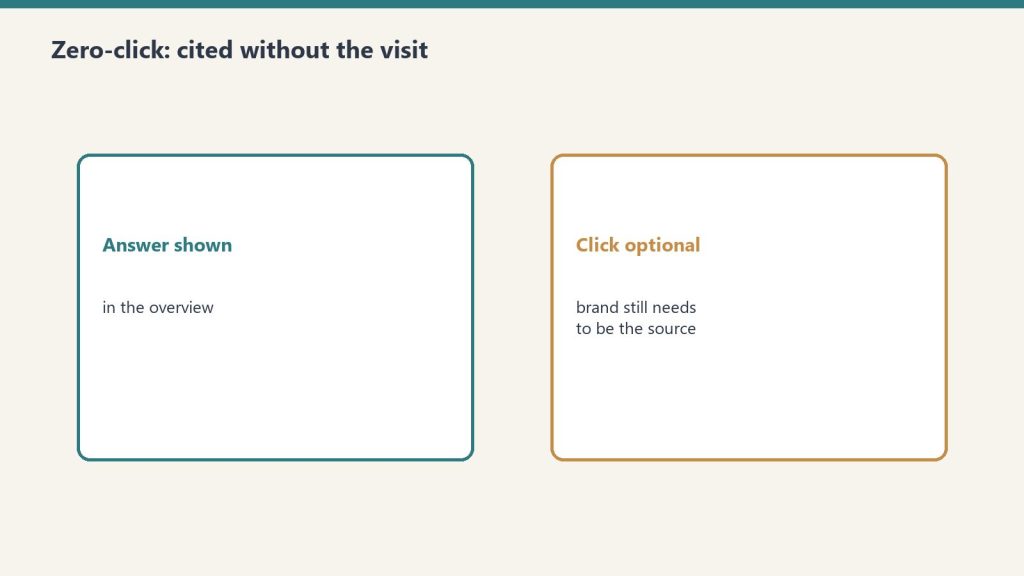
An estimated 65–70% of healthcare searches now end without a single click — patients receive their answer directly from Google AI Overviews, voice assistants, or ChatGPT without ever visiting a website. When a patient asks “what are the early warning signs of Type 2 diabetes?” at 11pm, or “how long is recovery from ACL surgery?”, the AI synthesizes an answer from the most structured, authoritative, entity-verified medical content it can find.
Most medical practice WordPress blogs are invisible to these systems. Not because the content is wrong — but because it lacks FAQPage schema, direct-answer formatting, medical entity injection, and the E-E-A-T signals that AI systems use to evaluate clinical authority. SiteBoost applies all of these to your existing WordPress articles, without modifying your core pages, forms, or HIPAA-sensitive systems.
Important: SiteBoost optimizes WordPress post content only — blog articles, condition guides, and educational health content. We do not modify patient-facing forms, appointment booking systems, contact forms, or any page that collects personal health information. HIPAA-compliance requirements for forms and data collection are outside our scope and should be handled by your IT and compliance team.
Why YMYL Makes Healthcare SEO the Hardest — and Highest Stakes
Google classifies healthcare content as YMYL — Your Money or Your Life — content that could significantly affect a person’s health or safety. This triggers the highest level of algorithmic scrutiny of any content category. Google’s September 2025 “Perspective” update hit healthcare sites hardest, with smaller clinics reporting average 15% drops in search impressions. The update specifically targeted YMYL content that lacked verifiable E-E-A-T signals.
What E-E-A-T signals does Google evaluate for healthcare content?
Google’s E-E-A-T framework evaluates healthcare content across four dimensions: Experience (does the content reflect first-hand clinical knowledge?), Expertise (is the author a licensed medical professional with verifiable credentials?), Authoritativeness (does the organization have demonstrable standing in the medical community — hospital affiliations, board certifications, peer-reviewed publications?), and Trustworthiness (is the site HTTPS-secure, are citations sourced from peer-reviewed research, is the content regularly updated?). For YMYL healthcare content, all four dimensions must be explicitly signaled in the content structure — not assumed from domain age or backlinks alone.
The Medical Entity Set That Signals Clinical Authority
The medical entity set that signals clinical authority.
Most medical practice WordPress blogs mention their specialty repeatedly but miss the named entities that establish clinical authority with both Google and AI systems. The difference between a page that gets cited by an AI health assistant and one that gets ignored is entity density — specific, verifiable named references that signal expertise.
What named medical entities should healthcare WordPress content include for AI citation?
Healthcare content optimized for AI citation should reference: credentialing bodies (American Board of Medical Specialties, American Medical Association, relevant specialty boards), clinical guidelines and standards (CDC guidelines, NIH treatment protocols, USPSTF recommendations, specialty society clinical practice guidelines), diagnostic terminology (ICD-10 codes where appropriate, DSM-5 for behavioral health, specific imaging modalities and laboratory values), treatment modalities with named protocols, and insurance and billing frameworks (CPT codes in context, prior authorization processes, CMS coverage determinations). Entity density — specific, verifiable named references — is what signals clinical authority to AI systems and Google’s quality evaluators.
Schema Markup That Healthcare WordPress Content Must Have
FAQPage
Patient Question Schema
6–8 Q&A pairs targeting the specific questions patients ask about conditions, treatments, recovery timelines, and insurance coverage. Earns People Also Ask placements for high-intent medical queries.
MedicalCondition
Condition Schema
Schema.org MedicalCondition markup for condition-specific pages — symptoms, risk factors, treatments, and associated specialties. Signals clinical precision to Google’s medical knowledge graph.
MedicalProcedure
Procedure Schema
Structured markup for procedure guides — preparation, duration, recovery, and follow-up care. Directly feeds Google AI Overview synthesis for “how long does [procedure] take” queries.
Physician
Provider Entity Schema
Schema.org Physician markup linking content authors to verifiable credentials, board certifications, and organizational affiliations — the foundation of E-E-A-T for medical content.
Hypothetical Before & After: A Typical Medical Practice WordPress Article
This illustrates what SiteBoost applies to a typical healthcare blog article about a common condition — the kind of educational content most practices publish and then wonder why it doesn’t drive appointments:
Before SiteBoostTitle: “Understanding Type 2 Diabetes: What You Should Know”
Meta description: Auto-generated from first paragraph — 225 chars, truncated
Word count: 520 words
Author byline: “Admin” — no credential signal
Schema: None
Entity density: “diabetes” mentioned 11x, “blood sugar” 4x — no ADA, CDC, HbA1c, ICD-10, or clinical guideline references
FAQ section: None
AI visibility: Zero — no speakable blocks, invisible to AI health assistants
After SiteBoostTitle: “Type 2 Diabetes: Symptoms, Risk Factors, and When to See a Doctor”
Meta description: “Type 2 diabetes affects 37 million Americans. Learn the early warning signs, risk factors, and when to schedule a diabetes screening.” (148 chars)
Word count: 900 words (definition box + FAQ added)
Author byline: Physician name + MD credential + specialty board + hospital affiliation injected into author schema
FAQ section: 7 questions — “What is a normal HbA1c level?”, “Can Type 2 diabetes be reversed?”, “Does insurance cover diabetes screening?” — all targeting PAA
AI visibility: 2 speakable blocks targeting “what are the early signs of Type 2 diabetes” and “when should I get a diabetes screening”
The AI Search Opportunity for Healthcare Providers
The AI search opportunity for healthcare providers.
When a patient asks ChatGPT “what are the early warning signs of high blood pressure?” or asks Perplexity “how is sleep apnea diagnosed?” — the AI synthesizes an answer from medical content that has verifiable clinical entities, structured schema, and clear direct-answer formatting. Healthcare providers with MedicalCondition schema, ADA/CDC/NIH entity references, and speakable blocks in their WordPress articles are dramatically more likely to be cited as the source.
This matters for appointment acquisition. A patient who sees your practice cited in a ChatGPT answer about their condition has a trust signal before they’ve visited your website. That pre-established authority shortens the consideration cycle and increases the likelihood they book with you over an uncited competitor.
What SiteBoost Covers — and What It Doesn’t — for Healthcare
Content Type
SiteBoost Covers?
Notes
Blog articles & condition guides
✅ Yes
Primary target — educational health content, symptom guides, treatment overviews
FAQ & patient resource pages
✅ Yes
High-value AEO targets — direct-answer formatting and FAQPage schema
Provider bio pages (as posts)
✅ Yes
Physician entity injection, credential schema — major E-E-A-T signal
Patient intake forms
❌ No
HIPAA-sensitive — outside scope, handled by compliance team
Appointment booking systems
❌ No
Third-party system integration — not modified
Core service/location Pages
❌ No
Page-type (post_type=page) — never modified without explicit per-page approval
SiteBoost Pilot for Healthcare: What You Get
Deliverable
Details
Site Connection & Audit
WordPress REST API connection, full content inventory, E-E-A-T gap analysis, schema coverage report, YMYL readiness assessment, Before Baseline Report
10 Post Optimizations
Full SEO + AEO + GEO on 10 educational health articles — clinical entity injection, FAQPage + MedicalCondition schema, speakable blocks, author credential markup
60-Day Impact Report
Before vs. after: rankings, PAA placements, AI citation visibility, appointment-stage keyword movement
YMYL-safe approach
We optimize structure, schema, and entity density — never medical facts. All clinical content remains exactly as your providers wrote it.
Price
$597 pilot — $767 value
Interested in the SiteBoost Pilot for Your Healthcare Site?
We onboard sites personally. Email Will with your site URL and he’ll follow up within one business day.
Email only. No sales call required. No commitment to reply.
Frequently Asked Questions: SiteBoost for Healthcare
Does SiteBoost modify any HIPAA-sensitive content or patient data systems?
No. SiteBoost operates exclusively on WordPress post content via the REST API — blog articles, condition guides, and educational health content. We do not interact with patient intake forms, appointment booking systems, electronic health records, or any system that collects or stores protected health information. The WordPress Application Password we use is scoped to post content editing only and cannot access other plugins, databases, or third-party systems integrated into your site.
What does SiteBoost do about E-E-A-T for medical content?
SiteBoost’s GEO layer injects E-E-A-T signals directly into your existing article content: physician credential references tied to author schema markup, named clinical entities (board certifications, hospital affiliations, specialty society memberships), and citations to authoritative medical sources (CDC guidelines, NIH protocols, USPSTF recommendations, specialty board clinical guidance). These are the exact signals Google’s quality evaluators look for in YMYL medical content. We optimize the structure and entity density — we never alter clinical facts or medical guidance written by your providers.
How does AEO optimization help medical practices specifically?
For healthcare, AEO targets the questions patients ask before booking appointments: “What are the symptoms of [condition]?”, “How is [condition] diagnosed?”, “What does [procedure] feel like?”, “Does insurance cover [treatment]?”, “How long is recovery from [surgery]?” A FAQPage schema block with 6–8 of these questions, injected into an existing condition guide, can earn People Also Ask placements that appear above traditional search results — capturing patient attention before they ever scroll to your organic listing.
Will SiteBoost changes affect how our medical content is perceived for compliance?
SiteBoost optimizes content structure, schema markup, and entity density — it does not alter any clinical statements, medical advice, or factual claims in your existing articles. All optimization is additive: we inject a definition box, FAQ section, and schema around your existing content. The medical information your providers wrote remains word-for-word unchanged. If your compliance team requires review of structural changes before publishing, we can provide a complete diff of every modification for review prior to any post being updated.
What types of medical practices benefit most from SiteBoost?
SiteBoost delivers the highest value for practices with existing WordPress blogs of 20+ articles that haven’t been systematically optimized: primary care and family medicine practices with broad condition coverage, specialist practices (orthopedics, cardiology, dermatology, neurology) with condition and procedure guides, multi-location health systems with high content volume and inconsistent optimization, and telehealth platforms with large educational content libraries. Solo practices with fewer than 10 blog posts are better served by building new content first before optimization.
How does SiteBoost handle the Google September 2025 YMYL update for healthcare sites?
The September 2025 “Perspective” update penalized healthcare content lacking verifiable E-E-A-T signals — specifically anonymous authorship, missing credential references, and absence of clinical entity anchors. SiteBoost directly addresses all three: physician credential markup via Physician schema, clinical entity injection (AMA, CDC, NIH, specialty board references), and direct-answer formatting that demonstrates genuine clinical expertise rather than generic health information. Sites hit by this update see the fastest recovery through entity and schema remediation applied to existing content.