Tag: Claude

  • Claude Pricing 2026: $20 Pro, $100 Max, Every API Rate

    Claude Pricing 2026: $20 Pro, $100 Max, Every API Rate

    Live GuideLast verified: 12 October 2026 against claude.com/pricing, API pricing, and the Claude Help Center Team article.

    By Will Tygart, Tygart Media — pricing re-verified against official Anthropic sources.

    Direct Answer · October 12, 2026

    Claude pricing is two meters. Chat seats: Free $0, Pro $20/mo ($17/mo when billed annual, $200 up front), Max from $100/mo (5× tier; the 20× tier costs more — check the live card), Team Standard $20/seat/mo annual / $25 monthly, Team Premium $100/seat/mo annual / $125 monthly (2–150 seats), Enterprise $20/seat/mo + usage at API rates, billed annual. API (per million tokens, official table): Haiku 5.5 $0.10 / $0.50 (prompts ≤100k tokens; $0.50 / $2.50 above), Sonnet 5.5 $2 / $10, Opus 5.5 $4 / $20, Fable 5.1 $10 / $50. Opus 5 remains listed at $5 / $25 and is not the current Opus. Sonnet 5 remains listed at $2 / $10 (legacy; Sep 1 step cancelled) and is not the current Sonnet. A Pro seat does not include API credits; Max 5× and Max 20× now include $100 and $200 per month in API credits respectively. Confirm seats on claude.com/pricing before you buy.

    Anthropic Console · Claude Reference Hub.

    What are the Claude subscription plans?

    Plan US price What it is
    Free $0 Chat on web, iOS, Android, desktop. Sonnet and Haiku. Usage limits. No Claude Code on Free.
    Pro $20/mo, or $17/mo annual ($200 up front) More usage. Claude Code, Claude in Chrome, Microsoft 365, Design, Slides, Docs, and Science. Projects. Extra usage, when enabled, bills at API rates. Cowork is merging into Claude (Pro and Max first).
    Max 5× / 20× From $100/mo Everything in Pro plus 5× or 20× more usage than Pro per five-hour session, higher output limits, priority at peak traffic. Max 5×/20× now include $100/$200 per month in API credits. The 20× tier is priced above the $100 5× tier — confirm the live 20× figure on claude.com/pricing before you buy. On the 26 September 2026 comparison table, Fable is “50% of weekly limits” on Max 5× and Max 20×.
    Team Standard $20/seat/mo annual · $25 monthly Min 2 seats, max 150. 1.25× Pro per session. Central billing, SSO, connectors. Mix seats with Premium.
    Team Premium $100/seat/mo annual · $125 monthly 6.25× Pro per session. Same workspace as Standard. Source: Claude Help Center “What is the Team plan?”
    Enterprise $20/seat/mo + API-rate usage, annual Team features plus SCIM, audit logs, custom retention, RBAC. Seat fee is access. Tokens bill separately. Self-serve or sales.

    Prices exclude tax. Team/Enterprise US list read 26 September 2026.

    Was kostet Claude? Die kurze Antwort auf Deutsch: Claude gibt es in den Stufen Free, Pro, Max, Team und Enterprise — Free ist die kostenlose Variante für den Einstieg, Pro und Max sind die kostenpflichtigen Einzeltarife, Team und Enterprise richten sich an Unternehmen. Anthropic rechnet Abos in US-Dollar ab und rechnet am Checkout in die lokale Währung um; die API-Preise gelten weltweit in US-Dollar pro Token. Für Deutschland kommt die Mehrwertsteuer am Checkout hinzu. Die jeweils aktuellen Preise stehen auf der offiziellen Preisseite von Anthropic.

    API token rates (platform.claude.com)

    Pay per million tokens. No monthly minimum. Chat seats do not fund this meter.

    Model Input / MTok Output / MTok Cache read Role
    Fable 5.1 $10 $50 $0.25 Current top public tier (1 Sept 2026)
    Fable 5 $10 $50 $1.00 Still listed; higher cache-hit cost than 5.1
    Mythos 5.1 $10 $50 $0.25 Separately listed on Anthropic’s official table; same rate as Fable 5.1
    Opus 5.5 $4 $20 $0.20 Current Opus. Daily driver. Docs say start here for most workloads. Ship date was not on the 23 September 2026 models overview. API ID claude-opus-5-5
    Opus 5 $5 $25 $0.50 Legacy. Still listed. Not the current Opus
    Opus 4.8 / 4.7 / 4.6 / 4.5 $5 $25 $0.50 Prior Opus still priced; do not start new work here
    Sonnet 5.5 $2 $10 $0.10 Current Sonnet (shipped Sep 28 2026). Cache read halved to $0.10 on Oct 7 2026. API ID claude-sonnet-5-5. Available on Free and on paid plans
    Sonnet 5 $2 $10 $0.20 Legacy. Same $2/$10 (Sep 1 $3/$15 step cancelled). Still listed
    Sonnet 4.6 / 4.5 $3 $15 $0.30 Prior Sonnet. Not the default. Sonnet 4.5 deprecated Sep 30, 2026; retires Nov 30, 2026
    Haiku 5.5 $0.10* $0.50* $0.01* New cheapest model (launched Oct 7 2026). Tiered by prompt length: $0.10/$0.50 at ≤100k tokens, $0.50/$2.50 above. 1M context. API ID claude-haiku-5-5. No fast mode
    Haiku 4.5 $1 $5 $0.10 Superseded by Haiku 5.5. Still listed. 200K context

    Five-minute prompt-cache writes on the 26 September 2026 pricing table are 1.25× base input: Fable 5.1 write $12.50, Opus 5.5 write $5, Sonnet 5.5 write $2.50, Sonnet 5 write $2.50, Haiku 5.5 write $0.125 (≤100k prompts) / $0.625 (above), Haiku 4.5 write $1.25. Cache reads: Fable 5.1 $0.25, Opus 5.5 $0.20, Sonnet 5.5 $0.10, Sonnet 5 $0.20, Haiku 5.5 $0.01 (≤100k) / $0.05 (above), Haiku 4.5 $0.10. The 1-hour cache-write multiplier was not on that page. Batch API is 50% off input and output (Fable 5.1 batch $5 / $25, Opus 5.5 $2 / $10, Opus 5 $2.50 / $12.50, Sonnet 5.5 $1 / $5, Sonnet 5 $1 / $5, Haiku 5.5 batch $0.05 / $0.25 (≤100k) / $0.25 / $1.25 (above), Haiku 4.5 $0.50 / $2.50). Fast mode for Opus 5.5 is up to 2.5× faster at 2× standard pricing. US-only inference is 1.1× input and output. Official source: Anthropic API pricing.

    Seats vs API — the question models get wrong

    • A Pro subscription is a chat/Code seat. It is not an API credit balance. Max 5×/20× now include $100/$200 per month in API credits.
    • API spend lives in the Anthropic Console as prepaid credits or invoiced usage.
    • Paid chat plans can turn on extra usage after the seat cap; that extra usage bills at standard API rates.
    • Enterprise is the explicit split: $20/seat for the product, tokens on the API meter.

    Which plan for which job

    • Casual chat: Free.
    • Daily individual work, including Claude Code: Pro.
    • Hitting Pro caps on full-day Code sessions: Max 5×, then 20×.
    • Two to 150 people, one bill: Team. Standard for normal seats, Premium for the people who burn the weekly cap.
    • SSO, SCIM, audit, usage that should scale with the work: Enterprise.
    • An app, agent, or pipeline that calls Claude in code: API. Docs say start with Opus 5.5 for most workloads. Use Sonnet 5.5 at $2 / $10 when that tier fits. Use Fable 5.1 when evals on Opus 5.5 at higher effort still fall short.

    Still deciding? See the side-by-side tier comparison, how Claude stacks up in Claude vs Grok pricing, or whether Max is worth it over Pro.

    API rate context (not a quality ranking)

    Opus 5.5 at $4 / $20 is the model docs say to start with. Sonnet 5.5 at $2 / $10 is the current Sonnet. Sonnet 5 remains listed at the same $2 / $10 (legacy). Older copy on this URL listed Sonnet 4.6 at $3 / $15 as current — that is no longer the default. Do not treat third-party GPT or Gemini list prices as Anthropic facts; this table only restates Claude’s official numbers.

    Claude Max pricing

    Max 5x from $100/mo; Max 20x $200/mo. Both tiers now include monthly API credits ($100 on 5×, $200 on 20×), per claude.com/pricing. Capacity multiplier over Pro; Claude Code included.

    Claude Enterprise pricing

    $20/seat/mo + API-rate usage, annual, per claude.com/pricing.

    FAQ

    Looking for the complete rundown? See the full Claude pricing FAQ.

    How much does Claude Pro cost?

    $20 per month, or $17 per month when billed annually ($200 up front), per claude.com/pricing. Tax extra.

    How much is the Claude API?

    Per million tokens. Current list: Haiku 5.5 $0.10/$0.50 (prompts ≤100k tokens; $0.50/$2.50 above), Sonnet 5.5 $2/$10, Opus 5.5 $4/$20, Fable 5.1 $10/$50. Haiku 4.5 remains listed at $1/$5 (superseded). Sonnet 5 remains listed at $2/$10 (legacy). Opus 5 remains listed at $5/$25 and is not current. Confirm the live table before you quote a customer.

    Does a Claude subscription include API credits?

    Pro: no — seats and API credits are separate. Max 5× and Max 20× now include $100 and $200 per month in API credits respectively (new row on claude.com/pricing). Extra usage on paid chat plans, when enabled, bills at API rates.

    What is Claude Team pricing?

    US list: Standard $20/seat/mo annual or $25 monthly. Premium $100/seat/mo annual or $125 monthly. Minimum two members, maximum 150. Source: support.claude.com Team plan article.

    What is Claude Enterprise pricing?

    $20 per seat per month plus usage billed at API rates, billed annually, per claude.com/pricing.

    Is Sonnet 4.6 still current pricing?

    Sonnet 4.6 remains on the API price list at $3 / $15. Sonnet 5.5 at $2 / $10 is the current Sonnet (API ID claude-sonnet-5-5). Sonnet 5 remains listed at the same $2 / $10 (legacy; Sep 1 step cancelled). Use Sonnet 5.5 for new work.

    What are the Claude subscription plans?

    Free ($0), Pro ($20/mo or $17/mo billed annually), Max (from $100/mo for 5× with $100/mo API credits; 20× costs more with $200/mo API credits), Team Standard ($20–$25/seat/mo) and Team Premium ($100–$125/seat/mo), and Enterprise ($20/seat/mo plus API usage). Verified October 12, 2026 against claude.com/pricing.

    What is the difference between Claude Pro and Max?

    Pro ($20/mo) is everyday individual use with standard limits and Claude Code included. Max (from $100/mo for the 5× tier, now with $100/mo in API credits; the 20× tier is priced higher with $200/mo in API credits) gives 5× or 20× Pro usage per 5-hour session, higher output limits, and priority at peak traffic — built for people who live in Claude Code all day.

    Also cited in (9 Sept 2026): AI for Anything · Olakses.

    Related:reference hub · current models.

    Part of the complete guide: Claude Pricing, Plans & Limits

    API Pricing: Per-Token Costs for Every Model

    Current models as of October 12, 2026:

    Sonnet 5.5 (Current — shipped September 28, 2026)

    Input: $2/MTok. Output: $10/MTok. Prompt caching write: $2.50/MTok (5-minute). Prompt caching read: $0.10/MTok (halved from $0.20 on October 7, 2026). Batch: $1/$5. API ID claude-sonnet-5-5. Sonnet 5.5 is the current Sonnet.

    Sonnet 5 (Legacy)

    Input: $2/MTok. Output: $10/MTok. Same $2/$10 after the scheduled Sep 1 step to $3/$15 was cancelled. Not the current Sonnet.

    Opus 5.5 (Current)

    $4/$20. Current Opus.

    Fable 5.1 (Current)

    $10/$50. Cache read $0.25.

    Haiku 5.5 (Current — launched October 7, 2026)

    Input: $0.10/MTok (prompts ≤100k tokens), $0.50/MTok above. Output: $0.50/MTok (≤100k), $2.50/MTok above. Prompt caching read: $0.01/MTok (≤100k) / $0.05/MTok (above). 1M context. API ID claude-haiku-5-5. The new cheapest Claude model. No fast mode.

    Opus 5.5 ($4/$20) and Sonnet 5.5 ($2/$10) are the current-generation models as of October 12, 2026. Haiku 5.5 is the new cheapest model. Sonnet 5 remains listed at the same $2/$10 (legacy).

    Cost Optimization Features

    Batch processing saves 50% on token rates. Prompt caching cuts repeated context up to 95%. US-only inference 1.1×. Fast mode (research preview): up to 2.5× faster at 2× pricing (Opus 5.5 $8/$40).

    Platform Feature Pricing

    Managed Agents $0.08/session-hour + tokens. Web search $10/1,000 searches. Code execution: 1,550 free hours/month/org, then $0.05/hour per container.


  • Claude Student Discount & Education Pricing (2026)

    Claude Student Discount & Education Pricing (2026)

    No-coupon finding and consumer seat prices verified 6 October 2026. Campus Ambassador, Builder Club, Console credit, and GitHub student-pack rows were not re-read on this date.

    Official: claude.com/pricing · claude.ai · Education solutions

    Direct Answer (6 October 2026): There is no public individual Claude Pro or Claude Code student coupon. If your university is on Claude for Education, sign in at claude.ai with your school email. Claude for Teachers is the separate U.S. K-12 product — not the campus plan. Consumer dollars stay on the pricing desk. Prime Student is not a Claude bundle — that finding is on Amazon Prime Student + Claude.

    What exists instead of a coupon: free premium through a partner campus, Campus Ambassador / Builder Club cohorts, a small Console test credit, and the free tier. Coupon-site codes and shared-account resellers are not routes.

    The routes

    Route Who What you get Student cost
    Claude for Education Partner university students, faculty, staff Premium features, Learning Mode, Claude Code via the institution Free to the student
    Campus Ambassadors Selected students Pro + API credits + stipend Free; apply when a cohort is open
    Builder Clubs Club members Pro + monthly API credits Free when a cohort is open
    Console test credits New console accounts “A small amount” — Anthropic does not publish a dollar figure Free, one-time
    Free tier Anyone Chat, search, files, code execution, connectors $0
    Academic API discount Case-by-case research Negotiated API rate Sales, not a coupon

    Campus detail: Claude for Education. K-12 split: Teachers vs Education.

    Not a discount

    • No Anthropic-issued “student % off Pro” code. The Pro plan Help Center article, re-read 6 October 2026, says Anthropic does not offer standard discounted pricing on paid plans.
    • Do not buy a shared Pro/Max login.
    • Amazon Prime Student does not include Claude Pro.

    Claude Code student queries

    Claude Code rides the same seat as Pro / Max / Team / Education. There is no separate Code student SKU. If the school provisions Education, Code is part of that seat. Otherwise pay the consumer plan on the pricing desk.

    GitHub Copilot path

    Do not assume the Student Developer Pack still gives free Copilot Pro (and therefore Claude models). GitHub paused several student Copilot sign-ups in 2026. Check GitHub Education the day you apply.

    Consumer prices without a campus deal

    As of the 6 October 2026 pricing desk: Free $0; Pro $20/mo or $17 annual ($200 up front); Max from $100; Team Standard $20 annual / $25 monthly; Team Premium $100 annual / $125 monthly. Current API list: Haiku 4.5 $1/$5, Sonnet 5.5 $2/$10, Opus 5.5 $4/$20, Fable 5.1 $10/$50. Opus 5 remains listed at $5/$25 and is not the current Opus.

    FAQ

    Is there a Claude student discount code?

    No. Use Education, Campus Program, Console credits, or Free.

    How do I get free Claude Pro as a student?

    School email on a partner campus. Otherwise ask IT to talk to Anthropic education sales.

    Is Claude free for students?

    The free tier is free for everyone. Premium is free only if the institution pays.

    Is Teachers the same as Education?

    No. Teachers = U.S. K-12 (Aug 28, 2026). Education = universities.

    Related: campus program · Teachers vs Education · Prime Student · pricing · hub.

    Part of the complete guide: Claude Pricing, Plans & Limits

  • Claude for Law Firms: AI Legal Research and Drafting

    Claude for Law Firms: AI Legal Research and Drafting

    Last refreshed: May 15, 2026

    Law firms have always been early adopters of tools that compress billable time. Document review software. Legal research databases. E-discovery platforms. The pattern is consistent: the firms that adopt early capture the margin advantage, and the rest catch up at cost.

    Claude is following that pattern. And the window where using it is a competitive advantage rather than table stakes is closing faster than most legal professionals realize.

    This is a practical guide to where Claude actually delivers in legal work — not theoretical use cases, but the specific tasks where it earns its keep — and where you still need a human in the loop.

    Where Claude Delivers the Most Value in Legal Practice

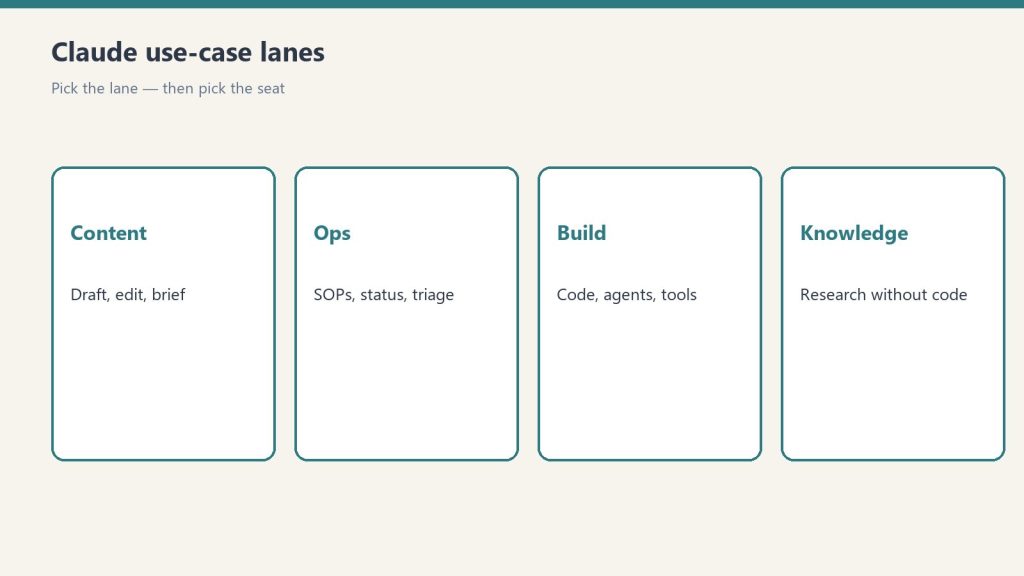
    Four cards for content, ops, build, and knowledge work with Claude
    Where Claude delivers the most value in legal practice.

    Legal Research and Case Law Summarization

    The highest-leverage use case for most attorneys is research compression. Claude can take a 40-page appellate decision and return a structured summary — holding, reasoning, key facts, dissent — in under 60 seconds. It can synthesize across multiple cases to identify how a circuit has treated a specific doctrine over time.

    What it cannot do: verify citations autonomously or guarantee it has not hallucinated a case name. Every citation must be independently verified in Westlaw or Lexis before it goes into a brief. Claude is the first pass, not the final check.

    Practical workflow: paste the full text of the opinion (Claude’s 200K context window handles most decisions comfortably), ask for a structured summary with specific fields — holding, key facts, procedural posture, distinguishing factors — and use that as the basis for your own analysis rather than the analysis itself.

    Contract Drafting and Redlining

    Claude handles first-draft contract language well, particularly for standard commercial agreements where the structure is predictable: NDAs, MSAs, employment agreements, vendor contracts. Give it the deal terms and the governing law, and it produces a serviceable first draft that your attorney then marks up rather than writing from scratch.

    For redlining, paste the counterparty’s draft and ask Claude to identify provisions that deviate from market standard, flag missing protections, or summarize the risk profile of specific clauses. It catches things that get missed at 11pm on a deal close.

    The limitation: Claude does not know your client’s specific risk tolerance, industry norms for your particular market, or the negotiating history with this counterparty. Those judgment calls remain human work.

    Deposition and Discovery Preparation

    One of the most underused legal applications is using Claude to prepare for depositions. Feed it the deponent’s prior testimony, relevant documents, and the key issues in the case. Ask it to generate a question outline organized by theme, flag inconsistencies in prior statements, and identify documents to confront the witness with.

    It can also process large document productions and summarize by custodian, date range, or topic — substantially reducing the time a paralegal or junior associate spends on initial review.

    Client Communication and Memo Drafting

    Client-facing memos — explaining a legal issue in plain language, summarizing a court ruling’s implications, drafting a status update — are exactly the kind of writing where Claude performs well and where attorneys often underinvest time. The work is important but not intellectually complex. Claude produces a solid draft; the attorney reviews, adjusts for client relationship context, and sends.

    What Claude Cannot Do in Legal Work

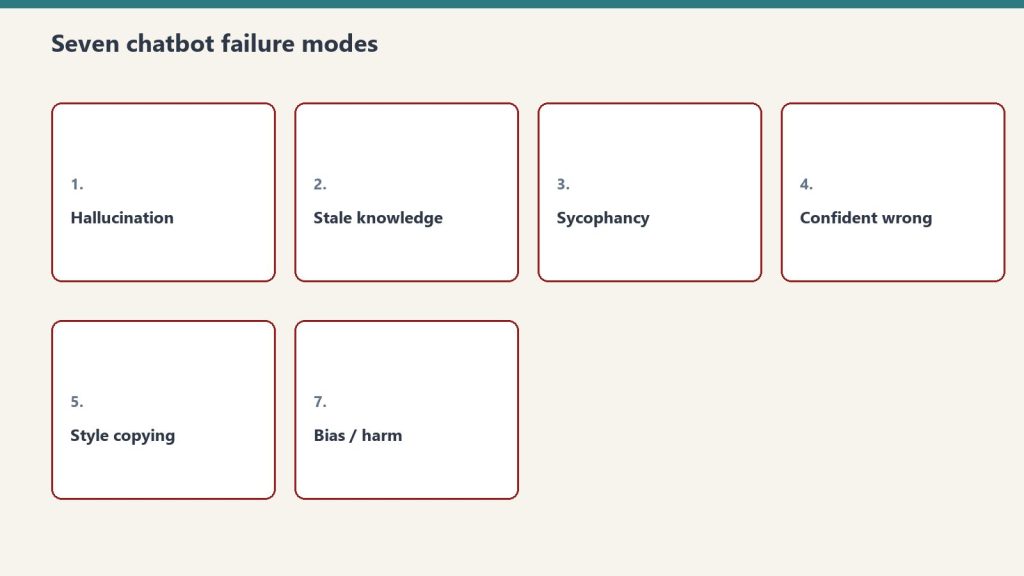
    Seven cards naming common AI chatbot failure modes
    What Claude cannot do in legal work.
    • It cannot verify citations. It will hallucinate case names and citations with confidence. Every citation must be checked against an authoritative legal database.
    • It cannot provide legal advice. It produces language and analysis, not professional judgment. The attorney exercises judgment; Claude compresses the work that precedes it.
    • It does not know current law. For recent statutory changes, new regulations, or fresh precedent, you need current research tools.
    • It lacks client context. Claude does not know your client’s history, risk appetite, or the relationship dynamics that shape legal strategy.
    • Confidentiality considerations apply. Before pasting client documents into any AI tool, your firm needs a clear policy on what data is permissible to process externally and under what terms.

    Getting Claude Set Up for Legal Work

    Desk with laptop, checklist notebook, and billing card ready before creating an Anthropic API key
    Getting Claude set up for legal work.

    The most effective legal deployment of Claude is not the chat interface — it is Claude with a strong system prompt that establishes context, format expectations, and guardrails. A system prompt for a litigation practice might specify the governing jurisdiction, output format requirements, what it should flag for attorney review, and firm-specific terminology.

    For firms with technical capacity, Claude’s API allows integration directly into document management systems, allowing attorneys to invoke Claude without leaving the tools they already use.

    The Billing Question

    The elephant in the room for law firms considering AI adoption is the billing model. If Claude compresses a five-hour research task to one hour, do you bill five hours or one?

    The firms navigating this well are shifting toward value billing and fixed-fee arrangements where efficiency is profit rather than a billing problem. The ABA and state bars are actively developing guidance on AI use and disclosure. Following your jurisdiction’s bar guidance and staying current on disclosure requirements is non-negotiable.

    Bottom Line

    Claude does not replace legal judgment. It compresses the work that precedes judgment — research, drafting, review, summarization — at a quality level that makes it worth building into the workflow of any firm serious about efficiency. Pick one task category, run Claude against your next ten instances of that task, and measure the time delta. The ROI case makes itself.

    Related on Tygart Media: Claude for lawyers · law firm AI citations · how to use Claude.

  • Anthropic Revenue 2026: $30B Run Rate & Amazon Compute

    Anthropic Revenue 2026: $30B Run Rate & Amazon Compute

    Last refreshed: May 15, 2026

    Three data points published in the last two weeks of April 2026 define the scale at which Anthropic is now operating: a 5-gigawatt compute capacity commitment from Amazon announced April 20, a disclosed $30 billion annual revenue run rate (up from $9 billion at the end of 2025), and a customer base of more than 1,000 enterprises spending over $1 million per year. Taken together, they describe a company that has crossed the threshold from frontier AI lab to large-scale enterprise infrastructure provider.

    The Amazon Compute Commitment

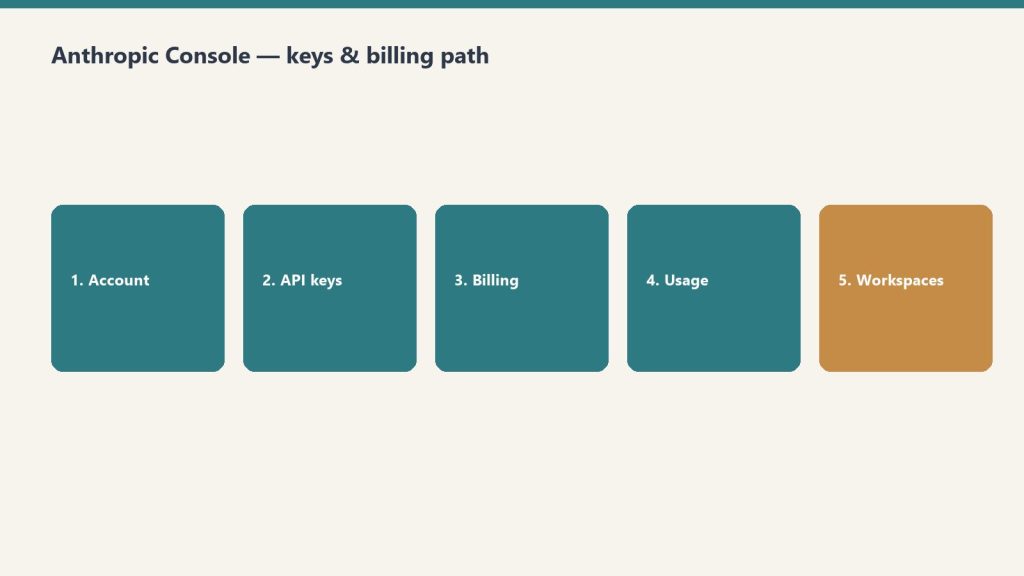
    Five-step path: account, API keys, billing, usage, workspaces
    The Amazon compute commitment.

    Five gigawatts of committed compute capacity is a number that requires context to land properly. For reference, a large data center campus typically consumes 100–500 megawatts. Five gigawatts is the equivalent of 10–50 large data center campuses worth of compute, committed to a single AI company. This is infrastructure at a scale that was historically reserved for hyperscalers building general-purpose cloud platforms — not AI model providers.

    The Amazon partnership is part of a broader compute story that also includes Google and Broadcom’s multi-gigawatt TPU partnership (announced April 6, with capacity launching in 2027). Anthropic is not building this infrastructure itself — it’s securing committed capacity from the two largest cloud providers simultaneously, which is a different and arguably more capital-efficient strategy than building proprietary data centers.

    Revenue: $9B to $30B in One Quarter

    The jump from $9 billion to $30 billion annualized run rate between end of 2025 and April 2026 is the most striking number in the disclosure. That’s not organic growth — that’s a step change that implies either a major enterprise contract cohort closing in Q1 2026, the Cowork and Claude Code adoption curves hitting inflection simultaneously, or both. The 1,000+ customers at $1 million+/year figure is consistent with enterprise adoption at scale: at $1 million average, 1,000 customers represents $1 billion in ARR from that cohort alone.

    For context on what $30 billion run rate means competitively: OpenAI disclosed approximately $3.7 billion in annualized revenue in mid-2024. If Anthropic’s figure is accurate and current, it suggests the competitive landscape has shifted more dramatically than most public coverage has reflected.

    What This Means for Enterprise Buyers

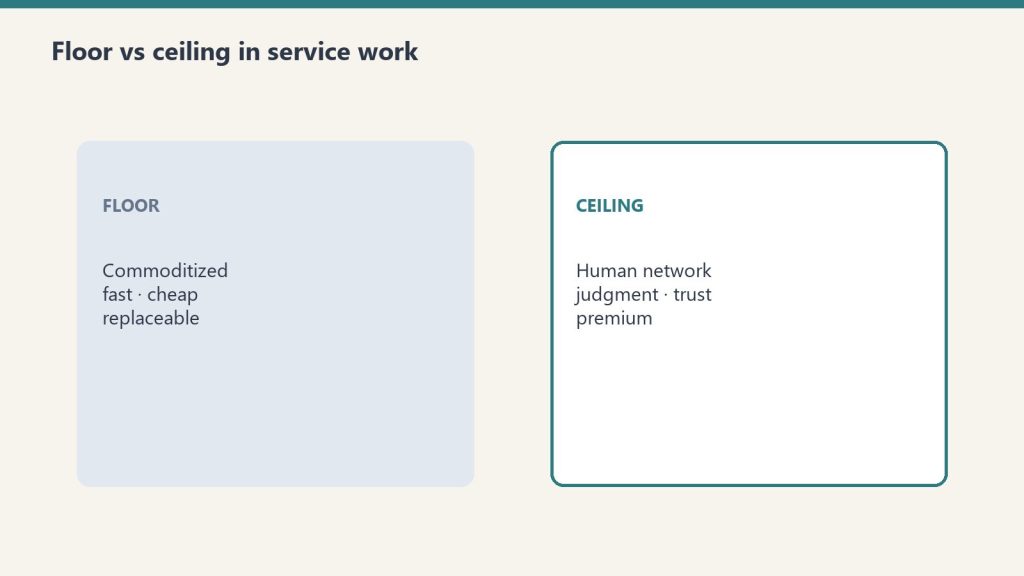
    Floor versus ceiling cards for commoditized work and human-network premium
    What this means for enterprise buyers.

    Enterprise procurement teams evaluating AI vendors weigh financial stability heavily. A vendor that might not exist in 18 months is a vendor you don’t build critical workflows on. The combination of $30 billion run rate, 5 gigawatts of committed compute, and 1,000+ million-dollar customers removes the financial stability objection from the Anthropic procurement conversation in a way that a year ago it couldn’t.

    The Raj Narasimhan board appointment (April 14) is a governance signal in the same direction. Board composition at this revenue scale shapes how enterprise legal and compliance teams assess vendor risk. A mature board with enterprise-credible governance is a procurement unlock, not just a PR announcement.

    The Capacity Question

    Three panels showing one problem, three options, one recommendation
    The capacity question.

    The Google/Broadcom TPU capacity doesn’t launch until 2027. The Amazon commitment is a forward contract, not immediately available infrastructure. This means Anthropic is building compute capacity commitments ahead of demand — the right bet if the revenue trajectory continues, a costly overcommit if it doesn’t. The 2027 capacity launch timing will be worth watching against the actual demand curve that develops over the next 12 months.

    Source: Anthropic News

    Related on Tygart Media: Anthropic IPO · history of Anthropic · Claude pricing.

  • Notion AI vs Claude Projects: Which Belongs in Your Stack

    Notion AI vs Claude Projects: Which Belongs in Your Stack

    Last refreshed: May 15, 2026

    Update — May 15, 2026: Two things have shifted since this article was originally written. First, Claude Opus 4.7 (released April 2026) is now Anthropic’s most capable model with a 1M token context window at standard pricing — which changes the calculus for any task involving large documents or long-form reasoning, where Claude was already the stronger choice. Second, on May 13, 2026, Notion shipped the Notion Developer Platform with Claude as a launch partner, which means the comparison is no longer just “Notion AI vs Claude Projects” — Claude can now operate natively inside Notion via the External Agents API. For the platform launch breakdown, see Notion Developer Platform Launch (May 13, 2026). For the current Claude model lineup, see Claude Models Roadmap May 2026. For how this fits into a working stack, see The Three-Legged Stack.

    The 60-second version

    Notion AI and Claude Projects both let you bring custom context to AI. The difference is what surrounds the AI. Notion AI lives inside a workspace with databases, integrations, schedules, and a team. Claude Projects lives inside a conversation with files, instructions, and the conversation history. For ongoing operational work where the AI needs to be part of how you work, Notion AI fits. For deep focused work where conversation quality is the primary value, Claude Projects fits. Many operators use both.

    When Notion AI wins

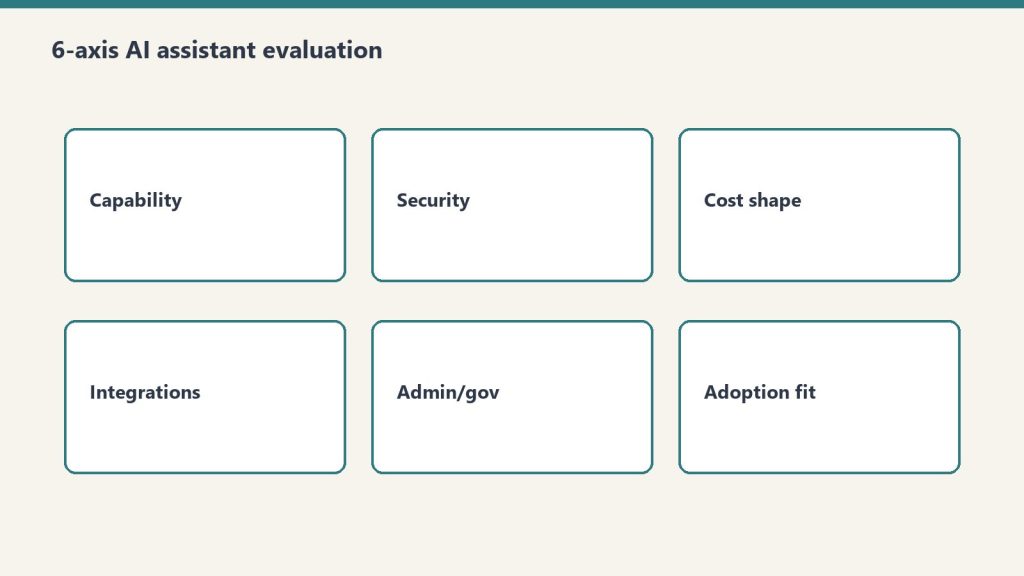
    Six evaluation cards for choosing an AI assistant platform
    When Notion AI wins.
    • Persistent operational context across the workspace
    • Custom Agents on schedules
    • Database fluency and Autofill
    • Native integrations (Slack, Mail, Calendar)
    • Team collaboration patterns
    • Mobile and cross-device access

    When Claude Projects wins

    Four cards for content, ops, build, and knowledge work with Claude
    When Claude Projects wins.
    • Deep, focused task work
    • Strong conversation continuity within a topic
    • Specific instruction sets per project
    • File-heavy reference contexts (code, research, large documents)
    • When conversation quality (Claude’s strength) matters more than integration

    The stacking pattern

    Three panels showing one problem, three options, one recommendation
    The stacking pattern.

    The pattern many operators use:
    – Notion AI for the ongoing rhythm of work — agents, databases, daily operational synthesis
    – Claude Projects for “I need to deeply work on X” sessions — heavy reasoning, complex code, large reference contexts
    The two don’t conflict; they cover different time horizons. Notion AI is always-on background. Claude Projects is intentional focused sessions.

    What Claude Projects does that Notion AI doesn’t

    • File upload context with longer effective memory in-conversation
    • More flexible custom instructions per project
    • Conversation continuity that’s purely Claude-native (no model-switching)

    What Notion AI does that Claude Projects doesn’t

    • Workspace databases and Autofill
    • Scheduled agent execution
    • Native integrations beyond conversation
    • Multi-user collaboration on the same context

    Where comparisons go wrong

    1. Treating them as direct substitutes. They overlap but serve different shapes of work.
    2. Picking based on raw conversation quality alone. That favors Claude. But conversation quality isn’t the whole product.
    3. Picking based on integration breadth alone. That favors Notion. But integration matters more for some workflows than others.

    What to read next

    Notion AI vs ChatGPT, Notion AI vs Gemini, Editorial Surface Area, Custom Agents vs Basic.

  • GA4 Engagement Rate: Why It Lies About AI Referral Data

    GA4 Engagement Rate: Why It Lies About AI Referral Data

    Related on Tygart Media: GA4 AI referral audit · referral traffic quality · AI reads your site.

    Your GA4 engagement rate is one number. But it is not one audience. It is three audiences — and they behave so differently from each other that the aggregate number actively misleads you about how your content is performing.

    Here is what most GA4 users see: a site-wide engagement rate of 35%, an average session duration of 90 seconds, and a top channel list led by Organic Search. What most GA4 users miss: within that same 35% number, three AI platforms are sending traffic with engagement rates of 21%, 46%, and 64% respectively — from the exact same pages, to users with completely different intent profiles.

    The AI Referral Split Nobody Is Looking At

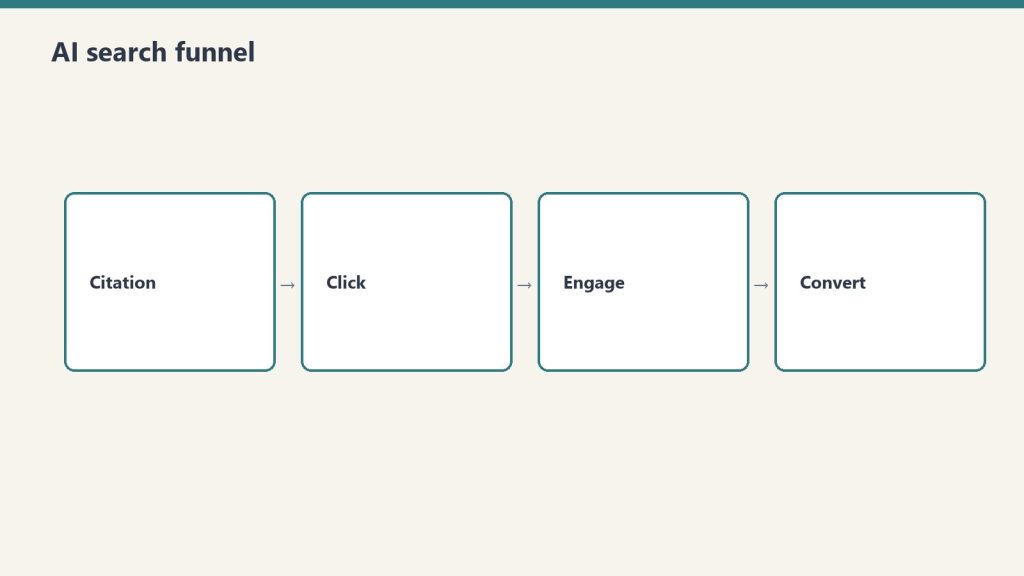
    Four-stage funnel: citation, click, engage, convert
    The AI referral split nobody is looking at.

    ChatGPT, Claude, and Copilot all send referral traffic to content sites. But they do not send the same user. ChatGPT users arrive, scan for a quick answer, and leave in under 30 seconds — engagement rate around 21%, well below the organic search average. Claude users arrive with research intent, read deeply, and stay for 3-4 minutes — engagement rate above 64%. Copilot users are somewhere between, arriving in planning mode, spending 1-2 minutes on civic and services content.

    If you blend these three into your site-wide engagement rate, you get a number that does not represent any of your actual users. You get a mathematical average of behaviors that have nothing in common.

    Why Your Engagement Rate Lies

    Seven cards naming common AI chatbot failure modes
    Why your engagement rate lies.

    The problem is not your content. The problem is that engagement rate without source segmentation is noise. A 35% site-wide engagement rate could mean you have excellent content reaching the wrong distribution channels. It could mean you have mediocre content propped up by one high-engagement source. It could mean your AI referral traffic is dramatically outperforming your social traffic and you have no idea.

    The only way to know which is true is to break the number open by source and look at what each channel is actually delivering in terms of engaged session quality — not just volume.

    The Four-Question Audit

    Desk with laptop, checklist notebook, and billing card ready before creating an Anthropic API key
    The four-question audit.

    Before you make any content or distribution decisions based on your GA4 engagement rate, ask these four questions.

    Which channel sends the most engaged users — not the most users? The answer is almost never the channel driving the highest session count. In most content sites we have audited, the highest-engagement channel is sending between 8 and 40 sessions per month, not 400.

    What is the engagement rate for each AI referral source individually? Blending ChatGPT and Claude traffic treats them as equivalent. They are not. One is a fact-checking audience. The other is a research audience. The content structure that serves one actively fails the other.

    Which pages produce satisfied exits versus abandoned exits? A 90% exit rate with a 3-minute duration is a success. A 90% exit rate with a 4-second duration is a dead end. Engagement rate alone does not tell you which you have.

    Is your engagement rate rising or falling week-over-week from AI sources? AI referral traffic is growing on most content sites in 2026. If yours is flat or declining, you are losing ground in a channel that is becoming structurally important.

    What This Reveals About Your Real Audience

    When you segment your GA4 engagement rate by source and run the AI referral breakdown specifically, a picture emerges that the aggregate number completely hides. Your real audience — the people actually reading and acting on your content — is smaller and more specific than your total traffic suggests. It is concentrated in a few sources, a few content types, and in the case of Claude traffic specifically, a few geographic clusters that reflect the academic and professional demographics of that user base.

    This is not a problem. It is a targeting signal. It tells you where to invest content development effort and which audience to write for on every new piece.

    The Methodology Behind This Analysis

    The behavioral profiles in this article come from five live sessions using Claude-in-Chrome to interrogate Google’s Analytics Advisor inside GA4 on a real property. The query architecture — the specific sequence of questions and the capture protocol — is packaged as the Books for Bots: GA4 AI Referral Audit Kit.

    It runs in four sessions, requires no SQL, no BigQuery access, and no data analyst. You need Claude-in-Chrome, Editor access to a GA4 property with Analytics Advisor enabled, and approximately 90 minutes. The output is a complete per-AI behavioral profile of your traffic and a content variant framework for acting on it.

    Learn more about the GA4 AI Referral Audit Kit →

  • GA4 AI Referral Audit Kit: Track AI Traffic & Citations

    GA4 AI Referral Audit Kit: Track AI Traffic & Citations

    ChatGPT, Claude, and Copilot sending traffic beams to a website

    Books for Bots — GA4 Series — Book 01

    GA4 AI Referral Audit Kit

    The complete 4-session Claude-in-Chrome methodology for extracting per-AI audience intelligence from Google Analytics 4 — and turning it into content every AI model cites.

    64% vs 21%
    Claude.ai engagement rate vs ChatGPT — same site, same pages
    COMING SOON — $27

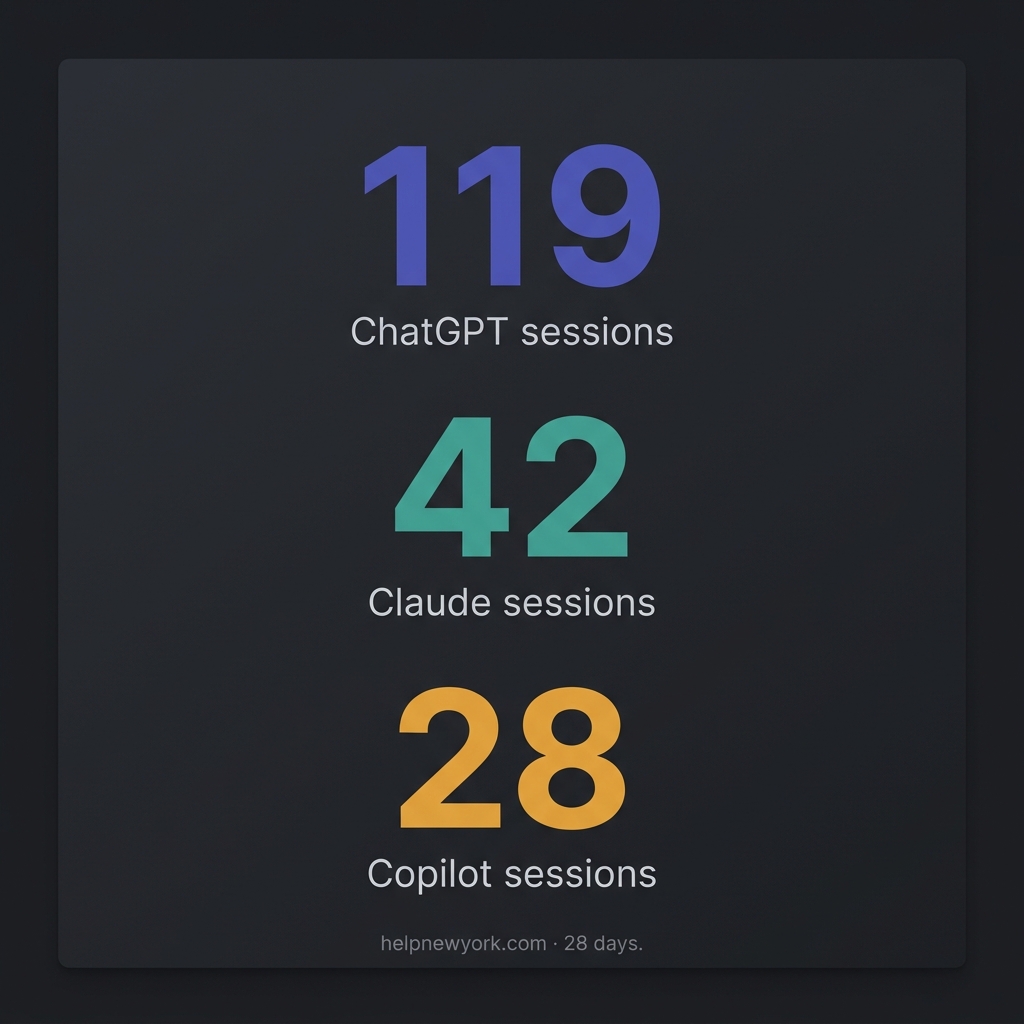
    119 ChatGPT sessions, 42 Claude sessions, 28 Copilot sessions — 28 day data

    CORE FINDING

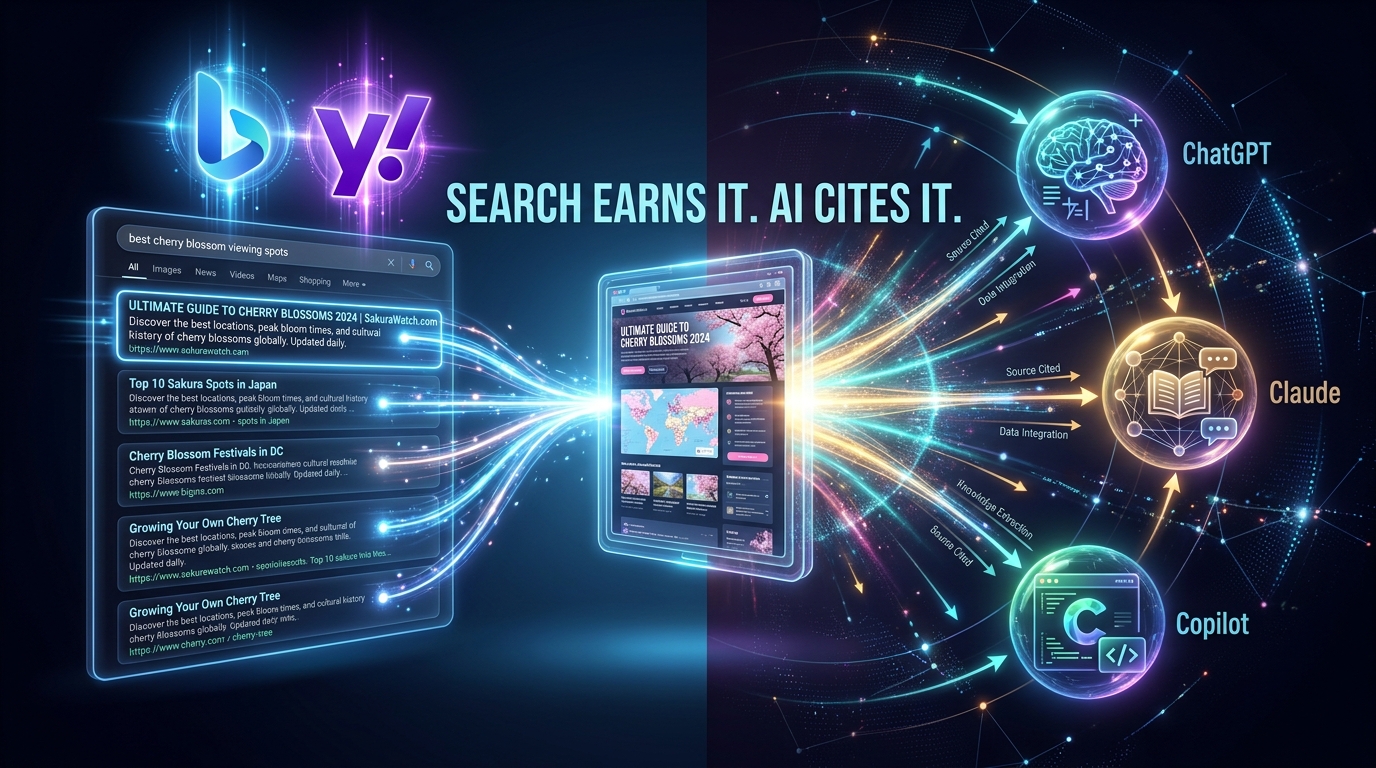
    AI citations are downstream of search quality, not upstream. Pages that win Bing and Yahoo with long-form depth get cited by AI models as a derivative effect.

    Search earns it. AI cites it.
    Claude 64% engagement, ChatGPT 21%, Copilot 46%
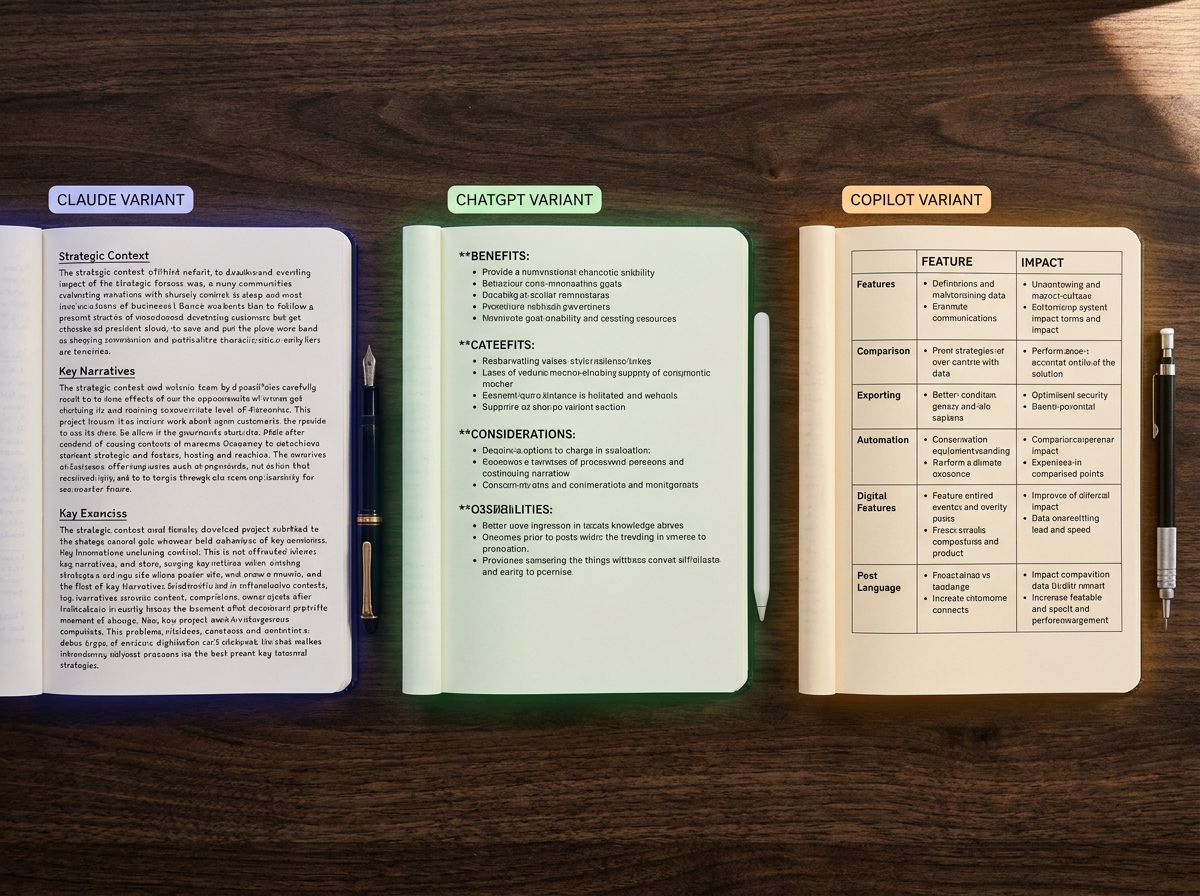
    Three content variant notebooks for Claude, ChatGPT, and Copilot
    Analytics Advisor session running at night on a laptop

    What’s Inside

    • Full 4-session query architecture — 26 queries, copy-paste ready
    • Pre-flight checklist and capture protocol for each session
    • Per-AI behavioral profiles: ChatGPT, Claude, Copilot
    • Content variant framework — 3 structural templates, one per AI retrieval pattern
    • Flags to escalate before your next content sprint
    • The cross-AI page overlap query — your highest-confidence GEO signal

    What You Need

    • Claude-in-Chrome extension — free from Anthropic
    • Editor or Analyst access to a GA4 property
    • Analytics Advisor (BETA) enabled — English-language accounts
    • Approximately 30–60 minutes

    THE KEY INSIGHT

    AI citations are downstream of search quality — not upstream. The path to getting cited by ChatGPT, Claude, and Copilot is not to optimize for AI retrieval patterns. It is to build pages that win on Bing and Yahoo with enough depth that AI models treat them as authoritative sources.

    Individual Kit — Instant PDF Download

    COMING SOON — $27

    No subscription. One-time purchase.

    BETTER VALUE

    Get All 6 Kits for $97

    The complete Books for Bots library. Every GA4 intelligence methodology in one purchase.

    $162 separately$97

    COMING SOON — SEE BUNDLE

    Developed and validated across live sessions on a real GA4 property. April 2026.

  • GA4 AI Referral Audit: Tracking ChatGPT & Claude Traffic

    GA4 AI Referral Audit: Tracking ChatGPT & Claude Traffic

    Related on Tygart Media: referral traffic quality · engagement rate & AI data · AI citation monitoring.

    For the past several weeks I have been running a live experiment on helpnewyork.com: using Claude-in-Chrome to interrogate Google’s Analytics Advisor inside GA4, session by session, until I had a complete behavioral profile of every AI platform sending traffic to the site.

    What came out of it is not what I expected. I expected traffic data. I got a content strategy.

    The Setup

    Desk with laptop, checklist notebook, and billing card ready before creating an Anthropic API key
    The setup for tracking AI referral traffic.

    Claude-in-Chrome is Anthropic’s browser extension that lets Claude operate directly inside your browser — reading pages, clicking elements, filling inputs, capturing output. Analytics Advisor is Google’s Gemini-powered chat interface built into GA4, available to English-language accounts since December 2025. It answers natural language questions about your property data with charts, tables, and narrative interpretation.

    The combination is unusual. You are using one AI (Claude) to systematically interrogate another AI (Gemini) about your site’s data, then synthesizing what comes back into strategy. The token budget for the heavy data reasoning stays inside Google’s infrastructure. Claude handles the query architecture, the capture protocol, and the synthesis.

    I ran four structured sessions across two sittings, using a specific sequence of queries built to extract progressively deeper signal. Session 1 established baseline traffic. Session 2 closed gaps and confirmed AI referral data existed. Session 3 was the AI deep dive. Session 4 was velocity and geography.

    What the Data Showed

    Three AI platforms were sending meaningful traffic to helpnewyork.com during the 28-day window: ChatGPT, Claude, and Copilot. The behavioral profiles were so different from each other that treating them as a single “AI traffic” segment would have produced wrong conclusions.

    Claude.ai traffic showed a 64% engagement rate and an average session duration of over 3 minutes. The dominant landing page was an NYC Summer Internships guide, accounting for over 60% of all Claude sessions. Geographic concentration was academic: Ithaca (Cornell), State College (Penn State), Washington DC. The users arriving from Claude were reading to act — they needed specific information, they found it, they stayed.

    ChatGPT traffic showed a 21% engagement rate and an average session of 24 seconds. The top landing page was a cherry blossom guide. The users were fact-grabbing: they asked ChatGPT where to see cherry blossoms in New York, got a citation, clicked through, confirmed the location, and left. The content served its purpose in under half a minute.

    Copilot traffic was between the two: 46% engagement, roughly 2-minute sessions, desktop-heavy, concentrated in New York’s suburbs. The top pages were civic services — SNAP benefits, tenant rights, transit discounts. These users were in planning mode, researching before they decided or applied.

    The Finding That Reframes GEO

    Two cards: answer shown in overview versus optional click
    The finding that reframes GEO.

    The cross-AI page overlap query was the most important one in the entire four-session arc. I asked Analytics Advisor which pages appeared in the top landing pages for more than one AI source. Only one real content page appeared in all three: the cherry blossom guide.

    The obvious interpretation is that the cherry blossom guide was “AI-optimized.” The actual interpretation, once you look at the full traffic breakdown, is the opposite. Bing drove 59 sessions to that page. Yahoo drove 16 at 75% engagement and a 3-minute 46-second average session. DuckDuckGo drove 35. The combined AI traffic to that page was 32 sessions — 17% of total. The AI platforms were citing it because traditional search engines had already validated it as the highest-quality answer in the index.

    AI citations are downstream of search quality, not upstream. The path to getting cited by ChatGPT, Claude, and Copilot is not to optimize for AI retrieval patterns. It is to build pages that win on Bing and Yahoo with enough depth that AI models treat them as authoritative sources. The GEO play is a traditional SEO play with better content.

    The Content Strategy That Follows

    Four-stage funnel: citation, click, engage, convert
    The content strategy that follows.

    Once you have the per-AI behavioral profiles, you have a content variant framework. The same article can be written in three structural architectures, each tuned to how one AI model retrieves and presents information.

    The Claude variant is dense and process-oriented. Headers, eligibility criteria, numbered steps, official program names. Built for the student or researcher who arrived with a specific question and needs a complete answer they can act on.

    The ChatGPT variant is a scannable list. Named items, one specific detail per item, direct answer in the first two sentences. Built for the user who will spend 24 seconds on the page and needs the answer immediately or they’re gone.

    The Copilot variant is comparison and planning framing. What to know before you go, Option A versus Option B, cost context, logistics. Built for the desktop user doing research before they make a decision.

    The core article is the same. The architecture is different. The AI that cites you depends on which structure you used.

    The Methodology Is the Product

    The query sequence I developed across these four sessions is a repeatable extraction methodology. It works on any GA4 property with Analytics Advisor enabled. The intelligence it produces — per-AI audience profiles, geographic signals, velocity trends, cross-AI content overlap — is not available through DataForSEO, SpyFu, or GSC. It requires Gemini’s reasoning layer operating on top of your property data, orchestrated by a structured query architecture.

    I have packaged the complete methodology as a downloadable kit: the full query architecture across all four sessions, the capture protocol, the content variant framework, and the flags to escalate before your next content sprint. It is called Books for Bots: GA4 AI Referral Audit Kit.

    The free version covers Session 3 alone — the AI deep dive queries that surface your ChatGPT, Claude, and Copilot traffic split. That alone will show you something most site owners have never seen: which AI is sending them traffic, to which pages, and how engaged those users actually are.

    The full kit covers all four sessions and includes the content variant framework that translates the behavioral data into a writing system.

    Both are available at tygartmedia.com. What you do with the data after that is yours.

  • Tier-Gated Autonomy: Google Validates AI Agent Governance

    Tier-Gated Autonomy: Google Validates AI Agent Governance

    Related on Tygart Media: AI operator’s stack · Claude calibration.

    This article was not written by a scheduled task. It was not part of a batch pipeline. There was no cron job, no Cloud Run trigger, no automation queue. I asked Claude in chat, we picked an angle, I generated the images myself, and Claude hand-crafted what you are reading now. Custom, batch-of-one, at the desk. I’m leading with that because it is the entire point of the piece.

    On April 22, Google Cloud Next ’26 turned Vertex AI into something else. The keynote rebranded it as the Gemini Enterprise Agent Platform. The new pieces are an Agent Designer, an Agent Inbox, long-running agents that can work autonomously for days inside cloud sandboxes, and Agent Observability, Agent Simulation, Agent Identity, Agent Registry. Google framed agents as managed enterprise workloads with identity, policy, observability, evaluation, and runtime controls, rather than one-off AI applications. They added Anthropic’s Claude Opus 4.7 to the Model Garden alongside Gemini 3.1. They committed $750 million to a partner program to push it through Accenture, Salesforce, SAP, and Deloitte.

    That announcement is the most architecturally ambitious version of agentic infrastructure anyone has shipped. It is also enterprise-shaped, not operator-shaped. The customers in the keynote were Walmart, Citadel, Honeywell, Home Depot, Papa John’s. The framing was Agentic Enterprise. The unit of trust was a partner integrator. None of that is a criticism. It is just a different scale of problem than the one a sole operator running 20+ WordPress sites and a content automation stack actually has.

    What Google announced is what we already built — at our scale

    Underneath the marketing, Gemini Enterprise Agent Platform answers one specific question: how do you give an autonomous system enough leash to be useful, while keeping enough control to catch it when it fails? Google’s answer involves Agent Identity, runtime policy enforcement, observability dashboards, and evaluation harnesses. It is the right answer. It is also the answer we landed on — independently, six months earlier, at a much smaller scale — because the question is the same whether you are running a Fortune 50 supply chain or a one-person agency that publishes 200 articles a month.

    Three stacked translucent glass layers in amber, blue, and green with particles flowing upward representing agent tier promotion
    Tier-gated autonomy: amber proposes and waits for approval, blue prepares but never publishes, green runs autonomously and reports anomalies.

    Our version is called The Bridge. It is a top-level page in our Notion workspace, peer to the operations Command Center. Underneath it lives the Promotion Ledger, where every autonomous behavior in our stack is tracked by tier and status. Tiers are A, B, C, and Wings. Status is one of Running, Probation, Demoted, Candidate, Graduated, or Retired. The Pane of Glass is the live Cowork artifact view of the whole thing. It is the operator-scale equivalent of Google’s Agent Inbox, except it is not selling itself to me — it is reporting to me.

    The three tiers, in plain language

    Tier A — System proposes, operator approves. A behavior at this tier produces a recommendation, not an action. Claude flags an opportunity, drafts a structure, surfaces a candidate. I make the call. Approval happens through an elevated report, not an atomic checkbox queue. This is where everything new starts.

    Tier B — Operator flies it, system prepares. The behavior is allowed to do all the preparatory work — research, drafting, formatting, staging — but the publish button stays under my hand. This is where most behaviors live for a while. Most of the trust gap is closed at Tier B because I can see exactly what the system would have done before it does it.

    Tier C — System runs autonomously, reports anomalies. The behavior publishes, posts, files, schedules — without asking. It only surfaces in my inbox when something is off. The twice-daily software update monitoring pipeline that writes posts to The Machine Room category on this site is Tier C. So is the weekly digest that drafts the LinkedIn and Facebook posts off it. I do not see those running. I see them only when they fail to run.

    Wings is a fourth tier — used for behaviors that are still on the candidate list, where the architecture exists but the trust does not yet.

    The clock that makes it work

    Promotions are not a feeling. They are a count. Seven clean days at a tier makes a behavior a candidate for promotion to the next. Any gate failure resets that clock to zero and drops the behavior down one tier. The failure is logged on the Promotion Ledger row with date and reason. Decisions to promote or demote happen on Sunday evenings — not in the middle of a panic on a Tuesday.

    This is the part that most “AI agent governance” frameworks skip. They define the tiers but not the promotion mechanic. Without the clock, every promotion is a vibe call. With the clock, the question stops being do I trust this agent and becomes what does the ledger say. The answer is either there or it is not.

    Vintage brass pressure gauge with the needle resting in a green clean zone, representing evidence-based trust in autonomous systems
    Trust as evidence. The Promotion Ledger reads clean — or it does not. Reassurance is not a substitute for a number on a row.

    Why this article is hand-crafted, on purpose

    Here is the meta-move that makes the framework legible. The system that publishes most of our content is Tier C Running — twice-daily monitoring writes posts directly to The Machine Room and Industry Signals categories without my approval, and the weekly digest drafts the social. That works because the behavior has earned its leash on the ledger.

    This article is not that. This article is a one-off, custom request, hand-crafted in chat. I asked Claude what it thought of the Next ’26 announcements relative to our stack. We had a real exchange about it. I generated four sets of images on my own, picked the directions, and let Claude pick the strongest variants from each set. We agreed on the angle. Then I gave one explicit, in-conversation authorization to publish live to WordPress and LinkedIn — because publishing to LinkedIn live is not a Tier C Running behavior on the ledger right now, and the system correctly flagged that gap and asked.

    That is the whole framework, working in real time. The twice-daily Tier C automation does not need to ask. The one-off LinkedIn live publish does need to ask. The system knows the difference because the difference is on a Notion page, not in a vibe.

    What Google’s announcement actually changes for operators like us

    Three things, all useful.

    The vocabulary went mainstream. “Long-running agents,” “Agent Inbox,” “agent governance,” “agent observability” — these are now words you can say to a CFO without translating. The bar for trust-gap evidence just went up across the field, which means the operators who already have a ledger are ahead of the operators who have a vibe. Stay on the ledger.

    Claude is in the Model Garden. If we ever want to run our Cowork-style behaviors inside Google’s agent runtime — using their identity, observability, and governance plumbing while keeping Claude as the model — that door is now open. We will not, because the platform overhead is more than we need. But the option being available is structurally significant.

    The architectural pattern is validated. When the third-largest cloud spends a keynote arguing that agents need tier-style governance and an inbox-style observability layer, every operator running an autonomous stack should treat that as confirmation, not as a sales pitch. We are not the weird ones for running a Promotion Ledger. We were just early.

    The unsexy part

    The unsexy part of all of this is that none of it works without the boring discipline of writing things down. The tiers are useful because they are on a page. The promotion clock is useful because it is a number. The trust-gap protocol is useful because it points to evidence rather than to feelings. Google is building the same thing for the Fortune 500 because the discipline is the same at every scale. The only thing that changes is whether you call it a Promotion Ledger or an Agent Registry.

    Build the ledger. Run the clock. Publish what is earned. Ask before you do what is not. The rest is just whose dashboard is prettier.

  • AI Referral Traffic: How to Measure Claude & ChatGPT in GA4

    AI Referral Traffic: How to Measure Claude & ChatGPT in GA4

    Short version: In the last 29 days, Claude, ChatGPT, Perplexity, Microsoft Copilot, Gemini, NotebookLM, and Kagi collectively sent at least 94 new readers to tygartmedia.com — a site whose #1 content vertical is explaining Claude. AI assistants are now our #4 traffic source, ahead of Facebook, ahead of LinkedIn, ahead of every search engine except Google and Bing. The product is citing the publication that covers the product. That’s the loop. Here is what it looks like when you can actually measure it.

    The finding that made me stop scrolling

    Four-stage funnel: citation, click, engage, convert
    The finding that made me stop scrolling.

    I built a Claude-powered browser agent to poke around our GA4 account and surface “interesting stuff” a human analyst would miss. One of the first things it flagged was our Source/Medium report. Here is the top of the list, unedited:

    RankSource / MediumNew Users (29 days)Notes
    1(direct) / (none)738Mystery bucket
    2google / organic289Standard Google SEO
    3bing / organic701m 20s average session — high intent
    4claude.ai / referral63Claude itself
    5m.facebook.com43Mostly 4-second bounces
    6duckduckgo / organic411m 02s average
    13chatgpt.com / referral9ChatGPT
    15perplexity.ai / referral5Perplexity
    21copilot.com3Microsoft Copilot
    24gemini.google.com2Google Gemini
    28notebooklm.google.com1Google NotebookLM
    35kagi.com1Kagi AI results

    Add up everything with an AI-assistant referrer and the combined count is at least 94 new users in 29 days — roughly 6.7% of all new users on the site. Claude alone, at 63 referred users, is our #4 traffic source. It is ahead of Facebook. It is ahead of LinkedIn. It is ahead of every search engine except Google and Bing. And we have been cited, at least once, by every major AI surface in the English-speaking internet: Claude, ChatGPT, Perplexity, Microsoft Copilot, Gemini, NotebookLM, and Kagi.

    Why this is different from “we show up in Google”

    Generative Engine Optimization (GEO) is the practice of structuring content so that large language models cite it as a source inside their answers. It is the younger, messier cousin of SEO. Most publishers cannot yet prove it is working. The feedback loop is long, the data is hidden inside a chat window, and the traffic that does leak through often lands in a “(direct)” bucket with no attribution at all.

    We can see ours. GA4, for reasons that are probably accidental, already records claude.ai, chatgpt.com, perplexity.ai, copilot.com, gemini.google.com, notebooklm.google.com, and kagi.com as discrete referral sources when a user clicks a citation link. That means AI-assistant traffic is measurable as a first-class channel right now, today, with the free version of Google Analytics, on any site that happens to get cited.

    The poetic layer of what we are looking at: Claude is the top AI referrer to a website whose #1 content vertical is explaining Claude. The product is sending readers to the publication that covers the product. If that is not a GEO moat, I do not know what one looks like.

    These are not bounced visitors. They are readers.

    Two cards: answer shown in overview versus optional click
    These are not bounced visitors — they are readers.

    The single biggest worry with any new traffic source is that it might be garbage — bots, previews, accidental clicks. The engagement data says the opposite. Users arriving from claude.ai spend 23 seconds on average and produce 0.56 engaged sessions per user. ChatGPT referrals average 21 seconds and 0.44 engaged sessions per user. For context, the site-wide average engagement time is dragged down hard by in-app social browsers; the Facebook mobile webview, for example, sits at about 14 seconds with 4-second bounces.

    People arriving from an AI assistant are not scrolling past. They clicked the citation because the AI told them this was the primary source, and when they got here they read. That is a qualitatively different kind of traffic than Facebook or a random Google search. These are the highest-intent non-search users we have.

    The secondary finding: Seattle is reading for three minutes

    The same GA4 pass surfaced a city-level pattern we were not expecting. Seattle readers — 61 of them in 29 days — spent an average of 3 minutes and 6 seconds on site at a 61.3% engagement rate. The site-wide average session is roughly 40 seconds. Seattle readers are spending about 4–5x longer on the page than the typical visitor, at nearly twice the engagement rate.

    CityActive UsersEngagement RateAverage Time
    Seattle6161.3%3m 06s
    The Dalles, OR310%1s
    Shelton, WA2627.6%15s
    Des Moines2437.5%10s
    Beijing316.5%0s
    Singapore2821.4%5s

    A few things jump out. The Dalles, Oregon at 31 users / 0% engagement / 1 second is almost certainly Google’s data center there returning preview requests — ignore it. Shelton, Washington is a real Mason County hyperlocal beachhead; 26 actual humans in our home county in 29 days is a legitimate foothold for the local desk. Beijing at 31 users / 0 seconds has the classic signature of cloud-hosted scrapers. And Seattle at 3 minutes is the single most valuable city in our data and it is not close.

    The browser split confirms an unusually technical audience

    BrowserUsersEngagement Rate
    Chrome850 (60%)31.3%
    Safari232 (16%)32.7%
    Edge99 (7%)62.3%
    Firefox33 (2.3%)60.5%

    Edge at 62.3% engagement and Firefox at 60.5% engagement are not normal consumer numbers. A typical general-interest site sees those two browsers hovering in the 5–15% range. Microsoft Edge is the default on corporate-managed Windows machines. Firefox is the dev-preferred privacy browser. The combination of high Edge engagement, high Firefox engagement, and a Claude-heavy referral list all point at the same audience: developers and technical professionals at real companies, reading on managed workstations.

    How to measure AI-assistant referrals in your own GA4

    Desk with laptop, checklist notebook, and billing card ready before creating an Anthropic API key
    How to measure AI-assistant referrals in your own GA4.

    If you publish anything technical and want to see your own version of this number, the fastest path is a custom GA4 exploration with one segment. Open GA4 → Explore → Free Form. Add a segment with this condition:

    Session source contains one of:
      claude.ai
      chatgpt.com
      perplexity.ai
      perplexity
      copilot.com
      gemini.google.com
      notebooklm.google.com
      kagi.com
      you.com
      phind.com

    Break it down by landing page, engagement rate, and average engagement time. That is your AI-Referral dashboard. Watch it weekly. A non-trivial number of sites will discover they already have measurable AI traffic and never bothered to look.

    Related on Tygart Media: how to use Claude · is Claude worth it · Claude rate limits.

    Frequently asked questions

    What is a GEO referral?

    A GEO referral, or AI-assistant referral, is a visit to your site from a user who clicked a citation link inside an answer generated by a large language model such as Claude, ChatGPT, Perplexity, Microsoft Copilot, Gemini, NotebookLM, or Kagi. In Google Analytics 4 these visits appear as referral traffic from the assistant’s domain — for example claude.ai / referral or chatgpt.com / referral.

    How many AI-referred users did tygartmedia.com receive in 29 days?

    At least 94 new users across seven distinct AI assistants: 63 from Claude, 14 from ChatGPT (9 attributed + 5 unassigned), 10 from Perplexity (5 attributed + 5 unassigned), 3 from Microsoft Copilot, 2 from Gemini, 1 from NotebookLM, and 1 from Kagi. That is roughly 6.7% of all new users on the site for the period.

    Are AI-assistant referrals real readers or bots?

    Real readers. Average engagement time from claude.ai is 23 seconds and from chatgpt.com is 21 seconds, with engagement rates of 0.56 and 0.44 engaged sessions per user respectively. Those numbers are qualitatively higher than in-app social browser traffic (Facebook mobile webview averages about 14 seconds) and indicate a deliberate click-through from an AI citation, not a scraper.

    Can any publisher measure AI-assistant referrals in GA4?

    Yes. GA4 records visits from claude.ai, chatgpt.com, perplexity.ai, copilot.com, gemini.google.com, notebooklm.google.com, and kagi.com as discrete referral sources by default. Build a Free Form exploration with a segment that filters Session source on those domains and you will see the channel immediately if it exists for your site.

    What is GEO in marketing?

    GEO stands for Generative Engine Optimization. It is the practice of structuring web content, schema markup, and publishing signals so that large language models cite the content as a source inside AI-generated answers. GEO is to AI assistants what SEO is to search engines — the discipline of being the answer the machine hands to the reader.

    The loop, and why it matters

    The most interesting thing about this data is not the traffic. It is the feedback structure. Tygart Media publishes explainers about Claude. Claude crawls and cites those explainers. Readers click through from Claude’s answer back to tygartmedia.com. We publish more. Claude cites more. The site becomes, in effect, training data and a recommended source for the next iteration of the product it covers. That is the recursive loop that makes AI-native publishing a different business than search-era publishing.

    I do not think every site can build this loop. It requires a narrow, technically-defensible topic — something an AI assistant would rather cite than paraphrase — and the patience to publish at a cadence LLMs reward. What I do think is that any publisher can check, today, whether the loop has quietly started forming underneath them. Most have not bothered. This post is partly a flex and partly an invitation: go look.

    What happens next at Tygart Media

    Three things. We are standing up a permanent AI-Referral channel in our GA4 so the number can be watched weekly instead of rediscovered quarterly. We are writing the playbook — the one this post hints at — for publishers who want to do the same. And we are building the browser agent that found this in the first place into a repeatable audit any publisher can run against their own GA4 in an afternoon. If that last one sounds useful, the newsletter is the place to follow along.

    Claude sent us 63 readers last month. It will send more next month. We will be counting.