
Anthropic released Claude Fable 5 on June 9, 2026 — and it’s the most capable model the company has ever made publicly available. After tracking every Claude release since the original 100K context window dropped, I can say this one is different. Fable 5 isn’t just an incremental update. It’s Anthropic’s Mythos-class model — the one they’d been keeping restricted — now opened up to anyone with an API key or a Claude subscription.
Here’s what you need to know: the pricing, the benchmarks, and the specific decision framework for when to use Fable 5 versus sticking with Opus 4.8.
Quick answer: Fable 5 costs $10/$50 per million input/output tokens (2x the cost of Opus 4.8). It outperforms Opus 4.8 significantly on complex coding, long-horizon tasks, and scientific research. Use Fable 5 when quality on hard problems justifies the cost. Use Opus 4.8 for high-volume, well-scoped, routine work.
Current lineup note (October 2026): Fable 5.1 is the current Fable SKU at the same $10/$50 headline rates (cache reads $0.25/MTok). Current Opus is Opus 5.5 at $4/$20; Opus 4.8 remains listed as legacy. The June 2026 comparisons below are the launch record for Fable 5.
What Is Claude Fable 5?
Claude Fable 5 (claude-fable-5) is Anthropic’s first publicly available Mythos-class model. The Mythos line is Anthropic’s highest capability tier — models that were previously restricted to research and select enterprise partners because of their raw power. Fable 5 is the version Anthropic deemed safe enough to release broadly.
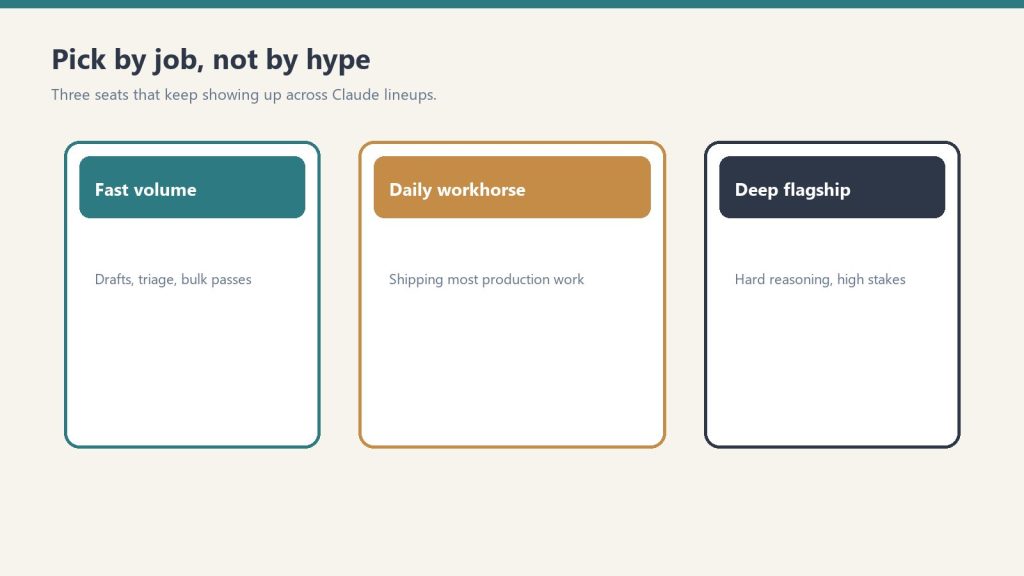
The name shift (from the Opus/Sonnet/Haiku tier naming) signals something intentional. Fable 5 sits above the Opus line entirely. It’s a new ceiling.
Key specs:
- Context window: 1M tokens (same as Opus 4.8)
- Max output: 128K tokens per request
- Thinking: Adaptive (always on — not a separate “thinking mode”)
- Vision: Yes
- Tool use / function calling: Yes
- Available: Claude API, AWS Bedrock, Vertex AI, Microsoft Foundry
Claude Fable 5 Pricing
| Model | Input (per MTok) | Output (per MTok) | Context |
|---|---|---|---|
| Claude Fable 5 | $10.00 | $50.00 | 1M tokens |
| Claude Opus 4.8 | $5.00 | $25.00 | 1M tokens |
| Claude Sonnet 4.6 | $3.00 | $15.00 | 1M tokens |
| Claude Haiku 4.5 | $1.00 | $5.00 | 200K tokens |
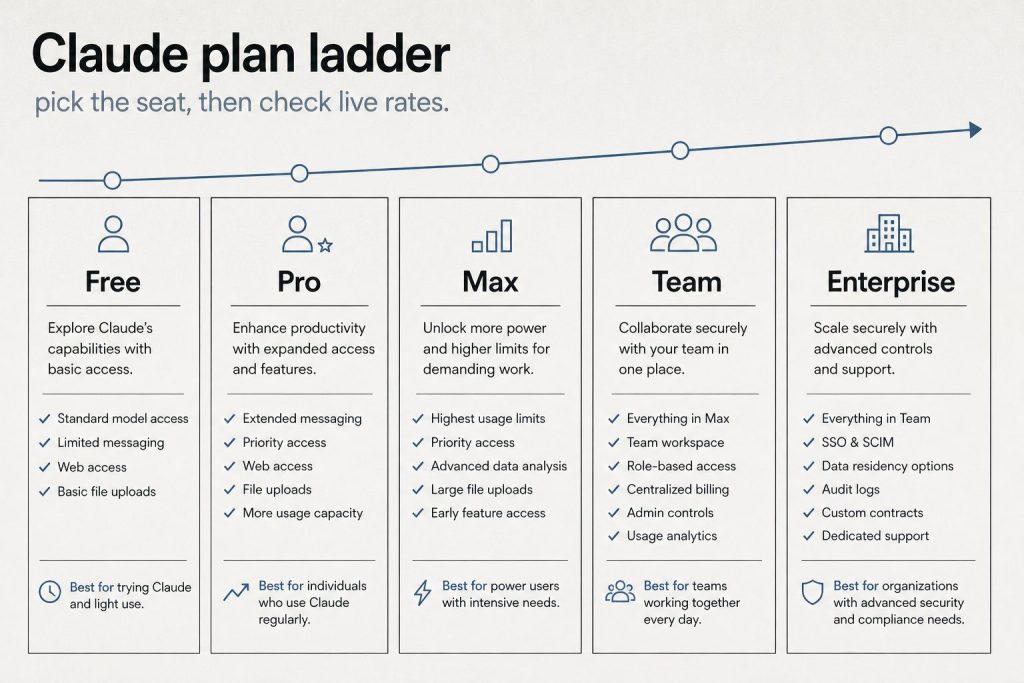
Fable 5 costs exactly 2x Opus 4.8 on API. On subscription plans (Pro, Max, Team, Enterprise seat-based), Fable 5 is included at no extra cost through June 22, 2026.
The free-until-June-22 window matters if you’re evaluating whether to route your workloads to Fable 5. Use that window to benchmark it against your actual tasks before the 2x cost kicks in.
Benchmark Performance: Where Fable 5 Pulls Away
The benchmarks that matter most are the ones that measure what the model can do on real engineering work, not trivia:
| Benchmark | Claude Fable 5 | Claude Opus 4.8 | Delta |
|---|---|---|---|
| SWE-bench Verified | 95.0% | 88.6% | +6.4 pts |
| SWE-bench Pro | 80.0% | 69.2% | +10.8 pts |
| FrontierCode | 29.3% | 13.4% | ~2.2x |
| Senior Engineer benchmark | 91/100 | ~63/100 | +45% absolute |
The Senior Engineer benchmark is the one I find most telling. It’s designed to be hard for people who write code for a living — and Fable 5 scores 45 percentage points higher than Opus 4.8. That gap is significant enough that it changes the calculus for serious engineering work.
When to Use Claude Fable 5 (vs Opus 4.8)
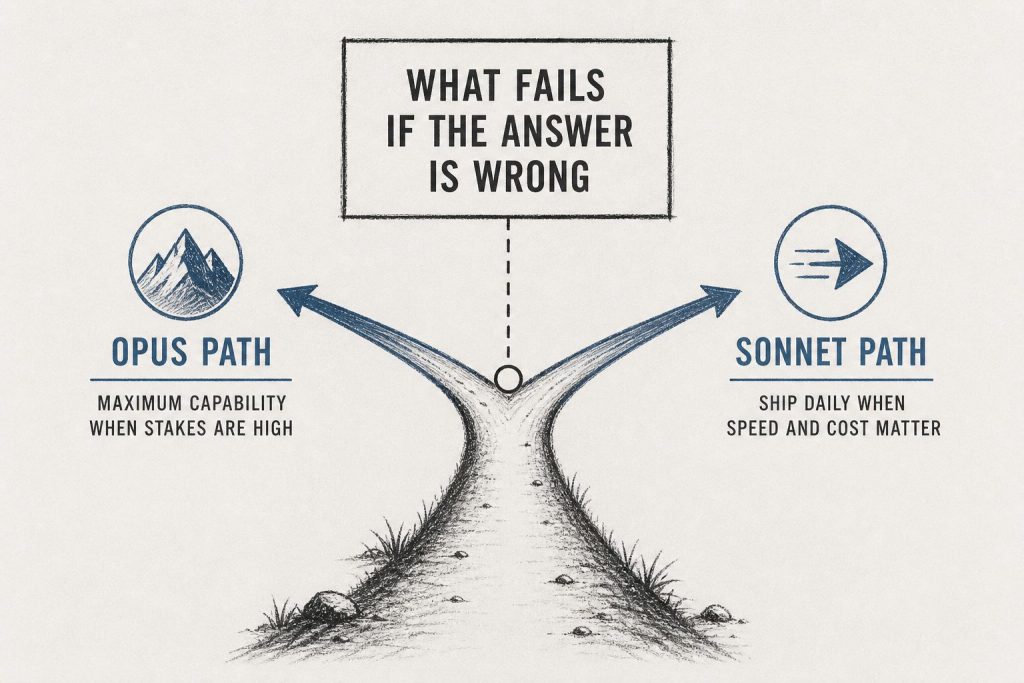
I’ve been routing tasks between models for long enough to have a framework. Here’s how I think about it:
Use Fable 5 when:
- You’re running a large migration, refactor, or multi-stage software project
- Quality on a hard problem matters more than per-token cost
- You’re doing deep research, complex analysis, or long-horizon agentic work
- The task would otherwise take a senior engineer half a day or more
- You’re in the free evaluation window (through June 22) and want to benchmark
Use Opus 4.8 when:
- The task is well-scoped and routine
- You’re running high-volume pipelines where 2x cost compounds fast
- Latency matters — Fable 5 can take 60 seconds to several minutes on complex tasks vs 3–15 seconds for Opus 4.8
- The task falls in Fable 5’s restricted domains (cybersecurity, biology, chemistry, distillation) — in those categories, Fable 5 routes to Opus 4.8 anyway, so you’d pay Fable 5 prices for Opus 4.8 output
The smart routing strategy: Fable 5 for the hard jobs, Opus 4.8 for the rest. Don’t use Fable 5 as your default model — the cost and latency delta aren’t worth it for routine tasks.
Important Limitations to Know Before You Switch
Two limitations that don’t get enough coverage:
1. Safety classifier routing. Fable 5 includes enhanced safety classifiers. For prompts touching cybersecurity, biology, chemistry, and distillation, those classifiers route the request to a Claude Opus 4.8 fallback. You pay Fable 5 API rates ($10/$50) but get Opus 4.8 output. If your use case is in these domains, Fable 5 is not the upgrade it appears to be.
2. Data retention requirement. Fable 5 carries a mandatory 30-day data retention policy — Anthropic needs retained prompts and outputs to operate the safety classifiers. Claude Opus 4.8 is available under zero data retention (ZDR). If your use case requires ZDR (healthcare, legal, finance with strict data handling), stick with Opus 4.8 until Anthropic updates Fable 5’s data policy.
Availability
Claude Fable 5 is generally available as of June 9, 2026 on:
- Claude API (
claude-fable-5) - Claude Platform on AWS / Amazon Bedrock
- Google Cloud Vertex AI
- Microsoft Azure AI Foundry / GitHub Copilot
Subscription access (free through June 22, 2026): Claude Pro ($20/mo), Max 5x ($100/mo), Max 20x ($200/mo), Team, and seat-based Enterprise plans all include Fable 5 access at no extra charge during the launch window. After June 22, the plan-tier access picture may change — check Anthropic’s pricing page for updates.
How This Changes the Claude Model Decision Tree
Before Fable 5, the Claude decision tree was straightforward:
- Need the best? → Opus 4.8
- Need balance? → Sonnet 4.6
- Need speed/cost? → Haiku 4.5
Now it’s:
- Hard problems, complex projects, long-horizon work → Fable 5
- Everyday work, high-volume pipelines → Opus 4.8
- Balance of cost and capability → Sonnet 4.6
- Speed and cost optimization → Haiku 4.5
The introduction of a model tier above Opus 4.8 doesn’t replace the existing lineup — it creates a new ceiling for the work that genuinely needs it.
Related on Tygart Media: Fable 5 complete guide · Fable 5 firsthand · how to use Claude.
Frequently Asked Questions
Is Claude Fable 5 better than Opus 4.8?
For complex coding, multi-stage tasks, and long-horizon work: yes, significantly. On SWE-bench Pro, Fable 5 scores 80.0% vs Opus 4.8’s 69.2% — a 10+ point gap. For routine, well-scoped tasks: the gap narrows enough that Opus 4.8’s 2x cost advantage makes it the smarter choice.
What is the Claude Fable 5 API model ID?
claude-fable-5. This is the API string you pass to model in your API calls.
Does Fable 5 cost more than Opus 4.8?
Yes — exactly 2x. Fable 5 is $10 input / $50 output per million tokens. Opus 4.8 is $5/$25. Through June 22, 2026, Fable 5 is included in Claude subscription plans at no extra cost.
Can I use Claude Fable 5 for free?
On Pro, Max, Team, and Enterprise subscription plans, yes — through June 22, 2026. API access is metered at $10/$50 per MTok from day one.
Does Claude Fable 5 support zero data retention (ZDR)?
No. Fable 5 carries a mandatory 30-day data retention requirement. If your use case requires ZDR, use Claude Opus 4.8, which supports it.
What’s the difference between Claude Fable 5 and Claude Mythos 5?
Mythos 5 is Anthropic’s fully restricted research model — not publicly available. Fable 5 is the Mythos-class model that Anthropic has prepared for general availability, with safety classifiers and the 30-day retention policy. You can think of Fable 5 as “Mythos for the real world.”
Last verified: October 5, 2026. Anthropic pricing and availability subject to change — check Anthropic’s pricing page for current rates.
Leave a Reply