Tag: Claude AI Pricing

  • Is Claude Pro Worth It? An Honest 2026 Review

    The honest answer to “is Claude Pro worth it” changed on April 21, 2026 — and most of the articles ranking for this question haven’t caught up. If you’re buying Pro to use Claude Code, the math may have just shifted under your feet. If you’re buying Pro for everything else, it’s still one of the better $20 deals in software. This guide is built on Anthropic’s official documentation as of April 22, 2026, plus the developer reports that surfaced this week.

    Quick answer: Claude Pro at $20/month is worth it for most knowledge workers who use Claude daily — writers, researchers, marketers, analysts, and anyone leveraging Cowork, projects, and the 200K context window. For developers buying Pro specifically for Claude Code access, the value proposition is shifting. Anthropic appears to be quietly removing Claude Code from the Pro plan for new signups, which means the safe assumption going forward is: budget for Max 5x ($100/month) if Claude Code is your primary use case.

    The April 2026 Claude Code Situation

    Starting around April 10–21, 2026, multiple developers noticed that Anthropic’s official pricing page changed how it shows Claude Code access on the Pro plan. The Pro column on claude.com/pricing now shows a red X next to Claude Code — previously a check mark. The support documentation page title also changed from “Using Claude Code with your Pro or Max plan” to “Using Claude Code with your Max plan.”

    According to Anthropic statements that have surfaced since, this is a limited A/B experiment affecting approximately 2% of new Pro signups, and existing Pro subscribers are reportedly not affected at this time. There has been no public press release from Anthropic confirming or explaining the broader change.

    The practical implication is this: if you’re considering Pro specifically because you want Claude Code in your terminal, the safe assumption right now is that Max 5x at $100/month is the lowest tier with guaranteed Claude Code access. If you’re already a Pro subscriber using Claude Code, monitor your access closely — there are scattered reports of gradual blocks beginning to appear, though the picture isn’t fully clear.

    Everything else about Pro is unchanged. Web chat, projects, memory, web search, Cowork, and the integrations all remain part of the $20/month plan. The shift is specifically about terminal-based agentic coding access.

    What Claude Pro Actually Includes

    At $20/month (or $200/year, which works out to about $17/month), Pro currently includes:

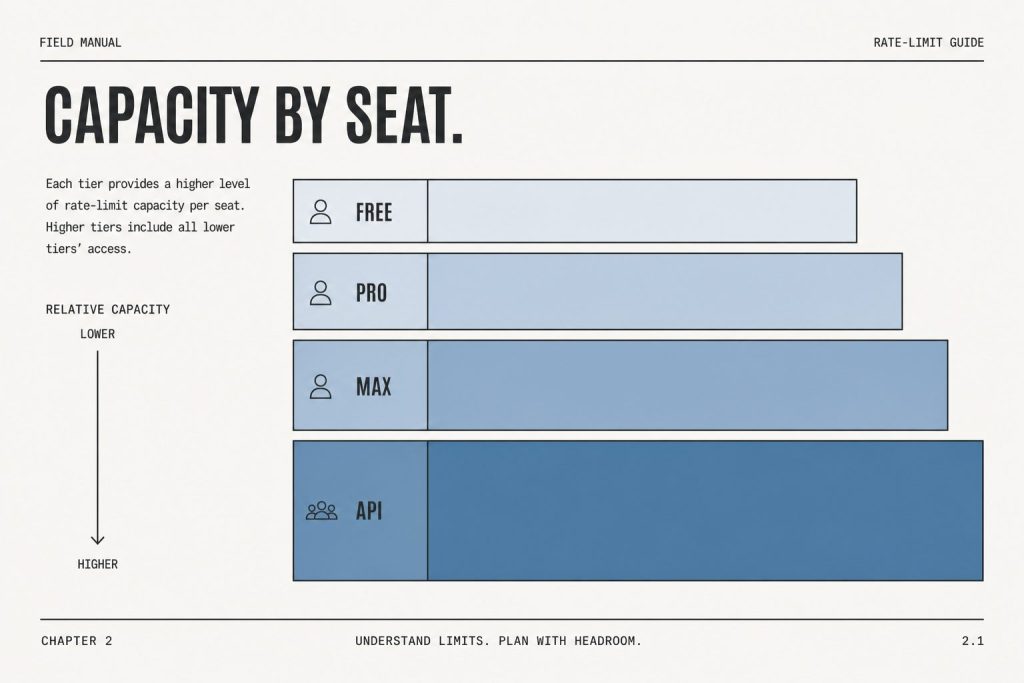
    • Higher usage than Free — Anthropic specifies “at least five times the usage per session compared to our free service” during peak hours
    • Access to all current models — Opus 4.7, Sonnet 4.6, and Haiku 4.5
    • 200,000 token context window across all paid plans
    • Projects — persistent knowledge bases with caching that doesn’t count against your usage when reused
    • Claude Cowork — agentic file and tool-based work; Anthropic expanded this from Max-exclusive to all Pro users on January 16, 2026
    • Memory and chat search — Claude can search prior conversations and reference relevant context across sessions
    • Web search and research — built-in web search and Research mode for citation-backed reports
    • Connected apps — integrations with Google Drive, Gmail, Google Calendar, GitHub, and others
    • Priority access during high-traffic periods
    • Early access to new features
    • Extra usage option — Pro subscribers can enable extra usage to continue working past their plan’s included limits, billed at standard API pricing rates

    The “5x Free during peak hours” detail matters more than it sounds. During off-peak hours, the gap between Free and Pro is generally larger — the 5x is what Anthropic commits to at the worst time of day, not the average. Free users get throttled hardest when demand spikes. Pro users get protected.

    Who Pro Is Worth It For

    Knowledge workers using Claude daily

    If you’re writing, researching, analyzing, or otherwise using Claude as a daily thinking partner, Pro is straightforward value. The 200K context window lets you load a substantial document, paste in a long brief, or maintain a deep conversation without hitting walls. Projects let you build persistent reference libraries that don’t burn allocation each time you query them. Cowork handles multi-step tasks autonomously — the kind of work that previously required Max-tier access.

    The math is simple: if you’d otherwise lose more than 30 minutes per week to Free plan rate limits, throttling, or context-window resets, Pro pays for itself in time alone.

    Researchers and analysts

    Research mode and built-in web search make Pro substantially more capable than Free for any work involving outside information. The ability to cite sources, run multi-step research, and pull from connected apps like Google Drive transforms Claude from a chat tool into a research environment.

    Writers and content creators

    Long-form writing benefits directly from the 200K context window — entire drafts, style guides, and reference materials can sit in a single conversation. Projects make recurring writing work (newsletters, branded content, multi-part series) substantially more efficient because the underlying context caches across sessions.

    Anyone running 3+ hours of Claude work daily

    The Free plan rate limits become the dominant constraint at this usage level. Pro removes most of that friction. At 3+ hours of daily use, the cost works out to under $0.30 per hour of access — cheaper than almost any other professional tool you’d justify at that intensity.

    Who Pro Probably Isn’t Worth It For

    Casual users sending a few messages a week

    If you use Claude occasionally — a few questions a week, light drafting, basic research — the Free plan handles it. Pro’s value comes from removing friction at scale; if you’re not at scale, you’re paying for capacity you won’t use.

    Developers who want Claude Code right now

    Given the April 2026 changes, paying $20/month for Pro on the assumption that Claude Code is included is risky for new signups. The stable answer is Max 5x at $100/month if you specifically need Claude Code in your terminal workflow. If you’re already a Pro subscriber using Claude Code, you may be grandfathered — but make a backup plan.

    Heavy power users hitting Pro limits weekly

    If you’re a Pro subscriber consistently hitting your five-hour session or weekly limits, the upgrade math favors Max 5x at $100/month. Max 5x provides 5x Pro’s usage per session at 5x the cost — your per-message cost stays the same, but you get the headroom. Max 20x at $200/month is 20x Pro’s usage at 10x the cost, which actually halves your per-message cost compared to Pro. For genuinely heavy individual users, Max 20x is the most cost-efficient per message of any individual plan.

    Teams of 5 or more

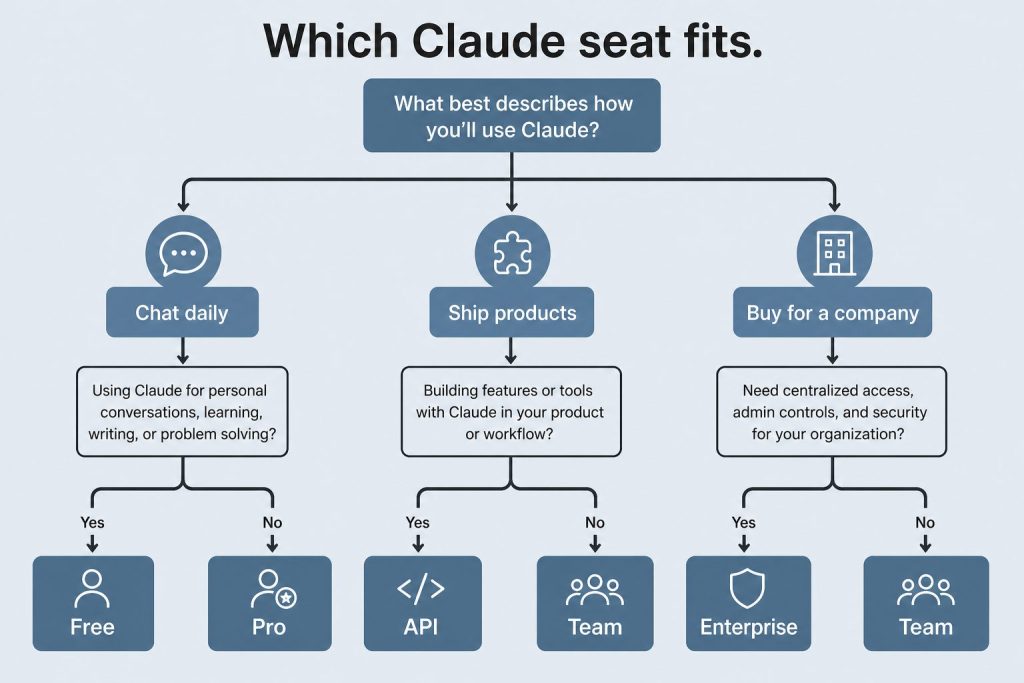
    Multiple Pro subscriptions across a team get expensive fast and don’t include team management features. The Team plan starts at $25 per seat per month ($20/seat billed annually), with a five-user minimum. It includes admin tools, SSO, centralized billing, and per-member usage limits that don’t pool across the team. For organizations, Team is structurally the right answer over individual Pro subscriptions.

    Pro vs. Free: The Real Difference

    The marketing materials list features. The actual difference between Free and Pro shows up in three ways:

    Friction. Free users hit rate limits faster, get throttled harder during peak hours, and bump into context window walls more frequently. Pro removes most of that friction without making it disappear.

    Tools. Cowork, projects, memory, web search, and connected apps are either Pro-exclusive or substantially more limited on Free. These are the features that change Claude from a chat interface into a working environment.

    Reliability. Pro’s priority access during high-traffic periods means your work doesn’t get interrupted when demand spikes. For anyone using Claude as a professional tool, this consistency matters more than the headline usage numbers.

    Pro vs. Max: When to Upgrade

    Max 5x at $100/month is the natural next step from Pro for individual users who:

    • Hit Pro’s session limits more than once a week
    • Need guaranteed Claude Code access (post-April 2026)
    • Run extended coding sessions or research sessions that exceed Pro’s headroom
    • Get blocked by peak-hour throttling regularly

    Max 20x at $200/month makes sense for power users who:

    • Use Claude as a primary work environment all day
    • Run agent workflows that consume large amounts of allocation
    • Need the lowest per-message cost of any individual tier
    • Have already maxed out Max 5x consistently

    The upgrade path Anthropic itself describes: start on Pro, monitor usage in Settings → Usage, and upgrade when interruptions cost more than the price difference.

    Pro vs. API: For Developers

    If you’re a developer who only used Pro for Claude Code, the API may be a better fit now. API pricing is pay-per-token: Sonnet 4.6 at $3 input / $15 output per million tokens, Opus 4.7 at $5 input / $25 output per million tokens, Haiku 4.5 at $1 input / $5 output per million tokens. With prompt caching cutting cache reads to 10% of standard input price and the Batch API providing a 50% discount for non-real-time workloads, light-to-moderate API usage can come in well under $20/month — without locking you into subscription rate limits.

    The trade-off is that the API requires more setup, no chat interface, and direct billing tied to actual consumption. For developers who only used Claude in the terminal, that trade-off is often acceptable.

    The Verdict

    For most knowledge workers, writers, researchers, and analysts using Claude as a daily tool: yes, Pro is worth it. $20/month for an AI workspace with projects, Cowork, web search, memory, and a 200K context window is one of the better software deals available right now. The friction reduction alone justifies the cost for anyone using Claude more than a few hours per week.

    For developers buying Pro specifically for Claude Code: be careful. The April 2026 changes are still settling. The conservative answer is to budget for Max 5x at $100/month or the API. Don’t subscribe to Pro on the assumption that Claude Code will be included — that assumption is no longer reliable for new signups.

    For casual users sending a handful of messages per week: the Free plan probably handles it. Pro’s value comes from frequent, sustained use. If that’s not your pattern, you’re paying for capacity you won’t tap.

    Frequently Asked Questions

    How much does Claude Pro cost?

    Claude Pro is $20/month billed monthly, or $200/year (approximately $17/month) billed annually. Prices are for US customers and don’t include applicable taxes. Pricing varies by region.

    Is Claude Code included with Pro?

    As of April 2026, Anthropic’s official pricing page now shows Claude Code as not included on the Pro plan. Reports indicate this is a limited A/B test affecting about 2% of new Pro signups, with existing Pro subscribers reportedly grandfathered. The reliable answer for new signups is to consider Max 5x ($100/month) or the API if Claude Code is your primary use case.

    How much usage does Claude Pro give me?

    Anthropic states Pro offers at least 5x more usage per session than the Free plan during peak hours. Usage operates on a five-hour rolling session window plus a weekly cap. Actual message counts vary based on conversation length, file attachments, model choice, and tool usage.

    What’s the difference between Claude Pro and Claude Max?

    Pro is $20/month with baseline paid usage. Max comes in two tiers: Max 5x at $100/month (5x Pro’s usage per session) and Max 20x at $200/month (20x Pro’s usage per session). Both Max tiers include guaranteed Claude Code access. Max 20x is the most cost-efficient individual plan on a per-message basis.

    Can I cancel Claude Pro anytime?

    Yes. Subscriptions can be canceled from your account settings. If you cancel mid-cycle, you keep Pro access until the end of your current billing period. Annual subscribers who cancel keep access until the annual term ends.

    Is Claude Pro worth it for ChatGPT Plus users?

    It depends on use case. Claude tends to be preferred for coding, long-form writing, and detailed analysis. ChatGPT tends to be preferred for image generation, voice mode, and faster execution on routine tasks. Many heavy users run both — using each for what it does best — rather than treating it as an either/or decision.

    Does Claude Pro work on mobile?

    Yes. Claude Pro features are available across web (claude.ai), desktop apps, iOS, and Android. Usage is unified across all surfaces — work done on mobile counts toward the same five-hour session limit as work done on web or desktop.

    What happens if I hit my Pro plan limit?

    You can wait for your five-hour session window to reset, enable extra usage to continue working at standard API pricing rates, or upgrade to Max for higher limits. Pro subscribers can configure extra usage from account settings.

  • Claude AI Context Window Explained: Size, Limits, and How It Works

    Claude’s context window is one of the most consequential — and most misunderstood — specs in the AI landscape. It determines how much information Claude can hold and reason about at once. Get it wrong in your planning and you’ll hit hard walls mid-task. This guide covers exactly how large Claude’s context window is, how it differs by model and plan, and what it means in practice.

    What is a context window? The context window is Claude’s working memory for a conversation — the total amount of text (including your messages, Claude’s responses, uploaded files, and system instructions) that Claude can actively process at once. When a conversation exceeds this limit, Claude can no longer reference earlier parts of it without summarization or a new session.

    Claude’s Context Window Size by Model and Plan

    Context window size in Claude varies by model, plan type, and which product surface you’re using. Here’s the accurate picture as of April 2026:

    Claude.ai (Web and Mobile Chat)

    For users on paid claude.ai plans — Pro, Max, Team, and most Enterprise — the context window is 200,000 tokens across all models and paid plans. According to Anthropic’s support documentation, this is roughly 500 pages of text or more.

    Enterprise plans on specific models have access to a 500,000 token context window. This is a plan-level feature, not a model selection — contact Anthropic’s enterprise team for details on which models qualify.

    Claude Code (Terminal and IDE)

    The larger context windows — 1 million tokens — are available specifically through Claude Code on paid plans:

    • Claude Opus 4.6: Supports a 1M token context window in Claude Code on Pro, Max, Team, and Enterprise plans. Pro users need to enable extra usage to access Opus 4.6 in Claude Code.
    • Claude Sonnet 4.6: Also supports a 1M token context window in Claude Code, but extra usage must be enabled to access it (except for usage-based Enterprise plans).

    Claude API

    Via the direct API, the current model context windows as published in Anthropic’s official documentation are:

    Model Context Window Max Output
    Claude Opus 4.7 1,000,000 tokens 128,000 tokens
    Claude Sonnet 4.6 1,000,000 tokens 64,000 tokens
    Claude Haiku 4.5 200,000 tokens 64,000 tokens

    Source: Anthropic Models Overview, April 2026.

    What 200K Tokens Actually Means

    Tokens are not the same as words. A token is roughly 3–4 characters, which works out to approximately 0.75 words in English. Here’s how the 200K token context window translates into practical content:

    • ~150,000 words of plain text
    • ~500+ pages of a standard document
    • A full-length novel (most are 80,000–120,000 words) with room to spare
    • Hundreds of emails in a thread
    • A moderately large codebase or multiple interconnected files
    • Hours of meeting transcripts

    For the vast majority of everyday tasks — document review, writing, research, coding, analysis — 200K tokens is more than enough. The ceiling only becomes relevant for extended research sessions, very large codebases, or scenarios where you need to maintain context across a lengthy back-and-forth over many hours.

    What 1M Tokens Actually Means

    One million tokens is roughly 750,000 words — equivalent to about five full-length novels, or a substantial enterprise codebase in a single session. The practical use cases that genuinely require this scale are narrower than the marketing suggests, but they’re real:

    • Large codebase analysis: Feeding an entire repository — multiple files, modules, and dependencies — into a single Claude Code session for architecture review, debugging, or refactoring.
    • Book-length document processing: Analyzing or summarizing an entire textbook, legal corpus, or research archive without chunking.
    • Long-running agentic workflows: Multi-agent tasks where conversation history, tool call results, and accumulated context grow significantly over time.
    • Extended conversation history: Maintaining full context across a very long research or writing session without losing earlier exchanges.

    For most individual users on claude.ai, the 200K chat context window is the relevant number. The 1M context window matters most to developers building on the API and power users running Claude Code sessions on large codebases.

    Context Window vs. Usage Limit: Two Different Things

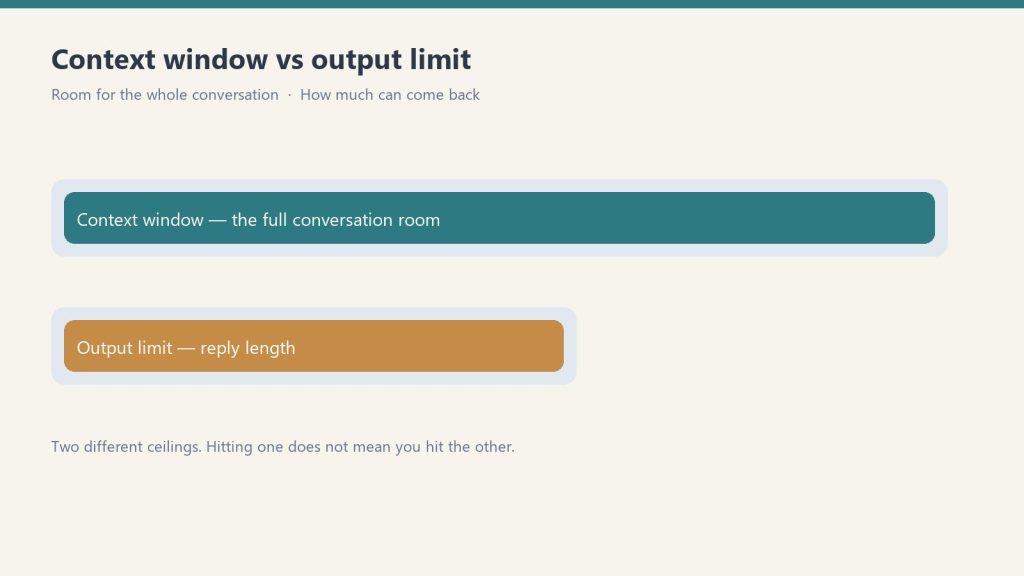
    This is the most common point of confusion. The context window and usage limit are separate constraints that operate independently:

    Context window (length limit): How much content Claude can hold in a single conversation. This is a technical capability of the model. When you hit the context window, Claude can no longer actively process earlier parts of the conversation without summarization.

    Usage limit: How much you can interact with Claude over a rolling time period — the five-hour session window and weekly cap on paid plans. This controls how many total messages and how much total compute you consume across all your conversations, not the depth of any single conversation.

    You can hit a usage limit without ever approaching the context window (many short conversations). You can also approach the context window limit without hitting your usage limit (one very long, deep conversation). They’re orthogonal constraints.

    Automatic Context Management

    For paid plan users with code execution enabled, Claude automatically manages long conversations when they approach the context window limit. When the conversation gets long enough that it would otherwise hit the ceiling, Claude summarizes earlier messages to make room for new content — allowing the conversation to continue without interruption.

    Important details about how this works:

    • Your full chat history is preserved — Claude can still reference earlier content even after summarization.
    • This does not count toward your usage limit.
    • You may see Claude note that it’s “organizing its thoughts” — this indicates automatic context management is active.
    • Code execution must be enabled for automatic context management to work. Users without code execution enabled may encounter hard context limits.
    • Rare edge cases — very large first messages or system errors — may still hit context limits even with automatic management active.

    How Context Window Affects Cost on the API

    For developers using the Claude API directly, context window size has direct billing implications. Every token in the context window — input messages, conversation history, system prompts, uploaded documents, and tool call results — is billed as input tokens on each API call.

    This creates an important cost dynamic: long conversations get progressively more expensive per message. In a 100-message thread, every new message requires reprocessing the entire conversation history as input tokens. A session that started at $0.01 per exchange can reach $0.10 or more per exchange by message 80.

    Two features exist specifically to manage this cost:

    • Prompt caching: For repeated content — large system prompts, reference documents, or conversation history that doesn’t change — prompt caching allows Claude to read from a cache at roughly 10% of the standard input token price, rather than reprocessing the same content on every call. This can reduce costs by up to 90% on cached content.
    • Message Batches API: For non-real-time workloads, the Batch API provides a 50% discount on all token pricing. It doesn’t reduce the token count, but halves the cost per token.

    How Projects Expand Effective Context

    Claude Projects on claude.ai use retrieval-augmented generation (RAG), which changes how context works in a meaningful way. Instead of loading all project knowledge into the active context window at once, Projects retrieve only the most relevant content for each message.

    This means you can store substantially more information in a Project’s knowledge base than would fit in the raw context window — and Claude will pull the relevant pieces into the active context as needed. For research-heavy workflows, content libraries, or any use case where you’re working with a large knowledge base across many sessions, Projects are the practical way to work beyond the hard context window ceiling.

    Anthropic also offers a RAG mode for expanded project knowledge capacity that pushes this further for users who need it.

    Context Window and Model Choice

    If context window size is a primary constraint for your use case, here’s how to think about model selection:

    For claude.ai chat users, all paid plans give you 200K tokens regardless of which model you’re using. The model choice doesn’t affect the context window in the chat interface.

    For Claude Code users on Pro, Max, or Team plans, Opus 4.6 and Sonnet 4.6 both offer the 1M context window — but you need extra usage enabled to access it (except on usage-based Enterprise plans).

    For API developers, Opus 4.7 and Sonnet 4.6 both provide 1M token context windows at their standard per-token rates. Haiku 4.5 is capped at 200K. If your workload requires context beyond 200K tokens, Sonnet 4.6 at $3/$15 per million tokens is the cost-efficient choice — you get the same 1M context window as Opus at 40% lower cost.

    Practical Tips to Maximize Your Context Window

    Whether you’re on the 200K or 1M window, these practices extend how effectively you can use available context:

    • Start fresh conversations for new topics. Don’t carry long threads across unrelated tasks — the accumulated history consumes context without adding value for the new task.
    • Use Projects for recurring reference material. Documents, instructions, and background context that you reference repeatedly belong in a Project, not re-uploaded to each conversation.
    • Keep system prompts concise. In API applications, every extra token in a system prompt multiplies across every call. Trim aggressively.
    • Disable unused tools and connectors. Web search, MCP connectors, and other tools add system prompt tokens even when not actively used. Turn them off for sessions that don’t need them.
    • Enable code execution if you’re on a paid plan — it activates automatic context management and extends how long conversations can run without hitting the ceiling.

    Frequently Asked Questions

    What is Claude’s context window size?

    For paid claude.ai plans (Pro, Max, Team), the context window is 200,000 tokens — roughly 500 pages of text. Enterprise plans have a 500,000 token context window on specific models. Via the API and in Claude Code, Opus 4.7 and Sonnet 4.6 support a 1,000,000 token context window. Haiku 4.5 is 200,000 tokens across all surfaces.

    How many words is 200K tokens?

    Approximately 150,000 words. A token is roughly 0.75 words in English. 200,000 tokens is equivalent to a long novel, 500+ pages of standard text, or many hours of conversation history.

    How many words is 1 million tokens?

    Approximately 750,000 words — roughly five full-length novels, or the equivalent of a substantial codebase in a single session.

    Does the context window reset between conversations?

    Yes. Each new conversation starts with a fresh context window. Previous conversations do not carry over unless you’re using a Project, which maintains persistent knowledge across sessions, or unless Claude has memory features enabled that reference past conversations.

    What happens when Claude hits the context window limit?

    For paid plan users with code execution enabled, Claude automatically summarizes earlier messages and continues the conversation. Without code execution enabled, you may encounter a hard limit that requires starting a new conversation. In either case, the context window limit is separate from your usage limit — hitting one doesn’t affect the other.

    Can I increase Claude’s context window?

    The context window size is fixed by your plan and model. You can’t expand it directly, but you can use Projects (which use RAG to work with more information than fits in the raw context window), enable automatic context management via code execution, or use the API with models that have larger native context windows.

    Does every message use the full context window?

    No. Context usage grows as a conversation progresses. The first message in a conversation uses only the tokens from that message plus any system prompt. By message 50, the entire thread history is included as context on every subsequent call. This is why long conversations get progressively more token-intensive over time.

    Is the context window the same as Claude’s memory?

    Not exactly. The context window is technical working memory — what Claude can actively process in a session. Claude’s memory features (available on paid plans) are separate: they extract and store information from past conversations and make it available in future sessions, beyond what the context window can hold.

  • Claude Opus vs Sonnet vs Haiku: Model Comparison Guide (2026)

    Anthropic’s Claude model lineup in 2026 breaks down into three distinct tiers: Opus 4.7 for maximum capability, Sonnet 4.6 for the best balance of performance and cost, and Haiku 4.5 for speed and high-volume work. Picking the wrong model costs money or performance — sometimes both. This guide covers every meaningful difference so you can make the right call for your use case.

    Quick answer: Sonnet 4.6 handles 80–90% of tasks at 40% less cost than Opus. Use Opus 4.7 when you need maximum reasoning depth, the largest output window, or agentic coding at frontier quality. Use Haiku 4.5 when speed and cost are the priority and the task is straightforward.

    The Current Claude Model Lineup (April 2026)

    As of April 2026, Anthropic’s three recommended models are Claude Opus 4.7, Claude Sonnet 4.6, and Claude Haiku 4.5. All three support text and image input, multilingual output, and vision processing. They differ significantly in pricing, context window, output limits, and capability.

    Feature Opus 4.7 Sonnet 4.6 Haiku 4.5
    Input price $5 / MTok $3 / MTok $1 / MTok
    Output price $25 / MTok $15 / MTok $5 / MTok
    Context window 1M tokens 1M tokens 200K tokens
    Max output 128K tokens 64K tokens 64K tokens
    Extended thinking No Yes Yes
    Adaptive thinking Yes Yes No
    Latency Moderate Fast Fastest
    Knowledge cutoff Jan 2026 Aug 2025 Feb 2025

    Pricing is per million tokens (MTok) via the Claude API. Source: Anthropic Models Overview, April 2026.

    Claude Opus 4.7: When to Use It

    Opus 4.7 is Anthropic’s most capable generally available model as of April 2026. Anthropic describes it as a step-change improvement in agentic coding over Opus 4.6, with a new tokenizer that contributes to improved performance on a range of tasks. Note that this new tokenizer may use up to 35% more tokens for the same text compared to previous models — a cost consideration worth factoring in for high-volume workflows.

    Key differentiators for Opus 4.7 over the other two models:

    • 128K max output tokens — double Sonnet and Haiku’s 64K cap. This matters for generating long-form code, detailed reports, or complete document drafts in a single call.
    • 1M token context window — same as Sonnet 4.6, meaning Opus can process entire codebases or book-length documents in a single session.
    • Adaptive thinking — Opus 4.7 and Sonnet 4.6 both support adaptive thinking, which lets the model adjust reasoning depth based on task complexity.
    • Most recent knowledge cutoff — January 2026, versus August 2025 for Sonnet and February 2025 for Haiku.

    Opus does not support extended thinking — that capability lives on Sonnet 4.6 and Haiku 4.5. Extended thinking lets the model reason step-by-step before generating output, which is particularly useful for complex math, science, and multi-step logic problems.

    Use Opus 4.7 for: complex architecture decisions, large codebase analysis, multi-agent orchestration tasks, outputs that require more than 64K tokens, tasks demanding the latest possible knowledge, and any work where you need the absolute frontier of Anthropic’s reasoning capability.

    Skip Opus 4.7 for: routine content generation, customer support pipelines, high-volume classification or extraction, real-time applications requiring low latency, or any task where Sonnet scores within your acceptable quality threshold.

    Claude Sonnet 4.6: The Workhorse

    Sonnet 4.6 is the model Anthropic recommends as the best combination of speed and intelligence. Released in February 2026, it delivers a 1M token context window at $3 input / $15 output per million tokens — the same context window as Opus at 40% lower cost.

    Sonnet 4.6 also uniquely offers extended thinking, which Opus 4.7 does not. When extended thinking is enabled, Sonnet can perform additional internal reasoning before generating its response — useful for reasoning-heavy tasks like complex debugging, multi-step research, and technical problem-solving where chain-of-thought depth matters.

    For developers and teams using Claude Code, Sonnet 4.6 is the standard daily driver. It handles tool calling, agentic workflows, and multi-file code reasoning reliably, at a price point that makes heavy daily use economically viable.

    Use Sonnet 4.6 for: most production workloads, Claude Code sessions, long-document analysis, content generation, coding tasks, research synthesis, customer-facing applications, and any workflow requiring the 1M context window where Opus’s premium isn’t justified.

    Skip Sonnet 4.6 for: high-volume pipelines where Haiku’s lower cost is acceptable, simple classification or extraction tasks, or real-time applications where Haiku’s faster latency is required.

    Claude Haiku 4.5: Speed and Volume

    Haiku 4.5 is the fastest model in the Claude family and the most cost-efficient at $1 input / $5 output per million tokens. It has a 200K token context window — smaller than Opus and Sonnet’s 1M, but still substantial for most single-task work. It supports extended thinking but not adaptive thinking.

    The 200K context limit is the most important practical constraint. Most single-document, single-task workflows fit within 200K. Multi-file codebases, long books, or extended conversation histories that push past that threshold need Sonnet or Opus.

    Haiku 4.5 has the oldest knowledge cutoff of the three: February 2025. For tasks requiring awareness of events or developments from mid-2025 onward, Haiku won’t have that context baked in.

    Use Haiku 4.5 for: content moderation, classification pipelines, entity extraction, customer support triage, real-time chat interfaces, simple Q&A, high-volume API workflows where cost and speed dominate, and any task where quality requirements are modest.

    Skip Haiku 4.5 for: complex reasoning, large codebase analysis, tasks requiring recent knowledge (post-February 2025), multi-step agent workflows, or any output requiring more than 200K tokens of input context.

    Pricing: What the Numbers Actually Mean in Practice

    All three models price output tokens at 5x the input rate — a ratio that holds across the entire Claude lineup. This means verbose, long-form outputs cost significantly more than short, targeted responses. Minimizing generated output length is the highest-leverage cost optimization available before you touch model routing or caching.

    To put the pricing in concrete terms: generating one million output tokens (roughly 750,000 words of generated text) costs $25 on Opus, $15 on Sonnet, and $5 on Haiku. For input-heavy workloads like document analysis where you’re feeding in large amounts of text but getting shorter responses, the cost gap narrows.

    Three additional pricing levers apply across all models:

    • Prompt caching: Cuts cache-read input costs by up to 90% for repeated system prompts or documents. If your application reuses a large system prompt across many requests, caching is the single highest-impact cost reduction available.
    • Batch API: Provides a 50% discount for non-time-sensitive workloads processed asynchronously. Combine with prompt caching for up to 95% savings on qualifying workflows.
    • Model routing: Running a mix of Haiku for simple tasks, Sonnet for production workloads, and Opus for complex reasoning — rather than using one model for everything — can reduce total API costs by 60–70% without meaningful quality loss on the tasks that don’t require a flagship model.

    Context Windows: 1M Tokens vs. 200K

    Opus 4.7 and Sonnet 4.6 both offer a 1M token context window at standard pricing — no premium surcharge for extended context. For reference, 1 million tokens is roughly 750,000 words, enough to hold a large codebase, a full academic textbook, or months of business communications in a single conversation.

    Haiku 4.5 has a 200K token context window. That’s still roughly 150,000 words — sufficient for most single-document tasks, but it creates a hard ceiling for anything requiring multi-file code review, book-length document analysis, or lengthy conversation histories.

    If your workflow consistently requires more than 200K tokens of input, Sonnet 4.6 is the cost-efficient choice. Opus 4.7 is the right call only when the input load requires the additional reasoning capability Opus provides, not just the context window size — because Sonnet gets you the same 1M window at 40% lower cost.

    Extended Thinking vs. Adaptive Thinking

    These are two distinct features that appear together in the comparison table but serve different purposes.

    Extended thinking (available on Sonnet 4.6 and Haiku 4.5, not Opus 4.7) lets Claude perform additional internal reasoning before generating its response. When enabled, the model produces a “thinking” content block that exposes its reasoning process — step-by-step problem decomposition before the final answer. Extended thinking tokens are billed as standard output tokens at the model’s output rate. A minimum thinking budget of 1,024 tokens is required when enabling this feature.

    Adaptive thinking (available on Opus 4.7 and Sonnet 4.6, not Haiku 4.5) adjusts reasoning depth dynamically based on task complexity — the model allocates more reasoning for harder problems and less for simpler ones, without requiring explicit configuration.

    The practical implication: if you need transparent, controllable step-by-step reasoning that you can inspect and use in your application, Sonnet 4.6’s extended thinking is often the right tool — and at lower cost than Opus.

    Which Claude Model Should You Choose?

    The right framework for model selection in 2026 is to start with Sonnet 4.6 as your default and escalate selectively. Most production workloads — coding, writing, analysis, research, customer-facing applications — are well-served by Sonnet. Opus 4.7 earns its premium in specific scenarios: tasks requiring more than 64K output tokens, agent workflows demanding maximum reasoning depth, or applications where Anthropic’s latest knowledge cutoff is a meaningful factor.

    Haiku 4.5 belongs in any pipeline where you’ve identified tasks that don’t require Sonnet’s capability. High-volume routing, triage, classification, and real-time response scenarios are Haiku’s natural territory. Building a 70/20/10 routing split across Haiku, Sonnet, and Opus — rather than using a single model for everything — is the standard approach for cost-efficient production deployments.

    Frequently Asked Questions

    What is the difference between Claude Opus, Sonnet, and Haiku?

    Opus is Anthropic’s most capable model, optimized for complex reasoning, large outputs, and agentic tasks. Sonnet offers a balance of capability and cost, handling most production workloads at lower price. Haiku is the fastest and cheapest option, suited for high-volume, lower-complexity tasks. All three share the same core Claude architecture and safety training.

    Is Claude Opus worth the extra cost over Sonnet?

    For most tasks, no. Sonnet 4.6 handles the majority of coding, writing, and analysis work at 40% lower cost. Opus 4.7 is worth the premium when you need outputs longer than 64K tokens, maximum agentic coding capability, or the most recent knowledge cutoff (January 2026 vs. Sonnet’s August 2025).

    Which Claude model is best for coding?

    Sonnet 4.6 is the standard recommendation for most coding work, including Claude Code sessions. Opus 4.7 is preferred for large codebase analysis, complex architecture decisions, or multi-agent coding workflows where maximum reasoning depth is required. Haiku 4.5 can handle simple code edits and explanations at much lower cost.

    What is the Claude context window?

    Claude Opus 4.7 and Sonnet 4.6 both have a 1 million token context window — roughly 750,000 words of combined input and conversation history. Claude Haiku 4.5 has a 200,000 token context window. Context window size determines how much information Claude can hold and reference in a single conversation.

    Does Claude Opus support extended thinking?

    No. Extended thinking is available on Claude Sonnet 4.6 and Claude Haiku 4.5, but not on Claude Opus 4.7. Opus 4.7 supports adaptive thinking instead, which dynamically adjusts reasoning depth based on task complexity.

    What is the cheapest Claude model?

    Claude Haiku 4.5 is the least expensive model at $1 per million input tokens and $5 per million output tokens. It is also the fastest Claude model, making it well-suited for high-volume, latency-sensitive applications.

    Can I use Claude through Amazon Bedrock or Google Vertex AI?

    Yes. All three current Claude models — Opus 4.7, Sonnet 4.6, and Haiku 4.5 — are available through Amazon Bedrock and Google Vertex AI in addition to the direct Anthropic API. Bedrock and Vertex AI offer regional and global endpoint options. Pricing on third-party platforms may vary from direct Anthropic API rates.

  • Claude Team Plan Usage Limits Explained: Standard vs Premium Seats

    If you’re on Claude’s Team plan and wondering why you hit a wall mid-session — or trying to figure out whether to put someone on a Standard or Premium seat — this is the guide Anthropic doesn’t make obvious enough. Here’s exactly how Team plan usage limits work, what the numbers actually mean in practice, and what you can do when you hit the ceiling.

    How Claude Team Plan Usage Limits Actually Work

    Every Claude plan — Free, Pro, Max, Team, and Enterprise — runs on a five-hour rolling session window. Your usage limit isn’t a daily message count. It’s compute capacity measured across a five-hour window that begins with your first message. Once that window resets, you get a fresh allocation.

    Team plan usage limits are also subject to a weekly cap that resets seven days after your session window starts. This is the second layer most users don’t notice until they’ve been using Claude heavily for several days in a row.

    One detail that catches teams off guard: usage is unified across all Claude surfaces. Messages sent on claude.ai, work done in Claude Code, and activity in Claude Desktop all draw from the same pool. A heavy Claude Code session in the morning competes with your afternoon research sessions on claude.ai.

    Standard Seats vs. Premium Seats: What the Multipliers Mean

    The Team plan offers two seat types with meaningfully different usage allocations:

    Standard Seats

    • Usage per session: 1.25x more than the Pro plan per five-hour session
    • Weekly limit: One weekly cap that applies across all models, resets seven days after your session starts
    • Price: $25/member/month billed monthly, or $20/member/month billed annually

    Standard seats are the right fit for team members who use Claude consistently but not at maximum intensity. The 1.25x multiplier over Pro is a modest bump — meaningful for occasional power users, but it won’t prevent a daily heavy user from hitting limits.

    Premium Seats

    • Usage per session: 6.25x more than the Pro plan per five-hour session
    • Weekly limits: Two separate weekly caps — one across all models, plus a separate cap for Sonnet models only. Both reset seven days after your session starts
    • Price: $125/member/month billed monthly, or $100/member/month billed annually

    The jump from 1.25x to 6.25x is significant. Premium seats are built for power users — developers running extended Claude Code sessions, researchers with long document workflows, or anyone whose work would otherwise constantly bump against the Standard seat ceiling.

    Organizations can mix and match: assign Premium seats to your heaviest users and keep everyone else on Standard. This is usually more cost-effective than putting the entire team on Premium.

    Usage Limits Are Per-Member, Not Per-Team

    This is one of the most important architectural details of the Team plan: limits are per-member, not pooled across the organization.

    If one team member exhausts their session allocation, it has zero effect on every other team member’s limits. There’s no shared bucket that someone can drain. Each person has their own independent five-hour session and weekly cap. This makes the Team plan more predictable than a pooled model — your usage doesn’t depend on the consumption habits of your colleagues.

    What Happens When You Hit Your Limit

    When you reach your session limit, Claude blocks subsequent requests until the five-hour window resets. The system checks your limit before processing each request — though it’s possible to slightly exceed your defined limit, since token consumption is calculated after a request is processed, not before. Once you bypass the limit on a single request, all subsequent requests are blocked until reset.

    There are three ways forward when you hit a ceiling:

    1. Wait for the session window to reset — the five-hour window rolls forward from your first message
    2. Enable extra usage — Team plan owners can pre-purchase extra usage that activates automatically when members hit their included limits
    3. Upgrade the seat type — moving a heavy user from Standard to Premium gives them a 5x usage increase per session

    Extra Usage: The Overflow Layer

    Team plan owners can configure extra usage so that members continue working after hitting their included allocation instead of being blocked. Once extra usage is enabled and a member reaches their seat limit, usage continues and is billed at standard API pricing rates.

    Owners can set spend controls at multiple levels:

    • Organization-wide monthly spend cap
    • Per-seat-tier spend cap (e.g., limit extra usage for all Standard seats)
    • Per-individual-member spend cap

    Extra usage applies to Claude on claude.ai, Claude Code, and Cowork. It’s configured through Organization Settings → Usage in the Team plan admin console.

    How Usage Gets Consumed Faster Than Expected

    Not all messages are equal. Several factors cause heavier token consumption:

    • Long conversations: Every message in a thread reprocesses the full conversation history as context. A 100-message thread costs dramatically more per response than a fresh conversation.
    • Large file attachments: Uploading PDFs or large documents inflates context size for that entire session.
    • Claude Code sessions: Agentic coding tasks include large system instructions, full file contexts, and often multiple model calls per user interaction. A single Claude Code task can cost as much as dozens of regular chat messages.
    • Model choice: Opus-class models consume more compute per message than Sonnet or Haiku.
    • Features enabled: Tools like web search, code execution, and extended thinking add to consumption per turn.

    Context Window: Separate from Usage Limits

    Usage limits control how many messages you can send over time. The context window controls how much information Claude can hold in a single conversation. These are two different constraints.

    The Team plan context window is 200,000 tokens — shared across all models on Team. For reference, 200K tokens is roughly 150,000 words, enough to hold the full text of a long novel. Enterprise plans on certain models can access a 500K token context window.

    For users with code execution enabled, Claude now automatically manages long conversations: when a conversation approaches the context window limit, Claude summarizes earlier messages to continue the conversation without interruption. Your full chat history is preserved and remains referenceable even after summarization.

    Tracking Your Usage

    Team plan members can monitor consumption in real time at Settings → Usage. The dashboard shows:

    • Current session progress toward the five-hour limit
    • Weekly limit progress and reset timing
    • Extra usage balance and spend (if enabled by an owner)

    Team owners see aggregate usage data across the organization and can set spend limits from the same console.

    Team Plan Minimums and Seat Limits

    The Team plan requires a minimum of five members. It supports up to 150 seats. Organizations that need more than 150 seats need to contact Anthropic’s sales team to move to an Enterprise plan — the self-serve upgrade path from Team to Enterprise isn’t available.

    When to Move to Enterprise Instead

    The Team plan makes sense for most organizations under 150 people. Enterprise becomes relevant when you need:

    • More than 150 seats
    • A 500K token context window on select models
    • Usage-based billing (pay per token, no included allocation) instead of seat-based limits
    • Dedicated compliance features (SOC 2, HIPAA BAA, SAML SSO at scale)
    • Group-level spend controls

    On usage-based Enterprise plans, there are no included usage limits — you’re billed at API rates from the first token, and there’s no extra usage concept because you’re never blocked by a subscription ceiling.

    Frequently Asked Questions

    Does the Team plan have a daily message limit?

    No. Claude Team plan limits are session-based, not daily. You have a five-hour rolling window and a weekly cap — not a fixed number of messages per day. The actual number of messages you can send depends on message length, file size, model used, and features enabled.

    Do Standard and Premium seats share a usage pool?

    No. Every seat type has its own independent limit. Standard seat members and Premium seat members each have their own session and weekly allocations. One person using their full allocation does not reduce anyone else’s.

    What happens to my limit when I switch models mid-conversation?

    Usage counts against your overall session allocation regardless of which model you’re using. Premium seats have a separate weekly cap specifically for Sonnet models in addition to the all-models weekly cap, but within a session all model usage draws from the same five-hour window.

    Does Claude Code usage count against my Team plan limit?

    Yes. Claude Code, claude.ai, and Claude Desktop all draw from the same unified usage pool. A Claude Code session in the morning reduces your available allocation for the rest of that five-hour window across all surfaces.

    Can I see how much of my limit I’ve used?

    Yes. Go to Settings → Usage on claude.ai. You’ll see progress bars for your current session usage and weekly limit, plus the reset timing for each.

    What’s the difference between the five-hour session limit and the weekly limit?

    The five-hour session limit caps burst usage — it controls how much you can do in any continuous working period. The weekly limit caps total usage over a seven-day period. Heavy users can hit the weekly limit even without ever maxing out a single session, simply by using Claude consistently every day across the week.

    Is there a way to get unlimited usage on the Team plan?

    Not strictly unlimited, but extra usage removes the hard block when you hit your included allocation. With extra usage enabled, you continue working and are billed at standard API rates for anything beyond your included seat limits. Organization owners can set spend caps to prevent unexpected costs.