
Updated July 6, 2026
Roadmap update: the May 2026 roadmap below has played out — Opus 4.8, Claude Fable 5, and Claude Sonnet 5 have all shipped. As of July 6, 2026, Anthropic’s lineup is Claude Fable 5 (top tier above Opus; $10 in / $50 out per MTok; Mythos 5 is the limited-availability sibling), Claude Opus 4.8 (legacy — still listed) ($5/$25
Lineup currency (Sept 2026): Current API list (Sept 2026, verified): Sonnet 5 $2/$10, Opus 5.5 $4/$20, Haiku 4.5 $1/$5, Fable 5.1 $10/$50. Legacy (still listed on Anthropic’s card): Opus 4.8 $5/$25, Sonnet 4.6 $3/$15.
), Claude Sonnet 5 (released June 30, 2026; now the default for Free and Pro; introductory $2/$10 per MTok through Aug 31, 2026, then $3/$15), and Claude Haiku 4.5 ($1/$5). Opus 4.7 and Sonnet 4.6 are now legacy. Full details: the Claude Fable 5 Complete Guide.Last refreshed: October 20, 2026
The pace of new Claude releases in 2026 has been fast enough that the canonical question — “what’s the latest Claude model and what’s it actually good for?” — has a different answer almost every quarter. This article is the current map, dated and sourced, of what Anthropic has shipped in 2026, what’s confirmed about each model’s specs and knowledge cutoffs, and what’s been claimed (but not officially confirmed by Anthropic) about what’s coming next.
Two ground rules first, because the model-roadmap space is full of speculation:
Get The Signal
What we actually ran, what it measured, and what it means for a restoration shop — every week, including the flops.
- Specs and release dates marked as verified come from Anthropic’s own documentation, news posts, or help center pages. We list the specific source.
- Anything marked as reported or claimed comes from third-party reporting (TechCrunch, secondary news sites, analyst commentary) that we could not independently confirm against an Anthropic-published source as of May 15, 2026.
If you’re making product decisions on this information, treat verified facts as actionable and reported facts as directional.
The May 15, 2026 generally-available Claude models (historical snapshot)
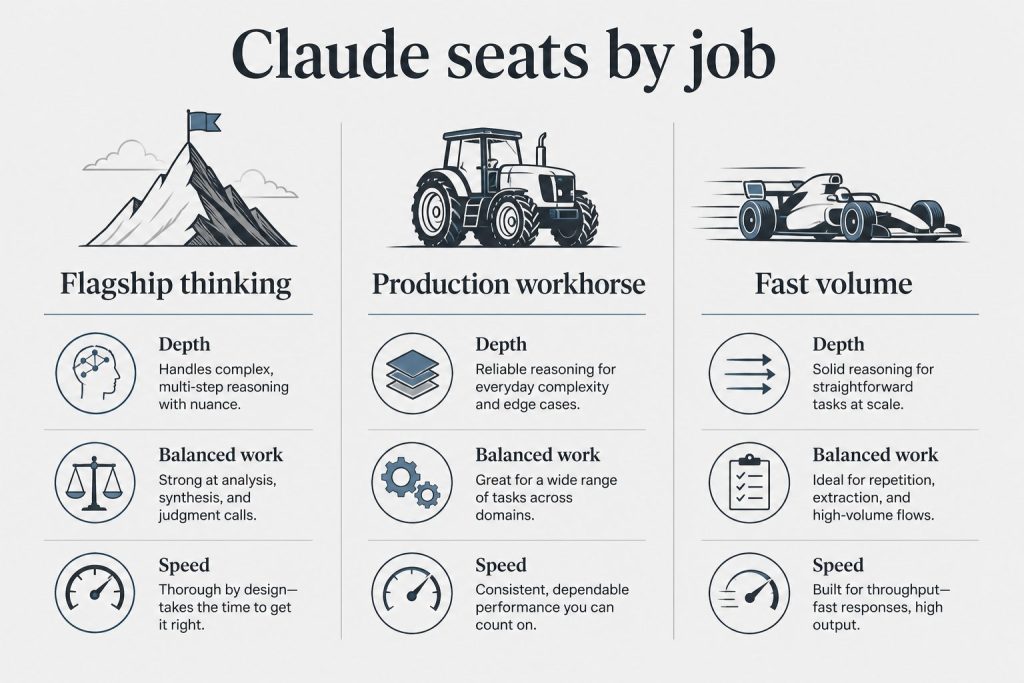
Lineup currency (Sept 2026, verified): Sonnet 5 ($2/$10), Opus 5.5 ($4/$20), Haiku 4.5 ($1/$5), Fable 5.1 ($10/$50). Legacy (still listed): Opus 4.8 ($5/$25), Sonnet 4.6 ($3/$15). Prior note (superseded): This was the production Claude prior lineup claim as of May 15, 2026. For the current lineup see the June 10 roadmap update above: Fable 5 ($10/$50), Opus 4.8 ($5/$25), Sonnet 4.6 ($3/$15), and Haiku 4.5 ($1/$5).
Claude Opus 4.7 — claude-opus-4-7
- Status: Legacy — superseded. The current most capable Claude model is Claude Fable 5; the legacy (still listed) Opus-tier model is Claude Opus 4.8 (legacy — still listed).
- Context window: 1 million tokens at standard pricing (no long-context premium)
- Max output: 128,000 tokens
- Knowledge cutoff: January 2026 (per Anthropic Help Center, verified May 15, 2026)
- Pricing: $5/MTok input, $25/MTok output (base rates)
- Notable changes from 4.6: New tokenizer (uses up to ~35% more tokens for the same text), high-resolution image support up to 2576px / 3.75MP, new xhigh effort level, task budgets beta. Extended thinking budgets and sampling parameters (temperature, top_p, top_k) are removed.
Claude Opus 4.6 — Still generally available, $5/MTok input, $25/MTok output. Released February 2026.
Claude Sonnet 4.6 (legacy — still listed) — $3/MTok input, $15/MTok output. Includes the 1M token context window at standard pricing.
Claude Haiku 4.5 — Cheapest model in the active lineup at $1/MTok input, $5/MTok output.
Earlier models still active or in deprecation: Opus 4.5, Opus 4.1, Sonnet 4.5, and Haiku 3.5 (retired except on Bedrock and Vertex AI). Opus 4 and Sonnet 4 are listed as deprecated.
Knowledge cutoff dates that actually matter
Per Anthropic’s Help Center article on training-data recency (verified May 15, 2026), the most recent generally-available models have January 2026 knowledge cutoffs. That means:
- Anything that happened after January 2026 is outside the model’s training data
- For current events, recent product launches, recent legal or regulatory changes, or very recent technical documentation, the model needs to be given the information directly (in the prompt, via web search, or through tool use) — it can’t be relied on to know it
- The model still has tools available (web search, code execution, file access) that can access post-cutoff information when explicitly invoked
The practical version: don’t ask Claude what happened last week and expect it to know. Hand it the source material and ask it to analyze, summarize, or work with what you’ve given it.
The 1M token context window — what it actually unlocks
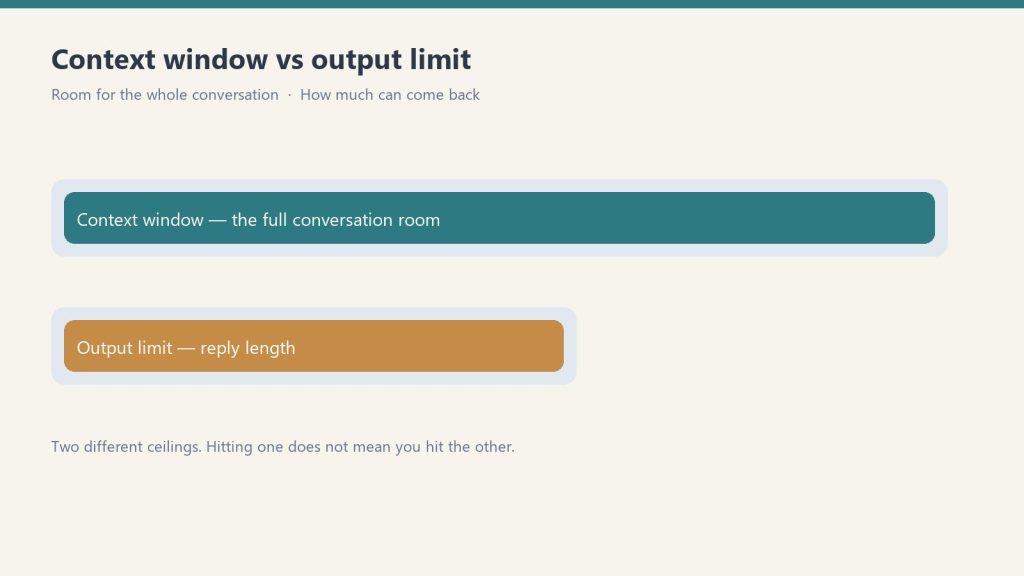
Per Anthropic’s official pricing documentation (verified May 15, 2026), Opus 4.7, Opus 4.6, and Sonnet 4.6 all include the full 1 million token context window at standard pricing. There’s no long-context premium — a 900,000-token request is billed at the same per-token rate as a 9,000-token request.
That’s an enormous practical change from earlier Claude generations. A 1M context window is roughly:
- ~750,000 words of English text
- Most full books or technical specifications in a single context
- ~8 hours of meeting transcripts at typical density
- An entire mid-sized codebase, including most or all source files
Prompt caching and batch processing discounts both apply at standard rates across the full 1M window. For workloads that involve sending the same large document repeatedly with different questions, prompt caching against a 1M context is one of the highest-leverage cost optimizations available in the current Claude lineup.
What’s reported about Claude 5 (and what we cannot independently verify)
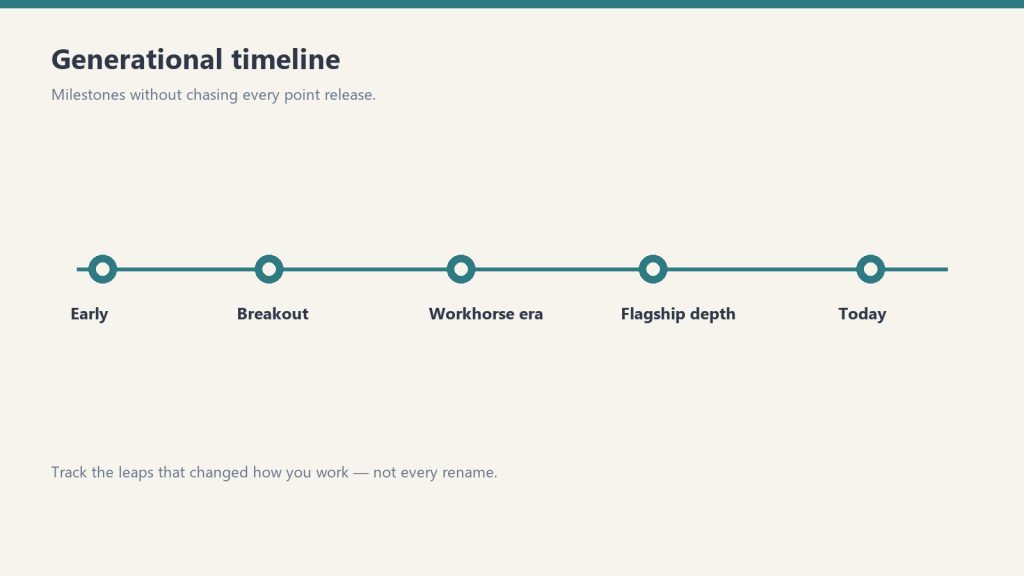
Multiple third-party sources reported in early 2026 that Anthropic CEO Dario Amodei confirmed a Q2 2026 launch window for Claude 5 in a TechCrunch interview published February 1, 2026. The same sources cited an internal-roadmap leak suggesting an April 28 target date.
What we can verify as of May 15, 2026:
- When this roadmap was written, Anthropic’s documentation listed Opus 4.7 as the latest production model. That has since advanced: Opus 4.8 and the Fable 5 / Mythos 5 top tier shipped in June 2026, and Claude Sonnet 5 was released June 30, 2026 — so the “5” generation is now real by name, arriving as Sonnet 5 plus the Fable / Mythos tier rather than a single “Claude 5” release.
- The third-party reporting on Claude 5 specifications (500K context window, 20-25% benchmark improvements, ~90%+ on SWE-bench Verified) is widely repeated but, as far as we could verify, is not sourced to an Anthropic-published document.
The honest read: Q2 2026 ends June 30, so if the reported timeline is accurate, an official Claude 5 announcement could plausibly land in the next several weeks. If you’re planning a project that depends on a specific Claude 5 capability, build against the legacy (still listed) lineup — Claude Opus 4.8 (legacy — still listed) or Fable 5 for maximum capability, or Claude Sonnet 5 (released June 30, 2026) for near-Opus performance at lower cost.
Claude Sonnet 5 — separate question
Update, July 6, 2026: Claude Sonnet 5 shipped on June 30, 2026 — the early 2026 third-party reporting on a “Sonnet 5” codename turned out to be premature, but a real Sonnet 5 model has since been officially released. It carries the model ID claude-sonnet-5, is priced at $3/$15 per million tokens standard ($2/$10 introductory through August 31, 2026), and is now the default Sonnet-tier model for Free and Pro users.
Claude Sonnet 5 — separate question
Update, July 6, 2026: Claude Sonnet 5 shipped on June 30, 2026 — the early 2026 third-party reporting on a “Sonnet 5” codename turned out to be premature, but a real Sonnet 5 model has since been officially released. It carries the model ID claude-sonnet-5, is priced at $3/$15 per million tokens standard ($2/$10 introductory through August 31, 2026), and is now the default Sonnet-tier model for Free and Pro users.
If you’re tracking model identifiers for production use, the currently valid published model IDs are claude-fable-5, claude-opus-4-8, claude-sonnet-5, and claude-haiku-4-5-20251001.
How to actually keep up with Claude releases
The signal-to-noise ratio in the model-release coverage space is not great. Two practical sources are reliable enough to bookmark:
- Anthropic’s news page at anthropic.com/news — first-party launch announcements with full model details
- Claude API release notes at the Help Center release-notes page — concise, dated, version-specific
For breaking changes that affect production code, the Anthropic platform documentation publishes per-version “What’s new” pages (Opus 4.7’s, for example, lists every API breaking change at launch). Those are the canonical reference for migration work.
For everything else — analyst commentary, predictions, leak coverage — treat it as commentary, not as fact.
What this means for your work today
Based on what is verifiable on May 15, 2026:
- If you need the most capable Claude model available, use Opus 4.7. It has the largest context window, the highest knowledge cutoff (January 2026), and the strongest reported coding/agentic performance.
- If you need cost-efficient production work, use Sonnet 4.6. Same 1M context, much lower per-token rates than Opus.
- If you need cheap, fast, simple-task workloads, use Haiku 4.5.
- If you’re planning around Claude 5, treat the timing as unconfirmed and build resilience into your code (don’t hard-code model IDs that don’t exist yet).
- For knowledge cutoff-sensitive use cases (current events, recent regulatory data, post-January 2026 news), always provide the information directly or use tool calls — don’t rely on training data alone.
Related on Tygart Media: how to use Claude · Anthropic API key.
Frequently Asked Questions
What is the knowledge cutoff for Claude Opus 4.7?
January 2026, per Anthropic’s Help Center documentation verified May 15, 2026. Information about events, products, or developments after that date is not in the model’s training data and must be provided directly.
What is the largest Claude context window currently available?
1 million tokens, available on Claude Fable 5, Claude Opus 4.8, and Claude Sonnet 4.6 at standard pricing with no long-context premium. Claude Haiku 4.5 has a 200K context window.
Has Anthropic officially announced Claude 5?
Update, July 6, 2026: Rather than a single “Claude 5,” Anthropic shipped three distinct successor models: Claude Fable 5 (the new top tier above Opus), Claude Opus 4.8, and Claude Sonnet 5 (released June 30, 2026). Early 2026 reporting anticipated a unified “Claude 5” release, but the actual rollout split the generation across these three named models instead.
Is Claude Sonnet 5 a real model I can use?
Update, July 6, 2026: Yes — Claude Sonnet 5 shipped on June 30, 2026 (model ID claude-sonnet-5) and is now the current default Sonnet-tier model, priced at $3/$15 per million tokens standard ($2/$10 introductory through August 31, 2026).
Why does Opus 4.7 use more tokens than Opus 4.6 for the same text?
Opus 4.7 ships with a new tokenizer that contributes to its improved performance but uses approximately 1x to 1.35x as many tokens for the same input text compared to previous models. Anthropic recommends increasing max_tokens headroom and adjusting compaction triggers accordingly.
Are sampling parameters (temperature, top_p, top_k) still supported on Opus 4.7?
No. Setting temperature, top_p, or top_k to any non-default value on Opus 4.7 returns a 400 error. Migration guidance: omit these parameters and use prompting to guide the model’s behavior.
Related Reading
- Claude Agent SDK Dual-Bucket Billing
- Claude MCP Token Cost Reality
- Amazon Prime Student + Claude Pro
How we sourced this
Sources reviewed May 15, 2026:
- Anthropic Pricing Documentation: docs.claude.com/en/docs/about-claude/pricing (primary source for model lineup, per-token rates, context window pricing)
- Anthropic Platform Documentation: What’s new in Claude Opus 4.7 (primary source for Opus 4.7 features, breaking changes, tokenizer, image support, task budgets)
- Anthropic Help Center: How up-to-date is Claude’s training data? (primary source for knowledge cutoff dates)
- Anthropic news page (primary source check for Claude 5 announcement — none located as of May 15, 2026)
- Third-party reporting on Claude 5 / Sonnet 5 (TechCrunch interview reports, Claude5.com, Fello AI, WaveSpeed Blog) — cited as reported but not independently confirmed against primary sources
This article applies the verified vs. reported distinction throughout. If any of the unverified third-party claims are confirmed by Anthropic in the weeks after this article’s date stamp, the relevant sections should be updated to reflect the new primary-source documentation.
Get The Signal
What we actually ran, what it measured, and what it means for a restoration shop — every week, including the flops.
Leave a Reply