Starting October 1, Google will charge you for the calls you don’t answer. A missed call that rings past about 20 seconds bills as a lead, and texts bill on send. Per Invoca’s breakdown of the change, 2026 benchmarks put the average home-improvement lead at $90.92.
That’s the first bill. It’s itemized, and it stings.
The second bill never shows up on an invoice.
The first bill: $90 for the ring you missed
The math is simple and brutal. Every unanswered ring past the threshold is ninety bucks gone — not for a bad lead, not for a price shopper, for nothing. Nobody called back. Nobody got helped. You paid for the privilege of missing it.
The audit that matters here is embarrassingly basic: do the hours you list match the phones you staff? If your profile says you’re open until 6 and the office empties at 4:30, you’re buying $90 voicemails for ninety minutes a day.
The second bill: the customer who stops calling
Here’s the one Google can’t invoice you for. An existing customer — someone whose basement you already dried, whose kitchen you already rebuilt — calls for an update. “Where’s my tech?” “Did the adjuster call you back?” They get voicemail. They leave a message. Nobody triages it until tomorrow.
They don’t complain. They just don’t become a repeat customer. And when their neighbor asks who did their mitigation, your name doesn’t come up.
Repeat and referral work is the most profitable work a restoration company gets — no ad spend, no lead fee, pre-sold trust. Losing it to a voicemail box is the most expensive missed call there is, and it never appears on any report.
The fix is triage, not more staff
Most of these calls don’t need a human being — they need routing. A new lead needs a dispatcher, now. A status update needs whoever holds the job file, with the actual answer. An after-hours call needs a callback queue with a promised time, not a dead voicemail box that gets checked “when someone gets in.”
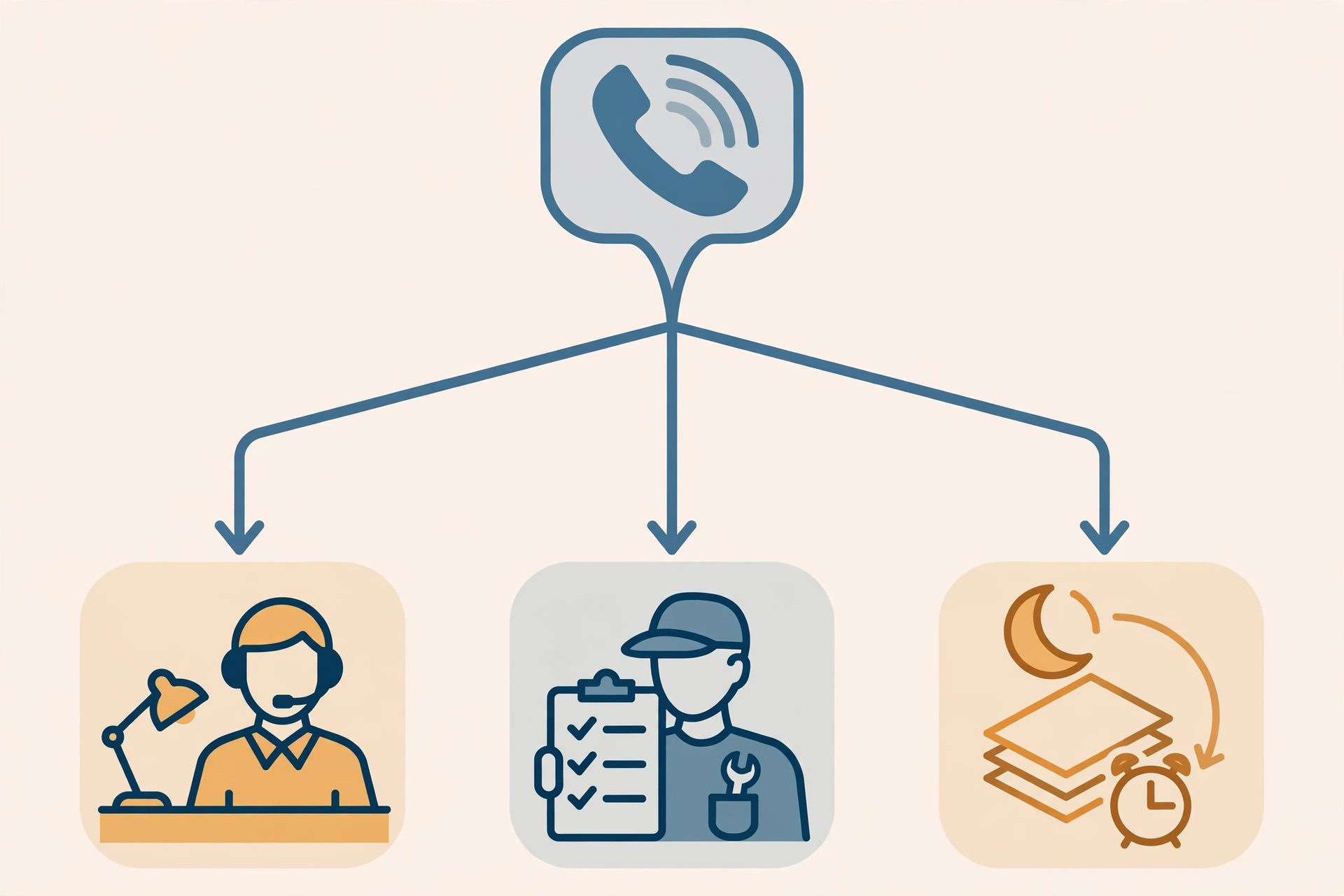
This is the whole phone-first argument in one story. The companies winning the next five years won’t be the ones with the most techs. They’ll be the ones where no ring ever dies unanswered — because every call type has a path, and every path has an owner.
The four-question audit
- Do your listed hours match staffed phones? Every gap is a $90 donation to Google.
- What happens to a call at 6:15 PM? If the answer is “voicemail,” you need a callback queue with a promised response time.
- Who owns status-update calls? If it’s “whoever picks up,” nobody owns it. Route them to the job file.
- When did you last mystery-call yourself? Call your own number after hours tonight. Whatever you hear is what your customers hear.
October 1 just put a price tag on the first kind of missed call. The second kind was always expensive — now you have a reason to fix both.
Leave a Reply