Restoration Lead Generation - Tygart Media

Category: Restoration Lead Generation

How restoration companies generate inbound, paid, and exclusive leads. Covers Google Ads, LSAs, organic, vendor networks, and lead-buying platforms.

  • Do Not Treat a $91 Restoration CPL as a Target. It Is a Proxy.

    Do Not Treat a $91 Restoration CPL as a Target. It Is a Proxy.

    Inspired by Revved Digital. Original report: Revved Digital 2026 Home Service Marketing Benchmark Report. This is a new Tygart article for restoration contractors. We kept the mechanism, added first-party field knowledge, and did not reprint the piece.

    The useful sentence in that report is the first one: benchmarks only work when clicks, leads, bookings, sold jobs, and customers stay separate. The table then shows restoration and water damage at an $8.33 CPC and $90.92 CPL. Those are LocaliQ Home & Home Improvement proxies, not a national restoration average. Roofing sits at $228 CPL with real trade data. Plumbing at $129. Treat the restoration row as context, not a quota.

    There is no credible nationwide LSA CPL, SEO price, website conversion rate, or review-count target across those nine trades. The honest public numbers that do transfer:

    • CallRail: 97% of homeowners say speed influences whom they hire. 41% of online-booked jobs arrive after hours.
    • ServiceTitan (2022, cross-trade): 42% typical call booking rate. Old, and not restoration-specific. Still a better reference than “we feel busy.”
    • Planning range of 5–10% of revenue is general small-business guidance, not a measured restoration average.

    Build the number backward. How many more losses can the crews take. What is allowable CAC from gross profit on water versus sewage versus fire. What is the real lead-to-customer rate on the night board. Fund channels from that. A shop spending 5% with a dead after-hours line wastes more than a shop spending 10% that answers.

    Compare your pin to the shops ranking for water in your city — count, recency, replies — not to a national review target that does not exist.

  • When LSAs Move Into Google Ads, a Sloppy Pin Can Pause Paid Water Leads

    When LSAs Move Into Google Ads, a Sloppy Pin Can Pause Paid Water Leads

    Inspired by Revved Digital. Original article: Local Services Ads Migration to Google Ads: What Contractors Need to Do Before August 2026. This is a new Tygart article for restoration contractors. We kept the mechanism, added first-party field knowledge, and did not reprint the piece.

    Google is moving Local Services Ads into Google Ads. The ads are not dying. Pay-per-lead stays. Search and Maps stay. What changes is the dashboard, the bidding, and the fact that the old reports will not come with you.

    First U.S. wave is August 2026 for listed home-service trades. Service-area businesses without a storefront are later in 2026. Restoration shops that live on LSAs should assume they are in that line and act before the 14-day email.

    What to do this week

    • Export 12 months: spend, charged leads, disputed leads, cost per lead, category, area. Owners need a sheet, not a login that is about to vanish.
    • Screenshot the current setup: budget, categories, areas, hours, who answers, who administers.
    • Split economics after migration. Water extract and sewage rebuild should not share one target CPA. Google is collapsing category targets into one campaign unless you separate them.
    • Lock who can edit the Google Business Profile. Name, address, hours, and primary category will sync into the paid campaign. A casual category tweak can pause ads for a verification window.
    • Plan two quiet weeks. Google says performance can wobble while the account settles. Compare against the export, not against Tuesday.

    Lead history and recordings move. The performance baseline does not. If you cannot say what a good water lead cost last winter, you will not know whether the new dashboard is worse or just different.

  • Tag the Source on Every Water Call or You Cannot Spend Next Month

    Tag the Source on Every Water Call or You Cannot Spend Next Month

    Inspired by CustomerFlows. Original article: How to Track Marketing ROI as a Contractor (No Marketing Team). This is a new Tygart article for restoration contractors. We kept the mechanism, added first-party field knowledge, and did not reprint the piece.

    Most shops know what they spent on ads and what they invoiced. The gap between those two numbers is guesswork. The original system is three steps and does not need a marketing department: tag every lead, keep the tag until the job is won or lost, compare revenue and spend on the first of the month.

    Restoration sources worth a field

    • Google Ads / LSAs
    • Organic / Maps
    • Plumber or roofer referral
    • Adjuster or TPA
    • Property manager
    • Storm-lead vendor
    • Yard sign / truck wrap
    • “How did you hear about us?” when none of the above fire

    If the source is blank, the lead is unattributable. Unattributable leads make every channel look the same. A spreadsheet works until volume breaks it. A CRM is better because the tag has to survive from the night board to the invoice.

    ROI is (closed revenue minus spend) divided by spend, by source. The original example is the owner who almost killed direct mail because it felt expensive — it was the second-best channel. Restoration version: the plumber list looks free and the marketplace leads look busy. One of those is usually lying. Monthly, not yearly. Weather moves the numbers too fast for an annual glance.

    Clicks are not ROI. A $25 shared water lead that never books costs more than a $90 Maps call that becomes a sewage job. Cost per acquired customer is the number that should move the budget.

  • How a Restoration Shop Actually Gets Into the Maps 3-Pack

    How a Restoration Shop Actually Gets Into the Maps 3-Pack

    Inspired by Revved Digital. Original article: How to Rank Your Plumbing Business Higher on Google Maps. This is a new Tygart article for restoration contractors. We kept the mechanism, added first-party field knowledge, and did not reprint the piece.

    A burst pipe at 9 p.m. is the plumber version. Standing water in the living room at 11 p.m. is ours. Both searches land on three pins with a tap-to-call button. If you are not in that pack, you are not in the race.

    Google still uses three factors. Relevance: does the profile match “emergency water extraction” or does it say Contractor. Distance: you cannot fake proximity, but you can list the cities you actually hit. Prominence: reviews, citations, branded search, a site that agrees with the pin. Once relevance and distance are good enough, prominence is the fight.

    The restoration version of the plumber checklist

    • Primary category Water Damage Restoration Company — not Contractor, not Home Improvement.
    • Services in the words they type: emergency water extraction, sewage backup cleanup, mold remediation, fire and smoke cleanup.
    • Service areas you can staff in 45 minutes. Twenty cities you never photograph will not help.
    • Hours that match the night board. 9–5 on a 24-hour shop is a closed sign.
    • Photos of trucks, containment, meters, the room after. Not a picnic.
    • NAP identical on the site, the pin, Apple, Yelp, BBB. “St.” versus “Street” still counts as drift.
    • Reviews every week. A pile from 2023 and silence since looks closed.
    • Reply to every review. Ignore a one-star mitigation complaint and the next homeowner reads that silence.

    Do not keyword-stuff the legal name. “Emergency Water Damage | 24/7 | Licensed” in the title is how profiles get suspended. Use the real name. Put the emergency language in services, description, and the page the pin points to.

    Sixty to ninety days is the honest window if the file starts messy. Fourth to third in a crowded market takes longer. Stopping the weekly work is how a shop falls out of the pack the week the weather finally turns.

  • Five Numbers Tell You If Restoration Marketing Is Working

    Five Numbers Tell You If Restoration Marketing Is Working

    Inspired by MassMonopoly. Original article: The Contractor Marketing Scorecard: 5 Numbers That Tell You If Your Ads Are Working. This is a new Tygart article for restoration contractors. We kept the mechanism, added first-party field knowledge, and did not reprint the piece.

    Most shops do not have a “no marketing” problem. They have a no-clarity problem. Ads, LSAs, the pin, a website from 2019, referrals from plumbers — when the board goes quiet everyone guesses. The original scorecard says you can run the company on five numbers: leads by source, cost per lead, booking rate, close rate, revenue per new job.

    How those five read on a water job

    • Leads by source. Maps, LSAs, plumber referral, adjuster, storm vendor, website form. If you cannot name the source, you cannot feed it.
    • CPL. Spend divided by leads. Cheap sewage-marketplace names are not cheap if three other trucks have the same address.
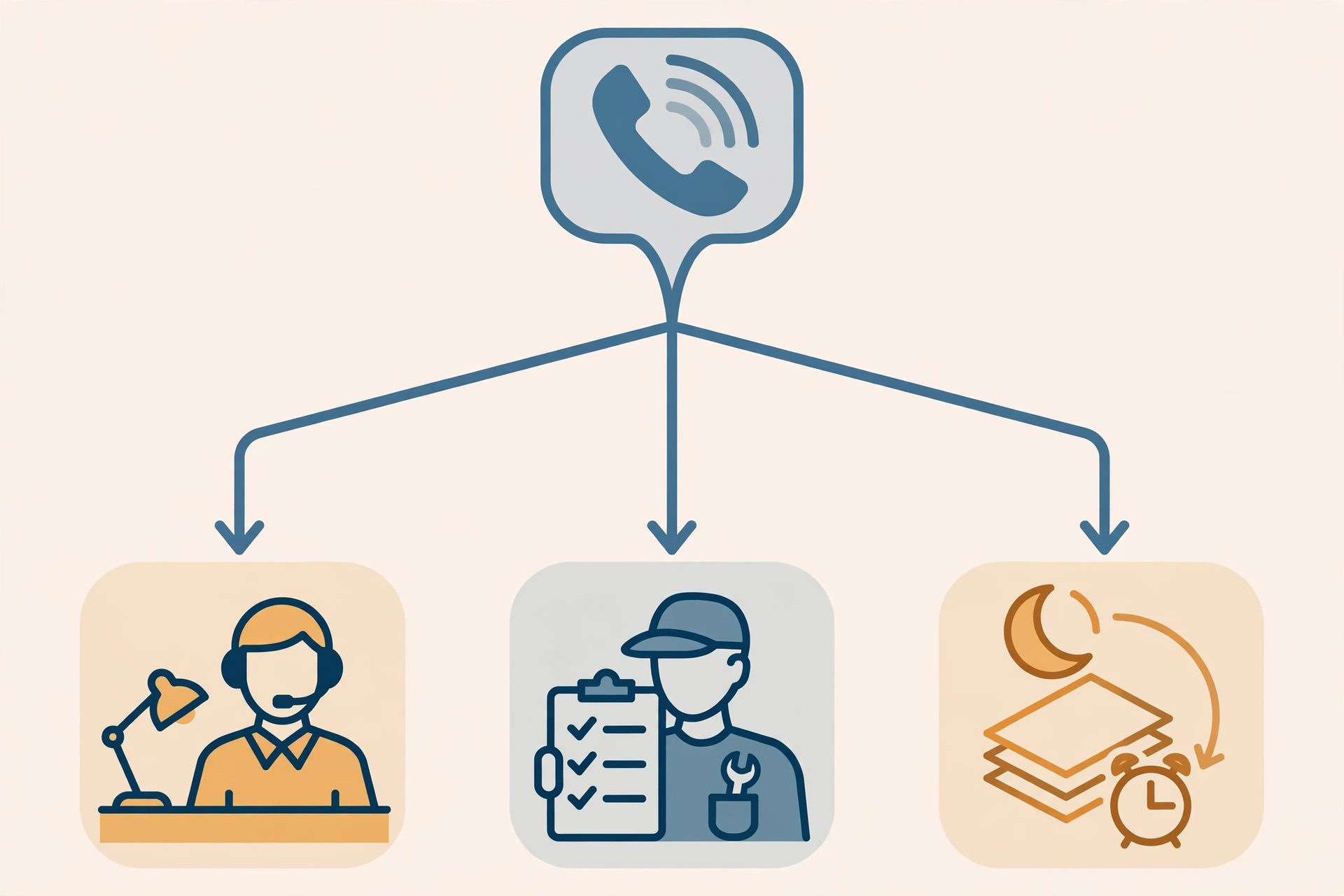
    • Booking rate. Qualified conversations that become a crew on site. This is where two-ring failures hide. Visibility looks fine. The night board leaked.
    • Close rate. On-site inspections that become authorized work. Weak close is a estimator and documentation problem, not an ads problem.
    • Revenue per new job. A $400 extract and a $14k sewage rebuild cannot share one “average ticket” if you are deciding what to spend to win the next one.

    Read the pattern, not one cell

    Leads down, CPL up, booking and close steady: visibility. Leads fine, booking weak: intake. Volume up, ticket down: you bought the wrong work. Do not kill SEO because Tuesday was dry. Do not buy more ads because the CSR lets forms sit until morning.

    Start with a sheet. Source, date, booked yes/no, closed yes/no, invoice. Split water, mold, and fire when you can. The five numbers are the implementation. The software can wait.

  • If the Service Area Is Blank, Google Thinks You Only Work at the Shop

    If the Service Area Is Blank, Google Thinks You Only Work at the Shop

    Inspired by Local SEO Bot (@localseobot). Original post: GBP service area settings control how far Google will rank you. This is a new Tygart article for restoration contractors. We kept the mechanism, added first-party field knowledge, and did not reprint the thread.

    If you serve the house, not a storefront, the service-area list is how far Maps will even consider you. Leave it blank and you are invisible past the office door. Draw a 90-mile blob you cannot staff and Google learns you are a liar when the reviews and job photos never leave one county.

    List the cities you actually hit in 45 minutes. Match that list on the location page. Do not add a distant suburb just because a storm might hit it someday. A second real market needs a second real pin.

  • Do Not Negative-Keyword the Profitable Restoration Jobs

    Do Not Negative-Keyword the Profitable Restoration Jobs

    Inspired by Andrew Palacios (@drewdoesmarktng). Original post: most contractor negative keyword lists are too aggressive. This is a new Tygart article for restoration contractors. We kept the mechanism, added first-party field knowledge, and did not reprint the thread.

    Blocking “jobs,” “salary,” and “DIY how to” is useful. Blocking an entire profitable service because the query looked ugly in a report is how shops stop paying for sewage and then wonder why only carpet-dry calls remain.

    Before you add an exclusion, ask: is this a person we would roll for? “Emergency water extraction near me at night” is a job. “How to dry carpet with fans” is not. “Mold test kit Walmart” is not. “Sewage backup cleanup cost” often is.

    Review the search-term list weekly with someone who has stood in a wet house. Do not let a junior media buyer delete Category 3 because the word “backup” looked messy.

  • A 60-Second Water Call Is Not a Conversion

    A 60-Second Water Call Is Not a Conversion

    Inspired by Andrew Palacios (@drewdoesmarktng). Original post: a 60-second call is not a useful Google Ads conversion. This is a new Tygart article for restoration contractors. We kept the mechanism, added first-party field knowledge, and did not reprint the thread.

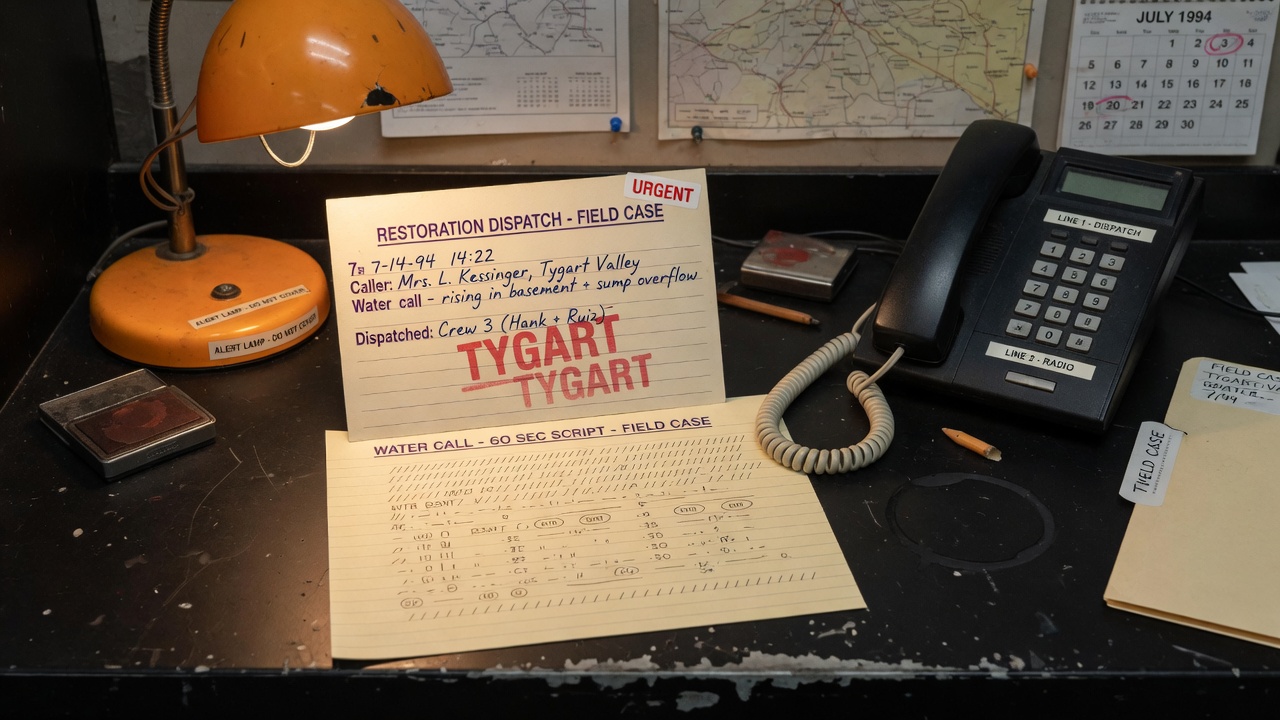
    A homeowner who dials, hears a menu, and hangs up still counts as a conversion if the only rule is “call lasted 60 seconds.” That number will make a dry week look busy and a paid campaign look smart.

    Split the events. Call attempt. Qualified conversation — zip in range, Category 1–3 named, someone who can authorize work. Booked loss. Sold job. Those four numbers tell you whether Maps and ads are feeding trucks or feeding a dashboard.

    Night-board noise is the restoration version of a 60-second fake win. Count it separately or you will scale the wrong channel.

  • If the Listing Says 9 to 5, You Missed the Burst Pipe

    If the Listing Says 9 to 5, You Missed the Burst Pipe

    Inspired by Dylan Oliva (@DylanOlivaGrows). Original post: A1 set hours to 24/7 because the best calls come after work. This is a new Tygart article for restoration contractors. We kept the mechanism, added first-party field knowledge, and did not reprint the thread.

    Garage-door demand spikes when people get home. Water demand spikes when they get home and see the ceiling, or at 1 a.m. when the supply line goes. A Google Business Profile set to 9–5 tells that homeowner you are closed. Many of them will tap the listing that says Open.

    If the shop truly rolls at night, the pin should say so. Hours are not a branding flex. They are a filter. Lie and you will collect angry reviews about a voicemail at 10 p.m.

    Pair the hours with a two-ring path. 24/7 on the listing plus a menu tree is still closed.

  • Water and Mold Should Not Share One ROAS Number

    Water and Mold Should Not Share One ROAS Number

    Inspired by Noah Igler (@noahiglerSEO). Original post: stop trusting one company-wide ROAS past $5M. This is a new Tygart article for restoration contractors. We kept the mechanism, added first-party field knowledge, and did not reprint the thread.

    Dallas sewer and Plano drain clears are different businesses in one dashboard. Restoration does the same thing with one number labeled “marketing ROAS.” A cheap extract can look busy while sewage and fire are paying the trucks — or the reverse.

    Grid it. Services down the left: water mitigation, sewage, mold, fire/smoke, pack-out, rebuild. Markets across the top. For each cell: spend, qualified calls, booked jobs, gross profit, close rate, average ticket, Maps coverage, crew capacity.

    The next dollar goes where demand, margin, close rate, and a free crew line up. Blended ROAS is how shops keep buying the wrong zip.