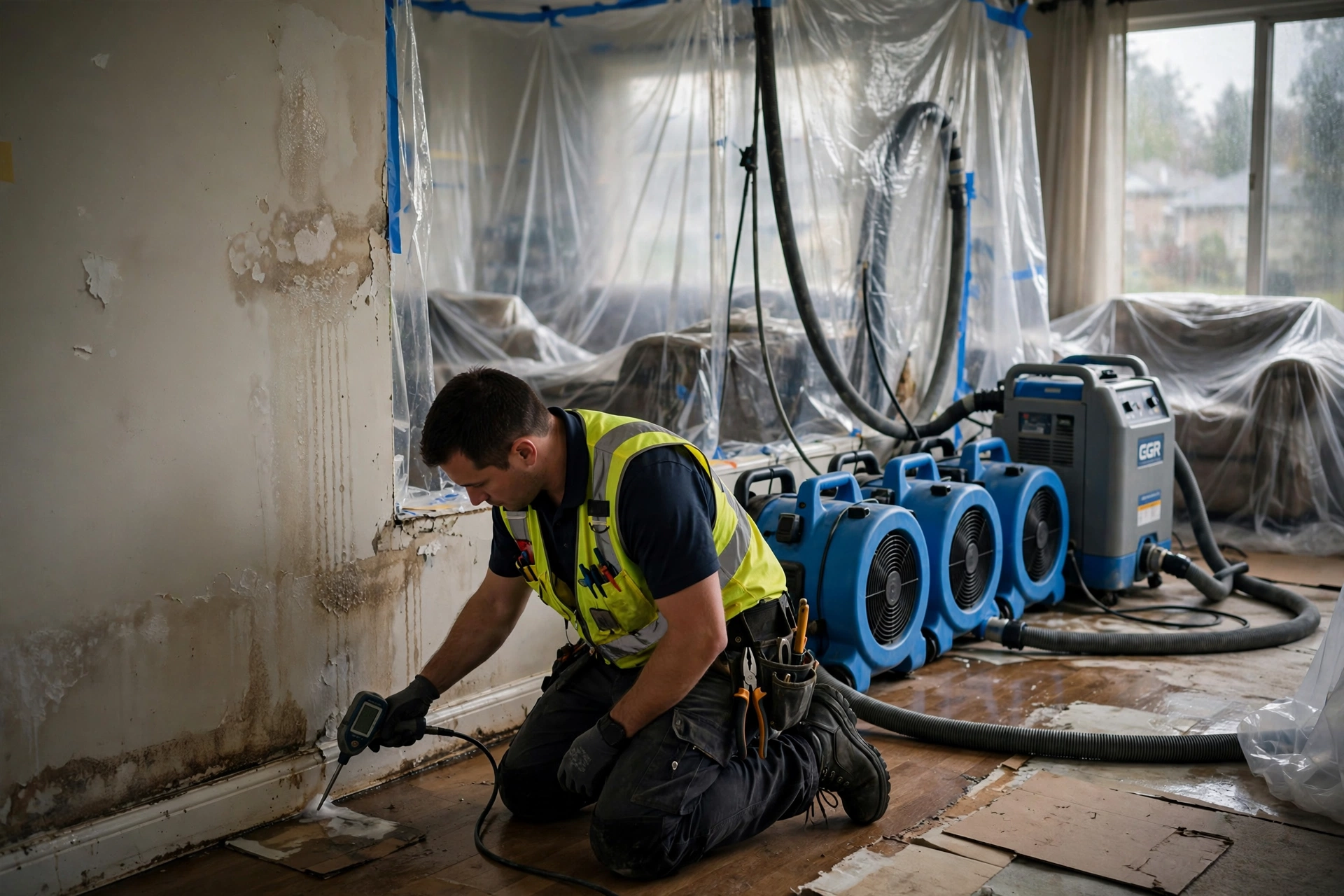
It started in a Facebook group in Anderson, Indiana: homeowners trading notes on 25–50% deposits, contractors answering that $12–15K in rental gear has to sit on site before the drying starts. The same fight is happening in public, all over the internet, and it’s worth reading in the combatants’ own words.

Camp one: the contractors
Entrepreneur Nick Ayala’s reel (13K likes, 250 comments) takes on the client who says “I’ll pay you when it’s done.” His argument: starting work without a deposit “makes the freelancer the client’s bank — fronting labor, materials, calendar time, and 100% of the risk for free.”
“Makes the freelancer the client’s bank — fronting labor, materials, calendar time, and 100% of the risk for free.”
— Nick Ayala, Instagram
A contractor posting as ProWall Paints & Plaster admits he “used to think asking for 50% upfront was ‘crazy,’ but now understands it is necessary” — the deposit covers materials, labor, scheduling, and mobilization. And John at Bluestone Construction puts it the way only a contractor can: “You pay 100% for any item at Canadian Tire… Yet in home renos where he locks the door and has complete control, he thinks he doesn’t have to pay!!”
Camp two: the homeowners
The rebuttal is just as vivid. One homeowner’s Instagram rant is captioned “A fool, and his money will soon be parted” — he will not pay half before work starts, period. A Facebook post that drew 500 comments is just a screenshot of a text exchange titled “No Deposit = No Work”: the contractor demands 50% by Zelle, the customer replies “Oh no I don’t pay no until the work is completed” and “That is unsafe.”
“Oh no I don’t pay no until the work is completed.”
— a customer, in a 500-comment Facebook thread
And the fear isn’t abstract — a Moreno Valley community post with 810 comments documents a painter who took 50% cash upfront, missed days, asked for rent money, and quit.
The law has opinions too
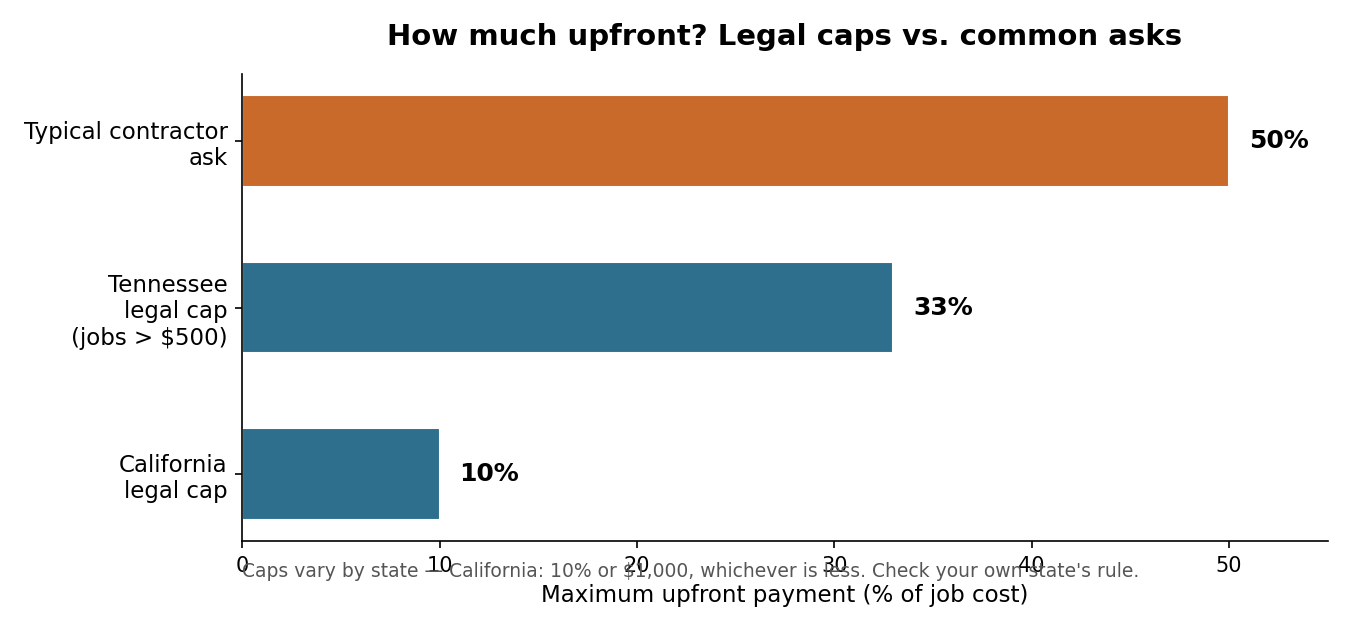
Multiple states cap deposits by statute — California at 10% or $1,000, Tennessee at 33% for jobs over $500 — and UK prime minister Andy Burnham just weighed in on the same pattern (“take a big deposit, do half a job, then disappear”), backing escrow-style release: “Do the work, get paid. It’s as simple as that.”
Now the restoration spin
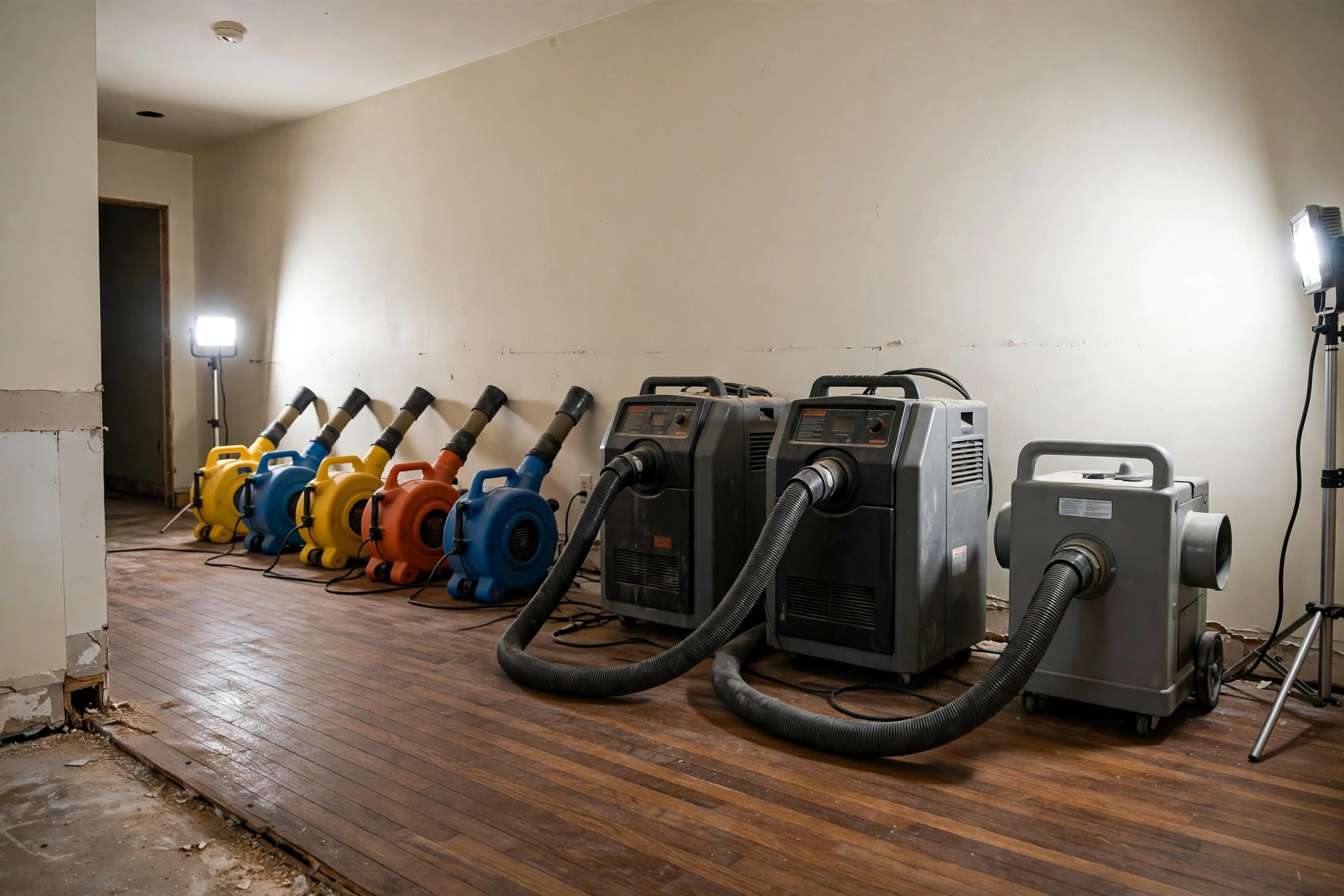
This trade has a wrinkle the general debate misses. In restoration, the contractor’s number is real in a specific way: dehumidifiers, air movers, HEPA scrubbers, containment — the rental clock starts when the gear rolls off the truck, and a serious loss can mean twelve to fifteen grand of equipment sitting in your living room before the first board is cut. That’s mobilization cost, and a deposit against it is legitimate.
But here’s the part homeowners in that Anderson thread are really asking about: on an insured loss, the homeowner often isn’t the one paying — the carrier is. The deposit fight on a covered claim is about who fronts cash while the claim processes: the deductible, the first invoice, the gap between “work starts today” and “the check arrives in three weeks.” A good restoration contractor structures deposits around the claim, not against the homeowner.
The middle ground
Assembled from the sanest voices in these threads:
- Tie the deposit to something real. A DIYnot commenter nailed it: “a reasonable deposit is the cost of the equipment to be installed plus the sundry materials.” In restoration, that means the deposit maps to mobilization — gear on site — not an arbitrary 50%.
- Spell out the deposit rules in writing. Kevin Page on LinkedIn: “Spell out plainly whether the deposit is non-refundable, or exactly how it gets prorated if things end early.”
- Pay by phase, not by percentage. A BiggerPockets investor: “You give some unscrupulous Contrs 1/3 up front and they’ll just take off.” His fix: invoice per phase, pay each phase in full when complete and inspected.
- Remember who holds the leverage. “Whoever controls the money controls the job,” writes one builder — which is exactly why staged payments beat lump deposits. Money follows work.
- Documentation is the tell. Daily moisture readings, psychrometric logs, photos at every stage. A contractor who documents is a contractor who finishes — and those are the same records your adjuster needs.
The deposit isn’t the problem. The missing paperwork is. Both camps in this fight want the same thing — to not get burned — and the industry just hasn’t made the middle ground standard yet.
Leave a Reply