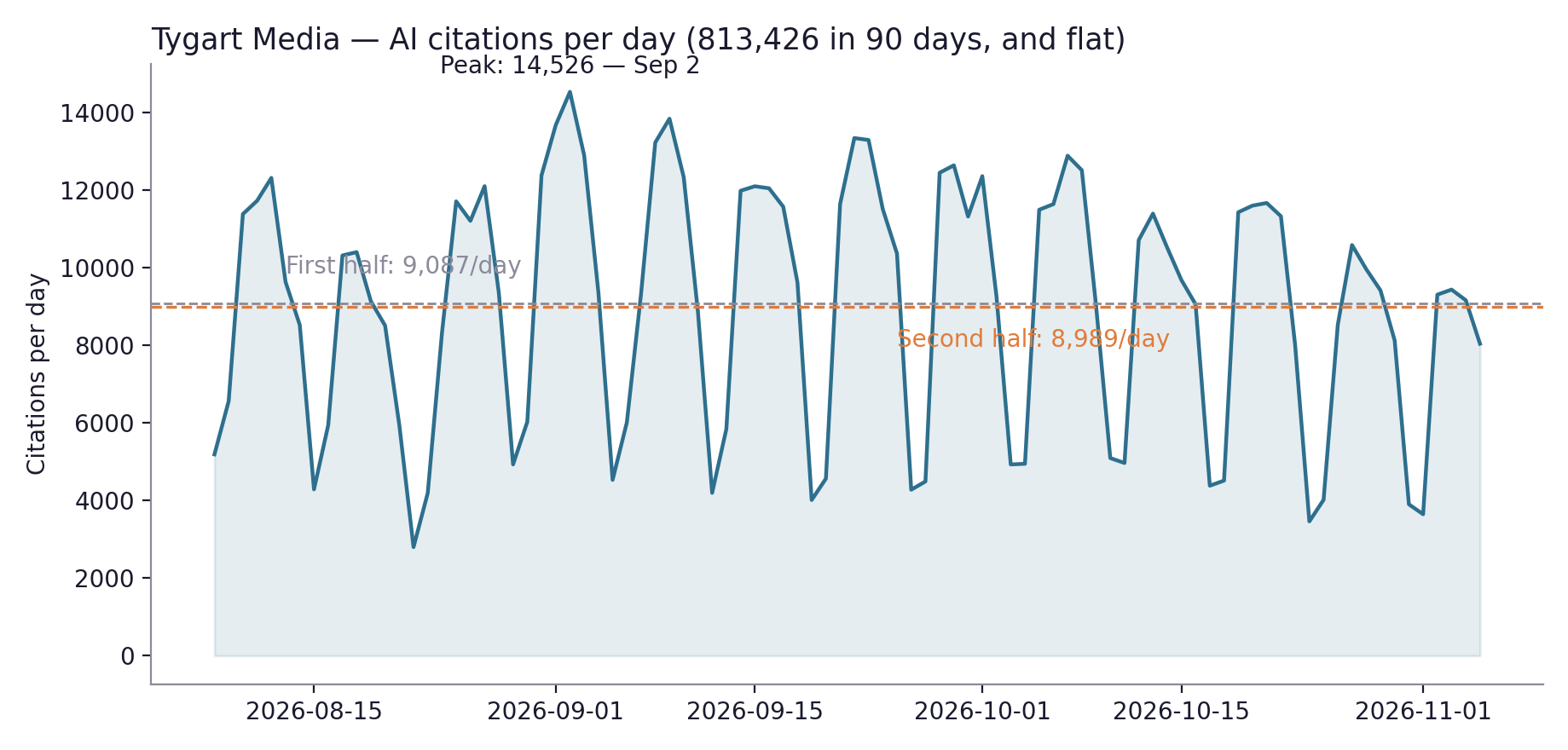
This site — tygartmedia.com, the one you’re reading — earned 813,426 AI citations in ninety days. That’s the whole portfolio: 578 cited pages, 1,698 different questions that assistants asked and answered with our work. One page holds 244,307 of them.
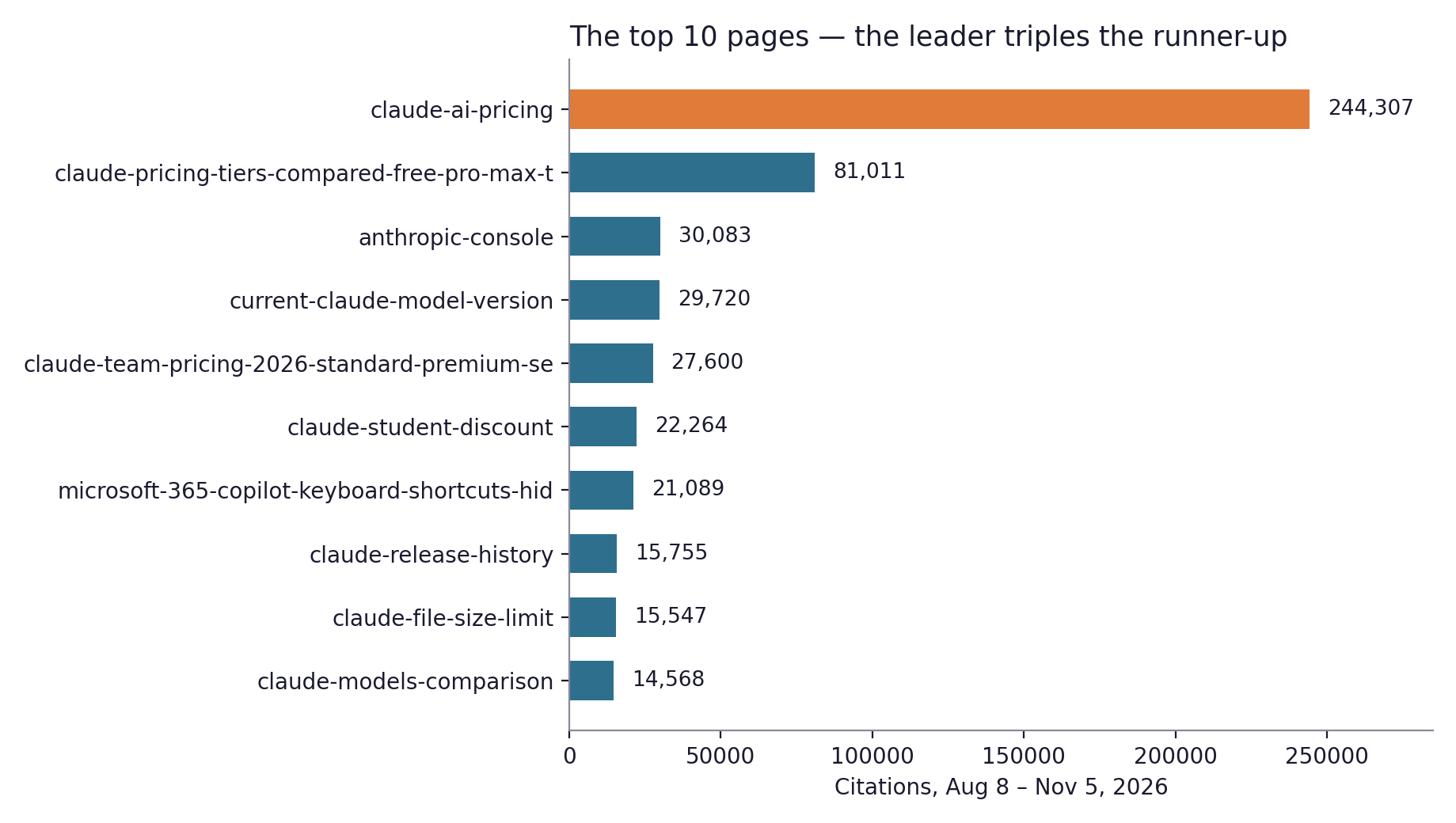
The page is our Claude pricing page: a plain, kept-current answer to what Claude costs. It holds 30.8% of everything this site earned. The runner-up — our pricing-tiers comparison — holds 81,011. The leader triples it.
This is Receipts No. 3, and it’s the uncomfortable one. The first two pieces in this series were about growth — a hospital site stepping up, two doors built in a night. This one is about shape: what it means when a third of your citation count lives at one address.
Watch the 60-second version: Why does one page hold 244,307 of this site’s AI citations? — the same receipts in 49 seconds, chapters matched to the sections below.
The count
The window is August 8 to November 5, 2026, from Bing Webmaster Tools’ AI Performance report — the same instrument as the rest of this series. The daily series sums to 813,426; the page-level table sums to 792,317. Bing’s own views disagree by 2.6%, and Bing prints a note saying totals may differ across views. We use each view for what it measures and say which is which, every time.
The site’s halves are flat: 9,087 citations a day in the first half of the window, 8,989 a day in the second. Peak day: September 2, with 14,526. Nothing about the total is a growth story. The total is a plateau — and a plateau is exactly where shape matters, because the composition is the whole story.
Get The Signal
What we actually ran, what it measured, and what it means for a restoration shop — every week, including the flops.
The shape of the portfolio
Read the page table by rank and the portfolio stops looking like a portfolio:
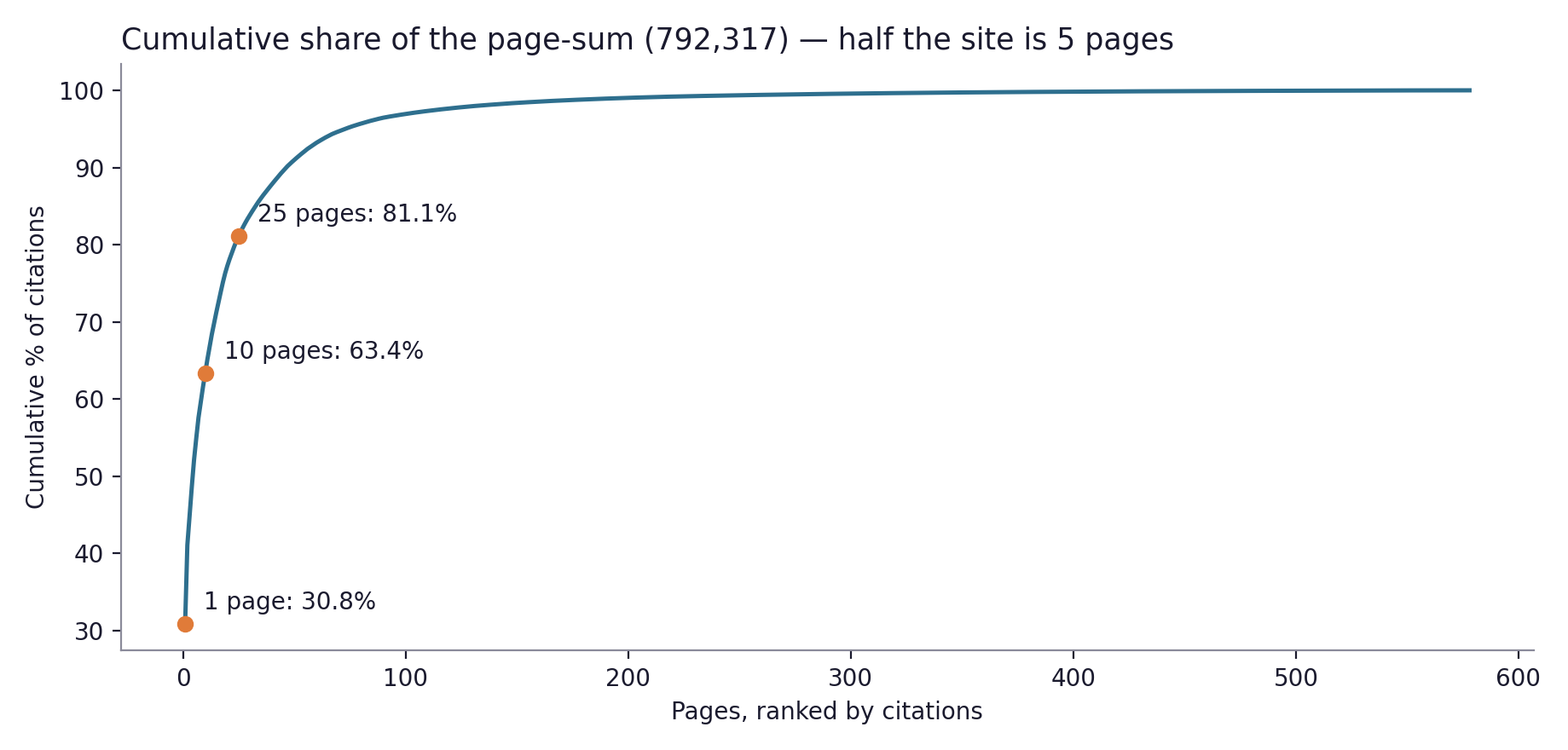
- 1 page holds 30.8% of the page-sum.
- 3 pages hold 44.9%. 5 pages hold 52.1% — a majority of the site is five addresses.
- 10 pages hold 63.4%. 25 pages hold 81.1%.
- The remaining 553 pages share what’s left — about 19% between them.
And the concentration has a subject. Thirty-six of the 578 pages are pricing pages — their addresses carry “pricing” or “cost” — and together they hold 396,978 citations: 50.1% of everything. Half this site’s citation count is one question family, asked over and over in slightly different words: what does Claude cost, what does the Team plan cost, is there a student discount, what does Enterprise run. We didn’t set out to become a pricing reference. The assistants decided that’s what this site is for — and the page table is what that decision looks like from the inside.
The questions are bigger than the page
Here’s the part that keeps the story honest. The pricing page is enormous — and on the biggest question it serves, we are a minority holder:
- “claude pricing” — 45,425 citations earned across the web’s answers; our share is 14.95%.
- “claude ai pricing” — 32,101 citations; our share 24.79%.
- “anthropic console” — 14,638; our share 48.37%, the strongest hold on a big question.
- “claude enterprise pricing” — 13,775; our share 28.92%.
- And at number five, a tell: “citation rate calculation AI-generated responses” — 12,478 citations at a 34.42% share. That’s our own trade, reading about the instrument itself.
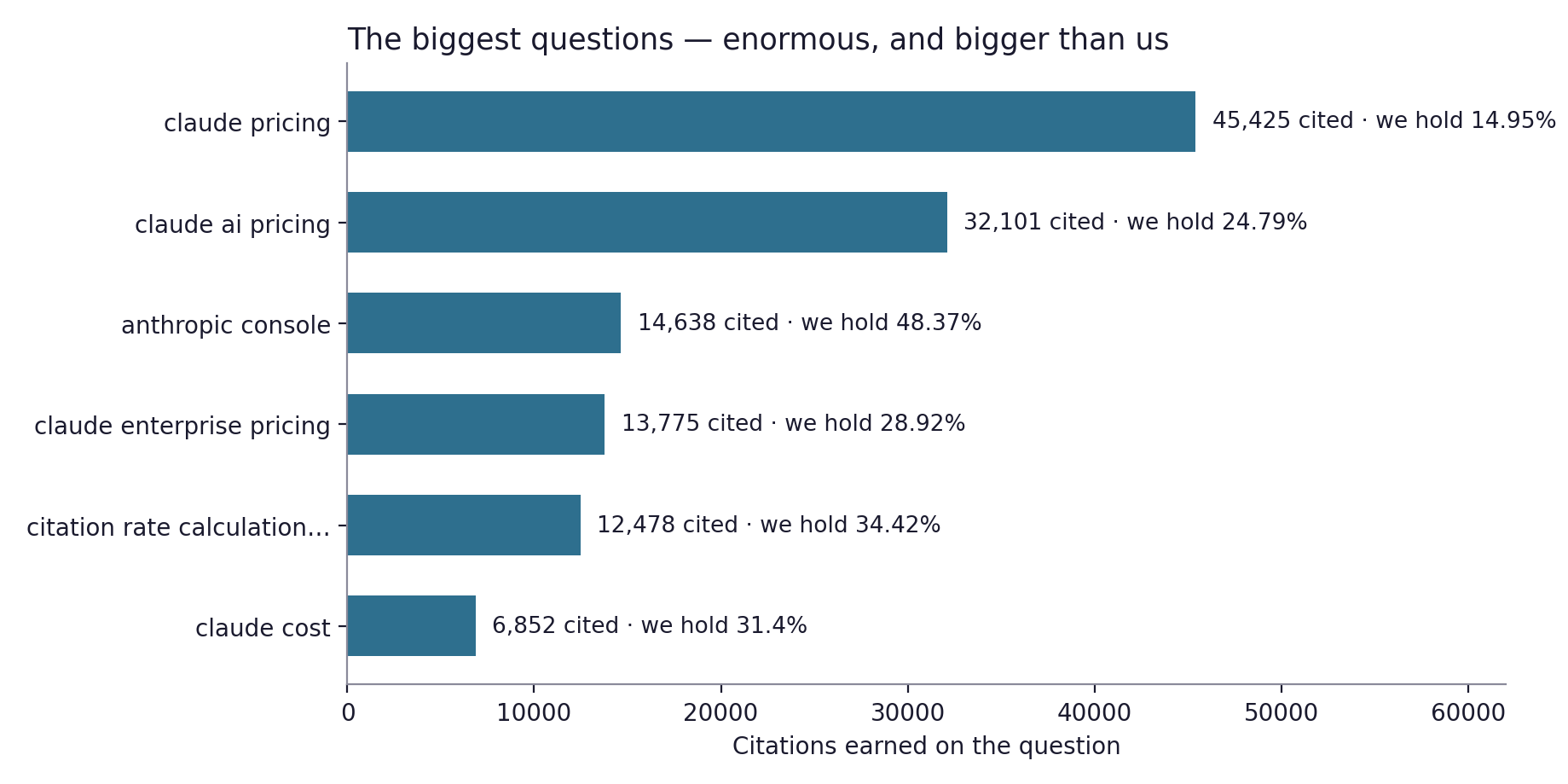
A page can hold a third of a site and a seventh of its biggest question at the same time. Both numbers are true, and the second one is the opportunity measured precisely: the demand under the leader is roughly seven times the leader.
What concentration means
Two things, and they’re the same fact read from opposite ends.
It’s a moat. A page that answers a money question plainly, stays current, and gets cited 244,307 times becomes the reference the assistants reach for — and every citation is a small vote that makes the next one likelier. Nobody at this desk did anything exotic to earn it. The page does one job, in the asker’s words, and it’s kept honest. That’s the whole trick, and Receipt No. 1 showed what happens when you build that shape on purpose.
It’s a single point of failure. If that page stumbles — a pricing change at Anthropic that makes it stale overnight, a careless rewrite, a bad week — a third of this site’s citation count reprices with it. We don’t have to imagine the exposure; we watch it. In October we ran a full formal diagnosis on this one page — its pattern had broken in ways we needed explained before we touched anything. You don’t commission a diagnosis for a page that doesn’t matter. You commission one for the page that carries the building.
The hedge is the bench. The tiers comparison at 81,011 is a genuine understudy — same question family, different cut. Team pricing, the student discount page, the console page: the family is deep, and the family is the insurance. Concentration at the page level, diversification at the family level. That’s the actual structure, and it happened before we were wise enough to plan it.
What we can’t claim
- One engine’s window. These are Copilot and partner citations as Bing reports them. It’s the cleanest instrument we have; it is not the whole sky.
- The views differ. Daily-sum 813,426 vs page-sum 792,317 — 2.6% apart, disclosed above, used consistently.
- Citations are not visits. Receipt No. 1 established it on another of our sites: 57 citations per human visit. This count measures being quoted, not being read.
- Ninety days is a snapshot, not a deed. Questions mutate — the BC ESG piece watched pharma’s biggest phrasing change between pulls. Shares move. This is the shape on November 8, 2026.
What we do now
- Watch the leader’s daily line like a heartbeat — not the site’s total, which can hide a dying leader inside a healthy plateau for weeks.
- Keep the bench current. The understudy pages get the same freshness discipline as the star; the day the leader stumbles is the wrong day to start.
- Build adjacent doors the measured way — when the question map shows demand landing sideways (Receipt No. 1’s method), build the page the question is asking for.
- Publish the receipts — including the shape we’d rather not have. A third of the building on one page is a fact we’re better off saying out loud, because saying it is what keeps us watching it.
813,426 citations. 244,307 of them at one address. That’s the count, that’s the shape, and that’s what we’re doing about it.
Update history
November 8, 2026 — Published. The 60-second video version went live on YouTube the same morning (linked at the top of this page); its chapters match the sections below, and each chapter links back to its section.
Method note: All figures are from Bing Webmaster Tools AI Performance exports for tygartmedia.com, pulled November 8, 2026. Citation counts are Microsoft Copilot and partner citations as Bing reports them. Window: August 8–November 5, 2026 (90 days). The daily view sums to 813,426; the page view sums to 792,317 — Bing notes totals may differ across views, and each figure above names its view. Citation shares are Bing’s per-query figures. The “pricing family” count is pages whose addresses contain “pricing” or “cost.” The October diagnosis referenced was an internal workup of the pricing page’s citation pattern. This is one site, one engine’s report, one 90-day window.
Get The Signal
What we actually ran, what it measured, and what it means for a restoration shop — every week, including the flops.
Leave a Reply