Google rolled out its March 2026 core update, AI Overviews keep spreading across search results, and more than two-thirds of Google searches now end without a click. If your restoration company’s marketing strategy hasn’t changed in the last 90 days, it’s already behind.
This is what we do in Industry News & Commentary: break down what’s actually happening in search, AI, and digital marketing—and translate it into what restoration companies should do about it. Not the hype. Not the panic. The signal.
Google’s March 2026 Core Update: What Actually Changed

Google began rolling out its March 2026 core update on March 27, and the rollout was complete on April 8. It lands on top of Google’s spam policies against scaled content abuse and site reputation abuse, which target mass-produced AI content and parasitic SEO tactics. Together, they represent the most aggressive enforcement of content quality signals since the Helpful Content Update of 2023.
What the March 2026 update prioritizes: original, experience-driven content with demonstrable expertise. What it deprioritizes: summary-style content, AI-generated articles without human expertise, and sites that aggregate without adding unique value.
For restoration companies, the practical impact splits two ways. Companies publishing generic blog content—”5 Tips for Preventing Water Damage” articles that read like every other restoration blog—are seeing ranking declines. Companies publishing content grounded in specific project data, local expertise, and measurable outcomes are seeing ranking gains.
The update also increased emphasis on authorship signals. Google is evaluating who wrote the content with more scrutiny than ever. Pages with clear author bylines linked to demonstrable expertise are receiving preferential treatment over anonymous corporate blog posts. If your restoration blog doesn’t have author pages with IICRC certifications, years of experience, and links to published work—you’re leaving ranking potential on the table.
AI Overviews: The New Default Search Experience
Google’s AI Overviews now appear on more than 20% of all Google searches, according to SparkToro’s June 2026 analysis of Similarweb clickstream data, and when present they cut click-through rates by nearly 60%. For the restoration industry, this means queries like “what to do after a pipe bursts,” “how long does mold remediation take,” and “does homeowners insurance cover water damage” are often answered directly in the search results—before any organic link gets seen.
The click-through rate impact is severe. Organic CTR for queries featuring AI Overviews dropped from 1.76% to 0.61% since mid-2024—a 61% decline. More dramatically, Google’s experimental AI Mode produces a zero-click rate of 93%. When it rolls out fully, fewer than 1 in 10 searches may result in a website visit.
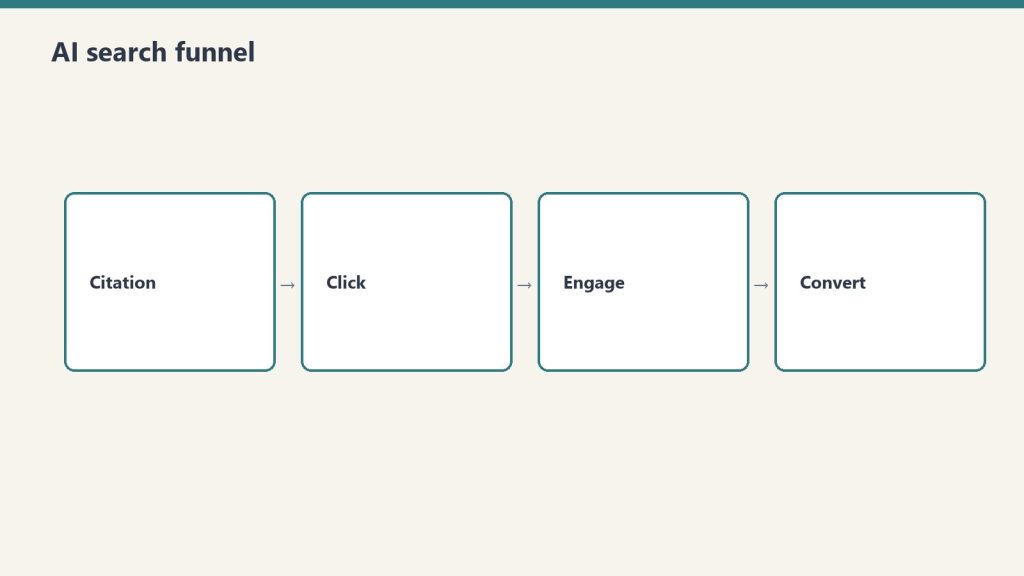
This doesn’t mean SEO is dead. It means the definition of SEO success is expanding. Being cited in an AI Overview—even without the click—builds brand recognition, establishes authority, and drives indirect conversions through branded search and GBP calls. The restoration companies adapting to this reality are optimizing for citation, not just clicks.
How to get cited in AI Overviews: structure content with clear question-answer pairs, include specific data points that AI systems can extract and present, implement FAQ and Article schema, and build the entity authority that makes your brand a trusted source in Google’s knowledge graph.
The Zero-Click Economy: Two-Thirds and Climbing
The zero-click trend has accelerated beyond most predictions. In the first four months of 2026, 68.01% of US Google searches ended without a click to any website, up from 60.45% in 2024, per SparkToro’s analysis of Similarweb data—a 7.5-point jump in two years.
For restoration companies, this fundamentally changes how marketing performance should be measured. If you’re evaluating your SEO investment solely on organic website traffic, you’re measuring a shrinking slice of the value your visibility generates. The companies adapting to the zero-click economy are tracking: branded search volume (are more people searching your company name?), GBP impressions and actions (calls, directions, website clicks from the knowledge panel), AI Overview mentions (is your brand being cited?), and share of voice in local results (how often do you appear in the map pack?).
These metrics capture the full value of search visibility, not just the click-through portion.
AI Content Crackdown: What Google Is Actually Penalizing
Google’s spam policies specifically target “scaled content abuse”—websites publishing high volumes of AI-generated articles with minimal human oversight. This affects the restoration industry directly because several content mills and franchise corporate offices have been mass-producing AI blog posts for their networks.
What Google is not penalizing: AI-assisted content where human expertise drives the substance and AI accelerates the production. The distinction matters. An article where a restoration professional provides the insights, data, and experience while AI helps with research, formatting, and optimization is rewarded by the algorithm. An article where AI generates the entire substance and a human adds a byline is penalized.
The key differentiator Google appears to evaluate: does the content demonstrate first-hand experience that an AI system couldn’t synthesize from existing sources? Specific project references, original cost data, local regulatory knowledge, and documented outcomes are signals of human expertise that AI cannot fabricate convincingly.
Perplexity, ChatGPT, and the Rise of AI-First Search
Beyond Google, AI-native search platforms are growing rapidly. Perplexity processes millions of queries daily with a fundamentally different model: it generates comprehensive answers with cited sources rather than returning a list of links. ChatGPT’s search integration and Claude’s web capabilities are creating additional surfaces where restoration companies need to be discoverable.
The consistent finding across all AI search platforms: they prioritize sources that are authoritative, well-structured, factually dense, and clearly attributed. The same content qualities that perform well in Google’s AI Overviews also perform well in Perplexity, ChatGPT, and other AI systems. This is a convergence point—one content strategy serves multiple AI surfaces.
Restoration companies don’t need separate strategies for each AI platform. They need one content strategy built on entity authority, structured data, and information gain—and that strategy will compound across every AI surface simultaneously.
What to Do This Quarter

Audit your content for March 2026 update vulnerability. Any page that’s generic, anonymously authored, or duplicates information available on a hundred other sites is at risk. Prioritize adding author attribution, original data, and local specificity to your most important pages.
Expand your measurement framework beyond clicks. Add branded search volume, GBP impressions, and AI mention tracking to your monthly reporting. If you’re only measuring organic traffic, you’re measuring less than half the value of your search visibility.
Implement comprehensive structured data. Article, FAQPage, LocalBusiness, and Service schema on every relevant page. This is the single highest-ROI technical task for AI visibility in 2026, and the restoration industry’s low adoption rate means early movers gain disproportionate advantage.
Shift content production to the fusion model. Expert humans providing substance, AI providing acceleration. This produces content that satisfies Google’s quality signals at a production cost and speed that pure human workflows can’t match. The March 2026 update made this approach not just efficient—but algorithmically preferred.
The search landscape is changing faster than at any point since the mobile-first indexing transition. The restoration companies that adapt their strategy quarterly—not annually—will capture the market share that their slower competitors are losing right now.
{
“@context”: “https://schema.org”,
“@type”: “Article”,
“headline”: “March 2026 Search Landscape: What Google’s Latest Updates Mean for Restoration Companies”,
“author”: {“@type”: “Organization”, “name”: “Tygart Media”},
“publisher”: {“@type”: “Organization”, “name”: “Tygart Media”},
“datePublished”: “2026-03-19”,
“description”: “Analysis of Google’s March 2026 core update, AI Overviews expansion, a 68% zero-click search rate, AI content crackdown, and practical recommendations for restoration companies adapting to the new search landscape.”
}
{
“@context”: “https://schema.org”,
“@type”: “FAQPage”,
“mainEntity”: [
{“@type”: “Question”, “name”: “What did Google’s March 2026 core update change?”, “acceptedAnswer”: {“@type”: “Answer”, “text”: “The March 2026 core update prioritizes original, experience-driven content with demonstrable expertise while deprioritizing summary-style content, AI-generated articles without human expertise, and aggregator sites. It also increased emphasis on authorship signals, giving preferential treatment to content with clear author bylines linked to verifiable credentials.”}},
{“@type”: “Question”, “name”: “How do AI Overviews affect restoration company SEO?”, “acceptedAnswer”: {“@type”: “Answer”, “text”: “AI Overviews now appear on more than 20% of Google searches and cut click-through rates by nearly 60% when present. For restoration companies, common questions about water damage, mold, and insurance coverage are increasingly answered directly in search results. Companies should optimize for citation within AI Overviews rather than clicks alone.”}},
{“@type”: “Question”, “name”: “What percentage of Google searches result in zero clicks in 2026?”, “acceptedAnswer”: {“@type”: “Answer”, “text”: “About 68% of US Google searches in early 2026 ended without a click to any website, up from about 60% in 2024. Google’s experimental AI Mode produces a 93% zero-click rate. Restoration companies should expand measurement beyond website traffic to include branded search volume, GBP actions, and AI mentions.”}},
{“@type”: “Question”, “name”: “Is Google penalizing AI-generated content for restoration websites?”, “acceptedAnswer”: {“@type”: “Answer”, “text”: “Google is penalizing scaled AI content published without human expertise, but not AI-assisted content where human professionals provide the substance. The key differentiator is whether content demonstrates first-hand experience—specific project data, original cost figures, local regulatory knowledge—that AI cannot fabricate from existing sources.”}}
]
}

Visual summary

About this image. This image was generated by Google’s Vertex AI Imagen 4 model as the featured visual for March 2026 Search Landscape: What Google’s Latest Updates Mean for Restoration Companies . Every image in the Tygart Media visual library is AI-generated, converted to WebP for optimal performance, and enriched with IPTC/XMP metadata for search engine discoverability.
- Model: Vertex AI Imagen 4 Standard (imagen-4.0-generate-001)
- Format: WebP (quality 90)
- Aspect Ratio: 16:9
- Metadata: IPTC/XMP injected (title, description, creator, rights, location)
- Creator: Tygart Media — tygartmedia.com
Part of The Studio collection — AI-generated visuals powering the Tygart Media content engine.