Exploring Everett - Tygart Media

Category: Exploring Everett

Everett, Washington is in the middle of something big. A $1 billion waterfront transformation. A Boeing workforce that built the world’s largest commercial jets. A port city with a downtown that’s finally catching up to its potential. A Navy presence at Naval Station Everett. A comedy and arts scene punching above its weight. And neighborhoods — Riverside, Silver Lake, Downtown, Bayside — each with their own identity and story.

Exploring Everett is Tygart Media’s hyperlocal coverage vertical for Snohomish County’s largest city. We cover the waterfront redevelopment, Boeing and Paine Field, city hall, the food and arts scene, real estate, neighborhoods, and everything in between — written for people who live here, work here, or are paying attention to what’s coming.

Coverage categories include: Everett News, Waterfront Development, Boeing & Aerospace, Business, Arts & Culture, Food & Drink, Real Estate, Neighborhoods, Government, Schools, Public Safety, Events, and Outdoors.

Exploring Everett content is also published at exploringeverett.com.

  • AquaSox Blow 4-0 Lead, Fall 5-6 in 10 to Vancouver Canadians in Walk-Off Heartbreaker

    VANCOUVER, BC — The Everett AquaSox played a gem of a baseball game Tuesday night at Scotiabank Field — and still came away empty-handed. The Vancouver Canadians walked off the Frogs 6-5 in 10 innings, stealing the series opener in a game that was in Everett’s control for most of the night. Walter Baker (1-1) picked up the win in relief. Reggie Kelly (0-2, 6.17 ERA) took the loss after the walk-off run crossed in the 10th.

    AquaSox Built a 4-0 Lead — Then Let It Slip

    The Frogs came out swinging in the early innings. Everett scored twice in the third and twice more in the fourth to build a comfortable 4-0 cushion. For five innings, this had all the makings of a convincing road-trip opener in a series the AquaSox need to own.

    Then Vancouver woke up. The Canadians cut it to 4-2 with a two-run fifth inning, and the complexion of the game changed. The big blow came in the seventh, when Vancouver erupted for three runs — flipping the lead to 5-4 and putting Everett on its heels for the first time all night.

    The AquaSox refused to die. Down a run in the ninth, Everett pushed across a run to tie it at 5-5 and force extra innings. That’s the kind of resilience this team has shown all season. Tied in the 10th, in an opposing ballpark, the Frogs had earned a chance to win it.

    It didn’t happen. Vancouver’s walk-off run in the bottom of the 10th ended it 6-5, and the Canadians took the first point in what figures to be a six-game battle at Scotiabank Field.

    By the Numbers

    Final score: Vancouver 6, Everett 5 (10 innings)

    Team12345678910RHE
    Everett0022000010561
    Vancouver0000203001670

    Win: Baker (1-1) | Loss: Kelly (0-2, 6.17 ERA)

    Context: The Series and the Standings

    The loss drops Everett to 18-16 on the season, still in a respectable mid-pack position in the Northwest League. Vancouver, surprisingly, comes in at just 14-20 — a reminder that this is a team the Frogs should be able to compete with over a six-game stretch even after Tuesday’s gut-punch opener.

    The series runs through Sunday at Scotiabank Field, giving the AquaSox five more chances to make up ground. Tuesday’s game — a road walk-off loss in 10 innings where they led for most of the night — is exactly the kind of game a good team shakes off by Wednesday.

    The good news: Everett’s offense showed up. Six hits, five runs, and a two-run burst in the 3rd and 4th innings that established early control. The tying run in the 9th demonstrated that this team doesn’t quit when things get hard. That’s important to remember after a result like this one.

    The Bigger Picture: AquaSox in May

    May has been a grind for Everett. The Frogs went 3-3 at Tri-City, then won five of six at home against Hillsboro — including Bryce Miller’s 5-inning/0-run rehab gem on Silver Sluggers Night — before dropping the Mother’s Day finale 8-5. Now they open the Vancouver road trip with a tough extra-inning loss.

    The prospect pipeline is still humming. Felnin Celesten won back-to-back NWL Player of the Week awards through the Hillsboro homestand. Luke Stevenson took home Mariners April Hitter of the Month honors. Brock Moore won the April Bullpen Award. These guys are developing exactly as advertised — and that development doesn’t stop just because Tuesday’s game ended wrong.

    Up Next

    The six-game road series at Scotiabank Field continues Wednesday through Sunday. AquaSox next home series is against the Tri-City Dust Devils beginning Tuesday May 19.

    Scotiabank Field is a beautiful park in the Nat Bailey Stadium footprint — real grass, classic ballpark feel, and a short walk from the SkyTrain. If you’re making the trip up to Vancouver to watch some Frogs baseball, this is a great week to do it.

    Frequently Asked Questions

    What was the AquaSox score on May 12, 2026?

    The Vancouver Canadians defeated the Everett AquaSox 6-5 in 10 innings at Scotiabank Field on Tuesday, May 12, 2026.

    How did the AquaSox lose the game?

    Everett led 4-0 through four innings, but Vancouver rallied with two runs in the fifth and three in the seventh to take a 5-4 lead. The AquaSox tied it with a run in the ninth, but Vancouver scored a walk-off run in the 10th to win 6-5.

    What is the AquaSox record after May 12?

    The AquaSox are 18-16 on the 2026 season after Tuesday’s loss.

    Where do the AquaSox play next?

    The AquaSox continue their six-game road series against the Vancouver Canadians at Scotiabank Field through Sunday, May 17. Games start at 7:05 PM PT.

    Who is Felnin Celesten?

    Felnin Celesten is an Everett AquaSox outfield prospect and two-time consecutive Northwest League Player of the Week winner. He is batting .295 on the season and leads the team in runs scored.

    Related coverage: AquaSox Go 5-of-6 Against Hillsboro Before Vancouver | Bryce Miller Goes Five Scoreless at Funko Field | Celesten, Stevenson, Moore: AquaSox Prospect Awards

  • Silvertips Steal Game 3 at Art Hauser: Miettinen’s GWG Gives Everett 2-1 Series Lead

    PRINCE ALBERT, SK — The Everett Silvertips stole home-ice advantage on Tuesday night at the Art Hauser Centre, grinding out a gritty 3-2 win over the Prince Albert Raiders in Game 3 of the 2026 WHL Championship Final. Silvertips forward Julius Miettinen supplied the game-winning goal as Everett clawed to a 2-1 series lead. The next game of the Ed Chynoweth Cup is Wednesday night at 6:30 PM PT — same building, same hostile crowd — and the Silvertips now have the pressure.

    The Rudolph Factor

    The storyline going into Game 3 was the suspension of Raiders defenseman Daxon Rudolph, one of Prince Albert’s most important offensive contributors and one of the top NHL draft prospects in this year’s class. The TSN-reported one-game ban took a key weapon off the Raiders’ blue line — and the Silvertips made them pay.

    Rudolph had been a presence all series for the Raiders, and losing him for a road game in a building that’s become a Silvertips fortress was a serious blow to Prince Albert’s chances. Whether the suspension carries over to Game 4 will be worth watching closely heading into Wednesday’s matchup.

    Miettinen: The Finnish Record-Setter

    Julius Miettinen continues to write himself into WHL playoff history. The Silvertips forward has now set the record for the most playoff points by a Finnish player in WHL history — a remarkable accomplishment for a player operating at peak level in the biggest games of the year.

    His game-winning goal on Tuesday was another chapter in what has been an incredible 2026 playoff run. In a tight game that could have gone either way, Miettinen came up with the decisive marker. That’s what elite players do. That’s why the Silvertips are in this series.

    The WHL also honored Miettinen in the WHL Championship Edition of its Weekly Awards — recognition that came alongside defenseman Brock Cripps of the Raiders and Silvertips goaltender Anders Miller. Even in a week where Everett won a game, the league acknowledged how good both teams have been.

    Miller on the Road

    The Art Hauser Centre in Prince Albert holds roughly 2,800 fans and it gets loud. Really loud. The Raiders faithful showed up expecting to see their team take a 2-1 series lead, and instead watched Anders Miller stand them up.

    Miller came into Game 3 with a .936 playoff save percentage across 13 playoff games — the best playoff numbers in WHL history for a goalie who has played that many games. He had already gone 8-0 on the road in these playoffs before Tuesday, and he backed it up again at the Art Hauser. Silvertips fans have spent all spring watching Miller make impossible saves in impossible buildings, and it’s starting to feel inevitable.

    This is now a 15-2 playoff record for the Silvertips. They have lost exactly two games in two months of playoff hockey.

    How the Series Looks Now

    The series narrative has shifted decisively. Here’s where things stand:

    • Game 1 (May 8, AOTW): Raiders 4, Silvertips 2 — Orsulak and Cootes stole home ice
    • Game 2 (May 9, AOTW): Silvertips 6, Raiders 2 — Miettinen’s 4-point night, Bear twice
    • Game 3 (May 12, Art Hauser): Silvertips 3, Raiders 2 — Miettinen GWG, road steal
    • Game 4 (May 13, Art Hauser): Wednesday 6:30 PM PT — series 2-1 Everett
    • Game 5 (if needed, May 15, Art Hauser): 6:30 PM PT
    • Games 6/7 (if needed, May 17/18, AOTW): Back home in Everett

    The Silvertips now have a chance to go up 3-1 with a win Wednesday. A 3-1 series lead in the WHL Final would be historically close to insurmountable. But the Raiders will be desperate, they’ll have their fans behind them, and — presumably — Daxon Rudolph may be back in the lineup. This isn’t over.

    What It Means

    The Silvertips last won the Ed Chynoweth Cup in 2007. That’s 19 years. This team — 57-8-2-1 in the regular season, 15-2 in the playoffs — is the best Everett team since then. Maybe the best ever. And they just took the lead in the WHL Final on the road, in a building they’ve never played a game in before this week, against a team that had home ice advantage.

    Two more wins. That’s all that stands between this group and the Cup.

    How to Watch Game 4

    Game 4: Wednesday May 13 — Art Hauser Centre, Prince Albert, SK
    Puck drop: 7:30 PM MT / 6:30 PM PT
    TV: TSN (Canada) | Streaming: Victory+ (U.S.)
    Games 5 (if needed) also at Art Hauser on May 15. Games 6 and 7 (if needed) return to Angel of the Winds Arena on May 17 and 18.

    If you’re making plans for a potential Game 6 or 7 at Angel of the Winds Arena, tickets are available at Ticketmaster. The building at 2000 Hewitt Ave in Everett holds 10,000+ fans for hockey — and if this series goes back home, it’s going to be electric.

    Frequently Asked Questions

    What is the current series score in the 2026 WHL Championship Final?

    After Game 3, the Everett Silvertips lead the Prince Albert Raiders 2-1 in the best-of-seven series.

    When is WHL Final Game 4?

    Game 4 is Wednesday, May 13 at Art Hauser Centre in Prince Albert. Puck drop is 7:30 PM MT (6:30 PM PT). Watch on TSN in Canada or Victory+ in the U.S.

    Why was Daxon Rudolph suspended for Game 3?

    Rudolph received a one-game WHL suspension that was first reported by TSN. The specifics of the infraction were not disclosed, but it kept the Raiders’ top defensive prospect out of Tuesday’s game.

    Who scored the game-winning goal in Silvertips Game 3?

    Julius Miettinen scored the game-winning goal for the Silvertips in the 3-2 win.

    What is Anders Miller’s WHL playoff save percentage?

    Miller entered Game 3 with a .936 save percentage across 13 playoff games — the best playoff SV% in WHL history for a goalie with that many games played.

    Related coverage: Tips Even the Series With 6-2 Game 2 Win | Anders Miller’s Road Test | WHL Final Heads to Prince Albert: Full Schedule

  • Boeing’s Everett North Line Is Six Weeks Out — Here’s What Has to Happen Before Snohomish County Gets Its First Commercial 737

    Boeing’s Everett North Line Is Six Weeks Out — Here’s What Has to Happen Before Snohomish County Gets Its First Commercial 737

    Q: When is Boeing’s 737 North Line in Everett expected to open for commercial production?
    A: Boeing targets a midsummer 2026 opening. As of mid-May 2026, the line is completing its LRIP (Low Rate Initial Production) and conformity-aircraft phase. FAA production approval, conformity sign-offs, and workforce integration are the remaining pre-launch gates. Industry analysis points to late July or August as the most likely window for first commercial production start.

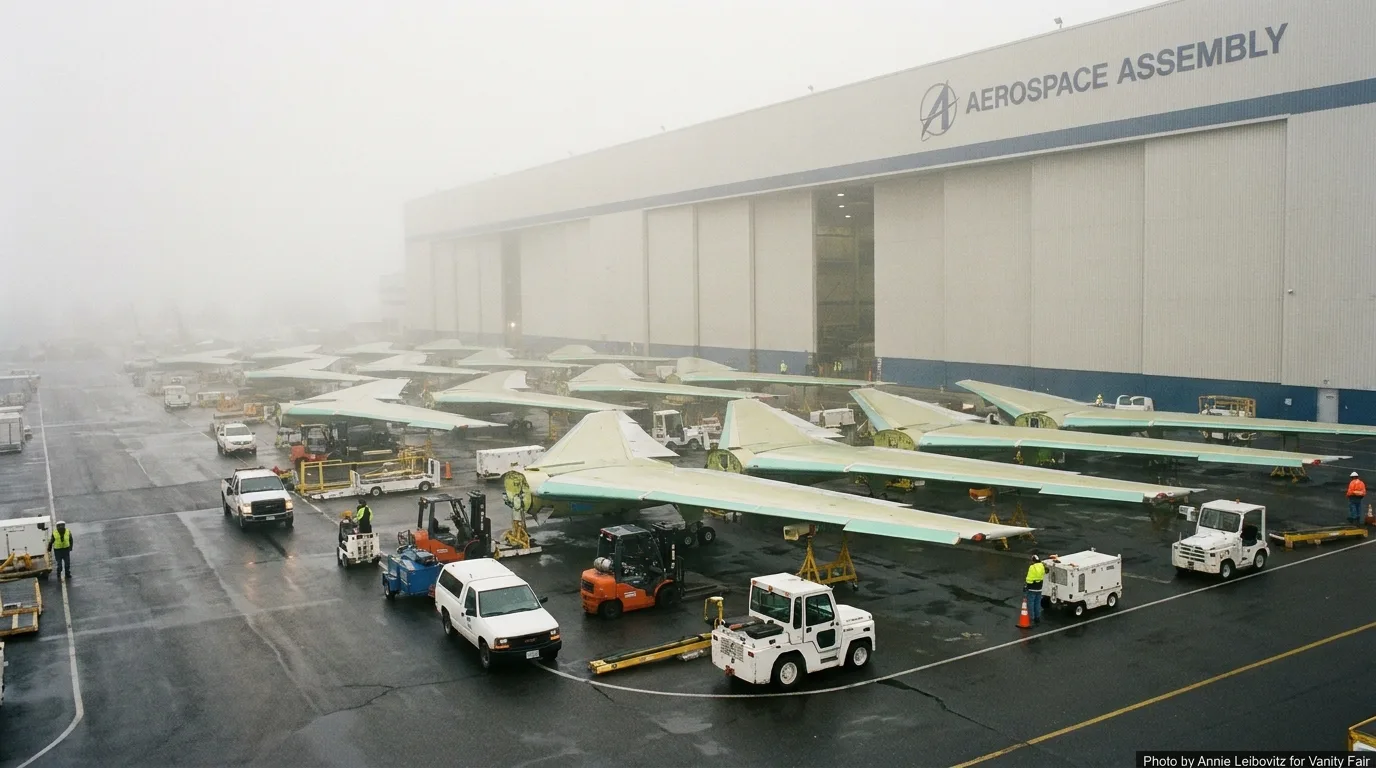
    “Midsummer.” That’s the word Boeing has used consistently since February 2026 to describe when the 737 North Line at the Everett factory will begin building commercial 737 MAX jets. It’s now mid-May. Six to eight weeks stand between the current preparation phase and what would be the most consequential event in Everett’s manufacturing history in decades: the first 737 narrowbody aircraft ever assembled outside Boeing’s longtime Renton home.

    The question workers, suppliers, and residents across Snohomish County should be asking right now is a practical one: what has to happen between here and there?

    Where the North Line Stands Today

    The North Line is not empty. Boeing has been operating the assembly floor in what the aerospace industry calls LRIP — Low Rate Initial Production. As this desk detailed in April, LRIP is the FAA-mandated production phase in which Boeing builds conformity aircraft: jets specifically intended to validate the production process rather than go directly to airline customers.

    The LRIP phase at Everett has involved building 737-8 and 737-9 airframes using the North Line’s tooling and production flow. Each conformity aircraft is formally inspected by the FAA, which reviews manufacturing quality records, assembly processes, and system installations. This is not a formality. The FAA is confirming whether the Everett facility is producing aircraft to the same quality standards as Renton — a question that carries significant weight given the regulatory environment Boeing has operated under since the January 2024 door-plug incident.

    Boeing’s April 2026 feature on the North Line team confirmed that the workforce pipeline is well advanced. Workers completing their 12-week structured rotations at Renton are returning to Everett ready for their North Line positions. The workforce-readiness element of the pre-launch checklist is largely complete — it’s the regulatory and production acceptance gates that remain.

    The Pre-Commercial Launch Checklist

    Boeing hasn’t published a public step-by-step launch sequence. But FAA requirements for new final assembly lines are well understood by industry, and Boeing’s own statements provide a clear picture of what’s still on the list.

    FAA Production Approval Inspection (PAI). Before a new final assembly line can produce deliverable commercial aircraft, the FAA conducts a formal Production Approval Inspection. FAA production inspectors verify that the facility’s manufacturing processes, quality management systems, documentation, and tooling all conform to the Production Approval Holder (PAH) requirements that Boeing holds for the 737 program. This is not a one-day visit. It involves detailed records review and process observation across the entire production flow.

    Conformity aircraft completion and formal acceptance. The conformity airplanes built during LRIP must be fully documented and closed out. Each one generates a formal conformity report that the FAA reviews. The FAA must formally accept the conformity findings before Boeing can transition the line to customer-deliverable production. Every finding gets resolved; every record gets reviewed.

    First commercial production airplanes started. Once the FAA clears the line, the North Line begins building jets tagged to airline orders. These first production aircraft are not conformity planes — they are in the real delivery queue. The transition from LRIP to commercial production is a discrete, FAA-acknowledged event.

    First delivery. A significant period separates “first production airplane started” from “first delivery to a customer.” A 737 final assembly at Renton currently takes 10–20 days of line time, followed by flight operations, delivery prep, and customer acceptance. The North Line’s initial deliveries could follow first production start by several weeks to a few months, depending on the ramp pace and any schedule adjustments in the delivery queue.

    The FAA Oversight Reality

    Boeing’s relationship with the FAA’s 737 oversight apparatus in 2026 is substantively different than it was in 2023. Following the door-plug incident, Boeing committed to a quality improvement program that the FAA monitors actively. That oversight is not suspended for the North Line — it applies to every aspect of the new line’s startup.

    The FAA has an explicit interest in the North Line stabilizing at low rates before Boeing is permitted to increase output significantly. Boeing CEO Kelly Ortberg confirmed rate 47 per month as the summer 2026 milestone across all four 737 lines combined — and the North Line’s initial contribution to that number is intentionally modest. The line opens, builds at LRIP-adjacent rates, and demonstrates sustained quality performance before its contribution to the overall rate is increased.

    Industry analysis from Simple Flying notes that the North Line won’t instantly lift overall 737 output when it opens. The line has to be staffed, trained, and stabilized under intensified FAA oversight before meaningful rate contributions flow through. This is a feature of the regulatory environment, not a failure of planning — and it’s the right sequencing given what Boeing committed to the FAA in 2024 and 2025.

    The MAX 7 and MAX 10 Certification Connection

    The North Line’s primary long-term mission is to build the 737 MAX 10 — Boeing’s largest narrowbody variant, with more than 1,200 orders that will be built exclusively at Everett. But the MAX 10 can’t enter full production at the North Line until the FAA certifies it, and that certification is currently on track for later in 2026.

    The sequence matters: the MAX 7 and MAX 10 certifications were confirmed on track by the FAA in April 2026, with no current obstacles identified. Southwest Airlines — the 257-aircraft launch customer for the MAX 7 — has publicly projected FAA approval by August 2026. When the MAX 7 certification clears, it signals that the FAA’s regulatory review capacity and Boeing’s quality documentation are fully aligned with the 737 program. MAX 10 certification follows in close sequence.

    For Everett’s North Line workers, the practical implication is this: the line opens on 737-8s and 737-9s this summer, and transitions toward MAX 10 production as certification arrives — potentially as soon as late 2026 or early 2027. Workers building 737-8s and -9s on the North Line today are not waiting for a different job to start. They’re building the foundation of what becomes the MAX 10 line.

    What “Midsummer” Means in Practice

    Boeing’s 737 program manager Katie Ringgold first used “midsummer” language at the Pacific Northwest Aerospace Association’s Advance 2026 conference in February. Ortberg confirmed the timeline on the Q1 2026 earnings call on April 22, and Boeing’s own April feature on North Line readiness reads as a pre-launch communication rather than a progress update.

    No one at Boeing has specified July, August, or September. All three technically qualify as midsummer. The most grounded estimate from aviation industry analysis is that the North Line’s first commercial production airplanes begin in late July or August 2026, with the line contributing incrementally to overall 737 output through Q4 2026 and ramping more substantially in 2027.

    FlightGlobal reported Boeing “plans this summer to begin operating” the new Everett assembly line, consistent with every other statement Boeing has made. The question for May 2026 is not whether the North Line will open — it’s how smoothly the regulatory acceptance process moves in the next six weeks.

    What Six Weeks Looks Like

    Between now and the end of June, Boeing’s North Line team needs to close out LRIP conformity aircraft and secure FAA acceptance, complete the Production Approval Inspection for commercial deliveries, and confirm final workforce assignments across all positions on the 737 flow. None of these steps is currently flagged as a problem. Ortberg treated the North Line as an imminent operational event on the April earnings call — not a risk item requiring investor attention.

    When the North Line moves from LRIP to commercial production, Snohomish County gains something it hasn’t had in the modern era of 737 manufacturing: a final assembly line in its own backyard. The economic ripple — in supplier contracts, workforce wages, and the support services that 400+ manufacturing jobs generate — is real and lasting. Watch for the confirmation announcement in late June or early July. Midsummer is not a distant promise anymore.

    Frequently Asked Questions

    Q: When will Boeing’s North Line in Everett open for commercial production?
    A: Boeing targets midsummer 2026. Based on the February announcement by program manager Katie Ringgold and Ortberg’s Q1 2026 earnings confirmation, late July or August 2026 is the most likely window.

    Q: What is the North Line building right now?
    A: 737-8 and 737-9 airframes under the LRIP (Low Rate Initial Production) conformity-aircraft phase. These are FAA validation airplanes, not customer deliveries. The transition to deliverable aircraft follows FAA production acceptance.

    Q: How does the North Line connect to Boeing’s rate 47 per month target?
    A: Rate 47 is the combined output target for all four 737 final assembly lines. The North Line adds incrementally at launch, with larger rate contributions factored into the path toward rate 52 and eventually 63 per month as the line matures.

    Q: What happens to workers currently training at Renton?
    A: Workers completing structured 12-week rotations at Renton return to the North Line at Everett as it opens. The training pipeline was designed to align with the midsummer launch window.

    Q: When will the North Line build 737 MAX 10 jets?
    A: After the FAA certifies the MAX 10 variant, which Boeing and the FAA have confirmed is on track for 2026. The North Line opens on 737-8s and -9s and transitions to MAX 10 production as certification clears, potentially by late 2026 or early 2027.

    Q: What does the North Line mean for Snohomish County economically?
    A: More than 400 direct manufacturing jobs at launch, plus significant ripple effects through the aerospace supplier network. For the region, this represents the largest single Boeing production footprint expansion in Snohomish County in decades — with a multi-decade employment runway tied to 1,200+ MAX 10 orders.

  • After the Production-Standard Flight: What Boeing’s 777-9 Still Has to Clear Before Everett Can Celebrate

    After the Production-Standard Flight: What Boeing’s 777-9 Still Has to Clear Before Everett Can Celebrate

    Q: What certification steps remain for the Boeing 777-9 after its May 2026 production-standard flight?
    A: After Phase 4A of the Type Inspection Authorization (TIA), Boeing must complete Phase 4B (the largest testing block in the TIA sequence), Phase 5, Functionality & Reliability testing, and ETOPS certification before FAA type certification can be granted. Following certification, roughly 30 stored 777-9s at Paine Field must undergo change incorporation before the first delivery to Lufthansa, targeted for Q1 2027.

    On the evening of May 7, 2026, a massive white airplane with green winglet tips climbed out of Paine Field and banked over Puget Sound. Aircraft WH128 — registration N20080 — flew for three hours and 27 minutes, reached 39,000 feet, and landed back at Paine Field at 4:52 p.m. PT. It was the first Boeing 777-9 ever built to full production standard, complete with Lufthansa’s Allegris cabin already installed inside.

    For Everett, the production-standard flight was a milestone worth celebrating. For anyone tracking the certification program, it was the beginning of the end of a very long middle. Here’s what still stands between that May 7 moment and the day Lufthansa takes delivery of its first widebody jet — and what each remaining gate means for the people who build them at Paine Field.

    What “Production-Standard” Actually Means

    Not all 777-9 test flights are equal. The first five jets to fly were test aircraft — built with placeholder interiors and experimental configurations to gather data. WH128 is different. It’s built exactly the way every 777-9 will be built for airline service: the same cabin configuration, the same systems, the same production processes that Everett’s widebody line will use for every delivery to follow.

    Flying a production-standard aircraft is significant for one specific reason: it lets the FAA begin evaluating whether the production configuration performs the same way as the test airframes that the entire prior campaign was built around. When an FAA test pilot climbs into WH128, they’re not just checking a box — they’re confirming that what Boeing promised to build is actually what Boeing is building. That confirmation is the gateway to Phase 4B.

    Phase 4A: What’s Happening Right Now

    The 777-9 entered FAA Type Inspection Authorization (TIA) Phase 4A on March 17, 2026. TIA is the multi-phase framework the FAA uses to formally evaluate new commercial aircraft before granting type certification. Phase 4A specifically involves FAA test pilots flying alongside Boeing crews in structured evaluation flights.

    Phase 4A is not a single flight. It’s a block of tests covering specific systems, maneuvers, and performance envelopes the FAA must formally observe. WH128’s May 7 production-standard flight was an early milestone within this phase — demonstrating to the FAA that the production configuration is consistent with the test configuration that the prior campaign validated.

    Aviation industry analysts at The Air Current, who have closely tracked the 777-9 certification campaign, have reported that Phase 4B is expected very soon after Phase 4A completion. That’s the phase that changes the volume of work significantly.

    Phase 4B: The Largest Block Yet

    Phase 4A and Phase 4B together account for roughly the same volume of testing as Phase 3 — which began in November 2025 and focused on avionics and primary flight control systems. That’s not a reassuring comparison if you were hoping the 777-9 was nearly done. Phase 3 was a substantial block of work.

    Phase 4B is the longer and more complex of the two Phase 4 segments. It involves broader evaluation across more operational conditions, more FAA test pilot hours, and a wider range of systems verification. Both phases must be completed before the program advances to Phase 5.

    For Everett’s flight test workforce at Paine Field — the crews that maintain, configure, and support the test aircraft on the ground between flights — Phase 4B means continued steady employment through the summer and likely into the fall of 2026.

    Phase 5: The Final TIA Stage

    Phase 5 is the concluding chapter of the TIA process. By this point, the FAA has formally observed the aircraft through four prior evaluation phases. Phase 5 still involves final confirmatory testing and FAA review before the agency clears the path to type certification.

    Boeing has stated publicly that it expects FAA type certification in the second half of 2026. The 777-9 Level D simulators were also certified by FAA and EASA earlier this year, removing one more pre-delivery barrier. But Phase 5 completion is necessary — and not sufficient on its own — for the type certificate to arrive.

    After Phase 5: F&R Testing and ETOPS

    Two more major milestones follow Phase 5 before Boeing can receive type certification.

    Functionality and Reliability (F&R) testing is essentially an extended airline-simulated operation. The aircraft must accumulate a defined number of flight cycles and hours while demonstrating that all systems function reliably under real-world operational conditions. It’s the final confirmation that the airplane isn’t just test-worthy — it’s operationally dependable across the full range of conditions airlines actually encounter.

    ETOPS certification (Extended Operations, allowing twin-engine aircraft to fly routes more than 60 minutes from a diversion airport) is required for the long-haul missions the 777-9 will perform. Lufthansa’s 777-9 order is specifically for premium long-haul service, including transatlantic routes where ETOPS authorization is not optional. Only after both F&R and ETOPS can the FAA issue the type certificate.

    The 30 Jets at Paine Field: The Long Tail of Change Incorporation

    Here’s the part that often gets glossed over in the certification conversation: even after the type certificate arrives, Boeing won’t be delivering aircraft immediately.

    More than 30 777-9s are currently stored at Paine Field — some since 2020, all built before the final certification requirements were fully established. Every one of them must undergo change incorporation before delivery. Change incorporation means updating each stored jet to the current production standard: incorporating every design change, safety improvement, and production process update that has occurred since that individual aircraft was assembled.

    Boeing CEO Kelly Ortberg addressed this directly on the Q1 2026 earnings call on April 22, describing the work scope as significant — “pretty massive activity” — and confirming that Boeing has a dedicated team focused specifically on change incorporation. He noted that the work scope for each aircraft is still being defined on a per-plane basis. The older the stored jet, the more structural changes are required and the longer the process takes. A jet stored since 2020 faces a materially different scope than one stored since 2023.

    Leeham News reported on May 3 that Boeing plans to bring all stored aircraft to a common configuration level before completing the final round of changes — an approach Boeing describes as more efficient than resolving each jet’s full individual change list sequentially.

    The timing per aircraft is not yet public. Leeham News noted that 787 fuselage gap changes took 3-4 months per airplane. The 777-9 change scope will vary widely across the stored fleet, and the full multi-year pipeline means this work extends well past the initial certification date.

    What This Means for Everett’s Widebody Workforce

    Read this sequence carefully: type certification (targeted second half 2026) → change incorporation on stored fleet (multi-year, per-jet) → Lufthansa first delivery Q1 2027 → continued deliveries through the decade.

    For Everett’s widebody technicians, this is not a short-term story. The change incorporation work alone represents years of sustained employment at Paine Field for mechanics specializing in widebody systems, avionics, and structural modifications. These are not entry-level positions — they’re exactly the kind of specialized aerospace work that commands family-wage salaries and has historically been a career anchor for Snohomish County.

    The 767 commercial freighter line completes its final deliveries in 2027. The KC-46 tanker program continues on the same line thereafter. But the 777-9 change incorporation work, running in parallel through the same period, means that Everett’s widebody workforce footprint doesn’t simply contract as the 767 winds down — it transitions and in some respects expands, into a different but equally demanding class of work.

    The production-standard flight on May 7 was the beginning of the visible endgame. For Everett, that endgame is also the beginning of a new decade of widebody work.

    Frequently Asked Questions

    Q: Has the Boeing 777-9 received FAA type certification?
    A: Not yet. As of May 2026, the 777-9 is in TIA Phase 4A. Type certification is targeted for the second half of 2026, pending completion of Phases 4B, 5, F&R testing, and ETOPS.

    Q: What is TIA Phase 4A?
    A: Type Inspection Authorization Phase 4A is a structured evaluation stage in which FAA test pilots fly alongside Boeing crews to formally assess the aircraft across defined test conditions. The 777-9 entered Phase 4A on March 17, 2026.

    Q: When will the first Boeing 777-9 be delivered?
    A: Boeing has confirmed no 777-9 deliveries until at least 2027. Launch customer Lufthansa is targeting Q1 2027 for first delivery, with revenue service in summer 2027.

    Q: Why are there 30+ 777-9s stored at Paine Field?
    A: These jets were built during the extended certification period, before final design and production requirements were fully established. Each must undergo change incorporation — updating the aircraft to the current production standard — before delivery is possible.

    Q: How does the 777-9 certification affect Everett jobs?
    A: The ongoing certification campaign sustains Paine Field’s flight test workforce through 2026. After certification, multi-year change incorporation work on 30+ stored jets provides extended employment for Everett’s widebody specialists — bridging the period as the 767 commercial freighter line completes in 2027.

    Q: What is “production-standard” in the context of the 777-9?
    A: A production-standard aircraft is built to delivery configuration — the same cabin, systems, and production processes used on every 777-9 sold to airlines. WH128, which flew on May 7, 2026, is the first such aircraft.

    Q: What comes after Phase 4A in the certification sequence?
    A: Phase 4B (the largest TIA testing block), then Phase 5 (final TIA stage), then Functionality and Reliability (F&R) testing, then ETOPS certification, then FAA type certificate.

  • For Navy Families at NAVSTA Everett: What Everett’s New VOAWW Shelter Means for Military Spouses Facing Housing Crisis

    For Navy Families at NAVSTA Everett: What Everett’s New VOAWW Shelter Means for Military Spouses Facing Housing Crisis

    For NAVSTA Everett families: The new VOAWW Pallet Shelter Village on Sievers-Duecy Boulevard — 20 units for women and children, opened April 27, 2026 — is part of a growing Snohomish County civilian safety net that Navy spouses and dependents should know exists. Military families experience housing crises at rates above the civilian average, often triggered by PCS transitions, deployment, separation, or financial hardship. The civilian resources described here do not require active-duty status, rank, or command referral to access.

    Military families understand housing pressure in ways the civilian world rarely talks about openly. PCS orders arrive with 30 days notice. Base housing waitlists run months long. A deployment can change the calculus of whether a family stays in Everett or moves back to extended family. A separation — whether from the military or from a spouse — can leave a Navy wife with children in a city she didn’t choose, navigating a rental market where Snohomish County’s April 2026 median home price is $750,000 and rental vacancies are tight.

    Everett’s civilian safety net has grown significantly in the past two years. The newest addition — VOAWW’s 20-unit Pallet Shelter Village for women and children, which opened April 27, 2026, off Sievers-Duecy Boulevard — is the piece most military families haven’t heard about yet. This guide maps the full picture. For the complete guide to the shelter itself, see the VOAWW Pallet Shelter complete guide.

    The VOAWW Pallet Shelter: What It Is

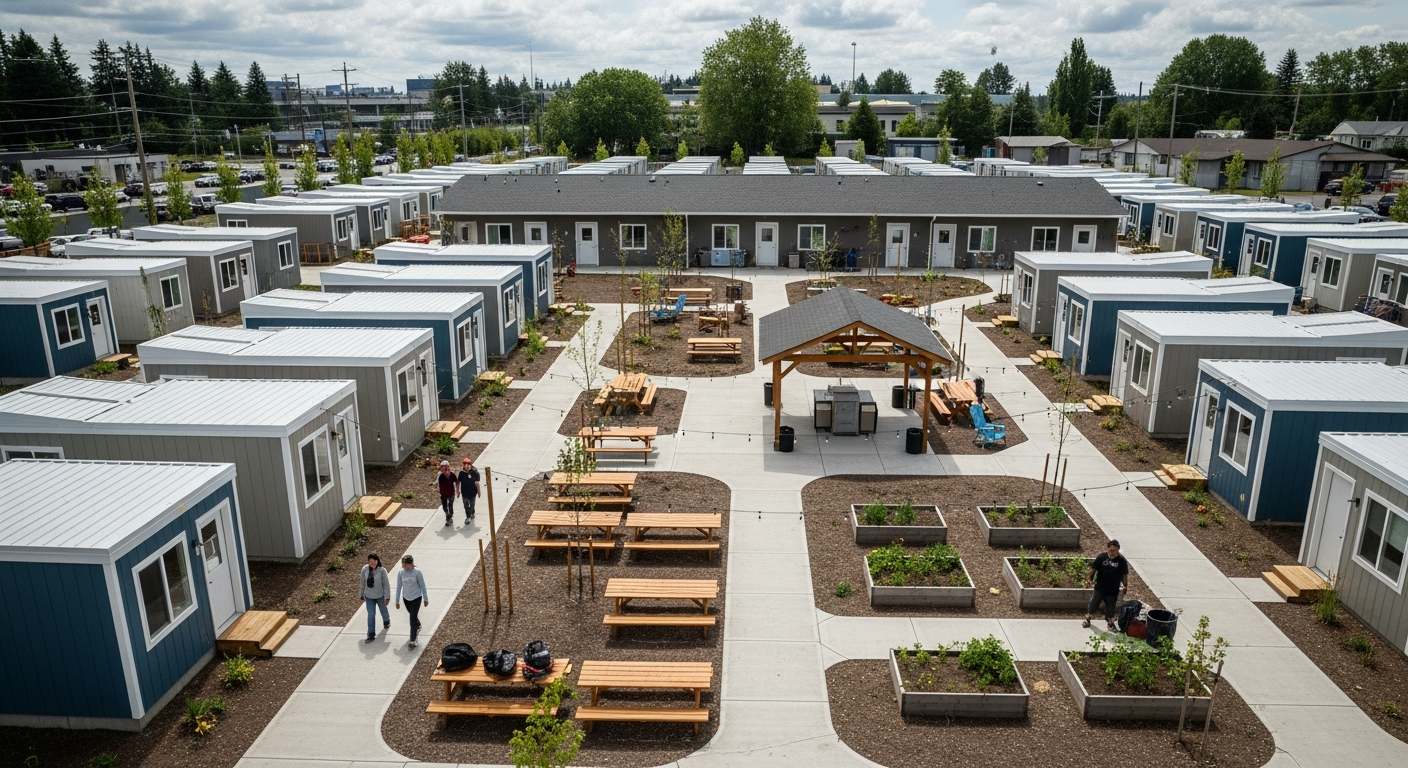
    VOAWW operates the new Pallet Shelter Village on city-owned land off Sievers-Duecy Boulevard in west Everett. Twenty units, each housing one woman and up to three children, opened April 27, 2026. Each unit has a lockable door, climate control, and secure storage. The surrounding village has a community kitchen, showers, restrooms, and a playground. Stays are up to 12 months, with wraparound recovery and job support from VOAWW. Funding came from City of Everett ARPA dollars and a $250,000 Snohomish County match — total project cost $2.7 million.

    Who can access it: any woman with children experiencing homelessness in Snohomish County. There is no military-specific restriction, but also no military-preference track. Referrals through VOAWW or 211.

    Why Navy Families Should Know This Exists

    The NAVSTA Everett Family Support ecosystem — Fleet and Family Support Center (FFSC) at 425-304-3735, the Command Financial Specialist program, unit ombudsmen, and Military Family Life Counselors (MFLCs) available without referral — is the first-line support system. Use it. But when a Navy spouse finds herself in a housing crisis that extends beyond what the military support chain can resolve — particularly if a marriage has ended, if a sailor is deployed and the family’s housing situation has collapsed, or if financial crisis has made the current arrangement unworkable — civilian resources become the path forward.

    The Full Snohomish County Resource Map for Military Families in Crisis

    VOAWW Pallet Shelter Village (Sievers-Duecy) — Women with children, transitional, up to 12 months. Referrals through VOAWW (voaww.org) or 211.

    Everett Gospel Mission — West Everett, with a $30 million expansion underway adding 172 shelter beds. Emergency shelter, meals, recovery support, transitional housing. See the complete Gospel Mission guide.

    211 Snohomish County — Dial 2-1-1 or text your zip code to 898-211. 24 hours, multilingual. Real-time referrals to all housing resources in the county.

    Snohomish County Veterans Assistance Program — 3000 Rockefeller Avenue, Everett. Emergency financial assistance for veterans and families, including rent and utilities. County-funded, not VA benefits. Does not require service-connected disability.

    Everett Vet Center — 3311 Wetmore Avenue, Everett. Counseling, readjustment support, and referrals. Specific expertise helping veterans and military families navigate civilian systems after separation or during family crises.

    HousingHope — Snohomish County’s largest homeless services and affordable housing nonprofit. Family housing programs, rapid rehousing assistance, transitional units. No military restriction.

    FFSC Everett (Fleet and Family Support Center) — 425-304-3735 at NAVSTA Everett. Financial counseling, crisis intervention, relocation support, and civilian resource referrals. Works with Navy spouses even during deployment. No command referral required.

    For the broader 2026 NAVSTA mental health resource map, see Mental Health Awareness Month at NAVSTA Everett 2026.

    A Note on Privacy

    Military families sometimes hesitate to access civilian resources out of concern it will be visible to the chain of command or affect a service member’s career. Civilian resources — VOAWW, Everett Gospel Mission, 211, Snohomish County Veterans Assistance, HousingHope — have no connection to the military reporting chain. Accessing them is confidential. The FFSC also operates under client confidentiality rules and does not report to command except in specific safety situations. If you are unsure, ask the FFSC intake counselor about their confidentiality policy before sharing information.

    Frequently Asked Questions for Navy Families at NAVSTA Everett

    Can a Navy spouse access the VOAWW Pallet Shelter if her service member is deployed?

    Yes. The shelter serves women with children experiencing homelessness regardless of military status. Deployment status of a spouse does not affect eligibility.

    Does accessing civilian housing resources affect a service member’s security clearance?

    Accessing civilian homelessness resources is not a reportable event for security clearance purposes. Consult with a JAG officer or legal assistance attorney if you have specific clearance concerns.

    How long can a family stay at the VOAWW Pallet Shelter?

    Up to 12 months, with wraparound services from VOAWW. This is a transitional shelter, not emergency overnight housing.

    What if the shelter doesn’t have availability?

    Contact 211 (dial 2-1-1) for real-time referrals to other available resources in Snohomish County. The FFSC can also assist with emergency housing referrals.

    Does the Snohomish County Veterans Assistance Program serve active-duty families?

    The program primarily serves veterans. Active-duty family members in crisis should start with FFSC, which can facilitate access to emergency funds and make civilian resource referrals.

    Is the FFSC confidential?

    The FFSC operates under client confidentiality rules and does not report to command except in specific safety situations. Ask the intake counselor directly about their confidentiality policy.

  • Everett’s VOAWW Pallet Shelter for Mothers and Children: The Complete 2026 Guide to the Sievers-Duecy Village, Who It Serves, and How to Access It

    Everett’s VOAWW Pallet Shelter for Mothers and Children: The Complete 2026 Guide to the Sievers-Duecy Village, Who It Serves, and How to Access It

    Quick facts: On April 27, 2026, the City of Everett and Volunteers of America Western Washington (VOAWW) opened a 20-unit Pallet Shelter Village for women experiencing homelessness with their children, on city-owned land off Sievers-Duecy Boulevard in west Everett. Each unit houses one mother and up to three children. Residents can stay up to 12 months with wraparound recovery and job support. Funding: City of Everett ARPA dollars plus a $250,000 match from Snohomish County. Total capital and grant operational expenses: $2.7 million. This is Everett’s third Pallet shelter project and the first built specifically for families with children.

    On April 27, 2026, a ribbon was cut on a piece of city-owned land off Sievers-Duecy Boulevard in west Everett, and 20 addresses came into existence. Not mailing addresses. Living addresses — places where a mother and her children now have a lockable door, a bed, a community kitchen a short walk away, and up to 12 months to work on what comes next.

    This is VOAWW’s third Pallet shelter project in Everett. It is the first one built specifically for women and their children. Here is what is on site, how a family qualifies, who paid for it, and what this means for Everett’s broader effort to address homelessness among the most vulnerable households in Snohomish County.

    What Is On Site at Sievers-Duecy

    Twenty Pallet structures are installed on the enclosed, managed site. Each unit is a modular shelter built by Pallet Shelter, the Everett-based company whose structures have been deployed in more than 70 cities. Each unit is designed for one mother and up to three children — a sleeping space with climate control, secure storage, and a lockable door. The lock matters more than it might seem: most emergency shelter beds available to families in Snohomish County prior to this opening were in congregate settings with no private door.

    • Detached restrooms and a separate shower facility — enclosed, year-round
    • A community kitchen and gathering space — hard-walled, where residents can cook and meet with case workers
    • A playground — the feature that signals most clearly who this village is for

    The site is enclosed and access-controlled. VOAWW manages the site and provides on-site services.

    Who It Serves and How Long Residents Can Stay

    The shelter is for women and their children. Residents can stay up to 12 months — transitional, not emergency. The distinction matters: emergency shelter is measured in days or weeks. Transitional shelter at 12 months gives VOAWW’s case managers enough time to work with a family on housing search, employment, recovery support, and the practical paperwork that reconnects people to stable housing.

    VOAWW provides wraparound services including recovery assistance and job support. Their 2026 service footprint includes more than 315,000 service requests annually across their full program portfolio. Referrals go through VOAWW directly or through the 211 system. For a broader look at VOAWW’s full Everett service map, see Where to Get Help in Everett in 2026.

    Who Paid For It

    Funded through City of Everett American Rescue Plan Act (ARPA) dollars, with a $250,000 match from Snohomish County. Total capital and grant operational expenses as of end of 2025: $2.7 million. The city provided the land — city-owned property off Sievers-Duecy Boulevard. The ribbon cutting was attended by Everett City Council President Don Schwab, VOAWW Executive Director of Housing Services Galina Volchkova, VOAWW CEO Brian Smith, and Everett Mayor Cassie Franklin.

    Everett’s Third Pallet Shelter: The Full Picture

    Everett has now opened three Pallet shelter projects. The Sievers-Duecy village is the first built specifically for women and children. The Pallet company itself is an Everett story: founded here, with structures deployed in more than 70 cities nationally. The Pallet model — modular structures, enclosed sites, transitional time frames, wraparound services — has become a consistent component of Everett’s homelessness response strategy.

    The Sievers-Duecy location matters geographically. West Everett — the corridor around Casino Road, Sievers-Duecy Boulevard, and the neighborhoods running toward Merrill Creek — has a significant concentration of low-income households and historically has had the highest demand for human services access in the city.

    What This Means for Snohomish County’s Homelessness Response

    Single mothers with children are among the most difficult households to serve in the existing shelter system. Congregate shelters frequently can’t accommodate families. Hotel diversion programs are expensive. Rapid rehousing requires affordable rental vacancy — which Snohomish County’s market, with its $750,000 April 2026 median and tight supply, frequently doesn’t offer. A 20-unit transitional village gives 20 families a stable enough platform to work on the next step.

    For the broader network, the $30 million Everett Gospel Mission expansion underway adds 172 additional shelter beds. For NAVSTA Everett military families who may need these resources, see the Navy family housing resource guide. Also see the complete Everett Gospel Mission guide.

    Frequently Asked Questions

    Where is the VOAWW Pallet Shelter in Everett?

    On city-owned land off Sievers-Duecy Boulevard in west Everett. The site opened April 27, 2026.

    Who is eligible for the VOAWW Pallet Shelter?

    Women experiencing homelessness with their children. Each unit accommodates one mother and up to three children.

    How long can families stay?

    Up to 12 months, in a transitional model with wraparound recovery and employment support provided by VOAWW.

    How do families get referred to the shelter?

    Through VOAWW directly (voaww.org) or through the 211 system — dial 2-1-1 or text your zip code to 898-211.

    How was the shelter funded?

    City of Everett ARPA dollars plus a $250,000 match from Snohomish County, on city-owned land. Total capital and grant operational expenses: $2.7 million as of end of 2025.

    What is the Pallet Shelter company?

    An Everett-based company that manufactures modular shelter units deployed in more than 70 cities nationwide. The Sievers-Duecy units were built by Pallet Shelter and installed on the city-owned site.

    Is this Everett’s only shelter for families with children?

    It is the first Pallet shelter village in Everett built specifically for mothers and children. Other resources for families in Snohomish County include Everett Gospel Mission, Cocoon House (youth), and 211 for referrals to all available resources.

  • Everett Resident’s Guide to the August 4 EMS Levy: What Initiative 747 Means for Your Property Tax Bill, Your Fire Department, and Your Vote

    Everett Resident’s Guide to the August 4 EMS Levy: What Initiative 747 Means for Your Property Tax Bill, Your Fire Department, and Your Vote

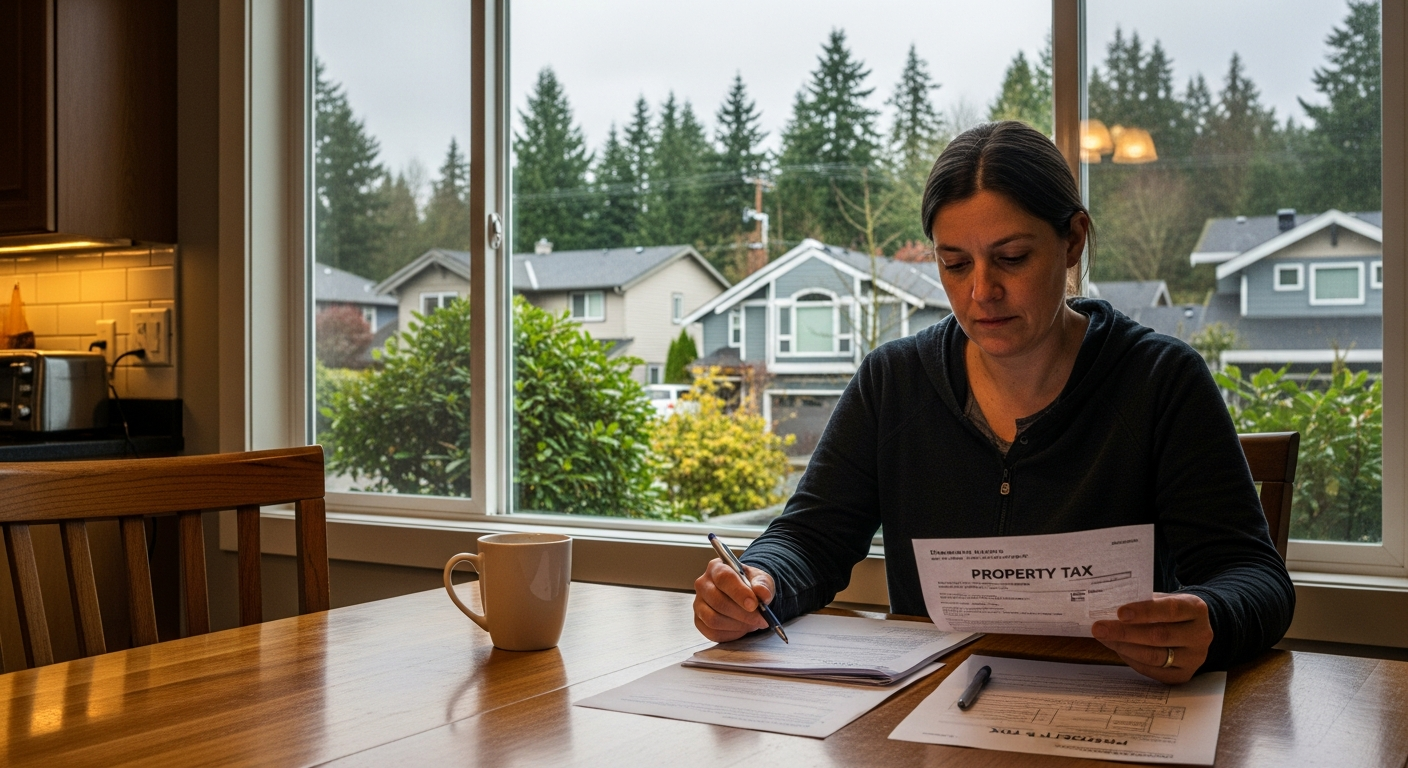
    The bottom line for Everett residents: The EMS levy lid lift on the August 4, 2026 primary ballot would raise your EMS property tax rate from approximately $0.36 to $0.50 per $1,000 of assessed value — about $80 per year, or $6.67 per month, for a $500,000 home. If it passes, it funds approximately 78 firefighter-paramedic positions at Everett Fire. If it fails, the levy rate stays where it is and the funding gap for EMS services widens further. The reason this is on the ballot is a 2001 state law called Initiative 747, which caps how much property tax revenue cities can collect per year at 1% growth.

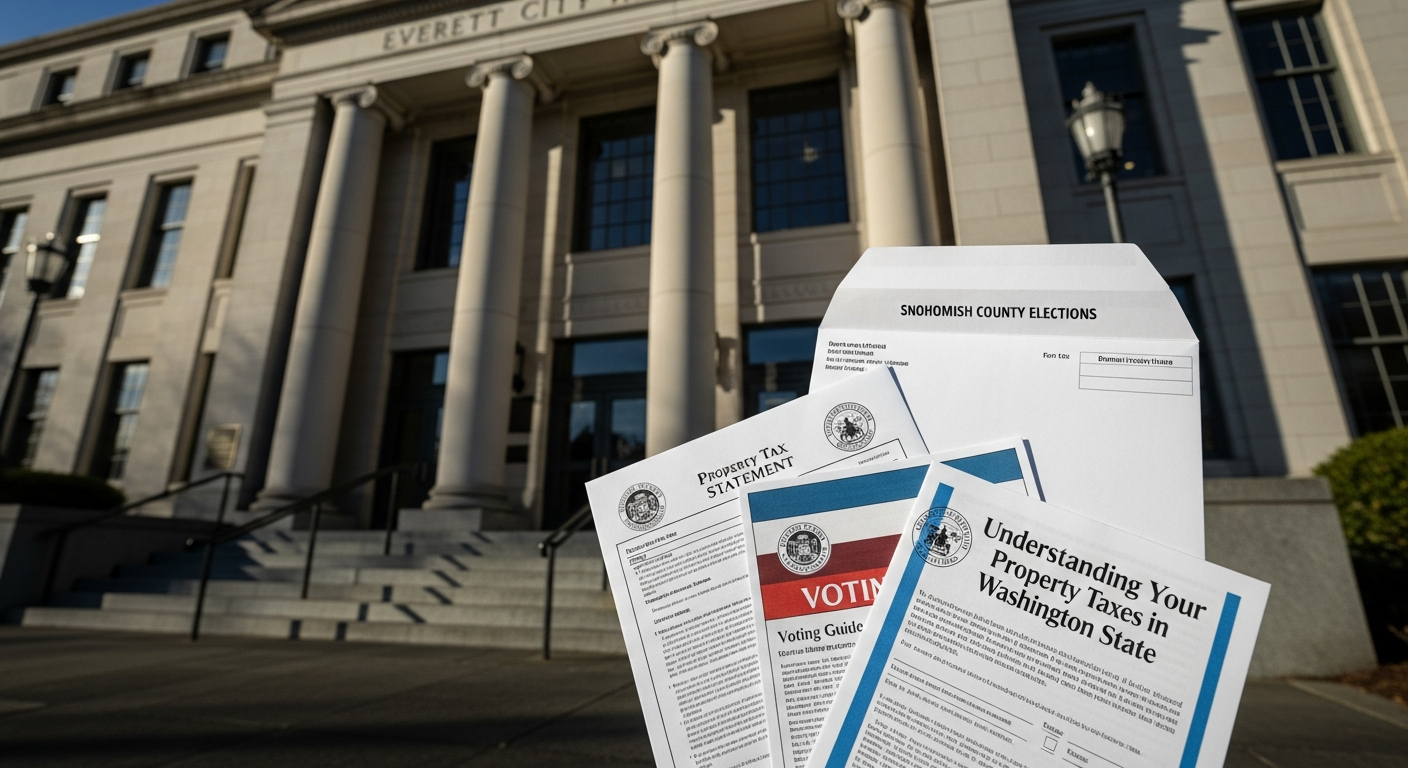
    You are going to get a Voters’ Pamphlet in mid-July. It will include a measure for the August 4, 2026 primary asking you to approve a levy lid lift for Emergency Medical Services. Here is everything you need to make that decision — including the part most explanations skip, which is why this keeps ending up on your ballot. For the full structural explanation of Initiative 747, see the complete Initiative 747 guide.

    What You’re Actually Being Asked

    You are being asked to restore the EMS property tax levy rate — not raise it above what was originally voter-approved, but restore it to that level. The rate has drifted down from the original voter-approved figure over the past 25 years because of a state law (Initiative 747, RCW 84.55.010) that limits how much cities can collect. The lid lift would bring the rate back from approximately $0.36 per $1,000 of assessed value to $0.50 per $1,000.

    In dollars: for a home assessed at $500,000, the difference is about $70 per year. For a home at $750,000 (near the current Snohomish County median), it is about $105 per year. To calculate your exact increase: multiply your assessed value by $0.00014. Find your assessed value at snohomishcountywa.gov.

    What the Money Funds

    EMS levy funds go specifically to Everett Fire Department’s emergency medical services operations — the firefighter-paramedics who respond when you call 911 for a medical emergency. According to the City of Everett, the lid lift funds approximately 78 firefighter-paramedic positions. EMS calls make up the majority of Everett Fire’s call volume. Unlike fire suppression, which can be partially handled by mutual aid agreements, medical calls require local personnel on scene fast.

    Why This Is on the Ballot: Initiative 747

    Initiative 747, approved by Washington voters in 2001, limits how much property tax revenue any local government can collect from existing properties each year to 1% growth. EMS costs — paramedic wages, pension contributions, ambulance equipment, fuel — grow at 3% to 7% per year. The 1% limit does not keep up. Over 25 years, the gap has grown large enough that a lid lift is needed to restore the funding relationship voters originally approved. This is why you have also seen library levies and fire service questions — same mechanism, same law, different service. For the current Snohomish County fiscal context, see the Everett $14 Million Budget Deficit Guide.

    If You Vote Yes

    The EMS levy rate restores to $0.50 per $1,000 of assessed value. Approximately 78 firefighter-paramedic positions are funded at Everett Fire. Your annual property tax bill increases by the difference between $0.50 and your current EMS levy rate, multiplied by your assessed value divided by 1,000.

    If You Vote No

    The rate stays at approximately $0.36 per $1,000. The funding gap between EMS levy revenue and EMS costs continues to grow. The City would need to address that gap through general fund allocations, service reductions, or a future ballot measure.

    Key Dates

    • Mid-July 2026: Voters’ Pamphlet mails to all Snohomish County households
    • August 4, 2026: Primary election ballot due (Washington is a mail-in state; ballots arrive approximately 18 days early)

    Frequently Asked Questions for Everett Residents

    How much will my property taxes go up if the EMS levy passes?

    Approximately $80 per year for a home assessed at $500,000. Multiply your assessed value by $0.00014 to get your specific annual increase.

    Is this a new tax or a restoration of an existing one?

    A restoration. Voters approved the original EMS levy rate. Initiative 747’s 1% cap caused the rate to drift down over 25 years. The lid lift restores it to the voter-approved level.

    What happens to EMS if the levy fails?

    The rate stays at approximately $0.36 per $1,000 and the gap between EMS revenue and costs continues to widen. The City would need to address the gap through general fund allocations or a future ballot measure.

    Why can’t the City Council just fund this without a vote?

    Because Initiative 747 (RCW 84.55.010) requires voter approval to raise the levy rate above the 1%-cap-adjusted level. The Council does not have the authority to lift the lid on its own.

    When does my ballot arrive?

    Approximately 18 days before August 4. Washington is a mail-in state; ballots mail automatically to all registered voters at their registered address.

    How do I find my home’s assessed value?

    At the Snohomish County Assessor portal, accessible through snohomishcountywa.gov.

  • Initiative 747 and Everett’s EMS Levy: The Complete Guide to Why Washington’s 1% Property Tax Cap Keeps Sending Services to the Ballot

    Initiative 747 and Everett’s EMS Levy: The Complete Guide to Why Washington’s 1% Property Tax Cap Keeps Sending Services to the Ballot

    Why does Everett keep putting things on the ballot? Because of Initiative 747, a 2001 Washington voter initiative (RCW 84.55.010) that caps how much property tax revenue any local government can collect from existing properties each year — at 1%. Since fire, EMS, library, and city services cost more than 1% extra each year, the gap between what the levy produces and what services cost grows continuously. When the gap becomes large enough, cities and districts ask voters to restore the original rate in a “lid lift” election. Everett’s EMS lid lift on the August 4, 2026 primary ballot is the third such vote for emergency services since the original EMS levy passed in 2000.

    If you live in Everett, you have noticed something: the city keeps asking you to vote on funding for services that already exist. The EMS levy on the August 4, 2026 ballot is the latest. Before it was a library question. Before that, fire services. The question most residents ask is: why does this keep happening? Why can’t the City Council just fund these services without going back to voters?

    The answer is one law: Initiative 747. Understanding it takes about ten minutes, and once you understand it, every levy on every Everett ballot for the rest of your life will make immediate sense.

    The 1% Problem

    In November 2001, Washington voters approved Initiative 747 by a wide margin. The law is codified at RCW 84.55.010. Its core rule: cities, counties, fire districts, library districts, and other taxing districts may not increase the amount they collect from existing properties by more than 1% per year without going back to the voters for approval.

    That seems reasonable until you look at what cities actually spend money on. The Everett Fire Department’s biggest costs are firefighter wages, paramedic salaries, pension contributions, health insurance, fuel, and ambulance equipment. Those costs do not grow at 1% per year. They grow at 3% to 7% per year, sometimes more. The arithmetic is relentless. If your revenue is capped at 1% growth and your costs grow at 4%, after ten years you have a 30-point gap. After 25 years — which is roughly how long Everett’s original 2000 EMS levy has been in place — the gap is enormous.

    The EMS levy rate has dropped from the original voter-approved rate to approximately $0.36 per $1,000 of assessed value today. The lid lift on August 4 asks voters to restore it to $0.50 per $1,000. For the average Everett homeowner, that is roughly $80 per year. That restoration funds approximately 78 firefighter-paramedic positions at the Everett Fire Department. For more on what this means for your specific tax bill, see the Everett Resident’s Guide to the August 4 EMS Levy.

    A Brief History of I-747

    Initiative 747 emerged from a sequence of Washington property tax limitation measures. In 1971, the legislature set the regular levy cap at 6% or inflation. In November 1999, Initiative 695 changed the levy limit. In November 2000, Initiative 722 rolled back some levy increases. Then in November 2001 came I-747, which set the 1% cap that has governed Washington property taxes ever since.

    In 2007, the Washington Supreme Court ruled I-747 unconstitutional on technical grounds (Washington Citizens Action of Washington v. State). But the legislature reinstated the 1% cap in a special session within weeks of the ruling. It has been in state code ever since. Most recently, Senate Bill 5770 in the 2025 session would have raised the cap to 3%, but it did not pass. The 1% cap appears stable for the foreseeable future.

    How the Lid Lift Actually Works

    When a taxing district wants to raise its levy rate above the 1%-cap level, it must ask voters to approve a “levy lid lift” under RCW 84.55.050. A lid lift can be temporary or permanent. Here’s the specific mechanism: each year, a district’s maximum levy is the higher of (a) the prior year’s actual levy plus 1%, or (b) the “highest lawful levy” — the highest rate the district was ever authorized to collect. A lid lift restores it from the current depressed rate back up to the voter-approved rate.

    Two important nuances: First, the 1% cap is on revenue from existing properties, not on individual tax bills — your bill can rise faster than 1% if your assessed value increases faster than the average. Second, new construction is excluded from the 1% limit, which means growing cities collect more from new buildings without a vote. In a built-out city like Everett where most development is infill and renovation, the new-construction exception doesn’t close the gap by much.

    The August 4, 2026 Vote

    The measure on the August 4, 2026 primary ballot would restore the EMS levy rate from approximately $0.36 per $1,000 of assessed value to $0.50 per $1,000. For a home assessed at $500,000, that is about $80 additional per year — roughly $6.67 per month. The Voters’ Pamphlet goes to Snohomish County mailboxes in mid-July. For the electoral context alongside other August 4 races, see the Snohomish County 2026 Primary Voter Guide.

    Why This Will Keep Happening

    Even if voters approve the August 4 lid lift, they are not solving the underlying structural problem — they are resetting the clock. The new $0.50 rate will begin eroding again at 1% per year while costs continue to grow at 3-7%. In another 15 to 25 years, the gap will be large enough to require another lid lift vote. That is not a criticism of the levy or the city. It is simply what Initiative 747 produces: a permanent structural gap between revenue growth and cost growth for every taxing district in Washington.

    Frequently Asked Questions

    What is Initiative 747 and what does it do?

    A 2001 Washington voter initiative (RCW 84.55.010) that caps how much property tax revenue local governments can collect from existing properties at 1% growth per year without voter approval.

    Why does Everett keep putting levies on the ballot?

    Because service costs grow faster than 1% per year, so the gap between what the levy produces and what services cost expands continuously. When it becomes large enough, the city asks voters to restore the rate in a lid lift election.

    What is a levy lid lift?

    A voter-approved measure that restores a taxing district’s levy rate from the I-747-reduced level back to the voter-authorized maximum. It does not raise taxes above what voters originally approved; it restores them to that level.

    What does the August 4, 2026 EMS lid lift specifically do?

    Restores Everett’s EMS levy rate from approximately $0.36 to $0.50 per $1,000 of assessed value — about $80 per year for a typical Everett homeowner — and funds approximately 78 firefighter-paramedic positions at the Everett Fire Department.

    Was Initiative 747 ever overturned?

    The Washington Supreme Court ruled it unconstitutional on procedural grounds in 2007, but the legislature reinstated the 1% cap in a special session that same year. It has been in state code ever since.

    Will the EMS levy raise my property taxes permanently?

    A lid lift restores the voter-approved rate and holds it there. Under I-747, the restored rate will then be subject to the 1% growth cap going forward — meaning it will begin to erode again over time.

    Where can I read the Voters’ Pamphlet?

    Via the Snohomish County Auditor at snohomishcountywa.gov/190/Elections and the City of Everett at everettwa.gov. The pamphlet mails to all Snohomish County households in mid-July 2026.

  • For Everett Developers and Business Owners: What PUD’s Everett-Delta Transmission Line Means for Your Project’s Electrical Service

    For Everett Developers and Business Owners: What PUD’s Everett-Delta Transmission Line Means for Your Project’s Electrical Service

    The short version for developers: Snohomish County PUD’s new Everett-Delta 115-kV transmission line — 3.5 miles, connecting the Everett Substation to the Delta Switching Station near SR 529 / Marine View Drive — goes in service summer 2027. It adds the upstream transmission capacity PUD needs to connect the wave of new waterfront, downtown, and north-Everett developments at full load. If your building opens before summer 2027, confirm your electrical service agreement and any interim capacity arrangements with PUD now. If your opening is fall 2027 or later, you are in the planned capacity window.

    If you are developing, building out, or opening a business in Everett’s waterfront, downtown, or north-end corridor in 2026 or 2027, there is one piece of infrastructure that affects your electrical service capacity, your connection timeline, and your ability to run the systems your tenants and customers will expect. It is not a building permit. It is a power line.

    Snohomish County PUD’s new Everett-Delta 115-kilovolt transmission line is the upstream electrical capacity that the Millwright District, the downtown stadium, the Mosaic Apartments, and every other project in the corridor runs on. PUD held public open houses on May 7, 2026. Here is the business-owner and developer version of what you need to know. For the full project overview, see the complete Everett-Delta transmission line guide.

    The Capacity Problem the Line Solves

    Every large building in the waterfront corridor pulls electrical load. A 300-unit multifamily building with heat pumps, EV charging infrastructure, and commercial amenity spaces runs approximately 1 to 1.5 megawatts of peak demand. A restaurant with commercial kitchen equipment adds another 100 to 300 kilowatts per tenant. Stack the Millwright District Phase 2, Mosaic Apartments, the downtown stadium, and the Sage Investment Group conversion on top of projects already open at Waterfront Place — and you have a concentration of new load the existing north Everett transmission system was not designed to absorb.

    PUD’s language for why the line is being built is precise: “increasing electrical demand in the northern regions of the service territory” and “prevent the electric system from experiencing low voltage should local power be interrupted.” For a developer or building owner, that translates to: the existing infrastructure is operating with reduced headroom, and this line restores it.

    What Goes In Service and When

    The line connects PUD’s Everett Substation (west of I-5, between McDougall and Smith avenues) to the Delta Switching Station near SR 529 and West Marine View Drive. Construction is targeted to begin spring 2027. The line is planned to be in service by summer 2027, approximately six months of construction.

    The Practical Timeline Issue for Your Project

    If your building or commercial space is targeting an opening in 2026 or early 2027, you are opening before the Everett-Delta line is in service. For large-load projects — multifamily, high-load commercial anchors, destination restaurants with significant kitchen/HVAC load — confirm directly with PUD whether your project falls within the pre-line capacity envelope or whether there are interim arrangements needed.

    If your project is targeting a fall 2027 opening or later, you are timing well. PUD will have the upstream capacity in place and your service connection request goes into a queue that includes the new transmission headroom the Everett-Delta line creates.

    The Reliability Dimension

    Beyond raw capacity, the Everett-Delta line adds N-1 redundancy to the north Everett corridor. Once in service, PUD can reroute power around a failed line segment, maintaining voltage and continuity. For a restaurant, hotel, or high-density residential building where a power outage is a direct revenue and habitability event, this is a meaningful change in risk profile.

    The New Substation Implication

    PUD’s project documentation states the Everett-Delta line will “support at least one new substation in the Everett area” tied to the city’s 2044 Comprehensive Plan. The substation location has not been publicly announced. Developers planning projects in the 2028–2032 window should monitor PUD’s system improvements page for updates — the new substation’s location will directly affect which parts of the corridor have the most available service capacity after the line goes in. For the broader economic context, see the April 2026 Snohomish County market report.

    How to Stay Current

    PUD maintains a project page at snopud.com under System Improvements. For project-specific electrical service questions, PUD’s business services team handles large-load connection requests.

    Frequently Asked Questions for Developers and Business Owners

    Does the Everett-Delta line affect my electrical service connection timeline?

    For large-load projects opening before summer 2027, yes — confirm your connection capacity with PUD. For projects opening fall 2027 or later, the line adds upstream capacity that makes connection approvals more straightforward.

    When does construction begin and when is the line in service?

    Construction begins spring 2027; in service by summer 2027, approximately six months of construction.

    What load can existing north Everett transmission support now?

    PUD has not published a specific available capacity figure. Contact PUD’s business services team for a load study or capacity assessment for your specific project.

    Will there be construction disruption near Marine View Drive?

    Some work in the corridor is expected in spring-summer 2027. PUD will provide specific construction routing details as the project advances through permitting.

    Where is the new substation PUD mentioned?

    The location has not been publicly announced. PUD’s documentation states the line will support at least one new substation tied to Everett’s 2044 Comprehensive Plan. Watch snopud.com system improvements for updates.

  • Everett-Delta 115kV Transmission Line: The Complete 2026 Guide to PUD’s Grid Backbone for Everett’s Waterfront Buildout

    Everett-Delta 115kV Transmission Line: The Complete 2026 Guide to PUD’s Grid Backbone for Everett’s Waterfront Buildout

    What is the Everett-Delta transmission line and why does it matter? It is a new 3.5-mile 115-kilovolt power line Snohomish County PUD is building to connect the Everett Substation (west of I-5 between McDougall and Smith) to the Delta Switching Station (north of the SR 529 / West Marine View Drive interchange). Construction begins spring 2027; in service by summer 2027. It is the electrical backbone that makes the entire Everett waterfront, downtown, and north-end building wave possible — the Millwright District, the downtown stadium, Mosaic Apartments, and every heat pump, EV charger, and commercial kitchen going into new buildings along the corridor all depend on this line having enough capacity.

    Most of the coverage of Everett’s development boom focuses on what’s being built: the Millwright District’s 300-plus waterfront apartments, Skotdal Real Estate’s seven-story Mosaic Apartments on Pacific Avenue, the downtown stadium breaking ground in September 2026, the Sage Investment Group converting the 9602 19th Street SE Econo Lodge into 124 studios, and the Port of Everett’s continuing Restaurant Row expansion. What rarely gets covered is what has to be true underground and overhead before any of those buildings can function at full electrical load.

    That’s what the Everett-Delta transmission line is about.

    Snohomish County PUD held two public open houses on May 7, 2026 — 4 to 5:30 p.m. and 6 to 7:30 p.m., both at PUD headquarters at 2320 California Street in Everett — to explain the project to residents. Here is what those open houses covered, and why this infrastructure decision matters for every household, business, and development project in the corridor.

    What the Line Actually Is

    The Everett-Delta project is a new 115-kilovolt transmission line, approximately 3.5 miles long, connecting two existing PUD assets at opposite ends of the city’s growth corridor. On the south end: the Everett Substation, located just west of Interstate 5 between McDougall Avenue and Smith Avenue, north of 36th Street. On the north end: the Delta Switching Station, sitting just north of the State Route 529 and West Marine View Drive interchange in north Everett.

    A 115-kV line is what the utility industry calls mid-tier transmission — not the bulk transmission highways that BPA operates at 230kV and 500kV, but the layer that connects the high-voltage backbone to the local distribution substations that actually serve neighborhoods. It’s the difference between having electricity available somewhere in the region and having it available at the right voltage, in the right quantity, at a specific address on Pacific Avenue or Marine View Drive.

    PUD’s stated reasons for building the line now: increasing electrical demand in the northern regions of the service territory; the need to keep voltage stable if local power is interrupted; delivering more electricity from south to north to ease strain on the current system during peak hours; and supporting at least one new substation in the Everett area tied to the City of Everett’s 2044 Comprehensive Plan growth projections.

    The Development Connection

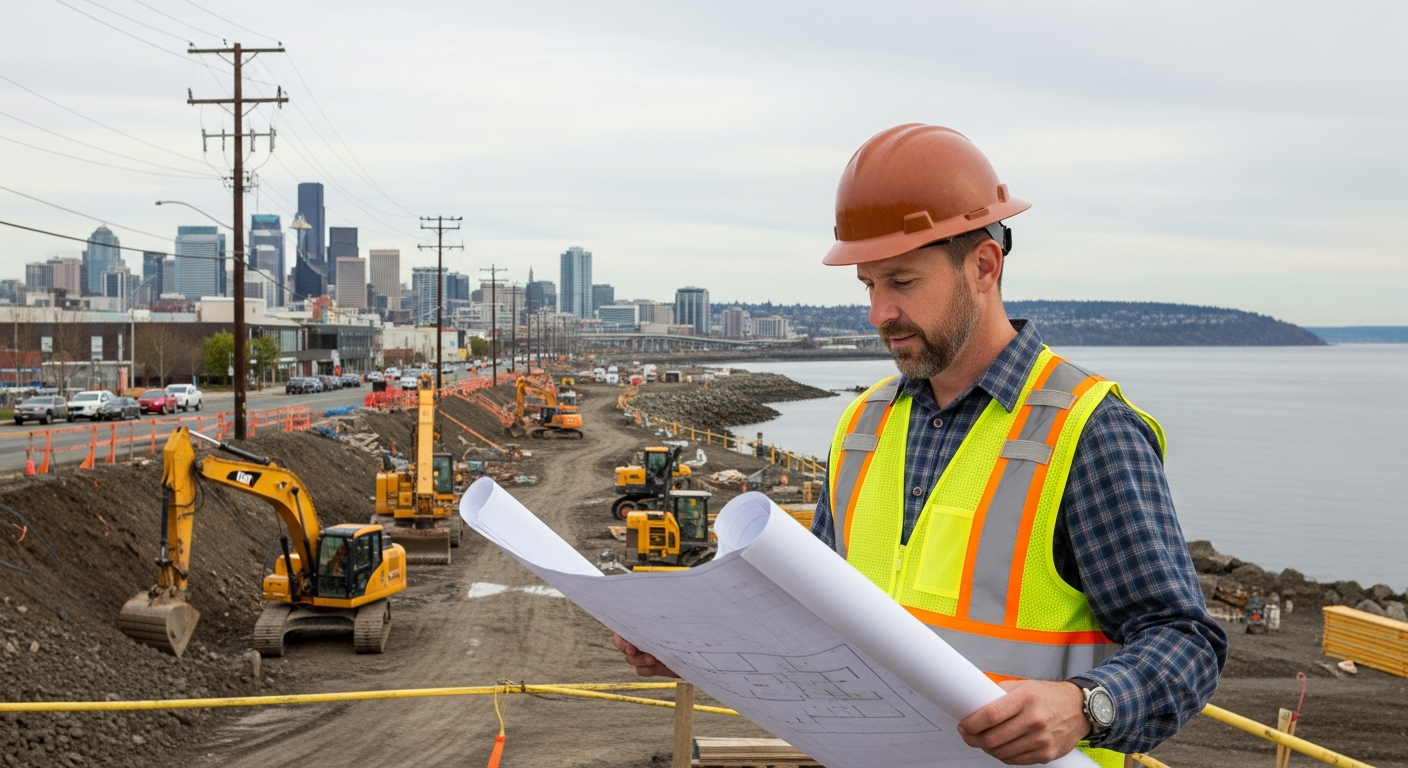
    The geographic overlap between this line and the Everett development map is not a coincidence. The line runs through or adjacent to the same West Marine View Drive corridor where the $113 million Port of Everett waterfront pipeline project, the Edgewater Bridge reconstruction, and the Port’s terminal investments have all been stacking up. The Millwright District Phase 2’s 300-plus apartments are in this zone. The downtown stadium site — with a September 2026 groundbreaking target — is within the service territory of the substations this line feeds.

    Every new building in this corridor carries electrical load. A 300-unit apartment building with heat pumps, EV charging stations in the garage, and full commercial kitchen and amenity spaces runs roughly 1 to 1.5 megawatts of peak demand. A commercial development with restaurant tenants adds more. Multiply that across the Millwright District, Mosaic Apartments, the stadium, and the pipeline of projects in the Imagine Everett comprehensive plan, and the aggregate load growth is significant — exactly the kind of growth that forces a utility to invest in transmission before the buildings open, not after.

    PUD’s 2044 Comprehensive Plan projection shows Everett absorbing a significant share of Snohomish County’s population growth over the next two decades. The Everett-Delta line is the infrastructure that makes that projection electrically possible, not just politically aspirational. For more on the waterfront development pipeline this line serves, see What 15 Years and $350 Million Built: The Port of Everett Story and Everett’s Downtown Stadium in 2026: The Complete Guide.

    Timeline: When This Gets Built

    • May 7, 2026: Public open houses at PUD headquarters, 2320 California Street, Everett
    • Environmental review and permitting: Ongoing through 2026
    • Spring 2027: Construction begins
    • Summer 2027: Line in service — approximately six months of construction

    What It Means for Existing Everett Customers

    The most direct benefit for existing residential and commercial customers is grid reliability. The Everett-Delta line adds a second transmission path into the north Everett grid, which means that if the existing line fails during a storm or equipment outage, the system can reroute power without causing a widespread outage. PUD’s language — “prevent the electric system from experiencing low voltage should local power be interrupted” — is describing what engineers call N-1 contingency planning: designing the system so it continues to work even if one element fails.

    For neighborhoods in the 36th Street to Marine View Drive corridor — including Bayside, the north waterfront, and the areas near PUD headquarters — this is a direct reduction in outage risk during major weather events. Also see the broader development context in Skotdal’s Mosaic Apartments: 102 Art-Infused Homes on Pacific Avenue.

    What It Means for Businesses and Developers

    If you are developing or planning to develop in the Everett waterfront, downtown, or north-end corridor, the Everett-Delta line affects your project in two practical ways.

    First, PUD’s ability to grant electrical service connections to new large-load customers depends on transmission capacity upstream. The Everett-Delta line adds that upstream capacity. Second, the summer 2027 in-service date matters for your construction and opening timeline. Buildings opening in fall 2027 or later are in good shape. Projects with 2026 or early 2027 openings should confirm with PUD directly whether interim capacity arrangements are needed.

    PUD’s project contact information is available at snopud.com under System Improvements.

    Frequently Asked Questions

    What is the Everett-Delta 115kV transmission line?

    A new 3.5-mile power line Snohomish County PUD is building to connect the Everett Substation (near 36th Street and I-5) to the Delta Switching Station (near SR 529 and Marine View Drive). Scheduled to go in service by summer 2027.

    Why is PUD building this line now?

    To support growing electrical demand in the Everett area, prevent low-voltage conditions during local power outages, deliver more electricity from south to north during peak hours, and support at least one new substation tied to Everett’s 2044 Comprehensive Plan growth projections.

    When does construction start and when will the line be in service?

    Construction begins spring 2027. The line is targeted to be in service by summer 2027, with construction taking approximately six months.

    How does this affect the Everett waterfront development projects?

    Every new building in the waterfront and downtown corridor adds electrical load. The Everett-Delta line adds the upstream transmission capacity PUD needs to connect new developments at full load without imposing service restrictions or connection queues.

    Does this reduce the risk of power outages for existing Everett customers?

    Yes. The line adds a second transmission path into the north Everett grid, enabling rerouting around a failed line segment rather than causing widespread outage. This is N-1 contingency coverage.

    Will there be construction disruption near Marine View Drive?

    Some work in the corridor is expected in spring-summer 2027 as the line connects near SR 529 and Marine View Drive. PUD will provide specific construction routing details as the project advances through permitting.

    Where can I get more information about the project?

    Snohomish County PUD maintains a project page at snopud.com under Community & Environment → Our Energy Future → Reliability → System Improvements → Everett-Delta Transmission Line.