Category: Exploring Everett

Everett, Washington is in the middle of something big. A $1 billion waterfront transformation. A Boeing workforce that built the world’s largest commercial jets. A port city with a downtown that’s finally catching up to its potential. A Navy presence at Naval Station Everett. A comedy and arts scene punching above its weight. And neighborhoods — Riverside, Silver Lake, Downtown, Bayside — each with their own identity and story.

Exploring Everett is Tygart Media’s hyperlocal coverage vertical for Snohomish County’s largest city. We cover the waterfront redevelopment, Boeing and Paine Field, city hall, the food and arts scene, real estate, neighborhoods, and everything in between — written for people who live here, work here, or are paying attention to what’s coming.

Coverage categories include: Everett News, Waterfront Development, Boeing & Aerospace, Business, Arts & Culture, Food & Drink, Real Estate, Neighborhoods, Government, Schools, Public Safety, Events, and Outdoors.

Exploring Everett content is also published at exploringeverett.com.

  • Tabassum Is the Northwest’s Only Uzbek Food Truck — And It Regularly Parks in Everett

    Q: Where can I find authentic Uzbek food in Everett, WA?
    A: Tabassum is the Pacific Northwest’s first and only Uzbek food truck, founded by Suriya Yunusova and her daughter Asal. The truck serves beef samsa, butternut squash samsa, chicken curry samsa ($5 each), and plov ($10) — all halal, with vegan and vegetarian options. Tabassum parks regularly at the Beverly Food Truck Park (6731 Beverly Blvd, Mon–Sat 4–7 PM) and various Everett and Seattle-area locations. Check tabassum.info or call (206) 909-4584 for current schedule. Last verified: April 2026.

    Tabassum Is the Northwest’s Only Uzbek Food Truck — And It Regularly Parks in Everett

    There is a lot of food truck content in Everett. Birria trucks, Mexican fusion, coffee carts, barbecue rigs. What there is not, anywhere in the Pacific Northwest, is another Uzbek food truck. Tabassum is the only one. It has been the only one since Suriya Yunusova launched it in January 2017. And it parks at the Beverly Food Truck Park, which means you can eat some of the most geographically rare street food in the region on a Monday night in central Everett.

    In Uzbek, tabassum means smile. After one samsa, you’ll understand why that was the right name.

    Where It Comes From

    Uzbekistan sits in a part of the world that most Pacific Northwesterners have never had a reason to think about — a landlocked Central Asian republic tucked between the Caspian Sea, China, and Russia, geographically positioned at the heart of the old Silk Road trading routes that connected Europe to East Asia for centuries. That geography left its mark on the cuisine. Uzbek food is the product of thousands of years of trade, conquest, and cultural overlap: you find the pastry traditions of the Persian world, the lamb and rice techniques of the Mongols, the spice sensibility of the Indian Ocean trade routes, all compressed into a regional cooking tradition that most Americans have never encountered.

    Samsa, the dish Tabassum built its reputation on, is one of those dishes. It’s a baked puff pastry hand pie — flaky, golden, sesame-seeded on top — filled with spiced meat or vegetables. The ancestry runs back nearly as far as the Silk Road itself. The version you eat off a Tabassum truck in Everett, Washington traces a direct line to street-food stalls in Samarkand and Tashkent.

    The Owner

    Suriya Yunusova launched Tabassum in January 2017, becoming the first person in the Pacific Northwest to put authentic Uzbek street food on wheels. She runs the truck with her daughter Asal. The family-run operation is small, intentional, and consistent — the same recipes, the same sourcing, the same commitment to halal-certified ingredients that they started with. In an era when food trucks often pivot menus based on trends, Tabassum has spent eight years doing one cuisine correctly.

    Seattle Magazine covered the truck early in its life with exactly the right framing: this may be the only Uzbek food truck on the entire West Coast. That was still true when we checked for this piece in April 2026.

    What to Order

    The menu is short and intentional. Everything here is halal, and the truck accommodates vegan, vegetarian, and gluten-free diners across the menu.

    Beef Samsa ($5) — The anchor. Halal ground beef and onion with cumin, folded into puff pastry, brushed with egg wash, sprinkled with sesame seeds, and baked. The pastry shatters at the edges and gives way to a spiced, savory interior. Order two minimum. Order three if you’re eating alone and have no shame about it.

    Butternut Squash Samsa ($5) — The vegetarian option and genuinely not a consolation prize. Roasted butternut squash with garlic and cumin inside the same golden pastry. The squash takes on a concentrated sweetness from the oven that balances against the cumin perfectly. This is the move if you want to understand why Uzbek food works even without meat.

    Chicken Curry Samsa ($5) — Halal chicken with curry and green peas inside the puff pastry. The curry spice profile is a nod to the Central Asian trade-route heritage — the Indian subcontinent isn’t far in historical terms from Uzbekistan, and the flavor shows it.

    Plov ($10) — The national dish of Uzbekistan, and the one that will convert anyone who thought rice dishes were boring. Halal beef over rice cooked with garbanzo beans, carrots, onions, raisins, garlic, and cumin. The slow-cooked technique renders the beef tender and infuses the rice with everything in the pot. Plov is a party dish in Uzbekistan — it’s what you cook when hundreds of people are coming. Tabassum makes a truck version that captures the essence of it. If you leave without ordering the plov, you made a mistake.

    Finding the Truck

    Tabassum parks at the Beverly Food Truck Park at 6731 Beverly Blvd (Mon–Sat, 4–7 PM) on a rotating schedule alongside other trucks in the park’s lineup. The park is in central Everett near the Beverly-Pinehurst neighborhood — it’s a gravel lot that’s become one of the better weeknight dinner spots in the city, and Tabassum is a big reason for that.

    The truck also parks at various Seattle-area locations through SeattleFoodTruck.com’s booking system and takes private catering bookings. The best way to track the current schedule is tabassum.info or their Instagram. You can also call (206) 909-4584 to ask about the week’s stops.

    For context on the broader Beverly Food Truck Park lineup — which rotates Mexicuban (Mex-Cuban fusion), Tabassum, Zaytoona (Mediterranean), and others on different nights — our full Beverly Food Truck Park guide has the complete breakdown.

    Why It Matters That This Truck Parks in Everett

    Everett’s food scene has gotten genuinely diverse over the last few years. The Hewitt Avenue corridor now has West African, New Mexican, and Florentine Italian within four blocks of each other. Casino Road’s international strip runs from Vietnamese to Central American to Somali. The Beverly Food Truck Park quietly added a Mex-Cuban truck and a Central Asian food truck to the rotation without making any noise about it.

    Tabassum is the kind of thing cities much larger than Everett don’t have. Portland doesn’t have a dedicated Uzbek food truck. San Francisco has one. The entire Pacific Northwest corridor, as of this writing, has Tabassum. That it parks in Everett on a regular schedule is either luck or the natural result of a city that keeps getting more interesting. We’ll take it either way.

    The samsa is $5. Show up hungry.


    Frequently Asked Questions

    What is Tabassum food truck?

    Tabassum is the Pacific Northwest’s first and only Uzbek food truck, founded by Suriya Yunusova in January 2017. It serves authentic Central Asian street food including samsa (baked puff pastry hand pies) and plov (Uzbek rice dish with beef and vegetables), all halal-certified with vegan and vegetarian options available.

    Where does Tabassum food truck park in Everett?

    Tabassum parks regularly at the Beverly Food Truck Park, 6731 Beverly Blvd, Everett, WA — open Monday through Saturday, 4–7 PM. Check tabassum.info or call (206) 909-4584 for the current weekly schedule, as the truck also serves various Seattle-area locations.

    What is samsa and why is Tabassum’s famous?

    Samsa is a baked puff pastry hand pie filled with spiced meat or vegetables, originating from Central Asian Silk Road cuisine. Tabassum’s samsa is brushed with egg wash and sprinkled with sesame seeds, with fillings including halal beef and onion, butternut squash, and chicken curry. Each samsa is $5.

    What is plov?

    Plov is the national dish of Uzbekistan — halal beef slow-cooked over rice with garbanzo beans, carrots, onions, raisins, garlic, and cumin. Tabassum’s version is $10. It’s the most filling and culturally significant item on the menu.

    Is Tabassum food truck halal?

    Yes. All meat at Tabassum is halal-certified. The truck also offers vegan options (butternut squash samsa), vegetarian items, and can accommodate gluten-free diners.

    How do I find Tabassum’s current schedule?

    Check tabassum.info for the current truck schedule and locations, follow @tabassumtruck on Facebook, or call (206) 909-4584. The truck parks at the Beverly Food Truck Park (6731 Beverly Blvd, Everett) on a rotating basis, Mon–Sat 4–7 PM.

    Who owns Tabassum food truck?

    Tabassum is owned and operated by Suriya Yunusova and her daughter Asal. The family launched the truck in January 2017, making it the Pacific Northwest’s first Uzbek food truck.

  • Anthony’s HomePort Everett Is Serving Halibut Season Right Now — And the Deck Views Are Worth the Drive

    Q: What’s the best waterfront seafood restaurant in Everett, WA?
    A: Anthony’s HomePort Everett at 1726 W Marine View Dr serves fresh Northwest seafood — including wild halibut in season — with direct views of Port Gardner Bay and the Olympic Mountains. It’s the closest thing Everett has to a destination seafood house, and halibut season makes it required eating right now. Call (425) 252-3333 for reservations. Last verified: April 2026.

    Anthony’s HomePort Everett Is Serving Halibut Season Right Now — And the Deck Views Are Worth the Drive

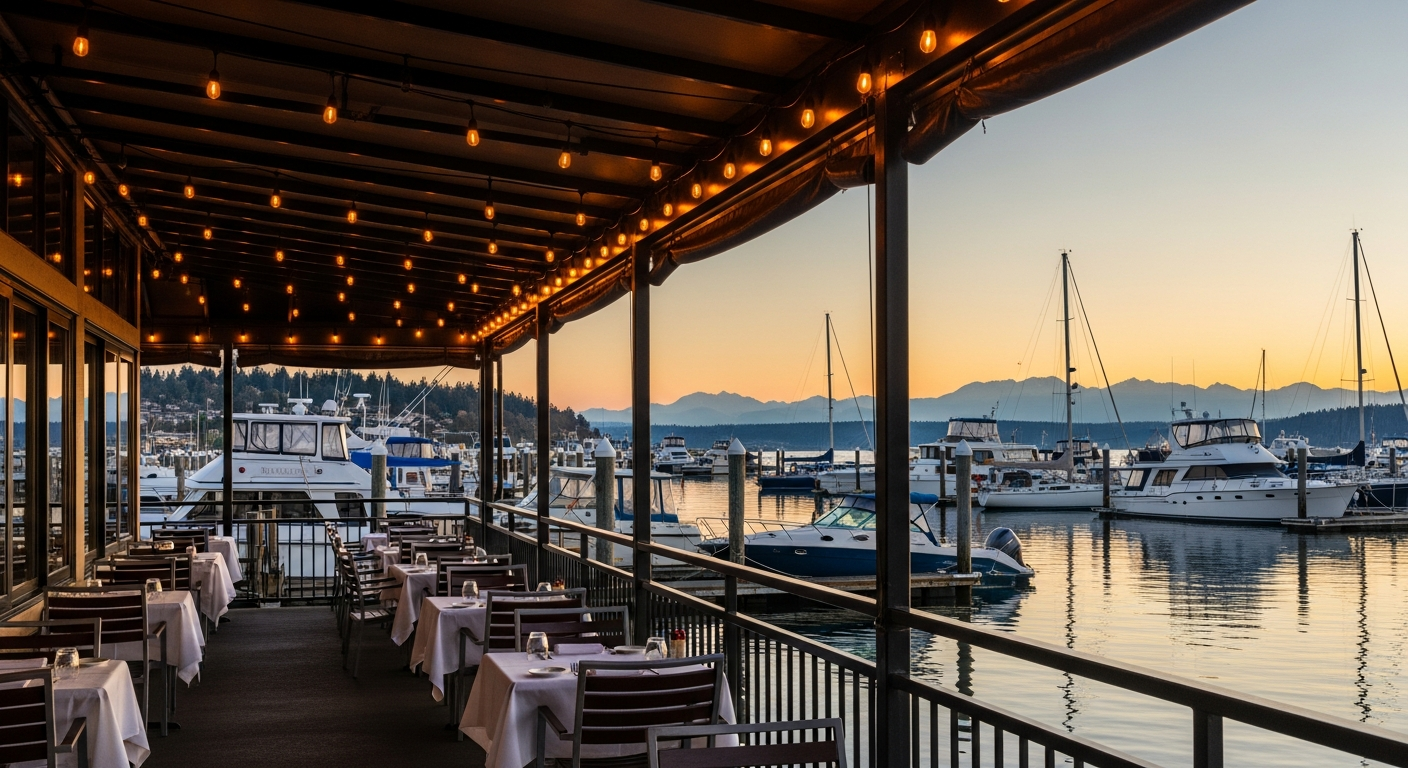
    There are maybe four or five restaurants in Everett where the location alone is part of the meal. Anthony’s HomePort is one of them. Sit at a window table — or better, on the deck when the weather allows — and you’re looking straight at Port Gardner Bay, with Camano Island off to the left, Whidbey Island stretching across the horizon, Hat Island visible in the distance, and the Olympic Mountains stacked up behind all of it on a clear day. That view doesn’t get old.

    We mention the view first because Anthony’s earns it twice: once through real estate and once through the food. Right now, in late April, we’re deep into halibut season, which is the single best reason to walk in the door at this particular moment. Wild Pacific halibut is a short window every year, and Anthony’s has built a three-course halibut menu around it. The fish comes from longtime supplier partners and is sourced for the clean, white, delicate flake that makes fresh-caught halibut so different from what you get frozen or out of season. If you have any interest in Pacific Northwest seafood, this is the move right now.

    The Restaurant

    Anthony’s HomePort Everett sits at 1726 W Marine View Drive on Everett’s working waterfront, just south of the Port of Everett’s main marina complex. It’s part of the Anthony’s Restaurants family — a Pacific Northwest institution founded by Anthony and Anne Hinds that runs locations from Olympia to Bellingham — and the HomePort brand is their more relaxed, neighborhood-facing concept: come as you are, families welcome, no need to dress up, but the fish quality is the same across every Anthony’s property.

    The Everett location has been feeding locals off this stretch of Marine View Drive for years. It’s one of those places Everett residents walk past without necessarily thinking of it as “their” restaurant — until they finally sit down for dinner and realize they’ve been missing out. The 562 Yelp reviews and 2,953 OpenTable diners averaging 4.6 stars tell the same story: this place is reliable and the setting rewards it.

    The Deck

    Late April is the edge of deck season in Everett, and Anthony’s has a proper outdoor patio that’s worth sitting on whenever the skies cooperate. On a clear evening you can watch the marina traffic, catch a sunset over the Olympics, and hear the gulls complaining about something. It’s the kind of outdoor dining experience that most of the county genuinely doesn’t have access to — this isn’t a parking lot patio with a heat lamp, it’s a working waterfront deck with actual water in front of you.

    The indoor seating is equally solid if the weather doesn’t cooperate. Large windows frame the marina from inside, and the window seats go fast. Reservations via OpenTable are strongly recommended, especially on weekends.

    What to Order

    Right now, halibut. The three-course halibut season menu is the reason you’re here in April and May. Wild halibut has a clean sweetness and a texture that doesn’t survive freezing, so when the season’s open and the fish is fresh, you order it. Anthony’s sources theirs from longtime partner fisheries to maintain that freshness across the season.

    Beyond halibut, the menu is a solid tour of Pacific Northwest seafood done well:

    • Sockeye salmon chargrilled and finished with sundried tomato basil butter, served with champ potatoes and seasonal vegetables. This is the anchor of the menu outside of halibut season, and rightfully so — sockeye is the most flavorful of the Pacific salmon species and Anthony’s treats it simply enough to let that come through.
    • Wild Alaska true cod lightly panko-crusted, with ginger slaw and fries. Best fish and chips on the waterfront, full stop.
    • Dungeness crab when available. Seasonally dependent and worth asking about when you sit down.
    • Calamari, chowder, and Caesar salad round out the starters. The chowder is the move if you’re cold and want something warming before the main.
    • Scallop specials rotate through the menu and are worth asking the server about.

    Budget for $40–$90 per person depending on what you order and whether you’re doing cocktails. It’s not cheap, but it’s not pretending to be something it isn’t either — this is a proper seafood dinner with views that justify the price.

    The Hours and Getting There

    Dinner service runs Monday through Thursday and Sunday from 3:00 PM to 8:00 PM, and Friday and Saturday from 3:00 PM to 9:00 PM. Lunch service is also available on weekdays — check their website or call ahead for the most current schedule, as seasonal hours can shift. The number is (425) 252-3333.

    The address is 1726 W Marine View Drive, Everett, WA 98201. From I-5, take exit 193 (Marine View Drive) and follow it north along the water. Parking is free in the adjacent lot. The restaurant sits on the bay side of Marine View Drive, and the turn is easy to miss the first time — look for the Anthony’s sign before you hit the Port of Everett’s main entrance.

    How It Fits the Waterfront Dining Scene

    Everett’s waterfront dining scene has gotten genuinely interesting over the last two years. Fisherman Jack’s brought a dim sum-and-Asian-fusion angle to the marina end of the Port. Sound to Summit’s marina taproom brought PNW craft beer to the south side of the port. Rustic Cork’s rooftop brought wine and weekend brunch to Waterfront Place. South Fork Baking Co. anchors the pastry-and-coffee end of things at Fisherman’s Harbor.

    Anthony’s HomePort fills a different slot in that map: it’s the dedicated seafood house, the place you go when the occasion calls for sitting down to a proper fish dinner with someone you want to impress or a night out that feels like a real night out. The rest of the waterfront scene is excellent, but none of them are doing what Anthony’s does with a halibut filet in April.

    The Bottom Line

    Anthony’s HomePort Everett is not a secret. It’s been sitting on this stretch of Marine View Drive for years, doing Northwest seafood correctly with better views than most restaurants in the county. The halibut season window is short, the deck is usable right now, and the reservations fill up on weekends. If you’ve been meaning to go, this is the week to stop meaning it and just go.

    Reservations via OpenTable recommended. Walk-ins welcome but take your chances on weekends.


    Frequently Asked Questions

    What is Anthony’s HomePort Everett?

    Anthony’s HomePort Everett is a Pacific Northwest seafood restaurant at 1726 W Marine View Drive on the Everett waterfront, overlooking Port Gardner Bay. Part of the Anthony’s Restaurants family, it serves fresh seasonal fish, Dungeness crab, sockeye salmon, and wild halibut in season, with indoor and outdoor deck seating.

    When does halibut season run at Anthony’s HomePort Everett?

    Pacific halibut season typically runs from spring through early summer. Anthony’s celebrates the season with a dedicated halibut menu while the fish is in season. Check with the restaurant directly for current availability: (425) 252-3333.

    What are the best things to order at Anthony’s HomePort Everett?

    In season, wild halibut is the top pick. Year-round standouts include chargrilled sockeye salmon with sundried tomato basil butter, panko-crusted Alaska true cod with ginger slaw, Dungeness crab when available, and the seafood chowder as a starter.

    Does Anthony’s HomePort Everett have outdoor seating?

    Yes. Anthony’s has an outdoor deck and patio with direct waterfront views of Port Gardner Bay, Camano Island, Whidbey Island, and the Olympic Mountains. The deck is available weather permitting. Large windows also provide waterfront views from the indoor dining room.

    What are the hours and how do I make a reservation?

    Dinner service is Monday through Thursday and Sunday 3:00 PM–8:00 PM, and Friday–Saturday 3:00 PM–9:00 PM. Lunch is also available on weekdays — call (425) 252-3333 or check their website for current hours. Reservations via OpenTable are recommended for weekends.

    Where is Anthony’s HomePort Everett and where do I park?

    The address is 1726 W Marine View Drive, Everett, WA 98201. Take I-5 exit 193 and head north on Marine View Drive. Free parking in the adjacent lot. Look for the Anthony’s sign on the bay side before you reach the Port of Everett main entrance.

    How does Anthony’s HomePort compare to other Everett waterfront restaurants?

    Anthony’s is the dedicated seafood house on the Everett waterfront — it fills a different slot from newer spots like Fisherman Jack’s (Asian fusion), Rustic Cork (wine bar), and Sound to Summit (craft brewery). If you want a traditional Northwest seafood dinner with deck views, Anthony’s is the move.

  • Every Major Construction Project in Everett Right Now — Late April 2026 Update

    Every Major Construction Project in Everett Right Now — Late April 2026 Update

    Q: What major construction projects are active in Everett, WA right now?
    A: As of late April 2026, Everett’s active construction landscape includes: the Millwright District Phase 2 residential build-out (300+ apartments, LPC West), the Eclipse Mill Riverfront Park two-phase build (City Phase 1 underway July–November 2026), the Lenora Stormwater Treatment Facility (broke ground April 2026, $8.73M), the $113M West Marine View Drive pipeline, and the downtown stadium design process — plus two projects that just wrapped: the $34M Edgewater Bridge and the Port of Everett’s Segment E bulkhead.

    Everett is a construction site right now — and we mean that as a compliment. From waterfront infrastructure to riverfront parks to transit-adjacent housing, more physical transformation is underway in this city simultaneously than at almost any other point in its history. Here’s where every major project stands as of late April 2026.

    Just Completed

    Edgewater Bridge — $34M Seismic Replacement (Opened April 28, 2026)

    The most visible construction closure in Everett this year ended this week. The new Edgewater Bridge opened to vehicle traffic on April 28, concluding an 18-month replacement of the 1946 span connecting Everett and Mukilteo on SR-529. Contractor: Granite Construction Company ($25.4M contract). Total budget: $34M ($28M federal grants, $6M local). The replacement is 366 feet, seismically sound, and features 6.5-foot sidewalks and 5-foot bike lanes on both sides — a genuine upgrade in every dimension. Sidewalk and bike lane finishing work continues for approximately 2–3 more weeks.

    Port of Everett Segment E Bulkhead — $6.75M Final Phase (Completion: May 2026)

    The Port’s Segment E bulkhead rebuild on West Marine View Drive is at the end of its final phase. The $6.75M project, contracted to Bergerson Construction, replaces 165 linear feet of aging wood piling along the Port Gardner Landing area with modern steel — the final chapter of a 20-year, multi-segment bulkhead replacement program. When complete in May 2026, the entire Port of Everett marina-side wharf will have been systematically rebuilt. The work also stabilizes the SR-529 embankment above the marina and ties into ADA-compliant esplanade trail connections.

    Under Construction Now

    Millwright District Phase 2 — 300+ Waterfront Apartments (Under Construction, 2026–2028)

    LPC West (Lincoln Property Company) broke ground on the residential component of Millwright District Phase 2 in 2026. The development calls for 300+ apartments on the 10-acre district, which sits adjacent to the Central Marina esplanade. This is the first housing to be built on the Port of Everett’s waterfront in the project’s history. The full Millwright build-out over the coming five to seven years will also add 60,000+ square feet of retail and restaurants, 120,000+ square feet of pre-leasing Class-A office, and additional parking. Tenants should be able to move into housing within approximately two years of the groundbreaking. The Millwright Loop road infrastructure, which broke ground in August 2023, is already in place.

    Lenora Stormwater Treatment Facility — $8.73M Snohomish River Cleanup (Broke Ground April 2026)

    One of Everett’s newest active construction sites is the Lenora Regional Stormwater Treatment Facility at South 1st and Lenora in the Lowell neighborhood. The $8.73M project — funded by Washington State WQC grant WQC-2025-EverPW-00177 — will treat stormwater from 146 acres of drainage subbasins (LW-9, LW-10, LW-11) before discharge into the Marshland Canal and Snohomish River. The facility uses a five-cell Filterra Bioscape bioretention system. Expected construction timeline: approximately 8 months from the April 2026 groundbreaking, putting substantial completion around December 2026. This is one of the few significant environmental infrastructure projects currently active in the city.

    Eclipse Mill Riverfront Park — Two-Phase Build (Phase 1: July–November 2026)

    The Eclipse Mill Park on the Snohomish River is moving through its two-phase build. Phase 1 — the City of Everett’s portion, covering public infrastructure, riverbank work, and initial park improvements — is scheduled from July through November 2026. Phase 2, which covers the signature park structures and shelter elements, is under development by Shelter Holdings and is targeted for completion between Fall 2026 and Spring 2028. This is Everett’s most significant new riverfront public space in a generation, and it’s actively under pre-construction planning and permitting heading into the summer 2026 construction season.

    Approved and Starting Soon

    West Marine View Drive Pipeline — $113M Combined Sewer and Water Main Replacement (Summer 2026)

    The City Council approved the $113M West Marine View Drive pipeline project on April 2, 2026. The project replaces the combined sewer and stormwater pipe plus a 48-inch water main from Grand Ave Bridge to Hewitt Avenue along the waterfront corridor — a state-mandated CSO reduction project under order from the Washington Department of Ecology. The related Pacific Avenue Pipeline segment (1,000 linear feet, 42-inch pipe) is also funded and expected to begin construction summer 2026. The broader project feeds into the $200M+ Port Gardner Storage Facility program. Funded from restricted water/sewer utility funds — no new taxes required.

    Port of Everett Mukilteo Waterfront District — RFQ Expected Spring 2026

    The Port of Everett is assembling a second waterfront district in Mukilteo. In February 2026, the Port completed a quitclaim acquisition of 1.1 acres at 710 Front Street (former NOAA parcel), and the $closing for the adjacent Ivar’s Mukilteo Landing (0.55 acres, 9,637 sq ft building) is targeted for July 2026, with Ivar’s remaining as a long-term tenant. NBBJ Architecture is the design firm carried forward from prior planning. A Request for Qualifications (RFQ) for development partners is expected in spring 2026 — which means this site could enter serious pre-development this year, with the newly reopened Edgewater Bridge now providing restored road access between the two waterfronts.

    In Design / Pre-Construction

    Downtown Stadium — Design Phase (Vote April 29, 2026)

    The Everett City Council is expected to vote April 29 on the $10.6M design funding package — an interfund loan plus a $7.4M state Department of Commerce grant — that would allow DLR Group to proceed with final design of the downtown multi-sport stadium. The project is intended to eventually host the Everett AquaSox (baseball) and new USL men’s and women’s soccer teams. From a construction perspective, design completion is the prerequisite before any competitive contractor selection process. If the April 29 vote passes, detailed schematic and design development work begins. Actual construction groundbreaking is still multiple years away.

    Broadway Pedestrian Bridge — $3.1M Design Contract (Design Through 2028)

    The City Council approved a $3.1M contract with Kimley-Horn in late April to design a grade-separated pedestrian crossing over Broadway that connects Everett Community College’s main campus to its Learning Resource Center and WSU Everett. The likely location is north of 10th Street. Design is expected to take through end of 2028. Construction funding is a separate future vote. This is a design-only phase right now, but it fits Everett’s pattern of investing in pedestrian infrastructure along the transit corridor as Sound Transit Everett Link planning continues.

    What’s Done Since the Last Tracker

    Since our last full construction tracker in early April, several notable milestones have landed. The Segment E bulkhead moved into final phase and is nearly wrapped. The Edgewater Bridge — which appeared in the April tracker as a late-2025 project still pending — opened 18 months after its October 2024 closure. The $113M pipeline got council approval. The Lenora stormwater facility broke ground. And the Broadway bridge design contract was signed. That’s five significant project milestones in one month.

    Everett’s construction calendar for May through December 2026 is genuinely busy: pipeline work starts, Eclipse Mill Phase 1 starts in July, Lenora wraps around December, and Millwright’s residential frame continues going up. For a city that spent much of the last decade talking about what it wanted to become, the evidence of that becoming is now visible in the ground-level activity on almost every side of town.

    Frequently Asked Questions

    How many major construction projects are active in Everett in 2026?

    At least 6-8 significant projects are under active construction or in funded design in Everett as of late April 2026: Millwright District Phase 2 apartments, Lenora Stormwater Facility, Eclipse Mill Park, West Marine View pipeline, Broadway pedestrian bridge design, and the downtown stadium design process — plus recently completed projects including the Edgewater Bridge and Port Segment E bulkhead.

    When will Millwright District Phase 2 apartments be ready?

    LPC West (Lincoln Property Company) is the developer. The residential units — 300+ apartments — are expected to be move-in ready within approximately two years of the 2026 groundbreaking, targeting 2027–2028 occupancy. The full Millwright buildout of retail, restaurants, and office space is a 5–7 year program.

    What is the Eclipse Mill Park and when does it open?

    Eclipse Mill Park is Everett’s new riverfront signature park on the Snohomish River. Phase 1 (city infrastructure work) is scheduled July–November 2026. Phase 2 (Shelter Holdings, park structures and amenities) targets completion between Fall 2026 and Spring 2028. The full park opening is expected Spring 2028.

    What’s the status of the Everett downtown stadium construction?

    The stadium is in the design funding phase. A City Council vote on $10.6M in design funding is expected April 29, 2026. If approved, DLR Group proceeds with final design. Physical construction groundbreaking is still several years away — design and permitting come first.

    What is the $113M pipeline project on West Marine View Drive?

    The $113M project replaces the combined sewer/stormwater pipe and a 48-inch water main along the waterfront corridor from Grand Ave Bridge to Hewitt Avenue. It’s a state-mandated CSO (Combined Sewer Overflow) reduction project required by the Washington Department of Ecology, funded from restricted water/sewer utility reserves. Construction is expected to begin summer 2026.

  • Everett’s $34M Edgewater Bridge Opens Today — Here’s What 18 Months of Construction Actually Built

    Everett’s $34M Edgewater Bridge Opens Today — Here’s What 18 Months of Construction Actually Built

    Q: What is the Edgewater Bridge and why did it close?
    A: The Edgewater Bridge is a 366-foot span on SR-529 connecting Everett and Mukilteo, WA. Built in 1946, it closed October 30, 2024, for an $34 million full replacement needed to fix seismic vulnerabilities, deteriorating structure, and narrow lanes that no longer met modern safety standards. It reopened to vehicle traffic April 28, 2026.

    After 18 Months, the Bridge Is Back

    The Edgewater Bridge opened to vehicle traffic on April 28, 2026 — exactly 18 months after crews closed the span on October 30, 2024, to begin demolition. Nearly 300 people gathered the day before at a community celebration on April 27 to walk across the new structure before any cars touched it. By Tuesday evening, the lane striping was dry and Everett’s western connector to Mukilteo was carrying traffic again for the first time since fall 2024.

    For residents who commute between the two cities, use the Mukilteo ferry terminal, or work along SR-529, the 18-month detour was a real disruption. Transit routes rerouted. School buses took longer paths. Emergency response times to the western waterfront fringe lengthened. The bridge itself carried an estimated several thousand daily crossings before closure. Now all of that is restored — and then some, because what opened Tuesday is significantly better than what closed last fall.

    What Replaced a 1946 Bridge That Had Served 80 Years

    The bridge that came down was built in 1946. By the time Everett moved to replace it, the structure had served the community for 80 years — well past the typical 50-year design life for bridges of that era. Engineers determined it was seismically vulnerable: a major earthquake could have caused failure. The lanes were narrow, the sidewalks undersized, and the aging deck and piling needed either massive rehabilitation or outright replacement. The city chose replacement.

    The new bridge is 366 feet long — the same crossing, rebuilt from scratch. What’s different is everything else:

    • 12-foot travel lanes in each direction (wider than the old span)
    • 6.5-foot sidewalks on both sides of the bridge
    • 5-foot bike lanes buffered between the roadway and the sidewalks
    • Modern seismic design built to withstand a major Cascadia-scale earthquake
    • Improved lighting across the full span

    The sidewalk and bike lane combination is notable. The old bridge had minimal pedestrian accommodation. The new one has a genuine multi-use path system on both sides — connecting Everett’s western waterfront edge to Mukilteo’s waterfront district on foot or by bike. That’s a different kind of crossing than what existed before.

    A note for walkers: the sidewalks won’t be fully open immediately. Finishing work — permanent striping, barriers, and paint — is expected to take about two to three weeks after the vehicle lanes opened. Pedestrians should expect some temporary accommodation during that window.

    The Contractor, the Cost, and Where the Money Came From

    The City of Everett awarded the construction contract to Granite Construction Company — a firm with local Everett operations — at a bid price of $25,409,890.65. The total programmed project budget came to $34 million, with the difference covering design, environmental review, right-of-way, project management, and contingency.

    The funding breakdown: approximately $28 million came from federal grants, with $6 million supplied through local matching dollars from the city. This is a common structure for bridge replacement projects of this type — federal highway funds require a local match, and the grant process is what drove much of the pre-construction timeline.

    The total price works out to roughly $93,000 per linear foot of bridge — consistent with what comparable urban bridge replacements with seismic, bike-ped, and full utility upgrades have cost in the Pacific Northwest in recent years.

    Why It Took Longer Than Expected

    The Edgewater Bridge replacement was years in the making before a shovel touched the ground in October 2024. The city had initially aimed to start construction earlier — around 2022 — but a sequence of delays pushed the timeline back significantly:

    • COVID-19 disrupted the procurement schedule during the pandemic years
    • Environmental review took longer than projected, given the bridge’s position near the waterfront and tidal areas
    • A bidding error in an early procurement round required the process to restart from scratch

    Once construction finally started in fall 2024, the crew from Granite Construction ran into a challenge that doesn’t show up in the plans: the ground beneath the old bridge was full of debris from the previous bridge structure — old timber piling and concrete obstructions left behind from earlier bridge generations. Installing the new steel piling required working around and through material that simply wasn’t mapped. That slowed the foundation phase and contributed to the project finishing in late April 2026 rather than the original late 2025 target.

    What This Means for the Everett-Mukilteo Development Corridor

    The Edgewater Bridge isn’t just a commuter route. It’s the western land connection between Everett’s waterfront district and Mukilteo’s waterfront — two areas both undergoing significant investment right now.

    On the Everett side, the SR-529 corridor runs along the Port of Everett’s working waterfront — past the marina, past Waterfront Place, and toward the western edge of the Millwright District buildout. Restoring this connection matters for freight movement, marine service access, and visitor circulation from Mukilteo into Everett’s waterfront destination district.

    On the Mukilteo side, the Port of Everett is in the early stages of assembling a Mukilteo waterfront district of its own — having acquired the former NOAA parcel and the Ivar’s Mukilteo Landing site earlier this year, with an NBBJ architecture team already attached. The spring 2026 RFQ for that project is expected soon. The restored bridge connection is part of the context for how Everett and Mukilteo’s adjacent waterfronts function as a connected regional amenity, not just two separate city edges.

    Mukilteo officials made the point themselves at Monday’s ceremony: they see the bridge as a connector that should bring visitors in both directions, not just commuters. With the Everett waterfront’s restaurant row, marina, and Waterfront Place complex on one end and Mukilteo’s ferry landing, lighthouse, and forthcoming waterfront redevelopment on the other, the case for the bridge as a destination corridor — not just a traffic route — is real.

    How the Bridge Fits Everett’s Broader Infrastructure Moment

    The Edgewater Bridge opening is one piece of a larger infrastructure push Everett is moving through in 2026. In the past month alone:

    • The City Council approved the $113 million West Marine View Drive pipeline project — the biggest utility infrastructure move in years, replacing the combined sewer and water main along the waterfront corridor from Grand Ave Bridge to Hewitt Ave
    • The Port of Everett completed its Segment E bulkhead rebuild — a $6.75M project that ended a 20-year phased replacement program and stabilized the SR-529 embankment above the marina
    • The City approved a $3.1 million design contract for a new pedestrian bridge over Broadway connecting EvCC to WSU Everett

    The Edgewater Bridge is the project that’s been in the queue longest and now it’s done. It’s the kind of infrastructure that doesn’t get the attention of a stadium vote or a waterfront restaurant opening, but the 80 years of daily crossings — and the 18 months of inconvenience — say something about what it actually means to the people who depend on it.

    Frequently Asked Questions About the New Edgewater Bridge

    When did the Edgewater Bridge reopen?

    The new Edgewater Bridge opened to vehicle traffic on Tuesday, April 28, 2026. A community ceremony was held April 27, the day before vehicle traffic began.

    How much did the new Edgewater Bridge cost?

    The total project budget was $34 million. The construction contract was awarded to Granite Construction Company for $25,409,890.65. Funding came from approximately $28 million in federal grants and $6 million in local matching dollars.

    What is the Edgewater Bridge made of and how long is it?

    The new bridge is 366 feet long. It was built with steel piling (replacing the original structure) and features modern seismic design. The 1946 original used older structural materials that engineers determined were earthquake-vulnerable.

    Can you bike or walk across the new Edgewater Bridge?

    Yes — the new bridge has 6.5-foot sidewalks on both sides and 5-foot bike lanes between the roadway and the sidewalks. Finishing work on the pedestrian infrastructure is expected to take about 2-3 weeks after the vehicle lanes opened on April 28.

    Why did the Edgewater Bridge take so long to build?

    The project was delayed by COVID-19 disruptions, extended environmental review near the waterfront, and a bidding error that required a restart. Once construction began in October 2024, crews also encountered old timber and concrete obstructions underground from previous bridge generations, slowing the foundation work.

    Who built the new Edgewater Bridge?

    Granite Construction Company, which has local operations in Everett, won the construction contract at $25,409,890.65.

    What cities does the Edgewater Bridge connect?

    The Edgewater Bridge connects the cities of Everett and Mukilteo along SR-529 (West Mukilteo Boulevard). It serves commuters, school buses, transit routes, freight traffic, and emergency responders in both cities.

  • Buying a Home Near Water in Everett in 2026: What the Critical Areas Update Changes for Anyone Looking at a Lot Near a Wetland, Stream, or Bluff

    Buying a Home Near Water in Everett in 2026: What the Critical Areas Update Changes for Anyone Looking at a Lot Near a Wetland, Stream, or Bluff

    Featured Snippet

    **What should I check before buying an Everett home near a wetland, stream, or bluff in 2026?**

    Before closing on any Everett property near water, a slope, or a wildlife corridor, check the parcel’s critical area overlays on the City of Everett GIS map. The Critical Areas Regulations (Chapter 19.37) are being updated under Washington’s Growth Management Act — the City Council held a public hearing April 15, 2026 and a vote is targeted in the coming weeks. The February 13, 2026 second review draft updates wetland buffer widths, stream classifications, geologic hazard setbacks, and the technical studies any future addition or remodel will require. Critical area overlays affect buildable area, accessory dwelling unit eligibility, fence and outbuilding placement, and occasionally insurance and resale.


    If you’re house-hunting in Everett in 2026 — especially in north Everett, the Bayside corridor, around Howarth Park, near Forest Park, on Rucker Hill, the bluff blocks, or anywhere along a creek or ravine — there is one piece of city code you should understand before making an offer.

    It’s called the Critical Areas Regulations, Chapter 19.37 of the Everett Municipal Code. It’s being updated right now. And the February 13, 2026 second review draft changes some of the technical assumptions a buyer should make about a near-water lot.

    This is the buyer’s read.

    Why It Matters at the Offer Stage

    Critical area overlays govern what can be built on, added to, or modified on a parcel. They don’t just affect a hypothetical future development; they affect concrete decisions a current owner will face:

    • Whether you can add a detached garage or accessory dwelling unit
    • Where you can place a fence relative to a wetland edge
    • What’s required to expand the existing footprint
    • What happens if the existing house needs significant repair or rebuild
    • Whether the lot can be subdivided
    • What documentation is required to remove or replace trees inside a buffer

    A house that looks like it has plenty of yard for an ADU may have most of that yard inside a stream buffer. A backyard with a view of a ravine may include a geologic hazard slope that limits where any new structure can go.

    The new code makes these answers more important to know before close, not after.

    What’s Being Updated and When

    Everett’s last comprehensive Critical Areas Regulations update was 2007. Washington’s Growth Management Act required cities to update by December 31, 2025. Everett published a first review draft on October 31, 2025 and a second review draft on February 13, 2026.

    • April 15, 2026 — City Council public hearing on the update
    • Council vote targeted in the coming weeks
    • The ordinance applies to new development, additions, and disturbance after adoption

    If you close before the vote, the property is yours under the existing 2007-vintage rules. Any future addition, ADU, or significant remodel — though — will likely face the new rules.

    The Five Critical Area Categories — Where Everett’s Buyers Encounter Them

    • Wetlands — Anywhere along Howarth Park’s perimeter, Pigeon Creek’s lowland reaches, the wetlands at Forest Park’s edges, and many low-lying parcels around the city
    • Streams — Pigeon Creek and its tributaries, the Snohomish River edge, and many small unnamed reaches
    • Frequently flooded areas — The regulatory floodplain along the Snohomish River and parts of low Bayside
    • Geologically hazardous areas — The Everett bluff, Rucker Hill’s slopes, the bluff blocks throughout the city, and ravine sides
    • Critical aquifer recharge areas — Less commonly visible, but check the GIS map

    The Buyer’s Checklist

    Before you make an offer on a near-water or near-slope lot:

    1. Pull the parcel’s overlay map

    Use the City of Everett GIS portal to look up the address. The portal layers critical area overlays on top of the parcel boundary, so you can see at a glance which categories apply.

    2. Read the parcel’s history

    Permits, geotechnical reports, wetland delineations, and habitat assessments commissioned by prior owners may be on file with the city. If they exist, your due diligence period is the time to review them.

    3. Verify what existing structures are legally established

    A house grandfathered under earlier code is fine to occupy. A detached structure built without permit, or built inside a buffer that didn’t exist when it was constructed, may not be. Title and permit records resolve this.

    4. Map your future plans against the overlay

    If you bought thinking you’d add an ADU, ask: where on the lot would the ADU sit relative to the wetland buffer, stream buffer, or slope setback under the new rules? The answer determines whether the plan is feasible.

    5. Get a credentialed consultant if the lot is complicated

    For lots with multiple overlays or for lots where the buyer plans significant future work, a wetland or geotechnical consultant during due diligence is well-spent money. They can read the overlays the way the city’s planning staff will.

    6. Ask the listing agent direct questions

    “What overlays touch this parcel?” “What is the buffer width on the wetland or stream?” “What permits has the city issued on this address?” These are reasonable questions during diligence and the answers belong in writing.

    What Changes Specifically Under the New Rules That Buyers Should Know

    • Wetland buffers can be wider under the February 13 draft for some wetland categories. A lot whose old-code buildable area looked generous may have less buildable area under the new rules.
    • Stream classifications can shift, changing the buffer regime on a parcel. A creek that was Category B yesterday may be reclassified, with a different buffer.
    • Mitigation sequencing tightens. Buyers planning future builds should expect a longer documentation path before approval.
    • Geotechnical study expectations are updated. A 2018 geotechnical report on a sloped parcel may no longer satisfy current expectations for a new application.
    • Habitat assessments are scoped more rigorously. Parcels in Fish and Wildlife Habitat Conservation Areas face additional study burdens.

    The Resale and Insurance Angle

    Some buyers ask whether critical area overlays affect resale or homeowner insurance:

    • Resale. Overlays don’t prevent resale, but they’re a disclosure item. Future buyers will pull the same overlay map. Lots with developable buildable areas that have shrunk under the new rules will price reflective of that.
    • Insurance. Frequently flooded areas (the regulatory floodplain) are a flood insurance question — separate from critical area buffer rules but on the same maps. Lenders may require flood insurance on parcels inside the floodplain. Geologic hazard area designation does not directly affect homeowner insurance pricing in most cases, but a known landslide-prone slope can show up in carrier underwriting.

    When the Critical Areas Update Doesn’t Affect Your Decision

    Plenty of Everett homes are not in a critical area overlay at all. The new rules don’t affect them. The check-the-overlay-map step is what tells you whether to read further. Most Everett buyers will close on parcels with clean overlays and never think about Chapter 19.37 again.

    For the buyers who don’t — the ones looking at the lot with the creek, the wetland, the slope, or the ravine — the 2026 update is part of the homework.

    Frequently Asked Questions

    Q: How do I check whether an Everett property is in a critical area overlay?

    A: Use the City of Everett’s GIS map. Search the parcel’s address; the map layers critical area overlays for wetlands, streams, frequently flooded areas, geologically hazardous areas, and critical aquifer recharge areas.

    Q: Do the Critical Areas Regulations affect closing on a property?

    A: The regulations don’t prevent closing. They affect what you can do with the property after close — additions, ADUs, fences, outbuildings, and substantial alterations. They are part of due diligence, not a closing barrier.

    Q: If I close before the council vote, do the old rules apply forever?

    A: The old rules apply to applications submitted while they’re in force. After adoption, new applications for additions, ADUs, or significant remodels are reviewed under the new rules. Existing legally established structures generally remain.

    Q: Are wetland buffers wider under the February 13 2026 draft?

    A: For some wetland categories, yes — the draft updates tables 37.2 and 37.3 based on Best Available Science. Specific buffer width changes depend on wetland category and rating.

    Q: Do critical area overlays affect homeowner insurance?

    A: Frequently flooded areas (the regulatory floodplain) are a flood insurance question, and lenders may require flood insurance on parcels inside it. Geologic hazard area designation doesn’t directly affect most homeowner insurance pricing, but documented landslide-prone slopes may show up in underwriting.

    Q: Should I get a wetland or geotechnical consultant during due diligence?

    A: For complicated parcels — multiple overlays, future ADU plans, sloped lots — yes. Consultants can read the overlays the way the city’s planning staff will and tell you what your future buildable area actually is.

    Q: Where can I read the actual February 13 2026 draft?

    A: The City of Everett’s planning portal publishes the draft ordinance text and supporting maps. The ordinance itself is the authoritative reference.

    Q: What’s the most common surprise for Everett buyers in critical area parcels?

    A: That the lot’s buildable area, after applying buffer widths, is materially smaller than the parcel boundary suggests — and that ADU plans, in particular, often run into stream or wetland buffers that weren’t visible from the listing photos.


  • What Everett’s Critical Areas Update Means If You Own Land Near a Wetland, Stream, or Bluff: A 2026 Property Owner’s and Builder’s Guide

    What Everett’s Critical Areas Update Means If You Own Land Near a Wetland, Stream, or Bluff: A 2026 Property Owner’s and Builder’s Guide

    Featured Snippet

    **What does Everett’s 2026 Critical Areas Regulations update mean for property owners and builders?**

    If your parcel touches a wetland, stream, frequently flooded area, geologically hazardous slope/bluff, or critical aquifer recharge area, the February 13, 2026 second review draft of Chapter 19.37 changes the buffer width, mitigation sequence, and technical-study requirements you have to meet before disturbing the feature. Wetland buffer tables 37.2 and 37.3 are updated; some categories carry wider buffers than the 2007 rules. Stream classifications are revised. Geotechnical and habitat study expectations are tightened. The City Council held a public hearing on April 15, 2026 and is targeting a vote in the coming weeks.


    If you own a lot, an in-fill site, or a development parcel in Everett that touches any of the city’s critical areas, the regulations updating right now will determine what you can build, where you can put it, and how much site work it will take to get there.

    This is the property owner and builder read of Chapter 19.37’s 2026 update — the practical consequences, before the council vote.

    Step One — Find Out If Your Parcel Has a Critical Area Overlay

    Before you read the ordinance text, check your specific parcel against the city’s GIS overlays. The five categories the rules cover:

    • Wetlands — Howarth, Pigeon Creek, Forest Park edges, low-lying parcels in many corridors
    • Streams — named (Pigeon Creek, Snohomish River edge) and unnamed reaches throughout the city
    • Frequently flooded areas — the regulatory floodplain, including parts of the Snohomish River corridor
    • Geologically hazardous areas — bluff faces, landslide-prone slopes, erosion zones, seismic hazard areas
    • Critical aquifer recharge areas — zones over drinking-water aquifers

    Many parcels carry more than one overlay. A lot above the Snohomish River may sit inside a frequently flooded area at the base, a wetland in the riparian zone, and a geologic hazard area on the bluff. Each overlay applies independently. Where they conflict, the more restrictive rule prevails.

    What Changes in the Wetland Tables

    Tables 37.2 and 37.3 — the wetland buffer width tables — are updated in the February 13, 2026 draft to reflect Best Available Science. The practical translation:

    • Buffer widths shift by wetland category. A Category I wetland (highest functional value) carries a different buffer than a Category IV. The draft recalibrates several of those category-buffer pairings.
    • Some buffers widen. For affected parcels, the developable area inside the parcel boundary shrinks proportionally.
    • Mitigation may now be required where it wasn’t. A site that previously qualified for a buffer reduction or averaging may face a different review under the updated standards.

    Owners with parcels containing a wetland edge should expect the buildable footprint analysis from a 2018 site plan to be different than what the new code produces. The size of the difference depends on the wetland category, the rating, and the parcel geometry.

    What Changes for Streams

    The draft revises stream classifications and the corresponding buffer widths. For owners whose parcels front, back, or contain a stream:

    • Stream classifications can shift. Reclassification under the new draft can move a parcel from one buffer regime to another.
    • Buffer widths recalibrate. The directional change varies by stream type.
    • Wildlife habitat overlays may expand on some corridors. The Fish and Wildlife Habitat Conservation Areas designation pulls in additional protections.

    The planning commission’s February 17, 2026 hearing recorded that stream provisions were among the most-discussed elements of the draft. Owners with stream-adjacent parcels should check the specific stream’s classification under the new draft against the old code.

    What Changes for Geologic Hazard Parcels

    Buffer and setback rules for landslide-prone slopes and bluff edges are recalibrated. The Everett bluff is the most visible example, but the city has many smaller landslide-classified slopes inland.

    For owners building on or near a slope:

    • Geotechnical study expectations are updated — qualifications, scope, content
    • Setback distances may shift — both from the slope crest and from the toe
    • Erosion and seismic hazard overlays apply independently of the landslide rules

    Practical implication: any project at the design stage that relied on a 2018 geotechnical report should expect the report’s setback and stabilization assumptions to be reviewed against the new standard.

    What Changes for Mitigation Sequencing

    The draft tightens the standard sequence applicants follow when a critical area impact is unavoidable:

    1. Avoid — design the project to avoid the impact

    2. Minimize — if avoidance isn’t feasible, minimize the extent

    3. Mitigate — if minimization isn’t sufficient, mitigate the residual impact

    State law requires this sequence. The draft reinforces and clarifies how Everett applies it. The practical effect: a site plan that could previously skip directly to mitigation must now demonstrate avoidance and minimization first. That changes the documentation burden and the design iteration timeline.

    Technical Study Requirements — The New Documentation Burden

    For applicants, the most operationally consequential change is often the updated qualifications, scope, and content expectations for:

    • Wetland delineations
    • Stream studies
    • Geotechnical reports
    • Habitat assessments
    • Hydrogeological assessments (for aquifer recharge parcels)

    Practical translation: engage credentialed consultants earlier in the design process than the old rules required. Wetland delineations are field-season-dependent (most reliable late spring through early fall in Everett); geotechnical work has its own schedule; habitat assessments may require surveys in specific windows.

    For owners targeting a 2026 or 2027 permit submittal, that schedule matters more under the new rules than the old.

    What Owners Can Do Before the Council Vote

    • Pull your parcel’s overlays now from the city’s GIS map. This is free and doesn’t commit you to anything.
    • Compare the existing rules against the February 13 draft for the categories that touch your parcel. The ordinance text is the authoritative reference.
    • Engage a consultant early if you’re planning to build, add, or sell. Wetland delineations and geotechnical reports take weeks; starting before the vote gets ahead of any application backlog.
    • Submit comment to the council if you have technical objections to specific provisions. The April 15, 2026 hearing was the formal moment, but written comment continues to be accepted on the record before the vote.
    • Plan for the documentation gap. If your project plan was built against 2007-vintage rules, expect to redo at least some of the supporting studies.

    Vesting and Existing Applications — The Critical Practical Question

    Property owners with active applications often ask: which version of the rules applies to my project?

    The general principle in Washington land use law is that complete applications submitted before a code change are vested under the rules in force at the time of submittal. However:

    • “Complete application” has a specific procedural definition the city uses
    • Pre-application meetings do not create vesting
    • Material changes to a vested application may trigger review under the new rules

    For owners with applications in progress, this is the single most important question to confirm with city planning staff before the council vote.

    Frequently Asked Questions

    Q: How do I find out if my Everett parcel has a critical area overlay?

    A: Check the City of Everett’s GIS map. It shows critical area overlays on individual parcels for all five categories — wetlands, streams, frequently flooded areas, geologically hazardous areas, and critical aquifer recharge areas.

    Q: Will the Critical Areas Regulations update affect my existing house?

    A: The regulations primarily govern new development, additions, and disturbance of critical areas. Existing legally established structures are typically grandfathered, though substantial alterations or expansions trigger review.

    Q: Are wetland buffers wider under the February 13 2026 draft than under the 2007 rules?

    A: For some wetland categories, yes. The draft updates tables 37.2 and 37.3 to reflect Best Available Science, which generally produces wider buffers for higher-functional-value wetlands. Specific buffer width changes depend on the wetland category and rating.

    Q: How do the changes affect mitigation sequencing for development?

    A: The draft tightens the avoid/minimize/mitigate sequence — meaning applicants must demonstrate avoidance and minimization steps more rigorously before mitigation is approved as the resolution path.

    Q: When does the Everett City Council vote on the Critical Areas Regulations update?

    A: The council held a public hearing on April 15, 2026 and is targeting a vote in the coming weeks. The exact date will be published on the council agenda.

    Q: Can I still submit comment to the council after the April 15 hearing?

    A: Written comment is generally accepted on the record up to the moment of the vote. The published council agenda for the vote will indicate any additional public comment opportunities.

    Q: What happens to my application if I submitted before the new rules pass?

    A: The general rule under Washington land use law is that complete applications submitted before a code change are vested under the rules in force at submittal. The specific application of vesting to your project should be confirmed with Everett planning staff before the council vote.

    Q: Do I need a wetland delineation or geotechnical report before the vote?

    A: If you are planning a project on a critical-area parcel, getting credentialed studies started early is a practical hedge — both because the studies have field-season constraints and because any post-adoption application backlog can extend timelines. Whether they’re required depends on the project scope and the parcel.


  • Everett’s Critical Areas Regulations Update: A Complete 2026 Guide to Wetland Buffers, Stream Setbacks, Landslide Rules, and the Path to a Council Vote

    Everett’s Critical Areas Regulations Update: A Complete 2026 Guide to Wetland Buffers, Stream Setbacks, Landslide Rules, and the Path to a Council Vote

    Featured Snippet

    **What is Everett’s Critical Areas Regulations update and when does the council vote?**

    Everett is updating Chapter 19.37 of the Everett Municipal Code — the section that governs how close anything new can be built to a wetland, stream, frequently flooded area, geologically hazardous area (landslide-prone slopes and bluffs), or critical aquifer recharge area. The update is required by Washington’s Growth Management Act, which had a December 31, 2025 deadline. The City Council held a public hearing on April 15, 2026. The current draft (the February 13, 2026 second review draft) updates wetland buffer width tables, stream classifications, mitigation sequencing, and the technical-study requirements that property owners and developers must meet on parcels that touch any of those features. A council vote is targeted for the coming weeks.


    If you’ve ever wondered why a vacant Everett lot has stayed vacant for years even when home prices were climbing, the answer is often hidden in a single section of city code: Chapter 19.37, the Critical Areas Regulations.

    That chapter — which protects wetlands, streams, frequently flooded areas, landslide-prone slopes, and important wildlife habitat — sets the buffer widths, building setbacks, mitigation requirements, and technical-study requirements every Everett property owner has to follow before disturbing those features. It is one of the most frequently misunderstood parts of the municipal code, because it cuts across so many properties. Lots near Howarth Park, Pigeon Creek, Forest Park, the Snohomish River edge, and the city’s many ravine-cut blocks all carry critical-area overlays.

    Everett’s update of those regulations is now closer to adoption than at any point in the multi-year process. This is the complete 2026 guide.

    What the City Is Required to Do — and Why

    Critical Areas Regulations updates are not optional. Under Washington’s Growth Management Act (GMA), every city in the state has to periodically review and update its critical-area rules to incorporate Best Available Science — the current scientific consensus on what actually protects sensitive habitat.

    Everett’s last comprehensive update was in 2007. The state’s deadline for the current periodic update was December 31, 2025. The city has been working toward this update for several cycles.

    The city published a first review draft on October 31, 2025 and a second review draft on February 13, 2026. The February 13 draft is the version under active council consideration.

    The council does not have the option of leaving the rules alone. The only choice is what version to adopt and on what schedule.

    The Five Categories of Critical Areas

    The Everett Municipal Code defines five categories of critical areas:

    • Wetlands — areas saturated long enough to support hydrophytic vegetation
    • Streams and other Fish and Wildlife Habitat Conservation Areas — including riparian corridors and habitat for state-listed species
    • Frequently flooded areas — typically the regulatory floodplain
    • Geologically hazardous areas — landslide-prone slopes, erosion zones, and seismic hazard areas
    • Critical aquifer recharge areas — zones where surface activity affects groundwater used for drinking water

    Each category has its own buffer requirement and its own mitigation standard, and a single parcel can be touched by more than one. A property near a wetland on a steep slope is subject to both wetland and geologic-hazard rules, with the more restrictive prevailing.

    What’s Changing in the February 13 Draft

    The February 13 draft preserves the basic five-category framework but updates several technical components that determine how the rules apply on a given lot. Among the most consequential:

    Wetland Buffer Widths

    The draft updates Tables 37.2 and 37.3 — the wetland buffer width tables — to reflect current Best Available Science. In practice, that adjusts how many feet of undisturbed land must remain between a wetland edge and a building, fence, or hard surface.

    For some wetland categories, the draft buffers are wider than the rules currently in place. For property owners with parcels touching wetland edges, that translates into different developable area calculations than the 2007-vintage code allowed.

    Stream Buffer Standards

    The draft revises stream classifications and corresponding buffer widths. Stream buffers were one of the most-discussed elements at the planning commission’s February 17 hearing.

    Streams in Everett include named corridors (Pigeon Creek, the Snohomish River edge, smaller drainages within Forest Park and Howarth Park) and a number of unnamed reaches. The classification of a given stream determines its buffer width. Reclassification under the new draft can move a parcel from one buffer regime to another.

    Mitigation Sequencing

    The draft tightens the standard sequence applicants have to follow when an impact to a critical area is unavoidable. The standard sequence — avoid, minimize, mitigate — is the framework state law requires; the draft reinforces and clarifies how Everett applies it.

    Technical Study Requirements

    The draft updates the qualifications, scope, and content expectations for the wetland delineations, stream studies, geotechnical reports, and habitat assessments that applicants must submit. For property owners, that often means engaging credentialed consultants earlier in the design process than was practiced under the old rules.

    Geologic Hazard Areas

    Buffer and setback rules for landslide-prone slopes and bluff edges are recalibrated in the draft. The Everett bluff is the most visible example, but the city has many smaller landslide-classified slopes inland.

    The Public Process Underway

    The council has been working through the draft on a structured schedule:

    • October 31, 2025 — first review draft published
    • February 13, 2026 — second review draft published; the version now in front of the council
    • February 17, 2026 — planning commission hearing on the draft
    • April 15, 2026 — City Council public hearing on the proposed update
    • Council vote targeted in the coming weeks

    The April 15 public hearing was the formal moment for residents and developers to put their objections, support, or technical concerns into the record. The council is now working through the testimony before voting.

    Who Is Affected

    The set of properties touched by Chapter 19.37 is broader than most residents realize. Critical area overlays in Everett include:

    • Lots fronting or backing onto Pigeon Creek
    • Properties near Howarth Park’s wetland edges
    • The bluff and slope corridors in north and west Everett
    • Parcels along the Snohomish River edge, including the Bayside and Riverside corridors
    • Forest Park’s perimeter and the ravine-cut blocks adjacent to it
    • Any lot inside a geologic hazard overlay (frequently visible on the city’s GIS map)
    • Properties inside the regulatory floodplain
    • Lots inside a critical aquifer recharge area

    For homeowners doing additions, fences, or accessory dwellings, the rules apply. For developers proposing infill, the rules drive site design. For homebuyers evaluating a lot, the rules determine what the parcel actually allows.

    How Resident and Developer Concerns Tend to Diverge

    The two largest constituencies have predictably different stakes:

    • Residents near wetlands, streams, and bluffs generally support stronger buffer protections, citing flooding, slope failure, water quality, and habitat
    • Developers and property owners with affected parcels generally argue against wider buffers, citing reduced developable area and the difficulty of meeting the technical-study burden

    The April 15 hearing reflected both. The Council’s job is to adopt a version that meets the GMA’s Best Available Science requirement while balancing the city’s affordability and housing supply objectives — including the buildable land assumptions that underpin the city’s Comprehensive Plan.

    What Property Owners Can Do Before the Vote

    • Check your overlay. The city’s GIS map shows critical area overlays on individual parcels. Knowing what categories touch your property is the first step.
    • Track council agenda. The council vote will appear on a published agenda. Public comment is generally accepted up to the moment of the vote.
    • Read the February 13 draft directly. The actual ordinance text is the authoritative reference.
    • Engage a credentialed consultant if you are planning a build, addition, or sale. Wetland delineations and geotechnical reports take weeks; starting before the vote gets you ahead of any application backlog the new rules may produce.

    Frequently Asked Questions

    Q: When does the Everett City Council vote on the Critical Areas Regulations update?

    A: The council held a public hearing on April 15, 2026 and is targeting a vote in the coming weeks. The exact date will be posted on the published council agenda.

    Q: What is Chapter 19.37 of the Everett Municipal Code?

    A: Chapter 19.37 is Everett’s Critical Areas Regulations — the section governing development near wetlands, streams, frequently flooded areas, geologically hazardous areas (landslide-prone slopes), and critical aquifer recharge areas.

    Q: When was Everett’s last Critical Areas Regulations update?

    A: 2007. The current update is the periodic state-required refresh under Washington’s Growth Management Act. The state deadline was December 31, 2025.

    Q: What categories of critical areas does Everett regulate?

    A: Five: wetlands; streams and Fish and Wildlife Habitat Conservation Areas; frequently flooded areas; geologically hazardous areas (landslide, erosion, seismic); and critical aquifer recharge areas.

    Q: What is changing in the February 13, 2026 draft?

    A: The most consequential changes are updated wetland buffer width tables (37.2 and 37.3), revised stream classifications and buffer standards, tightened mitigation sequencing, updated technical-study requirements, and recalibrated buffer and setback rules for landslide-prone slopes and bluff edges.

    Q: Does the update apply to existing buildings?

    A: The Critical Areas Regulations primarily govern new development, additions, and disturbance of critical areas. Existing legally established structures are typically grandfathered, though substantial alterations or expansions trigger review.

    Q: Where can I read the actual draft ordinance?

    A: The City of Everett’s planning portal publishes the February 13, 2026 second review draft. The ordinance text and supporting maps are the authoritative reference.

    Q: What is “Best Available Science” in the context of this update?

    A: A standard required by Washington’s Growth Management Act. Cities must consider current peer-reviewed scientific consensus on habitat protection, water quality, flooding, and slope stability when adopting critical-area rules. The February 13 draft is Everett’s attempt to incorporate that standard for the first time since 2007.


  • How $23 Million in Housing Money Moved Without a Tax Vote: A 2026 Civic Watcher’s Guide to Snohomish County’s April 24 Award

    How $23 Million in Housing Money Moved Without a Tax Vote: A 2026 Civic Watcher’s Guide to Snohomish County’s April 24 Award

    Featured Snippet

    **How did the Snohomish County Council move $23 million for housing on April 24, 2026 without raising taxes?**

    The funding flowed out of the county’s Housing and Behavioral Health Capital Fund, which is fed by two voter-authorized sales taxes specifically earmarked for affordable and supportive housing. The Human Services Department screened applications, recommended a slate of six projects, and the Council voted unanimously to allocate the money. No tax rate change, no new fee — voter-authorized revenue moved into specific capital projects.


    For civic watchers — neighborhood association members, council-meeting attendees, and Everett residents tracking how local government decisions actually get made — Snohomish County’s April 24, 2026 housing award is a case study in how voter-authorized revenue moves into specific projects without a tax vote.

    This is the civic mechanism explained.

    The Funding Stream — Two Voter-Authorized Sales Taxes

    Washington state law allows counties to levy two specific dedicated sales taxes for housing:

    • The 0.1% sales tax for affordable housing — authorized at the local level under state law and dedicated to construction or operation of affordable housing
    • The behavioral health and treatment sales tax — authorized at the local level under state law and dedicated to chemical dependency, mental health treatment, and the housing-and-services that support those populations

    In Snohomish County, voters authorized both taxes. The revenue flows continuously into the county’s Housing and Behavioral Health Capital Fund. That fund accumulates between capital allocations.

    The April 24 vote was the allocation step — the Council deciding which specific projects receive money the fund had already collected.

    The Application and Screening Process

    The Council does not pick projects directly. The county’s Human Services Department runs a competitive application process:

    1. Eligible nonprofits and developers submit applications for capital funding

    2. Human Services Department staff screen applications against statutory eligibility (project type, populations served, AMI tiers, geographic location, financing readiness)

    3. Staff produce a recommended slate of projects ranked or grouped by category

    4. The Council reviews the slate and votes

    In April 2026, that process produced a recommended slate of six projects totaling roughly $23 million. The Council adopted the slate unanimously.

    For civic watchers, that’s the procedural anchor: a unanimous vote on a staff-recommended slate is a signal that the Council and Human Services Department had aligned on screening criteria before the vote. Material disagreement at the council table on a fund of this size would have shown up in split votes or amendments.

    The Six Projects — Three In Everett, Three Elsewhere

    The April 24 award allocated:

    • $5.8 million to the Everett Gospel Mission — 172-bed shelter expansion at 3530 Smith Avenue, total project ~$30M, October/November 2026 construction start
    • $4.2 million to Helping Hands Project — 28-unit Broadway 33 affordable apartments at 2410 and 2412 Broadway, completion February 2028
    • A grant to Everett Station District Alliance — 58-unit transit-oriented building at 3102 Smith Avenue, with 15 units at 30% AMI
    • Three additional grants to projects outside Everett city limits but inside Snohomish County, totaling roughly $13 million

    The geographic split — three Everett, three other-county — reflects two facts: Everett is the largest city in the county and houses the largest concentration of homeless services demand, but the regional shelter and behavioral health network depends on capacity in Lynnwood, Marysville, and other county jurisdictions.

    Why The Vote Was Unanimous

    Three procedural conditions tend to produce unanimous capital allocation votes in Washington counties:

    1. Pre-screened applicant slate. The Human Services Department’s recommendation reduces project-selection contention at the council table.

    2. Dedicated fund. Because the money is voter-authorized for housing, the council is not deciding “housing vs. some other county priority.” It is deciding “which housing projects.”

    3. Geographic balance. Three Everett, three other-county. Council members representing different districts each saw projects funded inside or near their constituencies.

    When all three conditions are present, the political math at the dais is straightforward.

    The Stack-Up With Other Local Capital

    The county’s $5.8 million to the Mission stacks on top of:

    • City of Everett funding — committed earlier
    • Prior philanthropic giving — to the Mission directly
    • A state legislative allocation approved earlier in 2026

    Total project cost roughly $30 million. The county grant covers about 19% of that capital stack. The pattern matters: large supportive housing capital projects in this state typically require three to five public and philanthropic funding sources to assemble. The county’s award is a piece, not the whole.

    What’s Next on the Civic Calendar

    Civic watchers tracking the project pipeline should expect:

    • City of Everett land use and design review — for each of the three Everett-located projects, before permits issue
    • Construction notice and impact mitigation — published by the city as schedules firm
    • Annual capital fund reporting — the Housing and Behavioral Health Capital Fund publishes annual reports on revenue collected, project balances, and pipeline

    For council attendees and neighborhood association members, the months between the April 24 allocation and the construction start (October/November 2026 for the Mission) is the window for any neighborhood-level engagement on design review, traffic, and operational expectations.

    How This Connects to Stations Unidos and the NR-MHC Conversation

    The April 24 vote does not stand alone. In the same county and city, three other anti-displacement and affordable-housing initiatives are moving in parallel:

    • Stations Unidos — rebranded community development corporation with anti-displacement mandate covering the Station District and Casino Road
    • The proposed NR-MHC zone — protects seven manufactured home parks against redevelopment; public hearing May 6, 2026
    • The 2027 budget conversation — which includes housing-related discretionary spending choices not covered by the dedicated capital fund

    For civic watchers, the four together (April 24 award, Stations Unidos, NR-MHC zone, 2027 budget) describe a city and county actively allocating against affordability pressure on multiple instruments at once.

    Frequently Asked Questions

    Q: Did the Council raise taxes on April 24?

    A: No. The Council voted to allocate roughly $23 million from the Housing and Behavioral Health Capital Fund — money already collected from two voter-authorized sales taxes. There was no tax rate change.

    Q: What two sales taxes fund the Capital Fund?

    A: The 0.1% sales tax for affordable housing and the behavioral health and treatment sales tax — both authorized under Washington state law and approved by Snohomish County voters.

    Q: Who screens applications for the housing capital fund?

    A: The Snohomish County Human Services Department screens applications, ranks or groups them, and produces a recommended slate of projects for Council consideration.

    Q: Why was the April 24 vote unanimous?

    A: Three procedural conditions were aligned: a pre-screened applicant slate from Human Services, a dedicated voter-authorized funding stream, and geographic balance across the recommended projects (three in Everett, three elsewhere in the county).

    Q: How much of the Everett Gospel Mission’s $30M project is the county grant?

    A: $5.8 million — about 19% of the project’s total capital stack. The remaining ~$24M comes from City of Everett funding, philanthropic giving, and a 2026 state legislative allocation.

    Q: When can Everett residents engage with the design and construction process?

    A: At the city’s land use and design review stages for each of the three Everett-located projects. The City of Everett’s planning portal publishes hearing notices and comment windows. Construction notification is separate, published as schedules firm.

    Q: How does this vote connect to other Everett-area housing initiatives?

    A: It runs parallel to Stations Unidos (anti-displacement CDC), the proposed NR-MHC mobile home park zone (May 6, 2026 hearing), and the city’s 2027 budget conversation. Together these are the four active Everett-area instruments addressing affordability and displacement pressure in 2026.


  • What Snohomish County’s $23M Housing Award Means If You Live in Everett: A 2026 Resident’s Guide to the Three New Projects on Your Streets

    What Snohomish County’s $23M Housing Award Means If You Live in Everett: A 2026 Resident’s Guide to the Three New Projects on Your Streets

    Featured Snippet

    **What is changing in Everett because of the April 24 2026 Snohomish County housing vote?**

    Three buildings funded by the $23M county vote are now on the calendar inside Everett city limits: a 172-bed Everett Gospel Mission shelter expansion at 3530 Smith Avenue (construction October–November 2026, first phase open for the 2027 cold-weather season), a 28-unit Helping Hands affordable apartment building at 2410 and 2412 Broadway (Broadway 33, completion February 2028), and a 58-unit Everett Station District Alliance transit-oriented building at 3102 Smith Avenue. Together: 172 new shelter beds plus 86 deed-restricted housing units, all in central Everett.


    If you live in Everett, the Snohomish County Council’s April 24, 2026 housing vote is going to show up on three specific streets in your city over the next 18–22 months.

    This is the resident’s read: which corridors, what gets built, when construction trucks show up, and what changes for the people who live around the sites.

    Smith Avenue Will See the Biggest Visible Change

    Two of the three Everett-located projects are on Smith Avenue — within a few blocks of each other.

    At 3530 Smith Avenue, the Everett Gospel Mission’s existing shelter is getting a 172-bed expansion. The current building stays open while construction is underway. CEO Sylvia Anderson has said construction starts October or November 2026. The first phase is supposed to be open for the 2027 cold-weather season — meaning by November 2027, residents on Smith Avenue will see a building that is roughly three times the size of the existing shelter.

    The expanded building will include separate spaces for men and women, on-site staff 24 hours a day, a small store, kennels and a wash station for residents’ pets, and a craft room. The 24-hour on-site staffing is the operational note worth knowing.

    At 3102 Smith Avenue, a few blocks away, the Everett Station District Alliance is building a 58-unit, low-income mixed-use transit-oriented building. ESDA’s filings describe a unit mix that starts with 15 units at 30 percent of area median income — the deepest affordability tier the county awards — and stacks higher AMI tiers up through 60 percent.

    North Broadway Gets Broadway 33

    The third Everett-located project is on Broadway, in the North Broadway corridor. At 2410 and 2412 Broadway, the Helping Hands Project is building a 28-unit affordable apartment building under the working name Broadway 33.

    Completion target: February 2028.

    For neighbors on the corridor, the practical experience over the next 22 months is two parcels currently fronting Broadway moving from their current condition into a permitted, occupied apartment building. The county describes the future tenant base as “those who are disadvantaged or have special needs.”

    What Changes for the Streets — A Practical Read

    Construction window

    • Smith Avenue (Mission) — heaviest construction activity from late 2026 through 2027; expect staging, deliveries, and trade-truck traffic
    • Smith Avenue (ESDA) — timeline depends on full-stack financing close; construction window not yet confirmed
    • Broadway — construction window through 2027 toward February 2028 completion

    Traffic and parking

    The three sites do not appear to require sustained street closures. Standard urban infill construction means temporary lane impacts during deliveries, dumpster placement during demolition, and trade traffic from sub-contractors. None of the projects are highway or major-corridor arterials.

    What you’ll see when they open

    • 172 new shelter beds (Mission)
    • 28 new permanent affordable apartments (Broadway 33)
    • 58 new mixed-income transit-oriented apartments (ESDA Smith Avenue)

    That is concentrated capacity, in central Everett, on three sites within walking distance of one another and of Everett Station.

    Why This Round Was Big — and Quiet

    The April 24 vote was unanimous. There was no tax change, no fee increase, no new line on your county property tax bill. The mechanism: the Council moved roughly $23 million already collected under two voter-authorized sales taxes (specifically earmarked for affordable and supportive housing) into six approved capital projects. Three of those six are in Everett.

    For Everett residents, that means: this isn’t money the county is “spending” in the abstract. It’s voter-authorized housing-dedicated revenue, screened by the county’s Human Services Department, allocated to specific addresses inside the city.

    How These Projects Fit Around What’s Already Coming

    Two existing-or-already-funded efforts shape the same neighborhoods:

    • Stations Unidos (rebranded from ESDA in February 2026) is the new community development corporation with an explicit anti-displacement mandate covering the Station District and Casino Road. The 58-unit ESDA project at 3102 Smith Avenue sits inside the Station District service area and adds deed-restricted inventory near transit.
    • The Mission’s existing operations — the largest emergency shelter in Snohomish County — keep running through construction. The 172-bed expansion adds capacity rather than relocating it.

    In other words: these three projects do not introduce new institutional uses to neighborhoods. They scale up what’s already there.

    What Residents Can Do Next

    If you live near one of the three sites:

    • Public meetings — Each project will move through the city’s permit and design review processes. Public comment windows will be advertised on the City of Everett’s planning portal.
    • Construction notifications — Sign up for the city’s construction-impact email list once project schedules are posted; this is how you’ll get advance notice of staging and traffic changes.
    • Mission expansion specifically — The Mission has a long history of community communication around its operations; calling 425-740-2670 reaches its main line for non-emergency questions about the expansion.
    • Tenant inquiries — If you or a family member would qualify for one of the affordable units, applications open closer to completion (Broadway 33 February 2028; ESDA timeline to follow). Helping Hands and ESDA both maintain interest lists ahead of lease-up.

    Frequently Asked Questions

    Q: Will the April 24 vote raise my Everett property taxes or sales tax?

    A: No. The vote did not raise a tax or create a new fee. It moved $23 million already collected from two voter-authorized sales taxes earmarked specifically for affordable and supportive housing into six approved capital projects.

    Q: When does construction start at the Everett Gospel Mission?

    A: CEO Sylvia Anderson has said construction is targeted for October or November 2026. The first phase is intended to be open for the 2027 cold-weather season.

    Q: Where exactly is Broadway 33 being built?

    A: At 2410 and 2412 Broadway in north Everett. The 28-unit affordable apartment building’s completion is targeted for February 2028.

    Q: Will the Everett Gospel Mission shelter close during construction?

    A: No. The current shelter keeps operating throughout construction.

    Q: How many new shelter beds and affordable apartments are coming to Everett from this round?

    A: 172 new shelter beds at the Mission expansion plus 86 deed-restricted permanent affordable units (28 at Broadway 33, 58 at ESDA Smith Avenue) — a total of 258 new shelter beds and apartments in central Everett.

    Q: Are these projects connected to Stations Unidos?

    A: The 58-unit ESDA project at 3102 Smith Avenue is in the Station District service area now formally covered by the rebranded Stations Unidos community development corporation. The other two are funded under the same county capital round but are run by separate organizations (Everett Gospel Mission and Helping Hands).

    Q: How can residents stay informed about construction impacts?

    A: Watch the City of Everett’s planning portal for permit milestones, sign up for the city’s construction-impact email lists once project schedules are posted, and call the Everett Gospel Mission at 425-740-2670 for non-emergency questions specifically about the Mission expansion.


  • Snohomish County’s $23M Housing and Behavioral Health Award: A Complete 2026 Guide to the Three Everett Projects, the Funding Mechanism, and the Two-Year Build-Out

    Snohomish County’s $23M Housing and Behavioral Health Award: A Complete 2026 Guide to the Three Everett Projects, the Funding Mechanism, and the Two-Year Build-Out

    Featured Snippet

    **What did Snohomish County’s $23 million housing and behavioral health vote on April 24, 2026 actually fund in Everett?**

    The unanimous April 24 vote awarded approximately $23 million across six capital projects, three of them in Everett: $5.8 million to the Everett Gospel Mission for a 172-bed shelter expansion at 3530 Smith Avenue (tripling the current footprint, ~$30M total project, October–November 2026 construction start, first phase open for the 2027 cold-weather season); $4.2 million to the Helping Hands Project for a 28-unit affordable apartment building at 2410 and 2412 Broadway (Broadway 33, completion targeted February 2028); and a grant to the Everett Station District Alliance for a 58-unit transit-oriented building at 3102 Smith Avenue. The funding source is two voter-authorized sales taxes earmarked for affordable and supportive housing — no tax change, no new fee.


    On Wednesday, April 24, 2026, the Snohomish County Council voted unanimously to award roughly $23 million in capital grants to six affordable-housing and behavioral-health projects across the county. Three of the funded projects are inside Everett city limits.

    For Everett residents, this is the single largest piece of capital funding to land for housing in the city this year. For neighbors of the three project sites, the next 18–22 months will turn that money into permitted, occupied buildings.

    This is the complete guide to what each project gets, what it builds, when residents will see results, and where the money came from.

    The Funding Mechanism — How $23 Million Got Approved Without Raising a Tax

    The vote did not change a tax rate or raise a fee. The money flowed out of the county’s Housing and Behavioral Health Capital Fund, which is fed by two voter-authorized sales taxes specifically earmarked for affordable and supportive housing.

    The Council’s Human Services Department screened applications and recommended a slate of six projects for funding. The April 24 vote moved that slate into capital allocation.

    That mechanism matters: it’s the difference between a county “spending more on housing” and a county “moving already-collected dedicated revenue into specific projects.” This was the latter. The funding stream existed; the vote chose where to direct it.

    Project One — Everett Gospel Mission: $5.8 Million for 172 Beds

    The Mission’s award was the largest of the six, at $5.8 million. The grant goes toward a 172-bed expansion of the Mission’s existing shelter at 3530 Smith Avenue — roughly tripling the current building’s footprint.

    Total project budget: approximately $30 million. The county’s $5.8 million stacks on top of money already committed by the City of Everett, prior philanthropic giving, and a state legislative allocation approved earlier in 2026.

    CEO Sylvia Anderson has said construction is targeted for an October or November 2026 start. The first phase is intended to be open for the 2027 cold-weather season.

    The expanded building will have:

    • Separate spaces for men and women
    • 24-hour on-site staff
    • A small store for residents to access necessities
    • Kennels and a wash station for residents’ pets
    • A craft room

    The current shelter keeps operating throughout construction.

    For Everett residents, the Mission’s expansion is the closest thing to a measurable change in the city’s homeless-response capacity over the next 18 months. The Mission already runs the largest emergency shelter in Snohomish County. After the expansion, it will be larger by roughly a factor of three.

    Project Two — Helping Hands at Broadway 33: $4.2 Million for 28 Apartments

    The second-largest Everett-bound award was $4.2 million to the Helping Hands Project for a 28-unit affordable apartment building at 2410 and 2412 Broadway, in the city’s North Broadway corridor.

    According to the county, the building will serve “those who are disadvantaged or have special needs.” The Helping Hands Project, a Snohomish County nonprofit, has been moving the project forward under the working name Broadway 33. Project completion is currently targeted for February 2028.

    For neighbors on North Broadway, the practical effect is two parcels currently fronting the corridor moving from their current condition into a permitted, occupied apartment building over the next 22 months. For the city’s affordable-housing inventory, it is 28 deed-restricted units that did not exist before.

    Project Three — Everett Station District Alliance: 58 Units on Smith Avenue

    The third Everett-located award went to the Everett Station District Alliance, the nonprofit working to redevelop the area around Everett Station into a transit-oriented neighborhood. ESDA’s planned project at 3102 Smith Avenue is a 58-unit, low-income mixed-use building.

    According to ESDA’s own filings, the unit mix breaks down as 15 units at 30 percent of area median income (the deepest affordability tier in the county’s stack), with the remaining units at higher AMI tiers up through 60 percent.

    For the Station District redevelopment plan — which has been in motion for years and is now formally a service area for the rebranded Stations Unidos community development corporation — a 58-unit affordable building at this location is a meaningful piece of the deed-restricted inventory near transit. The project complements rather than competes with the Stations Unidos anti-displacement mandate covering the same neighborhood.

    What Everett Will Look Like When These Three Projects Are Done

    Add the numbers:

    • Mission expansion: 172 beds (shelter)
    • Helping Hands Broadway 33: 28 apartments (affordable housing)
    • ESDA Smith Avenue: 58 units (mixed-income, transit-oriented affordable)

    Total addition: 172 shelter beds plus 86 deed-restricted housing units in two buildings, on three sites within walking distance of central Everett.

    Three of the four named locations — 3530 Smith Avenue, 3102 Smith Avenue, and 2410-2412 Broadway — sit inside the central Everett corridor that touches both the Station District and the North Broadway corridor. That is geographic concentration of supportive and affordable housing capital, not scattering.

    For the city, the stack-up is: existing emergency-shelter capacity, plus 172 new shelter beds, plus 86 new permanent affordable units, plus the existing affordable inventory (including the Stations Unidos service area and the 28-unit Helping Hands project), all coming online in roughly the same window.

    Why The Other Three Projects Matter to Everett Residents Too

    The remaining $13 million of the $23 million round funded three projects outside Everett city limits but inside Snohomish County. These projects will not be Everett addresses, but they affect the regional shelter and behavioral health network that Everett residents access.

    The county’s regional system means a tight Everett shelter sends people to Lynnwood; a tight Lynnwood shelter sends people to Marysville; capacity expansion in any of those cities relieves pressure across the whole. The April 24 award was a regional capacity move, not three isolated Everett wins.

    Timeline — When Residents See Concrete Change

    Working backwards from openings:

    • Mission first phase — open for the 2027 cold-weather season; construction start October–November 2026
    • Broadway 33 — completion targeted February 2028
    • ESDA Smith Avenue — completion timeline depends on full-stack financing close (the county grant is part, not all, of the project capital)

    For Everett residents tracking the city’s homelessness and affordability response, that means visible change starts on Smith Avenue late in 2026, with measurable bed and unit additions through 2027 and into early 2028.

    Frequently Asked Questions

    Q: How much did Snohomish County award in the April 24 2026 housing vote, and what funded it?

    A: The Council unanimously approved approximately $23 million across six projects. The funding came from the county’s Housing and Behavioral Health Capital Fund, fed by two voter-authorized sales taxes earmarked for affordable and supportive housing. The vote did not change a tax rate or raise a fee.

    Q: How much did the Everett Gospel Mission receive, and what does it build?

    A: $5.8 million toward a 172-bed expansion of the existing shelter at 3530 Smith Avenue — roughly tripling the building’s footprint. Total project cost is approximately $30 million; the grant stacks with earlier City of Everett, philanthropic, and state legislative funding.

    Q: When will the Everett Gospel Mission expansion open?

    A: Construction is targeted to start October or November 2026. The first phase is intended to be open in time for the 2027 cold-weather season.

    Q: What is Broadway 33?

    A: Broadway 33 is the working name for the Helping Hands Project’s 28-unit affordable apartment building at 2410 and 2412 Broadway in north Everett, funded in part by the $4.2 million county grant. Completion is targeted for February 2028. The building will serve disadvantaged residents and those with special needs.

    Q: What is ESDA building at 3102 Smith Avenue?

    A: A 58-unit, low-income mixed-use transit-oriented development. The unit mix begins with 15 units at 30 percent of area median income — the deepest affordability tier — with remaining units at higher AMI tiers through 60 percent.

    Q: How many new shelter beds and affordable units will land in Everett from this round?

    A: 172 new shelter beds (Mission expansion) plus 86 deed-restricted permanent affordable housing units (28 at Broadway 33, 58 at ESDA Smith Avenue), across three sites in central Everett.

    Q: How does this round connect to Stations Unidos?

    A: The ESDA project is in the Station District service area now formally covered by the rebranded Stations Unidos community development corporation. The 58-unit affordable building complements the Stations Unidos anti-displacement mandate and adds deed-restricted inventory near transit.

    Q: Did the April 24 vote raise property or sales taxes in Snohomish County?

    A: No. The vote moved already-collected revenue from two voter-authorized sales taxes (earmarked for affordable and supportive housing) into specific capital projects. There was no tax rate change or new fee created by the vote.