Q: What is the 30+ stored Boeing 777-9 aircraft situation at Paine Field, and why does it matter for Everett’s aerospace workforce?
A: Boeing has more than 30 production 777-9 aircraft parked at Paine Field awaiting change incorporation — system updates, structural modifications, and fixes identified during flight testing — before they can be delivered to customers. CEO Kelly Ortberg said publicly in May 2026 that clearing this backlog will take “years.” For the Everett widebody workforce, that creates a multi-year, hands-on modification workstream that runs parallel to ongoing new-build production. It is not a side problem. It is a defined workload that will keep mechanics, electricians, and quality inspectors employed in Everett through the late 2020s.
The Boeing 777-9 program reached a real milestone on May 7, 2026: the first production-conforming aircraft, destined for Lufthansa, flew its three-hour-and-27-minute maiden test flight out of Paine Field and landed back at Everett at 4:52 p.m. Pacific. That flight matters. But it is not the whole story of what the 777-9 means for Everett right now.
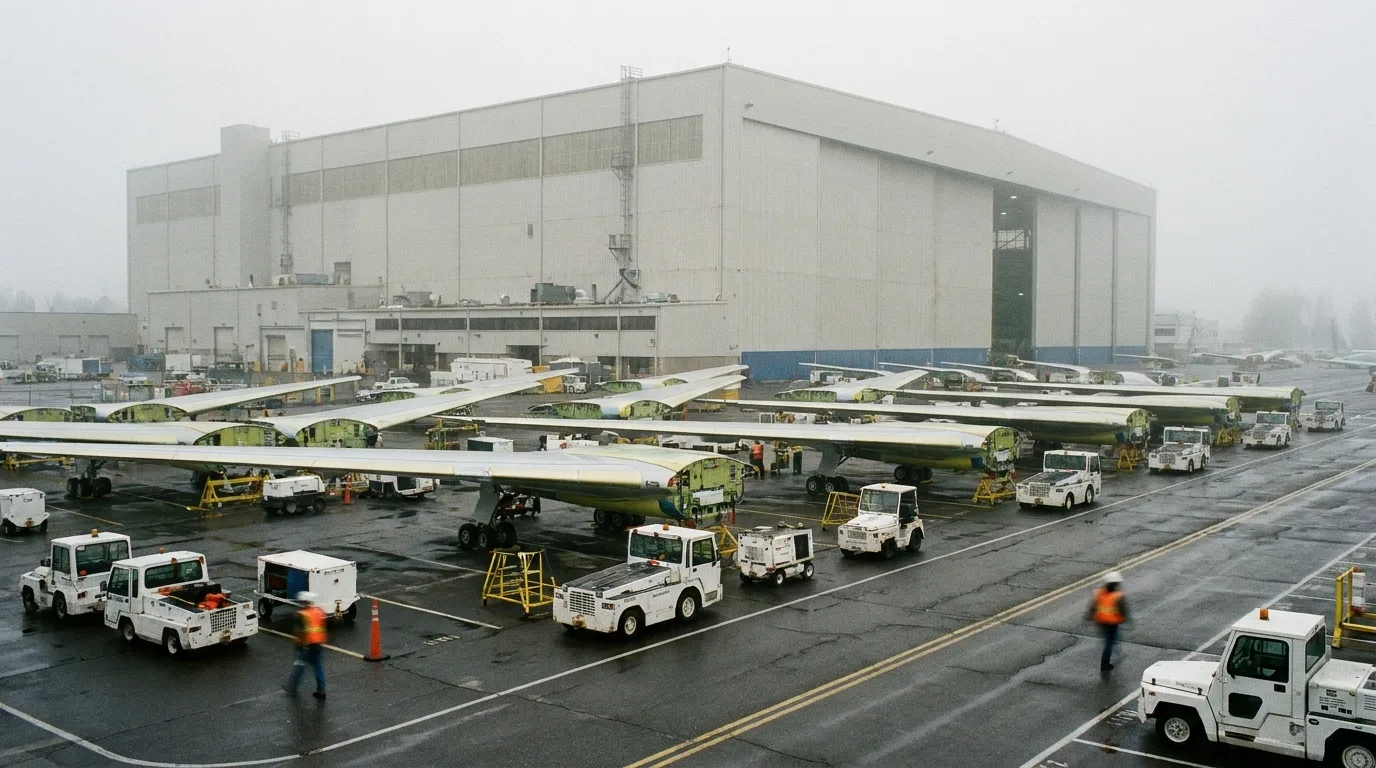
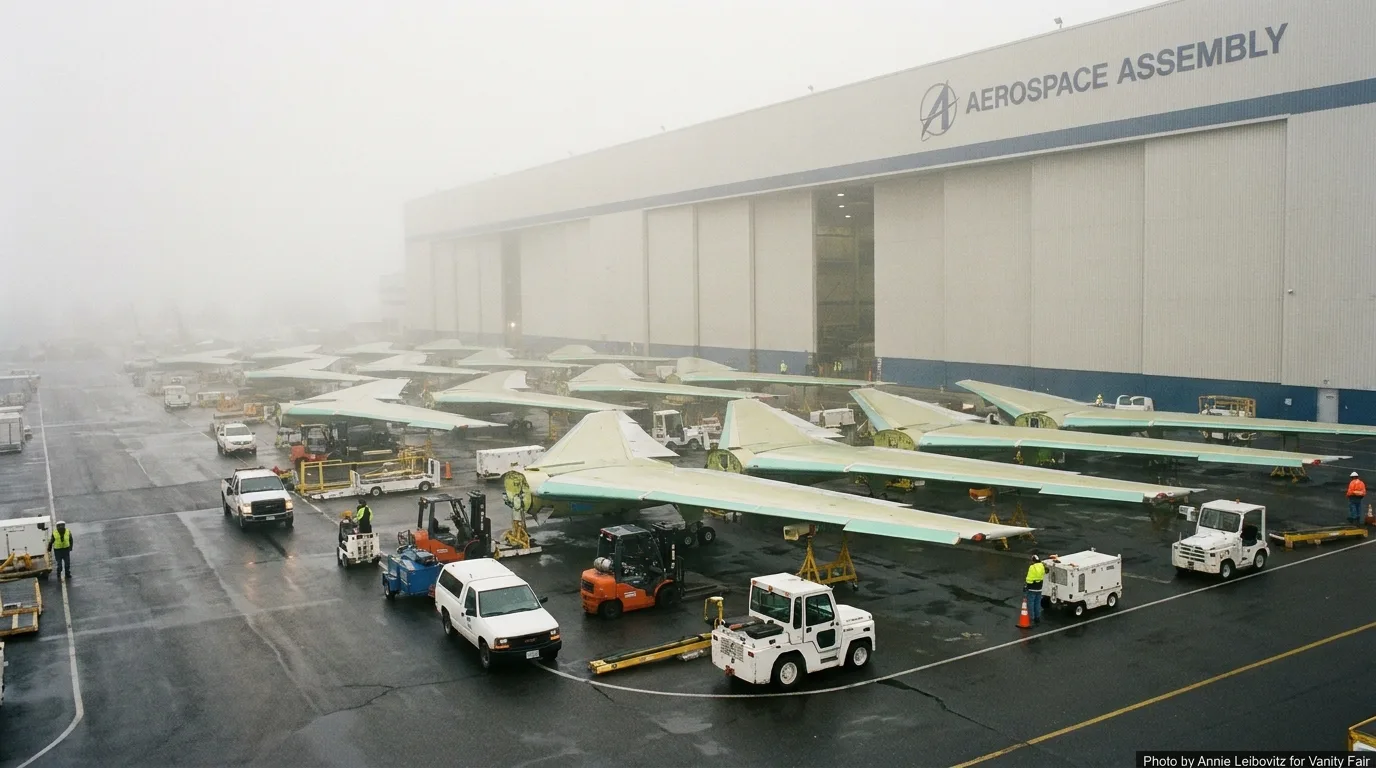
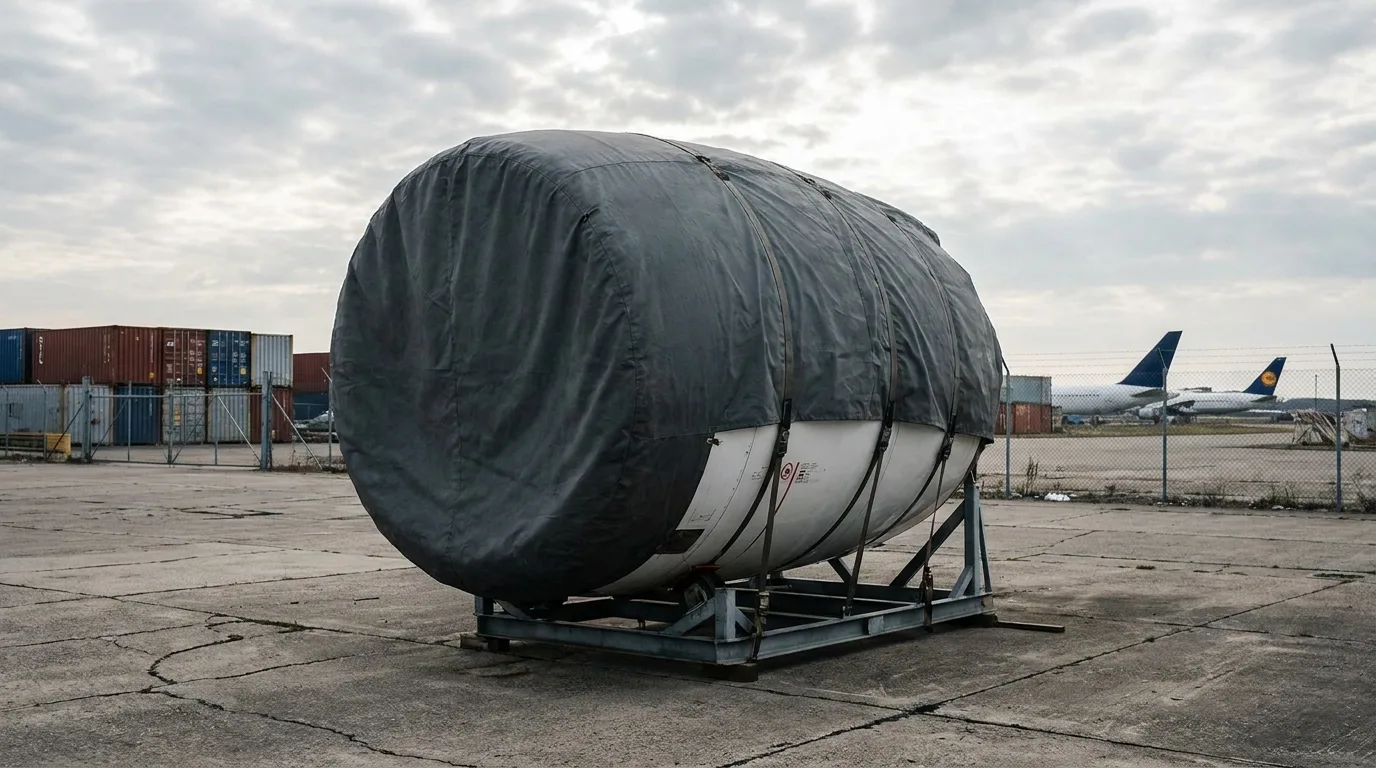
The other story is sitting on the ramp. More than 30 production 777-9s — aircraft that rolled out of the Everett factory between roughly 2020 and 2025, before the type was certified — are parked at Paine Field. Every one of them must undergo change incorporation before Boeing can deliver it. That is years of mechanical, electrical, and avionics work, and it is happening in Everett.
What Change Incorporation Actually Means
Change incorporation, or CI in Boeing parlance, is the process of bringing an already-built aircraft up to the configuration standard that the FAA will eventually certify. For the 777-9, that means several years of in-service-equivalent modifications: software updates, hardware swaps on flight control systems, fixes to issues identified during the GE9X engine testing campaign, thrust-link redesigns following 2024 in-flight findings, and updates to systems that were originally installed under a 2020-era engineering baseline.
Boeing CEO Kelly Ortberg, speaking in May 2026, said change incorporation on the stored fleet “will take years.” That is not a euphemism for delay. It is a description of the real workload: each aircraft requires opening up structure, swapping or modifying components, reverifying systems, and running flight tests before it can be handed over to a customer.
For comparison, the 787 program went through a similar — though smaller — stored-fleet rework cycle in 2022 and 2023, when production-paused Dreamliners required FAA-driven modifications before delivery. That work generated thousands of man-hours per airframe and required dedicated rework teams.
Why This Is an Everett-Specific Workforce Story
The 777-9 stored fleet is parked at Paine Field. The change incorporation work happens at Paine Field. The mechanics, electricians, avionics technicians, and quality inspectors doing the work are based in Everett. That is the geography. It cannot be outsourced to South Carolina or anywhere else without massive ferry-flight costs and certification complications that Boeing is unlikely to absorb.
What this means in practical terms for the Everett widebody workforce is that the 777-9 production ramp is not the only 777-9 workstream. There are effectively two parallel 777-9 efforts running in Everett:
- New-build production — the line continues to produce production-conforming aircraft like the first Lufthansa airframe that flew on May 7. These airframes are built to the as-certified configuration and require minimal post-roll-out rework.
- Stored-fleet change incorporation — the 30-plus aircraft on the ramp need to be brought up to the as-certified configuration. This is a separate, parallel labor pool drawing on the same skill set as the production line.
Boeing has not publicly announced how it is staffing the change incorporation work, but the most likely model is rotation: experienced 777 mechanics from the production line cycle through CI teams while early-career hires backfill production positions. That is the workforce pattern Boeing used during the 787 rework cycle.
The Math on Hours and Workforce
Industry benchmarks for change incorporation on a complex widebody program run between 5,000 and 25,000 labor-hours per aircraft, depending on the depth of modifications required. For the 777-9 stored fleet, the high end of that range is plausible given the multi-year configuration drift between when the aircraft were built and when the type will be certified.
At an average of 15,000 hours per aircraft and 30 aircraft to clear, that is roughly 450,000 labor-hours of dedicated rework. At a standard 2,000 productive labor-hours per worker per year, that translates to approximately 225 worker-years of CI labor — or, more realistically, a sustained team of 75 to 100 dedicated workers running for two to three years.
That is an order-of-magnitude estimate, not a Boeing-published figure. But it gives a useful sense of scale: the 777-9 stored-fleet rework is not a side project. It is a substantial, sustained workload that overlaps directly with the skills already resident in the Everett widebody workforce.
What This Means for the 767-Line Transition
As Everett’s widebody factory works through its 767-300F sunset and the pending FAA emissions exemption decision on the 777F, the 777-9 change incorporation workstream is one of the most concrete redeployment paths for displaced 767-line workers. The skills transfer is direct: 767 mechanics already work on complex widebody airframes, already hold the relevant certifications, and already operate inside the same Paine Field footprint.
Boeing has not announced a formal redeployment program. But the company’s $54 million purchase of the 6001 36th Avenue building in early May 2026 — explicitly described as supporting Everett industrial expansion — fits with a workforce strategy that keeps people in place across program transitions.
The Lufthansa Delivery Timeline and the Stored Fleet
Lufthansa Group CEO Carsten Spohr confirmed in early 2026 that Lufthansa’s first 777-9 delivery is targeted for Q1 2027. That airframe is the production-conforming aircraft that flew on May 7. It will not require significant change incorporation because it was built to the certified configuration.
The stored 30-plus airframes are a different population. They include Lufthansa airframes built earlier in the program, plus aircraft for other launch customers including Emirates, Qatar Airways, Singapore Airlines, and Cathay Pacific. Each of those customers has separate delivery timing, and Boeing’s CI throughput will determine the pace at which the stored fleet clears.
For the certification campaign itself, the relevant gates are TIA Phase 4B, Phase 5, F&R, and ETOPS — all of which the program must clear before any aircraft, stored or new-build, can be delivered.
What Snohomish County Suppliers Should Know
The 777-9 stored-fleet rework creates a parts-and-services workload distinct from new-build production. Components required for CI may include avionics modules, software updates from systems suppliers, structural modification kits, and consumables. Tier-2 suppliers in Snohomish County positioned in those categories — particularly those already on the 777 program — have a defined opportunity to bid into CI parts orders as Boeing finalizes its rework engineering packages.
Boeing has historically issued CI parts kits as separate program orders rather than rolling them into new-build purchase orders. Suppliers should be watching for separate 777-9 CI request-for-quotation packages through 2026 and into 2027 as the certification gates clear.
What Workers Should Be Doing
For 777 line mechanics, electricians, and avionics technicians: confirm with your supervisor whether your skill code includes CI work. CI is qualified separately from production-line work in Boeing’s internal workforce planning system, and qualification gaps could affect rotation eligibility.
For SPEEA-represented engineers: the engineering work behind change incorporation includes structural analysis, systems integration, and certification documentation — substantial work that has been ramping inside the 777-9 engineering organization. SPEEA’s 2026 bargaining season includes proposed language around skill portability that would be directly relevant to CI assignments.
For IAM 751 members on the 767-300F line approaching the FedEx May 31 final delivery: cross-qualification on 777 widebody work — including CI — is the most plausible internal redeployment path. Audit your qualifications now.
The Bigger Story
The first Lufthansa 777-9 flight on May 7 was the photo. The 30-plus aircraft on the ramp are the story. The 777-9 program’s recovery is not just about certifying the type. It is about clearing the inventory that built up while the program was paused — and that inventory is parked in Everett, requires Everett mechanics to fix, and represents a multi-year backlog that quietly stabilizes the Everett widebody workforce through the rest of the decade.
Boeing’s CEO said it will take years. The corollary that did not make headlines: Everett gets years of work.
Frequently Asked Questions
Q: How many Boeing 777-9s are currently parked at Paine Field?
Boeing has more than 30 production 777-9 aircraft parked at Paine Field awaiting change incorporation before delivery, according to public statements by CEO Kelly Ortberg in May 2026. The exact count fluctuates as additional production aircraft roll out of the factory.
Q: What is change incorporation on the 777-9?
Change incorporation is the process of bringing an already-built aircraft up to the configuration standard that the FAA will eventually certify. For the 777-9, this includes software updates, hardware modifications on flight control systems, thrust-link redesigns identified during 2024 flight testing, and updates to systems built under earlier engineering baselines. The process requires opening up structure, swapping or modifying components, reverifying systems, and running validation flights.
Q: How long will the 777-9 stored-fleet rework take?
Boeing CEO Kelly Ortberg said publicly in May 2026 that change incorporation on the stored fleet “will take years.” Industry benchmarks for similar widebody rework cycles suggest the work could span two to three years, depending on Boeing’s throughput and the depth of modifications per aircraft.
Q: Will Boeing hire new workers for the 777-9 change incorporation work?
Boeing has not publicly announced a hiring plan specifically for change incorporation work, but the workload overlaps directly with skills already present in the Everett widebody workforce. The most likely staffing model is internal rotation, with experienced 777 mechanics cycling through CI teams.
Q: When will the first stored 777-9 be delivered?
The first 777-9 delivery is targeted for Q1 2027 to Lufthansa, but that delivery will be the production-conforming aircraft that flew on May 7, 2026, not one of the stored fleet. Stored aircraft will follow on a schedule determined by change-incorporation throughput and certification gate clearances.
Q: What other customers have 777-9s in the stored fleet?
The stored 777-9 fleet includes airframes for Lufthansa, Emirates, Qatar Airways, Singapore Airlines, and Cathay Pacific — the five launch customers of the program. Each customer has separate delivery timing tied to Boeing’s CI completion sequence.
Q: How does change incorporation affect Boeing’s 2026-2027 delivery numbers?
Stored-fleet aircraft delivered after change incorporation count toward Boeing’s commercial delivery totals in the years they ship. Industry analysts expect Boeing’s 777-9 deliveries to ramp slowly through 2027 and 2028 as the CI backlog clears alongside new-build production.
Q: Is the 777-9 stored-fleet rework happening in any building other than Everett?
No. The stored 777-9 aircraft are parked at Paine Field and the change incorporation work is performed in Everett. Ferrying the aircraft elsewhere for rework would be cost-prohibitive and would add certification complications, so the work stays in the Everett widebody footprint.