Tag: Paine Field

  • AquaSox Drop Mother’s Day Finale 8-5 But Steal Five of Six From Hillsboro; Vancouver Up Next

    **The quick read:** The Everett AquaSox lost the Mother’s Day finale 8-5 to the Hillsboro Hops on Sunday, May 10, 2026, at Funko Field (Everett Memorial Stadium) in front of 2,261 fans — but they won the series five games to one, sit at 18-15, and are now tied with Tri-City for second place in the Northwest League. Next up: a six-game road trip to Vancouver starting Tuesday, May 12.

    You don’t usually want your homestand to end with a loss. But if you have to give one back, give it back the day after you put up 15 runs on Star Wars Night and after you’ve already locked up five of six against your division opponent. The AquaSox can live with that math.

    Here’s how the Mother’s Day finale at Funko Field went, what the full Hillsboro homestand told us, and what to watch when the Frogs cross into Canada on Tuesday.

    How the Finale Got Away

    Hillsboro came out of the dugout like they were trying to salvage something — and they did. The Hops put up a four-spot in the top half of the first two innings on the strength of a Kenny Castillo two-run single with the bases loaded, a Wallace Clark RBI single, and a Trent Youngblood RBI single in the second.

    To Everett’s credit, the Frogs answered immediately. Josh Caron took the first pitch he liked deep for a solo home run to put Everett on the board. Then the AquaSox loaded the bases on two singles and a walk. Jonny Farmelo drew a bases-loaded walk to bring in run number two, and a passed ball plated the third. Just like that, 4-3 game, and Funko Field had its Mother’s Day energy back.

    That was as close as it got. Alberto Barriga’s two-run blast to left-center in the fifth — his fifth homer of the year — made it 6-3. Then in the top of the eighth, Wallace Clark and Brady Counsell hit back-to-back solo home runs to push it to 8-3.

    The Frogs had one more swing left. Luis Suisbel led off the bottom of the eighth with a 386-foot solo shot, and Anthony Donofrio followed two batters later with a 395-foot blast to the Paine Field Home Run Porch — his first long ball of 2026 in his Everett Memorial Stadium debut. Beautiful piece of theater for Mother’s Day. Not enough to flip the result.

    Final: Hillsboro 8, Everett 5. Loss to Walter Ford (0-2). Hops righty Joangel Gonzalez (W). Game time: 2:32.

    The Homestand: Five-and-One

    This is the part that matters. Across six games against Hillsboro, the AquaSox took five. They opened the series winning four straight, blew the doors off the Hops 15-1 on Star Wars Night Saturday in front of a season-high 3,254, and then dropped the Mother’s Day matinée. Net result: the AquaSox climbed to 18-15, tied with the Tri-City Dust Devils for second place in the Northwest League, and they did it while running their best hitters through their first true rhythm of the season.

    Star Wars Night Saturday was the showcase — four home runs from Luke Stevenson (a three-run shot in the first that put Everett on the board), Luis Suisbel, Felnin Celesten, and Carlos Jimenez. Evan Truitt pitched 5.1 innings of one-run baseball, walked one, struck out four. The bullpen — Will Armbruester and Adam Smith — closed it without surrendering another run. 15-1. That game alone tells you why this prospect group is starting to feel real.

    Friday’s 8-1 win on Colton Shaw’s seven-strikeout start. Bryce Miller’s rehab gem on Silver Sluggers Night. Stevenson, Celesten, Jimenez, Caron, Donofrio, Suisbel — six different bats putting up tape-measure swings on a single homestand. That’s not noise. That’s a roster catching fire at the right time.

    Players to Watch Heading Into Vancouver

    A few names you want on your radar before the Frogs roll into B.C.:

    Felnin Celesten. Back-to-back Northwest League Player of the Week earlier this stretch, the Mariners’ top-tier middle infield prospect kept it going on Star Wars Night with a two-run home run plus an RBI single. He’s the engine.

    Luke Stevenson. Mariners’ Hitter of the Month for April, ranked the organization’s No. 8 prospect, and the Star Wars Night three-run homer was a reminder why the rankings exist.

    Anthony Donofrio. The Sunday solo homer is his first of the season, but the swing path on a 395-foot ball to the Home Run Porch is the kind of contact you remember. Watch this one.

    Luis Suisbel. Two homers across the homestand including the Mother’s Day shot. He’s quietly building a power profile.

    Brandon Eike. Six homers on the season heading into Vancouver. Still the longball pillar in this lineup.

    Brock Moore out of the bullpen — April Bullpen Award winner, 8.1 IP / 20 K / 4 SV / 2.16 ERA across the early season. Whenever this lineup gives him a lead, you trust the result.

    Next Up: Six in Vancouver, Then Home Against Tri-City

    The Frogs head north and cross the border for six games against the Vancouver Canadians at Nat Bailey Stadium — the legendary “Nat” — starting Tuesday, May 12, with first pitch at 7:05 p.m. The Canadians are the Blue Jays’ High-A affiliate and play in arguably the most charming ballpark in the Northwest League: 6,500 capacity, opened 1951, dual-purpose for baseball and the occasional concert.

    Vancouver is a road test for a roster that’s been thriving at home. Funko Field is friendly. The Nat has its own personality — the right field porch, the wind off False Creek, the sushi-and-Pacific-Dip concessions — and the Canadians have been playing well in their own building. This is the homestand-momentum-meets-road-reality matchup.

    After the six in Vancouver, the AquaSox return to Funko Field for a six-game homestand against the Tri-City Dust Devils — currently tied with Everett for second place. That’s a series with second-place implications baked in. Promotions confirmed for the Tri-City series include a ZOOperstars appearance, an AquaSox beanie hat giveaway presented by IBEW/NECA, and Sunday Fun Day.

    What This Homestand Told Us About 2026

    Three things came out of these six games against Hillsboro that matter for the rest of the season.

    First, this lineup can score in bunches. Fifteen runs on Saturday. Eight on Friday. Ten or more in multiple games across the prior road trips. The power is there, the patience is there, and the prospect-driven energy is there.

    Second, the bullpen depth is real. Moore, Smith, Armbruester, the back-end pieces — Everett has been winning the late innings even on nights where the offense doesn’t blow it open.

    Third, 18-15 with a five-of-six series win over a division opponent in May is the kind of position you want to be in heading into a road swing. The Frogs are not chasing anymore. They’re being chased.

    The Mother’s Day loss stings. The homestand was a statement.

    Frequently Asked Questions

    What was the final score of the AquaSox-Hops game on May 10, 2026?

    The Hillsboro Hops beat the Everett AquaSox 8-5 in the Mother’s Day finale at Funko Field (Everett Memorial Stadium). Attendance was 2,261.

    Who won the AquaSox-Hops series?

    The Everett AquaSox took five of the six games against Hillsboro on the May 5–10 homestand.

    What is the AquaSox record after the homestand?

    The AquaSox are 18-15 on the season, tied with the Tri-City Dust Devils for second place in the Northwest League.

    When does the AquaSox next series start?

    The Frogs play a six-game road series at the Vancouver Canadians starting Tuesday, May 12, 2026, at Nat Bailey Stadium. First pitch is 7:05 p.m.

    Who hit home runs for the AquaSox on Mother’s Day?

    Josh Caron hit a solo home run in the second inning. Luis Suisbel hit a 386-foot solo shot in the eighth, and Anthony Donofrio hit a 395-foot solo shot in the same inning — his first long ball of the season.

    What happened on Star Wars Night?

    The AquaSox demolished the Hops 15-1 on Saturday, May 9, in front of a season-high 3,254 fans. Luke Stevenson, Luis Suisbel, Felnin Celesten, and Carlos Jimenez all homered.

    When do the AquaSox return to Funko Field?

    After the Vancouver series, the AquaSox return home for six games against the Tri-City Dust Devils. The Tri-City series includes a ZOOperstars appearance, a beanie hat giveaway, and Sunday Fun Day.
  • Boeing Just Bought Its 6001 36th Avenue Building in Everett for $54 Million — What Owning the Long-Leased Site Says About the North Line Ramp

    Boeing Just Bought Its 6001 36th Avenue Building in Everett for $54 Million — What Owning the Long-Leased Site Says About the North Line Ramp

    What did Boeing buy at 6001 36th Avenue West in Everett? Boeing purchased the 319,000-square-foot office and industrial flex building at 6001 36th Avenue West in Everett — a property it had been the sole tenant of for more than a decade — for $54 million in late 2025, locking down a 45-acre site just a few miles from the Boeing Everett Factory ahead of the 737 North Line activation this summer.

    Boeing Just Stopped Renting Its Everett Support Campus and Bought It Outright — Here’s Why That Matters Right Now

    If you spend any time driving the 36th Avenue West corridor between Mukilteo and the Everett Factory, you’ve probably passed the long, low Boeing-branded building on the east side of the road for years without ever thinking about who actually owned it. Until late 2025, the answer was Arka Properties Group and Black Equities Group, two real-estate operators headquartered well outside Snohomish County. Boeing had been the sole tenant of the 319,000 square foot office and industrial flex space at 6001 36th Avenue West for more than a decade as a long-term renter. As of the close of the late-2025 transaction reported by The Registry, Connect CRE, and the Seattle Daily Journal of Commerce, Boeing owns the building outright — and the roughly 45 acres of land underneath it — for a $54 million purchase price.

    Read in isolation, that’s a routine corporate real estate move — a long-term tenant exercises an option to buy when the math finally tilts that way. Read in the context of what’s actually happening on Boeing’s Everett campus over the next 90 days, it is something else. The 737 North Line is opening at midsummer 2026. Boeing is hiring 100 to 140 assemblers per week into Washington state operations. The Spirit AeroSystems acquisition closed in December 2025. The 777-9 just made its first production flight from Paine Field on May 7. And the company just locked in 45 acres of permanent industrial footprint a few miles north of the factory it has been operating for 56 years.

    The Property Itself — What’s Actually at 6001 36th Avenue West

    The Boeing ESRC building — the working name for the 6001 36th Avenue West property — is a flex-use industrial and office complex spanning 319,000 square feet across roughly 45 acres in southwest Everett, between Mukilteo and the Boeing Everett Factory campus. The site sits within easy commuting distance of the main factory and within the larger Paine Field aerospace cluster that already includes ZeroAvia, Aviation Technical Services, the Future of Flight Aviation Center, and the IAM 751 Machinists Institute on Airport Road. Per the Registry’s coverage of the transaction, Boeing has been the sole tenant for more than a decade — meaning the building has effectively functioned as a Boeing facility throughout its recent operating history, even when the underlying real estate was owned by outside investors.

    The sellers — Arka Properties Group and Black Equities Group — were represented by Cushman & Wakefield’s Pat Mutzel, Nico Napolitano, and Jeffrey Cole. The transaction closed in late 2025, with Snohomish County records confirming the deal value at $54 million. The Seattle Daily Journal of Commerce framed the buy as Boeing converting a long-running operational lease into permanent ownership of a building it was never going to vacate. That’s the standard read on this kind of deal in commercial real estate: when the lessee is the only tenant, the building is genuinely purpose-built around their operations, and the operating horizon stretches further than the remaining lease term, ownership becomes cheaper than continued rent over the projected use period.

    Why the Timing Lines Up With the North Line Ramp

    The North Line — Boeing’s fourth 737 MAX assembly line and the first 737 line ever to operate at Everett — opens at midsummer 2026, per the company’s confirmed timeline and the most recent Boeing.com features published in April. The line will initially produce the 737-8, 737-9, and 737-10 variants. It is the physical bridge from Renton’s monthly production rate of 47 toward the company’s stated 53-per-month rate target, and the standalone production home for the 737 MAX 10 once that variant achieves FAA certification. Production at the North Line will not instantly lift output. The line has to be staffed, trained, and stabilized under intensified FAA oversight — a process that Boeing’s own materials describe as taking the back half of 2026 and well into 2027 to fully scale.

    That ramp creates a specific kind of real-estate demand that does not show up in floor space inside the main factory building — the world’s largest building by volume already runs against its own internal capacity ceiling. The auxiliary needs that come with a new assembly program include training space, supplier integration offices, parts staging, quality engineering bullpens, and overflow administrative footprint for the program’s growing engineering and management headcount. A 319,000 square foot flex building a few miles from the factory, with a decade-plus of existing Boeing tenancy, is precisely the kind of asset that absorbs that auxiliary load without requiring new construction. Owning it instead of renting it removes a lease-renewal risk on the exact horizon Boeing is now committing to with the North Line, the 777-9 program, the KC-46 backlog, and the 777-8F freighter line that just rolled out from Everett in late April.

    What This Doesn’t Mean — A Note on the Workforce Read

    It’s worth being clear about what the $54 million purchase does and does not signal. It is not, by itself, an announcement of new headcount at the 6001 36th Avenue site. The building has functioned as a Boeing facility for more than ten years, and the company has not publicly disclosed any expansion of personnel tied to the ownership change. The HeraldNet has reported in past coverage of the company’s broader Everett footprint that Boeing has been balancing space additions against workforce reductions in non-production functions — meaning the more accurate read is that Boeing is consolidating its operating footprint rather than expanding it floor-by-floor. The strategic signal is permanence, not growth in itself.

    For the broader Snohomish County aerospace economy, that distinction matters. The hiring story for Boeing in 2026 is the production floor — 100 to 140 new assemblers per week, the IAM 751 Machinists Institute training pipeline, the Edmonds College and Everett Community College aerospace programs, and the WATR Center cohorts that feed both Boeing and the surrounding supplier base. The real-estate story is operational permanence — Boeing locking down the physical infrastructure it needs to support the production hiring without exposing itself to landlord renegotiation in the middle of a multi-year ramp. Both stories run in parallel. Neither one substitutes for the other.

    The Wider Pattern — Boeing’s Everett Real-Estate Posture

    HeraldNet has previously reported on Boeing’s interest in 58 acres on the west side of Paine Field as part of a longer-running pattern of land-banking around the assembly campus — moves that, taken together, suggest a company actively reinforcing its physical Everett footprint at the same time it is trimming or rebalancing white-collar staffing in other regions. The 6001 36th Avenue West purchase fits that pattern. So does the company’s ongoing investment in the Boeing Field Training Center on Paine Field that hosts the 777-9 full-flight simulators FAA-qualified earlier this year. So does the long-term Boeing tenancy at the Future of Flight Aviation Center, which expanded to seven-day-a-week operations in early 2026.

    Read across all of those pieces, the picture is of a company that — despite the well-documented turbulence of the last two years — is putting its real-estate chips on Everett. That has implications for the Snohomish County tax base, for the supplier network that feeds the Everett campus, and for the housing market that the company’s 100-to-140-per-week hiring pace continues to test. None of those implications are visible in a single late-2025 transaction filing. They become visible when the transaction is read alongside the North Line ramp, the 777-9 production flight, the 777-8F rollout, the KC-46 Lot 12 award, and every other 2026 event that argues Everett is where Boeing is putting its production future.

    What to Watch Next

    Three follow-up signals will tell us whether the 6001 36th Avenue West purchase is the first of several Boeing real-estate consolidation moves around the Everett Factory or a one-off. The first is whether the company files any new permits or makes any operational announcement specifically tied to the ESRC building over the next six months. The second is whether Boeing moves on the 58 acres on the west side of Paine Field that HeraldNet has previously reported the company is evaluating. The third is whether any Everett supplier with a long-term lease near the campus follows Boeing’s playbook and converts to ownership under the same 2026 cost calculus. This desk will track all three.

    Frequently Asked Questions

    How big is the property Boeing bought at 6001 36th Avenue West?

    The property is a 319,000-square-foot office and industrial flex building on roughly 45 acres of land in southwest Everett, a few miles from the Boeing Everett Factory at Paine Field.

    How much did Boeing pay for it?

    The reported transaction price is $54 million, per Snohomish County records, the Registry, Connect CRE, and the Seattle Daily Journal of Commerce.

    Was Boeing already using this building?

    Yes. Boeing had been the sole tenant of the building for more than a decade as a long-term lessee. The late-2025 transaction converted that operating lease into outright ownership.

    Does this mean Boeing is hiring more workers in Everett?

    The real-estate transaction itself is not a hiring announcement. Boeing’s hiring story for Everett — 100 to 140 new assemblers per week to support the 737 North Line, KC-46, 767, 777, and 777-9 programs — is being driven separately by the production-line ramps. The real-estate move signals operational permanence at the existing footprint.

    Who sold the building to Boeing?

    Arka Properties Group and Black Equities Group sold the property to Boeing. The sellers were represented by Cushman & Wakefield brokers Pat Mutzel, Nico Napolitano, and Jeffrey Cole.

    How does this connect to the 737 North Line opening this summer?

    The North Line, opening at midsummer 2026, requires auxiliary space for training, supplier integration, quality engineering, parts staging, and overflow administrative functions that the main factory building cannot absorb internally. A 319,000 square foot flex building a few miles from the factory — long used by Boeing on a lease — is the kind of asset that supports that auxiliary load. Owning it removes the lease-renewal exposure during the multi-year ramp.

    Where can I follow more Snohomish County real-estate filings on Boeing?

    The Snohomish County Assessor’s office maintains the public property records used by The Registry, Connect CRE, and the Seattle Daily Journal of Commerce in their reporting. HeraldNet has the strongest local press track record on Boeing’s land-banking activity around Paine Field, including the previously reported 58-acre evaluation on the west side of the field.

  • Paine Field Is About to Host the World’s First Sustainable Aviation Fuel Repository — Inside the Cascadia Accelerator and What It Means for Everett

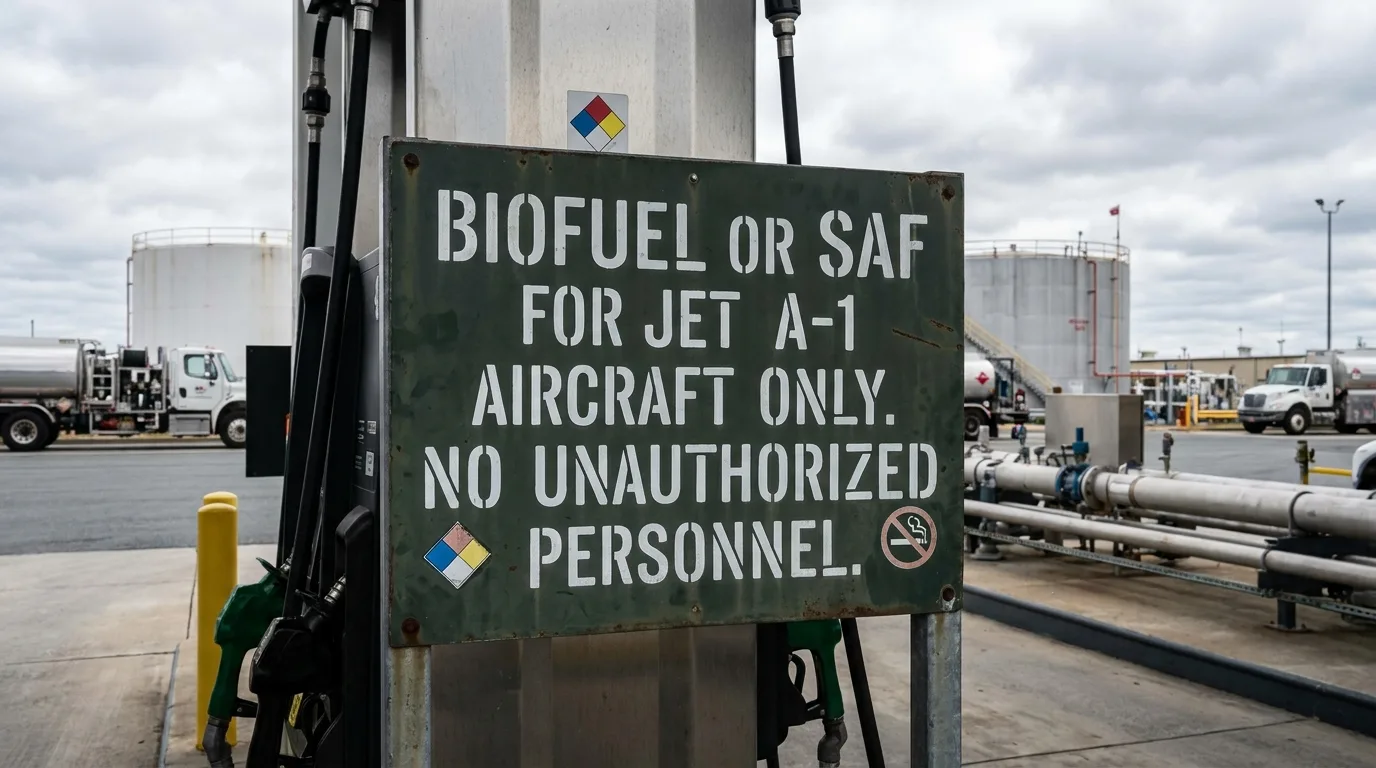
    Paine Field Is About to Host the World’s First Sustainable Aviation Fuel Repository — Inside the Cascadia Accelerator and What It Means for Everett

    What is the Cascadia Sustainable Aviation Accelerator at Paine Field? The Cascadia Sustainable Aviation Accelerator (CSAA) is a $20 million initiative launched January 8, 2026 at Boeing’s Future of Flight in Everett that pairs Washington State University and Snohomish County to build the world’s first Sustainable Aviation Fuel Research and Development Center on an eight-acre site at Paine Field — with Boeing, Alaska Airlines, Amazon, Microsoft, and the Port of Seattle as founding partners.

    Paine Field Is About to Host the World’s First Sustainable Aviation Fuel Repository — Here’s the Everett Story Behind It

    If you’ve been watching Paine Field over the last four months and wondering why a Cascadia Sustainable Aviation Accelerator press conference suddenly took over the Future of Flight stage on January 8, 2026, here’s the short answer — Snohomish County and Washington State University are about to put the world’s first Sustainable Aviation Fuel Research and Development Center on an eight-acre lot at the airport, and the people building it are the same names you already see on Boeing’s hangar doors. Boeing is a founding partner. Alaska Airlines is a founding partner. So are Amazon, Microsoft, the Port of Seattle, the Washington Department of Commerce, and Earth Finance.

    That’s not a press release detail. That’s an Everett story. The aerospace economy that defines this town — the 42,000 workers who make Boeing’s widebody program possible, the 600-plus suppliers in Snohomish County, the Paine Field cluster of operators that includes ATS, ZeroAvia, and Aviation Technical Services — is about to absorb a brand-new R&D vertical that didn’t exist anywhere in the world before 2026. The question for everyone working on Boeing campus or any aerospace shop floor in this county is what that vertical actually does, who staffs it, and what it means for the next decade of aviation jobs in Everett.

    The January 8 Launch — What Was Actually Announced at Future of Flight

    The Cascadia Sustainable Aviation Accelerator was unveiled on January 8, 2026 at Boeing’s Future of Flight Aviation Center in Everett, with Washington Governor Bob Ferguson, WSU President Betsy Cantwell, U.S. Senator Maria Cantwell, and a stage full of Boeing, Alaska Airlines, and Amazon executives in attendance. The funding structure announced that day is straightforward — a $10 million appropriation from the 2025 Washington state legislative session, matched dollar-for-dollar by a $10 million private philanthropic donation from a donor the accelerator has not publicly named. That puts the accelerator’s launch capital at $20 million, and the partner roster makes clear the operating budget will scale well beyond that as the program matures.

    The technical mandate is to accelerate the production, deployment, and adoption of sustainable aviation fuel — known as SAF — across the Pacific Northwest. The structural mandate is broader. WSU President Betsy Cantwell, flanked by accelerator researchers Harrison Yang and Josh Heyne, framed the project as a once-in-a-generation regional industrial policy play, not a single research grant. The Cascadia partnership pulls in Tribal representatives, organized labor, community organizations, and the four-year research universities of the state alongside the airline and manufacturing partners. The pitch — repeated across the day’s coverage in GeekWire, Lynnwood Times, OPB, KIRO 7, and the Washington State Standard — is that the Pacific Northwest has the feedstocks, the refining infrastructure, the deepwater port access, the airline demand, and now the public capital to be the global hub for SAF.

    Why the R&D Center Is Going to Paine Field, Specifically

    The accelerator’s headline physical asset is the Sustainable Aviation Fuel Research and Development Center that WSU and Snohomish County are building on an eight-acre lot at Paine Field. Snohomish County’s official SAF R&D Center page lists the program plainly — the facility will host the world’s first SAF repository, where fuel samples are collected, tested at laboratory and larger scales, indexed, and distributed globally to support research and commercialization. There is no other facility on the planet currently doing what this one will do.

    The site selection is not accidental. Paine Field gives the program four things that no other West Coast airport offers in the same place — a working commercial widebody manufacturing line at the Boeing Everett Factory, a working narrowbody production line about to come online at the 737 North Line this summer, an established hydrogen-electric powertrain neighbor in ZeroAvia’s 136,000 square foot Propulsion Center of Excellence, and direct apron access for fuel sample handling and large-scale fuel blending tests. The accelerator team is currently negotiating a temporary commercial space at Paine Field that will be roughly a quarter scale of the eventual permanent center — focused on storing a wider variety of smaller samples while the larger blending and testing facility is built out. Initial funding has been secured to break ground on the permanent eight-acre site, with construction targeted for completion no later than 2029.

    What Boeing’s Founding-Partner Role Actually Means

    Boeing’s role inside the Cascadia partnership is described by the accelerator as the technical-integration backbone. Manufacturers like Boeing bring the engineering expertise required to certify SAF blends across in-service airframes — Boeing has been flying SAF in test programs since the original 2018 ecoDemonstrator 777 work — and to integrate new fuels into both production and aftermarket operations. Alaska Airlines, the Pacific Northwest’s anchor carrier, brings the operational footprint and the demand signal. Amazon brings cargo demand and freight-corridor scale. Microsoft brings corporate procurement commitments. WSU brings the bench-science capacity, including researchers from WSU’s Bioproducts, Sciences, and Engineering Laboratory who will lead the fuel testing, finishing, and scaling work.

    For Boeing’s Everett workforce specifically, the founding-partner posture matters because it places SAF integration work geographically inside the same county where Boeing already builds the 767, the KC-46, the 777, the 777-9, and — starting this summer — the 737 MAX on the new North Line. Boeing’s company-wide SAF roadmap has been public for several years, but this is the first time the company has had a co-located R&D facility within driving distance of its largest assembly campus. That changes what kinds of test programs Everett can host. It also changes what kinds of engineering jobs the campus can absorb over the next decade.

    The Workforce Picture — Who Staffs an SAF R&D Center?

    The accelerator has not yet published a final headcount target for the Paine Field facility, but the program description and the partner mix point to a workforce that pulls from three pools that already exist in Snohomish County. The first is the WSU and PNNL research staff who will rotate in from Tri-Cities and Richland to run laboratory-scale fuel finishing and scaling work. The second is the existing Boeing and Alaska Airlines engineering staff who will be assigned to integration projects under their respective companies’ SAF commitments. The third is the local skilled-trades workforce — the same machinists, technicians, and process operators currently being trained at the IAM 751 Machinists Institute on Airport Road, Edmonds College, Everett Community College, and Snohomish County’s WATR Center — who will be needed for the actual fuel-blending and sample-handling operations on site.

    This is the part of the story that ties directly back to the larger workforce conversation we’ve been tracking on this desk for the last six weeks — the 5,200-worker aerospace shortage projected by the Aerospace Futures Alliance through end of 2026, the 100-to-140-per-week Boeing hiring pace, the IAM 751 Machinists Institute training capacity of more than 700 machinists per cohort, and the SPEEA bargaining season that opened in May. The Cascadia accelerator does not solve the headcount math by itself, but it adds a job category to the Snohomish County aerospace ecosystem that did not exist before — SAF integration engineer, fuel chemistry technician, sample repository operator, certification analyst — and most of those job categories are not directly competing for the same labor pool as the 737 North Line ramp.

    The Economic Geography Argument

    Read alongside the rest of Snohomish County’s 2026 economic positioning, the SAF R&D Center fits a pattern. The county now has, within a 10-mile radius of Paine Field — the Boeing Everett Factory and its widebody program, the 737 North Line opening this summer, ZeroAvia’s hydrogen-electric Propulsion Center of Excellence, Aviation Technical Services’ 500,000 square foot maintenance hangar at the south end of the field, the Future of Flight Aviation Center, the Machinists Institute, two community college aerospace programs, and now an R&D anchor for the next generation of aviation fuel. That is a single-county aerospace cluster with no peer west of the Mississippi.

    The accelerator’s own framing — repeated by GeekWire’s coverage of the launch — is that this is a once-in-a-generation economic opportunity for the Pacific Northwest to capture leadership in a fuel category that is going to scale dramatically over the next two decades regardless of who builds the infrastructure. The argument from Olympia is that Washington has every reason to be that infrastructure leader, and the argument from Snohomish County is that Paine Field is where the leadership cluster physically sits.

    What’s Next — Watch These Three Milestones

    For readers tracking this story over the next twelve months, the milestones to watch are the temporary facility opening at Paine Field — expected in the next several months, per the accelerator’s published timeline — the formal site selection and groundbreaking on the permanent eight-acre center, and the first published partnership programs between the accelerator and the airline and manufacturing partners. Each of those milestones will produce a new round of Snohomish County hiring announcements that this desk will track in real time. The accelerator’s official site at cascadiaaccelerator.org has the cleanest live update channel; Snohomish County’s SAF R&D Center page is the official county-side update channel.

    Frequently Asked Questions

    Where exactly will the SAF R&D Center be located at Paine Field?

    The accelerator team is targeting an eight-acre lot at Paine Field for the permanent Sustainable Aviation Fuel Research and Development Center. The exact parcel has not been publicly disclosed yet. A temporary, roughly quarter-scale facility will open in commercial space at Paine Field in the coming months while the permanent site is built out, with construction targeted for completion no later than 2029.

    How much funding has the Cascadia Sustainable Aviation Accelerator received?

    The launch capital is $20 million — a $10 million appropriation from the 2025 Washington state legislative session matched by a $10 million private philanthropic donation. Operating budget over time will scale beyond that as partner programs, federal grants, and additional private funding come online.

    Who are the founding partners of the accelerator?

    The publicly listed founding partners include Boeing, Alaska Airlines, Amazon, Microsoft, the Port of Seattle, Snohomish County, Washington State University, Earth Finance, and the Washington Department of Commerce. Tribal representatives, organized labor, and community organizations are also part of the launch coalition.

    What is sustainable aviation fuel, in plain terms?

    Sustainable aviation fuel — SAF — is a category of jet fuel made from non-petroleum feedstocks such as agricultural residues, used cooking oils, municipal waste, or synthetic processes. Certified SAF blends can be used in existing commercial aircraft engines without modifications. The category currently makes up a small fraction of global jet fuel volume but is the leading near-term decarbonization pathway for commercial aviation.

    How does this connect to the Boeing 737 North Line opening this summer?

    The North Line ramp and the SAF R&D Center are independent projects but they share a county-level workforce and supplier ecosystem. The accelerator adds aerospace job categories — SAF integration engineering, fuel chemistry, certification analysis — that do not directly compete with the production-floor hiring the North Line requires, which means the two projects can scale in parallel rather than against each other.

    Will the SAF center actually produce jet fuel for sale?

    The Paine Field facility is a research and development center plus a global SAF repository — not a refinery. Its core functions are sample collection, laboratory and larger-scale testing, indexing, and distribution to support research and commercialization. Commercial-scale SAF production happens at separate refining facilities; the R&D Center supports the science and standards that production then relies on.

    When did this story break, and where can I follow updates?

    The accelerator was publicly launched January 8, 2026 at the Boeing Future of Flight Aviation Center in Everett. Live updates are published at cascadiaaccelerator.org. Snohomish County maintains an official program page for the SAF R&D Center at snohomishcountywa.gov. WSU Insider and the Lynnwood Times have published the most detailed local coverage of the launch.

  • National Airlines’ First Boeing 777F Just Left Everett — And It Says Something Important About the Cargo Workforce Through 2027

    National Airlines’ First Boeing 777F Just Left Everett — And It Says Something Important About the Cargo Workforce Through 2027

    Last updated May 9, 2026 — based on the April 14, 2026 delivery ceremony at the Boeing Everett Factory and National Airlines’ announced May 2026 entry into revenue service.

    Quick answer: National Airlines took delivery of its first Boeing 777-200F (registration N791CA) at the Boeing Everett Factory on April 14, 2026, and the aircraft is scheduled to enter revenue service in May 2026. Three more 777-200F freighters will follow over the coming months. The delivery is a useful data point for Snohomish County aerospace workers because it confirms that the 777F program — sundowning under current FAA emissions rules in 2027 — is still actively delivering revenue-service freighters to commercial cargo carriers, and the workforce that builds them is still busy.

    What happened at Paine Field

    On Tuesday, April 14, 2026, Florida-based National Airlines marked the delivery of its first Boeing 777-200F freighter at the Boeing Everett Factory in Snohomish County. The aircraft, registered as N791CA and carrying manufacturer’s serial number 70547, was the first of four 777-200Fs the carrier ordered at the Farnborough International Airshow in 2024. The delivery ceremony at Paine Field included a symbolic ribbon-cutting, a guided tour of the airframe, and remarks from senior National Airlines and Boeing representatives.

    National Airlines first announced N791CA had begun test flights at Orlando in late March 2026. The aircraft cleared its mandatory flight tests, performance evaluations, and regulatory checks in the weeks leading up to the April 14 delivery, with the carrier publicly announcing a May 2026 entry into revenue service. The remaining three 777-200F freighters in the order will undergo their respective test flight programs in the coming months.

    Why this is an Everett story, not just a National Airlines story

    Every commercial 777 ever delivered has been built at the Boeing Everett factory at Paine Field. That includes 777-200ER passenger jets, 777-300ERs, 777Fs, and now the upcoming 777-8F freighter and 777-9 passenger variant. The factory is the only place on Earth where 777-family widebody assembly happens. When a freighter rolls out and gets handed to a customer, it is by definition a Snohomish County workforce milestone.

    The 777-200F program has been the workhorse of Boeing’s cargo line in Everett for nearly two decades. The freighter has 102 metric tons of payload, range north of 9,000 kilometers, and twin-engine fuel economy that has made it the dominant pure freighter in long-haul air cargo. National Airlines becomes one of the newest 777F operators worldwide.

    The 2027 sundown question

    The 777F is also the program that, as of right now, is set to end production in Everett in 2027 unless the FAA grants Boeing’s pending exemption request. Earlier this week, Tygart Media covered the public comment period on Boeing’s petition to keep building 777-200F freighters past the 2027 carbon emissions deadline. The FAA’s decision will determine whether Everett’s 777F production line stays open through approximately 2028 or wraps up next year.

    National Airlines’ four-aircraft order is part of the order book Boeing is working through right now. UPS holds 17 unfilled 777F orders. FedEx has 12. Add the National Airlines four, and the Everett 777F backlog is in the low-30s — meaningful months of work for the cargo line workforce, but a finite countdown unless the FAA exemption goes through.

    What changes when N791CA enters service in May

    For National Airlines specifically, N791CA replaces older fleet capacity and gives the carrier a long-haul cargo asset for charter, ACMI (aircraft, crew, maintenance, insurance) and contract operations into Asia-Pacific and trans-Atlantic markets. National has been a niche cargo carrier with passenger charter operations; the 777F brings them into the same league as the major integrators and large-frame charter operators.

    For Boeing’s order book, the Farnborough 2024 deal — four 777Fs to a midsize cargo specialist — was a signal that the 777F market still had pull beyond the UPS and FedEx mega-orders. The May 2026 entry-into-service is the proof point. Operators that ordered late are now actually flying the airplanes.

    What this means for Everett’s cargo-line workers

    The Everett cargo line — the bay where 777Fs are mated, painted, fueled, and flight-tested — employs hundreds of mechanics, electricians, painters, flight-test crew, delivery technicians, and quality inspectors. Every one of those positions is a Snohomish County household, a paycheck spent locally, and a worker who needs a transition path if the 777F line ends in 2027.

    The optimistic transition path is the 777-8F, the new-generation freighter Boeing rolled out for the first time on April 23, 2026 — which Tygart Media covered at the time. The 777-8F uses much of the same workforce and many of the same tools as the 777F, with launch customer Cargolux taking the first delivery and Qatar Airways anchoring the launch order. Workers who built the 777F in Everett are precisely the workforce Boeing needs to staff the 777-8F.

    The pessimistic path — if the FAA emissions exemption is denied and the 777-8F ramp slips — is a workforce gap of perhaps 18 months between 777F sundown and 777-8F volume. That is the gap that has Snohomish County aerospace planners, IAM 751 leadership, and Boeing internal workforce strategists watching the FAA exemption decision closely.

    The cargo continuity narrative

    Step back from the program-specific math and a broader pattern emerges: Everett is the cargo widebody factory of the world. The 767F has been delivering through 2026 and will sundown in 2027. The 777F is delivering now and is on the same 2027 line absent an exemption. The 777-8F is the next-generation replacement. The KC-46 Pegasus tanker — derived from the 767 — is delivering at roughly 19 per year and remains under contract for years to come. Israel’s first KC-46 (the airframe named “Gideon”) flew its maiden flight on May 4 and is set for June delivery, as covered last night.

    National Airlines’ first 777F is one delivery in a sequence of widebody and military deliveries flowing out of Paine Field every month. Each one is a Snohomish County employment confirmation. Each one is also a tick on the clock toward 2027, when the program mix at Everett rebalances toward the 777-9, 777-8F, KC-46, and the new 737 North Line.

    Frequently asked questions

    When did National Airlines take delivery of its first 777F?

    April 14, 2026, at the Boeing Everett Factory in Snohomish County, Washington. The aircraft is registered N791CA and carries manufacturer’s serial number 70547.

    When does the aircraft enter revenue service?

    National Airlines has publicly stated May 2026 for entry into revenue service, following completion of mandatory flight tests, performance evaluations, and regulatory procedures.

    How many 777Fs has National Airlines ordered?

    Four. The order was placed at the Farnborough International Airshow in 2024. The remaining three airframes will go through test flight programs over the coming months.

    Is the 777F still being built at Everett?

    Yes. Production continues through 2027 under current FAA emissions rules. Boeing has a pending exemption request that, if granted, would extend production. The public comment period closed May 7, 2026.

    What is the 777F’s payload capacity?

    Approximately 102 metric tons (224,000 pounds). Range exceeds 9,000 kilometers (4,860 nautical miles). It is a twin-engine widebody freighter and the dominant pure freighter in long-haul air cargo.

    How does this connect to Everett aerospace jobs?

    The 777F is built at the Boeing Everett Factory at Paine Field. Mechanics, electricians, painters, flight-test crew, delivery technicians, and quality inspectors all participate in each delivery. National Airlines’ delivery is a Snohomish County workforce milestone.

    What replaces the 777F in Everett if the line closes?

    The 777-8F, Boeing’s new-generation freighter that rolled out on April 23, 2026, with Cargolux as launch customer and Qatar Airways anchoring the launch order. The 777-8F uses much of the same workforce as the 777F.

    The bottom line for Snohomish County

    National Airlines’ first 777F entering revenue service in May 2026 is a small line in a very long order book. But it is also a confirmation: the Everett cargo line is still building airplanes, still delivering them to commercial operators, and still employing the Snohomish County workforce that has been in those bays for nearly twenty years. The next chapter — 777-8F volume, KC-46 sustainment, North Line 737 ramp — is the one being staffed up right now. The hand-off is the story.

  • Boeing’s Path From 47 to 53: Why the Everett 737 North Line Is the Only Way to the ‘Magic Number’

    Boeing’s Path From 47 to 53: Why the Everett 737 North Line Is the Only Way to the ‘Magic Number’

    Last updated May 9, 2026 — based on Boeing’s Q1 2026 earnings call (April 22), CEO Kelly Ortberg’s commentary, and analyst forecasts from AirInsight, Leeham News, and Simple Flying.

    Quick answer: Boeing’s “magic number” for 2026 is 53 737 MAX jets per month, but the Renton factory physically can’t build more than 47. The Everett 737 North Line — opening this midsummer — is the only production capacity that gets Boeing from rate 47 to rate 53 by year-end. That’s the throughline that ties Everett’s hiring tempo, the 4,800-jet backlog, and Boeing’s free-cash-flow recovery into a single Snohomish County story.

    The number Boeing keeps repeating: 53

    On Boeing’s Q1 2026 earnings call on April 22, CEO Kelly Ortberg said the same thing he had said in February and the same thing the company had said on its January call: the 737 MAX program is climbing toward a target of 53 jets per month, and Boeing wants to be there by the end of 2026. The intermediate step is rate 47, which Ortberg confirmed for “this summer.”

    That sequence — 38 in early 2026, 42 in spring, 47 in summer, 53 by year-end — is the production curve every Boeing executive, FAA inspector, and supply-chain analyst is watching. It is also the curve that determines how fast the Everett North Line ramps, how many additional Snohomish County hires Boeing makes between June and December, and whether Boeing’s stated path to $3 billion in free cash flow holds together.

    Why Renton can’t get to 53 alone

    Every 737 ever delivered — going back to 1967 — was built in Renton. Three production lines, one factory, decades of refinement. Renton is full. The factory’s three lines, even pushed to their physical limits with parallel staging and overtime, top out at roughly 47 jets per month. That’s not a contract limit or a regulatory limit; it is a building limit. The bays are the size they are. The cranes move at the speed they move. The wings have to come from Spirit AeroSystems’ Wichita facility, and the wing-mate sequence cannot compress further without breaking quality.

    So when Boeing says “rate 47 in summer,” it is saying, in effect, “Renton at maximum capacity.” Anything above that has to be built somewhere else. There is only one somewhere else: the Everett 737 North Line, the fourth 737 production line in Boeing’s history, currently being stood up inside the world’s largest building by volume. Everett has not built a 737 since the 1960s. Now Everett is the only path forward.

    What the North Line actually is

    The 737 North Line is sited inside the Everett factory at Paine Field — the same building that produces the 767, the KC-46 Pegasus tanker, and the 777 family. Boeing has been preparing the bays since early 2025 and has had teammates training in Renton through 12-week structured rotations before returning to Everett. The North Line will initially focus on the 737 MAX 10 — the largest, longest, and most order-rich variant — with the option to flex to MAX 7, MAX 8, and MAX 9 depending on demand.

    The signature piece of equipment is the 737 Wing Transport Tool, a purpose-built rig that ferries partially completed wings from the supplier into Everett for final mate. That tool exists because Everett, unlike Renton, was not built around the 737. Boeing is engineering the Renton-to-Everett wing flow rather than redesigning the building.

    Boeing has stated publicly that the North Line is opening “midsummer” 2026. Lynnwood Times reported a midsummer launch in February. HeraldNet confirmed the timing in April. Aviation A2Z reported in early April that the line had opened in a soft-launch sense for staging and tooling. The rate ramp begins after that.

    The 4,800-jet question

    The reason rate 53 matters is the backlog. Boeing’s commercial backlog runs north of 4,800 firm orders for the 737 MAX family alone, with airlines and lessors waiting years for delivery slots. At rate 47, Boeing burns through roughly 564 jets per year. At rate 53, the number is 636. Across a five-year delivery window, the difference is more than 350 aircraft — roughly the size of an entire mid-sized airline’s fleet, or about $40 billion in revenue at typical 737 unit pricing.

    That is the math Boeing executives are pointing at when they talk about cash-flow recovery. It is also the math that tells Snohomish County’s aerospace workforce planners exactly how big the North Line hiring wave needs to get.

    What rate 53 means for Everett hiring

    Boeing has been hiring across its commercial operation at roughly 100 to 140 net new factory positions per week, according to commentary on the Q1 earnings call and prior reporting at factory-wide hiring at 100-140/week pace. A meaningful share of that hiring lands in Everett because the North Line is the program in expansion mode. The IAM 751 Machinists Institute on Airport Road — covered here in April — is the union-built training pipeline that feeds those positions.

    The path from rate 47 to rate 53 is not a smooth curve. It is a step function. Boeing has to qualify North Line workers, validate the Wing Transport Tool flow, prove the build sequence on conformity airframes, and then sustain rate over a 90- to 180-day window before the FAA signs off on rate increases. Each of those gates is also a Snohomish County hiring gate. If Everett can’t put trained mechanics on the floor when Boeing needs them, the rate ramp slips.

    The Spirit AeroSystems variable

    Boeing’s December 2025 acquisition of Spirit AeroSystems — its longtime fuselage supplier — was framed at the time as a vertical integration play to fix quality drift. It is also a rate-53 enabler. Bringing Spirit in-house gives Boeing direct control over fuselage delivery cadence into Renton and Everett. Ortberg has flagged Spirit integration drag as a 2026 cash-flow headwind, but the structural play is to make rate 53 sustainable rather than a one-quarter spike.

    For the North Line specifically, Spirit’s wing assembly capacity is the constraint that has to scale alongside Boeing’s bay capacity. A North Line that is ready before its wings arrive is not really at rate 53.

    What can knock the schedule off

    Three things, in roughly this order:

    1. FAA rate authority. Boeing cannot unilaterally raise its 737 MAX production rate above 38 per month — that cap was imposed after the January 2024 Alaska Airlines door-plug incident. The FAA has signaled a path to rate 47 in summer 2026 and rate 53 by year-end, but each step is conditional on quality-system performance.
    2. 737 MAX 10 certification. The MAX 10, which the North Line is designed to build, has not yet received its FAA type certification. Boeing CEO Kelly Ortberg told the April 22 earnings call that certification is on track for late 2026 — but the Bloomberg report from April 21 noted that the FAA has not surfaced new roadblocks but cautioned that flight test could still find one.
    3. Workforce throughput. Training a Boeing factory mechanic to working productivity takes 12 weeks of structured rotation plus on-the-job hours. The compressed timeline between June and December 2026 leaves limited room for slippage.

    What this looks like from Everett

    The story most Snohomish County residents are going to see in their daily lives is hiring volume — Boeing’s careers page, IAM 751’s apprenticeship intake, the WATR Center and EvCC training cohorts, the Edmonds College aerospace programs. The story Boeing’s investors are watching is the rate curve. The story the FAA is watching is the quality system.

    All three are the same story, told in different vocabularies. Rate 53 is the number that connects Everett’s payroll to Boeing’s cash flow to the FAA’s certification authority. The North Line is the bay where the connection physically happens.

    Frequently asked questions

    What is Boeing’s 737 MAX production rate target for 2026?

    Boeing has publicly targeted 47 jets per month by mid-summer 2026 and 53 jets per month by the end of the year, per CEO Kelly Ortberg’s commentary on the Q1 2026 earnings call (April 22, 2026).

    Why does Boeing need the Everett 737 North Line?

    The Renton factory’s three production lines max out at approximately 47 jets per month due to physical constraints. To reach rate 53, Boeing needs a fourth line — and the only space available inside Boeing’s commercial system is the Everett factory at Paine Field.

    When does the Everett 737 North Line open?

    Boeing has consistently said midsummer 2026 since the February 2026 announcement. Soft-launch staging began in early April 2026; rate production starts after midsummer.

    How big is Boeing’s 737 MAX backlog?

    More than 4,800 firm orders. At rate 53, that backlog still represents roughly 7.5 years of production.

    What variants will the Everett North Line build?

    Initial focus is the 737 MAX 10 — the largest variant — with capability to flex to MAX 7, MAX 8, and MAX 9. Boeing has stated the MAX 10 will be built predominantly in Everett.

    How does this affect Everett-area employment?

    Boeing has been hiring at 100 to 140 net new factory positions per week across its commercial operation, with a meaningful share landing in Everett. Rate 53 sustains and likely expands that hiring tempo through 2026.

    What is Boeing’s path to $3 billion in free cash flow?

    Ortberg laid it out on April 22: rate 47 in summer, rate 53 by year-end, KC-46 deliveries on the defense side, and 777X certification on the widebody side. All four legs need to hold for the FCF target to land.

    The bottom line for Everett

    Boeing’s rate-53 target is not a Renton story or a corporate story. It is an Everett story. The bays at Paine Field are where the math becomes real. Every additional 737 above rate 47 is built in Snohomish County, by people hired in Snohomish County, trained in Snohomish County, and paid in Snohomish County. That is the economic engine the North Line was built to be.

  • Boeing’s First Production 777-9 Just Flew From Paine Field — With Lufthansa’s Full Cabin Already Inside

    Q: What happened on May 7, 2026, at Paine Field?
    A: Boeing flew the first production-standard 777-9 — registration N20080, serial 1781 — from Paine Field for 3 hours and 27 minutes over Washington and Oregon. For the first time, a 777-9 flew with Lufthansa’s full Allegris passenger cabin installed. It is a critical milestone on the path to Lufthansa’s Q1 2027 delivery.

    For more than a decade, the Boeing 777X has carried the weight of expectation and the cost of delay. Certification postponements, COVID disruptions, structural modifications, and a rework queue of 30-plus aircraft sitting in the Paine Field storage yard — the story has been more about patience than progress.

    Thursday, May 7, 2026, moved the needle.

    At approximately 1:40 p.m. local time, the first production-standard Boeing 777-9 — registration N20080, serial number 1781, Boeing test designation WH128 — lifted off from Paine Field in Everett, Washington. It returned 3 hours and 27 minutes later, having flown a standard test profile over Washington state and Oregon, climbed to 39,000 feet, and reached a top speed of 492 knots. Boeing test pilots Ted Grady and Jake Miller were at the controls.

    What made this flight different from everything that came before it: the cabin was fully dressed. Not instrumented for flight testing, not filled with ballast or avionics rigs — Lufthansa’s Allegris premium cabin, complete with upgraded First Class suites, Business Class seating, Premium Economy, Economy, and a fully installed in-flight entertainment system, was aboard. That’s the interior real passengers will board when the jet enters Lufthansa service next year.

    What “Production-Standard” Actually Means

    Boeing has been flying 777X aircraft out of Paine Field since January 2020. The dedicated test fleet — six aircraft built specifically for the certification program — carried flight-test instrumentation, temporary interiors, and equipment configurations that differed significantly from a passenger-ready jet. Those aircraft exist to gather data, not to mimic what an airline will receive.

    N20080 is built to the same specification Boeing will use for every subsequent Lufthansa delivery. That includes the composite wing with folding wingtips, GE9X engines, a fuselage configured to maintain a 6,000-foot cabin altitude (versus the conventional 8,000 feet on older jets — a detail that meaningfully reduces passenger fatigue on 12-hour flights), and all the interior systems Lufthansa will actually operate.

    When a production-standard aircraft completes its maiden flight without anomalies, it provides the FAA and Boeing with a fundamentally different data set than test-aircraft flights. It’s evidence that the manufacturing process works end-to-end — that the factory at Paine Field is building planes that fly, not just designs that flew once in prototype form.

    That confirmation matters enormously for the 777X certification timeline and for the workers who’ve been building these jets.

    The Flight Profile and the Hot Brake Test

    Pilots Grady and Miller flew N20080 on a standard first-flight profile — climbs, level cruising, turns, and system checks across the Washington and Oregon airspace. Flight tracking data confirmed the altitude and speed figures Boeing provided.

    The flight also included a high-speed rejected takeoff — a test where pilots accelerate the aircraft to approximately 190 knots before applying full braking. The goal is to heat the wheel brakes to their design limits. During this event, the brake temperature rose high enough that small metal fuse plugs embedded in the wheel rims — designed to melt at a specific threshold and release tire air pressure before a tire can burst — did exactly what they were engineered to do.

    They melted. Boeing confirmed the result was expected. It sounds alarming when described out of context, but it’s evidence of a correctly engineered safety system working under its design conditions.

    Everett’s 777-9 Workforce and the Rework Backlog

    Boeing CEO Kelly Ortberg, speaking during the company’s Q1 2026 earnings call on April 22, acknowledged that change incorporation on the stored 777-9 and 777-8F aircraft at Paine Field will take “years.” A May 3 Leeham News analysis quoted Ortberg directly on the timeline, framing the roughly 30-35 production jets parked in the storage yard as a “pretty massive activity” that needs systematic scheduling before deliveries can accelerate.

    That backlog is a financial headache for Boeing’s balance sheet. But for the Everett workforce, it has a different meaning: sustained work.

    Mechanics, quality inspectors, systems integrators, and engineers working on the 777X program at Paine Field aren’t facing a cliff. The combination of new-build production — continuing to produce 777-9s and 777-8F freighters for the global order book — and the multi-year change incorporation effort on stored jets means the widebody floor at Everett has a work runway that extends well into the late 2020s.

    The program’s current delivery target has Lufthansa receiving its first 777-9 in Q1 2027. After Lufthansa, the delivery queue runs to airlines including Emirates, Qatar Airways, Singapore Airlines, and Cathay Pacific — a backlog of hundreds of aircraft that will take the better part of a decade to fulfill.

    What This Means for Paine Field

    Paine Field is Boeing’s widebody campus. The 40.3 million-square-foot Everett complex builds the 777X family, the 767 commercial freighter (through 2027), and the KC-46 military tanker on adjacent production floors. The workforce is organized around high-precision, long-cycle assembly work that has no real equivalent elsewhere in American manufacturing.

    For that workforce, the May 7 flight carries a specific significance: it’s the first time Boeing showed that Paine Field’s assembly process produces complete, airline-configured 777-9s that actually fly. The 777-9 simulator qualification earlier this year proved that pilot training infrastructure is ready. The Phase 4A Type Inspection Authorization earlier in 2026 proved the design cleared a critical regulatory gate. The May 7 flight proved the jets coming off the Everett floor work.

    N20080 now enters Boeing’s standard production flight-test sequence — additional sorties over the coming weeks to complete the data package required before the aircraft receives its Lufthansa livery and enters the final documentation process for type certification. If the Q1 2027 delivery holds, this aircraft will be carrying passengers within the next year.

    For Everett, the longer arc of that story runs through thousands of workers, billions of dollars of local economic activity, and a production program that defines what this city builds. Thursday’s flight was one data point. But it was a good one.

    Frequently Asked Questions

    How is the May 7 production flight different from earlier 777X flights?

    Earlier 777X flights used dedicated test aircraft without full passenger cabins. N20080 is a production-standard aircraft built to Lufthansa’s delivery specification — with the full Allegris interior installed. It’s the first 777-9 built exactly as it will be delivered to an airline.

    When is Lufthansa’s first 777-9 delivery scheduled?

    Boeing and Lufthansa are targeting Q1 2027 for the first 777-9 delivery. Lufthansa has 20 777-9 orders in its fleet plan.

    What is the fuse plug test?

    During a high-speed rejected takeoff, brakes heat the wheels to design-limit temperatures. Fuse plugs are small metal inserts engineered to melt at that threshold, releasing tire air before a blowout occurs. The test proved the system worked correctly.

    How many 777-9s are stored at Paine Field?

    Boeing has approximately 30-35 production 777-9 and 777-8F aircraft stored at Paine Field, each requiring change incorporation work before delivery. CEO Ortberg has confirmed this process will take years.

    Who are the pilots who flew N20080?

    Boeing test pilots Ted Grady and Jake Miller piloted the aircraft on its May 7 maiden flight.

    What is the 6,000-foot cabin altitude and why does it matter?

    Conventional airliners maintain cabin pressure equivalent to 8,000 feet altitude. The 777-9’s composite fuselage allows Boeing to maintain a 6,000-foot equivalent — meaning less ear-popping, better hydration retention, and reduced fatigue for passengers on long-haul flights.

  • The KC-46 Built in Everett Just Flew Its First Flight for Israel — Meet the Tanker Named Gideon

    The KC-46 Built in Everett Just Flew Its First Flight for Israel — Meet the Tanker Named Gideon

    Q: What is Israel’s KC-46 “Gideon” and what does it have to do with Everett?
    A: “Gideon” is the Israeli Air Force’s first KC-46A Pegasus aerial refueling tanker — serial 301, the first of six ordered through the U.S. Foreign Military Sales framework. It completed its maiden flight on May 4, 2026, in the United States before delivery to Israel in early June. It was built at Boeing’s Everett factory, making it the first internationally delivered KC-46 produced at Paine Field.

    The Boeing KC-46 tanker story that most people follow is the domestic one: $8 billion in losses on a fixed-price Air Force contract, persistent technical deficiencies, a Remote Vision System that took years to fix, and a follow-on procurement that the U.S. Air Force paused in early 2026 pending resolution of outstanding problems.

    On May 4, 2026, a quieter chapter of the same story played out at a U.S. military flight facility.

    An Everett-built KC-46A completed its first flight. Serial number 301. Designated “Gideon.” Headed to the Israeli Air Force. The first KC-46 destined for an international customer under a Foreign Military Sales agreement.

    Its expected delivery: early June 2026 — roughly one month from its maiden sortie.

    Why Israel Needs This Jet

    Israel has operated aerial refueling tankers based on the Boeing 707 airframe since the 1970s. Those aircraft — modified extensively over decades by Israeli Aerospace Industries and Rafael — have supported some of the most demanding long-range operations in aviation history. The IAF’s ability to project airpower well beyond Israel’s borders has depended in large part on the endurance those tankers provide.

    The 707-based fleet is reaching the end of its practical service life. The airframes are aging, parts are increasingly scarce, and the aircraft’s systems architecture is decades behind modern standards. The KC-46A represents a generational upgrade: a fly-by-wire platform with modern avionics, significantly higher fuel offload capacity, compatibility with both boom-and-receptacle and probe-and-drogue refueling methods, and a service life designed to run well into the 2040s.

    Israel contracted six KC-46As through the U.S. Foreign Military Sales framework — the government-to-government channel that allows allied nations to procure American defense equipment at U.S. procurement pricing. The Israeli Ministry of Defense announced the Gideon maiden flight on May 4, noting the aircraft would be “equipped with Israeli systems and adapted to the operational requirements of the Israeli Air Force.” Specific modifications have not been detailed publicly.

    The Aircraft Itself

    The KC-46A Pegasus is built on the 767-200ER airframe — the same platform that anchors the 767 commercial freighter line at Everett, scheduled to run through 2027. Boeing builds both in the same Everett complex at Paine Field, on adjacent production floors.

    The tanker variant adds a hydraulic boom system for receiver aircraft that require boom-and-receptacle refueling, wing-mounted drogue pods for probe-equipped aircraft, and a refueling operator station behind the flight deck. The aircraft carries roughly 212,000 pounds of transferable fuel.

    The name “Gideon” follows the Israeli Air Force’s tradition of naming fleet programs after figures from the Hebrew Bible. Gideon — the judge and military leader known for leading a smaller force against a vastly larger adversary — is an apt name for a tanker whose core mission is extending how far and how long aircraft can operate away from their base.

    What It Means for Everett’s Defense Line

    The domestic KC-46 program is navigating a complicated stretch. Boeing has delivered more than 105 KC-46s to the U.S. Air Force and is targeting 19 deliveries in 2026. But Boeing reported a $565 million pre-tax charge on the program in Q4 2025 (announced in January 2026), pushing total program losses past $8 billion on the fixed-price contract. The Air Force paused its 75-tanker follow-on procurement in early 2026, citing unresolved technical deficiencies, and Boeing is in the final year of its baseline production contract with renegotiation expected later this year.

    Against that backdrop, international FMS deliveries matter to the health of the Paine Field production line.

    Six Israeli KC-46s represent six additional production positions on the Everett tanker floor. Japan has also ordered KC-46s — three delivered so far, with more in the pipeline. Other allied nations are evaluating the platform. NATO partners modernizing their aerial refueling fleets are potential customers. The U.S. FMS framework creates a pathway for Boeing to continue generating KC-46 production volume that doesn’t depend solely on a domestic procurement negotiation that remains unresolved.

    For the workforce at Everett’s Paine Field complex, international deliveries extend the KC-46 production run’s visibility. The 767 commercial line runs through 2027. The KC-46 defense line’s horizon depends on both the follow-on domestic contract and international demand — and Gideon’s delivery is a concrete example of that demand being real.

    What Comes Next

    Gideon’s formal delivery ceremony — transferring the aircraft from Boeing to the Israeli Ministry of Defense — is expected around early June 2026. After that, the remaining five Israeli KC-46s will follow in sequence, though Boeing has not released specific delivery dates for the full fleet.

    On the domestic side, KC-46 follow-on contract negotiations are expected to begin later in 2026. Boeing has signaled publicly that the pricing structure for the next production contract will differ fundamentally from the fixed-price arrangement that generated $8 billion in losses. If those negotiations conclude successfully, additional KC-46 production positions — and additional employment on the Everett tanker floor — will follow.

    For now: on May 4, a jet built in Everett flew for the first time, carrying a name from the Hebrew Bible and a mission that’s about keeping aircraft airborne over distances that would otherwise be impossible. It’s headed somewhere that needs it. The workers who built it at Paine Field gave it the capability to do that job.

    Frequently Asked Questions

    Where is the KC-46 built?

    Boeing builds the KC-46A Pegasus at its Everett, Washington factory at Paine Field — the same facility that produces the 767 commercial freighter and the 777X widebody family.

    How many KC-46s has Israel ordered?

    Israel ordered six KC-46A Pegasus tankers through the U.S. Foreign Military Sales framework. Serial 301, named “Gideon,” is the first of the six and completed its maiden flight on May 4, 2026.

    Israel ordered six KC-46A Pegasus tankers through the U.S. Foreign Military Sales framework. Serial 301, named “Gideon,” is the first of the six and completed its maiden flight on May 4, 2026.

    What does the KC-46 replace in Israel’s Air Force?

    The KC-46 replaces Israel’s aging fleet of Boeing 707-based tankers, which have been in IAF service since the 1970s and have been modified repeatedly over the decades.

    When will Gideon be delivered to Israel?

    Based on the Israeli Ministry of Defense’s May 4 announcement, delivery is expected approximately one month later — around early June 2026.

    What is the status of the USAF KC-46 follow-on contract?

    The USAF paused a 75-tanker follow-on procurement in early 2026, citing unresolved technical deficiencies. Boeing is in the final year of its baseline production contract. Negotiations on the follow-on, which Boeing has said will use a different pricing structure, are expected later in 2026.

    Why is the jet named “Gideon”?

    “Gideon” is the Israeli Air Force’s designation for its KC-46 fleet, following the IAF’s tradition of naming aircraft programs after figures from the Hebrew Bible.

  • Boeing’s First Production 777-9 Just Flew From Paine Field — With Lufthansa’s Full Cabin Already Inside

    Boeing’s First Production 777-9 Just Flew From Paine Field — With Lufthansa’s Full Cabin Already Inside

    Q: What happened on May 7, 2026, at Paine Field?
    A: Boeing flew the first production-standard 777-9 — registration N20080, serial 1781 — from Paine Field for 3 hours and 27 minutes over Washington and Oregon. For the first time, a 777-9 flew with Lufthansa’s full Allegris passenger cabin installed. It is a critical milestone on the path to Lufthansa’s Q1 2027 delivery.

    For more than a decade, the Boeing 777X has carried the weight of expectation and the cost of delay. Certification postponements, COVID disruptions, structural modifications, and a rework queue of 30-plus aircraft sitting in the Paine Field storage yard — the story has been more about patience than progress.

    Thursday, May 7, 2026, moved the needle.

    At approximately 1:40 p.m. local time, the first production-standard Boeing 777-9 — registration N20080, serial number 1781, Boeing test designation WH128 — lifted off from Paine Field in Everett, Washington. It returned 3 hours and 27 minutes later, having flown a standard test profile over Washington state and Oregon, climbed to 39,000 feet, and reached a top speed of 492 knots. Boeing test pilots Ted Grady and Jake Miller were at the controls.

    What made this flight different from everything that came before it: the cabin was fully dressed. Not instrumented for flight testing, not filled with ballast or avionics rigs — Lufthansa’s Allegris premium cabin, complete with upgraded First Class suites, Business Class seating, Premium Economy, Economy, and a fully installed in-flight entertainment system, was aboard. That’s the interior real passengers will board when the jet enters Lufthansa service next year.

    What “Production-Standard” Actually Means

    Boeing has been flying 777X aircraft out of Paine Field since January 2020. The dedicated test fleet — six aircraft built specifically for the certification program — carried flight-test instrumentation, temporary interiors, and equipment configurations that differed significantly from a passenger-ready jet. Those aircraft exist to gather data, not to mimic what an airline will receive.

    N20080 is built to the same specification Boeing will use for every subsequent Lufthansa delivery. That includes the composite wing with folding wingtips, GE9X engines, a fuselage configured to maintain a 6,000-foot cabin altitude (versus the conventional 8,000 feet on older jets — a detail that meaningfully reduces passenger fatigue on 12-hour flights), and all the interior systems Lufthansa will actually operate.

    When a production-standard aircraft completes its maiden flight without anomalies, it provides the FAA and Boeing with a fundamentally different data set than test-aircraft flights. It’s evidence that the manufacturing process works end-to-end — that the factory at Paine Field is building planes that fly, not just designs that flew once in prototype form.

    That confirmation matters enormously for the 777X certification timeline and for the workers who’ve been building these jets.

    The Flight Profile and the Hot Brake Test

    Pilots Grady and Miller flew N20080 on a standard first-flight profile — climbs, level cruising, turns, and system checks across the Washington and Oregon airspace. Flight tracking data confirmed the altitude and speed figures Boeing provided.

    The flight also included a high-speed rejected takeoff — a test where pilots accelerate the aircraft to approximately 190 knots before applying full braking. The goal is to heat the wheel brakes to their design limits. During this event, the brake temperature rose high enough that small metal fuse plugs embedded in the wheel rims — designed to melt at a specific threshold and release tire air pressure before a tire can burst — did exactly what they were engineered to do.

    They melted. Boeing confirmed the result was expected. It sounds alarming when described out of context, but it’s evidence of a correctly engineered safety system working under its design conditions.

    Everett’s 777-9 Workforce and the Rework Backlog

    Boeing CEO Kelly Ortberg, speaking during the company’s Q1 2026 earnings call on April 22, acknowledged that change incorporation on the stored 777-9 and 777-8F aircraft at Paine Field will take “years.” A May 3 Leeham News analysis quoted Ortberg directly on the timeline, framing the roughly 30-35 production jets parked in the storage yard as a “pretty massive activity” that needs systematic scheduling before deliveries can accelerate.

    That backlog is a financial headache for Boeing’s balance sheet. But for the Everett workforce, it has a different meaning: sustained work.

    Mechanics, quality inspectors, systems integrators, and engineers working on the 777X program at Paine Field aren’t facing a cliff. The combination of new-build production — continuing to produce 777-9s and 777-8F freighters for the global order book — and the multi-year change incorporation effort on stored jets means the widebody floor at Everett has a work runway that extends well into the late 2020s.

    The program’s current delivery target has Lufthansa receiving its first 777-9 in Q1 2027. After Lufthansa, the delivery queue runs to airlines including Emirates, Qatar Airways, Singapore Airlines, and Cathay Pacific — a backlog of hundreds of aircraft that will take the better part of a decade to fulfill.

    What This Means for Paine Field

    Paine Field is Boeing’s widebody campus. The 40.3 million-square-foot Everett complex builds the 777X family, the 767 commercial freighter (through 2027), and the KC-46 military tanker on adjacent production floors. The workforce is organized around high-precision, long-cycle assembly work that has no real equivalent elsewhere in American manufacturing.

    For that workforce, the May 7 flight carries a specific significance: it’s the first time Boeing showed that Paine Field’s assembly process produces complete, airline-configured 777-9s that actually fly. The 777-9 simulator qualification earlier this year proved that pilot training infrastructure is ready. The Phase 4A Type Inspection Authorization earlier in 2026 proved the design cleared a critical regulatory gate. The May 7 flight proved the jets coming off the Everett floor work.

    N20080 now enters Boeing’s standard production flight-test sequence — additional sorties over the coming weeks to complete the data package required before the aircraft receives its Lufthansa livery and enters the final documentation process for type certification. If the Q1 2027 delivery holds, this aircraft will be carrying passengers within the next year.

    For Everett, the longer arc of that story runs through thousands of workers, billions of dollars of local economic activity, and a production program that defines what this city builds. Thursday’s flight was one data point. But it was a good one.

    Frequently Asked Questions

    How is the May 7 production flight different from earlier 777X flights?

    Earlier 777X flights used dedicated test aircraft without full passenger cabins. N20080 is a production-standard aircraft built to Lufthansa’s delivery specification — with the full Allegris interior installed. It’s the first 777-9 built exactly as it will be delivered to an airline.

    When is Lufthansa’s first 777-9 delivery scheduled?

    Boeing and Lufthansa are targeting Q1 2027 for the first 777-9 delivery. Lufthansa has 20 777-9 orders in its fleet plan.

    What is the fuse plug test?

    During a high-speed rejected takeoff, brakes heat the wheels to design-limit temperatures. Fuse plugs are small metal inserts engineered to melt at that threshold, releasing tire air before a blowout occurs. The test proved the system worked correctly.

    How many 777-9s are stored at Paine Field?

    Boeing has approximately 30-35 production 777-9 and 777-8F aircraft stored at Paine Field, each requiring change incorporation work before delivery. CEO Ortberg has confirmed this process will take years.

    Who are the pilots who flew N20080?

    Boeing test pilots Ted Grady and Jake Miller piloted the aircraft on its May 7 maiden flight.

    What is the 6,000-foot cabin altitude and why does it matter?

    Conventional airliners maintain cabin pressure equivalent to 8,000 feet altitude. The 777-9’s composite fuselage allows Boeing to maintain a 6,000-foot equivalent — meaning less ear-popping, better hydration retention, and reduced fatigue for passengers on long-haul flights.

  • Boeing Wants to Keep Building 777 Freighters in Everett After 2027 — The FAA Decision Is Now

    Boeing Wants to Keep Building 777 Freighters in Everett After 2027 — The FAA Decision Is Now

    Q: What is Boeing asking the FAA to allow regarding 777F Classic production?
    Boeing has asked the FAA for an exemption from international emissions rules so it can continue producing the 777F Classic freighter beyond December 31, 2027. The company wants to build 35 more 777F Classic jets starting January 1, 2028. The FAA’s public comment period on the request closes on or about May 7, 2026 — today. If approved, it would sustain Everett’s cargo freighter workforce through the gap before the 777-8F enters service in 2029.

    Boeing Wants to Keep Building 777 Freighters in Everett After 2027 — The FAA Decision Is Now

    At Paine Field’s south end, inside Boeing’s enormous widebody assembly complex, workers have been building the 777 Classic freighter for years. The 777F has become one of the most successful cargo aircraft in aviation history — a twin-engine widebody that FedEx, UPS, Qatar Airways Cargo, and Emirates SkyCargo treat as essential infrastructure.

    The plan has long been for the 777F Classic to wind down at the end of 2027, replaced by the new 777-8F now in production testing at Paine Field. But the 777-8F’s path to service has stretched. Entry into service for the 777-8F is now targeted for 2029 at the earliest.

    That gap — the potential for zero 777 freighter production at Everett from January 2028 until 777-8F deliveries begin in 2029 — is what Boeing is trying to close. And the federal agency that controls the answer closed its public comment period today.

    The Emissions Rule That Complicates Everything

    The Boeing 777F Classic is powered by General Electric GE90 engines — powerful, reliable, and beloved by cargo operators. The GE90 is also a 1990s design that predates international emissions and fuel efficiency standards adopted by the International Civil Aviation Organization (ICAO) in 2017.

    Under those ICAO standards, production of the 777F Classic must cease by December 31, 2027. The rule isn’t aimed specifically at Boeing — it applies globally to any new aircraft powered by non-compliant engines. But for Everett, the deadline creates a concrete problem: the line that builds the world’s most popular widebody freighter goes dark before its replacement is production-ready.

    Boeing’s solution was to ask the FAA for an exemption. The formal request asks the agency to allow Boeing to produce 35 more 777F Classic jets with GE90 engines starting January 1, 2028. Boeing originally asked for a decision by May 1, 2026. The FAA didn’t meet that deadline.

    Instead, the FAA published a solicitation in the Federal Register opening a public comment period — with a deadline on or about May 7, 2026. That window closes today. The FAA will now review submissions and issue a ruling.

    Why 35 Jets and Why 2028

    The math on 35 aircraft is rooted in Boeing’s customer backlog and the 777-8F timeline.

    Cargo carriers that have placed 777-8F orders — Cargolux, Qatar Airways Cargo, and others — are facing a delivery gap. They’ve been planning to transition from the current 777F platform to the new 777-8F, but the 777-8F’s certification timeline has continued to move. The 777-8 Freighter, distinct from the passenger-focused 777-9, has a targeted entry into service of 2029. A production-standard aircraft is currently undergoing ground and fuel system tests at Paine Field.

    If Boeing can produce 35 more 777F Classic jets in 2028, it gives those cargo customers a bridge. Airlines that need replacement capacity before the 777-8F is certified and delivering can take a 777F Classic, knowing their 777-8F deliveries are coming in 2029 and beyond.

    Thirty-five jets at roughly $350 million each in list price represents approximately $12 billion in additional revenue. For Everett’s widebody assembly workforce, it could represent another year or more of full-rate 777 production before the line transitions to the all-new 777-8F configuration.

    Everett’s Freighter Employment Is the Real Story

    The 777F Classic is assembled at Boeing’s Everett Paine Field complex in the same facility that houses 777-9 passenger aircraft production and 777-8F testing. The workforce that builds the 777F is the same workforce that will ultimately build the 777-8F — machinists, structures technicians, electrical assemblers, and quality inspectors who specialize in widebody aircraft.

    A production gap at the 777F line wouldn’t mean immediate layoffs. Boeing’s widebody production ecosystem at Everett is complex, and workers can be transferred across programs. The 777-9 passenger aircraft is approaching certification for Lufthansa’s Q1 2027 delivery target — though the roughly 30 stored jets at Paine Field requiring multi-year change incorporation mean Everett widebody work extends well into the late 2020s regardless of the freighter line status. The KC-46 tanker line is running at a steady pace.

    But a clean, uninterrupted transition from 777F Classic production into 777-8F production is better for workforce continuity, scheduling, and industrial knowledge retention than a gap year with partial utilization. The 35-jet exemption request is Boeing’s ask to maintain continuous widebody freighter production in Everett from now through the 777-8F ramp.

    This isn’t the first time Everett has navigated a program transition of this kind. The 767 commercial freighter — a 45-year Everett icon — is concluding production in 2027 as the line pivots entirely to KC-46 tanker production. The 777F is a different situation: it’s being succeeded by a direct replacement, not a military variant. The transition is supposed to be clean. The FAA exemption is Boeing’s attempt to make it so.

    And the first 777-8F freighter already rolled out of Everett in April 2026 — a visible sign that the next generation is real, but not yet at the rate needed to fill the 777F Classic’s shoes.

    What Happens If the FAA Says No

    If the FAA denies the exemption, Boeing will cease 777F Classic production on December 31, 2027 as the emissions rule requires. The 777-8F production would continue ramping, with EIS still targeted for 2029.

    For cargo customers who need widebody freighter capacity in 2028, a denial likely means greater reliance on Airbus A350F orders — the competing cargo aircraft from Toulouse that has attracted significant customer interest as airlines have grown cautious about Boeing’s program timelines. For Everett, a denial would likely accelerate pressure to get the 777-8F certified faster and push resources toward production ramp.

    There’s also a strategic dimension. Boeing’s credibility with cargo customers — FedEx, UPS, Qatar Airways Cargo — depends on its ability to deliver product on schedule. If the 777F Classic line ends and the 777-8F is delayed, those customers face a gap Boeing can’t fill. The FAA exemption is partially about Everett jobs and partially about keeping Boeing’s most loyal cargo customers from looking elsewhere.

    Where the Decision Stands Today

    As of today, the FAA comment period has closed. The agency will review public submissions — likely including comments from cargo airlines, aviation industry groups, and environmental advocates concerned about the emissions standard being waived — and issue a ruling. Boeing wants this resolved quickly; production planning for 2028 cannot wait indefinitely.

    The decision will be watched closely by FedEx, UPS, and the air cargo operators that depend on the 777F. It will be watched by labor organizations representing Boeing’s Everett widebody workforce. And it will be watched here in Everett, where the widebody assembly complex at Paine Field is the industrial heart of one of the most significant aerospace manufacturing communities in the world.

    Boeing has asked the FAA for a bridge. The FAA has to decide whether to build it.

    Frequently Asked Questions

    Why does Boeing need an FAA exemption to keep producing the 777F Classic?

    The Boeing 777F Classic uses GE90 engines that don’t meet international emissions standards adopted by ICAO in 2017. Under those standards, production must cease by December 31, 2027. Boeing is asking the FAA to exempt the 777F from that deadline so it can produce 35 more aircraft in 2028 to bridge the gap before the 777-8F enters service in 2029.

    What is the difference between the 777F Classic and the 777-8F?

    The 777F Classic is the current-generation Boeing freighter, powered by GE90 engines, that has been in production and service for over 15 years. The 777-8F is the next-generation all-cargo variant of the 777X family, with GE9X engines and new composite wing technology, targeted for entry into service in 2029.

    Where is the Boeing 777F Classic built?

    The 777F Classic is assembled at Boeing’s Everett facility at Paine Field in Snohomish County, Washington, in the same widebody production complex that builds the 777-9 passenger aircraft and is ramping 777-8F production.

    Who are the main customers for the Boeing 777F Classic?

    Major 777F Classic operators include FedEx, UPS, Qatar Airways Cargo, Emirates SkyCargo, Cargolux, and Korean Air Cargo, among others. Several of these operators have also placed orders for the 777-8F.

    What happens if the FAA denies Boeing’s exemption request?

    If the FAA denies the request, Boeing’s 777F Classic production would end on December 31, 2027. Cargo customers needing widebody freighter capacity in 2028 would need to look at alternatives, including the Airbus A350F. For Everett, the 777-8F production ramp would become the primary focus of the widebody freighter assembly workforce.

    How does this relate to Boeing’s other Everett program changes?

    The 777F situation is part of a broader Everett program transition: the 767 commercial freighter line ends in 2027 as it shifts to KC-46-only production, the 777X certification process is ongoing with roughly 30 stored jets requiring multi-year rework, and the 737 North Line is opening this summer. The 777F exemption request, if approved, would add a year of production continuity to a factory already navigating multiple major transitions simultaneously.

  • Copa Airlines’ World Cup 737 MAX Was Built in Everett — And the $13.5 Billion Order Behind It Matters Here

    Copa Airlines’ World Cup 737 MAX Was Built in Everett — And the $13.5 Billion Order Behind It Matters Here

    Q: What happened at Boeing’s Everett factory on May 5, 2026?
    Copa Airlines unveiled a fan-designed “Marea Roja” (Red Tide) 737 MAX livery at Boeing’s Everett campus, celebrating Panama’s national soccer team ahead of the 2026 FIFA World Cup. The ceremony coincided with Copa’s announcement of an order for up to 60 additional 737 MAX jets — the largest new commercial aircraft order tied to a ceremony at the Everett site in recent memory.

    Copa Airlines’ World Cup 737 MAX Was Built in Everett — And the $13.5 Billion Order Behind It Matters Here

    On a Tuesday afternoon at the end of the first week of May, Boeing’s Everett campus hosted an unusual ceremony. Copa Airlines representatives, a Panamanian Football Federation official, and Panama’s national soccer team head coach gathered on the factory tarmac to unveil a new 737 MAX painted in red and white — the colors of La Marea Roja, the Red Tide, Panama’s national soccer team nickname. The plane looked different from the usual Boeing blue-and-white test aircraft or the airline-branded jets that roll out of Everett’s paint hangars every week. This one was dressed for the 2026 FIFA World Cup. For Boeing’s Everett workforce, the Marea Roja event was a reminder that the 737 MAX they build doesn’t stay in Everett for long — and the customers ordering them keep coming back.

    The Order That Put Copa in Everett

    Copa Airlines didn’t fly a painted jet to Boeing’s Everett campus just for a photo opportunity. The May 5 ceremony followed a larger announcement: on April 29, 2026, Copa and Boeing announced an order for up to 60 additional 737 MAX jets — 40 firm orders with options for 20 more — valued at approximately $13.5 billion at list prices. That order makes Copa one of the more significant narrowbody customers Boeing has landed this year. Copa Airlines, the flag carrier of Panama, already operates one of the most efficient and punctual airline networks in the Americas, built almost entirely around the 737 family. Adding up to 60 more aircraft represents a major fleet expansion — and a significant vote of confidence in the Boeing product being assembled in Everett and Renton. Copa operates primarily out of Tocumen International Airport in Panama City, with an extensive Latin American and Caribbean route network serving roughly 80 destinations across 33 countries. The 737 MAX is the backbone of that network. The new order will allow Copa to expand routes and retire older aircraft over the coming years. Copa’s CEO, Pedro Heilbron, has been one of Boeing’s most publicly loyal airline customers — a fact that carries weight at a moment when Boeing is working to rebuild its reputation following the 2024 quality crisis and the 737 MAX production slowdowns.

    What “Marea Roja” Means in 2026

    The red and white livery unveiled on May 5 isn’t just a branding play. Panama’s national men’s soccer team has emerged as a genuine World Cup contender in recent years, and with the 2026 FIFA World Cup being hosted across the United States, Mexico, and Canada — including matches at Seattle’s Lumen Field — Copa Airlines has a direct commercial stake in moving passengers across the Americas to World Cup venues. The fan-designed “Marea Roja” livery was selected from a public competition. Thomas Christiansen, the Danish-born head coach who has built Panama’s program into a consistent World Cup qualifier, attended the Everett ceremony alongside Fernando Arce Mendizabal, vice president of the Panamanian Football Federation. Daniel Gunn represented Copa Airlines at the event. For Everett, the World Cup connection runs deeper than a single ceremony. Seattle’s Lumen Field is one of the primary World Cup venues in the Pacific Northwest, and Copa Airlines will be one of the carriers transporting Latin American fans from their home countries to matches. Paine Field’s growing commercial network — including Alaska Airlines’ upcoming June 10 Portland nonstop — connects Snohomish County to the broader Pacific Northwest aviation hub that will serve World Cup travelers.

    What 60 Jets Means for the Paine Field Factory Floor

    The direct impact of Copa’s 60-jet order on Everett’s assembly lines is harder to calculate precisely, but the context matters. Boeing is currently producing 737 MAX aircraft at Renton at approximately 42 jets per month, with a target to reach 47 per month this summer as the North Line at Paine Field activates and begins low-rate initial production. The North Line is being staffed at 100 to 140 new hires per week through training programs at Boeing’s Everett and Renton facilities. Large new orders from customers like Copa — 40 firm aircraft and 20 options — add to the production backlog that justifies continued rate increases. Each order that extends that backlog supports the business case for expanding Everett’s North Line capacity beyond its initial phase, toward the rate 53 target Boeing has outlined for the longer term. The Boeing 737 MAX 10 — which will be built exclusively in Everett and has accumulated more than 1,200 orders — makes Copa’s 60-jet commitment especially relevant. Copa’s order likely includes MAX variants across the 737 family. As Boeing works toward MAX 7 and MAX 10 certification in 2026, having committed customers in the backlog validates the North Line’s production case. For Snohomish County, the economics work through the multiplier effect. The Everett factory employs approximately 30,000 people directly and indirectly. Higher sustained production rates mean more overtime, more supplier orders to the 600+ aerospace companies in Snohomish County, and more demand in communities where Boeing workers live.

    Customer Confidence Is the Real Signal

    Copa’s 60-jet order also reinforces something the Everett aerospace community has been watching closely: customer confidence in the Boeing product is recovering. After the production pause, the quality crisis, and the post-strike rebuilding, Boeing’s Q1 2026 results showed it out-delivered Airbus for the first time since 2019 — 143 jets to 114. Copa’s large new order is the kind of customer signal that confirms the recovery has commercial substance, not just factory metrics. The Marea Roja 737 MAX unveiled in Everett won’t fly passengers to World Cup matches directly from Paine Field. But it was built here, or will be built here, as the North Line begins production. The plane will eventually fly Copa’s routes connecting Panama City across Central America, the Caribbean, and South America — carrying the passengers who make onward connections to Seattle, Los Angeles, Dallas, and the other World Cup host cities. For Everett’s aerospace workers, the ceremony on May 5 was a visible reminder that the work they do reaches further than the factory walls. The planes leave. The customers keep coming back.

    Frequently Asked Questions

    What is the Copa Airlines “Marea Roja” 737 MAX?

    The “Marea Roja” (Red Tide) is a fan-designed livery that Copa Airlines unveiled at Boeing’s Everett campus on May 5, 2026, celebrating Panama’s national soccer team ahead of the 2026 FIFA World Cup.

    How many jets did Copa Airlines order from Boeing?

    Copa Airlines ordered 40 firm 737 MAX jets with options for 20 more, totaling up to 60 aircraft. The order was valued at approximately $13.5 billion at list prices and was announced on April 29, 2026.

    Where are Copa Airlines’ Boeing jets built?

    Boeing’s 737 MAX jets are assembled primarily at the Renton facility. As Boeing’s North Line at Everett’s Paine Field opens this summer, additional 737 MAX production capacity will come online in Snohomish County.

    Why did Copa Airlines hold a ceremony at Boeing’s Everett campus?

    Copa Airlines chose the Boeing Everett campus to celebrate the Marea Roja livery reveal alongside Panamanian football officials. The Everett site is Boeing’s flagship Washington state factory and home of the incoming 737 North Line.

    What is the FIFA World Cup connection to Everett?

    The 2026 FIFA World Cup is hosted across the United States, Mexico, and Canada. Seattle’s Lumen Field is one of the U.S. host venues. Copa Airlines will transport Latin American fans to World Cup destinations, and Paine Field’s growing commercial connections make the Everett aviation cluster part of the regional World Cup infrastructure.

    What is Boeing’s current 737 production rate?

    Boeing is currently producing approximately 42 737 MAX jets per month at Renton and is targeting rate 47 per month this summer, with the North Line at Everett’s Paine Field beginning low-rate initial production to support the capacity ramp toward rate 53 and beyond.