Q: What is Boeing asking the FAA to allow regarding 777F Classic production?
Boeing has asked the FAA for an exemption from international emissions rules so it can continue producing the 777F Classic freighter beyond December 31, 2027. The company wants to build 35 more 777F Classic jets starting January 1, 2028. The FAA’s public comment period on the request closes on or about May 7, 2026 — today. If approved, it would sustain Everett’s cargo freighter workforce through the gap before the 777-8F enters service in 2029.
Boeing Wants to Keep Building 777 Freighters in Everett After 2027 — The FAA Decision Is Now
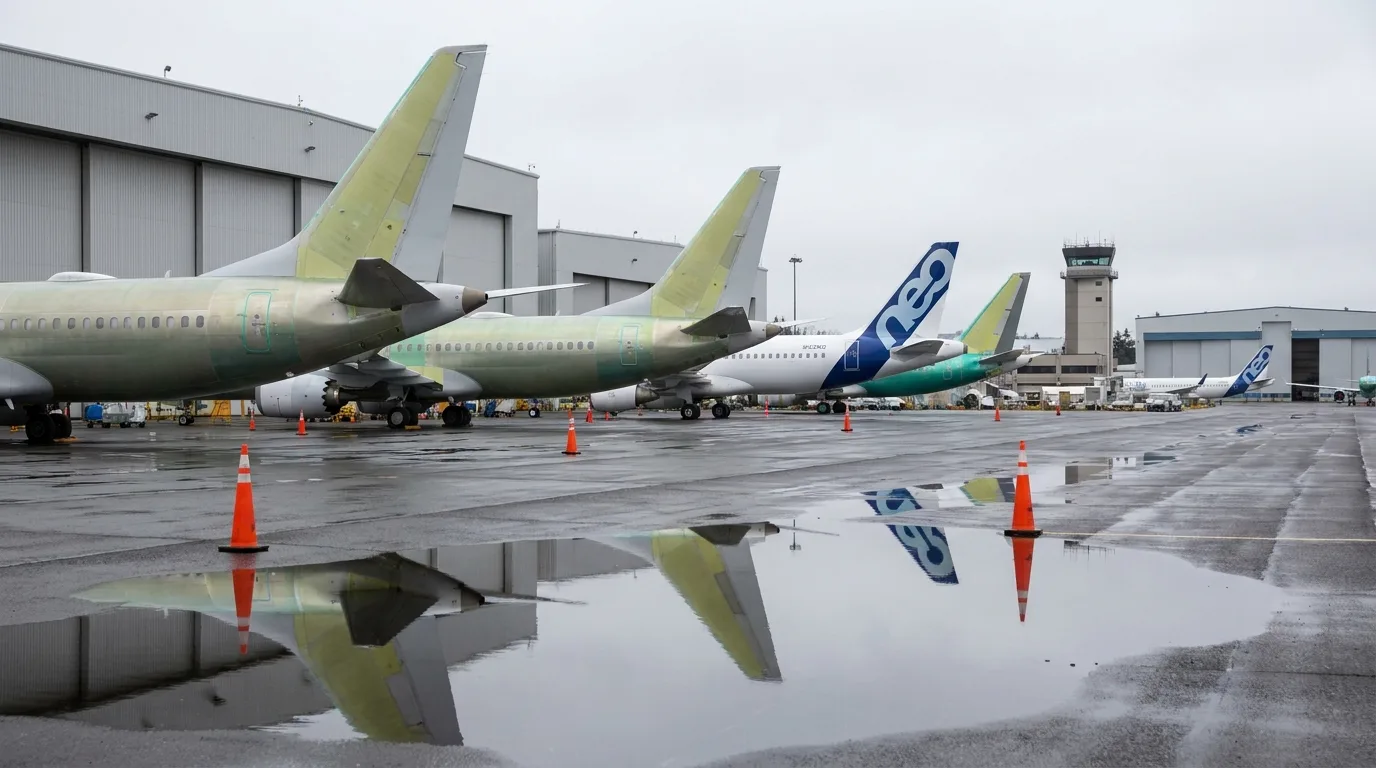
At Paine Field’s south end, inside Boeing’s enormous widebody assembly complex, workers have been building the 777 Classic freighter for years. The 777F has become one of the most successful cargo aircraft in aviation history — a twin-engine widebody that FedEx, UPS, Qatar Airways Cargo, and Emirates SkyCargo treat as essential infrastructure.
The plan has long been for the 777F Classic to wind down at the end of 2027, replaced by the new 777-8F now in production testing at Paine Field. But the 777-8F’s path to service has stretched. Entry into service for the 777-8F is now targeted for 2029 at the earliest.
That gap — the potential for zero 777 freighter production at Everett from January 2028 until 777-8F deliveries begin in 2029 — is what Boeing is trying to close. And the federal agency that controls the answer closed its public comment period today.
The Emissions Rule That Complicates Everything
The Boeing 777F Classic is powered by General Electric GE90 engines — powerful, reliable, and beloved by cargo operators. The GE90 is also a 1990s design that predates international emissions and fuel efficiency standards adopted by the International Civil Aviation Organization (ICAO) in 2017.
Under those ICAO standards, production of the 777F Classic must cease by December 31, 2027. The rule isn’t aimed specifically at Boeing — it applies globally to any new aircraft powered by non-compliant engines. But for Everett, the deadline creates a concrete problem: the line that builds the world’s most popular widebody freighter goes dark before its replacement is production-ready.
Boeing’s solution was to ask the FAA for an exemption. The formal request asks the agency to allow Boeing to produce 35 more 777F Classic jets with GE90 engines starting January 1, 2028. Boeing originally asked for a decision by May 1, 2026. The FAA didn’t meet that deadline.
Instead, the FAA published a solicitation in the Federal Register opening a public comment period — with a deadline on or about May 7, 2026. That window closes today. The FAA will now review submissions and issue a ruling.
Why 35 Jets and Why 2028
The math on 35 aircraft is rooted in Boeing’s customer backlog and the 777-8F timeline.
Cargo carriers that have placed 777-8F orders — Cargolux, Qatar Airways Cargo, and others — are facing a delivery gap. They’ve been planning to transition from the current 777F platform to the new 777-8F, but the 777-8F’s certification timeline has continued to move. The 777-8 Freighter, distinct from the passenger-focused 777-9, has a targeted entry into service of 2029. A production-standard aircraft is currently undergoing ground and fuel system tests at Paine Field.
If Boeing can produce 35 more 777F Classic jets in 2028, it gives those cargo customers a bridge. Airlines that need replacement capacity before the 777-8F is certified and delivering can take a 777F Classic, knowing their 777-8F deliveries are coming in 2029 and beyond.
Thirty-five jets at roughly $350 million each in list price represents approximately $12 billion in additional revenue. For Everett’s widebody assembly workforce, it could represent another year or more of full-rate 777 production before the line transitions to the all-new 777-8F configuration.
Everett’s Freighter Employment Is the Real Story
The 777F Classic is assembled at Boeing’s Everett Paine Field complex in the same facility that houses 777-9 passenger aircraft production and 777-8F testing. The workforce that builds the 777F is the same workforce that will ultimately build the 777-8F — machinists, structures technicians, electrical assemblers, and quality inspectors who specialize in widebody aircraft.
A production gap at the 777F line wouldn’t mean immediate layoffs. Boeing’s widebody production ecosystem at Everett is complex, and workers can be transferred across programs. The 777-9 passenger aircraft is approaching certification for Lufthansa’s Q1 2027 delivery target — though the roughly 30 stored jets at Paine Field requiring multi-year change incorporation mean Everett widebody work extends well into the late 2020s regardless of the freighter line status. The KC-46 tanker line is running at a steady pace.
But a clean, uninterrupted transition from 777F Classic production into 777-8F production is better for workforce continuity, scheduling, and industrial knowledge retention than a gap year with partial utilization. The 35-jet exemption request is Boeing’s ask to maintain continuous widebody freighter production in Everett from now through the 777-8F ramp.
This isn’t the first time Everett has navigated a program transition of this kind. The 767 commercial freighter — a 45-year Everett icon — is concluding production in 2027 as the line pivots entirely to KC-46 tanker production. The 777F is a different situation: it’s being succeeded by a direct replacement, not a military variant. The transition is supposed to be clean. The FAA exemption is Boeing’s attempt to make it so.
And the first 777-8F freighter already rolled out of Everett in April 2026 — a visible sign that the next generation is real, but not yet at the rate needed to fill the 777F Classic’s shoes.
What Happens If the FAA Says No
If the FAA denies the exemption, Boeing will cease 777F Classic production on December 31, 2027 as the emissions rule requires. The 777-8F production would continue ramping, with EIS still targeted for 2029.
For cargo customers who need widebody freighter capacity in 2028, a denial likely means greater reliance on Airbus A350F orders — the competing cargo aircraft from Toulouse that has attracted significant customer interest as airlines have grown cautious about Boeing’s program timelines. For Everett, a denial would likely accelerate pressure to get the 777-8F certified faster and push resources toward production ramp.
There’s also a strategic dimension. Boeing’s credibility with cargo customers — FedEx, UPS, Qatar Airways Cargo — depends on its ability to deliver product on schedule. If the 777F Classic line ends and the 777-8F is delayed, those customers face a gap Boeing can’t fill. The FAA exemption is partially about Everett jobs and partially about keeping Boeing’s most loyal cargo customers from looking elsewhere.
Where the Decision Stands Today
As of today, the FAA comment period has closed. The agency will review public submissions — likely including comments from cargo airlines, aviation industry groups, and environmental advocates concerned about the emissions standard being waived — and issue a ruling. Boeing wants this resolved quickly; production planning for 2028 cannot wait indefinitely.
The decision will be watched closely by FedEx, UPS, and the air cargo operators that depend on the 777F. It will be watched by labor organizations representing Boeing’s Everett widebody workforce. And it will be watched here in Everett, where the widebody assembly complex at Paine Field is the industrial heart of one of the most significant aerospace manufacturing communities in the world.
Boeing has asked the FAA for a bridge. The FAA has to decide whether to build it.
Frequently Asked Questions
Why does Boeing need an FAA exemption to keep producing the 777F Classic?
The Boeing 777F Classic uses GE90 engines that don’t meet international emissions standards adopted by ICAO in 2017. Under those standards, production must cease by December 31, 2027. Boeing is asking the FAA to exempt the 777F from that deadline so it can produce 35 more aircraft in 2028 to bridge the gap before the 777-8F enters service in 2029.
What is the difference between the 777F Classic and the 777-8F?
The 777F Classic is the current-generation Boeing freighter, powered by GE90 engines, that has been in production and service for over 15 years. The 777-8F is the next-generation all-cargo variant of the 777X family, with GE9X engines and new composite wing technology, targeted for entry into service in 2029.
Where is the Boeing 777F Classic built?
The 777F Classic is assembled at Boeing’s Everett facility at Paine Field in Snohomish County, Washington, in the same widebody production complex that builds the 777-9 passenger aircraft and is ramping 777-8F production.
Who are the main customers for the Boeing 777F Classic?
Major 777F Classic operators include FedEx, UPS, Qatar Airways Cargo, Emirates SkyCargo, Cargolux, and Korean Air Cargo, among others. Several of these operators have also placed orders for the 777-8F.
What happens if the FAA denies Boeing’s exemption request?
If the FAA denies the request, Boeing’s 777F Classic production would end on December 31, 2027. Cargo customers needing widebody freighter capacity in 2028 would need to look at alternatives, including the Airbus A350F. For Everett, the 777-8F production ramp would become the primary focus of the widebody freighter assembly workforce.
How does this relate to Boeing’s other Everett program changes?
The 777F situation is part of a broader Everett program transition: the 767 commercial freighter line ends in 2027 as it shifts to KC-46-only production, the 777X certification process is ongoing with roughly 30 stored jets requiring multi-year rework, and the 737 North Line is opening this summer. The 777F exemption request, if approved, would add a year of production continuity to a factory already navigating multiple major transitions simultaneously.
Boeing 777F FAA Decision — Complete Guide for Everett
For Paine Field Workers: What the Decision Means for Your Line
Leave a Reply