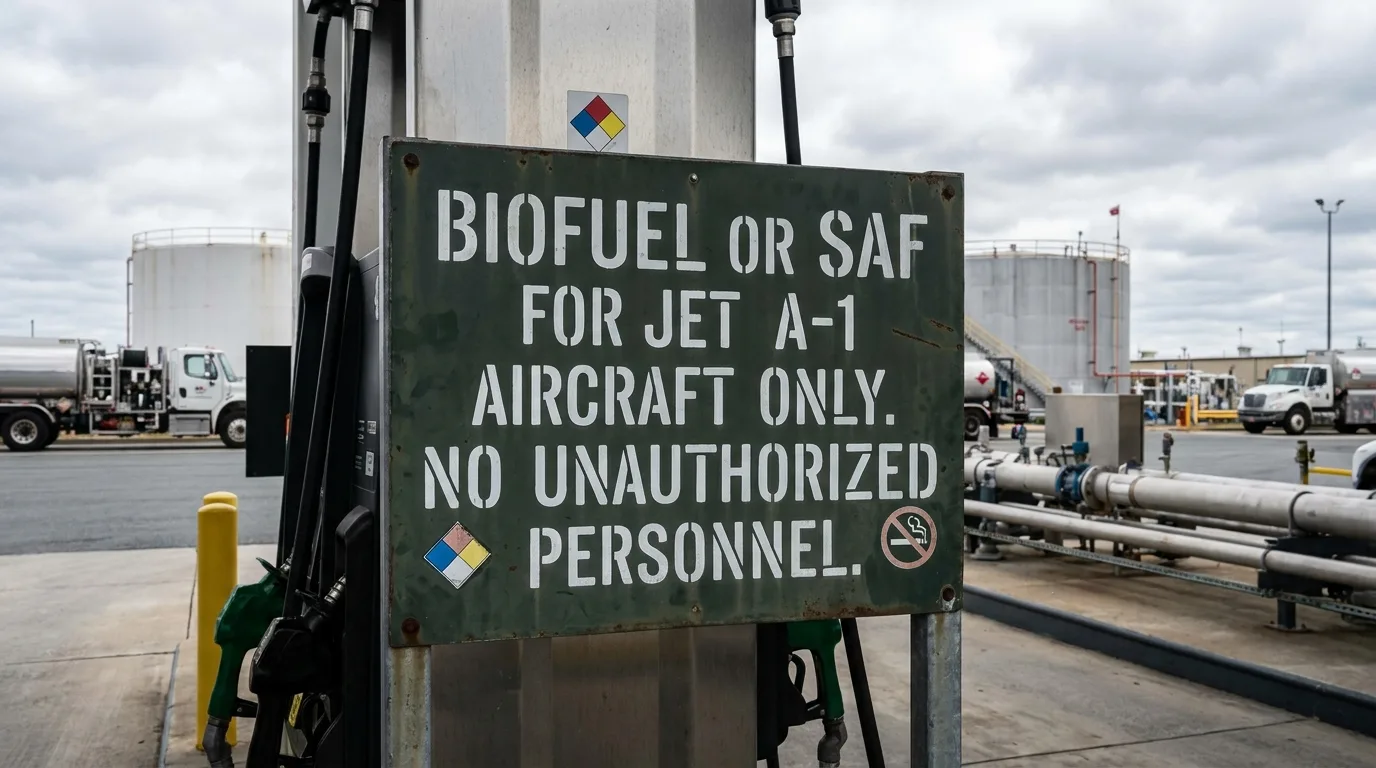
What is the Cascadia Sustainable Aviation Accelerator at Paine Field? The Cascadia Sustainable Aviation Accelerator (CSAA) is a $20 million initiative launched January 8, 2026 at Boeing’s Future of Flight in Everett that pairs Washington State University and Snohomish County to build the world’s first Sustainable Aviation Fuel Research and Development Center on an eight-acre site at Paine Field — with Boeing, Alaska Airlines, Amazon, Microsoft, and the Port of Seattle as founding partners.
Paine Field Is About to Host the World’s First Sustainable Aviation Fuel Repository — Here’s the Everett Story Behind It
If you’ve been watching Paine Field over the last four months and wondering why a Cascadia Sustainable Aviation Accelerator press conference suddenly took over the Future of Flight stage on January 8, 2026, here’s the short answer — Snohomish County and Washington State University are about to put the world’s first Sustainable Aviation Fuel Research and Development Center on an eight-acre lot at the airport, and the people building it are the same names you already see on Boeing’s hangar doors. Boeing is a founding partner. Alaska Airlines is a founding partner. So are Amazon, Microsoft, the Port of Seattle, the Washington Department of Commerce, and Earth Finance.
That’s not a press release detail. That’s an Everett story. The aerospace economy that defines this town — the 42,000 workers who make Boeing’s widebody program possible, the 600-plus suppliers in Snohomish County, the Paine Field cluster of operators that includes ATS, ZeroAvia, and Aviation Technical Services — is about to absorb a brand-new R&D vertical that didn’t exist anywhere in the world before 2026. The question for everyone working on Boeing campus or any aerospace shop floor in this county is what that vertical actually does, who staffs it, and what it means for the next decade of aviation jobs in Everett.
The January 8 Launch — What Was Actually Announced at Future of Flight
The Cascadia Sustainable Aviation Accelerator was unveiled on January 8, 2026 at Boeing’s Future of Flight Aviation Center in Everett, with Washington Governor Bob Ferguson, WSU President Betsy Cantwell, U.S. Senator Maria Cantwell, and a stage full of Boeing, Alaska Airlines, and Amazon executives in attendance. The funding structure announced that day is straightforward — a $10 million appropriation from the 2025 Washington state legislative session, matched dollar-for-dollar by a $10 million private philanthropic donation from a donor the accelerator has not publicly named. That puts the accelerator’s launch capital at $20 million, and the partner roster makes clear the operating budget will scale well beyond that as the program matures.
The technical mandate is to accelerate the production, deployment, and adoption of sustainable aviation fuel — known as SAF — across the Pacific Northwest. The structural mandate is broader. WSU President Betsy Cantwell, flanked by accelerator researchers Harrison Yang and Josh Heyne, framed the project as a once-in-a-generation regional industrial policy play, not a single research grant. The Cascadia partnership pulls in Tribal representatives, organized labor, community organizations, and the four-year research universities of the state alongside the airline and manufacturing partners. The pitch — repeated across the day’s coverage in GeekWire, Lynnwood Times, OPB, KIRO 7, and the Washington State Standard — is that the Pacific Northwest has the feedstocks, the refining infrastructure, the deepwater port access, the airline demand, and now the public capital to be the global hub for SAF.
Why the R&D Center Is Going to Paine Field, Specifically
The accelerator’s headline physical asset is the Sustainable Aviation Fuel Research and Development Center that WSU and Snohomish County are building on an eight-acre lot at Paine Field. Snohomish County’s official SAF R&D Center page lists the program plainly — the facility will host the world’s first SAF repository, where fuel samples are collected, tested at laboratory and larger scales, indexed, and distributed globally to support research and commercialization. There is no other facility on the planet currently doing what this one will do.
The site selection is not accidental. Paine Field gives the program four things that no other West Coast airport offers in the same place — a working commercial widebody manufacturing line at the Boeing Everett Factory, a working narrowbody production line about to come online at the 737 North Line this summer, an established hydrogen-electric powertrain neighbor in ZeroAvia’s 136,000 square foot Propulsion Center of Excellence, and direct apron access for fuel sample handling and large-scale fuel blending tests. The accelerator team is currently negotiating a temporary commercial space at Paine Field that will be roughly a quarter scale of the eventual permanent center — focused on storing a wider variety of smaller samples while the larger blending and testing facility is built out. Initial funding has been secured to break ground on the permanent eight-acre site, with construction targeted for completion no later than 2029.
What Boeing’s Founding-Partner Role Actually Means
Boeing’s role inside the Cascadia partnership is described by the accelerator as the technical-integration backbone. Manufacturers like Boeing bring the engineering expertise required to certify SAF blends across in-service airframes — Boeing has been flying SAF in test programs since the original 2018 ecoDemonstrator 777 work — and to integrate new fuels into both production and aftermarket operations. Alaska Airlines, the Pacific Northwest’s anchor carrier, brings the operational footprint and the demand signal. Amazon brings cargo demand and freight-corridor scale. Microsoft brings corporate procurement commitments. WSU brings the bench-science capacity, including researchers from WSU’s Bioproducts, Sciences, and Engineering Laboratory who will lead the fuel testing, finishing, and scaling work.
For Boeing’s Everett workforce specifically, the founding-partner posture matters because it places SAF integration work geographically inside the same county where Boeing already builds the 767, the KC-46, the 777, the 777-9, and — starting this summer — the 737 MAX on the new North Line. Boeing’s company-wide SAF roadmap has been public for several years, but this is the first time the company has had a co-located R&D facility within driving distance of its largest assembly campus. That changes what kinds of test programs Everett can host. It also changes what kinds of engineering jobs the campus can absorb over the next decade.
The Workforce Picture — Who Staffs an SAF R&D Center?
The accelerator has not yet published a final headcount target for the Paine Field facility, but the program description and the partner mix point to a workforce that pulls from three pools that already exist in Snohomish County. The first is the WSU and PNNL research staff who will rotate in from Tri-Cities and Richland to run laboratory-scale fuel finishing and scaling work. The second is the existing Boeing and Alaska Airlines engineering staff who will be assigned to integration projects under their respective companies’ SAF commitments. The third is the local skilled-trades workforce — the same machinists, technicians, and process operators currently being trained at the IAM 751 Machinists Institute on Airport Road, Edmonds College, Everett Community College, and Snohomish County’s WATR Center — who will be needed for the actual fuel-blending and sample-handling operations on site.
This is the part of the story that ties directly back to the larger workforce conversation we’ve been tracking on this desk for the last six weeks — the 5,200-worker aerospace shortage projected by the Aerospace Futures Alliance through end of 2026, the 100-to-140-per-week Boeing hiring pace, the IAM 751 Machinists Institute training capacity of more than 700 machinists per cohort, and the SPEEA bargaining season that opened in May. The Cascadia accelerator does not solve the headcount math by itself, but it adds a job category to the Snohomish County aerospace ecosystem that did not exist before — SAF integration engineer, fuel chemistry technician, sample repository operator, certification analyst — and most of those job categories are not directly competing for the same labor pool as the 737 North Line ramp.
The Economic Geography Argument
Read alongside the rest of Snohomish County’s 2026 economic positioning, the SAF R&D Center fits a pattern. The county now has, within a 10-mile radius of Paine Field — the Boeing Everett Factory and its widebody program, the 737 North Line opening this summer, ZeroAvia’s hydrogen-electric Propulsion Center of Excellence, Aviation Technical Services’ 500,000 square foot maintenance hangar at the south end of the field, the Future of Flight Aviation Center, the Machinists Institute, two community college aerospace programs, and now an R&D anchor for the next generation of aviation fuel. That is a single-county aerospace cluster with no peer west of the Mississippi.
The accelerator’s own framing — repeated by GeekWire’s coverage of the launch — is that this is a once-in-a-generation economic opportunity for the Pacific Northwest to capture leadership in a fuel category that is going to scale dramatically over the next two decades regardless of who builds the infrastructure. The argument from Olympia is that Washington has every reason to be that infrastructure leader, and the argument from Snohomish County is that Paine Field is where the leadership cluster physically sits.
What’s Next — Watch These Three Milestones
For readers tracking this story over the next twelve months, the milestones to watch are the temporary facility opening at Paine Field — expected in the next several months, per the accelerator’s published timeline — the formal site selection and groundbreaking on the permanent eight-acre center, and the first published partnership programs between the accelerator and the airline and manufacturing partners. Each of those milestones will produce a new round of Snohomish County hiring announcements that this desk will track in real time. The accelerator’s official site at cascadiaaccelerator.org has the cleanest live update channel; Snohomish County’s SAF R&D Center page is the official county-side update channel.
Frequently Asked Questions
Where exactly will the SAF R&D Center be located at Paine Field?
The accelerator team is targeting an eight-acre lot at Paine Field for the permanent Sustainable Aviation Fuel Research and Development Center. The exact parcel has not been publicly disclosed yet. A temporary, roughly quarter-scale facility will open in commercial space at Paine Field in the coming months while the permanent site is built out, with construction targeted for completion no later than 2029.
How much funding has the Cascadia Sustainable Aviation Accelerator received?
The launch capital is $20 million — a $10 million appropriation from the 2025 Washington state legislative session matched by a $10 million private philanthropic donation. Operating budget over time will scale beyond that as partner programs, federal grants, and additional private funding come online.
Who are the founding partners of the accelerator?
The publicly listed founding partners include Boeing, Alaska Airlines, Amazon, Microsoft, the Port of Seattle, Snohomish County, Washington State University, Earth Finance, and the Washington Department of Commerce. Tribal representatives, organized labor, and community organizations are also part of the launch coalition.
What is sustainable aviation fuel, in plain terms?
Sustainable aviation fuel — SAF — is a category of jet fuel made from non-petroleum feedstocks such as agricultural residues, used cooking oils, municipal waste, or synthetic processes. Certified SAF blends can be used in existing commercial aircraft engines without modifications. The category currently makes up a small fraction of global jet fuel volume but is the leading near-term decarbonization pathway for commercial aviation.
How does this connect to the Boeing 737 North Line opening this summer?
The North Line ramp and the SAF R&D Center are independent projects but they share a county-level workforce and supplier ecosystem. The accelerator adds aerospace job categories — SAF integration engineering, fuel chemistry, certification analysis — that do not directly compete with the production-floor hiring the North Line requires, which means the two projects can scale in parallel rather than against each other.
Will the SAF center actually produce jet fuel for sale?
The Paine Field facility is a research and development center plus a global SAF repository — not a refinery. Its core functions are sample collection, laboratory and larger-scale testing, indexing, and distribution to support research and commercialization. Commercial-scale SAF production happens at separate refining facilities; the R&D Center supports the science and standards that production then relies on.
When did this story break, and where can I follow updates?
The accelerator was publicly launched January 8, 2026 at the Boeing Future of Flight Aviation Center in Everett. Live updates are published at cascadiaaccelerator.org. Snohomish County maintains an official program page for the SAF R&D Center at snohomishcountywa.gov. WSU Insider and the Lynnwood Times have published the most detailed local coverage of the launch.
Leave a Reply