Tag: Paine Field

  • Meet ATS: Everett’s Second-Largest Aerospace Employer Operates the Largest MRO on the West Coast — Right Next to Boeing

    Meet ATS: Everett’s Second-Largest Aerospace Employer Operates the Largest MRO on the West Coast — Right Next to Boeing

    Quick answer: Aviation Technical Services (ATS) is Everett’s second-largest aerospace employer after Boeing, with roughly 800 people working out of a 500,000-square-foot hangar at the south end of Paine Field. The company is the largest aircraft maintenance, repair, and overhaul (MRO) operator on the U.S. West Coast — and most Everett residents drive past its hangars without realizing they hold up to 14 commercial airliners at any given time.

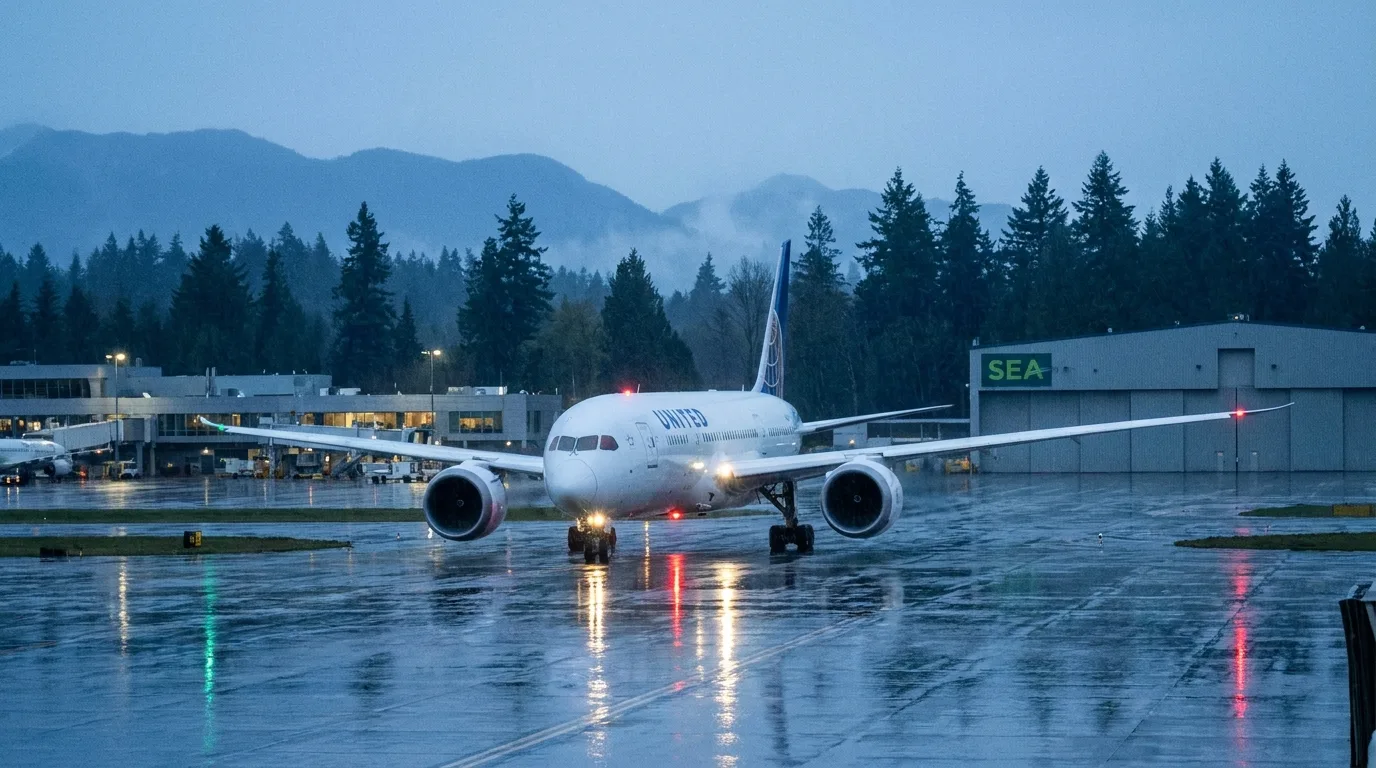
    Drive south on Airport Road and the building most people picture as Boeing’s territory thins out. Past the Future of Flight, past the rows of stored 777-9s, past the Paine Field commercial terminal, the south end of the airport opens onto a cluster of hangars that don’t have Boeing logos on them.

    That cluster is Aviation Technical Services — ATS — and it employs about 800 people in Everett. Inside Snohomish County’s aerospace economy, ATS is the company that everyone in the industry knows about and most outside of it doesn’t. The shorthand: ATS is the second-largest aerospace employer in Everett, behind only Boeing, and it operates the largest MRO operation on the West Coast of the United States.

    For an aerospace ecosystem that is preparing to absorb a 737 MAX 10 North Line activation in mid-summer, a 777-9 delivery ramp into 2027, and a steady KC-46 cadence underneath all of it, ATS sits in a useful place in the supplier map. It is the company that touches the airplanes after they leave the factory and need to come back for service.

    The 500,000-square-foot building most Everett residents have never been inside

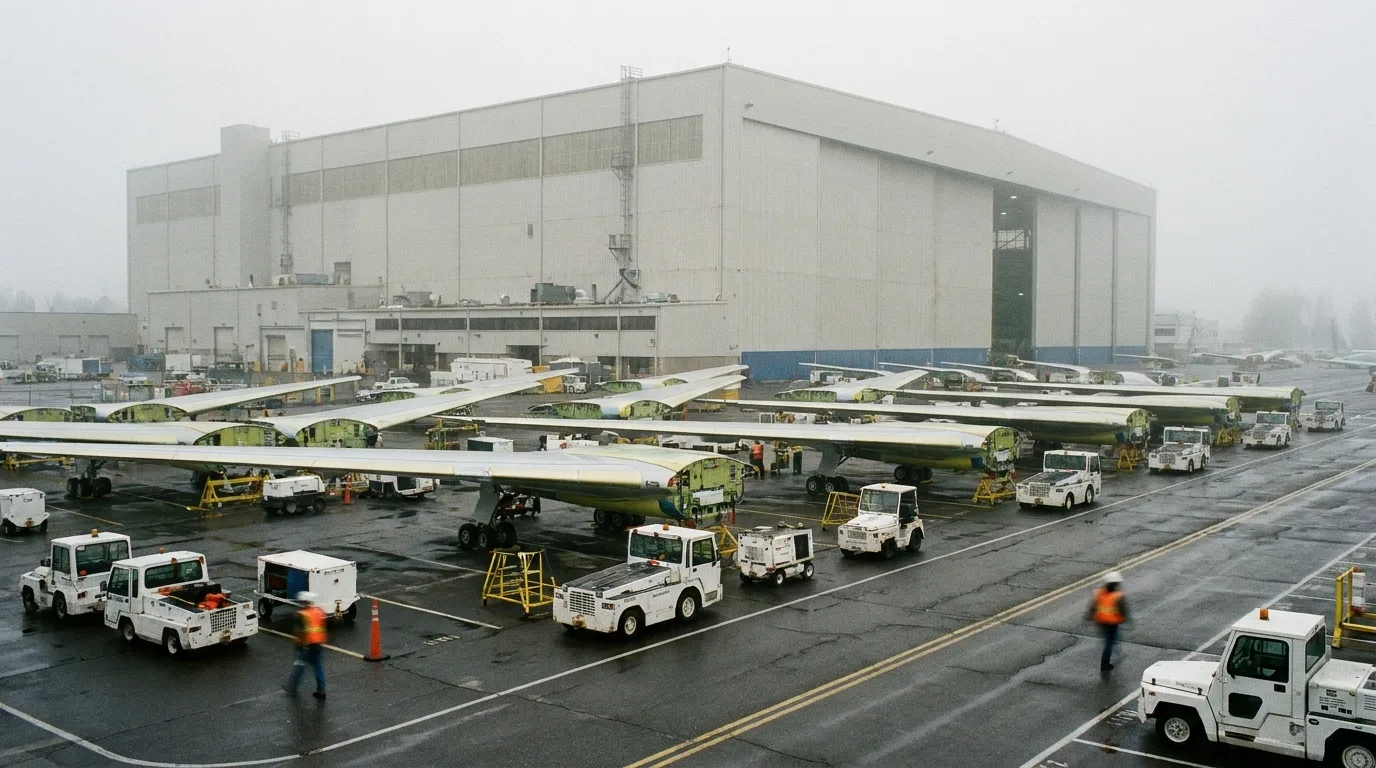
    The ATS Everett airframe MRO facility runs out of a 500,000-square-foot hangar at Paine Field with bay space for up to 14 commercial airliners simultaneously. The building has the kind of scale that doesn’t read from the road — until you realize a 737 NG is roughly 130 feet long, and the building is fitting more than a dozen of them under one roof at a time.

    The hangar isn’t new. It was originally built and operated by Tramco, then sold to Goodrich, then sold to ATS in the fall of 2007. The footprint has been an MRO operation in Everett for decades, which means the institutional knowledge — the techs who have seen the same airframe come back for its third C-check, the engineers who know how the supply of certain parts behaves — runs deep.

    Adjacent to the airframe hangar, ATS also runs a 50,000-square-foot component repair facility. That’s the building where structural, hydraulic, and electrical components come off the airplanes and get repaired by technicians trained on the specific systems. The two facilities together — airframe and component — give ATS what the trade press calls a “full-service” MRO posture: an airline can ship the whole airplane to Everett and ship the parts that come off it to the same campus.

    Why MRO matters in an aerospace town

    It is easy to think about Everett’s aerospace economy as a Boeing factory and the suppliers who feed it. The factory model is the most visible part — 737 MAX 10s rolling off the North Line, 777-9s flying production tests over Puget Sound, KC-46s painted in Air Force gray, 767 freighters wearing FedEx and UPS livery.

    But MRO is the other half of the airplane lifecycle, and it generates a different kind of work for the same workforce.

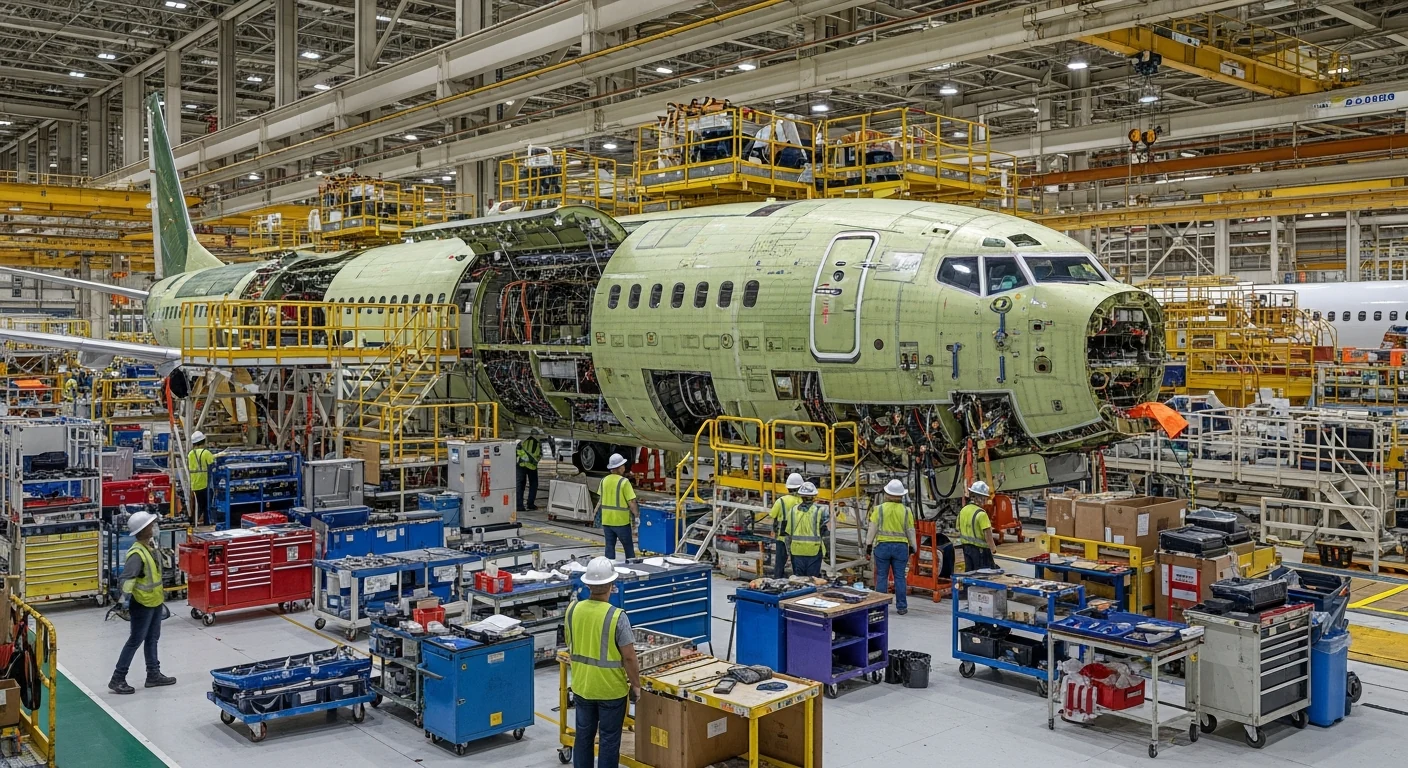
    A factory builds a finished jet. An MRO operation tears one down to its frames, inspects every primary structure, replaces what’s worn, upgrades what’s been superseded, and puts the airplane back together to a standard the FAA and the airline both have to sign off on. The work is more diagnostic than assembly. The skills overlap with Boeing’s mechanic and inspector workforce, but the day-to-day rhythm is different: shorter project cycles, more airplane variety, deeper component-level work.

    For Snohomish County, that means an aerospace mechanic who trained at the Machinists Institute on Airport Road or the WATR Center has two career destinations within a half-mile of each other — Boeing on the north end of Paine Field, ATS on the south end. The same skill set ports across the airport perimeter.

    Where ATS sits in the supplier-shortage math

    The 5,200-worker aerospace shortage that the Aerospace Futures Alliance has projected through the end of 2026 isn’t just a Boeing problem. It is a Snohomish County problem, and ATS is one of the companies on the demand side of that shortage. The Everett operation has historically grown its own talent — running internal mechanic training programs because the regional pipeline cannot keep up with attrition and ramp.

    That training-from-within approach matters for the broader workforce conversation. When the Machinists Institute, Edmonds College, and WATR Center put aerospace mechanics into the labor market, those graduates have multiple landing spots in Everett: Boeing’s main bay floors, Boeing’s KC-46 line, ATS’s airframe hangar, ATS’s component repair facility, and the smaller aerospace suppliers scattered across the county.

    For workers, optionality is leverage. For the regional economy, optionality is resilience.

    The piece of the cycle Boeing doesn’t do

    Boeing builds the airplane. The airline flies it. ATS — and a small number of MRO operators like it — handles the heavy maintenance checks (C-checks, D-checks) that the airline can’t perform on its own ramp.

    That separation matters in a downturn. When a launch customer like Lufthansa pushes its first 777-9 delivery from late 2026 to first quarter 2027, that affects Boeing’s delivery cadence in Everett. It does not, on its own, materially affect ATS, because the MRO demand pipeline is fed by every airline operating an aging fleet anywhere in the world. Delta, Alaska, United, Hawaiian, Southwest, and dozens of cargo and charter operators send airplanes to Paine Field for the kind of structural and systems work that ATS specializes in.

    That means ATS sits in a different cyclical position than Boeing. When new-jet deliveries slow, MRO demand often rises — airlines run their existing fleets longer and the heavy-maintenance interval comes due. When new-jet deliveries accelerate, the older airplanes still need their inspections. The MRO floor in Everett doesn’t oscillate the way the new-build factory does.

    The Paine Field economic picture, with ATS on it

    Adding ATS to the standard Paine Field map produces a different economic story than the Boeing-only version. The picture, roughly:

    • Boeing’s commercial Everett operations — 737 North Line, 767, 777, 777X, KC-46 — drive the bulk of the aerospace payroll in the county.
    • ATS sits at the south end of Paine Field as the second-largest aerospace employer, with 800 people on a hangar floor that handles up to 14 airplanes at a time.
    • ZeroAvia’s Propulsion Center of Excellence at the south end builds the next-generation hydrogen-electric powertrains.
    • The Future of Flight Aviation Center on Paine Field Boulevard is the public-facing tourism asset.
    • The 600-plus aerospace suppliers across Snohomish County feed all of the above.

    Each piece reinforces the others. ATS draws from the same training pipeline that feeds Boeing. ZeroAvia draws from the same engineering talent base that supports SPEEA at Boeing. The Future of Flight tour walks visitors past the active production lines that make the rest of the ecosystem possible.

    The point: Paine Field is not an airport that happens to have aerospace tenants. It is an aerospace cluster that happens to have a runway running through it.

    What this means for residents

    For Everett residents, the practical takeaway is that the local aerospace economy is more diversified than the headline numbers suggest. A Boeing labor disruption does not pause the south end of the airport. A delay in a new program does not collapse the maintenance work. The school district’s projections of family-wage employment, the housing market’s tracking of dual-income aerospace households, and the city’s tax base all benefit from having multiple anchor employers operating side-by-side rather than one dominant one.

    It also means that when local aerospace coverage talks about “the Boeing economy,” that frame is incomplete. The accurate version: the aerospace economy in Snohomish County is a Boeing-led cluster that includes a major MRO operator, a hydrogen-electric propulsion company, and 600 suppliers. Each one of those plays a role in keeping the workforce and the wage profile stable.

    Frequently Asked Questions

    Who is the second-largest aerospace employer in Everett?

    Aviation Technical Services (ATS) is the second-largest aerospace employer in Everett after Boeing, with about 800 employees at its Paine Field operation.

    What does ATS do?

    ATS provides maintenance, repair, and overhaul (MRO) services for commercial airliners. The company performs heavy maintenance checks, structural repairs, component repairs, and engineering services for airlines and cargo operators across the U.S. and internationally.

    How big is the ATS Everett facility?

    The main airframe MRO hangar is 500,000 square feet with bay space for up to 14 commercial airliners. ATS also operates a 50,000-square-foot component repair facility adjacent to the main hangar.

    Where is ATS located in Everett?

    ATS operates at the south end of Paine Field, adjacent to the Boeing Everett production facility but on the opposite end of the airport from the Future of Flight Aviation Center.

    How long has ATS been at Paine Field?

    The Everett MRO facility has operated continuously since the Tramco era. Goodrich operated the building before selling it to ATS in the fall of 2007, so ATS itself has been in the building for nearly two decades.

    Is ATS the largest MRO on the West Coast?

    Yes. ATS is the largest aircraft maintenance, repair, and overhaul operator on the U.S. West Coast.

    Does ATS hire from local training programs?

    Yes. ATS has historically grown its own mechanic talent through internal training programs and hires from regional aerospace training programs including the Machinists Institute, Edmonds College, and the WATR Center.

    How does MRO demand differ from new-aircraft demand?

    MRO demand is fed by aging fleets at every airline operating worldwide and tends to be more stable cyclically than new-aircraft demand. When new deliveries slow, airlines run older fleets longer and MRO demand often rises.

  • Lufthansa Confirms 777X Delivery Slips to Q1 2027 — But Everett’s April Production Flight Is Still On

    Lufthansa Confirms 777X Delivery Slips to Q1 2027 — But Everett’s April Production Flight Is Still On

    Quick answer: Lufthansa CEO Carsten Spohr told the airline’s annual press conference that the first Boeing 777-9 will now arrive in the first quarter of 2027 — not late 2026 as previously targeted. The April 2026 production-flight milestone at Paine Field in Everett remains on track, and that flight is the keystone of the FAA certification package the program needs to clear before any 777-9 leaves the Everett ramp wearing a customer’s livery.

    The Boeing 777X timeline moved again, and this time the source isn’t Boeing — it’s the airline at the front of the line.

    At Lufthansa’s annual press conference in Frankfurt in March, CEO Carsten Spohr confirmed that the German flag carrier now expects its first 777-9 delivery in the first quarter of 2027, slipping from a previously revised late-2026 target. Boeing’s own April 22 first-quarter 2026 earnings call landed on the same destination from a different angle: the company “anticipates first delivery in 2027” and said the program “continued to make progress” on certification.

    For Everett, the Q1 2027 number isn’t a setback — it’s clarification. The factory has been building, testing, and reworking 777-9s on a runway in front of more than two hundred Boeing engineers for a long time. Now there’s a date the broader supply chain, the IAM 751 floor, and Snohomish County’s economic planners can write down with a pen instead of a pencil.

    What Spohr actually said

    Lufthansa’s annual press conference is one of the few moments in the year when a launch customer speaks publicly about a delayed program in any specificity. Spohr’s remarks confirmed three things that had been swirling in the trade press for months:

    1. Lufthansa now expects its first 777-9 in the first quarter of 2027.
    2. The April 2026 first flight of the production-conforming 777-9 — the very airframe Lufthansa will eventually take — remains on schedule.
    3. Lufthansa is comfortable with the new timing.

    That last point matters. Launch customers can put real pressure on a delayed program by speaking to the press, demanding compensation, or quietly shifting orders to alternative airframes. Spohr’s tone was the opposite — patient, fact-based, and oriented around getting the airplane right. For an Everett factory floor that has lived through three certification regimes (the original timeline, the revised 2025 target, and the 2026 path), a calm launch customer is its own form of stability.

    Why the April 2026 flight is the real news for Everett

    The headline says “delivery slip.” The factory-floor story is “first production flight, on time.”

    The 777-9 that takes off from Paine Field in April 2026 is not a flight-test airframe pulled from a hangar. It’s the airplane Lufthansa will fly. The four flight-test 777-9s that have been running the certification campaign are pre-production aircraft built before the design freeze. The airplane that flies in April is the first one built to the production standard — the same configuration every customer airframe will follow.

    That is why Boeing has put the date in writing in front of the FAA. Flight hours logged on a production-conforming 777-9 carry direct certification credit. Every test flight from April onward contributes data to the type certification package Boeing has been assembling since the program received its Phase 4A Type Inspection Authorization on March 17, 2026. The TIA cleared the FAA to begin riding along on certification flights and counting those hours toward the final approval.

    Put another way: April’s flight is the moment the program shifts from “are we going to make it” to “how fast can we accumulate the flight hours we still need.” That is a more comfortable problem than the one Boeing was solving in 2024.

    The Everett factory math through 2027

    Roughly 30 completed 777-9s sit on the Paine Field ramp today, built before the latest engineering changes were folded into the production line. Boeing CEO Kelly Ortberg called the rework on those airplanes “pretty massive activity” on the April 22 earnings call. The newer airframes — built to the current standard — will deliver first; the parked-ramp jets will be reworked over multiple years.

    That sequencing has direct workforce implications for Everett. The factory has to do two things at once for the next eighteen months:

    • Build new 777-9s and 777-8Fs to the production standard at the cadence the order book demands.
    • Cycle the stored airframes through change incorporation work that requires rework cells, parts kits, and qualified aerospace mechanics.

    Both jobs are work for IAM 751 members and SPEEA engineers in Everett. Both jobs draw on the same supplier base in Snohomish County. Both jobs feed paychecks that move through Casino Road, Hewitt Avenue, and the school district’s enrollment numbers.

    A Q1 2027 first delivery means the rework backlog isn’t a deadline pressure event the way late 2026 would have been. It becomes part of the steady-state Everett widebody operation through the end of the decade.

    Why Lufthansa specifically matters

    Lufthansa is not the only 777-9 launch customer — Emirates holds the largest order book at 35 firm 777-9s and 5 freighters — but Lufthansa is the lead-off airline because of how it has staged its widebody fleet. The German flag carrier ordered 20 777-9s in 2013, has been holding crew training slots open, has its long-haul network planned around the airplane, and has allocated ramp space at Frankfurt and Munich for the type. When Lufthansa says Q1 2027, it is moving slot allocations, simulator schedules, and crew training rotations.

    The airline’s confidence on the April 2026 production flight also matters because Lufthansa has the technical staff to evaluate the program independently. The airline’s flight operations and engineering teams have visited Everett repeatedly. If Lufthansa believed the April flight was at risk, the messaging from Frankfurt would look very different.

    What Snohomish County’s aerospace ecosystem reads from this

    For the 600-plus aerospace suppliers in Snohomish County, the Q1 2027 confirmation lands as good news. A vague “sometime in 2027” forecast doesn’t let a supplier plan capacity. A first-quarter delivery date does — it sets a firm-up window in late 2026 for the components that go on the first delivery airframe and the next handful behind it.

    The same is true for the Future of Flight Aviation Center, Mukilteo’s lodging operators, and the trade-show economy that ramps every time a new widebody enters service. A Q1 2027 first delivery means commemorative tour traffic — the European press, Lufthansa’s branded delivery ceremony, the analyst flights — concentrates in early 2027, not the end of 2026 holiday window.

    For the Edmonds College aerospace track and the Machinists Institute on Airport Road, the date confirms the workforce demand profile the schools have been planning around. The 777-9 ramp won’t compete head-to-head with the 737 North Line activation in mid-summer 2026. Instead, the two production curves stack: North Line standing up through late 2026, 777-9 deliveries beginning in early 2027, KC-46 deliveries running steady through both, and the 777-8F ramping behind the -9.

    The certification work between here and Q1 2027

    Three certification milestones still sit between Paine Field and the first Lufthansa delivery:

    • Type certification — the FAA’s formal sign-off that the 777-9 design meets all applicable airworthiness requirements. Boeing is targeting type certification before year-end 2026.
    • Production certificate amendment — the FAA’s approval of Boeing’s manufacturing system to build production 777-9s at the Everett factory. The April first flight begins building the data package the FAA needs to close this out.
    • Customer-specific delivery readiness — Lufthansa-specific configuration, livery, interior, and entry-into-service documentation. This is the step that actually transfers the airplane.

    Q1 2027 is when step three finishes. Steps one and two have to clear before that. The April production flight is the start of the data-collection sprint that makes the back end of that calendar workable.

    The bigger Everett picture

    The 777-9 program lives on the same factory floor as the 767 freighter, the KC-46 tanker, and — starting this summer — the 737 MAX 10 North Line. Each of those programs has its own cadence. The 767 commercial line sundowns in 2027. The KC-46 line is the most stable production program at Paine Field. The North Line ramps from zero to a steady cadence over twelve to eighteen months. The 777-9 transitions from build-and-store to build-and-deliver.

    For the first time in several years, all four programs have legible timelines pointing in the same direction — toward production-and-delivery cadence, not certification limbo. The Lufthansa announcement is one piece of that picture, but it’s an important one because it confirms the 777-9 is no longer the program that drags the rest down.

    Frequently Asked Questions

    When will Lufthansa receive its first 777-9?

    Lufthansa CEO Carsten Spohr confirmed in March 2026 that the airline expects its first Boeing 777-9 delivery in the first quarter of 2027. Boeing said on its April 22 earnings call that it “anticipates first delivery in 2027.”

    Is the April 2026 production flight still on schedule?

    Yes. Both Lufthansa and Boeing have confirmed the production-standard 777-9 will fly in April 2026 from Paine Field. The aircraft is the specific airframe destined for Lufthansa.

    How does this affect Everett jobs?

    The Q1 2027 timeline locks in steady widebody work in Everett through 2027. Roughly 30 stored 777-9s on the Paine Field ramp also need multi-year rework, which adds a second stream of work for IAM 751 mechanics and SPEEA engineers.

    How many 777-9s does Lufthansa have on order?

    Lufthansa ordered 20 777-9s in 2013 and has been the launch customer ever since.

    Who has the largest 777X order?

    Emirates holds the largest 777-9 order book at 35 firm aircraft, plus 5 777-8Fs.

    What is a Type Inspection Authorization?

    A Type Inspection Authorization (TIA) is the FAA milestone that allows agency pilots and engineers to ride along on certification flights and count those flight hours toward type certification. Boeing received Phase 4A TIA for the 777-9 on March 17, 2026.

    Will the 777-9 ramp affect the 737 MAX 10 North Line?

    No. The two programs run on different bays inside the Everett factory and have offset production curves. The North Line ramps through late 2026; the 777-9 begins customer deliveries in early 2027.

    What does this mean for Snohomish County’s 600 aerospace suppliers?

    A confirmed first-delivery date lets suppliers firm up component schedules for the first delivery airframe and the airframes immediately behind it, replacing a soft “sometime in 2027” forecast with a planning-grade target.

  • For Boeing and Paine Field Workers: What Everett’s 51.8% Housing Inventory Jump Means for Your 2026 Buy-or-Rent Decision

    For Boeing and Paine Field Workers: What Everett’s 51.8% Housing Inventory Jump Means for Your 2026 Buy-or-Rent Decision

    For Boeing and Paine Field workers: Snohomish County’s housing inventory jumped 51.8% year-over-year in March 2026. For workers starting, transferring to, or continuing on the Everett 737 North Line or Paine Field campus, this is the best buying and renting window in three years — more options, less frenzy, and two new studio apartment projects opening in south Everett before year-end. Here is how to read the market from where you sit.

    What the 51.8% Inventory Jump Means for Aerospace Workers

    For workers who arrived in Everett in 2022–2024 and watched every rental unit disappear and every home sale go to a cash buyer with no contingencies, the March 2026 data represents a meaningful shift. Snohomish County now has approximately 2.8 months of housing supply — still a seller’s market, but far more navigable than the sub-1.5-month environment that was the norm during peak frenzy.

    What this means practically: you can take an extra day before making an offer. You can write an inspection contingency without automatically losing. You have more than three listings to choose from in any given price bracket. For new hires relocating from outside the Puget Sound area — workers coming in for the 737 MAX 10 North Line ramp, which opens midsummer 2026 with over 1,200 airline orders — this is the entry window. You are not walking into the 2022 market.

    Where Aerospace Workers Are Actually Buying and Renting

    Paine Field sits in south Everett / north Mukilteo, which means the commute catchment for North Line workers spans Silver Lake, Cascade View, south Everett neighborhoods along Highway 99, Mukilteo proper, and the I-5 corridor communities. In order of proximity to the Paine Field gate area:

    Silver Lake (98204): Closest residential zone to Paine Field with Highway 99 access. The former Econo Lodge at 9602 19th Street SE is being converted to 124 studio apartments by Sage Investment Group, with Phase 1 leasing opening August 2026. Market-rate, no income restrictions — the first new dedicated workforce rental product to hit south Everett’s 98204 zip code in several years.

    Cascade View (98204): Stable mid-century neighborhood directly south of Paine Field. Quieter than Casino Road, lower price points than north Mukilteo. Strong for first-time buyers looking in the $550,000–$700,000 range where the inventory increase has been most pronounced.

    Mukilteo: Premium location with waterfront access and ferry connection. Prices run higher (typically $750,000+), but commute to Paine Field is 5–10 minutes. For workers with dual incomes or buying rather than renting, Mukilteo remains competitive relative to comparable Seattle neighborhoods.

    North Mukilteo / Harbour Pointe: New construction and attached housing available. Longer-term upside tied to the Paine Field passenger terminal and the Everett Link Extension SW Everett Industrial Center station.

    Buying vs. Renting in 2026 for North Line Workers

    At 6.38% mortgage rates and a $738,000 county median, a conventional 20%-down purchase requires a $147,600 down payment and produces a principal-and-interest payment of approximately $3,850/month before taxes and insurance. For a single income in the $85,000–$100,000 range typical of experienced 737 North Line assembly workers, that payment is within range but not comfortable without a second income or a lower price point.

    The 51.8% inventory jump creates opportunity in the $500,000–$650,000 range — attached homes, condos, and smaller single-family properties in south Everett and Mukilteo where the supply increase has been sharpest. Workers willing to buy below the county median can find payments more manageable, and the employment-anchor demand from Boeing, NAVSTA, and healthcare employers provides some floor under Snohomish County prices even in a rising-rate environment.

    For workers newer to the North Line or not yet sure about long-term Everett plans, the rental option is cleaner in 2026 than it has been since 2021. The Sage Silver Lake studio project, existing Community Transit-accessible apartments along Casino Road, and the general inventory increase in the rental market all point to a more renter-friendly environment than workers faced during the post-COVID frenzy years.

    The Light Rail Variable

    The Sound Transit board votes June 30 on the revised ST3 System Plan. The SW Everett Industrial Center station — explicitly designed to serve the Paine Field employment cluster — is in the corridor covered even by a truncated extension scenario. For North Line workers buying near Paine Field with a 10-year hold horizon, the light rail calculus is favorable regardless of how the truncation debate resolves. The SW Everett Industrial Center station is not in dispute the way the downtown Everett Station terminus is.

    Frequently Asked Questions for Boeing and Paine Field Workers

    What neighborhoods are closest to Paine Field for Boeing workers in Everett?

    Silver Lake (98204), Cascade View (98204), Mukilteo, and north Mukilteo / Harbour Pointe are the closest residential zones to the Paine Field gate area. Silver Lake and Cascade View offer the most affordable price points. Mukilteo carries a premium for waterfront access and ferry convenience.

    Is the Everett housing market better for Boeing workers in 2026 than 2024?

    Yes. Active inventory is up 51.8% year-over-year with 2.8 months of supply — more options and less bidding-war pressure than 2022–2024. The median is still $738,000 and rates are 6.38%, but the frenzied market that forced workers to waive all contingencies has eased meaningfully.

    Are there any new rental apartments opening near Paine Field in 2026?

    Yes. Sage Investment Group is converting the former Econo Lodge at 9602 19th Street SE in Silver Lake into 124 studio apartments. Phase 1 leasing opens August 2026. Market-rate, no income restrictions, in the south Everett 98204 zip code approximately 15–20 minutes from the Paine Field gate.

    Will there be light rail to Paine Field?

    The Sound Transit Everett Link Extension includes a SW Everett Industrial Center station serving the Paine Field cluster. The June 30, 2026 ST board vote will confirm the timeline. The SW Everett Industrial Center station is less at risk in truncation scenarios than the downtown Everett Station terminus.

    What is a realistic home price for a Boeing worker buying near Paine Field?

    The county median is $738,000 but south Everett and attached housing in the 98204 zip code offers entry points in the $500,000–$650,000 range where the inventory jump has been most pronounced. At 6.38% rates, a $550,000 purchase with 20% down produces P&I of approximately $2,890/month.

    Related: Complete 2026 Housing Market Guide | Boeing North Line Workers Housing Guide | Sage Silver Lake Apartments

  • For Boeing and Paine Field Workers: What Community Transit’s Casino Road Acquisition Means for Your Commute

    For Boeing and Paine Field Workers: What Community Transit’s Casino Road Acquisition Means for Your Commute

    For Boeing and Paine Field workers: Community Transit just bought 7.55 acres on Casino Road for $25.35 million — the largest land acquisition in the agency’s history. Paired with the Everett Transit consolidation underway and two planned light rail stations on Casino Road, this deal reshapes the transit infrastructure you’ll use to get to and from the 737 North Line and Paine Field campuses. Here’s what it means for your commute over the next decade.

    Why This Casino Road Land Deal Matters for Paine Field Workers

    The Community Transit acquisition at 2208 W. Casino Road is an operational campus expansion — the agency needs more space to store and maintain vehicles as it absorbs Everett Transit’s routes and grows toward its 30-million-rider-per-year Journey 2050 target. For Boeing and Paine Field workers, the relevance is direct: Casino Road is a key corridor connecting south Everett residential neighborhoods to the industrial employment zone around Paine Field, and the transit infrastructure on that corridor is being rebuilt from the ground up.

    Community Transit’s Route 7 serves the Casino Road and SW Everett Industrial Center corridor — the same zone where Sound Transit is planning a light rail station as part of the Everett Link Extension. Boeing workers who live on or near Casino Road, or who park and ride from south Everett, will see direct effects as Community Transit expands its capacity out of the new campus.

    The Everett Transit Consolidation and Your Bus Routes

    Everett Transit is consolidating into Community Transit under SB 5801. The merger transfers 22 routes and 115,000 daily riders. For workers on the 737 North Line at Paine Field, several Everett Transit routes that currently serve the Paine Field gate area will transition to Community Transit operations. The Casino Road campus expansion gives Community Transit the physical infrastructure to run a larger, more integrated network — which is the precondition for better direct-service options between residential Everett and Paine Field’s industrial employment zone.

    The consolidation is also expected to address one of the biggest frustrations for Paine Field workers who use transit: the seam between Everett Transit and Community Transit where routes currently don’t connect cleanly. A unified system under Community Transit removes that operational seam and opens the possibility of through-routes that don’t require a transfer.

    Light Rail at the SW Everett Industrial Center: The Long Game

    The Sound Transit Everett Link Extension includes a planned station at the SW Everett Industrial Center — one of only a handful of light rail stations in the entire ST3 network explicitly designed to serve a major industrial employment cluster rather than a residential neighborhood or downtown. For the roughly 30,000+ workers employed in the Paine Field / SW Everett Industrial Center corridor, this station represents a potential game-changer in commute options, particularly for workers coming from Seattle, Lynnwood, Mountlake Terrace, and other points south on the spine.

    The June 30, 2026 Sound Transit board vote on the revised ST3 System Plan is the decision point that determines whether that station gets built on the original timeline. Everett City Council voted unanimously April 29 to formally demand full delivery of the Everett Link Extension. Community Transit’s Casino Road campus investment reflects the agency’s own bet that light rail comes — an agency doesn’t expand its operational footprint on a light-rail-adjacent corridor unless it expects to be running feeder bus service to light rail stations within the decade.

    What Boeing Workers Should Watch

    The near-term watch item is the Everett Transit consolidation public hearing process. Route 7 and the Paine Field area routes will be redesigned as part of the merged network. Boeing workers who depend on those routes should engage in the public comment process to ensure the new network maintains — or improves — coverage of the Paine Field gate area. Community Transit has historically been responsive to major employer input on route design, and Boeing represents tens of thousands of commuters in its service area.

    The longer-term watch item is the June 30 Sound Transit vote. If the SW Everett Industrial Center station is preserved in the revised plan, the commute calculus for Paine Field workers changes significantly post-2030. If the station is cut or delayed, workers will be relying on the bus network — which is exactly why the Community Transit campus expansion and the Everett Transit consolidation matter so much right now.

    Frequently Asked Questions for Boeing and Paine Field Workers

    How does the Community Transit Casino Road acquisition affect my Paine Field commute?

    The Campus expansion positions Community Transit to run more service on the Casino Road and SW Everett Industrial Center corridor as it absorbs Everett Transit routes. Near-term effect is minimal; the consolidation process will determine route-level changes. The longer-term effect is a more unified bus network feeding a planned light rail station at the SW Everett Industrial Center.

    Will there be light rail to Paine Field?

    The Sound Transit Everett Link Extension includes a station at the SW Everett Industrial Center, which serves the Paine Field employment cluster. The June 30, 2026 Sound Transit board vote on the revised ST3 plan will determine whether that station proceeds on the original timeline or is cut or delayed as part of the agency’s $34.5 billion budget shortfall response.

    What happens to Route 7 when Everett Transit merges with Community Transit?

    Route 7 serves the Casino Road and Paine Field corridor. Under the Everett Transit / Community Transit consolidation, routes will be redesigned as part of a unified network. Community Transit has committed to preserving service levels, but specific route alignments will be determined through the public planning process under SB 5801.

    When does the Everett Transit consolidation take effect?

    The SB 5801 framework is active. The consolidation is a multi-year process. Everett City Council is engaged in the planning and the Boeing and Paine Field worker communities will have opportunities to provide input on route design before the transition finalizes.

    Where is the Community Transit Casino Road campus?

    Community Transit’s Cascade Administration Building is on W. Casino Road in south Everett. The newly acquired Goodwill property at 2208 W. Casino Road is directly adjacent, expanding the campus footprint to include the former Goodwill outlet warehouse complex and its 7.55-acre parcel.

    Related: Complete Guide to the $25.35M Acquisition | Everett Transit Consolidation: Boeing Worker Guide | Everett Council Sound Transit Letter

  • The Boeing 737 MAX 10 Will Be Built Exclusively in Everett — And More Than 1,200 Airline Orders Are Riding on It

    The Boeing 737 MAX 10 Will Be Built Exclusively in Everett — And More Than 1,200 Airline Orders Are Riding on It

    The Boeing 737 MAX 10 Will Be Built Exclusively in Everett — And More Than 1,200 Airline Orders Are Riding on It

    When Boeing's North Line opens at the Everett factory this summer, it will not just be another production line. It will be the only place on earth where the Boeing 737 MAX 10 gets built.

    That distinction matters more than it might seem at first. The MAX 10 is Boeing's longest and highest-capacity 737 variant. It seats up to 230 passengers in a high-density configuration, making it the narrowbody option for airlines trying to squeeze maximum economics out of a single-aisle jet. And as of the start of 2026, it has accumulated more than 1,200 firm orders — placing it among the most heavily ordered undelivered commercial aircraft in aviation history. Every single one of those aircraft will be built at Paine Field, Everett, Snohomish County.

    The certification that unlocks all of those deliveries is still pending FAA approval, expected to complete in 2026. But the production infrastructure — the line that will build the first of those 1,200-plus jets — is taking shape now. The workforce is training. The tooling is installed. The North Line is scheduled to open at low-rate initial production (LRIP) this summer.

    Why the MAX 10 Goes to Everett and Not Renton

    Boeing's existing 737 production is entirely at Renton, Washington — three parallel assembly lines producing the MAX 8, MAX 9, and other variants at the facility that has built 737s since 1967. Adding the MAX 10 at Renton would require either displacing an existing line or building additional capacity in an already constrained campus.

    Everett offered something Renton could not: space. The Boeing Everett Factory at Paine Field is the largest building in the world by volume, originally constructed for the 747 program. As widebody programs have evolved and the 747 ended production, floor space became available for new purposes. The North Line occupies that freed-up real estate.

    The MAX 10's physical size also factors in. At 143.8 feet long — 66 inches longer than the MAX 9 and requiring modified landing gear with a new semi-levered bogie to maintain ground clearance — the MAX 10 is the most dimensionally complex 737 variant to build. Routing it to a new, purpose-configured line in Everett, rather than trying to integrate it into Renton's existing flow, gives Boeing tighter control over tooling and process standardization for what is still a new configuration.

    The practical result: Everett becomes the home of the MAX 10 for the foreseeable future of the program.

    The Order Book: 1,200-Plus and What It Represents

    More than 1,200 firm orders for the MAX 10 is not an abstract number. It is the work order for Everett's North Line, measured in individual aircraft that will each require assembly, quality checks, systems installation, and delivery to an airline customer somewhere in the world.

    The customer list reads like a roll call of global aviation's largest operators. United Airlines holds 167 MAX 10s — the U.S. carrier with the largest single MAX 10 order. Ryanair, Europe's largest low-cost carrier, has 150 on order. American Airlines has committed to 115. Delta Air Lines, historically a Boeing skeptic that spent years flying Airbus A321s, placed an order for 100 MAX 10s, a significant statement of confidence in the variant and in Boeing's recovery.

    Other operators round out the book: Southwest Airlines, IndiGo, Lion Air Group, and others have positions in the queue. Each will eventually take delivery from the Paine Field line. Combined, they represent years of production — and years of economic activity in Snohomish County.

    For context: Boeing's current approved production rate for all 737 variants is 42 per month at Renton. The North Line will add capacity incrementally as it stabilizes. Boeing's next target rate — 47 jets per month across all lines — is now confirmed for 2027, not 2026, as the FAA requires demonstrated quality performance before approving any rate increase. The long-run goal remains 63 per month. The North Line is the essential bridge to those higher numbers.

    Certification First — Without It, None of This Happens

    There is an important sequence dependency here that every observer of the Everett story should understand: the MAX 10 cannot be delivered to any of those 1,200-plus customers until the FAA certifies it. That certification is expected in 2026, but it has not yet been granted.

    The MAX 10 has been in certification limbo since a 2022 Congressional deadline was not met, requiring Boeing to re-engage with the FAA on the certification pathway. The path forward involves the PC700 amendment — an agreement on what additional compliance work the MAX 10 must complete — and flight testing with conformity aircraft. Boeing has been publicly confident that 2026 certification is achievable, and the April 2026 North Line opening at LRIP is predicated on that timeline.

    The North Line opening at low-rate initial production before certification is not unusual. LRIP aircraft serve as conformity airplanes for the FAA certification process — each one built to production-standard specs and inspected to verify that the manufacturing process matches the certified design. Building those aircraft in Everett is itself part of the certification workflow, not a bypass of it.

    Once the FAA signs off on the MAX 10, deliveries can begin. The aircraft that United, Ryanair, American, and Delta have been waiting for will start flowing from Paine Field. That transition — from conformity aircraft to delivery aircraft on the same line — is the moment Everett's North Line earns its place in Boeing's permanent production footprint.

    What This Means for Everett's Economy

    The aerospace workforce in Snohomish County numbers approximately 42,000 direct employees at Boeing and its supply chain. The 5,200-worker shortage projected through end of 2026 — driven by retirement velocity, time-to-productivity at scale, and housing economics — has been one of the defining labor stories of the North Line ramp-up.

    The MAX 10's exclusive assignment to Everett locks that workforce relationship in for the program's foreseeable life. As long as Boeing is building MAX 10s — and with 1,200-plus orders representing potentially a decade-plus of production at current rates — the Paine Field facility needs the assemblers, technicians, inspectors, and engineers to build them. The IAM 751 Machinists Institute at 8729 Airport Road, the WATR Center, Everett Community College, and Edmonds College are all building training pipelines toward this specific demand.

    The supply chain picture is similarly significant. Boeing's integration of Spirit AeroSystems, completed in late 2025, brought the fuselage supplier's Wichita and other operations under Boeing's banner. Snohomish County's 600-plus aerospace supplier companies — from precision machining shops to composites fabricators — will see MAX 10 work flow into their order books as the line scales.

    The widebody story at Paine Field — the 777-9 certification path, the 777-8F freighter program, the KC-46 tanker backlog — gets most of the public attention because those programs are larger and more visually dramatic. The MAX 10 story is quieter, but in terms of sheer unit volume and long-run economic contribution to Everett, it may end up being the most consequential production decision Boeing has made about this factory in years.

    More than 1,200 airplanes. All of them built right here.

    Related reading: Boeing Rate 47 and Everett's North Line | MAX 7 and MAX 10 Certification on Track for 2026 | What Is LRIP? The FAA Conformity Process Explained

    Frequently Asked Questions

    Why will the Boeing 737 MAX 10 only be built in Everett?

    Boeing assigned the MAX 10 exclusively to the new North Line at the Everett factory at Paine Field. Everett has the available floor space freed up from the 747 program's end, and the MAX 10's longer fuselage and specialized landing gear made a dedicated production line more efficient than integrating it into Renton's existing flow.

    How many Boeing 737 MAX 10 orders are there?

    Boeing has received more than 1,200 firm orders for the 737 MAX 10. Major customers include United Airlines (167), Ryanair (150), American Airlines (115), and Delta Air Lines (100), plus Southwest, IndiGo, Lion Air Group, and others.

    When will the Boeing 737 MAX 10 be certified?

    Boeing expects FAA certification of the 737 MAX 10 in 2026. The program is proceeding through conformity aircraft and flight testing under the PC700 amendment framework. Certification must be complete before any MAX 10 can be delivered to airline customers.

    When does the Boeing North Line in Everett open?

    Boeing plans to open the North Line at midsummer 2026 at low-rate initial production (LRIP). The line will initially build conformity aircraft for the MAX 10 FAA certification process, then transition to commercial deliveries once certification is complete.

    How does the MAX 10 differ from the MAX 9?

    The 737 MAX 10 is 66 inches longer than the MAX 9, reaching 143.8 feet total length. It seats up to 230 passengers and features a semi-levered landing gear bogie design to maintain ground clearance despite the longer fuselage. It is Boeing's direct competitor to the Airbus A321neo.

  • Boeing 777-9 Simulators Just Cleared the FAA and EASA — And That Is a Bigger Deal for Everett Than It Sounds

    Boeing 777-9 Simulators Just Cleared the FAA and EASA — And That Is a Bigger Deal for Everett Than It Sounds

    Boeing 777-9 Simulators Just Cleared the FAA and EASA — And That Is a Bigger Deal for Everett Than It Sounds

    In the long story of the Boeing 777X program — a saga measured in years of delays, billions in cost overruns, and a certification path that has been anything but linear — a milestone cleared on February 19, 2026, deserves more attention than it got: the FAA and EASA jointly certified the first full-flight training simulators for the Boeing 777-9.

    That might sound like a bureaucratic checkbox. It is not. For Everett, where every one of those jets will be assembled in the world's largest building, it means the airline industry is now formally preparing to operate the widebody jet that this factory has spent years building up to deliver. Airlines cannot hire and train 777X crews without FAA-qualified simulators. The simulator certification is the moment when "getting ready" becomes "getting pilots ready." The Paine Field production line just got a very real signal that its customers are moving from theory to execution.

    What the Qualification Actually Covers

    The February 19 announcement from Boeing's mediaroom came jointly with simulator manufacturer CAE. The devices qualified include a full-flight simulator (FFS) and a flight training device (FTD), both located at the Boeing Training Campus in Gatwick, United Kingdom. Both carry Level D qualification — the highest standard the FAA issues, requiring six-degrees-of-freedom motion, full visual system fidelity, and cueing that replicates the actual aircraft within tight tolerances.

    The significance of Level D: it is the standard airlines need to conduct type rating training. Without it, pilots cannot legally qualify on a new aircraft type in revenue service. The FAA and EASA granting Level D to the 777-9 simulators simultaneously is a coordinated signal that both the primary regulators for U.S. and European carriers are aligned on the aircraft's systems representation — a meaningful statement for a program that has had to fight for every regulatory inch.

    Crucially, this qualification predates delivery. That is intentional. The lead time to train a 777-9 crew is substantial. Airlines need months of instructor qualification, line training device hours, and route-specific procedures work before the first airplane lands in the hands of a paying passenger. By certifying simulators in February 2026 — roughly a year before the currently confirmed Lufthansa delivery window of early 2027 — Boeing and the regulators built in the runway carriers need to actually be ready.

    Lufthansa Is First — And Already Installing Its Own Simulator

    Lufthansa, the 777X launch customer with 34 aircraft on order, is not waiting. Lufthansa Aviation Training, the carrier's pilot training subsidiary, has received the first Boeing 777-9 full-flight simulator delivered to an airline. As of late April 2026, that device is being assembled and installed at LAT's Frankfurt training center, with operational readiness planned for late May 2026.

    The Frankfurt simulator coming online in May matters for Everett's timeline. Lufthansa CEO Carsten Spohr confirmed in March 2026 that the carrier now expects its first 777-9 delivery in Q1 2027. That is a compressed window. For Lufthansa to take delivery and put the aircraft into revenue service, it needs trained captains and first officers before the keys are handed over. The simulator arriving in Frankfurt now, five-plus months before the delivery window, is the logistical machinery that makes a Q1 2027 entry-into-service possible rather than theoretical.

    The Paine Field assembly line where that first Lufthansa jet is being built has approximately 30 stored 777X jets awaiting rework completion, a scale disclosed on Boeing's Q1 2026 earnings call. The rework timeline — combined with the production flight campaign Boeing targeted for April 2026 — means the Everett widebody team is running multiple parallel tracks simultaneously: complete the production flight, continue the FAA certification campaign, resolve the stored-jet rework sequence, and deliver to Lufthansa before Q1 2027 expires.

    The simulator qualification removes one of the few variables that was entirely outside Boeing's control. Airlines can now train. That is one less bottleneck between this factory and the first revenue flight of a jet years in the making.

    Asia-Pacific Carriers Are Also Preparing

    Lufthansa is not the only operator in motion. CAE is installing Asia-Pacific's first Boeing 777X full-flight simulator at the Singapore-CAE Flight Training Centre, serving a cluster of early-order operators including Singapore Airlines (31 aircraft on order), Cathay Pacific (21 aircraft), ANA, and Air India. Each of those jets will roll out of the building at Paine Field.

    Every simulator coming online in Frankfurt, Singapore, or wherever else airlines establish their 777X training footprints represents a future delivery from Everett's widebody line. The February qualification set the legal foundation for all of it.

    For Boeing Everett's workforce, the broader pattern is worth understanding. The 777 program has been this factory's anchor for decades. The 777-300ER has been one of the most commercially successful widebodies in history. The 777-9, its successor, carries a combined backlog of several hundred orders. Getting it into service successfully — and on the current 2027 timeline rather than slipping again — is a defining question for whether the Everett widebody line sustains the workforce and economic weight it has carried in Snohomish County for a generation.

    The GE9X Factor

    One complication sitting alongside the simulator news: GE Aerospace, the exclusive supplier of the GE9X engine that powers the 777-9, disclosed in early 2026 that it is working on a fix for a mid-seal durability issue identified during a shop visit in January. Boeing and GE have both stated the resolution does not push 777-9 certification or delivery beyond the current 2027 timeline.

    The GE9X is the engine that makes the 777-9's efficiency case: roughly 10 percent better fuel burn than the 777-300ER, with the largest commercial fan diameter in the industry at 134 inches. A mid-seal durability issue caught during a shop visit is exactly the kind of finding a rigorous certification campaign is designed to surface. Both companies have financial and reputational reasons to be precise about its scope. But it is a real variable on the program's critical path, and Everett workers and suppliers tracking the 2027 delivery window should know it exists and is being actively worked.

    What to Watch From Here

    The sequence ahead: Boeing targeted April 2026 for the first production-standard 777-9 flight from Paine Field. That flight triggers the FAA's grant of Type Inspection Authorization (TIA) for the production-configured aircraft, allowing FAA pilots to join the cockpit for final certification flights. TIA clearance in the second half of 2026 would set up a 2027 delivery consistent with what Spohr confirmed in March.

    In the meantime, the Gatwick training campus is active, Frankfurt's simulator is being installed, and Singapore's device is being prepared. The certification machinery is in motion from multiple directions. For the 42,000-person aerospace workforce that defines Everett's economy, the trajectory matters more than any single checkpoint. The simulator qualification, unflashy as it is, is one of the clearest signals yet that Boeing and its customers are treating the 2027 timeline as real.

    Related reading: Boeing 777X Rework: 30 Stored Jets at Paine Field | Boeing 777X Clears FAA Phase 4A | What the 777-8F and KC-46 Mean for Everett's Workforce

    Frequently Asked Questions

    What is a Level D flight simulator qualification?

    Level D is the highest FAA certification for full-flight simulators. It requires six-degrees-of-freedom motion, high-fidelity visual systems, and precise replication of the aircraft's handling qualities. Airlines must use Level D simulators for type rating training — the qualification pilots need before flying a new aircraft type commercially.

    Why does the 777-9 simulator qualification matter for Everett?

    Every Boeing 777-9 is assembled at the Paine Field factory in Everett. Simulator certification allows airline customers to begin training pilots — a prerequisite for accepting deliveries. Without certified simulators, airlines cannot legally qualify crews, which would delay deliveries regardless of production progress.

    When does Lufthansa expect its first Boeing 777-9?

    Lufthansa CEO Carsten Spohr confirmed in March 2026 that the carrier expects delivery in Q1 2027. Lufthansa has 34 aircraft on order and is installing its own Level D 777-9 simulator at its Frankfurt training center, with completion expected in late May 2026.

    What is the GE9X mid-seal issue?

    GE Aerospace disclosed in early 2026 that it is developing a fix for a mid-seal durability issue found during a GE9X shop visit in January 2026. Both Boeing and GE have stated the fix does not affect the 777-9's 2027 first-delivery timeline.

    Which airlines have 777-9 orders?

    Major customers include Emirates (115 aircraft), Lufthansa (34), Singapore Airlines (31), Cathay Pacific (21), Qatar Airways, and ANA. All aircraft will be assembled at the Boeing Everett factory at Paine Field in Snohomish County.

  • For Boeing and Paine Field Workers: What the Proposed Everett Transit Consolidation Means for Your Commute

    For Boeing and Paine Field Workers: What the Proposed Everett Transit Consolidation Means for Your Commute

    If you work on Boeing’s 737 North Line or anywhere else at Paine Field and you take the bus, the Everett Transit consolidation proposal is directly relevant to your commute. Here is what Boeing and Paine Field workers need to know about what’s being proposed, what’s at stake for your routes, and how this connects to the Sound Transit vote on June 30.

    The Route That Matters Most to Paine Field Workers

    Everett Transit Route 7 — Everett-Paine Field — provides direct service between downtown Everett and Boeing’s main gate on 84th Street SW. For the thousands of workers on the 737 North Line and other Paine Field operations who don’t drive or prefer not to, Route 7 is their connection between Everett Station (where bus, Amtrak, and eventually light rail meet) and the factory floor.

    Under the proposed consolidation, Everett Transit’s 22 routes — including Route 7 — would transition to Community Transit. Whether that route continues in its current form, is modified, or is replaced by a Community Transit equivalent is among the most consequential details of the interlocal agreement still being drafted.

    What Community Transit Already Offers Near Paine Field

    Community Transit operates the Swift Blue Line — a bus rapid transit route that runs along Airport Road in Mukilteo and connects to Ash Way Park and Ride and Lynnwood Transit Center. The Swift Blue Line gets workers within a reasonable distance of Paine Field but does not serve the Boeing main gate directly.

    A merged system, in theory, could rationalize these routes — eliminating redundancy, extending coverage, and potentially providing more frequent service to Paine Field. Community Transit CEO Ric Ilgenfritz has described the merger as building “a seamless, connected transit network.” What that means specifically for the Boeing campus depends entirely on what ends up in the interlocal agreement.

    The Light Rail Connection

    Mayor Franklin’s stated reason for the consolidation is the June 30, 2026, Sound Transit board vote on whether to advance light rail to Everett Station. If light rail comes to Everett, the case for a merged transit agency as the feeder network becomes stronger — a single agency with service from Paine Field to Everett Station to light rail is a cleaner system than two separate agencies with different governance, different fare structures, and different service priorities.

    For Boeing and Paine Field workers, this means the consolidation debate and the light rail debate are linked. If you have opinions on the June 30 vote, you likely have opinions on this consolidation too. The full picture on the Sound Transit vote for Boeing and Paine Field workers is covered in this commuter guide.

    The Biggest Uncertainty: What Happens to Paine Field Routes

    The concern raised by opponents of the consolidation — including the union representing Everett Transit’s 161 workers and the Keep Everett Transit community group — is that Community Transit, as a regional agency, prioritizes regional connectivity over neighborhood and workplace-specific routes. The argument is that a route like the Paine Field connector might get rationalized, combined, or reduced in a regionalized system focused on park-and-ride feeders and rapid transit corridors rather than door-to-factory service.

    That concern is real. It is also not yet a fact — no route restructuring plan has been released because no interlocal agreement has been finalized. The public hearing process required by SB 5801 is the place where workers can put specific Paine Field service commitments on the record before the council votes.

    What Boeing Workers Should Do Right Now

    The Everett City Council could vote as early as late May or June 2026. SB 5801 requires at least one public hearing before that vote. The hearing has not been scheduled as of April 30, 2026.

    If Paine Field service continuity matters to you, the most effective action is to participate in that public hearing — in person, in writing, or both — and specifically ask for service commitments to the Boeing campus as a condition of the council’s approval. Labor unions, Boeing’s government affairs team, and organizations like the Economic Alliance Snohomish County are also watching this issue.

    Monitor everettwa.gov for hearing announcements. And read the full guide to the Everett Transit consolidation for the complete picture on what’s at stake.

    Frequently Asked Questions

    Does Everett Transit serve Boeing’s Everett factory or Paine Field?
    Everett Transit Route 7 (Everett-Paine Field) provides direct service to Boeing’s main entrance on 84th Street SW. Under consolidation, the route’s continuation depends on the interlocal agreement.

    Would Community Transit expand service to Paine Field after consolidation?
    Community Transit’s Swift Blue Line already reaches close to Paine Field via Airport Road. A merged system could improve frequency or coverage, but specific commitments depend on the agreement terms.

    When would any transit changes affecting Boeing workers take effect?
    A council vote could come as early as late May or June 2026, but implementation would take years. Service changes would not happen immediately after a vote.

    How does the Sound Transit light rail vote connect to Boeing commuters?
    If light rail advances to Everett Station on June 30, a combined transit system would be better positioned to provide connecting bus service from Paine Field to the rail network.

    What should Boeing workers do now if they depend on Everett Transit?
    Monitor everettwa.gov for public hearing announcements. Workers who ride Everett Transit have standing to comment on the importance of maintaining Paine Field service before the council votes.

  • What the June 30 Sound Transit Vote Means for Boeing and Paine Field Workers: An Everett Commuter’s 2026 Guide

    What the June 30 Sound Transit Vote Means for Boeing and Paine Field Workers: An Everett Commuter’s 2026 Guide

    Bottom line for Paine Field and Boeing workers: Both Approaches 1 and 2 would deliver a light rail station at SW Everett Industrial Center — the stop closest to Boeing’s Paine Field campus. Approach 3 reaches the same station but stops there, never connecting downtown Everett. The June 30 vote decides whether your commute options improve in phases or whether the downtown connection comes in your working lifetime.

    If you work on Boeing’s 737 North Line, the 777X line, or anywhere on the Paine Field aerospace campus, the Sound Transit board vote on June 30, 2026 is the most consequential regional transit decision in a generation for your daily commute — and for the housing choices available to you and your family.

    Here is what the vote means specifically for aerospace workers in Everett and the surrounding Snohomish County corridor.

    The Station That Serves Paine Field

    The planned SW Everett Industrial Center station is the Link stop closest to Boeing’s Paine Field campus. It sits at the southern end of the Paine Field corridor — near the intersection of the SW Everett manufacturing district and the airport/aerospace zone. All three approaches under evaluation by Sound Transit include this station. Even in the worst-case Approach 3 scenario, you would have a light rail connection at SW Everett Industrial Center.

    What Approach 3 does not include is the remainder of the downtown spine — Airport Road, Evergreen Way, and downtown Everett Station. For Boeing workers who live in central or northern Everett, Approach 3 means continuing to drive or bus to get from the Paine Field station area to the rest of the city. Approaches 1 and 2 complete the full 16-mile build, connecting SW Everett through to Everett Station.

    The Commute Math

    Today, Boeing workers commuting to Paine Field from south of Everett — from Lynnwood, Mountlake Terrace, or Seattle — have no direct light rail option. Community Transit Route 512 and other express buses serve the corridor, but transit travel times to Paine Field from Seattle run 60 to 90 minutes depending on traffic. With Lynnwood City Center now on the Link network since 2024, a Boeing worker from Seattle can ride Link to Lynnwood — and then needs a bus connection north.

    When the Everett extension opens with a SW Everett Industrial Center station, that changes materially. Workers from Seattle, Lynnwood, and south Snohomish County would have a one-seat light rail ride to the station closest to Paine Field. The June 30 vote affects when that happens and what the full network around it looks like — but the station itself is in all three approaches.

    Housing and the Downtown Question

    Where you choose to live near Paine Field depends partly on what transit access looks like across the city. If Approach 3 passes and downtown Everett stays disconnected from Link, the cost-of-living advantage of living in central Everett — closer to Everett Station and the city’s amenities — comes without the transit connectivity premium.

    Under Approaches 1 or 2, the full spine to downtown Everett Station creates transit-oriented development pressure across the Everett corridor. The 2026 housing guide for Boeing 737 North Line workers details the neighborhood-by-neighborhood picture for Paine Field employees buying or renting in Everett.

    The Community Transit Piece

    Everett Transit is in the process of merging into Community Transit — a change that Mayor Franklin explicitly connected to the Sound Transit spine question. A consolidated Community Transit network with frequent service feeding into a completed Link spine is a fundamentally different commute environment than the current fragmented system. The complete guide to the Everett Transit and Community Transit merger covers what changes for bus riders in Snohomish County.

    What You Can Do Before June 30

    Sound Transit’s public survey on the ST3 System Plan revision closes May 1, 2026 — today. Boeing workers, as a major constituency with a direct stake in the Paine Field station and the downtown spine, are exactly the kind of commuters Sound Transit’s board needs to hear from. Submit input at soundtransit.org/system-expansion.

    For the full picture on what the June 30 vote means for Everett: The complete 2026 guide to the Sound Transit vote and Everett’s light rail future.

    Frequently Asked Questions

    Will there be a light rail station near Paine Field and Boeing under any scenario?

    Yes. The SW Everett Industrial Center station — the stop closest to Boeing’s Paine Field campus — is included in all three approaches under Sound Transit’s revised ST3 plan. The question is whether rail continues north to downtown Everett Station (Approaches 1 and 2) or stops at SW Everett (Approach 3).

    What is the SW Everett Industrial Center station?

    The planned light rail station in the SW Everett manufacturing and aerospace corridor, positioned to serve Boeing’s Paine Field campus and the broader Paine Field industrial zone. It would be the southernmost Everett station in Approaches 1 and 2, or the northernmost terminus in Approach 3.

    How does the Sound Transit vote affect Boeing workers’ commutes?

    All approaches deliver a Paine Field-area station. The difference is whether workers living in or commuting through downtown Everett get a connected ride. Approaches 1 and 2 complete the spine to Everett Station; Approach 3 stops at SW Everett, requiring bus or driving for the remainder.

    When would the Paine Field-area station open?

    Sound Transit’s working timeline for the Everett extension has ranged from 2037 to 2041 depending on funding and design decisions. The June 30 vote sets the framework; specific construction timelines follow the plan adoption.

    What is the Community Transit merger and how does it relate to this?

    Everett Transit is merging into Community Transit. A consolidated network feeding into a completed Link spine creates a much stronger commute option for Paine Field workers than the current system. Mayor Franklin cited this explicitly in her April 23 letter to Sound Transit’s board.

  • What Is LRIP? The FAA Conformity Process Boeing Must Complete Before Everett’s North Line Builds Its First Commercial 737

    What Is LRIP? The FAA Conformity Process Boeing Must Complete Before Everett’s North Line Builds Its First Commercial 737

    What you need to know: Before Boeing’s North Line can build its first commercial 737 for delivery, it must complete a process called Low Rate Initial Production — a deliberately slowed startup phase where conformity airplanes are built for FAA review. Here’s what that process is, why it exists, and what it means for Everett’s aerospace economy this summer.

    Everyone in Everett knows the North Line is coming. Boeing announced it. The Herald covered it. The hiring signs went up on Airport Road. The stories about new assemblers learning their jobs in Renton have circulated through the shops and the union halls for months.

    But there’s a step between “the North Line opens” and “the North Line ships jets to airlines” that hasn’t been explained in plain terms: Low Rate Initial Production, or LRIP.

    LRIP is the phase Boeing must complete before its new Everett factory can build commercial aircraft for delivery. It’s not a delay. It’s not a setback. It’s a required feature of the FAA certification system — and understanding it helps explain why Boeing is being so deliberate about the timeline for the most significant factory expansion in Snohomish County’s aerospace history.

    What LRIP Actually Is

    Low Rate Initial Production is exactly what it sounds like: production at a reduced rate, on purpose, during the early phase of a new manufacturing line’s operation.

    When the North Line begins building 737 MAX jets this summer, it won’t immediately be producing at full speed. The line will first build what are called conformity airplanes — jets assembled specifically for FAA inspection to demonstrate that the Everett production process meets Boeing’s type certificate requirements. These are not demonstration aircraft. They’re real 737 MAXs built to production standards, but the FAA reviews them closely before approving the line to operate under Boeing’s production certificate.

    “Once the North Line begins operation, the program will complete a process known as low rate initial production,” Boeing stated in its April 2026 North Line feature. “During LRIP, the build process is intentionally slowed to provide additional checks and make any adjustments to the production system to support standard flow times in the future.”

    Jennifer Boland-Masterson, the production leader for the Everett line, offered a vivid way of thinking about it.

    “It’s like running,” she said. “We know how to do it, and we’ve done it before, but we need to warm up our muscles. You don’t start with a marathon. You start with shorter distances and build up from there.”

    The Role of PC700

    Every Boeing production facility that builds commercial jets operates under a production certificate issued by the FAA. For Boeing’s 737 program, that certificate is known as PC700. Before the North Line can legally deliver commercial aircraft to airline customers, it must be operating under PC700 — meaning the FAA has reviewed the production system and confirmed it meets the quality and safety standards required to build certificated aircraft.

    The LRIP conformity airplanes are the evidence package. They demonstrate to the FAA that the Everett line can replicate the same build process as Renton — same tooling standards, same inspection rigor, same assembly sequence, same quality outcomes. Once conformity is demonstrated to the FAA’s satisfaction, the North Line gets added to PC700 and can begin producing jets for delivery.

    “Boeing will use the first set of airplanes built on the LRIP line to demonstrate conformity to the U.S. Federal Aviation Administration,” Boeing confirmed, “allowing the North Line to operate under Boeing’s production certificate, PC700.”

    Only after PC700 coverage is established can the North Line be integrated into Boeing’s overall 737 MAX flow — adding production capacity for rates above 47 airplanes per month, the threshold beyond which Renton’s three lines are fully committed and every additional jet requires Everett’s output.

    The Wing Transport Tool: Everett’s Unique Supply Chain Link

    There’s one key difference between how Boeing builds 737s in Renton and how it will build them in Everett: the wings.

    Boeing’s 737 wing fabrication happens in Renton. Rather than build duplicate wing tooling in Everett — an enormously expensive and time-consuming investment — Boeing engineered a solution: the 737 Wing Transport Tool. This specialized fixture carries partially completed wings approximately 30 miles north from Renton to Everett, where final assembly is completed on the North Line.

    The Wing Transport Tool is a purpose-built piece of logistics infrastructure that doesn’t exist anywhere else in Boeing’s manufacturing system. It’s one of the more tangible indicators of how the North Line was engineered as a genuine extension of the Renton production system rather than a standalone factory.

    The People Making It Happen

    The North Line workforce is being built from three sources: newly hired employees, existing Renton teammates who transfer to Everett, and experienced Everett workers from the widebody programs (777, 767) who cross-train on narrowbody work.

    All of them go through Renton first.

    John V., a nearly 40-year Boeing veteran who spent most of his career on the 747, 767, and 777 programs in Everett, now serves as an FAA and customer coordinator for the North Line. It’s his first time on the 737 program — and even he is doing structured on-the-job training in Renton before his Everett assignment begins.

    “This will be my first time working on the 737 program,” John V. told Boeing’s communications team. “But we are doing the training right. Even folks like me who have been around for a long time are in Renton now getting familiar with the program and the product before the North Line starts.”

    Among the newest members of the team are Jaden M. and Alondra P., who joined Boeing in late 2025 as two of the first teammates hired specifically for the North Line. Jaden’s job on the floor is installing the dorsal fin in Flow Day 1 — the first station in the Everett assembly sequence.

    “Opening a new production line is something special,” Jaden said. “So, we have to do it right. Training went smooth and I’m excited and ready to get home to our shop in Everett.”

    The broader Boeing hiring wave — running at 100 to 140 new employees per week across the Everett campus in 2026 — is creating the workforce that will eventually staff the North Line at full rate. The IAM 751 Machinists Institute on Airport Road is one of the primary training pipelines feeding that workforce, offering accelerated instruction in the mechanics skills Boeing needs most.

    What Happens After LRIP

    Once LRIP is complete and the FAA has reviewed the conformity airplanes, the North Line transitions from a startup operation to a fully integrated production facility. That’s when the economics of the Everett investment start to show up in delivery numbers.

    Boeing’s strategy is to use the North Line to build all 737 MAX variants, initially focusing on the 737-8, 737-9, and 737-10. CEO Kelly Ortberg has said the MAX 10 — the largest and most complex member of the family — will be built predominantly in Everett. With FAA certification of the MAX 7 and MAX 10 expected later in 2026, the North Line’s MAX 10 mission is on a timeline to become real in 2027.

    That progression — from LRIP to conformity to full rate — is what turns the North Line from a construction project in a parking lot into the newest, most productive narrowbody factory on the West Coast.

    For Everett, that’s a transition worth understanding. The city has been a widebody town for 60 years — 747s, 767s, 777s, 777Xs, KC-46 tankers. The North Line adds something new: a factory where narrowbody jets, the workhorses of global aviation, get built for the first time on Snohomish County soil.

    LRIP is the warm-up lap. The marathon starts when the conformity airplanes clear the FAA, PC700 covers the line, and the first delivery jet destined for an airline’s fleet rolls out of what was, until recently, just an empty corner of the world’s biggest building.

    Boeing’s North Line has been coming to Everett all spring. Now it’s almost here — and the process that makes it official is well underway.

    Frequently Asked Questions

    What is LRIP in Boeing’s production process?

    LRIP stands for Low Rate Initial Production. It’s a deliberately slowed startup phase for a new manufacturing line where Boeing builds conformity airplanes for FAA review. LRIP lets Boeing identify and fix any issues in the production system before operating at full rate.

    What is a conformity airplane?

    A conformity airplane is a production aircraft built specifically so the FAA can inspect and verify that a new production line meets Boeing’s type certificate standards. These jets are built to full commercial production specs. Once the FAA confirms conformity, the line can operate under Boeing’s production certificate and deliver aircraft to customers.

    What is Boeing production certificate PC700?

    PC700 is the FAA production certificate that covers Boeing’s 737 program manufacturing. Any facility building 737s commercially must operate under PC700. The North Line must be added to PC700 — through the LRIP conformity process — before it can ship delivery jets to airlines.

    How do wings get from Renton to the North Line in Everett?

    Boeing engineered a specialized fixture called the 737 Wing Transport Tool to carry partially completed wings approximately 30 miles from Renton’s wing fabrication facility to Everett for final assembly on the North Line. This avoids the cost of building duplicate wing tooling in Everett.

    When will the North Line start building jets?

    Boeing has said the North Line will open “this summer” (2026) and will initially operate in LRIP mode, building conformity airplanes for FAA review. Full integration into Boeing’s 737 MAX production flow — adding capacity above 47 jets per month — comes after LRIP and conformity demonstration are complete.

    Will Everett workers be building 737s for the first time?

    Yes. The North Line is the first time Boeing has assembled 737 aircraft outside its Renton facility. Many of the workers — including long-tenured Everett widebody mechanics — are cross-training on the 737 program in Renton before transitioning to the Everett line.

  • Why Everett’s Defense and Cargo Backlog Is the Quiet Anchor of Snohomish County’s 2027 Economy: A Business and Civic Read

    Why Everett’s Defense and Cargo Backlog Is the Quiet Anchor of Snohomish County’s 2027 Economy: A Business and Civic Read

    Featured Snippet

    **What does Boeing’s defense and cargo backlog mean for Everett’s economy through 2029?**

    The combined KC-46 program (19 deliveries in 2026, Lot 12 through 2029, Air Force plan for 75 additional tankers beyond) and the 777-8F program (first jet rolled out April 23 2026, deliveries from 2028) provide multi-year production visibility at the Everett factory through and past the 2027 commercial 767 sundown. For Snohomish County, that means stable industrial employment, supplier demand, and commercial real estate floor demand around Paine Field through the end of the decade.


    If you’re a Snohomish County business owner, a city economic development officer, or a commercial real estate broker watching what Paine Field tells you about the 2027–2029 economy, the most consequential single sentence to come out of Boeing in April 2026 is one most people missed.

    It came on the Q1 2026 earnings call on April 22. CEO Kelly Ortberg, asked about defense, listed KC-46 production increases among the Pentagon-driven defense growth lines Boeing expects to benefit from — alongside F-47, F-15EX, enhanced SATCOM, and weapons system production. The KC-46 final assembly line is at Paine Field. The defense ramp Ortberg described is, at the operational level, an Everett economic story.

    The next day, the first production-standard 777-8 Freighter rolled out of the Everett factory.

    For business and civic readers, this is the read of what those two events mean for the county.

    The Backlog Window Through 2029

    Local economic development depends on multi-year demand visibility. Backlogs at Paine Field now provide that visibility through 2029:

    • KC-46: 19 deliveries targeted in 2026, Lot 12 funding 15 more tankers through 2029, Air Force plan to recapitalize 75 additional KC-135s beyond
    • 777-8F: First aircraft rolled out April 23 2026, first deliveries 2028, 34-firm-order book with Qatar Airways plus Cargolux, Lufthansa Cargo, and ANA
    • 737 North Line: First 737 MAX assembly outside Renton in Boeing’s history, ramping inside the Everett footprint
    • 777-9 passenger: Working through certification

    That is a fundamentally different mix from 2020, when the 747 line was active and the 787 had moved to South Carolina. The current mix is anchored by defense and cargo — both less cyclical than passenger airline orders.

    Why Defense Production Is Different Floor for the Local Economy

    For commercial real estate brokers and industrial landlords near Paine Field, the most important property of defense backlogs is that they don’t cycle on consumer demand.

    Commercial airframes slow when airlines stop ordering. KC-46 production moves at the speed of Pentagon appropriations and Air Force fleet-age curves. The Air Force flies about 380 KC-135 tankers, the youngest of which is roughly 60 years old. The KC-46 is the chosen replacement. There is one production line in the world that builds it, and it is in Everett.

    Even the cost overruns — over $7 billion cumulative since program inception, including a $565 million charge in Q4 2025 — do not slow the line. The Air Force needs the airframes. The county gets the workforce.

    For business owners who lease, employ, or sell to households tied to that workforce, the defense ballast is the anchor.

    Supplier Implications

    The 5,200-worker aerospace shortage projected by the Aerospace Futures Alliance for Washington state is not happening into a flat backlog. It is happening into a backlog that is, between defense and cargo, growing.

    For Snohomish County aerospace suppliers — and there are over 600 of them per the Economic Alliance Snohomish County — the operational signal from this week is:

    • KC-46 supply chain sees increased demand through Lot 12 (2029) and likely beyond if the 75-tanker recap plan moves
    • 777-8F supply chain is actively ramping; the rollout-jet’s first flight, ground testing, and certification activities will pull supplier work forward through 2027
    • Hiring competition tightens — every supplier is competing for the same skilled trades the Boeing line is hiring; package and benefits become differentiators

    For suppliers diversifying customer mix, the defense exposure is now demonstrably the more stable revenue line.

    Commercial Real Estate Read

    If you broker industrial, flex, or office space within 15 miles of Paine Field:

    • Industrial demand floor — Boeing supplier base needs floor space; a multi-year backlog floors that demand
    • Office demand near Paine Field — Snohomish County office vacancy ended Q1 2026 at 10.7% with $31.20 PSF asking rents and a third straight quarter of positive net absorption (per the most recent Q1 reporting)
    • Workforce housing pressure — 30,000 direct Boeing jobs at Paine Field plus supplier base; multi-year backlog means multi-year housing demand at every price point

    Waterfront Place’s 447,500 SF office build-out has a clearer demand signal in this environment than it did 18 months ago when commercial cargo’s 2027 cliff looked unanswered.

    What Civic Readers Should Track

    For City of Everett economic development staff and Snohomish County Council members, the 2027 transition has been the policy uncertainty. April 2026 narrowed that uncertainty:

    • The 767 cliff is real, but the post-cliff plan is now operationally evidenced
    • The KC-46 contractual floor (Lot 12 through 2029) is multi-year stable
    • The 777-8F program has metal in the air with a customer book

    That changes the framing of any tax-base, workforce-development, or housing decision tied to Paine Field employment. Aerospace exposure is, on net, a stable bet through the end of the decade.

    Frequently Asked Questions

    Q: How many direct aerospace jobs does the Everett Boeing factory support?

    A: Roughly 30,000 direct jobs at Paine Field plus the supplier base across Snohomish County (over 600 suppliers per the Economic Alliance Snohomish County).

    Q: What is the dollar value of Boeing’s KC-46 Lot 12 contract?

    A: $2.47 billion, funding 15 additional tankers along with software licensing, subscriptions, and through-life support, with deliveries running through 2029.

    Q: Will the 2027 commercial 767 sundown reduce Snohomish County aerospace employment?

    A: Boeing’s announced plan absorbs the 767 commercial workforce into expanded KC-46 production and the ramping 777-8F program, both at Everett. The April 23 2026 777-8F rollout is the first physical evidence of that absorption underway. Net headcount depends on KC-46 ramp, 777-8F ramp speed, and supplier hiring.

    Q: How does the Snohomish County office market relate to the Boeing footprint?

    A: Q1 2026 office vacancy was 10.7% with $31.20 PSF asking rents and three consecutive quarters of positive net absorption — a tightening market consistent with stable Paine Field employment. Waterfront Place’s 447,500 SF office build-out absorbs into that market.

    Q: Are KC-46 cost overruns an economic risk for Everett?

    A: KC-46 cost overruns ($7 billion+ cumulative, $565 million charge in Q4 2025) affect Boeing’s corporate margins. They have not historically resulted in production slowdowns at Everett — the Air Force requires the airframes — and so the workforce and supplier base have been insulated from the margin pressure.

    Q: What does the 777-8F rollout signal to commercial real estate near Paine Field?

    A: A multi-year cargo airframe ramp anchors industrial, flex, and supplier-supporting office demand. Combined with KC-46 stability through 2029, the area has multi-year demand visibility through the end of the decade.

    Q: What is the Air Force’s plan for the KC-135 fleet?

    A: The Air Force still flies about 380 KC-135 tankers, an airframe that first flew in 1956. The plan is to extend KC-46 Pegasus production beyond the original 179-aircraft program of record and buy roughly another 75 tankers to recapitalize the KC-135 fleet — a multi-decade procurement runway, all running through Everett.