Tag: Arts & Culture

  • Tacoma’s Neighborhood Pulse: A New Burger Joint in Stadium, Farmers Markets in Full Swing, and a Packed June Calendar

    Tacoma’s Neighborhood Pulse: A New Burger Joint in Stadium, Farmers Markets in Full Swing, and a Packed June Calendar

    Tacoma’s Neighborhood Pulse: A New Burger Joint in Stadium, Farmers Markets in Full Swing, and a Packed June Calendar

    If you want to know how a city is actually doing, skip the macro headlines for a minute and walk its business districts. Tacoma’s neighborhoods are where the real economy lives — the storefront that just got a fresh coat of paint, the market stall that draws a line by 10 a.m., the festival that fills a park on a Saturday. Heading into summer 2026, those signals are pointing up. A well-known regional burger brand is moving into the Stadium District, both of the city’s flagship farmers markets are back in full rhythm, and the early-June events calendar is dense enough to fill several weekends. Here’s what’s moving on the ground.

    Stadium District Lands Lil Woody’s Burgers & Shakes

    The most concrete neighborhood retail news of the season is the arrival of Lil Woody’s Burgers & Shakes in the Stadium District. The Seattle-born burger brand is taking over the former Harvester Restaurant space at 29 N. Tacoma Ave., bringing its menu of quarter-pound, grass-fed beef burgers — with the trademark cheeky names like The Fig and The Pig and The New Mexican — to one of Tacoma’s most walkable corridors, according to industry outlet What Now Seattle.

    The location matters as much as the name. The Stadium District is exactly the kind of dense, pedestrian-first business district that rewards a casual, fast-casual concept — foot traffic from Stadium High School, the surrounding apartments, and the Wright Park crowd all feed the same few blocks. Filling a previously occupied restaurant space, rather than leaving it dark, is a healthy sign for a corridor. Empty restaurant boxes have a way of dragging down the blocks around them; a new tenant with a regional following does the opposite.

    Why Neighborhood Business Districts Are the Real Tell

    Tacoma formally recognizes a network of neighborhood business districts — Stadium, Sixth Avenue, Proctor, Hilltop, the Dome District, and more — each with its own character and its own merchant base. These districts are where small operators take their shot, and watching which storefronts turn over tells you more about local confidence than almost any single statistic. A burger shop choosing Stadium over a suburban strip is a vote for the walkable-neighborhood model that Tacoma has been leaning into for years.

    Both Flagship Farmers Markets Are Back in Full Swing

    Few things signal neighborhood vitality like a busy farmers market, and Tacoma’s two anchors are both well into their 2026 seasons.

    The Broadway Farmers Market runs Thursdays from 10 a.m. to 2 p.m., April 2 through September 24, 2026, at 925 Broadway between 9th and 11th in downtown Tacoma. This is a milestone year — the market is celebrating its 36th season, making it one of the longest-running community institutions downtown. For office workers, residents of the growing number of downtown apartments, and anyone who works nearby, it’s a midweek ritual.

    Up in the North End, the Proctor Farmers’ Market — billed as Tacoma’s only year-round farmers market — sits at North 27th and North Proctor and runs its regular season Saturdays from 9 a.m. to 2 p.m., April 4 through December 19, 2026, before shifting to a reduced winter schedule into 2027. The Proctor market is woven tightly into the Proctor District’s merchant identity; it’s as much a neighborhood gathering point as a grocery run.

    Both markets accept EBT/SNAP and WIC, which matters in a year when household food budgets remain stretched. A market that takes federal nutrition benefits isn’t just a lifestyle amenity — it’s part of the neighborhood’s food access infrastructure.

    An Unusually Dense Early-June Events Calendar

    The community calendar this June is stacked, and the lineup leans hard into the free, family-friendly, park-based events that define a Tacoma summer.

    Point Defiance Flower & Garden Festival (June 6–7)

    The headline weekend event is the Point Defiance Flower & Garden Festival, returning to Point Defiance Park at 5400 N. Pearl St. on June 6 and 7 with free admission. Parks Tacoma is programming the festival as a full showcase of Pacific Northwest gardening: guided tours of the Japanese Garden, hands-on lectures, food trucks, plant and garden-goods shopping, live music, and ticketed add-ons like a beer-and-wine tasting and a paint-and-sip. For a free gate, it’s a remarkably full day — and it pulls visitors from across the South Sound into one of Tacoma’s signature green spaces.

    Juneteenth Celebration (June 19)

    On June 19, Stewart Heights Park hosts a Juneteenth Celebration featuring live music, entertainment, and more than 100 vendors, per regional event guides including Seattle Refined. A 100-plus-vendor footprint is a meaningful platform for local makers, food entrepreneurs, and community organizations — the kind of event where a side-hustle table can turn into a storefront conversation.

    Looking Ahead to Mid-Summer

    The neighborhood event drumbeat continues past June. MOSAIC: Tacoma’s Arts & Culture Festival lands at Wright Park July 25–26 as a free celebration of traditional dance, music, art, and food. And the North End’s signature street party, the Proctor Arts Fest, returns Saturday, August 1, 2026 — an event that the Proctor District Association says draws roughly 10,000 visitors and around 160 art and craft vendors, with three stages of live music, a kids’ area, a farmers market, and a merchant sidewalk sale. For Proctor’s small businesses, Arts Fest is one of the biggest single-day traffic drivers of the year.

    Reading the Signals: What This Season Says About Tacoma

    Put the pieces together and a picture forms. New retail tenants are choosing dense, walkable districts over the periphery. The two flagship farmers markets are not just surviving but marking anniversaries and holding year-round footprints. The events calendar is leaning into free, vendor-heavy gatherings that double as launchpads for small operators. None of these is a blockbuster on its own. Together, they describe a neighborhood economy that is active, pedestrian-oriented, and still betting on its own main streets.

    Community signal: Local discussion forums such as r/Tacoma and neighborhood Facebook groups remain the fastest place to catch storefront turnover — soft openings, closures, and “what’s going in there?” threads — often weeks before they hit formal channels. We treat those as leads to verify, not confirmed reporting, and we’ll continue to geo-verify each before it lands here.

    Frequently Asked Questions

    What new restaurant is opening in Tacoma’s Stadium District?

    Lil Woody’s Burgers & Shakes, a Seattle-founded burger brand, is opening in the Stadium District at 29 N. Tacoma Ave. in the former Harvester Restaurant space, per What Now Seattle. The menu features quarter-pound, grass-fed beef burgers.

    When does the Broadway Farmers Market run in 2026?

    The Broadway Farmers Market runs Thursdays from 10 a.m. to 2 p.m., April 2 through September 24, 2026, at 925 Broadway between 9th and 11th in downtown Tacoma. 2026 marks its 36th season, according to the Tacoma Farmers Market.

    Is the Proctor Farmers’ Market open year-round?

    Yes. The Proctor Farmers’ Market at North 27th and North Proctor is Tacoma’s only year-round farmers market. Its regular season runs Saturdays 9 a.m. to 2 p.m., April 4 through December 19, 2026, followed by a reduced winter schedule.

    What free community events are happening in Tacoma in June 2026?

    The Point Defiance Flower & Garden Festival (June 6–7 at Point Defiance Park) offers free admission, and a Juneteenth Celebration with 100-plus vendors takes place June 19 at Stewart Heights Park. Details are available through Parks Tacoma.

    When is the 2026 Proctor Arts Fest?

    The Proctor Arts Fest returns Saturday, August 1, 2026, in Tacoma’s Proctor District. The Proctor District Association reports the event typically draws about 10,000 visitors and roughly 160 art and craft vendors.

  • From Railway Palace to Tacoma Icon: The Unlikely Story of Stadium High School

    From Railway Palace to Tacoma Icon: The Unlikely Story of Stadium High School


    On July 14, 1873, a crowd gathered at Yesler’s Mill in Seattle expecting to hear that their city had won the transcontinental railroad. Instead, they got a telegram that read: “We have located the terminus on Commencement Bay.” Tacoma — scarcely a village at the time — had been chosen over Seattle as the western end of the Northern Pacific Railway, and nothing in Pierce County would ever be the same.

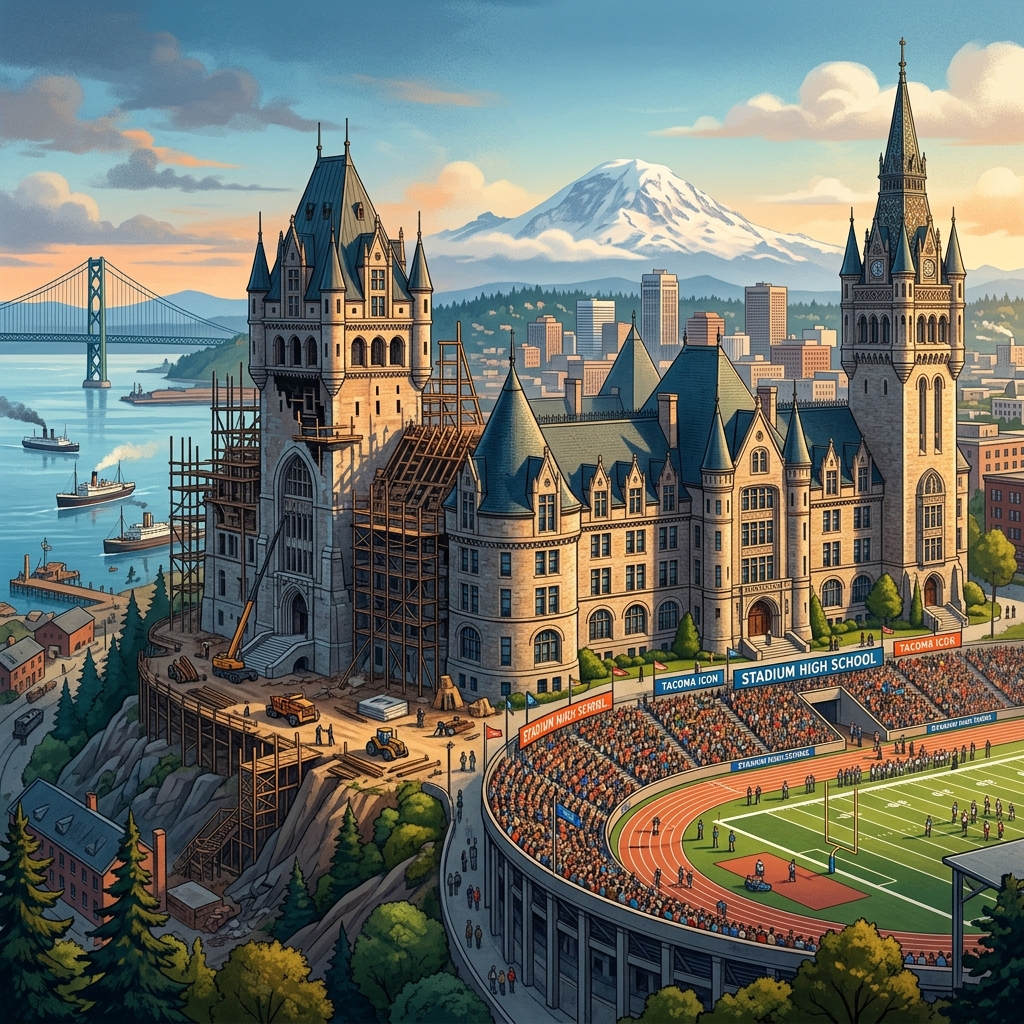
    That single decision set off a chain of events that would eventually produce one of the most architecturally striking high schools in America: the chateau-crowned building at 111 North E Street that Tacoma residents call Stadium High School, and that the rest of the world knows as the backdrop to a certain 1999 Shakespeare adaptation filmed right on the bluff above Commencement Bay.

    But the story between the 1873 telegram and the 1999 film crew is one of ambition, financial ruin, fire, citizen activism, and the kind of resilient improvisation that defines Tacoma at its best.

    The Railroad Bets on Tacoma

    The Northern Pacific’s engineers chose Commencement Bay for practical, not sentimental reasons. The Prairie Line — the flat, treeless corridor connecting Tacoma to the interior — offered the path of least resistance to tidewater. Seattle had lobbied hard, reportedly offering the railroad 7,500 town lots, 3,000 acres, $50,000 in cash, and $200,000 in bonds. The Northern Pacific took Tacoma’s waterfront instead.

    The choice was transformative. Tacoma’s population stood at roughly 1,100 in 1880. By 1889 — the year Washington achieved statehood — it had exploded to 36,000, according to HistoryLink.org. The city platted streets, attracted sawmills and smelters, and began to fancy itself the commercial capital of the Pacific Northwest. The Tacoma Land Company, the railroad’s real estate arm, controlled vast swaths of the city and moved aggressively to shape its identity.

    Part of that identity was supposed to be a world-class hotel.

    The Hotel That Never Opened

    In 1891, the Tacoma Land Company commissioned Philadelphia architects Hewitt and Hewitt to design a palatial tourist hotel on a bluff north of downtown. The site commanded sweeping views of Commencement Bay and the Olympic Mountains beyond. The architects responded with a design drawn directly from the châteaux of France’s Loire Valley: steep mansard rooflines, copper-topped turrets rising from every corner, ornate dormers, and facades built from Roman brick — a distinctive elongated brick style that gave the building its warm, reddish-gold character.

    Construction began with the momentum of a city convinced of its own destiny. Then the Panic of 1893 hit.

    The financial crisis that swept the country in 1893 devastated the Northern Pacific. The company went into receivership. The half-finished hotel on the bluff was quietly abandoned, its turrets and rooflines standing without windows or interior floors, a monument to interrupted ambition. For a time it served as a lumber and shingle warehouse. Then, on October 11, 1898, fire tore through the building, gutting it completely and leaving only the exterior walls standing.

    The Northern Pacific began dismantling the shell, reportedly removing some 40,000 of the distinctive Roman bricks before two Tacoma citizens intervened to halt the demolition. Their argument: the walls were salvageable, the bones were sound, and the city desperately needed a high school.

    Citizens Save the Building

    The Tacoma School District purchased the fire-gutted structure on February 19, 1904, and hired local architect Frederick Heath to complete the reconstruction. Heath’s task was unusual — he was not designing a new building so much as finishing and converting one that had been started by someone else’s vision, interrupted by economic disaster, and partially destroyed by fire.

    Heath preserved the Châteauesque exterior that the Hewitt brothers had designed while reworking the interior entirely for educational use. The building that opened on September 10, 1906, as Tacoma High School was recognizably the same chateau the railroad had started — multiple turrets, mansard lines, the copper detailing — but now filled with classrooms, corridors, and students rather than hotel suites and dining rooms.

    In 1913, when Lincoln High School opened as the district’s second secondary school, Tacoma High School was renamed. The name everyone now knows — Stadium High School — came from the natural feature directly to the south: a ravine called Old Woman’s Gulch that Frederick Heath had also been commissioned to transform into an outdoor athletic venue.

    The Stadium Bowl: Engineering a Natural Amphitheater

    Old Woman’s Gulch cut deep into the Stadium District, its floor originally below sea level and subject to tidal flooding. Between 1909 and 1910, construction crews using steam shovels and hydraulic sluicing moved more than 180,000 cubic yards of earth to level the ravine floor and shape its walls into terraced seating. Wooden molds were poured to cast 31 rows of concrete seating for 11,000 spectators, with the open north end framing an unobstructed view of Commencement Bay and Puget Sound.

    The resulting Stadium Bowl — dedicated on July 10, 1910, at a cost of $135,000 — was one of the largest outdoor athletic venues in the Pacific Northwest. The school and the stadium became inseparable in the public mind, each reinforcing the other’s architectural drama. The chateau on the bluff looked down at the bowl carved from the earth below; together they defined a neighborhood.

    The Stadium District Takes Shape

    The Stadium-Seminary Historic District that grew around the school between 1888 and 1930 is itself a remarkable piece of Tacoma history. The neighborhood — roughly 400 buildings across 50 blocks on the bluff northwest of downtown — developed as the Tacoma Land Company released residential parcels and middle-class families built substantial two- and three-story homes in Queen Anne, Colonial Revival, and Craftsman styles.

    The neighborhood’s layout reflected, however loosely, the ideas of the City Beautiful movement. Frederick Law Olmsted had been commissioned in 1873 to prepare a master plan for New Tacoma; though his specific proposals were never implemented, the design sensibility he represented — broad streets, topographic sensitivity, attention to views — influenced how the Stadium District ultimately developed.

    Today the district is listed on both the Washington State and National Registers of Historic Places. The City of Tacoma’s Historic Preservation Office maintains design review authority over development within it. The near-continuous architectural character — Victorian-era homes beside Craftsman bungalows, largely untouched by mid-century demolition — is rare for a city of Tacoma’s size.

    From Preservation to Pop Culture

    In 2005 and 2006, Stadium High School underwent a major seismic upgrade, historical restoration, and expansion designed to preserve the building for the next century of students. The renovation carefully maintained the exterior’s historic character — the turrets, the rooflines, the Roman brick — while modernizing the interior for contemporary educational use.

    By then, the school had already achieved a different kind of fame. When location scouts for the 1999 film 10 Things I Hate About You — a modern retelling of Shakespeare’s The Taming of the Shrew — saw photographs of Stadium High School, they scrapped plans to film in Los Angeles and moved the entire production to Tacoma. The film’s opening sequence, with Heath Ledger and Julia Stiles navigating the chateau’s corridors and exterior courtyard, introduced the building to a global audience who had no idea they were looking at a failed railway hotel from 1891.

    According to The Seattle Times, alums of Stadium High describe the film as having “put the school on the map” nationally — which is saying something for a building already on three historic registers.

    What the Building Means for Tacoma

    There’s a temptation to read Stadium High School purely as a happy accident — abandoned railroad ambition recycled into public good. But the building’s survival required active choices at several points: the citizens who halted demolition in 1898, the school board that voted to purchase the shell, the architect who honored the original design in his reconstruction, and the community that successfully argued for its historic designation decades later.

    The Washington State Historical Society documents Tacoma’s railroad era extensively, and the Northern Pacific’s choice of Commencement Bay as its terminus runs as a through-line in nearly every major story about the city’s early growth — from the original platting of downtown to the industrial development of the tideflats to the residential neighborhoods that climbed the surrounding bluffs.

    Stadium High School is the most visible physical artifact of that era. It is the building that the Northern Pacific built, that the Panic of 1893 stopped, that fire gutted, that citizens saved, and that Tacoma finished. It has been a school for 120 years. It will likely be one for a good while longer.

    For anyone who wants to understand how Tacoma became Tacoma, the view from the Stadium District bluff — chateau to the left, the bowl below, the bay beyond — is about as clear an explanation as the city offers.

    Frequently Asked Questions About Stadium High School

    Why was Stadium High School originally built as a hotel?

    The Northern Pacific Railway’s Tacoma Land Company began construction of a luxury chateau-style hotel in 1891 to anchor its investment in Tacoma, the railroad’s chosen western terminus since 1873. The hotel was designed to attract wealthy travelers and signal Tacoma’s status as the premier city on Puget Sound. The Panic of 1893 halted construction before the building ever opened.

    What architectural style is Stadium High School?

    Stadium High School is built in the Châteauesque style, drawing from French Renaissance châteaux of the Loire Valley. Designed by Philadelphia architects Hewitt and Hewitt, the building features multiple copper-topped turrets, steep mansard rooflines, decorative dormers, and facades built from Roman brick. It is listed on the Tacoma, Washington State, and National Registers of Historic Places.

    When did Stadium High School open and why did the name change?

    The school opened September 10, 1906, as Tacoma High School after the district purchased the fire-gutted hotel shell in 1904 and commissioned architect Frederick Heath to complete the reconstruction. The name changed to Stadium High School in 1913 when Lincoln High School opened as the district’s second high school, requiring a more specific name tied to the adjacent Stadium Bowl.

    What movie was filmed at Stadium High School?

    The 1999 film 10 Things I Hate About You, a modern adaptation of Shakespeare’s The Taming of the Shrew, was filmed extensively at Stadium High School. Location scouts originally planned to film in Los Angeles but moved the entire production to Tacoma after seeing photographs of the school’s dramatic exterior overlooking Commencement Bay.

    Is Stadium High School a historic landmark?

    Yes. Stadium High School is listed on the Tacoma Register of Historic Places, the Washington State Register of Historic Places, and the National Register of Historic Places. The surrounding Stadium-Seminary Historic District — nearly 400 buildings across 50 blocks — is also listed on both registers. A major seismic upgrade and historical restoration was completed in 2005–2006.


    Related Reading
  • Things to Do in Everett, WA: A Local’s Complete Guide

    Things to Do in Everett, WA: A Local’s Complete Guide

    Looking for things to do in Everett, WA? This is the master guide a lot of locals wish they’d had when they moved here. Everett is the largest city in Snohomish County, sitting on Port Gardner Bay about 25 miles north of Seattle, and it packs a saltwater waterfront, a genuine arts district, family museums, and high-level junior hockey into a compact city with a walkable downtown core. Whether you have a free afternoon, a rainy Saturday, or out-of-town guests to impress, there’s more here than the I-5 view lets on.

    Quick answer: The top things to do in Everett, WA include riding the seasonal foot ferry to Jetty Island, walking the Port of Everett waterfront and marina, catching an Everett Silvertips hockey game at Angel of the Winds Arena, exploring the Schack Art Center and Imagine Children’s Museum downtown, and hiking or picnicking at parks like Forest Park and Howarth Park. Many of the best options are free or low-cost, and most sit within a short drive of one another.

    Things to Do in Everett, WA on the Waterfront

    Everett’s defining feature is its working waterfront on Port Gardner Bay. The Port of Everett operates one of the largest public marinas on the West Coast, and the surrounding district, often called Waterfront Place, blends boat slips with restaurants, public plazas, and walking paths. It’s the kind of place where you can watch sailboats come and go, grab a meal with a water view, and let kids burn off energy near the water, all in one stop.

    Jetty Island

    Jetty Island is Everett’s signature summer experience. It’s a roughly two-mile-long, human-made island with a sandy beach and shallow, sun-warmed tidal flats that get surprisingly swimmable for Puget Sound. A passenger ferry runs across the channel during the summer season (generally mid-summer through early fall). Because the island has no concessions and limited facilities, locals treat it like a true beach day: pack water, sunscreen, snacks, and shade. Ferry sailings fill up on hot weekends, so check the City of Everett Parks website for the current season dates, fees, and reservation details before you go.

    Marina walks and boat watching

    Even outside ferry season, the marina is worth a visit. You can stroll the docks, watch the fishing and pleasure fleet, and take in views across the bay toward the Olympics on a clear day. The waterfront is also a launch point for whale-watching and fishing charters that depart Everett seasonally; the operators handle their own scheduling, so book directly with the charter company.

    Parks and Outdoor Things to Do

    Everett’s park system is one of its quiet strengths, ranging from forested trails to bluff-top beach access. These are durable, year-round options and most are free.

    • Forest Park — A large, central park with forested trails, picnic shelters, sports facilities, and a seasonal animal farm and spray park that are family favorites. A reliable pick when you want to be outside but close to town.
    • Howarth Park — Known for its pedestrian bridge over the railroad tracks down to a Puget Sound beach, plus a hillside playground. One of the better spots in the city for a real saltwater beach walk.
    • Legion Memorial Park and Langus Riverfront Park — Northside parks with golf nearby, water views, and flat trails. Langus connects to a riverside loop that’s popular with runners, cyclists, and rowers along the Snohomish River.
    • Grand Avenue Park — A bluff-top park with a pedestrian bridge over to the waterfront and some of the best sunset views in the city.

    For trail conditions, seasonal hours, and the Forest Park animal farm schedule, the City of Everett Parks and Recreation website is the source to check.

    Arts, Culture, and Family Museums

    Downtown Everett has a compact, genuinely good arts and culture cluster, which makes it a strong rainy-day destination.

    Schack Art Center

    The Schack Art Center is a downtown gallery and studio space best known for its hot-glass studio, where you can watch artists blow glass and, in some seasons, sign up for hands-on classes. It rotates exhibitions throughout the year and anchors Everett’s visual-arts scene. Check the Schack’s website for current exhibits and class registration.

    Imagine Children’s Museum

    The Imagine Children’s Museum is the go-to indoor destination for families with young kids, with hands-on, play-based exhibits across multiple floors and a popular rooftop play area. It’s purpose-built for the under-10 crowd and one of the most reliable Saturday options when the weather turns. Verify hours and any timed-ticket requirements on the museum’s site before visiting.

    Live performance and historic theaters

    Downtown Everett also hosts live theater and music. The Historic Everett Theatre stages performances and screenings, and the broader downtown core fills with events, markets, and gallery walks throughout the year. For what’s on while you’re in town, check the venues’ own calendars alongside our Everett events coverage.

    Angel of the Winds Arena and Everett Silvertips Hockey

    Angel of the Winds Arena is downtown Everett’s largest event venue and the home of the Everett Silvertips, the city’s major-junior ice hockey team in the Western Hockey League (WHL). Silvertips games are one of the best-value live-sports nights in the region: fast-paced hockey, an energetic crowd, and a downtown location with restaurants in easy walking distance.

    The arena also books concerts, family shows, and other events throughout the year. The hockey season generally runs from fall into spring, with playoffs extending later for teams that advance. For the current Silvertips schedule, ticket prices, and the arena’s full event calendar, go straight to the Angel of the Winds Arena and Everett Silvertips official websites.

    Free and Cheap Things to Do in Everett, WA

    You don’t need to spend much to have a good day here. Budget-friendly and free options include:

    • Walk the waterfront and marina — Free, scenic, and open year-round.
    • Beach time at Howarth or Jetty Island — The beaches themselves cost nothing; the Jetty ferry charges only a modest fare in season (confirm current rates with City of Everett Parks).
    • Explore the parks — Forest Park, Grand Avenue Park, and Langus Riverfront Park are all free to enter.
    • Browse downtown galleries — The Schack Art Center’s gallery and glass-studio viewing are low-pressure, and downtown art walks are free to wander.
    • Catch a community event or farmers market — Seasonal markets and festivals run through the warmer months; check our Everett events coverage for current dates.

    Weekend and Rainy-Day Itinerary Ideas

    Everett rewards a little planning. Here are two simple frameworks locals lean on.

    1. Sunny summer Saturday: Start with a morning Jetty Island ferry and beach session, head back to the marina for lunch with a water view, then close the day with sunset from Grand Avenue Park or Howarth Park.
    2. Rainy-day plan: Open at the Imagine Children’s Museum or the Schack Art Center, grab lunch downtown, then catch an evening Silvertips game or a show at Angel of the Winds Arena. Everything stays within the walkable downtown core.

    For where to eat between stops, lean on our Everett restaurant coverage rather than guessing, hours and menus change, and locals have strong opinions worth borrowing.

    Frequently Asked Questions

    What is Everett, WA known for?

    Everett is known as the largest city in Snohomish County, for its working waterfront and large public marina on Port Gardner Bay, for Boeing’s major aerospace manufacturing presence in the area, and as home to the Everett Silvertips junior hockey team at Angel of the Winds Arena.

    Is Jetty Island free?

    The beach on Jetty Island is free, and the passenger ferry run through the City of Everett is typically free or charges only a modest fare during its summer operating season. Sailings can fill on hot weekends and may require a reservation, so check the City of Everett Parks website for the current schedule and any fees before you go.

    What is there to do in Everett when it rains?

    Good rainy-day options include the Imagine Children’s Museum, the Schack Art Center and its glass studio, a performance at the Historic Everett Theatre, and an Everett Silvertips game or other event at Angel of the Winds Arena, all in the walkable downtown core.

    How far is Everett from Seattle?

    Everett sits roughly 25 to 30 miles north of downtown Seattle along Interstate 5. Driving time varies widely with traffic; regional transit options also connect the two cities. Check current transit schedules with the relevant agency before relying on them.

    Is Everett, WA worth visiting?

    Yes. Everett offers a saltwater waterfront, a unique summer beach experience at Jetty Island, a real downtown arts cluster, family museums, and affordable major-junior hockey, often at lower cost and with smaller crowds than comparable Seattle attractions, making it an easy and rewarding day trip or weekend stop.

  • Things to Do in Tacoma: The Complete Local Guide

    Things to Do in Tacoma: The Complete Local Guide

    Looking for things to do in Tacoma? The City of Destiny packs a remarkable amount into one mid-sized Washington city: a glass-art legacy on the waterfront, a walkable Museum District, one of the most acclaimed urban parks in the Pacific Northwest, miles of shoreline trails, and a deep bench of breweries and restaurants. This guide is the local resident’s reference to what there is to do here, organized by district and by who you’re with, so you can plan a single afternoon or a full weekend.

    Quick answer: The top things to do in Tacoma cluster in a few key areas. Start with the waterfront and Museum District downtown (Museum of Glass, Chihuly Bridge of Glass, Tacoma Art Museum, and the Washington State History Museum), spend a half-day at Point Defiance Park (zoo, aquarium, gardens, and old-growth forest), walk or bike Ruston Way along Commencement Bay, and explore the city’s well-regarded brewery and food scene. Many of the best options are free.

    Things to Do on the Tacoma Waterfront and Museum District

    Tacoma sits on Commencement Bay, an arm of Puget Sound, and its downtown waterfront is the cultural heart of the city. The compact Museum District runs along Pacific Avenue and Dock Street and is connected by the Chihuly Bridge of Glass, a pedestrian span lined with the work of Tacoma-born glass artist Dale Chihuly. The bridge alone is worth the walk, and it is free and open to the public.

    Anchor stops in and around the district include:

    • Museum of Glass — known for its cone-shaped Hot Shop, where you can watch glass artists work live from amphitheater seating.
    • Tacoma Art Museum (TAM) — strong in Northwest and Western American art, with a notable collection of Chihuly glass.
    • Washington State History Museum — the state’s official history museum, housed in a building that echoes the neighboring Union Station’s arches.
    • LeMay – America’s Car Museum — one of the largest auto museums in the country, a short hop from the core district near the Tacoma Dome.

    The Tacoma Link light rail threads through downtown and makes hopping between the Theater District, the Museum District, and the Dome District easy without parking downtown twice; it has long operated fare-free, but confirm current fares with Sound Transit before you ride. For current hours, exhibits, and admission, check each museum’s official website before you go.

    Point Defiance Park: Tacoma’s Signature Outdoor Destination

    Point Defiance Park is a large peninsula park on the north end of the city and is one of the largest urban parks in the United States. It is managed by Metro Parks Tacoma and routinely ranks among the most-loved attractions in the region. You can easily spend a full day here, and much of the park is free to enter.

    What’s inside Point Defiance

    • Point Defiance Zoo & Aquarium — a combined zoo and aquarium known for its Pacific Rim focus, including red wolves, sharks, and a walk-through aquarium (paid admission).
    • Five-Mile Drive and the hiking trails — a loop road and trail network winding through old-growth forest with viewpoints over Puget Sound and the Tacoma Narrows.
    • The gardens — rose, dahlia, rhododendron, and Japanese gardens, all free to wander.
    • Owen Beach — a renovated saltwater beach and promenade with views across the water, a popular spot for picnics and tidepooling.
    • Fort Nisqually Living History Museum — a reconstructed 19th-century Hudson’s Bay Company trading post inside the park.

    The Point Defiance ferry terminal also sits at the foot of the park, with sailings to Tahlequah on Vashon Island if you want to extend the day onto the water.

    Ruston Way and the Waterfront Trail

    Ruston Way is Tacoma’s signature shoreline promenade, a stretch of waterfront along Commencement Bay between downtown and Point Defiance. A paved walking-and-biking path runs the length of it, passing public piers, pocket beaches, historic fireboat displays, and a cluster of waterfront restaurants. On a clear day you get open views of the bay and, to the southeast, Mount Rainier.

    Ruston Way connects to the adjacent Point Ruston development at the north end — a walkable mixed-use district with a public waterwalk, shops, a movie theater, dining, and a seasonal feel that draws crowds in summer. Together, Ruston Way and Point Ruston make one of the easiest free outings in the city: park once and walk the water’s edge.

    Tacoma Breweries, Food, and Drink

    Tacoma has a serious, locally driven craft beer and dining scene that rewards exploration. The 6th Avenue and Stadium District corridors, the Proctor District in the North End, and downtown around Pacific Avenue are the most concentrated places to eat and drink, each with its own character.

    How to approach it:

    • Breweries and taprooms — Tacoma supports a healthy roster of independent breweries spread across the city; a self-guided crawl through one district is the easiest way to sample several in an afternoon.
    • The Proctor Farmers Market — a long-running neighborhood market (seasonal) that’s a good entry point to local food.
    • Opera Alley and downtown dining — the historic core has grown a strong independent restaurant scene, from casual to upscale.

    Because specific taprooms, menus, and hours change, confirm what’s currently open before building a route. For deeper picks, see our Tacoma food and drink coverage.

    Tacoma Parks and Outdoor Spaces Beyond Point Defiance

    Metro Parks Tacoma operates dozens of parks across the city, so outdoor options go well beyond the famous peninsula:

    • Wright Park — a historic arboretum park near downtown with a landmark conservatory (the W.W. Seymour Botanical Conservatory), towering mature trees, and a duck pond.
    • Titlow Park and Beach — a westside park on the Tacoma Narrows with shoreline access, trails, and a seasonal pool.
    • The Tacoma Nature Center — wooded trails and wetlands around Snake Lake, near the center of the city.
    • Chambers Bay — just outside the city in University Place, a championship links-style golf course with a public loop trail and big Puget Sound views.

    Tacoma by Who You’re With (and the Weather)

    Free things to do in Tacoma

    • Walk the Chihuly Bridge of Glass and the surrounding Museum District plazas.
    • Wander the Point Defiance gardens and drive or hike Five-Mile Drive.
    • Stroll or bike the Ruston Way waterfront and Point Ruston waterwalk.
    • Ride the Tacoma Link light rail through downtown.
    • Relax at Wright Park or Owen Beach.

    Indoor and rainy-day things to do

    Tacoma’s wet season makes indoor options valuable. The museums — Museum of Glass, Tacoma Art Museum, Washington State History Museum, LeMay, and the indoor portions of the aquarium — are all strong rainy-day choices. The W.W. Seymour Botanical Conservatory in Wright Park is a warm, free, plant-filled escape, and the Broadway Center / Pantages and Rialto theaters downtown host performances year-round.

    Things to do with kids

    • Point Defiance Zoo & Aquarium — the city’s top family attraction.
    • Children’s Museum of Tacoma — hands-on play downtown, which has historically operated on a pay-as-you-will model (verify current policy).
    • Owen Beach and Titlow Beach — easy shoreline and tidepool exploring.
    • Fort Nisqually — living-history demonstrations kids can walk through.

    Things to do for adults and date nights

    • A brewery or taproom crawl through 6th Avenue or the Stadium District.
    • A show at the Pantages or Rialto, or live music downtown.
    • Dinner along Ruston Way with bay-and-mountain views.
    • A glassblowing demonstration at the Museum of Glass Hot Shop.

    Frequently Asked Questions

    What is Tacoma best known for?

    Tacoma is best known as the birthplace of glass artist Dale Chihuly and for its glass-art legacy, including the Museum of Glass and the Chihuly Bridge of Glass. It’s also known for Point Defiance Park, its Commencement Bay waterfront, views of Mount Rainier, and the nickname “City of Destiny.”

    What free things are there to do in Tacoma?

    Free options include the Chihuly Bridge of Glass, the gardens and Five-Mile Drive at Point Defiance Park, the Ruston Way and Point Ruston waterfront walks, and Wright Park and its botanical conservatory. The Tacoma Link light rail downtown has also long operated fare-free, though it’s worth confirming current fares before you ride.

    How much time do you need to see Tacoma?

    You can hit the highlights in a single full day by pairing the downtown Museum District with Point Defiance Park and a Ruston Way walk. A weekend lets you add the zoo and aquarium, a brewery district, and the surrounding parks at a relaxed pace.

    What is there to do in Tacoma when it rains?

    On rainy days, focus on indoor attractions: the Museum of Glass, Tacoma Art Museum, Washington State History Museum, LeMay – America’s Car Museum, the aquarium at Point Defiance, the W.W. Seymour Botanical Conservatory, and downtown theaters like the Pantages and Rialto.

    Is Tacoma a good place to visit with kids?

    Yes. Point Defiance Zoo & Aquarium, the Children’s Museum of Tacoma, Fort Nisqually’s living history, and accessible shorelines like Owen Beach and Titlow Beach make Tacoma a strong family destination.

    Hours, admission, fares, and seasonal schedules change. Confirm details on the official websites for Metro Parks Tacoma, Point Defiance Zoo & Aquarium, Sound Transit, and each museum before you visit.

  • Pete Lee Brings His Tonight Show Standing-Ovation Comedy to the Historic Everett Theatre on June 27 — A Letterman-Vetted Storyteller Lands in the 1901 Opera House

    Pete Lee Brings His Tonight Show Standing-Ovation Comedy to the Historic Everett Theatre on June 27 — A Letterman-Vetted Storyteller Lands in the 1901 Opera House

    Verdict: GO

    Three reasons this one is worth clearing your Saturday night for:

    1. Unique-to-market booking. Pete Lee tours selectively. When a national headliner with nine Tonight Show with Jimmy Fallon appearances and a Showtime hour to his name routes through Snohomish County instead of dropping into a Seattle club, that is the entire reason a 1901 opera house exists in downtown Everett.
    2. Right-size room for the act. The Historic Everett Theatre seats around 800 — small enough that a storytelling comic’s quiet beats actually land, large enough that an act with this much network exposure can fill it. This is the platonic ideal of a comedy room for Pete Lee.
    3. A genuinely warm comedian in a town that doesn’t get many of them. Most national stand-ups working at this level are working blue, working political, or working trauma. Lee is the rare A-list comic whose entire reputation is built on being nice. His Showtime special is literally titled Tall, Dark and Pleasant. That’s the brand.

    If you’ve been meaning to see what HET feels like for a non-music night — and if you appreciate stand-up that doesn’t make you feel like you need a shower afterward — this is the show.

    The Show: Date, Time, and What You’re Buying

    When: Saturday, June 27, 2026, 8:00 PM doors and showtime Where: Historic Everett Theatre, 2911 Colby Avenue, Everett, WA 98201 Length: Roughly 90 minutes, including a host set from Cory Michaelis and opening comedians before Pete Lee headlines Seating: General admission throughout, with VIP tickets reserved for the first five rows Concessions: Beer, wine, liquor, and snacks available at the venue’s bar Tickets: Eventbrite is the official ticketing partner — search “Pete Lee Everett” or use the link from the venue’s events page at everetttheater.org/event-list

    A note on the seating model: HET runs general admission for most of its non-musical bookings, which means doors-time arrival actually matters if you want a good sightline. The VIP upgrade gets you guaranteed seats in the first five rows without the queue. For a comedy show, sightlines are less critical than they are for a tribute band — but a comedian who works with facial expressions as much as Lee does benefits from a closer seat.

    Who Pete Lee Is, and Why Jimmy Fallon Personally Booked Him

    The shortest version of the Pete Lee bio is the one that comedy bookers all repeat: He’s the first stand-up to ever get a standing ovation on Fallon. That happened in 2017. Standing ovations don’t normally happen on late-night talk shows — the format isn’t built for them, and the studio audience is famously tough to get all the way to their feet. Lee got there. Fallon liked the set enough to invite him back. And back. And back. As of 2025, Lee has nine Tonight Show appearances, which is more than almost any working stand-up under 50.

    The longer version: Lee grew up in Janesville, Wisconsin, raised by divorced parents and what his official bio describes as “a 19-inch television.” He moved to New York after college, got picked for the Just for Laughs festival in Montreal, made his network TV debut on NBC’s Last Comic Standing in 2008 (semi-finalist), and shot a Comedy Central Half Hour the same year. The Showtime hour Tall, Dark and Pleasant dropped in 2021 and made the rounds with critics who specifically noted what a relief it was to hear a comedian who wasn’t performing rage. He has also voiced the lead character Lamb in the Emmy-winning Jam Van on YouTube Kids — which is a credit most touring comics don’t have on their résumé.

    The Letterman appearance everyone references happened earlier in his career, on The Late Show — the venue that put a generation of stand-ups on the map and that, by the time Lee got his shot, was an increasingly rare get for newer comics. Both Letterman and the late-Fallon-era Tonight Show are taste-maker stages, not just exposure stages. Comics who get repeat bookings on them are vetted in a way that doesn’t show up on Bandsintown.

    The reason all this matters for an Everett crowd: when a comedian has been hand-picked by two different network late-night hosts, you are not gambling on the quality of the set. You are gambling on whether you like a particular flavor of warm Midwestern storytelling. Which, in this market, is a flavor most people end up liking once they hear it.

    Why HET Is the Right Room for This Booking

    The Historic Everett Theatre opened in 1901. It is one of the oldest continuously operating theaters in Washington state, and it has spent the last few years quietly building a reputation as the Pacific Northwest venue that books interesting national acts at sane prices. Geoff Tate is bringing the last-ever full performance of Operation: Mindcrime here on May 23. Grupo Niche is bringing a Latin Grammy-winning salsa orchestra here on May 31. Dana Gould — Simpsons writer, longtime touring stand-up — played the room on May 16. The programming is genuinely eclectic and genuinely curated.

    For comedy specifically, the room works because the back wall is close enough to feel intimate but the proscenium is theatrical enough that the act gets dignified production values. There is no two-drink minimum. The bar is full-service. The building has the kind of acoustics that only show up in turn-of-the-century opera houses with original wood interiors — which means Lee’s quieter beats, the pauses he uses for setups, will actually register at the back of the room.

    If you have only ever been to comedy clubs — Tacoma Comedy Works, Comedy Underground, that tier — a 1901 opera house comedy show feels different in a way that’s hard to articulate until you’ve sat through one. The applause sounds different. The laughs travel further. The room rewards a comic who’s confident enough to slow down.

    What to Expect Tactically

    Doors and show are both at 8:00 PM. Plan to arrive 20-30 minutes early if you don’t have a VIP ticket and want a good seat. Host Cory Michaelis runs the front of the show and brings on the opening comedians before Lee takes the stage for the headlining set. Total run time lands around 90 minutes, putting you out of the theater by roughly 9:30 PM — which is when downtown Everett’s restaurants and bars are still very much open and ready for the post-show wave.

    Pete Lee’s material runs clean-to-PG-13. He works in personal storytelling, observational humor, and the kind of family-and-relationship material that doesn’t require an asterisk. If you have brought a parent, a date, or coworkers to a show in this town, the worst-case scenario is they laugh.

    Where to Eat Before the Show

    The block around HET (Colby + Hewitt) has filled in considerably over the last two years. Within three blocks of the theater you can hit a Hewitt Avenue cocktail room, a wood-fired pizza spot, a Latin-American kitchen that runs late, or one of the new entries on downtown’s growing restaurant row. Plan dinner for 6:00 PM and you’ll have time for a leisurely meal plus the walk over.

    Frequently Asked Questions

    Is Pete Lee’s show appropriate for teenagers? The Historic Everett Theatre lists most comedy shows as suitable for older teenagers and adults. Lee’s material is on the cleaner end of the touring stand-up spectrum but does include adult themes. Parents should check the venue listing or ticketing page for any age advisory before bringing minors.

    How long is the Pete Lee show at HET? About 90 minutes total, including host Cory Michaelis, opening comedians, and Pete Lee’s headlining set. Doors and show start at 8:00 PM.

    Are there reserved seats for the Pete Lee Everett show? No reserved seating. All tickets are general admission. VIP tickets cover the first five rows on a first-come basis within that section.

    Where do I park for Historic Everett Theatre? Street parking is generally available on Colby Avenue and the surrounding blocks. Several public parking garages are within a few blocks of the theater. Arrive 20-30 minutes early if you are not paying for VIP.

    Has Pete Lee played Everett before? This is Pete Lee’s premier Everett stand-up date. He has played the broader Pacific Northwest before — Seattle, the Tacoma comedy circuit, Portland — but this is the first HET booking.

    Where can I watch Pete Lee before the show? Lee’s official website (petelee.net) and his YouTube channel host clips from his Showtime hour and his nine Tonight Show appearances. His podcast Snuggle Storm is also widely available.

    Is the Historic Everett Theatre wheelchair accessible? Yes — HET is accessible from the Colby Avenue entrance. Patrons with mobility needs should contact the venue ahead of time for seating arrangements.


    Pete Lee at the Historic Everett Theatre, Saturday, June 27, 2026, 8:00 PM. Tickets via Eventbrite (linked from everetttheater.org/event-list).

  • Fresh Paint 2026 Returns to Downtown Everett on August 15 and 16 — 120 Artists, Free Admission, and the Biggest Outdoor Art Festival on Hoyt Avenue

    Fresh Paint 2026 Returns to Downtown Everett on August 15 and 16 — 120 Artists, Free Admission, and the Biggest Outdoor Art Festival on Hoyt Avenue


    Two days. One block of Hoyt Avenue. A hundred and twenty artists, free to walk in, and the biggest outdoor art event downtown Everett puts on all year. Fresh Paint 2026 is on August 15 and 16, and if you haven’t been before, this is the year to change that.

    The Schack Art Center runs this every summer and has built something worth making plans for. The vendor list is already sold out — which tells you this is not a pop-up craft market. Artists apply. They get juried in. The work on Hoyt Avenue that weekend is curated, and you’ll feel it when you walk the block.

    What You’re Walking Into

    The festival takes over Hoyt Avenue between Pacific Avenue and Hewitt Avenue, two blocks from the Schack itself. The street closes. Booths go up. And from 10am to 5pm on Saturday and 10am to 4pm on Sunday, that stretch of downtown becomes the most concentrated collection of original art in Snohomish County.

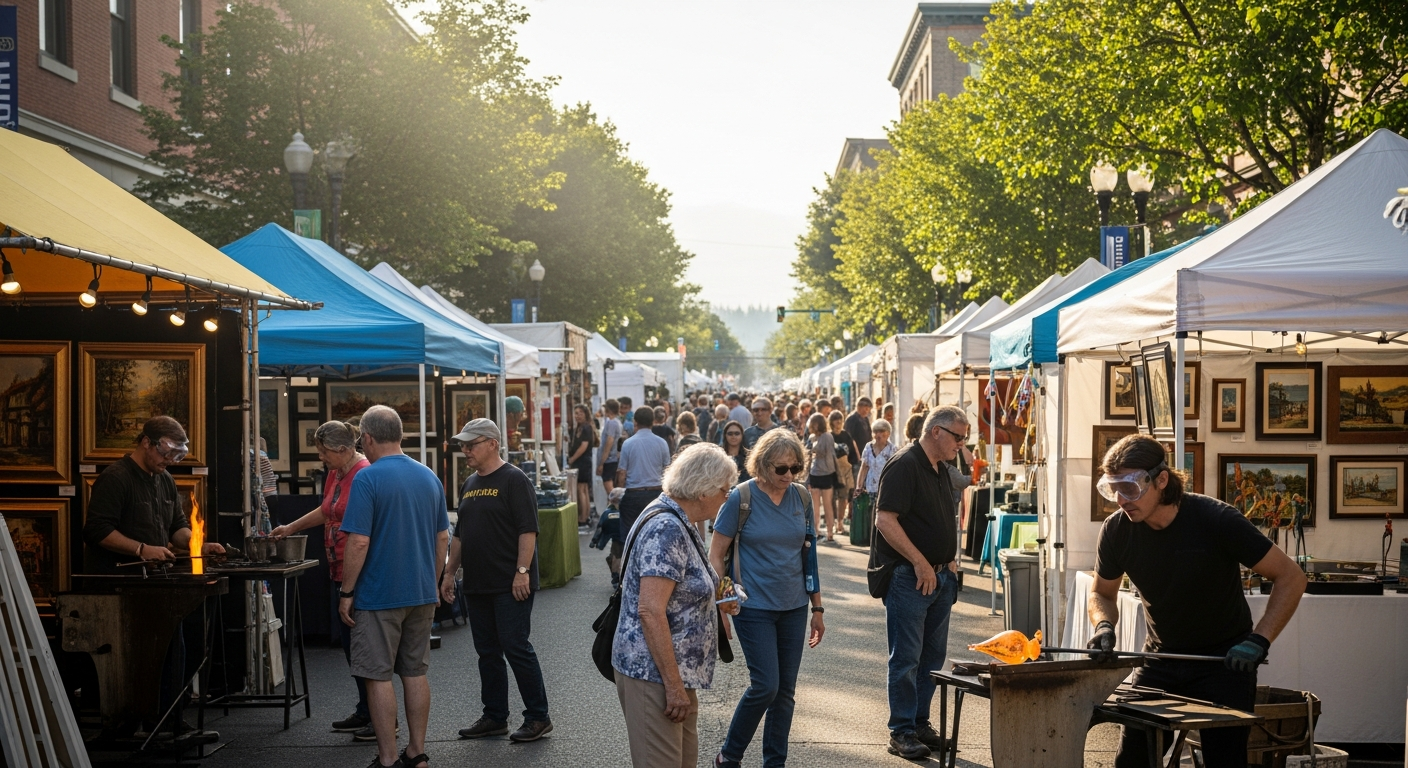
    120+ artists span painting, sculpture, glass, jewelry, fiber, ceramics, and photography. Because this is a juried show, there’s a floor to the quality. You’re not wading through mass-produced prints to find the one interesting thing — the interesting things are the whole point.

    Admission is free. You pay for art, food, and activities. That’s the model and it works — 10,000+ attendees walk through over the two days, and the Schack has been doing this long enough to know how to move that crowd through a single city block without it feeling like a fire drill.

    Glassblowing, Kids’ Activities, and Float Find

    The Schack is a working art center, not just a gallery. At Fresh Paint, they demonstrate that — literally. Glassblowing demonstrations run through the weekend, and watching someone pull molten glass into form at a live outdoor event is the kind of thing you stop for whether you planned to or not. It draws every age group.

    Kids’ activity areas are built into the layout, which means this is a functional family event and not just an adult art crawl. You can split up, let the kids engage with the activity stations, and walk the artist booths without herding the whole group through every booth.

    Float Find is the Schack tradition that turns the festival into a game. Small glass floats — hand-crafted — get hidden around the festival grounds. Find one, keep it. It’s the kind of detail that makes people come back year after year and arrive early.

    The Schack’s Track Record on This Street

    The Schack Art Center at 2921 Hoyt Ave has been the anchor of Everett’s arts infrastructure since long before the downtown revival picked up pace. Fresh Paint is their statement event — the one where they take the case for arts in this city outside the building and onto the street itself.

    If you’ve seen what they do inside the gallery — and the Artists’ Garage Sale gives you a sense of the community energy they generate — Fresh Paint is that but scaled up and opened to anyone walking by. The Contemporary NW + Summer Auction draws serious collectors; Fresh Paint draws everyone else. The two events together define what the Schack is doing for this city.

    The regular monthly Everett Art Walk keeps the momentum going through the year, but Fresh Paint is the anchor. It’s the day families mark on the calendar in January.

    The Practical Details

    What: Fresh Paint 2026 — Schack Art Center Outdoor Juried Art Festival
    Saturday August 15: 10:00 AM – 5:00 PM
    Sunday August 16: 10:00 AM – 4:00 PM
    Where: Hoyt Ave between Pacific Ave and Hewitt Ave, Downtown Everett WA 98201
    Admission: Free
    Artists: 120+ juried (vendors sold out — this is curated work)
    Highlights: Glassblowing demos, kids’ activities, Float Find, food vendors
    Parking: Street parking and downtown garages within a few blocks of Hoyt Ave

    Full details at schack.org/fresh-paint →

    FAQ

    When is Fresh Paint 2026?

    Saturday August 15 (10am–5pm) and Sunday August 16 (10am–4pm), 2026.

    Where is Fresh Paint in Everett?

    Hoyt Avenue between Pacific Avenue and Hewitt Avenue in downtown Everett. The street closes for the weekend and becomes the festival grounds.

    How much does Fresh Paint cost?

    Free admission. You pay for what you buy — art, food, and activities. Vendor spots are sold out but attendance is open to everyone.

    How many artists are at Fresh Paint 2026?

    120+ juried artists. Vendors are sold out for 2026, meaning artists applied and were curated — this is not a craft fair.

    What is Float Find at Fresh Paint?

    Float Find is a Schack tradition where hidden glass floats are scattered around the festival for attendees to discover and keep. It’s the detail that makes Fresh Paint a repeat-visit event for families.

    Is Fresh Paint good for kids?

    Yes. Dedicated kids’ activity areas, glassblowing demos, and Float Find. Bring them early — the floats go fast.

  • Altered 2ks and Centuries Are Playing the 2000s Emo and Pop Punk Catalog at Tony V’s Garage on June 6 — Your Move

    Altered 2ks and Centuries Are Playing the 2000s Emo and Pop Punk Catalog at Tony V’s Garage on June 6 — Your Move


    Saturday night, June 6. Tony V’s Garage on Hewitt Avenue. Two bands. Four hours. The entire 2000s emo and pop punk catalog you burned onto a CD in middle school and still know word-for-word.

    Altered 2ks and Centuries are sharing the stage — and together they cover the decade that turned angst into arena anthems. My Chemical Romance. Fall Out Boy. Paramore. Taking Back Sunday. Hawthorne Heights. The Used. If you were a teenager when these songs dropped, you’ve been waiting for a night like this without knowing it.

    Who’s Playing and What to Expect

    Altered 2ks is the headline act — a tribute project built specifically around 2000s emo and pop punk. They don’t try to do everything from that era; they do the specific songs that mattered. The ones that opened the floodgates. They’ve played Tony V’s before and they know how to fill that room.

    Centuries opens the set. Same era, same energy, same devotion to getting the details right. This is a double bill with actual curatorial intent — both bands exist in the same sonic universe and the setlist arc from opener to closer is going to hit like a full playlist you built yourself at 15.

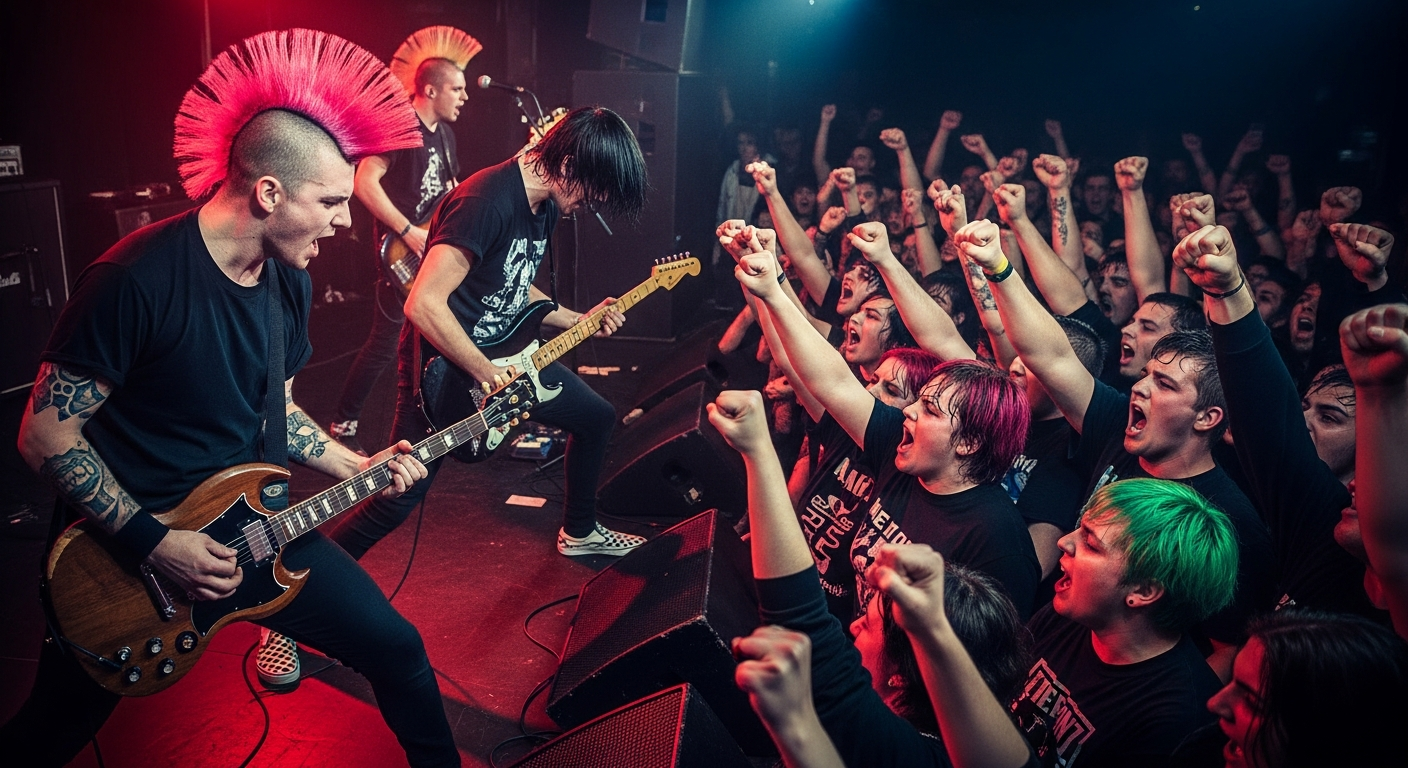
    Tony V’s Garage has been the right room for nights like this since it opened in Everett’s historic downtown. It’s not a theater. It’s not a club designed for distance between you and the stage. It’s a place where the band is close, the sound is loud, and the crowd knows every word. For a tribute show built around songs this emotionally loaded, the intimacy is the point.

    The Venue and What You Need to Know

    Tony V’s Garage sits at 1716 Hewitt Ave in Everett. The show starts at 8:00 PM on Saturday, June 6 and runs to 11:30 PM. Tickets are $23.18 on Eventbrite — sold by organizer AJ Verhey, who has been putting on shows at this venue consistently.

    This is a standing-room show. Capacity at Tony V’s is limited. If you want a spot close to the stage, you want to be there early. The venue does not hold tickets at will call for late arrivals in the way larger rooms do.

    Street parking is available on Hewitt and the surrounding blocks. Everett’s downtown is walkable from several parking structures if Hewitt fills up.

    Why This Night Works

    There’s a specific thing that happens when a well-prepared tribute band plays songs from a formative era in a small room. It’s different from seeing those songs on a stadium screen. You’re not nostalgic at a distance — you’re in the room with 200 people who all know the same lyrics, and the band is ten feet away playing them at full volume.

    Tony V’s has hosted Emo Prom at Tony V’s and built a track record of landing the right acts for Everett’s live music crowd. The Polkadot Cadaver show drew the same energy this room can hold — dedicated, loud, present. And if you’ve been watching what’s come through the April lineup at Tony V’s, you already know this venue doesn’t book filler.

    Altered 2ks and Centuries together on one bill on a Saturday night is not a casual decision. This is a deliberate, fully committed tribute event with a tight setlist focus. Show up for it.

    Tickets and the Short Version

    What: Altered 2ks + Centuries — 2000s emo and pop punk tribute night
    When: Saturday, June 6, 2026 — 8:00 PM to 11:30 PM
    Where: Tony V’s Garage, 1716 Hewitt Ave, Everett WA 98201
    Tickets: $23.18 on Eventbrite — limited capacity, buy before the weekend
    Ages: Check Eventbrite listing for age policy

    Get tickets on Eventbrite →

    FAQ

    When is Altered 2ks playing at Tony V’s Garage?

    Saturday, June 6, 2026 at 8:00 PM. Doors open before then — get there early.

    Where is Tony V’s Garage in Everett?

    1716 Hewitt Ave, Everett, WA 98201. Street parking on Hewitt and the surrounding blocks.

    How much are tickets for Altered 2ks at Tony V’s?

    $23.18 on Eventbrite. Limited capacity at Tony V’s — don’t wait on this one.

    What kind of music do Altered 2ks play?

    2000s emo and pop punk — My Chemical Romance, Fall Out Boy, Paramore, Taking Back Sunday, and the full early-2000s catalog you know by heart.

    Who is opening at the June 6 show?

    Centuries opens the night. They play the same era — this is a two-band throwback double bill.

  • Water Ways at the Schack Art Center Closes Saturday May 16 — Six Days Left to See 90+ Pacific Northwest Artists Reckon With What’s Happening to Our Watersheds

    Water Ways at the Schack Art Center Closes Saturday May 16 — Six Days Left to See 90+ Pacific Northwest Artists Reckon With What’s Happening to Our Watersheds

    Q: When does Water Ways close at the Schack Art Center in Everett?
    A: Saturday, May 16, 2026 is the final day. The free exhibition of more than ninety Pacific Northwest artists has been on view in Schack’s Main Gallery and Mezzanine Gallery in downtown Everett (2921 Hoyt Avenue) since March 26. Hours through closing day are Tuesday–Saturday 10 AM–5 PM and Sunday 12–5 PM.

    You have six days left to walk into the Schack Art Center and stand in front of the most ambitious group exhibition the building has hung this year.

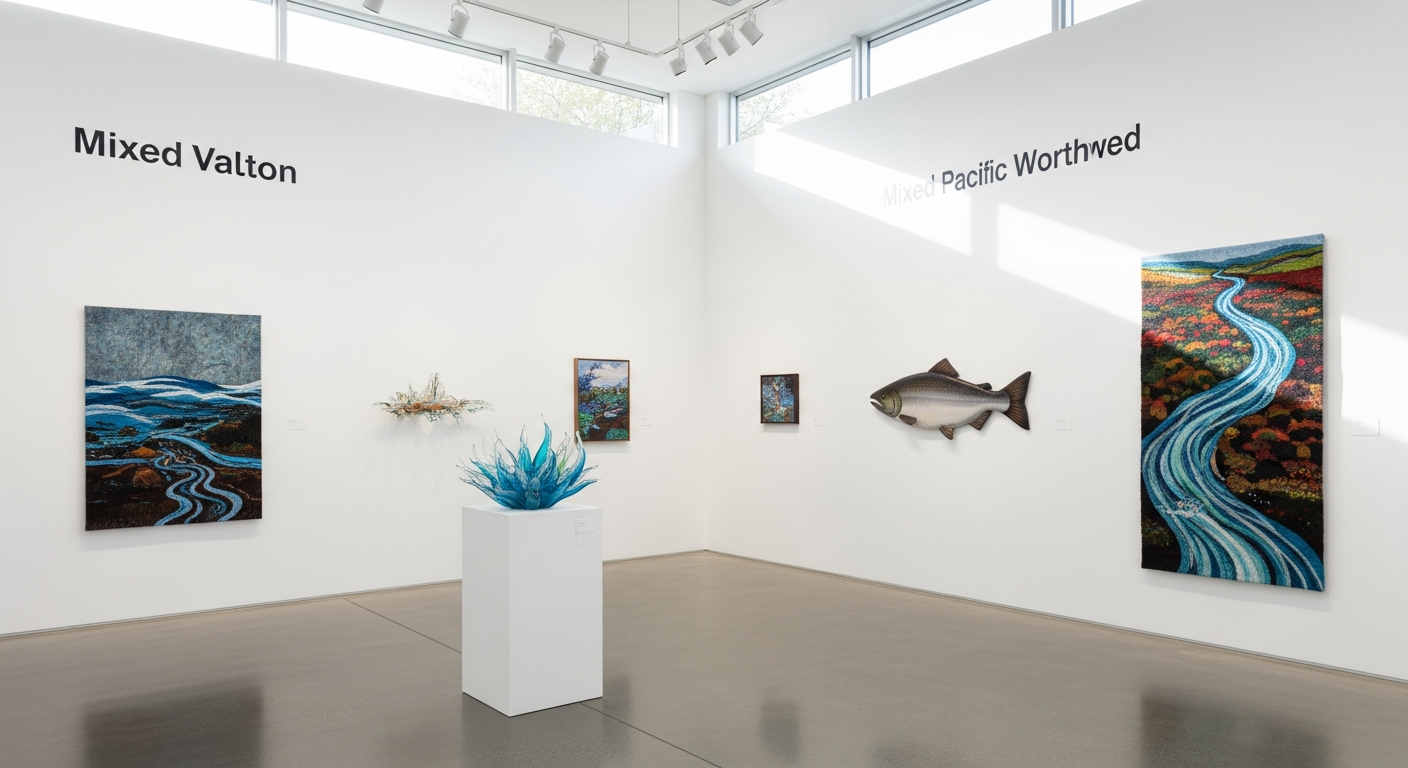
    Water Ways: Healing the Circle of Water and Life closes Saturday, May 16, 2026. It is the Schack’s 2026 Arts Education in Action exhibition, and it spans both the Main Gallery and the Mezzanine. Ninety-plus contemporary Pacific Northwest artists answered a single prompt — what does it mean to live next to water that is increasingly under stress — and the resulting wall is one of the more honest reckonings with Puget Sound, the Snohomish River, and the broader watersheds of the region that any local institution has put together in years.

    Curation verdict: GO. Free admission. Six days left. If you do one downtown Everett thing this week before lunch on Saturday, make it this.

    What you actually see when you walk in

    Water Ways is not a quiet exhibition. The Main Gallery wall hits you with Jared Rue’s Here’s the Catch, the lead image the Schack picked to represent the show, and from there the room moves between glass, ceramics, fiber, painting, photography, and sculpture without losing the thread. The list of participating artists reads like a regional Pacific Northwest who’s-who: Dan Friday, David Boxley, Pat McVay, Steve Jensen, Steve Klein, Rik Allen, Shelley Muzylowski-Allen, Georgia Gerber, Kait Rhoads, Lisa McShane, Cynthia Gaub, Christopher Mathie, Jan Hopkins, Chris Hopkins, Joy Hagen. Ninety-plus names, with field-trip-grade interpretive labels next to each.

    Standout works flagged on the Schack’s own page include Jeremy Kester’s The Last Drop, Julie C Baer’s Acorn Barnacle, Steve Jensen’s The Fish are Disappearing, Stephen Yates’s Streaming V, Trish Harding’s Sea Stars, and Deborah Singer’s Great Blue Heron Near Aberdeen. The Mezzanine carries additional work and field-trip activity stations.

    You can move through the show in twenty minutes. Most people stay an hour. The interpretive copy is excellent and the pieces talk to each other — salmon next to glass next to hand-built relief tile next to photograph — in a way that makes you think harder about what you’re looking at than a single-medium exhibition usually does.

    Practical details for the closing week

    • What: Water Ways: Healing the Circle of Water and Life
    • Where: Schack Art Center, 2921 Hoyt Avenue, Everett, WA 98201
    • Closes: Saturday, May 16, 2026
    • Hours through closing: Tuesday–Saturday 10 AM–5 PM; Sunday 12–5 PM (closed Mondays)
    • Admission: Free
    • Parking: Free street parking on Hoyt and California avenues; 2-hour metered on Hewitt
    • Phone: (425) 309-7723

    Why this exhibition matters more than most regional group shows

    Two things separate Water Ways from a typical Schack group hang.

    First, the prompt is real. Arts Education in Action is the Schack’s curriculum-anchored programming track. The exhibitions in this series are built to be taught from — school groups walk through, do hands-on response activities, and leave with a mental model that ties what they saw on the wall to a watershed they actually live next to. The Schack’s Education Coordinator, Breannah Gammon, runs the field-trip program out of the show.

    That changes what artists submit. When the audience includes seventh-graders who will walk a Snohomish County riverbank that afternoon, you cannot get away with abstract gesture as a substitute for a point of view. Marguerite Goff’s two-panel relief tile, Traveling Upstream: Beauty Returns to Our Rivers, lands harder when you understand it next to a class of kids who just learned what a watershed is. Tiami Hogberg’s Without them there’s no US works on art-school terms and on get-it-immediately terms at the same time. Jeanne Poling’s five photography prints push the show toward documentary and back.

    Second, the curatorial framing is honest about what’s happening to our water. The exhibition title — Healing the Circle of Water and Life — is not lukewarm. The Schack’s programming page describes work that “highlights the beauty and interconnectedness of Earth’s water systems, the science behind them, and the effects of environmental change on all forms of life—human, animal, and plant.” A May 2 panel discussion, How We Heal the Circle of Water and Life, brought in Adopt A Stream Foundation and Puget Soundkeeper Alliance to talk watershed restoration, orca pod health, and clean-water supply alongside the artists.

    Most regional group shows give you a theme and let the artists respond loosely. Water Ways picks a fight with how the region is letting down its water and asks the artists to put a stake in the ground. Most of them do.

    Who you should look for in the gallery

    If you have an hour and want to walk out remembering specific work, here are the names worth slowing down for:

    • Jared RueHere’s the Catch, the show’s lead image, in the Main Gallery
    • Dan Friday and David Boxley — Coast Salish work that sits naturally in a watershed-themed room
    • Steve JensenThe Fish are Disappearing, a piece whose title does most of the work and whose execution earns the title
    • Pat McVay and Georgia Gerber — sculptural responses with Pacific Northwest provenance
    • Kait Rhoads, Rik Allen, and Shelley Muzylowski-Allen — glass work that uses the medium for what it was made for here
    • Chris Hopkins and Christopher Mathie — painters working in two very different traditions, both responding to the prompt seriously
    • Lisa McShane — landscape painting with a documentary eye
    • Marguerite GoffTraveling Upstream: Beauty Returns to Our Rivers, a relief tile that anchors a corner of the room

    The full ninety-plus-artist roster is on the Schack’s exhibition page. The gallery store on the way out carries work by many of the same artists at meaningfully smaller scale and price.

    What to pair the visit with

    The Schack sits on Hoyt between California and Wetmore, two blocks from Hewitt Avenue. Make a half-day of it: park free on Hoyt, walk through Water Ways, then drop in at the Schack Gallery Store on the way out for Pacific Northwest work you can actually take home. Lunch options within five blocks include Narrative Coffee, Lombardi’s at the marina, the food trucks at Beverly Park, and the steady rotation at Tony V’s Garage if you’re staying for a happier hour.

    If you want to make it an arts day, the show closes May 16 at 5 PM, the same evening Geoff Tate is performing Operation: Mindcrime in full at the Historic Everett Theatre and Dana Gould is at HET that same week. Walk Water Ways at 11 AM, lunch on Hewitt, then make a real evening of it.

    What’s next at Schack after Water Ways

    The Schack’s biggest art week of the spring drops May 28 with the Contemporary Northwest Artists Exhibition and the Summer Auction. Two days later on May 30 the Artists’ Garage Sale spreads 140-plus artists across Wetmore Plaza for the best art-buying day of the year in Everett. The Garden Party, the Schack’s annual summer kickoff, lands Thursday, June 4 from 5–8 PM and opens Sorticulture weekend.

    That’s a packed three weeks. Water Ways is what closes the spring run, and after Saturday it’s gone. There is no extension. There is no traveling version. This installation lives at 2921 Hoyt Avenue until 5 PM on May 16 and then it comes down.

    Six days. Free admission. Ninety-plus artists. A real point of view about a river system most of us drive over without thinking about. Go.

    Frequently Asked Questions

    How much does it cost to see Water Ways at Schack Art Center?

    Admission to the Schack Art Center is free, including Water Ways. The Schack is a 501(c)(3) nonprofit and accepts donations at the door if you would like to support free programming.

    What are the Schack’s hours through May 16?

    Tuesday through Saturday 10 AM to 5 PM, Sunday 12 to 5 PM. Closed Mondays. The final day of the exhibition is Saturday, May 16, 2026 — plan to be in the gallery before 5 PM.

    Is the exhibition kid-friendly?

    Yes. Water Ways is part of the Schack’s Arts Education in Action series and was designed to support school field trips with hands-on response activities. Strollers are welcome and the galleries are stroller-accessible.

    Where do I park near the Schack Art Center?

    Free street parking on Hoyt Avenue and California Street is usually available within a block. Two-hour metered parking on Hewitt is free after 6 PM. The Wall Street garage is the closest covered option for a longer visit.

    Can I buy work from the exhibition?

    Most pieces in Water Ways are not for sale through the show, but the Schack’s Gallery Store stocks work from many of the same artists at smaller scale. The annual Schack Summer Auction on May 28 and the Artists’ Garage Sale on May 30 are the next major Schack buying opportunities.

    Is the Schack Art Center accessible?

    Yes. The Main Gallery is fully ADA-accessible at street level. The Mezzanine has elevator access. Service animals are welcome.

    What is the Schack’s relationship to Sorticulture?

    The Schack runs Sorticulture, the city’s beloved garden festival, which returns to downtown Everett June 5–7, 2026. The Schack’s Garden Party on Thursday, June 4 from 5–8 PM kicks off the weekend and is the unofficial summer-arts opening night for the building.

  • Los Lobos & Los Lonely Boys Bring The Brotherhood Tour to Kings Hall on August 12 — One Pacific Northwest Stop, Two of America’s Most Important Mexican-American Rock Bands on One Stage

    Los Lobos & Los Lonely Boys Bring The Brotherhood Tour to Kings Hall on August 12 — One Pacific Northwest Stop, Two of America’s Most Important Mexican-American Rock Bands on One Stage

    Q: When are Los Lobos and Los Lonely Boys playing in Everett?
    A: Wednesday, August 12, 2026 at 7:00 PM at Kings Hall inside APEX Everett (1611 Everett Avenue). Tickets went on sale Friday, May 1 through Ticketmaster. The Brotherhood Tour pairs the East L.A. Grammy winners with the Garza brothers’ Texican rock trio for a single double-bill stop in the Pacific Northwest.

    If you only clear your calendar for one show this summer at Kings Hall, this is the one.

    Los Lobos and Los Lonely Boys are bringing The Brotherhood Tour to APEX Everett’s Kings Hall on Wednesday, August 12, 2026, doors typical for the room and the show running 7:00–10:00 PM. Two of the most important Mexican-American rock bands in the country, on one stage, in a downtown Everett ballroom that has spent the last eighteen months quietly turning into the best mid-size music room between Seattle and Vancouver. Tickets went on sale Friday, May 1 at 10 AM through Ticketmaster, and the floor is already moving.

    Curation verdict: GO. Clear the calendar. This is a once-in-a-tour bill that almost never passes through a room this size, and the room itself is a big part of why this matters.

    Why a double bill of Los Lobos and Los Lonely Boys actually matters

    You can list the hits and it still won’t capture it. Los Lobos are East L.A. lifers who started playing weddings and quinceañeras in the mid-1970s and ended up rewriting the rules for what a working American rock band could carry. They won the first Grammy in what was then called the “Mexican-American Performance” category, took “La Bamba” to number one in 1987, and have spent forty-plus years stitching rock, blues, Tex-Mex, son jarocho, and traditional Mexican folk into something that doesn’t actually sound like anyone else. David Hidalgo and Cesar Rosas trading guitar lines is one of the great underrated sounds in American music.

    Los Lonely Boys are the Garza brothers — Henry, Jojo, and Ringo — out of San Angelo, Texas, who broke nationally in 2004 with “Heaven” and a Grammy for Best Pop Performance by a Duo or Group. They call what they do “Texican rock ‘n’ roll,” which is shorthand for guitar-forward blues with three-part harmony brothers can only get from sharing a kitchen table for thirty years. Henry’s tone is famously the closest thing to Stevie Ray Vaughan that the modern blues circuit produces, and his brothers’ bass and drums lock in like a single pulse.

    Pairing them is the obvious move and somehow nobody had done it. The Brotherhood Tour started rolling in 2025 and has been one of the year’s harder tickets in markets that have seen it. Kings Hall in Everett is one of a small handful of West Coast stops on the run, and the Pacific Northwest gets exactly one shot.

    Why Kings Hall is the right room for this show

    This is the part that gets undersold. Kings Hall is the upstairs ballroom inside the APEX Art & Culture Center at 1611 Everett Avenue — a 1909 Beaux-Arts Masonic temple that APEX has spent the last two years rehabbing into one of the more thoughtful mid-size venues in the region. Soaring proscenium, hardwood floor, balcony seating, and sightlines that work from anywhere in the room. It’s not a barn. It’s not a club. It’s the size of room where a band like Los Lobos can stretch out on “Don’t Worry Baby” or a half-time son jarocho jam without losing the audience to bar noise.

    The smaller-room upside is real. Los Lobos plays sheds and theaters all summer. Los Lonely Boys plays casinos and amphitheaters across the South. They both play arena seats opening for bigger acts. Kings Hall is meaningfully more intimate than any of those, and the room reads warm — wood, plaster, none of the cinderblock-bounce that wrecks so many converted-warehouse venues. If you have ever wanted to hear “Will the Wolf Survive” without 9,000 people in front of you, this is the night.

    Practical details for August 12

    • What: Los Lobos & Los Lonely Boys — The Brotherhood Tour
    • When: Wednesday, August 12, 2026 — 7:00 PM start, scheduled to 10:00 PM
    • Where: Kings Hall at APEX Everett, 1611 Everett Avenue, Everett, WA 98201
    • Tickets: Ticketmaster (on sale since May 1, 2026); also listed via Live Nation and SeatGeek
    • Age: All ages with a paying adult; the venue serves 21+ at the bars
    • Parking: Hewitt Avenue meters are free after 6 PM; the Wall Street garage at 2820 Wall Street is the easiest walk-in

    Where this slots into a great Everett summer of live music

    The Brotherhood Tour is one stop on what is shaping up to be the strongest concert summer downtown Everett has had in a decade. Kings Hall alone has The Crystal Method and Rabbit in the Moon on June 13, Petty Thief and Pretenders UK on June 27, and now Los Lobos / Los Lonely Boys on August 12. Around the corner at the Historic Everett Theatre, Grupo Niche is bringing a Latin Grammy–winning salsa orchestra to an 1901 opera house on May 31, and Geoff Tate is closing the book on Operation: Mindcrime on May 23. Tony V’s Garage is stacking weekend bills on Hewitt that consistently outperform their billing.

    You can argue with the calendar but you can’t argue with the math. For roughly the price of one Climate Pledge Arena ticket, an Everett summer of music gets you four headline shows and a couple of weeknight surprises in a venue you can walk to from a downtown brewpub. The Brotherhood Tour is the best individual bill of any of them.

    What to expect from the live show

    Both bands have framed this as a true co-bill, not an opener-and-headliner split. The pattern from earlier 2025 stops is each band doing roughly seventy minutes, then closing the night with a joint encore that has paired “La Bamba” and “Heaven” back-to-back, with all six players on stage. If you are coming for the catalog, you’ll get it: Los Lobos has been pulling deep cuts from Kiko and How Will the Wolf Survive? alongside the Ritchie Valens material, and Los Lonely Boys have rotated “Crazy Dream,” “More Than Love,” and “I’m a Stranger” into their core run.

    What you should not expect is a strict Latin-music night. Both bands draw from blues, classic rock, country, and gospel as much as anything Mexican-American specific. Los Lobos in particular is a roots-rock band that happens to also be one of the most important Mexican-American bands in history; the Tex-Mex framing under-sells what they do live. Bring earplugs if you want — the room can get loud — and bring the friend who still talks about that one time they saw Stevie Ray.

    Why this kind of booking matters for Everett

    Two summers ago, this show would not have stopped in Everett. It would have played the Moore in Seattle or skipped the Pacific Northwest entirely on its way to Portland. The fact that APEX has steadily landed Crystal Method, Canned Heat, Big Brother and the Holding Company, Petty Thief, and now The Brotherhood Tour in 2026 says something about how fast Kings Hall has become a real touring stop. Promoters route to rooms that fill seats and treat the artists right. Kings Hall has now done both, repeatedly, and it shows.

    For locals, that translates to fewer trips to Seattle. For visitors, it means a credible Wednesday-night reason to be in downtown Everett in August — three blocks from the Historic Everett Theatre, six blocks from Tony V’s, and a five-minute walk from the Schack Art Center, the Funko HQ store, and a stretch of Hewitt Avenue that increasingly looks like a real downtown again.

    August 12. Kings Hall. Two great American bands on one stage. Don’t miss it.

    Frequently Asked Questions

    How much do tickets cost for The Brotherhood Tour at Kings Hall?

    Pricing was set by APEX and Live Nation when tickets went on sale May 1, 2026. Across the run, Brotherhood Tour tickets have generally listed from the mid-$30s for general floor and rise into the $80s for premium reserved seating, with VIP tiers higher. Check Ticketmaster for the current Kings Hall price and any remaining premium reserves.

    Is Kings Hall a seated or standing venue?

    Kings Hall is a flexible-floor ballroom — for The Brotherhood Tour, expect a mix of reserved table seating, balcony seating, and a general-floor area near the stage. Configuration varies by show; the Ticketmaster seat map for August 12 reflects the final layout.

    Where is Kings Hall in Everett?

    Kings Hall is the upstairs ballroom inside the APEX Art & Culture Center at 1611 Everett Avenue, Everett, WA 98201, between Wetmore and Rockefeller in downtown Everett. The building dates to 1909 and was originally a Masonic temple.

    What’s the parking situation?

    Hewitt and Everett Avenue street meters are free after 6 PM. The Wall Street parking garage at 2820 Wall Street is the closest covered option (about a two-block walk). The lot at Wetmore and Pacific is the next best alternative.

    Will there be food and drink at the show?

    Yes. APEX runs El Sid, the on-site bar and lounge, plus 16Eleven downstairs for a sit-down dinner before the show. Reserve early — a Kings Hall headliner night fills 16Eleven by 6 PM.

    Is the venue accessible?

    Yes. APEX has an elevator to the Kings Hall floor and accessible seating sections. Note accessibility needs at the time of ticket purchase or call APEX directly to confirm placement.

    What other shows are coming up at Kings Hall?

    The Crystal Method and Rabbit in the Moon play June 13. Petty Thief: A Tribute to Tom Petty and Pretenders UK share the bill on June 27. The full APEX calendar is at apexeverett.com/events.

  • Geoff Tate Is Bringing Operation: Mindcrime — The Final Chapter to the Historic Everett Theatre on May 23 — The Last Time the 1988 Album Will Be Performed in Full

    Geoff Tate Is Bringing Operation: Mindcrime — The Final Chapter to the Historic Everett Theatre on May 23 — The Last Time the 1988 Album Will Be Performed in Full

    Geoff Tate Is Bringing Operation: Mindcrime — The Final Chapter to the Historic Everett Theatre on May 23 — The Last Time the 1988 Album Will Be Performed in Full

    Where can I see Geoff Tate perform Operation: Mindcrime in 2026? Geoff Tate brings the Operation: Mindcrime — The Final Chapter tour to the Historic Downtown Everett Theatre at 2911 Colby Avenue on Saturday, May 23, 2026. Doors open at 7:30 PM and the show starts at 8 PM. It is the only Pacific Northwest stop on the U.S. spring leg and the last time Tate will perform the full 1988 album live in the region. Tickets are sold through Eventbrite via the Historic Everett Theatre.

    Verdict: GO. A rare cluster of three yeses lines up here — a once-in-a-career performance window (the album is being retired from the live set after this tour), the right-sized 800-seat theater for a focused legacy act, and Eventbrite pricing well below the secondary-market resale benchmarks for the earlier 2026 dates. If you cared about Queensrÿche the first time, this is the one to clear the calendar for.

    The 1988 album that defined progressive metal is going away

    For thirty-eight years, Operation: Mindcrime has been the album people pull off the shelf when they want to argue that progressive metal could carry a full novel inside one record. Released in May 1988 by Queensrÿche, it told the story of Nikki — a heroin-addicted assassin programmed by a shadowy figure called Dr. X — across fifteen interlocking tracks built on Chris DeGarmo’s guitar architecture and Geoff Tate’s four-octave command. It is Queensrÿche’s only platinum studio record, the reason the band headlined arenas in 1990–91, and the album the original lineup captured live on the legendary Operation: LIVEcrime document.

    After this 2026 U.S. spring leg of Operation: Mindcrime — The Final Chapter, Geoff Tate will not perform it in full again.

    The Saturday, May 23 stop at the Historic Downtown Everett Theatre is the only Pacific Northwest date on the spring run. Doors open at 7:30 PM. The show runs 8 PM to 11 PM per the Eventbrite listing the venue links to from its official events page. Tate performs the original Mindcrime front-to-back with an enhanced production that adds strings and a laser show to the staging, then returns for an encore drawing on additional Queensrÿche-era material and selections from the brand-new Operation: Mindcrime III, which dropped on May 3, 2026.

    Why this is the show, and why this is the room

    Geoff Tate is sixty-six. He has been touring this album cycle in some configuration for nearly four decades — first with Queensrÿche, then under his own name after the 2012 split that ended his run as the band’s frontman. Blabbermouth and BraveWords both reported, when the U.S. leg was announced, that the spring 2026 dates would close out the “Final Chapter” framing. The last performances Tate will give of the full Mindcrime sequence happen on this run. Then the album, as a live entity, retires.

    The Historic Everett Theatre is the right room for it. Built in 1901, the venue seats roughly 800 — proscenium-arch sightlines and acoustic warmth that fit a guitar-and-keys progressive metal performance far better than an arena ever did. The original LIVEcrime recording was captured at Hammersmith Odeon, a 3,600-seat London theater; the Everett room is smaller, denser, more intimate, and that is the point. Tate’s spring routing has deliberately favored 800–2,000 seat theaters — Taft Theatre in Cincinnati, Rose Music Center in Huber Heights, Pabst Theater in Milwaukee. Everett fits that pattern exactly.

    It also lands in a remarkable spring at the 1901 building. The Historic Everett Theatre has been carrying a near-weekly slate — comedy from Dana Gould on May 16, the original Woodstock-era double bill of Canned Heat and Big Brother and the Holding Company on May 29, and the Latin Grammy–winning Grupo Niche on May 31. Geoff Tate slots in as the heaviest rock show of the month and the only progressive metal date the venue has booked all spring.

    What the new album means for the Everett setlist

    Operation: Mindcrime III arrived three weeks before the Everett show and changes how the encore should be read. Tate has been clear in interviews that III is structured as a parallel companion to the original — the same timeline told from the perspective of Dr. X, the puppet master who programs Nikki in the first record. Producer John Moyer (Disturbed bassist; long-time Tate collaborator since 2015) built the album heavier and more aggressive than I or II, with denser riffing and a modern metal sound Tate himself has called “super heavy.” Maximum Volume Music called it “an admirable attempt to give the trilogy a proper end.” MyGlobalMind framed it as the conclusion of “a metal masterpiece.”

    The encore, in other words, is no longer a victory lap of Queensrÿche radio singles. It is a contemporary statement about the same characters from a new vantage point, with strings and lasers built to support the heavier delivery.

    Tickets, VIPs, and the value question

    General admission and reserved seating are on Eventbrite through the Historic Everett Theatre’s official listing — the canonical ticket path, ahead of any third-party reseller. A separate VIP Meet and Greet package is sold directly through GeoffTate.com and includes a pre-show meet, a posed photo with Tate and the band, an autograph session, and early entry. Standard tickets are positioned at face value, before resale margins start chasing the earlier Pabst, Taft, and Rose Music Center dates upward — fair-market pricing for a once-in-a-career performance window in an 800-seat room.

    What to know before you go

    The Historic Downtown Everett Theatre sits at 2911 Colby Avenue, between Hewitt and Wall in the heart of downtown Everett. Street parking on Colby and Wetmore is metered through 6 PM, then free; the Everpark Garage at 2925 Wetmore is a block north. Pre-show dinner options cluster within a three-block walk on Hewitt and Colby. The 1901 venue is fully ADA-accessible from the main Colby entrance, with the box office at the corner of Colby and Wall.

    If you are tracking the broader legacy-act calendar in town, the Apex’s Kings Hall closes June with Petty Thief and Pretenders UK on June 27. The two rooms together are giving Everett a two-month run of bookings the city has not had in this density in years.

    The bottom line

    If Operation: Mindcrime shaped how you think about what a metal album can do, this is the one to clear the calendar for. The Final Chapter is the last living performance of the full 1988 sequence by the voice that originally sang it. The Historic Everett Theatre is the right-sized room. The album that closes the trilogy just hit the streets. Saturday, May 23, 2026. Doors at 7:30 PM. Show at 8 PM. 2911 Colby Avenue. Verdict: GO.

    Frequently Asked Questions

    Who is Geoff Tate?

    Geoff Tate is the original lead vocalist of progressive metal band Queensrÿche, best known for the platinum-selling 1988 concept album Operation: Mindcrime and hits including “Silent Lucidity,” “Empire,” and “Eyes of a Stranger.” He fronted Queensrÿche from 1982 until 2012 and has performed as a solo artist since.

    What is the Operation: Mindcrime – The Final Chapter tour?

    It is Geoff Tate’s farewell touring cycle for the original 1988 Operation: Mindcrime album. On The Final Chapter tour Tate performs Mindcrime in full one last time, with an enhanced production featuring strings and a laser show. The U.S. spring leg in 2026 is the last time the full album will be performed live.

    When and where is the Everett show?

    Saturday, May 23, 2026, at the Historic Downtown Everett Theatre, 2911 Colby Avenue, Everett, WA 98201. Doors open at 7:30 PM with the show at 8 PM.

    How do I buy tickets?

    General admission and reserved seating tickets are sold through Eventbrite via the Historic Everett Theatre’s official event listing. A separate VIP Meet and Greet package is sold through GeoffTate.com and includes a pre-show meet, photo, and autograph session with Geoff Tate and the band.

    What songs will Geoff Tate play in Everett?

    The set centers on the full 1988 Operation: Mindcrime album performed front-to-back, with Queensrÿche-era hits and selections from the new Operation: Mindcrime III, released May 3, 2026, expected in the encore segment.

    How long is the show?

    Eventbrite lists the run time at three hours from 8 PM to 11 PM, including the album performance, additional Queensrÿche material, and an encore.

    Is the Historic Everett Theatre the right size for this show?

    Yes. The 1901 venue seats roughly 800 in its main hall — exactly the right room for a legacy progressive metal act on a focused theater tour. The Final Chapter run is deliberately routed to mid-size theaters rather than arenas.

    Where should I park and eat before the show?

    Street parking and the Everpark Garage at 2925 Wetmore Avenue are within a block of the theater. Pre-show dinner options on Hewitt Avenue and Colby Avenue cluster within a three-block walk.