Exploring Everett - Tygart Media

Category: Exploring Everett

Everett, Washington is in the middle of something big. A $1 billion waterfront transformation. A Boeing workforce that built the world’s largest commercial jets. A port city with a downtown that’s finally catching up to its potential. A Navy presence at Naval Station Everett. A comedy and arts scene punching above its weight. And neighborhoods — Riverside, Silver Lake, Downtown, Bayside — each with their own identity and story.

Exploring Everett is Tygart Media’s hyperlocal coverage vertical for Snohomish County’s largest city. We cover the waterfront redevelopment, Boeing and Paine Field, city hall, the food and arts scene, real estate, neighborhoods, and everything in between — written for people who live here, work here, or are paying attention to what’s coming.

Coverage categories include: Everett News, Waterfront Development, Boeing & Aerospace, Business, Arts & Culture, Food & Drink, Real Estate, Neighborhoods, Government, Schools, Public Safety, Events, and Outdoors.

Exploring Everett content is also published at exploringeverett.com.

  • How a 2001 Property Tax Cap Keeps Everett’s EMS on the Ballot — Initiative 747 Explained

    Why does Everett keep putting EMS funding on the ballot? Because of a 2001 voter-approved law called Initiative 747, which caps how much property tax cities can collect from existing properties each year at 1%. Costs rise faster than 1% almost every year, so cities periodically ask voters to “lift the lid” and restore the rate. Everett’s EMS levy on the August 4, 2026 primary is the third such lid lift for emergency services since the original 2000 EMS levy passed. Voters’ Pamphlet statements are locked tonight (May 11) at 11:59 PM. The full pamphlet drops to Snohomish County mailboxes in mid-July.

    How a 2001 Property Tax Cap Keeps Everett’s EMS on the Ballot — Initiative 747 Explained

    If you live in Everett and you’ve been wondering why the City Council keeps sending things to the ballot — a library levy, a fire services question, and now this August’s EMS levy — there is one law that explains almost all of it. It’s called Initiative 747, voters approved it in 2001, and it has shaped how every city in Washington raises money ever since.

    Here’s what this means for you, the resident, in plain language. Initiative 747 caps how much of your property tax bill the city can grow each year — to just 1% on existing properties. Costs for everything cities buy (firefighter wages, ambulance equipment, fuel, health insurance, pension contributions) typically grow 3-7% per year. That gap, multiplied across 24 years, is the reason Everett is sending the EMS lid lift to the August 4 ballot. If you vote yes in August, the city’s EMS property tax rate restores from about $0.36 per $1,000 of assessed value back up to $0.50 — roughly $80 per year for a typical Everett homeowner — and funds approximately 78 firefighter-paramedic positions at the Everett Fire Department. If you vote no, the rate stays where it is and the gap keeps widening.

    That’s the immediate decision. But the structural story behind it is worth understanding, because the same lever keeps coming back. So let’s walk through it.

    What Initiative 747 actually says

    In November 2001, Washington voters approved I-747 by a wide margin. The text was simple: cities, counties, fire districts, library districts, and other taxing districts could no longer raise their property tax revenue from existing properties (called “the regular levy”) by more than 1% per year without going back to the voters. Before I-747, the cap had been the lesser of 6% or inflation — set by a 1971 law (I-72) and tightened by I-695 in 1999 and I-722 in 2000.

    The 1% cap was struck down by the Washington Supreme Court in 2007 (Washington Citizens Action of Washington v. State), but the state legislature reinstated it the same year in a special session. It’s been the law of the land ever since. RCW 84.55.010 is where you’ll find it in the state code.

    Two important nuances. First, the 1% cap is on revenue, not on individual bills — your property tax bill can go up by more than 1% if your home’s assessed value rises faster than your neighbors’. Second, new construction is exempt — when a developer builds a new apartment building or a new home, the tax revenue from that brand-new construction comes in on top of the 1% cap. That’s why fast-growing cities have an easier time absorbing the cap than slow-growth ones.

    Why a 1% cap forces cities back to the ballot

    Here’s the math problem. Imagine your fire department’s budget in 2001 was $10 million. In 2002 the city could raise that by 1% to $10.1 million. In 2003, another 1% to $10.2 million. After 24 years of 1% growth, the budget is roughly $12.7 million.

    But the real cost of running a fire department over 24 years didn’t grow at 1%. Wages, health insurance, pension contributions, vehicles, equipment — most of those grew 3-5% per year, with some years (notably the 2021-2023 inflation surge) at 7-9%. After 24 years at even a modest 3% real cost growth, that same fire department actually needs about $20 million to do the same job. The gap between $12.7 million (what the cap allows) and $20 million (what it costs) is roughly $7.3 million per year.

    That gap is what forces cities to do one of three things: cut services, find new revenue sources (utility taxes, sales tax increases, transportation benefit district fees), or go back to the voters and ask to “lift the lid” on the property tax. A levy lid lift is a vote that resets the rate back up to a higher number — often the rate the levy was originally at — and starts the 1% clock again from the new, higher base.

    Everett’s EMS lid lift: what the August 4 ballot actually does

    The EMS levy on Everett’s August 4 primary ballot is the third lid lift since the original 2000 EMS levy was approved. Voters first approved a dedicated EMS property tax rate of $0.50 per $1,000 of assessed value in 2000. Each subsequent year, the 1% cap and faster-growing assessed values together drove the effective rate down. By 2026, the rate had compressed to roughly $0.36 per $1,000.

    The August 4 measure asks voters to restore the rate to $0.50 per $1,000. For a homeowner with a property assessed at $600,000, that’s the difference between paying about $216 per year for EMS today and about $300 per year after the lid lift — an increase of approximately $80 per year, or about $7 per month. The increase funds roughly 78 firefighter-paramedic positions at the Everett Fire Department, according to the city’s April 22 announcement, and continues the staffing that handles cardiac arrests, strokes, overdoses, and the medical calls that make up about 80% of fire department dispatch volume.

    The Pro/Con committee for the Voters’ Pamphlet was appointed by the City Council on April 29. Pro and Con statements were due May 7. Rebuttals — where each side gets to respond to the other side’s argument — are due tonight, May 11, by 11:59 PM. After tonight, the pamphlet content is locked. The full Voters’ Pamphlet will be mailed by the Snohomish County Auditor to registered voters in mid-July.

    The bigger picture — three Everett ballot questions, one shared cause

    The EMS levy is the most immediate ballot question, but it’s not the only Everett civic decision driven by Initiative 747. The city is also weighing two other paths to close its projected $14 million general-fund gap in 2027.

    The first is regionalizing fire services into a Regional Fire Authority (RFA). An RFA is a separate taxing district that runs fire and EMS for multiple cities, funded by its own property tax levy outside the city’s general fund. Voters would have to approve formation of an RFA on a future ballot. South King County cities have used this model for years.

    The second is regionalizing library services by joining the Sno-Isle Library system. Sno-Isle is funded by a separate property tax levy in the cities and counties it serves. Joining Sno-Isle would shift Everett library operations off the city’s general fund — but it would also require voter approval of the new levy and a transfer of city library assets.

    Either of these moves, or both, could close part of the 2027 gap. Both require voter approval. Both exist as options because Initiative 747’s 1% cap has compressed the general fund’s growth capacity over 24 years. The mayor’s office and the City Council have signaled that all three levers — EMS lid lift, RFA formation, and Sno-Isle regionalization — are on the table for the rest of 2026 and 2027.

    Why some voters support I-747 and why others want it changed

    The case for keeping I-747 in place, articulated by supporters like the Washington Policy Center and the late Tim Eyman (the initiative’s original sponsor), is that the 1% cap forces cities to prioritize spending and pushes them back to voters whenever they need more money. Supporters argue this is the right level of accountability — voters get to weigh in on every major revenue increase rather than seeing taxes rise automatically.

    The case for changing I-747, articulated by associations like the Association of Washington Cities and the Washington State Association of Counties, is that the 1% cap is below almost any reasonable measure of inflation. Even in low-inflation years, a 1% cap forces real cuts. The result, critics argue, is a constant cycle of lid lift elections, layered local taxes (utility taxes, sales tax increases, fees), and growing reliance on regional special-purpose districts that voters often don’t even know exist.

    Both views are represented in the Snohomish County Charter Review Commission’s current proposal slate. Proposal 13 (foundational government services budgeting), Proposal 14 (a budget stabilization fund with a 4-vote use threshold), and Proposal 21 (a 4-vote supermajority on the 5-member County Council to raise taxes) all touch the same structural question I-747 raises: how should local government handle the gap between a 1% cap and rising costs? The Charter Review Commission’s first public hearing on those proposals is Wednesday, May 13 in Arlington.

    What to do next

    If you live in Everett or anywhere in Snohomish County, here are the practical steps for the August 4 EMS levy and the wider structural conversation.

    First, read the Voters’ Pamphlet when it arrives in mid-July. The Pro statement, Con statement, and rebuttals being locked tonight are the official arguments voters will see in their mailbox. The committee statements are available after locking at the Snohomish County Auditor’s elections page: snohomishcountywa.gov/190/Elections.

    Second, check your voter registration before the August 4 primary at voter.votewa.gov. Ballots mail in mid-July, are due by 8:00 PM August 4, and you can return them by drop box anywhere in Snohomish County or by mail (postmarked by August 4).

    Third, if you want to weigh in on the structural lever rather than the specific levy, the Snohomish County Charter Review Commission’s three public hearings are May 13 (Arlington), May 20 (Monroe), and May 27 (Mountlake Terrace) — all at 5:30 PM. Written comments can be submitted to the commission through May 29 via the commission’s page on the county website.

    Fourth, for the Everett City Council’s own decisions on the 2027 budget — including any future ballot questions for an RFA or Sno-Isle regionalization — public comment is taken at every council meeting. Council meets the second and fourth Wednesday of each month at 6:30 PM in the council chambers at 3002 Wetmore Avenue. Comments can also be emailed any time to council@everettwa.gov.

    Frequently Asked Questions

    Is Initiative 747 still law? Yes. The state Supreme Court struck down the original initiative in 2007 (Washington Citizens Action of Washington v. State), but the state legislature reinstated the 1% cap the same year in a special session. RCW 84.55.010 is the current statute.

    Does I-747 apply to my individual property tax bill or to total city revenue? It applies to total revenue from existing properties — not to individual bills. Your specific bill can rise faster than 1% if your home’s assessed value increases faster than other homes in your tax district. New construction is exempt from the cap.

    How much will the EMS levy lid lift cost a typical Everett homeowner? For a home assessed at $600,000, the increase is roughly $84 per year — about $7 per month — based on the rate restoring from $0.36 per $1,000 back to $0.50 per $1,000. The exact amount depends on your assessed value.

    What does the EMS levy fund? Approximately 78 firefighter-paramedic positions at the Everett Fire Department, according to the city’s April 22 announcement. These positions handle the medical calls that make up about 80% of fire department dispatch volume — cardiac arrests, strokes, overdoses, falls, and other emergencies.

    When is the EMS levy on the ballot? August 4, 2026, on the Washington State primary ballot. Ballots will mail to registered Snohomish County voters in mid-July.

    What happens if the EMS levy fails? The current rate of approximately $0.36 per $1,000 stays in place. The Everett Fire Department would have to find approximately $7-8 million per year in operating savings or alternative funding to maintain current staffing — likely through some combination of position reductions, regionalization (RFA), or general fund reallocation.

    What’s the difference between a lid lift and a new levy? A lid lift restores a previously-approved property tax to a higher rate the voters originally approved — it doesn’t create a new tax. A new levy would be a brand-new property tax district or measure that didn’t exist before. The EMS levy is a lid lift.

    When does the Voters’ Pamphlet arrive? The Snohomish County Auditor typically mails the Voters’ Pamphlet to registered voters about three weeks before the election. For the August 4 primary, that means mid-July 2026.

  • Everett’s New 20-Unit Pallet Shelter for Mothers and Children Opens at Sievers-Duecy — VOAWW Ribbon Cutting April 2026

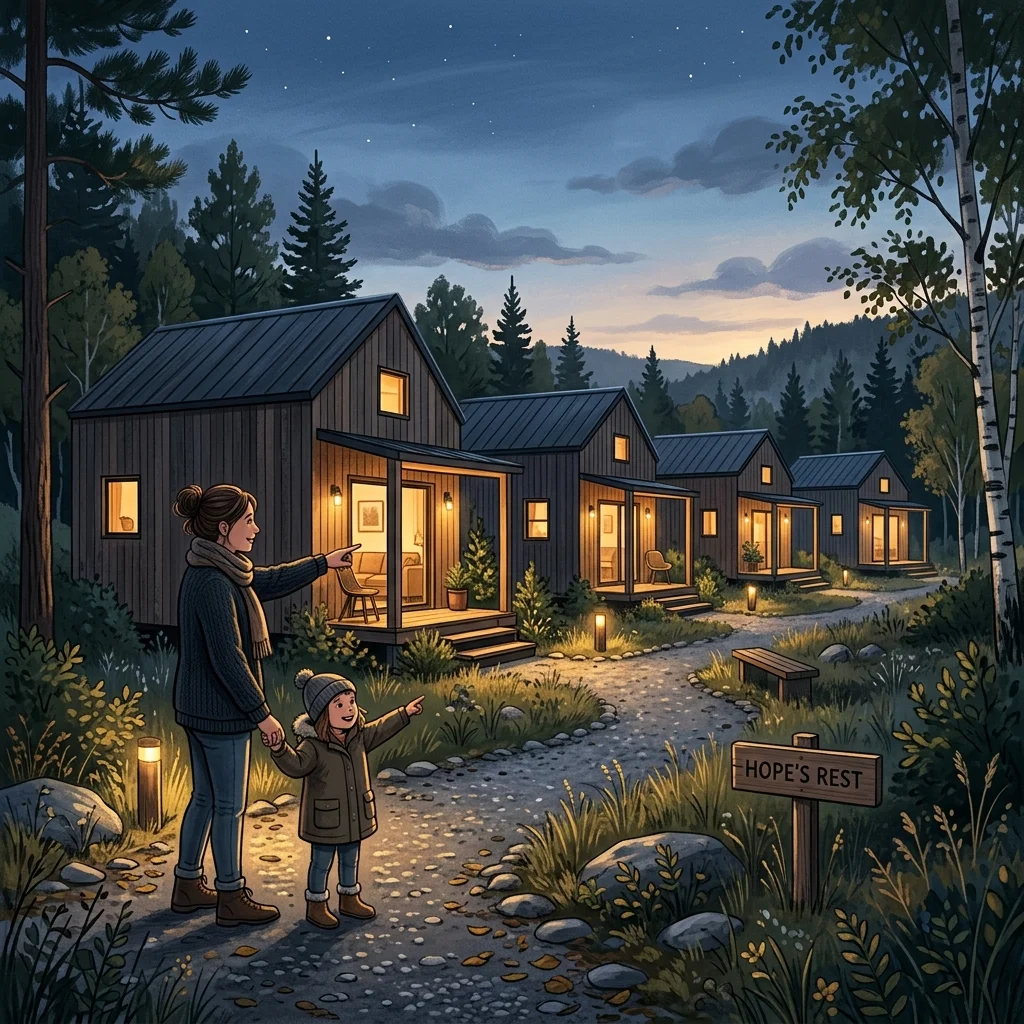
    Quick answer: On Monday, April 27, 2026, the City of Everett and Volunteers of America Western Washington (VOAWW) opened a 20-unit Pallet Shelter Village for women experiencing homelessness with their children. The village is built on city-owned land off Sievers-Duecy Boulevard, includes a community kitchen, playground, showers, and detached restrooms, and offers up to 12 months of transitional stays with wraparound recovery and job support — funded by City of Everett American Rescue Plan Act dollars and a $250,000 match from Snohomish County.

    There is a quiet, specific moment at a ribbon cutting that does not show up in the photo op. It is the moment a city council member, a CEO, and a mayor walk away from the cameras and the contractors start moving keys to a coordinator’s office. After that moment, the building is no longer a project. It is somebody’s address.

    That moment happened in Everett on April 27, 2026, on a parcel of city-owned land off Sievers-Duecy Boulevard in the west end of town. The City of Everett and Volunteers of America Western Washington — the organization most longtime Everett residents know simply as VOAWW — cut the ribbon on a 20-unit Pallet Shelter Village. It is the city’s third Pallet shelter project. It is the first one in Everett built specifically for women and their children. And it is, by far, the cleanest answer the city has produced to a question Casino Road and Pinehurst-Beverly Park families have been asking for years: where can a mother go with her kids when she does not have anywhere to go?

    Here is what is on site, how to qualify, who paid for it, and why this matters for Everett’s broader homelessness response in 2026.

    What’s Actually On The Site

    Twenty pallet structures sit on the lot. Each unit is designed to house one mother and up to three children — a sleeping space plus secure storage, climate control, and a lockable door. That is a different physical reality than the bunkhouse and emergency-shelter setups that most homeless families in Snohomish County had access to before this opening.

    Around the units, the village has the infrastructure that makes a temporary home livable for a family with kids. There are detached restrooms. There is a separate shower facility. There is a community kitchen and gathering place — a hard-walled, year-round space, not a tent — where residents can cook, eat, and meet with case workers without leaving the village. And there is a playground, the single feature that signals more about who this village is for than any other piece of the build.

    The Pallet structures themselves were built by Pallet Shelter, the Everett-based company whose modular units have been deployed across more than 70 cities. The site is enclosed and managed; access is controlled.

    Who It’s For And How Long Residents Can Stay

    The shelter is for women and their children, full stop. Residents can stay for up to 12 months while they work toward permanent housing.

    That 12-month window is the critical difference between an emergency shelter and what VOAWW is operating here. Emergency shelters typically run on 30-, 60-, or 90-day stays — barely enough time to stabilize, let alone rebuild a life. A 12-month transitional stay is long enough for a mother to get into substance use treatment if she needs it, hold a job for long enough to build a rental history, save a damage deposit, get her kids into a stable school routine, and apply for the permanent housing programs whose waiting lists run six months and longer.

    That is the math behind transitional housing as a model, and it is the math that the new village was built around.

    Wraparound Services — The Part That Actually Determines Outcomes

    VOAWW will be providing the wraparound services at the village. That word — wraparound — is one that gets used loosely in nonprofit-speak, but in this case it means something specific.

    Recovery assistance is on the list. So is job assistance. VOAWW already operates a portfolio of programs across Snohomish County that touch substance use disorder services, behavioral health, employment readiness, and family-stabilization case management. That is the same machinery that gets connected to a Pallet shelter resident from the day she moves in. It is the part of the model that determines whether 20 units become a revolving door or become 20 successful exits to permanent housing every 12 months.

    Brian Smith, the CEO of Volunteers of America Western Washington, said at the ribbon cutting on April 27 that “It’s about dignity. It’s about stability.” That language is plain on purpose. The model is not built around innovation theater. It is built around the boring, durable work of giving a mother a stable address long enough that she can put a kid in the same school for a full year.

    Where The Money Came From

    The City of Everett allocated American Rescue Plan Act (ARPA) dollars to the project. ARPA is the federal pandemic-recovery funding stream that gave municipalities one-time capital to spend on community resilience — and Everett’s allocation of it toward a Pallet shelter for mothers is one of the clearer uses of ARPA dollars in Snohomish County to date.

    Snohomish County contributed $250,000 to the project, which the City of Everett matched. The combined county-city contribution closed the funding gap that had kept the project moving through planning and into construction over roughly two years.

    The site itself is on city-owned land. That detail matters because it shortcuts one of the costliest line items in any shelter project — the land acquisition — and it gives the city long-term control over how the parcel is used.

    Why This Site, Why Now

    This is Everett’s third Pallet shelter project. The first two are well-known in the community — the Phil Johnson Ballfields site, which broke ground in 2023, and the South Everett site that opened earlier in the timeline. Each shelter targets a slightly different population because that is how Pallet’s modular shelter model works in practice: same structural footprint, different operator, different intake criteria.

    The Sievers-Duecy site fills the gap in Everett’s shelter portfolio that had been there since the first two opened. There was emergency shelter capacity for single adults. There was capacity for families through other agencies. There was no Everett-operated Pallet shelter that was set up specifically for the configuration that had become the fastest-growing slice of Snohomish County’s homelessness data — a mother with children, fleeing or recovering from something specific (a domestic situation, a substance use crisis, a sudden housing loss), and needing both privacy and structure.

    The 20-unit village answers that gap, in that geography, with that model. It is the answer to a question that residents on Casino Road, in Pinehurst-Beverly Park, and in the South Forest Park area had been raising at neighborhood meetings for the last 18 months.

    Who Showed Up On April 27

    The ribbon cutting was attended by Everett City Council President Don Schwab, VOAWW Executive Director of Housing Services Galina Volchkova, VOAWW CEO Brian Smith, and Everett Mayor Cassie Franklin. Each spoke in their public role; each represents a part of the partnership chain that produced the village.

    The mayor’s office has been signaling pallet-shelter expansion as a multi-year priority since 2022, when the third site at Glenwood and Sievers-Duecy was first proposed in a public neighborhood meeting. The city council allocated the ARPA dollars. VOAWW is operating it. The county made the match. That kind of layered partnership is not a typical accomplishment, and it is worth naming the structure that produced it.

    What Comes Next

    Two things, mainly.

    First, intake. VOAWW will be working through its case management pipeline to identify the first cohort of residents — women with children who are currently sheltered in less stable arrangements (couch-surfing, vehicles, emergency shelter, fleeing domestic violence) and who meet the program’s transitional-housing eligibility. The first wave of move-ins will follow the ribbon cutting by a matter of weeks.

    Second, outcomes tracking. A 20-unit village with a 12-month maximum stay should be producing roughly 20 successful exits to permanent housing per year if the model works. That is the metric that determines whether Everett gets a fourth and a fifth Pallet shelter, or whether the program plateaus. Both the city and VOAWW have been clear that the data on transitional success is part of how they will be evaluating the model.

    How To Help

    VOAWW’s main support channels are listed at voaww.org, including the donation page that funds the wraparound services side of the operation (recovery support, job assistance, family case management). Snohomish County donors who want to support the Sievers-Duecy site specifically can contact VOAWW’s development office through the same site.

    For volunteer involvement, VOAWW operates an extensive volunteer program across its housing, food, and family services lines. The volunteer page on voaww.org is the central intake.

    For neighborhood residents in the immediate vicinity who want to be part of welcoming the new community in — donations of children’s books, school supplies, kitchen basics, and bedding are routinely needed when a transitional shelter opens. Contact VOAWW for the current list and drop-off instructions.

    Frequently Asked Questions

    Who is eligible to stay at the new Pallet shelter village? Women who are experiencing homelessness with their children, working toward permanent housing. Each unit houses one mother and up to three children. Intake is managed by VOAWW.

    How long can a resident stay? Up to 12 months. The site is designed as transitional housing — a stabilizing stop, not an indefinite shelter.

    Where exactly is the village located? On city-owned land off Sievers-Duecy Boulevard in west Everett. The site was originally proposed at Glenwood and Sievers-Duecy in 2022.

    Who funded the project? The City of Everett allocated American Rescue Plan Act (ARPA) dollars. Snohomish County contributed $250,000, which the City of Everett matched.

    Is this the only Pallet shelter in Everett? No. This is Everett’s third Pallet shelter project. The first sites at Phil Johnson Ballfields and South Everett serve different populations.

    Who is operating the shelter day-to-day? Volunteers of America Western Washington (VOAWW) is the operator. VOAWW provides wraparound services including recovery assistance and job assistance.

    Who built the pallet units? The structures were built by Pallet Shelter, the Everett-based company whose modular shelter units have been deployed across the country.

    How can I support the new shelter? Donate through voaww.org, volunteer through VOAWW’s volunteer program, or contact VOAWW for the in-kind donation list (children’s books, school supplies, bedding, kitchen basics) when the first cohort moves in.

    Related Reading From Exploring Everett

    For context on Everett’s homelessness response, the Everett Gospel Mission shelter expansion piece on Exploring Everett covers the parallel growth of the city’s largest shelter provider; the Volunteers of America Western Washington complete guide details every program in VOAWW’s Everett-area portfolio; the Stations Unidos profile covers the anti-displacement work happening on Casino Road; and the Cocoon House youth-homelessness profile covers the part of the population this Pallet village will not directly serve.

    The Sievers-Duecy village is one piece of a multi-organization response. The other pieces, taken together, are how Everett actually moves families out of homelessness — one address at a time.

  • LETI’s New Telehealth Hub in South Everett: 25 Free Computers for Snohomish County Latino Families

    Quick answer: The Latino Educational Training Institute (LETI) in Everett has launched a new telehealth space stocked with 25 Wi-Fi-enabled computers, blood pressure monitors, and infrared thermometers — all donated by UnitedHealthcare Community Plan of Washington. The hub is free for anyone in Snohomish County who needs to take a doctor’s video visit but doesn’t have the device, the connection, or the private space to do it from home.

    If you have ever tried to take a video appointment from a kitchen table while two kids did homework on either side of you, you already know why this matters.

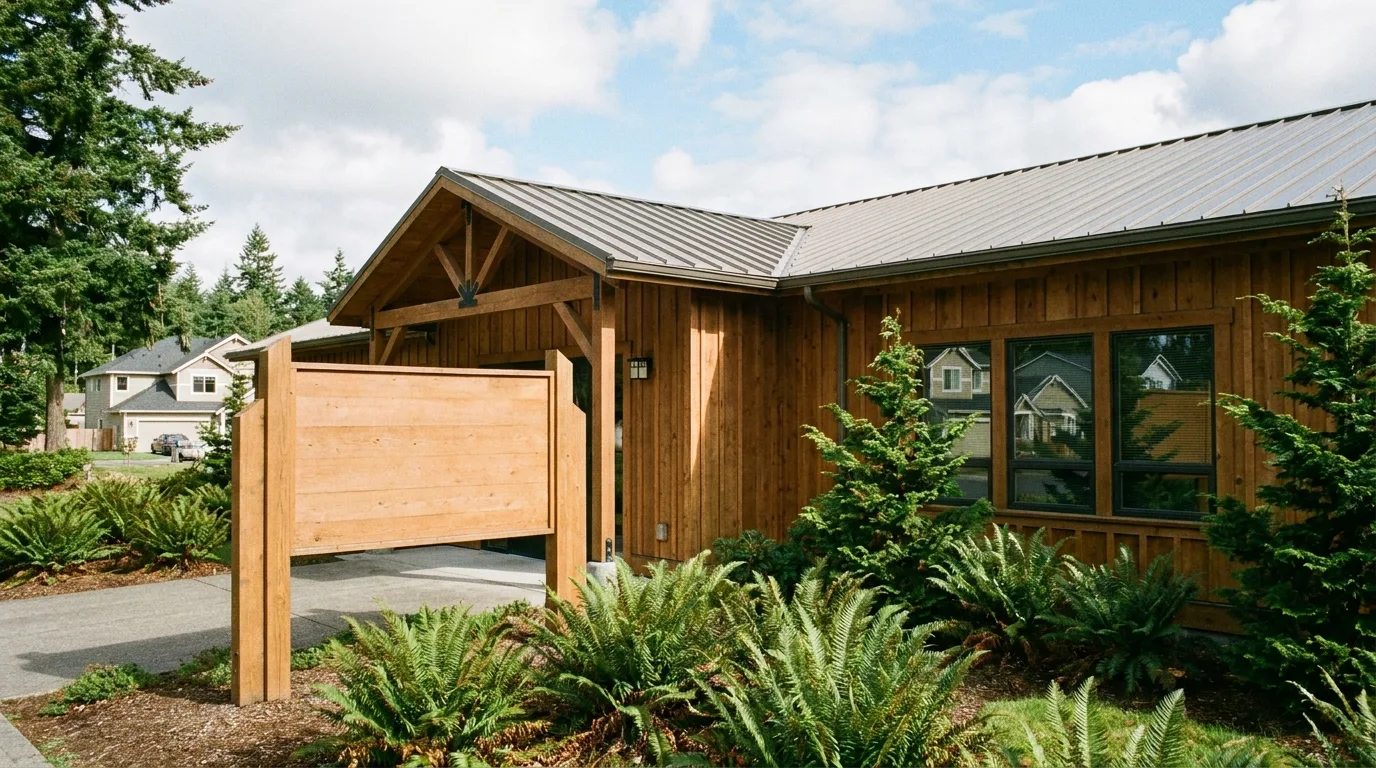
    Latino Educational Training Institute — most people just call it LETI — has spent twenty-seven years building the kind of community center that does more than fit one purpose. Computer classes. GED prep. Microentrepreneurship training for landscapers and house cleaners who want to formalize their businesses. Vocational coursework. A space where families could come, in Spanish, in English, and ask the question that had been worrying them all week. The roof above all of that, since 2026, now also covers a telehealth hub — and that hub is one of the cleanest pieces of community-organization infrastructure to land in south Everett in a long time.

    Here is what is inside, who built it, and why families in the Casino Road corridor and across Snohomish County should know it exists.

    What the Telehealth Hub Actually Is

    The space is exactly what the name suggests: a room at LETI’s Everett training center stocked with everything you need to take a telehealth appointment.

    UnitedHealthcare Community Plan of Washington donated 25 Wi-Fi-enabled computers to the room. They also donated the kind of medical equipment that makes a video visit useful instead of theatrical — blood pressure monitors, infrared thermometers, and the basic tools a clinician on the other side of the screen can actually ask you to use during the appointment so they have a real reading to work with.

    The point is that residents can use the donated equipment for both physical and behavioral health telehealth appointments. The computers are free for everyone — not means-tested, not credentialed, not gated by membership.

    That last detail is the one that matters most. Free for everyone is a different rule than free for clients. It means a grandmother who walked over from her apartment can come in. It means a working mom on her lunch break can come in. It means a teenager who needs a behavioral health visit and doesn’t want to take it in the room they share with two siblings can come in.

    Why LETI Is the Right Place For This

    LETI was founded in 1998 to provide general educational enrichment, skills development, and community service to the growing Hispanic community of Snohomish County. Twenty-seven years later, that mission has stretched into roughly every direction a community center can stretch.

    Founder and CEO Rosario Reyes framed the telehealth space this way: “This new telehealth space helps remove barriers that too often stand between people and the care they need.” That is a CEO talking about her own organization, in her own public role, in a quote distributed to local press — and it lands cleaner than most institutional statements because the barrier she is describing is specific. It is not philosophical. It is the wall that goes up when your phone is old, your internet is unreliable, and the appointment your insurance offers you is by video.

    LETI has been a trusted community partner in Snohomish County for years. The organization runs vocational classes — office assistance, bookkeeping, professional licensing — that have helped families turn informal work into licensed independent businesses. A landscaper who has been taking cash work for a decade can use the classes to formalize, get an EIN, and put a real business name on the side of a truck. That is the same population for whom a free telehealth room is not a luxury but a missing piece of infrastructure.

    The New 15,000-Square-Foot Facility — Context for Why This Matters Right Now

    The telehealth hub didn’t appear in isolation. LETI received a $3.8 million state allocation in 2024 to build out a new 15,000-square-foot facility in south Everett — a project that has been progressing toward a fully operational building with a commercial kitchen, several classrooms, a child care center, and a large multipurpose space for events like quinceañeras.

    The 2026 facility plan reads like a long list of needs the Casino Road and Pinehurst-Beverly Park families had been telling the city for years. A commercial kitchen so the food-truck entrepreneurs in the area have a licensed prep space. Classrooms for adult education that runs in the evening when shifts end. A child care center for parents in those classes. An event space large enough for the celebrations that hold the community together — quinceañeras, weddings, graduations — without forcing families to rent at hotel-banquet prices.

    The telehealth room slotted into that build as one more piece of the puzzle. The 2026 State of the City address by Mayor Cassie Franklin specifically called out LETI as one of the immigrant-community-serving organizations the city plans to strengthen ties with over the next year. Read that one way, and it is standard mayoral-speech language. Read it another way, and it is the city signaling that LETI is now part of how south Everett delivers services that the city itself cannot run alone.

    What This Means For The Latino Community On Casino Road

    Casino Road is the spine of the most diverse part of Everett. Latino families, Cambodian families, Filipino families, families from across East Africa, and longtime English-speaking families share this corridor — and the health-equity gap that runs through it is the kind of gap that telehealth was specifically designed to close, if anybody actually made the technology accessible.

    The catch is that telehealth was sold to America as a 2020 innovation that would democratize care, and then it quietly stratified along the same lines as every other piece of digital infrastructure. If you had broadband, a recent laptop, and a quiet room, telehealth was a gift. If you didn’t have one of those three, telehealth was just another appointment your insurance had moved farther out of reach.

    LETI’s hub is the answer to that stratification. Twenty-five computers. Donated, working, available, free. Equipment to make the visit clinically meaningful. A space that already feels familiar to the families who would benefit most from it. The combination is what makes it real instead of symbolic.

    How To Use The Hub

    If you live in south Everett and want to use LETI’s telehealth space, here is what you need to know.

    LETI’s Everett training center is reachable at 425-775-2688. The organization’s website is letiwa.org, where the about page lays out the founding history, the program list, and current locations. Walk-in availability for the telehealth space is being managed at the center itself — call ahead if you want to confirm a specific computer slot for an appointment you already have scheduled, particularly if you need the blood pressure cuff or thermometer during your visit.

    If you do not yet have a telehealth appointment but want to set one up, UnitedHealthcare Community Plan of Washington members can call their plan’s member services line to get started; other insurance plans have their own telehealth scheduling rules.

    Frequently Asked Questions

    Is LETI’s telehealth hub only for UnitedHealthcare members?
    No. UnitedHealthcare Community Plan of Washington donated the equipment, but the computers are free for everyone to use. The hub is not means-tested or restricted to specific insurance plans.

    Can I use the hub for behavioral health visits?
    Yes. The space is set up for both physical and behavioral health telehealth appointments. A private computer station can be used for therapy or counseling visits.

    Where is LETI located in Everett?
    LETI operates training programs in Everett with a connected presence in Lynnwood. The main Everett contact number is 425-775-2688. The 2026 new facility build-out in south Everett is the larger 15,000-square-foot space the organization is moving toward operating fully.

    Do I need to speak Spanish to use LETI’s services?
    No. LETI serves the Latino community as its founding mission, but services are open to anyone. Bilingual staff support is available.

    What other services does LETI offer beyond telehealth?
    Vocational training (office assistance, bookkeeping, microentrepreneurship), GED preparation, professional licensing pathways, and microloan information for small business owners.

    Is there a cost for using the computers or equipment?
    No. The 25 computers and the donated medical equipment are free to use.

    Related Reading From Exploring Everett

    LETI’s telehealth hub sits inside a much larger story about how south Everett’s institutions are being rebuilt around the families who actually live there. The Casino Road neighborhood guide on Exploring Everett lays out the full corridor; the Stations Unidos profile covers the anti-displacement community development corporation working in the same geography; and the Volunteers of America Western Washington guide covers the wraparound services many LETI clients also rely on.

    This is the part of Everett where the community organizations are the institutions. LETI is one of them, and the telehealth hub is one of the reasons why.

  • Water Ways at the Schack Art Center Closes Saturday May 16 — Six Days Left to See 90+ Pacific Northwest Artists Reckon With What’s Happening to Our Watersheds

    Water Ways at the Schack Art Center Closes Saturday May 16 — Six Days Left to See 90+ Pacific Northwest Artists Reckon With What’s Happening to Our Watersheds

    Q: When does Water Ways close at the Schack Art Center in Everett?
    A: Saturday, May 16, 2026 is the final day. The free exhibition of more than ninety Pacific Northwest artists has been on view in Schack’s Main Gallery and Mezzanine Gallery in downtown Everett (2921 Hoyt Avenue) since March 26. Hours through closing day are Tuesday–Saturday 10 AM–5 PM and Sunday 12–5 PM.

    You have six days left to walk into the Schack Art Center and stand in front of the most ambitious group exhibition the building has hung this year.

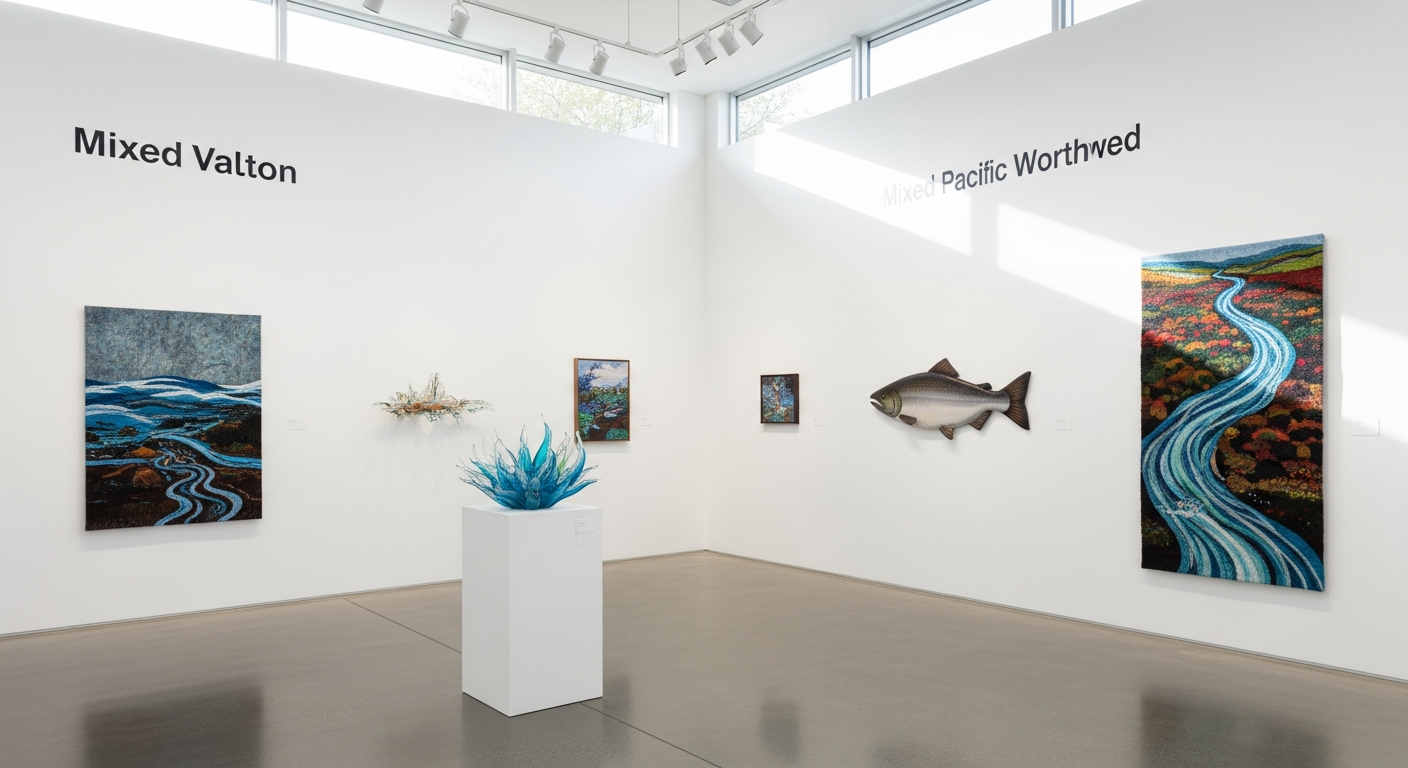
    Water Ways: Healing the Circle of Water and Life closes Saturday, May 16, 2026. It is the Schack’s 2026 Arts Education in Action exhibition, and it spans both the Main Gallery and the Mezzanine. Ninety-plus contemporary Pacific Northwest artists answered a single prompt — what does it mean to live next to water that is increasingly under stress — and the resulting wall is one of the more honest reckonings with Puget Sound, the Snohomish River, and the broader watersheds of the region that any local institution has put together in years.

    Curation verdict: GO. Free admission. Six days left. If you do one downtown Everett thing this week before lunch on Saturday, make it this.

    What you actually see when you walk in

    Water Ways is not a quiet exhibition. The Main Gallery wall hits you with Jared Rue’s Here’s the Catch, the lead image the Schack picked to represent the show, and from there the room moves between glass, ceramics, fiber, painting, photography, and sculpture without losing the thread. The list of participating artists reads like a regional Pacific Northwest who’s-who: Dan Friday, David Boxley, Pat McVay, Steve Jensen, Steve Klein, Rik Allen, Shelley Muzylowski-Allen, Georgia Gerber, Kait Rhoads, Lisa McShane, Cynthia Gaub, Christopher Mathie, Jan Hopkins, Chris Hopkins, Joy Hagen. Ninety-plus names, with field-trip-grade interpretive labels next to each.

    Standout works flagged on the Schack’s own page include Jeremy Kester’s The Last Drop, Julie C Baer’s Acorn Barnacle, Steve Jensen’s The Fish are Disappearing, Stephen Yates’s Streaming V, Trish Harding’s Sea Stars, and Deborah Singer’s Great Blue Heron Near Aberdeen. The Mezzanine carries additional work and field-trip activity stations.

    You can move through the show in twenty minutes. Most people stay an hour. The interpretive copy is excellent and the pieces talk to each other — salmon next to glass next to hand-built relief tile next to photograph — in a way that makes you think harder about what you’re looking at than a single-medium exhibition usually does.

    Practical details for the closing week

    • What: Water Ways: Healing the Circle of Water and Life
    • Where: Schack Art Center, 2921 Hoyt Avenue, Everett, WA 98201
    • Closes: Saturday, May 16, 2026
    • Hours through closing: Tuesday–Saturday 10 AM–5 PM; Sunday 12–5 PM (closed Mondays)
    • Admission: Free
    • Parking: Free street parking on Hoyt and California avenues; 2-hour metered on Hewitt
    • Phone: (425) 309-7723

    Why this exhibition matters more than most regional group shows

    Two things separate Water Ways from a typical Schack group hang.

    First, the prompt is real. Arts Education in Action is the Schack’s curriculum-anchored programming track. The exhibitions in this series are built to be taught from — school groups walk through, do hands-on response activities, and leave with a mental model that ties what they saw on the wall to a watershed they actually live next to. The Schack’s Education Coordinator, Breannah Gammon, runs the field-trip program out of the show.

    That changes what artists submit. When the audience includes seventh-graders who will walk a Snohomish County riverbank that afternoon, you cannot get away with abstract gesture as a substitute for a point of view. Marguerite Goff’s two-panel relief tile, Traveling Upstream: Beauty Returns to Our Rivers, lands harder when you understand it next to a class of kids who just learned what a watershed is. Tiami Hogberg’s Without them there’s no US works on art-school terms and on get-it-immediately terms at the same time. Jeanne Poling’s five photography prints push the show toward documentary and back.

    Second, the curatorial framing is honest about what’s happening to our water. The exhibition title — Healing the Circle of Water and Life — is not lukewarm. The Schack’s programming page describes work that “highlights the beauty and interconnectedness of Earth’s water systems, the science behind them, and the effects of environmental change on all forms of life—human, animal, and plant.” A May 2 panel discussion, How We Heal the Circle of Water and Life, brought in Adopt A Stream Foundation and Puget Soundkeeper Alliance to talk watershed restoration, orca pod health, and clean-water supply alongside the artists.

    Most regional group shows give you a theme and let the artists respond loosely. Water Ways picks a fight with how the region is letting down its water and asks the artists to put a stake in the ground. Most of them do.

    Who you should look for in the gallery

    If you have an hour and want to walk out remembering specific work, here are the names worth slowing down for:

    • Jared RueHere’s the Catch, the show’s lead image, in the Main Gallery
    • Dan Friday and David Boxley — Coast Salish work that sits naturally in a watershed-themed room
    • Steve JensenThe Fish are Disappearing, a piece whose title does most of the work and whose execution earns the title
    • Pat McVay and Georgia Gerber — sculptural responses with Pacific Northwest provenance
    • Kait Rhoads, Rik Allen, and Shelley Muzylowski-Allen — glass work that uses the medium for what it was made for here
    • Chris Hopkins and Christopher Mathie — painters working in two very different traditions, both responding to the prompt seriously
    • Lisa McShane — landscape painting with a documentary eye
    • Marguerite GoffTraveling Upstream: Beauty Returns to Our Rivers, a relief tile that anchors a corner of the room

    The full ninety-plus-artist roster is on the Schack’s exhibition page. The gallery store on the way out carries work by many of the same artists at meaningfully smaller scale and price.

    What to pair the visit with

    The Schack sits on Hoyt between California and Wetmore, two blocks from Hewitt Avenue. Make a half-day of it: park free on Hoyt, walk through Water Ways, then drop in at the Schack Gallery Store on the way out for Pacific Northwest work you can actually take home. Lunch options within five blocks include Narrative Coffee, Lombardi’s at the marina, the food trucks at Beverly Park, and the steady rotation at Tony V’s Garage if you’re staying for a happier hour.

    If you want to make it an arts day, the show closes May 16 at 5 PM, the same evening Geoff Tate is performing Operation: Mindcrime in full at the Historic Everett Theatre and Dana Gould is at HET that same week. Walk Water Ways at 11 AM, lunch on Hewitt, then make a real evening of it.

    What’s next at Schack after Water Ways

    The Schack’s biggest art week of the spring drops May 28 with the Contemporary Northwest Artists Exhibition and the Summer Auction. Two days later on May 30 the Artists’ Garage Sale spreads 140-plus artists across Wetmore Plaza for the best art-buying day of the year in Everett. The Garden Party, the Schack’s annual summer kickoff, lands Thursday, June 4 from 5–8 PM and opens Sorticulture weekend.

    That’s a packed three weeks. Water Ways is what closes the spring run, and after Saturday it’s gone. There is no extension. There is no traveling version. This installation lives at 2921 Hoyt Avenue until 5 PM on May 16 and then it comes down.

    Six days. Free admission. Ninety-plus artists. A real point of view about a river system most of us drive over without thinking about. Go.

    Frequently Asked Questions

    How much does it cost to see Water Ways at Schack Art Center?

    Admission to the Schack Art Center is free, including Water Ways. The Schack is a 501(c)(3) nonprofit and accepts donations at the door if you would like to support free programming.

    What are the Schack’s hours through May 16?

    Tuesday through Saturday 10 AM to 5 PM, Sunday 12 to 5 PM. Closed Mondays. The final day of the exhibition is Saturday, May 16, 2026 — plan to be in the gallery before 5 PM.

    Is the exhibition kid-friendly?

    Yes. Water Ways is part of the Schack’s Arts Education in Action series and was designed to support school field trips with hands-on response activities. Strollers are welcome and the galleries are stroller-accessible.

    Where do I park near the Schack Art Center?

    Free street parking on Hoyt Avenue and California Street is usually available within a block. Two-hour metered parking on Hewitt is free after 6 PM. The Wall Street garage is the closest covered option for a longer visit.

    Can I buy work from the exhibition?

    Most pieces in Water Ways are not for sale through the show, but the Schack’s Gallery Store stocks work from many of the same artists at smaller scale. The annual Schack Summer Auction on May 28 and the Artists’ Garage Sale on May 30 are the next major Schack buying opportunities.

    Is the Schack Art Center accessible?

    Yes. The Main Gallery is fully ADA-accessible at street level. The Mezzanine has elevator access. Service animals are welcome.

    What is the Schack’s relationship to Sorticulture?

    The Schack runs Sorticulture, the city’s beloved garden festival, which returns to downtown Everett June 5–7, 2026. The Schack’s Garden Party on Thursday, June 4 from 5–8 PM kicks off the weekend and is the unofficial summer-arts opening night for the building.

  • Los Lobos & Los Lonely Boys Bring The Brotherhood Tour to Kings Hall on August 12 — One Pacific Northwest Stop, Two of America’s Most Important Mexican-American Rock Bands on One Stage

    Los Lobos & Los Lonely Boys Bring The Brotherhood Tour to Kings Hall on August 12 — One Pacific Northwest Stop, Two of America’s Most Important Mexican-American Rock Bands on One Stage

    Q: When are Los Lobos and Los Lonely Boys playing in Everett?
    A: Wednesday, August 12, 2026 at 7:00 PM at Kings Hall inside APEX Everett (1611 Everett Avenue). Tickets went on sale Friday, May 1 through Ticketmaster. The Brotherhood Tour pairs the East L.A. Grammy winners with the Garza brothers’ Texican rock trio for a single double-bill stop in the Pacific Northwest.

    If you only clear your calendar for one show this summer at Kings Hall, this is the one.

    Los Lobos and Los Lonely Boys are bringing The Brotherhood Tour to APEX Everett’s Kings Hall on Wednesday, August 12, 2026, doors typical for the room and the show running 7:00–10:00 PM. Two of the most important Mexican-American rock bands in the country, on one stage, in a downtown Everett ballroom that has spent the last eighteen months quietly turning into the best mid-size music room between Seattle and Vancouver. Tickets went on sale Friday, May 1 at 10 AM through Ticketmaster, and the floor is already moving.

    Curation verdict: GO. Clear the calendar. This is a once-in-a-tour bill that almost never passes through a room this size, and the room itself is a big part of why this matters.

    Why a double bill of Los Lobos and Los Lonely Boys actually matters

    You can list the hits and it still won’t capture it. Los Lobos are East L.A. lifers who started playing weddings and quinceañeras in the mid-1970s and ended up rewriting the rules for what a working American rock band could carry. They won the first Grammy in what was then called the “Mexican-American Performance” category, took “La Bamba” to number one in 1987, and have spent forty-plus years stitching rock, blues, Tex-Mex, son jarocho, and traditional Mexican folk into something that doesn’t actually sound like anyone else. David Hidalgo and Cesar Rosas trading guitar lines is one of the great underrated sounds in American music.

    Los Lonely Boys are the Garza brothers — Henry, Jojo, and Ringo — out of San Angelo, Texas, who broke nationally in 2004 with “Heaven” and a Grammy for Best Pop Performance by a Duo or Group. They call what they do “Texican rock ‘n’ roll,” which is shorthand for guitar-forward blues with three-part harmony brothers can only get from sharing a kitchen table for thirty years. Henry’s tone is famously the closest thing to Stevie Ray Vaughan that the modern blues circuit produces, and his brothers’ bass and drums lock in like a single pulse.

    Pairing them is the obvious move and somehow nobody had done it. The Brotherhood Tour started rolling in 2025 and has been one of the year’s harder tickets in markets that have seen it. Kings Hall in Everett is one of a small handful of West Coast stops on the run, and the Pacific Northwest gets exactly one shot.

    Why Kings Hall is the right room for this show

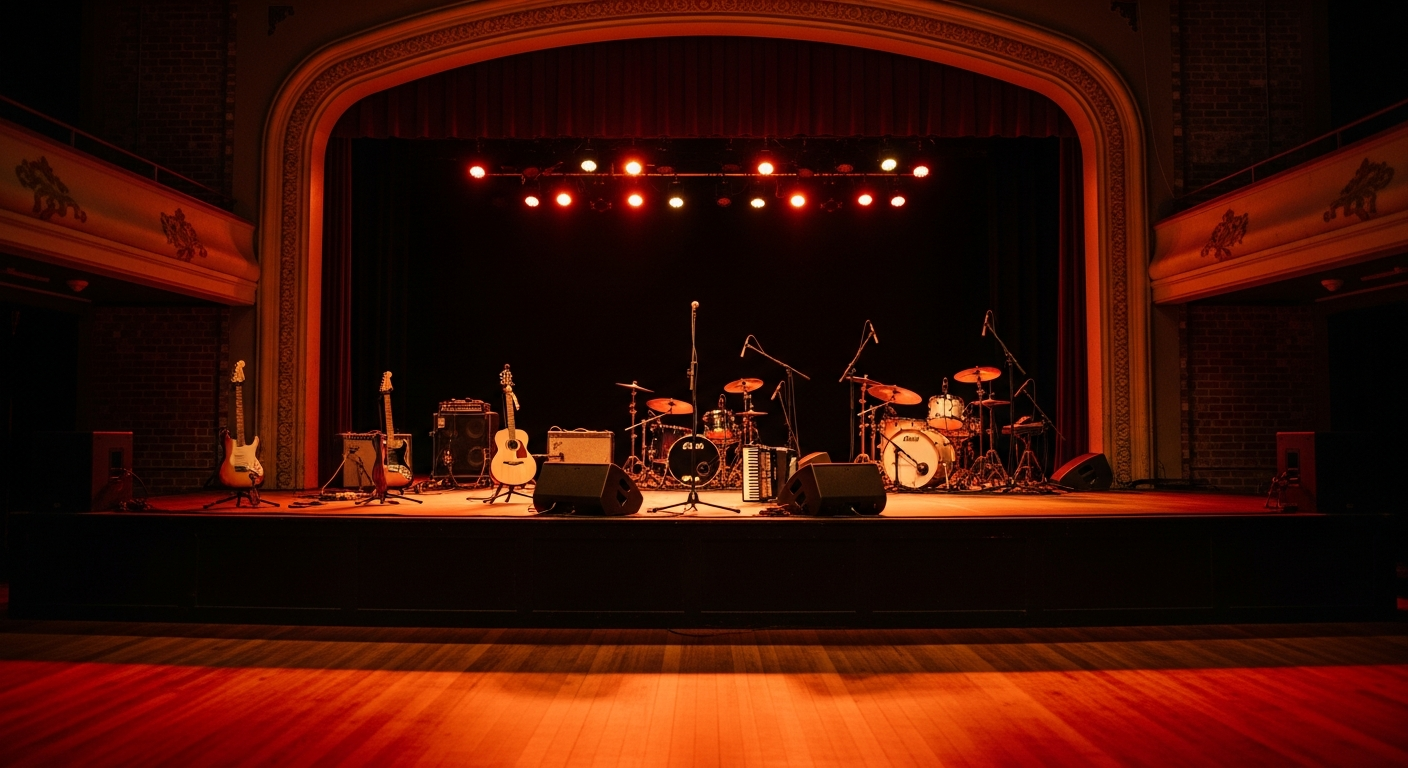
    This is the part that gets undersold. Kings Hall is the upstairs ballroom inside the APEX Art & Culture Center at 1611 Everett Avenue — a 1909 Beaux-Arts Masonic temple that APEX has spent the last two years rehabbing into one of the more thoughtful mid-size venues in the region. Soaring proscenium, hardwood floor, balcony seating, and sightlines that work from anywhere in the room. It’s not a barn. It’s not a club. It’s the size of room where a band like Los Lobos can stretch out on “Don’t Worry Baby” or a half-time son jarocho jam without losing the audience to bar noise.

    The smaller-room upside is real. Los Lobos plays sheds and theaters all summer. Los Lonely Boys plays casinos and amphitheaters across the South. They both play arena seats opening for bigger acts. Kings Hall is meaningfully more intimate than any of those, and the room reads warm — wood, plaster, none of the cinderblock-bounce that wrecks so many converted-warehouse venues. If you have ever wanted to hear “Will the Wolf Survive” without 9,000 people in front of you, this is the night.

    Practical details for August 12

    • What: Los Lobos & Los Lonely Boys — The Brotherhood Tour
    • When: Wednesday, August 12, 2026 — 7:00 PM start, scheduled to 10:00 PM
    • Where: Kings Hall at APEX Everett, 1611 Everett Avenue, Everett, WA 98201
    • Tickets: Ticketmaster (on sale since May 1, 2026); also listed via Live Nation and SeatGeek
    • Age: All ages with a paying adult; the venue serves 21+ at the bars
    • Parking: Hewitt Avenue meters are free after 6 PM; the Wall Street garage at 2820 Wall Street is the easiest walk-in

    Where this slots into a great Everett summer of live music

    The Brotherhood Tour is one stop on what is shaping up to be the strongest concert summer downtown Everett has had in a decade. Kings Hall alone has The Crystal Method and Rabbit in the Moon on June 13, Petty Thief and Pretenders UK on June 27, and now Los Lobos / Los Lonely Boys on August 12. Around the corner at the Historic Everett Theatre, Grupo Niche is bringing a Latin Grammy–winning salsa orchestra to an 1901 opera house on May 31, and Geoff Tate is closing the book on Operation: Mindcrime on May 23. Tony V’s Garage is stacking weekend bills on Hewitt that consistently outperform their billing.

    You can argue with the calendar but you can’t argue with the math. For roughly the price of one Climate Pledge Arena ticket, an Everett summer of music gets you four headline shows and a couple of weeknight surprises in a venue you can walk to from a downtown brewpub. The Brotherhood Tour is the best individual bill of any of them.

    What to expect from the live show

    Both bands have framed this as a true co-bill, not an opener-and-headliner split. The pattern from earlier 2025 stops is each band doing roughly seventy minutes, then closing the night with a joint encore that has paired “La Bamba” and “Heaven” back-to-back, with all six players on stage. If you are coming for the catalog, you’ll get it: Los Lobos has been pulling deep cuts from Kiko and How Will the Wolf Survive? alongside the Ritchie Valens material, and Los Lonely Boys have rotated “Crazy Dream,” “More Than Love,” and “I’m a Stranger” into their core run.

    What you should not expect is a strict Latin-music night. Both bands draw from blues, classic rock, country, and gospel as much as anything Mexican-American specific. Los Lobos in particular is a roots-rock band that happens to also be one of the most important Mexican-American bands in history; the Tex-Mex framing under-sells what they do live. Bring earplugs if you want — the room can get loud — and bring the friend who still talks about that one time they saw Stevie Ray.

    Why this kind of booking matters for Everett

    Two summers ago, this show would not have stopped in Everett. It would have played the Moore in Seattle or skipped the Pacific Northwest entirely on its way to Portland. The fact that APEX has steadily landed Crystal Method, Canned Heat, Big Brother and the Holding Company, Petty Thief, and now The Brotherhood Tour in 2026 says something about how fast Kings Hall has become a real touring stop. Promoters route to rooms that fill seats and treat the artists right. Kings Hall has now done both, repeatedly, and it shows.

    For locals, that translates to fewer trips to Seattle. For visitors, it means a credible Wednesday-night reason to be in downtown Everett in August — three blocks from the Historic Everett Theatre, six blocks from Tony V’s, and a five-minute walk from the Schack Art Center, the Funko HQ store, and a stretch of Hewitt Avenue that increasingly looks like a real downtown again.

    August 12. Kings Hall. Two great American bands on one stage. Don’t miss it.

    Frequently Asked Questions

    How much do tickets cost for The Brotherhood Tour at Kings Hall?

    Pricing was set by APEX and Live Nation when tickets went on sale May 1, 2026. Across the run, Brotherhood Tour tickets have generally listed from the mid-$30s for general floor and rise into the $80s for premium reserved seating, with VIP tiers higher. Check Ticketmaster for the current Kings Hall price and any remaining premium reserves.

    Is Kings Hall a seated or standing venue?

    Kings Hall is a flexible-floor ballroom — for The Brotherhood Tour, expect a mix of reserved table seating, balcony seating, and a general-floor area near the stage. Configuration varies by show; the Ticketmaster seat map for August 12 reflects the final layout.

    Where is Kings Hall in Everett?

    Kings Hall is the upstairs ballroom inside the APEX Art & Culture Center at 1611 Everett Avenue, Everett, WA 98201, between Wetmore and Rockefeller in downtown Everett. The building dates to 1909 and was originally a Masonic temple.

    What’s the parking situation?

    Hewitt and Everett Avenue street meters are free after 6 PM. The Wall Street parking garage at 2820 Wall Street is the closest covered option (about a two-block walk). The lot at Wetmore and Pacific is the next best alternative.

    Will there be food and drink at the show?

    Yes. APEX runs El Sid, the on-site bar and lounge, plus 16Eleven downstairs for a sit-down dinner before the show. Reserve early — a Kings Hall headliner night fills 16Eleven by 6 PM.

    Is the venue accessible?

    Yes. APEX has an elevator to the Kings Hall floor and accessible seating sections. Note accessibility needs at the time of ticket purchase or call APEX directly to confirm placement.

    What other shows are coming up at Kings Hall?

    The Crystal Method and Rabbit in the Moon play June 13. Petty Thief: A Tribute to Tom Petty and Pretenders UK share the bill on June 27. The full APEX calendar is at apexeverett.com/events.

  • Glacier Peak Books State, Jackson and Lake Stevens Fight at Funko Field: Wesco 4A Baseball Comes Home

    **The quick read:** Wesco 4A baseball regular-season champion Glacier Peak punched its WIAA State Tournament ticket Saturday at Bannerwood Park with an 8-2 quarterfinal win over Bothell. Jackson and Lake Stevens dropped their quarterfinals and head to the Consolation Bracket — both of which are being played at Funko Field in Everett on Thursday, May 14. Then on May 29-30, the WIAA 3A and 4A State Baseball Championships return to Funko Field for the third straight year. This is a great time to be a local high-school baseball fan.

    If you grew up around Everett, you already know: high school spring sports get every bit of the love that the pro and junior teams in this town do. And right now, the Wesco postseason is putting all of it within a five-mile drive of downtown Everett.

    Here’s where Wesco baseball stands heading into the back half of May — and why all roads lead to Funko Field.

    Glacier Peak Locks the State Bid

    Glacier Peak entered the District 1/2 4A Baseball Tournament as the No. 2 seed on the back of the Wesco 4A regular-season league title. Saturday at Bannerwood Park in Bellevue, the Grizzlies took care of business in their quarterfinal, beating No. 10 Bothell 8-2 to clinch a state berth.

    In a District tournament where five of the 12 teams advance to State, a quarterfinal win is the magic number. Glacier Peak is in. From here it’s playing for seeding and a potential District 1/2 championship.

    Their next game is the semifinal Thursday, May 14, at 4:00 p.m. at Bannerwood Park against No. 3 Eastlake (out of KingCo 4A). That game will be streamed on the Eli Sports Network. If Glacier Peak wins, they’re in the District championship Saturday, May 16 at 6:00 p.m., also at Bannerwood Park.

    Jackson and Lake Stevens Aren’t Done — and They’re Playing in Our Backyard

    This is the part that matters for an Everett high-school baseball fan with no easy way to get to Bellevue on a school night: the Consolation Bracket is being played at Funko Field.

    Two Wesco programs are still alive in that bracket:

    • **No. 8 Jackson** (which beat No. 9 Issaquah 3-0 in the first round before falling 3-2 to top-seeded Woodinville in the quarterfinal Saturday)
    • **No. 4 Lake Stevens** (which dropped a 5-1 quarterfinal to No. 12 Skyline)

    Both teams play their Consolation games at Funko Field on Thursday, May 14:

    • **Bothell vs. Lake Washington — 4:00 p.m. at Funko Field**
    • **Jackson vs. Lake Stevens — 7:00 p.m. at Funko Field**

    That’s a Wesco-vs-Wesco showdown between Jackson and Lake Stevens in a loser-out game on AquaSox dirt. The winner survives to play on Saturday May 16 for the final State Tournament bid out of this District. It’s exactly the kind of high-school baseball game that makes a Thursday night worth showing up for.

    Kamiak’s Run Ended Early

    The other Wesco team in the field, Kamiak (No. 11 seed), drew No. 6 Lake Washington in the first round Thursday May 7 and dropped that game 6-0. Tough draw, tough result, but the Knights’ regular season — and the fact that they made the District field at all — speaks to the depth of Wesco 4A baseball in 2026.

    And Then State Returns to Everett

    Once the District 1/2 dust settles, the bigger picture: the 2026 WIAA 3A and 4A State Baseball Championships return to Funko Field on Friday and Saturday, May 29-30, for the third consecutive year. Four 3A teams and four 4A teams will play for state titles on the same field where the AquaSox host Northwest League games all summer.

    This is one of the cooler quirks of the Everett sports calendar. The same outfield grass where Felnin Celesten will be standing in June was, three weekends earlier, where a Washington high-school senior took an at-bat for a state championship. That’s a sneaky-great asset for the city, and the Snohomish County Sports Commission has done well to bring it back year after year.

    What About the Wesco South 2A-3A Race?

    In the Wesco South 2A-3A baseball league, Edmonds-Woodway won its fourth straight league title with a clincher against Shorewood on May 1. That’s a remarkable run of program-level dominance — four-peat at the league level is the kind of thing that puts a coaching staff in the local baseball hall of memory.

    Edmonds-Woodway will represent Wesco South in its respective District 1 3A tournament. Specific bracket information for that race is still developing on the WIAA schedule page; we’ll track it as the playoffs unfold.

    Things to Watch This Week

    Wesco 4A loyalty test: Both Jackson and Lake Stevens are alive at Funko Field Thursday night. If Wesco fans want a clear preference, it’s “let one of ours grab the last State bid.” Showing up in person is the easiest way to be loud about that.

    Glacier Peak’s semifinal: Eastlake is a serious draw on Thursday at 4 p.m. The Wolves were a state semifinalist a year ago out of this same tournament. If Glacier Peak gets through, the Grizzlies are in the District championship Saturday with a real shot at the No. 1 District 1/2 4A seed at State.

    The state weekend: Mark May 29-30. Two days of high-school state-championship baseball at Funko Field, before the AquaSox come back home for their summer push. If you’ve never gone to a state championship game in person, this is a good year to start.

    Fan-Voice Take

    There’s a thing this town does well that doesn’t always get praised the way it deserves: we show up for the kids. The Silvertips and AquaSox get the headlines, but the Wesco 4A district tournament has been a real local event for as long as the four-school Everett School District plus Glacier Peak, Jackson, Lake Stevens, and Kamiak have all been playing in the same league pyramid.

    A Thursday-night doubleheader at Funko Field where one Wesco team has to send another Wesco team home with one swing? That’s why we love it. Bring a hat. Bring some money for the concession line. Bring your kid. Sit behind the dugout and pay attention, because two years from now one of those guys might be in pro spring training and you’ll get to say you saw the first big swing.

    Frequently Asked Questions

    Who won the Wesco 4A baseball regular-season title in 2026?

    Glacier Peak. The Grizzlies entered the District 1/2 4A Tournament as the No. 2 seed.

    Where is the District 1/2 4A Baseball Tournament being played?

    The main bracket games are at Bannerwood Park in Bellevue. The Consolation Bracket games are being played at Funko Field in Everett.

    When is the Wesco vs Wesco Consolation game at Funko Field?

    Thursday, May 14, 2026, at 7:00 p.m., when No. 8 Jackson plays No. 4 Lake Stevens in a loser-out game.

    How many teams from the District 1/2 4A Tournament advance to State?

    Five teams. Quarterfinal winners are guaranteed State bids; Consolation Bracket survivors play for the remaining spots.

    When and where is the WIAA State Baseball Tournament?

    The 2026 WIAA 3A and 4A State Baseball Championships are at Funko Field in Everett on Friday and Saturday, May 29-30. Four 3A and four 4A teams will compete.

    Who won the Wesco South 2A-3A baseball title in 2026?

    Edmonds-Woodway, defeating Shorewood on May 1 for the Warriors’ fourth straight league title.

    Where can I watch the District 1/2 games online?

    Eli Sports Network is streaming all seven games at Bannerwood Park. The Consolation games at Funko Field have been historically streamed by local outlets — check the WIAA and Wesco Athletics schedule pages.

  • Anders Miller’s Road Test: Silvertips’ Backbone Heads to Art Hauser Centre With a Historic Save Percentage

    **The quick read:** Everett Silvertips goaltender Anders Miller takes a 12-0-1 playoff record, a 1.79 goals-against average, and a .936 save percentage into Game 3 of the WHL Championship Final on Tuesday, May 12, at the Art Hauser Centre in Prince Albert (6:30 p.m. PT). Through two rounds he sat at .948 — no WHL goalie with nine-plus playoff games has ever posted better. With the series tied 1-1 and the next three games on the road, the Silvertips’ chances of winning their first Ed Chynoweth Cup since 2007 depend on whether Miller can carry that work in front of someone else’s crowd.

    Hockey playoff series get decided by goaltending. We say that every spring like it’s a fortune-cookie cliché, but in the 2026 WHL Final it’s also literally what’s happening. The Everett Silvertips are tied 1-1 with the Prince Albert Raiders heading into a three-game road swing, and the player most responsible for keeping this dream season alive is wearing pads.

    Here’s why Anders Miller’s Game 3 might be the single most important shift of his career, and why Silvertips fans should feel both nervous and weirdly calm.

    The Number That Makes the Rest of the WHL Stop Talking

    Through two rounds of the 2026 WHL Playoffs, Miller put up a .948 save percentage. That is, per QuantHockey, the highest save percentage ever recorded in WHL playoff history by a goalie with nine or more games played. Not the highest of the year. Not the highest in the conference. The highest, full stop, going back through every postseason the league has ever played.

    Through 13 playoff games this spring, Miller now sits at:

    • **Record: 12-0-1**
    • **Goals-against average: 1.79** (2nd in the WHL playoffs)
    • **Save percentage: .936** (2nd in the WHL playoffs)
    • **Shutouts: 1** (T-2nd)
    • **Wins: 12** (1st)

    He’s the Mary Brown’s Chicken WHL Goaltender of the Month for April. He was Goaltender of the Week earlier in the run. He came over from Calgary in a midseason trade and proceeded to author the most efficient playoff goaltending stretch any 16-team WHL has seen.

    For fans who weren’t paying attention until the Penticton series: this isn’t a hot streak. This is the structural reason this franchise is two wins from each side of a championship.

    What Game 2 Told Us — and What Game 1 Didn’t

    In Game 2 of the Final at Angel of the Winds Arena, Miller stopped 37 of the shots he saw and the Silvertips ran away with it 6-2. That’s the version that has the Penticton series fresh in your head: Anders deletes a six-game series with goaltending, the team scores enough, off we go.

    Game 1 wasn’t that. The Raiders broke through with three second-period goals and won 4-2 — Mason Sivertson, Lukas Cootes on the power play, and Owen Christensen with the game-winner. Miller wasn’t bad; the second period got away from the entire team. But the gap between his Game 1 line and his Game 2 line is the entire reason this series shifted in 48 hours.

    Translation: the Silvertips don’t need Miller to be perfect. They need him to be the version of himself that the 2026 playoff numbers describe, and they need the team in front of him to give him a second period he can actually defend.

    Why Art Hauser Centre Changes Everything

    The Raiders take a 26-6-2 home regular-season record into Game 3. That is one of the best home environments in the entire CHL. The Art Hauser Centre is older, smaller (roughly 2,800 capacity), and louder than what Everett’s faced in this run — the building is structurally close to the ice in a way that newer arenas have engineered away.

    Three games in a row in that environment is the test. Game 3 Tuesday, Game 4 Wednesday, Game 5 Friday if needed. Then back to Angel of the Winds. The Silvertips have been 8-0 on the road through these playoffs — the best road playoff team in the WHL this spring — but that record was built against Wenatchee, Spokane, Penticton’s South Okanagan Events Centre. The Art Hauser Centre is a different room.

    What Miller controls on the road is the same thing he controls at home: angle, depth, rebound control. What he doesn’t control: the second-period crowd surge after a Raiders push, the visiting bench getting last change, or the in-between TV stoppages that hand a hostile building its momentum back. Those are the moments where playoff goaltending stops being numbers and becomes character.

    What to Watch in Game 3

    Three things to track Tuesday night:

    Volume on the first 15 shots. Miller has been excellent on the early-game shot volume across the playoffs. If Prince Albert generates 12-15 shots in the first period and Miller is at full credit, expect the Silvertips to find their offensive feet by the second.

    The second-period scoreboard. It’s been the franchise’s bête noire of this series — three goals against in the second of Game 1, then the team fixed it in Game 2. If Game 3 features a clean middle 20 minutes, the road games are winnable. If Prince Albert finds another second-period gear with their crowd behind them, the math gets harder.

    Power-play goaltending. Lukas Cootes scored on the power play in Game 1. Killing penalties on the road in a 2,800-seat building is one of the most uncomfortable jobs in hockey. Miller’s .948-through-two-rounds work included serious short-handed minutes against Penticton; the road PK in Saskatchewan is the next level of that test.

    The 19-Year Drought Context

    The Silvertips have not won the Ed Chynoweth Cup since 2007. That’s the entire framing for this stretch. There have been good Everett teams. There have been deep Everett playoff runs. There has not been a championship.

    Anders Miller wasn’t on any of those rosters, obviously. He was traded in from Calgary mid-season for exactly the moment Everett is in right now: a deep run in late spring where the path is mostly carved out by goaltending. If the Silvertips lift the cup, the franchise will print Miller’s stat line on a banner.

    If they don’t — well, the .948 was still the best save percentage in WHL playoff history at the cutoff, and that doesn’t go away.

    Schedule

    • **Game 3:** Tuesday, May 12 — at Prince Albert (Art Hauser Centre), 6:30 p.m. PT / 7:30 p.m. CT
    • **Game 4:** Wednesday, May 13 — at Prince Albert
    • **Game 5 (if needed):** Friday, May 15 — at Prince Albert
    • **Game 6 (if needed):** Sunday, May 17 — at Angel of the Winds Arena
    • **Game 7 (if needed):** Monday, May 18 — at Angel of the Winds Arena

    TV: TSN in Canada. Streaming: Victory+ in the United States.

    The Silvertips are eight wins from their first championship since 2007. Three of them, maybe more, have to come 1,200 miles from home. The goalie carrying the franchise’s first banner in 19 years is on the bus.

    Frequently Asked Questions

    When is Game 3 of the 2026 WHL Final?

    Tuesday, May 12, 2026, at 6:30 p.m. PT (7:30 p.m. CT) at the Art Hauser Centre in Prince Albert, Saskatchewan.

    What are Anders Miller’s 2026 WHL playoff stats?

    Through 13 games: 12-0-1 record, 1.79 GAA, .936 save percentage, 1 shutout. His .948 SV% through two rounds was the highest in WHL playoff history for a goalie with nine or more games played.

    Who has home-ice advantage in the WHL Final?

    The series follows a 2-3-2 format. Games 1-2 were at Angel of the Winds Arena (split 1-1). Games 3, 4, and 5 (if needed) are at the Art Hauser Centre. Games 6 and 7 (if needed) return to Everett.

    Where is the Art Hauser Centre?

    Prince Albert, Saskatchewan. Capacity is approximately 2,800. The Raiders went 26-6-2 there in the regular season.

    How can I watch the WHL Final from the U.S.?

    Victory+ streaming service is the U.S. broadcast partner. TSN carries the games in Canada.

    When was the Silvertips’ last WHL championship?

    2007. The franchise has not won the Ed Chynoweth Cup in 19 years.

    Who is starting in goal for the Raiders?

    Michal Orsulak started Game 1 and stopped 39 of 41. He is expected to be the starter for the home games at Art Hauser Centre.

  • AquaSox Drop Mother’s Day Finale 8-5 But Steal Five of Six From Hillsboro; Vancouver Up Next

    **The quick read:** The Everett AquaSox lost the Mother’s Day finale 8-5 to the Hillsboro Hops on Sunday, May 10, 2026, at Funko Field (Everett Memorial Stadium) in front of 2,261 fans — but they won the series five games to one, sit at 18-15, and are now tied with Tri-City for second place in the Northwest League. Next up: a six-game road trip to Vancouver starting Tuesday, May 12.

    You don’t usually want your homestand to end with a loss. But if you have to give one back, give it back the day after you put up 15 runs on Star Wars Night and after you’ve already locked up five of six against your division opponent. The AquaSox can live with that math.

    Here’s how the Mother’s Day finale at Funko Field went, what the full Hillsboro homestand told us, and what to watch when the Frogs cross into Canada on Tuesday.

    How the Finale Got Away

    Hillsboro came out of the dugout like they were trying to salvage something — and they did. The Hops put up a four-spot in the top half of the first two innings on the strength of a Kenny Castillo two-run single with the bases loaded, a Wallace Clark RBI single, and a Trent Youngblood RBI single in the second.

    To Everett’s credit, the Frogs answered immediately. Josh Caron took the first pitch he liked deep for a solo home run to put Everett on the board. Then the AquaSox loaded the bases on two singles and a walk. Jonny Farmelo drew a bases-loaded walk to bring in run number two, and a passed ball plated the third. Just like that, 4-3 game, and Funko Field had its Mother’s Day energy back.

    That was as close as it got. Alberto Barriga’s two-run blast to left-center in the fifth — his fifth homer of the year — made it 6-3. Then in the top of the eighth, Wallace Clark and Brady Counsell hit back-to-back solo home runs to push it to 8-3.

    The Frogs had one more swing left. Luis Suisbel led off the bottom of the eighth with a 386-foot solo shot, and Anthony Donofrio followed two batters later with a 395-foot blast to the Paine Field Home Run Porch — his first long ball of 2026 in his Everett Memorial Stadium debut. Beautiful piece of theater for Mother’s Day. Not enough to flip the result.

    Final: Hillsboro 8, Everett 5. Loss to Walter Ford (0-2). Hops righty Joangel Gonzalez (W). Game time: 2:32.

    The Homestand: Five-and-One

    This is the part that matters. Across six games against Hillsboro, the AquaSox took five. They opened the series winning four straight, blew the doors off the Hops 15-1 on Star Wars Night Saturday in front of a season-high 3,254, and then dropped the Mother’s Day matinée. Net result: the AquaSox climbed to 18-15, tied with the Tri-City Dust Devils for second place in the Northwest League, and they did it while running their best hitters through their first true rhythm of the season.

    Star Wars Night Saturday was the showcase — four home runs from Luke Stevenson (a three-run shot in the first that put Everett on the board), Luis Suisbel, Felnin Celesten, and Carlos Jimenez. Evan Truitt pitched 5.1 innings of one-run baseball, walked one, struck out four. The bullpen — Will Armbruester and Adam Smith — closed it without surrendering another run. 15-1. That game alone tells you why this prospect group is starting to feel real.

    Friday’s 8-1 win on Colton Shaw’s seven-strikeout start. Bryce Miller’s rehab gem on Silver Sluggers Night. Stevenson, Celesten, Jimenez, Caron, Donofrio, Suisbel — six different bats putting up tape-measure swings on a single homestand. That’s not noise. That’s a roster catching fire at the right time.

    Players to Watch Heading Into Vancouver

    A few names you want on your radar before the Frogs roll into B.C.:

    Felnin Celesten. Back-to-back Northwest League Player of the Week earlier this stretch, the Mariners’ top-tier middle infield prospect kept it going on Star Wars Night with a two-run home run plus an RBI single. He’s the engine.

    Luke Stevenson. Mariners’ Hitter of the Month for April, ranked the organization’s No. 8 prospect, and the Star Wars Night three-run homer was a reminder why the rankings exist.

    Anthony Donofrio. The Sunday solo homer is his first of the season, but the swing path on a 395-foot ball to the Home Run Porch is the kind of contact you remember. Watch this one.

    Luis Suisbel. Two homers across the homestand including the Mother’s Day shot. He’s quietly building a power profile.

    Brandon Eike. Six homers on the season heading into Vancouver. Still the longball pillar in this lineup.

    Brock Moore out of the bullpen — April Bullpen Award winner, 8.1 IP / 20 K / 4 SV / 2.16 ERA across the early season. Whenever this lineup gives him a lead, you trust the result.

    Next Up: Six in Vancouver, Then Home Against Tri-City

    The Frogs head north and cross the border for six games against the Vancouver Canadians at Nat Bailey Stadium — the legendary “Nat” — starting Tuesday, May 12, with first pitch at 7:05 p.m. The Canadians are the Blue Jays’ High-A affiliate and play in arguably the most charming ballpark in the Northwest League: 6,500 capacity, opened 1951, dual-purpose for baseball and the occasional concert.

    Vancouver is a road test for a roster that’s been thriving at home. Funko Field is friendly. The Nat has its own personality — the right field porch, the wind off False Creek, the sushi-and-Pacific-Dip concessions — and the Canadians have been playing well in their own building. This is the homestand-momentum-meets-road-reality matchup.

    After the six in Vancouver, the AquaSox return to Funko Field for a six-game homestand against the Tri-City Dust Devils — currently tied with Everett for second place. That’s a series with second-place implications baked in. Promotions confirmed for the Tri-City series include a ZOOperstars appearance, an AquaSox beanie hat giveaway presented by IBEW/NECA, and Sunday Fun Day.

    What This Homestand Told Us About 2026

    Three things came out of these six games against Hillsboro that matter for the rest of the season.

    First, this lineup can score in bunches. Fifteen runs on Saturday. Eight on Friday. Ten or more in multiple games across the prior road trips. The power is there, the patience is there, and the prospect-driven energy is there.

    Second, the bullpen depth is real. Moore, Smith, Armbruester, the back-end pieces — Everett has been winning the late innings even on nights where the offense doesn’t blow it open.

    Third, 18-15 with a five-of-six series win over a division opponent in May is the kind of position you want to be in heading into a road swing. The Frogs are not chasing anymore. They’re being chased.

    The Mother’s Day loss stings. The homestand was a statement.

    Frequently Asked Questions

    What was the final score of the AquaSox-Hops game on May 10, 2026?

    The Hillsboro Hops beat the Everett AquaSox 8-5 in the Mother’s Day finale at Funko Field (Everett Memorial Stadium). Attendance was 2,261.

    Who won the AquaSox-Hops series?

    The Everett AquaSox took five of the six games against Hillsboro on the May 5–10 homestand.

    What is the AquaSox record after the homestand?

    The AquaSox are 18-15 on the season, tied with the Tri-City Dust Devils for second place in the Northwest League.

    When does the AquaSox next series start?

    The Frogs play a six-game road series at the Vancouver Canadians starting Tuesday, May 12, 2026, at Nat Bailey Stadium. First pitch is 7:05 p.m.

    Who hit home runs for the AquaSox on Mother’s Day?

    Josh Caron hit a solo home run in the second inning. Luis Suisbel hit a 386-foot solo shot in the eighth, and Anthony Donofrio hit a 395-foot solo shot in the same inning — his first long ball of the season.

    What happened on Star Wars Night?

    The AquaSox demolished the Hops 15-1 on Saturday, May 9, in front of a season-high 3,254 fans. Luke Stevenson, Luis Suisbel, Felnin Celesten, and Carlos Jimenez all homered.

    When do the AquaSox return to Funko Field?

    After the Vancouver series, the AquaSox return home for six games against the Tri-City Dust Devils. The Tri-City series includes a ZOOperstars appearance, a beanie hat giveaway, and Sunday Fun Day.

  • Armed Forces Day Is May 16 — The Bremerton Parade Is the Puget Sound’s Flagship Tribute, and Here’s What NAVSTA Everett Families Should Know

    Armed Forces Day Is May 16 — The Bremerton Parade Is the Puget Sound’s Flagship Tribute, and Here’s What NAVSTA Everett Families Should Know

    What is Armed Forces Day 2026 and where is the Puget Sound’s flagship event? Armed Forces Day 2026 falls on Saturday, May 16. Established by Defense Secretary Louis Johnson in 1949 to honor all U.S. military branches under one banner after the Department of Defense unified the services, it lands annually on the third Saturday in May. In the Puget Sound region, the Bremerton Armed Forces Day Parade — the longest-running such parade in the country — steps off at 10 a.m. along Pacific Avenue in Downtown Bremerton, followed by a Heroes’ BBQ free to anyone with a military ID at Quincy Square. For NAVSTA Everett’s Navy families, it’s an hour’s drive (or a ferry ride) to the regional center of the day.

    For the roughly 6,000 sailors who call Naval Station Everett their duty station and the families who PCS in alongside them, Armed Forces Day is the one calendar day each year that recognizes active service across all branches at the same time. It is distinct from Memorial Day — May 25 in 2026, honoring those who died in service — and from Veterans Day in November, which honors those who have served honorably. Armed Forces Day, as the Department of Defense puts it, is the day for the people currently wearing the uniform.

    A Holiday Built for Uniformed Service

    On August 31, 1949, Defense Secretary Louis Johnson announced the creation of Armed Forces Day to replace the separate Army Day, Navy Day, and Air Force Day observances. The unified holiday followed the 1947 National Security Act, which had folded the services under a single Secretary of Defense. The first Armed Forces Day was celebrated on May 20, 1950, with a parade in Washington, D.C. that drew 10,000 troops from all branches past the president and his party. The inaugural theme — “Teamed for Defense” — survives as the holiday’s core idea seventy-six years later.

    The Puget Sound’s Flagship Event: The Bremerton Parade

    Across the water from Everett, Bremerton has run an Armed Forces Day Parade every year since 1948 — the local procession predates the federal holiday itself. The first march was organized by the Bremerton Chamber of Commerce to honor Master Sergeant John “Bud” Hawk, a Bremertonian who received the Medal of Honor from President Truman for his actions in the Falaise pocket during World War II. The parade absorbed the Armed Forces Day designation when the holiday formalized in 1950 and has run continuously since.

    By scale, the Bremerton parade is now the longest-running and largest Armed Forces Day parade in the nation, per the City of Bremerton and the Greater Kitsap Chamber, which organizes it. It draws 20,000+ from across Western Washington, with entries from Oregon and Spokane.

    Parade Specifics for 2026

    • Date: Saturday, May 16, 2026
    • Step-off: 10:00 a.m.
    • Route: Pacific Avenue, Downtown Bremerton
    • Reviewing stand: Pacific & 5th Street (units perform a one-minute slot in front of the stand)
    • Cost to spectate: Free
    • Runtime: About two hours

    Expect military marching units, color guards, classic vehicles, school bands, civic groups, and floats. The U.S. Navy Brass Band, Naval Base Kitsap’s resident ensemble, typically anchors the parade’s music slot.

    The Festival, the BBQ, and the Resource Fair

    After the parade clears Pacific Avenue, festivities continue at Quincy Square in downtown Bremerton. The Heroes’ BBQ is free to active-duty, reserve, retired, and veteran service members with a valid military ID — a nontrivial perk for NAVSTA Everett sailors and their families willing to make the trip across Puget Sound. The day also includes a Resource Fair, where veteran service organizations, family-support providers, and benefit administrators staff tables and field questions.

    For a Navy family new to the region — the May-through-August window is the peak Permanent Change of Station arrival period — the Bremerton resource fair functions as a one-day overview of what’s available across Puget Sound for service members and their dependents.

    How NAVSTA Everett Families Get There

    NAVSTA Everett to Downtown Bremerton is roughly an hour by car (I-5 south to WA-16 west to WA-3) or, often faster on a Saturday, the Edmonds-Kingston ferry plus a 30-minute drive south down the Kitsap Peninsula. Vehicle wait times on Washington State Ferries grow on Armed Forces Day weekend; check the morning sailing schedule before leaving.

    Closer-to-Everett options exist on a smaller scale. USO Northwest serves NAVSTA Everett and other regional installations with Armed Forces Day recognition activities. The American Legion Post 6 in Everett and the Snohomish County Veterans Assistance Program at the Drewel Building (425-388-7255) historically mark the day locally.

    For confirming whether NAVSTA Everett itself runs a base-specific Armed Forces Day program in any given year, the Fleet & Family Support Center at 425-304-3735 is the right clearing-house.

    What Civilian Everett Neighbors Can Do

    Armed Forces Day is one of the few non-controversial holidays on the American calendar specifically asking civilians to show up for the people in uniform. Practical, low-key ways to do that this year, ranked by effort:

    • Lowest effort: Pick up a check at a local restaurant for a uniformed sailor sitting two tables over, without making a scene. That one gesture lands.
    • Modest effort: Drive south, or take the ferry. Bremerton’s parade was built by a chamber of commerce in 1948 because a small Navy town wanted to thank one of its own.
    • Higher effort: Plug into the resource fair as a civilian volunteer. The Greater Kitsap Chamber takes parade-entry and volunteer applications through Eventeny each spring.

    Why the Day Still Matters for Everett

    Naval Station Everett is the destroyer pier for the U.S. Pacific Fleet’s Northwest grouping, with Arleigh Burke-class ships homeported here per the most recent Navy Region Northwest public listing. The community footprint of those crews — the families in Mukilteo, Marysville, north Everett, Lake Stevens, and Mill Creek schools — is the part of “Navy in Everett” that is visible 364 days a year, in classrooms and grocery aisles and youth-soccer sidelines. Armed Forces Day is the one day that makes that footprint visible to everyone else, all branches at once, under one roof.

    It also sits at the center of the longest stretch of military observances on the U.S. calendar — Military Spouse Appreciation Day (May 8), then Armed Forces Day, then Memorial Day (May 25), with Navy Gold Star Remembrance Month and Mental Health Awareness Month running underneath. Armed Forces Day is the active-duty thank-you in the middle.

    Frequently Asked Questions

    When exactly is Armed Forces Day 2026?

    Saturday, May 16, 2026. By federal designation since 1949, Armed Forces Day always falls on the third Saturday in May (afd.defense.gov).

    Is Armed Forces Day a federal holiday?

    No. It is a federally recognized observance but not a federal holiday. Federal offices, banks, and post offices remain open. Active-duty personnel are typically scheduled normally, though units often participate in parades, ceremonies, and community events.

    What’s the difference between Armed Forces Day, Memorial Day, and Veterans Day?

    Armed Forces Day (third Saturday in May) honors currently serving active-duty, Reserve, and National Guard personnel across all branches. Memorial Day (last Monday in May, falling on May 25 in 2026) honors those who died in service. Veterans Day (November 11) honors all who have served honorably, living or deceased.

    Will NAVSTA Everett be open to the public on Armed Forces Day?

    Naval Station Everett does not run an annual public open-house tied to Armed Forces Day. The base hosts its separate public-access events on different dates each year, and operational tempo influences which years feature broader community access. Call the NAVSTA Everett Fleet & Family Support Center at 425-304-3735 for current-year guidance.

    What’s free for military ID holders on May 16, 2026?

    At the Bremerton festival at Quincy Square, the Heroes’ BBQ is free to active-duty, reserve, retired, and veteran service members with a valid military ID. Many Snohomish County restaurants and businesses also run independent discount or free-meal programs for Armed Forces Day; those vary year to year and are not centrally listed.

    How long has the Bremerton parade been running?

    Since 1948. It started a year before Armed Forces Day was federally established, originally as a hometown tribute to Master Sergeant John “Bud” Hawk, the Bremertonian Medal of Honor recipient. The parade absorbed the federal designation in 1950 and has run continuously every year since.

    Can civilians march in the Bremerton parade?

    Yes. The Greater Kitsap Chamber accepts parade-entry applications from civic groups, school bands, businesses, and veterans organizations through its annual Eventeny portal. There is also a “Veterans Walk with Pride” participant track for individual veterans.

    What’s the fastest way for an Everett family to get to the Bremerton parade?

    The Edmonds-Kingston ferry plus a 30-minute drive south is often the faster door-to-door option than I-5 to WA-16 on a Saturday morning, and it’s the more pleasant trip. Check the Washington State Ferries schedule and vehicle wait times before leaving — wait times grow on Armed Forces Day weekend.

  • Boeing Just Bought Its 6001 36th Avenue Building in Everett for $54 Million — What Owning the Long-Leased Site Says About the North Line Ramp

    Boeing Just Bought Its 6001 36th Avenue Building in Everett for $54 Million — What Owning the Long-Leased Site Says About the North Line Ramp

    What did Boeing buy at 6001 36th Avenue West in Everett? Boeing purchased the 319,000-square-foot office and industrial flex building at 6001 36th Avenue West in Everett — a property it had been the sole tenant of for more than a decade — for $54 million in late 2025, locking down a 45-acre site just a few miles from the Boeing Everett Factory ahead of the 737 North Line activation this summer.

    Boeing Just Stopped Renting Its Everett Support Campus and Bought It Outright — Here’s Why That Matters Right Now

    If you spend any time driving the 36th Avenue West corridor between Mukilteo and the Everett Factory, you’ve probably passed the long, low Boeing-branded building on the east side of the road for years without ever thinking about who actually owned it. Until late 2025, the answer was Arka Properties Group and Black Equities Group, two real-estate operators headquartered well outside Snohomish County. Boeing had been the sole tenant of the 319,000 square foot office and industrial flex space at 6001 36th Avenue West for more than a decade as a long-term renter. As of the close of the late-2025 transaction reported by The Registry, Connect CRE, and the Seattle Daily Journal of Commerce, Boeing owns the building outright — and the roughly 45 acres of land underneath it — for a $54 million purchase price.

    Read in isolation, that’s a routine corporate real estate move — a long-term tenant exercises an option to buy when the math finally tilts that way. Read in the context of what’s actually happening on Boeing’s Everett campus over the next 90 days, it is something else. The 737 North Line is opening at midsummer 2026. Boeing is hiring 100 to 140 assemblers per week into Washington state operations. The Spirit AeroSystems acquisition closed in December 2025. The 777-9 just made its first production flight from Paine Field on May 7. And the company just locked in 45 acres of permanent industrial footprint a few miles north of the factory it has been operating for 56 years.

    The Property Itself — What’s Actually at 6001 36th Avenue West

    The Boeing ESRC building — the working name for the 6001 36th Avenue West property — is a flex-use industrial and office complex spanning 319,000 square feet across roughly 45 acres in southwest Everett, between Mukilteo and the Boeing Everett Factory campus. The site sits within easy commuting distance of the main factory and within the larger Paine Field aerospace cluster that already includes ZeroAvia, Aviation Technical Services, the Future of Flight Aviation Center, and the IAM 751 Machinists Institute on Airport Road. Per the Registry’s coverage of the transaction, Boeing has been the sole tenant for more than a decade — meaning the building has effectively functioned as a Boeing facility throughout its recent operating history, even when the underlying real estate was owned by outside investors.

    The sellers — Arka Properties Group and Black Equities Group — were represented by Cushman & Wakefield’s Pat Mutzel, Nico Napolitano, and Jeffrey Cole. The transaction closed in late 2025, with Snohomish County records confirming the deal value at $54 million. The Seattle Daily Journal of Commerce framed the buy as Boeing converting a long-running operational lease into permanent ownership of a building it was never going to vacate. That’s the standard read on this kind of deal in commercial real estate: when the lessee is the only tenant, the building is genuinely purpose-built around their operations, and the operating horizon stretches further than the remaining lease term, ownership becomes cheaper than continued rent over the projected use period.

    Why the Timing Lines Up With the North Line Ramp

    The North Line — Boeing’s fourth 737 MAX assembly line and the first 737 line ever to operate at Everett — opens at midsummer 2026, per the company’s confirmed timeline and the most recent Boeing.com features published in April. The line will initially produce the 737-8, 737-9, and 737-10 variants. It is the physical bridge from Renton’s monthly production rate of 47 toward the company’s stated 53-per-month rate target, and the standalone production home for the 737 MAX 10 once that variant achieves FAA certification. Production at the North Line will not instantly lift output. The line has to be staffed, trained, and stabilized under intensified FAA oversight — a process that Boeing’s own materials describe as taking the back half of 2026 and well into 2027 to fully scale.

    That ramp creates a specific kind of real-estate demand that does not show up in floor space inside the main factory building — the world’s largest building by volume already runs against its own internal capacity ceiling. The auxiliary needs that come with a new assembly program include training space, supplier integration offices, parts staging, quality engineering bullpens, and overflow administrative footprint for the program’s growing engineering and management headcount. A 319,000 square foot flex building a few miles from the factory, with a decade-plus of existing Boeing tenancy, is precisely the kind of asset that absorbs that auxiliary load without requiring new construction. Owning it instead of renting it removes a lease-renewal risk on the exact horizon Boeing is now committing to with the North Line, the 777-9 program, the KC-46 backlog, and the 777-8F freighter line that just rolled out from Everett in late April.

    What This Doesn’t Mean — A Note on the Workforce Read

    It’s worth being clear about what the $54 million purchase does and does not signal. It is not, by itself, an announcement of new headcount at the 6001 36th Avenue site. The building has functioned as a Boeing facility for more than ten years, and the company has not publicly disclosed any expansion of personnel tied to the ownership change. The HeraldNet has reported in past coverage of the company’s broader Everett footprint that Boeing has been balancing space additions against workforce reductions in non-production functions — meaning the more accurate read is that Boeing is consolidating its operating footprint rather than expanding it floor-by-floor. The strategic signal is permanence, not growth in itself.

    For the broader Snohomish County aerospace economy, that distinction matters. The hiring story for Boeing in 2026 is the production floor — 100 to 140 new assemblers per week, the IAM 751 Machinists Institute training pipeline, the Edmonds College and Everett Community College aerospace programs, and the WATR Center cohorts that feed both Boeing and the surrounding supplier base. The real-estate story is operational permanence — Boeing locking down the physical infrastructure it needs to support the production hiring without exposing itself to landlord renegotiation in the middle of a multi-year ramp. Both stories run in parallel. Neither one substitutes for the other.

    The Wider Pattern — Boeing’s Everett Real-Estate Posture

    HeraldNet has previously reported on Boeing’s interest in 58 acres on the west side of Paine Field as part of a longer-running pattern of land-banking around the assembly campus — moves that, taken together, suggest a company actively reinforcing its physical Everett footprint at the same time it is trimming or rebalancing white-collar staffing in other regions. The 6001 36th Avenue West purchase fits that pattern. So does the company’s ongoing investment in the Boeing Field Training Center on Paine Field that hosts the 777-9 full-flight simulators FAA-qualified earlier this year. So does the long-term Boeing tenancy at the Future of Flight Aviation Center, which expanded to seven-day-a-week operations in early 2026.

    Read across all of those pieces, the picture is of a company that — despite the well-documented turbulence of the last two years — is putting its real-estate chips on Everett. That has implications for the Snohomish County tax base, for the supplier network that feeds the Everett campus, and for the housing market that the company’s 100-to-140-per-week hiring pace continues to test. None of those implications are visible in a single late-2025 transaction filing. They become visible when the transaction is read alongside the North Line ramp, the 777-9 production flight, the 777-8F rollout, the KC-46 Lot 12 award, and every other 2026 event that argues Everett is where Boeing is putting its production future.

    What to Watch Next

    Three follow-up signals will tell us whether the 6001 36th Avenue West purchase is the first of several Boeing real-estate consolidation moves around the Everett Factory or a one-off. The first is whether the company files any new permits or makes any operational announcement specifically tied to the ESRC building over the next six months. The second is whether Boeing moves on the 58 acres on the west side of Paine Field that HeraldNet has previously reported the company is evaluating. The third is whether any Everett supplier with a long-term lease near the campus follows Boeing’s playbook and converts to ownership under the same 2026 cost calculus. This desk will track all three.

    Frequently Asked Questions

    How big is the property Boeing bought at 6001 36th Avenue West?

    The property is a 319,000-square-foot office and industrial flex building on roughly 45 acres of land in southwest Everett, a few miles from the Boeing Everett Factory at Paine Field.

    How much did Boeing pay for it?

    The reported transaction price is $54 million, per Snohomish County records, the Registry, Connect CRE, and the Seattle Daily Journal of Commerce.

    Was Boeing already using this building?

    Yes. Boeing had been the sole tenant of the building for more than a decade as a long-term lessee. The late-2025 transaction converted that operating lease into outright ownership.

    Does this mean Boeing is hiring more workers in Everett?

    The real-estate transaction itself is not a hiring announcement. Boeing’s hiring story for Everett — 100 to 140 new assemblers per week to support the 737 North Line, KC-46, 767, 777, and 777-9 programs — is being driven separately by the production-line ramps. The real-estate move signals operational permanence at the existing footprint.

    Who sold the building to Boeing?

    Arka Properties Group and Black Equities Group sold the property to Boeing. The sellers were represented by Cushman & Wakefield brokers Pat Mutzel, Nico Napolitano, and Jeffrey Cole.

    How does this connect to the 737 North Line opening this summer?

    The North Line, opening at midsummer 2026, requires auxiliary space for training, supplier integration, quality engineering, parts staging, and overflow administrative functions that the main factory building cannot absorb internally. A 319,000 square foot flex building a few miles from the factory — long used by Boeing on a lease — is the kind of asset that supports that auxiliary load. Owning it removes the lease-renewal exposure during the multi-year ramp.

    Where can I follow more Snohomish County real-estate filings on Boeing?

    The Snohomish County Assessor’s office maintains the public property records used by The Registry, Connect CRE, and the Seattle Daily Journal of Commerce in their reporting. HeraldNet has the strongest local press track record on Boeing’s land-banking activity around Paine Field, including the previously reported 58-acre evaluation on the west side of the field.