Tag: Restoration Industry

  • Xactimate Pricing Methodology: Verisk Research Explained

    Xactimate Pricing Methodology: Verisk Research Explained

    Xactimate is the most widely used estimating platform in property restoration, and the prices behind it are not invented in a back room. Verisk publishes a documented pricing research methodology that explains how every line item price is built, updated, and released. For restoration operators, understanding the methodology is the foundation of defending your estimates to TPAs, adjusters, and customers.

    If you have not read the broader pricing context first, start with our restoration pricing and estimating master guide.

    The Research Footprint

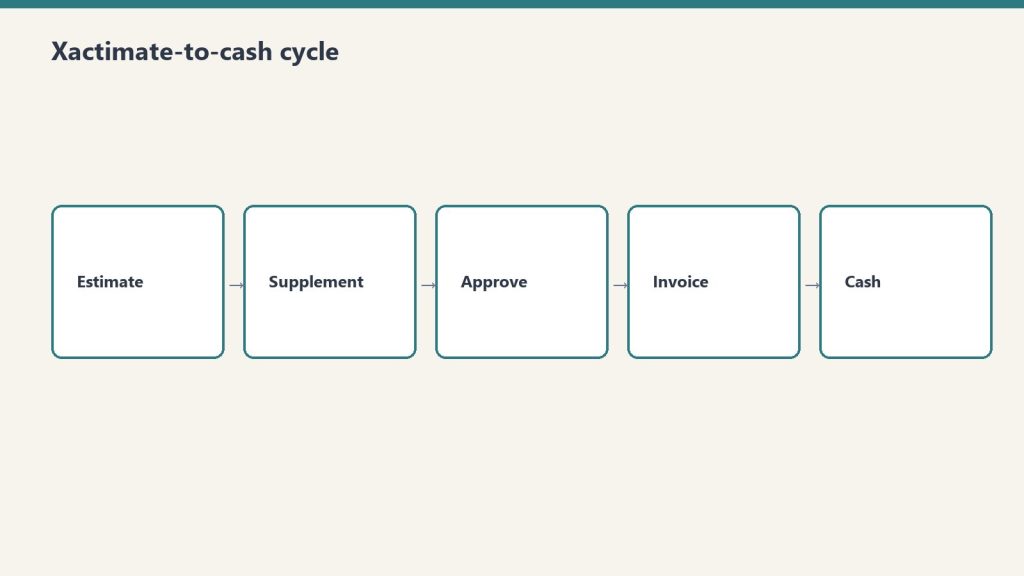
    Five-step flow from estimate to supplement, approve, invoice, cash
    The research footprint.

    Verisk’s pricing research covers 468 geographic regions across the United States and Canada. The data is gathered from a network of more than 50,000 providers of materials, equipment, and labor, generating over 345,000 survey points each year. That research footprint is what makes Xactimate pricing the reference standard for property claims work — no other estimating platform publishes data at that scope.

    The practical takeaway for restoration operators is that Xactimate is not “national” pricing dressed up as local — it is genuinely localized to your service area, which means defending your estimate to an out-of-area adjuster is a matter of pointing them to the documented research for your region.

    How Cluster Analysis Sets the Number

    For each line item in each region, Verisk performs cluster analysis on the submitted price points. The methodology identifies the largest cluster of prices and selects a point within the appropriate range. The published price reflects the most common recently submitted price for that item in that region.

    This matters because it explains a recurring estimator complaint: “the price feels low compared to what I would charge.” The Xactimate price is not the highest price or the lowest price — it is the most common price for the same scope of work in the same region. Operators charging meaningfully more than the published price are signaling either a different scope, higher-quality work, or a pricing strategy that needs to be defended on its own terms.

    The Update Cycle: What Updates When

    Verisk updates Xactimate price lists monthly. Within that monthly cycle, the work is layered:

    • Vendor-specific pricing updates nightly for items sourced from individual vendor catalogs
    • Hourly billable labor rates update monthly based on the most recent regional research
    • General quote prices update monthly with the new price list release
    • Material and equipment components update when market analysis indicates a change is warranted

    The “when warranted” language is important. Not every line item is freshly surveyed every month — that would not be feasible. Verisk’s methodology is closer to “update when the market moves” than “update on a fixed calendar.” This is why two adjacent monthly price lists can look almost identical for stable categories, then jump for categories where lumber, drywall, or other inputs have shifted.

    What This Means for Your Estimating Templates

    Desk with laptop, checklist notebook, and billing card ready before creating an Anthropic API key
    What this means for your estimating templates.

    Restoration companies pulling from Xactimate should refresh their internal estimating templates monthly when the new price list drops. Templates frozen at older pricing produce estimates that get reduced on submission because they are out of step with the current published research.

    The same applies to cash work where Xactimate pricing is used as a baseline reference. Cash estimates built off stale price lists give away margin to inflation that the published prices have already absorbed.

    How to Read a Verisk Methodology Document

    The Verisk pricing research methodology is publicly documented and worth reading at least once for anyone building estimates daily. The document explains how labor rates are weighted, how material prices are sourced, how equipment rentals are priced, and how the cluster analysis selects the published number. Knowing this language gives you a defensible vocabulary when an adjuster questions a line item.

    When Xactimate Pricing Is Not the Right Reference

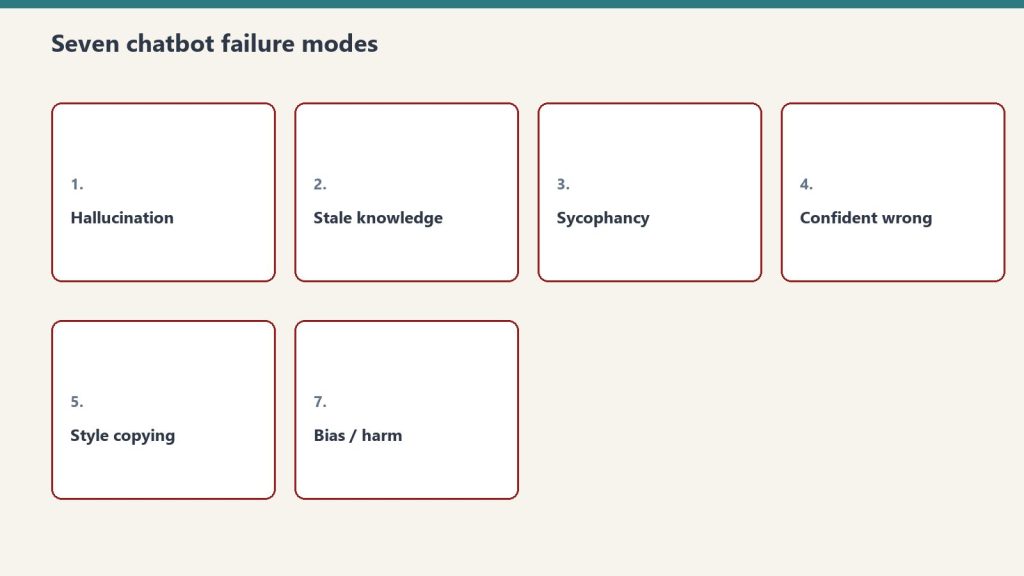
    Seven cards naming common AI chatbot failure modes
    When Xactimate pricing is not the right reference.

    Xactimate pricing is appropriate for the vast majority of standard restoration scope. It is not the right reference for: highly specialized work outside the line item library, custom installations with no comparable market data, art and high-value content cleaning, or unusual structural work where the cluster analysis has thin data. For those scopes, custom estimates or specialty contractor pricing is the correct approach.

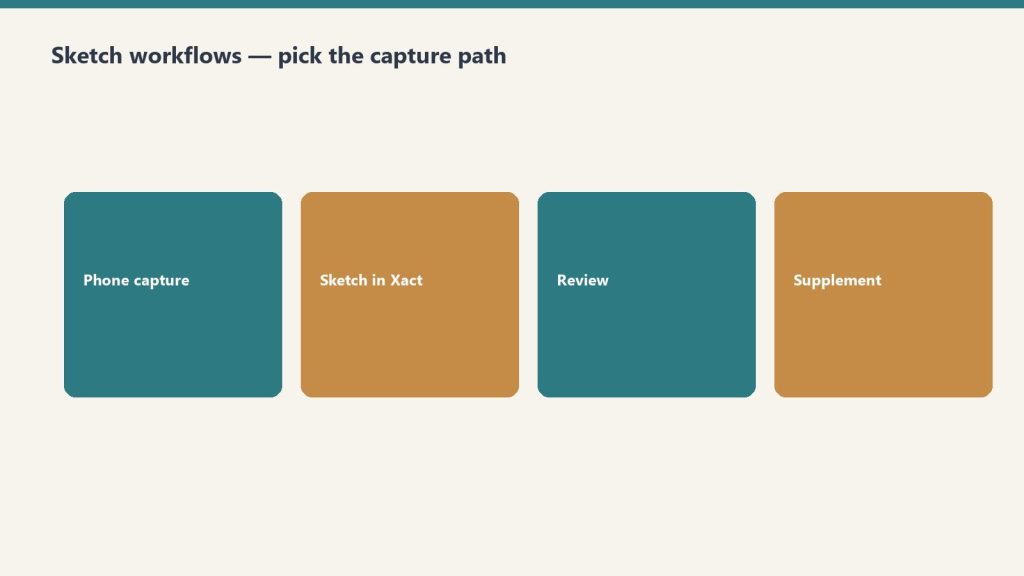
    Related on Tygart Media: labor efficiency models · sketch/AR mobile workflow · scope drafter skill.

    Frequently Asked Questions

    How often does Verisk update Xactimate pricing?

    Verisk publishes price list updates monthly. Within that cycle, vendor-specific pricing updates nightly, hourly labor rates update monthly, and general line item prices update when market analysis warrants. The monthly release is the cadence operators should plan their template refreshes around.

    How many regions does Xactimate pricing cover?

    Xactimate covers 468 geographic regions across the United States and Canada, with pricing researched independently for each region. This is the reason the same line item can have meaningfully different prices in different markets — the published number is built from local research.

    How does Verisk decide what price to publish for a line item?

    Verisk uses cluster analysis on submitted price points across more than 50,000 providers and over 345,000 annual survey points. The methodology identifies the largest cluster of prices for a line item in a region and selects a representative point within that range. The published price reflects the most common recently submitted price.

    Why does my Xactimate price feel lower than my actual cost on some items?

    If the published price is consistently below your cost, you are likely either operating in a higher-cost niche than the cluster average, using a higher-quality material than the published reference, or carrying overhead that the published labor rate does not absorb. Each of these is a legitimate basis for a custom price modifier or a documented variance — not a reason to ignore the published price.

    Can I challenge a Verisk price if I think it is wrong for my market?

    Yes. Verisk accepts pricing feedback from contractors and uses contractor submissions as part of its survey input. Submitting documented evidence of a price discrepancy can influence the next monthly research cycle. Individual estimates can also include documented variances when the published price does not reflect the actual cost of the specific work.

  • Xactimate Labor Efficiency Models: 2026 Update Guide

    Xactimate Labor Efficiency Models: 2026 Update Guide

    One of the most consequential Xactimate updates in recent years arrived in February 2026: Verisk expanded the labor efficiency architecture from two models to three. The new Large Restoration/Remodel option fills a long-acknowledged gap between service-level work and full rebuild scenarios. For restoration operators handling mid-sized losses, the change is meaningful — and using the wrong model is a fast way to mis-price the labor on a job.

    This article assumes you understand how Xactimate fits into the broader pricing workflow. For that context, start with our restoration pricing and estimating master guide.

    The Old Two-Model Architecture

    Five-step flow from estimate to supplement, approve, invoice, cash
    The old two-model architecture.

    Before the February 2026 update, Xactimate offered two labor efficiency models: a service-level model for small-scope, single-trade work and a restoration/remodel model for larger rebuilds. The two-tier architecture worked well at the extremes but struggled in the middle.

    Mid-sized restoration jobs — partial kitchen rebuilds after water loss, multi-room fire cleanup, large mold remediation projects — did not align cleanly with either model. Estimators routinely made judgment calls or layered manual workarounds to bridge the gap. The result was inconsistent labor pricing across similar jobs, depending on which estimator built the estimate.

    What the New Three-Model Architecture Looks Like

    The 2026 update keeps the existing service-level and restoration/remodel models and adds a third tier — Large Restoration/Remodel — designed for mid-sized work that involves multiple trades, longer durations, and more complex coordination than a service-level job, but does not reach the scale of a full rebuild.

    The practical effect is that estimators now have a defensible, system-supported choice for the work that previously required manual workarounds. This produces more consistent labor pricing across a portfolio of jobs and reduces the audit exposure that comes from improvised efficiency selections.

    How to Choose Between the Three Models

    Three panels showing one problem, three options, one recommendation
    How to choose between the three models.

    The right model selection depends on job characteristics. Verisk’s documentation provides detailed selection criteria, but the field-level shorthand most experienced estimators use looks like this:

    • Service-level — single-trade, short-duration, minimal coordination, typical small water mitigation or single-room work
    • Large Restoration/Remodel — multi-trade, multi-week duration, moderate coordination, mid-sized fire/water/mold or partial rebuild
    • Restoration/Remodel — full rebuild scope, long duration, full general contracting coordination, large losses

    The Large Restoration/Remodel tier is the one most likely to be under-used initially because it is new and unfamiliar. Operators should review recent estimates that fell awkwardly between the two prior models and identify which would now fit the new tier.

    Why Labor Efficiency Matters for Margin

    Labor efficiency in Xactimate is not a discount or a multiplier — it is a coefficient that adjusts labor hours based on the type of work being performed. The same line item carries different labor hours under different efficiency models, because a service-level repair really does take less coordination overhead than a large rebuild.

    Selecting the wrong efficiency model on a job can shift the estimated labor by 10 to 25 percent, which is the difference between a profitable job and a job that loses money on labor underestimation.

    How TPAs Are Adopting the New Model

    TPA programs typically take a quarter or two to fully integrate new Xactimate methodology updates into their audit and review workflows. During the transition, expect inconsistency across reviewers — some will accept Large Restoration/Remodel selections without question, others will challenge them. Documenting the reasoning for the model selection in the estimate notes is the best defense.

    What to Update in Your Estimating Process

    Restoration SOP clipboard with checklist, moisture meter, and gloves on a jobsite table
    What to update in your estimating process.

    Three things to update now that the three-model architecture is live: estimating templates should include the new Large Restoration/Remodel option as a standard selection for qualifying scopes, training materials should be refreshed to cover when to use each tier, and audit checklists should include a labor efficiency model review as a standard line item.

    Related on Tygart Media: pricing methodology · sketch/AR workflow · labor burden true cost.

    Frequently Asked Questions

    What changed in Xactimate’s 2026 labor efficiency update?

    Verisk expanded the labor efficiency architecture from two models to three by adding the Large Restoration/Remodel option. The update was presented in February 2026 and is designed to bridge the gap between service-level work and full rebuild scenarios for mid-sized restoration jobs.

    When should I use the Large Restoration/Remodel labor efficiency model?

    Use it for mid-sized jobs that involve multiple trades, multi-week duration, and moderate coordination but do not reach the scale of a full rebuild. Common examples include partial kitchen rebuilds after water loss, multi-room fire cleanup, and large mold remediation projects.

    How much can the wrong labor efficiency model affect my estimate?

    Selecting the wrong efficiency model can shift the estimated labor on a job by roughly 10 to 25 percent depending on the scope. On a $30,000 estimate, that is $3,000 to $7,500 of labor either over- or under-stated. The model choice is a meaningful margin lever, not a minor technical detail.

    Do TPAs accept the new Large Restoration/Remodel model?

    Yes, but adoption is uneven during the early months after the release. Some reviewers accept the new tier without question, others challenge it. The best practice is to document the reasoning for the model selection in the estimate notes so the choice is defensible if questioned.

    Where can I learn more about the 2026 Xactimate labor efficiency update?

    Verisk has published webinar content covering the updated labor efficiencies architecture in detail. The on-demand webinar is the authoritative source for the methodology and selection criteria. Operator-level training providers have also begun including the new tier in their X1 curricula.

  • Xactimate Certification Levels: What Your Team Needs

    Xactimate Certification Levels: What Your Team Needs

    Xactimate offers three certification levels that progressively cover the platform’s depth. For restoration operators staffing an estimating function, knowing which level each role actually needs is the difference between an over-trained team that costs too much and an under-trained team that produces inconsistent estimates. This guide breaks down what each level covers, what it costs, and how to think about certification across roles.

    For broader context on how Xactimate fits into restoration operations, see our restoration pricing and estimating master guide.

    Level 1 — Fundamentals

    Level 1 covers foundational use of Xactimate: navigation, project setup, creating estimates, adding line items, and basic sketching. For restoration teams, Level 1 is the right baseline for anyone who touches an estimate — field techs, project managers who review estimates, and ownership who needs to read estimates intelligently.

    Level 2 — Proficiency / Power User

    Level 2 goes deeper into complex sketching, custom price lists, advanced reporting, and platform-level configuration. For most restoration companies, Level 2 should be the standard for senior estimators, project managers responsible for estimate sign-off, and anyone who configures price lists or custom rules.

    Level 3 — Mastery

    Level 3 is reserved for the most complex scopes — appropriate for veteran insurance adjusters with years of field experience. For most restoration companies, Level 3 is overkill except for large-loss commercial work, TPA program subcontractors with audit responsibilities, or third-party estimating services.

    What the Exams Look Like

    Each level requires passing a Verisk exam with a 70 percent passing score. A current Xactimate license is required. Certification is valid for two years before renewal.

    What Certification Costs

    Third-party providers commonly offer combined Level 1 and Level 2 training around $650, with regional variation. Verisk also offers training and exam options directly. Group rates and restoration-specific customization often beat ad hoc individual training.

    Recommended Certification Map

    • Field techs and admin — Level 1 baseline, refreshed every two years
    • Senior estimators and PMs — Level 2 standard, refreshed every two years
    • Lead estimator / estimating manager — Level 2 minimum, Level 3 if handling large-loss commercial
    • Owner / executive — Level 1 understanding to read and review estimates

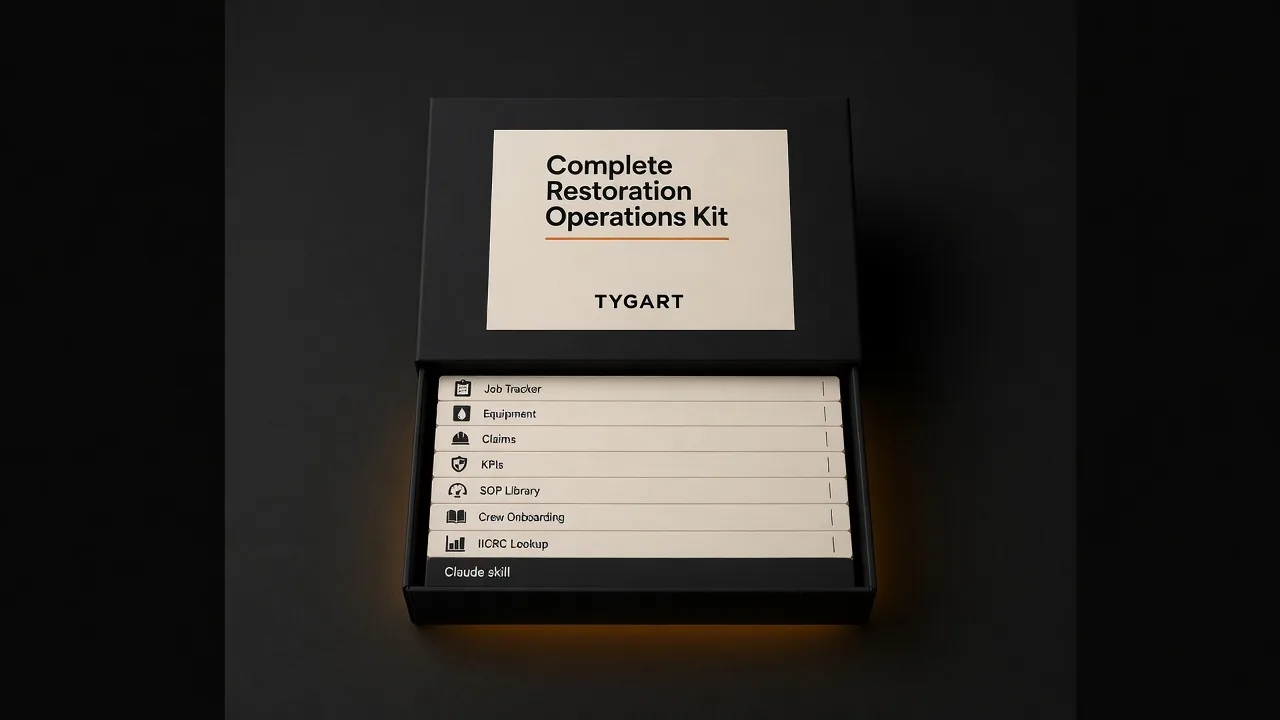
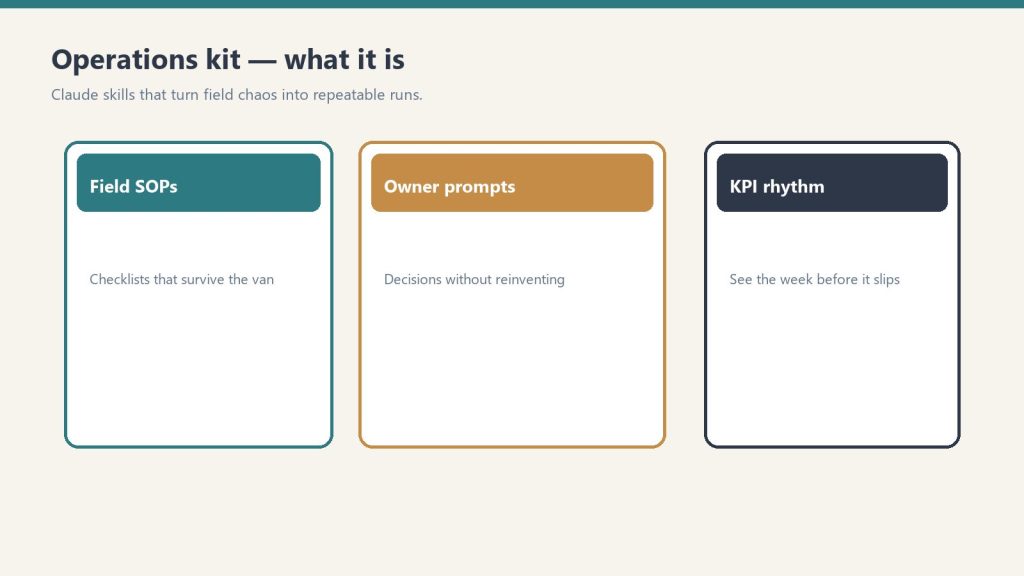
    Related: The Restoration hub · Complete Restoration Operations Kit · Water damage pricing.

  • Xactimate Sketch AR: Mobile-First Restoration Workflow

    Xactimate Sketch AR: Mobile-First Restoration Workflow

    Field measurement has historically been the slowest step in restoration estimating. A tech walks the loss with a tape measure or laser, jots down dimensions, returns to the office, and re-keys everything into Xactimate before the estimate can begin. Xactimate Sketch AR collapses that workflow by moving the measurement and initial sketch into the field, on a mobile device, with cloud sync to the office.

    For broader context on how Xactimate fits restoration operations, see our restoration pricing and estimating master guide.

    What Sketch AR Does

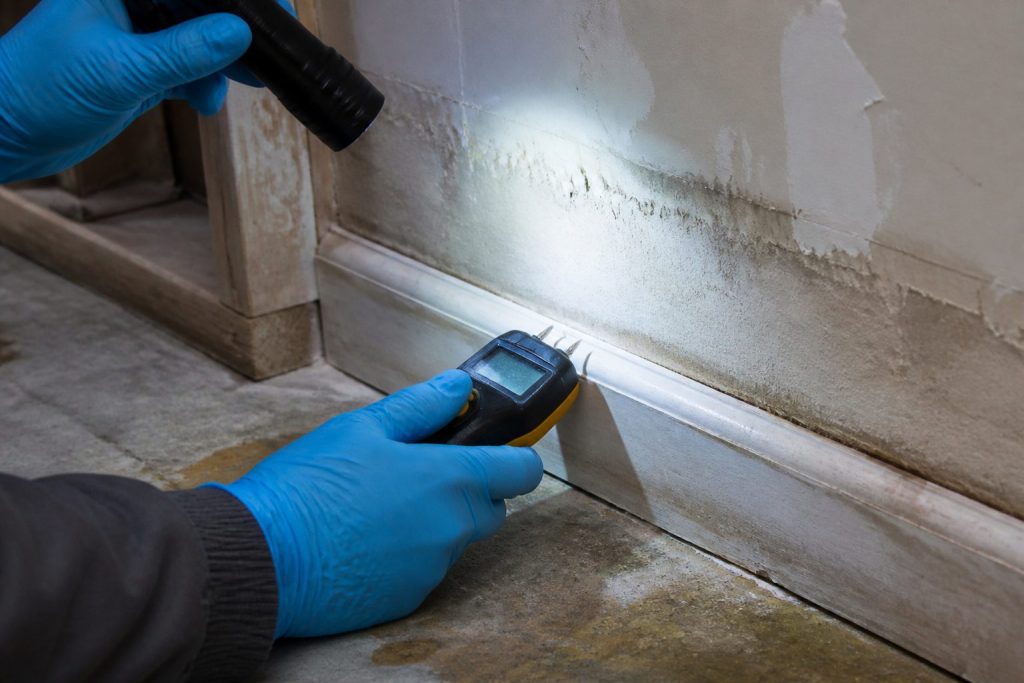
    Gloved hands using a pin-type moisture meter on wet drywall during inspection
    What Sketch AR does.

    Sketch AR uses the camera and motion sensors on a tablet or phone to take measurements as the user walks through the loss site. The output is a 2D sketch with dimensions captured directly from the field, plus optional 3D cutaway views that help visualize the interior layout. The data syncs to the cloud and is available on the desktop estimate immediately.

    The headline benefit is time. Field measurement that previously took 30 to 60 minutes per loss can be completed in 10 to 20 minutes with Sketch AR, and the office no longer needs a separate sketching step before the line item work begins.

    The Mobile-First Restoration Workflow

    Restoration SOP clipboard with checklist, moisture meter, and gloves on a jobsite table
    The mobile-first restoration workflow.

    The mobile-first workflow Sketch AR enables looks like this on a typical water loss:

    • Arrival — tech opens the X1 mobile app and creates the estimate shell
    • Walkthrough — tech runs Sketch AR through each affected room, capturing dimensions and damage photos tied to specific rooms
    • Initial line items — tech adds preliminary line items for obvious scope (extraction, demo, equipment placement)
    • Sync — estimate uploads to the cloud before the tech leaves the site
    • Office completion — estimator opens the same estimate on desktop, refines line items, runs rules check, prepares for submission

    Companies that adopt this workflow consistently report 30 to 50 percent compression in time from loss to estimate submission. That speed flows directly into faster cash flow and improved TPA scoring.

    When Sketch AR Is the Right Tool

    Sketch AR is well-suited for typical residential interiors with reasonable lighting, distinguishable wall edges, and accessible spaces. It is the right default for most water loss, mold, and partial fire jobs in homes and small commercial spaces.

    It is less well-suited for: heavily damaged spaces where wall edges are obscured, dark or smoke-filled environments where the camera cannot track, very large open spaces with limited reference features, or any job requiring precision measurement for dispute defense (where traditional measurement should still be used as a verification step).

    Training and Adoption

    Restoration technicians training in a shop bay with equipment demo and whiteboard
    Training and adoption.

    The technical learning curve on Sketch AR is short — most field techs are productive within a single training session. The harder change is workflow: moving the team from “measure on site, sketch at the office” to “sketch on site, refine at the office” requires deliberate process change.

    The most common adoption failure is leaving the workflow optional. Teams that allow some techs to sketch on site and others to defer to office sketching never realize the speed benefits. Standardizing on the mobile-first workflow as the company default is the difference between marginal improvement and dramatic cycle-time compression.

    Equipment and Device Considerations

    Sketch AR works best on modern tablets with strong motion sensors and good cameras. iPads with LiDAR sensors produce particularly clean tracking. Spec out devices for the field team based on actual job conditions — a $400 tablet that struggles in low light produces worse measurements than a $900 tablet that handles real conditions.

    Where Sketch AR Fits in the Larger X1 Workflow

    Sketch AR is one of several X1 capabilities that together produce the field-to-office continuity that defines the modern Xactimate workflow. It pairs naturally with cloud-synced estimates, the Line Item Advisor for quick line item suggestions, and customizable rules that catch missed scope items at the point of entry. None of these features stand alone — they reinforce each other.

    Related on Tygart Media: pricing methodology · scope drafter skill · software guide.

    Frequently Asked Questions

    What is Xactimate Sketch AR?

    Sketch AR is the augmented-reality measurement and sketching feature in the Xactimate mobile app. It uses the device camera and motion sensors to capture room dimensions and produce a 2D sketch in the field, with optional 3D cutaway views. The output syncs to the cloud and is available on the desktop estimate immediately.

    How accurate is Sketch AR?

    Sketch AR is accurate enough for most residential interior measurements when conditions allow for clean camera tracking. For high-precision requirements (insurance disputes, large commercial losses), traditional measurement is still recommended as a verification step. Devices with LiDAR sensors typically produce cleaner results than camera-only devices.

    What kind of device do I need for Sketch AR?

    A modern tablet or phone with a good camera and motion sensors. iPads with LiDAR are particularly well-suited because the dedicated depth sensor improves tracking. Field teams should standardize on capable hardware rather than mixing devices that produce inconsistent results.

    Can Sketch AR replace traditional measurement entirely?

    For typical residential interior work in good conditions, Sketch AR can serve as the primary measurement method. For high-stakes jobs, large commercial spaces, dark or heavily damaged environments, or any situation that may end up in dispute, traditional measurement should still be used as either the primary method or a verification step.

    How long does it take to train field techs on Sketch AR?

    The technical training is short — most techs are productive within a single training session. The harder change is operational: standardizing the team on a mobile-first workflow rather than leaving it optional. Allow two to four weeks for the new workflow to become muscle memory across the team.

  • Xactimate Estimating Mistakes: 10 Forgotten Line Items

    Xactimate Estimating Mistakes: 10 Forgotten Line Items

    Xactimate is precise enough that small estimating mistakes show up clearly when the invoice closes out. The platform has roughly 17,000 line items, and the difference between the operators who consistently get paid in full and the operators who absorb chronic reductions is usually a small number of repeating mistakes. This article catalogs the mistakes that show up most often in restoration estimate audits and how to fix each one.

    This article assumes you are familiar with the broader Xactimate workflow. For that context, see our restoration pricing and estimating master guide.

    Mistake 1: Picking the Wrong Code from a Similar-Looking Group

    Five-step flow from estimate to supplement, approve, invoice, cash
    Mistake 1 — picking the wrong code from a similar-looking group.

    Xactimate often has multiple line items that look similar but apply to different scopes. Drywall repair, drywall replacement, and drywall hang/finish are three different items with three different prices. The Line Item Advisor in X1 helps surface the right code, but estimators who default to the first match they see consistently choose codes that under-bill the actual work.

    The fix is discipline: read the line item description before adding it, and use the Advisor’s suggestions when working on unfamiliar scope.

    Mistake 2: Under-Counting Equipment Days

    Gloved hands using a pin-type moisture meter on wet drywall during inspection
    Mistake 2 — under-counting equipment days.

    Equipment days are the most common source of audit reductions on water damage jobs. The pattern: the estimator counts contract days from project start to project close, but the audit counts only the days the equipment was physically on site per the daily monitoring log. Missing log entries mean missing days.

    The fix is operational: daily monitoring logs must be completed daily, with equipment counts and moisture readings, and equipment placement and removal must be photographed for documentation.

    Mistake 3: Missing Antimicrobial on Cat 1 Losses

    Antimicrobial application on Cat 1 water losses is sometimes treated as optional, but the IICRC S500 standard supports its use in many Cat 1 scenarios — especially when there is any risk of category escalation, when affected materials cannot be fully dried, or when the response time means microbial growth is a real risk.

    Skipping antimicrobial on Cat 1 losses out of a vague sense that “it might get cut” leaves real billable scope off the estimate. The fix is to document the reasoning for the antimicrobial line in the estimate notes.

    Mistake 4: Single Air Scrubber for Multi-Room Jobs

    The pricing matrix supports multiple air scrubbers when the affected area justifies them. Single-scrubber estimates on multi-room losses are routine, and they routinely under-bill the equipment scope. The fix is to scrubber-count by room and document placement on the equipment log.

    Mistake 5: Skipping Containment on Fire Cleanup

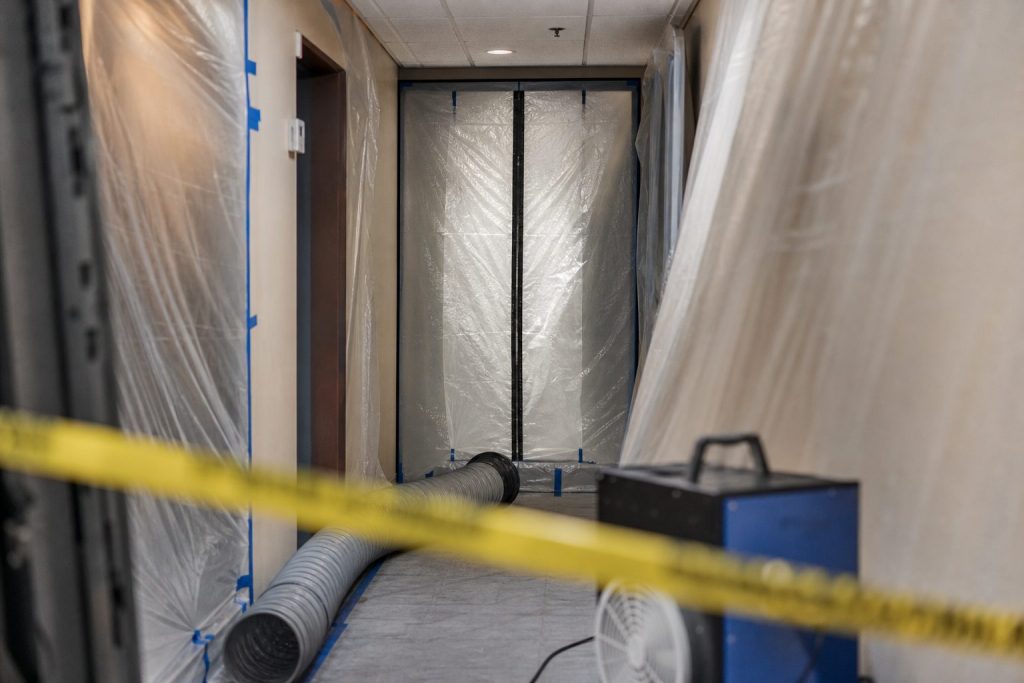
    Mold remediation containment zipper door with plastic sheeting and negative-air hose in a hallway
    Mistake 5 — skipping containment on fire cleanup.

    Containment line items are routinely skipped on fire cleanup estimates because the estimator focuses on visible cleaning work. But proper fire cleanup requires HEPA negative air containment to prevent soot redistribution into adjacent unaffected areas. Skipping containment in the estimate produces work that either gets done un-billed or causes secondary contamination claims.

    Mistake 6: Missing the Second Floor When Water Migrated

    Water rarely stays on one floor. Estimates that scope only the floor where water originated routinely miss legitimate scope on the floor below (where ceiling damage is common) or above (where water can wick up baseboards). The fix is a complete walkthrough of the entire structure on intake, not just the affected room.

    Mistake 7: Outdated Local Price List

    Xactimate pricing updates monthly. Estimating templates that have not been refreshed against the current price list are systematically under-billing on items where prices have moved. The fix is a monthly refresh ritual: when the new price list drops, refresh the templates.

    Mistake 8: Generic Notes That Cannot Defend the Scope

    Estimate notes that say “per IICRC standards” without referencing the specific standard, scope item, or category provide no defense in audit. Notes that say “Cat 2 water loss per S500, antimicrobial applied per protocol due to documented contamination evidence (photos attached)” defend almost any scope item.

    Mistake 9: Wrong Labor Efficiency Model

    Now that Xactimate has three labor efficiency models as of February 2026, choosing the wrong one mis-prices the labor by 10 to 25 percent. The new Large Restoration/Remodel tier should be used for mid-sized multi-trade work that previously got force-fit into one of the two prior models.

    Mistake 10: Lump-Sum Estimates for Cash Jobs

    Lump-sum cash estimates feel simple but consistently under-price the work because the estimator forgets line items that would have been included in an itemized scope. The fix is to always build cash estimates itemized in Xactimate, then optionally summarize for the customer if a lump-sum presentation is preferred.

    Related on Tygart Media: Starlink on a water job · S500 in the van · local SEO for restoration.

    Frequently Asked Questions

    What is the most common Xactimate mistake on water damage jobs?

    Under-counting equipment days. The pattern is estimating contract days while the audit counts only documented on-site days from the daily monitoring log. The fix is rigorous daily logging with equipment counts and moisture readings, plus photo documentation of placement and removal.

    How many line items does Xactimate have?

    Approximately 17,000 line items in the standard library. The Line Item Advisor in X1 surfaces appropriate codes based on context, which reduces the cognitive load of finding the right code without defaulting to the first plausible match.

    How often should I update my Xactimate estimating templates?

    Monthly, in line with the Verisk price list update cycle. Templates frozen at older pricing produce estimates that get reduced on submission because they do not reflect the current published research.

    What kind of estimate notes hold up to TPA audit?

    Notes that reference specific standards (IICRC S500, S520, S700), specific category and class documentation, specific scope decisions and the evidence supporting them, and photo references where applicable. Generic “per industry standard” notes provide no defense.

    Does the new 2026 labor efficiency model affect my older estimates?

    No. The Large Restoration/Remodel option applies to estimates built going forward. Estimates already submitted under the prior two-model architecture are not retroactively affected. New estimates should evaluate which of the three models best fits each job.

  • Restoration Sales CRM: Pipeline Management & Operations

    Restoration Sales CRM: Pipeline Management & Operations

    Sales operations is the difference between a restoration company that grows on individual heroics and one that grows on system. Without CRM discipline, defined pipeline stages, weekly reporting cadence, and clean handoffs between sales and production, even talented salespeople cannot scale the business. With those systems in place, average salespeople produce above-average results because the operating environment supports them.

    This article is part of our restoration sales playbook.

    CRM Selection

    Three cards for field SOPs, owner prompts, and KPI rhythm in an operations kit
    CRM selection.

    The CRM landscape for restoration companies splits into general-purpose systems (HubSpot, Pipedrive, Salesforce) and restoration-specific platforms (DASH, Encircle, ServiceTitan, Restoration eAcademy CRM, others). Each has trade-offs.

    General-purpose CRMs offer flexibility and strong sales features but require customization for restoration workflows. Restoration-specific platforms offer pre-built workflows and integrations with Xactimate and accounting systems but often have weaker sales functionality.

    For most restoration companies under $5M, a well-configured general-purpose CRM (HubSpot or Pipedrive) paired with restoration-specific job management software produces better results than trying to make a single tool do both jobs.

    Pipeline Stage Definitions

    Five-step commercial sales system from list to first-job audition
    Pipeline stage definitions.

    Clear pipeline stage definitions make sales reporting useful. A workable residential restoration pipeline structure: New Lead → Appointment Set → Estimate Completed → Authorization Pending → Authorization Signed → In Production → Closed-Won. Each stage needs an explicit definition (what makes a lead “Appointment Set” vs “New Lead”) and an explicit advancement criterion.

    For commercial restoration, pipeline stages need to be longer-cycle: Suspect → Prospect → Qualified Conversation → Capability Presented → Pilot Discussed → MSA Negotiation → MSA Signed → Account Active. The longer cycle requires more granular stages so management can see where deals are stuck.

    Sales Activity Tracking

    Activity tracking matters because revenue is a lagging indicator. Leading indicators that should be tracked daily or weekly: appointments set, appointments held, estimates delivered, follow-up calls and texts completed, and authorization signatures collected. Reps who are missing revenue targets are usually missing activity targets weeks earlier — fixing the activity issue is faster than waiting for revenue to recover.

    Lead Source Attribution

    Every lead in the CRM needs a clean source field — Google Ads, LSA, organic, referral (with sub-source), lead vendor (with vendor name), repeat customer, etc. Without clean attribution, marketing budget allocation is guessing. The most common CRM hygiene failure is sloppy lead source data, which makes ROI analysis impossible.

    Weekly Sales Reporting

    The weekly sales report that drives behavior includes: leads received and lead-to-appointment conversion, appointments held and appointment-to-estimate conversion, estimates delivered and estimate-to-close rate, average ticket size by rep and by lead source, and pipeline value by stage with weighted forecast. The report should be reviewed by the sales team together every week, not buried in an email.

    Sales-to-Production Handoff

    Three panels showing one problem, three options, one recommendation
    Sales-to-production handoff.

    The handoff from sales to production is where many restoration companies leak quality. Clean handoff requires standardized scope documentation, customer expectations clearly captured (timeline, communication preferences, special concerns), insurance information complete, and a defined moment when ownership transfers from sales to production with explicit acknowledgement from both sides.

    Sloppy handoffs produce production surprises, customer complaints, and over-budget jobs. Sales should be partially accountable for production outcomes through compensation structure to align incentives.

    Related on Tygart Media: CRM AI adoption · sales playbook · commercial sales process.

    Frequently Asked Questions

    What CRM do most restoration companies use?

    The CRM mix in restoration is fragmented. Common choices include HubSpot, Pipedrive, ServiceTitan, DASH, Encircle, and various restoration-specific platforms. There is no dominant industry standard. The right choice depends on company size, technical sophistication, and existing tool stack.

    How often should sales pipeline be updated in the CRM?

    Pipeline data should be updated daily by reps and reviewed weekly in management meetings. CRM data that is updated less than weekly produces unreliable forecasting and obscures emerging issues until they become critical.

    Should restoration sales reps own data entry or have admin support?

    Most restoration sales operations run more efficiently when reps own their own data entry, supported by mobile-friendly CRM tools that reduce friction. Outsourcing data entry to admin staff creates lag, errors, and accountability gaps. The exception: lead intake admins handling inbound calls and routing.

    What sales metrics matter most for restoration?

    The leading indicators that matter most are appointment-to-estimate conversion, estimate-to-close rate, average ticket, and lead source ROI. Lagging indicators like total revenue and gross profit by rep matter for compensation and forecasting but rarely surface fixable issues in time to course-correct.

    How do I get my sales team to actually use the CRM?

    CRM adoption is driven by three things: tools that are mobile-friendly and fast (no clunky desktop-only systems), management cadence that uses CRM data in every weekly meeting (so reps know it matters), and compensation tied to deals that exist in the CRM (no CRM record, no commission credit). Without all three, adoption stays low.

  • Starting & Scaling a Restoration Company: Founder’s Guide

    Starting & Scaling a Restoration Company: Founder’s Guide

    Starting a restoration company is easier than most people think. Scaling one past $2M in revenue is harder than almost anyone admits. The same instincts that get a founder from zero to one truck — hustle, personal customer service, doing whatever it takes — actively block growth past the first ceiling.

    This is the complete founder’s guide for 2026: what it actually costs to start, what licenses and certifications you need, the staffing path, the revenue milestones where the operating model has to change, and the operational shifts that separate restoration companies that scale from the ones that stay stuck at the same revenue line for a decade.

    The honest startup math

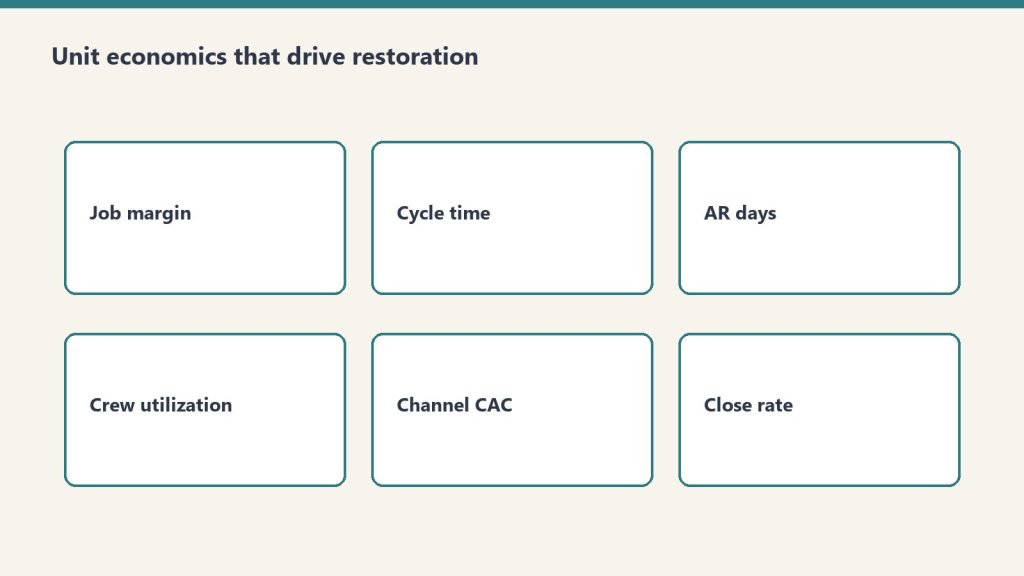
    Six cards covering job margin, cycle time, AR days, utilization, CAC, close rate
    Honest startup math before you hang a shingle.

    Realistic capital required to launch a one-truck residential restoration company in 2026: $50,000-$120,000. The breakdown: equipment package (dehumidifiers, air movers, HEPA filters, moisture meters, basic tools) $20,000-$40,000; truck (used cargo van or box truck, lettered) $25,000-$45,000; insurance (general liability, auto, workers’ comp, pollution liability) $8,000-$15,000 first-year; licensing and certifications (state contractor license, IICRC WRT for the founder, business setup) $2,000-$5,000; software (Xactimate subscription, basic CRM, accounting) $3,000-$6,000 first-year; working capital reserve to bridge first 90 days of receivables $15,000-$30,000.

    Companies that try to start under $40K usually run into cash crisis within six months when insurance receivables stretch beyond 60 days and equipment fails. Companies that overcapitalize at $200K+ often do it by buying gear they don’t need yet.

    Legal structure and licensing

    Most restoration companies form as LLCs (limited liability companies) for the liability protection and tax flexibility. S-corp election is common as revenue grows past the $250K mark for tax efficiency. A handful of larger operators are structured as full C-corps, particularly those planning institutional capital or eventual sale.

    Licensing requirements vary dramatically by state. State contractor licenses are required in most states for general restoration work, often at multiple levels (residential, commercial, mold, etc.). Mold remediation licenses are required in Florida, Texas, New York, Louisiana, and several other states. Asbestos and lead certifications are federal (EPA RRP) and required for renovation in pre-1978 housing. Biohazard or trauma cleanup licensing is regulated state-by-state. The first task for any new operator is a clean inventory of what licenses are required in your state and county.

    The certifications you need before you take the first job

    Restoration technicians training in a shop bay with equipment demo and whiteboard
    Certifications you need before the first job.

    Minimum credentials before opening for residential mitigation: IICRC WRT for the founder (and any other technician), state contractor license, EPA RRP certification if any reconstruction work involves pre-1978 properties, OSHA 10 for all personnel. Add AMRT before any mold work, FSRT before any fire work. Add general liability insurance with at least $1M per-occurrence and $2M aggregate; pollution liability with at least $1M; workers’ comp for every employee; commercial auto with full coverage on the truck.

    The five revenue milestones (and what changes at each)

    Restoration companies hit predictable plateaus. The five milestones and the operational shifts they require:

    $0-$500K (the founder phase). The founder does everything: sales, estimating, production, billing, collections. The operating model is “the founder’s calendar.” Limit: the founder’s hours.

    $500K-$1.5M (the first hire phase). The founder hires a lead technician and a part-time office or bookkeeper. The operating model becomes “founder + small team.” Limit: the founder is still the only salesperson and project manager. Burnout is the most common reason companies stall here.

    $1.5M-$3M (the systems phase). The first dedicated salesperson and a project manager are hired. The founder transitions from doing the work to designing the work. CRM and job management software become essential. Cash management discipline becomes critical because receivables grow faster than cash. Most companies that fail to scale fail here because the founder won’t let go of the work.

    $3M-$8M (the multi-truck operation). Multiple production crews, dedicated estimating, formal sales team, in-house training program, controller-level financial oversight. The founder’s job is now strategic — sales leadership, key accounts, growth planning, hiring. Operating model is “leadership team runs the business.”

    $8M+ (multi-location or large single-location). Either geographic expansion to additional locations or vertical depth in commercial and large loss work. CFO, dedicated marketing leader, regional managers. Founder transitions to CEO role or owner-investor role.

    The hiring sequence that works

    Four-phase board covering a 12-week owner freedom transition
    The hiring sequence that works as you scale.

    The proven hiring sequence for a growing restoration company: first hire, lead technician (so the founder can stop being the only field person); second hire, office administrator or bookkeeper (to handle the receivables and paperwork chaos); third hire, second technician (capacity to run two crews); fourth hire, project manager or estimator (separate the field execution from the field estimating); fifth hire, salesperson (the founder stops being the only salesperson); sixth hire, second salesperson or production manager (depending on growth direction); seventh+, controller, marketing manager, additional crews, dedicated commercial account manager.

    The financial discipline most founders skip

    The financial systems that have to be in place before $1.5M revenue: monthly P&L review (not just bank balance), aged receivables report (you cannot manage what you don’t measure — and restoration receivables stretch), job costing per project (revenue minus actual costs by job), cash flow forecast looking 90 days out, annual budget with monthly tracking. Companies that scale without these systems usually crash on cash management even when they’re profitable on paper.

    The exit options worth knowing

    Restoration companies have several viable exit paths. Strategic acquisition by a larger restoration company or franchise group (BluSky, ServiceMaster, ATI, BELFOR, and various PE-backed roll-ups have been active acquirers). Private equity for larger operators (typically $10M+ revenue with strong commercial mix). Internal sale to existing management (with seller financing common). Family transition to children or family members. Typical valuation multiples have been 3-6x adjusted EBITDA depending on size, growth, customer concentration, and commercial mix percentage.

    Related on Tygart Media: Starlink on a water job · S500 in the van · local SEO for restoration.

    Frequently Asked Questions

    How much does it cost to start a restoration business?

    A realistic startup cost for a one-truck residential restoration company in 2026 ranges from $50,000 to $120,000. The major components are equipment ($20K-$40K), a truck ($25K-$45K), insurance ($8K-$15K first year), licensing and certifications ($2K-$5K), software ($3K-$6K), and working capital to bridge initial receivables ($15K-$30K).

    How do you start a restoration business?

    The compressed startup checklist: form an LLC, obtain state contractor license, secure general liability and pollution liability insurance plus workers’ comp and commercial auto, complete IICRC WRT certification at minimum, purchase initial equipment package and a service vehicle, set up Xactimate subscription and basic accounting software, build initial referral relationships with local plumbers and insurance agents, establish a Google Business Profile and basic website, and begin marketing through Local Service Ads and direct outreach.

    How profitable is a restoration business?

    Healthy restoration companies run 8-15% net profit margin on revenue. Gross margins by service line range from 25-40% on reconstruction up to 50-65% on mold remediation. A well-run $2M restoration company should produce $160K-$300K in net profit. The most profitable operators tend to have strong commercial mix, disciplined supplement workflows, and tight job costing.

    What is the average revenue of a restoration company?

    Restoration company revenue ranges enormously. Single-truck residential operators typically run $400K-$1.2M. Established multi-truck residential companies $1.5M-$5M. Companies with significant commercial work or multiple service lines $5M-$25M. Multi-location operators and franchises $25M-$300M+. The industry median is around $1.5M-$2M.

    How long does it take to scale a restoration company?

    The typical path from startup to $5M revenue runs 5-10 years for organic growth. Faster growth is possible through acquisition, geographic expansion, or aggressive commercial business development. The most common stalling point is the $1.5M-$2M range, where the founder has to transition from doing the work to leading the team. Companies that successfully make that transition often double again in the following 3-5 years.

    Can you franchise a restoration business?

    Yes, the major restoration franchise groups (ServPro, ServiceMaster, BELFOR, Rainbow International, PuroClean, and others) all sell franchise territories. Franchise costs vary widely: initial franchise fees typically $40K-$75K, equipment and startup costs $100K-$300K, and ongoing royalties of 6-10% of revenue plus marketing fees. The franchise vs. independent decision depends on access to commercial work, brand recognition value in your market, and tolerance for ongoing royalty cost.

  • Restoration Insurance Programs: TPA & Vendor Network Guide

    Restoration Insurance Programs: TPA & Vendor Network Guide

    The insurance ecosystem in restoration is its own universe with its own language: TPAs, carriers, preferred vendor programs, MSAs, scorecards, audits, performance guarantees, network certifications. Most restoration owners have a vague sense of what these programs are and a stronger opinion about whether to join them, often without knowing the actual economics.

    This is the complete operator’s guide to restoration insurance programs in 2026: what TPAs actually do, how carrier preferred vendor programs work, what MSAs require, the real margin economics, and the framework for deciding which programs deserve your application.

    The four players in the insurance restoration ecosystem

    Clipboard and tablet on a kitchen counter during an insurance adjuster walkthrough after water loss
    Four players in the insurance restoration ecosystem.

    Every insurance restoration job involves up to four parties. Understanding which is which is the first step to navigating the system.

    The carrier is the insurance company that issued the policy and pays the claim — State Farm, Allstate, USAA, Liberty Mutual, Travelers, Nationwide, Farmers, Progressive, Chubb, and dozens of regionals. Carriers either have in-house claims handling or contract claims management out to TPAs.

    The TPA (third-party administrator) is a company that manages claims on behalf of carriers — Sedgwick, Crawford & Company, Contractor Connection, Code Blue Restoration Services, CCMSI, ESIS, and others. TPAs handle adjuster assignments, vendor management, scope review, payment processing, and customer communication on behalf of the carrier.

    The vendor network is a managed roster of restoration contractors that the carrier or TPA assigns work to. Some networks are operated by TPAs (Contractor Connection is the largest); some are operated directly by carriers (Allstate Premier Service, USAA STARS).

    The independent adjuster is a contracted adjuster (not a carrier employee) hired to assess specific claims, often for catastrophe events or to supplement carrier capacity. Independents work for IA firms like Eberl, Pilot Catastrophe, and Crawford.

    What a TPA program actually requires

    Flow from estimate to photos to notes to payment emphasizing integration
    What a TPA program actually requires.

    Joining a major TPA vendor network typically requires: a multi-year track record in restoration (most require 3+ years), specific IICRC certifications (firm-level plus individual technicians for relevant service lines), insurance coverage at higher limits than standard (often $2M+ general liability, $1M+ pollution liability, $1M+ professional liability), background checks and drug testing for technicians, vehicle and uniform standards, technology compatibility (use of TPA-approved estimating and reporting platforms), 24/7 dispatch capability with documented response time SLAs, monthly reporting and KPI tracking, and a signed master service agreement that defines pricing, scope, performance standards, and termination conditions.

    The application process typically takes 60-180 days, includes facility audits, reference checks, and may require a probationary period of supervised job assignments before full network status.

    The pricing economics of TPA work

    The honest economics: TPA work pays less than direct retail work. Most TPA agreements include some form of pricing concession — typically 10-20% off published Xactimate pricing, restrictions on overhead and profit, capped supplements, or fee schedules that cap certain line items. The trade-off is volume and predictability: a vendor in good standing on a major TPA network may receive 30-100+ assignments per month depending on territory.

    The math that matters: net margin per TPA job, after pricing concessions, after the operational overhead of TPA-required reporting and SLAs, and after slower payment terms (45-90 days is common). Companies that profitably run TPA programs typically have lean overhead, disciplined estimating, and the operational scale to absorb the lower per-job margin with higher volume. Companies with high overhead burden often lose money on TPA jobs they think are profitable.

    Major TPAs and vendor programs to know

    Contractor Connection (subsidiary of Crawford & Company) is the largest restoration vendor network, managing claims for many major carriers including Allstate, Liberty Mutual, and others. Network membership is tightly managed with strict performance standards and capacity targets.

    Code Blue Restoration Services is a major restoration-specific TPA serving multiple carriers, with significant residential mitigation volume.

    Sedgwick is one of the largest TPAs overall, serving commercial and residential property claims for many major carriers. Sedgwick’s vendor network is more decentralized than Contractor Connection’s.

    Crawford & Company operates both adjusting services and Contractor Connection, with significant CAT (catastrophe) capacity.

    Allstate’s Premier Service Program is a direct-from-carrier preferred vendor program for water mitigation and reconstruction.

    USAA STARS is USAA’s preferred vendor program serving its policyholder base.

    State Farm Premier Service is State Farm’s similar program (formerly Service First).

    Numerous regional and specialized TPAs exist — Sedgwick CCMSI, Cunningham Lindsey (now Sedgwick), various large loss specialty firms, and carrier-specific direct programs.

    Master Service Agreements (MSAs)

    Restoration SOP clipboard with checklist, moisture meter, and gloves on a jobsite table
    Master Service Agreements — the real contract.

    An MSA is the contract that governs the relationship between the contractor and the TPA or carrier. Key MSA terms to scrutinize: pricing schedule (Xactimate concession amount, capped line items, fee schedules); territory definition (geographic scope, exclusivity provisions, right of first refusal); performance metrics (response time SLAs, completion timelines, scorecard targets); payment terms (net days, retention, hold-back provisions); insurance and indemnification requirements; termination provisions (notice periods, performance-based termination, transition obligations); customer ownership (whether you can market to customers post-job, whether the carrier owns the customer relationship); audit rights (TPA rights to review your job files, scope, photos, and pricing).

    MSAs are negotiable in some areas (especially territory and performance metrics) and rarely negotiable in others (pricing concessions, audit rights). Operators should have an attorney with restoration industry experience review any MSA before signing.

    The decision framework: which programs to join

    Whether to join a TPA program depends on four factors. Operational capacity: do you have the SLA capability, technology stack, and management bandwidth to meet program requirements? Market lead flow: is your direct lead generation strong enough that you can be selective, or do you need TPA volume to fill the calendar? Cost structure: is your overhead lean enough to make money at the program’s pricing concessions? Strategic mix: what percentage of revenue comes from TPA programs vs. direct? Most healthy operators target 30-50% TPA revenue mix — enough volume to leverage operations, not so much that the company is captive to a single TPA’s decisions.

    How to win at TPA performance scorecards

    Once on a TPA network, performance metrics determine assignment volume. The metrics that matter on most scorecards: response time (minutes from assignment to first contact, hours to first on-site), customer satisfaction scores (post-job surveys), cycle time (days from assignment to job completion), scope variance (how often supplements are needed and whether they’re approved), complaint rate (formal customer complaints per 100 jobs), quality scores (file documentation, photo quality, scope accuracy on TPA audits). Top-quartile performers on these metrics receive disproportionate assignment volume; bottom-quartile performers get reduced assignments and eventual termination.

    Related on Tygart Media: Starlink on a water job · S500 in the van · local SEO for restoration.

    Frequently Asked Questions

    What is a TPA in restoration?

    A TPA (third-party administrator) is a company that manages claims on behalf of insurance carriers. In restoration, TPAs handle adjuster assignment, vendor selection, scope review, payment processing, and customer communication. Major restoration TPAs include Sedgwick, Crawford & Company, Contractor Connection, Code Blue, and CCMSI.

    How do you get on a carrier preferred vendor program?

    The application process typically requires: 3+ years in business, specific IICRC firm and individual certifications, higher insurance limits than standard, background-checked technicians, 24/7 dispatch capability, monthly KPI reporting, and signing a master service agreement that defines pricing concessions and performance standards. Applications take 60-180 days and often include facility audits and reference checks.

    Are TPA programs profitable for restoration companies?

    It depends on cost structure. TPA work typically pays 10-20% less than direct retail work due to pricing concessions, capped overhead and profit, and other restrictions. Companies with lean overhead and high operational discipline can run profitable TPA programs at high volume. Companies with high overhead burden often lose money on TPA jobs while believing they’re profitable.

    What is an MSA in restoration?

    An MSA (Master Service Agreement) is the contract between a restoration contractor and a TPA, carrier, or commercial customer that governs the relationship — pricing schedules, territory, performance metrics, payment terms, insurance requirements, audit rights, and termination provisions. MSAs should be reviewed by an attorney with restoration industry experience before signing.

    What percentage of revenue should come from TPA work?

    Most healthy restoration operators target 30-50% of revenue from TPA and preferred vendor programs. Below that range, the company isn’t leveraging program volume; above that range, the company is operationally captive to a few TPAs and vulnerable to program changes, pricing reductions, or termination.

    How do restoration vendor scorecards work?

    TPA performance scorecards typically measure response time (minutes to first contact, hours to on-site), customer satisfaction scores, cycle time (days from assignment to completion), scope variance and supplement approval rates, complaint rates, and quality scores from TPA file audits. Top-quartile performers receive disproportionate assignment volume; bottom-quartile performers face reduced assignments and eventual network termination.

  • SEO for Restoration Companies: The Complete 2026 Playbook

    SEO for Restoration Companies: The Complete 2026 Playbook

    SEO for restoration companies is fundamentally a local search problem with a content moat layered on top. The difference between a restoration company that pulls 20 organic leads a month and one that pulls 200 is rarely talent — it is whether the technical foundation, the local signals, and the content engine are all running at the same time. This guide walks through each layer in the order it should be built.

    This article is part of our broader restoration marketing guide, which covers the full channel mix. Here we focus exclusively on organic search.

    Layer 1: The Technical Foundation

    Desk with laptop, checklist notebook, and billing card ready before creating an Anthropic API key
    Layer 1 — the technical foundation.

    Technical SEO for a restoration company website is straightforward but unforgiving. The site needs to load in under three seconds on mobile, have a clean URL structure, valid schema markup on every service page, and zero crawl errors. Modern Google does not need much hand-holding on technical issues, but it will quietly demote sites that consistently fail Core Web Vitals or have broken canonical tags.

    The minimum technical checklist for a restoration site includes mobile-first responsive design, HTTPS across every URL, an XML sitemap submitted to Google Search Console, schema markup for LocalBusiness and Service on relevant pages, and structured data for FAQs where they appear. A content delivery network and image optimization to WebP usually handle most speed concerns.

    Layer 2: On-Page SEO

    Restoration service pages are where most ranking battles are won or lost. Each core service — water damage, fire damage, mold remediation, smoke damage, biohazard, contents — needs its own dedicated page, not a list on a single services page. Each page should target a primary keyword in the title tag, H1, and first paragraph, then expand into 1,200-2,000 words of substantive content covering the process, what causes the damage, the insurance process, the company’s certifications, and a strong call to action.

    The most-overlooked on-page lever is internal linking. Service pages should link to relevant blog content, location pages, and case studies. The link graph signals to Google which pages matter most.

    Layer 3: Local SEO and Map Pack Dominance

    Comparison of Claude how-to fit versus local service page fit for assistants
    Layer 3 — local SEO and map pack dominance.

    Map pack rankings for “[service] [city]” queries drive a substantial share of restoration leads. Three signals matter most: proximity (Google measures distance from the searcher to the business), prominence (review volume, link authority, mentions), and relevance (does the business profile clearly match the query).

    The local SEO checklist starts with a fully optimized Google Business Profile — accurate categories, complete services list, Q&A answered, weekly posts, regular geo-tagged photo uploads, and a steady review cadence with thoughtful responses. Citations across major directories (BBB, Yelp, Angi, HomeAdvisor, Houzz, industry-specific sites) reinforce NAP consistency. Service area businesses should specify their service area carefully rather than listing every city in the region.

    Layer 4: City and Neighborhood Pages

    For restoration companies serving multiple cities, individual city pages are the single highest-leverage SEO investment after the core service pages. A page titled “Water Damage Restoration in [City Name]” with 800-1,500 words of locally relevant content — neighborhoods served, common local water damage causes, local building stock, response times to specific zip codes — will routinely outrank both national franchises and competitors using doorway pages.

    The trap to avoid is templating. Google detects city pages that are 90% identical with only the city name swapped. Each page needs genuinely unique content sections.

    Layer 5: Content Marketing for Authority

    Four-stage funnel: citation, click, engage, convert
    Layer 5 — content marketing for authority.

    Beyond service and city pages, ongoing blog content builds topical authority. The highest-ROI content topics for restoration companies tend to be insurance process guides (“how does a homeowners insurance water damage claim work”), cause-of-loss explainers (“what causes a Category 3 water loss”), and homeowner education (“what to do in the first 24 hours after a flood”). These pieces capture top-of-funnel search volume and convert through internal linking back to service pages.

    Layer 6: Link Building

    Restoration link building is hard because most of the natural backlink opportunities — directory citations, BBB profiles, association memberships — are easily replicated by competitors. Sustainable link advantages come from local press coverage of community involvement, sponsorships of local events with a website link, partnerships with adjacent service providers (plumbers, real estate firms) that produce mutual link exchanges, and occasionally guest content on restoration industry publications.

    Related on Tygart Media: content marketing · local SEO · blog SEO.

    Frequently Asked Questions

    How long does SEO take to work for a restoration company?

    Local map pack movement on long-tail and branded queries often happens within 30-90 days of a serious GBP optimization push. Competitive head terms in major metros usually require 12-18 months of consistent work. The first leads from organic search typically arrive within 90 days for a well-executed program.

    Do I need to write a separate page for every city I serve?

    Yes, if you want to rank for “[service] [city]” queries in those cities. A single services page cannot effectively rank for dozens of city-modified queries. Each meaningful market should have its own dedicated, locally relevant page.

    Is link building still important for restoration SEO?

    Yes, but the bar has lowered for local-intent queries where proximity and reviews carry more weight than backlinks. For competitive head terms and informational content meant to attract top-of-funnel traffic, backlink authority remains a significant ranking factor.

    Should a restoration company use AI to write SEO content?

    AI tools can speed up drafting and outlining but unedited AI content tends to underperform on commercial keywords because it lacks the operator-specific detail Google’s helpful content systems reward. The most effective use is AI-assisted drafting reviewed and rewritten by someone with domain expertise.

    What is the most common SEO mistake restoration companies make?

    Treating SEO as a one-time setup project rather than an ongoing program. Rankings decay without consistent content, citation maintenance, review velocity, and link building. Companies that invest for six months and then stop usually lose most of their gains within a year.

  • Restoration Google Ads: How Profitable Operators Run PPC

    Restoration Google Ads: How Profitable Operators Run PPC

    Google Ads is the channel where most restoration companies either build or lose their marketing program. Run well, paid search produces a predictable flow of high-intent water damage and fire damage leads at a cost per acquisition that supports the unit economics of the business. Run poorly, it incinerates marketing budget faster than any other channel in the stack. The difference is rarely talent — it is structure, discipline, and tracking.

    This article covers the operational mechanics of running Google Ads for a restoration company. For the broader marketing context, see our restoration marketing guide.

    Why Restoration Google Ads Are Hard

    Seven cards naming common AI chatbot failure modes
    Why restoration Google Ads are hard.

    Two structural challenges make restoration PPC tougher than most home service categories. First, click costs on emergency restoration keywords are among the highest in Google Ads — competitive metros routinely see cost per click in the double digits for terms like “water damage restoration” and “emergency flood cleanup.” Second, lead quality varies wildly. A “water damage” search at 2pm on a Tuesday is often a homeowner researching options, while the same search at 11pm during a storm is almost always a real emergency.

    Profitable restoration PPC requires architecture that separates these intents and bids accordingly.

    Campaign Architecture That Works

    Four-stage funnel: citation, click, engage, convert
    Campaign architecture that works.

    The structure that consistently outperforms in restoration accounts uses tightly themed campaigns split by service line and intent stage. A typical structure might include: emergency water damage (highest bids, call-only ads, after-hours dayparting), planned water mitigation (lower bids, form fills acceptable), fire damage, mold remediation, biohazard, contents and pack-out, and reconstruction.

    Within each campaign, single-keyword ad groups (SKAGs) or tightly themed ad groups outperform broad themed groups in this category because of how varied the search query intent is. “Burst pipe water damage” and “ceiling water stain” deserve different ads.

    Bidding and Budget Strategy

    Restoration Google Ads accounts typically perform best on either Maximize Conversions with a target CPA cap or Manual CPC with portfolio bidding. Smart Bidding strategies need 30-50 conversions per month per campaign to learn effectively, which most restoration accounts do not have at the campaign level. Pooling conversions through a portfolio bid strategy across related campaigns is one workaround.

    Budget should be concentrated rather than spread thin. A restoration company spending $3,000 per month on Google Ads will almost always get better results from a single campaign focused on the highest-intent emergency terms than from spreading $300 across ten different services.

    Ad Copy That Converts Restoration Leads

    The highest-converting restoration ad copy emphasizes three things in this order: response time (“On-site in 60 minutes”), credibility (IICRC certified, BBB rated, years in business), and risk reversal (free estimates, work directly with insurance, 24/7 availability). Generic “water damage experts” copy underperforms specific, operational claims.

    Call-only ads on emergency keywords often outperform standard text ads with a website destination, because the customer wants to call now, not browse a site. After-hours dayparting that switches all campaigns to call-only between 6pm and 7am captures emergency demand efficiently.

    Geo-Targeting Discipline

    Sloppy geo-targeting is the most common reason restoration accounts hemorrhage budget. The default radius targeting setting in Google Ads is too generous for most restoration businesses. Tighter zip-code-level or hyperlocal radius targeting around the actual service area, combined with location bid adjustments that bid up on high-value zip codes and bid down on low-value ones, often cuts cost per lead by 30-50%.

    Call Tracking and Conversion Setup

    Desk with laptop, checklist notebook, and billing card ready before creating an Anthropic API key
    Call tracking and conversion setup.

    Restoration leads come in primarily by phone, and Google Ads accounts that do not import call conversions are flying blind. Every account needs Google Forwarding numbers configured, call extensions enabled, and call conversions imported into the bidding algorithm. Pairing this with a third-party call tracking platform (CallRail, CTM, or WhatConverts) for call recording and lead scoring closes the attribution loop.

    Negative Keywords: The Hidden Performance Lever

    The single most effective ongoing optimization in restoration accounts is aggressive negative keyword work. Common waste sources include “DIY,” “free,” “how to,” “training,” “course,” “jobs,” competitor brand names (unless deliberately bidding on them), and product searches like “water damage paint.” A mature restoration account typically has a negative keyword list in the thousands.

    Related on Tygart Media: Google Ads $127k lessons · water damage marketing · SEO for restoration.

    Frequently Asked Questions

    What is a good cost per lead for restoration Google Ads?

    Cost per lead varies enormously by metro, service line, and lead quality definition. Emergency water damage leads in major metros often run between $80 and $250, while less competitive markets and services can come in well below that. Cost per acquisition for a closed job is the more important number to track.

    Should I bid on competitor brand names?

    Bidding on competitors can be profitable if the competitor brand has high search volume and your offer is genuinely competitive, but it tends to invite reciprocal bidding and increases costs across the category. Most restoration companies get better ROI from defending their own brand terms aggressively than from attacking competitors.

    Do Performance Max campaigns work for restoration?

    Performance Max can work for restoration companies with mature conversion data and strong creative assets, but it generally underperforms tightly structured Search campaigns for emergency-intent restoration queries because it gives up control of placement and audience targeting.

    How do I keep Google Ads from running during business off-hours when no one can answer?

    Use ad scheduling to either pause campaigns or significantly reduce bids during hours when no one can answer the phone. Even better, set up after-hours call routing so that emergency calls reach an answering service or on-call technician, since most restoration revenue happens outside 9-to-5.

    How long should I run a Google Ads test before deciding it works?

    Restoration Google Ads campaigns generally need at least 30-60 days of meaningful spend to produce statistically reliable performance data. Killing a campaign after two weeks of poor performance is a common mistake that prevents accounts from finding their winners.