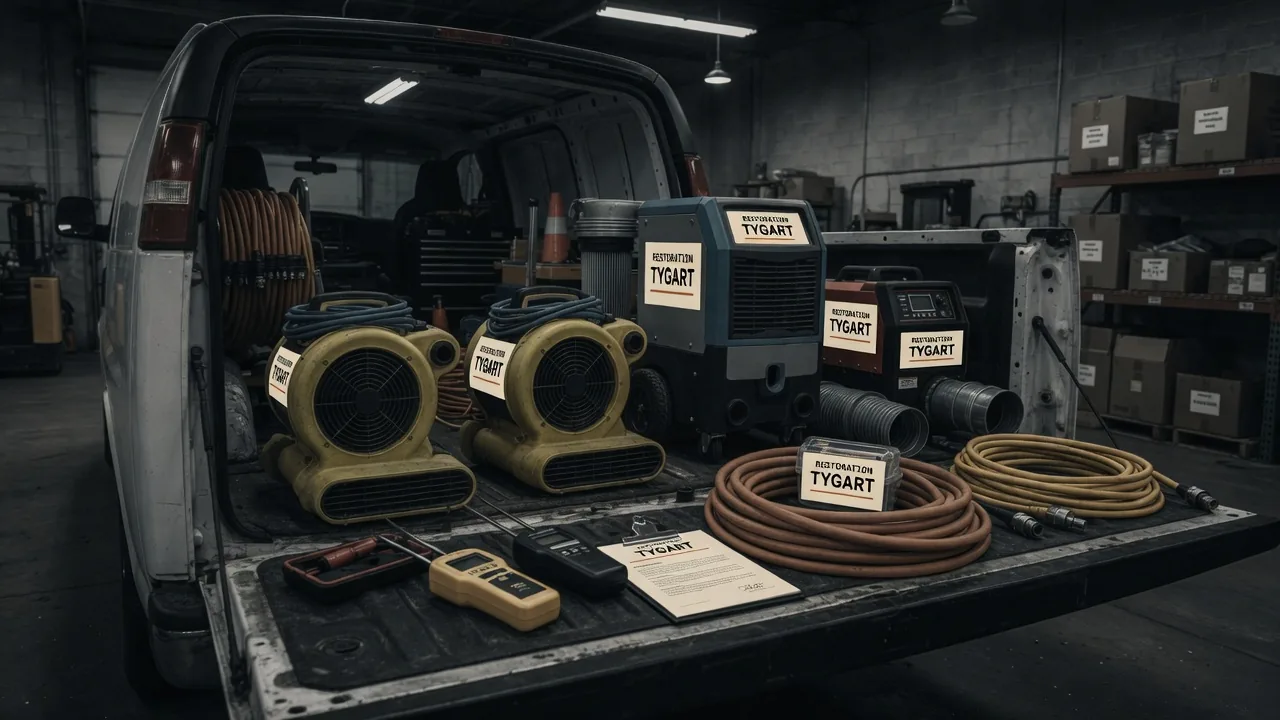
Why are HVAC contractors such a valuable referral source for restoration companies? Because HVAC techs are physically inside the places where hidden water damage, mold, and air-quality problems actually live — ductwork, attics, crawlspaces, mechanical closets, condensate lines — and they find problems no other trade sees. A restoration company that becomes the trusted partner for a strong HVAC operation captures a steady stream of mold, water damage, and IAQ-driven mitigation work that is almost invisible to any other acquisition channel. The playbook for building that relationship is specific — understand the HVAC recurring-revenue model, never compete on duct cleaning or HVAC scope, support the technician’s on-site diagnosis, and move fast when the referral comes — and it compounds as powerfully as any plumber relationship, often with higher-ticket outcomes.
The first article in this partnership series covered plumbers. This one covers HVAC contractors, and the structural playbook is similar but the operational realities are different in ways that matter.
An HVAC tech spends their day in the parts of a building nobody else goes. Attics. Crawlspaces. Mechanical rooms. Behind return-air grills. Inside ductwork. In places where water damage has been slowly doing its work for months before anyone in the household noticed. That access is what makes the HVAC-restoration partnership uniquely valuable and, when executed correctly, uniquely durable.
This article decomposes how HVAC companies actually make money, how they acquire customers, what their day looks like, why they are frequently reluctant to deal with mold or water damage themselves, and exactly how a restoration company with discipline earns the referral flow that the sloppy competition will never see.
How HVAC Companies Actually Make Money
HVAC is a more structurally stable business than most outsiders assume. The operating model has three revenue legs.
Service and repair. Single-tech, fast-turn, high-margin work. Capacitor replacements, thermostat installs, minor leak fixes, blower motor swaps, seasonal tune-ups. This is the 55 to 65 percent gross margin work that keeps the lights on. Labor is dense, ticket sizes are moderate, and pricing power is real.
Get The Signal
What we actually ran, what it measured, and what it means for a restoration shop — every week, including the flops.
Equipment replacement. When the 15-year-old condenser finally dies, the HVAC company sells a new system. These are the high-ticket jobs — $8,000 to $25,000 and beyond depending on scope and geography. Gross margin runs 45 to 55 percent because material cost takes a larger share, but absolute dollars per job are strong.
New construction and commercial projects. Lower-margin, bid-driven work. 35 to 50 percent gross margin, often considerably less in competitive markets. Many established residential HVAC companies deliberately avoid new construction or use it as overflow capacity because the net margin is marginal and the operational complexity is high.
Net margins across the category are tighter than the gross margins suggest. Top performers run 10 to 20 percent net. The typical HVAC company runs 5 to 8 percent net. A $2M HVAC company with a 4 percent net margin is taking home $80K on a business that looks much larger from the outside — a meaningful operational reality to keep in mind when you are calling on one.
The structural shift that matters most for a restoration company to understand: recurring maintenance agreements. Preventive maintenance contracts captured 39 percent of total HVAC industry revenue in 2024, and the best-run HVAC companies generate 30 to 50 percent of revenue from recurring agreements. The residential membership plan — typically $20 to $30 per month, covering two tune-ups a year plus priority scheduling and discounts on repairs — is the single most important product in the modern HVAC business.
Why does this matter to a restoration company? Because the membership roster is the HVAC company’s most valuable asset. It is the customer list they protect most carefully. And it is the customer list they refer into. An HVAC operator will never hand their membership base to a restoration partner they do not trust completely. When they do, the flow is extraordinary — because every tune-up visit is an opportunity to discover the water damage, mold, or IAQ issue the homeowner did not know existed.
How HVAC Companies Acquire Customers
The modern HVAC acquisition stack is a multi-channel system. A healthy HVAC company runs six channels simultaneously because single-channel dependence caps growth at 30 to 40 percent of available demand.
Google Business Profile is the highest-ROI channel in the category, typically generating 30 to 45 percent of inbound calls at effectively zero cost per click once the profile is built. This mirrors the restoration industry exactly.
Google Local Services Ads — review-gated, proximity-weighted, response-time-sensitive. CPL ranges from $71 to $214 per booked job in most markets. Competitive in summer cooling-season markets, more affordable in shoulder seasons.
Google Ads and PPC — $167 to $500+ per booked job, with heavy seasonal CPC variation. The March-to-May shoulder window often produces the best ROI because competition is lower and homeowners shopping for replacements in shoulder seasons buy higher-value systems.
Referral programs — 60 to 80 percent close rate versus 25 to 40 percent on paid channels. The highest-converting lead source for any HVAC company, period. This is the channel a restoration partnership plugs directly into.
Maintenance agreements as acquisition — every maintenance plan sold in year one produces repeat customer touches for the next decade. The retention math compounds dramatically.
Email and SMS reactivation — 8 to 15 percent booking rates on past-customer outreach at $0.08 per booked job from SMS. The lowest cost-per-acquisition channel available.
Facebook and Meta lead ads — $30 to $75 CPL, with the strongest performance on equipment replacement campaigns rather than service calls. Meta plays a different role than Google in HVAC.
Nextdoor and hyperlocal social — consistently one of the most underused channels for HVAC lead flow, especially in residential service areas with strong community density.
As in plumbing, the #1 tactical lever is speed to lead. Sub-60-second response converts at roughly 4x the rate of slower responses. Every HVAC owner knows this number. Every restoration company calling on them is being evaluated against it.
Why HVAC Technicians Do Not Want to Handle Mold and Water Damage Themselves
The structural fact that makes HVAC-restoration partnerships uniquely profitable: HVAC contractors, as a category, prefer to partner rather than handle water and mold work themselves.
The reasons are operational and insurance-driven.
Certification and licensing. Mold remediation requires IICRC credentialing and often state-level licensing depending on jurisdiction. Most HVAC companies are not certified and have no interest in adding the credential layer to their business. The IICRC AMRT (Applied Microbial Remediation Technician) track, the WRT (Water Damage Restoration Technician), the ASD (Applied Structural Drying) — these are specialty credentials the HVAC industry does not generally hold.
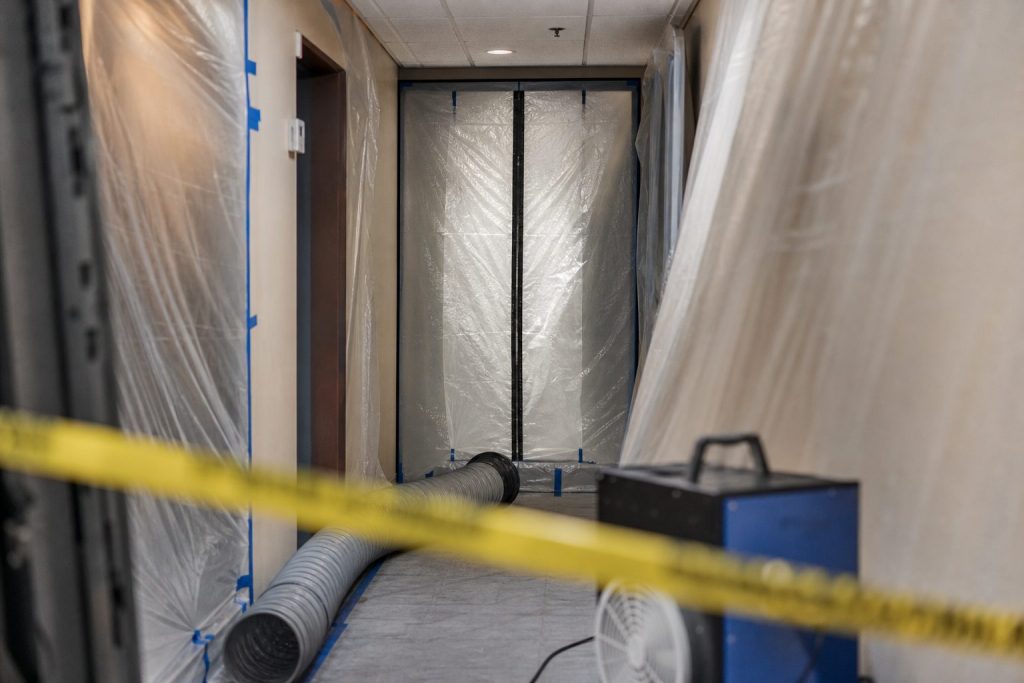
Liability exposure. Handling water and mold work badly is a lawsuit. Handling it well requires protocols, containment, moisture mapping, air scrubbers, negative-pressure setups, and documentation procedures that sit outside the HVAC workflow. The insurance premium on an HVAC company that dabbles in mold remediation is meaningfully higher than one that refers the work out.
Operational mismatch. An HVAC tech diagnosing a suspected leak in a condensate line cannot also be running a multi-day drying operation in the same house. The two workflows conflict. The HVAC tech wants to fix the HVAC problem and move to the next call. The mitigation work is measured in days, not hours, and belongs to a different operational rhythm.
Customer experience. The HVAC tech who tries to handle mold themselves, badly, ends up with a customer review that damages the HVAC brand. The HVAC tech who refers out cleanly to a trusted restoration partner ends up with a customer who credits the HVAC company for catching the problem early and protecting the home.
The industry-wide preference to partner rather than perform is the structural opportunity. An HVAC contractor who does not have a trusted restoration partner is sitting on an unmonetized asset. A restoration company that walks in with a professional, disciplined partnership offer is solving a problem the HVAC operator already knows they have.
The Moments When HVAC Discovers Restoration Work
Different from plumbers, who encounter restoration needs almost entirely through active water events, HVAC techs find restoration opportunities across a wider and more varied set of moments.
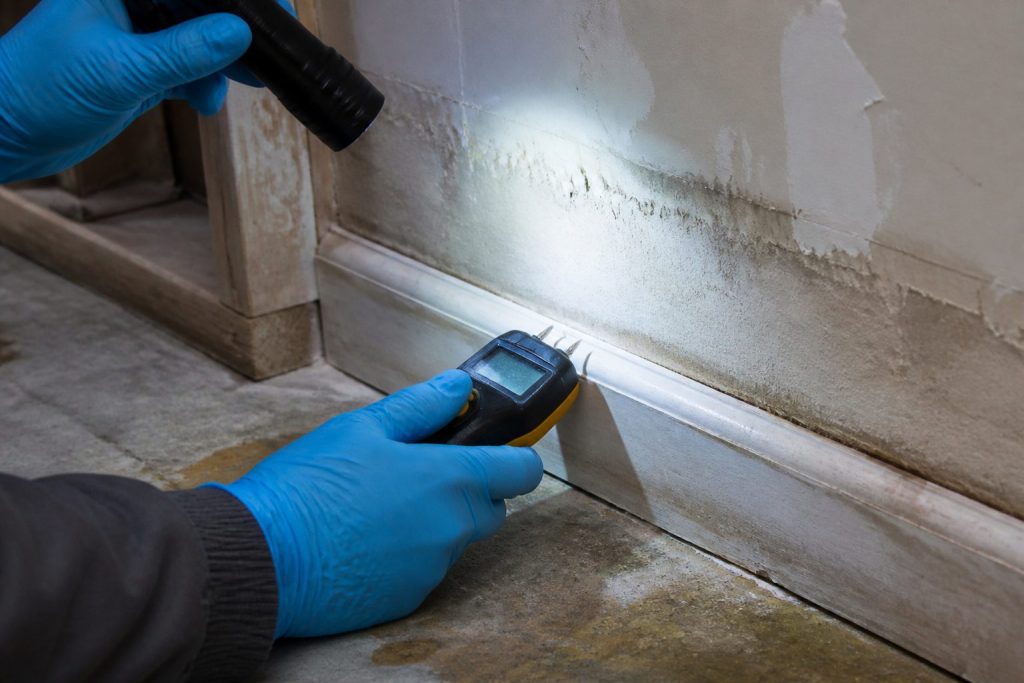
The seasonal tune-up discovery. A spring tune-up reveals visible mold in the supply plenum, standing water on the primary drain pan, biological growth on the evaporator coil, or moisture staining on ductwork insulation. The homeowner had no idea. The HVAC tech is the one who found it.
The condensate line failure. A clogged condensate line floods a finished basement or the area directly below a second-floor air handler. Water damage has usually been underway for hours before the homeowner notices.
The IAQ complaint investigation. A homeowner calls about a strange smell or respiratory symptoms. The HVAC tech opens up the system and finds the biological cause — often mold that has been growing in an undetected moisture pocket.
The equipment replacement walk. An HVAC company selling a new system walks the attic, crawlspace, and mechanical areas to size the job. In the process they find old water damage, compromised insulation, rodent intrusion, and air-sealing failures that reveal long-standing moisture history.
The commercial maintenance visit. Scheduled preventive maintenance at a commercial property surfaces mechanical-room water events, rooftop unit leaks, and duct contamination that building owners did not know about until the HVAC vendor reported them.
The new-homeowner inspection. A buyer calls an HVAC contractor to check the systems on a recently purchased home. The tech finds evidence of past water damage, improper repairs, or concealed mold. The clock on remediation disclosure and mitigation starts immediately.
Each of these moments is a decision point where the HVAC contractor chooses to handle it themselves, ignore it, or refer it. The restoration company that has earned the call captures that flow. The ones that have not capture nothing.
Why Most Restoration-HVAC Relationships Fail
The failure patterns look similar to the plumber version but differ in some meaningful ways.
The HVAC contractor cannot find you when they need you. HVAC techs are often in crawlspaces or attics, using one hand, with limited signal. If the referral path requires them to look up a number, find a website, or navigate a phone tree, the referral dies on the floor of the crawlspace. The restoration companies that earn HVAC flow are the ones where the tech has a named contact saved in their phone, one-tap dial, and a guaranteed live-person answer.
The duct-cleaning conflict. HVAC companies are protective of air-duct cleaning work and have strong opinions about who should do it. Restoration companies that offer general duct cleaning as a side service, especially if marketed aggressively to homeowners, create immediate friction. Stay out of HVAC’s core scope unless the duct work is part of a documented mold remediation protocol.
Slow mobilization on mold jobs. Mold jobs require fast containment setup to prevent spore spread during HVAC operation. A restoration crew that arrives the next day, after the system has been running, has made the contamination worse. HVAC contractors who see this pattern twice stop referring.
Poor IAQ credibility. HVAC techs increasingly position themselves as indoor air quality professionals, not just equipment installers. A restoration partner who speaks the IAQ language — PRVs, ACH, HEPA filtration, negative-pressure containment, clearance testing — earns respect. One who speaks only demo-and-drying terminology does not.
Commercial contract risk. HVAC contractors with property management contracts carry substantial liability for the vendors they introduce into those buildings. A restoration company that fails on a commercial job — missed deadlines, billing disputes, incomplete documentation — jeopardizes the HVAC contractor’s entire commercial book. The HVAC operator will drop the restoration partner before they will let one bad job compromise their most valuable accounts.
The “we also do HVAC” temptation. Some restoration companies expand into adjacent trades, including HVAC equipment work, duct cleaning, and indoor air quality services. This is a strategic decision with consequences. Doing the adjacent work captures more revenue per job but destroys the referral relationship with the HVAC partner who now sees you as a competitor. This trade-off is the single most important strategic decision a restoration operator makes about the HVAC channel.
What the Best Restoration Companies Do
The playbook for elite restoration-HVAC partnerships is specific and operationally demanding.
Be reachable instantly. Every HVAC partner has a direct-dial number for a real person at the restoration company. Saved in the tech’s phone as a favorite. Tested quarterly. No voicemail. No phone trees. No callbacks promised within the hour. The call is answered in under 10 seconds or the partnership is not working.
Mobilize fast on mold and IAQ jobs. A mold referral triggers containment setup within 4 hours, not 24. The HVAC system is typically off during the active mold event. Every additional hour the house sits uncontained risks spore spread and homeowner dissatisfaction. The restoration company that consistently mobilizes fast protects the HVAC contractor’s reputation with the customer.
Respect the HVAC scope absolutely. No duct cleaning outside a documented remediation protocol. No HVAC diagnosis language in reports. No suggestions to the homeowner about equipment upgrades. No competing on services the HVAC company performs. This discipline is the foundation of trust.
Speak IAQ fluently. The restoration tech discussing the job with the HVAC contractor uses the right terminology. Understands ACH, differential pressure, clearance testing protocols, IICRC S520 for mold remediation, and when environmental sampling is warranted. This signals credibility in five minutes and separates the restoration company from the commodity competition.
Co-document with the HVAC contractor. The scoping notes, moisture map, and containment plan reference the HVAC contractor’s initial finding. The homeowner receives a co-branded narrative: HVAC caught the problem, restoration solved it, both documented properly for insurance and homeowner records.
Handle insurance fully and transparently. Adjuster communication, Xactimate documentation, claim management — all owned by the restoration company. The HVAC contractor is kept informed at milestones but not asked to engage in the insurance mechanics. This is pure value delivery from restoration to HVAC.
Feed the HVAC contractor’s content and reputation. Branded photos of completed remediation jobs where the HVAC caught the initial problem, permission to share, testimonial gathering from the homeowner with the HVAC contractor credited. A restoration company that deliberately builds the HVAC partner’s reputation as a problem-catcher earns loyalty that competitor restoration companies cannot buy.
Send HVAC referrals back. Every completed mitigation job is a potential HVAC opportunity — new homeowner awareness of their system, damaged equipment needing replacement, duct work requiring inspection. Route these back to the HVAC partner intentionally. Track the flow. Report quarterly.
Support the commercial book with white-glove execution. When the HVAC contractor opens the door to one of their commercial accounts, treat that job like it is a $10 million relationship, because for the HVAC contractor it is. Perfect documentation, on-time milestones, proactive communication, impeccable clean-up. One bad commercial job closes that channel forever.
Show up at HVAC trade associations. ACCA, ASHRAE chapters, local Mechanical Contractors Associations, HVAC-focused distributor events. Presence in these venues signals that the restoration company is a trade peer rather than a vendor, and puts senior-level relationships in motion with HVAC operators who otherwise never talk to a restoration contractor.
Pay the referral fee on time, every time. The same discipline as plumbing. Typical market structures: $350 to $500 per water damage referral, $500 to $1,000 per insurance-covered job, sometimes structured revenue-share on recurring commercial accounts. Pay within 30 days of restoration-company payment received. Accompany the check with a short note naming the job.
The Maintenance Roster Play
The most leveraged single thing a restoration company can do inside an HVAC partnership is support the partner’s maintenance agreement program.
The HVAC contractor is selling $20 to $30 per month memberships. The member receives two tune-ups annually. During each tune-up, the HVAC tech walks the system, looking for problems.
A restoration company can multiply the value of that program by providing the HVAC partner with:
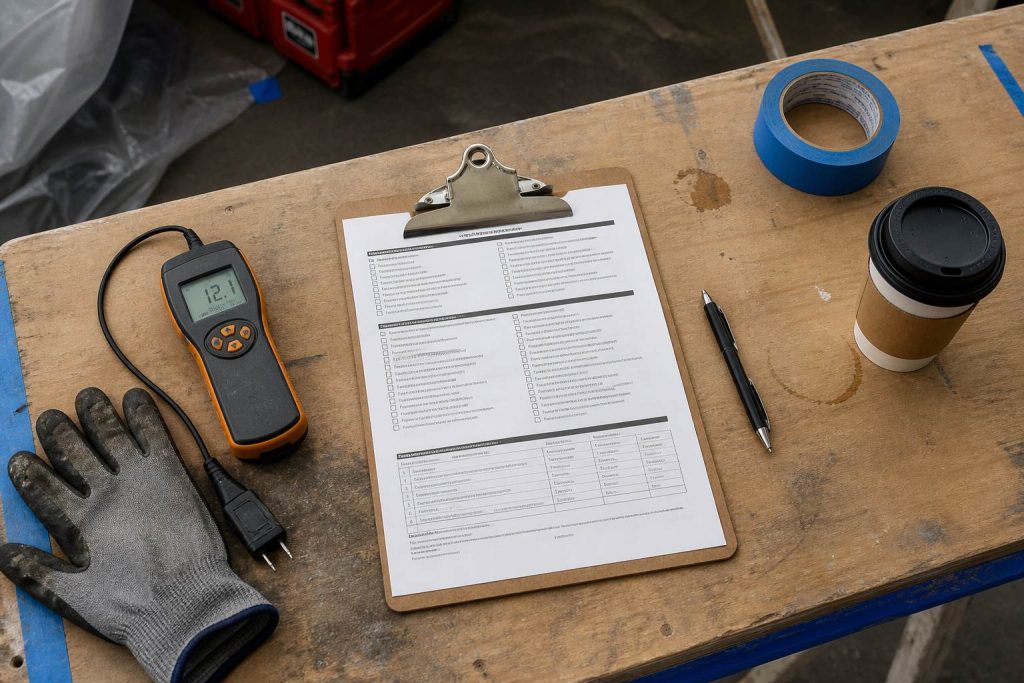
- A simple written protocol the tune-up tech uses to flag potential water damage and IAQ concerns during the visit
- A one-page homeowner education handout the HVAC tech leaves with the customer when any flag is identified, explaining the potential issue and recommending restoration evaluation
- Priority scheduling for the restoration evaluation for any HVAC partner-referred concern
- A shared reporting mechanism that tracks referrals, conversions, and outcomes
The result: every HVAC tune-up visit becomes a potential mitigation lead. The HVAC contractor retains full ownership of the customer relationship. The homeowner gets proactive protection. The restoration company receives a structured flow of pre-qualified leads that no paid channel can match.
The HVAC contractor who sees this program working well will make the restoration partner the exclusive referral partner across the entire membership base. That exclusive relationship, run for five years, produces referral flow that competitors cannot replicate because they do not have the protocol, the reporting, or the trust.
The Ninety-Day HVAC Program
The concentrated investment playbook, adapted for HVAC realities.
Weeks 1-2. Map the 20 most viable HVAC contractor partners in the service area. Selection criteria: strong residential service-and-repair focus, active maintenance agreement program, 4.7+ star GBP, 100+ reviews, IAQ services offered, commercial account presence. Rank and prioritize the top 5.
Weeks 3-4. Research each of the top 5 deeply. Understand their membership program structure, their commercial account mix, their technician count, their owner’s background. Identify what they are missing that your restoration company can provide.
Weeks 5-6. Make initial contact with a concrete value proposition — a named point of contact, sub-10-second phone answer guarantee, mold and IAQ credentialing credentials, a reciprocity framework, and the tune-up protocol support described above. Meet with the owner or operations lead, not the dispatcher.
Weeks 7-8. Co-design the operating protocol. Referral path, communication rhythm, documentation flow, referral fee structure. Put it on one page both parties sign. Test the referral path live with a simulated call.
Weeks 9-12. Execute. White-glove every job. Deploy the tune-up protocol. Send HVAC referrals back as mitigation jobs generate them. Report weekly for the first month, then monthly after that.
Day 90. Review the ledger with each partner. Celebrate wins. Adjust the protocol. Expand to tier-two partners.
A year into this program, an HVAC-literate restoration company has built referral flow that the standard “drop off business cards at the HVAC shop” restoration competitors cannot touch.
Where This Pairs With the Rest of the Stack
HVAC sits alongside plumbing as the two highest-yield trade partnership channels for a restoration company. Both feed the observational B2B plan. Both require the owner-as-rainmaker discipline at the senior level. Both live inside the reciprocity discipline that separates relational from transactional B2B programs. Both are measured through the marketing signals framework — partner count, recency, bidirectional flow, revenue produced — that reveals which partnerships are compounding and which are decaying.
HVAC differs from plumbing in the centrality of the membership program and the IAQ vocabulary. A restoration company that learns those two specifics will dominate the HVAC channel in their service area.
Where to Start
Identify the one HVAC contractor in your service area with the strongest maintenance agreement program and highest review profile. Not the biggest. The best-run. Study their membership offering. Meet the owner. Present the tune-up protocol and the reciprocity framework as a package. Execute flawlessly on the first three jobs.
The third article in this series covers Cintas, Aramark, and the facility-services vendors — a structurally different relationship where restoration companies plug into B2B facility maintenance flow rather than residential emergency service. Same discipline, different mechanics, different operational depth required.
Frequently Asked Questions
Why do HVAC contractors prefer to refer mold and water damage work rather than handle it themselves? Three reasons: they are not typically IICRC-certified for mold or water damage remediation, the liability and insurance exposure of dabbling in remediation is real, and the operational workflow of multi-day drying and containment work does not fit the HVAC service cadence. An HVAC contractor referring cleanly to a trusted restoration partner protects their reputation, their customer, and their insurance profile.
What is the single most valuable thing a restoration company can offer an HVAC partner? A structured protocol supporting the HVAC contractor’s maintenance agreement program — giving tune-up techs a simple way to flag potential water damage and IAQ issues, backed by priority restoration scheduling and transparent reporting. This turns the HVAC membership base into a pre-qualified mitigation lead source that no paid channel can replicate.
What are the dealbreakers in an HVAC-restoration partnership? Offering general duct cleaning services that compete with the HVAC scope, slow mobilization on mold jobs while the HVAC system remains in the home, poor performance on commercial jobs introduced through the HVAC partner’s property management relationships, and missing or late referral fee payments. Any of these ends the partnership quickly.
How does a restoration company prove IAQ credibility to an HVAC contractor? By speaking the vocabulary. ACH, differential pressure, clearance testing, IICRC S520 for mold remediation, ASTM protocols, when and why to bring in an industrial hygienist. A restoration tech who can talk IAQ at the level of an HVAC tech earns trust in five minutes. One who cannot does not.
What referral fee structure is standard for HVAC-restoration partnerships? Market norms mirror plumbing: $350 to $500 per water damage referral, $500 to $1,000 per insurance-covered job. For commercial accounts introduced through the HVAC contractor’s property management relationships, structures often shift to revenue-share or preferred-vendor arrangements. The amount matters less than on-time, every-time payment discipline.
Should a restoration company offer duct cleaning as part of their services? Not as a standalone commercial offering, no. Duct cleaning as a core service competes directly with HVAC scope and damages the referral relationship with every HVAC partner in the service area. Duct cleaning as part of a documented mold remediation protocol, with the HVAC partner informed, is appropriate and expected.
How does the HVAC channel differ from the plumbing channel operationally? Plumbers encounter restoration needs primarily through active water events — pipe bursts, sewer backups, water heater failures. HVAC contractors encounter restoration needs across a wider and more varied set of moments — tune-ups, condensate failures, IAQ complaints, equipment replacement walks, commercial maintenance visits, new-homeowner inspections. The HVAC referral flow is steadier and more preventive; the plumbing referral flow is higher-acuity and more event-driven. Both are valuable. The best restoration companies build both channels deliberately.
Tygart Media on restoration — an analyst-operator body of work on the systems that separate compounding restoration companies from busy ones. No client names. No brand placements. Just the operating standard.
Get The Signal
What we actually ran, what it measured, and what it means for a restoration shop — every week, including the flops.
Leave a Reply