
How does a restoration company build a real referral relationship with plumbers? By understanding how plumbers actually run their business — flat-rate pricing, speed-to-lead discipline, service-call economics, and the commercial account book they protect fiercely — and by becoming an asset to that business rather than a transaction on top of it. The restoration companies that dominate plumber referrals are the ones that respond faster than the plumber’s own office, document the job in a way that makes the plumber look good to the homeowner, never compete on plumbing scope, and offer the plumber something the competing restorers don’t — typically fast arrival, clean handoff paperwork, a consistent named point of contact, and straight-up reciprocity in the form of plumbing referrals back from the restoration company’s own job flow.
There is no referral source more valuable to a restoration company than a good plumber. The math is obvious. Plumbers are first on scene at the majority of residential water losses. They are the person the homeowner is already talking to at the exact moment the restoration decision gets made. A plumber who trusts you is worth ten lead-form submissions and the cost of a Local Services Ads subscription combined.
And yet most restoration companies handle plumber relationships poorly. They walk into plumbing shops with business cards and pizza and a gift card program. They call it “relationship building.” It is not. It is a low-quality sales motion aimed at a business the restorer does not actually understand.
This article is the antidote. It is how plumbing companies actually make money, how they think, what they protect, and where a restoration company with discipline plugs in to become the plumber’s trusted partner rather than the tenth restoration card on a cluttered desk. The same framework applies to the rest of the trade ecosystem we will cover — HVAC, facilities vendors, carpet cleaners, pest control, property managers, general contractors — but plumbing is the place to start because the volume is there and the operational overlap is tightest.
How Plumbing Companies Make Money
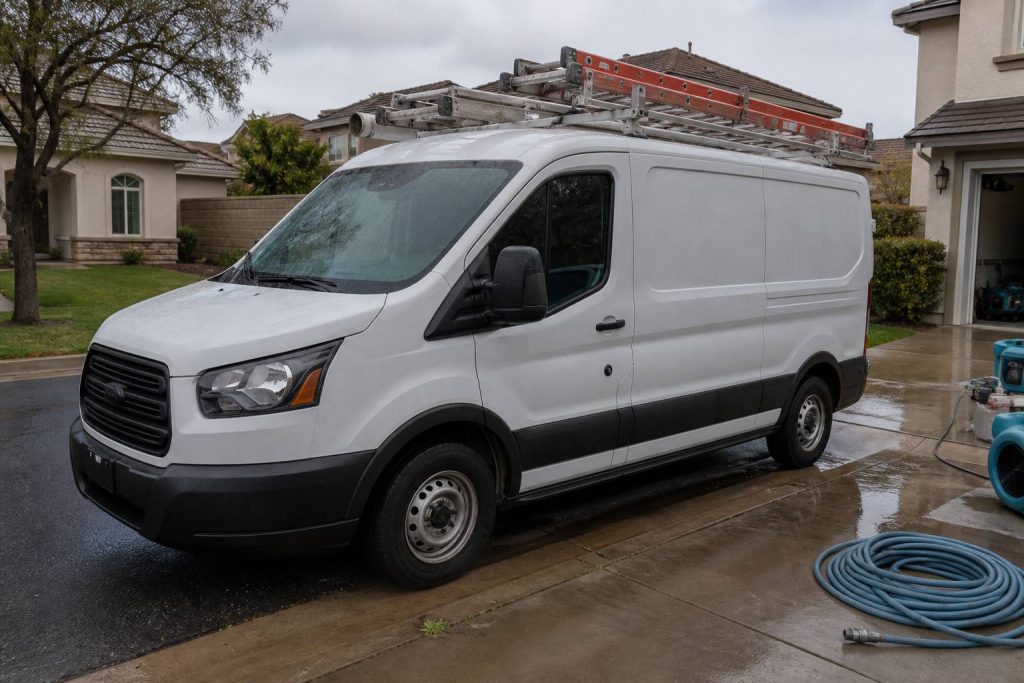
Before you sell into a plumber, understand where their profit actually comes from. A modern residential plumbing operation runs on a clear pricing and margin stack.
Flat-rate pricing has become the industry standard for established plumbing companies. A modern shop prices most residential jobs — drain clearing, toilet installs, water heater swaps, fixture replacements, standard repairs — as fixed fees out of a price book rather than hourly. The benefits are obvious: the homeowner gets a predictable number, the tech closes faster at the kitchen table, and the margin is protected against jobs that drag on.
Get The Signal
What we actually ran, what it measured, and what it means for a restoration shop — every week, including the flops.
Hourly billing still exists, mostly for diagnostics, commercial time-and-materials work, and jobs where the scope is genuinely uncertain (slab leaks, multi-fixture failures, old-pipe situations where every valve is a surprise). Most residential plumber hourly rates fall between $80 and $130 per hour, with some premium markets higher. Service-call fees — the trip-and-diagnostic charge a plumber collects just for arriving — typically run $50 to $250 depending on market and time of day.
Gross margin targets are structural. A well-run plumbing company runs 60 to 62 percent gross margin on service and repair work, with net margins in the 10 to 20 percent range. Underperformers are at 2 to 8 percent net. The difference is almost entirely operational discipline — flat-rate pricing discipline, dispatch efficiency, call-booking rate, labor as a percentage of revenue.
Labor is the dominant cost, typically 40 to 60 percent of operating expenses. Every minute a tech is not in front of a paying customer is a minute of unrecovered fixed cost. This matters to a restoration company because it tells you exactly what the plumber values most: technician time.
The job mix separates the healthy from the struggling. Service and repair — single-tech, high-ticket, fast-turn — runs the 50 to 60-plus percent gross margin that carries the company. New construction and larger remodels run 20 to 30 percent and are often loss-leaders on labor utilization. The plumbing companies that are growing fast and buying competitors are running service-and-repair-heavy books with strong flat-rate pricing and disciplined dispatch.
This is the business you are calling on. When you walk in, you are walking into an operation where every non-revenue minute is a tax on the P&L.
How Plumbing Companies Acquire Customers
Understanding the lead flow tells you where you sit in their world.
Google Business Profile is the single most important acquisition channel for most residential plumbing companies — identical to the restoration playbook. A well-run GBP, paired with aggressive review velocity, produces the majority of a residential plumber’s organic lead flow at effectively zero marginal cost.
Google Local Services Ads sit at the top of the paid stack. LSA leads for plumbers typically run $25 to $85 per lead at 40 to 65 percent conversion, for an effective $38 to $213 per booked job. Like restoration, LSA ranking is driven by review signals and response time. A plumber with a weak review foundation cannot win LSA.
Shared marketplace leads — the Angi and HomeAdvisor category — run $15 to $50 per lead at 8 to 12 percent conversion, producing $125 to $625 effective cost per job. Most plumbing operators treat these as a fill-the-gap channel rather than a core source.
Past-customer reactivation is the compounding layer. SMS reactivation of past customers costs less than a dollar per broadcast and typically produces 8 to 15 percent booking rates. Every plumber who has been in business five years is sitting on an underutilized database.
Referral programs fund a meaningful slice of the book at $25 to $50 per acquired customer in incentives.
Here is the industry’s consensus #1 tactical lever: speed to lead. Responding to a lead in under 60 seconds converts at roughly four times the rate of slower responses. This is why a plumber obsesses over dispatch tools like ServiceTitan, Housecall Pro, and FieldPulse, and why 24/7 answering services and AI receptionists have proliferated in the category. Every second matters.
The implication for a restoration company courting that plumber: you are being evaluated against the same standard. If you cannot respond to a plumber’s referral in under 60 seconds, you are losing to the restoration shop that can. This is not a nice-to-have. It is the single largest predictor of whether a plumber will keep sending you leads after the first one.
The Plumber’s Commercial Book
Residential service drives most of the volume in a typical plumbing operation, but the commercial book is what makes the business valuable at exit. Property management companies, facilities vendors, retail operators, HOAs, and industrial property owners operate on vendor contracts and scheduled maintenance programs. They produce lower per-ticket margin than residential service calls but dramatically higher revenue predictability and customer lifetime value.
The property manager who finds a reliable, documented, certificate-of-insurance-compliant plumbing vendor rarely switches. That retention is what turns a $2M plumbing company into a $10M plumbing company over a decade. It is also the piece most small plumbing operators protect most aggressively — because losing a commercial account is a severed artery, not a lost ticket.
For a restoration company, this matters in two ways. First, a plumber who trusts you will open their commercial book to you when those properties have water losses — because the plumber’s reputation is now attached to yours, and they are not going to introduce you to their best customer unless you can execute perfectly. Second, your own commercial book is the most valuable thing you can offer a plumber in return. The restoration companies that build deep plumber partnerships typically have their own commercial relationships that refer plumbing work downstream — and a disciplined restorer puts those referrals through their plumber partners intentionally, tracks the flow, and makes sure the value is visible.
Reciprocity in the commercial channel is the highest-leverage thing a restoration company can offer a plumber. Nothing else you do comes close.
How a Plumber Thinks About a Water Loss
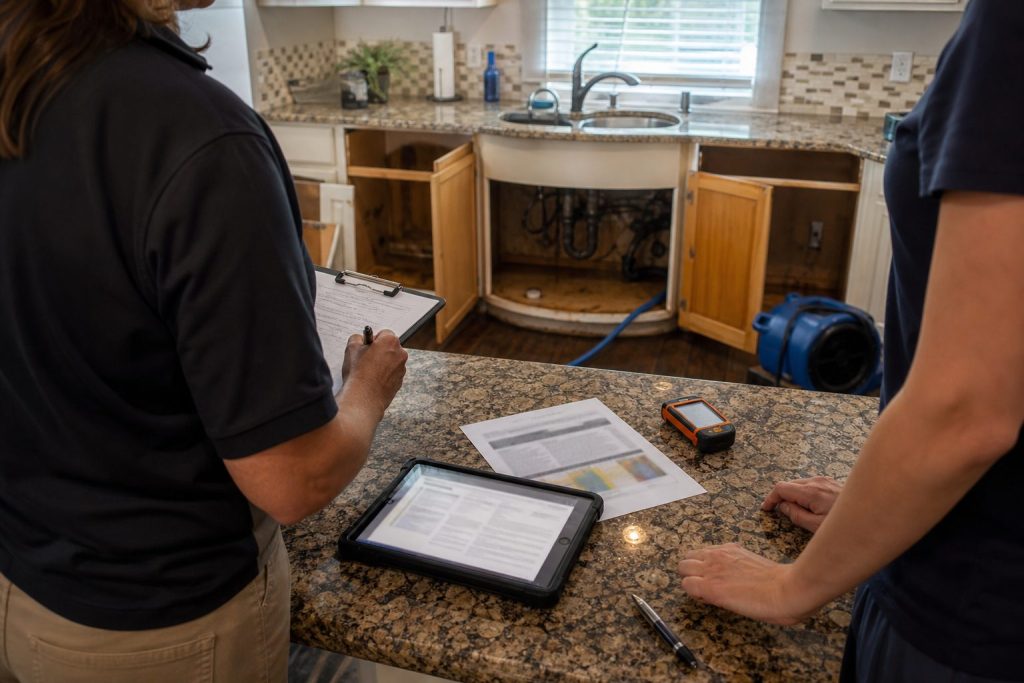
Now zoom into the moment that matters: the plumber is on site. Pipe has burst. Homeowner is standing in two inches of water. The plumber’s job, strictly, is to shut off the supply, diagnose the failure, repair or replace, and get out. Mitigation and drying are outside their scope and outside their certification.
In that moment the plumber has three options.
Option one: ignore it. Let the homeowner figure out the water damage themselves. Give them a generic “you’ll want to call a restoration company” and leave. This is what most plumbers actually do, because it is zero risk and zero effort.
Option two: recommend whoever the homeowner has already tried to call, even if that restoration company is unfamiliar. Low risk, low value, no upside.
Option three: make a trusted referral. Pull out their phone, call the restoration company they know personally, hand the phone to the homeowner. The restoration crew arrives before the plumber has finished their paperwork. The homeowner feels taken care of. The plumber looks like a full-service problem-solver rather than someone who created a problem and left.
Option three is the one that matters. It is also the one that requires the restoration company to have earned the trust to be the plumber’s one call.
Earning that call is what this article is about.
Why Most Restoration-Plumber Relationships Fail
The trade press is full of plumbers complaining about restoration companies. The complaints cluster into a predictable set.
Promised referral fees never arrive. A restoration company makes a big show of the referral program, then the plumber sends a lead, and the check is either late, wrong, or missing entirely. Once burnt, the plumber stops sending leads and never tells the restorer why. The restorer blames their own marketing. The real cause is a broken promise the plumber made mental note of and walked away from.
Slow response after the referral. The plumber hands off the homeowner, expects a truck on site within the hour, and the restoration crew shows up the next morning. The plumber looks bad. The plumber does not send a second lead.
Overlap creep. The restoration company starts doing water heater replacements, pipe repairs, or other scope the plumber considers theirs. The plumber, correctly, stops referring to the company that is competing with them.
Transactional over relational. The restorer drops by every month with business cards and a bag of swag, asks “any jobs this month?”, and never demonstrates any interest in the plumbing business itself. Plumbers read this the way everyone reads it — as a vendor trying to extract leads without offering anything in return.
One-directional flow. The plumber sends water losses. The restoration company sends nothing back. A year in, the plumber calculates the relationship and realizes the restorer has taken dozens of high-ticket insurance jobs and returned effectively nothing. The relationship is dropped for a competitor who understands reciprocity.
No co-branding of the homeowner experience. The restoration company shows up, does the work, and the homeowner ends up viewing the plumber as “the guy who recommended this crew” — a connector, not a savior. A sophisticated restorer makes a point of telling the homeowner, in the presence of the plumber, that the plumber caught the problem early and protected the home from far worse damage. That small discipline produces the story the plumber tells for the next six months.
Inconsistency. The restoration company is great on the first three jobs, slips on the fourth, misses a callback on the fifth, and the plumber’s trust decays without the restorer ever knowing.
Every one of these is fixable. Every one of these is the reason most restoration-plumber relationships never compound.
What the Best Restoration Companies Actually Do
A restoration operator with intention can build plumber partnerships that are durable, compounding, and unreachable by competitors. The playbook is specific.
Respond faster than the plumber’s own dispatch. When a plumber calls to refer a loss, the target is truck rolling within 15 minutes and on site within 45. The plumber’s tech, still on site, calls their own office and the office quotes a 90-minute window for the next plumbing job — and the restoration crew has already arrived. That single data point, experienced twice, will make the restorer the plumber’s default for the next decade.
Arrive in a way that makes the plumber look good to the homeowner. The lead restoration tech introduces themselves, acknowledges the plumber by name, explicitly credits the plumber for catching the problem early, and explains what happens next. This takes sixty seconds and produces outsized returns in the plumber’s willingness to call again.
Never encroach on plumbing scope. The restoration company’s role is water mitigation, drying, demo, and rebuild scope outside the plumbing trade. Anything inside the plumbing trade — fixture replacements, pipe work, water heater installs, drain clearing — is not your business. Routinely declining to take that work when homeowners ask, and actively referring it back to the plumber partner, is a trust-building act that plumbers notice and remember.
Co-brand the documentation. The mitigation paperwork the homeowner receives should reference the plumber who made the initial diagnosis and repair. The plumber’s contribution becomes part of the record. Insurance adjusters see the plumber’s name. Homeowners see the plumber’s name. The plumber becomes more valuable in the eyes of the people they rely on, and knows the restoration company is the reason.
Send plumbing leads back. This is the most underused discipline in the restoration-plumber relationship. Every restoration company is sitting on customer flow — past customers, current mitigation jobs, commercial property managers — that periodically needs plumbing work. Route that flow to partner plumbers intentionally. Track it. Tell the plumber quarterly how many leads you sent them, how many converted, how much revenue they produced. If the answer is a six-figure number — and for any mid-sized restoration company it usually is — you have built the kind of partnership plumbers do not leave. Reciprocity in the commercial channel is the single highest-leverage lever a restoration company has.
Name the point of contact. Every plumber partner should have one named person at the restoration company who owns the relationship, answers the phone at 2 a.m., and personally visits the plumbing shop quarterly. Rotating account managers and generic inboxes are death. A plumber referring a six-figure insurance job wants to know the person they are handing the phone to, and that person’s name and cell should be in the plumber’s contacts.
Handle the insurance complexity so the plumber does not have to. Most plumbers do not want to deal with adjusters, xactimate, drying logs, or moisture mapping. The restoration company that takes on 100 percent of that burden, keeps the plumber informed at the milestones that matter, and asks the plumber zero insurance-adjacent questions, becomes invaluable.
Feed the plumber’s content engine. A plumber who wants to grow is publishing photos, doing GBP posts, writing neighborhood testimonials. A restoration company that supplies the plumber with branded before/after photos from the job, permission to use them, and the homeowner testimonial the plumber can share is providing content the plumber cannot easily get elsewhere. This is a small gesture that compounds into meaningful organic reach for the plumber. They remember.
Pay the referral fee on time, every time, without being asked. The check is in the plumber’s hand within 30 days of job completion and insurance payment, and the payment is accompanied by a short note about the job. If cash-flow discipline is a problem (see cash discipline in restoration), fix it before you promise referral fees at all. Unpaid referrals are the fastest way to destroy plumber trust.
Never make the plumber feel transactional. The quarterly shop visit is about the plumber’s business, not your leads. Ask how their LSA is performing. Ask about their recent hires. Ask what is working and what is not. Be interested. Most plumbers rarely get a conversation with an industry peer who actually understands their operation. Becoming that person is worth more than any referral incentive.
The Reciprocity Ledger
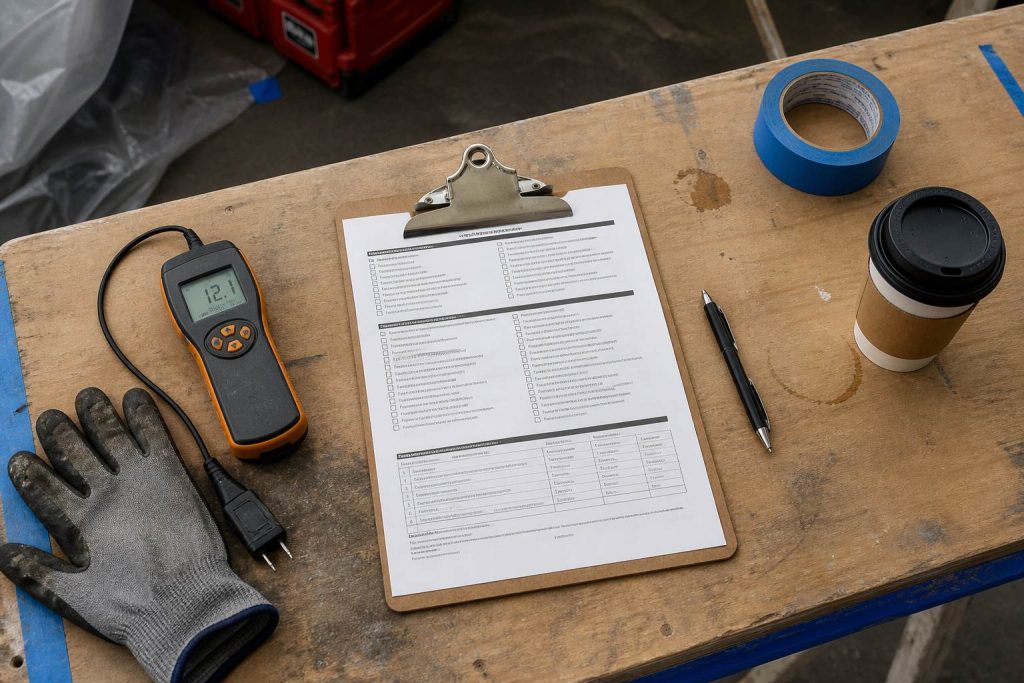
The single most underused concept in restoration-plumber relationships is the reciprocity ledger. A shared, transparent record of leads flowing in both directions.
One side: leads from plumber to restorer. Loss name, date, approximate job size, outcome.
Other side: leads from restorer to plumber. Homeowner name, date, type of work, outcome.
Run it quarterly. Share it with the plumber. Quantify the dollar value of the flow in each direction. Have a real conversation about whether the balance is fair and what to adjust.
Most plumbers have never had a restoration partner bring this level of discipline to the relationship. It is the single clearest signal that the restorer thinks of the plumber as a business partner rather than a lead source. It is also the mechanism that surfaces problems before they cause defection. If the ledger shows six months of flow from plumber to restorer and nothing back, it is visible and fixable. Without the ledger, it is invisible and terminal.
The Ninety-Day Plumber Program
A restoration company with no systematic plumber program can build a strong one in 90 days.
Week 1-2: Identify the 20 plumbing companies in the service area most likely to produce water damage referrals. Criteria: residential service and repair focus, 4.7+ star GBP, 100+ reviews, visible community presence, technician count of 5+. Rank them. Decide the top 5 to pursue first.
Week 3-4: Research each of the 5 deeply. What does their website say about their services? What are their reviews telling you about how they talk to customers? Who is the owner or operations lead? What commercial properties have they done work on? This is the preparation that separates a professional approach from a cold-call one.
Week 5-6: Make contact. Not a cold sales visit. An introductory conversation with the owner or ops lead, initiated with a specific, concrete offer: a standing commitment to respond to any referral within 15 minutes, a named point of contact, and a tracked referral program with transparent payouts. Treat the meeting as two small-business operators comparing notes, not a sales call.
Week 7-8: Agree on the operating protocol. Who calls whom, what number, what happens in the handoff, how the paperwork flows. Put it in writing — not a contract, a shared one-pager. Confirm the referral fee amount, cadence, and mechanics.
Week 9-12: Execute. Every referral gets a white-glove response. Every plumber interaction reinforces the partnership. Every job ends with co-branded documentation and the plumber visibly credited. Referral fees are paid before the 30-day mark, always.
Day 90: Meet with each partner plumber. Review the ledger. Adjust as needed. Expand to the next tier of plumber partners.
A restoration company that runs this program with discipline for a year has built an acquisition moat competitors cannot cross without spending five times the marketing budget to achieve a fraction of the flow.
Where This Pairs With the Rest of the Stack
The plumber partnership program sits alongside the observational B2B plan — plumbers are one of the highest-yield categories in that plan, but deserve their own dedicated playbook because of the volume and operational overlap. It sits alongside the owner-as-rainmaker practice — senior-level relationships with plumbing company owners are what ultimately unlock the commercial book. It feeds the review engine because plumber-referred homeowners are typically the most satisfied and most willing to review. And it runs on the measurement discipline — the reciprocity ledger is measurement in its purest form.
Where to Start
Pick one plumber this week. Not five. One. The best-reviewed, most operationally sharp residential plumbing company in your service area. Study them. Meet them. Propose a real partnership with a real operating protocol. Execute flawlessly on the first three jobs they send you. Use those three jobs as the reference when you expand to the next four plumbers.
The compounding math is the same as every other asset Tygart Media has written about. One great plumber partnership, operated well for five years, produces more durable lead flow than ten inconsistent ones. The discipline is in going deep rather than wide, paying on time, never encroaching, and making reciprocity visible.
The next article in this series covers HVAC — same structural playbook, different operational realities, a different set of entry points for a restoration company that has the discipline to learn the trade before selling into it.
Frequently Asked Questions
What is the single most important thing a restoration company can do to build plumber referrals? Respond faster than the plumber’s own dispatch. When a plumber calls to refer a water loss, a restoration crew on site within 45 minutes — while the plumber is still there — resets the entire relationship. It proves the restorer is worth the plumber attaching their reputation to. Speed to lead is the #1 lever in plumbing acquisition, and it is the single most important lever in earning plumber trust.
How much should a restoration company pay a plumber per referred lead? Market norms range from $350 for a standard water or sewer damage job to $500 to $1,000 for insurance-covered jobs. The amount matters less than paying on time, paying every time, and never requiring the plumber to chase the money. A smaller consistent fee paid reliably beats a larger fee that arrives late or not at all.
Can a restoration company do plumbing work itself to capture more of the job? Strongly discouraged if the goal is durable plumber referral flow. The moment a restoration company starts replacing water heaters, doing pipe work, or competing with plumbing scope, every plumber partner reads the signal correctly and pulls back. The restoration companies with the strongest plumber referral networks are explicit and disciplined about staying out of plumbing scope.
What kills a restoration-plumber relationship faster than anything else? Two things tied for first. Slow or missed referral fee payments. And slow response time on a referred job. Both are experienced by the plumber as a breach of trust. Both cause silent defection to a competitor, often without the restorer ever being told why the flow stopped.
How does the reciprocity ledger work in practice? A simple shared document showing leads flowing from plumber to restorer and restorer to plumber, with dates, rough job size, and outcome. Reviewed quarterly with the plumber. Quantified in revenue terms. It makes the balance of the relationship visible and is the mechanism that catches imbalance before it becomes a relationship-ending problem. Most restoration companies do not run one. The ones that do rarely lose plumber partners to competitors.
Should a restoration company try to partner with every plumber in their service area? No. Depth beats breadth. Five deeply trusted plumber partners producing durable referral flow is dramatically more valuable than twenty transactional relationships. The ninety-day plumber program in this article is built around concentrated investment in a small number of high-quality partners rather than blanket coverage.
How does this playbook change for commercial plumbing relationships versus residential? The core mechanics are the same — speed, reciprocity, never encroaching on plumbing scope, named point of contact. But the stakes are higher. Commercial plumbing relationships gate access to property management portfolios where a single water loss can generate six-figure mitigation revenue. The referral-fee mechanics often shift from per-job bounties to structured revenue sharing or preferred-vendor arrangements. The relationship discipline required is identical; the commercial ceiling is much higher.
Tygart Media on restoration — an analyst-operator body of work on the systems that separate compounding restoration companies from busy ones. No client names. No brand placements. Just the operating standard.
Get The Signal
What we actually ran, what it measured, and what it means for a restoration shop — every week, including the flops.
Leave a Reply