Tag: Trade Industry

  • Selling Into Carpet Cleaners: The Closest-Adjacent Trade and the Trickiest Partnership to Get Right

    Selling Into Carpet Cleaners: The Closest-Adjacent Trade and the Trickiest Partnership to Get Right

    Why are carpet cleaner partnerships high-value but high-risk for restoration companies? Because carpet cleaners are inside residential homes and commercial buildings weekly doing the exact work restoration companies also do — water extraction, carpet drying, and post-loss cleanup — which makes them both the most natural referral source and the most dangerous potential competitor. A carpet cleaner who trusts a restoration partner sends durable flow of water losses, post-loss recoveries, and commercial mitigation jobs. A carpet cleaner who feels encroached on by a restoration company that markets “carpet cleaning” as a side service stops referring immediately and starts competing. The playbook is clear: stay out of routine carpet cleaning scope absolutely, support the carpet cleaner’s own business, pay for referrals on time, and make the relationship visibly reciprocal. Done well, this is one of the most productive partnerships in the entire trade ecosystem.


    The first three articles in this partnership series covered plumbers, HVAC contractors, and facility-services route reps. This one covers the trade with the tightest operational overlap to restoration work itself: professional carpet cleaners. It is the most lucrative partnership category for a restoration company that can get the scope discipline right, and the one that self-destructs fastest for any restoration company that cannot.

    Carpet cleaners encounter water events almost daily. They are the first call for a wet carpet. They see the aftermath of leaks, spills, backups, flood events, and construction incidents before anyone else. The residential customer calls the carpet cleaner before calling the restoration company, because “wet carpet” sounds like a carpet cleaning problem. Whether that call becomes a referral to the restoration company or a DIY extraction attempt that causes a mold claim six months later comes down entirely to the relationship the restoration company has built with that carpet cleaner.

    This article is how to build the relationship correctly.

    How Carpet Cleaning Companies Actually Make Money

    The modern professional carpet cleaning operation runs on a specific economic model that any restoration operator approaching the category needs to understand.

    Carpet cleaning is a relatively high-gross-margin service business. Well-run companies see margins between 30 and 50 percent depending on operating discipline, equipment utilization, and account mix. The cost structure is dominated by labor, fuel, equipment depreciation, and cleaning chemicals — with labor efficiency being the dominant variable separating profitable operators from struggling ones.

    Pricing is structured in two common models. Per-room pricing typically runs $25 to $75 per room for residential work, with most operators pricing in the $30 to $70 band. Per-square-foot pricing typically runs $0.20 to $0.50 per square foot and is more common for larger jobs, commercial work, and situations with mixed flooring. Many carpet cleaners use a minimum fee of $100 to $150 on small jobs to cover the fixed cost of dispatching a truck.

    Equipment investment drives capacity. A portable extractor is the low-capital entry point and pays for itself in weeks, but caps production. A truck-mounted unit unlocks 3x to 5x the daily capacity once utilization is consistent, and is the standard for any carpet cleaning company doing meaningful volume. The biggest and most professional operators often run both — truck-mounts for high-volume work, portables for tight-access sites and specialty situations.

    The business has two revenue legs.

    Residential service. One-time calls, seasonal appointments, pre-event cleanings, move-in and move-out work, and the occasional post-emergency extraction. This is the bread-and-butter marketing-driven work, with moderate customer lifetime value and significant acquisition cost.

    Commercial recurring. Property management contracts, office parks, hotels, healthcare facilities, retail spaces. Quarterly or monthly recurring cleaning contracts worth thousands per month in predictable revenue. The commercial book is what makes a carpet cleaning company valuable at exit — retention in the commercial segment is high and predictability creates multiple expansion for sale valuations.

    The operators growing fastest right now are the ones shifting revenue mix toward the commercial recurring side while keeping residential as the demand-generation and brand-building channel.

    How Carpet Cleaning Companies Acquire Customers

    The acquisition stack looks a lot like the restoration and plumbing stacks. Google Business Profile and reviews dominate the residential channel. Local Services Ads, Google Ads, and Meta ads fill the paid layer. Referrals and past-customer reactivation produce the highest-margin flow. Commercial acquisition is driven by outbound sales, targeted advertising to facility managers, and direct relationships with property managers and cleaning franchise networks.

    The tactical lever is the same as every other service business: speed to lead matters most. Sub-60-second response. Same-day or next-day scheduling. Professional uniformed arrival. Carpet cleaners who get those fundamentals right grow. Those who do not stagnate.

    The implication for the restoration partnership: the carpet cleaner is running the same playbook you are running, faces the same constraints, and values the same disciplines. You are talking to a peer, not a vendor.

    What Carpet Cleaners See Every Day That Restoration Companies Miss
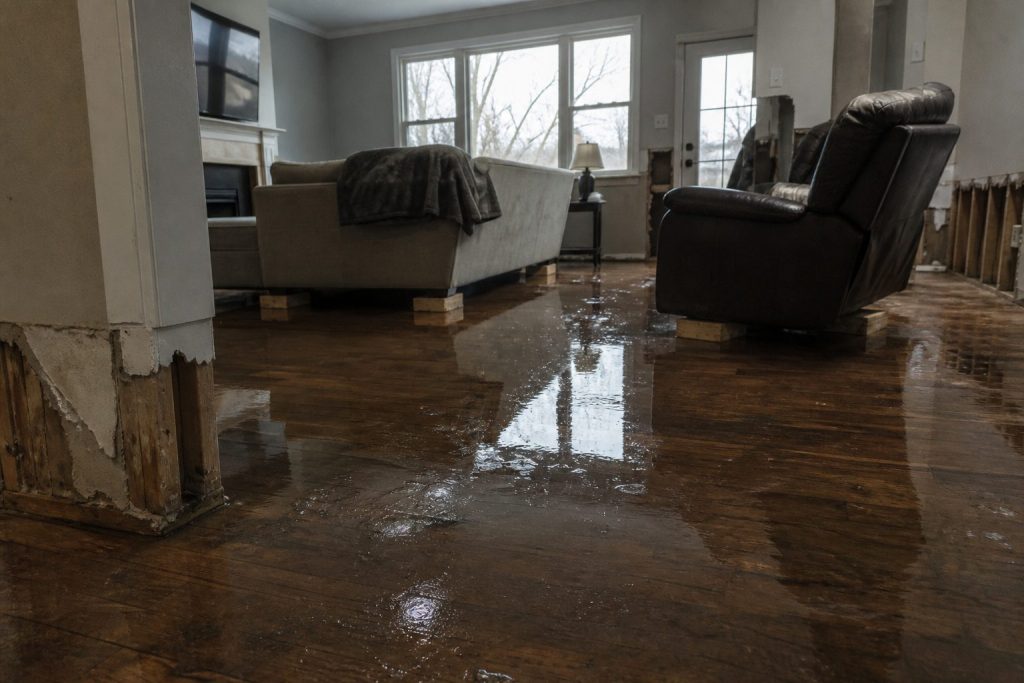
    The everyday reality of a carpet cleaning operation creates a steady stream of situations that are actually restoration events — and the carpet cleaner is almost always the first professional on the scene.

    The fresh water event. Dishwasher overflow. Washing machine hose failure. Refrigerator water line burst. Toilet overflow. The homeowner grabs towels, calls the carpet cleaner because “there’s water on the carpet,” and expects the carpet cleaner to fix it. The carpet cleaner arrives, extracts the visible surface water with their truck-mount, and then has a decision to make. Call a restoration company, or tell the homeowner “you’re good” and leave.

    The post-event call. A day or two after a water event the homeowner did not report to insurance — the carpet is now starting to smell. The carpet cleaner is called in to “deodorize.” They find the real issue: saturated pad, likely subfloor contamination, probable mold development. The carpet cleaner is standing in a restoration job.

    The commercial water event. A property manager calls the carpet cleaner they have a recurring contract with about a water leak in a tenant space. The carpet cleaner is the trusted vendor already on the account — but the job is larger than their scope.

    The sewer backup. A homeowner whose basement has backed up calls the carpet cleaner because “it’s on the carpet.” This is Category 3 water — a full restoration scope, not a carpet cleaning job, and a carpet cleaner who handles it themselves is creating a massive liability.

    The flood aftermath. After a weather event or flooding, carpet cleaners receive a wave of calls from homeowners whose carpets are wet. Much of this work needs professional restoration, not just extraction.

    The move-out surprise. A carpet cleaner doing a final pre-move-out cleaning for a landlord finds evidence of undisclosed water damage under the furniture lines. Immediate restoration evaluation is warranted.

    The odor investigation. A customer calls about a persistent odor the carpet cleaner cannot eliminate with standard treatments. The cause is often biological contamination from a past water event — an IAQ restoration job in disguise.

    In each of these moments, the carpet cleaner is the first decision-maker. They can hand it off to a trusted restoration partner, hand it off to a random restoration company pulled from a Google search, try to handle it themselves, or tell the homeowner it is not their problem. The restoration company that has built the relationship captures the flow. The ones that have not do not.

    The Scope Overlap and Why It Is Dangerous
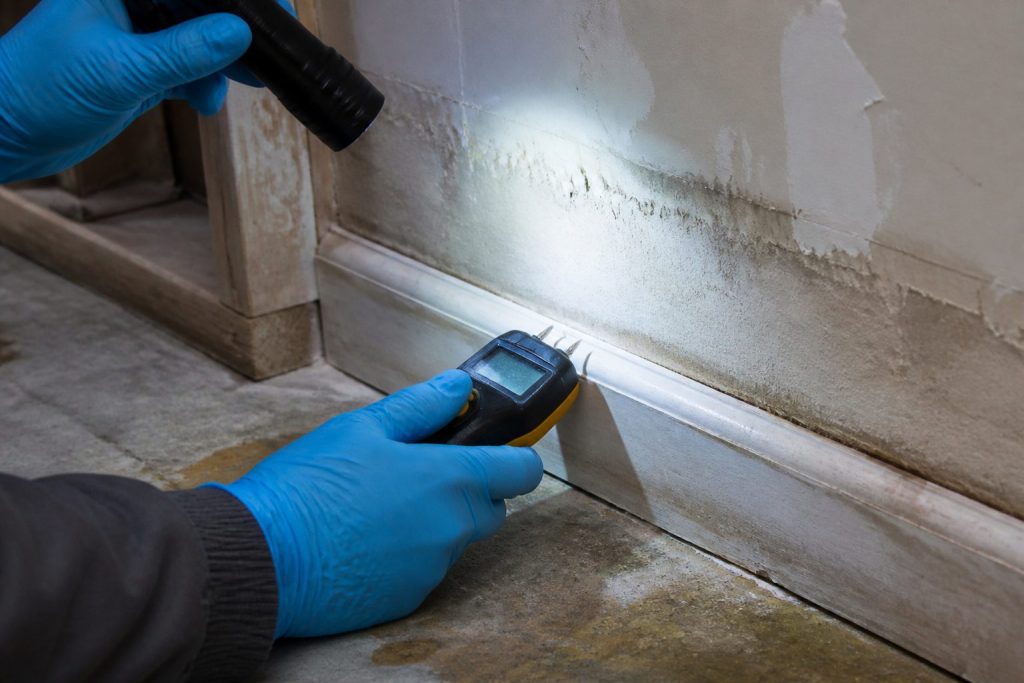
    Here is what makes the carpet-cleaner partnership structurally different from plumbing and HVAC — the operational overlap is tight and the scope boundaries are fuzzy.

    Both trades extract water. Both trades dry carpet. Both trades can use truck-mounted equipment. Both trades deal with post-water-event odor. Both trades clean soft goods after damage.

    The distinction is in the work beyond the surface. A carpet cleaner extracts and dries the carpet. A restoration company dries the structure — subfloor, wall cavities, cabinet toe-kicks, framing, insulation, everything below and behind the carpet. A carpet cleaner cleans. A restoration company remediates — with IICRC protocol, containment, moisture mapping, documentation, and insurance coordination. A carpet cleaner is usually certified under IICRC S100 (carpet cleaning). A restoration company is certified under IICRC S500 (water damage restoration) and often S520 (mold remediation).

    Both certifications exist. Both are legitimate. The boundary between them is where the partnership lives.

    The danger: a restoration company that also markets carpet cleaning as a standalone service is directly competing with every carpet cleaner in the service area. Every marketing dollar spent on “$49 room carpet cleaning specials” destroys trust with potential carpet cleaner partners. Every residential Google ad the restoration company runs for carpet cleaning closes a door with carpet cleaners who would otherwise refer water losses.

    Conversely — a carpet cleaner who also markets water damage restoration is encroaching on restoration scope and will be treated as a competitor by the restoration community. The same logic applies in reverse.

    The best partnerships emerge when both sides are explicit and disciplined. The restoration company does not market carpet cleaning. The carpet cleaner does not market restoration. Each refers the other into their own scope, reliably, and the reciprocity is visible.

    Why Most Carpet Cleaner Relationships Fail

    The failure patterns are sharper than in any other trade partnership because the overlap is closer.

    The restoration company competes for carpet cleaning jobs. Standalone “carpet cleaning” service menus, paid ads targeting carpet cleaning keywords, trucks with “Carpet Cleaning and Restoration” on the side — all of these signal to carpet cleaners that the restoration company is a competitor. Referrals stop.

    The carpet cleaner handles water losses themselves. Instead of referring, the carpet cleaner attempts to handle a water event as a carpet cleaning job — extract and dry, call it done, leave. Three weeks later the customer has mold, an insurance claim, and a complaint against the carpet cleaner. The carpet cleaner learns the lesson, but the restoration company missed a referral they could have had if the relationship was in place.

    The post-mitigation carpet cleaning job does not go to the partner carpet cleaner. After a mitigation job, carpets often need to be cleaned or replaced. A restoration company that handles this internally, or sends it to a different carpet cleaner each time, misses the chance to reciprocate and build trust.

    Slow or inconsistent response on referred jobs. The carpet cleaner hands off a water loss, expecting a restoration crew on site within the hour. The restoration company shows up the next morning. The carpet cleaner’s customer is unhappy. The carpet cleaner never refers again.

    Referral fees that do not materialize. Same pattern as every other trade partnership. The restoration company promises, the check is late, the carpet cleaner stops referring and never says why.

    One-way flow without acknowledgment. The carpet cleaner refers ten water events in a year. The restoration company sends nothing back. The carpet cleaner mentally calculates the relationship and walks.

    The homeowner experience confused by role overlap. The homeowner cannot distinguish what the carpet cleaner did from what the restoration company did. They leave a review crediting the wrong party, or worse, complaining about overlapping invoices. The carpet cleaner looks bad, feels embarrassed, and pulls back.

    What the Best Restoration Companies Actually Do

    The discipline required in the carpet cleaner partnership is more precise than any other trade category. The playbook:

    Refuse to compete on routine carpet cleaning. Absolutely no standalone carpet cleaning marketing. No residential carpet cleaning packages. No trucks branded for carpet cleaning as a primary service. The restoration company is a restoration company. Carpet cleaning work performed during a mitigation is part of restoration scope; anything outside of that is not the restoration company’s business. This discipline is unambiguous and visible to carpet cleaners, and it is the foundation of every referral relationship.

    Send every post-mitigation carpet cleaning opportunity to a partner carpet cleaner. Homeowners whose carpets need cleaning post-job get referred to the restoration partner’s carpet cleaner. Commercial accounts needing recurring carpet care after a restoration job get the introduction. Landlord clients needing make-ready cleaning get the name. The restoration company makes a deliberate practice of routing this flow to partner carpet cleaners and tracking the value.

    Mobilize faster than the carpet cleaner expects. When a carpet cleaner calls with a water event, the commitment is truck rolling within 15 minutes, on site within 45. Faster than their own dispatch. Faster than any other restoration competitor.

    Arrive with deference to the carpet cleaner’s relationship with the customer. The restoration crew introduces themselves, acknowledges the carpet cleaner by name, credits them explicitly for catching the event early and preserving the property, and reinforces to the customer that the restoration work and carpet cleaning work are complementary — the carpet cleaner did their job, the restoration company does theirs.

    Co-document with the carpet cleaner. The restoration job documentation names the carpet cleaner as the initial responder. Moisture readings reference the pre-restoration state the carpet cleaner observed. Insurance documentation preserves the carpet cleaner’s role in the chain of events. This is a small act of professional respect that carpet cleaners notice and appreciate.

    Handle insurance completely. Adjusters, Xactimate, claim management — all owned by the restoration company. The carpet cleaner is informed at the milestones that matter and otherwise left to run their own business.

    Structure a clean referral fee program. Market norms: $250 to $500 per residential water event referral that converts, $500 to $1,000 on insurance-covered jobs, sometimes higher for commercial events. Paid within 30 days of restoration-company payment received, always, with a personal note. The discipline is the reliability, not the amount.

    Invite the carpet cleaner into joint continuing education. IICRC S500 and S520 coursework, drying-principles training, IAQ workshops. Offer to sponsor the carpet cleaner’s attendance at a shared training session. The carpet cleaner who attends becomes dramatically more valuable as a referral partner because their eye for restoration-worthy problems becomes sharper.

    Feed the carpet cleaner’s content engine. Before-and-after photos from restoration jobs that started with a carpet cleaner’s call — with both companies credited — become shareable content for both businesses. Review requests from the homeowner can be routed to both Google profiles. The reputation lift benefits the carpet cleaner directly.

    Never talk down to the trade. Carpet cleaning is a legitimate skilled profession with its own discipline, certification track, and professional standards. Restoration companies that treat carpet cleaners as junior partners or low-skill vendors destroy the relationship instantly. The correct posture is peer-to-peer, respect-forward, and reciprocity-visible.

    The Reciprocity Model That Works
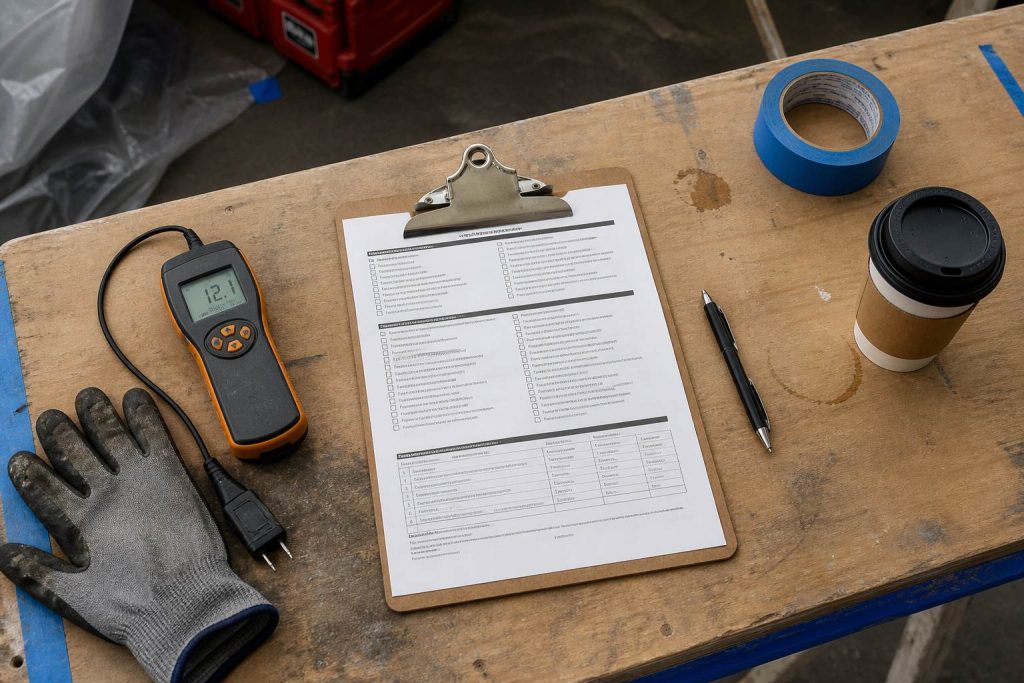
    In the carpet cleaner partnership, reciprocity runs in three directions, and the best restoration operators design for all three explicitly.

    Carpet cleaner to restoration company. Water events, mold discoveries, post-event odor investigations, sewer backups, fire-aftermath soot, biohazard calls that exceed carpet cleaning scope. These are the referrals flowing in.

    Restoration company to carpet cleaner. Post-mitigation carpet cleaning, tenant make-ready cleaning on landlord-owned properties, commercial account carpet care following a restoration job, referrals of past restoration clients who need routine cleaning, introductions to the restoration company’s commercial and property management contacts. These are the referrals flowing back.

    Restoration company to its own clients, with carpet cleaner name attached. The restoration company recommends a specific carpet cleaning partner to homeowners during the final phase of every restoration job. That recommendation is the single most valuable thing a restoration company gives a carpet cleaner — unsolicited, trusted, coming at the exact moment the homeowner is deciding who to hire for ongoing carpet care.

    A quarterly conversation about the flow in all three directions, quantified in dollars, is what makes the partnership compound. Without the measurement, the relationship drifts. With it, both parties see exactly why the relationship is valuable and have a shared reason to protect it.

    The Ninety-Day Carpet Cleaner Program

    The concentrated partnership program adapted for the carpet cleaner channel.

    Weeks 1-2. Identify the 20 professional carpet cleaning operations in the service area with strong reputations. Selection criteria: 4.7+ star GBP, 100+ reviews, professional website, truck-mount equipment visible on the site, IICRC certification prominent, commercial account presence. Rank the top 5.

    Weeks 3-4. Research each top candidate deeply. What commercial accounts do they appear to serve? What does their own content emphasize? Who is the owner or senior manager? What does the review base reveal about how they talk to customers?

    Weeks 5-6. Make contact with a concrete value proposition. A mutual-referral framework that respects both scopes. A named contact. Fast response guarantee. A reciprocity framework quantified with tracked referrals in both directions. A clear statement: “We do not market carpet cleaning. We will never compete with you on that scope. We want to be your restoration partner and we want you to be our carpet cleaning partner.”

    Weeks 7-8. Co-design the operating protocol. Referral path both directions, communication rhythm, documentation, scope boundaries, fee structure. A shared one-pager, signed by both parties as a working agreement.

    Weeks 9-12. Execute with discipline. White-glove every incoming referral. Send every post-mitigation carpet job to the partner. Pay fees on time. Close feedback loops. Report monthly.

    Day 90. Review the reciprocity ledger with each partner. Celebrate the flow in both directions. Adjust as needed. Expand to additional carpet cleaners.

    Where This Pairs With the Rest of the Stack

    The carpet cleaner partnership sits inside the observational B2B plan as a specific high-yield category and pairs tightly with the plumber and HVAC partnerships as part of the trade-ecosystem discipline. It requires the scope-clarity posture — restoration companies that compete broadly across adjacent services generate short-term revenue and destroy long-term referral infrastructure. It benefits from the review engine because co-credited reviews amplify both companies’ profiles. And it is measured through the partnership signals framework — bidirectional flow, recency, partner count, revenue produced in each direction.

    This series continues with additional partner-industry deep dives — pest control, general contractors, property managers, adjusters, realtors, and the other professional categories that touch commercial and residential buildings. The structural playbook is consistent: understand how the partner industry actually makes money, respect their scope absolutely, respond faster than they expect, make reciprocity visible, and invest in the relationship quarterly. Execute that playbook across five categories simultaneously and a restoration company has built the kind of referral architecture that compounds for decades.

    Where to Start

    Pick one carpet cleaner this week. The best-reviewed, most operationally sharp, most professionally presented carpet cleaning company in the service area. Meet them at their shop. Explain the framework. Commit in writing to the scope discipline. Run the first three referrals perfectly. Build from there.

    The math on this channel is straightforward. A single well-run carpet cleaner partnership producing two water event referrals per month at an average job size of $12,000 represents $288,000 in annual pipeline. Five active partnerships is $1.44 million. The cost of the program is discipline, not dollars — refuse to compete on carpet cleaning scope, respond faster than anyone else, reciprocate visibly, pay on time.

    Every restoration company has the option to run this program. Almost none do it well. The discipline to do it well is the competitive moat.


    Frequently Asked Questions

    Why are carpet cleaner partnerships considered higher-risk than plumber or HVAC partnerships?
    Because the operational overlap is tighter. Both trades extract water, dry carpet, and handle post-event cleanup. A restoration company that markets carpet cleaning as a standalone service competes directly with every carpet cleaner in the service area and destroys the referral channel. Scope discipline is harder and more consequential in this partnership than in any other trade category.

    Can a restoration company offer carpet cleaning as a service without damaging carpet cleaner relationships?
    Not as a standalone service, no. Carpet cleaning work performed during a mitigation job is scope-appropriate and expected. Marketing routine carpet cleaning packages to residential customers, however, positions the restoration company as a competitor to every carpet cleaner in the market and closes the referral channel. This is the single clearest strategic decision in the carpet cleaner partnership.

    What is the single most valuable thing a restoration company can do to earn carpet cleaner trust?
    Refer every post-mitigation carpet cleaning opportunity to a partner carpet cleaner, explicitly recommend them to homeowners at the end of every job, and make those referrals visible and tracked in the quarterly reciprocity review. No other discipline does more to signal that the restoration company is a genuine partner rather than a potential competitor.

    What referral fee is standard for carpet cleaner partnerships?
    Market norms mirror plumbing and HVAC: $250 to $500 per residential water event referral, $500 to $1,000 on insurance-covered jobs, sometimes higher on commercial events or revenue-share arrangements for large ongoing introductions. On-time, every-time payment is more important than the exact dollar figure.

    How does IICRC certification factor into the partnership?
    Carpet cleaners are certified under IICRC S100 for textile floor covering cleaning. Restoration companies are certified under S500 for water damage restoration and typically S520 for mold remediation. These certifications mark the legitimate scope boundaries. A restoration company that invites carpet cleaner partners into joint S500 training produces more capable referral partners who recognize restoration-worthy problems earlier and refer them faster.

    What happens when a homeowner cannot distinguish between carpet cleaning and restoration scope?
    Both parties have an obligation to make the distinction clear. The restoration company’s documentation should explain what restoration scope includes and how it differs from carpet cleaning. The carpet cleaner’s handoff should clearly state what they did and what the restoration company is being called in to do. When both parties are disciplined about this, the homeowner’s experience is cleaner and reviews land correctly with each company’s profile.

    How long does it take to build meaningful referral flow from a carpet cleaner partner?
    A disciplined program typically produces initial referrals within 60 to 90 days and steady, compounding flow within 6 to 12 months. The compounding is dramatic once the relationship is trusted, because carpet cleaners encounter water events constantly and the referrals happen almost in real time from the field.


    Tygart Media on restoration — an analyst-operator body of work on the systems that separate compounding restoration companies from busy ones. No client names. No brand placements. Just the operating standard.
  • Selling Into HVAC Contractors: Why the Best Restoration Companies Own This Relationship

    Selling Into HVAC Contractors: Why the Best Restoration Companies Own This Relationship

    Why are HVAC contractors such a valuable referral source for restoration companies? Because HVAC techs are physically inside the places where hidden water damage, mold, and air-quality problems actually live — ductwork, attics, crawlspaces, mechanical closets, condensate lines — and they find problems no other trade sees. A restoration company that becomes the trusted partner for a strong HVAC operation captures a steady stream of mold, water damage, and IAQ-driven mitigation work that is almost invisible to any other acquisition channel. The playbook for building that relationship is specific — understand the HVAC recurring-revenue model, never compete on duct cleaning or HVAC scope, support the technician’s on-site diagnosis, and move fast when the referral comes — and it compounds as powerfully as any plumber relationship, often with higher-ticket outcomes.


    The first article in this partnership series covered plumbers. This one covers HVAC contractors, and the structural playbook is similar but the operational realities are different in ways that matter.

    An HVAC tech spends their day in the parts of a building nobody else goes. Attics. Crawlspaces. Mechanical rooms. Behind return-air grills. Inside ductwork. In places where water damage has been slowly doing its work for months before anyone in the household noticed. That access is what makes the HVAC-restoration partnership uniquely valuable and, when executed correctly, uniquely durable.

    This article decomposes how HVAC companies actually make money, how they acquire customers, what their day looks like, why they are frequently reluctant to deal with mold or water damage themselves, and exactly how a restoration company with discipline earns the referral flow that the sloppy competition will never see.

    How HVAC Companies Actually Make Money

    HVAC is a more structurally stable business than most outsiders assume. The operating model has three revenue legs.

    Service and repair. Single-tech, fast-turn, high-margin work. Capacitor replacements, thermostat installs, minor leak fixes, blower motor swaps, seasonal tune-ups. This is the 55 to 65 percent gross margin work that keeps the lights on. Labor is dense, ticket sizes are moderate, and pricing power is real.

    Equipment replacement. When the 15-year-old condenser finally dies, the HVAC company sells a new system. These are the high-ticket jobs — $8,000 to $25,000 and beyond depending on scope and geography. Gross margin runs 45 to 55 percent because material cost takes a larger share, but absolute dollars per job are strong.

    New construction and commercial projects. Lower-margin, bid-driven work. 35 to 50 percent gross margin, often considerably less in competitive markets. Many established residential HVAC companies deliberately avoid new construction or use it as overflow capacity because the net margin is marginal and the operational complexity is high.

    Net margins across the category are tighter than the gross margins suggest. Top performers run 10 to 20 percent net. The typical HVAC company runs 5 to 8 percent net. A $2M HVAC company with a 4 percent net margin is taking home $80K on a business that looks much larger from the outside — a meaningful operational reality to keep in mind when you are calling on one.

    The structural shift that matters most for a restoration company to understand: recurring maintenance agreements. Preventive maintenance contracts captured 39 percent of total HVAC industry revenue in 2024, and the best-run HVAC companies generate 30 to 50 percent of revenue from recurring agreements. The residential membership plan — typically $20 to $30 per month, covering two tune-ups a year plus priority scheduling and discounts on repairs — is the single most important product in the modern HVAC business.

    Why does this matter to a restoration company? Because the membership roster is the HVAC company’s most valuable asset. It is the customer list they protect most carefully. And it is the customer list they refer into. An HVAC operator will never hand their membership base to a restoration partner they do not trust completely. When they do, the flow is extraordinary — because every tune-up visit is an opportunity to discover the water damage, mold, or IAQ issue the homeowner did not know existed.

    How HVAC Companies Acquire Customers

    The modern HVAC acquisition stack is a multi-channel system. A healthy HVAC company runs six channels simultaneously because single-channel dependence caps growth at 30 to 40 percent of available demand.

    Google Business Profile is the highest-ROI channel in the category, typically generating 30 to 45 percent of inbound calls at effectively zero cost per click once the profile is built. This mirrors the restoration industry exactly.

    Google Local Services Ads — review-gated, proximity-weighted, response-time-sensitive. CPL ranges from $71 to $214 per booked job in most markets. Competitive in summer cooling-season markets, more affordable in shoulder seasons.

    Google Ads and PPC — $167 to $500+ per booked job, with heavy seasonal CPC variation. The March-to-May shoulder window often produces the best ROI because competition is lower and homeowners shopping for replacements in shoulder seasons buy higher-value systems.

    Referral programs — 60 to 80 percent close rate versus 25 to 40 percent on paid channels. The highest-converting lead source for any HVAC company, period. This is the channel a restoration partnership plugs directly into.

    Maintenance agreements as acquisition — every maintenance plan sold in year one produces repeat customer touches for the next decade. The retention math compounds dramatically.

    Email and SMS reactivation — 8 to 15 percent booking rates on past-customer outreach at $0.08 per booked job from SMS. The lowest cost-per-acquisition channel available.

    Facebook and Meta lead ads — $30 to $75 CPL, with the strongest performance on equipment replacement campaigns rather than service calls. Meta plays a different role than Google in HVAC.

    Nextdoor and hyperlocal social — consistently one of the most underused channels for HVAC lead flow, especially in residential service areas with strong community density.

    As in plumbing, the #1 tactical lever is speed to lead. Sub-60-second response converts at roughly 4x the rate of slower responses. Every HVAC owner knows this number. Every restoration company calling on them is being evaluated against it.

    Why HVAC Technicians Do Not Want to Handle Mold and Water Damage Themselves

    The structural fact that makes HVAC-restoration partnerships uniquely profitable: HVAC contractors, as a category, prefer to partner rather than handle water and mold work themselves.

    The reasons are operational and insurance-driven.

    Certification and licensing. Mold remediation requires IICRC credentialing and often state-level licensing depending on jurisdiction. Most HVAC companies are not certified and have no interest in adding the credential layer to their business. The IICRC AMRT (Applied Microbial Remediation Technician) track, the WRT (Water Damage Restoration Technician), the ASD (Applied Structural Drying) — these are specialty credentials the HVAC industry does not generally hold.

    Liability exposure. Handling water and mold work badly is a lawsuit. Handling it well requires protocols, containment, moisture mapping, air scrubbers, negative-pressure setups, and documentation procedures that sit outside the HVAC workflow. The insurance premium on an HVAC company that dabbles in mold remediation is meaningfully higher than one that refers the work out.

    Operational mismatch. An HVAC tech diagnosing a suspected leak in a condensate line cannot also be running a multi-day drying operation in the same house. The two workflows conflict. The HVAC tech wants to fix the HVAC problem and move to the next call. The mitigation work is measured in days, not hours, and belongs to a different operational rhythm.

    Customer experience. The HVAC tech who tries to handle mold themselves, badly, ends up with a customer review that damages the HVAC brand. The HVAC tech who refers out cleanly to a trusted restoration partner ends up with a customer who credits the HVAC company for catching the problem early and protecting the home.

    The industry-wide preference to partner rather than perform is the structural opportunity. An HVAC contractor who does not have a trusted restoration partner is sitting on an unmonetized asset. A restoration company that walks in with a professional, disciplined partnership offer is solving a problem the HVAC operator already knows they have.

    The Moments When HVAC Discovers Restoration Work

    Different from plumbers, who encounter restoration needs almost entirely through active water events, HVAC techs find restoration opportunities across a wider and more varied set of moments.

    The seasonal tune-up discovery. A spring tune-up reveals visible mold in the supply plenum, standing water on the primary drain pan, biological growth on the evaporator coil, or moisture staining on ductwork insulation. The homeowner had no idea. The HVAC tech is the one who found it.

    The condensate line failure. A clogged condensate line floods a finished basement or the area directly below a second-floor air handler. Water damage has usually been underway for hours before the homeowner notices.

    The IAQ complaint investigation. A homeowner calls about a strange smell or respiratory symptoms. The HVAC tech opens up the system and finds the biological cause — often mold that has been growing in an undetected moisture pocket.

    The equipment replacement walk. An HVAC company selling a new system walks the attic, crawlspace, and mechanical areas to size the job. In the process they find old water damage, compromised insulation, rodent intrusion, and air-sealing failures that reveal long-standing moisture history.

    The commercial maintenance visit. Scheduled preventive maintenance at a commercial property surfaces mechanical-room water events, rooftop unit leaks, and duct contamination that building owners did not know about until the HVAC vendor reported them.

    The new-homeowner inspection. A buyer calls an HVAC contractor to check the systems on a recently purchased home. The tech finds evidence of past water damage, improper repairs, or concealed mold. The clock on remediation disclosure and mitigation starts immediately.

    Each of these moments is a decision point where the HVAC contractor chooses to handle it themselves, ignore it, or refer it. The restoration company that has earned the call captures that flow. The ones that have not capture nothing.

    Why Most Restoration-HVAC Relationships Fail

    The failure patterns look similar to the plumber version but differ in some meaningful ways.

    The HVAC contractor cannot find you when they need you. HVAC techs are often in crawlspaces or attics, using one hand, with limited signal. If the referral path requires them to look up a number, find a website, or navigate a phone tree, the referral dies on the floor of the crawlspace. The restoration companies that earn HVAC flow are the ones where the tech has a named contact saved in their phone, one-tap dial, and a guaranteed live-person answer.

    The duct-cleaning conflict. HVAC companies are protective of air-duct cleaning work and have strong opinions about who should do it. Restoration companies that offer general duct cleaning as a side service, especially if marketed aggressively to homeowners, create immediate friction. Stay out of HVAC’s core scope unless the duct work is part of a documented mold remediation protocol.

    Slow mobilization on mold jobs. Mold jobs require fast containment setup to prevent spore spread during HVAC operation. A restoration crew that arrives the next day, after the system has been running, has made the contamination worse. HVAC contractors who see this pattern twice stop referring.

    Poor IAQ credibility. HVAC techs increasingly position themselves as indoor air quality professionals, not just equipment installers. A restoration partner who speaks the IAQ language — PRVs, ACH, HEPA filtration, negative-pressure containment, clearance testing — earns respect. One who speaks only demo-and-drying terminology does not.

    Commercial contract risk. HVAC contractors with property management contracts carry substantial liability for the vendors they introduce into those buildings. A restoration company that fails on a commercial job — missed deadlines, billing disputes, incomplete documentation — jeopardizes the HVAC contractor’s entire commercial book. The HVAC operator will drop the restoration partner before they will let one bad job compromise their most valuable accounts.

    The “we also do HVAC” temptation. Some restoration companies expand into adjacent trades, including HVAC equipment work, duct cleaning, and indoor air quality services. This is a strategic decision with consequences. Doing the adjacent work captures more revenue per job but destroys the referral relationship with the HVAC partner who now sees you as a competitor. This trade-off is the single most important strategic decision a restoration operator makes about the HVAC channel.

    What the Best Restoration Companies Do

    The playbook for elite restoration-HVAC partnerships is specific and operationally demanding.

    Be reachable instantly. Every HVAC partner has a direct-dial number for a real person at the restoration company. Saved in the tech’s phone as a favorite. Tested quarterly. No voicemail. No phone trees. No callbacks promised within the hour. The call is answered in under 10 seconds or the partnership is not working.

    Mobilize fast on mold and IAQ jobs. A mold referral triggers containment setup within 4 hours, not 24. The HVAC system is typically off during the active mold event. Every additional hour the house sits uncontained risks spore spread and homeowner dissatisfaction. The restoration company that consistently mobilizes fast protects the HVAC contractor’s reputation with the customer.

    Respect the HVAC scope absolutely. No duct cleaning outside a documented remediation protocol. No HVAC diagnosis language in reports. No suggestions to the homeowner about equipment upgrades. No competing on services the HVAC company performs. This discipline is the foundation of trust.

    Speak IAQ fluently. The restoration tech discussing the job with the HVAC contractor uses the right terminology. Understands ACH, differential pressure, clearance testing protocols, IICRC S520 for mold remediation, and when environmental sampling is warranted. This signals credibility in five minutes and separates the restoration company from the commodity competition.

    Co-document with the HVAC contractor. The scoping notes, moisture map, and containment plan reference the HVAC contractor’s initial finding. The homeowner receives a co-branded narrative: HVAC caught the problem, restoration solved it, both documented properly for insurance and homeowner records.

    Handle insurance fully and transparently. Adjuster communication, Xactimate documentation, claim management — all owned by the restoration company. The HVAC contractor is kept informed at milestones but not asked to engage in the insurance mechanics. This is pure value delivery from restoration to HVAC.

    Feed the HVAC contractor’s content and reputation. Branded photos of completed remediation jobs where the HVAC caught the initial problem, permission to share, testimonial gathering from the homeowner with the HVAC contractor credited. A restoration company that deliberately builds the HVAC partner’s reputation as a problem-catcher earns loyalty that competitor restoration companies cannot buy.

    Send HVAC referrals back. Every completed mitigation job is a potential HVAC opportunity — new homeowner awareness of their system, damaged equipment needing replacement, duct work requiring inspection. Route these back to the HVAC partner intentionally. Track the flow. Report quarterly.

    Support the commercial book with white-glove execution. When the HVAC contractor opens the door to one of their commercial accounts, treat that job like it is a $10 million relationship, because for the HVAC contractor it is. Perfect documentation, on-time milestones, proactive communication, impeccable clean-up. One bad commercial job closes that channel forever.

    Show up at HVAC trade associations. ACCA, ASHRAE chapters, local Mechanical Contractors Associations, HVAC-focused distributor events. Presence in these venues signals that the restoration company is a trade peer rather than a vendor, and puts senior-level relationships in motion with HVAC operators who otherwise never talk to a restoration contractor.

    Pay the referral fee on time, every time. The same discipline as plumbing. Typical market structures: $350 to $500 per water damage referral, $500 to $1,000 per insurance-covered job, sometimes structured revenue-share on recurring commercial accounts. Pay within 30 days of restoration-company payment received. Accompany the check with a short note naming the job.

    The Maintenance Roster Play

    The most leveraged single thing a restoration company can do inside an HVAC partnership is support the partner’s maintenance agreement program.

    The HVAC contractor is selling $20 to $30 per month memberships. The member receives two tune-ups annually. During each tune-up, the HVAC tech walks the system, looking for problems.

    A restoration company can multiply the value of that program by providing the HVAC partner with:

    • A simple written protocol the tune-up tech uses to flag potential water damage and IAQ concerns during the visit
    • A one-page homeowner education handout the HVAC tech leaves with the customer when any flag is identified, explaining the potential issue and recommending restoration evaluation
    • Priority scheduling for the restoration evaluation for any HVAC partner-referred concern
    • A shared reporting mechanism that tracks referrals, conversions, and outcomes

    The result: every HVAC tune-up visit becomes a potential mitigation lead. The HVAC contractor retains full ownership of the customer relationship. The homeowner gets proactive protection. The restoration company receives a structured flow of pre-qualified leads that no paid channel can match.

    The HVAC contractor who sees this program working well will make the restoration partner the exclusive referral partner across the entire membership base. That exclusive relationship, run for five years, produces referral flow that competitors cannot replicate because they do not have the protocol, the reporting, or the trust.

    The Ninety-Day HVAC Program

    The concentrated investment playbook, adapted for HVAC realities.

    Weeks 1-2. Map the 20 most viable HVAC contractor partners in the service area. Selection criteria: strong residential service-and-repair focus, active maintenance agreement program, 4.7+ star GBP, 100+ reviews, IAQ services offered, commercial account presence. Rank and prioritize the top 5.

    Weeks 3-4. Research each of the top 5 deeply. Understand their membership program structure, their commercial account mix, their technician count, their owner’s background. Identify what they are missing that your restoration company can provide.

    Weeks 5-6. Make initial contact with a concrete value proposition — a named point of contact, sub-10-second phone answer guarantee, mold and IAQ credentialing credentials, a reciprocity framework, and the tune-up protocol support described above. Meet with the owner or operations lead, not the dispatcher.

    Weeks 7-8. Co-design the operating protocol. Referral path, communication rhythm, documentation flow, referral fee structure. Put it on one page both parties sign. Test the referral path live with a simulated call.

    Weeks 9-12. Execute. White-glove every job. Deploy the tune-up protocol. Send HVAC referrals back as mitigation jobs generate them. Report weekly for the first month, then monthly after that.

    Day 90. Review the ledger with each partner. Celebrate wins. Adjust the protocol. Expand to tier-two partners.

    A year into this program, an HVAC-literate restoration company has built referral flow that the standard “drop off business cards at the HVAC shop” restoration competitors cannot touch.

    Where This Pairs With the Rest of the Stack

    HVAC sits alongside plumbing as the two highest-yield trade partnership channels for a restoration company. Both feed the observational B2B plan. Both require the owner-as-rainmaker discipline at the senior level. Both live inside the reciprocity discipline that separates relational from transactional B2B programs. Both are measured through the marketing signals framework — partner count, recency, bidirectional flow, revenue produced — that reveals which partnerships are compounding and which are decaying.

    HVAC differs from plumbing in the centrality of the membership program and the IAQ vocabulary. A restoration company that learns those two specifics will dominate the HVAC channel in their service area.

    Where to Start

    Identify the one HVAC contractor in your service area with the strongest maintenance agreement program and highest review profile. Not the biggest. The best-run. Study their membership offering. Meet the owner. Present the tune-up protocol and the reciprocity framework as a package. Execute flawlessly on the first three jobs.

    The third article in this series covers Cintas, Aramark, and the facility-services vendors — a structurally different relationship where restoration companies plug into B2B facility maintenance flow rather than residential emergency service. Same discipline, different mechanics, different operational depth required.


    Frequently Asked Questions

    Why do HVAC contractors prefer to refer mold and water damage work rather than handle it themselves?
    Three reasons: they are not typically IICRC-certified for mold or water damage remediation, the liability and insurance exposure of dabbling in remediation is real, and the operational workflow of multi-day drying and containment work does not fit the HVAC service cadence. An HVAC contractor referring cleanly to a trusted restoration partner protects their reputation, their customer, and their insurance profile.

    What is the single most valuable thing a restoration company can offer an HVAC partner?
    A structured protocol supporting the HVAC contractor’s maintenance agreement program — giving tune-up techs a simple way to flag potential water damage and IAQ issues, backed by priority restoration scheduling and transparent reporting. This turns the HVAC membership base into a pre-qualified mitigation lead source that no paid channel can replicate.

    What are the dealbreakers in an HVAC-restoration partnership?
    Offering general duct cleaning services that compete with the HVAC scope, slow mobilization on mold jobs while the HVAC system remains in the home, poor performance on commercial jobs introduced through the HVAC partner’s property management relationships, and missing or late referral fee payments. Any of these ends the partnership quickly.

    How does a restoration company prove IAQ credibility to an HVAC contractor?
    By speaking the vocabulary. ACH, differential pressure, clearance testing, IICRC S520 for mold remediation, ASTM protocols, when and why to bring in an industrial hygienist. A restoration tech who can talk IAQ at the level of an HVAC tech earns trust in five minutes. One who cannot does not.

    What referral fee structure is standard for HVAC-restoration partnerships?
    Market norms mirror plumbing: $350 to $500 per water damage referral, $500 to $1,000 per insurance-covered job. For commercial accounts introduced through the HVAC contractor’s property management relationships, structures often shift to revenue-share or preferred-vendor arrangements. The amount matters less than on-time, every-time payment discipline.

    Should a restoration company offer duct cleaning as part of their services?
    Not as a standalone commercial offering, no. Duct cleaning as a core service competes directly with HVAC scope and damages the referral relationship with every HVAC partner in the service area. Duct cleaning as part of a documented mold remediation protocol, with the HVAC partner informed, is appropriate and expected.

    How does the HVAC channel differ from the plumbing channel operationally?
    Plumbers encounter restoration needs primarily through active water events — pipe bursts, sewer backups, water heater failures. HVAC contractors encounter restoration needs across a wider and more varied set of moments — tune-ups, condensate failures, IAQ complaints, equipment replacement walks, commercial maintenance visits, new-homeowner inspections. The HVAC referral flow is steadier and more preventive; the plumbing referral flow is higher-acuity and more event-driven. Both are valuable. The best restoration companies build both channels deliberately.


    Tygart Media on restoration — an analyst-operator body of work on the systems that separate compounding restoration companies from busy ones. No client names. No brand placements. Just the operating standard.

  • From Field Tech to AI Supervisor: The Career Path That Doesn’t Have a Name Yet

    From Field Tech to AI Supervisor: The Career Path That Doesn’t Have a Name Yet

    Tygart Media Strategy
    Volume Ⅰ · Issue 04Quarterly Position
    By Will Tygart
    Long-form Position
    Practitioner-grade

    The job title doesn’t exist yet. In three years it will be one of the most sought-after roles in trades companies that have made the AI transition. Call it AI Operations Supervisor, or Field Intelligence Lead, or Verification Layer Manager — the name will standardize as the role standardizes. What it describes is already emerging.

    It’s the person who runs AI-assisted field teams: who understands what the AI is doing and why, who catches the errors before they become expensive, who provides the context that makes the AI’s output accurate, who trains new technicians on the difference between accepting AI output and verifying it. The person who owns the verification layer between the AI’s intelligence and the physical world.

    That person is not a manager who learned to use AI tools. They’re a field technician who understood the transition early enough to build the skills that make them the most valuable person in an AI-assisted operation.

    The Career Path in Concrete Terms

    The path from field technician to AI supervisor is not a pivot. It’s a development arc within the trades. Each stage builds on the previous one:

    Stage 1: Deep domain technician. Does the work at the level where deviation from documentation is visible and meaningful. Builds the tacit knowledge library that the verification layer requires. This stage cannot be skipped or compressed — it takes the time it takes, and the depth built here is the foundation everything else rests on.

    Stage 2: AI-literate field technician. Understands what the AI tools used by their company are doing, what their common failure modes are in this specific domain, and how to brief them for better output. Can evaluate AI-generated estimates, timelines, scope documents, and communications and identify what’s wrong before it becomes a problem. This stage is learnable in weeks once Stage 1 is in place.

    Stage 3: Verification layer specialist. Becomes the person on the team who catches AI errors, provides the context briefs that improve AI output, and trains others on the difference between accepting and verifying. Starts building the institutional context library — the log of deviations, patterns, and corrections that makes the company’s AI systems more accurate over time.

    Stage 4: AI operations supervisor. Runs AI-assisted teams. Owns the verification layer for a portion of the company’s operations. Responsible for AI output quality, context library maintenance, and the ongoing calibration between what the AI produces and what physical reality requires. Increasingly strategic — participates in decisions about which AI tools to adopt and how to integrate them into field operations.

    Who Gets There First

    The technicians who make this transition fastest share two characteristics. The first is genuine domain depth — they’ve done the work long enough and paid enough attention to have real pattern recognition about their specific field. The second is intellectual curiosity about the AI layer specifically: they want to understand what the tool is doing, not just use it.

    The second characteristic is rarer than it sounds. Many experienced technicians treat AI tools as black boxes — input goes in, output comes out, use it or don’t. The ones who make the transition ask the next question: why did it produce that output, is it right, and what would I need to tell it to make it better? That question, applied consistently, is how the verification-layer expertise builds.

    The window to develop this expertise at the leading edge — before it’s table stakes — is the 18 to 36 months while the AI transition is still early in most trades companies. The workers who get there first build the largest knowledge lead and the most defensible career position. Not because they locked out competitors, but because the tacit knowledge and contextual intelligence they built during that window compounds over time in ways that later arrivals can’t replicate by just learning the tools.

    The tools will be everywhere. The judgment to use them correctly will not.


    Wire and Fire: The AI Transition Career Cluster

    Related: The Human Distillery — the methodology for capturing the tacit knowledge this cluster describes.

  • Restoration Golf League Setup: B2B Networking Through Golf for Trade Contractors

    Restoration Golf League Setup: B2B Networking Through Golf for Trade Contractors

    Tygart Media / Content Strategy
    The Practitioner JournalField Notes
    By Will Tygart
    · Practitioner-grade
    · From the workbench

    What Is a B2B Golf League for Trade Industries?
    A B2B golf league is a structured networking vehicle — not a scramble, not a charity event — designed to put contractors, adjusters, property managers, vendors, and referral partners on the same course repeatedly throughout a season. The relationship is the product. Golf is the excuse. The deals happen in the cart.

    Cold outreach in the restoration industry has a near-zero response rate. Trade shows are expensive and transactional. Referral relationships — the ones that produce consistent work — are built over time, in informal settings, with people who have chosen to spend 4 hours with you.

    The Restoration Golf League (RGL) is a restoration industry golf network active in the Pacific Northwest — one we sponsor and participate in as a B2B networking vehicle. It was built to solve a specific problem: how does a small restoration operator build relationships with adjusters, property managers, and general contractors without a sales team or a trade show budget? The answer turned out to be a golf league format that runs April through October.

    We’ve now documented the model so other trade operators can replicate it in their market.

    Who This Is For

    Restoration company owners, plumbing and HVAC operators, roofing contractors, and commercial flooring companies who sell primarily through relationships and want a repeatable, low-cost way to build and maintain those relationships in their local market. Also works for vendors and suppliers who want ongoing access to contractors.

    What the League Setup Includes

    • Format design — Scoring format, flight structure, handicap system, and round length optimized for business networking (not competitive golf)
    • Player acquisition strategy — Outreach templates, target list structure, LinkedIn and direct outreach playbook for filling the first season
    • Sponsor structure — Hole sponsorship, season sponsorship, and in-kind trade frameworks so the league pays for itself
    • Communication system — Email sequence, text reminder cadence, and post-round follow-up templates
    • Scoring and leaderboard — Simple tracking system that keeps players engaged between rounds
    • Season calendar — 6-round template with tee time blocks, course negotiation guidance, and rain date logic
    • The playbook — Full written documentation of the RGL model adapted to your market and vertical

    What We Deliver

    Item Included
    Custom league format document for your vertical and market
    Player acquisition outreach templates (LinkedIn + direct)
    Sponsor package deck (customizable)
    Season communication sequence (email + text)
    Scoring tracker (Google Sheets)
    Course negotiation talking points
    90-minute strategy call with Will (RGL sponsor and participant)
    30-day async support through first round

    Ready to Build the Relationship Network Your Competitors Don’t Have?

    Tell us your trade vertical, your market (city/region), and roughly how many relationships you’re trying to build. We’ll tell you if the league model fits.

    will@tygartmedia.com

    Email only. No commitment to reply.

    Frequently Asked Questions

    Does this only work for restoration companies?

    No. The RGL model was built for restoration but the format works for any trade industry where relationship-based selling drives revenue — roofing, plumbing, HVAC, flooring, commercial cleaning, and specialty contractors all fit the model.

    How many players do you need to run a league?

    A minimum viable league runs with 16 players (4 foursomes). The sweet spot is 24–32 players, which gives you enough variation across rounds that players meet new people each time.

    What does it cost to run the league after setup?

    Highly variable by market and course. The RGL model targets sponsor coverage of all hard costs — green fees, cart fees, and prizes — so the operator’s only expense is time. Most leagues break even or generate modest surplus by season two.

    Do I need to be a good golfer to run this?

    No. The format is designed for mixed skill levels. The operator’s job is logistics and relationship cultivation, not competitive golf. A handicap isn’t required — a willingness to spend time with people is.

    Last updated: April 2026

    Frequently Asked Questions

    How much does it cost to set up a restoration golf league?

    Startup costs typically range from $500 to $2,000 depending on whether you pay for course fees yourself or pass them through to participants. Ongoing per-round costs of $50–$150 per player can be fully sponsored by participating vendors, adjusters, or your own marketing budget. The return on a single adjuster relationship justifies the full annual cost of the league.

    Who should I invite to a restoration golf league?

    The core referral targets are insurance adjusters (independent adjusters and staff adjusters from carriers like Allstate, Travelers, and Farmers), commercial property managers, public adjusters, and general contractors who regularly call in restoration specialists. Subcontractors, equipment vendors, and TPA representatives round out a strong league roster.

    How often should the league play?

    Monthly rounds during the golf season (typically April through October in most US markets) produce enough recurring contact to build genuine relationships without feeling like a sales obligation. A season kickoff scramble and an end-of-season awards event anchor the calendar and create shareable content for social media.

    Is a golf league compliant with insurance regulations on referral arrangements?

    A properly structured golf league — where participation costs are reasonable, attendance is not conditioned on directing work, and no explicit quid pro quo exists — is generally compliant under state insurance referral regulations and RESPA. Consult a compliance attorney in your state before structuring any formal cost-sharing arrangements with adjusters. The goal is relationship-building, not a referral fee mechanism.

    How do I track ROI from a restoration golf league?

    Track referral source on every job intake form. Ask “how did you hear about us” and record the specific person, not just the channel. After two seasons, you will have a clear picture of which league relationships produced closed jobs and what the lifetime value of those referral relationships is. Most operators find that two or three adjuster relationships from a league justify the entire annual cost.


  • Radon Mitigation System Installation in New Construction

    Radon Mitigation System Installation in New Construction

    The Distillery
    — Brew № 1 · Radon Mitigation

    The lowest-cost and most effective time to address radon in a home is during construction — before the slab is poured, before walls are framed, before any remediation work is necessary. New construction radon mitigation installs a passive system (pipe, no fan) that can be activated with a fan at any future point for roughly $200–$400. Doing this same work after construction costs $800–$2,500 and requires drilling through finished concrete and routing pipe through finished walls.

    What Is Radon-Resistant New Construction (RRNC)?

    Radon-Resistant New Construction (RRNC) is a set of EPA-recommended building practices that minimize radon entry into new homes and create infrastructure for easy mitigation activation if post-construction testing reveals elevated levels. The EPA first published RRNC guidance in the 1990s; AARST-ANSI standard RRNC-2022 provides the current comprehensive technical requirements.

    RRNC is not a complete radon mitigation system. It is a passive infrastructure that makes active mitigation fast and inexpensive if needed. Think of it as a pre-wired electrical box: the capacity is built in, but you turn on power when you confirm you need it.

    Is RRNC Required by Building Code?

    RRNC requirements vary by state and municipality:

    • States with mandatory RRNC: Several states in EPA Radon Zone 1 (highest risk) require RRNC for all new residential construction. These include portions of Colorado, Iowa, Montana, North Dakota, South Dakota, and others.
    • States with voluntary or conditional RRNC: Many states adopt the International Residential Code (IRC) which includes RRNC provisions as a recommended (not mandatory) section. Some counties and municipalities within these states mandate RRNC independently.
    • States with no RRNC requirement: Builders in these areas may or may not include RRNC voluntarily.

    Regardless of legal requirement, the EPA recommends RRNC for all new construction — the incremental cost during construction is $350–$700 versus $800–$2,500+ for post-construction installation.

    The Four Core RRNC Components

    Per EPA RRNC guidance and AARST-ANSI RRNC-2022, a complete passive RRNC system consists of four elements.

    1. Gas-Permeable Layer

    A 4-inch layer of clean 3/4″ gravel (or equivalent gas-permeable material) placed beneath the slab across the entire footprint. This aggregate layer allows soil gases — including radon — to move freely beneath the slab toward the suction point rather than being forced through the concrete itself.

    Some jurisdictions allow alternative gas-permeable materials (certain drainage mats, for example) in lieu of gravel. The gravel layer also serves as drainage and supports the slab from below, so it has structural benefit regardless of radon.

    2. Plastic Sheeting (Vapor Barrier)

    A continuous layer of minimum 6-mil polyethylene sheeting placed over the gas-permeable gravel layer, beneath the concrete slab. The vapor barrier:

    • Prevents soil moisture from wicking up into the slab
    • Serves as a secondary barrier reducing radon and other soil gas migration through the slab
    • Laps up the interior foundation walls and seals at all penetrations

    The sheeting must be continuous — seams lapped a minimum of 12 inches and taped, penetrations sealed — before the concrete pour. Any gap becomes a permanent bypass that undermines both moisture and radon control.

    3. Vent Pipe

    A 3-inch or 4-inch PVC schedule 40 vent pipe is installed through the vapor barrier and slab during construction, routed through the building to terminate above the roof. This is the passive vent pipe that:

    • Runs from the sub-slab gravel layer up through the home’s interior (often inside the wall system or through a designated chase)
    • Connects to the exterior atmosphere above the roofline, providing passive thermal-draft ventilation of soil gases
    • Terminates with a cap that prevents precipitation and pest entry while allowing airflow

    The passive pipe alone — without a fan — can reduce radon by 30–50% in homes with favorable conditions (strong thermal draft, good aggregate, well-sealed slab). But it is not reliable as a sole mitigation strategy. Its primary value is as fan-ready infrastructure.

    4. Electrical Outlet in Attic or Near Fan Location

    An electrical junction box or outlet is installed in the attic (or wherever the future fan will be mounted) during initial construction. This ensures that activating the system with a radon fan requires only connecting the fan — no electrical work, no running new circuits through finished walls.

    This electrical prep step is frequently skipped by builders who are unfamiliar with RRNC or trying to minimize cost. When skipped, future fan activation requires an electrician to run a new circuit to the attic — adding $150–$400 to the activation cost.

    Passive-to-Active Conversion: Activating the System

    When post-construction radon testing shows levels at or above 4.0 pCi/L (EPA action level), or when a homeowner wants to reduce levels proactively, the passive RRNC system is activated by adding a radon fan. This is the simplest radon mitigation work available:

    • The existing passive pipe is already routed from sub-slab to above roofline
    • A radon fan is installed in the pipe run — typically in the attic between the riser and the discharge — and connected to the pre-installed electrical outlet
    • The installation takes 1–2 hours and costs $200–$500 in labor plus the fan ($100–$300)
    • A system performance indicator (manometer) is installed on the visible portion of the pipe inside the home
    • Post-activation radon testing confirms results

    Compare this to a full post-construction installation ($800–$2,500, 4–8 hours of labor) to understand why RRNC is consistently recommended by EPA, AARST, and every state radon program.

    RRNC in Crawl Space Homes

    For new construction homes with crawl spaces, RRNC provisions differ from slab/basement applications:

    • Vapor barrier: A 6-mil (minimum) polyethylene barrier is installed over the crawl space floor during construction, lapped up foundation walls and sealed at all penetrations
    • Vent pipe: A 3″–4″ PVC pipe penetrates the vapor barrier and routes through the home to above the roof — same passive vent function as the slab installation
    • Crawl space vents: AARST RRNC-2022 allows either vented or encapsulated crawl space design — the RRNC vent pipe infrastructure accommodates both

    Testing After Construction

    AARST and EPA recommend testing a new home for radon after occupancy, even if RRNC was implemented during construction. Reasons:

    • RRNC reduces radon entry but does not guarantee levels below 4.0 pCi/L — soil conditions and construction variations affect results
    • Passive-only systems may not achieve sufficient reduction in high-radon-zone homes without fan activation
    • Post-construction testing establishes a baseline for comparison if the home is later modified (addition, basement finish)

    The EPA recommends testing new homes after at least 60 days of occupancy under normal living conditions (closed house not required for initial new construction testing, as 60 days of normal occupancy provides sufficient averaging).

    Working with Builders: What to Specify

    If you are purchasing or building a new home and want to ensure RRNC is included:

    • Add RRNC to the contract as a line item — “Installation of passive radon vent system per EPA RRNC guidance and AARST-ANSI RRNC-2022”
    • Specify 10-mil or 20-mil vapor barrier (beyond the 6-mil minimum)
    • Confirm the electrical outlet in the attic is included
    • Request documentation at closing: vent pipe location, where it terminates, and outlet location
    • Ask whether the jurisdiction requires a permit for the RRNC installation and confirm the builder will obtain it

    Builders who have not done RRNC before may resist or underestimate the requirement. Having the AARST-ANSI RRNC-2022 standard number in the contract gives you a reference document that defines exactly what is required.

    Frequently Asked Questions

    What does RRNC stand for in radon mitigation?

    RRNC stands for Radon-Resistant New Construction. It refers to a set of EPA-recommended building practices that install passive radon vent infrastructure during home construction — before the slab is poured — making future radon fan activation fast and low-cost if post-construction testing shows elevated levels.

    How much does RRNC cost during new construction?

    RRNC during construction typically costs $350–$700 as a builder add-on. This includes the gas-permeable gravel layer (often already planned for structural reasons), vapor barrier (often already in the plans), vent pipe installation, and electrical outlet in the attic. Compare this to $800–$2,500 for post-construction installation.

    Does a passive RRNC system reduce radon by itself?

    Passive systems (no fan) can reduce radon 30–50% through thermal draft — warm air rising through the pipe creates natural suction. But passive systems are not reliable as sole mitigation — the thermal draft effect varies with outdoor temperature, wind, and internal building pressure. If post-construction testing shows levels above 4.0 pCi/L, fan activation is recommended.

    If I buy a new home with RRNC, do I need to test for radon?

    Yes. RRNC reduces radon entry probability but does not guarantee levels below the EPA action level of 4.0 pCi/L. Test after at least 60 days of occupancy under normal living conditions. If levels are at or above 4.0 pCi/L, activate the system by adding a fan — a 1–2 hour installation that costs $300–$800 total.

    Can RRNC be added to a home after construction has started?

    Partially. If the slab has not yet been poured, the gravel layer, vapor barrier, and pipe penetration through the slab can still be completed. If the slab is poured but walls are not yet framed, the vent pipe can still be routed through wall framing before drywall. Once walls are finished, full RRNC infrastructure cannot be added — the installation becomes a standard post-construction retrofit.

  • Radon Mitigation Cost: Complete 2026 Pricing Guide

    Radon Mitigation Cost: Complete 2026 Pricing Guide

    The Distillery
    — Brew № 1 · Radon Mitigation
    Most American homeowners will pay $1,200 to $2,500 for a professionally installed radon mitigation system in 2026, with a national average around $1,400 to $1,800. The range depends on foundation type, system design, region, and routing complexity. Ongoing costs are $150 to $400 per year, and 30-year total cost of ownership averages about $7,600 or $253 per year.

    A radon mitigation system in 2026 will cost most American homeowners somewhere between $1,200 and $2,500, with a nationwide average that clusters around $1,400 to $1,800 for a standard single-family installation. That’s the headline number. It’s also the number that generates the most confusion, because the range is real — and where your specific home lands inside that range is not random. It’s driven by a small number of variables you can actually identify before you get a quote.

    This guide is the complete breakdown: what the national averages actually mean, what drives your individual number up or down, what regional variation really looks like in 2026, what ongoing costs to expect over a system’s lifetime, and what a legitimate quote should contain before you sign anything. Every number in this guide is sourced from 2026 pricing data published by Angi, HomeAdvisor, HomeGuide, EraseRadon, Air Sense Environmental, Peerless Environmental, and other active mitigators.

    The headline numbers for 2026

    Across the major cost-tracking sources, 2026 radon mitigation pricing for residential single-family installations breaks down like this:

    • Budget installations (simple slab, accessible routing): $800 to $1,200
    • Average installations (standard single-family basement or slab): $1,200 to $2,000
    • Complex installations (multi-zone foundations, finished basements, difficult routing): $2,000 to $3,500
    • Premium/atypical installations (very large homes, multiple suction points, concealed routing): $3,500 to $5,000+

    Angi’s 2026 data pegs the national average at $1,032 with most installations falling between $786 and $1,280. HomeGuide’s 2026 numbers show a wider band of $1,200 to $2,000 installed. HomeAdvisor’s tracking puts the median at $1,028 with a realistic high of about $2,453 for larger or more complex homes. EraseRadon Atlanta reports most Metro Atlanta installations at $1,200 to $1,500. Air Sense Environmental’s St. Louis 2026 pricing for active sub-slab depressurization systems runs $1,100 to $3,200.

    The spread between sources isn’t contradictory. It reflects the fact that the same “radon mitigation system” label covers installations ranging from a single-hour cookie-cutter job on a brand-new slab home to a full day of engineering work on a 1920s Victorian with four separate foundation sections. Both are real. Both are correctly priced in their respective ranges.

    The single most important cost variable: system type

    Every national average lumps together different installation methods, and different methods have materially different price tags. When you understand which system your home needs, you can narrow a $800-to-$5,000 range down to a few hundred dollars of actual uncertainty.

    Active sub-slab depressurization (ASD) — $1,100 to $3,200. This is the dominant technique used in roughly ninety percent of residential installations. A fan, a PVC pipe, a suction point cored through the slab, and a vent stack to above the roofline. Works for basements, slab-on-grade, and most conventional foundations. The price range covers everything from a one-point simple install to a multi-point complex one.

    Drain-tile suction — $900 to $1,800. When a home already has a perimeter drain tile loop or French drain around the foundation, a mitigator can tap the existing drain network as the suction point. This is often the cheapest professional installation because no coring is required and the drain loop naturally covers a large collection area.

    Sub-membrane depressurization (crawl space) — $1,500 to $4,500. Crawl space homes require a heavy polyethylene vapor barrier laid across the exposed dirt, sealed to the foundation walls, with a perforated pipe beneath to act as the plenum. The labor to install the membrane drives the cost up.

    Block wall depressurization — $1,800 to $3,000. For homes with hollow block foundation walls where radon is entering through the block cores, a specialized system taps into the block cavities and creates a vacuum inside the wall itself.

    Passive radon mitigation (new construction only) — $400 to $800. Relies on natural stack effect without a fan. Cheaper but significantly less effective. Usually installed during new construction in anticipation of later being upgraded to active if testing warrants it. Not a retrofit option in most cases.

    Water-based radon mitigation — $1,200 to $5,000. Required when radon is present in well water at elevated concentrations. Uses either granular activated carbon or aeration to remove radon from the water supply. Separate from and in addition to any air-based system.

    For a typical single-family home testing elevated on a short-term kit, the answer is almost certainly active sub-slab depressurization. The other methods are edge cases triggered by specific foundation types or water conditions.

    Regional variation in 2026

    Labor rates, material costs, and contractor density all vary by market, and the variation is significant. The cheapest markets run forty percent below the national median. The most expensive run double.

    Low-cost markets ($700 to $1,200 typical):
    – Kansas City, Missouri
    – Indianapolis, Indiana
    – Columbus, Ohio
    – Memphis, Tennessee
    – Oklahoma City, Oklahoma
    – Most of the Deep South and Plains states

    Mid-cost markets ($1,100 to $1,800 typical):
    – Metro Atlanta
    – Denver and Colorado Front Range
    – Minneapolis–St. Paul
    – Pittsburgh
    – Nashville
    – Most of the Midwest

    High-cost markets ($1,500 to $2,500 typical):
    – Chicago suburbs
    – Boston metro
    – Seattle
    – Philadelphia metro
    – Washington D.C. metro
    – New Jersey and southern New York

    Premium markets ($2,000 to $3,500 typical):
    – Los Angeles
    – San Francisco Bay Area
    – New York City metro
    – Connecticut Gold Coast
    – Greater Boston high-income suburbs

    There’s a counterintuitive dynamic worth noting: high-radon states often have lower mitigation prices, not higher ones. Iowa, Colorado, Pennsylvania, and Minnesota all have elevated geological radon and aggressive state radon programs, which means more certified mitigators competing for work and more standardized pricing. Low-radon states like Florida and most of the Deep South have fewer certified contractors, less competition, and sometimes higher per-job costs despite lower demand.

    What drives your specific price up or down

    The national averages assume a “typical” home. Your number moves away from the average based on a handful of concrete variables.

    Foundation complexity drives price up. A single-section slab with accessible routing is the cheapest case. Add a second foundation zone — a finished basement adjacent to an unfinished crawl space, a split-level with slab-over-basement, an addition with its own slab — and the mitigator may need additional suction points or a connecting loop. Each additional suction point adds roughly $300 to $700 to the job.

    Interior routing through finished space drives price up. If the vent pipe needs to run through a finished basement ceiling, up through a living room wall, and out through the roof, the labor involves careful demolition, concealment, and restoration. Exterior routing — pipe runs along the outside wall from rim joist to eave — is always cheaper, typically by $200 to $500, but some homeowners reject it for aesthetic reasons.

    Soil permeability affects suction point count. A mitigator will often perform pressure field extension (PFE) testing before committing to a design. On highly permeable sandy or gravelly soil, a single suction point can cover an entire 2,000-square-foot slab. On clay or rocky soil, the same slab may need two or three points. This is why two quotes on the same home can differ by $600 even when both contractors are quoting in good faith.

    Home size increases cost only past a point. A 1,500-square-foot home and a 2,500-square-foot home with the same foundation type typically cost the same to mitigate. Past about 3,000 square feet, or when the footprint crosses multiple foundation sections, additional suction points come into play and price scales up.

    High water tables and sump integration add $200 to $400. If the home has an active sump pump system, the sump needs to be sealed with a gasketed lid and integrated into the vent system, or bypassed with a separate suction point. Either approach adds modest cost but improves system effectiveness.

    Electrical work is sometimes separate. In jurisdictions that require a licensed electrician for the fan hookup — and several do — the electrical subcontract adds $100 to $400 to the job depending on local labor rates and whether a new circuit needs to be pulled.

    Permits vary by locality. Most jurisdictions require a simple building permit for the work, typically $25 to $150. A few require specialized radon mitigation permits with higher fees. High-regulation states like Illinois, Pennsylvania, and Florida may add $50 to $200 in permit and inspection costs.

    Post-mitigation testing is usually bundled. Reputable mitigators include a post-installation short-term radon test (24-96 hours) to verify the system achieved its target. This should not be a separate line item. If a quote excludes post-mitigation testing, that’s a red flag.

    A realistic line-item breakdown

    Here’s what a legitimate $1,600 mitigation quote actually looks like when broken out:

    • Labor (5-6 hours, 2 technicians): $650–$850
    • PVC pipe, fittings, sealant, flashing: $120–$180
    • Radon fan (RP145 or equivalent): $180–$260
    • Manometer, labels, certification packet: $40–$80
    • Post-mitigation short-term test kit and lab processing: $60–$120
    • Electrical hookup (if bundled): $100–$200
    • Permit (where applicable): $25–$150
    • Overhead and profit margin: $300–$500

    If you get a quote and ask a contractor to explain the line items, a legitimate operator can produce something that looks roughly like this. A quote that cannot break down into recognizable parts, or that exceeds these ranges on any single line without justification, should prompt a second opinion.

    Ongoing costs after installation

    The initial installation is one number. The total cost of ownership over the system’s lifetime is a different number — and for radon mitigation, the ongoing costs are refreshingly modest.

    Electricity for the fan: A typical radon mitigation fan draws 60 to 85 watts continuously. At the 2026 U.S. average electricity rate, that works out to roughly $70 to $140 per year in direct electricity cost. The fan runs 24/7/365. Peerless Environmental’s calculation — a 70-watt fan running for 8,760 hours per year — comes out to about 613 kWh annually, which at average U.S. rates is approximately $90 per year.

    Indirect energy loss: The fan also extracts a small amount of conditioned air from the home through soil gas exchange, which marginally increases heating and cooling costs. This effect is small in warm climates and larger in cold climates. Realistic estimates range from $50 to $150 per year in additional HVAC load, bringing total effective energy cost to $120 to $290 annually. Most mitigators quote the lower electricity-only number because the HVAC component is hard to measure.

    Fan replacement: Radon fans are typically warrantied for 5 years and have real-world service lifespans of 8 to 12 years. Replacement cost, including labor, runs $300 to $600. Spread over the fan’s service life, that’s roughly $30 to $60 per year amortized.

    Retesting: The EPA and AARST recommend retesting every 2 years to verify continued system performance. A short-term radon test costs $15 to $60 for a DIY kit or $150 to $400 for professional testing. Annualized, that’s $8 to $100 per year.

    Periodic inspection: Some mitigators offer annual inspection contracts at $100 to $200 per year. These are optional and, for a homeowner who can visually check the manometer once a month, not strictly necessary.

    Total annual ongoing cost: Roughly $150 to $400 per year all-in for a typical single-family home with a professional installation and basic maintenance discipline.

    30-year total cost of ownership

    Here is the full lifetime math for a typical ASD installation:

    • Initial installation: $1,500
    • Two fan replacements over 30 years: $800
    • 30 years of electricity (direct + HVAC load): $4,500
    • 15 retests (every 2 years): $600
    • Minor sealing/maintenance: $200

    Lifetime all-in: approximately $7,600 over 30 years, or $253 per year.

    For context, that’s less than half the cost of a typical HVAC system over the same period, and roughly the same as a water heater plus its replacements. Weighed against radon’s classification as the second-leading cause of lung cancer in the United States — the leading cause among non-smokers, according to the EPA and WHO — the value calculation is not subtle. Lung cancer treatment in 2026 averages $60,000 to $150,000 per case before factoring in quality of life and mortality. A $7,600 lifetime investment in mitigation prevents a statistically meaningful share of that risk.

    What a legitimate quote should contain

    Before signing any mitigation proposal, verify the document contains each of these elements. Missing pieces are the most common warning signs of low-quality installations.

    1. Measured pre-mitigation radon level — the number from your test that’s triggering the work
    2. Specific system type and methodology — “sub-slab depressurization,” not just “radon system”
    3. Suction point count and location — where the coring will happen and why
    4. Fan model number and specifications — RadonAway RP145, Fantech RN2, etc.
    5. Vent pipe routing — interior or exterior, visible description of the path
    6. Target post-mitigation radon level — should be below 4.0 pCi/L minimum, ideally below 2.0 pCi/L
    7. Post-mitigation test included in price — 48-96 hour verification test
    8. Warranty terms — fan warranty (5 years typical), labor warranty, performance guarantee
    9. Contractor certification — NRPP or NRSB certification number, verifiable online
    10. State license number — where required by law (Illinois, Pennsylvania, Florida, and several others)
    11. Code compliance statement — AARST standards (SGM-SF, RMS-LB) referenced

    A quote that includes all eleven elements is a professional proposal. A quote that includes fewer than eight is a ticket to regret — possibly an expensive one if the system fails post-mitigation testing and requires rework.

    The bottom line for 2026

    Most American homeowners facing a radon mitigation decision in 2026 will pay between $1,200 and $2,500 for a professionally installed active soil depressurization system, will spend another $150 to $400 per year to operate it, and will spend roughly $7,600 total over the 30-year lifespan of the installation. That range is supported by every major 2026 pricing source and by current mitigator quotes across markets.

    Your specific number depends primarily on your foundation type, the complexity of routing, your local labor market, and whether any of the edge conditions (crawl space membrane, block walls, water-based mitigation) apply. Once you know which of those apply to you, the uncertainty in your quote drops from thousands of dollars to a few hundred.

    Get two to three quotes. Make sure each quote contains all eleven elements listed above. Pick the mid-range quote from a properly certified NRPP or NRSB mitigator. Verify the system with a post-mitigation test. Then check the manometer once a month for the next thirty years.

    That’s the whole picture, in the actual numbers, for 2026.

    Frequently asked questions

    How much does a radon mitigation system cost in 2026?

    Most residential installations in 2026 cost between $1,200 and $2,500, with a national average around $1,400 to $1,800 for standard single-family homes. Simple installations can run as low as $800, while complex multi-zone foundations or premium markets like New York and San Francisco can reach $3,500 to $5,000. The dominant system type — active sub-slab depressurization — is priced in the $1,100 to $3,200 range nationally.

    What’s the cheapest type of radon mitigation system?

    Drain-tile suction systems are typically the cheapest professional installation at $900 to $1,800, because they use an existing perimeter drain loop as the suction point and require no slab coring. Next cheapest is a single-point active sub-slab depressurization system on a simple slab home, which can run $800 to $1,400 in low-cost markets. Passive radon mitigation is cheaper still at $400 to $800 but is only practical in new construction.

    Is radon mitigation cost worth it?

    Yes, on every reasonable calculation. The lifetime all-in cost of a typical mitigation system is about $7,600 over 30 years, or $253 per year. Radon is the second-leading cause of lung cancer in the United States and the leading cause among non-smokers, with an estimated 21,000 annual deaths linked to radon exposure. Lung cancer treatment averages $60,000 to $150,000 per case. Mitigation is one of the highest-value mechanical interventions available for residential health.

    Can I negotiate the price of radon mitigation?

    Yes, modestly. The most effective negotiation is getting two to three quotes from NRPP-certified mitigators and comparing line items. Prices within a 15% range are normal variation and not usually negotiable. Quotes that differ by 30% or more usually indicate different system designs (one-point vs. multi-point, different fans, interior vs. exterior routing) and the cheaper quote may be solving a different problem. The other common negotiation path is seller-paid mitigation during a real estate transaction, which is frequently included in purchase contracts.

    How much does it cost to run a radon mitigation system per month?

    About $6 to $12 per month in direct electricity cost for the fan, plus an additional $4 to $12 per month in indirect HVAC load if you live in a cold climate. Total realistic monthly operating cost is $10 to $25 for most single-family homes, or roughly the cost of a streaming service subscription.

    Does the cost of radon mitigation include post-installation testing?

    With reputable mitigators, yes. A short-term post-mitigation radon test (48-96 hours) should be included in the installation price to verify the system achieved its target reduction. If a quote does not include post-mitigation testing, that’s a red flag — the test is the only proof the system actually works. Confirm the inclusion explicitly before signing.


    THE TYGART MEDIA DISTILLERY
    This is a knowledge node.
    Part of the Radon Mitigation knowledge base — a category being brewed openly, one node at a time. Every article passes through an eight-pass distillation pipeline before publication. Live organic value tracked publicly on the Distillery Live Value Meter.


  • Radon Mitigation System: How It Works and What to Expect

    Radon Mitigation System: How It Works and What to Expect

    The Distillery
    — Brew № 1 · Radon Mitigation
    A radon mitigation system uses an inline fan to create a vacuum beneath your home’s foundation, canceling the natural pressure gradient that would otherwise draw radioactive soil gas into living spaces. It’s called active soil depressurization. The system captures radon at its source before it can enter the home and vents it outside above the roofline. Properly installed systems reduce indoor radon levels by 80-99% and typically cost $1,500-$3,000 to install in 2026.

    A radon mitigation system is a small piece of mechanical infrastructure that quietly does something remarkable: it reverses the airflow physics of your home, turning the ground beneath your foundation from a source of radioactive gas into a controlled exhaust pathway. It looks like a PVC pipe and a fan. It behaves like a tiny, purpose-built climate system for the cubic yards of soil you will never see.

    Most explanations of how these systems work stop at the pipe-and-fan level. That’s fine if you only need to nod along during a contractor’s pitch. But if you’ve just learned your home tests above the EPA action level of 4.0 pCi/L, or you’re trying to decide whether a system on the house you’re buying is actually doing its job, or you simply want to understand the one piece of permanent hardware a mitigator is about to bolt to your house for the next twenty-five years, the pipe-and-fan description is not enough. It’s the outline of an answer, not the answer.

    This is the deep version. It starts with the physics, walks through every component, explains why each one is there, covers how the system is designed and commissioned, describes what installation day actually looks like, and ends with what effectiveness really means, what failure looks like, and what to watch for across the system’s working life.

    The physics: why radon gets into your house in the first place

    Radon is a noble gas, chemically inert, colorless, odorless, tasteless, and radioactive. It forms continuously in the soil wherever uranium exists in rocks and minerals — which is nearly everywhere, in varying concentrations. As uranium decays over its multi-billion-year half-life, it passes through radium, and radium decays into radon. Radon, being a gas, moves. It percolates up through soil pore spaces, cracks, and fissures, driven by pressure and concentration gradients, until it reaches the surface and disperses into the open atmosphere where it’s diluted into irrelevance.

    Unless there’s a house in the way.

    Houses sit on their foundations like inverted cups over the soil, and houses breathe. Warm air inside a home rises and escapes through upper-level windows, attic penetrations, and leaky building envelopes. This creates what building scientists call the stack effect: as warm air leaves the top of the house, cooler air gets pulled in at the bottom to replace it. Some of that replacement air comes from outside through lower-level leaks. Some of it comes from below — drawn up through cracks in the slab, gaps around plumbing penetrations, sump pit openings, crawl space dirt, and any other pathway the soil gas can find. That upward draw from the soil is a partial vacuum on your foundation, and the soil gas it pulls in carries radon with it.

    This is the central insight that makes every mitigation system make sense. Your home, just by being warm and occupied, is actively drawing radon out of the soil beneath it. The soil is not pushing radon into your house. Your house is pulling radon out of the soil. Mitigation works by canceling that pull.

    What “active soil depressurization” actually does

    The dominant technique for residential radon mitigation — the one you will encounter in more than ninety percent of installations — is called active soil depressurization, usually abbreviated ASD. The name describes the mechanism precisely: it actively creates a pressure difference between the soil and the house that is larger than and opposite to the natural pressure difference the house was creating on its own.

    A mitigation fan, running continuously, creates a slight vacuum inside a sealed pipe that penetrates the slab or membrane beneath the home. That vacuum pulls soil gas out of the pipe, which in turn pulls soil gas out of the ground around the pipe’s suction point, which in turn creates a low-pressure zone underneath the foundation. When the soil beneath your foundation is at lower pressure than the air inside your basement, soil gas can no longer be drawn up through cracks and openings. It has somewhere easier to go: the pipe. The radon is captured at its source, routed through the vent stack, and released outdoors high above the roofline where it dilutes harmlessly into the open atmosphere.

    The key number is the magnitude of that pressure differential. Research cited by the EPA and documented in the AARST standards shows that a well-designed ASD system typically establishes a negative pressure field of around one to five pascals beneath the slab, which is enough to overcome the stack effect in any normally occupied home. That is a tiny pressure — roughly the weight of a single sheet of paper spread across a square meter. It does not need to be large. It just needs to be consistent and continuous.

    The components, one by one

    A radon mitigation system is intentionally simple. Complexity hides failure modes. The entire assembly usually has fewer than a dozen named components, and each one exists for a specific reason.

    The suction point

    The suction point is the anchor of the whole system. It is the hole cored through the concrete slab, typically four to six inches in diameter, that gives the fan a path to the soil gas beneath the foundation. Underneath the slab, the installer excavates a small pit — fifteen to twenty-five gallons of soil removed, depending on permeability — to create a plenum. This plenum acts as a collection chamber that lets the suction field extend out through the gravel and soil under the slab instead of being choked at a single pinhole.

    The number and placement of suction points is the single most important design decision in the entire system. A small, tight slab on highly permeable gravel might only need one suction point. A sprawling, multi-section foundation with interior footings and fractured permeability may need three or four. The way a competent mitigator makes this call is with pressure field extension testing, commonly called PFE. A diagnostic vacuum is pulled at a test point, and micromanometers measure whether the vacuum reaches adjacent holes drilled elsewhere in the slab. If pressure extends freely, one suction point covers a wide area. If it attenuates quickly, more points are needed. Mitigators who skip PFE testing are guessing.

    In homes with existing sumps or French drain perimeter systems, the sump pit or drain tile loop can serve as the plenum itself. A sealed sump cover with a pipe penetration, connected to the fan, turns the entire perimeter drain network into one continuous suction point. This is often the cleanest and highest-performing configuration when it’s available.

    The vent pipe

    Three- or four-inch schedule 40 PVC is the standard, selected specifically because the AARST standard ANSI/AARST SGM-SF calls for a pipe diameter sized to the expected airflow of the specified fan. Four-inch pipe is more common in high-airflow applications and in homes where sub-slab permeability is high. Three-inch pipe is used for tighter systems where high static pressure and lower airflow are expected. Undersized pipe creates excessive back-pressure and starves the fan. Oversized pipe can trap condensation. The sizing is not arbitrary.

    The pipe runs from the suction point up through the conditioned space and exits through the roof, or alternately runs outside the home along an exterior wall and rises above the eave. Either configuration is code-compliant if done correctly. The rule is the same in both cases: the discharge point must be at least ten feet above grade, at least ten feet away from any window, door, or air intake that sits within two feet below the discharge, and above the eave line. These distances exist to prevent discharged radon from re-entering the home through any nearby opening.

    Inside the conditioned space, the vent pipe must run in a way that doesn’t trap moisture. Long horizontal runs are avoided. Any unavoidable horizontal section is pitched back toward the suction point so condensate can drain downward. In cold climates, the upper outdoor section of the pipe is sometimes insulated to prevent fan freeze-up when warm, humid soil gas meets sub-freezing ambient temperatures at the top of the stack.

    The fan

    The radon fan is the system’s heart. It is a sealed inline centrifugal fan purpose-built for continuous twenty-four-hour operation in a corrosive, moisture-laden, low-pressure environment that would destroy a standard HVAC booster fan within months. The two dominant manufacturers in the North American market are RadonAway (makers of the RP-series and GP-series fans) and Fantech. Each fan model has a characteristic fan curve — a relationship between static pressure and airflow — that a qualified mitigator matches to the system’s expected resistance.

    An RP145 fan, for example, handles most standard single-family slab homes with moderate permeability. The RP265 is specified for larger homes or tighter soil conditions where more suction is required. The GP501 is typically used for the highest-pressure, lowest-airflow applications. Picking the wrong fan — too small and the system can’t generate enough vacuum to hold the pressure field, too large and it pulls conditioned air out of the house and wastes energy — is one of the most common design errors in low-quality installations.

    The fan is always installed outside the conditioned envelope of the home. It lives in an unheated attic, in a garage without living space above it, on an exterior wall, or on the roof. It is never installed in a basement, a utility room, or anywhere a pressurized leak in the fan housing could push radon-laden air back into the living space. This is a building code issue, not a preference. A fan on its discharge side is pressurizing the pipe. Any crack or joint failure downstream of the fan becomes a radon emitter.

    Power consumption for a typical residential fan runs between sixty and ninety watts continuous. Annual operating cost, at average U.S. electricity rates, is typically between seventy and a hundred and forty dollars per year. Fans run continuously for the life of the system, which is usually specified at five years under warranty but often reaches ten to twelve years in practice before replacement is needed.

    The manometer

    The manometer is the smallest component in the system and the one homeowners should care about most. It is a simple, sealed U-shaped tube, partially filled with colored oil or water, mounted on the vent pipe downstream of the fan. One side of the U is open to the atmosphere. The other side is connected by a small tap into the vent pipe. When the fan is running and the pipe is under vacuum, the liquid in the U is pulled toward the pipe side, creating a visible offset between the two fluid columns. That offset, measured in inches of water column, is the system’s operating vacuum.

    A functioning system will show a consistent, stable offset — typically between 0.5 and 2.0 inches of water column, depending on the fan, the pipe configuration, and the sub-slab permeability. If the liquid levels equalize — meaning both sides of the U are at the same height — the fan has stopped, the pipe has cracked, or the suction has failed. A stable manometer is the cheapest and most reliable diagnostic tool in residential mechanical systems. A homeowner who checks the manometer once a month will catch a failed fan within thirty days. A homeowner who never looks at it might discover the system has been off for two years only when a real estate retest comes back elevated.

    The labels and the instruction packet

    These are not optional flourishes. The AARST standards require that every mitigation system be permanently labeled with the installer’s name and contact, the installation date, the measured pre-mitigation radon level, the fan make and model, and a warning that the fan must run continuously. A second label, placed near the manometer, identifies the baseline fluid position so a future homeowner or inspector can tell at a glance whether the pressure has drifted. The instruction packet — often a folder or envelope zip-tied to the pipe — contains the warranty documents, the owner’s manual for the fan, and the post-mitigation test results that proved the system worked at commissioning.

    These details feel bureaucratic until they matter. When a home changes hands in ten years, the buyer’s inspector will read the label, check the manometer, and know within ninety seconds whether the system is legitimate, compliant, and working as designed.

    The design process, before installation day

    A competent radon mitigation installation does not start with coring a hole. It starts with a walk-through of the home, a diagnostic session, and a design conversation.

    The mitigator will inspect the foundation type, identify the locations of footings and interior walls that might divide the sub-slab into isolated zones, look for existing sumps and drain tile networks, assess the routing options for the vent pipe, and check for cosmetic constraints (some homeowners do not want a white PVC pipe running through a finished living room, and exterior routing needs to be evaluated for feasibility). The mitigator will then perform at least one PFE test if the foundation is not trivial, drilling a small test hole and measuring pressure propagation across the slab to determine whether one suction point is enough or whether more are needed.

    This diagnostic phase is what separates a twelve-hundred-dollar cookie-cutter installation from a twenty-five-hundred-dollar engineered solution. Both systems may look similar when finished. Only one of them is certain to pass post-mitigation testing on the first try.

    The design output is a proposal — a document that should specify where the suction point or points will be cored, what fan model will be installed, where it will be mounted, how the vent pipe will be routed, what sealing of the slab will be performed, whether any sump or drain tile connections are included, and what the post-mitigation target is in pCi/L. Any proposal that does not contain those specifics is a ticket to later regret.

    What installation day actually looks like

    A typical single-family residential mitigation installation is a one-day job. Two technicians arrive in the morning with a coring rig, a reciprocating saw, a supply of PVC pipe and fittings, a fan, sealant, a manometer, and the paperwork. Here is the actual sequence.

    First, the core. A water-cooled diamond coring bit drills the suction point through the slab. The slurry is vacuumed. The sub-slab pit is excavated with a shop vac and a small pry bar until a small plenum chamber is hollowed out. The suction pipe is inserted into the hole, sealed to the slab with polyurethane sealant rated for the application, and allowed to cure.

    Second, the route. The vent pipe is assembled in sections using primer and solvent cement, rising from the suction point through the planned routing. In an interior route, the pipe passes through an unused closet, a utility chase, an attic, and out through the roof with a rubber flashing boot. In an exterior route, the pipe exits the rim joist, runs up the outside wall, and rises above the eave.

    Third, the fan. The fan is cut into the line outside the conditioned envelope, secured to a bracket or strap, and connected to power. Electrical codes vary by jurisdiction; in some states a licensed electrician is required for the fan hookup, and in others a radon mitigator with appropriate licensure can perform the connection as part of the installation.

    Fourth, the manometer. The small plastic U-tube is tapped into the pipe on the vacuum side of the fan, usually just downstream of the suction point, and its baseline fluid position is marked on the label.

    Fifth, the seal. Visible cracks in the slab, the sump pit perimeter if applicable, any floor drain openings, and any utility penetrations that communicate with the sub-slab area are sealed with backer rod and urethane sealant. Sealing alone is never sufficient to reduce radon — the EPA and AARST are emphatic on this point — but it makes the ASD system more efficient by reducing air short-circuits that would otherwise bleed conditioned air through the soil.

    Sixth, the label. The installer’s label and the system data label are applied in a prominent location.

    Seventh, the test. A short-term radon test is placed in the lowest lived-in level of the home no sooner than twenty-four hours after the fan has been running. The test runs for forty-eight to ninety-six hours, closed-house conditions are maintained, and the result is sent to a lab. That number is the post-mitigation verification. Under AARST standards and most state requirements, it should be below 4.0 pCi/L. A high-quality installation routinely achieves below 2.0 pCi/L. American Radon Mitigation, one of the mitigators ranking on the first page of Google, guarantees 1.5 pCi/L or below for five years. That number represents the genuine ceiling of what’s achievable in a well-designed system.

    From coring to final cleanup, the whole job usually takes between four and eight hours.

    What effectiveness really means

    Radon mitigation is one of the few home-improvement interventions with decades of outcome data behind it. Follow-up studies cited in AARST literature and the EPA’s Consumer’s Guide show that properly installed active soil depressurization systems reduce indoor radon levels by eighty to ninety-nine percent in the vast majority of homes. The variance comes from design quality and site conditions, not from the fundamental technique.

    A home that tested at 10 pCi/L before mitigation will typically test between 0.5 and 2.0 pCi/L afterward. A home that tested at 20 pCi/L might come down to 1.0 pCi/L. The best systems push levels below the outdoor ambient background, which in most of North America sits around 0.4 pCi/L. Below that number, further reduction is physically impossible because you are now below the radon concentration of the atmosphere the fan is exhausting into.

    Whether mitigation “works” is not a meaningful question in the academic sense. It does. The meaningful questions are whether the specific system in your home was designed correctly, whether it was installed to AARST standards, whether the commissioning test verified the reduction, and whether the system is still running on the day you ask.

    What failure looks like

    Radon mitigation systems fail in a small number of recognizable ways.

    The fan dies. Over five to ten years, fan bearings wear, seals degrade, and the motor eventually stops. When it does, the manometer equalizes and the system is silent. If the homeowner never looks at the manometer, the failure can go undetected for years. Fan replacement is typically a one- to two-hundred-dollar part plus an hour of labor, unless the original installation routed the pipe in a way that makes fan access difficult.

    The pipe cracks or disconnects. Usually at a glue joint that was under-cured or at a penetration that shifted during seasonal slab movement. A cracked pipe on the vacuum side of the fan is less dangerous than one on the pressure side, but both cause the pressure field to collapse. The manometer will show it.

    The slab develops new cracks. Over long time scales, foundation settling can create new openings that the original sealing job didn’t catch. This is more of a maintenance issue than a system failure — the ASD pressure field usually overwhelms the effect of small new cracks — but it can incrementally reduce system performance in edge cases.

    The system was never actually working. This is the most pernicious failure mode because it’s invisible from the outside. An installer who skipped PFE testing, put a too-small fan on a too-large foundation, or cored the suction point in the wrong location can produce a system that looks exactly like a good one but never hit the target. The only way to catch this is the post-mitigation test. Anyone who buys a home with an existing radon system should request the post-mitigation test results along with the installation documentation, and if those results don’t exist, should perform their own retest before closing.

    The thirty-year view

    A radon mitigation system, properly installed, is expected to last the structural lifetime of the foundation it’s attached to. Fans are the only component with a realistic service life limit, and they are inexpensive and quick to replace. The pipe, the seals, and the sub-slab plenum itself will outlast the occupants. AARST recommends a system inspection every two years and a retest of the home every two years, both of which are simple enough that a conscientious homeowner can schedule them around other routine maintenance.

    Over thirty years, the realistic total cost of ownership for a typical residential ASD system is the initial installation (roughly fifteen hundred to three thousand dollars in 2026), plus two or three fan replacements (two hundred to four hundred dollars each), plus thirty years of electricity (roughly two to four thousand dollars at current rates), plus fifteen retests (seven hundred and fifty to fifteen hundred dollars). The lifetime all-in is in the range of five to seven thousand dollars.

    Weighed against a documented reduction in lung cancer risk — radon is classified by the WHO and the U.S. Surgeon General as the second-leading cause of lung cancer after smoking and the leading cause among non-smokers — the math is not subtle. A radon mitigation system is one of the highest-value mechanical interventions you can make in a home. It is also one of the quietest: once it’s installed and verified, it simply runs, continuously, for decades, and the problem it was installed to solve stops being a problem.

    That’s what a radon mitigation system does. It cancels a pressure gradient, captures a gas at its source, and keeps doing it for as long as you keep the fan plugged in. The rest is engineering detail.

    Frequently asked questions

    Do radon mitigation systems really work?

    Yes. Active soil depressurization, the technique used in more than ninety percent of residential installations, is supported by decades of field data showing eighty to ninety-nine percent reductions in indoor radon levels when the system is designed and installed correctly. The EPA and AARST both treat the effectiveness of the technique as established. The real variable is installation quality, which is why post-mitigation testing is required and why homeowners should verify the system is reaching its target after commissioning.

    What’s the average cost of a radon mitigation system?

    Most residential installations in 2026 fall between fifteen hundred and three thousand dollars. Simple single-suction-point systems on accessible slabs with good sub-slab permeability can come in under fifteen hundred. Complex multi-zone foundations, homes with finished basements requiring careful routing, or installations requiring multiple suction points can run three to five thousand. Ongoing costs are the fan’s electricity (seventy to one hundred forty dollars per year) and occasional fan replacement every eight to twelve years.

    What houses are most likely to have radon?

    Any house can have elevated radon — the EPA has documented high levels in every state — but the highest concentrations are associated with specific geological formations rich in uranium-bearing rock. States with the highest average indoor radon levels include Iowa, Pennsylvania, Ohio, Colorado, Montana, Wisconsin, Minnesota, and parts of the Appalachian, Rocky Mountain, and Upper Midwest regions. Homes with basements, homes with sealed sumps, and homes with crawl spaces over exposed dirt are typically at higher risk than slab homes, but the only reliable way to know a specific house’s level is to test it.

    How can I reduce radon naturally?

    Opening windows and running ventilation fans can temporarily lower indoor radon levels but not to a sustainable or reliable degree in any climate where closing the windows is necessary. Sealing foundation cracks without installing an active depressurization system has been proven unreliable on its own — the EPA and sosradon.org both explicitly note that sealing alone is not a durable mitigation technique. The only approach that consistently and durably reduces radon to below the action level is active soil depressurization or one of its variants (sub-membrane depressurization for crawl spaces, drain tile suction for homes with perimeter drainage). “Natural” alternatives do not work at the level required to protect occupants over time.

    Should I buy a house with a radon mitigation system?

    Generally yes, provided three things check out. First, the system should have AARST-compliant labels showing the installer, installation date, and pre-mitigation radon level. Second, the manometer should show a clear, stable offset indicating the fan is running under vacuum. Third, the seller should be able to produce post-mitigation test results proving the system achieved its target, and ideally a more recent test within the last two years confirming it’s still working. A home with a professionally installed, documented, functioning mitigation system is a safer purchase than an untested home that might have an unknown radon problem.

    How long does a radon mitigation system last?

    The pipe, seals, and sub-slab plenum are expected to last the life of the foundation. The fan is the only component with a defined service life and is typically warranted for five years, with real-world lifespans between eight and twelve years before replacement becomes advisable. Regular inspection of the manometer catches fan failures within days of occurrence. A well-maintained system, tested every two years and with the fan replaced on schedule, can realistically operate for the full thirty-year structural lifetime of most homes without meaningful degradation in performance.


    THE TYGART MEDIA DISTILLERY
    This is a knowledge node.
    Every article in the Radon Mitigation category passes through an eight-pass distillation pipeline before publication: deep research on primary sources (EPA, AARST, state health departments, peer-reviewed literature), entity saturation, adjacency and counter-narrative sweeps, schema injection, and hub-and-spoke interlinking. The category’s real-time organic value is tracked publicly on the Distillery Live Value Meter.


  • The Knowledge Exchange Economy: What Businesses Can Trade for Expert Insights

    The Knowledge Exchange Economy: What Businesses Can Trade for Expert Insights

    The Distillery
    — Brew № — · Distillery

    Every business has a waiting room problem. Customers sit idle, phones in hand, burning time that nobody captures. The knowledge exchange model flips that equation: offer something tangible — a free oil change, a coffee, a service credit — in return for a structured voice interview with an AI. The conversation gets transcribed, processed, and converted into industry intelligence that compounds over time.

    This is not a survey. It is a transaction — one where both sides walk away with something real.

    The Businesses That Make This Work

    Not every venue is equal. The model performs best where three conditions align: captive time, domain knowledge, and a credible exchange offer.

    Automotive Dealerships and Service Centers

    A customer waiting 90 minutes for a service appointment on a $40,000 vehicle is one of the highest-value interview subjects available. The demographic skews toward homeowners, business operators, and tradespeople — people with active relationships with contractors, insurance companies, and service vendors. A free oil change ($40–$60 value) is a natural, frictionless exchange that fits the existing service relationship.

    The knowledge collected here is high-signal: home maintenance decisions, contractor vetting behavior, brand loyalty drivers, insurance claim experience. And because automotive service is habitual — the same customer returns every 3–6 months — topic rotation allows the same individual to be interviewed on entirely different subjects across visits without fatigue.

    Specialty Trade and Supply Shops

    A person browsing a plumbing supply house has already self-selected as a domain expert. You are not screening for knowledge — it arrives pre-filtered. The same applies to HVAC supply stores, electrical wholesalers, restoration equipment rental shops, and flooring distributors. The knowledge depth available in these environments is exceptional, and the foot traffic, while lower than consumer retail, is densely qualified.

    A discount on next purchase, a free product sample, or a referral credit aligns with the transactional context better than a gift card. The goal is to make the offer feel like a natural extension of the existing vendor relationship, not a detour from it.

    Contractor and Home Service Appointment Queues

    When a restoration contractor, HVAC technician, or roofing company sends a team out for an estimate, there is often a 15–30 minute window before the conversation starts. That window is currently dead time. A tablet-based voice interview with a homeowner — optional, in exchange for a service discount — turns dead time into structured knowledge.

    For restoration networks, this is the highest-priority deployment target. The homeowner knowledge collected here — property condition, vendor relationships, insurance claim navigation, decision-making around major repairs — directly feeds contractor content networks that produce compounding SEO value.

    Coffee Shops and Cafés

    The latte exchange is the cheapest attention buy available. A $6 drink buys 5–8 minutes from a broad demographic cross-section. The problem is variability. Without venue-specific targeting, knowledge quality is unpredictable. A café near a hospital skews toward healthcare workers. One near a job site skews toward tradespeople. Location selection is the quality filter. This model works best as a campaign sprint, not a permanent fixture.

    Waiting Rooms: Medical, Legal, Insurance, Government

    Captive time is abundant in institutional waiting rooms. The problem is emotional state. Someone waiting for a medical appointment or legal consultation is often stressed and guarded. This context produces experiential knowledge — how people navigate complex systems — but it is poorly suited to deep technical intelligence gathering. The exchange offer matters more here than anywhere else.

    The Diminishing Returns Problem

    Every knowledge exchange model eventually hits a ceiling. Three variables determine the return curve:

    Time cost versus knowledge depth. A 3-minute coffee shop interview produces surface awareness. A 15-minute dealership interview produces actionable depth. The exchange value must scale proportionally. The ask and the offer must be in the same weight class.

    Knowledge specificity versus content utility. General consumer sentiment is cheap to collect and cheap to use. Vertical expertise — how a 30-year HVAC technician thinks about refrigerant transitions, or how a jewelry appraiser evaluates estate pieces — is rare and highly monetizable. The exchange reward should reflect the scarcity of the knowledge, not just the time spent.

    Repeat exposure decay. The same person in the same context produces diminishing returns after one or two interviews. Topic rotation is the primary lever for extending the value of a returning interviewee. A homeowner interviewed about contractor relationships in spring can be interviewed about insurance claim history in fall. The person is the same; the knowledge surface is entirely different.

    The Autonomous Pipeline

    For the model to scale beyond a manual operation, the interview-to-content pipeline must run without human intervention at each step. A voice AI handles the interview on a tablet mounted at the venue, following a structured question protocol designed around the specific knowledge domain of that venue type. Transcription happens in real time. The transcript is routed to Claude, which extracts structured knowledge, formats it as a knowledge node, and pushes it to a content pipeline. High-value nodes get flagged for article production. Standard nodes are logged for future use.

    Consent is captured at interview start — a single tap-to-accept screen that clearly states the knowledge is being collected for content purposes. This covers legal exposure without creating friction that kills compliance rates.

    The Strategic Frame

    What makes this different from a survey or focus group is the output format. Traditional knowledge collection produces reports that sit on drives. This model produces structured, AI-ready knowledge nodes that slot directly into a content production pipeline. Every conversation becomes an asset. Every asset compounds.

    The goal is not to conduct interviews. The goal is to build a system where knowledge flows continuously from the people who have it to the platforms that need it — and everyone involved gets something real in return.