Why are carpet cleaner partnerships high-value but high-risk for restoration companies? Because carpet cleaners are inside residential homes and commercial buildings weekly doing the exact work restoration companies also do — water extraction, carpet drying, and post-loss cleanup — which makes them both the most natural referral source and the most dangerous potential competitor. A carpet cleaner who trusts a restoration partner sends durable flow of water losses, post-loss recoveries, and commercial mitigation jobs. A carpet cleaner who feels encroached on by a restoration company that markets “carpet cleaning” as a side service stops referring immediately and starts competing. The playbook is clear: stay out of routine carpet cleaning scope absolutely, support the carpet cleaner’s own business, pay for referrals on time, and make the relationship visibly reciprocal. Done well, this is one of the most productive partnerships in the entire trade ecosystem.
The first three articles in this partnership series covered plumbers, HVAC contractors, and facility-services route reps. This one covers the trade with the tightest operational overlap to restoration work itself: professional carpet cleaners. It is the most lucrative partnership category for a restoration company that can get the scope discipline right, and the one that self-destructs fastest for any restoration company that cannot.
Carpet cleaners encounter water events almost daily. They are the first call for a wet carpet. They see the aftermath of leaks, spills, backups, flood events, and construction incidents before anyone else. The residential customer calls the carpet cleaner before calling the restoration company, because “wet carpet” sounds like a carpet cleaning problem. Whether that call becomes a referral to the restoration company or a DIY extraction attempt that causes a mold claim six months later comes down entirely to the relationship the restoration company has built with that carpet cleaner.
This article is how to build the relationship correctly.
How Carpet Cleaning Companies Actually Make Money
The modern professional carpet cleaning operation runs on a specific economic model that any restoration operator approaching the category needs to understand.
Carpet cleaning is a relatively high-gross-margin service business. Well-run companies see margins between 30 and 50 percent depending on operating discipline, equipment utilization, and account mix. The cost structure is dominated by labor, fuel, equipment depreciation, and cleaning chemicals — with labor efficiency being the dominant variable separating profitable operators from struggling ones.
Get The Signal
What we actually ran, what it measured, and what it means for a restoration shop — every week, including the flops.
Pricing is structured in two common models. Per-room pricing typically runs $25 to $75 per room for residential work, with most operators pricing in the $30 to $70 band. Per-square-foot pricing typically runs $0.20 to $0.50 per square foot and is more common for larger jobs, commercial work, and situations with mixed flooring. Many carpet cleaners use a minimum fee of $100 to $150 on small jobs to cover the fixed cost of dispatching a truck.
Equipment investment drives capacity. A portable extractor is the low-capital entry point and pays for itself in weeks, but caps production. A truck-mounted unit unlocks 3x to 5x the daily capacity once utilization is consistent, and is the standard for any carpet cleaning company doing meaningful volume. The biggest and most professional operators often run both — truck-mounts for high-volume work, portables for tight-access sites and specialty situations.
The business has two revenue legs.
Residential service. One-time calls, seasonal appointments, pre-event cleanings, move-in and move-out work, and the occasional post-emergency extraction. This is the bread-and-butter marketing-driven work, with moderate customer lifetime value and significant acquisition cost.
Commercial recurring. Property management contracts, office parks, hotels, healthcare facilities, retail spaces. Quarterly or monthly recurring cleaning contracts worth thousands per month in predictable revenue. The commercial book is what makes a carpet cleaning company valuable at exit — retention in the commercial segment is high and predictability creates multiple expansion for sale valuations.
The operators growing fastest right now are the ones shifting revenue mix toward the commercial recurring side while keeping residential as the demand-generation and brand-building channel.
How Carpet Cleaning Companies Acquire Customers
The acquisition stack looks a lot like the restoration and plumbing stacks. Google Business Profile and reviews dominate the residential channel. Local Services Ads, Google Ads, and Meta ads fill the paid layer. Referrals and past-customer reactivation produce the highest-margin flow. Commercial acquisition is driven by outbound sales, targeted advertising to facility managers, and direct relationships with property managers and cleaning franchise networks.
The tactical lever is the same as every other service business: speed to lead matters most. Sub-60-second response. Same-day or next-day scheduling. Professional uniformed arrival. Carpet cleaners who get those fundamentals right grow. Those who do not stagnate.
The implication for the restoration partnership: the carpet cleaner is running the same playbook you are running, faces the same constraints, and values the same disciplines. You are talking to a peer, not a vendor.
What Carpet Cleaners See Every Day That Restoration Companies Miss
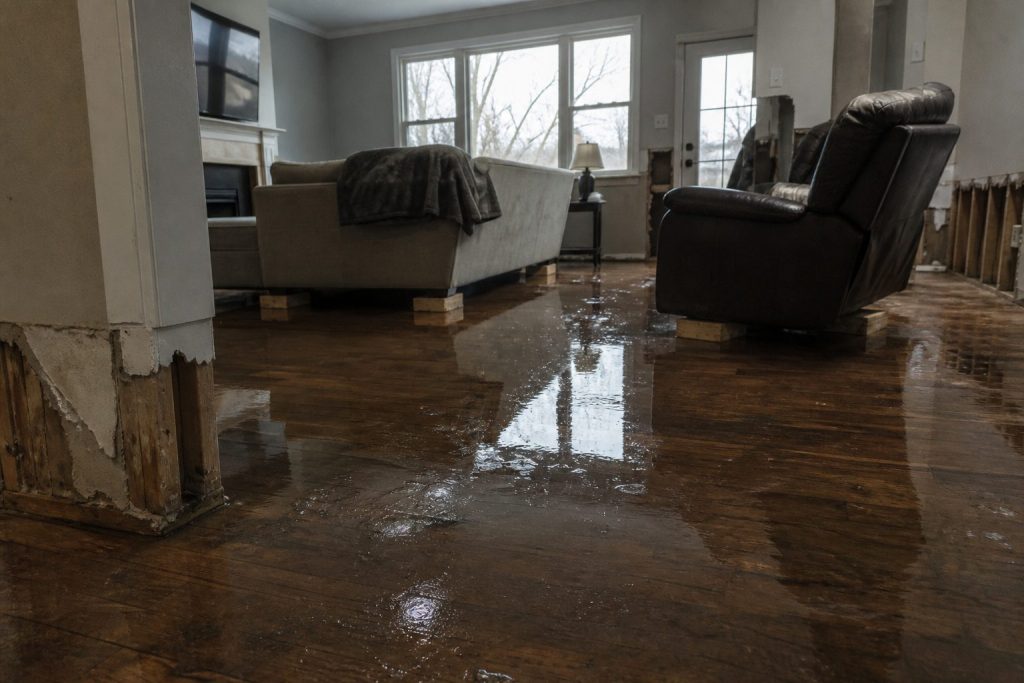
The everyday reality of a carpet cleaning operation creates a steady stream of situations that are actually restoration events — and the carpet cleaner is almost always the first professional on the scene.
The fresh water event. Dishwasher overflow. Washing machine hose failure. Refrigerator water line burst. Toilet overflow. The homeowner grabs towels, calls the carpet cleaner because “there’s water on the carpet,” and expects the carpet cleaner to fix it. The carpet cleaner arrives, extracts the visible surface water with their truck-mount, and then has a decision to make. Call a restoration company, or tell the homeowner “you’re good” and leave.
The post-event call. A day or two after a water event the homeowner did not report to insurance — the carpet is now starting to smell. The carpet cleaner is called in to “deodorize.” They find the real issue: saturated pad, likely subfloor contamination, probable mold development. The carpet cleaner is standing in a restoration job.
The commercial water event. A property manager calls the carpet cleaner they have a recurring contract with about a water leak in a tenant space. The carpet cleaner is the trusted vendor already on the account — but the job is larger than their scope.
The sewer backup. A homeowner whose basement has backed up calls the carpet cleaner because “it’s on the carpet.” This is Category 3 water — a full restoration scope, not a carpet cleaning job, and a carpet cleaner who handles it themselves is creating a massive liability.
The flood aftermath. After a weather event or flooding, carpet cleaners receive a wave of calls from homeowners whose carpets are wet. Much of this work needs professional restoration, not just extraction.
The move-out surprise. A carpet cleaner doing a final pre-move-out cleaning for a landlord finds evidence of undisclosed water damage under the furniture lines. Immediate restoration evaluation is warranted.
The odor investigation. A customer calls about a persistent odor the carpet cleaner cannot eliminate with standard treatments. The cause is often biological contamination from a past water event — an IAQ restoration job in disguise.
In each of these moments, the carpet cleaner is the first decision-maker. They can hand it off to a trusted restoration partner, hand it off to a random restoration company pulled from a Google search, try to handle it themselves, or tell the homeowner it is not their problem. The restoration company that has built the relationship captures the flow. The ones that have not do not.
The Scope Overlap and Why It Is Dangerous
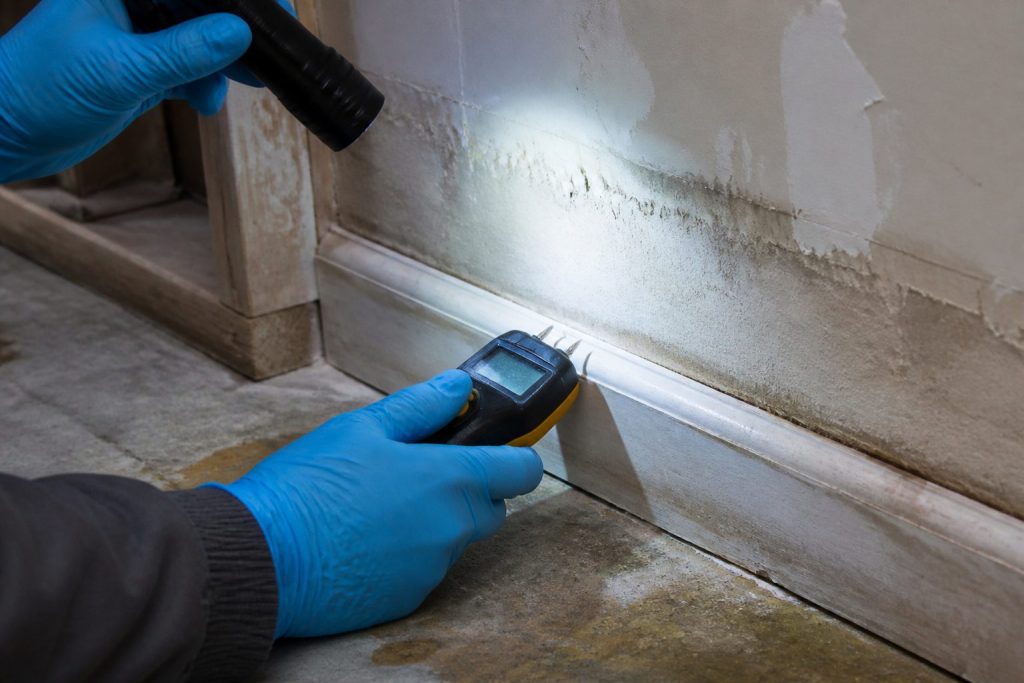
Here is what makes the carpet-cleaner partnership structurally different from plumbing and HVAC — the operational overlap is tight and the scope boundaries are fuzzy.
Both trades extract water. Both trades dry carpet. Both trades can use truck-mounted equipment. Both trades deal with post-water-event odor. Both trades clean soft goods after damage.
The distinction is in the work beyond the surface. A carpet cleaner extracts and dries the carpet. A restoration company dries the structure — subfloor, wall cavities, cabinet toe-kicks, framing, insulation, everything below and behind the carpet. A carpet cleaner cleans. A restoration company remediates — with IICRC protocol, containment, moisture mapping, documentation, and insurance coordination. A carpet cleaner is usually certified under IICRC S100 (carpet cleaning). A restoration company is certified under IICRC S500 (water damage restoration) and often S520 (mold remediation).
Both certifications exist. Both are legitimate. The boundary between them is where the partnership lives.
The danger: a restoration company that also markets carpet cleaning as a standalone service is directly competing with every carpet cleaner in the service area. Every marketing dollar spent on “$49 room carpet cleaning specials” destroys trust with potential carpet cleaner partners. Every residential Google ad the restoration company runs for carpet cleaning closes a door with carpet cleaners who would otherwise refer water losses.
Conversely — a carpet cleaner who also markets water damage restoration is encroaching on restoration scope and will be treated as a competitor by the restoration community. The same logic applies in reverse.
The best partnerships emerge when both sides are explicit and disciplined. The restoration company does not market carpet cleaning. The carpet cleaner does not market restoration. Each refers the other into their own scope, reliably, and the reciprocity is visible.
Why Most Carpet Cleaner Relationships Fail
The failure patterns are sharper than in any other trade partnership because the overlap is closer.
The restoration company competes for carpet cleaning jobs. Standalone “carpet cleaning” service menus, paid ads targeting carpet cleaning keywords, trucks with “Carpet Cleaning and Restoration” on the side — all of these signal to carpet cleaners that the restoration company is a competitor. Referrals stop.
The carpet cleaner handles water losses themselves. Instead of referring, the carpet cleaner attempts to handle a water event as a carpet cleaning job — extract and dry, call it done, leave. Three weeks later the customer has mold, an insurance claim, and a complaint against the carpet cleaner. The carpet cleaner learns the lesson, but the restoration company missed a referral they could have had if the relationship was in place.
The post-mitigation carpet cleaning job does not go to the partner carpet cleaner. After a mitigation job, carpets often need to be cleaned or replaced. A restoration company that handles this internally, or sends it to a different carpet cleaner each time, misses the chance to reciprocate and build trust.
Slow or inconsistent response on referred jobs. The carpet cleaner hands off a water loss, expecting a restoration crew on site within the hour. The restoration company shows up the next morning. The carpet cleaner’s customer is unhappy. The carpet cleaner never refers again.
Referral fees that do not materialize. Same pattern as every other trade partnership. The restoration company promises, the check is late, the carpet cleaner stops referring and never says why.
One-way flow without acknowledgment. The carpet cleaner refers ten water events in a year. The restoration company sends nothing back. The carpet cleaner mentally calculates the relationship and walks.
The homeowner experience confused by role overlap. The homeowner cannot distinguish what the carpet cleaner did from what the restoration company did. They leave a review crediting the wrong party, or worse, complaining about overlapping invoices. The carpet cleaner looks bad, feels embarrassed, and pulls back.
What the Best Restoration Companies Actually Do
The discipline required in the carpet cleaner partnership is more precise than any other trade category. The playbook:
Refuse to compete on routine carpet cleaning. Absolutely no standalone carpet cleaning marketing. No residential carpet cleaning packages. No trucks branded for carpet cleaning as a primary service. The restoration company is a restoration company. Carpet cleaning work performed during a mitigation is part of restoration scope; anything outside of that is not the restoration company’s business. This discipline is unambiguous and visible to carpet cleaners, and it is the foundation of every referral relationship.
Send every post-mitigation carpet cleaning opportunity to a partner carpet cleaner. Homeowners whose carpets need cleaning post-job get referred to the restoration partner’s carpet cleaner. Commercial accounts needing recurring carpet care after a restoration job get the introduction. Landlord clients needing make-ready cleaning get the name. The restoration company makes a deliberate practice of routing this flow to partner carpet cleaners and tracking the value.
Mobilize faster than the carpet cleaner expects. When a carpet cleaner calls with a water event, the commitment is truck rolling within 15 minutes, on site within 45. Faster than their own dispatch. Faster than any other restoration competitor.
Arrive with deference to the carpet cleaner’s relationship with the customer. The restoration crew introduces themselves, acknowledges the carpet cleaner by name, credits them explicitly for catching the event early and preserving the property, and reinforces to the customer that the restoration work and carpet cleaning work are complementary — the carpet cleaner did their job, the restoration company does theirs.
Co-document with the carpet cleaner. The restoration job documentation names the carpet cleaner as the initial responder. Moisture readings reference the pre-restoration state the carpet cleaner observed. Insurance documentation preserves the carpet cleaner’s role in the chain of events. This is a small act of professional respect that carpet cleaners notice and appreciate.
Handle insurance completely. Adjusters, Xactimate, claim management — all owned by the restoration company. The carpet cleaner is informed at the milestones that matter and otherwise left to run their own business.
Structure a clean referral fee program. Market norms: $250 to $500 per residential water event referral that converts, $500 to $1,000 on insurance-covered jobs, sometimes higher for commercial events. Paid within 30 days of restoration-company payment received, always, with a personal note. The discipline is the reliability, not the amount.
Invite the carpet cleaner into joint continuing education. IICRC S500 and S520 coursework, drying-principles training, IAQ workshops. Offer to sponsor the carpet cleaner’s attendance at a shared training session. The carpet cleaner who attends becomes dramatically more valuable as a referral partner because their eye for restoration-worthy problems becomes sharper.
Feed the carpet cleaner’s content engine. Before-and-after photos from restoration jobs that started with a carpet cleaner’s call — with both companies credited — become shareable content for both businesses. Review requests from the homeowner can be routed to both Google profiles. The reputation lift benefits the carpet cleaner directly.
Never talk down to the trade. Carpet cleaning is a legitimate skilled profession with its own discipline, certification track, and professional standards. Restoration companies that treat carpet cleaners as junior partners or low-skill vendors destroy the relationship instantly. The correct posture is peer-to-peer, respect-forward, and reciprocity-visible.
The Reciprocity Model That Works
In the carpet cleaner partnership, reciprocity runs in three directions, and the best restoration operators design for all three explicitly.
Carpet cleaner to restoration company. Water events, mold discoveries, post-event odor investigations, sewer backups, fire-aftermath soot, biohazard calls that exceed carpet cleaning scope. These are the referrals flowing in.
Restoration company to carpet cleaner. Post-mitigation carpet cleaning, tenant make-ready cleaning on landlord-owned properties, commercial account carpet care following a restoration job, referrals of past restoration clients who need routine cleaning, introductions to the restoration company’s commercial and property management contacts. These are the referrals flowing back.
Restoration company to its own clients, with carpet cleaner name attached. The restoration company recommends a specific carpet cleaning partner to homeowners during the final phase of every restoration job. That recommendation is the single most valuable thing a restoration company gives a carpet cleaner — unsolicited, trusted, coming at the exact moment the homeowner is deciding who to hire for ongoing carpet care.
A quarterly conversation about the flow in all three directions, quantified in dollars, is what makes the partnership compound. Without the measurement, the relationship drifts. With it, both parties see exactly why the relationship is valuable and have a shared reason to protect it.
The Ninety-Day Carpet Cleaner Program
The concentrated partnership program adapted for the carpet cleaner channel.
Weeks 1-2. Identify the 20 professional carpet cleaning operations in the service area with strong reputations. Selection criteria: 4.7+ star GBP, 100+ reviews, professional website, truck-mount equipment visible on the site, IICRC certification prominent, commercial account presence. Rank the top 5.
Weeks 3-4. Research each top candidate deeply. What commercial accounts do they appear to serve? What does their own content emphasize? Who is the owner or senior manager? What does the review base reveal about how they talk to customers?
Weeks 5-6. Make contact with a concrete value proposition. A mutual-referral framework that respects both scopes. A named contact. Fast response guarantee. A reciprocity framework quantified with tracked referrals in both directions. A clear statement: “We do not market carpet cleaning. We will never compete with you on that scope. We want to be your restoration partner and we want you to be our carpet cleaning partner.”
Weeks 7-8. Co-design the operating protocol. Referral path both directions, communication rhythm, documentation, scope boundaries, fee structure. A shared one-pager, signed by both parties as a working agreement.
Weeks 9-12. Execute with discipline. White-glove every incoming referral. Send every post-mitigation carpet job to the partner. Pay fees on time. Close feedback loops. Report monthly.
Day 90. Review the reciprocity ledger with each partner. Celebrate the flow in both directions. Adjust as needed. Expand to additional carpet cleaners.
Where This Pairs With the Rest of the Stack
The carpet cleaner partnership sits inside the observational B2B plan as a specific high-yield category and pairs tightly with the plumber and HVAC partnerships as part of the trade-ecosystem discipline. It requires the scope-clarity posture — restoration companies that compete broadly across adjacent services generate short-term revenue and destroy long-term referral infrastructure. It benefits from the review engine because co-credited reviews amplify both companies’ profiles. And it is measured through the partnership signals framework — bidirectional flow, recency, partner count, revenue produced in each direction.
This series continues with additional partner-industry deep dives — pest control, general contractors, property managers, adjusters, realtors, and the other professional categories that touch commercial and residential buildings. The structural playbook is consistent: understand how the partner industry actually makes money, respect their scope absolutely, respond faster than they expect, make reciprocity visible, and invest in the relationship quarterly. Execute that playbook across five categories simultaneously and a restoration company has built the kind of referral architecture that compounds for decades.
Where to Start
Pick one carpet cleaner this week. The best-reviewed, most operationally sharp, most professionally presented carpet cleaning company in the service area. Meet them at their shop. Explain the framework. Commit in writing to the scope discipline. Run the first three referrals perfectly. Build from there.
The math on this channel is straightforward. A single well-run carpet cleaner partnership producing two water event referrals per month at an average job size of $12,000 represents $288,000 in annual pipeline. Five active partnerships is $1.44 million. The cost of the program is discipline, not dollars — refuse to compete on carpet cleaning scope, respond faster than anyone else, reciprocate visibly, pay on time.
Every restoration company has the option to run this program. Almost none do it well. The discipline to do it well is the competitive moat.
Frequently Asked Questions
Why are carpet cleaner partnerships considered higher-risk than plumber or HVAC partnerships? Because the operational overlap is tighter. Both trades extract water, dry carpet, and handle post-event cleanup. A restoration company that markets carpet cleaning as a standalone service competes directly with every carpet cleaner in the service area and destroys the referral channel. Scope discipline is harder and more consequential in this partnership than in any other trade category.
Can a restoration company offer carpet cleaning as a service without damaging carpet cleaner relationships? Not as a standalone service, no. Carpet cleaning work performed during a mitigation job is scope-appropriate and expected. Marketing routine carpet cleaning packages to residential customers, however, positions the restoration company as a competitor to every carpet cleaner in the market and closes the referral channel. This is the single clearest strategic decision in the carpet cleaner partnership.
What is the single most valuable thing a restoration company can do to earn carpet cleaner trust? Refer every post-mitigation carpet cleaning opportunity to a partner carpet cleaner, explicitly recommend them to homeowners at the end of every job, and make those referrals visible and tracked in the quarterly reciprocity review. No other discipline does more to signal that the restoration company is a genuine partner rather than a potential competitor.
What referral fee is standard for carpet cleaner partnerships? Market norms mirror plumbing and HVAC: $250 to $500 per residential water event referral, $500 to $1,000 on insurance-covered jobs, sometimes higher on commercial events or revenue-share arrangements for large ongoing introductions. On-time, every-time payment is more important than the exact dollar figure.
How does IICRC certification factor into the partnership? Carpet cleaners are certified under IICRC S100 for textile floor covering cleaning. Restoration companies are certified under S500 for water damage restoration and typically S520 for mold remediation. These certifications mark the legitimate scope boundaries. A restoration company that invites carpet cleaner partners into joint S500 training produces more capable referral partners who recognize restoration-worthy problems earlier and refer them faster.
What happens when a homeowner cannot distinguish between carpet cleaning and restoration scope? Both parties have an obligation to make the distinction clear. The restoration company’s documentation should explain what restoration scope includes and how it differs from carpet cleaning. The carpet cleaner’s handoff should clearly state what they did and what the restoration company is being called in to do. When both parties are disciplined about this, the homeowner’s experience is cleaner and reviews land correctly with each company’s profile.
How long does it take to build meaningful referral flow from a carpet cleaner partner? A disciplined program typically produces initial referrals within 60 to 90 days and steady, compounding flow within 6 to 12 months. The compounding is dramatic once the relationship is trusted, because carpet cleaners encounter water events constantly and the referrals happen almost in real time from the field.
Tygart Media on restoration — an analyst-operator body of work on the systems that separate compounding restoration companies from busy ones. No client names. No brand placements. Just the operating standard.
Get The Signal
What we actually ran, what it measured, and what it means for a restoration shop — every week, including the flops.
Leave a Reply