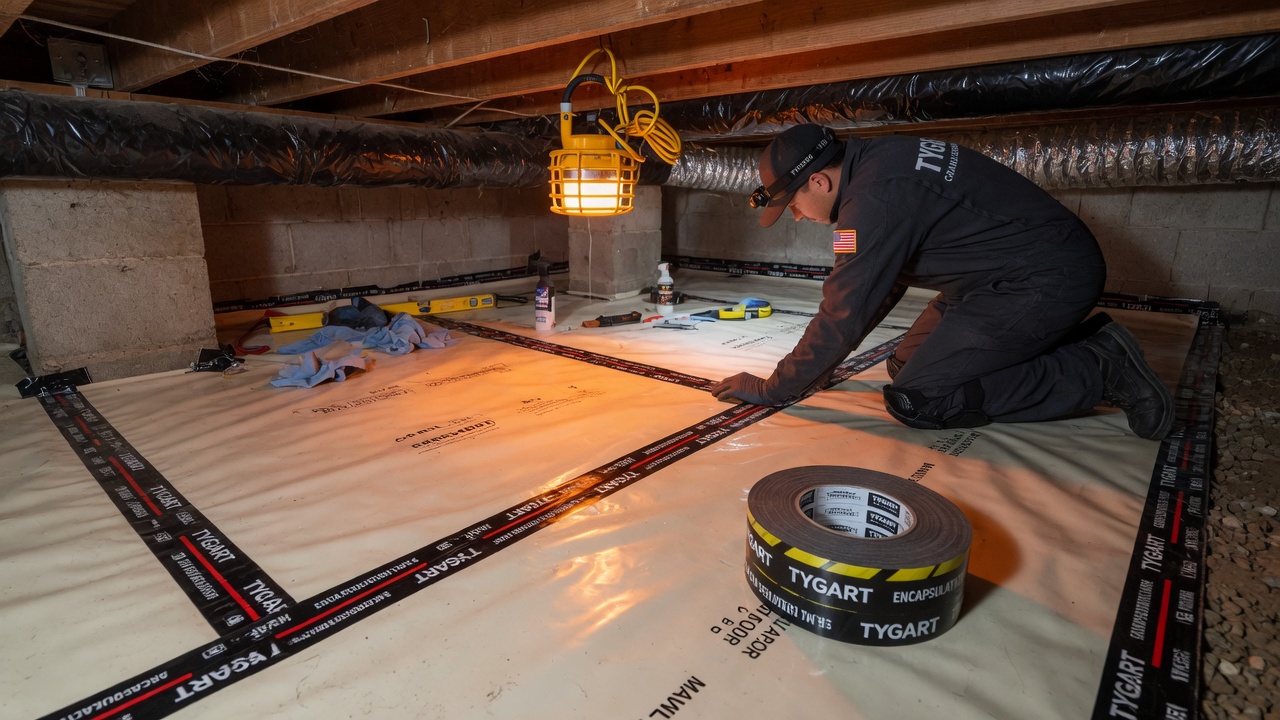
Direct answer: Pest control is one of the most strategically valuable restoration partners because it runs on recurring quarterly routes — meaning the same technician is inside the same customer’s attic, crawl space, and wall voids four times a year. They find rodent entry points, standing water, elevated humidity, vapor-barrier failures, and early mold growth before the homeowner ever calls anyone. The restoration company that builds a real relationship with the route manager — not a flyer drop to the front desk — gets named when the tech writes up “moisture damage, recommend specialist” on a service ticket. That’s the channel. Most restoration owners never work it.
Every restoration owner has a referral wishlist. Plumbers. HVAC. Property managers. Adjusters. Almost nobody has pest control at the top of that list — and that’s exactly why it’s one of the highest-leverage channels available to a restoration company in 2026.
Pest control is different from every other trade we’ve covered in this series. It’s not event-driven like plumbing. It’s not equipment-driven like HVAC. It’s not volume-contract-driven like Cintas. It’s a subscription business. The technician is inside the same house four times a year, on a route, looking for conditions that create pest activity — which are exactly the conditions that create restoration work.
This article teaches you how pest control companies actually make money, why their technicians see moisture damage earlier than anyone in the chain, why most restoration companies fumble this channel with the wrong approach, and the specific ninety-day program that turns a regional pest control operation into a predictable referral stream. No fluff, no templates, no Chamber-of-Commerce advice. This is the operational view.
How a Pest Control Company Actually Makes Money
If you want to earn the trust of a pest control owner or operations manager, you have to understand their economics before you walk in the door. Pest control is not a trade — it’s a recurring-revenue subscription business wearing trade clothing.
The revenue mix. A healthy residential-focused pest control company runs roughly 80–85 percent recurring revenue and 15–20 percent one-time or initial treatments. That’s the benchmark buyers and private equity roll-ups look for when acquiring pest operators. The industry standard is quarterly service — four visits per year — with monthly service priced between $45 and $75 per visit and quarterly service priced between $100 and $300 per visit. Initial intensive treatments are priced higher, typically $150 to $300, and act as the onboarding step that locks the customer into the recurring plan.
Get The Signal
What we actually ran, what it measured, and what it means for a restoration shop — every week, including the flops.
The margin structure. Gross margins are strong. Established pest control operations run 60–80 percent gross margin on service. EBITDA margins land between 15 and 20 percent for well-run independents — the three largest national players reported 15.7 to 19.5 percent operating margins in the most recent IBISWorld data. Commercial accounts carry lower cancellation rates than residential and generally command higher per-visit pricing, but residential is where route density and customer lifetime value live.
What a customer is actually worth. A residential pest customer acquired in 2026 represents $1,200 to $3,000 in lifetime value across the first few years. High-performing technicians generate $150,000 to $200,000 in annual revenue per route. Average pest control business revenue sits around $401,900. Those numbers matter because they tell you exactly why pest owners protect their routes and why your pitch to them has to respect the route, not disrupt it.
The operational engine. Route density is the entire game. A tech runs eight to fourteen stops per day depending on market and service mix. They are paid on productivity — commission, revenue share, or per-stop — and their behavior is governed by the software on their phone. FieldRoutes, PestPac, GorillaDesk, Briostack, and a handful of others run the industry. Every note the tech types, every photo they attach to a stop, every upsell they flag goes into the CRM. That CRM is where your name has to end up if you want to be the restoration company that gets called.
How Pest Control Companies Acquire Customers
Understanding how pest control sells tells you where they value you — and where they don’t.
Door-to-door is still the dominant acquisition channel. Summer sales crews (Aptive, Moxie, Fairway, regional equivalents) knock hundreds of doors a day in target neighborhoods during spring and summer. The cost per acquired customer is high, but the recurring revenue justifies it over eighteen to thirty-six months. Independent operators supplement with route-density bolt-ons — buying smaller routes from retiring owner-operators or competitors.
Organic and paid search. Pest control is one of the highest-CPC verticals in local services. “Exterminator near me” and specific pest terms (“bed bug removal,” “termite inspection,” “rodent exclusion”) can run $25 to $60 per click in competitive markets. Google LSA (Local Services Ads) and GBP reviews drive the top of the local pack. The best independents treat reviews as the leading indicator — every tech is trained to ask for the review at the end of the stop.
Commercial sales teams. Commercial pest control is a dedicated B2B operation. A commercial account manager calls on restaurants, food-processing facilities, healthcare, property management, hospitality, and warehousing. These accounts are won on responsiveness, pest log documentation for health inspections, and the ability to pass FDA and AIB audits. Monthly commercial contracts range from $100 to $2,000+ depending on facility size and pest pressure.
Referral programs. Most pest control companies run customer-to-customer referral programs offering $25 to $75 in account credit or a free service for a successful referral. They work — but the referrals are limited to the customer’s personal network. What’s missing in almost every pest company referral stack is a deliberate, documented cross-trade referral relationship. That’s the gap.
The takeaway: pest control spends real money to acquire each customer and works hard to retain them on a route. Anything you bring them that protects their customer, saves the tech time, or generates incremental revenue on the same route is valuable. Anything that disrupts the route or creates liability they didn’t ask for is disposable.
Why Pest Control Technicians See Restoration Work Before Anyone Else
This is the single most important section of this article, and the one most restoration owners have never thought carefully about.
A pest technician’s job, every single stop, is to find and document conditions that support pest activity. Those conditions are — almost line for line — the conditions that produce restoration claims.
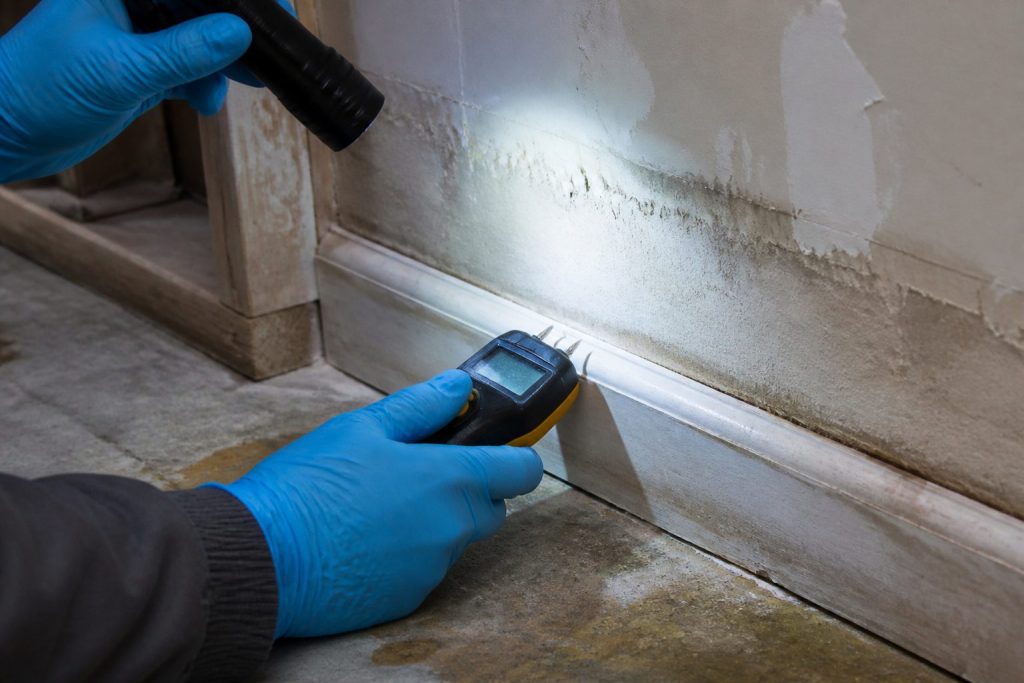
The attic inspection. The tech goes up into the attic four times a year. They’re looking for rodent droppings, nesting material, and chew damage on wiring. What they also see: compressed or soaked insulation, water staining on the underside of the roof deck, bath fan exhaust venting into the attic instead of out the roof, dark mold colonies on sheathing, flex duct separated from the supply boot. They document all of it with photos in their route software.
The crawl space inspection. Quarterly crawl inspections are standard for termite and rodent programs in most of the country. The tech sees failed vapor barriers, standing water, wet subfloor insulation, efflorescence on foundation walls, rusted duct strapping, and visible microbial growth on floor joists long before the homeowner does. In many markets, pest companies sell their own vapor-barrier and encapsulation services as an upsell on these findings — which means their techs are already trained to spot moisture.
The exterior and roofline walk. Every route stop includes an exterior walk to check bait stations, identify entry points, and look for conducive conditions. The tech sees missing soffit returns, gaps at fascia, failed flashing at roof-wall intersections, downspouts dumping against the foundation, grading issues, and rotted trim. All of those are restoration precursors.
The interior stop. If the service includes interior treatment, the tech is in kitchens, bathrooms, laundry rooms, and utility closets. They see active leaks under sinks, corroded supply lines, water-stained drywall behind toilets, damp baseboards, and musty odors the homeowner has stopped noticing.
The commercial stop. A commercial pest tech servicing a restaurant or food-processing facility is inside the dish pit, the walk-in, the mop closet, and the dock dumpster area — all the zones that produce the most restoration events. They’re there monthly or weekly. They see slow leaks before the facility manager notices them.
The result: pest control technicians are quietly one of the most accurate early-warning systems for water intrusion, mold, and structural moisture issues in residential and commercial property. They see it before the homeowner calls a plumber, before the HVAC company shows up for a service call, before the adjuster is ever notified. And they see it on a repeating calendar — not just once.
Most pest control companies do not have a formal restoration referral partner. The tech writes “recommend specialist” on the ticket, the homeowner Googles, and the job goes to the first brand with the best reviews. That’s the gap you’re closing.
Why Pest Control Wants a Restoration Partner (And Where the Referrals Actually Flow)
A well-run pest control company benefits from a named restoration partner in six concrete ways:
1. Liability off-loading. When a tech finds mold or standing water, the company has two choices: say nothing and risk the customer later claiming the tech missed an obvious problem, or document the finding and refer them to a specialist. Naming a trusted restoration partner on the ticket protects the pest company. They want that partner to be one phone call, not a search result.
2. Incremental revenue on moisture upsells. Many pest companies sell their own exclusion, crawl-space encapsulation, and vapor-barrier work. They don’t want to do IICRC-level water mitigation, mold remediation, or reconstruction. Partnering with a restoration company that won’t compete on pest control or crawl-space upsells — and that will complete projects the pest company can’t — lets them offer a fuller solution without expanding their own scope.
3. Customer retention. Customers who have a bad experience with a finding on their property — mold discovered, no path forward offered — churn off recurring plans. Customers who are handed a trusted name and a warm introduction retain. The pest company’s quarterly revenue from that customer is worth $400 to $1,200 a year; protecting the account is worth more than any single referral fee.
4. Two-way referral flow. Restoration customers with chronic moisture, rodent entry, or termite issues need an ongoing pest partner. That flow is as valuable going the other direction as it is coming in.
5. Co-marketing leverage. Joint educational content (“What your quarterly pest inspection reveals about your home’s moisture health”) drives traffic for both brands. Pest companies with strong reviews and GBP real estate are excellent co-authors.
6. Route-level documentation pipeline. If you can become a “one-click referral” inside their CRM workflow, the tech doesn’t even have to remember your name. They tap the button, the office sends you a lead, you handle it in twenty-four hours, everyone wins.
The referrals do not flow from the owner handing you his Rolodex. They flow from the tech tapping a button in FieldRoutes or PestPac after a stop. Your entire strategy has to be designed around that moment.
The Six Restoration-Discovery Moments on a Pest Control Route
Here’s where restoration enters the picture on a pest technician’s day. Learn these moments cold — they are the entire basis of the partnership.
Moment 1: The attic rodent sign stop. Tech is sent out for a rodent issue. They enter the attic, find droppings, and also find compressed wet insulation under a roof leak, mold colonies on sheathing, or bath fans venting into the attic. Restoration is called for mold remediation and insulation replacement. This is one of the highest-frequency discovery moments in the entire industry.
Moment 2: The crawl space quarterly. Quarterly termite and general pest inspections routinely uncover standing water, failed sump pumps, efflorescence, microbial growth on joists, and vapor-barrier failures. Restoration is called for mold remediation and dry-out. In markets with wet climates, this is a week-in, week-out discovery.
Moment 3: The exclusion walk. Exclusion work (sealing entry points for rodents, bats, squirrels) puts the tech on ladders against the roofline and siding. They see flashing failures, rotted fascia, and roof leaks that the homeowner hasn’t noticed. Restoration gets called for water damage remediation and reconstruction.
Moment 4: The bed bug or cockroach interior stop. Heavy interior infestations require detailed inspection in kitchens and bathrooms. Active leaks under sinks, damaged cabinet floors from slow drips, and water-stained walls behind toilets get noticed. These are small jobs individually and steady volume collectively.
Moment 5: The commercial account service visit. Monthly or weekly commercial service at restaurants, food-processing, and healthcare facilities uncovers slow leaks and condensation problems that the facility manager hasn’t logged. These referrals are the highest-dollar on the list because commercial scopes are larger and more frequent.
Moment 6: The termite WDI inspection. Wood-destroying insect inspections for real estate transactions routinely identify active moisture, fungal decay, and conditions that trigger restoration scopes before closing. These are time-pressured and high-value — the buyer, seller, realtor, and lender all want it resolved in two weeks.
Build your joint training around these six moments. Every reciprocity agreement, ticket flag, and referral script should map to one of them.
Why Most Restoration-to-Pest-Control Partnerships Fail
Restoration companies have tried to work this channel before and wasted cycles on it. Here are the six failure modes.
1. Pitching the owner with generic “partnership” language. The pest control owner has heard every version of “let’s refer each other” from every service trade in the market. Your first meeting cannot be an ask. It has to be a demonstration of how you understand the route, the tech’s workload, and the CRM flow.
2. Competing on crawl-space or attic exclusion work. If your restoration company sells crawl-space encapsulation, vapor barrier replacement, or rodent exclusion as an upsell, you are a competitor to the pest control company, not a partner. You have to take those scopes off the table or carve clear lanes. A pest company will never refer work to a restorer they see poaching their upsells.
3. Trying to get in front of techs without getting the ops manager first. Techs are on routes. They don’t sit in the office for a pitch. The decision to add your name to the “refer out to” list is made by the operations manager or route manager. That’s your first meeting, not the owner and not the techs.
4. Slow follow-up on the first few referrals. The first three referrals the pest company sends you are a test. If you respond in four hours, you pass. If you respond the next day, you fail. The route manager will quietly stop naming you.
5. Not closing the reciprocity loop. Restoration companies are notorious for receiving referrals and never sending any back. Pest control owners notice. Within sixty days of getting your first pest referral, you should have documented at least one outbound referral the other direction.
6. Treating the relationship as one owner-to-owner handshake. The relationship with the owner gets the program started. The relationship with the route manager, the ops manager, and the dispatcher keeps it going. If you’re only calling the owner, the referrals dry up the month after your coffee meeting.
Ten Operational Disciplines for a Pest Control Referral Channel That Works
If you want pest control to become a reliable referral flow rather than a one-time introduction, run the channel with the same rigor you run production.
1. Respect the route economics. Every minute a tech spends talking about your company is a minute they’re not producing revenue. Your entire communication stack — training, collateral, CRM integration — has to save them time, not cost them time.
2. Anchor to the ops manager, not the owner. The ops manager decides whose name goes on the “refer out to” list in the CRM. That’s your primary relationship. The owner approves the program; the ops manager runs it.
3. Provide a single trained contact with a direct line. Pest techs and ops managers should have one human name, one cell number, one email. If they get a different person every time they call, you lose the account.
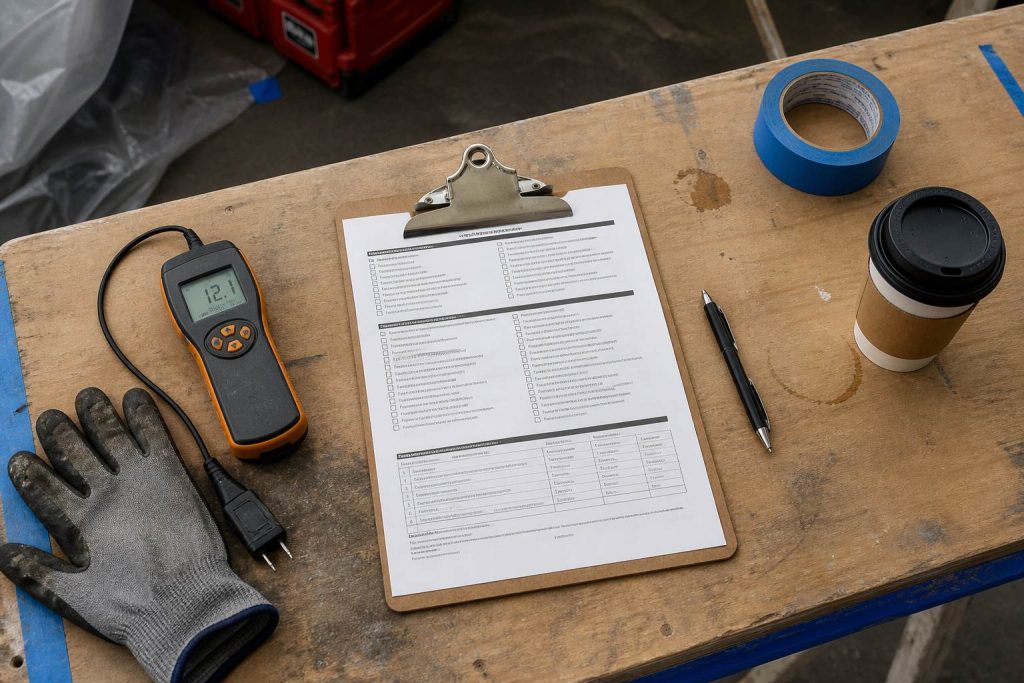
4. Build a two-way “discovery flag” cheat sheet. One-page laminated card for the truck. One side: “When to call [Your Restoration Company]” — the six restoration-discovery moments. Other side: “When to call [Pest Company]” — mold jobs with active pest activity, rodent-related insulation removals, commercial food-facility pest logs. The card lives in the truck, not the office.
5. Integrate with their CRM workflow if possible. Ask the ops manager how referrals are currently routed out. Offer to set up a dedicated email inbox or Zapier hook that receives their outbound referrals automatically from FieldRoutes or PestPac. Speed of intake is the single biggest quality signal you can send.
6. Twenty-four hour response, four-hour ideal. When the pest company sends you a lead, your first contact with the homeowner should be within four hours on the same day. The ops manager will hear about any delay from the customer.
7. Close the loop in writing. Every referral gets a reply to the pest company: acknowledgment within an hour, status update at the site visit, outcome when the job closes. This is the single behavior that distinguishes a real partner from a vendor.
8. Reciprocity ledger. Track referrals both directions in a shared document. If they’ve sent you eight and you’ve sent them one, that’s a problem you can see before it becomes a conversation.
9. Quarterly joint training. A thirty-minute virtual training every quarter — restoration tech walks through moisture signs, pest tech walks through what their findings mean. Both sides leave smarter. Pest companies that have never done this will often say yes immediately because it’s genuinely useful for their team.
10. Pay the fee if it’s on the table. Referral fees vary by state and scope — some states restrict paid referrals on insurance-funded work. Where fees are legal, a $100 to $300 named referral fee per closed restoration job is standard and worth paying. Where fees aren’t, substitute reciprocal marketing, co-branded content, or annual account-based appreciation.
The Two-Way Reciprocity Model (And Why It Has to Be Explicit)
The single most common reason pest-restoration partnerships fail is that reciprocity is assumed and never designed. Here’s the explicit model.
Flow 1: Pest control → restoration. Tech finds one of the six discovery moments. They tap the referral button in the CRM or text the ops manager. Ops manager sends the lead to your dedicated intake. You contact the homeowner within four hours. The pest company is named as the source. The pest company sees the status of the referral close out. This is the core flow.
Flow 2: Restoration → pest control. Your project manager is on a mold remediation job and finds active rodent droppings, termite galleries in a framing inspection, or a chronic roach problem in a commercial kitchen. You name the pest company on the ticket, hand the homeowner the partner’s card, text the ops manager, and introduce them by email. The pest company picks up the lead within four hours. You see the status close out.
Flow 3: Restoration → every customer, pest partner named by default. This is the move most restoration companies miss. On every closed job, the homeowner or facility gets a small printed leave-behind naming the pest control partner with a specific call-to-action: “We’ve completed your remediation. Ongoing pest and moisture monitoring is essential to protect the repair. Call [Pest Partner] at [number] to schedule your inspection. Mention [Your Restoration Company] for [offer].” This produces a far greater referral volume out of your pipeline than anyone else’s, which balances the ledger fast and makes you the partner other trades can’t match.
Document all three flows. Review the numbers quarterly with the pest ops manager. When the volumes drift, fix the drift before it becomes silence.
The Ninety-Day Pest Control Partnership Program
Here’s the exact program. Copy it. Run it on one pest control company at a time in your market. Don’t try to boil the ocean.
Week 1: Target selection. Identify the two or three pest control companies in your service area with the strongest GBP review profile, the most routes, and the deepest commercial book. Ignore the national franchises whose referral routing is centralized at corporate — go for regional independents with 4 to 40 trucks.
Week 2: Ops manager meeting. Skip the owner for now. Call the office, ask to speak with the operations or route manager. Short email prior: “We’re a restoration company in [market], I want to learn about your referral program and show you a few things we’ve built for pest partners. Thirty minutes at your office.” Bring the laminated discovery-flag card as a draft.
Week 3: Co-designed intake flow. Spend an hour with the ops manager designing the intake process. Dedicated email, dedicated number, response-time commitment in writing. Align it to how their CRM exports referrals.
Week 4: Tech ride-along. Ask to ride with a senior tech for a half-day. You’ll see exactly what they see. You’ll also earn credibility with the tech corps — no restoration owner has ever asked to ride with them, and the story will travel.
Week 5: Thirty-minute virtual joint training. Your project manager presents to their team on the six discovery moments with real photos. Their lead tech presents to your team on when to spot pest indicators during mold and water jobs. Record it. Reuse the recording for onboarding.
Week 6: First referrals flow. Expect three to five in the first two weeks. Respond inside four hours on every one. Document status at each step. Reply to the ops manager when each closes.
Week 7: Restoration-to-pest leave-behind deployed. The printed card, QR code, or branded magnet is now on every job close. Track leads sent.
Week 8: Commercial introduction. Ask the ops manager to introduce you to their commercial account manager. The commercial book is where the highest-dollar referrals live.
Week 9: Owner meeting (finally). By now you have referral volume and response-time data. Owner meeting is short: here’s what we’ve done, here’s the reciprocity ledger, here’s the plan for the next quarter. The owner approves expansion.
Week 10: Quarterly business review cadence established. Put a recurring quarterly meeting on the calendar — ops manager, their commercial manager, your intake lead, your project manager. Review volume, response time, win rate, and the reciprocity ledger. Adjust.
Week 11: Co-authored content piece. One joint article or one video published to both companies’ sites, both GBPs, and both social channels. Subject: what a quarterly pest inspection reveals about your home’s moisture health. This earns durable SEO and tells the market the partnership is real.
Week 12: Second pest company opened. Only now. Repeat the program on the next target. Do not try to run more than two pest partners per market simultaneously — the confusion on which referral goes where will erode both relationships.
By day ninety, you have documented volume, a repeatable intake workflow, a trained tech corps that knows your name, and reciprocity numbers that will earn you the second and third pest company in the market.
Where to Start This Week
If you’re reading this and want to actually move on it, here’s the action list for the next seven days:
- Pick one pest control company in your market. Pull their GBP — review count, rating, response rate.
- Write a forty-word cold email to the ops manager. Not the owner.
- Build the laminated two-sided flag card before the meeting.
- Decide internally who inside your company owns pest-partner intake. Give them a dedicated number.
- Draft the restoration-to-pest leave-behind card.
- Decide the referral fee structure (or non-fee substitute) before you sit down.
- Book the meeting.
Do all seven before the weekend. If you’re stuck on step one — the target — default to the pest company in your market with the strongest commercial book. Their route economics and their facility-manager relationships are the highest-leverage entry point you can possibly find.
Where This Article Fits in the Larger Playbook
This is the fifth article in The Restoration Operator’s Playbook partner-industries series. It builds directly on the discipline of the observational B2B referral plan, the cadence in the owner-as-rainmaker system, and the reciprocity-first posture in reviews and staff compensation. It pairs naturally with the plumber partnership article, the HVAC partnership article, the facility services partnership, and the carpet cleaner partnership. If you’re mapping the full channel strategy, reread marketing signals beyond leads and organic asset vs paid rent to see how partner-channel volume compounds with organic content over time.
The next partner industries already in the queue: general contractors, property managers, adjusters, realtors, pool and spa service, roofers, and appliance installers. Each one gets the same treatment — research first, operational truth second, ninety-day program third.
Frequently Asked Questions
Do pest control companies actually refer restoration work, or is this theoretical? They refer it constantly. The question is whether it’s a deliberate channel or a coin flip. Techs already write “recommend specialist” on tickets where they find mold, moisture, or chronic water intrusion. The referral goes to whoever the homeowner Googles next unless your name is on the pest company’s “refer out to” list and in their CRM workflow. The channel exists. Most restoration companies just don’t claim it.
How much volume can I realistically expect from one pest control partner? A regional independent pest company with 10 to 20 techs running quarterly residential and monthly commercial routes can generate 15 to 40 qualified restoration referrals per year once the program is running. Bigger regional operations with commercial books can do materially more. The first ninety days will feel light; volume compounds quarter-over-quarter as the tech corps builds familiarity with your name.
Should I pay a referral fee? Where state law allows it on non-insurance work, yes — a named referral fee of $100 to $300 per closed restoration job is standard and worth paying. On insurance-funded work, check your state’s specific rules; many states restrict or prohibit paid referrals on insurance claims. Where fees aren’t viable, substitute reciprocal marketing, co-branded content, and a consistent flow of outbound referrals the other direction.
What’s the biggest mistake restoration owners make approaching pest control companies? Pitching the owner first and selling a generic partnership. The owner is not your first meeting — the operations manager is. And the first meeting is not a pitch, it’s a working session on how their CRM routes outbound referrals and how your intake desk can plug in. Come with the discovery-flag card already drafted. Every minute you save the tech and the ops manager is a minute they’ll return in referrals.
How is this different from a plumber or HVAC partnership? Plumbers and HVAC techs see the customer during an event or a service call — episodic. Pest control sees the customer on a recurring quarterly or monthly route — predictable. The partnership mechanics are similar; the difference is that a pest company’s value is its route density and its CRM, and your program has to be designed to ride that route rather than interrupt it. Pest also carries less scope-overlap risk than HVAC or plumbing (no shared revenue lines on water mitigation) and more scope-overlap risk than carpet cleaning or Cintas (crawl-space and exclusion upsells), which means your lane agreement matters more at the start.
What if the pest control company already has a restoration partner? Many do — loosely. Almost none have a documented two-way flow, a tech-trained discovery-flag card, a four-hour response commitment, and a quarterly business review. Your competitive move is professionalism at the operational layer. Ask the ops manager what’s working and what isn’t about their current partner. Build a better program. In many cases you’ll be added as the second partner before you replace the first — and the reciprocity volume coming from your side will decide the outcome within two quarters.
Get The Signal
What we actually ran, what it measured, and what it means for a restoration shop — every week, including the flops.
Leave a Reply