
Related on Tygart Media: editorial surface area · Notion prompt patterns.
The 60-second version
Speed without trust is theater. Agents that produce output you can’t ship aren’t saving time — they’re shifting time from doing to checking. The trust gap is real, and most operators handle it badly: either they review everything (which negates speed) or they trust everything (which propagates bad output until something breaks). The operator move is sampled review on a defined rubric with source attribution. Pick a percentage you can sustain. Make the rubric explicit. Demand the agent show its sources. That’s how trust scales.
What the trust gap is made of
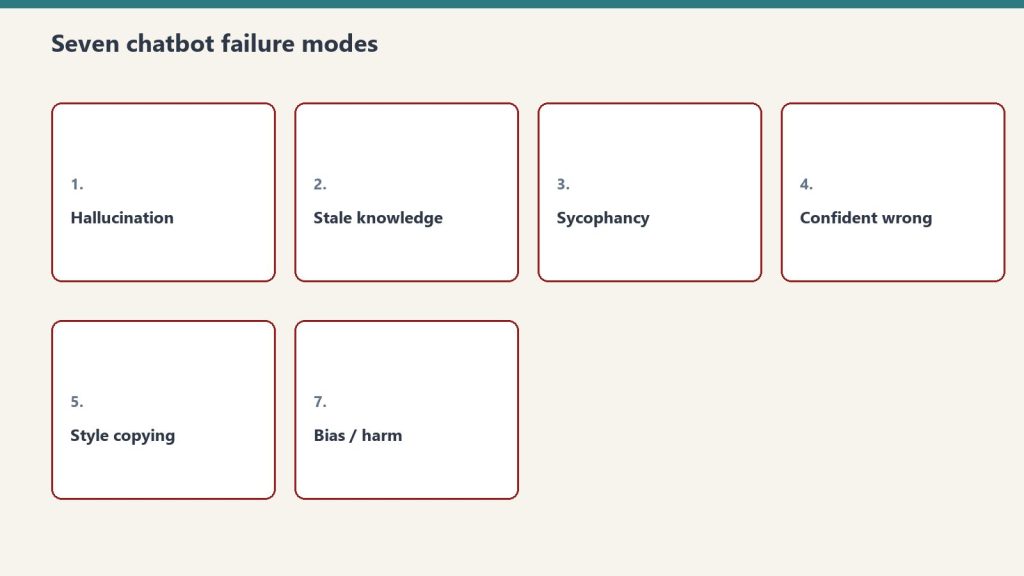
Four components:
1. Factual accuracy uncertainty. Did the agent invent facts?
2. Voice mismatch. Does it sound like us or like ChatGPT?
3. Context blindness. Did it miss something only a human would catch?
4. Edge case fragility. Does it handle the 5% of cases that don’t fit the pattern?
Different agents have different gaps. A weekly digest agent’s gap is mostly voice. A lead-scoring agent’s gap is mostly accuracy. Diagnose the specific gap before designing the trust mechanism.
Three mechanisms that close the gap
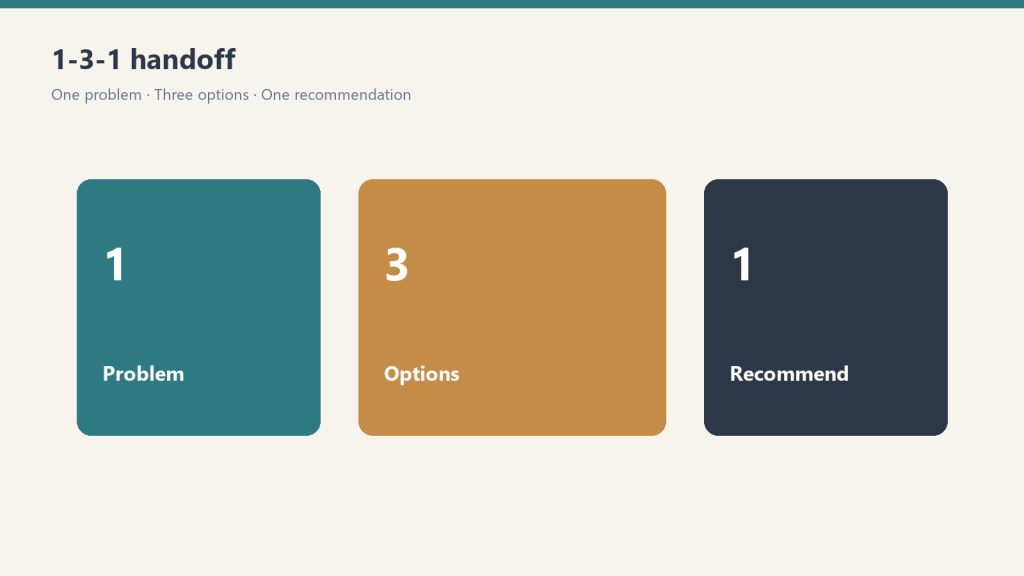
1. The explicit rubric. Tell the agent the criteria for “good enough.” A 5-dimension scoring rubric (factual, voice, usefulness, coherence, format) makes “good” measurable. Agents can self-score. Humans can verify the score in 30 seconds instead of re-reading the whole output.
2. Sampled review. Don’t review everything. Review 10-20% randomly. Track what you find. If the failure rate is below threshold, the system is trustworthy at that volume.
3. Source attribution. Demand the agent cite sources for every factual claim. Page references inside Notion. URLs for external. This converts “is this right?” from a research task into a click. A trust gap closed in 5 seconds is functionally no gap.
The pattern that fails
Many operators try to close the trust gap with longer prompts (“be more careful, double-check, don’t hallucinate”). This doesn’t work. The agent already thinks it’s being careful. Adding adjectives doesn’t change behavior. Structural changes — rubrics, sampling, attribution — work. Adjectival prompts don’t.
How to operationalize this
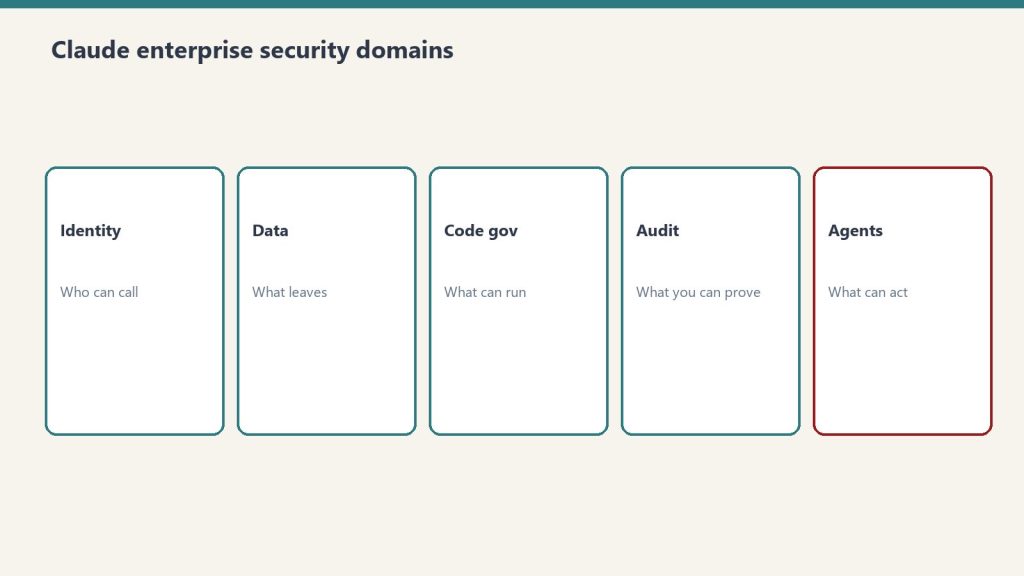
Three steps:
1. Pick one agent. Not all of them. Start with the highest-volume one.
2. Define its rubric and threshold. Five dimensions, 0-2 scoring, lock at 8.5/10 average.
3. Set a 4-week observation window. Sample 20% of output, score it, log failures. At week 4, decide: tighten prompt, reduce sampling rate, or retire.
Repeat for the next agent. Don’t try to do this for the whole fleet at once.
The relationship to Editorial Surface Area
Trust gaps shrink when editorial surface area widens. An agent reading from a clean substrate makes fewer mistakes. The trust gap and the substrate are the same problem from two angles. Fix one and the other improves.
What to read next
Editorial Surface Area, Gates Before Volume, ROI Math.
Leave a Reply