Related on Tygart Media: AI-native company patterns · Notion second brain setup · autonomous second brain.
The 60-second version
The pre-AI second brain was a personal information system. The post-AI second brain is a personal information system that an agent can also navigate. The two are different. A pile of brilliant unstructured notes is great for human recall and useless for agent synthesis. The shift is structural: more databases, fewer floating pages; controlled tags instead of free-text; cross-links between related items; an explicit glossary. Most second brains need to be partially rebuilt to work as agent substrate.
What changes with agents in the picture

Pre-agent, the second brain optimization was retrieval-for-humans: how fast can I find the thing I’m looking for. Post-agent, it’s retrieval-for-agents: how reliably can the agent find and synthesize across the right things without human guidance.
These are different optimizations. Humans use intuition, recent memory, and visual scanning. Agents use semantic search, structured queries, and link traversal. A second brain optimized for one isn’t optimized for the other.
Five structural shifts
1. Pages → Databases. Floating pages don’t query well. Databases with consistent properties do. If you have a “books I’ve read” pile of pages, convert it to a database with author, genre, key insight, related-projects properties.
2. Free tags → Controlled vocabulary. Twenty variations of “client” produces an agent that misses things. One canonical “Client” tag with defined scope works.
3. Standalone pages → Cross-linked graph. Notion’s link system is the agent’s navigation. A new page should link to at least 2-3 related existing pages. Pages with no inbound or outbound links are dead to the agent.
4. Implicit conventions → Explicit glossary. A page that captures “this is what we call things and how we structure projects” gives the agent rules instead of guesses.
5. Recent-memory archives → Continuously enriched archives. Old projects shouldn’t decay. AI Autofill can re-summarize, re-tag, and re-cross-link old pages so they stay queryable.
The agent-aware folder structure
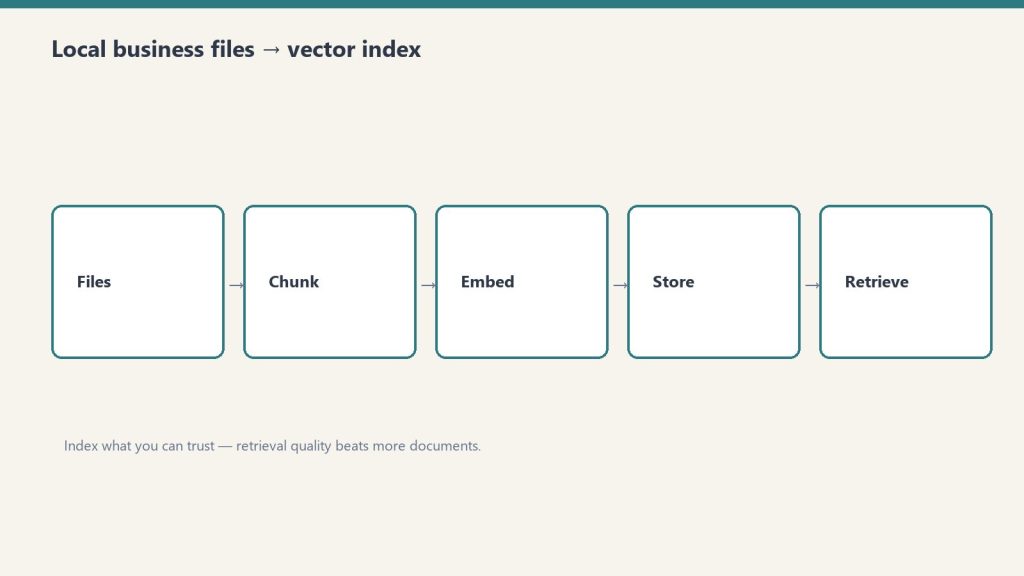
A workable shape for an agent-friendly second brain:
– Daily notes (database, dated, freeform — agent reads these for context)
– Projects (database, named, with status, owner, timeline — agent works against these)
– People (database, names, relationships, last interaction — agent uses for personalization)
– Sources (database, URLs, key insights, related-projects — agent cites these)
– Glossary (single page or small database — agent’s vocabulary anchor)
– Decisions log (database, dated, with context — agent’s history)
Six structures. That’s it. Most second-brain sprawl can be consolidated to this.
What this enables
Once the structure is in place, agents do things that feel like magic:
– “What did we decide about X six months ago?” returns the actual decision plus the context.
– “Summarize what I’ve learned about Y this year” produces a real synthesis.
– “Draft a brief on Z” pulls from sources, projects, decisions, and prior work.
None of this works without the substrate. All of it is trivial with it.
What to read next
Editorial Surface Area, Gates Before Volume, AI-Native Company Patterns.
Leave a Reply