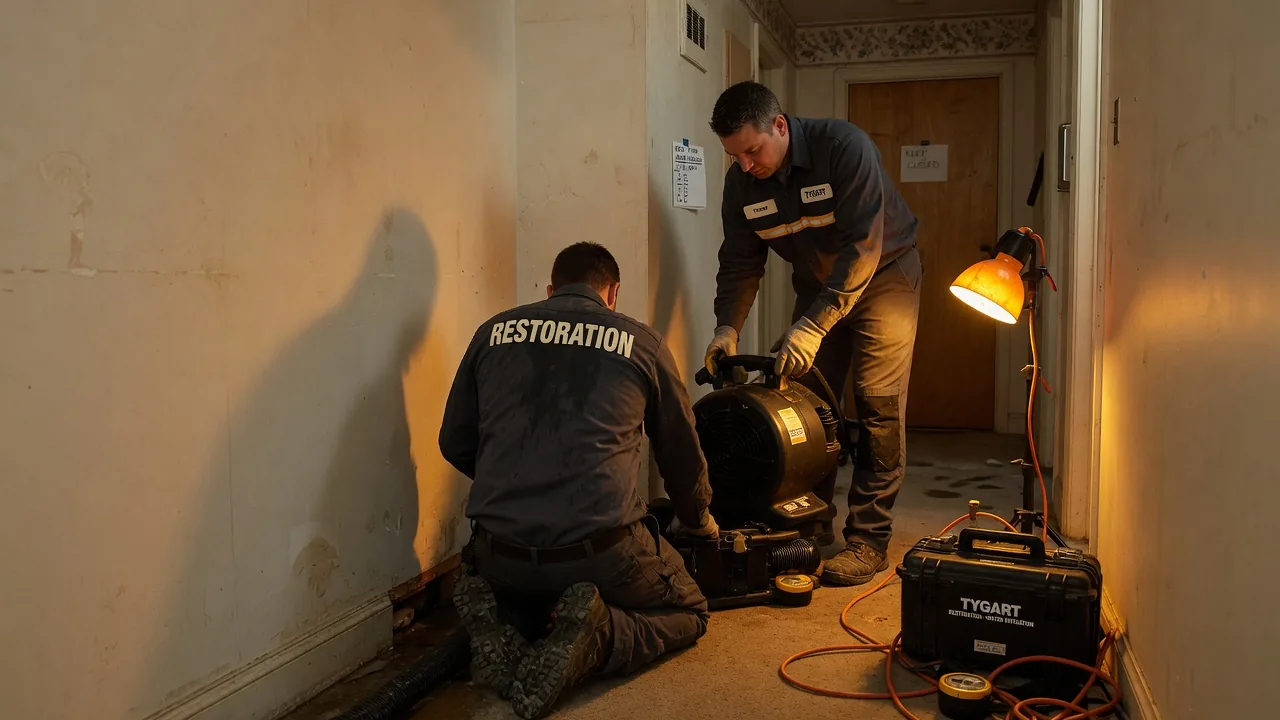
Direct answer: General contractors are a strategically different referral partner than any other trade in this series because they are simultaneously the largest threat to your reconstruction revenue and the most reliable source of mid-demolition mitigation discovery work. When a GC opens up a wall on a kitchen remodel and finds black mold on a studwall or wet insulation above a ceiling, they need a mitigation partner who can be on site in under twenty-four hours, contain the problem, produce clearance, and then hand the rebuild back to them without competing. The restoration company that learns to be the “fastest, cleanest, non-threatening” mitigation partner to three or four quality GCs in their market unlocks a referral channel the volume trades can’t match — but only if they’ve solved the scope-lane problem first.
Most restoration owners view general contractors as either a threat or an afterthought. Some see GCs as the company that won the rebuild they should have gotten. Others see them as a generic “referral source” in the same bucket as plumbers and realtors. Both views cost money.
The truth is more specific. General contractors are the trade most likely to find mitigation work that nobody else sees — because they’re the ones literally opening walls, pulling ceilings, and removing cabinets. They are also the trade with the highest probability of scope conflict with a restoration company, because reconstruction is revenue for both sides.
This article teaches you how general contractors actually make money, how they operate day-to-day, the six moments in a remodel or build where they discover mitigation work, why the partnership almost always fails on scope-lane ambiguity, and the specific ninety-day program to turn three GCs in your market into a predictable referral channel without ever fighting over the rebuild. It is the sixth in The Restoration Operator’s Playbook partner-industries series, and it is the one that requires the most precision.
How a General Contractor Actually Makes Money
If you’re going to stand in front of a GC owner or project manager and have them take you seriously, you have to understand their economics at the same depth a good estimator does.
The revenue mix. A mid-market residential remodeling GC typically runs between $1.5M and $8M in annual revenue per operator. The 2024 NAHB data pegs the average residential remodeler at roughly $2.7M in total revenue. Project mix is typically 60–80 percent remodel work (kitchens, baths, additions, whole-home) and 20–40 percent smaller handyman or carpentry work. Some GCs cross into light commercial or multifamily; those carry different economics.
Get The Signal
What we actually ran, what it measured, and what it means for a restoration shop — every week, including the flops.
The margin structure. Residential remodelers hit their highest net profit margins in nearly thirty years in 2024 — 6.3 percent net on average, with gross margins at 29.9 percent. That’s a five-point improvement over 2021. Healthy GCs target 8–10 percent net margin. The ones working below that are either buying market share or bleeding on one or two bad projects. Standard markup on remodel work runs 20–30 percent on total project cost, with over 30 percent of builders marking up 25 percent or more.
Overhead and profit is a specific line. On any professional estimate, “O&P” is a visible markup — typically 10 percent overhead and 10 percent profit, stacked on cost, which is the industry-standard 10-and-10 that insurance carriers have grudgingly accepted on reconstruction for decades. GCs defend that line because without it they operate at a loss. Every negotiation on a restoration-related rebuild is a negotiation on O&P.
The project lifecycle. A typical residential remodel moves through six stages: lead intake, estimate/design, contract signing, pre-construction planning, active construction, punch list and closeout. A kitchen remodel runs four to eight weeks of active construction. A whole-home remodel runs three to nine months. The GC’s cash flow is governed by draw schedules — deposit, then progress payments at defined milestones. Any surprise (mold discovered, water damage found, structural rot) that pauses the project threatens the draw schedule, which is why they care intensely about who they call when it happens.
The operational engine. Most mid-market GCs run with a small office team (owner, estimator, one or two project managers, bookkeeper) and a blend of W-2 lead carpenters and subcontractor trades. Their software stack is typically Buildertrend, CoConstruct, JobTread, Builderall, or a lower-end ProCore. Selections, change orders, and daily logs all live in that software. Your name has to end up in their change-order workflow as the default mitigation partner.
How General Contractors Acquire Customers
Understanding how GCs sell tells you exactly what they need from a partner.
Referrals from past clients. For quality residential remodelers, 50–70 percent of revenue comes from past client referrals and word of mouth. The longer they’ve been in market, the higher that percentage. This is why a single bad experience with a mitigation partner that delays a project will end the relationship — their entire business model rests on not producing unhappy customers.
Designers, architects, and realtors. Design-build and custom GCs work a network of interior designers and architects who spec them into projects. Higher-end GCs cultivate realtor relationships for pre-sale and post-sale remodeling work. This is a slow-flywheel channel; referrals trickle in over years.
Organic search and GBP. “Kitchen remodel contractor [city]” and bathroom-specific searches are the largest digital lead source for most remodelers. GBP reviews, photo portfolios, and answer-engine-optimized pages drive the top of the local pack. Houzz and similar portfolio platforms supplement.
Paid lead platforms. Angi, Thumbtack, Porch, and HomeAdvisor are where the lower-margin, more-competitive segment lives. Established GCs with strong referral flywheels usually minimize their reliance on these platforms. Volume remodelers use them aggressively and accept thinner margins.
Home shows and events. Local home shows, Parade of Homes, and neighborhood-specific events are still a real channel for custom builders and high-end remodelers. The economics are project-specific — a single $150,000 remodel from a home show pays for the booth many times over.
Insurance work. Some GCs specialize in insurance reconstruction — storm damage, fire rebuild, water damage reconstruction after mitigation. This is the lane that creates the most direct scope conflict with full-service restoration companies. If a GC’s book is 40+ percent insurance rebuild work, they are a competitor more than a partner. If it’s less than 15 percent, they are a natural referral source.
The takeaway: GCs live on reputation, speed, and not surprising their clients. Everything you offer them has to be oriented around protecting their schedule, their margin, and their client relationship.
Why the GC Referral Channel Is Structurally Different from Plumbers, HVAC, or Pest Control
This is the strategic hinge of the whole article.
A plumber who calls you on a burst pipe has no financial stake in the mitigation scope or the reconstruction scope. They stop at the isolation valve. They want the homeowner taken care of so they get referrals back. The economics are clean.
A general contractor who finds mold or water damage during demolition has a financial stake in at least the reconstruction scope, sometimes both. Their options when they uncover mitigation work are:
- Stop the project, call in an independent mitigation company, eat the schedule hit, and continue their own rebuild.
- Try to handle the mitigation themselves without proper training, insurance, or containment protocols.
- Hand the job fully to a restoration company that will mitigate and rebuild — losing the rebuild.
- Refuse to touch it and bounce the homeowner to a restorer entirely — losing everything.
Option 1 is what they want. It’s the only option where the GC keeps their client, keeps their rebuild scope, protects their insurance and liability position, and doesn’t spread mold through an occupied home (which is a real risk when untrained remodel crews attempt mold removal — their general liability policy specifically excludes pollution and mold work).
Option 2 is what most of them default to when they don’t have a trusted restoration partner. The results range from acceptable to catastrophic. It also violates the nearly-universal state rule that the company assessing mold cannot also be the company remediating it.
Your entire value proposition to a GC is making Option 1 effortless — fast, clean, scoped correctly, with clearance documentation that protects everyone, and with a handoff back to their rebuild that they can defend to their client.
If you can’t credibly commit to not touching the rebuild, you are Option 3 in their mind and they will never call you except in emergencies. If you can commit to it in writing and prove it over three or four projects, you become the default in their change-order workflow.
The Six Mitigation-Discovery Moments on a General Contractor Project
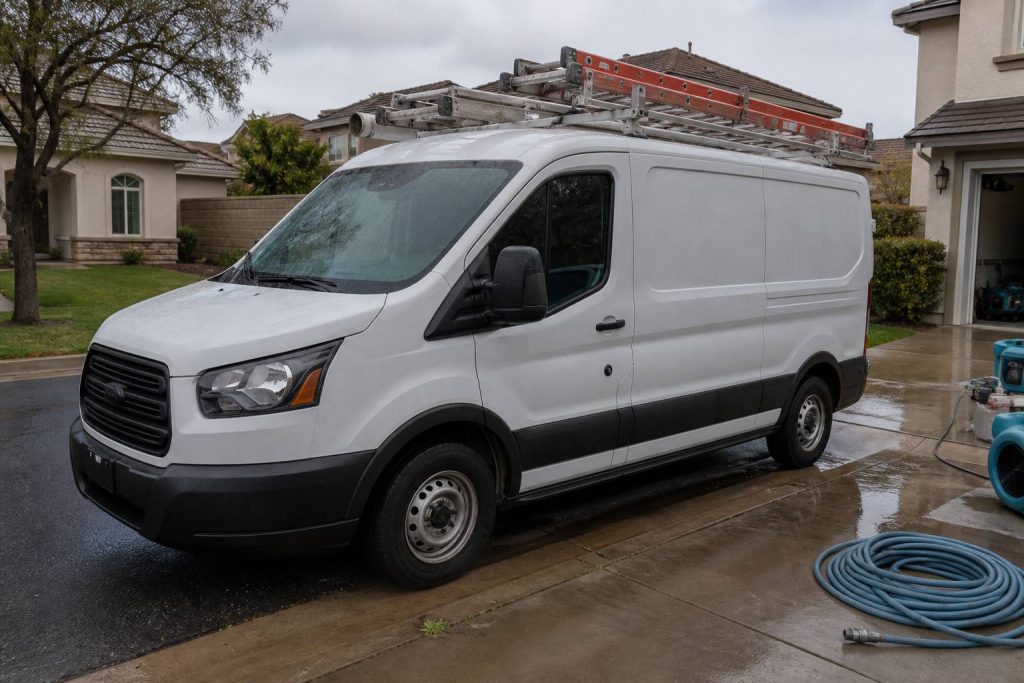
Every one of these moments is a mid-project crisis for the GC. Learn them.
Moment 1: The kitchen or bath demo. Cabinets come off the wall, drywall gets cut, and the crew finds dark mold behind the sink run, on the back of a dishwasher cabinet, or inside a vanity toe kick from a slow supply-line drip. This is the single most common discovery moment in residential remodeling. The GC needs containment up, air scrubbers running, and a mitigation scope on paper within twenty-four hours so the remodel can continue on the rest of the footprint.
Moment 2: The ceiling pull on a second-story bath addition. A GC opening the ceiling below a second-story bathroom finds wet insulation, stained subfloor, and microbial growth from years of a slow toilet flange leak or shower pan failure. The mitigation lane is clear; the rebuild lane is clearly the GC’s. This is one of the cleanest scope hand-offs in the business.
Moment 3: The basement or crawl walk during a whole-home remodel. The GC doing a whole-home remodel puts a foreman into the crawl or basement early and finds efflorescence, standing water, failed sump, and microbial growth on joists. Dry-out and remediation are a mitigation scope; slab repair, joist sistering, and finish are the GC’s rebuild.
Moment 4: The hurricane, storm, or fire rebuild discovery. A GC hired directly by a homeowner after a storm or fire event to handle rebuild often discovers that the prior “mitigation” was incomplete — unreached wet materials behind the walls, inadequate drying, hidden mold on the back side of sheathing. They need a mitigation partner to redo the work, document it, and produce clearance so their rebuild stands up to inspection and claim scrutiny.
Moment 5: The pre-closing renovation before a home sale. A realtor or seller hires a GC to do punch-list rehab before listing. During the work, the GC finds active moisture issues that will kill the deal if not documented, remediated, and cleared. These are time-pressured — the listing is either on the market or about to be — and the margin is typically healthier because the seller is motivated.
Moment 6: The commercial tenant improvement. A GC doing a tenant improvement build-out in an older commercial space opens the ceiling and finds chronic roof leak damage, legacy microbial growth, or insulation contamination. Landlord, tenant, and GC all want the mitigation handled quickly and documented cleanly. These scopes can be sizable and are the highest-dollar on the GC-partnership list.
Why Most Restoration-to-GC Partnerships Fail
The failure modes here are sharper and more consequential than in any of the other partner-industry pairings.
1. Competing on the rebuild. The single largest mistake. If a GC refers you a mitigation job and you bid the rebuild on top of it, you have ended the relationship on day one. Every GC relationship has to open with an explicit, written lane agreement: you handle mitigation, containment, drying, remediation, documentation, clearance. They handle reconstruction. Full stop.
2. Slow scope-and-start on the mitigation. A GC’s rebuild schedule is frozen until mitigation completes. Every day you add to the mitigation scope costs them money in trade coordination, client patience, and possibly liquidated damages on commercial work. A twenty-four-hour site visit, a same-day scope, and a start-by-tomorrow commitment is the minimum bar.
3. Surprising the client without the GC on the call. The GC owns the client relationship. If your PM walks into the homeowner’s kitchen and starts talking scope, pricing, or what should be done without looping in the GC, you’ve just undermined their authority on their own project. Every client conversation goes through the GC unless they’ve explicitly handed it off.
4. Bad containment or cross-contamination. A restoration company that spreads mold to clean parts of the GC’s project, or that fails to protect cabinets, floors, and finishes the GC has already installed, will never be called again. The physical craftsmanship of the containment and protection is the entire test.
5. Insurance-funded work confusion. Some of these discoveries are covered by the homeowner’s policy, some aren’t. If you start talking directly to adjusters before the GC has set the stage, you’ve changed the dynamic of the project. Coordination with the GC on claim intake is mandatory.
6. No clearance documentation. The GC needs a third-party clearance letter or an in-house clearance protocol documented to a level that protects them and their client. If your mitigation closes with nothing but an invoice, you’ve left the GC exposed. This is where restoration companies who “just do the work” lose to restoration companies who “do the work and document the work.”
Ten Operational Disciplines for a GC Referral Channel That Works
If you want this to be a reliable flow rather than a lucky phone call every six months, run the channel with real rigor.
1. Written scope-lane agreement with every GC partner. One page. You do mitigation, containment, dry-out, remediation, documentation, clearance. They do reconstruction. Your estimating software is set to exclude reconstruction line items by default on their projects. Signed by both owners. Filed.
2. One trained project manager as the single point of contact per GC. Not a general intake desk. The same PM takes every call from that GC, runs every project, attends every discovery meeting. Relationships are human.
3. Twenty-four-hour site visit commitment. Non-negotiable. When a GC calls, you’re on site inside twenty-four hours with a scope roughed and the crew scheduled. Your intake has to be routed so GC calls skip the residential queue entirely.
4. Scope-first pricing, not low-ball pricing. You are not competing with three other restoration companies on price. You are competing on speed, clean work, and clear documentation. Price accordingly. Race-to-the-bottom pricing signals you’ll cut corners on containment, which is exactly what the GC can’t afford.
5. Explicit hand-off protocol. At the end of mitigation: site walk with the GC’s PM, clearance documentation delivered, photo documentation of affected materials turned over, a short written narrative that the GC can give their client. The project resumes the next day with zero ambiguity.
6. GC-specific change-order language. Your proposals should use the language of the GC’s world — “change-order eligible scope,” “trade coordination window,” “documentation package for client file.” It makes you look like a fluent partner, not a volume restoration brand.
7. Do not talk to the homeowner or adjuster without the GC. Every client communication goes through the GC unless they’ve explicitly authorized a direct line. On a call with the adjuster, the GC is on the line or cc’d.
8. Reciprocity on clean rebuild referrals. When a homeowner calls you directly for a mitigation scope that will clearly need reconstruction, name the GC. Hand over the client cleanly. Do not quietly refer the rebuild to a friend-of-a-friend and think they won’t notice. The GC partner will find out and the relationship is over.
9. Quarterly ride-along or site tour. Once a quarter, visit one of their active projects to see how they work, meet the lead carpenter, and understand how they run sites. The reverse is valuable too — invite them to your warehouse and show them how your dry-out and containment equipment works.
10. Named inclusion in their subcontractor prequalification file. Most real GCs maintain a prequal file — insurance certs, licenses, references, W-9. Fill it out completely and keep it current. If you’re in the file, you’re in the bid. If you’re not, you’re not.
The Two-Way Reciprocity Model (Calibrated for GC Scope Risk)
The reciprocity model here is different from plumbers or pest control because the scope overlap is real.
Flow 1: GC → restoration. GC discovers water, mold, or structural moisture during demolition or build. Calls your PM directly. Site visit within twenty-four hours. Scope delivered within forty-eight. Mitigation executed. Clearance issued. Rebuild returned to the GC. Documentation package in the client file.
Flow 2: Restoration → GC. A homeowner calls you direct on a loss that will clearly require meaningful reconstruction — drywall finishing beyond patchwork, flooring, cabinetry, full bathroom rebuild, whole-room restoration. You complete mitigation. You hand the client to the GC partner for the rebuild. You name the GC on the job site, in the clearance letter, and in the customer conversation. You take a referral fee only if it’s legal in your state and on that specific job type — otherwise the reciprocity itself is the currency.
Flow 3: Joint emergency protocol for large losses. On a catastrophic loss (major fire, multi-room flood, commercial water event), you and the GC mobilize together on day one. You handle emergency mitigation, contents, containment, dry-out. The GC is named on the mitigation certificate of completion. The rebuild proposal goes out under the GC’s name with your mitigation documentation attached. Large losses are where this partnership earns most of its annual revenue — one $250,000 reconstruction with a $60,000 mitigation scope attached is worth more than twenty small kitchen-demo discoveries.
Track all three flows in a shared ledger. When the volumes drift or the reciprocity breaks, fix it fast.
The Ninety-Day General Contractor Partnership Program
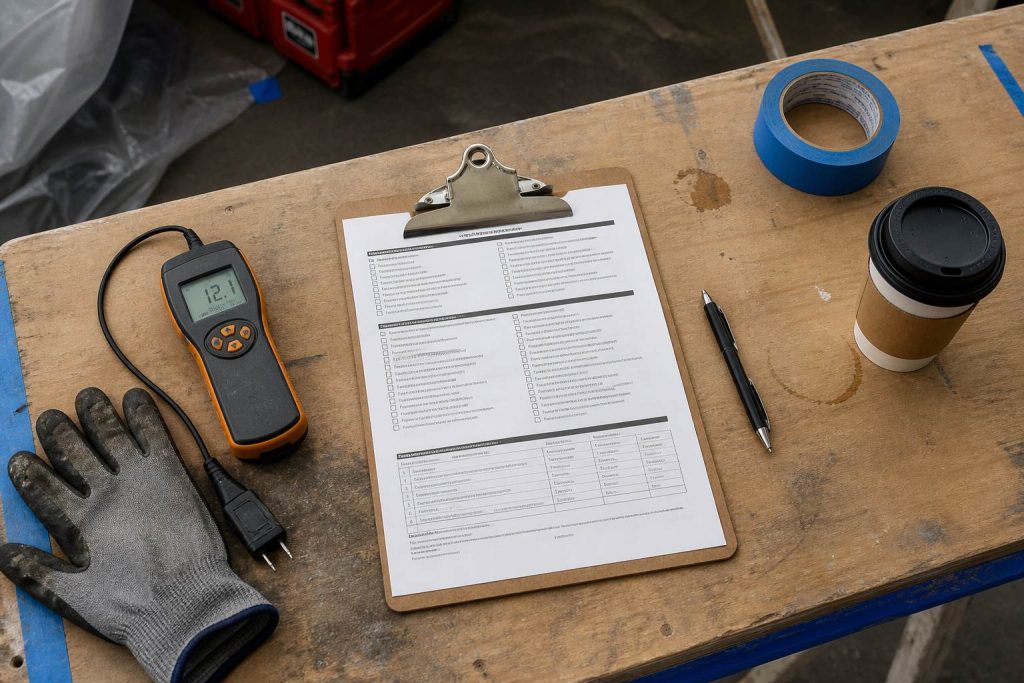
One GC at a time. No shortcuts. This one requires more trust-building than any of the other partner industries.
Week 1: Target selection. Identify three to five GCs in your market who do residential remodel work in the $50,000 to $500,000 project range, have strong GBP reviews, and are clearly not insurance-rebuild specialists. Pull their portfolio. Look at their before-and-after photos for the kind of demo work that uncovers mitigation scopes.
Week 2: Cold email to the owner, then the PM. Short. “We’re a restoration company in [market]. We only do mitigation — we don’t compete on reconstruction. We’d like to be in your change-order workflow when demo uncovers mold or water damage. Thirty minutes.” Attach your scope-lane agreement as a draft.
Week 3: First meeting — owner and PM together if possible. Bring the scope-lane agreement, the intake protocol, a sample clearance package from a prior project, and the twenty-four-hour response commitment in writing. Ask questions about their recent projects where discovery became a problem. Listen for the horror stories — that’s your value prop.
Week 4: Prequal file completed. Insurance certs, licenses, references, W-9, certificates of completion on a few recent jobs. Submit it as a professional document. Many GCs have never seen a restoration company fill this out completely.
Week 5: First project. Could be a small one. Could be something the GC was going to handle in-house. Say yes, execute inside twenty-four hours, deliver a clean clearance package, hand the rebuild back with a written site walk. Do it at a margin you can defend — not a loss leader. Loss leaders tell the GC you’ll cut corners under pressure.
Week 6: Debrief with the GC PM. Fifteen-minute call after the first project. What worked? What didn’t? What do they want done differently next time? Write the notes into your internal protocol.
Week 7: Joint training for the GC’s lead carpenters. Thirty minutes. Show the carpenters exactly what to do when they find mold or moisture — stop work, isolate, photograph, call the GC PM, call you. Print a laminated card for their trucks. This one step will triple your referral volume over the next ninety days because the carpenters are where the discoveries happen, not the PM.
Week 8: Second project. By now you should be naturally getting more work. Same standard: twenty-four-hour site visit, clean containment, hand-off documentation. Reciprocity flow starts here — when a homeowner calls you direct with a loss that needs rebuild, name this GC.
Week 9: Commercial referral. Ask the GC if they have any commercial tenant-improvement projects in the pipeline. Commercial TI work is high-dollar and high-frequency for mitigation discovery.
Week 10: Second GC opened. Repeat the program on the next target. Two to four GC partners is the sustainable max per market — more creates scope and loyalty confusion.
Week 11: Quarterly business review cadence established. Recurring meeting every ninety days. Owner, their PM, your PM, your owner. Review projects completed, response time, client satisfaction, reciprocity volume. Adjust.
Week 12: Co-authored content. Joint article or video for both websites. Subject: “What your remodeler should do the moment they find mold.” Durable SEO for both brands. Signals the partnership is real.
By day ninety, you should have two GCs running a steady referral flow, a scope-lane agreement filed with each, and a track record of twenty-four-hour site visits and clean hand-offs that nobody else in your market can match.
Where to Start This Week
Seven actions for the next seven days:
- Write your scope-lane agreement before you call anyone. One page. Mitigation lane vs. reconstruction lane. Have your attorney check it.
- Pull the prequal file — insurance certs, licenses, references, W-9, sample clearance letter — into a single PDF.
- Pick the three best mid-market remodel-focused GCs in your service area.
- Decide which PM on your team owns GC accounts. Give them a dedicated number.
- Draft the cold email. Forty words. Lead with “we don’t compete on rebuild.”
- Build the laminated “what to do when you find mold” card for carpenter trucks.
- Book the first meeting.
If you’re stuck on target selection, default to the GC with the strongest design-build portfolio in the $100,000-$300,000 residential remodel band. Those are the projects that discover mitigation work most often and have the margins to do right by you as a partner.
Where This Article Fits in the Larger Playbook
This is the sixth article in The Restoration Operator’s Playbook partner-industries series. The scope-lane discipline in this article builds on the observational B2B referral plan and the positioning thinking in organic asset vs paid rent. The partnership economics echo the plumber partnership article and the HVAC partnership article. For the commercial channel into which several GC referrals will flow, read the facility services partnership. For the discovery-driven trades that share the same pattern, see the carpet cleaner partnership and the pest control partnership.
Next partner industries in the queue: property managers, adjusters, realtors, pool and spa service, roofers, appliance installers. Each will follow the same research-first, operational-truth, ninety-day-program structure.
Frequently Asked Questions
Should I refuse reconstruction scope entirely on GC-referred work? Yes. On work a GC refers you, the scope lane is mitigation only. You might bid reconstruction on projects the GC is not involved in — direct-to-consumer losses, insurance-rebuild work from adjuster referrals, commercial projects where the building owner hires you directly. But on anything that comes through a GC partner, the mitigation stops at clearance and the rebuild returns to them. This is the whole basis of the relationship.
What if the homeowner specifically asks me to do the rebuild after mitigation? You tell them the truth: “We specialize in mitigation. Your GC [name] is your rebuild partner — we work with them on every project we touch at this scope, and they’ll deliver a better finish on the remodel than we would.” Then you call the GC immediately and let them know. This behavior — visible, repeatable — is what buys you the next ten referrals from that GC.
How do I handle insurance claims on GC-referred work? Coordinate with the GC on day one. If the loss is claim-eligible, you file the mitigation documentation with the adjuster, the GC files the rebuild documentation. Both of you get paid through the claim, both of you stay in your lane. Adjuster conversations either happen with the GC on the line or with the GC cc’d on the summary email. Never cut the GC out of the adjuster channel.
What’s a fair referral fee to a GC, and should I pay one? Most states restrict or prohibit paid referrals on insurance-funded work. On non-insurance projects (direct-pay remodels where discovery triggers mitigation), state law varies. Many restoration-GC relationships operate entirely on reciprocity — no money changes hands, each side refers the other for the lane they own. Where fees are legal and customary, $250 to $500 per closed mitigation job is a common range. Check your state’s statute and your insurance carrier’s rules before formalizing.
How is this different from a plumber or HVAC partnership? Plumber and HVAC partnerships carry almost no scope-overlap risk — they stop at the fixture or equipment, you handle everything else. GC partnerships carry real scope-overlap risk — you both could handle reconstruction if the relationship isn’t explicitly lane-gated. The upside is larger: a single GC with a strong remodel book can produce more annual mitigation volume than a plumbing partnership because their techs are literally opening walls four or five days a week. The downside is bigger too: one scope-lane violation kills the relationship permanently.
What if the GC already has a restoration partner? Almost every quality GC has a name they call in emergencies. The real question is whether that incumbent partner has a scope-lane agreement in writing, a twenty-four-hour site visit commitment, a documented prequal file, a dedicated PM on the account, and a written hand-off protocol. Most don’t. Your competitive move is professionalism at the operational layer — arrive with the whole stack assembled, do better work on the first project, and let the GC make the natural switch. In many cases you’ll earn the secondary slot first and the primary slot within two quarters as the incumbent fails to match your response time.
Get The Signal
What we actually ran, what it measured, and what it means for a restoration shop — every week, including the flops.
Leave a Reply