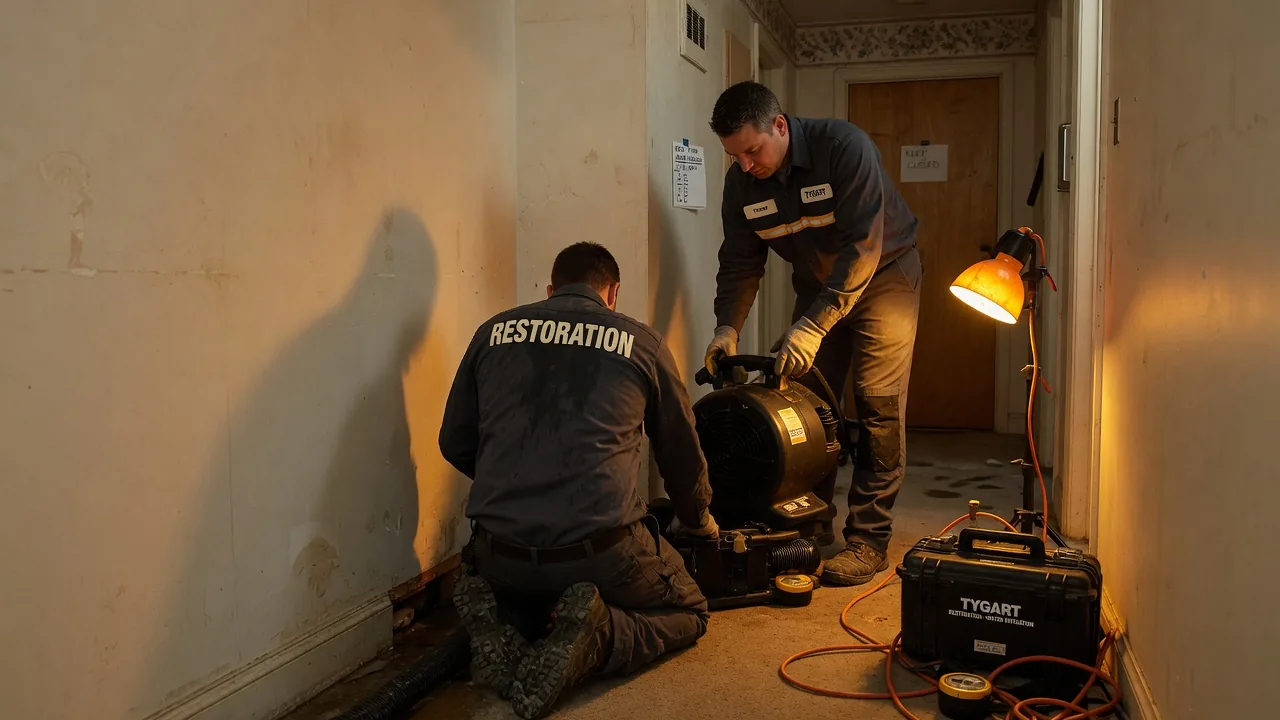
New restoration technicians do not become productive on day one, day seven, or day thirty. The realistic timeline from hire date to independent on-site productivity is 60 to 90 days for a candidate with no prior restoration experience, and even faster onboarding requires a structured program rather than the throw-them-on-a-truck approach most companies default to. This guide lays out the 90-day onboarding program profitable restoration companies use to compress that timeline and protect the new hire investment.
For broader context on restoration team development, see our restoration training and certification master guide.
Why Onboarding Matters Financially
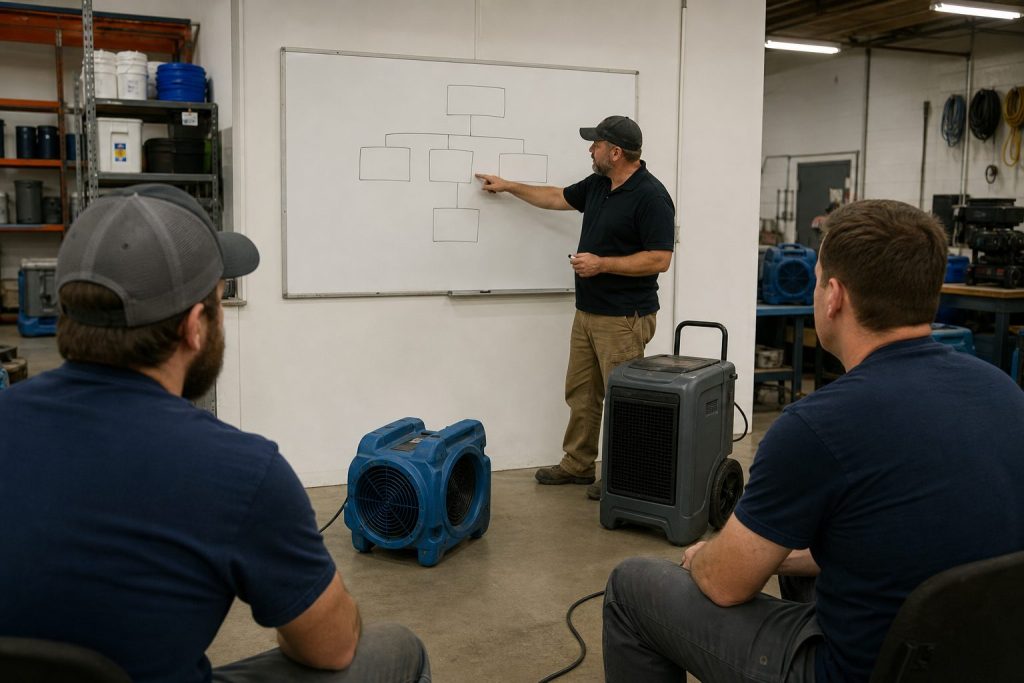
The cost of a poorly onboarded technician is rarely visible on the P&L, but it is real: callbacks, scope misses, customer complaints, premature attrition, and the time lead techs lose covering for someone who was not actually ready to work alone. A structured onboarding program converts this hidden cost into an upfront training investment with predictable ROI.
Days 1-7 — Orientation and Safety
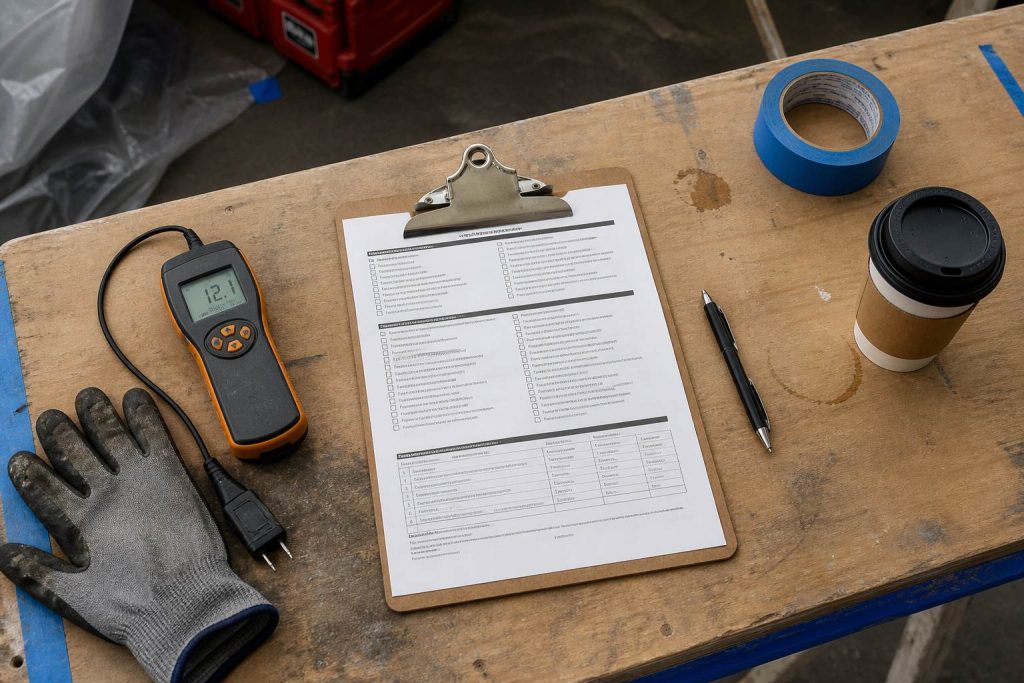
The first week is not field production. The right structure is paperwork and orientation on day one, OSHA safety training and respirator fit testing in the first three days (covered in a separate spoke), company SOPs and customer service standards by end of week, and shadowing on simple jobs by day five or six. New techs should not be on a job alone until they have completed safety training and at least one shadow rotation.
Days 8-30 — Shadowing and Skill Building
Weeks two through four are paired-tech rotations across job types: water mitigation, content cleaning, equipment placement and monitoring, and basic demolition. The new tech is not the lead on any of these jobs — they are present, learning, and progressively taking on supervised tasks.
By the end of day 30, a new tech should be able to: place equipment under supervision, complete a moisture monitoring log accurately, perform basic content manipulation, follow a standard scope of work without coaching, and represent the company professionally in front of customers.
Days 31-60 — WRT Certification and Lead-Tech-Supervised Work
The second month introduces the IICRC Water Damage Restoration Technician (WRT) certification. Most companies require WRT within the first 90 days; building it into the second month rather than waiting until day 89 produces a more confident, more capable technician for the back half of the onboarding window.
Field work in days 31-60 expands to lead-tech-supervised production: the new tech can be the second tech on a job, can perform standard tasks without step-by-step supervision, and is responsible for documentation alongside the lead.
Days 61-90 — Solo Production on Standard Jobs
The final month is solo work on standard scope: simple Cat 1 water mitigation, equipment placement and monitoring on assigned jobs, basic content cleaning, and routine documentation. Complex jobs (Cat 3 water, fire cleanup, mold remediation, large losses) remain paired-tech assignments until the technician demonstrates additional readiness or earns the relevant certifications.
By day 90, a properly onboarded tech should pass an internal evaluation covering: safety practices, equipment operation, documentation accuracy, customer interaction, scope execution, and basic estimating literacy.
The Onboarding Coordinator Role
The companies that execute this program well assign a specific person — usually a senior technician or operations manager — as the onboarding coordinator. This person owns the new hire’s first 90 days, schedules training milestones, runs check-ins at 7, 30, 60, and 90 days, and signs off on progression to solo work. Without a clear owner, the program collapses into ad hoc field training.
What to Measure
The onboarding metrics that matter: 90-day retention rate, days-to-first-solo-job, customer complaint rate by tech tenure, callback rate by tech tenure, and average gross margin per job by tech tenure. Tracking these reveals whether the program is producing capable technicians or just running them through the motions.
Related on Tygart Media: Starlink on a water job · S500 in the van · local SEO for restoration.
Frequently Asked Questions
How long should restoration technician onboarding take?
The realistic timeline from hire to independent solo work on standard jobs is 60 to 90 days for candidates with no prior restoration experience. Candidates with relevant trade backgrounds may compress to 45 to 60 days. Trying to compress beyond that consistently produces under-prepared techs who generate callbacks and quality issues.
When should new hires take their WRT certification?
The optimal timing is days 31-60 — after the new tech has had enough field exposure to make the coursework concrete, but before they are running solo on water jobs. Most companies require WRT within the first 90 days; building it into the program intentionally produces better results than waiting until the deadline.
Should new technicians be paid during training time?
Yes. OSHA training, respirator fit testing, IICRC course time, and on-site shadowing are all compensable work time. Trying to treat training as unpaid creates legal exposure and signals to the hire that the company does not value the investment.
What is the most common onboarding mistake?
Putting new techs on jobs alone too early. The pressure of production schedules tempts owners to send a partially trained tech to a job because the truck has to roll. Each early-solo job that produces a callback or quality issue costs more than the labor that was saved. The discipline is to hold the line on the program even during busy periods.
How do I evaluate whether a new tech is ready for solo work?
Use a written 90-day evaluation covering safety practices, equipment operation, documentation accuracy, customer interaction, scope execution, and basic estimating literacy. The lead tech and the onboarding coordinator should both sign off. If the tech is not ready at day 90, extend the supervised period rather than rushing the milestone.
Get The Signal
What we actually ran, what it measured, and what it means for a restoration shop — every week, including the flops.
Leave a Reply