Category: Claude AI

Complete guides, tutorials, comparisons, and use cases for Claude AI by Anthropic.

  • Claude vs ChatGPT for Coding: Which Is Actually Better in 2026?

    Claude vs ChatGPT for Coding: Which Is Actually Better in 2026?

    Claude AI · Fitted Claude

    Coding is one of the highest-stakes comparisons between Claude and ChatGPT — because the wrong choice costs you real time on real work. I’ve used both extensively across content pipelines, GCP infrastructure, WordPress automation, and agentic development workflows. Here’s the honest breakdown of where each model wins for coding tasks in 2026.

    Short answer: Claude wins for complex multi-file work, long-context debugging, following precise coding instructions, and agentic development. ChatGPT wins for interactive data analysis and its code interpreter sandbox. For most professional development work, Claude is the stronger tool — especially if you’re using Claude Code for autonomous operations.

    Head-to-Head: Claude vs ChatGPT for Coding

    Task Claude ChatGPT Notes
    Complex instruction following ✅ Wins Holds all constraints through long outputs
    Large codebase context ✅ Wins Better coherence across long context windows
    Agentic coding ✅ Wins Claude Code operates autonomously in real codebases
    Interactive data analysis ✅ Wins ChatGPT’s code interpreter runs Python in-chat
    Code generation (routine) ✅ Strong ✅ Strong Both excellent for standard patterns
    Debugging unfamiliar code ✅ Stronger ✅ Strong Claude finds non-obvious errors more consistently
    API and infrastructure work ✅ Stronger ✅ Good Claude handles GCP, WP REST API, complex auth well

    Where Claude Wins for Coding

    Multi-Step, Multi-File Work

    When a task involves understanding several files, maintaining state across a long conversation, and producing a coordinated set of changes — Claude holds together more reliably. ChatGPT tends to lose track of earlier constraints as context length grows. For any real development task that spans more than a few exchanges, this matters.

    Precise Instruction Following

    I regularly give Claude detailed coding specs — exact naming conventions, specific file structures, error handling requirements, style preferences — and it holds them consistently through long outputs. ChatGPT is more likely to quietly drift from a constraint partway through. For production code where specifics matter, Claude’s adherence is meaningfully better.

    Claude Code: The Agentic Advantage

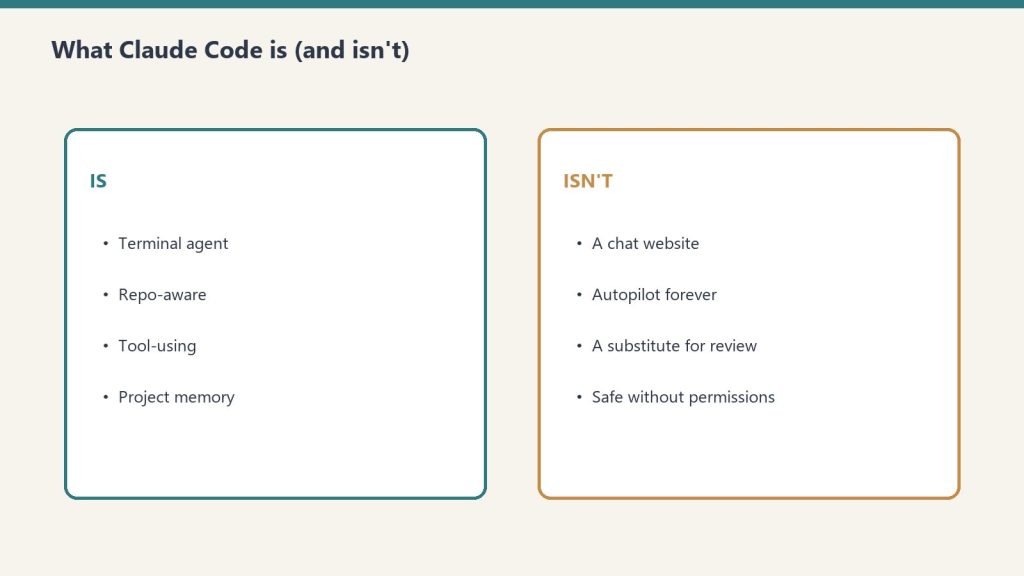
    Claude Code is a terminal-native agent that operates autonomously inside your actual codebase — reading files, writing code, running tests, managing Git. ChatGPT doesn’t have a direct equivalent at this level of system integration. For developers who want AI working inside their development environment rather than in a chat window, Claude Code is a qualitatively different capability. See Claude Code pricing for tier details.

    Debugging Complex Systems

    On non-obvious bugs — the kind where the error message points you somewhere unhelpful — Claude is more likely to trace the actual root cause. It’s more willing to say “this looks like it’s actually caused by X upstream” rather than addressing the symptom. That’s the kind of reasoning that saves hours.

    Where ChatGPT Wins for Coding

    Interactive Data Analysis

    ChatGPT’s code interpreter runs Python directly in the chat interface — you can upload a CSV, ask it to analyze and plot the data, and get a chart back in the same conversation. Claude can reason deeply about data, but doesn’t run code interactively in the web interface by default. For exploratory data analysis and visualization, ChatGPT’s sandbox is more convenient.

    OpenAI Ecosystem Integration

    If you’re building on OpenAI’s stack — using their APIs, their assistants, their function calling — ChatGPT has naturally more fluent knowledge of those specific systems. Claude is excellent at reasoning about OpenAI’s APIs, but it’s not Anthropic’s infrastructure, so edge cases in OpenAI-specific implementation details may hit limits.

    For Most Developers: Claude Is the Stronger Tool

    The cases where ChatGPT wins for coding are specific and bounded — primarily data analysis and OpenAI ecosystem work. For the broader range of professional development: backend logic, API integration, infrastructure, automation, debugging, architecture decisions — Claude’s instruction-following, long-context coherence, and agentic capabilities through Claude Code give it a consistent edge.

    For a broader comparison beyond coding, see Claude vs ChatGPT: The Full 2026 Comparison. For Claude’s agentic coding tool specifically, see Claude Code vs Windsurf.

    Frequently Asked Questions

    Is Claude better than ChatGPT for coding?

    For most professional coding tasks — complex instruction following, large codebase work, debugging, and agentic development — Claude is stronger. ChatGPT’s code interpreter wins for interactive data analysis. Overall, Claude is the better coding tool for most developers.

    What is Claude Code and how does it compare to ChatGPT?

    Claude Code is a terminal-native agentic coding tool that operates autonomously inside your actual codebase — reading files, writing code, running tests. ChatGPT doesn’t have a direct equivalent at this level of system integration. It’s a qualitatively different capability, not just a better chat interface.

    Can ChatGPT run code that Claude can’t?

    ChatGPT’s code interpreter runs Python interactively in the chat interface for data analysis and visualization. Claude doesn’t do this by default in the web interface. However, Claude Code can execute code autonomously inside a real development environment, which is a different and more powerful capability for actual software development.

    Need this set up for your team?
    Talk to Will →

  • Is Claude Better Than ChatGPT? An Honest Answer From Daily Use

    Is Claude Better Than ChatGPT? An Honest Answer From Daily Use

    Claude AI · Fitted Claude

    I’ve used both Claude and ChatGPT daily for over a year — running content pipelines, building automations, writing strategy documents, debugging code, and doing client work across more than two dozen sites. The honest answer to “is Claude better than ChatGPT?” is: it depends on exactly what you’re doing. But for most professional knowledge work, yes — Claude is better. Here’s why, and where it isn’t.

    Bottom line: Claude wins on writing quality, instruction-following, long-context work, and nuanced reasoning. ChatGPT wins on third-party integrations, image generation, and ecosystem breadth. If you’re a knowledge worker who writes, analyzes, or builds with AI — Claude is the better daily driver. If you need DALL-E, GPT plugins, or deep OpenAI ecosystem integration, ChatGPT holds the advantage there.

    Where Claude Is Better Than ChatGPT

    Writing Quality

    Claude produces more natural, less formulaic prose. ChatGPT has a tell — a certain cadence and structure that shows up in its outputs even when you try to tune it away. Claude is more likely to match your actual voice if you give it examples, and less likely to default to a listicle structure when that’s not what the task calls for. For any serious writing work — articles, client deliverables, strategy documents — Claude is noticeably better out of the box.

    Following Complex Instructions

    This is where Claude separates itself most clearly. Give both models a prompt with eight specific constraints and Claude will hold all eight through a long response. ChatGPT tends to lose track of earlier constraints as the response develops — not always, but often enough to be a real workflow problem. For systems work, content pipelines, or anything with precise formatting requirements, Claude’s instruction adherence is meaningfully better.

    Long-Context Work

    Claude handles large documents better. Load a 50-page PDF, a full codebase, or a lengthy conversation history and Claude maintains coherence across the whole context. It’s less likely to “forget” what was established earlier in the session. For research synthesis, document analysis, or any task requiring sustained attention across long inputs, Claude has a consistent edge.

    Honesty and Calibration

    Claude is more likely to tell you when it’s uncertain, push back on a bad premise, or flag a potential problem with your approach. ChatGPT skews more agreeable — which feels pleasant in the moment but can leave you with confident-sounding wrong answers. For professional work where accurate information matters, Claude’s willingness to express uncertainty is a feature, not a limitation.

    Where ChatGPT Is Better Than Claude

    Image Generation

    ChatGPT includes DALL-E image generation in the standard subscription. Claude doesn’t generate images natively in the web interface (though Anthropic’s models support image generation via the API through Vertex AI). If visual content creation is part of your workflow, this is a real gap.

    Third-Party Integrations

    ChatGPT has a broader plugin and integration ecosystem, particularly for consumer apps and popular productivity tools. If you need Claude to connect to a specific third-party service, Claude’s MCP (Model Context Protocol) integration is expanding rapidly — but the ChatGPT ecosystem currently has more established connections across more platforms.

    Code Interpreter

    ChatGPT’s code execution environment is more developed for data analysis use cases — running Python, generating charts, analyzing spreadsheets interactively. Claude can reason about code and data at a high level, and Claude Code handles real agentic development work, but ChatGPT’s in-chat data analysis sandbox has been more polished for that specific use case.

    The Tasks Where It’s Essentially a Tie

    Both models are excellent at: answering factual questions, explaining concepts, brainstorming, summarizing content, generating structured data formats, and basic coding assistance. For simple, well-defined tasks, the difference between Claude and ChatGPT in 2026 is marginal. The gap shows up on harder, more nuanced work.

    Price Comparison

    Tier Claude ChatGPT
    Free ✓ (limited) ✓ (limited)
    Standard paid Pro $20/mo Plus $20/mo
    Power user Max $100/mo No direct equivalent
    Team $30/user/mo $30/user/mo
    Image generation Not included DALL-E included

    For a full breakdown of Claude’s plans, see the complete Claude pricing guide. For a detailed side-by-side, see Claude vs ChatGPT: The Full 2026 Comparison.

    My Actual Setup

    I use Claude as my primary AI — it’s where I do all serious writing, strategy work, and multi-step operations. I occasionally use ChatGPT when a specific integration requires it or when I need image generation for a quick prototype. That’s the honest answer from someone who has both subscriptions and uses them daily.

    Frequently Asked Questions

    Is Claude better than ChatGPT for writing?

    Yes, for most professional writing tasks. Claude produces more natural prose, follows formatting and style instructions more precisely, and is less likely to default to generic AI-sounding patterns. For knowledge workers whose output is primarily written, Claude is the stronger tool.

    Is Claude better than ChatGPT for coding?

    Claude is stronger on complex instruction-following and long-context code tasks. ChatGPT’s in-chat code interpreter is better for interactive data analysis. For agentic coding — running autonomously inside a codebase — Claude Code has a distinct advantage. For most code generation and debugging, they’re closely matched with Claude edging ahead on nuanced problems.

    Should I switch from ChatGPT to Claude?

    If your primary work is writing, analysis, research, or building with AI, yes — Claude is the better daily driver for those tasks. If you rely heavily on DALL-E image generation, ChatGPT’s plugin ecosystem, or specific OpenAI integrations, switching entirely would cost you those capabilities. Many professionals use both.

    Can I use Claude for free?

    Yes. Claude has a free tier with daily usage limits. For details on what the free tier includes and when it makes sense to upgrade, see Is Claude Free? What You Actually Get.

    Need this set up for your team?
    Talk to Will →

  • Claude Opus vs Sonnet: Which Model Should You Actually Use?

    Claude Opus vs Sonnet: Which Model Should You Actually Use?

    Claude AI · Fitted Claude

    Claude Opus and Claude Sonnet are both powerful — but they’re built for different jobs. Picking the wrong one either wastes money or leaves capability on the table. Here’s the practical breakdown of when each model wins, what the actual performance differences look like, and which one belongs in your default workflow.

    Quick answer: Sonnet is the right default for most people. It handles the vast majority of real-world tasks — writing, analysis, coding, research — with excellent output at a fraction of Opus’s cost. Opus is for the tasks where you need the absolute ceiling of Claude’s reasoning capability: complex multi-step problems, nuanced judgment calls, or work where quality is genuinely the only variable that matters.

    Claude Opus vs Sonnet: Head-to-Head

    Category Sonnet Opus Notes
    Speed ✅ Faster Noticeably quicker on long outputs
    API cost ✅ Much cheaper Opus input tokens cost ~5× more than Sonnet
    Complex reasoning ✅ Wins Multi-step logic, edge cases, ambiguous problems
    Long-form writing ✅ Strong ✅ Stronger Opus has more nuance; Sonnet covers most needs
    Coding ✅ Strong ✅ Stronger Opus catches edge cases Sonnet misses
    Instruction following ✅ Excellent ✅ Excellent Both handle complex instructions well
    Daily use value ✅ Better ratio Cost-per-task is dramatically lower

    Where Sonnet Wins

    Sonnet is not a compromise — it’s the right tool for the majority of professional tasks. Writing, research, summarization, drafting, analysis, code generation, SEO work, email, strategy — Sonnet handles all of it at a level that’s indistinguishable from Opus for most outputs. The difference shows up at the edges: highly ambiguous problems, tasks requiring multiple competing constraints to be held simultaneously, or situations where the consequences of a slightly wrong answer are significant.

    For production API workloads, Sonnet’s cost advantage is substantial. Running high-volume content or data pipelines on Opus instead of Sonnet multiplies costs without proportional quality gains on most tasks.

    Where Opus Wins

    Opus earns its premium on genuinely hard problems. Complex multi-step reasoning where the chain of logic matters. Legal or technical documents where precision at every sentence is required. Strategic analysis where you need the model to hold and weigh competing frameworks simultaneously. Code debugging on complex, unfamiliar systems where Sonnet gives you the obvious answer and Opus finds the non-obvious one.

    I use Opus specifically for: client strategy documents where I’m synthesizing months of context, complex GCP architecture decisions, and any task where I’ve tried Sonnet and felt the output was a notch below what the problem deserved. That’s a smaller subset of work than most people assume.

    What About Haiku?

    Haiku is the third model in the family — faster and cheaper than Sonnet, designed for high-volume tasks where speed and cost dominate. Classification, extraction, routing logic, metadata generation, short-form responses. If Sonnet is your default, Haiku is the model you reach for when you need to run the same operation across hundreds or thousands of inputs cost-effectively.

    For a full model comparison including Haiku, see Claude Models Explained: Haiku vs Sonnet vs Opus.

    The Practical Routing Rule

    Use Sonnet when: the task is well-defined, the output type is familiar, and quality at the 90th percentile is sufficient. That’s most professional work.

    Use Opus when: the task is genuinely novel, involves high-stakes judgment, requires deep multi-step reasoning, or you’ve already run it on Sonnet and the output wasn’t quite right.

    Use Haiku when: you need the same operation at scale, latency matters more than depth, or cost is the primary constraint.

    Frequently Asked Questions

    Is Claude Opus better than Sonnet?

    Opus is more capable on complex reasoning tasks, but Sonnet delivers excellent results on the vast majority of professional work. For most users, Sonnet is the right default — Opus is worth reaching for when a task is genuinely hard and quality is the only variable that matters.

    How much more expensive is Opus than Sonnet?

    Opus input tokens cost approximately $5 per million compared to Sonnet’s approximately $3 per million — approximately 1.7× more expensive on input (Opus is $5/M vs Sonnet’s $3/M). Output tokens follow a similar ratio. For API workloads, this cost difference is significant at scale.

    Which Claude model should I use by default?

    Sonnet is the right default for most people. It handles writing, analysis, coding, research, and strategy work with excellent quality. Upgrade to Opus when you’ve tried Sonnet on a task and the output wasn’t quite at the level the problem required.

    Does Claude Pro give access to both Opus and Sonnet?

    Yes. Claude Pro ($20/month) includes access to Haiku, Sonnet, and Opus. You can switch between models within the web interface. The subscription doesn’t limit which model you use — it limits total usage volume across all models.

    Need this set up for your team?
    Talk to Will →

  • Claude Code: The Complete Beginner’s Guide for 2026

    Claude Code: The Complete Beginner’s Guide for 2026

    Claude AI · Fitted Claude

    Claude Code is the fastest-growing AI coding tool in the developer community. The r/ClaudeCode subreddit has 4,200+ weekly contributors — roughly 3x larger than r/Codex. Anthropic reports $2.5B+ in annualized revenue attributable to Claude Code adoption. This complete guide takes you from installation to your first productive agentic coding session.

    What Is Claude Code?

    Claude Code is a terminal-native AI coding tool from Anthropic. Unlike IDE plugins that assist line-by-line, Claude Code operates at the project level — it reads your entire codebase, understands the architecture, writes and edits multiple files in a single session, runs tests, and works through complex engineering tasks autonomously. It uses Claude models with a 1-million-token context window — large enough to hold an entire codebase in memory.

    Installation

    Requirements: Node.js 18+, a Claude Max subscription ($100+/month) or Anthropic API key.

    # Install globally
    npm install -g @anthropic-ai/claude-code
    
    # Navigate to your project
    cd your-project
    
    # Authenticate
    claude login
    
    # Start a session
    claude

    Setting Up CLAUDE.md (The Most Important Step)

    CLAUDE.md is a file you create in your project root that Claude Code reads at the start of every session. It’s the most important setup step — it gives Claude the context it needs to work effectively in your specific codebase without you re-explaining everything every time.

    A good CLAUDE.md includes:

    # Project: [Your Project Name]
    
    ## Architecture
    [Brief description of how the codebase is organized]
    
    ## Tech Stack
    - Language: [Python 3.11 / Node.js 20 / etc.]
    - Framework: [Django / Next.js / etc.]
    - Database: [PostgreSQL / MongoDB / etc.]
    - Testing: [pytest / Jest / etc.]
    
    ## Coding Standards
    - [Style guide, naming conventions, etc.]
    - [Preferred patterns for this codebase]
    
    ## Common Tasks
    - Run tests: `[command]`
    - Start dev server: `[command]`
    - Lint: `[command]`
    
    ## Known Issues / Context
    - [Anything Claude should know before working]

    Key Slash Commands

    Command What It Does
    /init Scans your codebase and generates an initial CLAUDE.md
    /memory View and edit Claude’s memory for this project
    /compact Compact the conversation to free up context space
    /batch Run multiple commands or edits in one operation
    /clear Clear conversation history (start fresh)

    Your First Agentic Session

    Start Claude Code in your project directory and try:

    • “Explain the overall architecture of this codebase” — Claude reads and summarizes
    • “Add input validation to the user registration endpoint” — Claude finds the right file, writes the validation, updates tests
    • “There’s a bug where [describe issue] — find it and fix it” — Claude searches the codebase, identifies the cause, fixes it
    • “Write tests for [module or function]” — Claude reads the code and writes comprehensive tests

    Rate Limits and Token Management

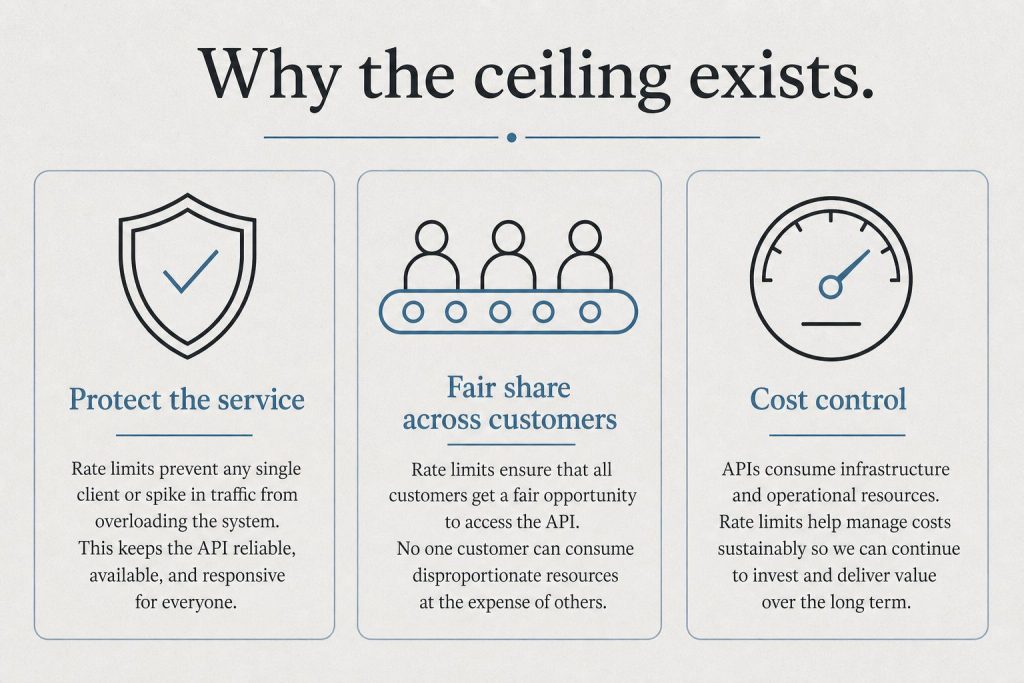
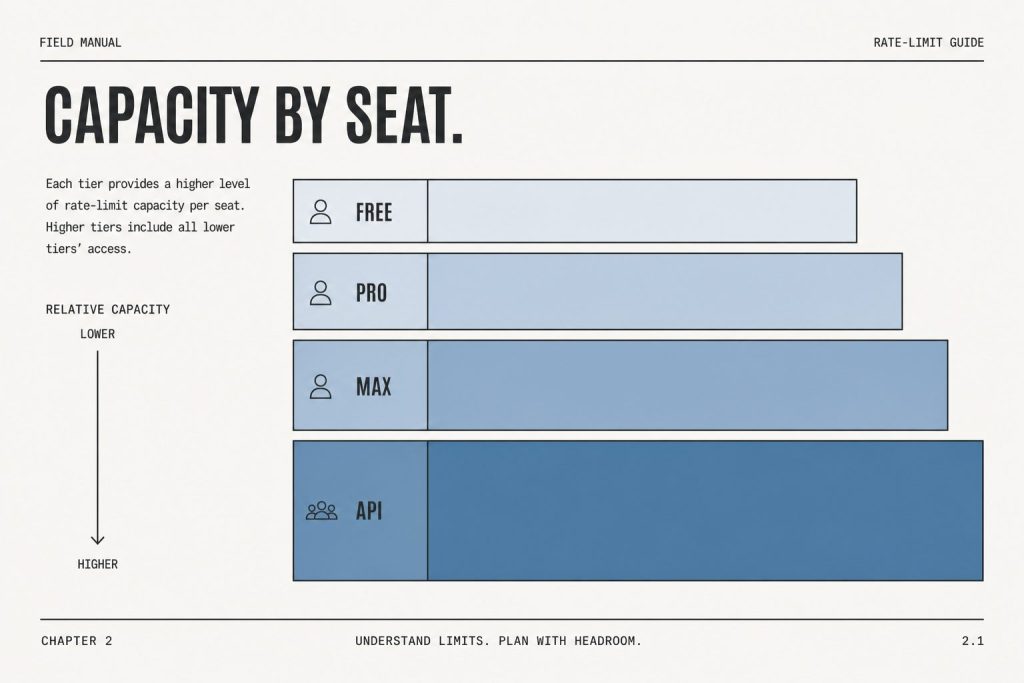
    Claude Code on Max 5x gets approximately 44,000-220,000 tokens per 5-hour window. Long sessions with large codebases consume tokens quickly. Best practices:

    • Use /compact when sessions get long to free up context
    • Be specific in your requests — “fix the authentication bug in auth.py” uses fewer tokens than “look through all my files for problems”
    • Auto-compaction (beta) handles this automatically when enabled

    Frequently Asked Questions

    What subscription do I need for Claude Code?

    Claude Max at $100/month minimum. Claude Code can also be accessed via API billing — often more cost-effective for lower-volume use.

    Can Claude Code edit multiple files at once?

    Yes. Claude Code can read, edit, and create multiple files in a single session — and runs the edits atomically, so you can review and accept or reject changes.

    How do I install Claude Code on Windows?

    Claude Code requires Node.js 18+ and runs via WSL (Windows Subsystem for Linux) on Windows. Install WSL, then follow the standard npm installation steps within your WSL terminal.


    Need this set up for your team?
    Talk to Will →

  • Claude vs Amazon Q: Which AI Coding Assistant for AWS Developers?

    Claude vs Amazon Q: Which AI Coding Assistant for AWS Developers?

    Model Accuracy Note — Updated May 2026

    Current flagship: Claude Opus 4.7 (claude-opus-4-7). Current models: Opus 4.7 · Sonnet 4.6 · Haiku 4.5. Claude Opus 4.6 referenced in this article has been superseded. See current model tracker →

    Claude AI · Fitted Claude

    For AWS developers, Claude and Amazon Q represent two distinct approaches to AI-assisted development. Amazon Q is deeply integrated into the AWS ecosystem — built to understand your AWS environment, your IAM policies, your CloudFormation stacks, and your AWS-specific workflows. Claude is a more capable general-purpose AI that can handle complex reasoning and code but requires you to provide AWS context manually. This comparison helps you choose — and explains why many AWS developers use both.

    What Amazon Q Does Well

    • AWS-native context: Q can read your actual AWS account state — running resources, IAM permissions, CloudWatch logs — without you describing them
    • AWS documentation: Q is trained specifically on AWS documentation and gives more accurate, up-to-date answers for AWS-specific questions
    • Console integration: Q is embedded in the AWS Console, CloudShell, and VS Code via the AWS Toolkit — zero additional setup for AWS users
    • Troubleshooting: Q can analyze your actual CloudWatch errors and IAM policy conflicts directly
    • Cost optimization: Q analyzes your actual usage data for cost recommendations

    What Claude Does Better

    • Code quality: Claude Opus 4.6 scores 80.8% on SWE-bench vs Amazon Q’s lower published benchmarks — for complex, multi-file code generation, Claude produces better results
    • General reasoning: Architecture decisions, trade-off analysis, and complex problem-solving — Claude reasons more deeply
    • Non-AWS work: If you’re building multi-cloud or have significant non-AWS code, Claude handles everything equally; Q is heavily AWS-optimized
    • Document analysis: Claude’s 200K context window for reading technical specs, RFCs, or lengthy docs far exceeds Q’s capabilities
    • Writing: Technical blog posts, documentation, runbooks — Claude writes better

    Pricing Comparison

    Claude Amazon Q
    Individual $20-200/month $19/month (Q Developer Pro)
    Free tier Yes (limited) Yes (Q Developer Free)
    Business Custom $19/user/month

    Amazon Q Developer Pro at $19/month is competitive with Claude Pro at $20/month. For AWS-heavy developers, Q Pro includes features with no Claude equivalent (direct AWS account analysis). For general development, Claude holds the performance edge per dollar.

    The Combined Workflow

    Many AWS developers use Amazon Q for AWS-specific questions (CloudFormation troubleshooting, IAM policy analysis, service limits) and Claude Code for complex coding tasks (architecture, large refactors, code review). The tools are complementary rather than competing.

    Frequently Asked Questions

    Is Amazon Q better than Claude for AWS development?

    For AWS-native questions with real account context: Amazon Q wins. For complex code generation, architecture decisions, and general programming: Claude is stronger. Many AWS developers use both.

    Can Claude access my AWS account?

    Not directly. You can paste CloudFormation templates, error logs, or resource configurations into Claude for analysis. Amazon Q connects directly to your AWS account with appropriate permissions.


    Need this set up for your team?
    Talk to Will →

  • Is Claude AI Safe? Security, Ethics, and Trustworthiness Assessed

    Is Claude AI Safe? Security, Ethics, and Trustworthiness Assessed

    Claude AI · Fitted Claude

    Safety means different things depending on who’s asking. For a parent wondering if Claude is appropriate for their teenager: yes, with caveats. For an enterprise considering Claude for sensitive workflows: that requires a more detailed answer. For a researcher wondering about AI existential risk: that’s a different conversation entirely. This guide covers all three dimensions of Claude safety in 2026.

    Content Safety: What Claude Will and Won’t Do

    Claude’s content policies are enforced through Constitutional AI training, not just a filter layer bolted on afterward. This makes them more robust than keyword blocklists. Claude will decline to:

    • Generate content facilitating violence or illegal activities
    • Produce sexual content involving minors (zero tolerance, no exceptions)
    • Provide detailed instructions for creating weapons capable of mass casualties
    • Generate content designed to facilitate harassment or stalking of specific individuals

    Claude’s refusals are imperfect — it occasionally refuses legitimate requests and occasionally allows borderline ones. But the overall calibration has improved substantially with each model generation.

    Data Security

    Anthropic is a US-incorporated company subject to US law. Conversation data is stored on Anthropic’s infrastructure. Consumer accounts may be used for model training (opt-out available). Enterprise and API accounts have zero-data-retention options. Anthropic has published a privacy policy at privacy.claude.com and does not sell conversation data to third parties or advertisers.

    Anthropic’s Responsible Scaling Policy

    Anthropic has published a Responsible Scaling Policy (RSP) — a commitment to evaluate Claude models against specific safety thresholds before deployment. The RSP creates public accountability: if future Claude models show dangerous capability thresholds in evaluation, Anthropic has committed to not deploying them until additional safety measures are in place. This is a meaningful governance commitment uncommon among AI companies.

    Fake Claude Scams: What Every User Should Know

    Malwarebytes and other security researchers have documented phishing campaigns using fake “Claude AI” websites to steal credentials and install malware. Key indicators of legitimate Claude access:

    • The official Claude interface is at claude.ai — any other domain claiming to be Claude is not
    • Anthropic does not offer Claude through third-party websites requiring separate account creation
    • Claude’s API is accessed at api.anthropic.com
    • If you’re ever unsure, go directly to anthropic.com and navigate from there

    Frequently Asked Questions

    Is Claude safe for kids?

    Claude has content filters that prevent most inappropriate content, but it’s not specifically designed as a children’s product. Parental supervision is recommended for younger users. Claude doesn’t have age verification on the free tier.

    Can Claude be jailbroken?

    Attempts to manipulate Claude into ignoring its safety training exist. Anthropic actively works to patch these. Claude is more robust against jailbreaking than most models, but no AI system is perfectly immune to sophisticated manipulation attempts.


    Need this set up for your team?
    Talk to Will →

  • Claude Zapier Automation: 10 Workflows That Save Hours Every Week

    Claude Zapier Automation: 10 Workflows That Save Hours Every Week

    Claude AI · Fitted Claude

    Claude and Zapier together create one of the most flexible automation combinations available in 2026. Through Zapier’s MCP server (mcp.zapier.com), Claude can connect to over 8,000 apps — sending emails, updating CRMs, creating tasks, posting to Slack, and more. This guide covers 10 practical workflows and how to set them up.

    Setting Up Claude + Zapier MCP

    Add Zapier’s MCP server to Claude Desktop by editing your configuration file:

    {
      "mcpServers": {
        "zapier": {
          "url": "https://mcp.zapier.com/api/mcp/a/YOUR_ACCOUNT_ID/mcp",
          "type": "url"
        }
      }
    }

    Find your Zapier MCP URL in your Zapier account under Settings → MCP. Once connected, Claude can trigger any Zap you’ve built in Zapier, ask it to take actions across your connected apps.

    10 High-Value Automation Workflows

    1. Email Triage and Draft Generation

    New email arrives → Zapier sends to Claude → Claude categorizes (urgent/action needed/FYI/spam) and drafts a reply → Draft saved to Gmail or sent to you via Slack for approval.

    2. CRM Note Generation from Calls

    Call recording transcript arrives (from Otter.ai or Fireflies) → Claude generates structured CRM notes (summary, pain points, next steps, deal stage) → Notes automatically posted to Salesforce or HubSpot record.

    3. Social Media Content from Blog Posts

    New WordPress post published → Claude generates LinkedIn post, Twitter/X thread, and Instagram caption → Drafts sent to Buffer or Hootsuite for scheduled publishing.

    4. Meeting Summary and Action Item Distribution

    Meeting transcript uploaded → Claude extracts summary, decisions made, and action items with owners → Summary sent to meeting participants via email, action items created in Asana or Notion.

    5. Customer Support Ticket Drafts

    New support ticket received (Zendesk, Freshdesk) → Claude categorizes the issue and drafts a response → Draft queued for agent review before sending.

    6. Lead Research and Enrichment

    New lead added to CRM → Claude researches company context from provided information → Enriched notes (industry, company size, likely pain points) added to CRM record automatically.

    7. Contract Summary on Receipt

    PDF contract received via email → Claude generates key terms summary (parties, obligations, deadlines, payment terms) → Summary posted to Slack or added to Notion database.

    8. Weekly Report Generation

    Every Friday → Zapier pulls data from your project management tool → Claude generates weekly progress narrative → Report emailed to stakeholders automatically.

    9. Review Response Drafting

    New Google or Yelp review received → Claude drafts a personalized response matching your brand voice → Draft sent to you for approval via email or Slack.

    10. Job Application Screening Summaries

    New application received → Claude summarizes candidate background, flags matches to job requirements, notes potential concerns → Summary added to your ATS or hiring Notion board.

    Frequently Asked Questions

    Do I need Zapier paid plan to use Claude MCP?

    Zapier MCP access requires a paid Zapier plan. Check Zapier’s current pricing for MCP feature availability.

    Can Claude take actions in Zapier automatically without human approval?

    Yes — but for actions like sending emails or creating CRM records, building in a human-approval step (Slack notification with approve/reject) is recommended until you trust the automation’s output quality.


    Need this set up for your team?
    Talk to Will →

  • Claude AI for Excel and Spreadsheets: Formulas, Analysis, and Automation

    Claude AI for Excel and Spreadsheets: Formulas, Analysis, and Automation

    Claude AI · Fitted Claude

    Spreadsheet work is one of the highest-leverage applications for Claude AI — and one where the time savings are immediately measurable. Claude writes complex formulas, explains your data, debugs broken functions, and helps design spreadsheet structures for any use case. This guide covers the specific workflows where Claude saves the most time.

    1. Formula Writing

    Describe what you want in plain English and Claude writes the formula:

    “Write an Excel formula that looks up a value in column A, finds the matching row in a separate table on Sheet2, and returns the value from column C of that row. Handle the case where no match is found by returning ‘Not Found’.”

    Claude returns the exact formula with an explanation of how it works — and will modify it if your structure is different from what it assumed.

    2. Formula Debugging

    Paste a broken formula and describe what it should do:

    “This formula is returning #VALUE! instead of the expected sum: =SUMIF(A:A,”Q1″,B:B). My date column (A) has dates in MM/DD/YYYY format. What’s wrong and how do I fix it?”

    3. Data Analysis and Interpretation

    Paste CSV data directly into Claude (up to tens of thousands of rows depending on token limits) and ask:

    • “What are the top 5 trends in this sales data?”
    • “Identify any outliers in this dataset and explain what might be causing them”
    • “Calculate month-over-month growth rates from these monthly totals”
    • “What’s the correlation between [column A] and [column B]?”

    4. Spreadsheet Design

    Before building a complex spreadsheet, describe your use case to Claude:

    “I need a spreadsheet to track client projects. Each project has: client name, project type, start date, deadline, status, hours budgeted, hours logged, and assigned team member. I want a dashboard tab that shows overdue projects and hours variance. Design the sheet structure and formulas I’ll need.”

    5. Claude’s Excel Add-In

    Anthropic launched a Claude Excel add-in that embeds Claude directly in Microsoft Excel. This allows you to interact with Claude in a side panel while working in your spreadsheet — selecting data ranges, asking questions about your data, and getting formula suggestions without switching applications.

    Frequently Asked Questions

    Can Claude write Google Sheets formulas as well as Excel?

    Yes. Claude writes formulas for both Excel and Google Sheets. Most formulas are identical or very similar between the two — just specify which you’re using if there might be syntax differences.

    Can Claude analyze data I paste into the conversation?

    Yes. Paste CSV data directly and Claude will analyze it. For very large datasets, paste a representative sample or aggregate summary.


    Need this set up for your team?
    Talk to Will →

  • Claude AI for Startups: Pitch Decks, Product Dev, and Hiring

    Claude AI for Startups: Pitch Decks, Product Dev, and Hiring

    Claude AI · Fitted Claude

    Startups operate at a pace that makes every AI productivity gain multiply. Claude AI has become one of the most useful tools for founders who need to write, think, research, and build simultaneously — often without the headcount to specialize any of it. This guide covers the highest-leverage startup use cases.

    1. Pitch Deck Writing and Refinement

    Claude can’t design slides, but it can write the content that makes them work:

    • Problem slide narrative (crisp, investor-compelling)
    • Solution positioning and differentiation language
    • Market size calculation narrative (TAM/SAM/SOM explanations)
    • Business model clarity
    • Traction slide copy from your metrics
    • Team bios that emphasize relevant experience
    • Ask and use of funds language

    Prompt: “I’m raising a [stage] round for [company]. We [what you do] for [who]. Our differentiation is [X]. Write the problem and solution slides in [Y] words each — investor audience, direct and specific, no jargon.”

    2. Product Requirements and Spec Writing

    Early-stage founders often write PRDs themselves. Claude drafts them faster:

    • User story generation from feature descriptions
    • MVP scope definition and prioritization
    • Technical spec outlines for engineering handoffs
    • API documentation first drafts

    3. Competitive Analysis

    Paste competitor landing pages, pricing pages, or product releases into Claude and ask: “Analyze this competitor’s positioning. What are their claimed strengths, their apparent weaknesses, and the gap my product could own?” Do this across 5 competitors in one session and you have a competitive landscape in an hour that would take a day manually.

    4. Hiring: JDs, Outreach, and Interviews

    • Job description writing that attracts the right candidate profile
    • LinkedIn outreach messages for sourcing
    • Interview question sets by role
    • Offer letter language (review with legal counsel)
    • Culture doc and values articulation

    5. Investor Research

    Paste an investor’s portfolio page, blog posts, or thesis into Claude: “Based on this investor’s portfolio and stated thesis, how should I position my company for a conversation with them? What aspects of our business align with their focus?”

    Frequently Asked Questions

    Can Claude help write a pitch deck?

    Yes — the narrative content. Claude writes compelling problem/solution/market/traction/team copy. Slide design requires dedicated tools (Canva, Pitch, PowerPoint).


    Want this for your workflow?

    We set Claude up for teams in your industry — end-to-end, fully configured, documented, and ready to use.

    Tygart Media has run Claude across 27+ client sites. We know what works and what wastes your time.

    See the implementation service →

    Need this set up for your team?
    Talk to Will →

  • Claude for Small Business Owners: What It Can Actually Replace

    Claude for Small Business Owners: What It Can Actually Replace

    Claude AI · Fitted Claude

    Small business owners are among the professionals getting the most value from Claude AI — because they wear every hat and the time savings compound across every function. This guide covers the highest-leverage use cases: marketing, operations, customer service, and financial communication.

    Why Claude Works Well for Small Business

    Small businesses typically can’t afford specialists for every function. The owner writes the marketing copy, drafts the employee handbook, responds to reviews, and handles client emails — all in the same day. Claude handles the first draft of almost all of these, at a quality level that previously required hiring freelancers or agencies.

    1. Marketing Content

    • Website copy (homepage, about page, service descriptions)
    • Google Business Profile posts and updates
    • Email newsletter content
    • Social media captions (Instagram, Facebook, LinkedIn)
    • Local SEO blog posts
    • Seasonal promotions and campaign copy

    Prompt template: “Write a [content type] for my [business type] in [city]. My unique selling point is [differentiator]. Target customer: [describe]. Tone: [conversational/professional/enthusiastic]. Length: [X words].”

    2. Operations Documents

    • Standard operating procedures (SOPs) for any business process
    • Employee onboarding guides and training materials
    • Job descriptions for hiring
    • Vendor agreements and simple contracts (always review with attorney)
    • Process documentation and checklists

    3. Customer Service

    • Response templates for common questions
    • Difficult customer situation scripts
    • Online review responses (positive and negative)
    • FAQ page content
    • Refund and complaint handling language

    4. Financial Communication

    • Invoice and payment reminder language
    • Proposal and estimate narratives
    • Client update letters for project status
    • Grant application narratives (for eligible businesses)

    Recommended Starting Setup

    Create a Claude Project with a system prompt containing: your business name and type, your city and target market, your brand voice (3 adjectives), and 2-3 things that differentiate you. Once set up, every Claude conversation is pre-loaded with your business context — no re-explaining needed.

    The free tier works for occasional use. Claude Pro at $20/month is the right starting point for daily business use — Projects are included and the rate limits are workable for most small business owners.

    Frequently Asked Questions

    What is the best Claude plan for small business owners?

    Claude Pro at $20/month. Projects let you store your business context so every conversation is pre-loaded. The free tier works if you use Claude occasionally.


    Want this for your workflow?

    We set Claude up for teams in your industry — end-to-end, fully configured, documented, and ready to use.

    Tygart Media has run Claude across 27+ client sites. We know what works and what wastes your time.

    See the implementation service →

    Need this set up for your team?
    Talk to Will →