Between April 15 and April 29, 2026, the Claude Code team shipped releases from v2.1.89 to v2.1.123 — 34 version increments in 14 days, or roughly 2–3 production releases per week. For an agentic coding tool that engineering teams run in their daily development workflow, this release cadence is worth understanding, both for what it signals about the product’s development velocity and for the practical implications of staying current.
What’s Driving the Cadence
What’s driving the cadence.
The v2.1 series is where Claude Code’s parallel agents architecture is being built out. The desktop redesign for parallel agents shipped on April 14, and the v2.1 releases since then represent the iterative work of making parallel agent workflows — running multiple agents simultaneously from a single workspace — stable and usable at production quality. Rapid iteration on a new architectural feature explains the compressed release schedule better than any other factor.
The new onboarding guide for Claude Code teams, published April 28 on code.claude.com, is a related signal. Documentation for team-scale adoption typically follows (not precedes) the stability work that makes team-scale adoption advisable. Publishing the onboarding guide now suggests the team considers the core parallel agents architecture stable enough for broader engineering team adoption.
Parallel Agents: The Architecture Change That Matters
Parallel agents — the architecture change that matters.
The April 14 desktop redesign for parallel agents is the most significant Claude Code architectural change of the quarter. Previously, Claude Code operated as a single-agent tool — one active task at a time per workspace. The parallel agents redesign allows developers to run multiple agents simultaneously, each working on independent tasks within the same workspace, with Claude coordinating between them.
The practical applications are significant: running tests while implementing a feature, refactoring one module while debugging another, generating documentation in parallel with code review. Tasks that previously required sequential attention can now run concurrently, compressing the time from specification to working code.
Implications for Engineering Teams Evaluating Adoption
Implications for engineering teams evaluating adoption.
The combination of the new onboarding guide and the parallel agents architecture makes this the right moment for engineering teams that have been evaluating Claude Code to make a decision. The tool has moved from “impressive demo” to “documented team workflow” with the April 28 guide, and the parallel agents capability meaningfully changes the productivity math for teams doing complex, multi-threaded development work.
For teams already using Claude Code, staying current with the v2.1 series matters more than it did in earlier versions. The 2–3 weekly releases aren’t cosmetic — they’re iterating on the parallel agents infrastructure that the most powerful new workflows depend on. Check the changelog at code.claude.com/docs/en/changelog before major projects to ensure you’re running a recent build.
On April 7, 2026, Anthropic published the Claude Mythos Preview to red.anthropic.com — its dedicated AI safety and security research channel. Mythos is described as a general-purpose model with breakthrough cybersecurity capability, anchoring a coordinated initiative called Project Glasswing aimed at reinforcing global cyber defenses using AI. It is the most significant security-focused model capability announcement Anthropic has made to date.
What Mythos Is
What Mythos is.
Mythos is not a separate product in the traditional sense — it’s a capability preview, published through Anthropic’s red team and security research channel rather than through the main product announcement pipeline. The “preview” framing is deliberate: Anthropic is signaling a new capability frontier to the security research community before making it broadly available, which is standard practice for capabilities with significant dual-use potential.
The “breakthrough cybersecurity capability” claim is notable because Anthropic has historically been conservative about capability claims. Publishing on red.anthropic.com — rather than anthropic.com/news — also signals that this is targeted at a security-professional audience, not a general consumer or enterprise announcement.
Project Glasswing
Project Glasswing.
Project Glasswing is the coordinated effort that Mythos anchors. The stated mission is reinforcing world cyber defenses — a framing that positions Mythos explicitly as a defensive capability rather than an offensive one, which matters enormously in how it will be received by governments, enterprise security teams, and the security research community.
The name “Glasswing” references the glasswing butterfly — a species known for its transparent wings, which confer camouflage by blending into the environment. The metaphor maps cleanly onto defensive security work: visibility and transparency as the mechanism of protection, not opacity or force.
Context: A Year of Security Work
Mythos and Glasswing don’t come from nowhere. Anthropic’s security research track in 2026 has been unusually active: collaboration on Firefox CVE-2026-2796 in March, LLM-discovered zero-days published in February, and participation in AI on realistic cyber ranges in January — all documented on red.anthropic.com. Mythos is the capstone of a year-long research buildout in applied cybersecurity, not a pivot from Anthropic’s core safety work.
For enterprise security teams evaluating AI vendors, this track record is a meaningful differentiator. Anthropic is now the only frontier AI lab with a documented, published history of responsible vulnerability disclosure collaboration and a dedicated security research publication channel. That institutional credibility matters when procurement decisions involve sensitive security workflows.
What to Watch
What to watch.
The Mythos Preview is the beginning of a story, not the end of one. Watch red.anthropic.com for the full Glasswing rollout cadence — what specific defensive capabilities are being published, what the access model looks like for security researchers, and whether government or critical infrastructure partnerships accompany the broader release. The preview framing implies a production release is coming. The timeline and access model will define how significant Glasswing becomes as a competitive differentiator.
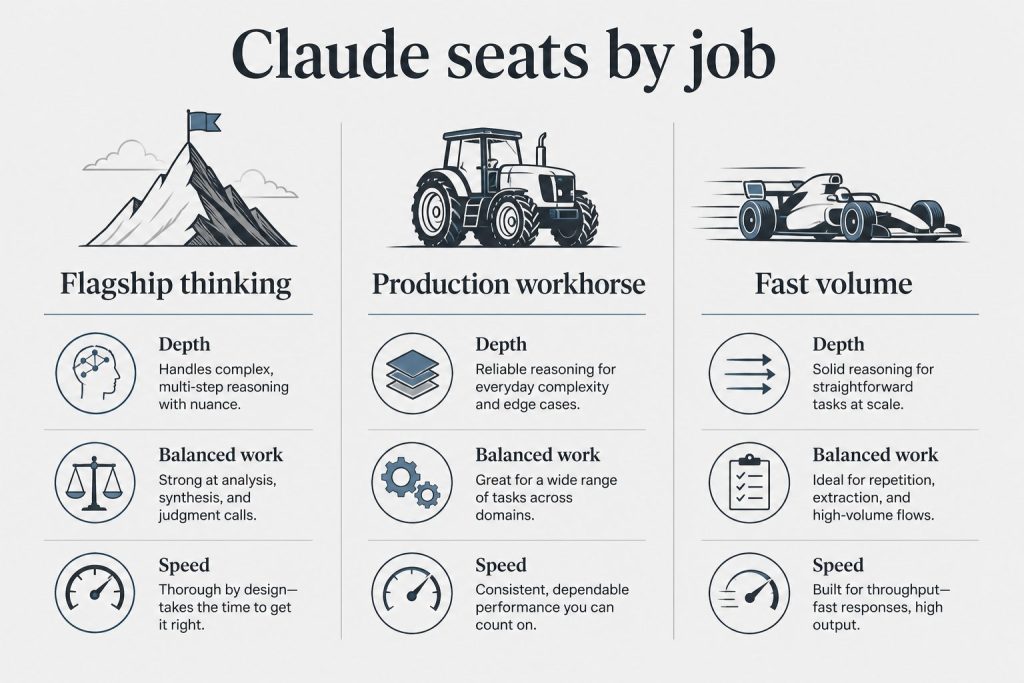
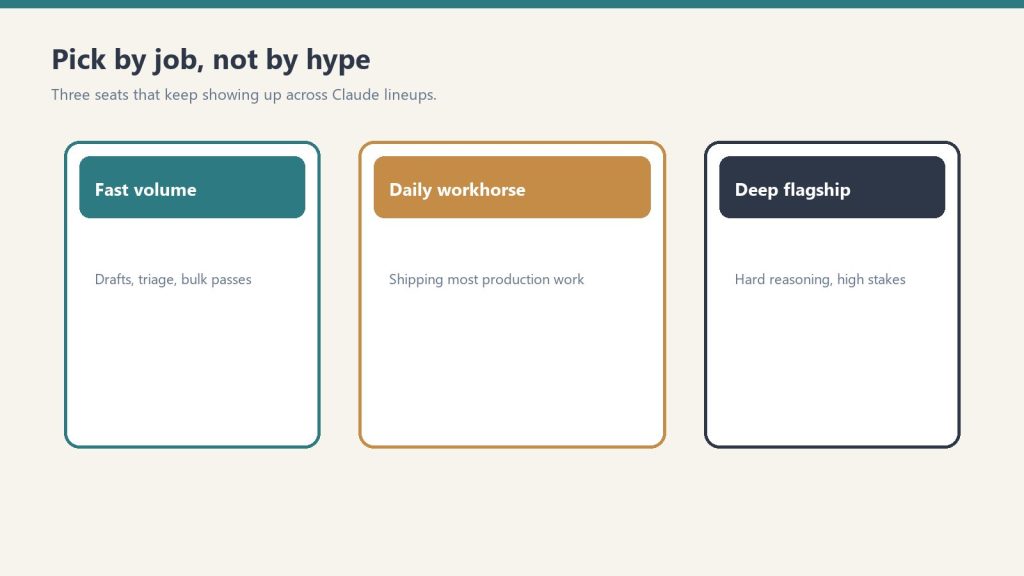
Current lineup (updated July 6, 2026): Claude Fable 5 is the top tier above Opus, with Claude Opus 4.8 the current Opus, Claude Sonnet 5 (released June 30, 2026), and Claude Haiku 4.5. Opus 4.7 is now a legacy model. Full lineup: Claude Fable 5 guide. Claude Opus 4.7 referenced in this article has been superseded. See current model tracker →
Anthropic released Claude Opus 4.7 on April 16, 2026, alongside an update to Claude Haiku 4.5. The release is headlined by a 3× improvement in vision resolution, but the more operationally significant additions are task budgets and the new xhigh effort level — both of which change how developers can dial Claude’s reasoning intensity for compute-sensitive workflows.
Vision Resolution: What 3× Actually Means
Vision resolution — what 3× actually means.
Claude Opus 4.7 processes images at three times the resolution of its predecessor. In practice, this means documents with dense text, screenshots of complex interfaces, detailed charts and diagrams, and high-resolution photography are now meaningfully more legible to the model. Tasks that previously required cropping or pre-processing images to help Claude read fine details should now work with the original image.
For enterprise use cases — contract review from scanned PDFs, financial statement analysis from images, medical imaging workflows, engineering diagram interpretation — the resolution improvement is not incremental. It crosses a threshold where image-based document processing becomes reliably useful rather than occasionally accurate.
Task Budgets
Task budgets.
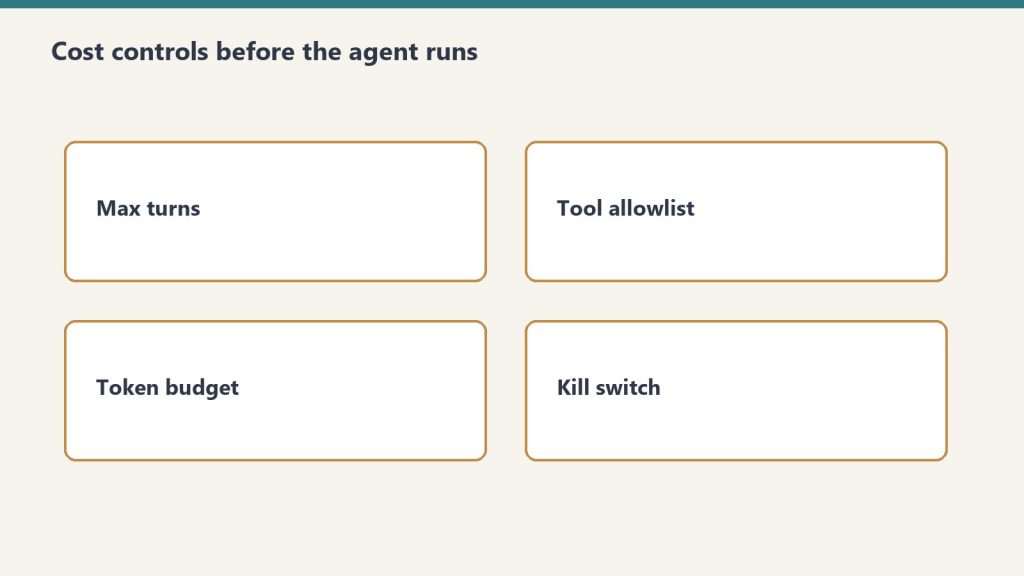
Task budgets give developers a mechanism to cap how much compute Claude spends on a given task before returning a response. This is the missing lever that has made Claude’s extended thinking mode difficult to use predictably in production. Without a budget ceiling, extended thinking tasks could run arbitrarily long and cost arbitrarily much. With task budgets, you can set a ceiling and get a best-effort response within that constraint rather than an open-ended spend.
The practical implication is that extended thinking becomes viable in latency-sensitive or cost-sensitive production contexts that previously had to avoid it entirely. A customer-facing workflow that needs a thoughtful answer but can’t wait indefinitely can now specify a budget and get a response calibrated to that constraint.
The xhigh Effort Level
The xhigh effort level.
Alongside the existing effort levels, Opus 4.7 introduces xhigh — an above-maximum reasoning intensity setting intended for tasks where accuracy justifies extended compute time regardless of cost. Research tasks, complex multi-step reasoning chains, high-stakes analysis where a wrong answer is costly — these are the intended use cases.
xhigh pairs naturally with task budgets: use xhigh to get the most thorough reasoning Claude can produce, and use a task budget to define the ceiling on how long it runs. Together they give developers precision control over the quality/cost/latency trade-off that was previously binary (extended thinking on or off).
Pricing: Unchanged from 4.6
Opus 4.7 maintains the same pricing as Claude Opus 4.7: $5 per million input tokens and $25 per million output tokens. For teams currently on Opus 4.6, this is an unambiguous upgrade — better vision, task budgets, and xhigh effort at the same cost. The Haiku 4.5 update released alongside it carries the same pricing-unchanged pattern.
Deprecation note: Claude Haiku 3 was retired on April 19. Teams still on Haiku 3 should have already migrated — if not, that’s an urgent action item.
Anthropic’s Managed Agents service entered public beta with built-in persistent memory on April 23, 2026. The feature allows agents to retain context, user preferences, and state information across sessions — a capability that has been among the most-requested additions to the platform since Managed Agents launched. The timing matters: this ships during a window where OpenAI’s flagship memory features remain incomplete in their own agent frameworks, giving Claude developers a meaningful head start on production deployments that depend on memory.
What Built-In Memory Actually Does
What built-in memory actually does.
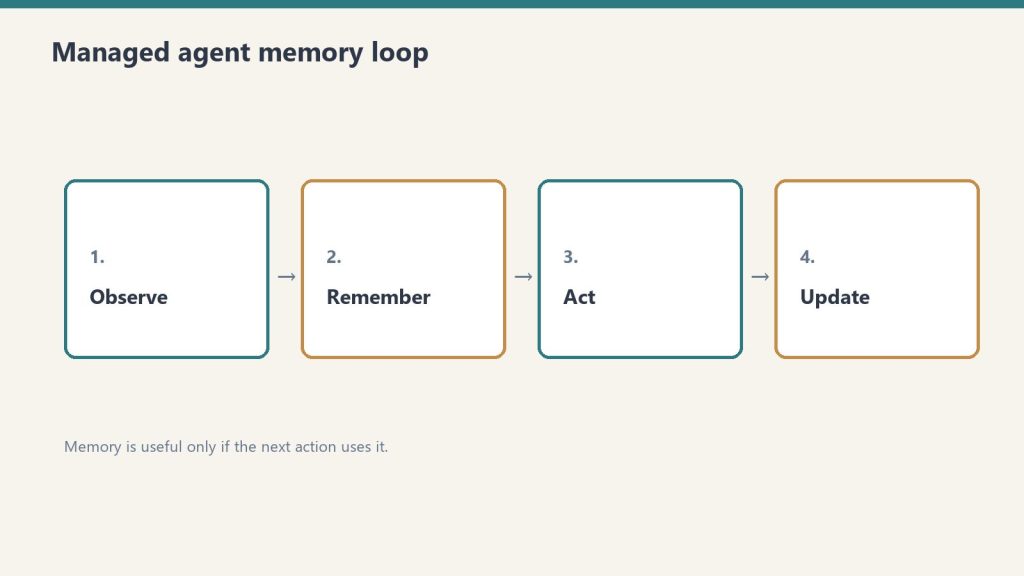
Without memory, every agent session starts from zero. The agent knows what you’ve told it in the current conversation and nothing else. This is workable for single-session tasks — “summarize this document,” “write this draft” — but it breaks down for anything that involves ongoing relationships, accumulated preferences, or multi-session workflows. A customer service agent that can’t remember a user’s previous issues, a research assistant that can’t build on yesterday’s work, a scheduling agent that doesn’t know your standing preferences — all of these require memory to deliver the experience their use cases promise.
Anthropic’s implementation provides persistence at the agent level, meaning the memory travels with the agent across sessions rather than requiring the developer to implement their own memory layer through external databases or custom retrieval logic. For builders who have been working around this limitation manually, the built-in version should substantially reduce implementation complexity.
Why the Timing Against OpenAI Matters
Why the timing against OpenAI matters.
OpenAI has memory features in ChatGPT — the consumer product — but the developer-facing memory story for agents is less complete. The gap between what’s available to end users and what’s available to developers building on the platform has been a consistent criticism of OpenAI’s agent framework. Anthropic shipping built-in agent memory in public beta now, before OpenAI has an equivalent production-ready solution for agent builders, is a genuine competitive window.
Public beta is not GA — there will be limitations, rough edges, and potential breaking changes before the feature stabilizes. But for developers who want to test and start building production workflows around persistent memory, this is the moment to start. Early adoption of beta features in platform infrastructure tends to compound: the teams that build on memory-enabled agents now will have a significant head start on the ones that wait for GA.
What to Test Today
What to test today.
The highest-value test cases for built-in memory in the current beta are: (1) customer-facing agents that need to remember user identity and history across sessions, (2) research or content agents that build knowledge bases over time, and (3) workflow agents that manage recurring tasks and need to track state between runs. These are the use cases where the absence of memory was most painful before, and where the new capability will show the largest delta in usefulness.
Pair the memory beta with the new “Building production agents with MCP” guide published on April 22 — Anthropic’s documentation for hardening MCP-based agents for production deployments. The combination of persistent memory and production-hardening guidance suggests the platform team is intentionally building toward a moment when Managed Agents are ready for high-stakes, customer-facing production deployments. Test now, build with confidence later.
Note on the 1M Token Context Beta
Separately, the 1 million token context beta ends today, April 30. Developers who have been building on extended context should check the release notes for migration guidance before the beta window closes. This is the kind of quiet sunset that catches teams off-guard — worth a direct check against your current deployments today.
In the span of five days at the end of April 2026, Anthropic announced three significant moves in the Asia-Pacific region: a strategic multi-year collaboration with NEC for Japan’s AI workforce on April 24, a new Sydney office with Theo Hourmouzis named GM for Australia and New Zealand on April 27, and the Infosys partnership for regulated industry AI in India on April 29. Taken individually, each is a meaningful business development story. Taken together, they describe a deliberate APAC buildout strategy — and one that’s moving faster than most observers have credited.
Japan: The NEC Partnership
Japan — the NEC partnership.
The NEC collaboration is structured around a multi-year deployment of Claude across Japanese enterprises, with a workforce upskilling component that distinguishes it from a pure technology licensing deal. NEC is a conglomerate with deep relationships across Japanese government, telecommunications, financial services, and defense — exactly the sectors where AI adoption is both highest-stakes and most cautious. The workforce upskilling angle suggests Anthropic and NEC are addressing the adoption bottleneck that has slowed enterprise AI deployment in Japan: the gap between what the technology can do and what the workforce knows how to ask it to do.
Japan’s enterprise AI market is large, compliance-conscious, and historically resistant to foreign technology vendors without a local partnership anchor. NEC provides that anchor. This is structurally similar to the Infosys play in India — find the trusted domestic partner, build the Center of Excellence or equivalent, then scale through that partner’s existing enterprise relationships.
Australia: The Sydney Office and Theo Hourmouzis
Australia — Sydney office.
Opening a Sydney office is the clearest signal of long-term commitment. Partnerships can be dissolved; physical offices and local headcount are harder to walk back. The appointment of Theo Hourmouzis as GM for Australia and New Zealand gives the APAC presence an executive face and a named accountability structure, which matters for enterprise procurement in both markets.
Australia has been a strong early-adoption market for Claude — Singapore leads on per-capita usage metrics, but Australia’s enterprise market is larger and more English-language-first, which has historically meant faster Claude adoption than markets requiring significant localization work. A permanent office converts that early-adoption momentum into a defensible competitive position against OpenAI and Google, both of which have had APAC presence for longer.
India: The Infosys Anchor
India — the Infosys anchor.
The Infosys collaboration is covered in detail in a separate Tygart Media piece, but in the APAC context, its significance is as the India anchor to the same pattern playing out in Japan and Australia. Anthropic doesn’t yet have an India office announced — the Infosys partnership may be the substitute, at least initially, allowing Anthropic to access Indian enterprise relationships through Infosys’s existing client base without the overhead of a local office buildout.
India’s developer market is the one piece of the APAC picture that the enterprise partnerships don’t fully address. The individual developer and startup pricing gap — INR 16,800/month for Claude Pro with no regional pricing adjustment — remains open and continues to generate friction in communities where Anthropic’s reputation is otherwise strong.
What’s Missing: Singapore
Singapore is notable by its absence in this APAC push. It consistently ranks as the highest per-capita Claude usage market globally, suggesting a user base that is already committed to the product. An office or partnership announcement in Singapore would be a natural complement to Sydney, but nothing has been announced. This is either a sequencing decision — Australia first, Singapore next — or a reflection of Singapore’s smaller enterprise market size relative to Japan, India, and Australia.
Watch for a Singapore announcement in Q3 2026. The usage data makes it too obvious a gap to leave unfilled for long.
Anthropic launched Claude for Creative Work on April 28, 2026, formalizing a product positioning that has been building since the Claude Design launch on April 17. The move puts Anthropic in direct competition with OpenAI’s image-generation-first creative pitch — but with a fundamentally different bet about what creative professionals actually need from AI.
The Claude Design Foundation
The Claude Design Foundation.
Claude Design, launched April 17 through Anthropic Labs, is the experimental product underneath the creative work positioning. It targets the quick-turnaround end of creative production: prototypes, slides, one-pagers, visual comps that need to exist fast without requiring a designer’s full attention. TechCrunch described it as “a new product for creating quick visuals” — which is accurate but undersells the strategic intent.
Claude for Creative Work builds on top of Design by broadening the positioning to include writers, designers across disciplines, and creative professionals generally — not just the slide-deck-and-prototype use case that Design launched with.
The Ecosystem Moat
The ecosystem moat.
The creative tools landscape that Claude is entering isn’t neutral territory. Adobe, Blender, Autodesk, Ableton, and Splice represent decades of workflow lock-in across visual design, 3D, architecture and engineering, music production, and sample-based creation. Any AI tool that wants to be genuinely useful to creative professionals has to meet those workflows where they exist — as plugins, integrations, or API connections — rather than asking professionals to leave their primary tools.
Anthropic’s approach appears to be positioning Claude as the intelligence layer that works alongside those tools rather than replacing them. This is a different bet than Midjourney or DALL-E, both of which are destination products — you go to them, generate something, and bring it back. Claude for Creative Work, by contrast, is pitched as the assistant that’s present throughout the creative process, across whatever tools the professional is already using.
How This Differs from ChatGPT’s Creative Pitch
How this differs from ChatGPT’s creative pitch.
OpenAI has led its creative positioning with image generation — GPT-4o’s image capabilities, the DALL-E integration, Sora for video. The implicit argument is that AI’s most valuable creative contribution is generating visual assets. Anthropic’s bet is different: that the more valuable creative contribution is the thinking, editing, structuring, and iteration that happens around asset generation, not the generation itself.
For writers, this is an obvious win — Claude’s long-form reasoning and editing capabilities are measurably stronger than image-focused models on text tasks. For visual designers, the argument is less obvious but still coherent: a model that can critique a comp, suggest revisions, explain why a layout isn’t working, and draft the copy that sits alongside the visual is more useful across the whole project than a model that can only generate a new image.
What to Watch
Claude for Creative Work is a positioning launch more than a features launch — the underlying capabilities have been available for some time. The question is whether the positioning will be accompanied by the integration work that makes it real: native plugins for Adobe Creative Cloud, Ableton Live, Blender, and the other dominant creative tools. Without those integrations, “Claude for Creative Work” is a marketing frame. With them, it’s a genuine workflow play.
Watch the Anthropic Labs pipeline for integration announcements over the next 60–90 days. That’s where the creative tools bet either gets substantiated or stalls.
Infosys, India’s second-largest IT services company with over 300,000 employees and clients in virtually every regulated industry on the planet, announced a strategic collaboration with Anthropic on April 29, 2026. The partnership embeds Claude — including Claude Code — into Infosys Topaz AI, the company’s enterprise AI platform, targeting telecommunications, financial services, manufacturing, and software development verticals.
What’s Actually Being Built
What’s actually being built.
The collaboration begins with a dedicated Anthropic Center of Excellence inside Infosys’s telecom practice. This isn’t a reseller agreement or a marketing partnership — it’s an engineering buildout. The Center of Excellence structure means Infosys is committing internal resources to develop Claude-powered workflows specific to telecom use cases, with the intent to replicate the model across the other three target verticals.
Claude Code’s inclusion is significant. Enterprise AI deployments at IT services firms historically mean wrapping AI around existing workflows — summarization, document processing, customer-facing chatbots. Embedding Claude Code signals that Infosys is building AI into the software development lifecycle itself, which is where the highest-value, highest-margin work in IT services actually lives.
Why Regulated Industries Are the Real Story
Why regulated industries are the real story.
Telecom, financial services, and manufacturing are three of the most compliance-heavy verticals in enterprise technology. Data residency requirements, audit trails, explainability mandates, and sector-specific regulations (TRAI in India, FCA in the UK, SEC in the US for financial services) make AI deployment substantially more complex than in unregulated industries. The fact that Infosys is leading with these verticals rather than easier targets suggests genuine confidence in Claude’s compliance posture.
For the Indian developer and enterprise market specifically, this partnership carries weight that a US-only announcement would not. Infosys is a trusted name in Indian boardrooms in a way that American AI labs, even well-regarded ones, simply aren’t yet. Anthropic gaining Infosys as an integration partner is a significant step toward the kind of enterprise credibility that accelerates procurement decisions.
The INR Pricing Gap Remains Open
It’s worth noting what the Infosys partnership doesn’t solve: direct access pricing for Indian developers and individual subscribers. Claude’s consumer and API pricing in India remains at ₹16,800/month for Pro — a figure that has generated sustained criticism in developer communities and on GitHub (issue #17432 on the Claude feedback tracker has been open for months with no response). Enterprise deals like the Infosys collaboration typically involve custom pricing negotiated well below list, which means the developers who most need relief from INR pricing aren’t the ones who benefit from this announcement.
That gap is a content opportunity and a legitimate market gap. Anthropic’s APAC expansion is clearly accelerating — Sydney office, NEC Japan partnership, now Infosys India — but the individual developer pricing story in the region hasn’t kept pace with the enterprise narrative.
Context: Anthropic’s APAC Quarter
Context: Anthropic’s APAC quarter.
The Infosys announcement is the third significant APAC move in the last two weeks. Anthropic opened a Sydney office and named Theo Hourmouzis as GM for Australia and New Zealand on April 27. The NEC Japan multi-year workforce upskilling collaboration was announced on April 24. Three moves in five days — India, Japan, Australia — is not coincidence. This is a coordinated APAC buildout, and Infosys is the India anchor.
Anthropic’s Cowork feature — the desktop automation tool aimed squarely at non-developers — moved out of research preview on April 29, 2026, and is now generally available on both macOS and Windows. It ships with a feature set that represents a meaningful step forward for anyone who has been running scheduled tasks, file workflows, and multi-step automations through Claude without writing a line of code.
What’s New in the GA Release
What’s new in the Cowork GA release.
The GA release lands on Pro, Max, Team, and Enterprise plans. The headline additions are expanded analytics, OpenTelemetry support for enterprise observability, and role-based access controls — the last of these being the signal that Cowork is now ready for team deployments, not just individual power users.
Persistent agent threads are now live across both mobile (iOS and Android) and desktop, which means you can start a Cowork task on your laptop and monitor or manage it from your phone. The new Customize section consolidates skills, plugins, and connectors into a single panel, replacing what was previously a scattered setup experience across multiple menus.
Recurring and on-demand task scheduling is also included, enabling the kind of “set it and check it” automation workflows that Cowork was always promising but only partially delivering during the preview period.
Why This Matters for Non-Developers
Why this matters for non-developers.
Cowork’s core bet has always been that the most valuable use cases for AI automation don’t belong to engineers — they belong to operators, marketers, content teams, and business owners who know exactly what they want done but have no interest in writing Python scripts or JSON configs to get there. The GA release validates that bet with a production-grade infrastructure story: OpenTelemetry means IT and enterprise security teams can audit what the agents are doing; role-based access controls mean managers can delegate without handing over full system access.
For the non-developer using Cowork day-to-day, the practical change is reliability. Research previews carry an implicit asterisk — “this works, mostly, until it doesn’t.” GA means the feature is supported, documented, and subject to real SLAs. Scheduled tasks that have been running through the preview period should now be more stable, and new automations can be built with the expectation that they’ll still work next month.
The Enterprise Observability Story
The enterprise observability story.
The addition of Cowork data into the Analytics API and OpenTelemetry support is worth noting separately. This is the detail that unlocks enterprise adoption at scale. Procurement and security teams at larger organizations have consistently asked for auditability before green-lighting AI automation tools. Cowork now has an answer: every agent action can be traced, logged, and routed into whatever observability stack the enterprise already runs.
For Team and Enterprise plan subscribers, this should accelerate internal approval processes for Cowork deployments that may have stalled during the preview period.
What Stays the Same
The fundamental Cowork model — Claude running autonomous tasks on behalf of the user, triggered by schedule or on-demand, guided by skills and connectors — is unchanged. If you’ve been running workflows in the preview, the transition to GA should be seamless. The Customize section reorganizes the setup experience but doesn’t require rebuilding existing configurations.
Plans and pricing remain unchanged from the research preview tier placement — Cowork is included in Pro, Max, Team, and Enterprise, with no new add-on cost announced alongside the GA release.
The Bottom Line
Cowork GA is the milestone that turns a promising experiment into a product you can build operational workflows around. The combination of persistent threads, role-based access, and OpenTelemetry support brings Cowork into alignment with what enterprise buyers require from any automation tool they’re willing to run at scale. For individual users, the reliability improvement and the cleaner Customize panel are the day-one wins. For teams, the observability story is the green light many have been waiting for.
The most common question I get from people who read the Split-Brain Architecture piece is some version of: how does Claude actually know what it’s working on? If you are managing 27 sites, 6 businesses, and hundreds of ongoing tasks, how do you avoid spending the first ten minutes of every session re-explaining your entire operation to an AI that has no memory of yesterday?
The answer is what I call the Context Stack. It is not a single file or a single tool — it is a layered system where each layer handles a different time horizon of memory, and Claude reads exactly what it needs for the task at hand without being overwhelmed by everything else.
The Problem With AI Memory
The problem with AI memory.
Claude does not have persistent memory across sessions by default. Every conversation starts blank. For someone running a simple use case — drafting an email, summarizing a document — this is fine. For someone running a content network across 27 WordPress sites with different brand voices, different SEO strategies, different clients, and different publishing schedules, a blank slate every session is an operational catastrophe.
The naive solution is to paste a giant context document at the start of every conversation. I tried this. It doesn’t work. Not because Claude can’t read it — it can — but because a 5,000-word context dump at the start of every session is cognitively expensive for the human, slows down the first response, and buries the relevant information under a pile of irrelevant information.
The right solution is a stack: different layers of context loaded at different times, for different purposes.
Layer One — The Global Layer (Always Loaded)
Layer one — the global layer always loaded.
The global layer is the context that is true across everything I do, all the time. It lives in a CLAUDE.md file at the workspace root and in a persistent system prompt inside Claude’s project settings.
What goes here: my name, my email, the fact that I manage a network of WordPress sites, the Notion workspace structure, the proxy URL and authentication pattern for WordPress API calls, and a handful of behavioral rules that apply universally — brevity preferences, how I want work logged, what “done” means to me.
What does not go here: anything site-specific, client-specific, or task-specific. The global layer is 200 lines maximum. Anthropic’s own guidance on CLAUDE.md length is right — longer files reduce adherence. I treat the 200-line limit as a hard constraint, not a guideline.
Layer Two — The Site Layer (Loaded Per Project)
Each WordPress site I manage has its own Claude Project, and each project has its own knowledge files. These files contain everything Claude needs to work on that specific site without me having to explain it: the brand voice, the target audience, the top-performing content, the internal linking structure, the credentials, the publishing cadence, and the current content roadmap.
I generate these files programmatically when I onboard a new site. They pull from the WordPress REST API, the site’s GA4 data, and the Notion database for that client. A site knowledge file for an established site runs about 800–1,200 words. Claude reads it at the start of any session for that project and immediately knows the difference between how to write for a Houston restoration contractor versus a New York luxury lender.
The site layer is why I can switch from working on a restoration contractor to a luxury lender to a live comedy platform in the same afternoon without losing context. The context travels with the project, not with me.
Layer Three — The Task Layer (Loaded On Demand)
The task layer is ephemeral. It is the specific context for the thing I am doing right now: the article brief, the GA data from this session, the list of posts that need refreshing, the client’s feedback on last week’s content.
This layer lives nowhere permanent. I paste it into the conversation, Claude uses it, and when the session ends it is gone. The task layer is intentionally disposable. If it matters beyond this session, it gets promoted to the site layer or the global layer. If it doesn’t matter beyond this session, it doesn’t need to be stored.
Most AI users try to make everything permanent. The discipline of the context stack is knowing what deserves permanence and what doesn’t.
Layer Four — The Second Brain (Asynchronous)
Layer four — the second brain asynchronous.
The second brain layer is Notion. It is not loaded into Claude’s context window directly — it is queried via the Notion MCP when Claude needs specific information.
What lives here: every session log, every publish log, every piece of competitive intelligence, every client preference that has emerged over time, the Promotion Ledger for autonomous behaviors, the Second Brain database of extracted knowledge from prior sessions.
The key distinction: Notion is not context I push into Claude. It is context Claude pulls from Notion when it needs it. The MCP connection means Claude can search the Second Brain mid-session, find a relevant prior session log, and use it — without me having to remember that the prior session happened.
This is the layer that makes the system feel like it has long-term memory even though it doesn’t. Claude doesn’t remember. But it can look things up, and the things worth looking up are stored.
What This Looks Like In Practice
A typical session for me starts with a project context already loaded (site layer). Within thirty seconds Claude knows which site it’s working on, what voice to use, and what the current priorities are. I drop in the task layer — a GA report, a list of post IDs, a brief — and we are working within two minutes of starting.
When something important happens — a new client preference, a site credential change, a strategy decision — I say “log this to Notion” and Claude writes it to the Second Brain. I don’t maintain the second brain manually. Claude maintains it as a byproduct of doing the work.
When I need to recall something from months ago — what we decided about the internal linking structure for a specific site, what the client said about their brand voice in March — Claude searches Notion and finds it. The retrieval is imperfect but it is dramatically better than my own memory.
The Honest Constraints
This system took months to build and it is still not finished. The site knowledge files need updating when strategies change and I don’t always remember to update them. The Second Brain has gaps where sessions weren’t logged properly. The global CLAUDE.md drifts toward bloat and needs periodic pruning.
The bigger constraint is that this architecture assumes you are operating at a certain scale — multiple sites, multiple clients, recurring workflows. If you are running one site for one business, the overhead of building and maintaining this stack is probably not worth it. A well-written CLAUDE.md and a single Notion page of context will get you most of the way there.
But if you are scaling past three or four sites, or if you find yourself re-explaining the same context in every session, the stack pays for itself quickly. The ten minutes you spend building a site knowledge file saves you two minutes per session indefinitely.
The goal is not to give Claude everything. The goal is to give Claude exactly what it needs, when it needs it, at the right layer of permanence.
Building Your Own Context Stack?
Email me what you are managing and I will tell you which layers you actually need.
Most people over-engineer the global layer and under-invest in the site layer. Five minutes of conversation usually fixes it.
If you are a developer in Singapore or China trying to use Claude, you have already noticed that the standard instructions don’t quite apply to you. The console.anthropic.com onboarding assumes a US billing address. The latency numbers assume you are pinging from a US data center. And for developers in mainland China, the direct API doesn’t work at all without a workaround.
This is a practical guide to what actually works in 2026, written for the Asian developer market that is increasingly one of Claude’s most active audiences.
Singapore: What Works Directly
Singapore — what works directly.
Singapore is a fully supported country for the Anthropic API. You can create an account at console.anthropic.com, add a payment method, and generate API keys with no restrictions. Most major international credit cards work without issues. If you are at a company with a Singapore entity, Anthropic accepts international wire transfers for enterprise contracts.
Latency from Singapore to Anthropic’s US API endpoints typically runs 180–250ms round-trip depending on your ISP and the model you are calling. For most application use cases this is acceptable. For latency-sensitive real-time applications — voice interfaces, live coding assistants — you will want to route through a closer compute layer, which is where Vertex AI becomes relevant.
Vertex AI: The Regional Solution for Both Markets
Vertex AI — the regional solution for both markets.
Google Cloud’s Vertex AI hosts Claude models (Sonnet and Haiku tiers as of mid-2026) and has a data center in Singapore: asia-southeast1. This is the cleanest solution for developers in both Singapore and the broader Asia-Pacific region who want lower latency and enterprise-grade SLAs.
The practical difference: instead of calling api.anthropic.com, you call a Vertex AI endpoint scoped to asia-southeast1. Your tokens are processed in Singapore, not Virginia. For regulated industries — fintech, healthcare, legal — this also means your data doesn’t leave the region, which is a compliance requirement in several Singapore regulatory frameworks (MAS TRM guidelines being the primary one).
To get started with Claude on Vertex AI from Singapore:
Create a GCP project and enable the Vertex AI API
Request access to Claude models via the Vertex AI Model Garden (approval is typically same-day for Singapore accounts)
Set your region to asia-southeast1 in all API calls
Authenticate via a GCP service account rather than an Anthropic API key
The pricing on Vertex AI is comparable to direct Anthropic API pricing, with GCP committed use discounts available at higher volumes.
AWS Bedrock: The Other Regional Option
Amazon Bedrock also hosts Claude models and has a Singapore region (ap-southeast-1). If your infrastructure is already on AWS, this is often the simpler path. The setup mirrors Vertex AI: enable Bedrock in your AWS console, request Claude model access, and specify the Singapore region in your SDK calls.
The practical consideration: as of mid-2026, model availability on Bedrock sometimes lags behind the direct Anthropic API by a few weeks when new versions ship. If being on the latest Claude version immediately matters for your use case, the direct API or Vertex AI are more current.
China: The Honest Situation
China — the honest situation.
The direct Anthropic API is not accessible from mainland China without a VPN. Console.anthropic.com is not blocked at the DNS level in the same way Google is, but connectivity is unreliable and payment processing from Chinese-issued cards through Stripe (Anthropic’s payment processor) fails for most users.
The workarounds that Chinese developers are actually using in 2026:
VPN plus international card. Developers with access to a VPN and an international payment card (Hong Kong or Singapore bank account) use the direct API without issues. This is the most common setup among individual developers and small teams.
Hong Kong entity. Companies with a Hong Kong subsidiary or registered office use that entity for the Anthropic API account. Hong Kong is a fully supported region with no connectivity issues.
Third-party API proxies. Several API aggregators operating out of Hong Kong and Singapore re-sell Anthropic API access to mainland China developers. Quality and terms vary significantly — vet carefully before using in production.
Vertex AI via a non-China GCP account. Some development teams maintain a GCP account registered to a Singapore or Hong Kong entity, then call the Vertex AI Claude endpoint from within China via GCP’s global network. Google Cloud has limited but operational connectivity from within China through its global backbone. This is the most enterprise-appropriate solution for teams that need a compliant path.
Latency Reality Check by Access Method
Access Method
From Singapore
From China (with VPN)
Direct Anthropic API (us-east)
180–250ms
300–500ms+
Vertex AI (asia-southeast1)
30–60ms
150–300ms via GCP backbone
AWS Bedrock (ap-southeast-1)
25–55ms
Not directly accessible
Latency figures are representative ranges based on typical ISP routing. Your numbers will vary.
Payment and Billing Notes
For Singapore developers on the direct Anthropic API: Visa, Mastercard, and American Express issued by Singapore banks work reliably. PayNow and local payment rails are not supported — you need an international card.
For enterprise: Anthropic’s sales team handles invoiced billing for Singapore and other APAC markets. If you are spending meaningfully on the API, contact sales rather than running on a credit card — the invoiced route gives you better cost predictability and eliminates card limit friction.
The Bottom Line
If you are in Singapore, the direct API works and Vertex AI’s asia-southeast1 region gives you a lower-latency, compliance-friendly alternative worth evaluating for production workloads.
If you are in mainland China, the direct API requires a workaround. A Hong Kong entity plus Vertex AI is the cleanest enterprise path. For individual developers, VPN plus an international card is the practical reality.
The Asian developer market is using Claude at scale. The tooling is there — it just requires knowing which path to take from where you are sitting.
Based in Singapore or Asia-Pacific?
I can help you pick the right access path for your stack and region.
Email me your setup — direct API, Vertex AI, or Bedrock — and I’ll give you a straight answer on what makes sense.